Climbing Kilimanjaro Guide 2026: Costs, Routes, Altitude & Summit Success
Waking up gasping for air at 4,673m, freezing water bottles, food that tastes like nothing — this is the raw reality of Mount Kilimanjaro, and the definitive blueprint for reaching Uhuru Peak safely.
Data sources cited in this article: KINAPA/TANAPA published 2026 fee schedules, Kilimania Adventure’s 2025–2026 booking and operational records, and the Kilimanjaro Cost 2026 canonical pricing page.
Quick Answer
Climbing Kilimanjaro packages start from $1,300 per person (group of 6, Marangu 5-day) up to $2,700 (1 person, Crater Route 10-day). All-in costs from your home country — including flights, tips, gear, visa, and insurance — typically range $3,000–$7,500. The 8-day Lemosho route delivers the strongest acclimatization profile for most first-time climbers. No technical climbing skill is required, but six to ten consecutive days of 6–9-hour hiking at altitude demands roughly 12 weeks of specific preparation.
For a complete cost breakdown by route and group size, see our Kilimanjaro cost 2026 complete breakdown.
Want a specific quote for your dates, group size, and route? WhatsApp: +255 756 449 990 or email info@kilimania.co.tz — we respond within 12 hours, 7 days per week.
Watch: What to Actually Expect on Kilimanjaro
Senior Guide Sabinus Msimba on what to actually expect — costs, routes, altitude, and summit night.
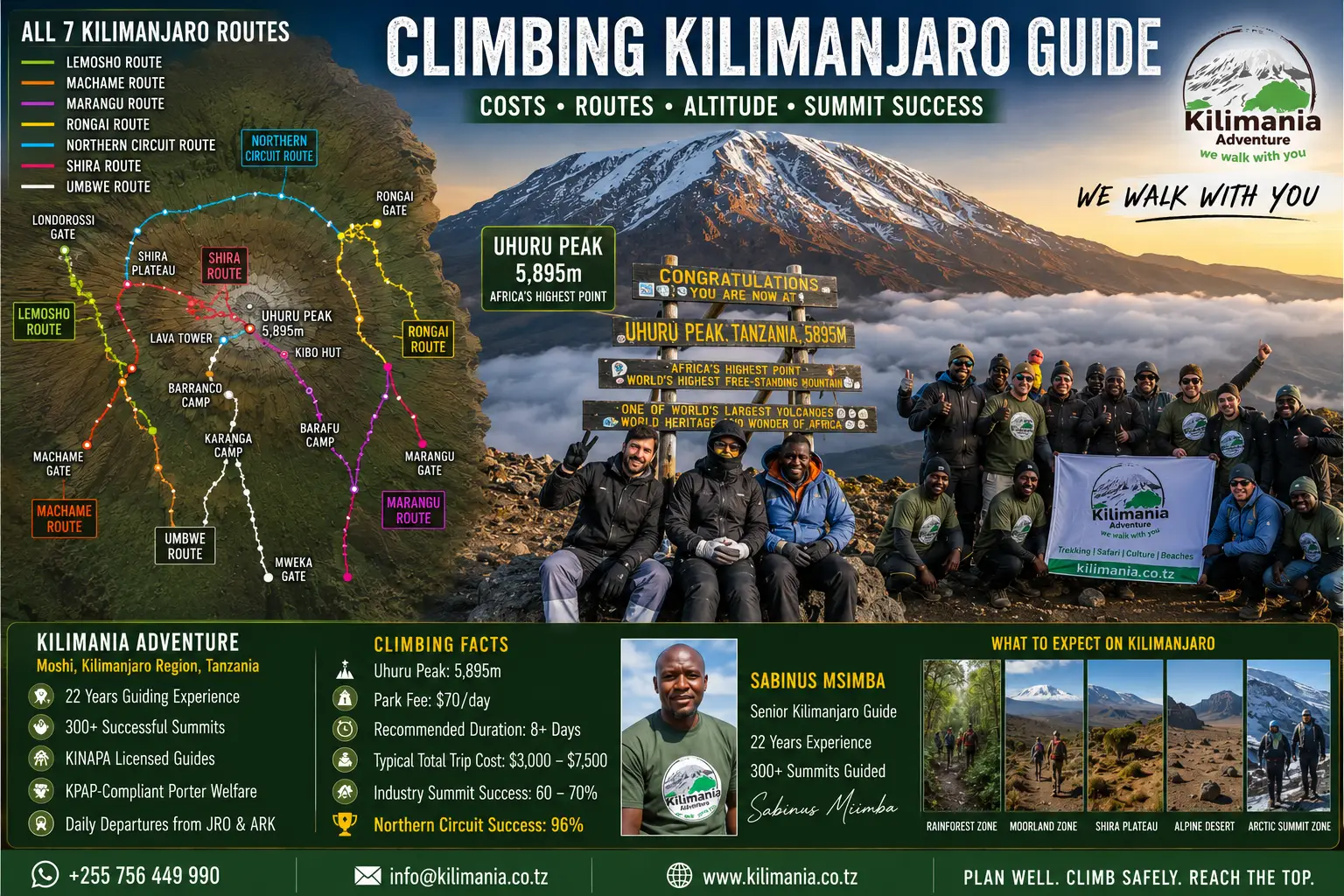
Key Stats at a Glance: Climbing Kilimanjaro 2026
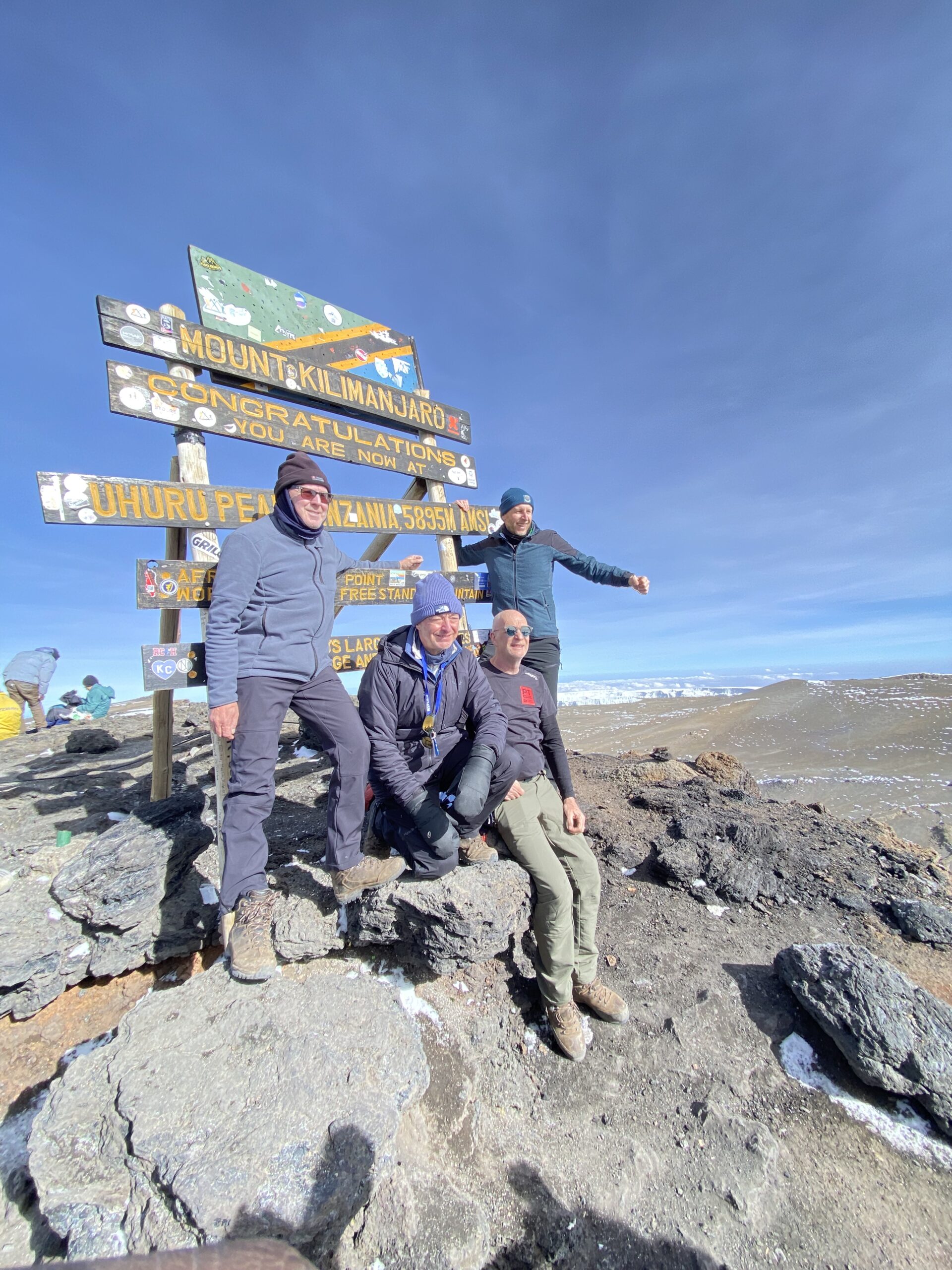
Mount Kilimanjaro stands at 5,895 meters (19,341 feet) and can be climbed without technical mountaineering skills. Most first-time climbers should choose an 8-day itinerary to maximize acclimatization and summit success.
| Attribute | Key Fact |
|---|---|
| Highest Point | Uhuru Peak — 5,895m (19,341 ft) |
| Daily Park Fee | US$70 per adult per day (KINAPA 2026) |
| Starting Climb Price | From US$1,750 for an 8-day Lemosho Route climb |
| Total Trip Budget | US$3,000–US$7,500 including flights, gear, insurance, and tips |
| Recommended Trip Length | 8 days minimum for first-time climbers |
| Training Time | At least 12 weeks from a moderate fitness baseline |
| Recommended Tipping Budget | US$260–US$350 per climber for a 7-day climb |
| Industry Summit Success Rate | Approximately 60–70% across all operators and routes |
| Guide Experience | Sabinus Msimba — 22 years guiding and 300+ summits |
Who This Guide Is For
This guide covers route selection, realistic costs, training requirements, altitude safety, and operator verification for first-time climbers from the USA, UK, Germany, Australia, and Canada researching a Kilimanjaro climb. If you’re weighing whether you’re ready for the mountain at all, our beginner’s guide and Climbing Kilimanjaro Over 50 guide cover those questions directly. If you have an existing health condition, read Climbing Kilimanjaro With Medical Conditions before booking.
From our base in Moshi — at the foot of the mountain, roughly 900 metres above sea level — Kilimania Adventure runs daily Kilimanjaro climb departures with pickups from Kilimanjaro International Airport (JRO) and Arusha Airport (ARK). Our guides operate under Kilimanjaro National Park Authority licenses — the government body responsible for all climbing regulation, safety standards, and park fee collection on Mount Kilimanjaro. Tanzania National Parks Authority governs the broader national park system of which KINAPA operates as the specific authority for Kilimanjaro National Park.
Based on TANAPA gate registration records and cross-referenced operator association data, Kilimanjaro receives tens of thousands of registered attempts per year, making it the most climbed high-altitude peak in Africa. Your decisions on route, operator, and duration place you on one side or the other of the success-rate divide.
5 Facts That Determine Your Summit Before You Even Start
Day count, operator quality, training consistency, route selection, and departure timing account for the difference between an estimated 50% and a 90%+ summit success rate. Fitness level alone does not predict success — acclimatisation time does.
Fact 1 — Day Count Is the Single Strongest Predictor of Success
Based on TANAPA reporting and operator data, overall Kilimanjaro summit success rates are estimated between 60% and 70% across all attempts and operators. Routes with 8+ days of acclimatization consistently outperform shorter alternatives on the same trail. Our operational records from 300+ guided climbs show 8-day Lemosho departures achieve significantly higher success than 6-day alternatives. See our Kilimanjaro success rate by route data for the full breakdown.
Fact 2 — Route Choice Shapes Your Acclimatisation Profile, Not Just Your Scenery
The Lemosho route starts at Londorossi Gate (2,100m), crosses the Shira Plateau, and includes a critical “climb high, sleep low” day at Lava Tower (4,630m) before descending 670 metres to Barranco Camp (3,960m). The Marangu route, by contrast, climbs the same elevation on the same path in both directions — the body never triggers the same adaptation response.
Fact 3 — No Technical Skill Is Required, But the Physical Demand Is Specific
You will hike 6–9 hours per day for 6–8 consecutive days on volcanic scree and mud, carrying 5–7kg, at progressively higher altitudes. Read our honest guide on how hard Kilimanjaro really is.
Fact 4 — Real All-In Cost Starts Well Above the Package Price
The operator package starts from $1,300 per person. International flights, tips, gear, e-visa, and insurance add $1,400–$3,000 on top. See Kilimanjaro Cost 2026: Complete Breakdown and our full list of hidden costs of climbing Kilimanjaro.
Fact 5 — Your Operator Determines Your Medical Safety Margin
KINAPA-licensed guides with wilderness medical certification carry pulse oximeters, oxygen, Gamow bags, and evacuation equipment. Unlicensed operators frequently do not. KINAPA requires licensed guides on every registered climb — verifiable at kilimanjaranationalpark.go.tz.
How Much Does Climbing Kilimanjaro Cost in 2026?
Kilimania Adventure’s operator packages start from $1,300 per person (group of 6, Marangu 5-day) and include all KINAPA park fees, meals, certified guides, ethical porters, tents, and 2 Moshi hotel nights. All-in from your home country — adding flights, tips, gear, visa, and insurance — budget $3,000–$7,500 depending on route, duration, and group size.
For the full itemized breakdown of every cost category, see our dedicated Kilimanjaro Cost 2026: Complete Breakdown — No Hidden Fees, and if you’re weighing a budget option, read Cheap Kilimanjaro Climb: Is It Worth It? before deciding.
What KINAPA Fees Are Embedded in Every Package
KINAPA sets non-negotiable government fees for every climber. See our full Kilimanjaro Park Fees 2026: Current TANAPA Rates guide.
| Fee Type | Amount |
|---|---|
| Park entry fee | $70.00 per adult per day |
| Camping fee | ~$60 per night at designated campsites |
| Rescue fee | $20 per climb (mandatory, one-time) |
| Child fee (under 16) | $25.00 per day |
| Under 5 | Free |
For an 8-day Lemosho climb, KINAPA-related charges per person total approximately $1,020. This is embedded in Kilimania’s package prices — it does not appear as an add-on at the gate.
Kilimanjaro Route Prices 2026 Comparison
All packages include: KINAPA park fees, 2 hotel nights, certified guides, ethical porters paid above KPAP minimum wage, tents, sleeping mats, all meals, and drinking water. Deposit to secure availability: $100.
| Route | Duration | Starting Price | Ideal For |
|---|---|---|---|
| Lemosho Route | 8 Days | From US$1,750 | First-time climbers seeking high success rates |
| Machame Route | 7 Days | From US$1,600 | Climbers wanting a scenic, popular route |
| Marangu Route | 6 Days | From US$1,450 | Climbers preferring hut accommodation |
| Rongai Route | 6 Days | From US$1,550 | Quieter northern approach |
| Shira Route | 8 Days | From US$1,700 | Acclimatized climbers with altitude experience |
| Northern Circuit | 9 Days | From US$2,050 | Maximum summit success |
| Umbwe Route | 6 Days | From US$1,750 | Experienced climbers seeking a challenge |
| Crater Camp Route | 10 Days | From US$2,400 | Overnight crater camping experience |
Additional Costs Beyond the Package
- Crew tips: $260–$350 per climber (7-day climb). See our Kilimanjaro Tipping Guide 2026: Exact Amounts.
- Gear rental or purchase: $95–$800. See our Kilimanjaro Packing List 2026, our Kilimanjaro Boots Guide, and our Kilimanjaro Trekking Poles guide.
- Flights to JRO: $600–$2,200 depending on origin.
- Tanzania e-visa: $50–$100 via immigration.go.tz.
- High-altitude travel insurance: $140–$400. See World Nomads or Allianz Travel.
Get Your Itemized Kilimanjaro Quote
All KINAPA fees shown separately. No hidden costs.
KINAPA-licensed • Replies within 12 hours, 7 days a week
📥 Download the Free Kilimanjaro Hidden Costs Checklist (2026)
Planning your Mount Kilimanjaro trip? Don’t let unexpected expenses catch you by surprise.
Our free Kilimanjaro Hidden Costs Checklist helps you understand the true cost of climbing Kilimanjaro beyond the operator’s quoted price. Created by Sabinus Msimba, Senior Mountain Guide and Co-founder of Kilimania Adventure, this practical guide is based on more than 22 years of experience guiding climbers to Uhuru Peak.
Inside the Free Guide
- ✅ Complete Kilimanjaro budget planner
- ✅ Hidden expenses many operators don’t explain
- ✅ Flights, visas, travel insurance, and medical costs
- ✅ Gear buying vs. gear rental recommendations
- ✅ Crew tipping guide and budgeting worksheet
- ✅ Credit card fees, ATM charges, and other overlooked costs
- ✅ Printable pre-departure checklist
- ✅ Practical money-saving tips from an experienced Kilimanjaro guide
Who Is This Guide For?
Whether you’re climbing the Lemosho Route, Machame Route, Northern Circuit, Marangu Route, Rongai Route, Shira Route, or Umbwe Route, this guide will help you build a realistic budget, compare operator quotes, avoid costly surprises, and plan your climb with confidence.
🎒 Plan Smarter. Budget Better. Climb With Confidence.
Download your free Kilimanjaro Hidden Costs Checklist and prepare for your trip with practical advice from one of Tanzania’s most experienced mountain guides.
📄 Download the Free Checklist (PDF)“The biggest budgeting mistake climbers make is focusing only on the tour price. A successful Kilimanjaro climb also includes gear, travel, insurance, crew tips, and other essential expenses. This checklist helps you prepare your complete budget before you arrive in Tanzania.”
— Sabinus Msimba
Senior Mountain Guide & Co-founder, Kilimania Adventure
Which Kilimanjaro Route Is Right for Your Fitness and Timeline?
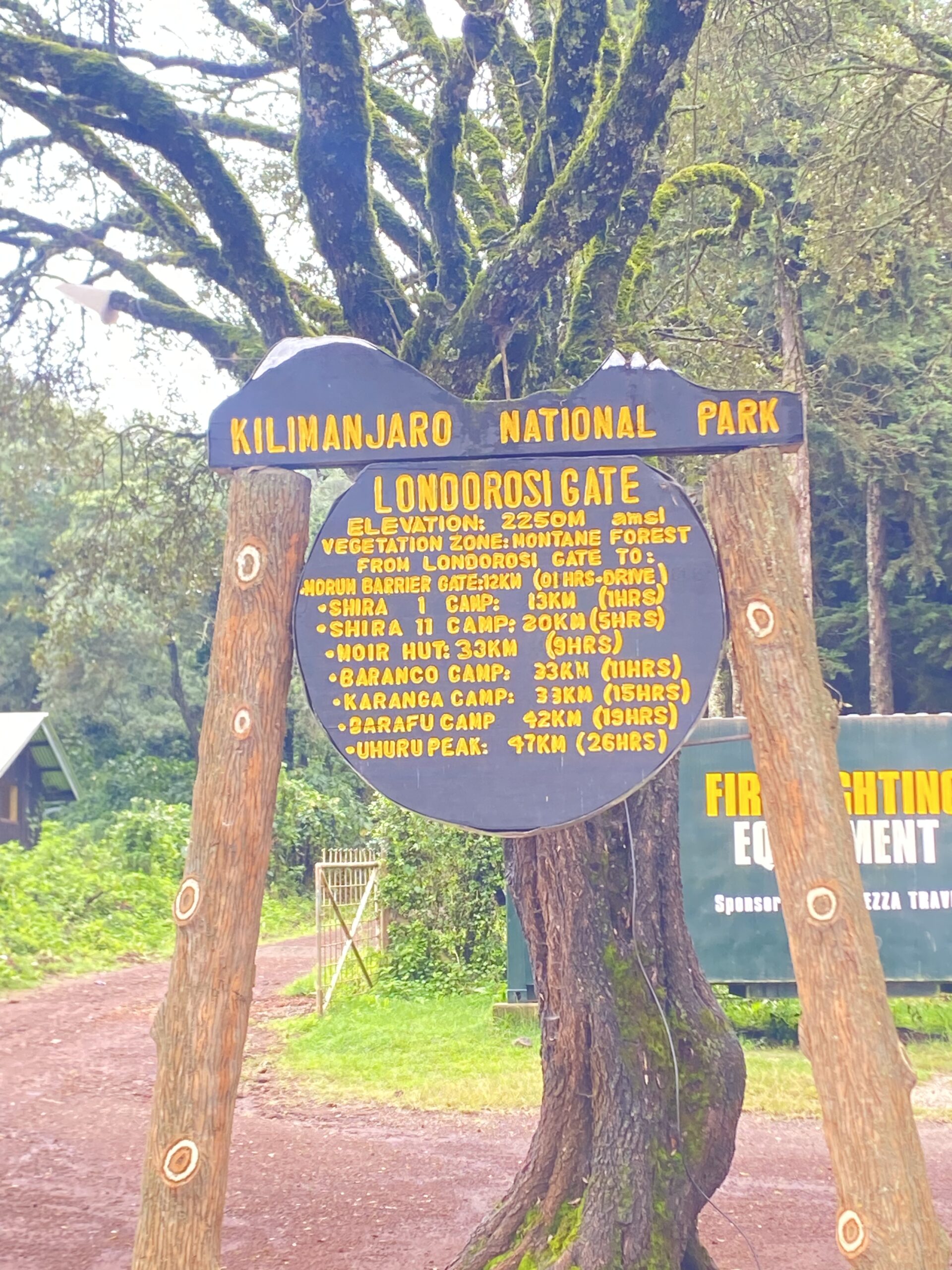
The 8-day Lemosho route suits most first-time climbers — it provides the strongest acclimatization profile at $1,750–$2,050 per person. The 7-day Machame route suits fit climbers seeking a $100–$450 saving per person. Marangu’s 5-day and 6-day formats produce the lowest success rates of any route and are not recommended unless hut accommodation is medically necessary.
For the complete side-by-side analysis of all seven routes, see Kilimanjaro Routes 2026, and if you’re still deciding on trip length, read How Many Days To Climb Kilimanjaro? 6 vs 7 vs 8 Days.
Lemosho 8-Day: The Recommended Starting Point
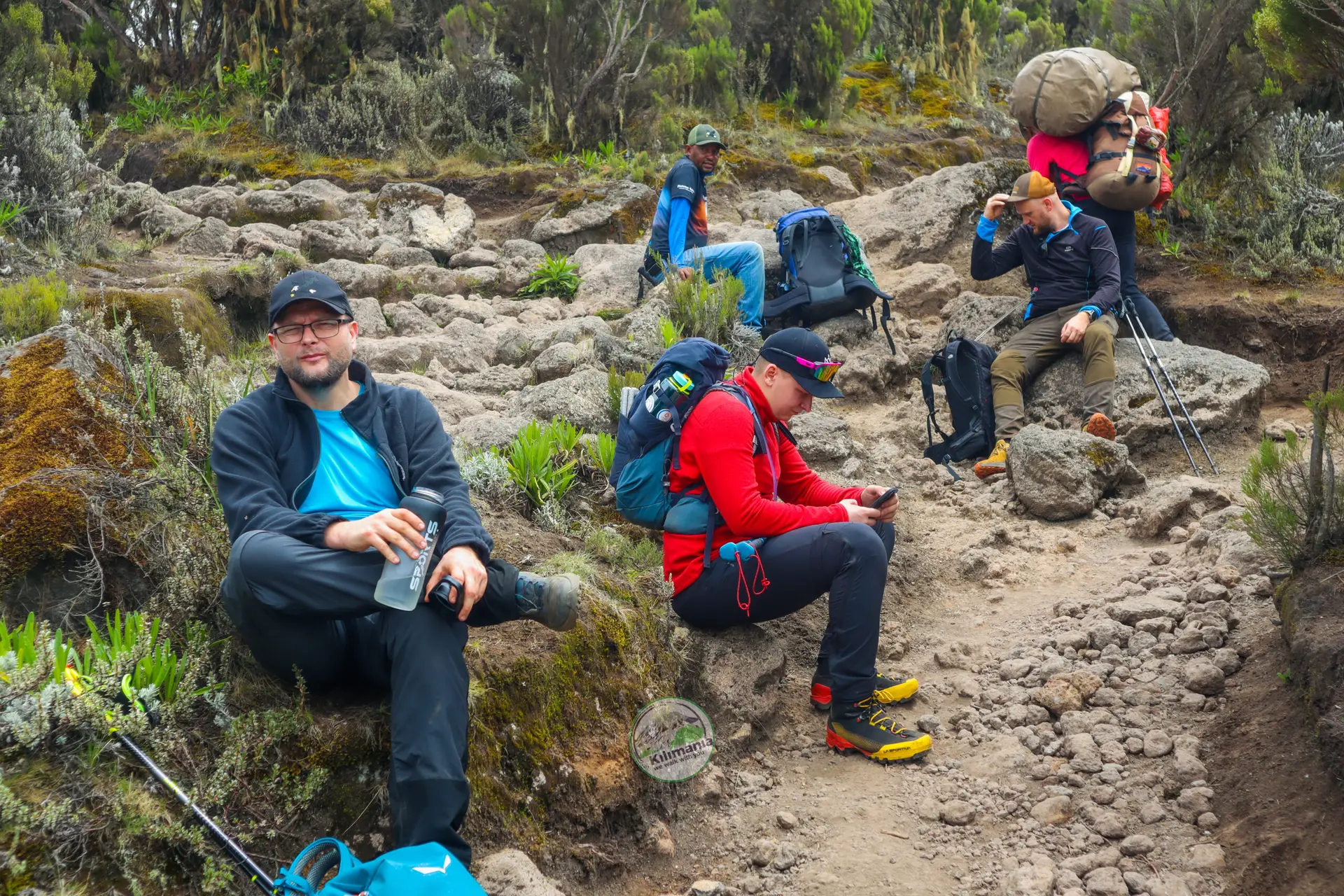
Lemosho starts at Londorossi Gate (2,100m) on Kilimanjaro’s western slope. Day one crosses dense montane rainforest to Mti Mkubwa Camp (2,780m). Day three includes the critical Lava Tower stop at 4,630m for lunch before descending 670 metres to Barranco Camp (3,960m) — a single day that programs your acclimatization response more effectively than anything achievable in training. Day five brings the Barranco Wall — a 257-metre scramble taking roughly 90 minutes.
Kilimania package: $1,750–$2,050 per person (8 days). View the full 8-day Lemosho itinerary →
Machame 7-Day: The Fitter Climber’s Alternative
Machame starts at Machame Gate (1,800m) and reaches Machame Camp (3,021m) on day one. The 7-day version includes a Karanga Camp night that the 6-day format skips, raising the success rate substantially. Choose Machame if you are under 45, hike at least one 5-hour trail monthly, and the saving versus Lemosho 8-day matters.
Kilimania package: $1,600–$1,900 per person (7 days). View the full 7-day Machame itinerary →
Rongai 6-Day: The Rainy Season Option
Rongai approaches from the Kenyan border on Kilimanjaro’s northern side — the driest approach of any route. Check our Kilimanjaro Weather By Month 2026 guide before booking a rainy-season date. Roughly 8% of registered climbers use this route, so genuine solitude is possible.
Kilimania package: $1,550–$1,850 per person (6 days). View the full Rongai itinerary →
Marangu 5-Day and 6-Day: The Honest Assessment
Marangu is the only route with hut accommodation, making it the only practical option for climbers with a medical need for indoor sleeping. The identical up-and-down path delivers the weakest acclimatization profile of any route.
Kilimania package: $1,300–$1,600 (5 days) | $1,450–$1,750 (6 days). View the full Marangu itinerary →
Northern Circuit 9-Day: Maximum Success Rate
The Northern Circuit circumnavigates Kibo’s northern slopes, adding two to three extra nights at altitude compared to Lemosho, producing the highest success rates in our portfolio.
Kilimania package: $2,050–$2,350 per person (9 days). View the full Northern Circuit itinerary →
Shira and Umbwe Routes
Shira (7-day) shares much of the Lemosho trail from the plateau onward but starts at higher altitude. Kilimania package: $1,600–$1,900 per person. View the Shira itinerary →
Umbwe (5–6 day) is the steepest, most direct approach to Kibo, recommended only for experienced climbers. Kilimania package: $1,600–$2,050 per person. View the Umbwe itinerary →
Route Comparison at a Glance
Success-rate ranges below combine industry-wide estimates and Kilimania Adventure’s own operational records; see “About Our Data” for full provenance.
| Route | Duration | Success Rate | Difficulty | Ideal For |
|---|---|---|---|---|
| Lemosho | 7–8 Days | 75–85% | Moderate | First-time climbers, strong overall acclimatization |
| Machame | 6–7 Days | 65–80% | Moderate to Hard | Fit climbers wanting a scenic, popular route |
| Marangu | 5–6 Days | 52–65% | Moderate | Climbers preferring hut accommodation |
| Rongai | 5–6 Days | 65–75% | Moderate | Solitude or rainy-season climbs |
| Northern Circuit | 8–9 Days | 85–92% | Moderate | Maximum acclimatization and highest success rates |
| Shira | 7–8 Days | 70–89% | Moderate to Hard | Acclimatized climbers, high starting altitude |
| Umbwe | 5–6 Days | 60–70% | Hard | Experienced climbers with altitude exposure |
Which Kilimanjaro Route Should You Choose? The Decision Framework
| Climber Profile | Days Available | Recommended Route | Typical Price |
|---|---|---|---|
| First-time, moderate fitness | 8 days | Lemosho (8 Days) | $1,750–$2,050 |
| First-time, high fitness, budget-focused | 7 days | Machame (7 Days) | $1,600–$1,900 |
| Altitude-sensitive or age 55+ | 9 days | Northern Circuit | $2,050–$2,350 |
| Requires hut accommodation | 5–6 days | Marangu | $1,300–$1,750 |
| Rainy season (Apr–May or Nov) | 6 days | Rongai (6 Days) | $1,550–$1,850 |
| Age 60+, good fitness | 8–9 days | Lemosho or Northern Circuit | $1,750–$2,350 |
| Photography priority | 8 days | Lemosho (8 Days) | $1,750–$2,050 |
| Experienced, prior altitude exposure | 5–6 days | Umbwe | $1,600–$2,050 |
See detailed head-to-head comparisons: Machame vs Lemosho, Lemosho vs Northern Circuit, Marangu vs Machame.
What Sabinus Msimba Notices During the Pre-Climb Briefing in Moshi
After 22 years on Kilimanjaro, Sabinus Msimba reads three things in the first 15 minutes with a new client: how they breathe when they walk fast, whether they have already broken in their boots, and whether they ask questions about the descent. Clients who ask about the descent before the summit are, in his experience, the ones who reach Uhuru Peak. The clients who most often do not summit are those who trained only for speed. The Kilimanjaro pace of 2 km/h is psychologically difficult for people used to working hard. The mountain rewards patience, not power.
How Hard Is Kilimanjaro Compared to Other High-Altitude Treks?
Kilimanjaro requires no technical mountaineering skill — no ropes, no ice axes, no prior climbing experience. The difficulty is physiological: six to eight consecutive days of 6–9-hour hiking at altitude, followed by a summit night of 12–16 hours total. For a detailed, honest assessment, see How Hard Is Kilimanjaro?
Kilimanjaro reaches a higher summit than Everest Base Camp (5,895m vs 5,364m) but does so in fewer days, making the acclimatisation challenge more acute. Mont Blanc’s standard route reaches 4,808m in 2 days but requires technical skills that Kilimanjaro does not. The Inca Trail tops out at 4,215m over 4 days, with low to moderate altitude risk by comparison.
The Five Real Physical Challenges
1. Altitude Physiology
At Barafu Camp (4,673m), blood oxygen saturation drops to 78–85% from a sea-level baseline of 98%. Headaches affect the majority of climbers above 4,000m regardless of fitness.
2. Summit Day Duration
Read our hour-by-hour breakdown: Kilimanjaro Summit Night, Hour By Hour. 11:30 PM wake, midnight departure, 6–7 AM Uhuru Peak arrival, 4 PM Mweka Camp arrival. Total: 12–16 hours after under 90 minutes sleep.
3. Cold at Altitude
At Stella Point (5,756m), -12°C ambient, -22°C wind chill. Water bottles freeze inside packs within 20 minutes.
4. Multi-Day Mental Endurance
Days 3–5 involve 6-hour walks at 2 km/h on monotonous scree. The psychological flatness breaks more climbers than any physical challenge.
5. Descent Injuries
Most injuries occur on the 2,795m descent from Uhuru Peak to Mweka Camp in a single afternoon. Trekking poles are non-negotiable — see our Trekking Poles guide.
What Is the Realistic Summit Success Rate on Kilimanjaro?
Based on available TANAPA reporting and operator data, overall summit success rates are estimated between 60% and 70% across all attempts and all operators. On 8-day-plus itineraries with a KINAPA-licensed operator following proper medical protocols, our operational records consistently show significantly higher rates. See the full Kilimanjaro success rate by route breakdown.
Factors That Reduce Success Rate
- 5-day or 6-day itinerary with no prior altitude exposure
- No wilderness medical equipment at guide level
- Ignoring early AMS symptoms above 4,000m
- Walking faster than the guide’s set pace
- Insufficient hydration (below 3–4L/day above 3,000m)
Factors That Raise Success Rate
- 8–10-day itinerary on any route
- KINAPA-licensed guide with WFR certification
- 12 weeks of hiking-specific training
- Jan–Feb or Jul–Sep departure dates
- Disclosing all medical conditions at briefing
For age-specific guidance, see Climbing Kilimanjaro Over 50. If you have a health condition, read Climbing Kilimanjaro With Medical Conditions. For a physiological comparison, see Men vs Women at High Altitude: Research + 22 Years of Field Data.
What Isack Mlala Observes Above 4,600 Metres
Isack Mlala has guided on Kilimanjaro for 15 years. The Barafu Camp evening gives him the clearest reading of who will summit. It is not about oxygen saturation alone — he watches how a climber eats, and whether their boots are properly broken in.
When Is the Ideal Time to Climb Kilimanjaro in 2026?
January–February and July–September are the two primary dry windows. January–February combines lower crowds with warmer summit temperatures (roughly -8°C vs -12°C in July). Shoulder seasons in June and October offer 20–30% lower operator pricing with acceptable conditions. For the complete month-by-month weather analysis, see Kilimanjaro Weather By Month 2026: Camp Temps & Summit.
January and February form the strongest window, with February standing out for its combination of low crowds and warmer summit temperatures. July through September form the peak dry season with the highest crowd levels. June and October are good shoulder months. March, April, May, and November carry the long and short rains and are recommended only for experienced climbers.
- Australian travellers: Book 7–9 months ahead for June–August departures.
- US travellers: Book 6–8 months ahead for July–August departures ($100 e-visa).
- UK and EU travellers: Book 5–7 months ahead ($50 e-visa).
Travellers booking 6+ months ahead save an average of $320 per person compared to those booking within 60 days of departure. See our full guide to Kilimanjaro’s climbing seasons.
What Does the 12-Week Kilimanjaro Training Plan Actually Involve?
Kilimanjaro training prioritises time on feet over cardiovascular peak performance. The target is hiking 6 hours continuously with a 7kg pack on consecutive days. For the complete week-by-week plan, see How to Train for Kilimanjaro, and make sure your boots are broken in using our Kilimanjaro Boots Guide 2026.
Month-by-Month Breakdown
Month 1 (Weeks 1–4)
Base building: 4–5 sessions weekly, 45–90 minutes, 3–5kg pack. Weekend hikes 2–4 hours. Avoid running.
Month 2 (Weeks 5–8)
Load and elevation: 2 stair sessions weekly (6kg pack) plus 8km fast walk. Weekend target: 5–6hr hike, 600–800m gain, 6–7kg pack.
Month 3 (Weeks 9–12)
Peak: 6–7hr weekend hikes, 800–1,000m gain, 7–8kg pack in your actual boots. Week 12 tapers to 30–45 min easy walks.
What Sabinus Msimba checks at the Moshi briefing: he asks you to walk with him for 20 minutes with your summit pack to assess your gait, pace, and boot break-in wear.
📥 Free Download: Kilimanjaro 12-Week Training Calendar
The same week-by-week training plan used by Kilimania Adventure guides, built from patterns observed across 300+ guided climbs.
15 Costly Mistakes First-Time Kilimanjaro Climbers Make
The most consequential single mistake: booking a 5-day or 6-day itinerary to save $150–$450 on the package. It is the decision most directly correlated with not reaching Uhuru Peak.
- Booking the shortest route. Success rate drops from ~85%+ on 8-day routes to ~50–65% on 6-day routes.
- Buying new boots for the climb. Wear summit boots on every training hike from week 6 onward — see our Boots Guide.
- Underestimating summit night duration. Pack 1.5L water insulated, 1,000 calories of snacks, a warm thermos drink.
- Ignoring hydration above 3,000m. Drink 3–4 litres daily; urine should run clear to pale yellow.
- Poor layering strategy. Use three distinct layers and remove them before you start sweating.
- Choosing an unlicensed operator. Verify license numbers at kilimanjaranationalpark.go.tz.
- Travelling without high-altitude travel insurance. Evacuation can cost $5,000–$15,000.
- Overtraining in the final two weeks. Stop long hikes 10 days before departure.
- Not disclosing medical conditions. Guides cannot monitor for symptoms they don’t know to watch for.
- Walking faster than the guide’s pace. Pole pole is a physiological instruction, not encouragement.
- Not eating above 4,000m. Eat half a plate at every meal, even without appetite.
- Ignoring early AMS symptoms. Tell your guide about every symptom at every meal.
- Assuming the descent is easier. Use trekking poles — see our Trekking Poles guide — on every metre of descent.
- Packing too much. Summit day pack: 6–8kg maximum. Full details in our Packing List 2026.
- Booking through an overseas reseller. Book directly with a KINAPA-licensed Moshi operator.
What Nobody Tells You About Climbing Kilimanjaro
Four Things Nobody Mentions
Food Above 4,500 Metres Tastes of Nothing
Altitude and reduced blood oxygen suppress taste almost completely. Knowing this in advance lets you eat by discipline rather than appetite.
Sleep at Barafu Camp Is Not Sleep
Cheyne-Stokes respiration — periodic breathing that causes gasping awakenings — affects the majority of climbers at 4,673m. It is not dangerous.
Emotional Withdrawal Before Summit Night Is Normal
A significant proportion of climbers decide at 9 PM they cannot do it. This is altitude affecting mood regulation, not genuine physical inability.
Water Freezes Inside Packs Above 5,000 Metres
Water in external bottle pockets freezes within 20 minutes above 5,000m. Store your primary supply inside your pack, against your back.
Read more on The Worst Part of Climbing Kilimanjaro, or if you’re still unsure this is for you, see 10 Reasons You Should NOT Climb Kilimanjaro (And 5 Why You Should).
From JRO Arrival to Standing on Uhuru Peak: The Complete Client Journey
The complete Kilimanjaro journey from Kilimanjaro International Airport (JRO) to Uhuru Peak and back to Moshi takes 10–12 days, including approach and recovery nights. The 2 hotel nights in Moshi are included in every Kilimania package. Curious what the whole experience genuinely feels like day to day? Read What Is Climbing Kilimanjaro Like?
- Day 0: Arrival at JRO, transfer to Moshi, evening briefing.
- Day 1: Moshi to Londorossi Gate (2,100m) to Mti Mkubwa Camp (2,780m) through rainforest.
- Days 2–3: Shira Plateau (3,840m) and the Lava Tower Day (4,630m).
- Day 4: Barranco Wall scramble and Karanga Camp.
- Day 5: Karanga Camp to Barafu High Camp (4,673m); formal altitude assessment.
- Day 6 (Night): Summit night — midnight departure, Stella Point ~5:30–6:30 AM, Uhuru Peak (5,895m).
- Day 6 (Afternoon): Descent to Mweka Camp (3,100m) — 2,795m in a single afternoon.
- Day 7: Mweka Gate, summit certificate, return to Moshi, tipping ceremony.
What Climbers Consistently Underestimate About Summit Night
Summit night involves 12–16 total hours on your feet after less than 90 minutes of sleep, in temperatures reaching -22°C with wind chill. The descent from Uhuru Peak — 2,795 metres in a single afternoon — injures more climbers than the ascent. See the full hour-by-hour account: Kilimanjaro Summit Night, Hour By Hour: What Actually Happens.
What Happens If You Don’t Summit?
Kilimanjaro does not promise a summit, and no legitimate operator can ethically claim to. If your guide determines continuing poses a real medical risk, the decision to turn back belongs to the guide, not the client. Kilimania Adventure does not offer summit-success refunds, because no legitimate operator can — doing so would create an incentive to push climbers past a safe turnaround point.
How Professional Kilimanjaro Guides Monitor Altitude Sickness
KINAPA-licensed guides with wilderness medical certification conduct formal altitude assessments at each camp using pulse oximetry and the Lake Louise Scoring System. A score above 5 changes the day’s movement plan. HACE or HAPE symptoms trigger immediate descent — a decision made by the guide, not the client.
The Lake Louise Scoring System
Guides score four symptoms on a 0–3 scale each: headache, gastrointestinal distress, fatigue/weakness, and dizziness. A total of 3–5 indicates mild AMS. A score of 6+ stops the group. A score above 8, or ataxia/altered consciousness, triggers immediate descent.
Pulse Oximetry: What the Numbers Mean
| Location | Altitude | Typical SpO2 |
|---|---|---|
| Moshi | 900m | 96–99% |
| Shira Camp | 3,840m | 88–92% |
| Barafu Camp | 4,673m | 75–85% |
| Uhuru Peak | 5,895m | 60–75% |
Ranges above are typical clinical observations, not a diagnostic tool; individual readings vary by acclimatization pace, exertion, and pre-existing health conditions. Consult a travel medicine physician for personal risk assessment before departure.
AMS, HACE, and HAPE
AMS
The most common condition — headache, nausea, fatigue, poor sleep, appetite loss. Managed with rest, hydration, Diamox.
HACE
Brain swelling — a medical emergency. Signs: ataxia, confusion, severe headache. Treatment: immediate descent, dexamethasone, Gamow bag.
HAPE
Fluid in the lungs — life-threatening within hours. Signs: breathlessness at rest, wet cough, blue-tinted lips. Treatment: immediate descent, oxygen.
Evacuation: How It Works
Below 4,000m: walk-out to the nearest KINAPA gate. Above 4,000m: helicopter evacuation, coordinated by satellite phone. Evacuation typically costs $5,000–$15,000 — covered by high-altitude travel insurance, not standard travel policies.
📥 Free Download: Kilimanjaro Altitude Symptom & AMS Checklist
Altitude illness is the leading reason climbers turn around. This practical checklist is used by Senior Guide Sabinus Msimba and the Kilimania Adventure team to monitor climbers throughout every expedition.
Why Do Moshi-Based Operators Have an Operational Advantage?
A Moshi-based KINAPA-licensed operator sits at the foot of Kilimanjaro — roughly 40 kilometres from Marangu Gate and 85 kilometres from Londorossi Gate. This proximity affects guide supervision, equipment logistics, emergency response speed, and pre-climb support in ways overseas resellers and distant agents can’t replicate.
- Proximity to gates: Roughly 40 minutes from Marangu Gate, ~90 minutes from Londorossi Gate.
- Guide supervision: Lead guides report directly to the Moshi office; briefings happen in person.
- Real-time weather monitoring: Direct line of sight to Kibo’s southern face on clear days.
- Airport transfers: JRO (~50km) and ARK (~95km) both served with included vehicle transfers.
Kilimania Adventure is registered with TATO (Tanzania Association of Tour Operators).
How Do You Verify Any Kilimanjaro Operator Before Paying?
Six verifiable checks eliminate most fraudulent operators before any deposit changes hands.
- Verify KINAPA guide licensing at kilimanjaranationalpark.go.tz.
- Confirm a physical Moshi or Arusha office.
- Request an itemised quote with KINAPA fees listed separately.
- Ask about safety equipment carried above 4,000m.
- Ask for VAT treatment in writing.
- Request a gate receipt on departure day.
- Park fees listed as “excluded” or “to be advised”
- VAT treatment not stated in writing
- Total price significantly below published market prices, with no explanation
- Full payment required more than 60 days before departure
- No guide name or KINAPA license number provided before booking
- Success rate stated as “guaranteed”
- No physical office address in Moshi or Arusha
Is a Suspiciously Low Kilimanjaro Quote Real or a Scam?
KINAPA’s mandatory government fees for a 6-day Kilimanjaro climb total approximately $800 per person before crew wages or any operator margin. Any total quote that falls materially below published market starting prices should be questioned and itemized before any deposit is paid.
| Cost Component | 6-Day Climb | 8-Day Climb |
|---|---|---|
| Park Conservation Fees | US$420 | US$560 |
| Camping Fees | US$360 | US$480 |
| Rescue Fee | US$20 | US$20 |
| Government Fees Subtotal | ~US$800 | ~US$1,060 |
| Minimum Crew Wages (Group of 4) | ~US$500 | ~US$650 |
| Food, Equipment & Logistics | ~US$400 | ~US$500 |
| Minimum Legitimate Operating Cost | ~US$1,700 | ~US$2,210 |
The mathematical floor for a legitimate 6-day Kilimanjaro climb from a KINAPA-licensed operator is approximately $1,700 per person. Kilimania’s Marangu 6-day starts from $1,450 (group of 6) — made possible by Moshi-based operational efficiency and group pricing, not by excluding government fees.
The Five Patterns of Fraudulent Kilimanjaro Quotes
- Deposit theft: Operator takes a deposit and does not appear on departure day.
- Park fee exclusion: Quote excludes KINAPA fees; cash demanded at the gate.
- Rescue fee omission: Mandatory rescue levy absent from quote.
- Bait and switch: Confirmed quote, then a “fuel surcharge” demanded on arrival.
- Unlicensed operation: Real vehicle, real departure, but no KINAPA guide license.
📥 Get All 3 Kilimanjaro Planning PDFs — Free
Enter your email to receive the 12-Week Training Calendar, the Route Comparison Cheat Sheet, and the Altitude Symptom & AMS Checklist in one message.
✅ Check your inbox — your downloads are on the way!
We’ll email the downloads instantly. No spam. Unsubscribe anytime.
About Our Data
Pricing data reflects Kilimania Adventure’s actual 2026 operator package rates, updated each November following TANAPA’s annual tariff announcement. Official government data comes directly from TANAPA and KINAPA published fee schedules. Success rate ranges combine industry-wide estimates and Kilimania Adventure’s own operational records from 300+ guided summits — presented as operational observations, not scientific findings. Guide observations are drawn from the direct, named experience of Sabinus Msimba (22 years), Isack Mlala (15 years), and John Akaro (7 years), all KINAPA-licensed.
FAQ: Climbing Kilimanjaro 2026
Is Kilimanjaro suitable for beginners?
Yes. Most successful climbers are first-time mountaineers with no prior altitude experience. The recommended route for beginners is the 8-day Lemosho route, which provides gradual acclimatization and the strongest success rates among standard routes.
How much does an 8-day Kilimanjaro climb cost in 2026?
Kilimania Adventure’s 8-day Lemosho package costs $1,750–$2,050 per person depending on group size, with all KINAPA park fees, guides, porters, meals, and 2 Moshi hotel nights included. All-in from the UK, budget roughly £3,200–£4,800.
Are KINAPA park fees included in Kilimania’s packages?
Yes. At $70 per adult per day, an 8-day climb generates $560 in park fees per person, included as an itemized line in our quotes.
What is the cheapest Kilimania package in 2026?
The Marangu 5-day starts from $1,300 per person (group of 6), including KINAPA fees, guides, porters, meals, tents, and 2 Moshi hotel nights.
What is the success rate on Kilimanjaro?
Industry-wide estimates run 60–70% across all operators and routes. On 8-day-plus itineraries with proper KINAPA-licensed guide protocols, operational records typically show meaningfully higher rates. Duration matters more than fitness level.
How many days should I allocate for a Kilimanjaro climb?
A minimum of 8 days on the mountain for first-timers with no prior altitude experience above 3,000m, plus one Moshi night before and after — both included in Kilimania packages.
Is it safe to climb Kilimanjaro without a guide?
No. KINAPA regulations require a licensed guide and registered operator for all climbs. Park gates refuse entry without verified operator paperwork.
What medical preparation do I need before climbing Kilimanjaro?
Consult a travel medicine specialist roughly 8 weeks before departure, discuss Diamox, and disclose all medical conditions to your guide at the Moshi briefing.
What happens if I don’t summit?
No legitimate operator offers a summit guarantee or refund for non-summit outcomes, since pushing past a safe turnaround point would be dangerous. Choosing a longer itinerary and disclosing your health history honestly are the best ways to improve your odds.
Can climbers over 60 reach Uhuru Peak?
Yes, regularly, particularly on 8-day or 9-day itineraries with proper training.
What is not included in a Kilimania package?
International flights, Tanzania e-visa ($50–$100), personal climbing gear, crew tips ($260–$350 per climber for 7 days), and travel insurance.
Can I combine a Kilimanjaro climb with a Tanzania safari?
Yes. The standard combination is climb first (7–10 days), then a 3–5 day Northern Circuit safari covering Serengeti, Ngorongoro Crater, Tarangire, and Lake Manyara, with vehicle transfers included in combined bookings. Many climbers also add a few relaxed days on Zanzibar Beach to recover afterward.
Can solo female travelers climb Kilimanjaro safely?
Yes. Kilimania Adventure guides solo female travelers regularly. KINAPA camps are organized, staffed environments with consistent guide supervision and private tents. Female porters are available on request.
Can I bring a drone on Kilimanjaro?
No. KINAPA prohibits drone operation within Kilimanjaro National Park without a specific filming permit.
For International Travellers: Flights, Visa, Currency
All prices in this guide are in USD. Current approximate conversions: $2,000 ≈ £1,560 | €1,860 | AU$3,020.
Flights to JRO
New York/LA: $800–$1,400 return
London: £550–£900 return
Sydney: AU$1,400–AU$2,200 return
Tanzania E-Visa
$50 most nationalities, $100 for US citizens. Apply at immigration.go.tz at least 7 days ahead.
Pre-Climb Accommodation
2 Moshi hotel nights included in every package. Additional nights: $35–$80/night.
Airlines serving JRO include KLM (via Amsterdam), Ethiopian Airlines (via Addis Ababa), Qatar Airways (via Doha), and Kenya Airways (via Nairobi). There are no direct flights from North America.
Explore More Kilimanjaro Planning Resources
Every question this guide raised has its own dedicated deep-dive. Here’s the full library, organized by what you’re planning next.
Cost & Logistics
Gear & Preparation
Routes & Planning
Planning to unwind after your summit? See Zanzibar Beach for post-climb recovery, or Contact the team directly with any question not covered here.
We Walk With You
Climbing Kilimanjaro is not a test of athletic ability — it is a test of patience, preparation, and the operator you choose to walk beside you. Day count matters more than fitness. Route choice matters more than scenery. And the guide standing next to you at 4,673m matters more than anything you can train for in a gym.
From our base in Moshi, Kilimania Adventure has guided over 300 successful summits under Senior Guide Sabinus Msimba alone. We built this guide to give you the same information we give every client before they commit to a date — so your decision on climbing Kilimanjaro is based on facts, not marketing.
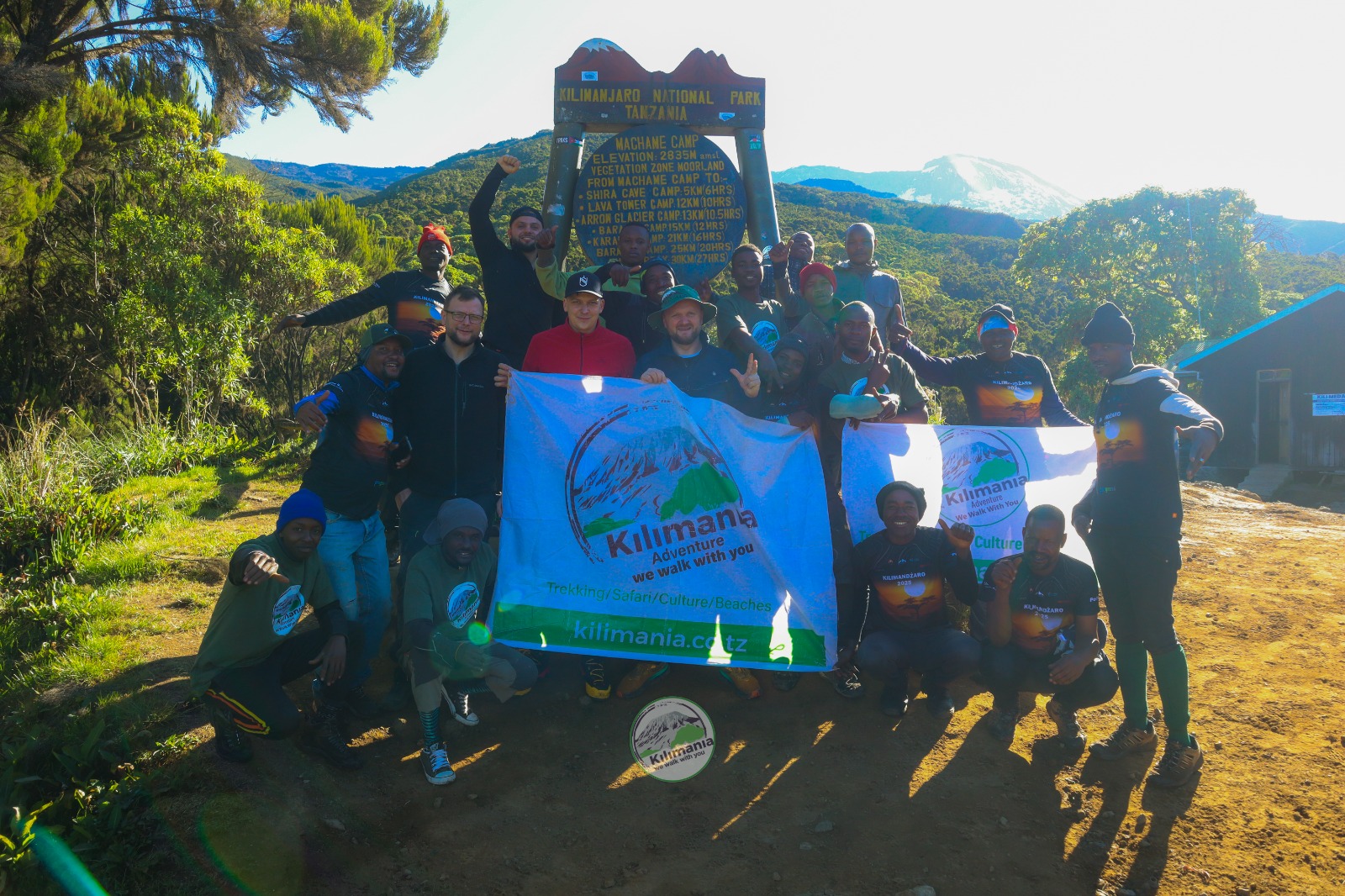
Ready to Plan Your Kilimanjaro Climb?
Contact our Moshi office directly for a personalized, itemized quote.
KINAPA-licensed • We respond within 12 hours, 7 days per week
About the Author
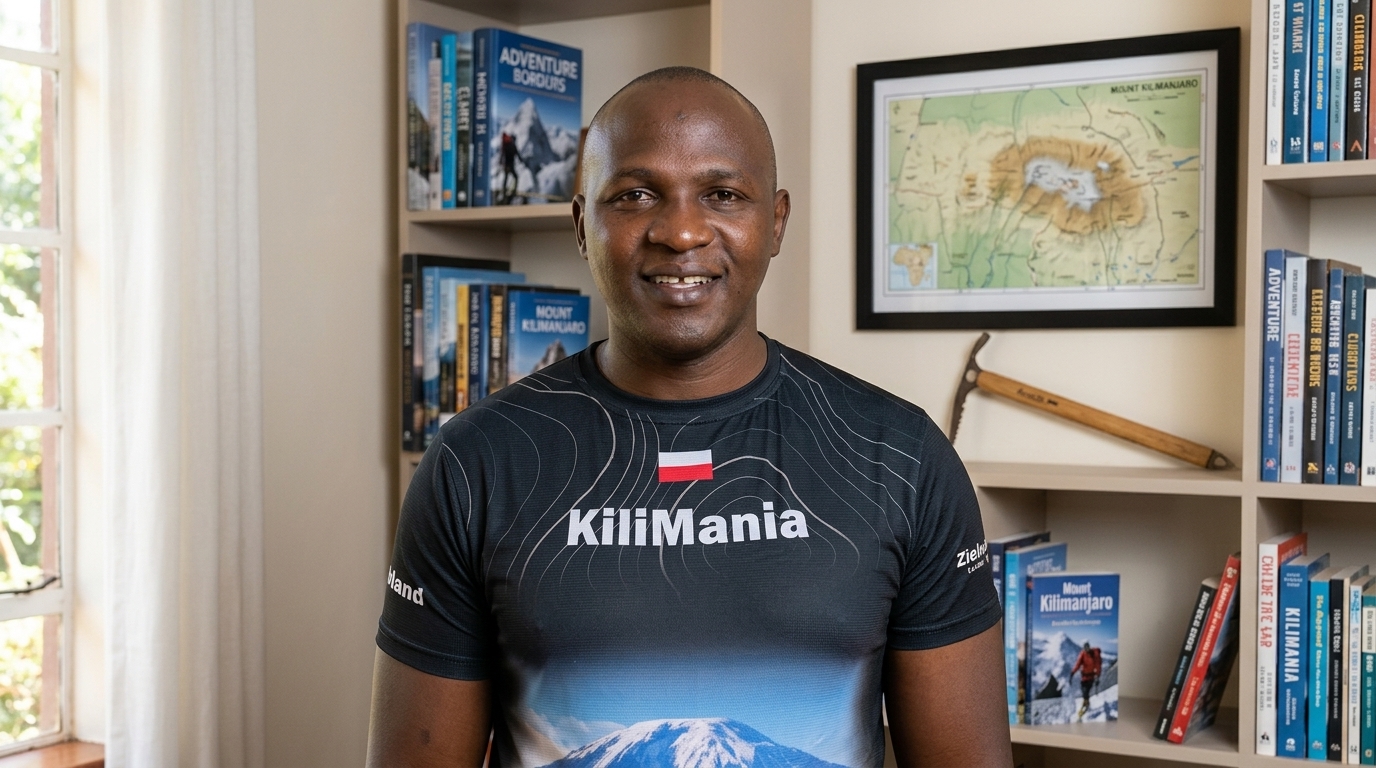
Sabinus Msimba
Senior Kilimanjaro Guide and Co-founder, Kilimania Adventure.
Credentials: 22 years guiding on Mount Kilimanjaro. 300+ successful summit ascents. KINAPA-licensed mountain guide with Wilderness First Responder (WFR) certification.
Last reviewed: May 2026 | Review schedule: Updated each November following TANAPA’s annual tariff announcement. Fee changes applied within 72 hours of official publication.
View Sabinus’s full profile →
📄 View KINAPA Mountain Guide License (PDF)