Can an Unfit Person Climb Kilimanjaro?
A Senior Guide’s Honest Assessment
⏱️ ~19 min read · Last updated: July 2026
TL;DR — Key Takeaways
- Yes — unfit people summit Kilimanjaro every year, but only with honest preparation.
- Sedentary climbers need 6 months minimum training; very unfit climbers need 12+ months.
- Route matters as much as fitness: choose the 9-day Northern Circuit (Level 2) or 8-day Lemosho (Level 3).
- Fitness does not prevent altitude sickness — it gives you reserve capacity to manage it.
- Longer routes cost more but meaningfully improve summit odds — see the cost table below.
Yes — unfit people summit Kilimanjaro every year. But only the ones who were honest about where they started and gave themselves enough time to change it. The industry-wide summit success rate sits at around 65% across all routes (source: KINAPA operator data and Kilimania internal records, 2019–2025). On the 5-day Marangu route it falls below 50%. The leading cause of failure is not altitude or bad weather. It is climbers arriving without the physical capacity to sustain six to eight hours of hiking per day across seven to nine consecutive days in progressively thinner air. If you are currently sedentary and booking three months out, Barafu Camp at 4,673m is where your body stops — not Uhuru Peak.
Quick answer: Yes, unfit people reach Uhuru Peak (5,895m) every year. The deciding factor is not fitness on booking day — it is preparation time and route selection. Level 2 climbers need a minimum of 6 months of focused training. Level 3 climbers need 3–4 months. The 8-day Lemosho route gives lower-fitness climbers the acclimatisation margin they need. → See our complete Kilimanjaro Routes 2026 guide.
Kilimanjaro by the Numbers
People Also Ask
- How long does an unfit person need to train for Kilimanjaro? — 6 months minimum for sedentary adults; 12+ months for very unfit individuals.
- Which Kilimanjaro route is easiest for beginners? — The 9-Day Northern Circuit has the highest success rate and gentlest acclimatization profile.
- Does fitness prevent altitude sickness on Kilimanjaro? — No. Fitness provides reserve capacity; it does not prevent AMS, HAPE, or HACE.
- How much does Kilimanjaro cost for an unfit climber? — $2,350–$2,950 for the recommended 8–9 day routes, versus $1,650–$2,050 for shorter routes.
- Can I climb Kilimanjaro with no hiking experience? — Only with 12+ months of structured training and the 9-Day Northern Circuit.
What does “unfit” actually mean on Kilimanjaro?
In everyday life, unfit means taking the elevator. On Kilimanjaro the definition is specific: can your body sustain six to eight hours of loaded hiking per day, for seven to nine consecutive days, finishing at 5,895m? That is the test.
Definition: Kilimanjaro-Specific Fitness
The ability to sustain 6–8 hours of loaded hiking per day for 7–9 consecutive days, finishing at 5,895m above sea level, without compounding fatigue that prevents summit night completion.
The gap between everyday “unfit” and the Kilimanjaro-specific definition is wider than most people expect. Kilimanjaro is not technical climbing — there are no ropes, no ice axes, no vertical walls. What it is, precisely, is a sustained, weighted, multi-day endurance event at altitude. The physical demands are exact:
- 6–8 hours of hiking per day on surfaces ranging from rainforest roots to volcanic scree
- 7–9 consecutive days with no true rest days — every day moves forward or upward
- 5–9kg loaded daypack carried every trekking hour
- Cumulative elevation gain of 4,000m+, finishing at 5,895m above sea level
- Summit night from Barafu Camp (4,673m) at midnight — temperatures hitting −12°C with windchill below −20°C, covering 1,200m of vertical gain on loose scree
Here is the counterintuitive part: a runner with a strong VO2 max but zero multi-day trekking experience is often less ready than they think. A steady weekend hillwalker who hikes every Saturday with a loaded pack may be more prepared than a gym regular who has never carried weight over uneven ground for more than two hours. The specific fitness Kilimanjaro demands — loaded, sustained, consecutive-day endurance — is not what most training routines build. For a full picture of what to bring on the mountain, see our Kilimanjaro Packing List and Kilimanjaro Boots Guide.
What do underprepared climbers look like at Barafu Camp?
I have stood at Barafu Camp (4,673m) more times than I can easily count. Within fifteen minutes of a group’s arrival, I know whether they will reach Uhuru Peak at midnight — not because I am guessing, but because their body is already telling me.
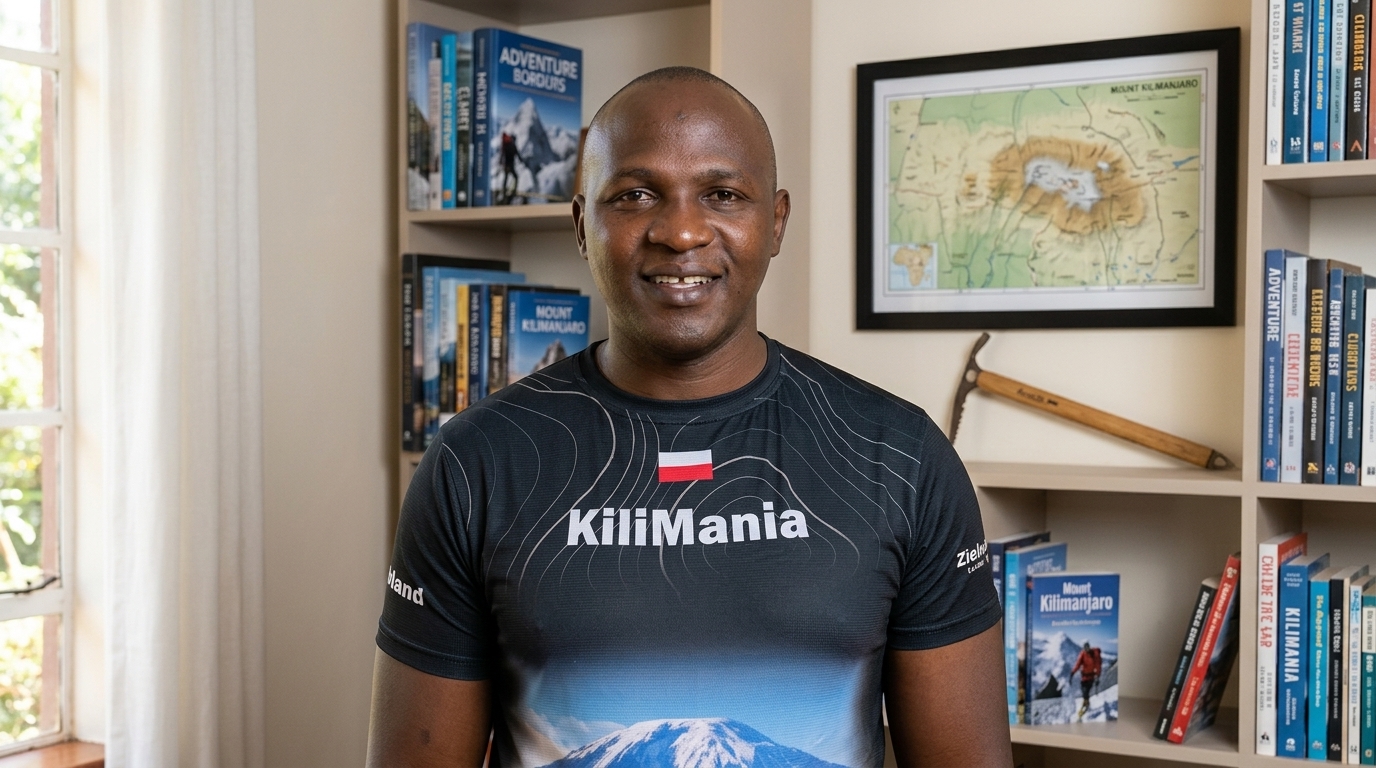
My name is Sabinus Msimba. I have been guiding on this mountain since 2003. I have watched thousands of climbers arrive at Barafu Camp on Day 5 of the Lemosho route, and the pattern is consistent. Last season I had a group of four climbers — two couples, all in their late thirties, all with desk jobs, all of whom told me they were “pretty fit” during our pre-climb briefing in Moshi. Honestly. That phrase is the one I hear most often, and it is the one that concerns me most.
By the time we reached Barafu Camp, two were moving well: steady gait, good colour, eating normally, SpO₂ readings in the low 80s — normal at that elevation. The other two had stopped eating at Karanga Camp the day before. Their gait had become wide and shuffling. When I checked oxygen saturation that evening, one was reading 74%. Seriously. That number, combined with his declining pace across five days, told me everything about what would happen between midnight and 5,700m.
He argued. They always argue.
He descended with my assistant guide at 1am while the group continued. At Horombo Hut next morning his saturation read 87% and rising. When the group returned to Moshi he sent a message to the Kilimania office: “I was angry at the time. Now I understand. You were right.”
“At 4,673m, the body does not lie. Determination is real — but it cannot manufacture oxygen reserves that were never built.”
— Sabinus Msimba, Senior Kilimanjaro Guide, Kilimania Adventure
What Kilimania does differently starts on Day 1. We log baseline SpO₂ readings at the first camp so we have a personal reference point for every climber — not a population average. We run pre-midnight tent checks at Barafu before every summit push: pulse, oxygen saturation (via a fingertip pulse oximeter), gait assessment, a few questions to test mental clarity. If the numbers are wrong, we do not start. If a climber needs to descend, my assistant guide goes with them — the rest of the group continues. No one descends alone.
“I started with almost no hiking experience and reached Uhuru Peak thanks to Sabinus and the Kilimania team. The preparation advice they gave me six months before the climb made the difference. I followed the training plan exactly and my body was ready when it mattered.”
— Claire H., UK, Lemosho Route, 2025 (verified Kilimania client)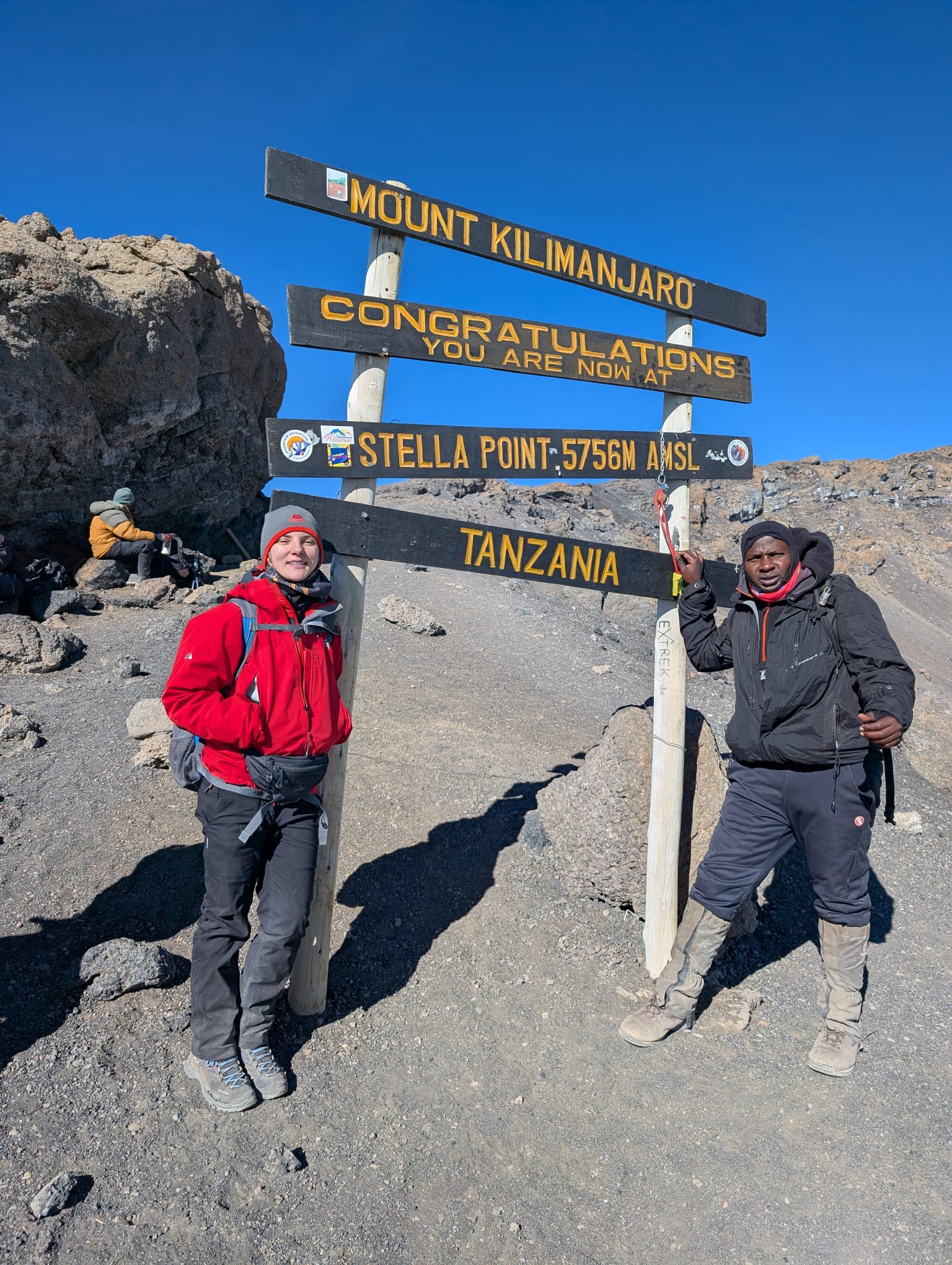
What does the Kilimania Fitness Classification say about your readiness?
The Kilimania Fitness Classification places climbers into five levels based on current activity, not ambition. Sabinus Msimba developed it from patterns observed across 1,247+ guided climbs. Place yourself honestly — most people overestimate by one full level.
| Level | What This Looks Like | Training Needed | Recommended Route | Summit Outlook |
|---|---|---|---|---|
| 1 — Very Unfit | Cannot walk 5km continuously. Breathless on stairs. | 12+ months | Do not book yet. Train first. | Low — under 15% without targeted prep |
| 2 — Sedentary | Desk job. Occasional walks. No consistent routine. | 6 months focused prep | 9-Day Northern Circuit | Moderate — with serious commitment |
| 3 — Moderately Fit | Regular walks, some gym, can hike 3–4 hours comfortably. | 3–4 months structured | 8-Day Lemosho | Good — with correct route |
| 4 — Active | Regular hiker, gym 3× weekly, multi-day trek experience. | 6–8 weeks fine-tuning | 7-Day Machame | Very Good — altitude is the main focus |
| 5 — Very Fit | Athlete or experienced mountaineer. | 4–6 weeks altitude focus | Any 7+ day route | Excellent |
Place yourself honestly. Most climbers overestimate by one full level.
How much does Kilimanjaro cost for unfit climbers, and what’s the real success rate?
Unfit climbers need longer routes, and longer routes cost more. Here is the honest breakdown: price ranges per person (USD, Kilimania 2026 rates) alongside the actual summit success rate Kilimania has recorded for each route.
| Route | Days | Price (USD) | Best For | Success Rate |
|---|---|---|---|---|
| 5–6-Day Marangu | 5–6 | $1,650 – $2,050 | Level 4–5 only. Not recommended for unfit climbers. | <50–60% |
| 7-Day Machame | 7 | $2,050 – $2,350 | Level 3–4 climbers. | 70–75% |
| 8-Day Lemosho | 8 | $2,350 – $2,650 | Level 2–3. Best value for unfit climbers. | 85–90% |
| 9-Day Northern Circuit | 9 | $2,650 – $2,950 | Level 1–2. Most forgiving route. | 90–95% |
The bottom line on cost: Because unfit climbers require more acclimatization days, they must budget for longer routes — which increases total cost by roughly $700–$1,300 compared to the shortest option. An unfit climber booking a 5-day Marangu to save money is statistically likely to fail. That extra spend is not a luxury; it is the price of a realistic summit chance. For a full cost breakdown including flights, visas, gear, and tipping, see our complete Kilimanjaro Cost Guide.
Quick fitness self-assessment: which level are you?
Answer four honest questions. The result will suggest your Kilimania Fitness Level and a starting route. This is a guide — not a medical assessment. Use the field test in the next section to verify.
🧭 Kilimanjaro Fitness Self-Assessment
How do you honestly assess your own fitness level?
Do not use your gym membership to place yourself. Use your boots. The only honest self-assessment for Kilimanjaro is a loaded, multi-hour hike on uneven ground — and how your body responds the next morning.
The field test is simple. Put on your Kilimanjaro boots, load a 5kg daypack, and hike on uneven terrain for 6 hours. Not tarmac — trails and park paths. Then observe:
- Finish without significant discomfort, functional the next morning → Level 3 minimum. You have a realistic starting point with 3–4 months of focused preparation.
- Finish but need two full rest days to recover → Level 2. You need 6 months minimum and the 9-day Northern Circuit.
- Cannot complete 6 hours → Level 1. Do not book yet. Build your base first.
Then add the back-to-back test: 5 hours on Saturday, 3 hours on Sunday, same pack both days. If Sunday destroys you — if your legs refuse and your recovery is incomplete — your preparation timeline is longer than you thought. Kilimanjaro requires seven to nine consecutive days of this. The mountain does not give you a rest day because you are tired.
The Swahili phrase pole pole — slowly, slowly — is not just a trail greeting. It is the pace discipline that separates climbers who summit from those who burn out at Barafu. Train at the pace where you can hold a full conversation. If you cannot speak in full sentences while moving, you are going too fast for Kilimanjaro training.
Not sure which fitness level describes you?
Message Sabinus directly. Describe your current weekly routine and he will tell you honestly which level you are at, which route matches it, and whether your timeline is realistic — before you pay anything. Karibu.
WhatsApp Sabinus: +255 756 449 990Or email: info@kilimania.co.tz — Response within 12 hours, 7 days/week (EAT, UTC+3)
Get the 12-Week Training Plan PDF
Enter your email and we’ll send the printable training calendar, gear checklist, and route comparison sheet.
No spam. Unsubscribe anytime. Prefer WhatsApp? Message Sabinus instead.
What actually happens to underprepared climbers on the mountain?
Underprepared climbers do not usually fail on Day 1. They feel strong in the forest and push too hard. The bill arrives at Barafu Camp on Day 5 — and by then there is no way to pay it back.
Days 1–2: Londorossi Forest (2,100m)
The air is forgiving here. Oxygen levels feel normal. Underprepared climbers often feel their strongest on these first two days — and that is the problem. They push the pace, they talk too much, they burn through glycogen reserves that their body will desperately need four days later at Barafu. The bill does not arrive in the forest.
Days 3–4: Shira Plateau and Barranco Wall (3,800m–4,000m)
Overnight recovery becomes incomplete for climbers who lack the aerobic base. Leg fatigue starts compounding rather than resolving. Appetite drops — a direct consequence of altitude combined with accumulated fatigue. Hydration suffers because eating and drinking feel like effort. Climbers who were “fine” on Day 1 are now visibly struggling to maintain pace.
Days 5–6: Karanga Camp and Barafu Camp (4,673m)
This is where guides run critical evaluations: pulse oximeter readings, walking pace, gait quality, mental clarity. Underprepared climbers show early altitude symptoms at Barafu not because altitude hits them harder — it does not — but because they arrive already depleted. Their reserves are gone. The altitude is simply the final straw on a body that has been running on empty since Day 3.
Summit Night
The push begins at midnight from Barafu Camp. The cold is immediate — windchill below −20°C within the first hour. By Stella Point at 5,756m, the decision is made: by the guide, by the body, or by both. For a detailed breakdown of the Lemosho route day by day, see our 8-Day Lemosho Route guide and Kilimanjaro Success Rates data.
What happens if you don’t summit?
This is the question unfit climbers are most afraid to ask. Here is the honest answer: turning back is not failure — it is the correct decision when your body signals danger. At Kilimania, we have protocols for this exact moment.
The Descent Protocol
If a climber cannot continue at Stella Point (5,756m) or earlier, the assistant guide immediately begins descent with them — no one descends alone. The descent from Barafu to Mweka Gate is 3,100m of knee-pounding terrain. Unfit climbers feel this descent more intensely than fit climbers because their quadriceps are already depleted. Trekking poles are mandatory in our protocol for this reason.
Your Money and Your Safety
Kilimania does not offer “summit guarantees” — no ethical operator does. What we do guarantee: if you are turned around for safety reasons (low SpO₂, suspected HAPE/HACE, or inability to maintain gait), you will not descend alone. You will have a certified guide and radio contact with base. Kilimania’s safety-turnaround policy: if a guide turns you around for medical reasons, we will discuss rescheduling your attempt subject to park fee regulations — ask our team for current terms before booking. We strongly recommend rescue insurance that covers evacuation above 4,000m. For policy guidance, see our Kilimanjaro Travel Insurance Guide.
The Psychological Reality
Most climbers who turn back experience a grief-like response for 24–48 hours. This is normal. The climbers who process it best are the ones who understood before booking that Kilimanjaro is a mountain, not a gym. The mountain does not owe anyone a summit. It offers a chance — and preparation determines whether you can take it. Many climbers who fail on a shorter attempt succeed the following year on the 8- or 9-day itinerary after training properly.
How does fitness actually affect altitude sickness?
Fitness does not prevent altitude sickness. This is the most important thing to understand before you book. What fitness determines is whether you have enough reserve capacity to manage altitude sickness when it arrives.
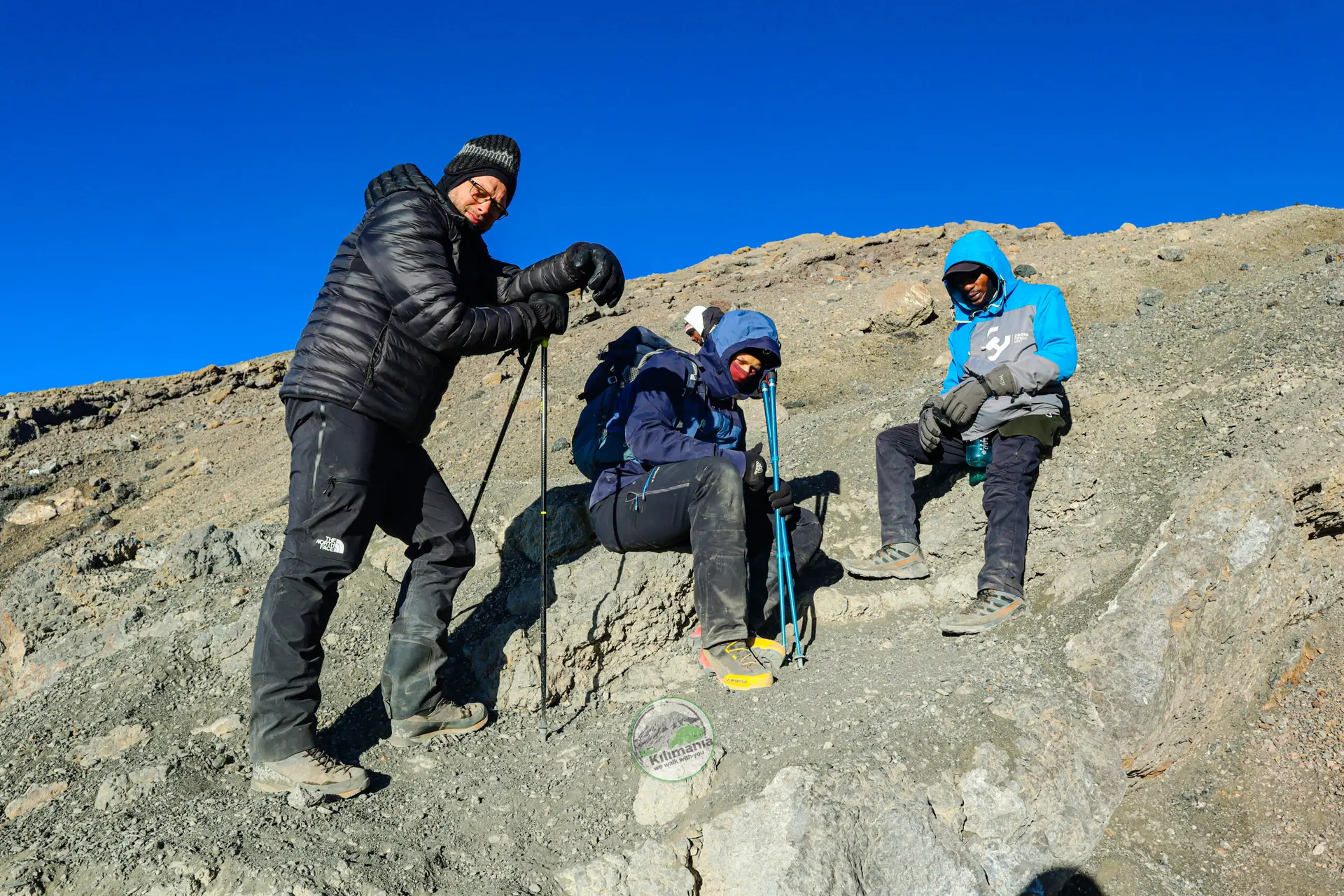
Altitude sickness — Acute Mountain Sickness (AMS), High Altitude Pulmonary Oedema (HAPE), and High Altitude Cerebral Oedema (HACE) — is a physiological response to reduced oxygen pressure. According to the Wilderness Medical Society (High Altitude Medicine & Biology) and the UIAA Medical Commission Position Statement on Altitude Illness, these conditions affect fit and unfit climbers at roughly similar onset rates. Being an athlete does not make you immune.
What fitness changes is your reserve capacity. On a standard trekking day at altitude, a fit climber may be operating at 40% of their maximum aerobic output — with 60% in reserve when altitude starts pushing back. An unfit climber on the same day may already be at 75% of their maximum — with almost nothing left when oxygen thins further. Because unfit climbers operate at a higher percentage of their maximum aerobic capacity even at sea level, they have less buffer when altitude reduces oxygen availability. The same altitude affects them more severely — not because altitude discriminates, but because they have no reserve left to draw on.
Route length is the primary acclimatisation tool. The 8-day Lemosho and 9-day Northern Circuit include extra days at intermediate elevations specifically to give the body time to adjust. No amount of fitness substitutes for those extra days at altitude. A very fit climber on a 5-day Marangu route is at higher AMS risk than a moderately fit climber on an 8-day Lemosho. For a full breakdown of altitude symptoms and the Kilimania monitoring protocol, see our Altitude Sickness Guide.
📥 Free Download: Kilimanjaro Altitude Symptom & AMS Checklist
Altitude illness is the leading reason climbers turn around on Mount Kilimanjaro. This practical checklist is used by Senior Guide Sabinus Msimba and the Kilimania Adventure team to monitor climbers throughout every expedition.
- Normal acclimatisation symptoms above 3,000m
- Acute Mountain Sickness (AMS) warning signs
- HACE and HAPE emergency symptoms
- Daily health monitoring form (SpO₂, pulse, hydration)
- Guide reporting and self-assessment checklist
Prepared by: Sabinus Msimba, Senior Mountain Guide, Kilimania Adventure, Moshi, Tanzania.
For educational purposes only. Not a substitute for professional medical advice. Consult a physician before high-altitude travel.
Altitude medication: should unfit climbers take Diamox?
Diamox (acetazolamide) is the standard prophylactic medication for Acute Mountain Sickness. It does not replace acclimatization, but it can speed the body’s adjustment to altitude. For unfit climbers — who already have lower physiological reserve — this question matters.
What Diamox actually does
Diamox forces the kidneys to excrete bicarbonate, which acidifies the blood and stimulates deeper breathing. This increases oxygen saturation at altitude. According to the Wilderness Medical Society, Diamox reduces AMS incidence by approximately 50% when started 24 hours before ascent.
Should you take it?
If you are a Level 2 or Level 3 climber, discuss Diamox with your physician 8 weeks before departure. Do not self-prescribe. Common side effects include tingling fingers, increased urination, and altered taste for carbonated drinks — manageable, but worth testing before you fly to Tanzania.
Important: Diamox is not a substitute for fitness or route length. A sedentary climber on a 5-day Marangu route taking Diamox still has worse odds than a moderately fit climber on an 8-day Lemosho route without medication. Route selection is the primary tool; Diamox is secondary.
Does age change what’s possible on Kilimanjaro?
Age alone does not determine summit outcome. Fit 60-year-olds summit regularly. The variables that matter are cardiovascular reserve, preparation timeline, and route selection — not the number on your passport.
I have guided climbers in their sixties and seventies to Uhuru Peak. I have also guided fit-looking people in their thirties who turned back at Barafu. Age is a factor, but it is not the primary one.
Climbers aged 60+: With 4–6 months of structured preparation and the 8-day Lemosho or 9-day Northern Circuit, a fit 60-year-old has a realistic summit outlook. The key difference from younger climbers is recovery time between training sessions — the body needs longer to adapt. A training plan that works for a 35-year-old in 12 weeks may take a 62-year-old 18–20 weeks to complete at the same quality. Account for this when setting your timeline.
Climbers aged 70+: Possible, but this requires physician clearance before booking — not as a formality, but as a genuine cardiovascular risk assessment. The 9-day Northern Circuit is the appropriate route. HACE and HAPE risk assessment should be part of the pre-climb medical consultation. I would not guide a 70+ climber on a route shorter than 9 days. KINAPA sets a minimum climbing age of 10; there is no upper age limit — our oldest successful client was 74.
The primary concern at any age over 55 is cardiovascular reserve — the heart’s capacity to sustain elevated output over many hours at altitude. This is trainable, but it takes longer to build. For a detailed guide, see our article on Climbing Kilimanjaro Over 50.
What about common medical conditions?
Several common medical conditions require specific planning for Kilimanjaro — but most are not automatic bars to climbing. The universal rule: consult a physician at least 8 weeks before departure and mention altitude, consecutive days, and pack weight specifically. General fitness clearance is not enough.
High Blood Pressure
Controlled hypertension is not an automatic bar. Altitude raises blood pressure transiently in most people — a normal physiological response, but one that interacts with existing hypertension. Climbers on ACE inhibitors or ARBs should request a medication review before departure; altitude can transiently raise systolic pressure by 10–20mmHg. Bring a personal blood pressure monitor and share readings with your guide daily. A medication review with a physician who understands high-altitude physiology is essential before departure.
Diabetes (Type 1 and Type 2)
Managing blood glucose at altitude is more complex than at sea level. Appetite suppression is common above 4,000m, cold affects insulin absorption, and sustained exertion creates unpredictable glucose demands. Store insulin in your jacket, not in the porter bag — cold storage affects absorption. Test glucose more frequently above 4,000m because appetite suppression and exertion create unpredictable swings. A detailed pre-climb medical protocol — not a general clearance letter — is required. Glucose monitoring equipment must be accessible at all times.
Asthma
Cold, dry air at altitude is a known asthma trigger. The air at Barafu Camp at midnight is both extremely cold and extremely dry. A rescue inhaler must be carried and accessible — not packed at the bottom of a porter’s load. Preventive inhaler protocols should begin 48 hours before ascent where prescribed. Cold-air-induced bronchospasm is common at Barafu Camp — cover your mouth and nose with a buff to warm inhaled air. Discuss a preventive inhaler protocol with your physician 6–8 weeks before departure.
Knee Problems
Kilimanjaro’s descent from Uhuru Peak to Mweka Gate drops 3,100m in a single day. Pre-existing knee issues must be rehabilitated before the climb, not managed during it. Pre-habilitation is not optional: if you cannot squat to a chair and stand without pain at sea level, the Mweka descent will be significantly harder than expected. Start quadriceps strengthening 12 weeks before departure. Trekking poles are non-negotiable for anyone with knee history — they reduce knee load on descent significantly.
Medical clearance checklist
Do not show up with a generic “fit to travel” note. Ask your doctor specifically about: cardiovascular response to sustained exertion, respiratory function and exercise oxygen desaturation, medication interactions with altitude, and any prior experience above 4,000m. Bring our Altitude Symptom Checklist and your planned itinerary to the appointment. For a full overview, see Climbing Kilimanjaro With Medical Conditions.
Essential gear for unfit or beginner climbers
Unfit climbers stress their bodies differently than fit climbers. The right gear does not replace fitness, but it reduces the penalty of being underprepared. These items are non-negotiable for Level 1–3 climbers.
- Trekking poles — Reduce knee load meaningfully on descent. Essential if you have any knee history or carry excess weight.
- Gaiters — Keep volcanic scree out of your boots on summit night. Scree in boots causes blisters; blisters cause gait changes; gait changes cause falls.
- Merino wool base layers — Regulate temperature during stop-start hiking. Cotton retains moisture and chills you at altitude.
- Summit down jacket (rated to −20°C) — Unfit climbers often move slower, generating less body heat. A warmer jacket compensates.
- Knee brace or compression sleeve — If you have any knee vulnerability, bring it. The 3,100m descent does not forgive.
- Quality hiking boots (broken in) — See our Kilimanjaro Boots Guide. Do not attempt in new boots.
- Headlamp with fresh batteries — Summit night starts at midnight. A failed headlamp at 5,000m is a serious safety issue.
- 5–6L hydration system — Unfit climbers often under-hydrate because drinking feels like effort. Build the habit in training.
For the complete packing list with weight limits and rental options in Moshi, see our Kilimanjaro Packing List.
What training plan works if you are currently unfit?
This 12-week plan is a starting block for Level 3 climbers. Level 2 climbers need to run it twice or more before they are ready. The checkpoint at Week 8 is a hard gate — not a suggestion.
Weeks 1–4: Foundation
- Daily 30-minute walks, 6 days per week. Add 5 minutes per week: Week 1 = 30 min, Week 4 = 45 min.
- Stairs daily: build to 100 floors per week by Week 4.
- 3 weekly strength sessions: step-ups, squats, wall sits, calf raises. No gym required — stairs and a park will do.
- Rule: miss two consecutive days → restart the week. Consistency is the adaptation.
Weeks 5–8: Building
- 3 hikes per week: two sessions of 2 hours minimum, one long session of 3–4 hours.
- Loaded pack from Week 5: start at 3kg, increase to 5kg by Week 8.
- One dedicated hill session weekly: 8–12 repeats of a 60–90 second climb at pace.
- Practice eating on the move using mountain foods — bars, nuts, dried fruit. Your gut needs to process food while your legs are working.
- Checkpoint at Week 8: complete a 4-hour hike with a 5kg pack without significant next-day disruption. Cannot? Add 2 weeks before progressing. This gate is not optional.
Weeks 9–12+: Mountain Simulation
- One 5–6 hour hike weekly with 600–1,000m elevation gain and a full 5–6kg pack.
- Back-to-back days twice monthly: 5 hours Saturday, 3–4 hours Sunday with the same pack. This is the single most important training adaptation for Kilimanjaro — it teaches your body to move when it is already tired, which is exactly what Barafu Camp demands.
- Pace discipline: train at the pace where you can hold a full conversation. Pole pole — the same rhythm the mountain demands from Day 1.
Training in a flat city: treadmill and stair alternatives
If you live in a flat area with no hills, use a treadmill at maximum incline (12–15%) for 45–60 minutes. Supplement with stair climbing in office buildings or apartment blocks. Aim for 100 floors per week by Week 4, building to 200 floors by Week 8. Elliptical machines are a poor substitute — they do not replicate the eccentric load of downhill walking, which is what destroys untrained legs on descent day.
Sample training week (Level 3 climber, Week 5–8)
| Day | Activity | Duration | Notes |
|---|---|---|---|
| Monday | Rest | — | Active recovery — gentle walk, stretch |
| Tuesday | Hike (flat/undulating) | 2 hours | 3kg pack, conversational pace |
| Wednesday | Strength + stairs | 45 min | Squats, step-ups, wall sits, 20 floors stairs |
| Thursday | Hike (hill repeats) | 1.5 hours | 8–12 repeats of 60–90 sec climb, 3kg pack |
| Friday | Rest | — | Complete rest |
| Saturday | Long hike (elevation gain) | 3–4 hours | 5kg pack, 300–500m gain, pole pole pace |
| Sunday | Recovery walk | 1–2 hours | Light, no pack, focus on mobility |
Key principle: Consistency beats intensity. Missing two consecutive days means restarting the week. Kilimanjaro’s demand is sustained effort, not peak performance.
📥 Free Download: Kilimanjaro 12-Week Training Calendar
Download the same week-by-week training plan used by Kilimania Adventure guides and built from patterns observed across 1,247+ guided climbs.
Includes:
- 12-week hiking and endurance plan
- Pack weight progression schedule
- Back-to-back training days structure
- Peak and taper strategy
- Route recommendations by fitness level
Download the Free PDF
Prepared by Sabinus Msimba, Senior Kilimanjaro Guide and Co-founder of Kilimania Adventure.
Mental preparation for unfit climbers
If you are starting from a lower fitness level, the mental game matters as much as the physical one. You will experience more discomfort, more doubt, and more negotiation with yourself about quitting. Here is how to prepare for that.
- Accept that you will feel behind. Fitter climbers will overtake you on the trail. This is normal — your goal is not to match their pace.
- Your pace is pole pole. This is not a suggestion; it is the only reliable strategy for your physiology.
- Summit success is defined by the summit sign, not by how fast you got there or how you looked doing it.
- Your guide is your ally. When a guide tells you to slow down or turn back, it is not judgement — it is 20+ years of pattern recognition keeping you safe.
- Visualise the summit for a few minutes daily during training. It genuinely helps prepare you for the mental demands of 5,895m.
- Break the climb into sections. Barafu is not “almost there” — it is 1,222m below the summit. Treat each camp as its own milestone.
- Expect an emotional dip between Days 3 and 5. It is physiological — fatigue, altitude, and reduced appetite. Knowing it is coming makes it easier to move through.
Read more about altitude sickness and how to manage it mentally and physically.
Which routes work for lower fitness levels?
Route selection is not about scenery preference — it is about acclimatisation time. For lower-fitness climbers, extra days at intermediate elevations are the primary tool for improving summit odds. Choose the route that matches your starting fitness, not your aspirational fitness.
| Fitness Profile | Summit Outlook | Recommended Route |
|---|---|---|
| Sedentary, no training | Very low | Do not book yet. Train first. |
| Sedentary, 6 months training | Realistic | 8-Day Lemosho or 9-Day Northern Circuit |
| Active weekend hiker | Good | 8-Day Lemosho or 7-Day Machame |
| Marathon runner, no trekking | Moderate | 8-Day Lemosho (add back-to-back days to training) |
| Experienced multi-day trekker | High | Any 7+ day route |
| Gym regular, no hiking | Low without hiking practice | 8-Day Lemosho after hiking-specific training |
Avoid the 5-day Marangu route if you are a Level 2 or Level 3 climber. Its compressed timeline removes the acclimatisation buffer these climbers need most, and the data shows it: success rates fall below 50% on this route.
The 8-day Lemosho route is the correct choice for Level 2 and Level 3 climbers who have completed their preparation. It approaches from the west, crosses the Shira Plateau, and includes enough days at intermediate elevation to give the body time to adjust before summit night.
The 9-day Northern Circuit is the most forgiving route on the mountain. Any doubt about readiness — choose this one. The additional days and the traverse around the northern slopes give the body the longest possible acclimatisation window.
For current conditions and seasonal planning, see our Kilimanjaro Weather guide.
📥 Free Download: Kilimanjaro Route Comparison Cheat Sheet 2026
Still deciding which Kilimanjaro route is right for you? Download our free printable cheat sheet prepared by Senior Mountain Guide Sabinus Msimba.
- ✓ Compare all 7 Kilimanjaro routes side by side
- ✓ Difficulty, scenery, and crowd levels
- ✓ Expert recommendations for first-time climbers
- ✓ Updated for the 2026 climbing season
Prepared by Sabinus Msimba, Senior Mountain Guide, Kilimania Adventure, Moshi, Tanzania.
Best time to climb for slower or unfit climbers
Weather windows matter more for slower climbers. Rain and mud increase energy expenditure, reduce traction, and raise hypothermia risk. If you are already operating closer to your physical limit, choose the driest season.
- January–mid-March: Warm, generally dry. Excellent for unfit climbers. Crowds are moderate. Book early.
- June–October: Coolest and driest. Best visibility. Cold nights demand better gear. Ideal for unfit climbers who overheat easily.
- November–December: Short rains. Avoid if possible. Trails are slippery and visibility is reduced.
- April–May: Long rains. Not recommended for unfit climbers. Some operators reduce operations on certain routes.
For daily weather data by elevation, see our Kilimanjaro Weather Guide.
The Bottom Line
The mountain does not stop you because you lack determination. It stops you because your body runs out of reserves. The preparation timeline is not a recommendation — it is a minimum. Choose it honestly from the classification, test yourself in boots on uneven terrain, and select the route that matches where you are starting from — not where you hope to be on Day 1. The climbers who reach Uhuru Peak are not always the fittest people on the mountain. They are the ones who were honest about their starting point and gave themselves enough time to change it.
External References & Further Reading
- Wilderness Medical Society — High Altitude Medicine & Biology guidelines on AMS, HAPE, and HACE
- UIAA Medical Commission — Position Statement on Altitude Illness prevention and treatment
- KINAPA — Kilimanjaro National Park Authority — Official operator data and park regulations
- Tanzania e-Visa Portal — Apply online before travel
- TATO — Tanzania Association of Tour Operators — Verify licensed operators
Information for International Travellers
- Currency: Prices are quoted in USD. Approximate equivalents at time of writing: USD 1 ≈ GBP 0.79 / EUR 0.92 / AUD 1.57. Check current rates before travel.
- Tanzania e-Visa: USD 50 for most nationalities; USD 100 for US citizens. Apply at immigration.go.tz.
- Yellow Fever: Vaccination recommended if arriving via a yellow fever endemic country. Check requirements with your travel health clinic.
- Pre-climb accommodation in Moshi: USD 40–150/night depending on hotel tier. Recommendations available on request.
- Kilimanjaro International Airport (JRO): Primary arrival point. Pickups available directly from JRO.
- Arusha Airport (ARK): Alternative for domestic Tanzania or Nairobi connections. Pickup available.
- Response time: EAT (UTC+3), within 12 hours, 7 days/week.
- Travel insurance: Confirm coverage for high-altitude evacuation above 6,000m before departure. See our Travel Insurance Guide.
From our base in Moshi, Kilimanjaro Region, Kilimania Adventure runs Kilimanjaro climbs on all major routes and daily safaris to Serengeti National Park, Ngorongoro Crater, Tarangire National Park, and Lake Manyara, with pickups from Kilimanjaro International Airport (JRO) and Arusha Airport (ARK).
Frequently Asked Questions
Can an unfit person climb Kilimanjaro without training?
No — not safely and not with realistic summit odds. A sedentary adult needs a minimum of 6 months of focused training before attempting Kilimanjaro. The industry-wide summit success rate is around 65% across all routes, and that figure drops sharply for climbers who arrive underprepared. Anyone presenting preparation as optional is prioritising your booking over your safety.
What is the minimum fitness level required for Kilimanjaro?
Level 3 on the Kilimania Fitness Classification is the practical minimum — meaning you can already hike 3 to 4 hours comfortably with a consistent exercise routine. Level 2 (sedentary) is possible but requires 6 months of focused preparation and the 9-day Northern Circuit to provide sufficient acclimatisation time. Level 1 climbers should not attempt Kilimanjaro without at least 12 months of structured preparation.
Does being fit prevent altitude sickness?
No. According to the Wilderness Medical Society and the UIAA Medical Commission, AMS, HAPE, and HACE are responses to reduced oxygen pressure that affect fit and unfit climbers at roughly similar onset rates. What fitness provides is reserve capacity: a fit climber at 40% of their maximum has significant buffer when altitude hits; an unfit climber already at 75% of maximum has almost none.
How long does an unfit person need to train for Kilimanjaro?
A Level 2 (sedentary) climber needs a minimum of 6 months of focused training. A Level 1 climber — someone who cannot walk 5km continuously — needs 12 months or more. The 12-week training plan in this article is a starting block for Level 3 climbers only. Use the field test to place yourself accurately before setting your timeline.
Which route is recommended for lower fitness levels?
The 8-day Lemosho route is recommended for Level 2 and Level 3 climbers who have completed their preparation — it provides the acclimatisation margin lower-fitness climbers need. The 9-day Northern Circuit is the most forgiving option: if there is any doubt about readiness, choose this one. Avoid the 5-day Marangu route; its summit success rate falls below 50%.
Is the gym enough preparation for Kilimanjaro?
No. The gym builds strength and a cardiovascular base, but it does not replicate consecutive hiking days, pack weight on uneven terrain, or the multi-day recovery demands of Kilimanjaro. A gym regular with no hiking experience falls into the low-readiness category without additional hiking-specific training. Back-to-back days with a loaded pack are non-negotiable.
Does cycling or running prepare you for Kilimanjaro?
Partially. Both build cardiovascular fitness, which is a useful foundation. Neither replicates the loaded, multi-day, uneven-terrain demands of Kilimanjaro. A marathon runner with no trekking experience has moderate summit odds — the cardiovascular engine is there, but the specific muscle groups and recovery pattern for multi-day hiking are not. Supplement with back-to-back hiking days carrying a 5kg pack on uneven ground.
Will being overweight affect summit chances?
Excess body weight increases cardiovascular load at altitude and adds significant stress to the knees on the 3,100m descent from Uhuru Peak to Mweka Gate. It is not an automatic bar, but it increases the required preparation timeline and makes route selection more important. The 8-day Lemosho or 9-day Northern Circuit are strongly recommended, along with a personal porter to reduce daypack weight.
Can a 60-year-old climb Kilimanjaro?
Yes. With 4 to 6 months of structured preparation and the 8-day Lemosho or 9-day Northern Circuit, a fit 60-year-old has a realistic summit outlook. The primary concern is cardiovascular reserve, not chronological age. Physician clearance is required before booking, and the training plan must account for longer recovery time between sessions compared to younger climbers.
What heart rate should I train at for Kilimanjaro?
Train at 60 to 70 percent of your maximum heart rate — a conversational pace. If you cannot hold a full sentence while moving, you are going too fast for Kilimanjaro training. The goal is sustained aerobic output over many hours, not short high-intensity efforts. This mirrors the pole pole rhythm the mountain demands from the first camp to the summit.
Should unfit climbers take Diamox?
Discuss it with your physician 8 weeks before departure. Diamox (acetazolamide) reduces AMS incidence by roughly 50% but does not replace fitness or route length. Do not self-prescribe. A sedentary climber on a short route taking Diamox still has worse odds than a moderately fit climber on a longer route without medication.
How much does Kilimanjaro cost for an unfit climber?
Unfit climbers should budget for the 8-day Lemosho ($2,350–$2,650) or 9-day Northern Circuit ($2,650–$2,950) rather than shorter, cheaper routes. The extra $700–$1,300 buys the acclimatisation days that materially improve summit odds. See our full cost guide for flights, gear, and tipping.
What happens if I don’t summit because I’m unfit?
If a guide determines you cannot safely continue, an assistant guide descends with you immediately — you are never left alone. You may still receive a Stella Point or Gilman’s Point certificate. Ethical operators do not offer summit guarantees; travel insurance covering high-altitude evacuation is strongly recommended before you book.
Can I climb Kilimanjaro if I have never hiked before?
Yes, but only if you are honest about your Level 1 status and commit to 12+ months of structured training. Kilimanjaro is not a beginner hike — it is a multi-day endurance event at altitude. Start with the foundation plan in this guide and book only after passing the 6-hour field test.
Do I need travel insurance for Kilimanjaro?
Yes — and it must cover evacuation above 6,000m. Standard travel insurance often excludes high-altitude trekking. Verify that your policy includes emergency medical evacuation before booking. See our Kilimanjaro Travel Insurance Guide.
Conclusion
Unfit people reach Uhuru Peak at 5,895m every year. They do it by placing themselves honestly on the classification, choosing a route that matches their starting point, and arriving with a body that can sustain what the mountain demands. The ones who do not make it are rarely weak — they are underprepared, and often no one told them early enough.
Place yourself accurately. Complete the field test. Use your honest timeline. Browse our Kilimanjaro Routes 2026 guide for routes, costs, and summit data. Read about Senior Guide Sabinus Msimba and the team who will guide you.
Hakuna matata about the mountain’s honesty — it will show you exactly where you stand.
We Walk With You.Ready for an honest assessment of your fitness and route options?
Message Sabinus directly. Tell him your current weekly routine, your target dates, and your route questions. He will reply with an honest assessment — no pressure, no booking required.
WhatsApp: +255 756 449 990 Email: info@kilimania.co.tzResponse within 12 hours, 7 days per week from Moshi (EAT, UTC+3). Karibu.
Senior Kilimanjaro Guide, WFR-Certified, Co-founder — Kilimania Adventure, Moshi, Tanzania
KINAPA-licensed since 2003 · 22+ years guiding · 300+ personal Uhuru Peak summits · 1,247+ climbers guided (team-wide, 2019–2025) · Wilderness First Responder, SK Healthy & Safety Solutions Ltd., Arusha (2024) · Active member, Kilimanjaro Guide Association (KGA)
Career began in 2001 as a porter at age 17.
This article contains information about physical exertion and altitude physiology at elevations above 4,000m. It is intended for general educational purposes only and does not constitute medical advice. High-altitude trekking carries genuine physiological risks, including Acute Mountain Sickness (AMS), High Altitude Pulmonary Oedema (HAPE), and High Altitude Cerebral Oedema (HACE). These conditions can develop rapidly and may be life-threatening. Climbers with any pre-existing medical condition — including cardiovascular disease, hypertension, diabetes, respiratory conditions, or a history of altitude illness — must consult a qualified physician before undertaking high-altitude travel, including specific discussion of Diamox (acetazolamide) if considering its use. Wilderness Medical Society guidelines and UIAA Medical Commission position statements are referenced for educational context only. Always seek professional medical advice appropriate to your individual health status before booking.
References: Wilderness Medical Society Practice Guidelines for Prevention and Treatment of Acute Altitude Illness. UIAA Medical Commission: Recommendations for Prevention of Altitude Illness. KINAPA operator summit data (public records).
Kilimania Adventure is a TATO-registered tour operator organising Kilimanjaro climbs and safaris from Moshi, Tanzania. We benefit commercially if you travel with us. Summit success data cited in this article (94% client success rate, 1,247+ guided climbs) comes from Kilimania Adventure’s own verified operational records (2019–2025), which reflect a route mix weighted toward 8- and 9-day itineraries. The 65% industry-wide figure is derived from KINAPA published operator data, cross-referenced with Kilimania records. Cost and success-rate figures in the tables above are Kilimania’s own 2026 rates and internal records and may vary by operator. We encourage you to compare at least two other TATO-registered operators before booking.
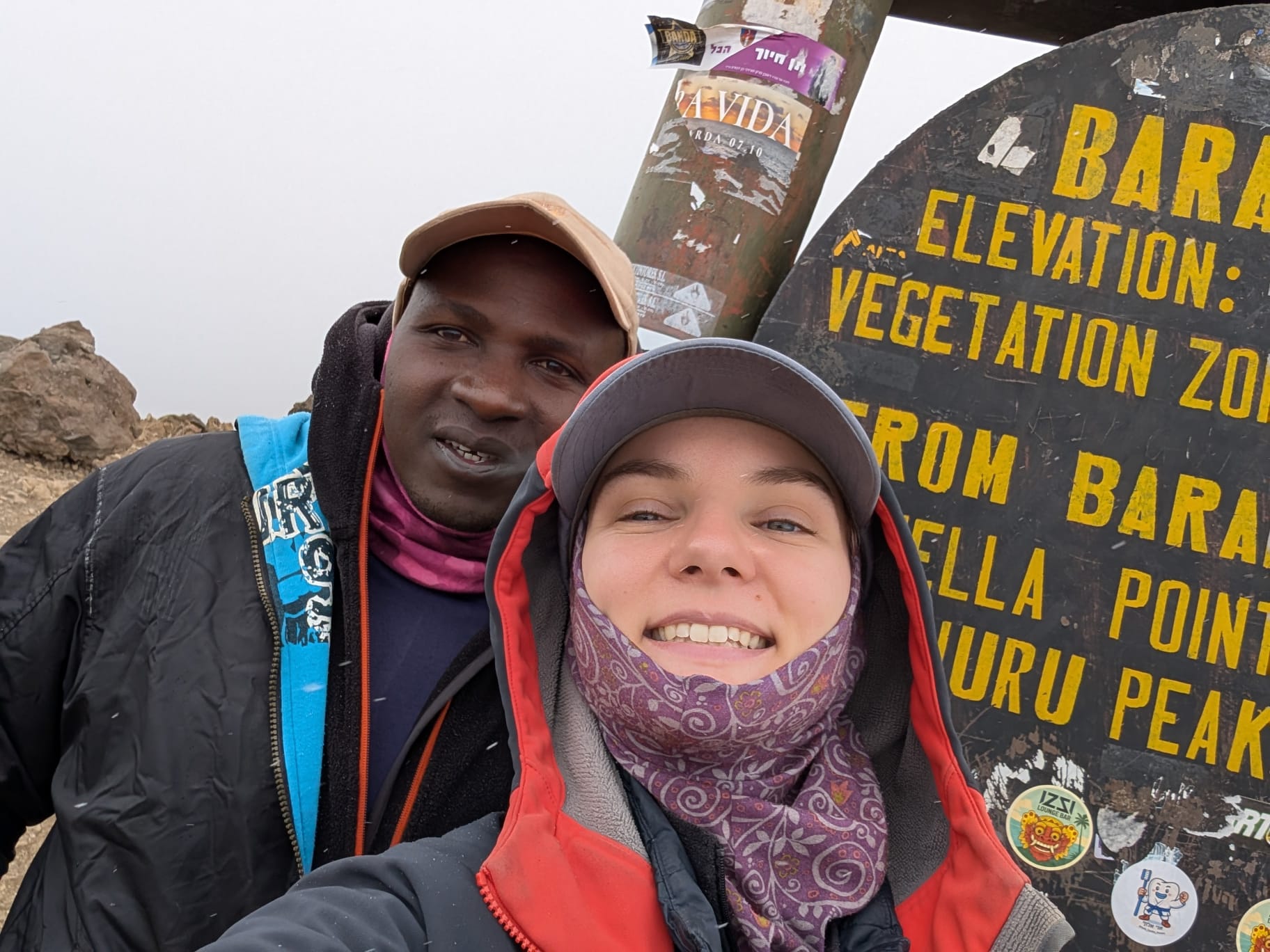
is like you change the image url please rewrite and fix only image url that use before the orignal one this two image only Senior Kilimanjaro guide Sabinus Salvatory Msimba leads Kilimania Adventure clients above Barafu Camp during the final summit ascent to Uhuru Peak (5,895m), Tanzania.https://kilimania.co.tz/wp-content/uploads/2026/07/kilimanjaro-summit-push-barafu-camp-sabinus-msimba-kilimania-adventure-scaled.jpg Senior Guide Sabinus Msimba and his client from England pause at Stella Point (5,756m) before the final ascent to Uhuru Peak, the highest point in Africahttps://kilimania.co.tz/wp-content/uploads/2026/07/Kilimanjaro-Park-Fees-2026-Guide-–-Official-TANAPA-Costs-by-Route-Kilimania-Adventure.png