Home > Kilimanjaro Climbing > Kilimanjaro Tipping Guide
Kilimanjaro Tipping Guide
Budget $250–$400 per climber for a 6–8 day Kilimanjaro climb, paid in cash USD on the final morning. This covers your lead guide, assistant guide, cook, and porters as a group — not per person per role.
Tipping is not optional. For most crew, it makes up 40–60% of what they take home from your climb, per Kilimania’s own crew payroll records. This is not a thank-you bonus for a good attitude.
A porter’s daily wage on Kilimanjaro is low enough that tips are functionally part of the pay, not an extra. In this Kilimanjaro tipping guide, we give you exact numbers, a way to think through your own group size, and the full tipping ceremony walkthrough so you’re not guessing on your last morning on the mountain. If you’re still weighing what the climb itself is actually like day to day, our guide to what climbing Kilimanjaro is really like covers that ground first.
Have questions about how Kilimania pays its crew? Ask us directly on WhatsApp — we’ll tell you the base wage and tip split before you book. As we say here in Moshi, karibu — you’re welcome to ask any question before you book, not after.
Quick Answer
Budget $250–$400 per climber for a standard 6–8 day Kilimanjaro climb, given as cash USD in a single ceremony on your final morning. The exact figure depends on your group size and route length — solo climbers and small groups pay more per person because fixed crew roles (lead guide, cook) are split among fewer people.
Deciding between a shorter or longer route also affects your total crew size — see how many days to climb Kilimanjaro for that comparison, or our Kilimanjaro cost breakdown 2026 for the full cost picture.
Key Stats
- $250–$400 — recommended tip per climber, 6–8 day route
- $5–$10/day — typical porter tip, per porter, from the group
- $20/day — typical lead guide tip, from the group
- 40–60% — share of porter take-home income that comes from tips, not wages (per Kilimania’s crew payroll records)
- 20kg — KPAP’s official maximum porter load limit
- 1 — number of tipping ceremonies; tips are given once, at the end
The Bottom Line
A legitimate 7-day Kilimanjaro climb cannot be run on porter wages alone — the daily rate is too low to live on without tips. If an operator tells you “tips are optional, give what you feel,” that’s technically true, but it shifts the burden of a living wage onto your discretion.
Climbers who under-tip out of confusion aren’t being cheap on purpose. They usually just weren’t told the real numbers until the final morning.
Why Tipping Matters on Kilimanjaro
Porter and cook wages on Kilimanjaro are set low enough that tips routinely make up 40–60% of what the crew actually takes home from a climb, per Kilimania’s own crew payroll records. Tipping is not a bonus for friendliness — it’s the second half of their pay.
KPAP, the Kilimanjaro Porters Assistance Project, does not publish one single binding national wage scale, because Tanzania has no enforced statutory minimum specific to mountain crew. What KPAP does instead is monitor partner operators and verify that porters carry no more than the 20kg load limit.
KPAP also confirms crew receive food and proper shelter, and confirms tips reach the people they’re intended for rather than being skimmed by a middleman. You can read KPAP’s own guidance directly at kiliporters.org.
Because wages aren’t standardized, the gap between a well-paying operator and a corner-cutting one is wide. A porter working for an ethical, KPAP-monitored operator earns a base wage plus a predictable tip.
A porter working for an operator that races to the bottom on price has a much thinner base wage — and if climbers on that trip also under-tip because nobody explained the system, that porter’s month gets noticeably harder. If you’re comparing a budget quote against this range, our cheap Kilimanjaro climb breakdown explains exactly where that savings usually comes from.
This is also seasonal work. Most crew climb 6–8 months of the year during Kilimanjaro’s dry and shoulder seasons, then have little or no mountain income for the remaining months. Tips earned in season are frequently what stretches into the low season.
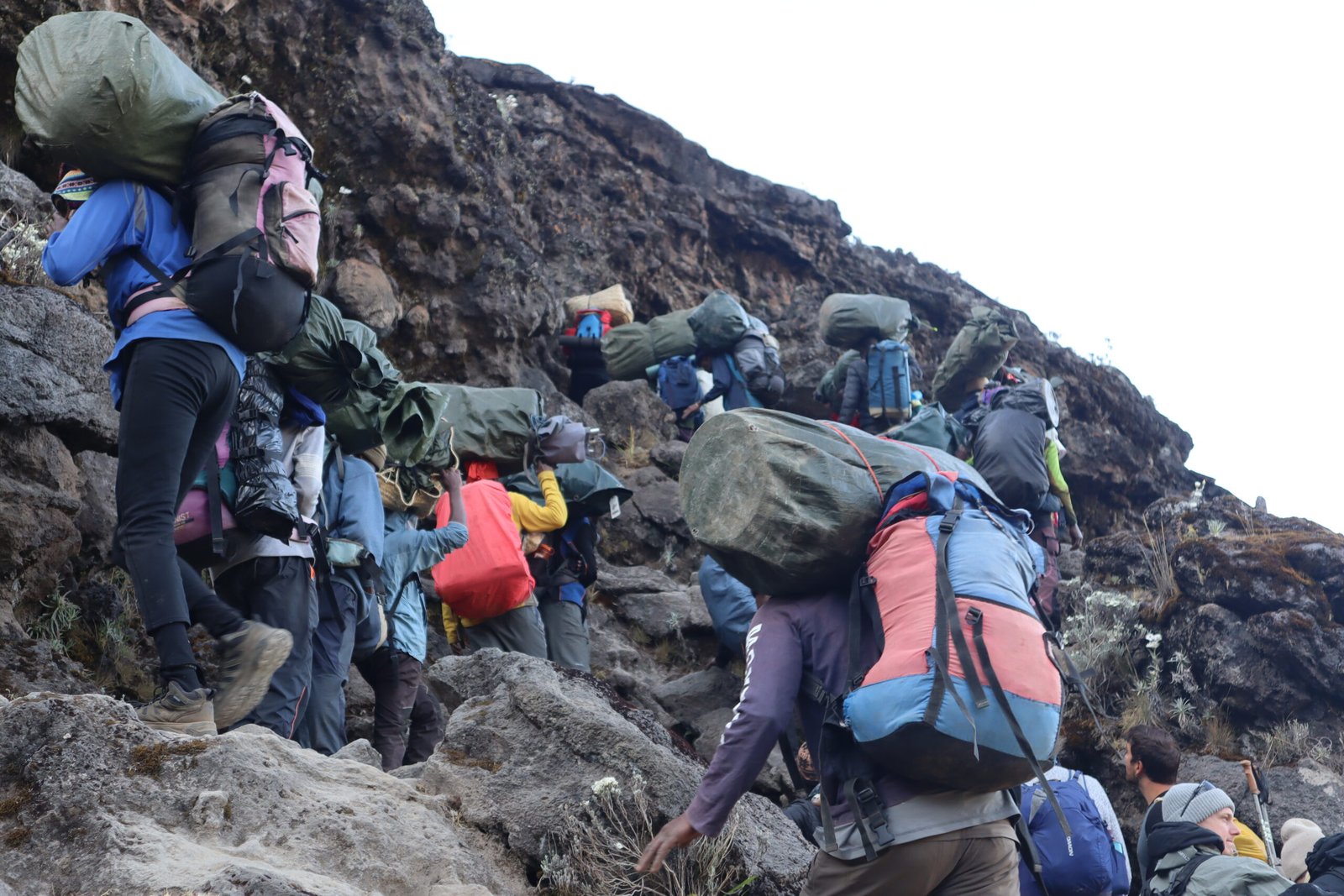
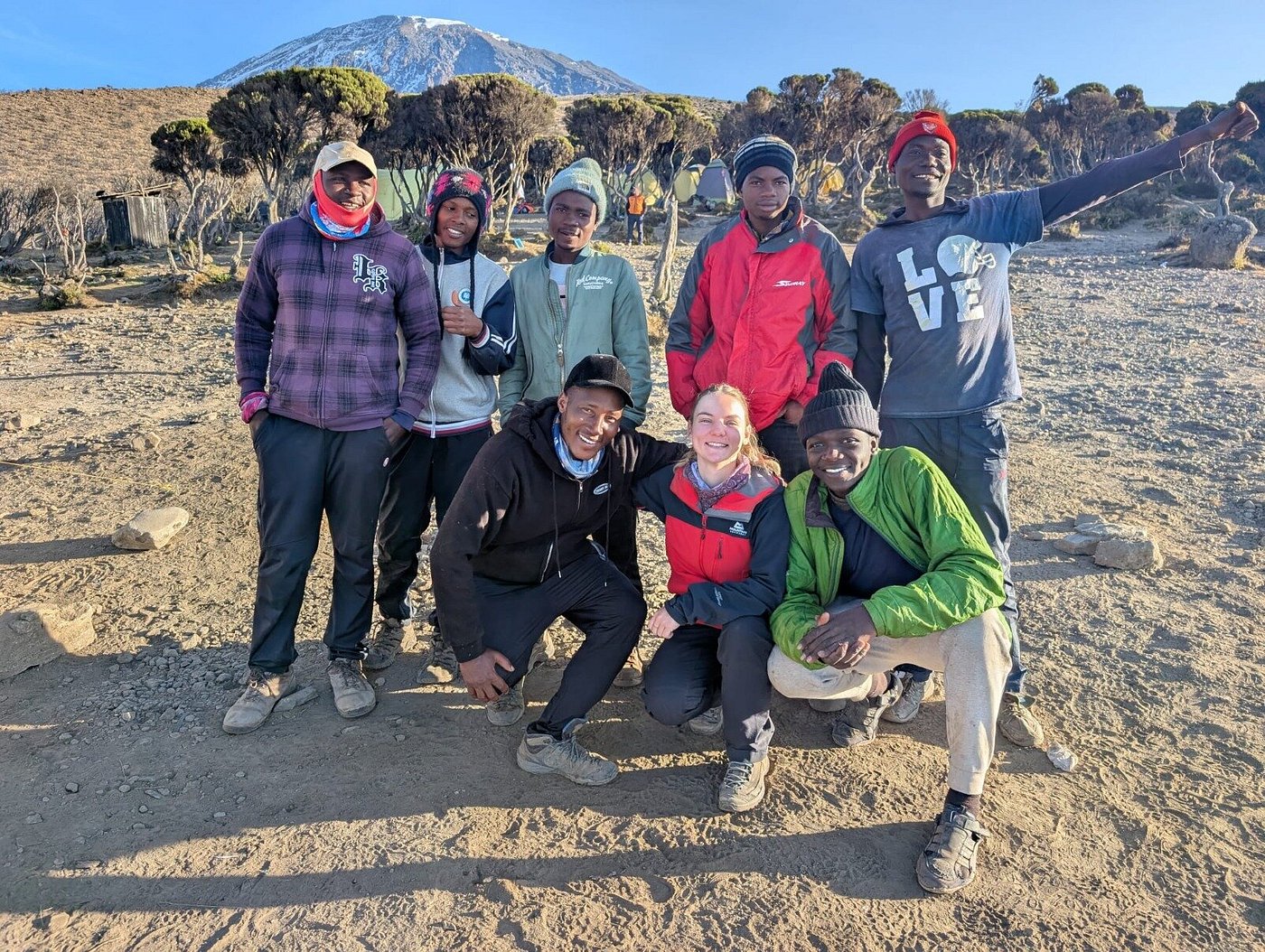
Sabinus Msimba, who has guided more than 300 summits over 22 years from Moshi, puts it plainly: the porters who reach camp ahead of you, set up your tent, and have hot water ready when you arrive are not doing a hobby. They are doing the hardest physical job on the mountain for the lowest base pay on the crew. Read his full guide profile here.
Practical tip: Ask any operator, before you book, what the base daily wage is for porters on their climbs. If they can’t or won’t tell you a number — that is itself useful information.
How Much Should You Tip Kilimanjaro Guides and Porters?
Short answer: $250–$400 per climber on a 6–8 day route is the range used by most KPAP-aligned operators, pooled across the whole crew and not paid per role individually by each climber.
| Crew Role | Recommended Daily Tip (from the group) | Typical 7-Day Total |
|---|---|---|
| Lead Guide | $20/day | $140 |
| Assistant Guide | $15/day | $98 |
| Cook | $12/day | $84 |
| Porter (each) | $5–$10/day | $35–$70 |
Illustrative example — 7-day Machame, group of 4 (figures below are a worked calculation to show how splitting works, not a specific logged trip): lead guide $140, assistant guide $98, cook $84, and 9 porters at $6/day average ($378).
Total crew tips: roughly $700, or $175 per climber — at the lower end of the route range above, because a group of four splits the lead guide and cook tips efficiently. A solo climber on the same route lands closer to $400–$450 alone, since one person carries the full lead guide and cook tip rather than splitting it.
Climbing with relatives instead? Our family Kilimanjaro climbing guide and 8-day Lemosho family route guide both walk through how a mixed-age group typically splits tipping duties.
If a porter is replaced or sent down sick mid-climb, tip the porters who actually worked your route, for the days they worked. You are not obligated to tip a porter you never met, and the lead guide can confirm who covered which days.
Practical tip: Ask your operator for your exact final crew list and headcount before the climb, not on the last morning. KPAP specifically warns about “kirunje” — extra porters appearing at the tipping ceremony who did not actually work your climb, hoping for an extra share. Knowing your real crew number in advance prevents this.
For full route-by-route cost context, see our Kilimanjaro cost breakdown 2026 or compare 7-day Lemosho against 7-day Machame pricing.
The Kilimanjaro Tipping Ceremony: When and How to Give Tips
Tips are given once, in a single ceremony, on your final morning at camp or at the exit gate — not in daily installments, and not handed to individual porters quietly throughout the week.
The timing: The ceremony happens after the summit, during the descent days, typically at the last camp before the gate (Mweka Camp on Machame and Lemosho routes) or at the gate itself. If you want to know what the days leading up to this moment actually feel like on your body, our hour-by-hour summit night guide covers that in full.
How it works, step by step:
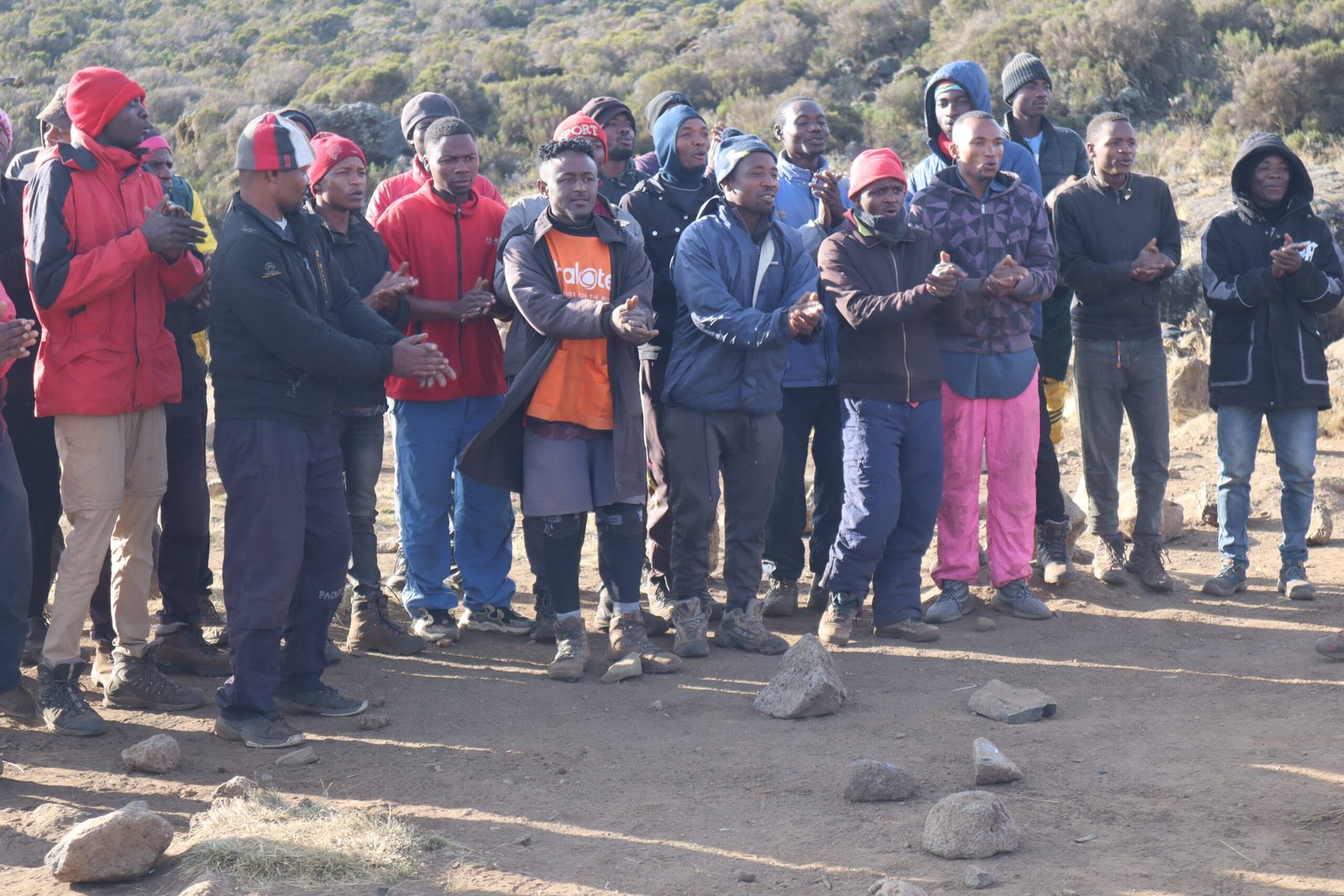
- The crew assembles. Your lead guide gathers every porter, the cook, assistant guides, and waiter staff into one group. This is often the first time climbers see the full size of their crew — many porters work ahead of the group and are rarely seen during the climb itself.
- Names and roles are announced. The lead guide introduces each person by name and role.
- A spokesperson speaks. One climber from your group typically says a few words of thanks on behalf of everyone. This doesn’t need to be elaborate.
- Tips are handed over. KPAP recommends giving tips directly to each crew member in labeled envelopes where practical, rather than one lump sum handed to the lead guide to distribute. If you do give a pooled amount, announce the total out loud in front of the whole crew first — this is KPAP’s specific transparency recommendation, and it matters, because lump sums handed over privately are the easiest point for money to go missing before it reaches porters.
- Singing and photos. Crew often sing as part of the ceremony — you’ll hear it before you see it, honestly. Take the photo — it’s one of the only moments the whole team is together in one frame.
On summit night the guides will have already told you: pole pole — slowly, slowly — it’s not a race. The same unhurried spirit shows up at the ceremony. Nobody rushes it.
Practical tip: If you’re not climbing with a KPAP partner operator, KPAP’s own advice is to tip each crew member directly rather than relying on the guide to redistribute a pooled amount — that’s the single biggest safeguard against tip money not reaching porters.
What Cash Should You Bring?
Bring clean, undamaged USD bills in a mix of $1, $5, $10, and $20 denominations. Operators commonly require notes issued within roughly the last decade — older or worn bills are sometimes refused by Tanzanian banks regardless of condition.
There is no ATM on the mountain. Solve your cash situation in Moshi before you start climbing, ideally on the rest day before departure — not the morning you fly home.
- Bring mixed denominations. A single $100 bill cannot be split eight ways at a tipping ceremony. Bring $1, $5, $10, and $20 notes.
- Bring notes in good physical condition. Torn, heavily marked, or very old bills are frequently rejected by banks and exchange counters in Tanzania.
- Don’t rely on Moshi ATMs for USD. Tanzanian ATMs dispense shillings. If you need USD cash, bring it from home.
- Tanzanian shillings also work, but USD is the standard and easiest for crew to use or exchange.
Practical tip: Pack your tip cash in your daypack, not your main duffel that porters carry separately — you want it accessible and dry on the final morning.
What If You Under-Tip by Accident?
It happens more from lack of information than from stinginess. If you realize afterward that you under-tipped, you can send additional money via mobile transfer through your operator, or factor it into the review and feedback you leave.
The most common reasons climbers under-tip:
- They were not told realistic numbers until the final morning, after the climb cost was already spent — often because tipping wasn’t flagged as one of the hidden costs of climbing Kilimanjaro during initial budgeting.
- They miscounted crew size and tipped for fewer porters than actually worked the route.
- They brought the wrong denominations and could not distribute cash evenly.
None of these situations represent bad intentions — they’re usually planning gaps. Most climbers who under-tip simply didn’t understand how Kilimanjaro crew compensation works before arriving in Tanzania. The solution is straightforward: learn the recommended tipping guidelines before your climb, not after reaching Uhuru Peak.
Kilimanjaro Porter Income Impact — How Tipping Decisions Affect Crew Welfare (7-Day Climb)
Illustrative modeling based on the recommended tip range divided across a standard 9-porter crew — not a specific logged trip.
| Tipping Scenario | Typical Tip Received Per Porter | Immediate Impact on Porter Income | Long-Term Effect |
|---|---|---|---|
| Recommended Tip Paid | $35–$49 | Provides an important supplement to porter wages. | Supports sustainable earnings and improves crew welfare. |
| Partial Tip Paid | Approximately $20 | Porter receives roughly half of the expected tip income. | Creates a significant reduction in seasonal earnings. |
| No Tip Paid | $0 | Porter relies solely on base wages. | Income may fall below a sustainable living level for that expedition. |
Kilimanjaro porters often work dozens of expeditions each year. Small reductions in tipping across many climbs accumulate into a substantial seasonal income gap. Following KPAP-aligned tipping guidelines helps ensure that guides, cooks, and porters are compensated fairly for the demanding work required to support a successful summit.
If you didn’t summit, tip the same amount. A turnaround at 4,800m due to altitude sickness doesn’t change how hard your crew worked to get you there. Tip at the full rate regardless of outcome. Seriously.
What If the Service Was Genuinely Poor?
Tip the crew members who did their job properly, and raise any genuine safety or conduct issue directly with the operator — don’t withhold tips from porters and cooks to punish a problem that was usually a management decision, not theirs.
There’s an important distinction between disappointment and a legitimate grievance:
- Not a service failure: difficult weather, your own altitude sickness, food that didn’t match your taste, a porter who seemed quiet or tired (porters work harder physically than anyone else on the mountain — this is the part most folks miss).
- A legitimate grievance: unsafe guiding decisions, food handled unhygienically, a porter visibly carrying well over the 20kg limit, or any sign of mistreatment of crew.
If something genuinely went wrong, the right move is to tip fairly for the work actually done, then take the specific complaint to the operator and, if relevant, to KPAP directly. Reducing tips to porters rarely affects the person actually responsible for a bad decision.
If you’re still deciding whether Kilimanjaro is the right challenge for you at all, our honest 10 reasons you should not climb Kilimanjaro (and 5 why you should) is worth reading before you book.
Is a Low Tipping Quote a Red Flag?
Not by itself, but it’s worth asking why. If an operator suggests tipping far below the $250–$400 per climber range without explanation, ask what the porter base wage actually is — a thin base wage paired with a low suggested tip is the combination that signals an operator cutting costs on crew welfare.
KPAP’s own guidance notes that the lower the total cost of a climb, the higher the likelihood that wages, food, or equipment for crew are also being cut somewhere. A genuinely cheap climb has to save money from somewhere, and crew compensation is one of the easiest places to do it invisibly to the climber.
Practical tip: Before booking, ask directly: “What is your porters’ daily base wage, and is that figure verified by KPAP or another monitoring body?” A transparent operator answers this without hesitation. For more on how to vet an operator generally, see our Kilimanjaro cost breakdown 2026, which covers the fixed costs every legitimate climb carries.
The Kilimanjaro Team Behind Your Summit
Every climber remembers reaching Uhuru Peak. Fewer remember that a crew of a dozen or more people made that possible before dawn — carrying tents ahead of the group, boiling water at altitude, and walking the exact same slope you did, often twice over the course of the week.
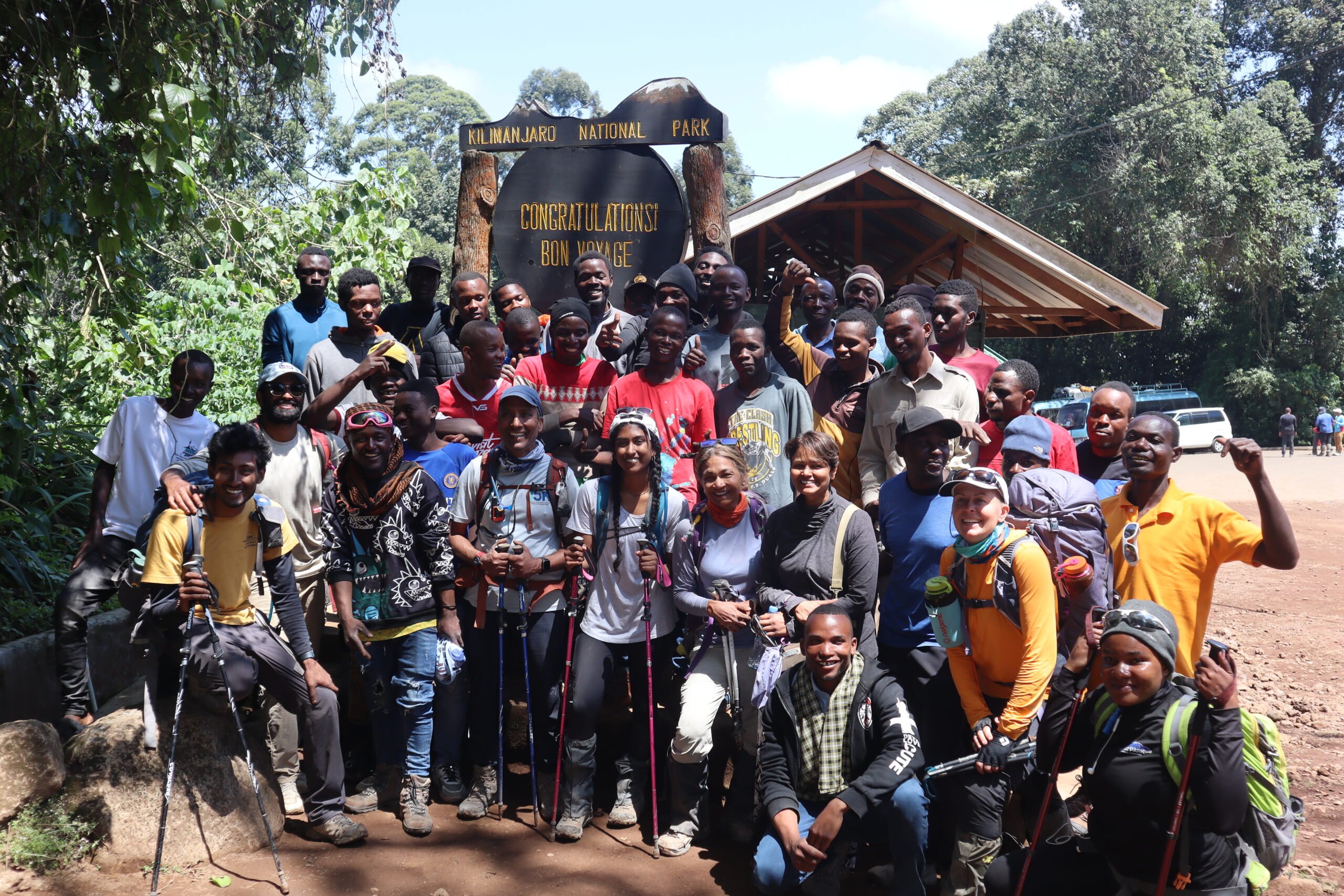
Tipping fairly is one concrete way to acknowledge that effort. It’s also worth reading what a full expedition day actually looks like from the crew’s side — our Climbing Kilimanjaro Guide 2026 covers routes, altitude, and summit-night logistics in full, and the Mount Kilimanjaro Climbing overview is a good starting point if you’re still comparing routes.
Curious how fitness and physiology differ on summit night? Our research piece on men vs. women at high altitude draws on 22 years of guiding data.
FAQ: Kilimanjaro Tipping
Should I tip in US dollars or Tanzanian shillings?
Either works, but US dollars are the standard and easiest for crew to use. Bring clean, undamaged notes — banks in Moshi can be strict about condition and series age.
Is it okay to tip an individual porter extra if they helped me personally?
Yes. If one porter did something beyond their normal role — carrying extra water for you when you were struggling, for example — a separate, private tip directly to that person is appropriate and won’t disrupt the group ceremony.
Are tips included in the Kilimania package price?
No. Tips are never included in any operator’s package price across the industry — they are paid in cash directly to crew at the end of the climb. We tell you the expected range before you book, not after.
Can I pay tips by card or mobile money instead of cash?
No. There is no card infrastructure or reliable signal on the mountain. Bring physical cash. You can send a follow-up gift via mobile transfer after the climb if you want to add to it later, but the ceremony itself is cash-only.
How many porters does my group actually need?
It depends on route length and group size — typically 2–3 porters per climber on a standard week-long route, since each porter carries a maximum of 20kg. Ask your operator for the exact crew list before departure so you know who you’re tipping.
What’s the single biggest mistake climbers make with tipping?
Not finding out the real numbers until the final morning, after their budget is already spent on the climb itself. Treat tips as a fixed cost from the start — budget for $250–$400 per person the same way you budget for park fees.
What is the recommended Kilimanjaro tipping budget per climber?
$250–$400 per climber for a standard 6–8 day route, given as cash USD in a single ceremony on the final morning, covering the lead guide, assistant guide, cook, and porters as a group.
When does the Kilimanjaro tipping ceremony happen?
The ceremony happens once, on the final morning of the climb, typically at the last camp before the gate (such as Mweka Camp) or at the exit gate itself.
What if I didn’t summit — do I still tip the full amount?
Yes. A turnaround due to altitude sickness doesn’t change how hard the crew worked to get you as far as you went. Tip at the full recommended rate regardless of outcome.
Is a low tipping quote from an operator a red flag?
Not by itself, but it’s worth asking why. A suggested tip far below the $250–$400 per climber range, paired with an operator unwilling to disclose porter base wages, often signals cost-cutting on crew welfare.
Final Word: Treat Tipping as a Fixed Cost
Budget $250–$400 per climber for tips on a 6–8 day Kilimanjaro climb, and treat that number as a fixed cost from the day you book — not an afterthought for the final morning. The crew who carry your gear and cook your meals at altitude depend on that money for a meaningful share of their income.
Read our Kilimanjaro cost breakdown 2026 for how tips fit into your total trip budget alongside park fees and operator costs. We Walk With You.
For International Travelers
All prices are in USD. Current conversions (as of July 2026 — check current rates before travel): $300 ≈ £235 | €280 | AU$450.
Flights to Kilimanjaro International Airport (JRO) (indicative fares, as of mid-2026 — always confirm current pricing with your airline):
- New York or Los Angeles: $800–$1,400 return
- London: £550–£900 return
- Sydney: AU$1,400–AU$2,200 return
Tanzania e-visa: $50 most nationalities | $100 US citizens (as of 2026 — confirm current fee before applying). Apply at immigration.go.tz at least 7 days before departure using a Visa or Mastercard and Google Chrome or Firefox.
Yellow fever certificate: required only if arriving from an endemic country. Not required for direct flights from USA, UK, EU, or Australia.
Pre-safari accommodation in Moshi: $35–$80 per night at budget guesthouses. Book one night before and one night after your climb so you have time to organize cash for tips before you start.
Bring cash before you leave home if possible. Moshi ATMs dispense Tanzanian shillings, not USD, and frequently run low on the small-denomination USD notes you actually need for tipping. Solve this on your pre-climb rest day in Moshi — not on the mountain.
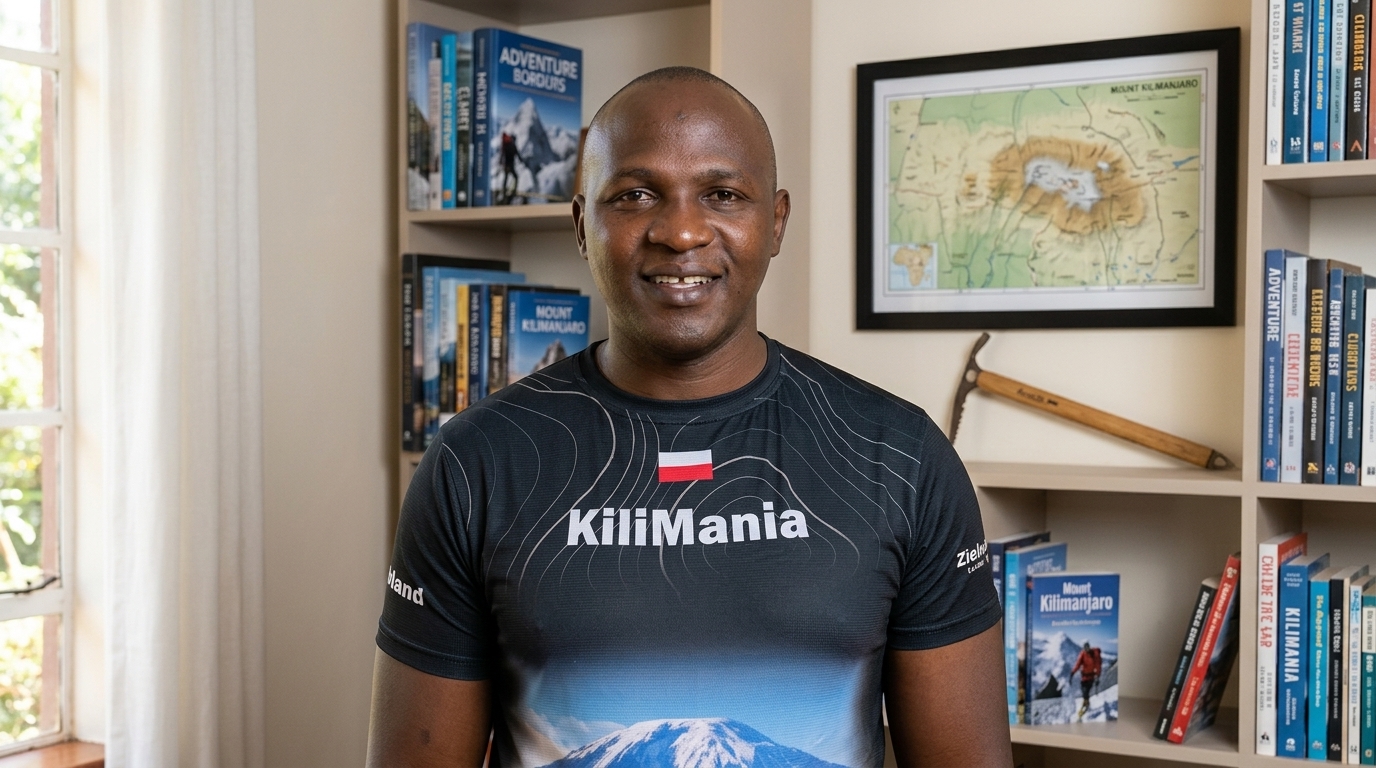
Sabinus Msimba
Senior Kilimanjaro Guide and Co-founder, Kilimania Adventure. 22 years guiding on Mount Kilimanjaro. 300+ summit ascents. He has set tipping briefings for Kilimania’s crews since 2004.
Related Guides
Disclosure: This article is written by Kilimania Adventure, a TATO-registered safari and Kilimanjaro operator based in Moshi, Tanzania. All prices reflect real 2026 costs from our own operations. We encourage you to compare our quotes with at least two other licensed operators before booking.
Verify our TATO registration: tatotz.org · KPAP tipping guidance: kiliporters.org · Official KINAPA park information: kilimanjaranationalpark.go.tz
Last reviewed: July 2026. Review schedule: Updated each November following any KPAP or KINAPA guidance changes.
Data verification notice: Tipping amounts are based on figures published by KPAP-affiliated operators and Kilimania’s own crew payroll records. KPAP does not publish one fixed national tariff — amounts vary by operator and are reviewed periodically. Confirm current guidance at kiliporters.org before your climb.