Kilimanjaro Cost 2026: Complete Breakdown — No Hidden Fees
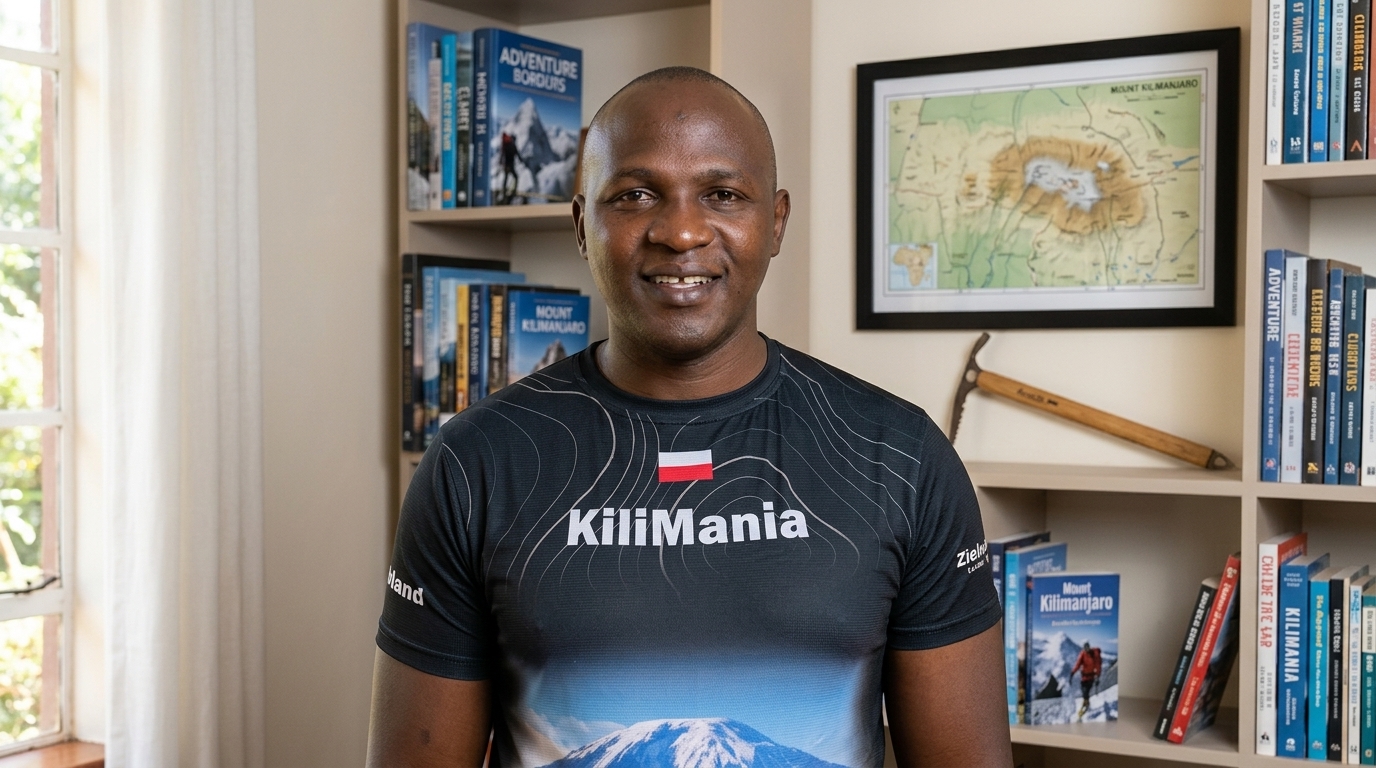 Written by Sabinus Msimba — Senior Kilimanjaro Guide & Co-founder, Kilimania Adventure
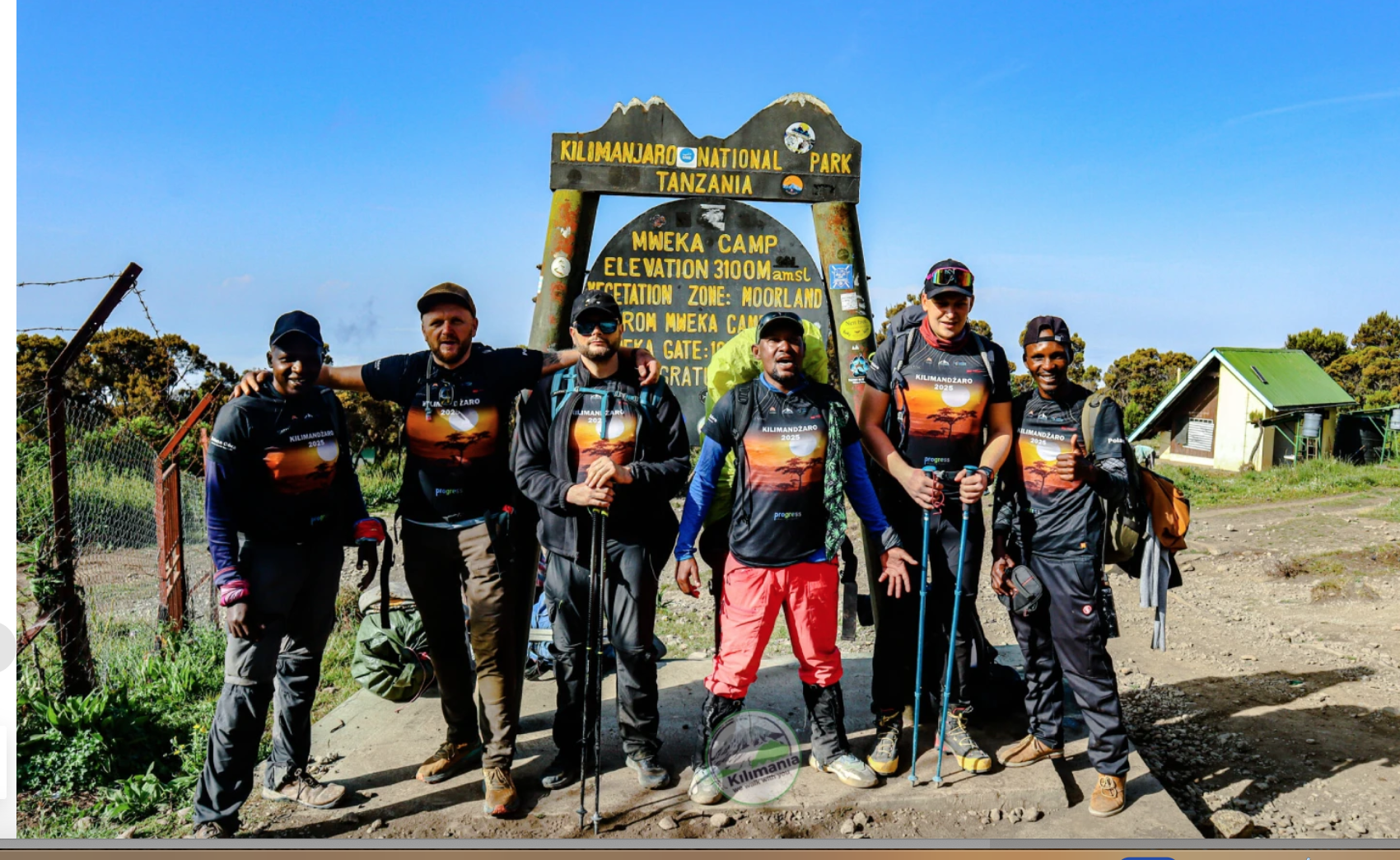
Data sources cited in this article: TANAPA’s published fee categories (tanzaniaparks.go.tz), Kilimania’s own booking and gate-receipt records 2019–2025, and KPAP’s published porter-wage standards (kiliporters.org). Figures marked as internal estimates are flagged as such below. Full disclosure at the end of the article.
Sabinus Msimba
Senior Kilimanjaro Guide & Co-founder — Kilimania Adventure, Moshi, Tanzania
22 years guiding on Mount Kilimanjaro. 300+ personal Uhuru Peak summits. KINAPA-licensed mountain guide. Co-founder of Kilimania Adventure.
- 22+ years guiding experience on Kilimanjaro
- 300+ personal Uhuru Peak summits
- KINAPA Licensed Mountain Guide (Tanzania)
- Read full guide profile
- View official KINAPA guide licence (PDF)
⚡ Quick Answer
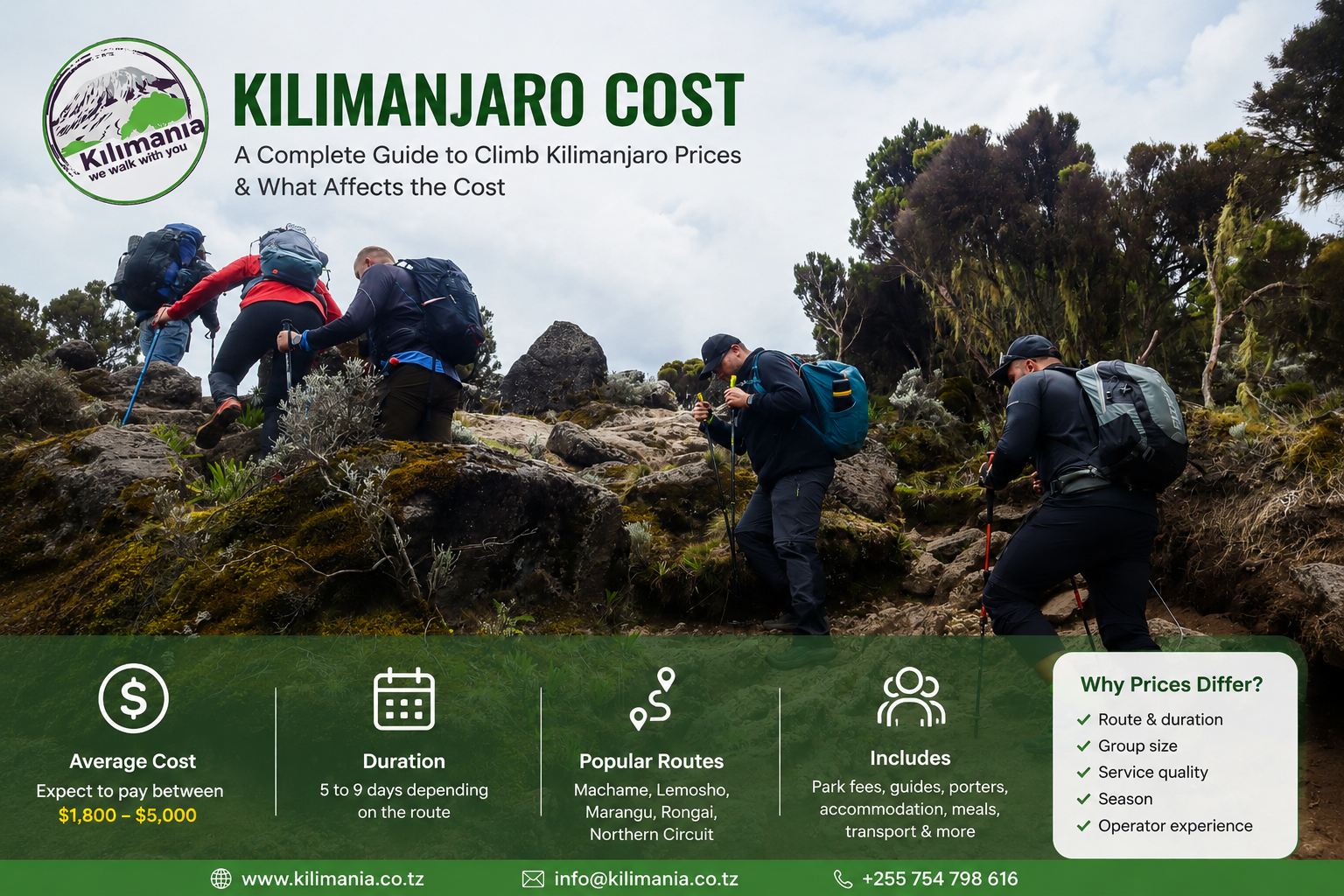
A Kilimanjaro climb costs $2,900–$9,000 total, all-in, for most international climbers in 2026. The operator package is $1,300–$3,800 and always includes every mandatory TANAPA/KINAPA government fee. Flights, gear, insurance, tips, visa, and vaccinations account for the remaining $1,600–$5,000.
→ Full route-by-route comparison: Kilimanjaro Routes 2026
1. Complete Kilimanjaro Cost at a Glance
Every Kilimanjaro cost falls into two buckets. Bucket 1 — Operator package: a legitimate package already contains every mandatory TANAPA/KINAPA government fee. Bucket 2 — Personal costs: flights, gear, insurance, visa, vaccinations, tips, and accommodation. Most operator websites show only Bucket 1; planning well requires both.
| Operator package (7-day group) | $1,300–$1,600 |
| Crew tips | $180–$220 |
| Gear rental (Moshi) | $120–$180 |
| Return flights (mid-haul) | $700–$900 |
| Tanzania e-visa | $50–$100 |
| Travel insurance | $150–$220 |
| Vaccinations | $100–$200 |
| Accommodation (2 nights) | $70–$100 |
| Airport transfers | $40–$80 |
| Total All-In | ~$2,900 |
| Operator package (8-day Lemosho group) | $2,400–$3,000 |
| Crew tips | $260–$320 |
| Gear (rent + buy essentials) | $350–$550 |
| Return flights (mid-haul) | $900–$1,200 |
| Tanzania e-visa | $50–$100 |
| Travel insurance | $220–$380 |
| Vaccinations | $100–$300 |
| Accommodation (2 nights) | $130–$260 |
| Airport transfers | $60–$120 |
| Total All-In | ~$4,800 |
| Operator package (9-day private) | $4,500–$6,000 |
| Crew tips | $350–$500 |
| Gear (purchase new) | $800–$1,400 |
| Business class flights | $1,800–$3,000 |
| Tanzania e-visa | $50–$100 |
| Travel insurance (high limits) | $400–$700 |
| Vaccinations | $100–$300 |
| Accommodation (premium lodge) | $300–$600 |
| Airport transfers | $100–$200 |
| Total All-In | ~$9,000+ |
The operator package represents roughly 45–55% of a budget total and 50–67% of a premium total. Terrain, wildlife zones, and summit altitude are identical across all three tiers — the difference is in personal logistics and on-mountain comfort, not the mountain itself.
2. TANAPA & KINAPA Park Fees — 2026 Rates
TANAPA
Tanzania National Parks Authority — sets the official Kilimanjaro fee schedule.
KINAPA
Kilimanjaro National Park Authority — manages park operations and guide licensing.
KPAP
Kilimanjaro Porters Assistance Project — certifies operators on porter wages and welfare. kiliporters.org
Park fees are the most misunderstood cost in Kilimanjaro planning. In every legitimate package they are already included. Operators who list them as a separate gate charge are misrepresenting their headline price — which is also why a “$700 Kilimanjaro package” is arithmetically implausible.
2026 Fee Schedule
Rates below reflect TANAPA’s published fee categories as reported by multiple independent operators and travel guides as of mid-2026. Confirm the exact current rate directly at tanzaniaparks.go.tz before booking, since some sources report the one-time forest fee at $10 and others at $20 per person.
| Fee Category | Rate | Frequency | Routes |
|---|---|---|---|
| Conservation fee (entry) | $70 | Per person, per day | All routes |
| Camping fee | $50 | Per person, per night | All tent routes |
| Marangu hut fee | $60 | Per person, per night | Marangu only |
| Rescue fee | $20 | One-time per climb | All routes |
| Forest fee | $10–$20 (verify) | One-time per climb | Machame, Lemosho, Rongai, Northern Circuit |
| VAT | 18% | Applied to all fees above | All routes |
Worked Example — 7-Day Machame Route (using $10 forest fee)
3. What an Operator Package Must Include
Beyond mandatory government fees, your package funds the people and equipment that keep you safe for 7–10 days in conditions ranging from 20°C at Machame Gate to well below freezing on summit night near Uhuru Peak (5,895 m).
Non-Negotiable Inclusions
- All TANAPA/KINAPA park fees at government rates, itemised in writing
- KINAPA-licensed lead guide
- Porters paid at least the current KPAP partner minimum, with loads capped at 20 kg
- Qualified cook — three meals daily, gate to gate
- Four-season tents, dining tent, private toilet tent
- Pulse oximeter readings recorded at every camp
- Emergency oxygen and a first aid kit including altitude medication
- Satellite communication device and mountain stretcher
Kilimania’s Standards
- Guides: Senior Guide Sabinus Msimba, Chief Guide Isack Mlala (15 years), Guide John Akaro (7 years), plus supporting guide team.
- Porters: Kilimania pays at least 25,000 TZS/day, in line with KPAP’s current partner-company wage requirement (see Section 5 for sourcing). Loads capped at 18 kg. Meals, cold-weather clothing, and accident insurance provided.
- Kitchen: Head cook Shafii Ramadhani (19 years) and assistant cook Godfrey Auni (14 years).
→ View Kilimania’s full packages — every inclusion listed.
5. Crew Tips and Fair Porter Wages
Crew tips are not included in any legitimate operator package. They are a cash payment on the final morning in Moshi.
| Role | Recommended Tip |
|---|---|
| Lead guide | $20–$25 |
| Assistant guide (×1–2) | $12–$15 each |
| Cook | $10–$12 |
| Porters (typically 10–14 per group of 4–6) | $7–$10 per porter |
| Total per climber | $250–$320 |
On the porter wage figure
KPAP’s own published partner-company wage requirement is at least 25,000 TZS per day, following a December 2024 revision (up from the earlier 20,000 TZS baseline still cited on some third-party sites). Kilimania’s guide-team wages meet this current requirement. Some sources also reference an anticipated government increase to 35,000 TZS/day from January 2026, but as of this review that increase had not yet been confirmed by official notice, so it is not used here as a benchmark. Verify current standards directly at kiliporters.org.
💵 Cash tip: Bring USD in small denominations ($5, $10, $20) from home — ATMs in Tanzania dispense large bills that are impractical for distribution.
6. Route-by-Route Cost Comparison
Route duration is the primary cost driver. Each additional day adds roughly $120 per person in TANAPA charges before crew wages and food.
📋 Data Verification Notice: The summit-rate figures in the table below are Kilimania’s internal directional estimates drawn from its own 2019–2025 climb records (1,247+ ascents combined across all routes) and have not been independently audited or broken out by per-route sample size. They are marked (internal estimate, pending confirmation) and should not be treated as statistically verified figures until a per-route sample-size breakdown is published in the Fact Ownership Register.
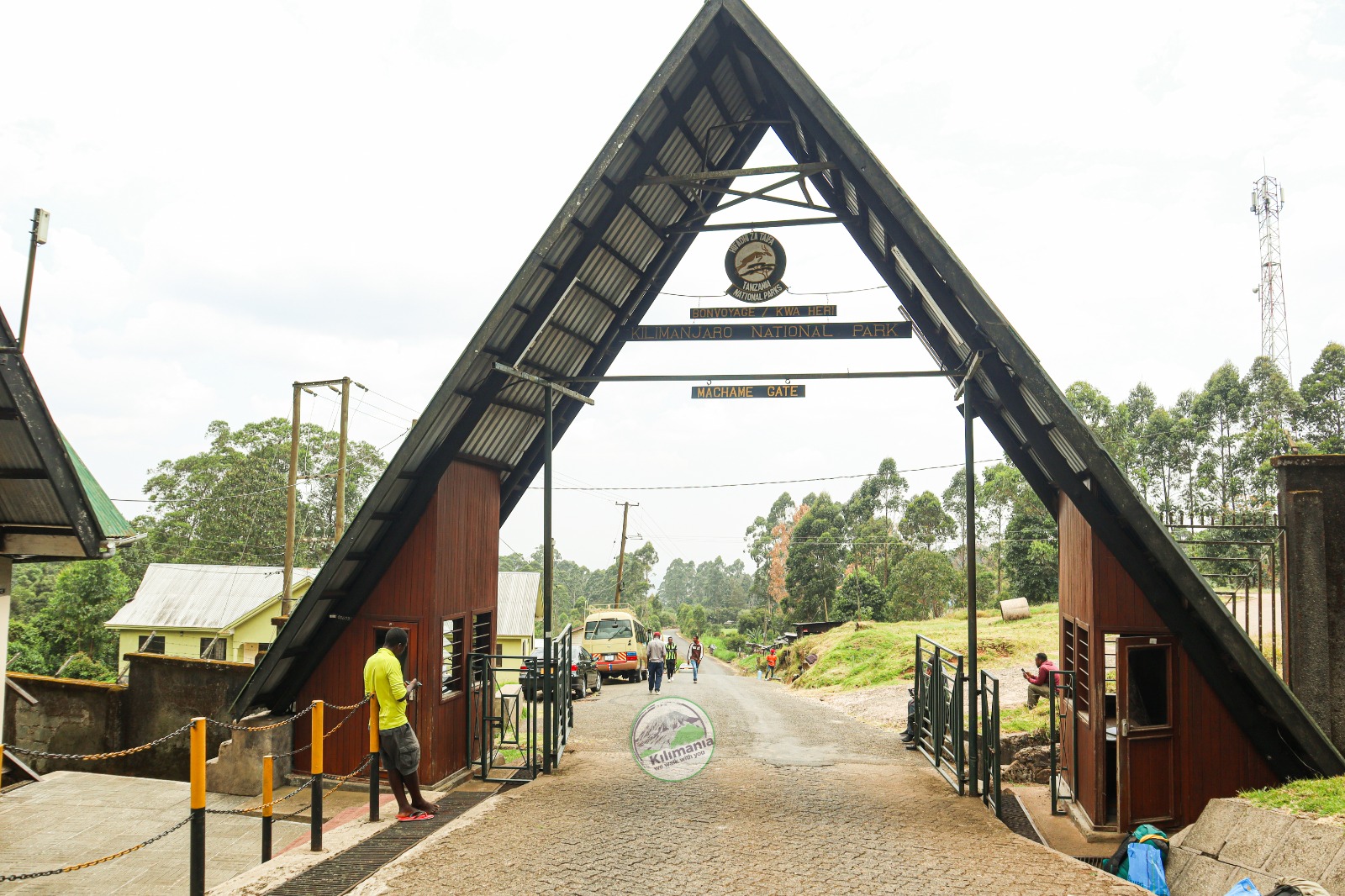
| Route | Days | Camp Style | Park Fees incl. VAT | Kilimania — Group | Kilimania — Solo | Summit Rate* | Total All-In |
|---|---|---|---|---|---|---|---|
| Marangu | 6 | Shared huts | ~$980 | $1,750 | $2,050 | 67%* | $3,800–$4,400 |
| Machame | 7 | Private tents | ~$967.60 | $1,900 | $2,200 | Moderate–high* | $4,000–$5,000 |
| Lemosho (recommended) | 8 | Private tents | ~$1,284 | $2,050 | $2,350 | 82%* | $4,500–$5,500 |
| Northern Circuit | 9 | Private tents | ~$1,425 | $2,350 | $2,650 | 96%* | $5,000–$6,200 |
*Summit rates are Kilimania’s internal directional estimates from its own 2019–2025 climb records — internal estimate, pending confirmation. Not independently verified. Park fee estimates for Marangu, Lemosho, and Northern Circuit are calculated the same way as the worked Machame example in Section 2 and should be confirmed against the current official schedule before booking.
Route Notes
Marangu — 6 Days
Dormitory-style mountain huts. The shortest itinerary provides the least acclimatisation time. → Marangu vs Machame comparison
Machame — 7 Days
The most popular route. The Barranco Wall (Day 4) is a scramble that requires no ropes but is not suitable for severe fear of exposure.
Lemosho — 8 Days
Western approach via remote forest adds one full acclimatisation day compared with Machame. → All Kilimanjaro routes
Northern Circuit — 9 Days
Full mountain circumnavigation across four slopes, with the fewest other climbers on the trail. Most expensive standard route.
📥 Free Download: Kilimanjaro Route Comparison Cheat Sheet
Compare all Kilimanjaro routes, prepared by Senior Guide Sabinus Msimba.
📄 Download the Free PDF Guide8. Why Cheap Kilimanjaro Climbs Cost More in the Long Run
A 7-day Machame climb requires every operator to cover a minimum of roughly $1,150–$1,350 in mandatory park fees and fair crew wages before any profit. A package priced well below this is not possible without cutting guides, underpaying porters, or using substandard equipment.
Minimum Cost Reality — 1 Climber, 7-Day Machame
How to Verify a Quote Is Legitimate
- Ask: “What is the exact TANAPA fee per person, per day, and per night on this route?”
- Request a full breakdown: conservation fee, camping/hut fee, rescue fee, forest fee, VAT rate, guide wages, and porter wage policy.
- Verify KPAP certification at kiliporters.org.
- Confirm the lead guide’s KINAPA licence.
- Verify the operator’s registration.
📥 Free Download: Kilimanjaro 12-Week Training Calendar
Prepared by Sabinus Msimba.
📄 Download the Free PDF9. Kilimania’s 2026 Pricing — Every Line Item
Kilimania’s packages range from roughly $1,300 (6-day Marangu, group of 6) to $3,800 (9-day Northern Circuit, solo). Every package includes all TANAPA and KINAPA fees at government rates.
Every Kilimania Package Includes
- All TANAPA conservation, camping/hut, rescue, and forest fees, plus VAT — itemised in writing
- Head cook Shafii Ramadhani (19 years) and assistant cook Godfrey Auni (14 years)
- Porters paid at least 25,000 TZS/day, in line with KPAP’s current partner requirement · Loads capped at 18 kg · Porters insured
- Emergency oxygen, pulse oximeters, satellite communication device, first aid kit
- Two nights in Moshi (pre- and post-climb) with breakfast · Airport transfers both ways
Explicitly Not Included
Crew tips (see Section 5) · International flights · Personal gear · Travel insurance · Tanzania e-visa · Vaccinations
2026 Package Price Summary
| Route | Duration | From (Group of 6) | From (Solo) |
|---|---|---|---|
| Marangu | 5–6 days | $1,300 | $1,750 |
| Machame | 6–7 days | $1,600 | $2,050 |
| Lemosho (recommended) | 8 days | $1,900 | $2,350 |
| Northern Circuit | 9 days | $2,200 | $2,650 |
📋 Action note
A verified-testimonial block for this article is pending. Per Kilimania’s testimonial sourcing protocol, only reviews with a logged, checkable source (a TripAdvisor URL, a Google Reviews entry, or written traveller permission with name/initials, platform, date, and permission status) can be published here. Action for Sabinus: supply 1–2 verified quotes about the cost/value of a Kilimania climb, with their source links, and they will be added in the next revision.
Get Your Complete Line-by-Line Quote
Park fees itemised by category and day. VAT stated explicitly. Porter wage policy in writing. No costs discovered at the gate.
Response within 12 hours · 7 days a week · East Africa Time (UTC+3)
10. FAQ — Kilimanjaro Cost 2026
How much does a complete Kilimanjaro climb cost in 2026?
$2,900–$9,000 all-in depending on route, group size, departure country, and accommodation tier. The operator package is $1,300–$3,800; flights, gear, insurance, tips, visa, and vaccinations account for the rest.
What are the exact Kilimanjaro park fees for 2026?
$70/day conservation fee, $50/night camping (or $60/night at Marangu huts), a one-time $20 rescue fee, a forest fee reported as $10–$20 depending on source, plus 18% VAT. For a 7-day Machame this totals approximately $967.60. Confirm the exact current rate at tanzaniaparks.go.tz.
Are park fees included in Kilimanjaro packages?
In every legitimate package from a registered operator, yes. If fees are billed separately at the gate, the headline price is misrepresented.
What is a realistic minimum budget for a Kilimanjaro climb?
Roughly $2,900 total, all-in — renting gear in Moshi, booking flights well ahead, a 7-day group climb with a KPAP-verified operator, and tipping at the lower recommended range.
Are crew tips included in Kilimanjaro packages?
No. Budget $250–$320 per climber for a 7-day climb, in cash, given at a ceremony on the final morning in Moshi.
Is it worth renting gear in Moshi?
Yes, for most first-time high-altitude climbers. A rental kit costs $130–$190 versus $900–$2,000 to buy equivalent quality new.
What travel insurance do I need for Kilimanjaro?
A policy explicitly covering trekking to at least 6,000 m, helicopter evacuation from any altitude, minimum $100,000 in emergency medical expenses, and altitude sickness. Proof is checked at the park gate.
Can I pay in instalments?
Kilimania accepts a $100 deposit, balance due 30 days before the climb; a three-payment schedule is available for bookings 8+ months ahead.
11. Conclusion & Final Booking Advice
The complete Kilimanjaro cost is $2,900–$9,000 all-in — not the $1,300–$3,800 package price most searches surface. Route duration is the most consequential spending decision: longer routes cost more in park fees but generally give the body more time to acclimatise.
Before Booking — Your Checklist
- Compare routes before prices — days on the mountain affect acclimatisation.
- Verify TANAPA fees — a legitimate operator answers instantly, in writing.
- Verify KPAP compliance at kiliporters.org.
- Verify guide credentials — view Sabinus Msimba’s licence (PDF).
- Budget personal costs — add $1,600–$5,000 above the package price.
ℹ️ Health & Financial Accuracy Note
Kilimanjaro involves exposure to high altitude, with risk of altitude sickness. Health information here is planning guidance only, not medical advice — consult your doctor before booking if you have a pre-existing condition.
Park fees and porter wage figures are reviewed as of August 2026 and are subject to government and KPAP revision without notice; some figures (forest fee, exact wage step-ups) carry a stated range where sources disagree, pending direct confirmation from TANAPA/KPAP.
Plan Your Kilimanjaro Climb — Get a Fast Quote
Tell us your travel dates, group size, preferred route, and budget tier. We return a full itemised quote within 12 hours — park fees by category, VAT stated explicitly, porter wage policy in writing. No costs discovered at the gate.
We Walk With You.
📋 Guide-Verified Packing Checklist
The exact list our guides check at the gate, in one printable PDF.
📄 Download the Free PDF Checklist