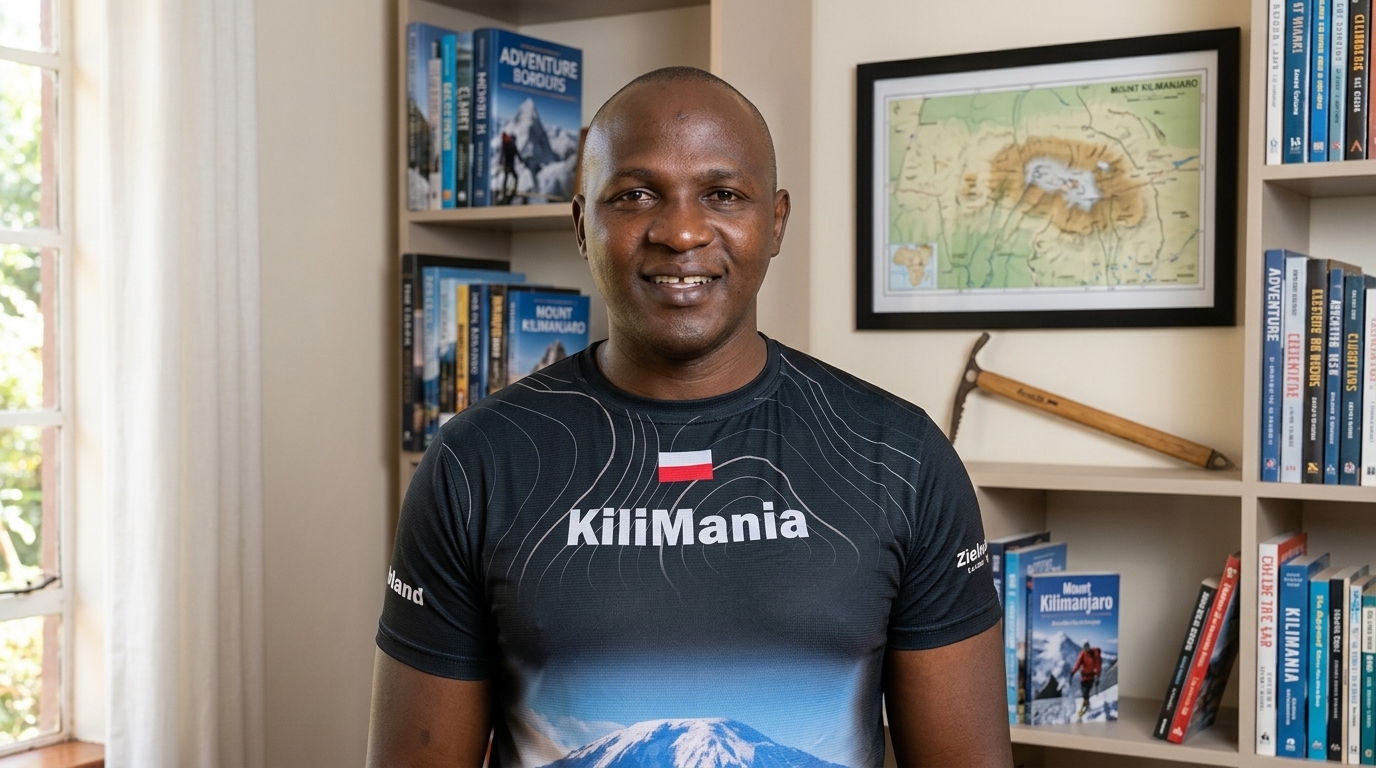
Solo traveller’s guide · Kilimanjaro joining groups
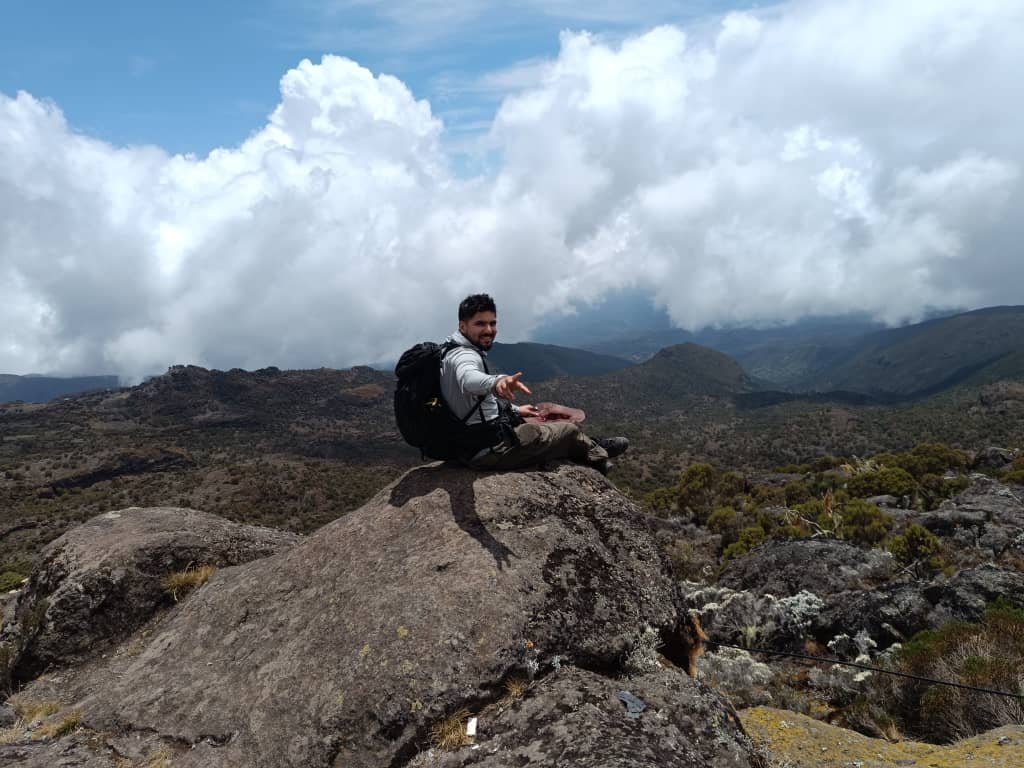
Data sources cited in this article: Kilimania booking and climb records (internal success data updated January 2026); Sabinus Msimba’s KINAPA mountain guide licence No. 044395 (valid 2026); Kilimania’s canonical pricing page. Prices are not printed here; see the linked cost page, as of October 2026. If you’re reading this later, confirm current prices and park fees before booking.
Yes, you can join a Kilimanjaro group climb as a solo traveller: you book a place on a scheduled departure, sleep in your own tent at no extra charge, and climb with a group of no more than 8 people. If nobody else books your date, the climb still runs, and you get both prices in writing (the joining rate and the solo rate) before you pay the balance. Most people on a joining climb arrive alone too. They meet at the hotel briefing in Moshi the evening before the walk starts.
- 8Maximum climbers in a Kilimania joining groupKilimania booking policy, Oct 2026
- Own tentFor every solo climber, no extra chargeKilimania booking policy, Oct 2026
- 92%Summit rate on the 7-day Machame (418 climbers)Kilimania internal records, updated Jan 2026
- 12 hrsReply window, EAT (UTC+3), 7 days a weekKilimania response commitment
In this guide
Booking Kilimanjaro on your own raises a particular kind of worry. Not about the altitude, or not only. It’s the smaller, social questions that keep people from pressing “send”: who will I sleep next to, will I hold everyone up, and what if I’m the only person who turns up?
These are fair questions, and most operator pages skip them. This guide answers each one plainly, from the side of the people who run the climbs. You’ll also find a checklist you can use with any operator, because the right questions protect you whoever you book with. Karibu (welcome). Let’s start with what a joining group actually is.
What Is a Kilimanjaro Joining Group?
A joining group is a climb with a fixed start date that individual travellers book one by one. Instead of hiring a whole crew for yourself, you take a place on a departure and share the guides, cook, porters and mess tent with whoever else books it. In practice, it works in five plain steps:
- You pick a route and a published start date.
- The operator tells you how many climbers are confirmed on that date right now.
- You pay a deposit to hold your place, and the other figures are set out in writing.
- You fly in, get collected at the airport, and meet the group at the pre-climb briefing.
- You walk the route together, each in your own tent at night.
Who books these departures? Mostly solo travellers, plus couples and pairs of friends who’d like a few more faces around the dinner table. On the climbs we run from Moshi, it’s rare for a joining group to be one tight crowd that already knows each other. You can see which dates are open on the Kilimanjaro joining calendar.
One honest point that surprises people. With Kilimania, the joining rate is one standard price per person, and it doesn’t move up or down with how many others join. The difference between that rate and the one-person private rate is usually modest, though it varies by route and itinerary length. So a joining group is mainly about company, not a big saving. If your aim is the lowest possible price, the Kilimanjaro cost breakdown shows where the money actually goes.
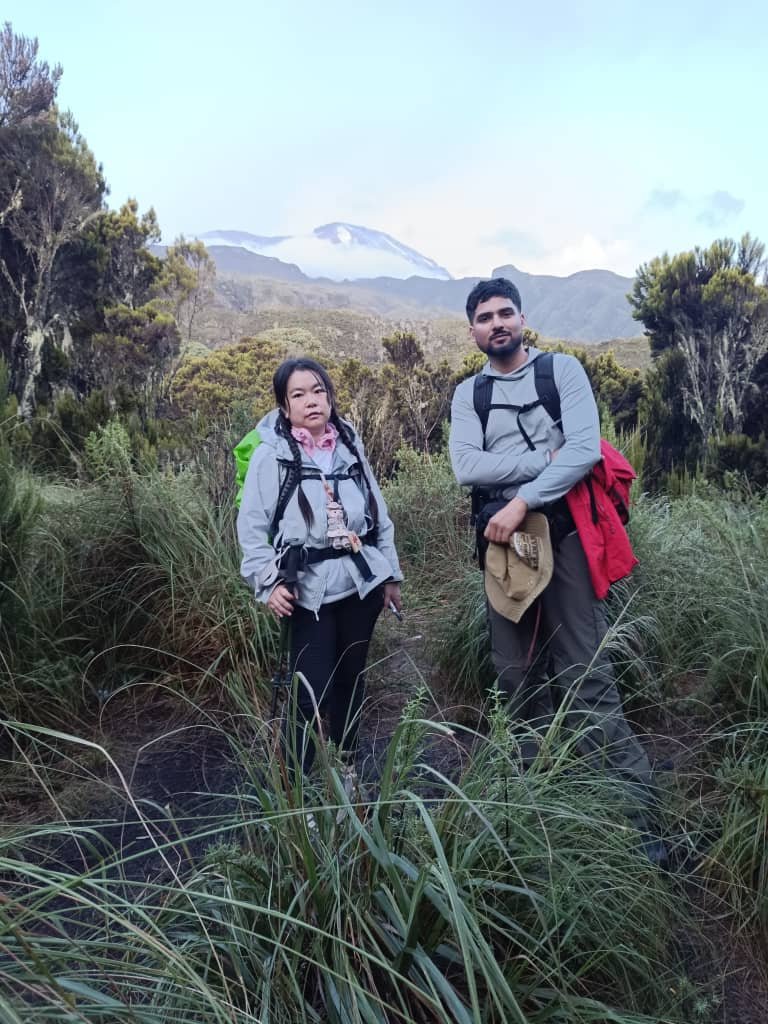
The 5 Real Fears of Climbing Kilimanjaro Alone, Answered
These are the five questions solo climbers ask us most, usually in the first or second message. They’re written here the way people actually phrase them.
“Will I share a tent with a stranger?”
No. On Kilimania joining climbs, every solo climber gets their own tent, and there’s no extra charge for it. No single supplement, no pairing you with someone you met an hour ago. The tents are four-season mountain tents with 2–3 inch (5–7.5 cm) sleeping mats, the same standard used on private climbs.
It’s worth separating sleeping from socialising. Your tent is your private space for the night. Meals, briefings and the walk itself happen together, in the shared mess tent and on the trail. Many solo climbers say this balance is what made the trip work: company by day, quiet by night.
If you’re comparing operators, ask this directly and get the answer in writing: “Will I have my own tent, and is there any extra charge for it?” A clear yes or no tells you a lot. For more on the sleeping setup itself, see what you sleep in on Kilimanjaro.
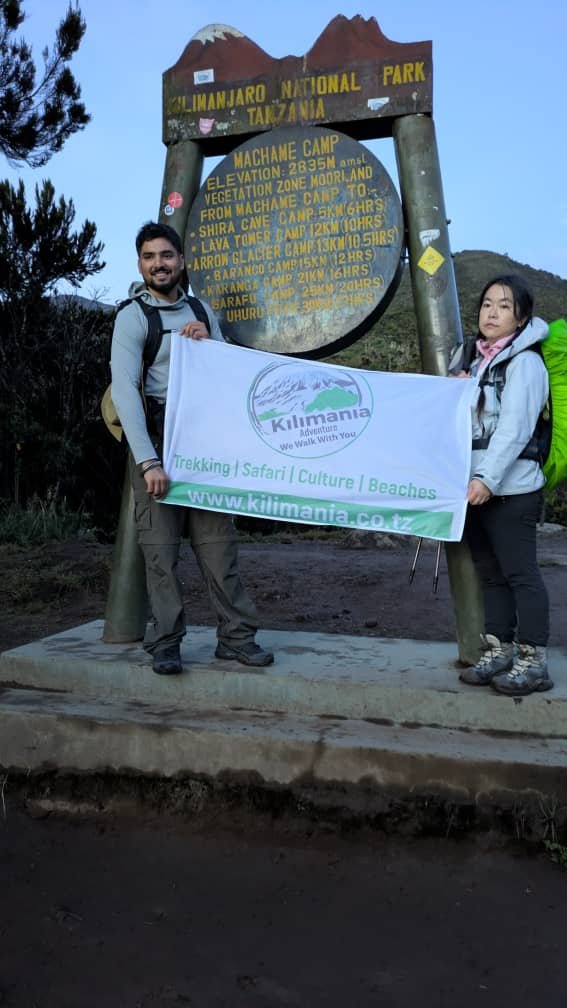
“What if everyone is faster than me?”
Then you’ll be in good company, because nobody on Kilimanjaro is supposed to be fast. The standing instruction on the mountain is pole pole (slowly, slowly). The lead guide sets a pace the whole group can hold, adjusted for the slower walkers, because rushing at altitude is one of the main reasons people feel unwell higher up. You can read why in our guide to pole pole on Kilimanjaro.
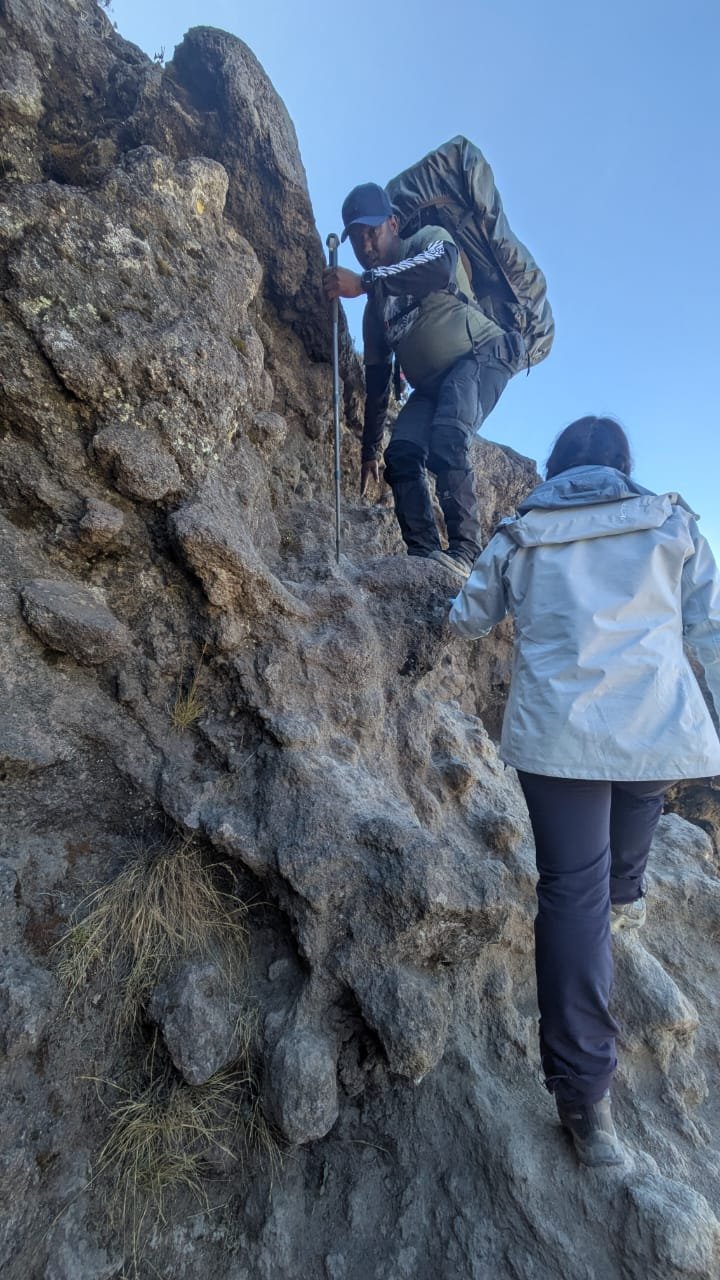
Crew numbers help here too. On Kilimania climbs there’s roughly one guide for every two climbers, plus assistant guides. KINAPA, the park authority (part of Tanzania National Parks), sets the minimum crew for each group and checks it at the gate. In practice that means an assistant guide can walk with a slower climber while the lead guide keeps the group together. The aim is simple: nobody walks the trail alone, and nobody is hurried past a safe pace. If weather, the trail or someone’s health changes, the guides adjust the plan; that judgement is part of their job.
Fitness differences are expected. A fit 30-year-old and a careful 58-year-old often finish the same day within a few minutes of each other, simply because the pace is set for steady breathing, not speed.
“What if the group already knows each other?”
It does happen, but rarely. Most joining climbers are solo travellers or pairs meeting for the first time. Couples and friends who book together usually choose a joining date precisely because they want new people around, not a closed circle.
The first evening tends to look the same every time. Strangers in a hotel meeting room in Moshi, comparing boots, asking the same question about sleeping bags, slightly nervous. By the second dinner on the mountain, people are trading snacks and stories. Shared effort does that quickly. And if you’re someone who needs time to warm up? That’s fine. Nobody is required to be the life of the mess tent.
“What if someone gets sick?”
Then the guides act on that person’s condition, and the rest of the group carries on safely. Here’s how it works on Kilimania climbs:
- Twice-daily checks. Every morning and evening, the guide measures each climber’s blood-oxygen level (SpO2) with a pulse oximeter, plus heart rate, and records it.
- Symptoms count as much as numbers. A reading is one input, not a diagnosis: a normal number doesn’t rule out altitude illness, and a low one isn’t a verdict on its own. Headache, vomiting, confusion or loss of balance must be reported straight away.
- Emergency oxygen and a first aid kit are carried on every climb. Oxygen is for emergencies and for getting someone down safely, not for pushing higher.
- Descent is decided by the climber’s condition, never by summit pressure. If one person needs to go down, an assistant guide normally goes with them, and the group continues with the lead guide. Serious cases are handled with the national park’s rescue service.
That last point matters in a group. One person turning back doesn’t end the climb for everyone else, and one person’s summit goal never overrides another’s safety. No guide can promise you’ll reach Uhuru Peak, and you should be wary of anyone who does. For the medical side in detail, read the Kilimanjaro altitude sickness guide and our Kilimanjaro safety record.
“What if nobody else books my date?”
This is the question behind most hesitation, so here’s the plain answer first: with Kilimania, the climb still runs. If you end up as the only climber on a departure, you can still go up the mountain on your planned dates, with the same crew standard and the same itinerary. (The exceptions are the ones that would stop any climb: a park closure, severe weather, or a safety decision on the day.)
What can change is the price basis, and that’s exactly where you should expect honesty. Here’s how it works:
- Joining rate. One standard price per person when at least one other climber is confirmed on your date. It’s the same whether the group ends up as two people or eight.
- Solo private rate. The one-person price. It applies only if you end up as the only confirmed climber.
- Nothing changes without your agreement. Both figures are given to you in writing before you pay the balance. Booking a joining place doesn’t commit you to the solo rate; you accept it, or not, once you know the group status.
- Your options if you’d rather not pay it. Move to another joining date that already has confirmed climbers, or cancel under the written terms that come with your booking. Under Kilimania’s current terms, cancelling 7 or more days before the climb returns 60% of the USD 100 deposit.
Both rates for each route are listed on the Kilimanjaro cost page, as of October 2026, so you can see the difference before you even ask.
It’s worth understanding why this matters, because the same issue exists with every operator. A date appearing on a calendar isn’t the same as a confirmed group. There are really five different situations:
- A date is published, but nobody has booked yet.
- A date has enquiries, but no deposits.
- A date has one or more confirmed climbers with deposits paid.
- A departure has reached its intended size.
- A departure where you may end up as the only paying climber.
Problems start when an operator blurs these together. You hear “yes, we have a group,” pay the balance, and discover on arrival that you’re alone and owe more. So, whoever you book with, send this exact question and keep the reply:
“If I am the only confirmed climber on this departure, will the climb still operate, what price will apply, and what alternatives are available? Please confirm the terms in writing before I pay the balance.”
A straightforward operator answers that in one message. If the reply is vague (“don’t worry, people always join”), treat that as information. The written answer is your protection, and it costs nothing to ask. The full booking sequence, from first message to deposit, is set out in how to book a Kilimanjaro climb.
Joining Group vs Private Climb: Which Fits a Solo Traveller?
Both options use the same mountain, the same park rules and, with a reputable operator, the same crew standard. The differences are about dates, company and control. Here they are side by side.
| Factor | Joining group | Private climb |
|---|---|---|
| Start dates | Fixed, published departures on the joining calendar | Any date you choose, subject to permits |
| Who you climb with | Up to 8 climbers, mostly solo travellers and pairs | Only you, or people you bring |
| Pace | Pole pole, set so slower walkers can keep up; assistant guides walk with them | Pole pole, set entirely around you |
| Tent | Your own tent, no extra charge | Your own tent |
| Price logic | One standard joining rate per person; solo rate in writing in case nobody else books. See the cost page | Priced for your party size; small difference from the joining rate |
| Flexibility | Route and itinerary fixed for the group | Route, length and rest days can be adjusted |
| If you end up alone | Climb still runs; the solo rate applies only once you accept it in writing, before the balance | Not applicable |
| Suits | Solo travellers who want company and shared evenings | People who want full control of dates, route and pace |
For route detail, start with the 7-Day Machame itinerary, the route most of our joining groups use. Some departures run on the 7-Day Lemosho or 8-Day Lemosho, and the Kilimanjaro routes overview compares all of them.
What a joining climb includes
The joining rate covers the same package as a private climb. As of October 2026, that means:
Included
- Kilimanjaro National Park fees and KINAPA rescue fees
- KINAPA-licensed guides, assistant guides, a mountain cook and porters treated to fair-employment standards
- All meals and treated drinking water on the mountain
- Four-season tents and sleeping mats, with your own tent if you’re solo
- Mess tent with table and chairs, and private toilet tents
- Emergency oxygen, pulse-oximeter checks and a first aid kit
- JRO airport pickup and drop-off, and transfers to and from the park gates
- A hotel night in Moshi before and after the climb
Not included
- International flights
- Tanzania visa
- Travel insurance with high-altitude evacuation cover
- Personal trekking gear (a sleeping bag can be rented)
- Tips for the guides and crew
- A personal porter for your daypack, if you’d like one
Prices for each route and group size sit on the cost page, not here, so this guide never shows an out-of-date figure.
How Solo Climbers From Different Flights Actually Meet
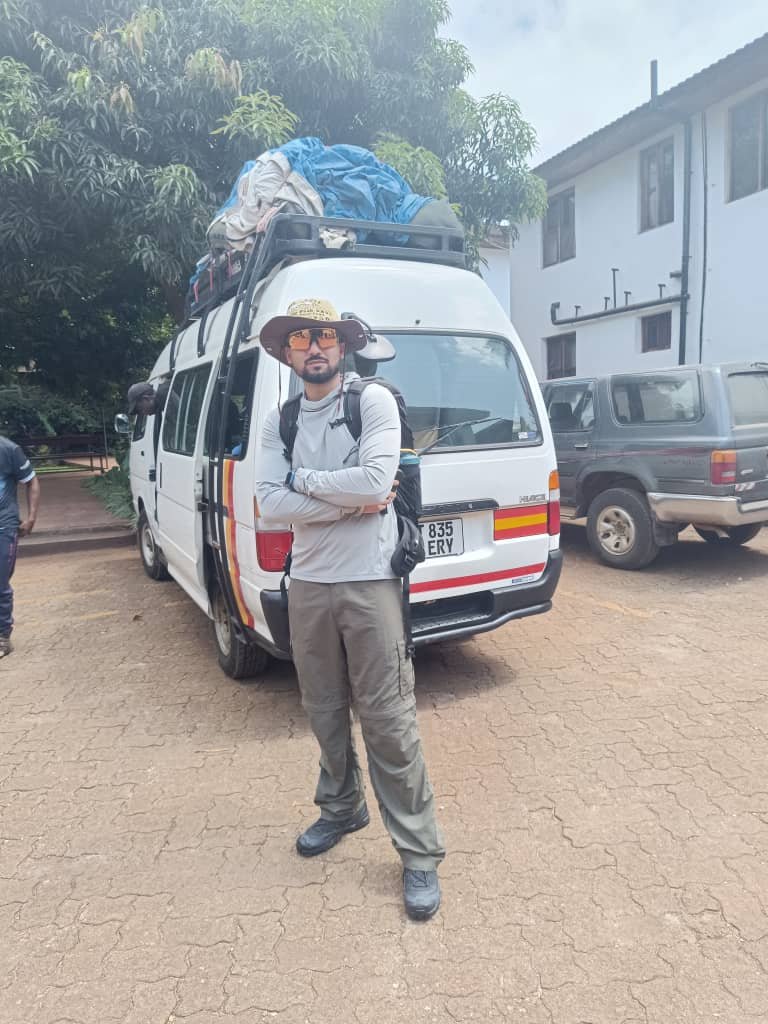
People worry about this more than you’d think. What if my flight lands at 2pm and someone else’s at 9pm? In practice, it doesn’t matter. Each climber is collected separately, and the group comes together at one point: the evening briefing.
Here’s a real example, anonymised. On a 7-day Machame departure in October 2026, two solo travellers, one flying in from Canada and one from Asia, landed at Kilimanjaro International Airport (JRO) hours apart on the same day. Neither had met the other, or the two climbers already booked. Each was met at arrivals by a driver holding a printed name sign, and each was driven separately to the same hotel in Moshi. They met for the first time at the briefing that evening, and started up the mountain the next morning as a four-person team.
That sequence is the same for every joining departure:
- Day 0 · AirportSeparate pickups at JRO, each with a printed name sign.
- Day 0 · MoshiTransfer to the pre-climb hotel (Nguchiro Palace Hotel) and time to rest.
- Day 0 · EveningFace-to-face briefing and gear check. The group meets here.
- Day 1 · MorningOne shared transfer to Machame Gate and park registration.
- Day 1 · AfternoonFirst night together at Machame Camp, 2,835 m.
Airport pickup and drop-off at JRO, plus a hotel night before and after the climb, are part of the climb package. If you’re arriving through Arusha Airport (ARK) instead, mention it when you book so the pickup is arranged from there.
Mess-Tent Social Life: The Daily Rhythm That Builds a Team
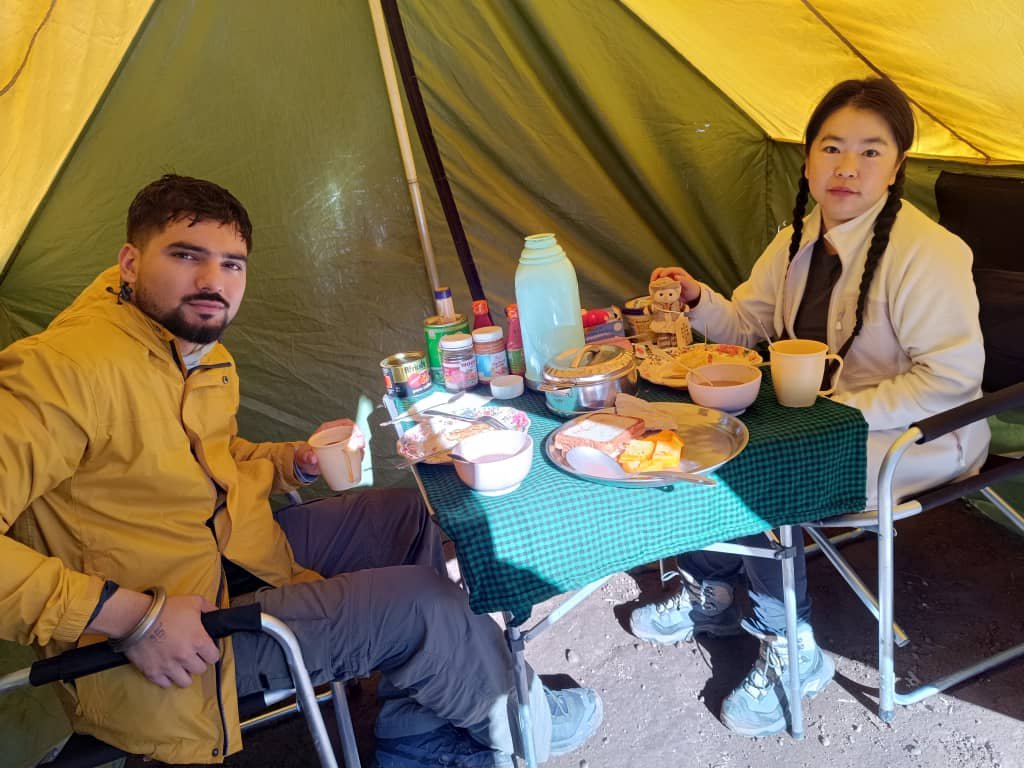
On the trail, people walk in a line and talk in short bursts, because breathing comes first. The mess tent is where a joining group actually becomes a group. A typical day on the mountain runs like this:
- Wake-up tea brought to your tent, then a bowl of warm washing water.
- Breakfast at a proper table with chairs, and a short briefing on the day’s walk.
- Walking in a line behind the guide, with regular breaks for water and snacks.
- Arrival at camp, where the porters have already pitched tents. More warm water.
- Tea and popcorn in the mess tent, then the evening health check.
- Dinner, always with soup first, followed by the plan for tomorrow.
Dietary needs travel with you: halal, vegetarian, gluten-free and allergy diets are all catered for. The menu itself is covered in what you eat on Kilimanjaro. Two private toilet tents, each looked after by a toilet porter, are set up at camp too (not glamorous, but people always ask).
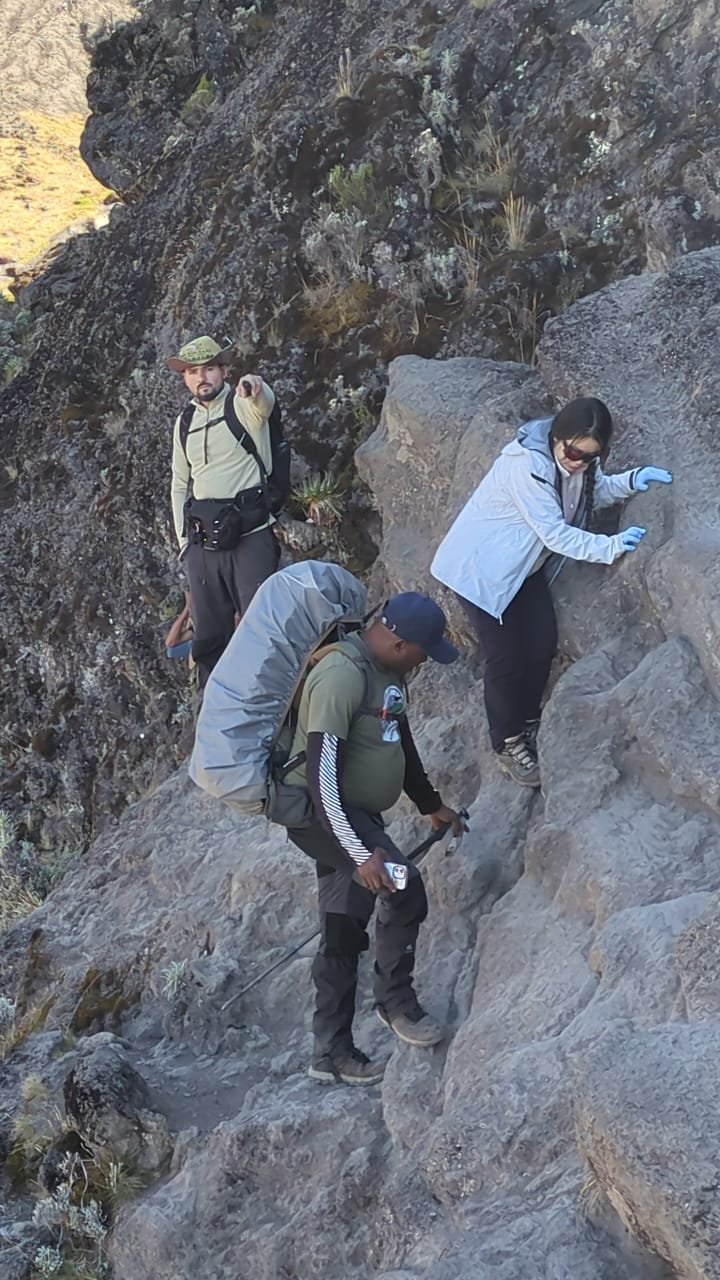
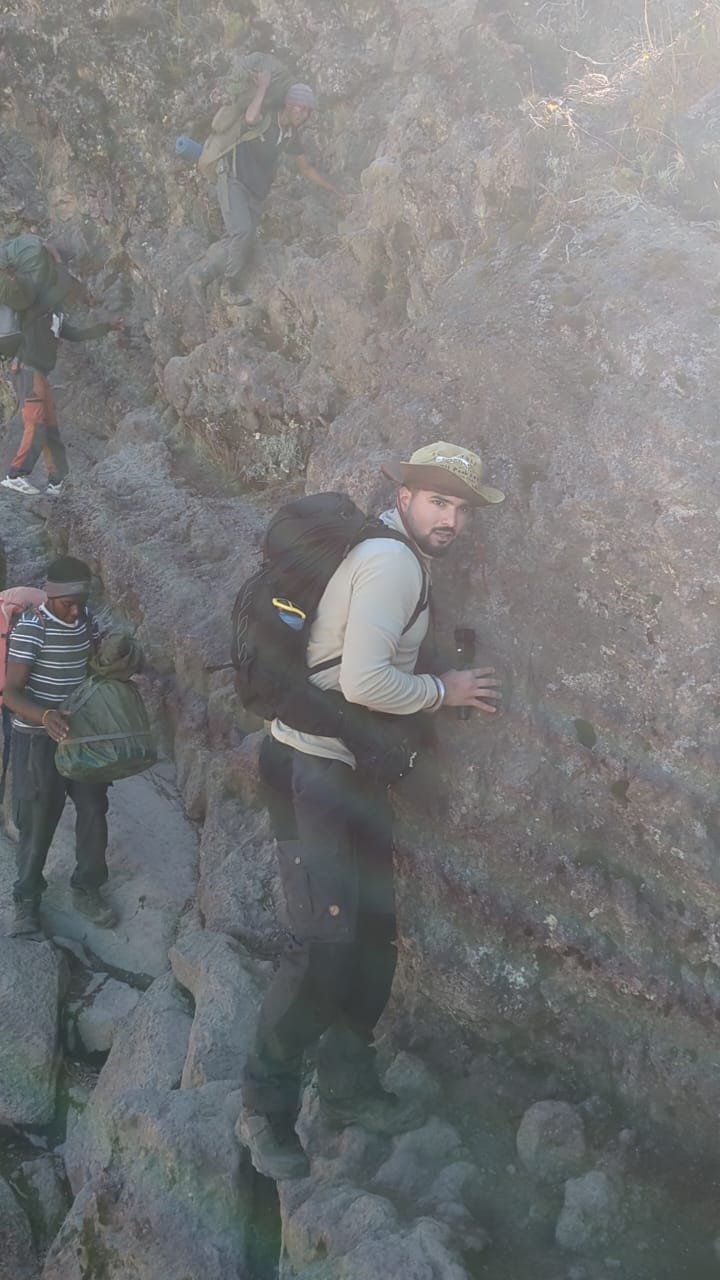
The day people talk about afterwards, though, is usually the Barranco Wall. It’s a steep rock face you scramble up using your hands, not a technical climb, but it looks daunting from Barranco Camp at about 3,960 m. On our October departures it’s often Sabinus Msimba‘s colleague Daudi Bayo, a guide with 16 years on the mountain, who leads the group up it.
What Daudi does differently is simple, and it changes the whole morning. Before anyone touches the rock, he stops the group at the base and points out the line, section by section, so nobody starts up blind. On the wall itself, a guide or porter stays directly behind each climber, calling out where the next foothold is. On the ridge above, the group waits until every last person is up before anyone moves on toward Karanga. That pause on the ridge is where strangers usually start acting like a team. More about the scramble itself is in our Barranco Wall guide.
Solo Women on a Joining Climb: Practical Facts
Solo women join mixed groups on Kilimanjaro regularly, and the same facts apply to everyone. Here’s what’s in place and what’s worth asking about before you book:
- Your own tent. Standard for every solo climber, regardless of gender.
- Private toilet tents at camp, rather than shared public toilets.
- Female crew. Kilimania’s crew includes female porters and a female assistant guide. Her availability varies by departure, so ask in writing whether she can join your date. There is no female lead guide on the team at present.
- Know who’s leading. Ask for the names of the lead and assistant guides for your departure, and how you can raise a concern on the mountain.
- Share your plan. Leave your itinerary and the operator’s emergency contact with someone at home.
- Raise specific needs early. Anything about sleeping arrangements, transport or group make-up that matters to you, put it in writing before the deposit.
No operator can honestly call any trip risk-free, and you shouldn’t hear that promise. What you should get is clear, written answers to every question above.
How to Check a Kilimanjaro Group Climb Is Real Before You Pay
This checklist works with any operator, including us. A reputable company answers all of it without hesitation. Ask by email or WhatsApp so you keep a record:
- How many climbers are confirmed, with deposits paid, on this exact date today?
- Is “8” the maximum group size or the current number? (They’re very different.)
- Is the quote a joining rate or a private rate?
- What happens, and what do I pay, if I end up as the only climber? Please confirm in writing.
- What exactly is included and excluded in the price?
- What is the deposit, and where are the cancellation terms written down?
- Will I receive a proper invoice and a receipt for every payment?
- Which local company operates the climb, and can I see the lead guide’s licence?
- Are there reviews on independent platforms with real dates and details?
A polished website or a receipt on its own doesn’t prove every claim. Look for consistency between what’s written, what’s on the invoice, and what reviewers describe. For a wider set of questions, see how to choose a Kilimanjaro operator. As for us: the lead guide licence for this article’s author is public, and you can open it from the author box below.
6-Day or 7-Day Machame for a Joining Group?
Most joining groups climb the Machame Route, and the main decision is length. In Kilimania’s own records, the 7-day Machame had a 92% summit rate across 418 climbers, against 82% across 97 climbers for the 6-day (both updated January 2026). The extra day gives the body more time to adjust before summit night, though how well anyone acclimatises still varies from person to person.
In these records, a climb counts as a success only if the climber reached Uhuru Peak (5,895 m); anyone who turned back, for any reason, counts as unsuccessful, and climbs are grouped by the itinerary they started. These are Kilimania’s own records, not TANAPA or KINAPA statistics; a past rate cannot predict any one climber’s result. For the full trade-off, read how many days to climb Kilimanjaro, the Machame Route guide, or compare the 6-Day Machame itinerary directly. Route-by-route numbers are on the success rate by route page.
What Happens After You Decide to Join
Once you’ve chosen a date, the steps are short: confirm your place, receive your written terms, pay the deposit, and send your flight details for the airport pickup. The full sequence, including what each document should show, is in our step-by-step guide to booking a Kilimanjaro climb. For everything else about the mountain itself, the Climbing Kilimanjaro Guide is the place to start, and every route and package is listed on the Mount Kilimanjaro climbing page.
Before You Fly: Visa, Insurance and Arrival
- Visa. Visa rules depend on your nationality and can change, so check before you fly. Apply through the official Tanzania e-visa portal, and check the current rules for your passport in our Tanzania visa guide for climbers.
- Insurance. Your policy must explicitly cover high-altitude trekking to Kilimanjaro’s summit (5,895 m) and emergency evacuation and rescue from that height. Policies differ, so check the altitude limit and exclusions before you buy; Kilimania asks for cover up to 6,000 m. Specialist providers include World Nomads and IMG Global; read the altitude clause before you buy.
- Arrival. Fly into Kilimanjaro International Airport (JRO) the day before your departure. Park rules and fees are set by Tanzania National Parks (TANAPA), and Kilimanjaro itself is a UNESCO World Heritage Site.
Independent Reviews
Rather than quote reviews here, we’d prefer you read them where they were written, with dates and full context.
 Read Kilimania’s reviews on Tripadvisor, with dates and full context.
Google
Read Kilimania’s reviews on Google, with dates and full context.

Frequently Asked Questions
Can I climb Kilimanjaro alone with a group?
Yes. You book a place on a scheduled joining departure, and you climb with the other people booked on that date. You have your own tent, and you share the guides, cook, porters and mess tent with the group.
Do solo climbers pay a single supplement on Kilimanjaro?
Some operators charge one. On Kilimania joining climbs, every solo climber gets their own tent at no extra charge, so there is no single supplement for sleeping alone.
How many people are in a Kilimanjaro joining group?
Kilimania joining groups take a maximum of 8 climbers. Many departures run with fewer. Ask how many climbers are confirmed for your exact date before you pay.
What happens if no one else joins my Kilimanjaro date?
The climb still runs. Before you pay the balance, you receive both figures in writing: the joining rate if at least one other climber is confirmed, and the solo private rate if not. You can accept, move to another date, or cancel under your written booking terms.
Is it safe for a solo woman to join a Kilimanjaro group?
Solo women join mixed groups regularly. You sleep in your own tent and use private toilet tents. Ask in writing who the guide team for your date will be, and raise any specific need before you book.
What if I am slower than the rest of the group?
The group walks pole pole, slowly, at a pace the whole group can hold. Assistant guides walk with slower climbers, so nobody is pushed beyond a safe pace or expected to walk alone.
Can I join a group if my flights are already booked?
Yes. Send your arrival date and the departure you want. If a joining group starts the morning after you land at Kilimanjaro International Airport, you can usually be added to it.
How do I know a joining group is confirmed?
Ask the operator how many climbers are confirmed today, and ask for that number in writing. Then ask, also in writing, what happens and what you pay if you end up alone.
The Short Version
Booking a Kilimanjaro group climb on your own doesn’t mean climbing alone. On a joining departure you get your own tent, a group of no more than 8, guides who set the pace for the slowest walker, and twice-daily health checks. The one thing to settle before you pay is the price if nobody else books, in writing. Ask that of any operator, and the rest gets much easier. When you’re ready to pick a date, the joining calendar is the place to look. Asante (thank you) for reading.
That’s the promise: We Walk With You.
Tell us your dates and we’ll explain your options
Share your preferred dates, route, and whether you’re travelling alone. We’ll tell you how many climbers are confirmed and set out the joining and solo figures in writing. We reply within 12 hours (EAT, UTC+3), 7 days a week.
About the author