Scenic Lemosho Route with high success rates & fewer crowds

Kilimanjaro Route Guide
7-Day Machame Route: Cost, Itinerary & Honest Difficulty Guide
The Machame Route — also called the Whiskey Route — is the most climbed path on Mount Kilimanjaro, running from rainforest at Machame Gate to Uhuru Peak over seven days of camping. This guide covers the day-by-day itinerary, what summit night actually involves, pricing, and Kilimania’s own recorded summit outcomes on this route — not an industry estimate. For the full planning picture — costs, fitness requirements and route comparison — see our complete Kilimanjaro climbing guide.
TripAdvisor 5.0/5 (33 reviews)
Google 4.9/5 (36 reviews)
TATO-registered
KPAP-aligned
Moshi-based
~62 kmRound-trip distance
5,895mUhuru Peak summit
92%Kilimania success rate (n=418, Jan 2026)
From $1,600Per person
Table of contents
- Quick answer
- Quick facts
- Who this route suits
- Day-by-day itinerary
- Acclimatization strategy
- Summit night, explained
- Honest difficulty assessment
- Route comparison
- Best time to climb
- Risks and honest limitations
- Pricing and inclusions
- Your guide team
- Porter welfare
- Photo gallery
- FAQ
- Book this climb
- Registrations & recognition
The 7-day Machame Route is a camping route on Mount Kilimanjaro that climbs from Machame Gate (1,800m) through rainforest, moorland and alpine desert to Barafu Camp (4,673m) before a midnight summit push to Uhuru Peak (5,895m), then descends via Mweka. Kilimania’s own operational records show a 92% summit success rate on this itinerary, based on 418 climbers (updated January 2026) — our figure, not an industry statistic. These figures are Kilimania’s internal records and may differ from older published estimates or industry averages. Pricing runs $1,600–$1,900 per person depending on group size, all-inclusive of park fees, guides, porters and camping equipment.
Quick facts
- Duration
- 7 days / 6 nights on the mountain
- Starting gate
- Machame Gate, ~1,800m
- Summit
- Uhuru Peak, 5,895m
- Approach camp
- Barafu Camp, ~4,673m
- Accommodation
- Camping (mountain tents)
- Kilimania success rate
- 92% (n=418, Jan 2026)
- Group size
- Private or joining groups, max group per Kilimania departure varies by date
- Price from
- $1,600 pp (6-person group)
Who this route suits
Choose 7-day Machame if…
- You’re reasonably fit, comfortable walking 5–7 hours a day, and want the most scenic and most-climbed route on the mountain.
- You’re comfortable camping for six nights rather than sleeping in huts.
- You have seven days on the mountain available and want a proven acclimatization profile rather than the fastest possible itinerary.
- You want a route with a well-established support system — Machame carries the highest volume of climbers and porters of any route.
Consider a different route if…
- You need hut accommodation — Marangu Route is the only route with huts.
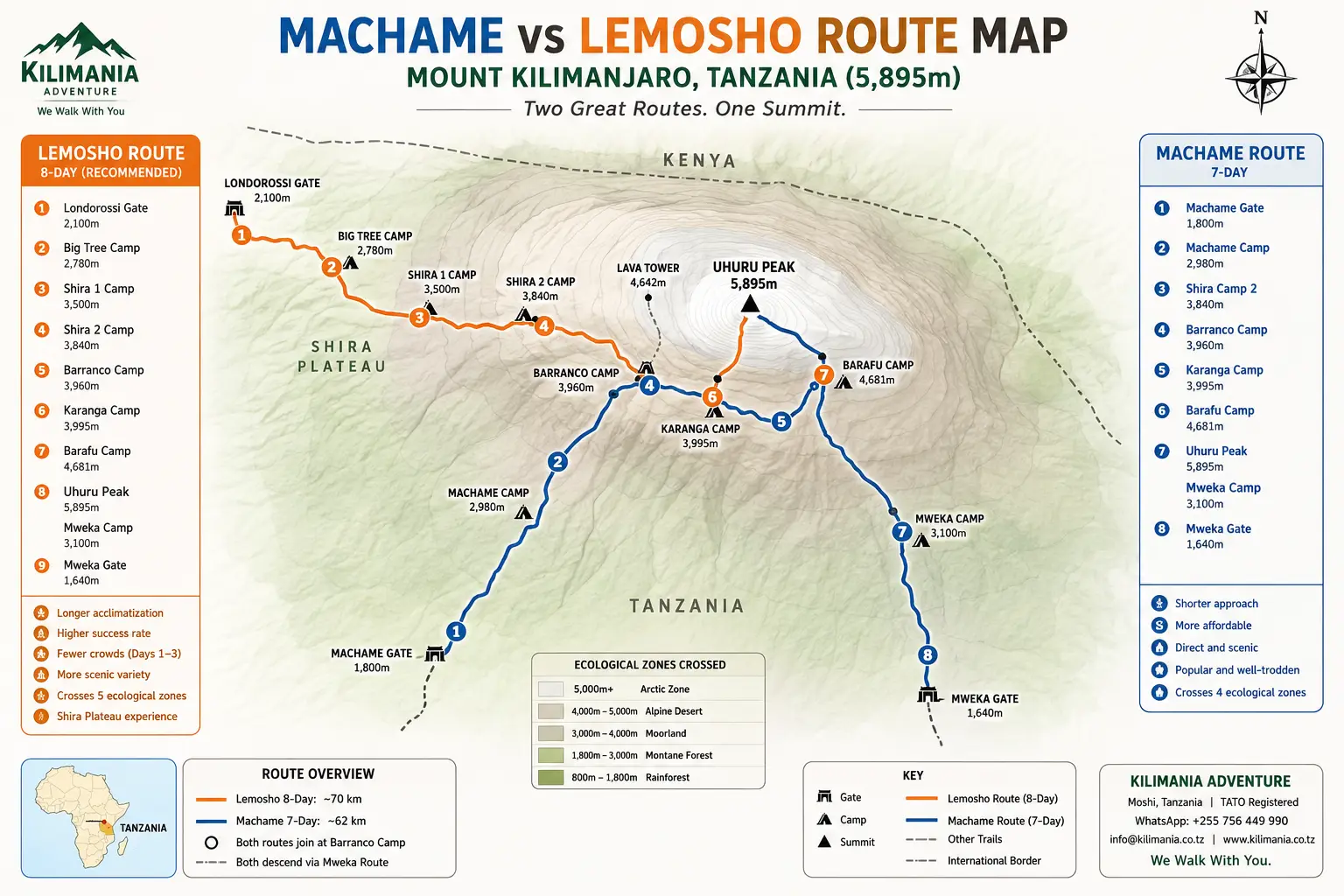
- You want the highest acclimatization margin available — 8-day Lemosho or the 9-day Northern Circuit add extra nights above 3,500m.
- You want a quieter trail with fewer other climbers — Machame is the busiest route on the mountain.
- You only have 5–6 days available — see our 6-day Rongai Route instead.
Day-by-day itinerary
Camp names and approximate elevations below follow the established Machame Route sequence used by every operator on the mountain. Walking hours are typical ranges — your guide sets the actual pace for your group based on how everyone is coping with the altitude, which is why we describe hours as a range rather than a fixed number. For a shorter overview of the whole route, see our Machame Route overview.
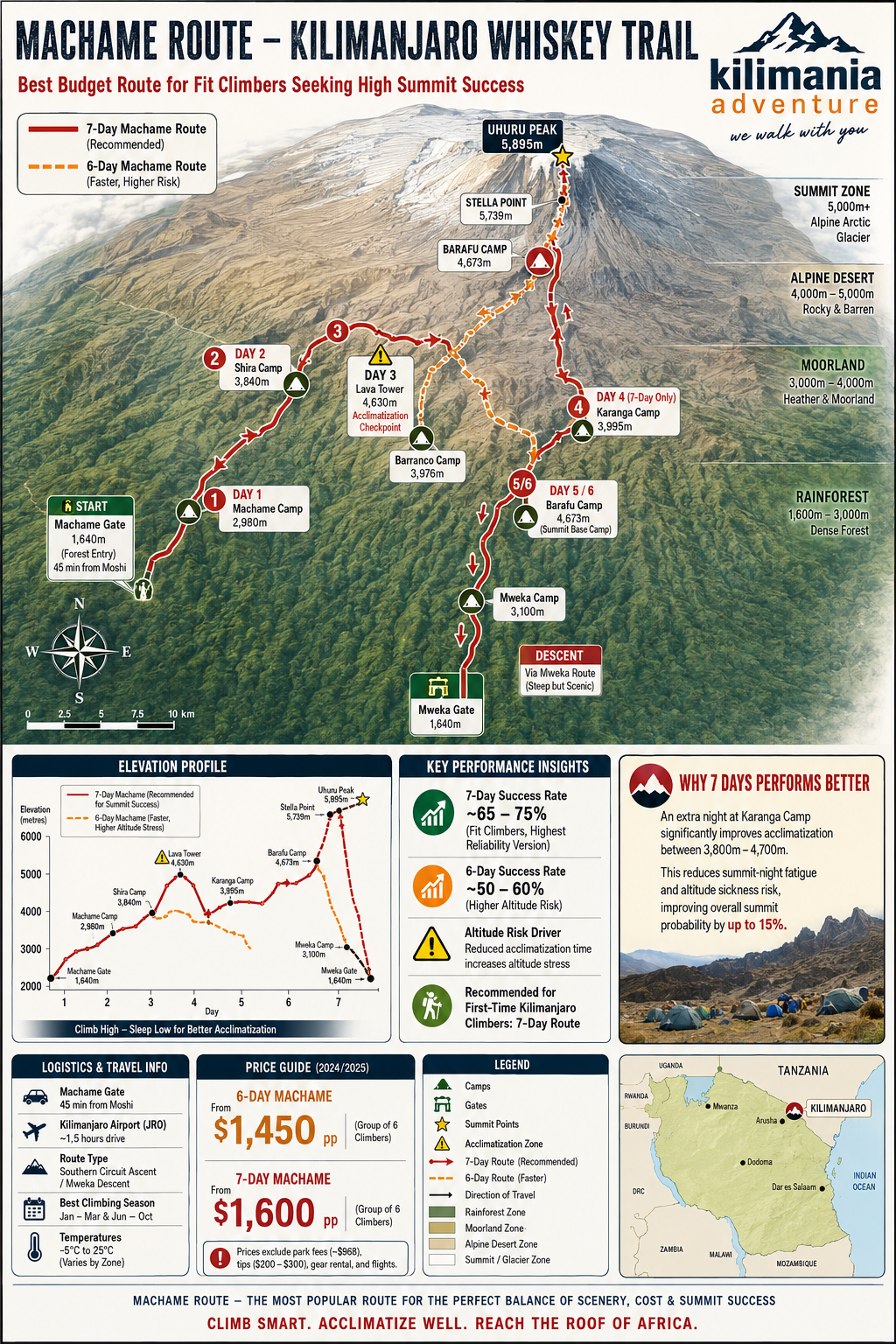
Day 1: Machame Gate → Machame Camp
The climb starts in dense rainforest — expect mud on wetter days and a genuinely humid first few hours. Porters move ahead at a noticeably faster pace than most climbers expect; that’s normal. Altitude isn’t a real concern yet, but this is the day to settle into a walking pace you could sustain for a full week, not the pace that feels comfortable on day one.
Guide note: groups that start too fast on Day 1 are usually the same groups asking to slow down by Day 3. There’s no advantage to reaching camp early.
Day 2: Machame Camp → Shira Camp
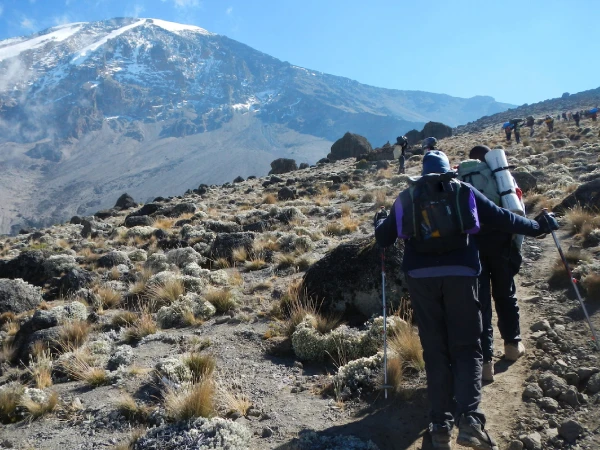
The forest thins into open moorland with heather and giant lobelia, and Kibo’s summit dome becomes visible on clear days. The gain to Shira is a meaningful jump in elevation for one day — this is typically the first point where climbers notice altitude effects like mild headache or shortness of breath on inclines.
Day 3: Shira Camp → Lava Tower → Barranco Camp
This is the “climb high, sleep low” day built into every Machame itinerary: you walk up to Lava Tower at 4,600m for lunch, then descend to sleep at Barranco (3,900m) — lower than the day’s high point. The altitude gain-then-loss is deliberate acclimatization, not a detour.
Guide note: this is often the day climbers feel worst — nausea or headache at Lava Tower are common and usually resolve on the descent to Barranco. Hydration and a genuinely slow pace (pole pole) up to Lava Tower matter more here than on any earlier day.
Day 4: Barranco Camp → Karanga Camp
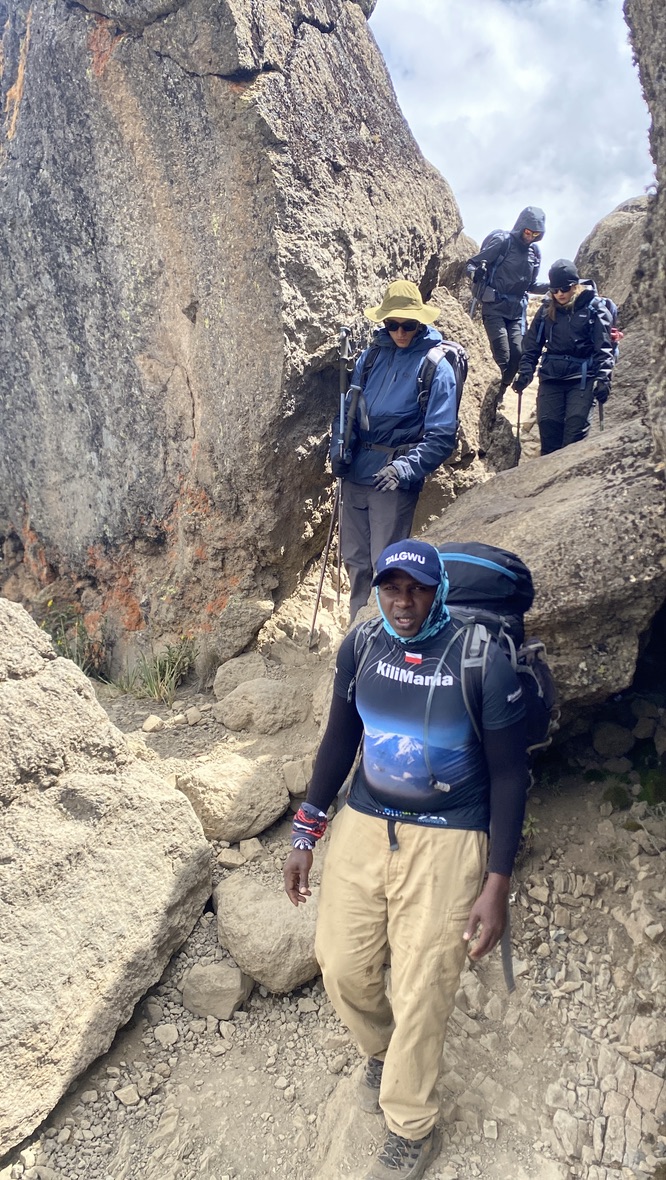
The day opens with the Barranco Wall — a steep, hands-on scramble that looks intimidating from camp but is a short (roughly 1-hour) non-technical climb. It’s the single most photographed section of the route. The rest of the day undulates through ridges and valleys to Karanga, a short walking day that gives the body time to adjust before the push toward Barafu.
Day 5: Karanga Camp → Barafu Camp
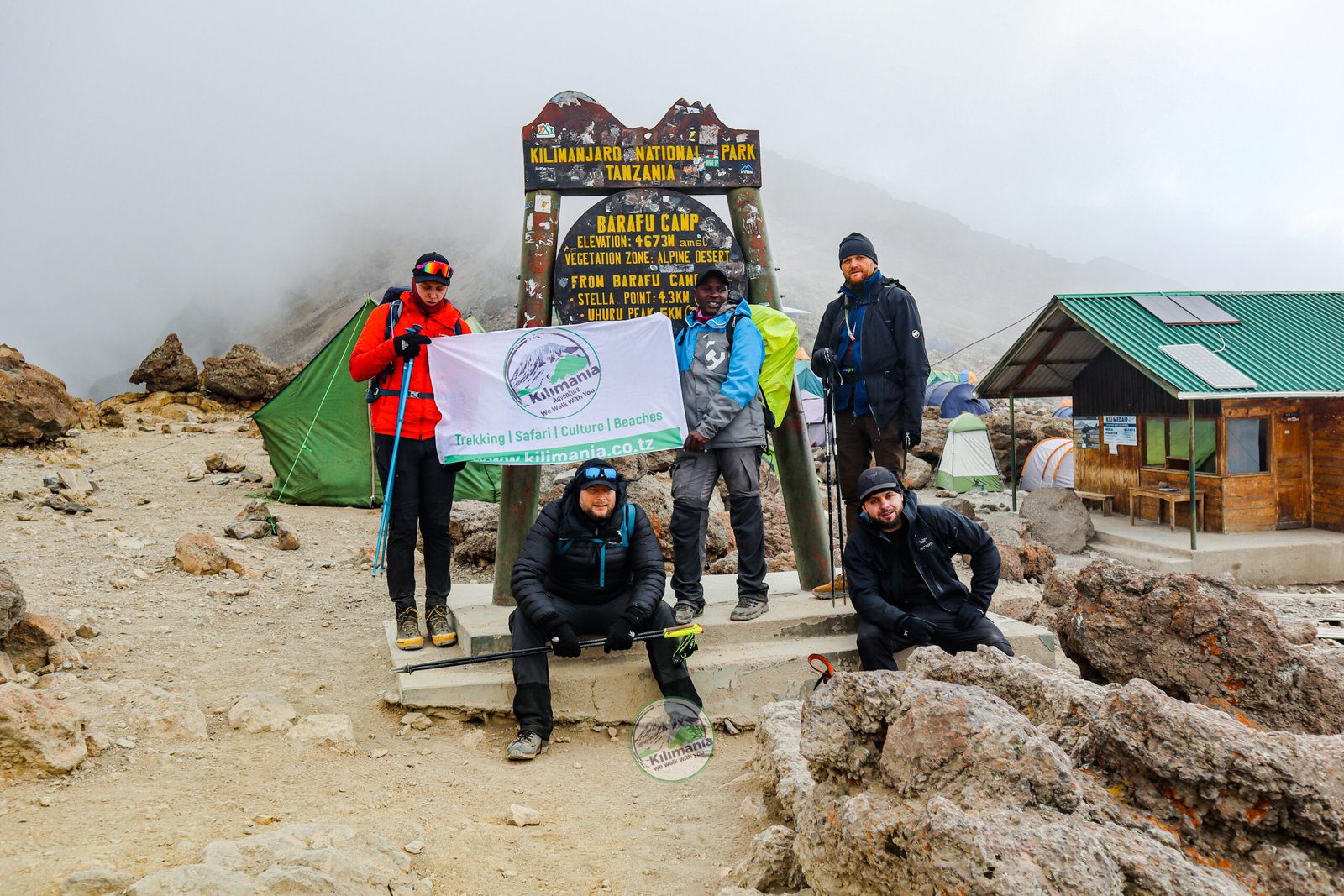
A short but exposed walk to Barafu (“ice” in Swahili), the staging camp for the summit attempt. The afternoon and evening here are for resting, an early dinner, and trying to sleep before a midnight wake-up — most climbers manage only a few hours of actual sleep before summit night.
Day 6: Barafu Camp → Uhuru Peak → Mweka Camp
Summit night — see the full breakdown below. After summiting, the descent continues the same day, past Barafu, down to Mweka Camp in the forest, where temperatures and oxygen levels rise sharply. This is a genuinely long day; most climbers are on their feet for 10–14 hours between wake-up and reaching Mweka.
Day 7: Mweka Camp → Mweka Gate
A straightforward descent through forest to Mweka Gate, where summit certificates are issued and you’re transferred back to your hotel in Moshi.
Acclimatization strategy
Machame’s itinerary is built around “climb high, sleep low”: the Lava Tower detour on Day 3 and the ridge-and-valley profile on Day 4 push climbers above their overnight elevation during the day, then bring them back down to sleep lower. Over 7 days, climbers spend roughly 4 nights above 3,500m before summit night — fewer than Lemosho (8 days) or the Northern Circuit (9 days), which is the main reason those routes show higher recorded success rates in Kilimania’s own data.
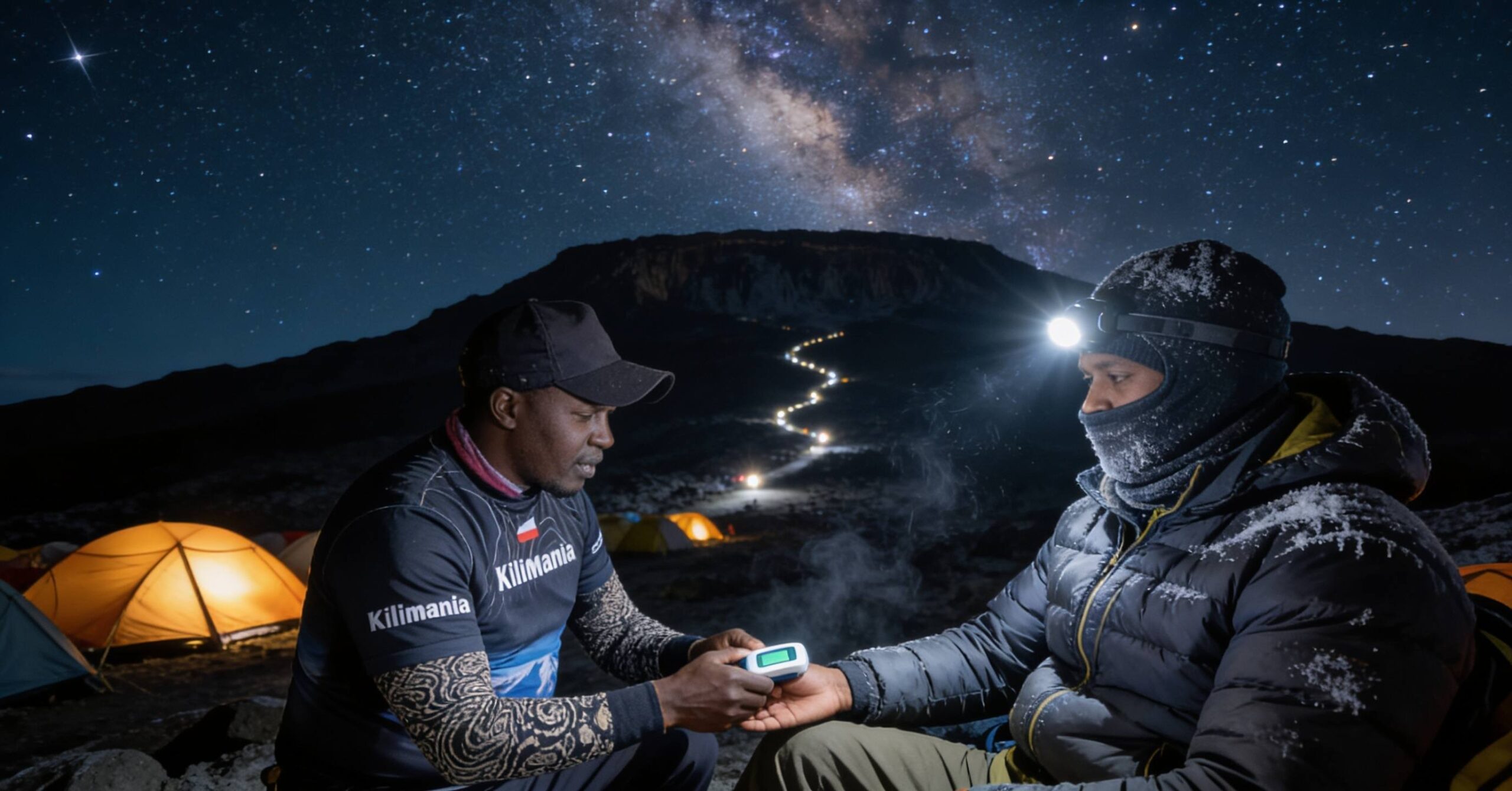
Kilimania’s guides carry pulse oximeters and check oxygen saturation and pulse at every camp, watching for the early signs of Acute Mountain Sickness rather than relying on how a climber says they feel. Physiology varies more between individuals than between routes — a very fit climber can still struggle with altitude, and a less fit climber can acclimatize well. For a full explanation of symptoms and what to do about them, see our altitude sickness guide.
Some climbers use Diamox (acetazolamide) as a preventive aid against altitude sickness. It is a prescription medication, and we do not recommend it and cannot advise on dosage — that decision should be made with your own doctor before you travel. See our Diamox for Kilimanjaro guide for what the evidence says and what to ask your physician.
Kilimania guides reference the Wilderness Medical Society altitude illness guidelines in their first-aid training — the same evidence base used by wilderness medicine practitioners worldwide.
| Route | Duration | Approx. nights above 3,500m |
|---|---|---|
| Northern Circuit | 9 days | 6 |
| Lemosho | 8 days | 5 |
| Machame | 7 days | 4 |
| Rongai | 6 days | 3 |
| Marangu | 6 days | 2 |
Summit night, explained
Summit night is the section every Machame climber should understand before booking, not discover at midnight. Here is what actually happens.
Wake-up and departure
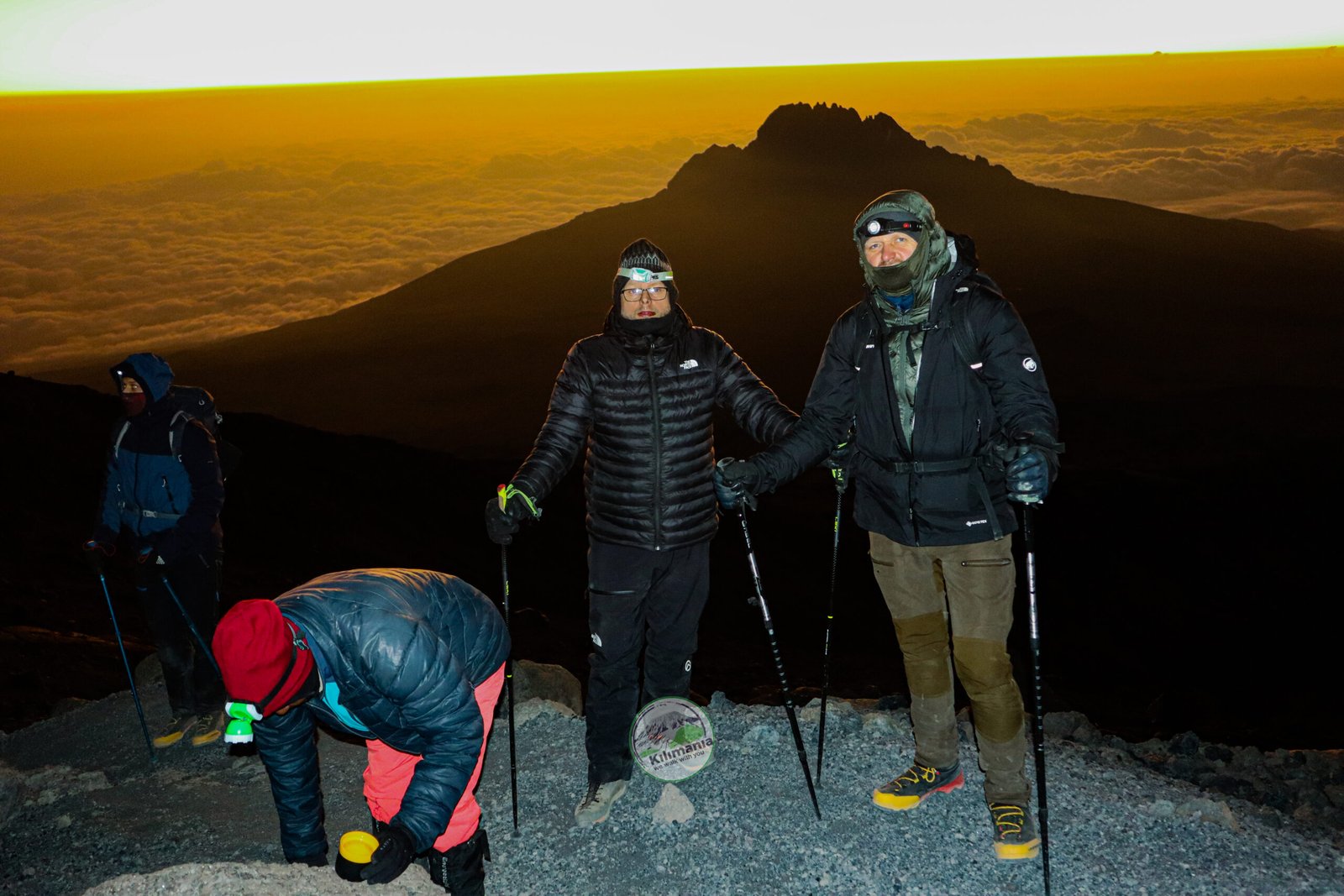
Climbers are woken around 11:00pm–12:00am at Barafu Camp (4,673m) for tea and light snacks, then start walking by roughly midnight. Departing at night, rather than at dawn, is timed so climbers reach Uhuru Peak around sunrise and have enough daylight for the full descent back to Mweka the same day.
The climb to Stella Point
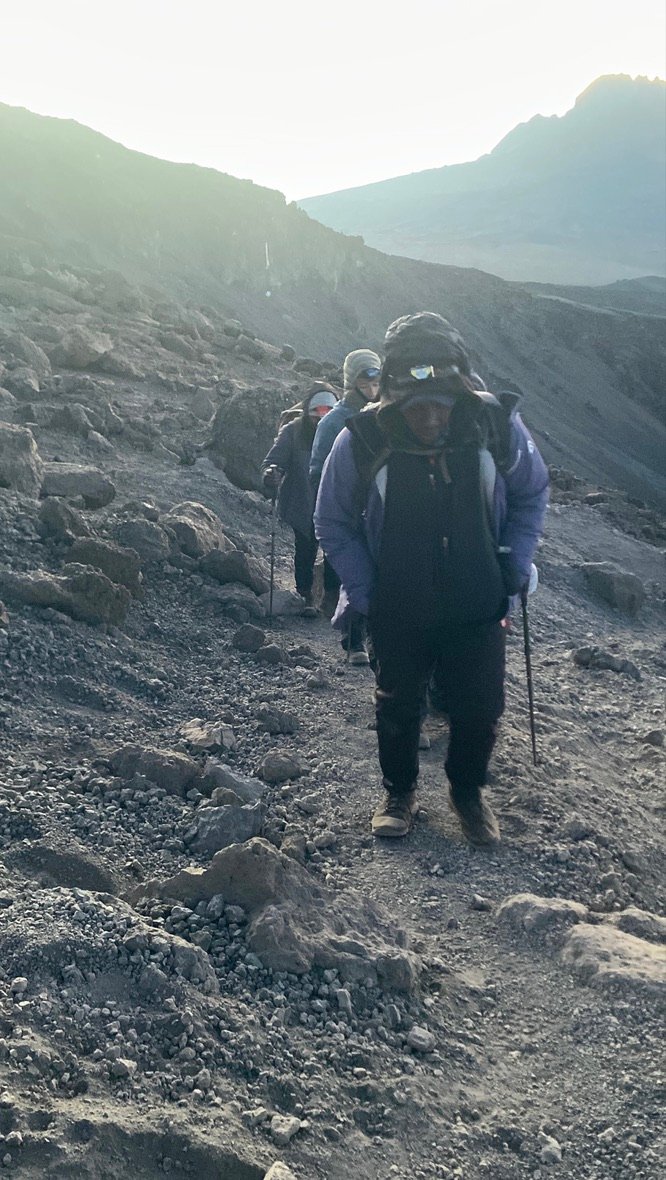
The first several hours are a steady, slow, switchbacking ascent up scree and volcanic rock in the dark, headlamp-lit, at a deliberately slow pace — this is where “pole pole” (slowly, slowly) matters most. Temperatures at this stage commonly fall between -10°C and -20°C, made colder by wind chill. This is the section where climbers most often consider turning back; fatigue, cold, and the effects of altitude combine here more than anywhere else on the route.
Stella Point to Uhuru Peak
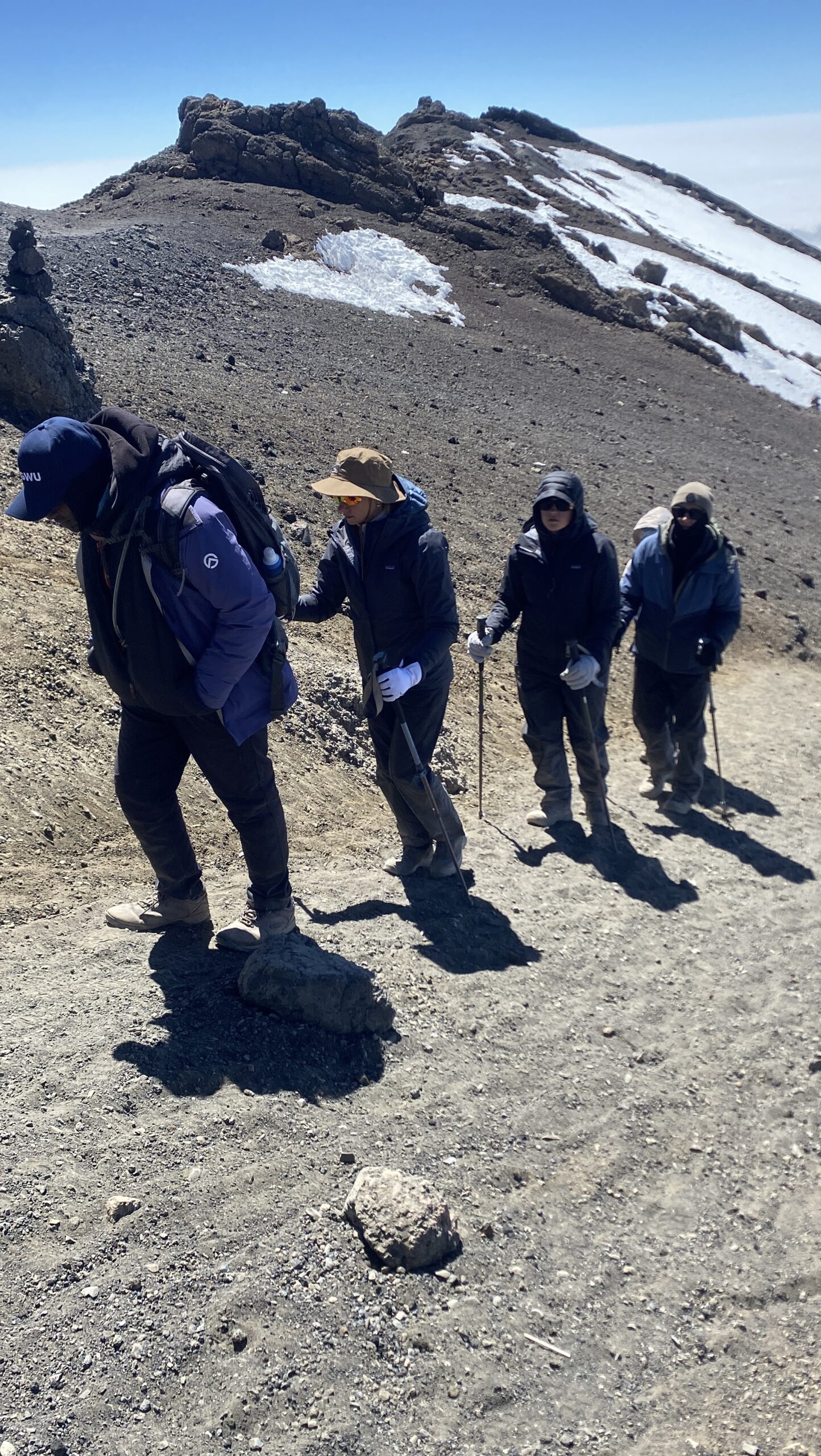
Reaching Stella Point (5,756m), on the crater rim, is a real milestone — from here it’s a further 1–2 hours along the rim, now in daylight, to Uhuru Peak (5,895m). This final stretch is less steep but still slow going at that altitude; many climbers describe it as mentally harder than physically harder, since the summit is visible but still some distance away.
At the summit
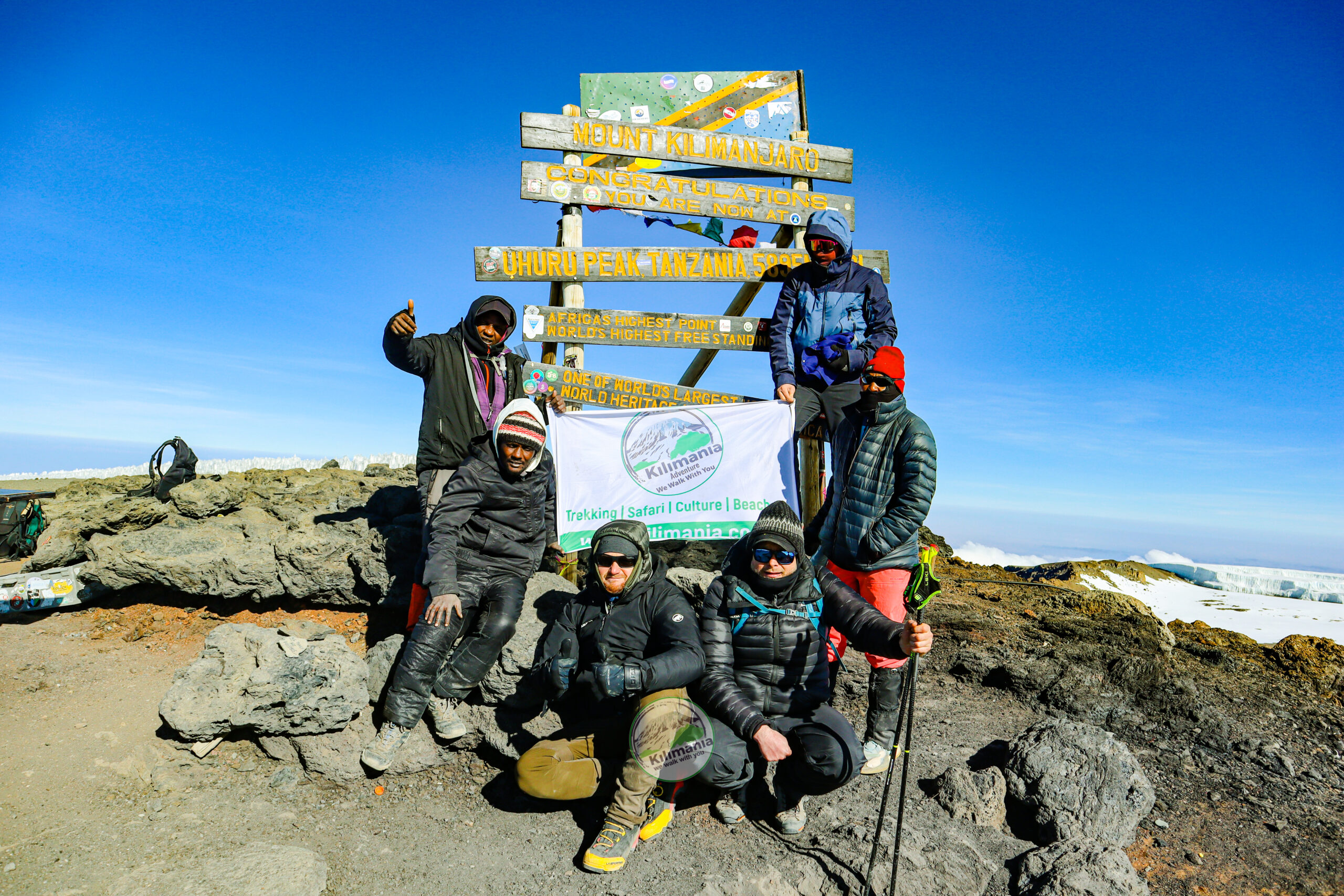
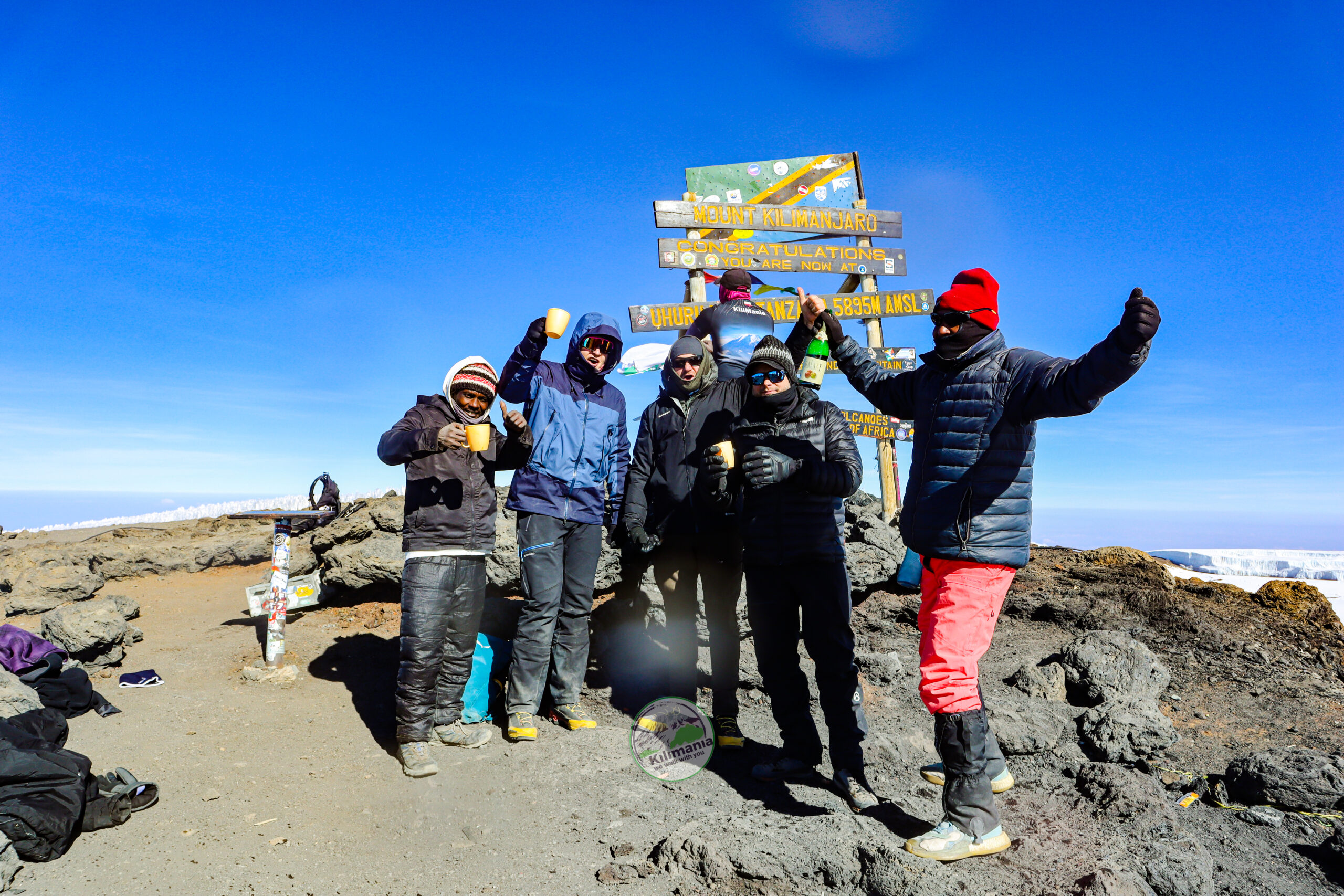
Time at Uhuru Peak is typically brief — 10 to 20 minutes for photos at the summit sign — because of cold, wind, and the need to begin descending before climbers or guides become too fatigued or too cold at that altitude.
The descent
Descent to Barafu Camp is faster than the ascent (loose scree makes for quick, if hard-on-the-knees, downhill walking) but is still several hours. After a short rest and food at Barafu, the group continues descending the same day to Mweka Camp — meaning summit day is typically the longest single day of the climb, often 10–14 hours of walking in total.
Honest note: summit night is the hardest part of this route, not a footnote to it. Kilimania does not soften this — cold, fatigue, and altitude combine in a way that no amount of daytime fitness training fully prepares you for. Guides monitor each climber’s condition throughout and will recommend turning back if continuing becomes unsafe, regardless of how close the summit is.
For a fuller hour-by-hour account and gear recommendations specific to summit night, see our summit night guide and our complete summit night timeline.
Honest difficulty assessment
Overall rating: Moderate–Hard. The daily trekking itself is achievable for most reasonably fit adults — the terrain is a well-established trail, not technical climbing outside of the short Barranco Wall scramble. What makes Machame demanding is the combination of six nights of camping, a cumulative 7-day physical load, and one genuinely difficult summit night.
The hardest part, named directly
Summit night. Not Day 3’s climb to Lava Tower, not the Barranco Wall — the 7–8 hour ascent from Barafu in sub-zero temperatures at reduced oxygen is the part that determines whether most climbers who don’t summit turn back.
Fitness benchmark
You should be able to walk 5–7 hours comfortably at a sustained pace, on consecutive days, carrying a daypack of 5–7kg. If you can’t currently do that, our 12-week training guide explains how to build toward it.
What fitness does not protect against
Altitude. Fit climbers who train seriously still turn back from Kilimanjaro due to Acute Mountain Sickness, while less-fit climbers sometimes acclimatize without issue. Fitness improves your ability to keep walking; it does not determine how well your body handles reduced oxygen at altitude.
Comparison to other routes
Machame is generally considered more physically demanding day-to-day than Marangu or Rongai (steeper terrain, no huts), but comparable in overall difficulty to Lemosho, which follows a similar profile with two additional acclimatization days.
How Machame compares to other routes
| Route | Duration | Accommodation | Kilimania success rate | Dataset |
|---|---|---|---|---|
| Machame (this route) | 7 days | Camping | 92% | n=418, Jan 2026 |
| Lemosho | 8 days | Camping | 82% | n=384, Aug 2026 |
| Northern Circuit | 9 days | Camping | 96% | n=215, Aug 2026 |
| Marangu | 6 days | Huts | 67% | n=256, Aug 2026 |
| Rongai | 6–7 days | Camping | 85% | n=112, Jan 2026 |
Figures are Kilimania Adventures’ own operational records, not official TANAPA/KINAPA or industry-wide statistics. Summit success means reaching Uhuru Peak (5,895m); individual outcomes vary with acclimatization, fitness, pacing and health. See our full success-rate data by route.
Best time to climb the Machame Route
Kilimanjaro can be climbed year-round, but rainfall and trail conditions vary meaningfully by month. The table below is a general seasonal guide, not a Kilimania-specific dataset — for exact camp temperatures and a fuller monthly breakdown, see our Kilimanjaro weather guide.
| Month | Typical conditions | Notes |
|---|---|---|
| January | Dry, clear | One of the two main dry seasons |
| February | Dry, clear | Often the driest month |
| March | Transitional | Long rains typically begin |
| April | Wet | Heaviest rainfall of the year |
| May | Wet, easing late month | Long rains tapering off |
| June | Dry, cooler | Trails drying out, colder nights |
| July | Dry, cold | Peak dry season begins, busiest period |
| August | Dry, cold | Very busy on the trail |
| September | Dry, clear | Popular, generally stable weather |
| October | Mostly dry, transitional | Short rains may begin late month |
| November | Short rains | Afternoon showers more common |
| December | Short rains easing | Popular for holiday-period climbs |
Risks and honest limitations of this route
Altitude
Machame’s 4 nights above 3,500m give less acclimatization margin than Lemosho or the Northern Circuit — part of why its recorded success rate is lower than those longer routes.
Crowding
As the most-climbed route, Machame’s camps and trail sections can feel busy, particularly at Barranco Camp and on the descent.
Camping conditions
Six nights in a tent, with temperatures well below freezing at the higher camps. No hut alternative on this route.
Summit-night demand
A 10–14 hour combined ascent-and-descent day on minimal sleep is the single hardest day of the trip, regardless of route.
For a broader honest picture of what the whole trip involves, see our what to expect climbing Kilimanjaro guide and our Kilimanjaro safety record page.
Pricing, inclusions and exclusions
| Group size | Price per person |
|---|---|
| Private (1 person) | $1,900 |
| 2 people | $1,800 |
| 3 people (joining-group price) | $1,750 |
| 4 people | $1,700 |
| 5 people | $1,650 |
| 6 people | $1,600 |
Deposit: $100 per person. Prices last verified: September 2026. Full pricing methodology and park-fee breakdown: see our Kilimanjaro cost guide and park fees page.
The 3-person price ($1,750pp) is what you’ll typically pay if you join one of our scheduled group departures rather than booking privately — most joining groups on this route form around three climbers. See current dates on our Kilimanjaro Joining Calendar.
Included
- 2 hotel nights in Moshi (before and after the climb)
- TANAPA park fees and KINAPA guide/rescue fees
- KINAPA-licensed guide and required assistant guides
- KPAP-aligned porters for group equipment
- Camping tents, sleeping mats, dining tent
- All meals and drinking water on the mountain
- Mountain cook
Not included
- International flights and Tanzania visa
- Travel insurance covering high-altitude emergency evacuation — see World Nomads as one example provider
- Personal trekking gear — see our packing list
- Guide and porter tips — see our tipping guide
- Personal porter (available as an add-on)
Full-moon climb: available in select months for a small surcharge — ask us for current dates.
Your guide team
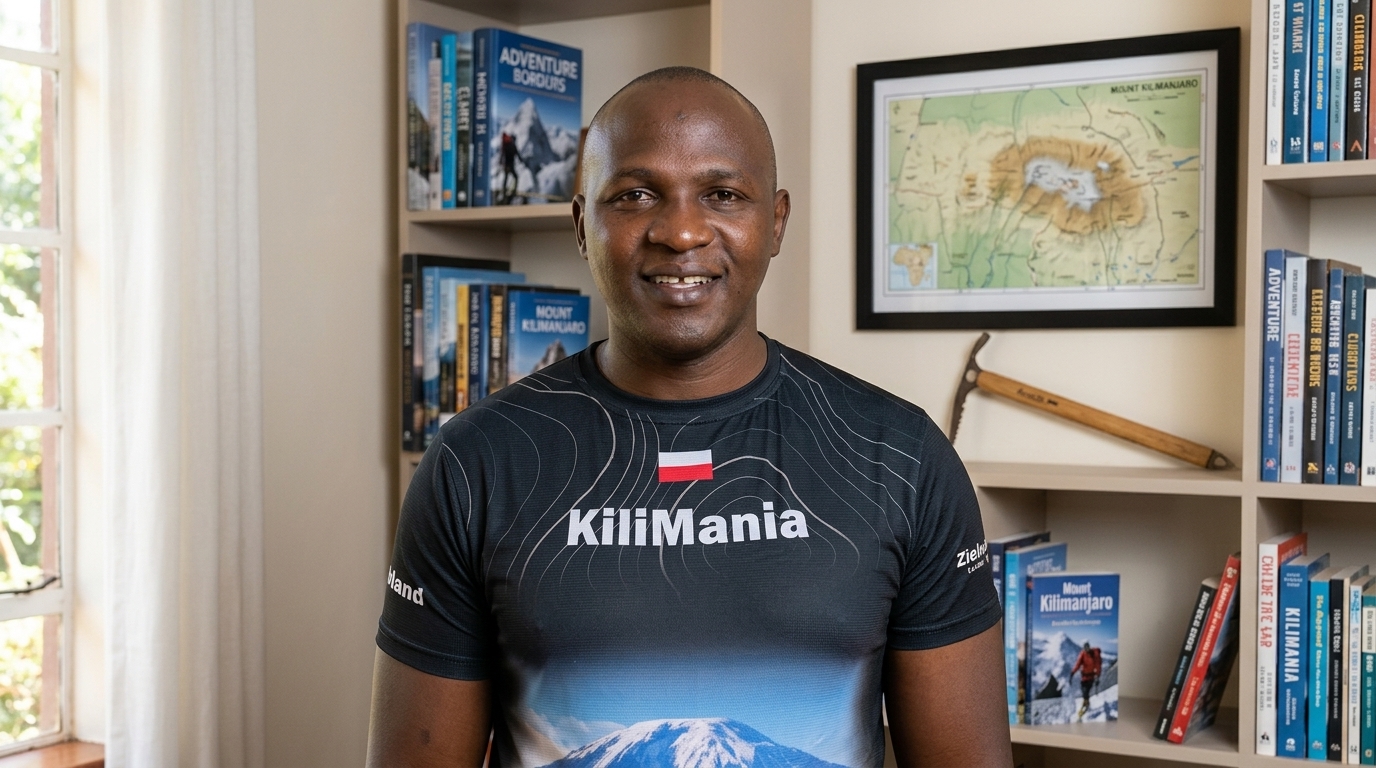
Sabinus Msimba — Senior Mountain Guide, Co-founder
22+ years guiding on Kilimanjaro, 300+ personal Uhuru Peak summits, KINAPA-licensed since 2003, Wilderness First Responder certified. Full biography, credentials and license: Sabinus Msimba’s profile.
Depending on availability and group size, your climb may be led by Sabinus or another member of Kilimania’s licensed guide team.
These ratings are company-wide across all Kilimania trips; we don’t yet have a verified, route-specific review set for Machame alone to show separately.
Read more about Sabinus’s background in our 22-years-on-the-mountain guide profile.
Porter welfare on this route
Every Machame climb uses a team of porters carrying group equipment — tents, food, cooking gear and personal duffels — up and down the same route as the climbing group. Kilimania is KPAP-aligned, meaning we follow the Kilimanjaro Porters Assistance Project‘s standards on maximum carried loads (20kg of company gear, weighed at the gate), fair wages, and access to proper sleeping shelter and meals at camp.
These standards exist because porter treatment varies significantly between operators on this mountain, and weight/wage abuses have been well documented industry-wide. If you’re comparing operators, ask directly what their porter wage and maximum-load policy is — a KPAP-aligned company should be able to answer specifically, not vaguely. Full detail: our porter welfare page.
Free resources for your climb
Altitude symptom checklist
The same checklist Kilimania guides use to monitor climbers at every camp.
Download PDF12-week training calendar
Week-by-week preparation plan for the fitness benchmark described above.
Download PDFPacking checklist
Route-tested gear list, including what summit night specifically requires.
Download PDFRelated routes
Photo gallery
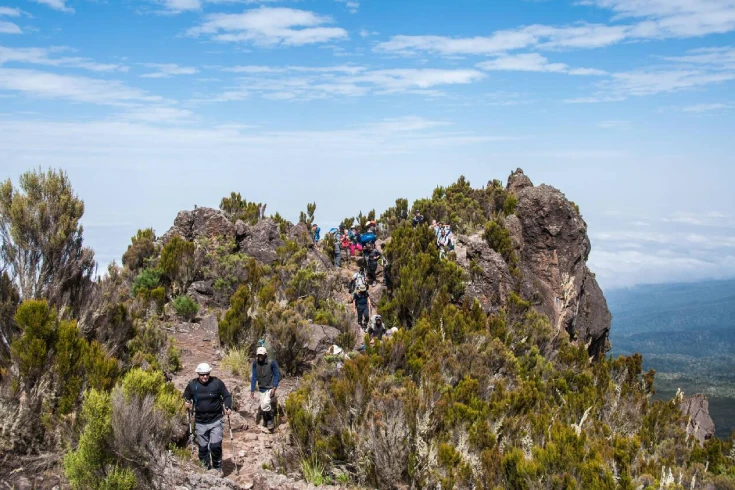
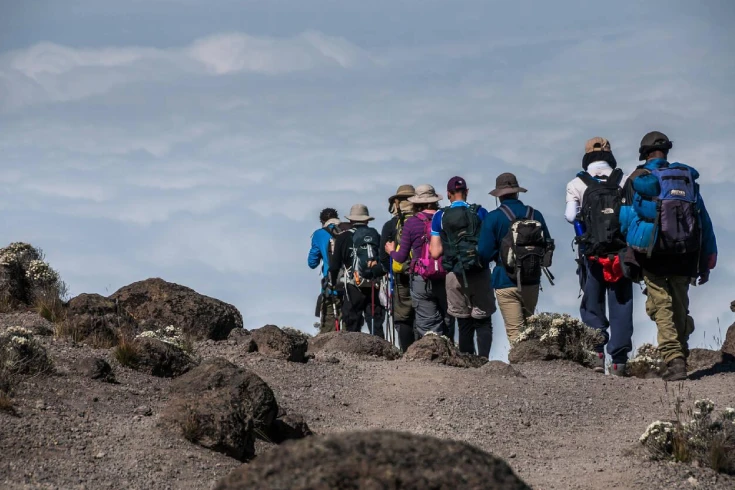
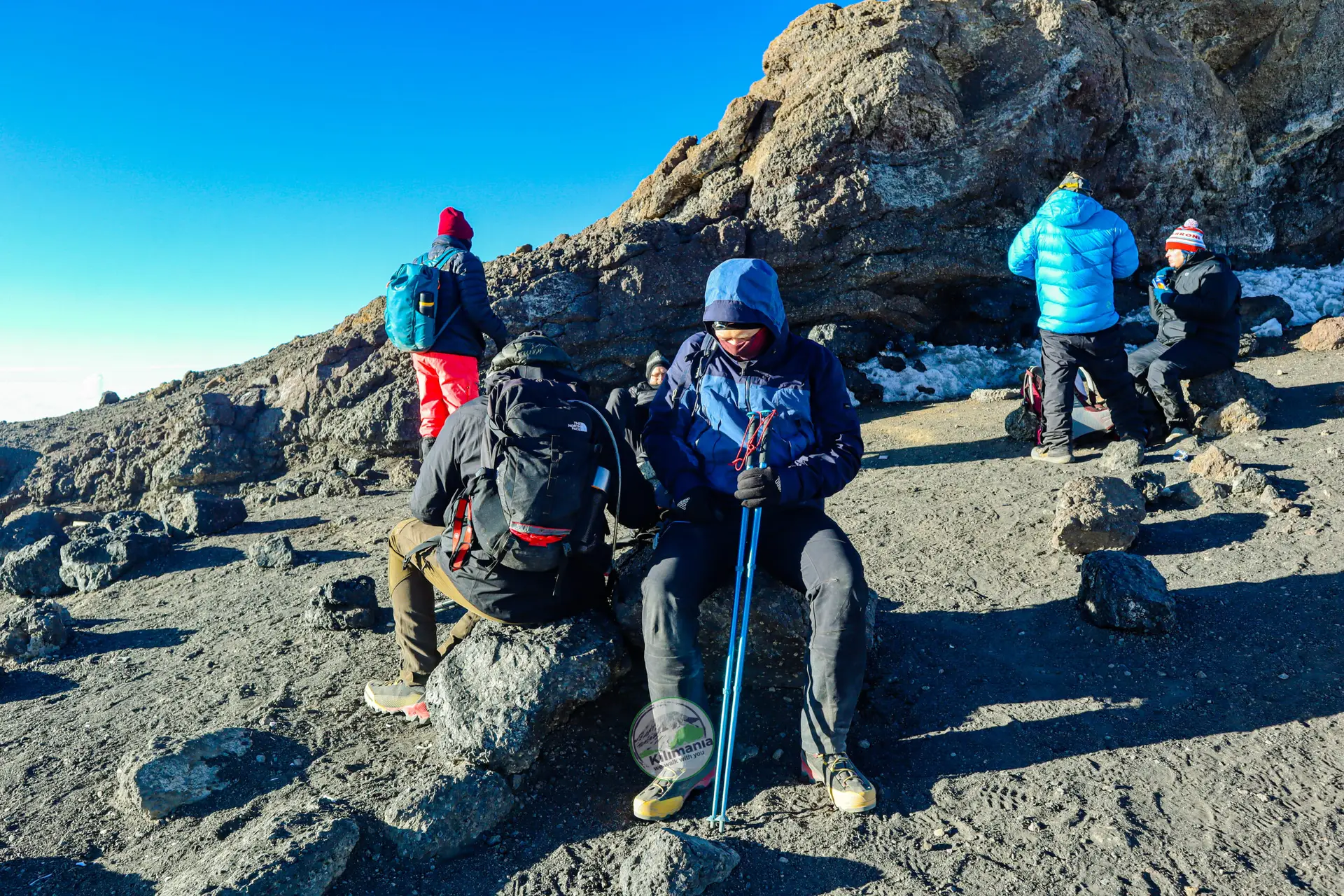
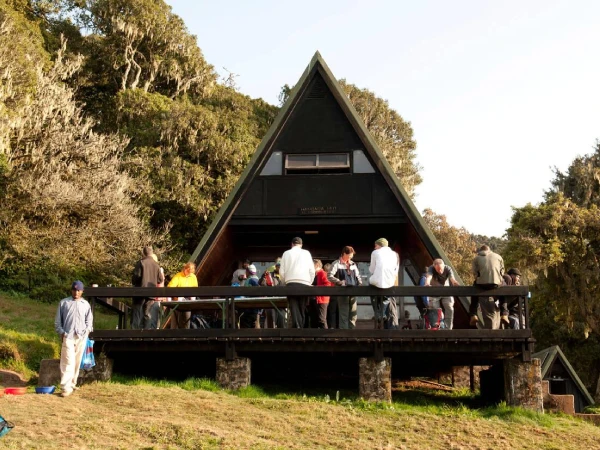
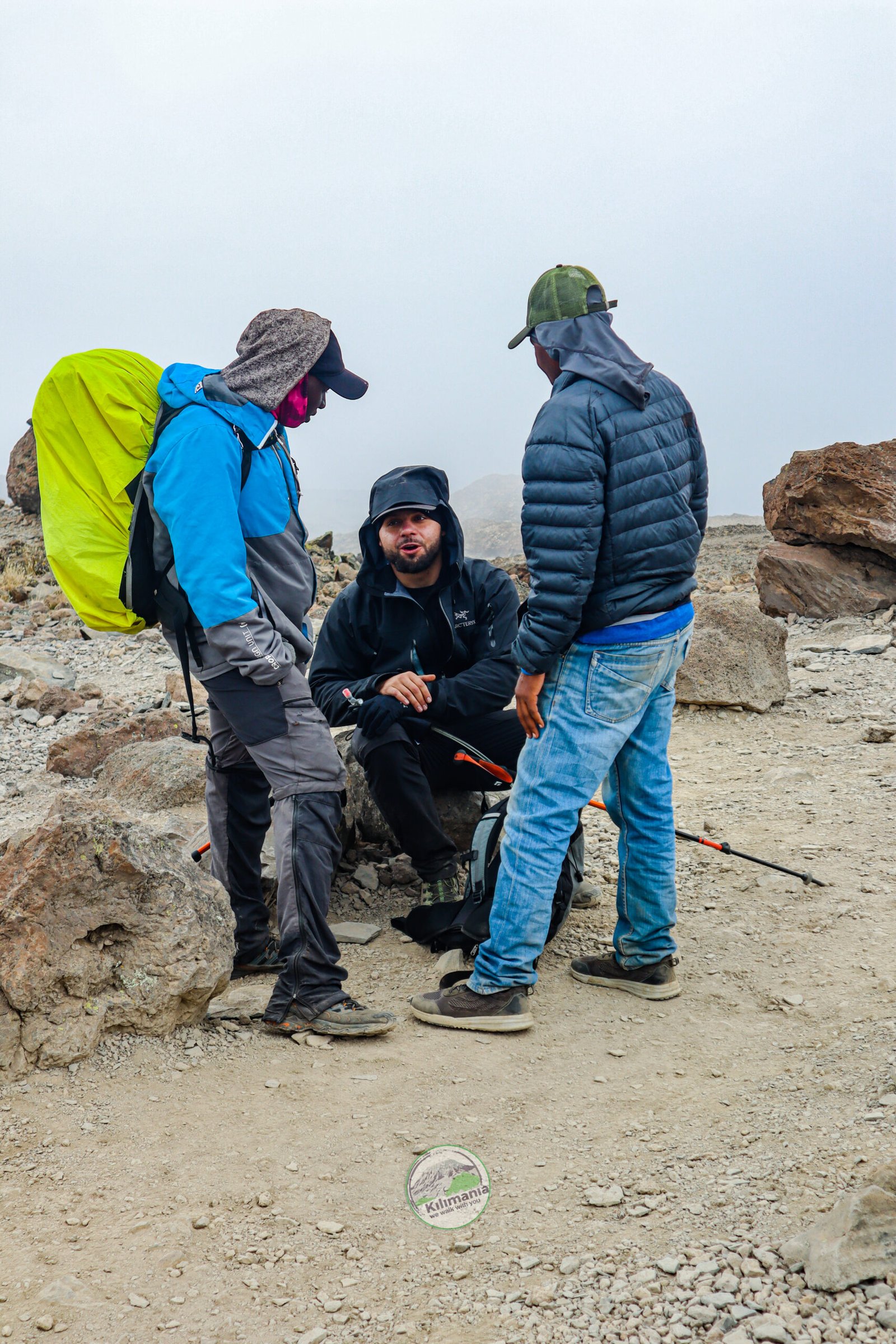
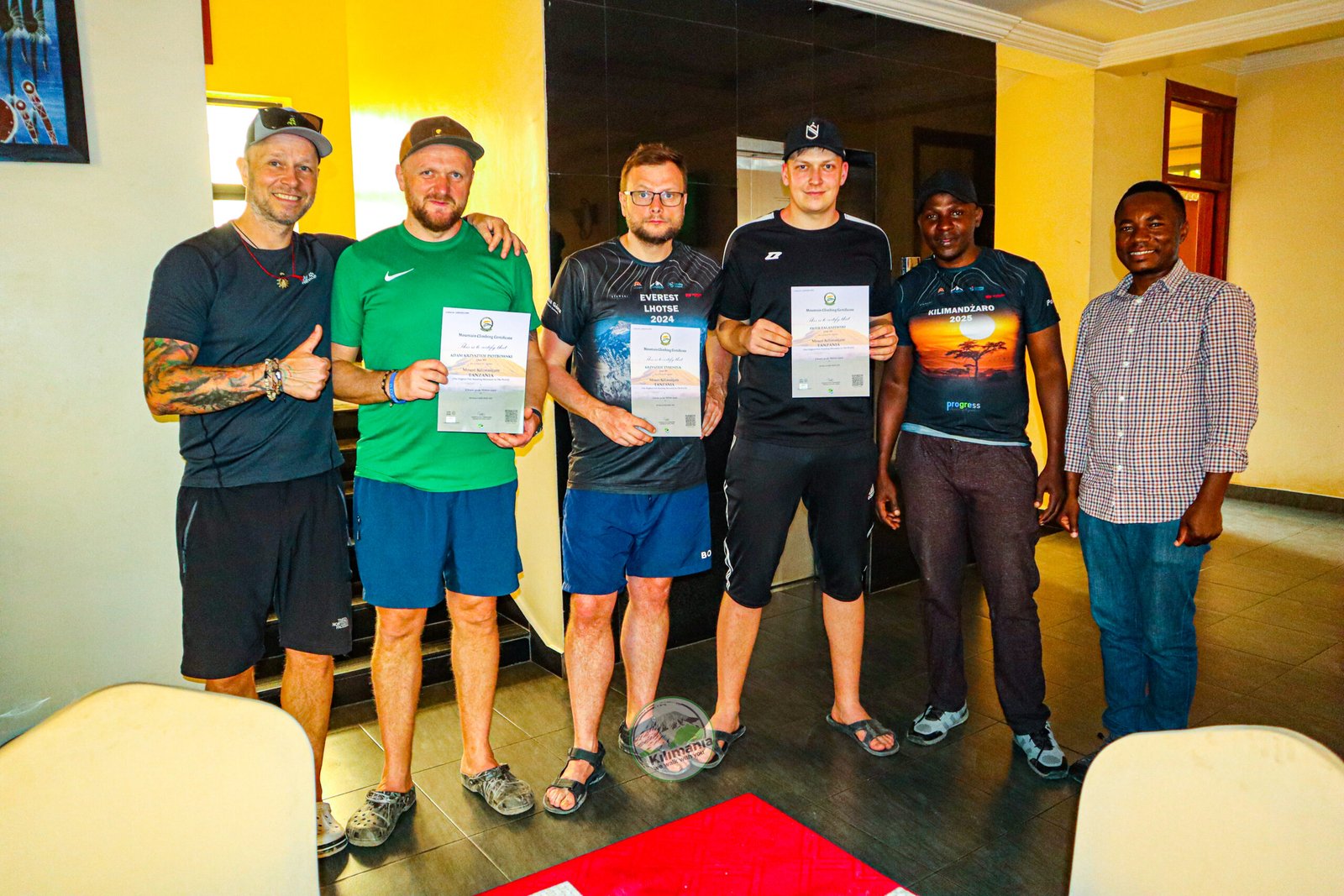
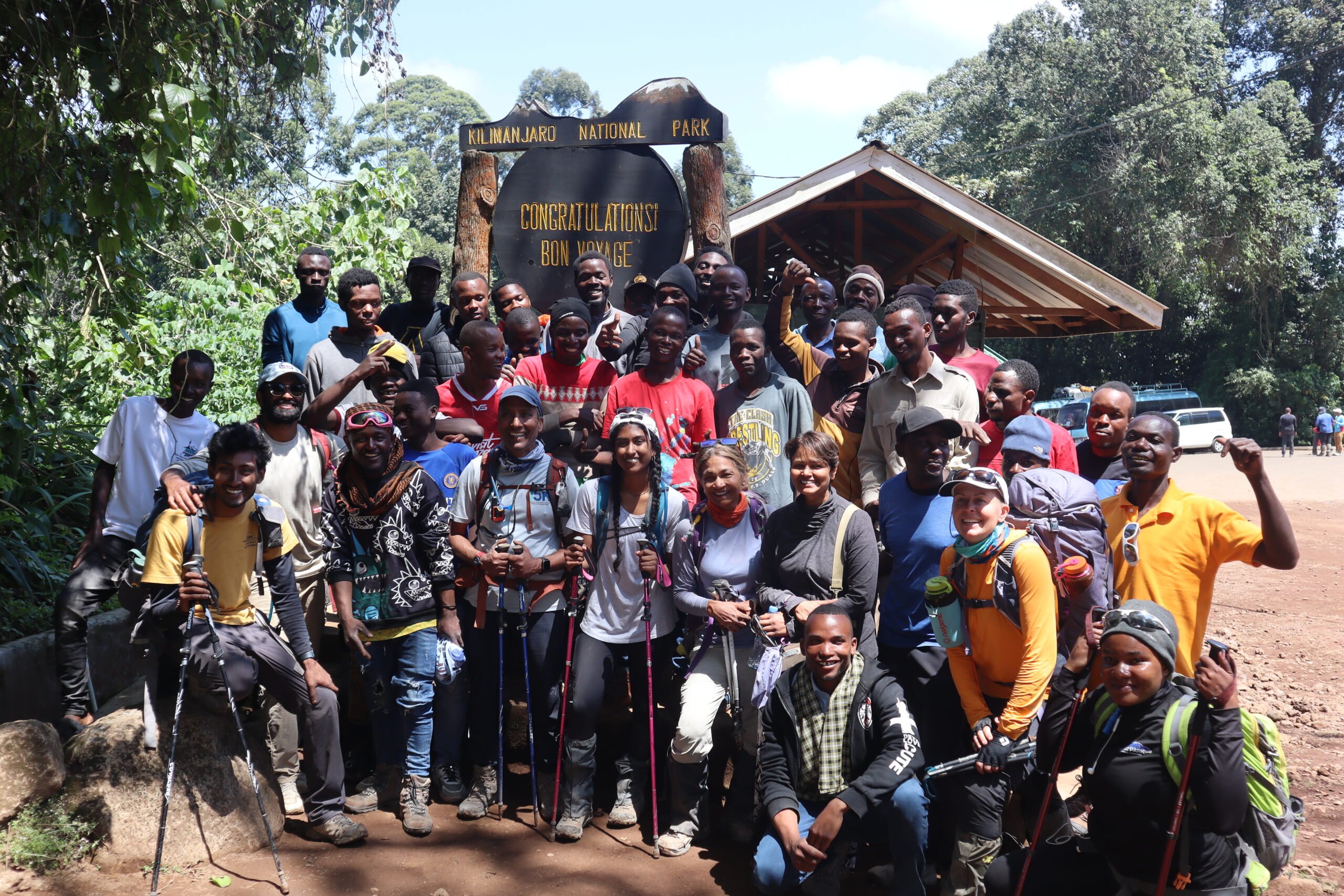
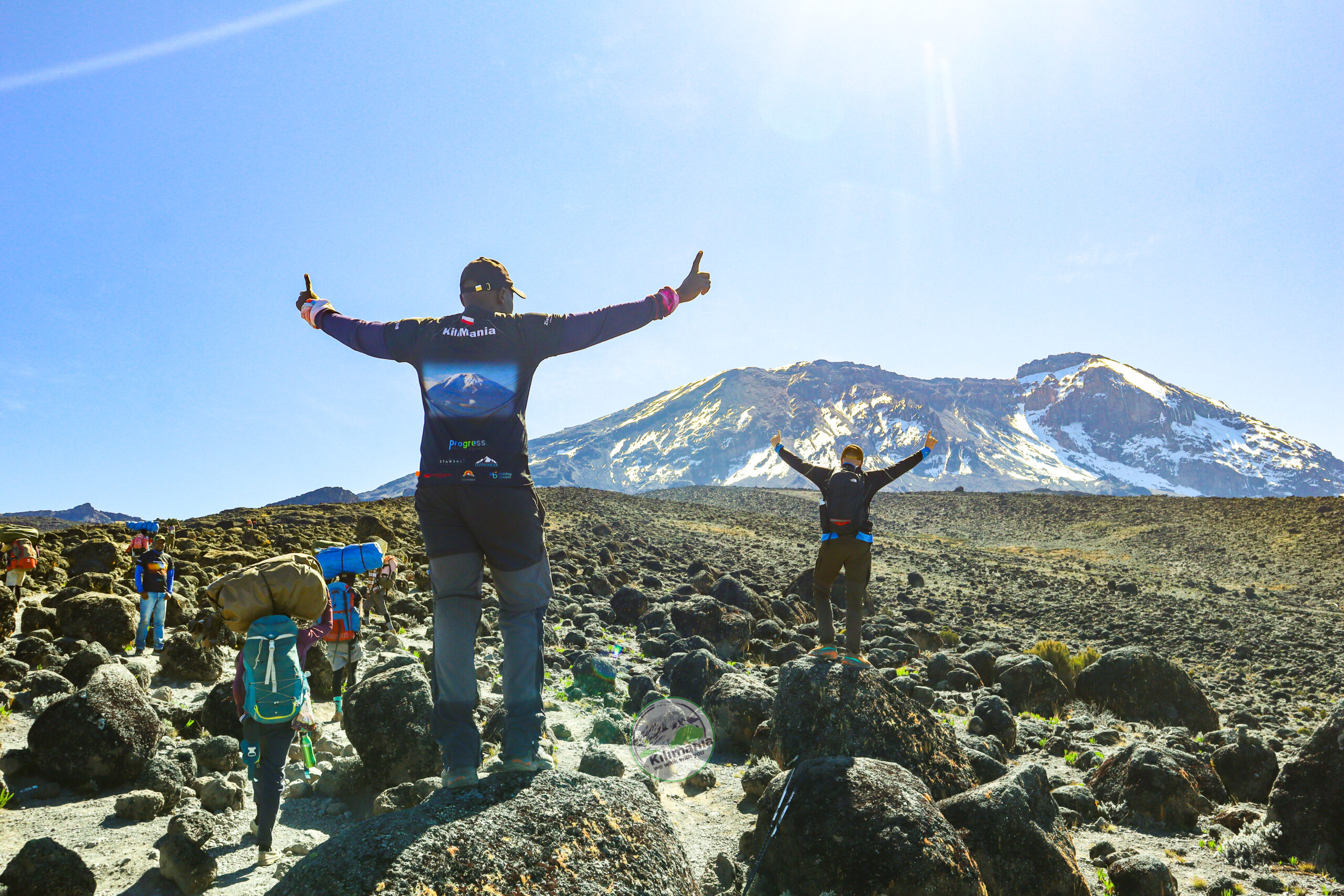
Photos below are a mix of Machame-specific images and general Kilimania mountain photography from other routes and expeditions; captions state which is which.
Frequently asked questions
How difficult is the 7-day Machame Route?
Moderate–hard. The daily trekking suits most reasonably fit adults, but summit night — a 7–8 hour ascent from Barafu Camp in sub-zero temperatures — is genuinely demanding regardless of daytime fitness. See the full difficulty assessment above.
What is Kilimania’s success rate on the 7-day Machame Route?
Our own operational records show a 92% summit success rate on this itinerary, based on 418 climbers, updated January 2026. This is Kilimania’s own data, not an official TANAPA/KINAPA figure or an industry-wide statistic, and individual outcomes vary. These figures are Kilimania’s internal records and may differ from older published estimates or industry averages.
Is Machame harder than Lemosho?
The daily physical difficulty of the two routes is similar. Lemosho’s 8-day version simply includes one extra acclimatization night, which is the main reason its recorded success rate is higher in our data. Lemosho also starts from the quieter western side and avoids the busiest sections of Machame until the routes join at Barranco.
Where do you sleep on the Machame Route?
In mountain tents at six camps: Machame, Shira, Barranco, Karanga, Barafu, and Mweka on the descent. There is no hut option on this route — for huts, see the Marangu Route.
What happens on summit night?
Climbers leave Barafu Camp around midnight, walk 7–8 hours to Stella Point and then Uhuru Peak (usually around sunrise), spend 10–20 minutes at the summit, then descend the same day all the way to Mweka Camp — typically a 10–14 hour day in total. Full details in the Summit Night section above.
Is the 7-day Machame Route suitable for beginners?
It can be, for beginners who train adequately beforehand — see our beginner’s guide. It is not a route to attempt without any hiking preparation, given the sustained daily walking and the demands of summit night.
What is included in the price?
Park fees, KINAPA-licensed guide and assistant guides, KPAP-aligned porters, camping equipment, all meals and water on the mountain, and 2 hotel nights in Moshi before and after. Flights, visas, insurance, tips, and personal gear are not included — see the full breakdown above.
Can I book the 7-day Machame Route privately?
Yes. Private climbs are available at the 1-person price tier shown in the pricing table above, or you can join a scheduled group departure — see our joining calendar for current group dates.
Book your 7-day Machame climb
Tell us your preferred dates and group size. We reply within 12 hours, 7 days a week, East Africa Time.
Prefer to talk first? WhatsApp: +255 756 449 990 · Email: info@kilimania.co.tz
Registrations & recognition



KINAPA climbing-guide licensing and KPAP porter-welfare alignment are covered in the Guide and Porter Welfare sections above.
Last reviewed: September 2026. Kilimania Adventures — Business Registration No. 437131, TATO-registered, KPAP-aligned. Itineraries may adjust for weather, park regulations, or individual health/pace. Success-rate and pricing figures on this page reflect Kilimania’s own current records and are updated periodically — always confirm current prices and dates before booking. We recommend comparing quotes with another TATO-registered operator before deciding.