Can I Climb Kilimanjaro Alone?
Data sources cited in this article: Kilimania Adventure operational and booking records (2019–2025), published TANAPA and KINAPA guide regulations, and general medical guidance on altitude illness. Two figures below are widely cited industry estimates rather than Kilimania’s own data — see the note in “Why the Regulation Exists.”
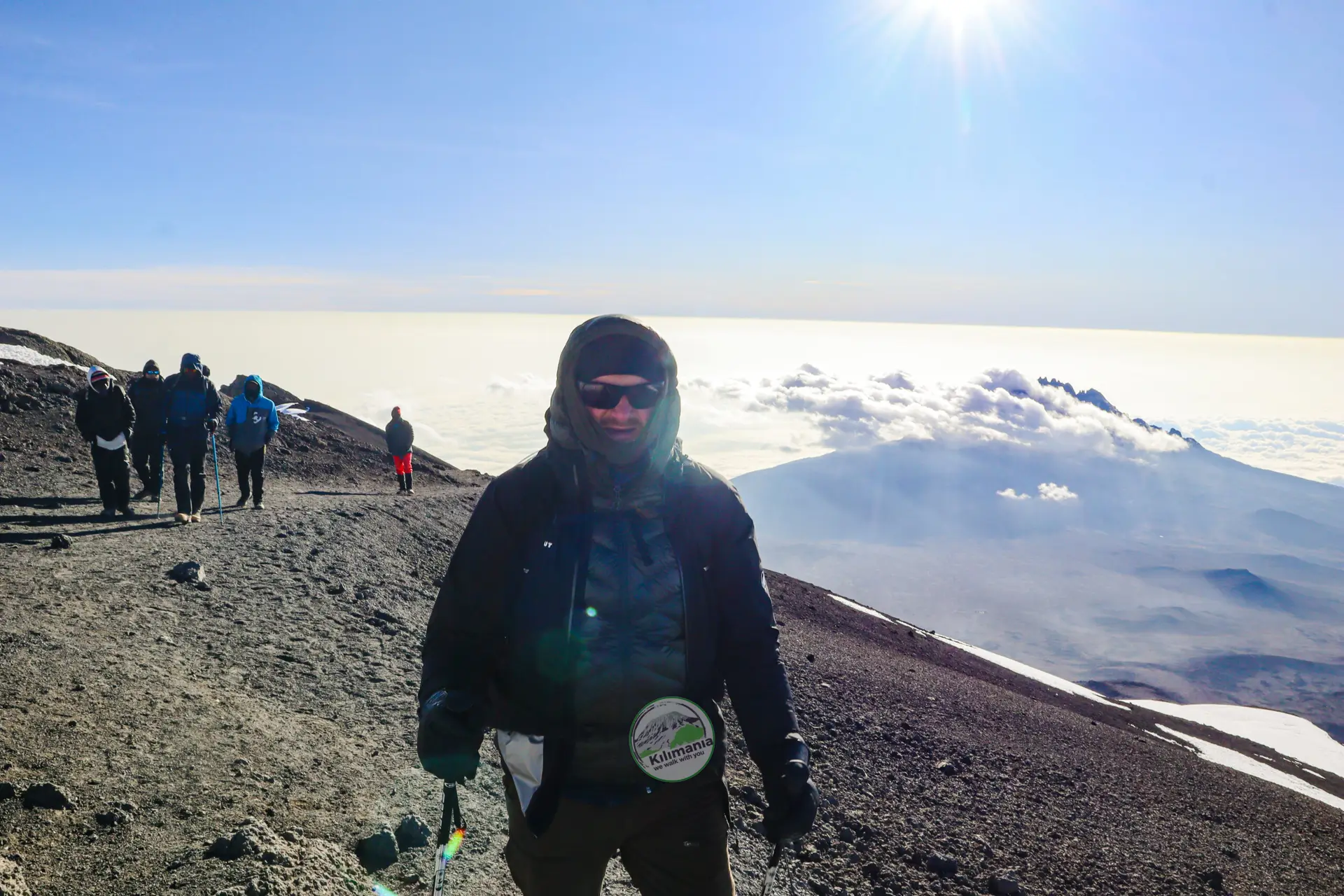
You cannot climb Kilimanjaro without a licensed guide — it is illegal under TANAPA regulations. Attempting to enter the park without one results in removal at the gate. When people ask about a “solo Kilimanjaro climb,” they usually mean climbing without other clients in their group — which is a private guided climb, and it’s a solid option for the right type of climber.
The Regulation: What TANAPA Actually Requires
The Tanzania National Parks Authority (TANAPA) mandates that every person who enters Kilimanjaro National Park to climb must be accompanied by a licensed Tanzanian mountain guide. This is not a guideline that operators enforce at their own discretion. It is law, and it applies without exception on every route.
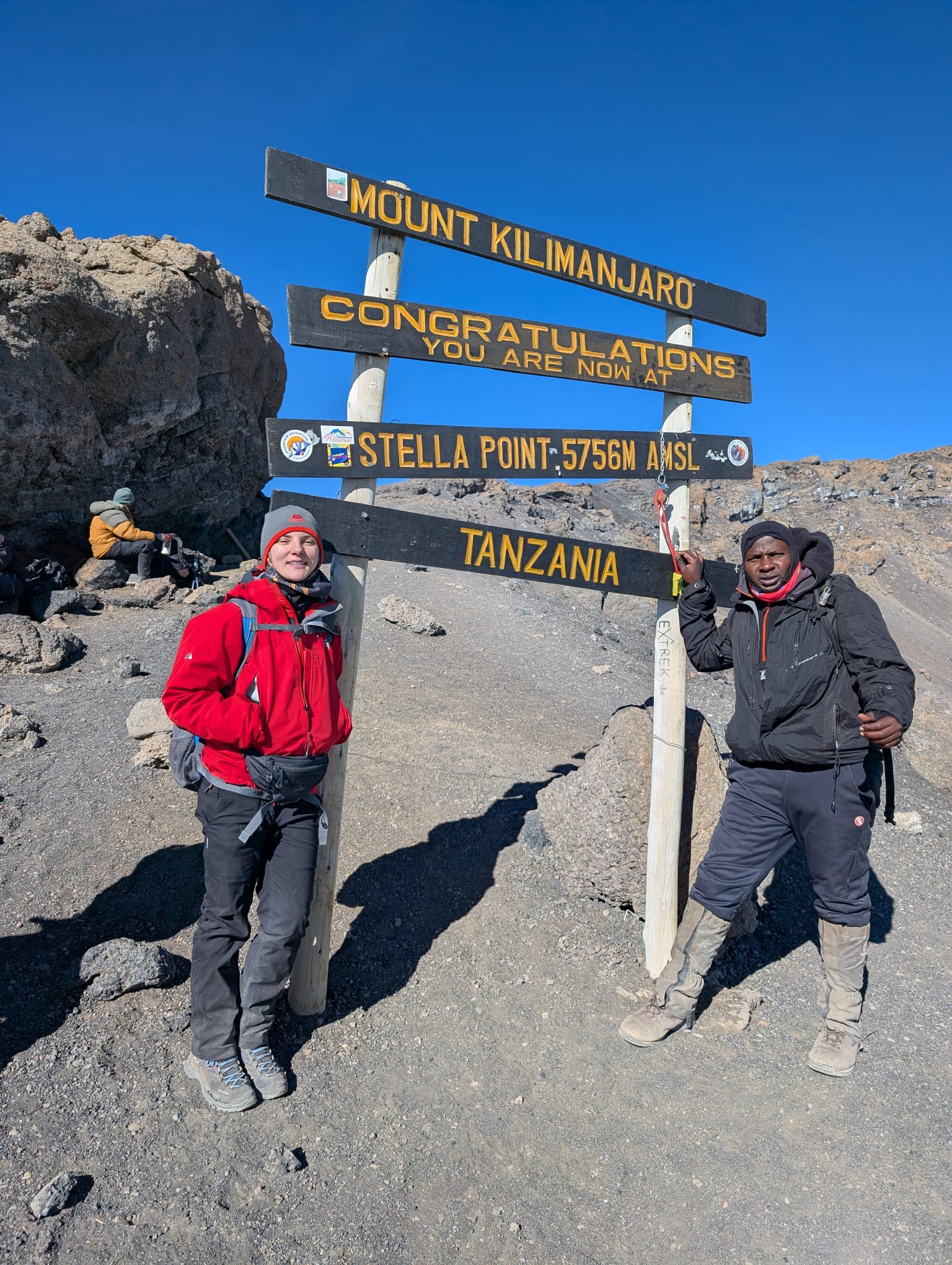
From 22 years guiding on this mountain, I have watched this rule enforced hundreds of times — and watched it prevent serious harm. Kilimanjaro looks like a walk-up from a distance. At 5,895m, at 2am, in wind well below freezing at Stella Point, it is not. The altitude alone is what catches people out, and someone trained to tell the difference between normal acclimatization discomfort and the early signs of altitude illness makes the difference.
The guide requirement on Kilimanjaro applies on every route: Lemosho, Machame, Marangu, Rongai, Northern Circuit, Shira, and Umbwe. You can review the full park regulations directly with KINAPA (Kilimanjaro National Park).
What “Solo Climbing” Actually Means on Kilimanjaro
There are two different things people mean when they ask this question, and knowing the difference is how you pick the right option for your climb.
| Feature | Private Guided Climb | Solo Traveler on Group Departure |
|---|---|---|
| Other clients in your group | None — just you | Typically a small group |
| Guide attention | Focused entirely on you | Shared across the group |
| Pace setting | Your pace, adjusted daily | Group pace |
| Schedule flexibility | High — flexible dates and itinerary | Fixed scheduled departure dates |
| Dietary accommodation | Straightforward — cook prepares only for you | Standard menu with modifications |
| Cost relative to group rate | 1.5–2× group rate | Standard group rate |
| Suited to | Introverts, specific medical needs, full privacy | Social climbers, first-timers, budget-conscious travelers |
Can I Climb Kilimanjaro Alone,Why the Guide Requirement Exists
Altitude illness is well documented as a leading cause of preventable harm on Kilimanjaro, and it is the main reason the guide requirement exists. Symptoms can move from mildly uncomfortable to serious in a matter of hours, and a licensed guide is trained to catch that shift early.
What a licensed guide is actually monitoring
- Blood oxygen saturation (SpO₂): Checked at every camp, with lower readings triggering closer evaluation.
- Pulse rate: An elevated resting pulse at altitude can signal the body struggling to compensate.
- Symptom assessment: Recognizing the difference between normal acclimatization and the early progression of Acute Mountain Sickness.
- Hydration tracking: Climbers need meaningfully more water above 3,000m than most expect, and guides watch intake through the day.
- Pace management: The pole pole principle is not a slogan — it is the primary altitude adaptation strategy on this mountain.
Free Download: Kilimanjaro Altitude Symptom & AMS Checklist
Altitude illness is a leading reason climbers turn around on Kilimanjaro. This checklist is used by Senior Guide Sabinus Msimba and the Kilimania Adventure team to monitor climbers through every expedition.
- Normal acclimatization symptoms above 3,000m
- Acute Mountain Sickness (AMS) warning signs
- HACE and HAPE emergency symptoms
- Daily health monitoring form (SpO₂, pulse, hydration)
Prepared by: Sabinus Msimba, Senior Mountain Guide, Kilimania Adventure, Moshi, Tanzania.
For educational purposes only; it does not replace professional medical advice.
The Solo Traveler Experience
Private Guided Solo Climbs
On a private guided climb for one person, the crew size does not drop much from a group departure — you still have a senior guide, an assistant guide, a cook, and porters. What changes is that pace, rest stops, and daily decisions are made entirely around your physiology and your goals.
There is no peer pressure and no negotiating around eight different preferences at breakfast. If you need extra time at Lava Tower before the descent to Barranco Camp, you take it. That flexibility is a genuine advantage for the right climber. Private climbs suit:
- Climbers who are introverted and perform better without group social dynamics
- Climbers with a specific medical condition needing closer one-on-one monitoring — see climbing Kilimanjaro with medical conditions
- Climbers who want a more conservative daily schedule or extra rest days — see climbing Kilimanjaro over 50
- Climbers with strict dietary requirements where shared group meal planning gets complicated
- Climbers on a fixed schedule that doesn’t line up with a scheduled group departure
Solo Travelers Joining Group Departures
Most solo travelers who climb with us join scheduled group departures rather than booking privately. It’s not a lesser version of the experience — it’s a different one, and often a strong one. By day four on the mountain, a group of strangers has usually become something closer to a team.
“I’ve seen accountants and retired military officers become climbing partners for life after meeting at the Machame Gate. The mountain doesn’t care who you were before you arrived. It only cares what you do at 5,500m.”
— Sabinus Msimba, Senior Mountain Guide, 22 years on Kilimanjaro
Weighing Private Against a Group Departure?
Tell us your dates, route preference, and whether you’re leaning private or scheduled group. We’ll give you a straight breakdown of what each costs and which fits how you climb.
Private vs Group: What Does It Cost?
Private Kilimanjaro climbs typically cost between 1.5 and 2 times the standard group rate, depending on route and duration. The premium reflects fixed costs — park fees, KPAP-compliant porter wages, cook, equipment — being absorbed by one climber instead of divided across a group.
| Climb Type | Cost Range | Who It Fits |
|---|---|---|
| Group departure (solo traveler joins) | Standard group rate | Social climbers, first-timers, budget-conscious travelers |
| Private guided climb (1 climber) | 1.5–2× group rate | Medical needs, introverts, schedule or dietary constraints |
| Small private group (2–3 people) | Between the two rates, per person | Friends or couples wanting privacy without the full solo premium |
For full cost breakdowns including park fees, tipping, and gear budgeting, see our Kilimanjaro cost guide and hidden costs breakdown.
Choosing Your Route as a Solo or Private Climber
Route choice matters whether you’re climbing privately or joining a group. For most solo climbers, Lemosho or Machame offer strong acclimatization profiles. See our complete route guide for a full comparison.
How to Decide: Private Climb or Join a Group?
Three questions that usually settle it
- Do you have a medical condition that needs closer individual monitoring? Lean private.
- Are you an introvert who genuinely climbs better without group pace negotiation? Lean private.
- Is budget a real factor, and are you comfortable sharing the experience? Join a scheduled group departure.
If the answer is question three, know this: solo travelers who join a group departure consistently tell us the shared experience added to the climb rather than taking anything from it.
Related Reading
Frequently Asked Questions
No. Under TANAPA regulations, every Kilimanjaro climber must be accompanied by a licensed Tanzanian mountain guide. Attempting to enter the park without one results in removal at the gate. This applies on all routes without exception.
On Kilimanjaro, a “solo climb” means climbing without other clients in your group — not without a guide. A private solo climb pairs one climber with one licensed guide, plus a full crew of porters and a cook, with pace and daily distances set entirely around one person.
Private climbs cost 1.5 to 2 times the group rate. The premium tends to be worth it for introverts, climbers with a medical condition requiring close monitoring, and those with strict dietary or schedule constraints. Social climbers comfortable with a shared experience often do just as well joining a group departure at the standard rate.
See our complete Kilimanjaro cost guide for full pricing.
Licensed guides are trained to monitor climbers for altitude illness, including recognizing the early signs of Acute Mountain Sickness before they progress to more serious conditions. The requirement exists to reduce preventable harm at altitude, not to generate revenue for operators. See our article on Kilimanjaro safety for a fuller breakdown.
Yes. Kilimania runs scheduled group departures throughout the year that welcome solo travelers joining existing groups. You pay the standard group rate and receive full licensed guide support.
View our scheduled Kilimanjaro departures to find a date that works.
The Straight Answer
You cannot climb Kilimanjaro alone in the sense of unguided — that is the legal reality, and it exists for good reasons. What you can do is climb privately, with a guide whose full attention is on you. Or you can join a scheduled group departure as a solo traveler, which is what most solo climbers with us actually choose.
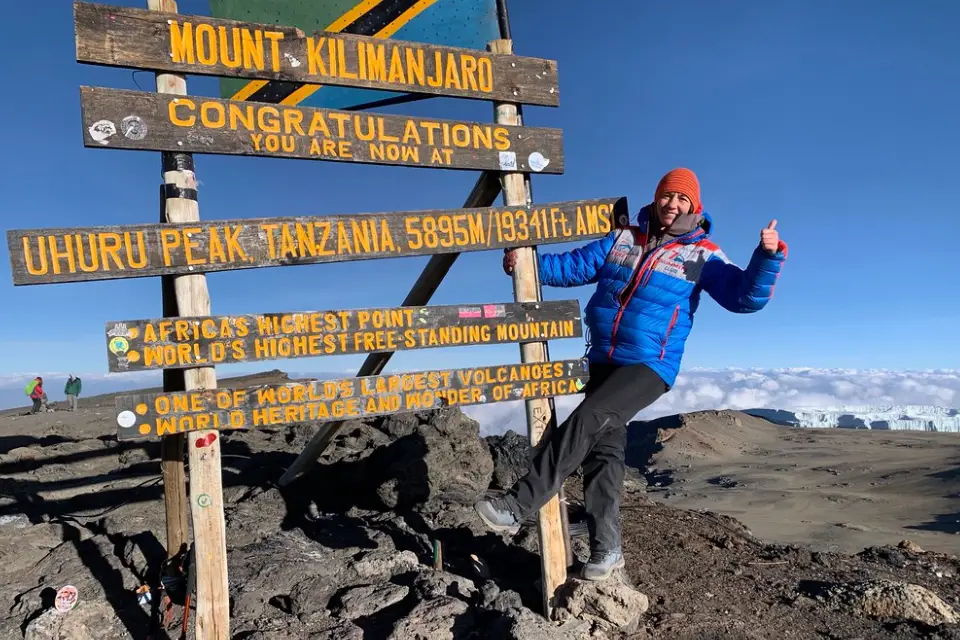
The right choice depends on who you are, what your medical situation looks like, and what your budget allows. Both reach Uhuru Peak. The question is which one fits your version of this climb.
Ready to Choose Your Route and Format?
We run scheduled group departures on all major routes year-round and arrange private climbs on any date with roughly four weeks’ notice. Contact us and we’ll give you a straight assessment of which option fits your situation.
Free Download: Kilimanjaro Route Comparison Cheat Sheet 2026
Still deciding which route to climb as a solo or private climber? Download our printable cheat sheet prepared by Senior Mountain Guide Sabinus Msimba.
- Compares all 7 Kilimanjaro routes
- Difficulty, scenery, and crowd levels
- Notes for solo and private climbers
- Updated for the 2026 climbing season

Disclosure
Kilimania Adventure is a TATO-registered Kilimanjaro climbing and safari operator based in Moshi, Tanzania. This article was written by our own senior guide and reflects our operational experience; it also serves to inform readers considering a booking with us or another licensed operator. Route requirements and park regulations referenced here are subject to change — verify current rules directly with TANAPA or KINAPA before you travel. Medical information in this article is general guidance, not a substitute for advice from your own physician.