Kilimania Adventure · Moshi, Tanzania
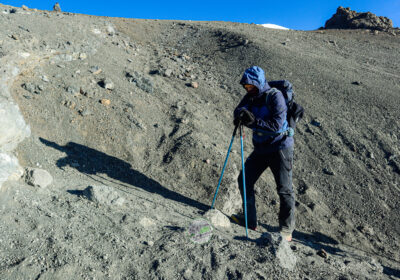
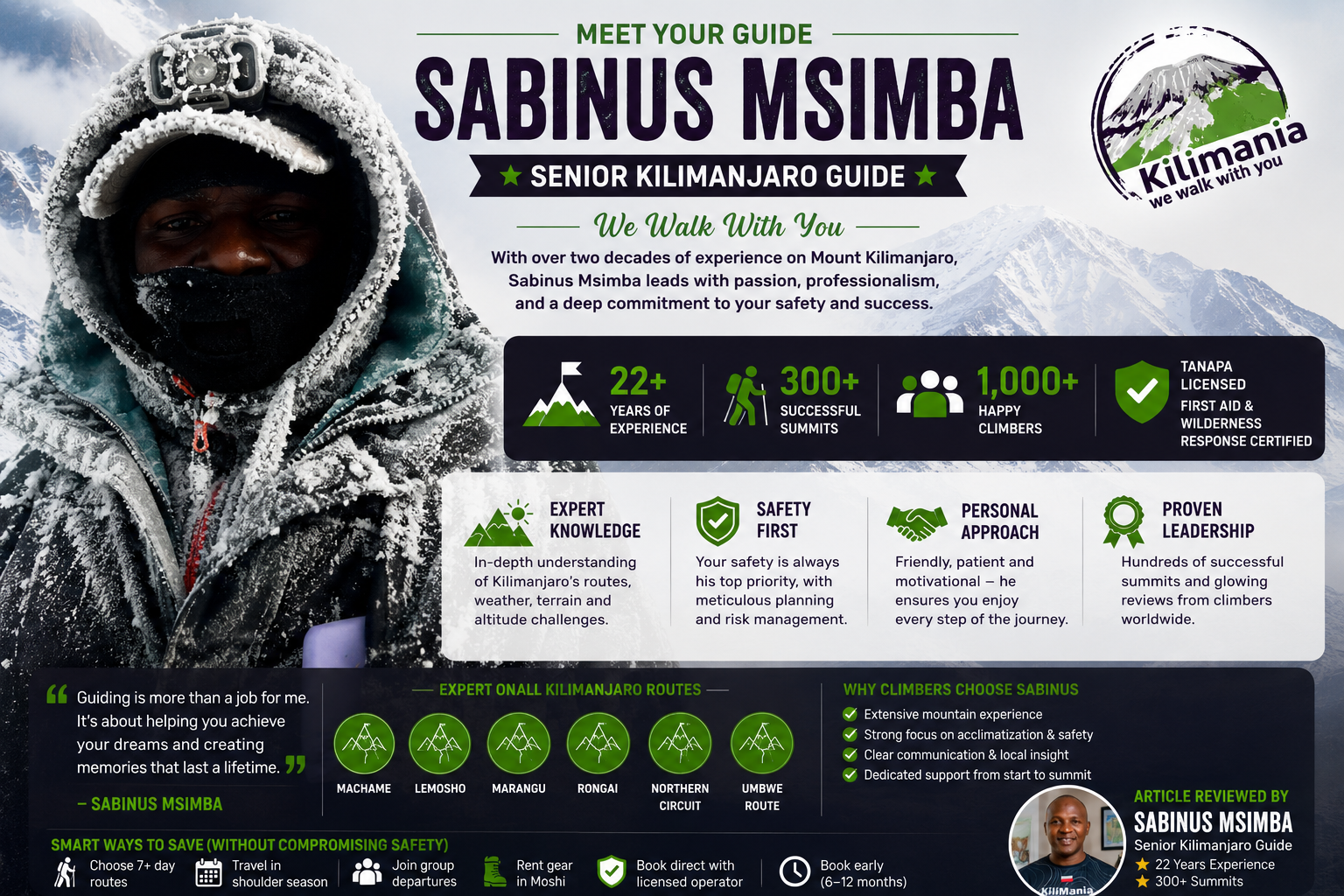
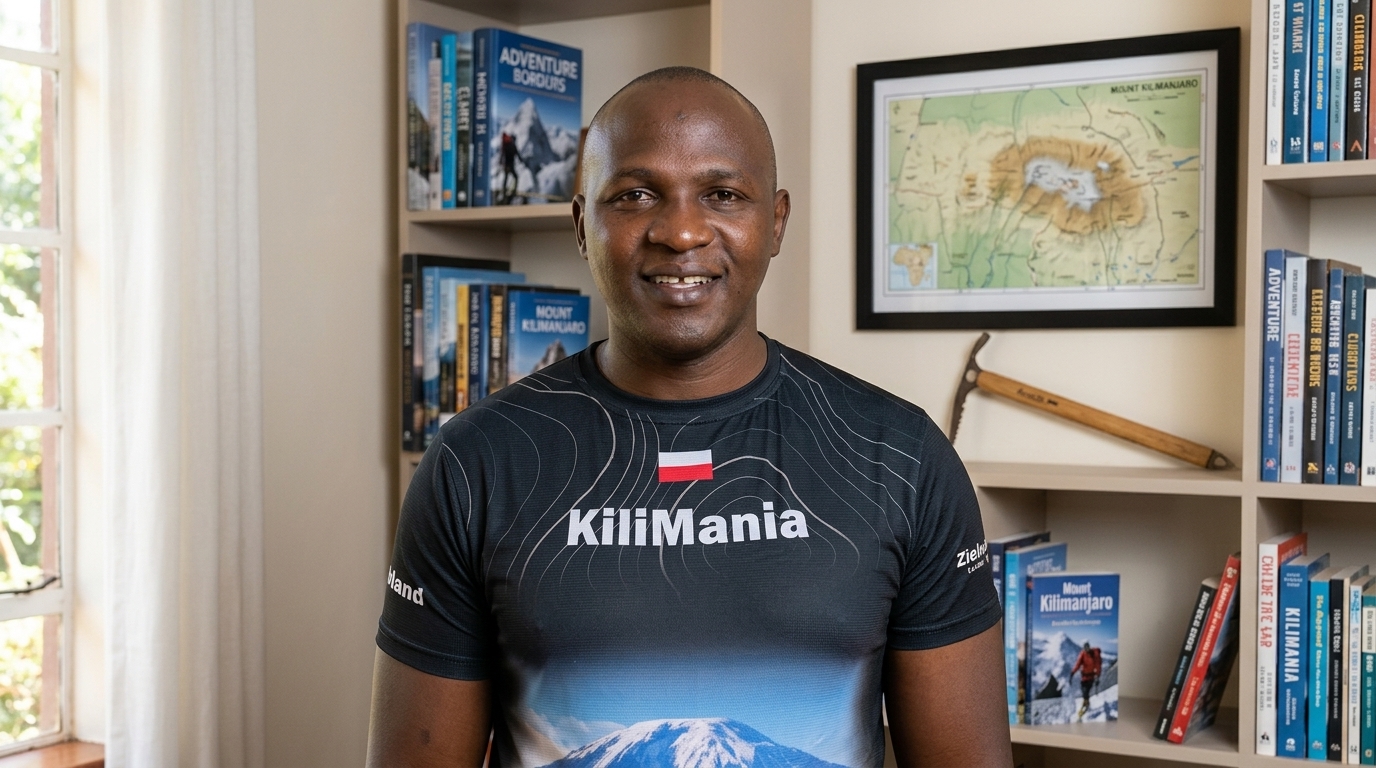
Senior Kilimanjaro Guide Sabinus Msimba
22 Years on Mount Kilimanjaro. 300+ Personal Summits. Still Learning.
Personal summit count and Kilimania’s total climbers-guided figure are tracked separately and are not the same statistic. Last reviewed: August 2026 · Next scheduled review: February 2027.
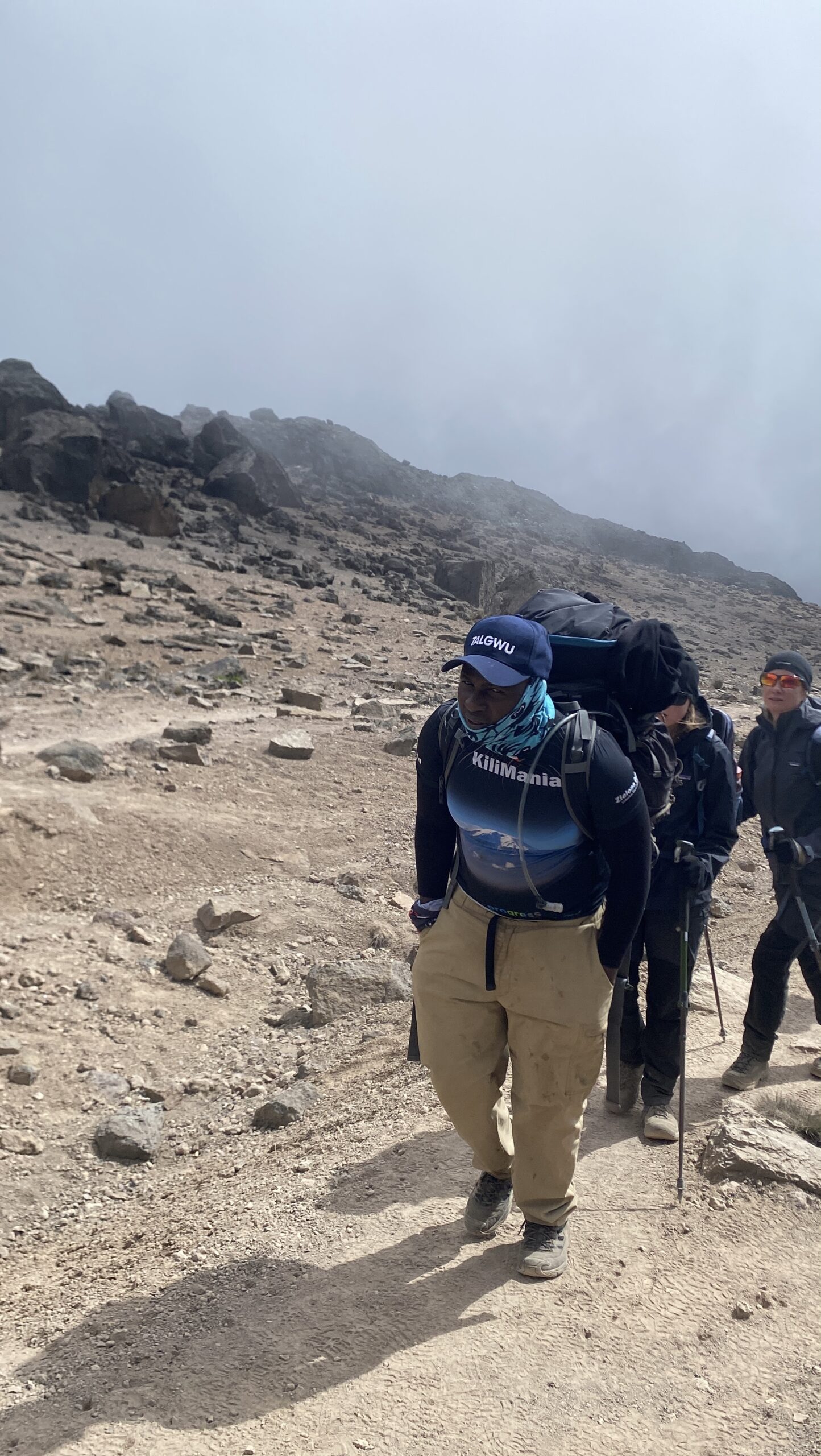
The most important decision a senior Kilimanjaro guide makes is not who reaches the summit. It is who goes home safely.
After 22 years on Mount Kilimanjaro and 300+ personal Uhuru Peak summits, Sabinus Msimba has learned that the mountain gives warning signs before it gives trouble. Guides who catch those signs early are the ones who bring everyone back down. This is the story of the porter who learned to read them — and how that shaped the way Kilimania Adventure guides climbers today.
Data sources cited in this article: Kilimania Adventure guiding records (2019–2026), Sabinus Msimba’s personal summit log, KINAPA licensing records, and Mweka Wildlife College certification records. Personal summit count and total climbers guided by Kilimania are tracked separately and are not the same figure.
📋 In This Article
The Decision at 4,673 Metres
−12°C. Twenty minutes past midnight. Twelve climbers stand in darkness at Barafu Camp. Uhuru Peak waits 1,222 metres above.
Sabinus is watching a woman’s hands. She trained for five months and walked the first three days stronger than anyone in the group. Now her fingers fumble with a zipper she opened without thought the day before. Her answers come a beat slow.
He checks her pulse oximeter reading. Combined with her breathing, coordination, and responses — the full picture, not one number in isolation — the signs point to one conclusion: it is time to descend.
“We go down now. You are safe. I am with you.”
She argues, as climbers often do in the moment. He has already radioed his assistant guide and adjusted the plan. By 2am she is resting at a lower altitude. By dawn her condition has visibly improved.
This is what a senior Kilimanjaro guide does — not chase the summit at any cost, but make the harder call when a climber’s overall condition points to descent.
📖 Browse all routes and itineraries: Kilimanjaro Routes 2026 — compare options before you decide.
Senior Kilimanjaro Guide Sabinus Msimba — Quick Answer
Who Is Sabinus Msimba?
Sabinus Msimba is a KINAPA-licensed senior Kilimanjaro guide with 22 years of experience and 300+ personal Uhuru Peak summits. He is Wilderness First Responder (WFR) certified and is co-founder of Kilimania Adventure, which has guided more than 1,247 climbers from Moshi, Tanzania since 2019. He began as a porter at age 17 in 2001. Route-level summit success figures are tracked on our Kilimanjaro Success Rate by Route page rather than restated here.
Planning a climb? Check current pricing and 2026 availability →
| Career Metric | Verified Data |
|---|---|
| Years Active on Kilimanjaro | 22+ years (2001–present) |
| Personal Uhuru Peak Summits | 300+ (Sabinus’s own ascents) |
| Climbers Guided by Kilimania Adventure | 1,247+ (2019–2026, company-wide) |
| Mount Meru Summit Ascents | 47, Arusha National Park |
| Porter Team Tenure | 11 team members, 17+ years each |
| KINAPA License | Active since 2003 |
| Medical Certification | Wilderness First Responder (WFR), SK Healthy & Safety Solutions Ltd., Arusha — 2024 |
| Primary Routes Guided | Lemosho, Machame, Northern Circuit, Rongai, Marangu, Umbwe |
| Academic Credentials | BA Archaeology, University of Dar es Salaam; MBA, Open University of Tanzania |
| Base of Operations | Moshi, Kilimanjaro Region, Tanzania |
Where It All Started — The Porter Years
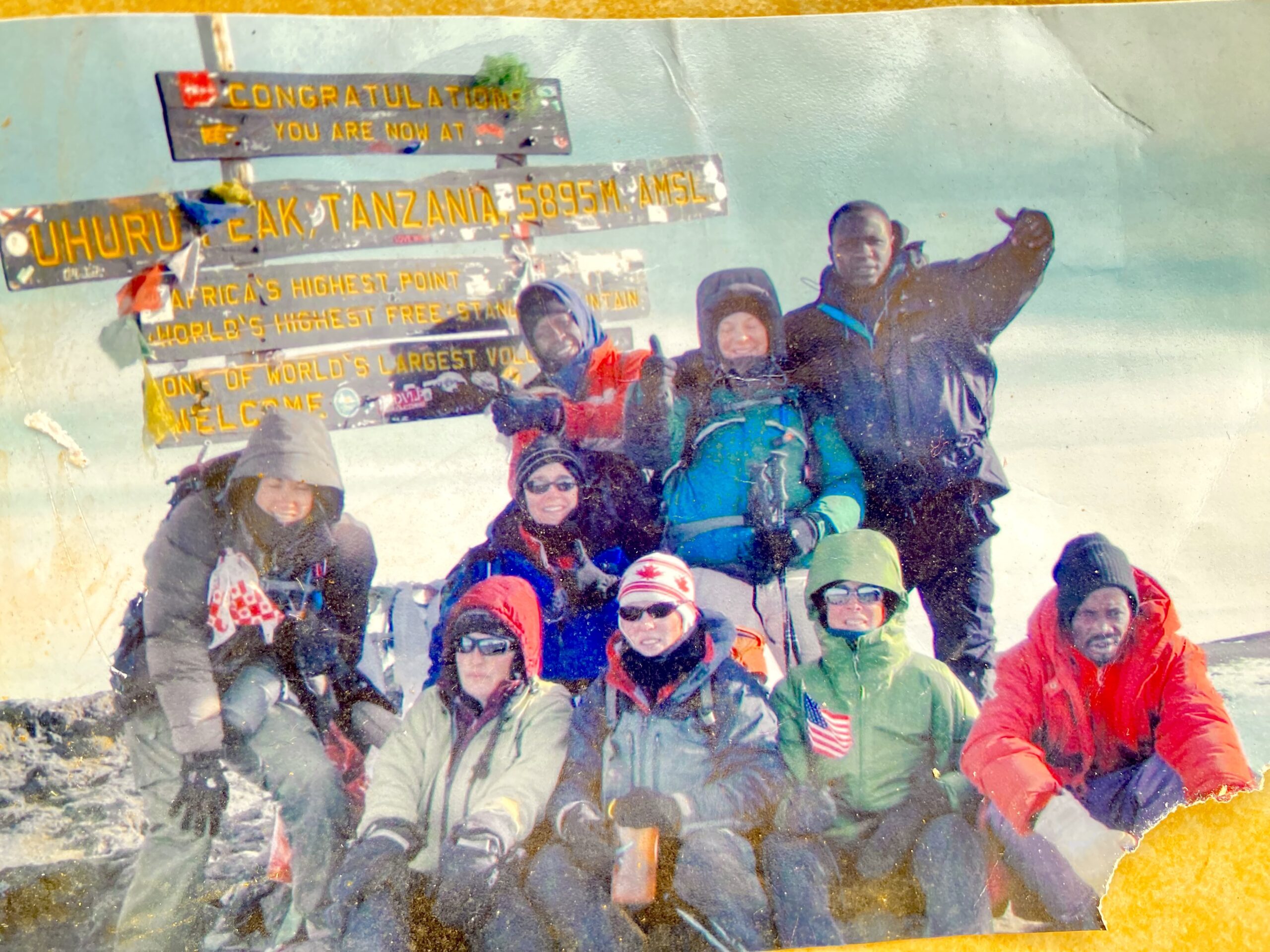
Sabinus began his Kilimanjaro career in 2001 at age 17 as a porter on the Marangu Route, carrying loads exceeding 25kg before KPAP’s 20kg load standard existed. He slept twenty men to a room at Horombo Hut and suffered genuine altitude sickness carrying water to Kibo Hut at 4,720m. That beginning shapes how he guides today.
In Moshi in the late 1990s, he watched men return from the mountain able to afford things few others in town could. He asked a guide named Abraham to take him along. Abraham said he was too young — until, eventually, he agreed: “When I have a Marangu trip, I will take you.”
The trip came in 2001. Sabinus was handed a kapu — a woven basket loaded with more than 25kg, unmeasured, because this was before KPAP enforcement existed. He reached Mandara Hut last. On day three, his assignment was to carry 20 litres of water from Horombo Hut to Kibo Hut, across the open alpine desert.
“I cried the entire day. My head was pounding. When I reached Kibo, I told myself: I am never coming back.”
He vomited that night and did not sleep. But at the gate the next morning, clients tipped in dollars — more than months of other work in Moshi. He came back, and kept coming back, working the Marangu and Machame routes for years afterward.
“When you have been a porter, you understand the mountain from the ground up. You never forget how it feels to carry everything while everyone else walks lighter.”
That memory is why every porter on a Kilimania Adventure expedition is personally load-checked by Sabinus before departure and introduced by name to clients on the first morning. See our Kilimanjaro tipping guide for exact recommended amounts for porters and guides.
Learning the Mountain as Summit Porter and Assistant Guide
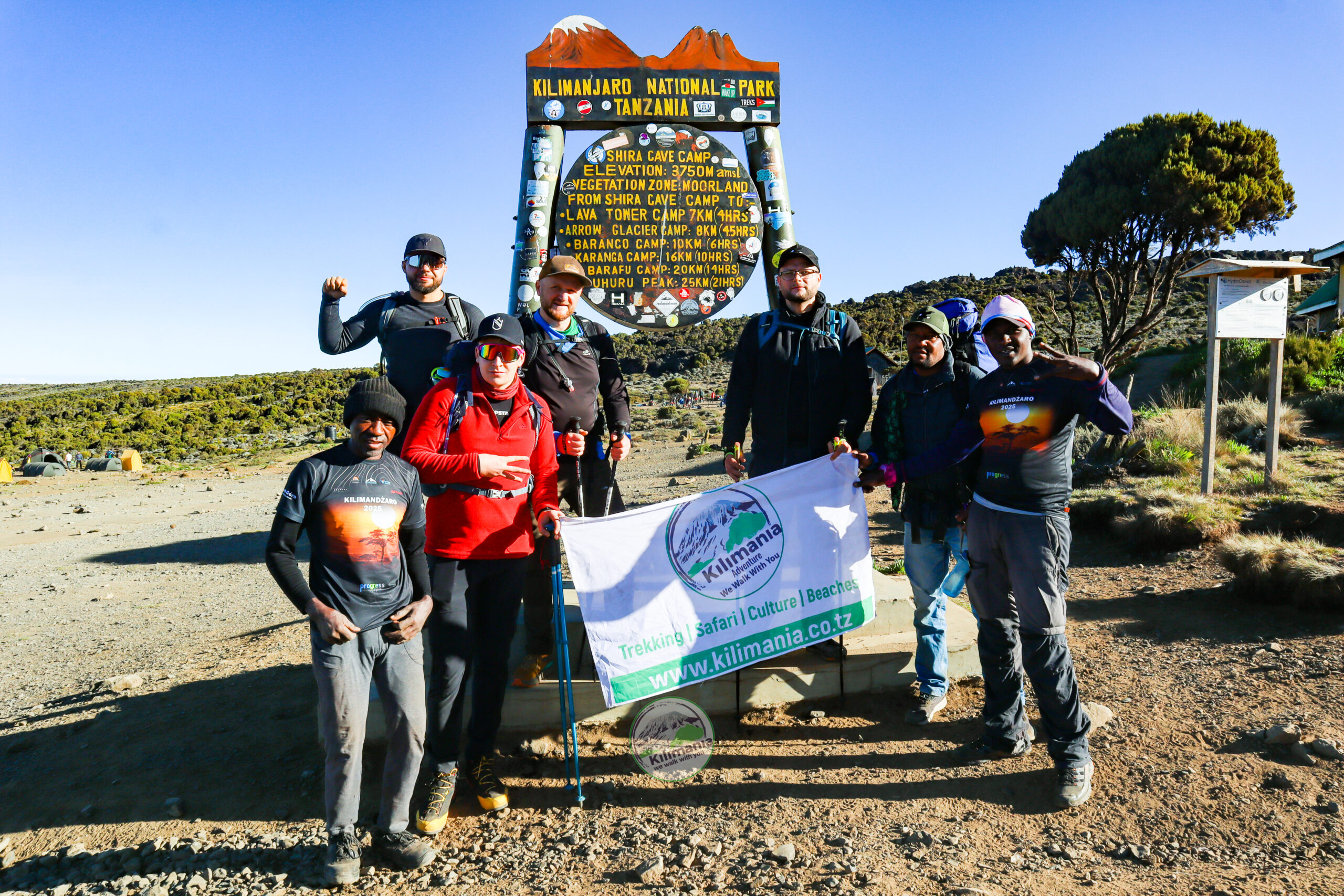
After his porter years, Sabinus worked as summit porter, mountain cook, and assistant guide simultaneously — carrying emergency oxygen, cooking meals at altitudes where water boils at a lower temperature, and walking with clients during acclimatization before racing ahead to prepare camp.
“As a summit porter, I started to understand the mountain’s patterns. I learned to read weather from watching clouds and wind, because we did not have weather apps then. I learned that two people with identical fitness can react completely differently above 4,500 metres.”
What Mount Meru’s 47 Ascents Added
Sabinus has guided Mount Meru 47 times. Meru sits at 4,562m inside Arusha National Park, roughly 70km west of Kilimanjaro. Its lower slopes carry resident elephant and buffalo populations, and its steeper elevation gain means altitude symptoms can appear with less warning than on Kilimanjaro.
“Meru demands more discipline in less time. And wildlife demands constant awareness. You cannot relax on Meru the way some guides relax on Kilimanjaro.”
The Night Everything Changed
The defining moment in Sabinus’s career came when his chief guide fell ill at Shira Camp and descended, leaving Sabinus — then an unlicensed summit porter — responsible for two American clients in their mid-fifties. With the Western Breach closed due to rockfall, he made the call to summit via Barafu and camp in the crater. They reached Uhuru Peak in the afternoon. At midnight in the crater, one client developed altitude symptoms requiring descent. Sabinus brought both men down safely to Barafu by dawn.
When the story reached Zara Tours, there was initial concern about an unlicensed assistant being left in charge. The clients’ response settled it: they said he was the best guide they had worked with and that they would not have made it without him.
Zara Tours gave him work as a chief guide. He completed formal training at Mweka Wildlife College and obtained his KINAPA license in 2003. By 2004 he was a licensed chief guide. Kilimania Adventure has since guided more than 1,247 climbers from its base in Moshi.
Climb With a Guide Who Prioritizes Safety
Message Sabinus directly with your travel dates, group size, and route questions. The senior guide team replies personally within 12 hours — no call centres, no foreign offices.
💬 WhatsApp: +255 756 449 990KINAPA-licensed · Based in Moshi, Tanzania
What Qualifications Does a Senior Kilimanjaro Guide Need?
The Legal Standard — And What Sabinus Adds to It
In Tanzania, a KINAPA license issued after completing Mweka Wildlife College training is the legal requirement to guide on Kilimanjaro. Wilderness First Responder (WFR) certification is not a legal requirement but is an increasingly common additional safety qualification among experienced guides. Sabinus holds both, along with professional first aid credentials, a BA in Archaeology from the University of Dar es Salaam, and an MBA from the Open University of Tanzania.
| Credential | Legal / Industry Minimum | Sabinus Msimba |
|---|---|---|
| KINAPA License | Required | ✅ Active since 2003 |
| Mweka Wildlife College Training | Required | ✅ Completed 2003 |
| Wilderness First Responder (WFR) | Not legally required; recommended | ✅ Certified 2024 |
| First Aid | Basic required | ✅ Professional level |
| University Degree | Not required | ✅ BA Archaeology; MBA |
| Personal Uhuru Peak Summits | No formal standard | ✅ 300+ |
| Guide Association Involvement | Not required | ✅ KGA Committee Member since 2012 |
Wilderness First Responder (WFR) Certification
WFR training involves extended hours of instruction in patient assessment and emergency care in remote settings where professional medical help may be many hours away, including recognition protocols for Acute Mountain Sickness (AMS), High Altitude Cerebral Edema (HACE), and High Altitude Pulmonary Edema (HAPE). Reference: Wilderness Medical Society.
“Before WFR, I was reading clients from experience and instinct. After WFR, I had a structured framework to support that experience.”
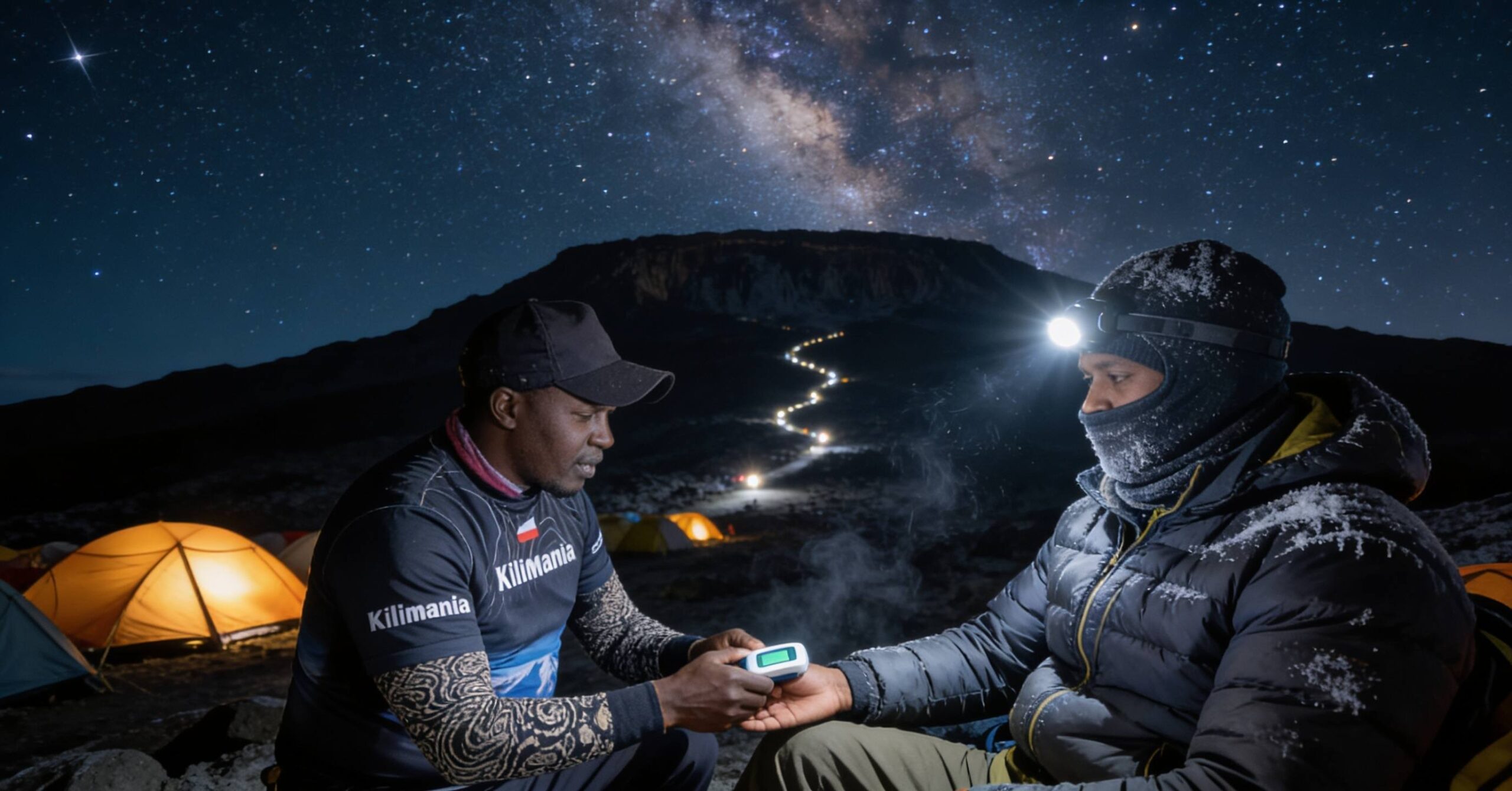
Sabinus uses the Lake Louise Symptom Score as one of several daily monitoring tools on Kilimania expeditions, alongside pulse oximetry and direct observation.
Kilimanjaro Guide Association (KGA)
In 2012, Sabinus joined the KGA committee during a period when mountain guiding in Tanzania had limited formal recognition and no standardized training pathway. According to Sabinus, the KGA’s work with KINAPA and Mweka Wildlife College during this period contributed to the guide training curriculum used across the region today.
“That is a success I am proud to have been part of. I am still a member.”
📥 Free Download: Kilimanjaro Route Comparison Cheat Sheet 2026
Still deciding which Kilimanjaro route is right for you? This printable cheat sheet was prepared by Sabinus Msimba.
- Compare all 7 Kilimanjaro routes
- Difficulty, scenery, and crowd levels
- Recommendations for first-time climbers
- Updated for 2026
📥 Free Download: Kilimanjaro Altitude Symptom & AMS Checklist
Altitude illness is the leading reason climbers turn around on Kilimanjaro. This checklist is used by Sabinus and the Kilimania team to monitor climbers throughout every expedition.
- Normal acclimatization symptoms above 3,000m
- AMS warning signs
- HACE and HAPE emergency symptoms
- Daily SpO₂, pulse, and hydration monitoring form
Educational use only — not a substitute for professional medical advice. Reference: CDC Travel Health.
What 22 Years Teaches That No Certification Can
Reading the sky at Barafu: At night, Sabinus watches for lenticular cloud formations above Kibo, which can indicate unstable air, and tracks wind shifts through the evening. On multiple occasions he has delayed a summit attempt despite a favorable official forecast — decisions later supported by how conditions actually developed.
“Clear night does not mean safe night. Kilimanjaro changes. It is new to us each day.”
Reading the body at altitude: From arrival at the gate, Sabinus tracks each climber’s stride, speech, and coordination against their own baseline — not against a generic checklist. A loss of coordination is treated as a more urgent signal than headache alone, since mild headache is common at altitude and is not on its own a reason to descend.
“I will ask you to touch your nose with your eyes closed. A change from how you did that yesterday tells me more than how you feel right now.”
The pole pole philosophy: Walking slowly at altitude is a deliberate way of managing exertion and oxygen demand, not simply a pace preference.
“Pole pole is not about speed. It is about not asking your body to do more than it can supply oxygen for.”
Across hundreds of expeditions, Sabinus has also observed that pacing discipline — not fitness level or gender — is the strongest predictor of who struggles on summit night.
| Location | What to Watch For | Sabinus’s Approach |
|---|---|---|
| Lemosho Route, below Shira Plateau | Volcanic rock can become slippery when wet due to lichen growth | Gaiters recommended, reduced pace through this stretch |
| Barranco Wall | A section where the trail is harder to follow in darkness | Uses familiar terrain markers to navigate this point safely |
| Machame descent, Barafu to Mweka | A demanding stretch for tired knees | Teaches a specific heel-strike technique and paces descent in stages |
📖 Related: Lemosho Route detail · Machame Route detail · Kilimanjaro summit night, hour by hour
How Does Kilimania Treat Its Porter Team?
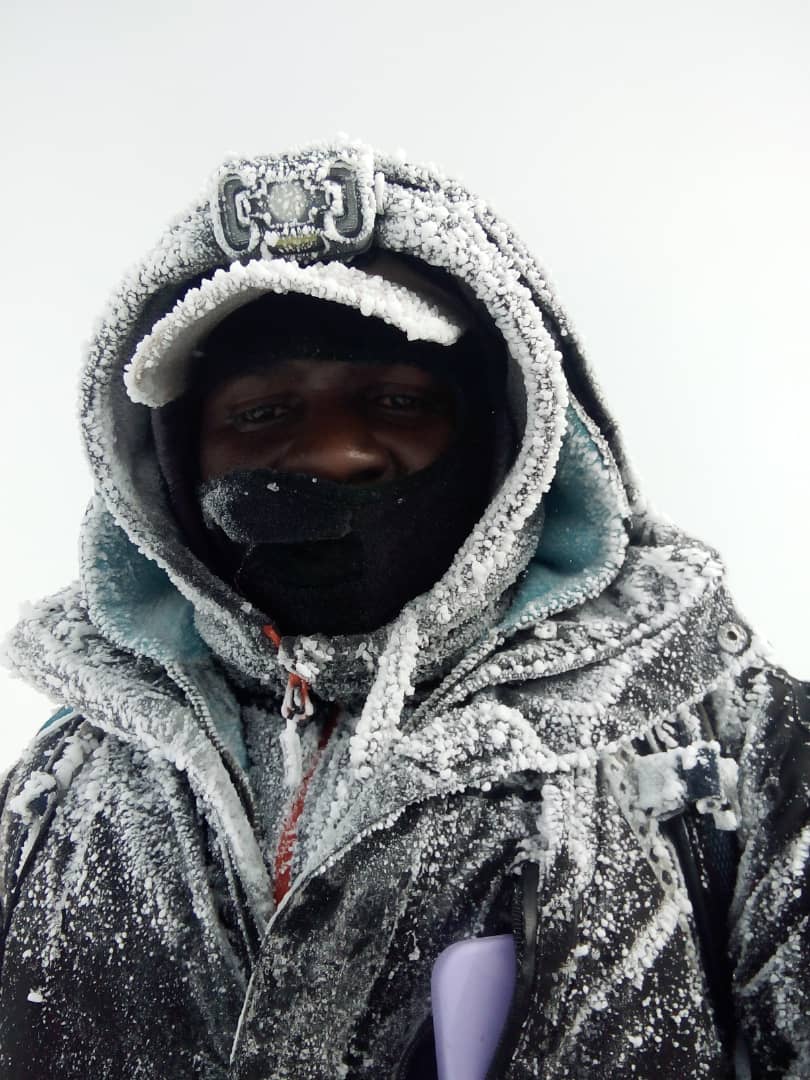
Eleven of Sabinus’s current porter team have worked with him for more than 17 years. Kilimania operates under KPAP Gold Standard — 20kg maximum loads, weather-appropriate equipment, three meals daily, and fair wages — which Sabinus treats as a starting point rather than a ceiling.
“All of us at Kilimania were porters before. We know the struggle. Before the season starts we meet and listen, then plan together.”
When a porter has a hospital expense related to mountain work, Kilimania covers the cost — a standard beyond KPAP’s minimum requirements. Learn more in our Kilimanjaro tipping guide, which explains exact recommended amounts for the full crew.
What Does Climbing With a Senior Guide Actually Look Like?
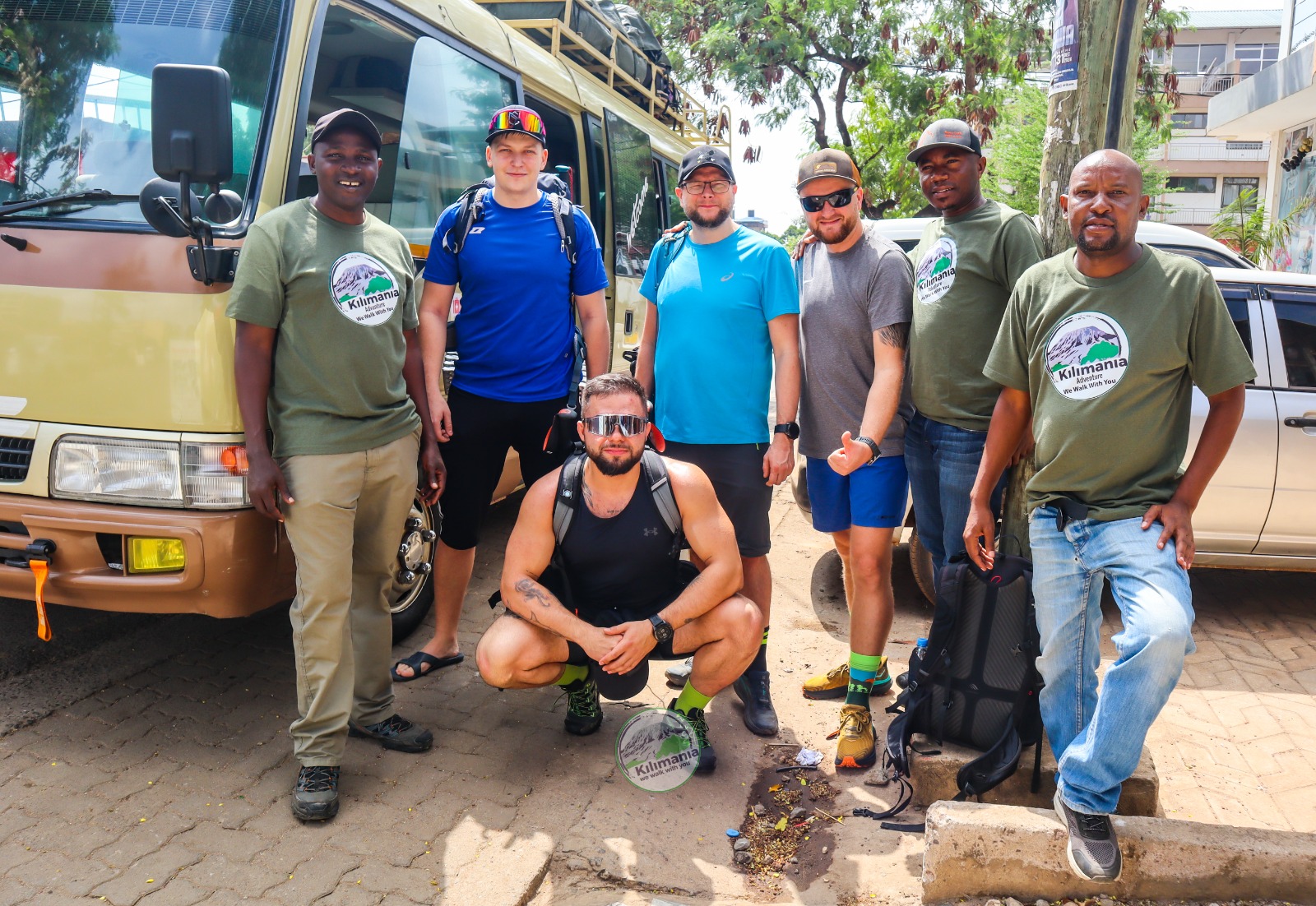
| Stage | What Sabinus Is Doing | What the Climber Experiences |
|---|---|---|
| At the trailhead | Checks boots, layering, water; asks about medications and prior altitude experience | A thorough check before the first kilometre |
| First evening at camp | Records baseline SpO₂, discusses headache, breathing, sleep quality | The first of twice-daily readings used for comparison |
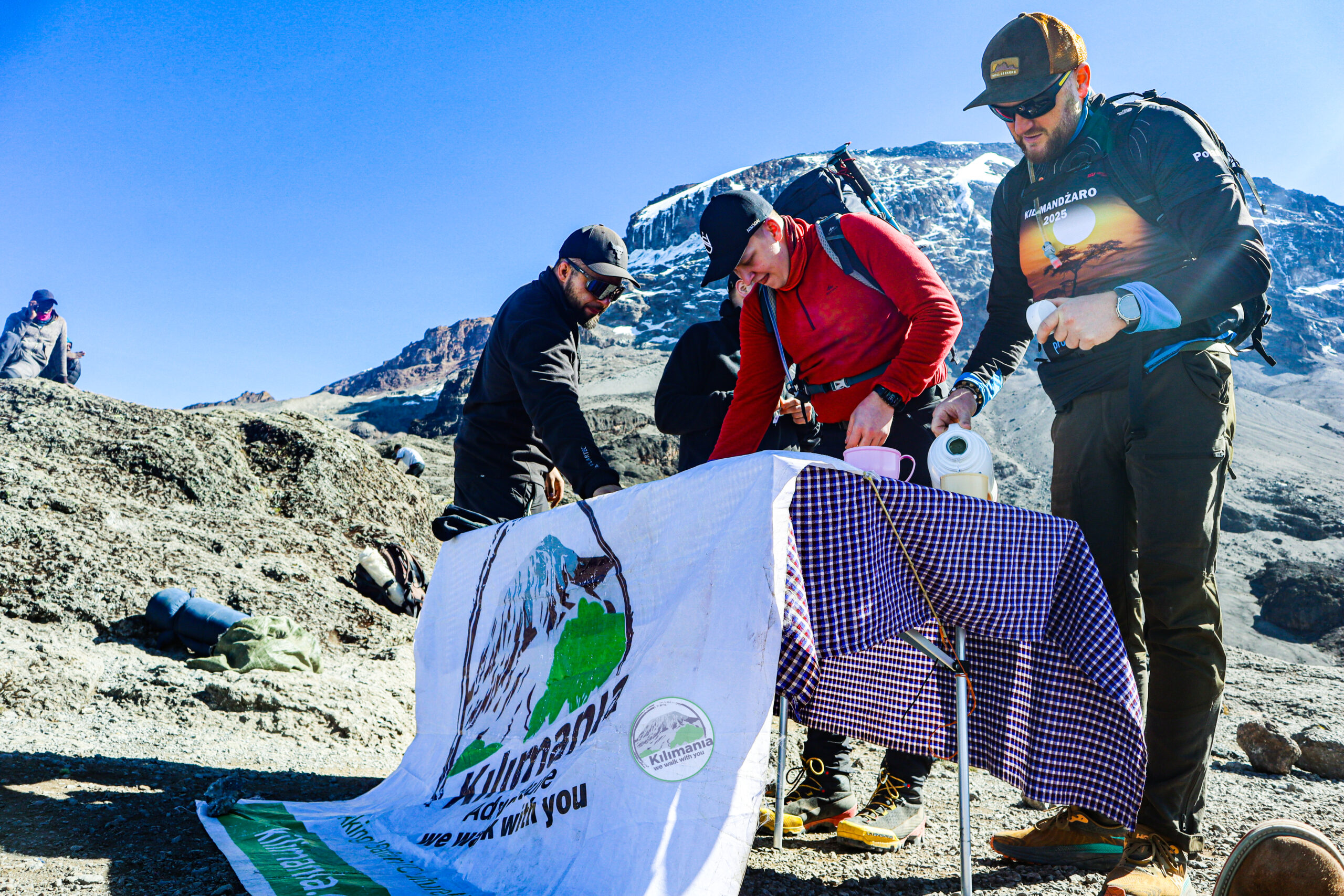
| Above 4,000m | Watches the full group; walks beside anyone struggling to help set a steady breathing rhythm | Support that appears without being asked |
| Summit night, midnight | Brings hot tea, sets a deliberately slow pace | A pace that feels too slow in hour one and helps by hour four |
| At Uhuru Peak | Photographs the moment, then shifts focus immediately: “Now we focus on getting down.” | Summit photos, then attentive guiding through the descent |
Prepare in advance with our Kilimanjaro packing list and fitness assessment.
📥 Free Download: 12-Week Training Calendar
The same week-by-week plan used by Kilimania guides, based on patterns observed across guided climbs.
Download the Free PDF📥 Free Download: Packing Checklist 2026
16 pages covering route-specific gear, rent-vs-buy pricing in Moshi, and altitude safety basics.
Download Free Checklist (PDF)📥 Free Download: Hidden Costs Checklist 2026
Understand the true cost of climbing Kilimanjaro beyond an operator’s quoted price. See also our full hidden costs breakdown.
📄 Download the Free Checklist (PDF)FAQ: Questions Climbers Ask Most Often
You need to walk five to six hours at a steady, slow pace. Patience matters as much as fitness. Take our fitness assessment.
Talk to your doctor before travel. Proper pacing and enough days on the mountain matter more than medication for most climbers.
Walk slowly, especially in the first two hours. Choosing an 8-day itinerary over 6 days is the second most important decision.
Yes. Strong emotion at altitude is common and is not, on its own, a sign of a medical problem.
A turnaround is treated as a safety success. See what happens if you don’t summit Kilimanjaro.
Ask for their registration number and verify it independently, request an itemized quote, and ask who exactly will guide you.
A senior Tanzanian mountain guide and co-founder of Kilimania Adventure, based in Moshi, with 22+ years of guiding experience and 300+ personal Uhuru Peak ascents.
Yes — KINAPA-licensed since 2003, WFR-certified since 2024. View his license (PDF).
Yes. WhatsApp +255 756 449 990 or email info@kilimania.co.tz.
Yes, with group-specific arrangements such as hot water thermos service and adjusted meal planning.
How We Verify These Credentials
Every claim on this page is backed by a specific, checkable source: KINAPA licensing records, Sabinus’s personal summit log maintained by Kilimania Adventure, Mweka Wildlife College certification records, and the WFR certificate issued by SK Healthy & Safety Solutions Ltd., Arusha.
The Legacy
After 22 years and 300+ personal summits, Sabinus still notices things he hasn’t noticed before — frost forming on gloves at Barafu, the moment a client’s laugh fades as the air thins past 5,000m. He has watched the summit glaciers retreat year after year, revealing dark volcanic rock where permanent ice once stood.
Kilimanjaro funded his secondary education, his Archaeology degree, and his MBA. In 2017 it funded Kilimania Adventure, co-founded with Kanti Kessy. In 2024, Sabinus guided a father and daughter from Singapore to Uhuru Peak — their first climb above 3,000 metres — using the same Barafu sky-reading approach he learned two decades earlier. They summited shortly before 7am.
“If I forget where I came from, what was it all for? The mountain paid for everything I have. My responsibility is to pay it back — to the guides coming after me, and to the clients who trust me with their safety.”
He still checks porter loads personally before every departure. He still stands at Barafu reading the sky. That is why he still wakes before dawn — not for the summit, but for the next person who needs him awake.
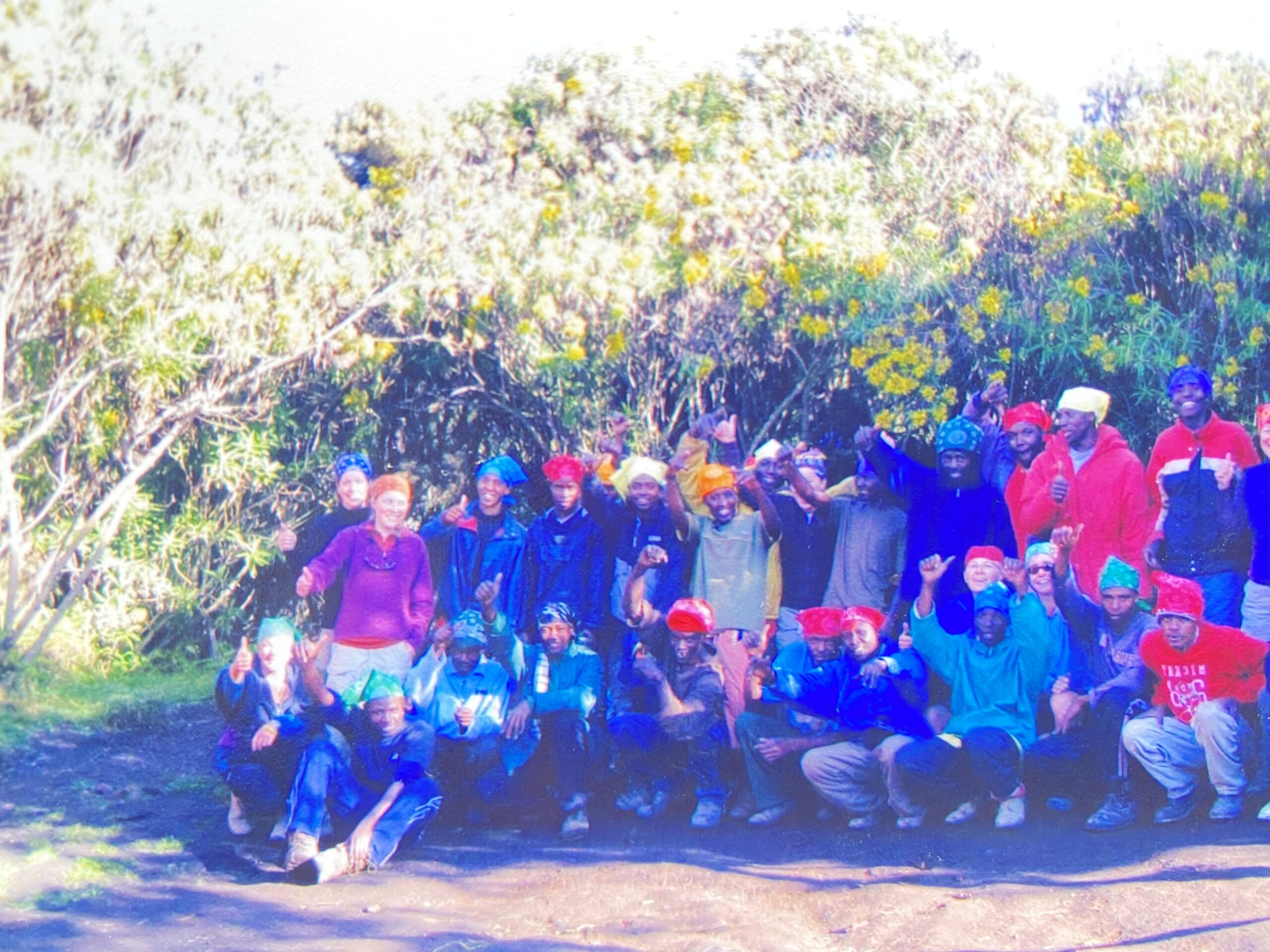
Sabinus Msimba & Kilimania Adventure — Mountain Gallery
More photographs from 22 years of expeditions on Mount Kilimanjaro.
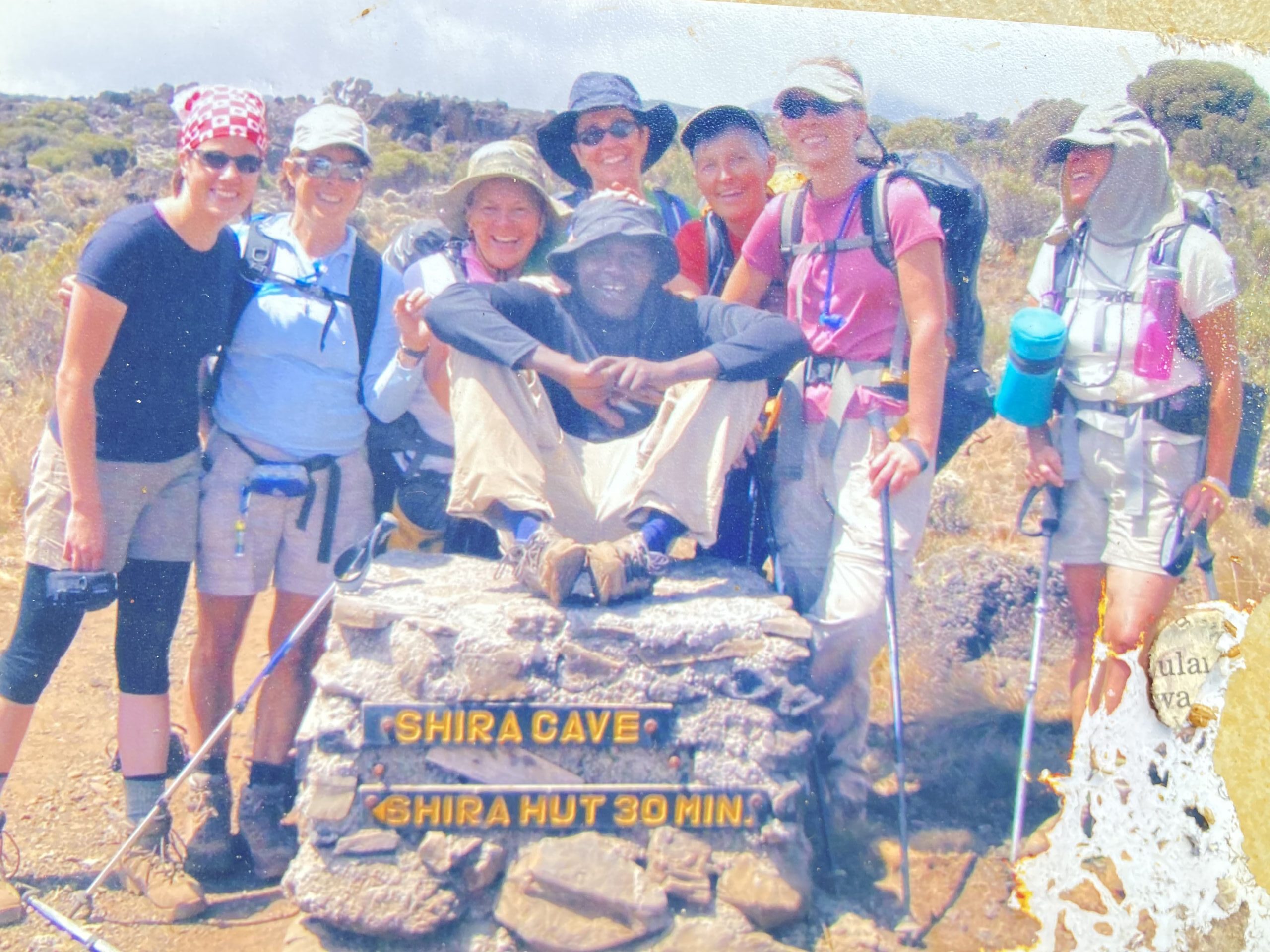
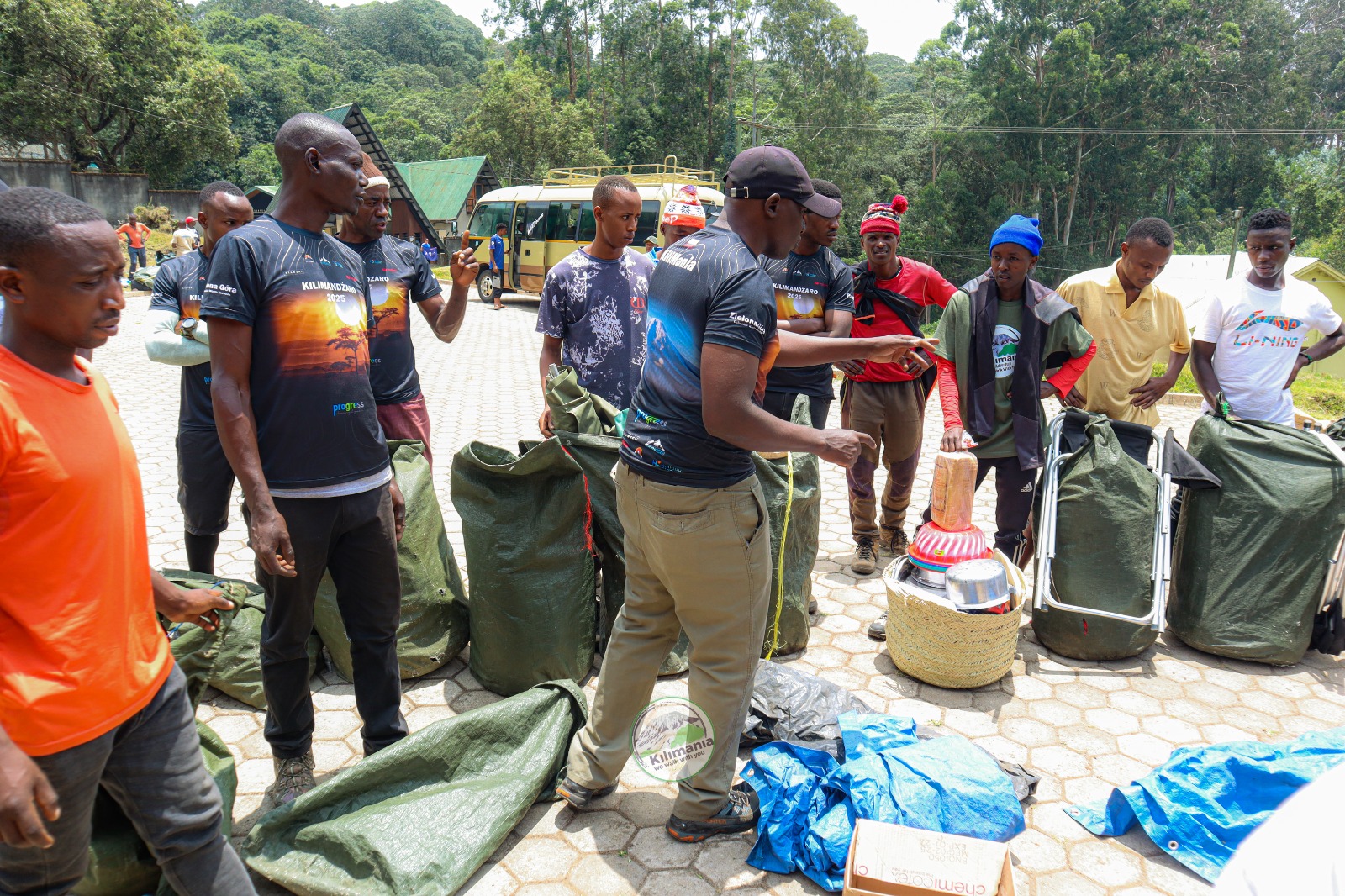
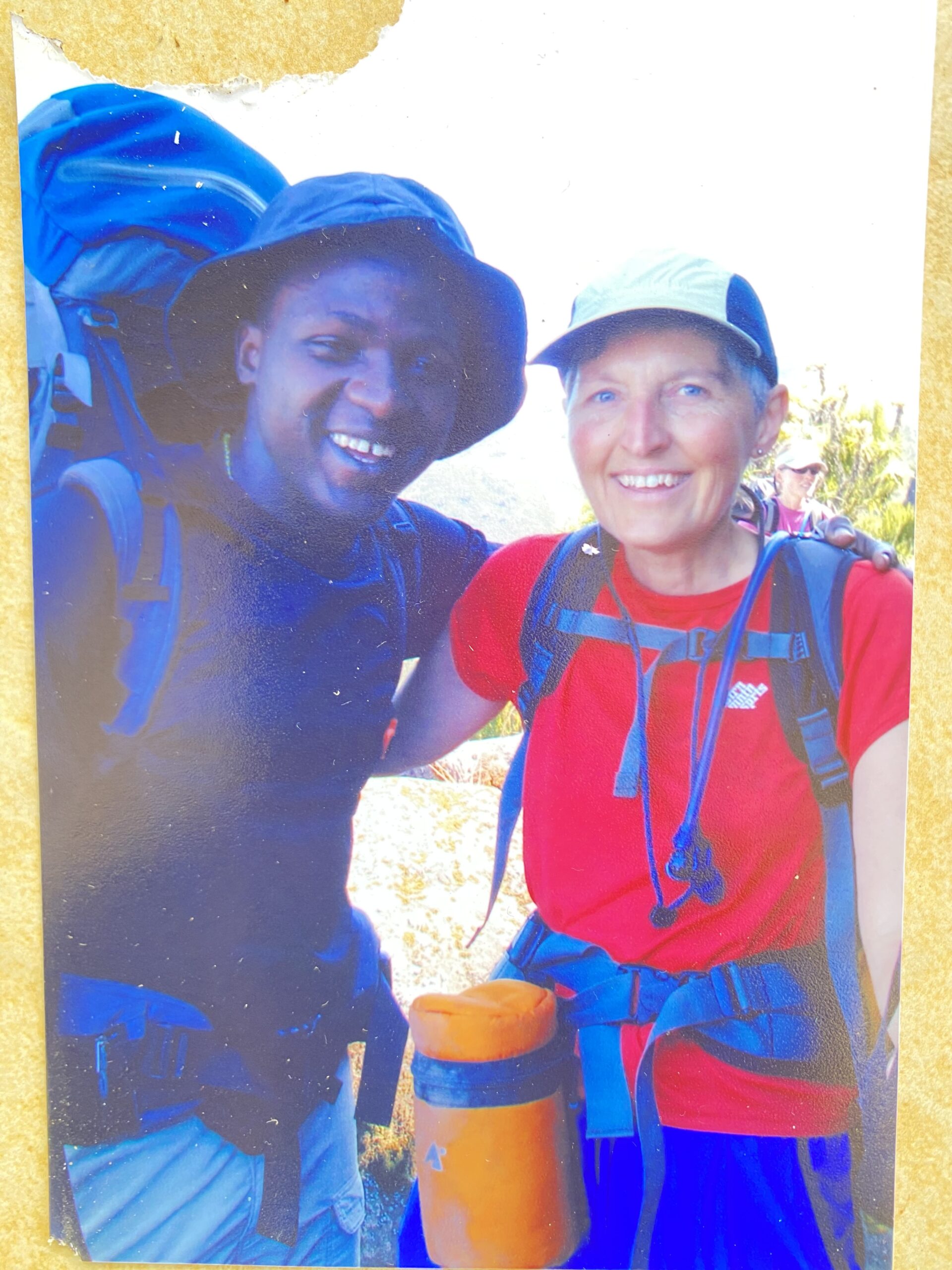
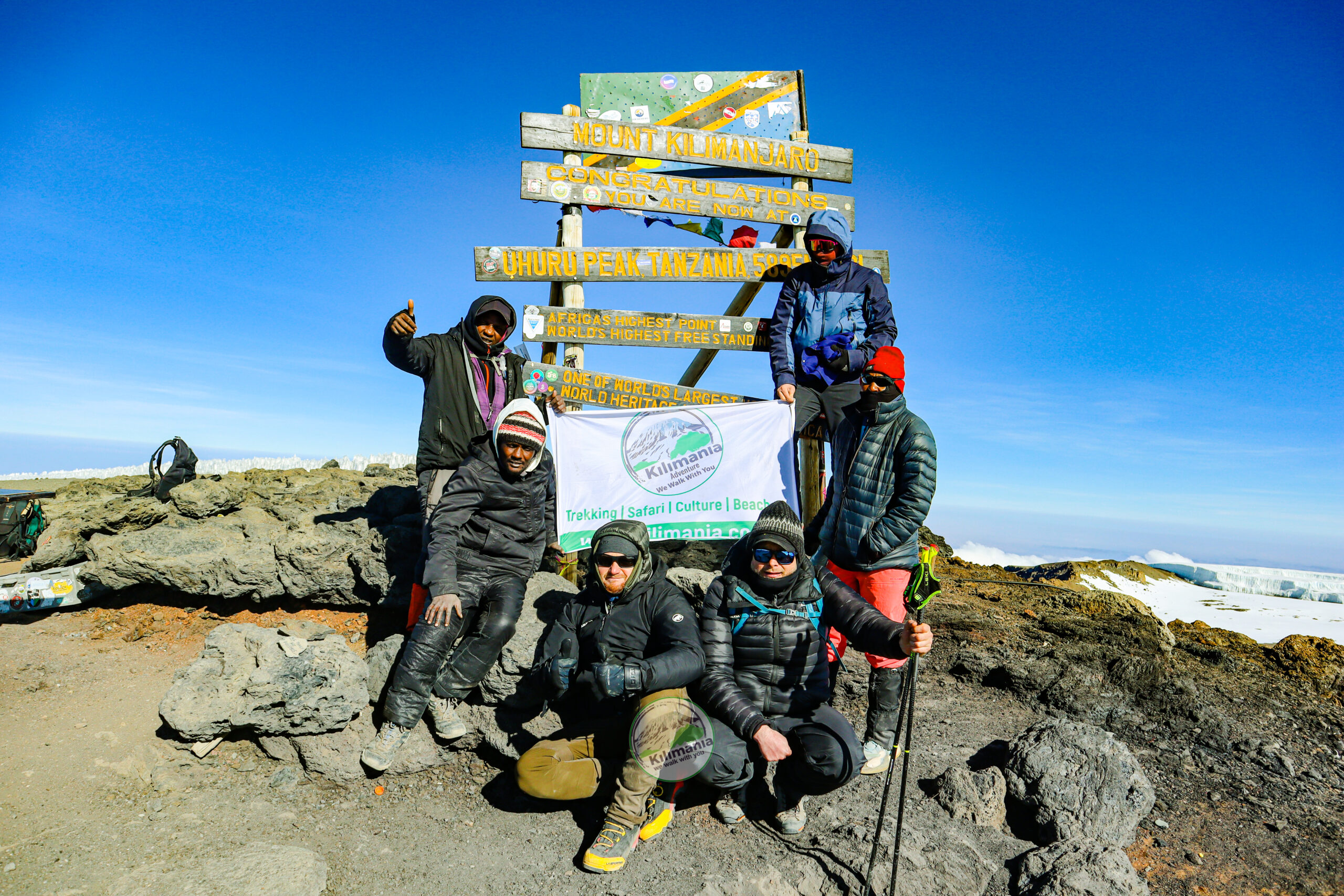
Browse Kilimanjaro Climbing Routes
Sabinus guides all of the following routes. Each links to a full guide with success rate data, day-by-day itinerary, and cost breakdown.
Most Guided
7-Day Machame RouteHighest Success Rate
8-Day Lemosho RouteFullest Acclimatization
9-Day Northern CircuitHut Route
6-Day Marangu Route→ Compare All Kilimanjaro Routes 2026
Related Guides
We Walk With You
Sabinus and the senior Kilimania guide team respond personally within 12 hours — no call centres, no foreign offices. Send your travel dates, group size, route preference, and any medical or fitness concerns, and we’ll reply with a clear, itemized quote showing park fees by day.
📧 Email info@kilimania.co.tz 💬 WhatsApp Us📞 +255 756 449 990 · 7 days per week · Physical office in Moshi, Kilimanjaro Region, Tanzania
Why Trust Kilimania Adventure?
- Base: Physical office in Moshi, Kilimanjaro Region — not an online-only booking desk
- Experience: Sabinus Msimba, 22 years, 300+ personal summit climbs, started as a porter in 2001
- Medical: WFR-certified, SK Healthy & Safety Solutions Ltd., Arusha, 2024
- Porters: KPAP Gold Standard — 20kg maximum loads, fair wages, equipment verified before every departure
- Guide License: View Official Guide License (PDF)
- Contact: +255 756 449 990 · 7 days per week
About the Author
Sabinus Msimba
Senior Kilimanjaro Guide, WFR-Certified, Co-founder — Kilimania Adventure, Moshi
Last reviewed: August 2026 | Next scheduled review: February 2027