Kilimanjaro Packing List 2026: The Guide-Verified Complete Gear Checklist
Data sources cited in this article: Kilimania Adventure’s climb and gate-check records (2019–2025), KPAP porter-weight guidelines, and manufacturer sleeping-bag ratings. · KINAPA-licensed since 2003 · 22+ years guiding · 300+ personal Uhuru Peak summits · Last reviewed: July 2026
Disclosure: Kilimania Adventure organises Kilimanjaro climbs from Moshi, Tanzania. We benefit if you travel with us. All gear-check observations are drawn from our own climb records. We encourage you to compare other licensed Kilimanjaro operators before booking.
Quick Answer: What Do I Actually Need?
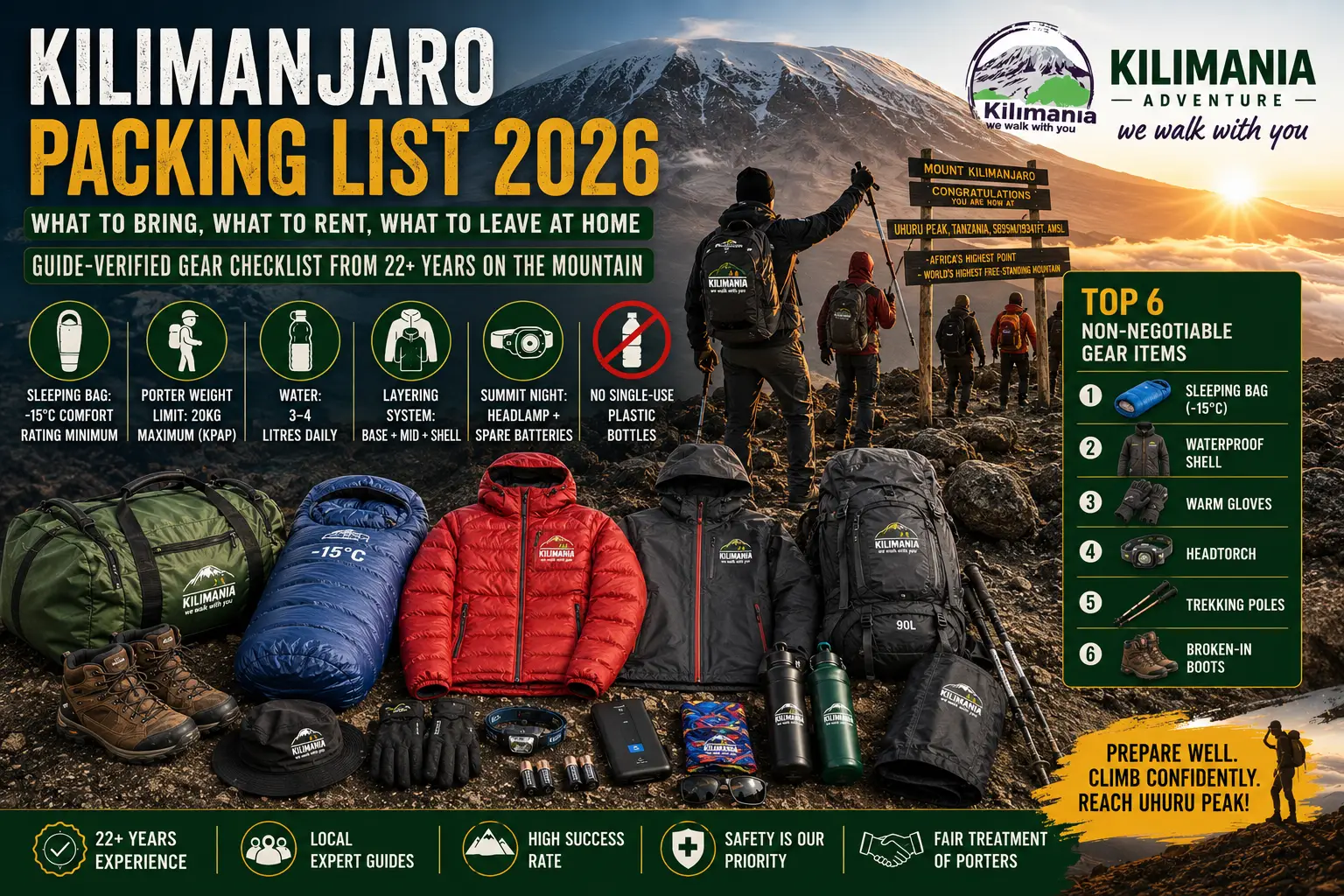
A correct Kilimanjaro packing list has three genuine non-negotiables: a sleeping bag rated to at least -15°C comfort, a real layering system built for -20°C windchill on summit night, and boots broken in over at least 80km before you fly. Everything else on this list is adjustable. These three are not.
Across our climb records (2019–2025), gear-related problems — not fitness, not weather — are the most common cause of early descents in the first three days. Most are preventable with a correctly built list, not more expensive gear.
Want your list checked against your exact route and dates before you buy anything? Send Sabinus your list on WhatsApp →
Bottom Line — Before You Read Further
Buy what touches your skin and affects fit: hiking boots, base layers, gloves, your own daypack. Rent what is bulky, expensive, and used only once: down summit jacket, -15°C sleeping bag, and trekking poles. Do a full dry run of your summit-night layers at home before you fly — not on the mountain at 4,600m the night before summit.
What Our Guides Check at the Gate
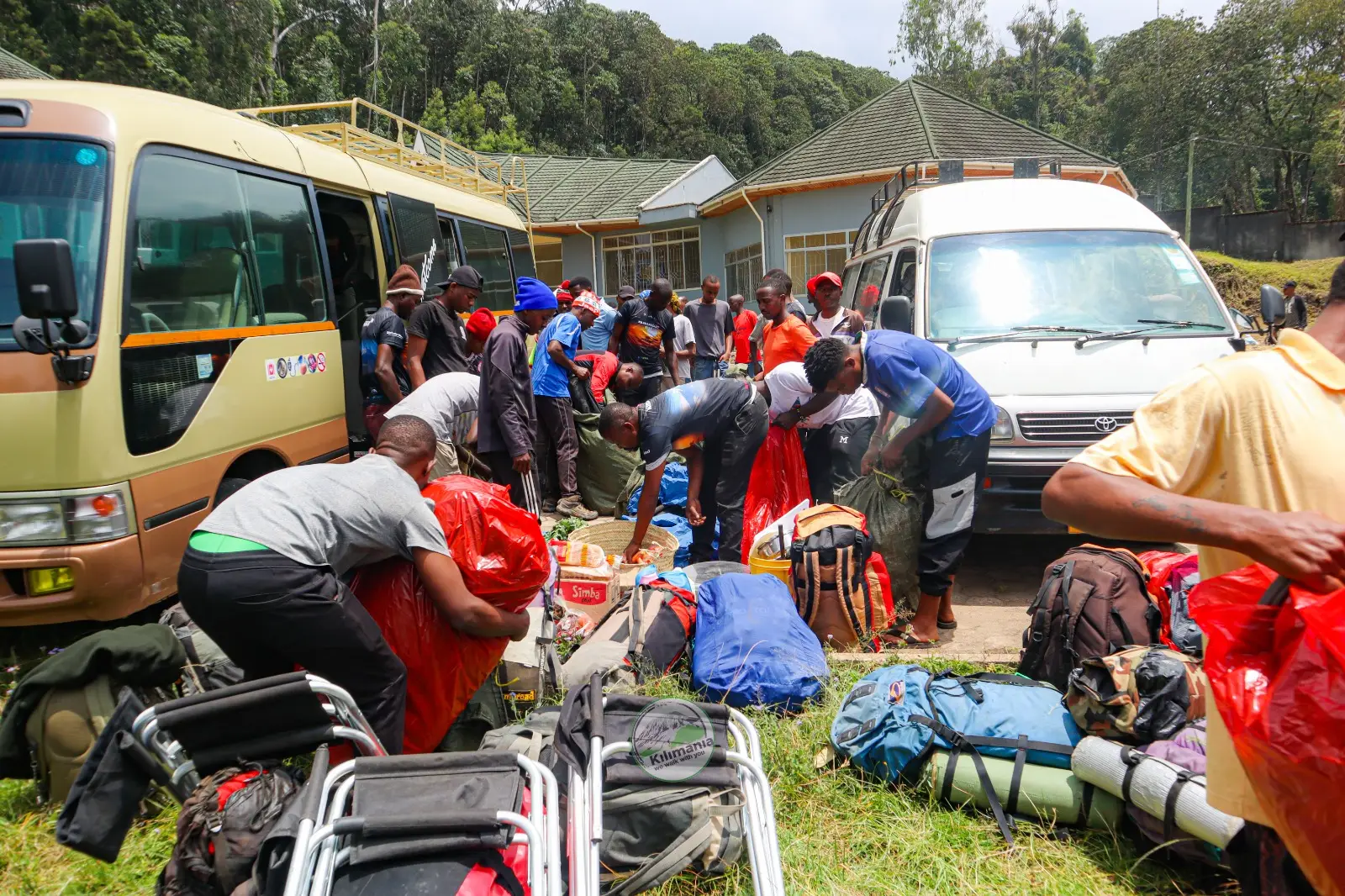
Before any Kilimania group leaves the park gate, our lead guide runs a physical gear inspection — hands-on, not a clipboard tick-box. This happens at Londorossi, Machame, or Rongai Gate depending on the route, while porters queue at the certified weigh station.
We check four items specifically: sleeping bag loft (a compressed bag cannot be fixed on the mountain); boot condition and break-in pattern; presence of a genuine waterproof shell — not a shower-resistant softshell; and duffel weight against the 15kg KPAP limit.
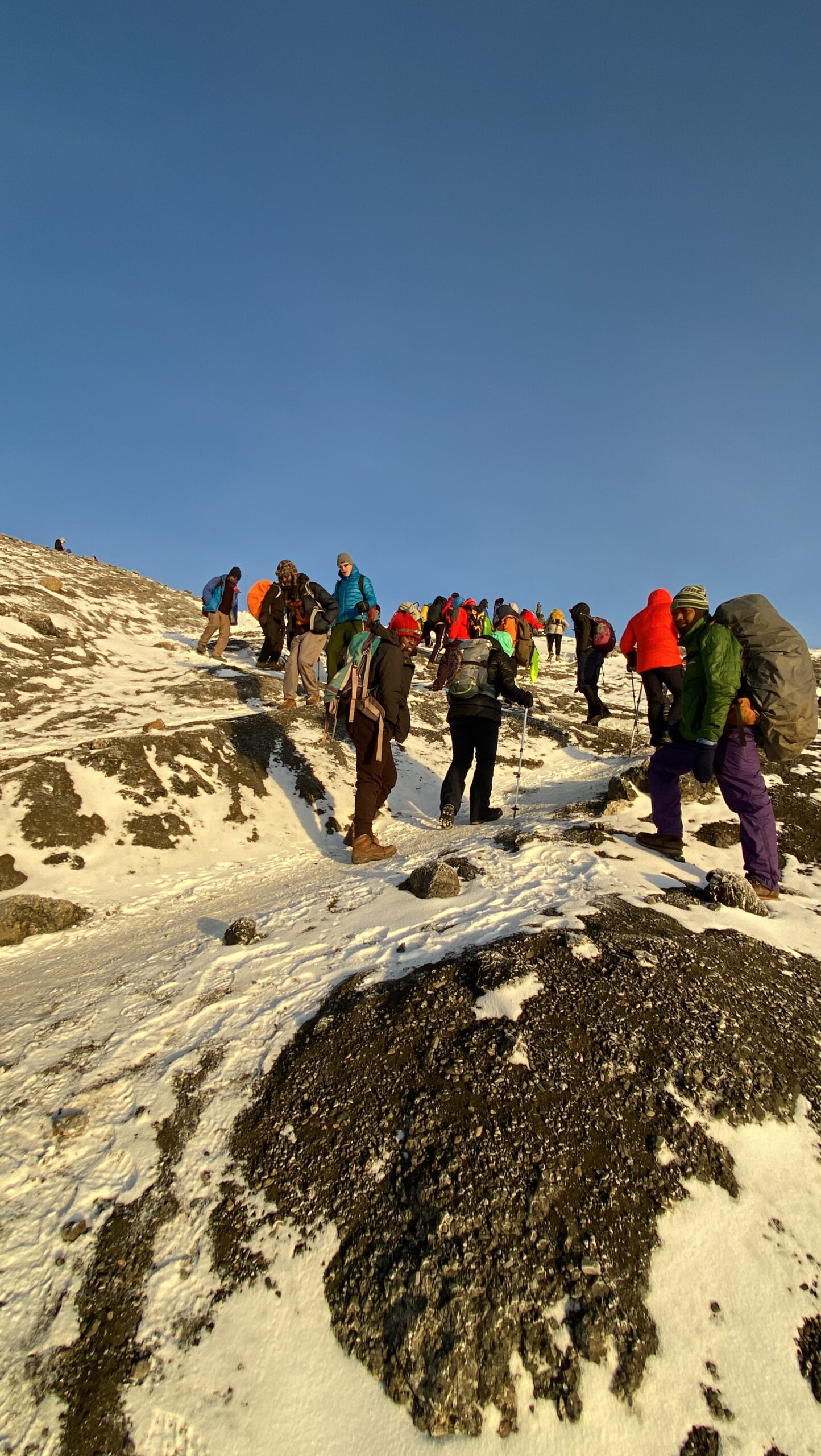
“Karibu, welcome — but first, let me see your rain jacket. I have sent people back into Moshi from the gate to buy a proper shell. It cost them two hours and forty dollars. Not fun, but better than a wet, cold climber on Day 2 in the rainforest zone, where nobody dries out overnight at camp anyway.”
— Sabinus Msimba, Senior Guide & Co-founder, Kilimania AdventureThe gate check also catches the second most common problem: brand-new, untested gear. A sleeping bag stuffed into its sack for the first time at the gate, a headlamp with batteries still in the blister pack — these items fail at the worst possible moment because nobody confirmed they worked before departure.
Mandatory Gear: 6 Non-Negotiables
These six items are not optional and not substitutable with something “close enough.” Every other item on this list has some degree of flexibility. These six do not.
Sleeping Bag Rated -15°C Comfort
Summit night reaches -12°C ambient with windchill below -20°C. A bag rated to 0°C or -5°C will not keep you warm enough to sleep or function effectively at Barafu Camp (4,673m). “Comfort” rating — not “extreme,” not “lower limit.”
Broken-In Waterproof Hiking Boots
Minimum 80km of prior walking wear on varied terrain. Brand-new boots are the most common cause of blister-related early descents our guides see in the first days of a climb.
Genuine Waterproof Breathable Shell Jacket
Not “water-resistant” or “shower-proof.” A hard shell with fully taped seams, tested in real rain before your trip, is required for the rainforest zone and summit night wind exposure.
Insulated Down Summit Jacket
700+ fill power equivalent, worn over your layering system on summit night only. This is the one item most climbers correctly choose to rent in Moshi rather than buy and fly with.
Headlamp with Spare Batteries
Summit night begins at midnight in complete darkness. Lithium batteries perform better than alkaline in extreme cold — bring spares regardless of battery chemistry.
Two Insulated 1-Litre Water Bottles
Not a hydration bladder as your only system. Hydration bladder tubes freeze solid above 4,500m even when insulated, leaving you without water access during summit night.
Clothing & Layering System
Kilimanjaro spans five climate zones — from 30°C rainforest heat at the gate to -20°C windchill at Uhuru Peak. You are not packing individual items; you are building a layering system that adds and removes pieces as elevation and conditions change.
| Layer | Item | Quantity | Notes |
|---|---|---|---|
| Base — Upper | Moisture-wicking long-sleeve base layer | 2–3 | Merino wool or synthetic. No cotton — cotton retains moisture and accelerates chilling. |
| Base — Lower | Moisture-wicking base layer trousers | 2 | Worn under trekking trousers from Day 4 onward as temperatures drop. |
| Mid — Upper | Fleece jacket (mid-weight) | 1 | Worn most evenings and mornings above 3,000m. Doubles as sleeping layer. |
| Mid — Lower | Softshell or fleece trekking trousers | 2 | Convertible zip-off works well for lower-altitude days. |
| Insulation | Insulated down jacket (summit-specific) | 1 | See Mandatory Gear item 4. Rent if you don’t already own one. |
| Shell — Upper | Waterproof, breathable jacket | 1 | See Mandatory Gear item 3. Taped seams, tested before departure. |
| Shell — Lower | Waterproof shell trousers | 1 | Full side-zip preferred — allows you to pull them on over boots quickly. |
| Hands | Liner gloves + insulated summit mittens | 1 set each | Layer liner gloves under mittens on summit night. Frostbite risk is real above Stella Point (5,756m). |
| Head | Warm fleece beanie + buff / neck gaiter | 1 each | Buff doubles as face cover against windchill and dust on summit day. |
| Head | Wide-brim sun hat | 1 | UV exposure is stronger above 3,500m due to reduced atmospheric filtering. |
| Feet | Hiking socks — liner + merino wool outer | 4–5 pairs | Change daily. Wet socks are a leading cause of blisters, regardless of boot fit. |
| Feet | Gaiters | 1 pair | Keeps scree and snow out of boots on summit night. |
| Camp | Down booties or thick camp socks | 1 pair | For inside the tent only — warm feet improve sleep quality at altitude. |
Cotton clothing of any kind is prohibited from our recommended packing list. Cotton absorbs sweat and rain water and does not dry overnight in a tent, which accelerates hypothermia risk on multi-day high-altitude treks. If the label says “100% cotton,” leave it at home.
Sleep System & Kilimanjaro Sleeping Bag Ratings
Your Kilimanjaro sleeping bag rating is the single item on this list with zero room for compromise. Camp temperatures range from approximately 10°C at Machame Gate (1,800m) to below -10°C at Barafu Camp (4,673m), before summit night pushes conditions further.
| Item | Required Specification | Why It Matters |
|---|---|---|
| Sleeping bag | -15°C comfort rating minimum | The EN 13537 “comfort” rating, not “extreme.” The extreme rating is survival-only, not sufficient for restful, recovery sleep at altitude. |
| Sleeping bag liner | Silk or fleece — adds 3–5°C | Extends a rental bag’s real-world warmth and maintains hygiene across a multi-day trip. |
| Sleeping pad | R-value 4.0+ (insulated, not just cushioned) | Ground conduction removes body heat faster than air temperature on frozen ground at Barafu and above. |
| Inflatable camp pillow | Compact, lightweight — optional | Improved sleep quality at altitude supports acclimatization and next-day performance. |
Rental sleeping bags see multiple seasons of use. Loft — the bag’s ability to trap warm air — degrades over time regardless of the stated temperature rating on the label. If renting in Moshi, physically shake and inspect the bag for flat, compressed patches before accepting it. Always pack a liner as backup insulation.
Daypack Contents — What You Carry Yourself Each Day
Your daypack travels on your back every walking hour — porters carry the duffel, not the daypack. Target weight: 5–6kg loaded. It should contain everything you need between camp departures.
| Item | Purpose & Notes |
|---|---|
| 30–35L daypack with built-in rain cover | Sized to carry summit-night layers plus daily essentials without being so large you overfill it. |
| 2L water — bottles or bladder | Drink 3–4 litres total daily; refill at camp with crew-treated water. |
| High-energy trail snacks | Mixed nuts, energy bars, dried fruit — eat every 45–60 minutes while walking to maintain blood sugar. |
| Sunscreen SPF 50+ and lip balm SPF 30+ | UV exposure above 3,500m is stronger than at sea level. Reapply every 2 hours. |
| Sunglasses — category 3 or 4, UV400 | Summit snow glare and high-altitude UV can cause temporary snow blindness without protection. |
| Personal first aid kit | Blister plasters, painkillers, personal prescription medication — see Health section. Keep in daypack, not duffel. |
| Camera or phone in a padded insulating pouch | Cold temperatures drain batteries rapidly. Keep devices close to body warmth. |
| Pack liner — dry bag or heavy bin liner | Rainforest zone rainfall is sudden and heavy on Days 1–2. A rain cover alone is insufficient in prolonged rain. |
| Trekking poles (if not carried by porter) | Recommended for descent — reduces knee stress and improves stability on loose scree. |
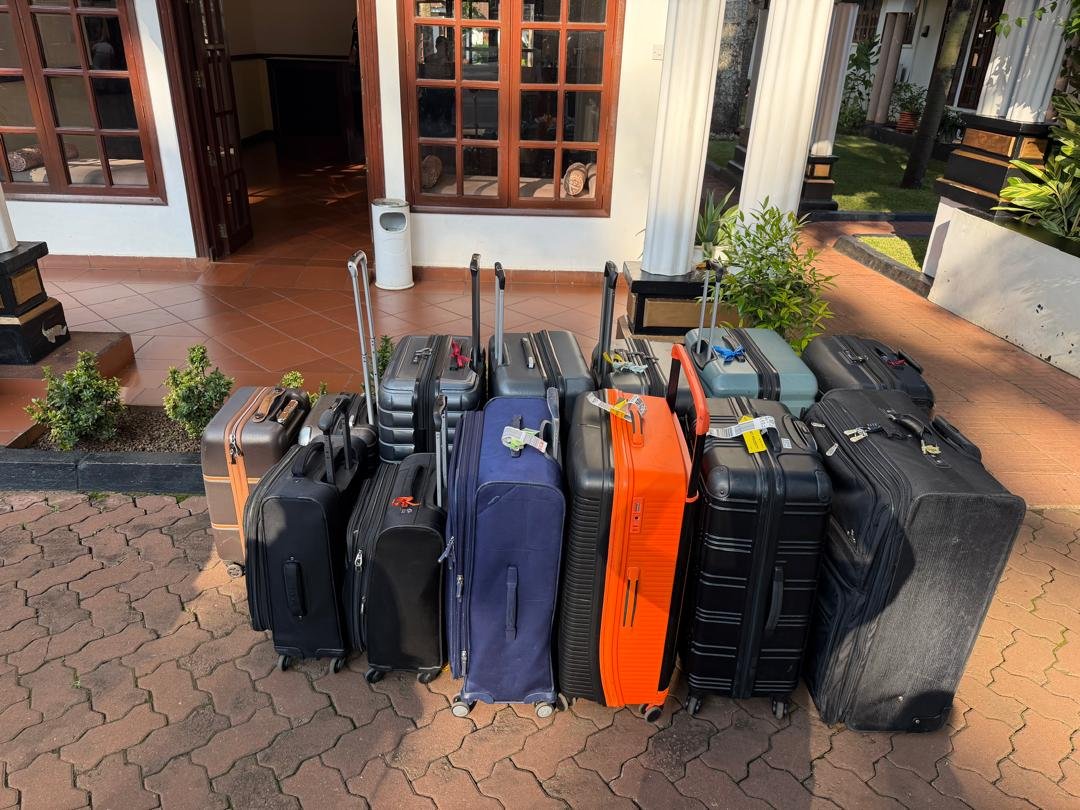
Hydration Equipment
Dehydration accelerates altitude sickness symptoms and impairs judgment. Climbers need 3–4 litres of water daily minimum, more on summit night and descent.
Two Insulated 1-Litre Wide-Mouth Bottles
Primary system for summit night. Wide-mouth openings resist freezing better than narrow-neck bottles above 4,500m. Keep both inside your pack or jacket against body warmth.
Hydration Bladder (Lower Days Only)
Useful on Days 1–4 in rainforest and heath zones. Bladder tubes and bite valves freeze solid above approximately 4,500m even when insulated — do not rely on these above Karanga Camp.
Water Purification — Tablets or Filter
Camp water is boiled and treated by our crew, but a personal backup (iodine tablets or a filter straw) is worth carrying in case you need water between fixed water points.
Electrolyte Tablets or Powder
Replace sodium, potassium, and magnesium lost through sweating. Thirst sensation is often blunted at altitude, making it easy to underhydrate without active tracking.
Collapsible Cup or Mug
For hot drinks at camp — guides bring hot water for tea and soup every evening and morning. Having your own mug reduces shared-cup hygiene issues.
Small Insulated Bladder Sleeve
If you bring a bladder for lower-altitude days, an insulated sleeve extends its usability into the moorland zone (3,500m) before switching to bottles for high altitude.
Health & First Aid
Our guides carry a comprehensive medical kit on every climb. This personal kit covers individual needs between guide interventions.
| Item | Notes |
|---|---|
| Personal prescription medication | Bring double your trip duration’s supply, in original packaging, in your daypack — never in the duffel that porters carry. |
| Altitude medication (e.g. acetazolamide / Diamox) | Consult a travel medicine clinic 4–6 weeks before departure. Altitude medication is not a substitute for proper acclimatization. |
| Blister care kit | Hydrocolloid dressings, micropore tape, small scissors. Treat immediately at first hot-spot sensation — not after a blister forms. |
| Anti-diarrhoeal medication and rehydration salts | Gastrointestinal upset affects a meaningful share of multi-day trekkers. Treat early to preserve hydration status. |
| Ibuprofen and paracetamol | Altitude headache is common above 3,500m. Having both reduces the need to choose between anti-inflammatory and non-anti-inflammatory pain relief. |
| Chemical hand and toe warmers | Single-use air-activated warmers. Insert into gloves and boot toe-boxes before summit night departure at Barafu Camp. |
| Pulse oximeter — personal (optional) | Guides conduct daily SpO₂ checks with our device. A personal unit adds monitoring visibility, but is not required. |
| Plasters, antiseptic wipes, basic wound care | For minor cuts and abrasions. Volcanic rock on summit day and the Barranco Wall scramble is rough on exposed hands. |
| Insect repellent (DEET 30%+) | Required in the rainforest zone (Days 1–2 on most routes). Not needed above the heath zone at approximately 3,000m. |
This packing list is general guidance, not personalised medical advice. Consult a qualified travel medicine practitioner before high-altitude trekking, particularly regarding altitude sickness medication, pre-existing conditions, and required vaccinations for entry into Tanzania.
Electronics
No mains electricity above the base town of Moshi. Plan for 7–9 days off-grid with cold temperatures that reduce battery performance significantly.
Headlamp + Spare Batteries
Minimum 200 lumens output. Summit night departs Barafu at midnight in complete darkness. Lithium batteries outperform alkaline in cold — bring a full set of spares regardless.
Power Bank — 10,000mAh or Larger
Cold temperatures reduce lithium battery capacity noticeably. Keep your power bank inside your sleeping bag overnight at high camps to preserve charge.
Camera with Spare Batteries
Cold drains camera batteries within minutes of exposure. Keep spare batteries in an inner jacket pocket. A lightweight mirrorless or phone camera is preferable to a heavy DSLR kit.
Universal Travel Adapter + Cables
Charge everything fully the night before departure from Moshi. Tanzania uses Type D and Type G sockets (230V). UK plugs work without an adapter — US and EU plugs need a converter.
Satellite Messenger (Optional)
Kilimania guides carry communication devices. A personal GPS messenger adds independent emergency signalling capability — worth considering for solo travellers and longer routes.
Waterproof Phone Case or Dry Bag
Rainforest zone rain and summit-night condensation can damage unprotected electronics. A sealed dry bag weighs almost nothing.
Documents & Money
| Document or Item | Notes |
|---|---|
| Passport with 6+ months’ validity | Required for Tanzania visa (available on arrival or e-Visa), park entry registration, and gate sign-in. |
| Travel insurance — with evacuation cover | Must explicitly cover high-altitude trekking and emergency evacuation above 4,000m. Print the policy summary and emergency contact number. |
| Yellow fever vaccination certificate | Required if arriving from or transiting through a yellow-fever-endemic country. Check current TANAPA and WHO requirements before travel. |
| Printed booking confirmation | Carry both physical and digital copies. Mobile network coverage in Moshi can be unreliable, and gate registration may require physical documents. |
| USD cash — clean, newer bills | For crew tipping at trip end (guide, assistant guides, porters, cook), plus incidentals in Moshi. Small denominations preferred. |
| Emergency contact card | A laminated card with next-of-kin contact, blood type, allergy information, and your guide’s phone number. Carry in your daypack at all times. |
What to Rent vs What to Buy — Kilimanjaro Rental Gear in Moshi
Moshi has a well-established gear rental market. The decision isn’t only about budget — it’s about which items affect personal safety and individual fit. Current rental rates vary by supplier and season, so confirm exact pricing with your operator before departure rather than relying on a fixed figure here.
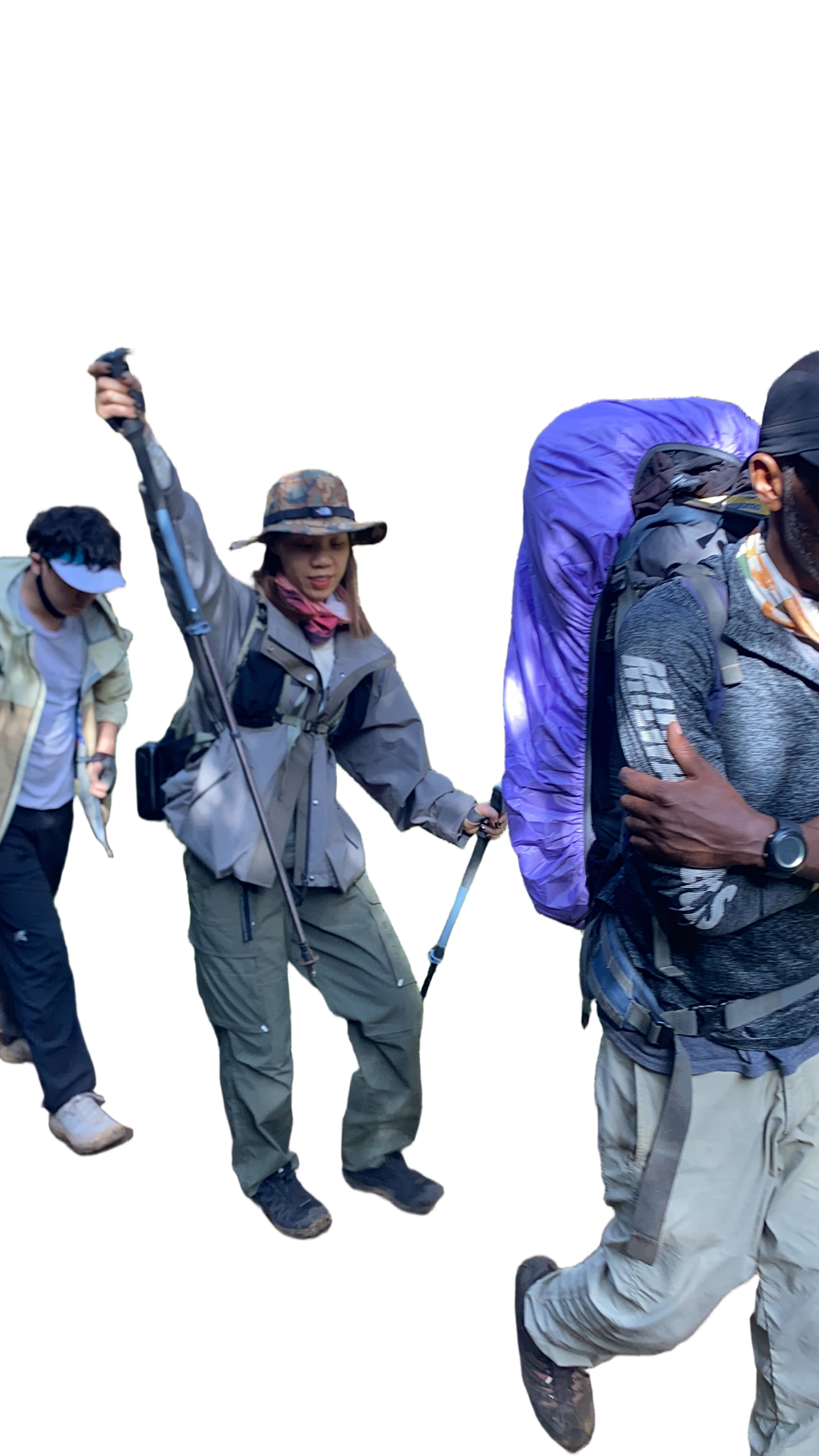
| Item | Recommendation | Reason |
|---|---|---|
| Hiking boots | Buy — break in at home | Fit is highly individual. Rental boots cause noticeably more blisters than any other rented item, according to our guides’ field observations. |
| Down summit jacket | Rent | Used for one summit night only, bulky to fly with, and quality options are available from KPAP-vetted Moshi suppliers. |
| Sleeping bag (-15°C) | Rent (inspect loft first) | Expensive to purchase for a single trip. Inspect the bag for compressed patches before accepting — see the warning above. |
| Trekking poles | Rent | Low personal-fit sensitivity. Renting saves airline baggage hassle and fees on most carriers. |
| Sleeping pad (insulated, R-4+) | Rent | Bulky for checked baggage. Quality insulated pads are available locally in Moshi. |
| Base layers | Buy | Worn against skin for 7+ days. Hygiene and individual fit matter significantly for comfort and chafe prevention. |
| Gloves and summit mittens | Buy | Frostbite protection depends on individual hand size, fit, and circulation. Rental mittens rarely fit well enough for summit conditions. |
| Daypack (30–35L) | Buy | Hip belt and shoulder straps need to be fitted to your torso length before the trip. A poorly fitted pack causes back and shoulder pain by Day 3. |
| Gaiters | Rent or Buy | Low cost either way. Buy if you plan further trekking; otherwise rent in Moshi. |
| Headlamp | Buy | Reliability on summit night is non-negotiable. Buy a new unit, test it, and bring spare batteries — too critical to trust a rental. |
All Kilimania rental gear is sourced through KPAP-vetted local suppliers in Moshi and physically inspected before your trip. When evaluating any operator, ask directly: “Where does your rental gear come from, and how often is it replaced?” A hesitant or vague answer is a warning sign.
Not sure whether to rent or buy something specific?
Message Sabinus your gear list and route — a quick reply, not a sales pitch.
Kilimanjaro Porter Weight Limits & KPAP Guidelines
The Kilimanjaro Porters Assistance Project (KPAP) sets a maximum total porter load of 20kg — comprising 15kg of client duffel plus the porter’s own tent, food, and personal kit. This is a welfare standard protecting porters from injury, not a bureaucratic inconvenience.
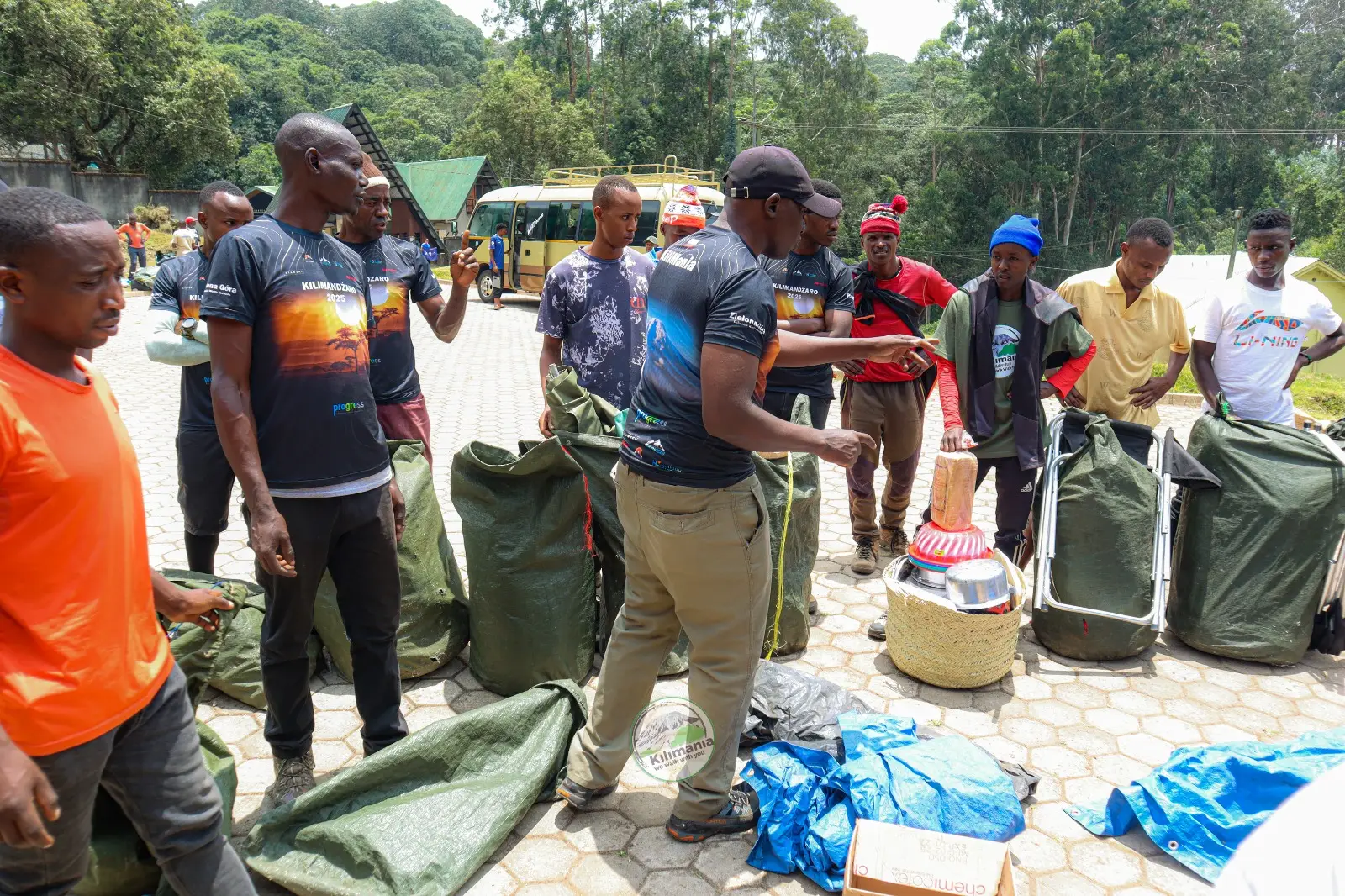
Your packed duffel bag will be weighed on a certified scale at the park gate before departure. If it exceeds 15kg, you will need to remove items on the spot or pay for an additional porter. Weigh your duffel at home before you fly — use a bathroom scale by weighing yourself holding the bag, then subtracting your body weight. Do this at least three days before departure so you have time to adjust.
When evaluating operators, ask directly: “Do you follow KPAP porter weight guidelines, and can I see your porter equipment inventory?” Any reputable, properly licensed operator answers this without hesitation. Learn more at kiliporters.org.
What People Bring That They Regret
Drawn from our guides’ gate-check and mid-climb observations, these are the items that create the most problems — and the straightforward alternatives.
“Every single season, someone arrives with boots straight out of the box. I ask them to walk 20 metres so I can watch their gait. If they wince by step ten, we have a five-day problem starting on Day 1. New boots on Kilimanjaro is not a minor issue — it is one of the most common reasons for painful, slow, demoralised descents before the summit even comes into view.”
— Sabinus Msimba, Senior Guide & Co-founder, Kilimania Adventure| Regretted Item | Why It Fails | Better Alternative |
|---|---|---|
| New, unbroken-in hiking boots | Blisters by Day 2 force painful, slower walking or early descent. Our guides see this more often than any other gear-related setback in the first three days. | 80km+ of break-in walking on varied terrain before departure, ideally including some hill work. Learn how to train effectively → |
| Cotton hoodies, t-shirts, and jeans | Retains sweat and rain moisture. Does not dry overnight in a tent. Accelerates chilling. | Merino wool or synthetic moisture-wicking base layers throughout. |
| Hydration bladder as sole water system | Tube and bite valve freeze solid above approximately 4,500m — even when insulated — leaving no water access during summit night. | Two insulated 1-litre wide-mouth bottles as the primary system; bladder for Days 1–4 only. |
| Heavy DSLR camera kit | Adds 2–3kg to daypack. Camera batteries fail rapidly in cold. Rarely practical above Barafu on summit night when you’re focused on moving and staying warm. | Lightweight mirrorless camera or phone with a spare battery kept warm in an inner jacket pocket. |
| Full-size toiletry bag | Unnecessary duffel weight against the 15kg limit. Showers are not available above base camp regardless of trip length. | Travel-size, biodegradable toiletries only. Wet wipes serve most hygiene needs at altitude. |
| Untested “waterproof” rain jacket | Water-resistant coatings (DWR only, no seam taping) soak through in sustained Day 1–2 rainforest rain within 20–30 minutes. | Genuine hard shell with fully taped seams, tested in real rain before the trip. |
| Excess clothing changes | Unnecessary duffel weight. Laundry is unavailable on the mountain at any point during the climb. | 2–3 base layer sets worn in rotation, plus one dedicated summit-night set kept dry in a sealed bag. |
Does Your Route Change What You Pack?
Yes — primarily around your sleep system and trip duration, not the core clothing and safety layers. See our full route comparison for a side-by-side breakdown.
🏠 Marangu Route (5–6 days)
The only Kilimanjaro route with hut accommodation. You can skip the sleeping pad and carry a lighter bag liner. A genuine -15°C rated sleeping bag is still required for hut nights above Horombo (3,720m) and Kibo Hut (4,703m).
⛺ Machame & Lemosho (6–8 days)
Full camping routes — sleeping pad (R-4+) and tent-compatible sleeping bag are required. Pack one extra rotation of base layers compared to Marangu.
🗺 Northern Circuit (9 days)
The longest Kilimanjaro route. Plan for five or more pairs of hiking socks and additional battery capacity for electronics over the extended off-grid duration.
Regardless of route choice or season, summit night gear requirements do not change. Every Kilimanjaro route funnels through Barafu Camp (4,673m) or Kibo Hut (4,703m) before the same summit-night conditions: -12°C ambient, windchill below -20°C, darkness, and variable wind at elevation. Pack accordingly — there are no season-based exemptions from this reality.
Free Kilimanjaro Planning Resources
Three guide-built planning resources — free, no email registration required.
Full Packing Checklist
Every item in this guide, organised by section — bookmark this page and check items off as you pack.
Jump to Checklist →12-Week Training Calendar
Progressive fitness programme designed by our guides for Kilimanjaro readiness.
View Calendar →Route Comparison Cheat Sheet
Side-by-side data on all major routes: duration, acclimatisation profile, and difficulty.
View Comparison →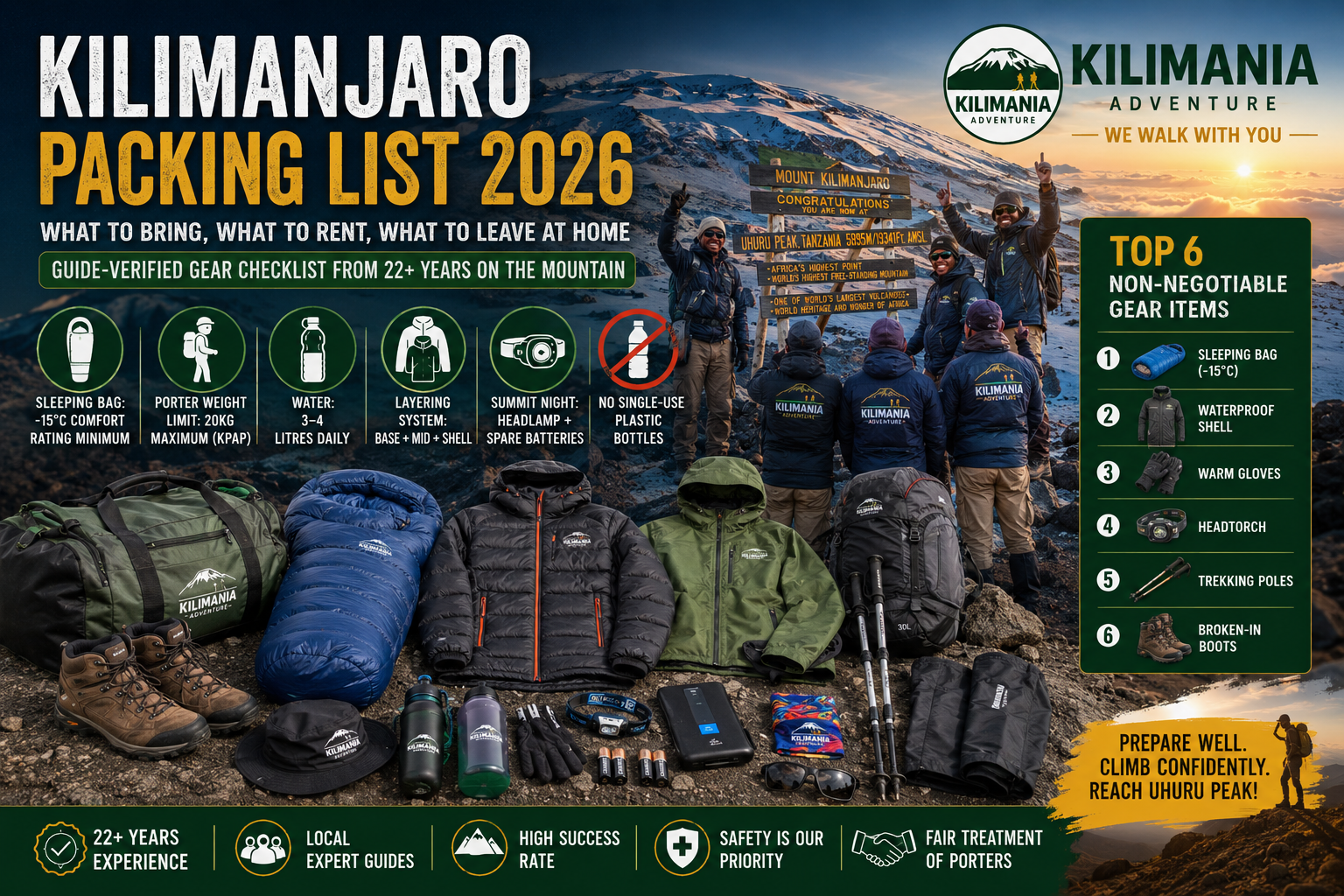
Frequently Asked Questions
The nine questions our guides and booking team answer most often about Kilimanjaro packing.
What sleeping bag rating do I need for Kilimanjaro?
We require a minimum comfort rating of -15°C — that’s the EN 13537 “comfort” rating, not the “extreme” or “lower limit” rating. Summit night at Barafu Camp and above can hit -12°C ambient with windchill below -20°C, and rental bags see multiple seasons of use that degrades their loft. A -15°C comfort-rated bag used with a liner covers realistic summit conditions with a safety margin.
What is the Kilimanjaro porter weight limit?
KPAP (Kilimanjaro Porters Assistance Project) guidelines cap each porter’s total load at 20kg, which includes 15kg of your client duffel plus the porter’s own personal kit, tent sections, and food ration. Your packed duffel bag must weigh 15kg or less and will be weighed on a certified scale at the park gate before departure. Weigh yours at home before you fly.
Should I rent or buy Kilimanjaro gear in Moshi?
Rent bulky, one-trip items you won’t reuse elsewhere: the down summit jacket, -15°C sleeping bag, trekking poles, and sleeping pad. Buy anything that touches your skin directly or critically affects fit and safety: hiking boots (break in at home), base layers, gloves and mittens, and your daypack. The daypack hip belt and shoulder straps need to fit your specific torso length before the trip begins.
What is the single most regretted item climbers bring on Kilimanjaro?
Brand-new, unbroken-in hiking boots — every time. Our guides see boot-related blisters cause more early descents in the first three days than almost any other packing mistake. A boot that hasn’t been worn for at least 80km of walking before the climb will find the exact wrong moment to create problems. Break them in on weekends — don’t save them for the mountain.
Do I need different gear for the Marangu route compared to Lemosho or Machame?
Yes, slightly. Marangu is the only route with hut accommodation, so you can skip the sleeping pad and pack a lighter liner rather than a full camping sleep system. Every camping route — Lemosho, Machame, Northern Circuit, Rongai — requires a full camping sleep system including an insulated pad rated R-4 or higher. The core clothing layers, summit-night kit, and daypack contents are identical across all routes.
How many layers do I need for summit night on Kilimanjaro?
We require a minimum of five upper-body layers and three lower-body layers for summit night. Upper body: moisture-wicking base layer, mid-weight fleece, second mid layer (optional), insulated down jacket, and waterproof hard shell on top. Lower body: moisture-wicking base layer trousers, softshell or fleece trekking trousers, and waterproof shell trousers over everything. Plus liner gloves under summit mittens, and a buff, beanie, and gaiters.
Can I use a hydration bladder on summit night?
No — not as your primary system. Hydration bladder tubes and bite valves freeze solid above approximately 4,500m, even when using insulated tube sleeves. We recommend two wide-mouth insulated 1-litre bottles as your primary summit-night hydration system, kept inside your pack or jacket against body warmth. Use the bladder for convenience on lower-altitude days (Days 1–4), then switch to bottles for Karanga Camp (4,035m) and above.
What documents do I need to bring for Kilimanjaro?
Bring: your passport with at least 6 months’ validity from your entry date; a printed and digital copy of your travel insurance policy with evacuation cover specifically for high-altitude trekking above 4,000m and the emergency claim phone number; a yellow fever vaccination certificate if arriving from or transiting through an endemic country; printed copies of your booking confirmation; USD cash in newer bills for crew tipping; and a laminated emergency contact card with your blood type and allergy information.
Is a down jacket really necessary if I am climbing in the warmer months?
Yes — without exception. Season affects daytime temperature and precipitation patterns, not the temperature you will experience on summit night. Due to the atmospheric lapse rate (approximately 6.5°C drop per 1,000m gained), Uhuru Peak at 5,895m is cold in every month of the year. Barafu Camp to Uhuru Peak summit night drops to -12°C ambient with windchill below -20°C whether you climb in January or August. A down jacket is not a seasonal item on Kilimanjaro — it is a year-round requirement.
Still unsure about a specific item on this list?
Send Sabinus a message with your question — route, dates, and what’s confusing you.
Pack Deliberately, Not Expensively
A correct Kilimanjaro packing list is not about owning the priciest gear on the market. It is about matching each item to a specific condition the mountain will actually produce: rainforest rain on Day 1, ground-frozen camp nights by Day 4, and -20°C windchill on summit night regardless of season or budget.
The framework is simple: rent what is bulky and used once (down jacket, sleeping bag, poles, pad). Buy what touches your skin and affects fit (boots, base layers, gloves, daypack). Test everything at home before you fly — especially your boots over 80km of walking and your summit-night layering system in a cold simulation at home.
The climbers who reach Uhuru Peak in good condition are rarely the ones with the priciest kit. They are the ones who arrived with dry feet, warm hands, a genuinely cold-rated sleeping bag, and gear they had already worn and trusted. Place this checklist against your duffel now. See our full cost breakdown if gear budget is part of your planning, and fix whatever is missing or untested before you fly, not at 4,673m the night before your summit attempt.
Verified Credentials & Trust Signals
Verify independently: KINAPA · TANAPA · KPAP · UNESCO World Heritage · TripAdvisor
Related Kilimanjaro Guides
About the Author
Want your packing list matched to your exact route, season, and gear budget?
Send Sabinus a WhatsApp message with your route, your dates, and what you already own — we’ll tell you exactly what works, what to rent in Moshi, and what to leave at home.
KINAPA-licensed since 2003 · Response within 12 hours, 7 days a week (EAT, UTC+3)
Disclosures
Commercial disclosure: Kilimania Adventure organises Kilimanjaro climbs from Moshi, Tanzania. We benefit financially if you choose to book with us. We recommend comparing other licensed Kilimanjaro operators before making any booking decision.
Data disclosure: Gear-check observations and regret patterns in this article are drawn from Kilimania Adventure’s own team-wide climb records (1,247+ guided ascents, 2019–2025), separate from Sabinus Msimba’s 300+ personal Uhuru Peak summits. This data has not been independently audited by a third-party organisation.
Safety disclosure: This article is general planning guidance based on our own operational records and is not a substitute for professional medical advice, personalised risk assessment, or your own travel insurer’s requirements. Weather, health, and altitude conditions vary by individual and by trip; consult a qualified travel medicine practitioner before departure.