Scenic Lemosho Route with high success rates & fewer crowds
Quick Answer
The 6-Day Rongai Route climbs Kilimanjaro from the mountain’s northern side, starting at Nalemoru Gate (1,950m). It runs six mountain days and five nights on the mountain, passing through Simba Camp, Kikelewa Camp and Mawenzi Tarn Hut before Kibo Hut, the summit attempt on Uhuru Peak (5,895m), and a descent via Horombo Hut and Marangu Gate. Including one hotel night in Moshi before the climb and one after, the full trip runs seven nights, Moshi to Moshi.
- Mountain days
- 6 days / 5 nights
- Total trip
- 7 nights, Moshi–Moshi
- Starting gate
- Nalemoru Gate, 1,950m
- Summit
- Uhuru Peak, 5,895m
- Descent gate
- Marangu Gate
- Accommodation
- Tents & huts on descent
- Approach
- Northern side, near Kenya border
- Difficulty
- Moderate
- Summit success (Kilimania data)
- 85% · 6–7 day Rongai combined
- Price from
- $1,550pp (group of 6)
Overview
The Rongai Route is the only path up Kilimanjaro that approaches from the north, close to the Kenyan border. It sees fewer climbers than the Machame or Lemosho trails on the mountain’s southern and western sides, and its lower slopes tend to stay drier during periods when the southern routes see more rain.
The 6-day itinerary follows Nalemoru Gate to Simba Camp, then Kikelewa Camp, then Mawenzi Tarn Hut, before crossing to Kibo Hut ahead of the summit attempt. After reaching Uhuru Peak, the descent runs down through Horombo Hut to Marangu Gate. This is a longer, more gradual build to altitude than the 5-day version of the same route, which compresses the walk into fewer camps.
“On the 6-day itinerary, climbers reach Kibo Hut having already spent a night at Mawenzi Tarn, above 4,300m. That’s a real difference from the 5-day version, and it’s why we recommend the 6-day itinerary to most first-time climbers on this route.” — Sabinus Msimba, Senior Guide, Kilimania Adventure
Who This Route Suits
This suits you if:
- You have 6 mountain days available and want a gradual, well-paced climb
- You’d prefer a quieter trail than the Machame or Marangu routes
- You’re climbing during a wetter month elsewhere and want a drier approach
- You’re a first-time high-altitude trekker looking for extra time to adjust to elevation
Consider a different route if:
- You want hut accommodation for the entire climb — consider the Marangu Route
- You want the most acclimatization time available — consider the Lemosho or Northern Circuit routes
- You only have 5 days on the mountain — see the 5-Day Rongai Route
- You have a diagnosed cardiovascular or respiratory condition — speak with a physician before booking any high-altitude climb
Why Kilimania
What Makes Kilimania Different on This Route
Every operator on the Rongai Route uses the same trail. What differs is who is watching your group, how many guides are assigned to your size of party, and what happens if something goes wrong above 4,000m.
👤
Confirmed Guide Ratios — by Group Size
Solo climber: 1 guide + 1 cook + 4 porters. Two climbers: 2 guides. Three to five climbers: 2 guides + 1 assistant guide. Six or more: additional guides added as the group grows. These ratios are set by Sabinus and applied on every departure — not scaled down to reduce cost.
📊
Pulse-Ox at Every Camp
Oxygen saturation is checked at every camp — not just on summit night. If a climber’s numbers drop at Kikelewa or Mawenzi Tarn, that conversation happens before Kibo Hut, not at midnight when options are more limited.
🏔
22+ Years on This Specific Route
Sabinus has been guiding the Rongai Route for more than two decades. He knows which stretch of the Saddle crossing is toughest when the wind picks up, where the trail gets exposed near Mawenzi, and how the extra acclimatization night at Mawenzi Tarn affects first-time altitude climbers versus experienced trekkers.
🤝
KPAP-Aligned Porter Standards
We follow Kilimanjaro Porters Assistance Project (KPAP) guidelines on porter wages, equipment and load limits. Our porters are from Moshi and Marangu. Their working conditions are part of our operation, not an afterthought.
📋
Pre-Climb Briefing in Moshi
Before Day 1, Sabinus or a senior guide sits down with your group to go through the entire itinerary — what each day looks like, how summit night works, what the pulse-ox process means, and what descent protocol looks like if needed. No surprises on the mountain.
📍
Based in Moshi — Not in Europe
Kilimania is a Moshi-based operation, not a foreign company that sells Kilimanjaro climbs remotely. When something needs to change before or during your climb, we can respond directly — not through a booking agent in another country.
Confirmed Guide-to-Client Ratios
| Group Size | Guides | Cook | Porters | Note |
|---|---|---|---|---|
| Solo (1 climber) | 1 guide | 1 cook | 4 porters | Dedicated personal guide |
| 2 climbers | 2 guides | 1 cook | Proportional | One guide per climber |
| 3–5 climbers | 2 guides + 1 assistant guide | 1 cook | Proportional | Senior + assistant structure |
| 6+ climbers | Additional guides added | 1+ cook | Proportional | Scales with group size |
Day-by-Day Itinerary
Distances, times and elevations are approximate and vary with pace, weather and route conditions. Select any day to expand the detail.
Day 0 — Pre-Climb Briefing in Moshi
You settle into your hotel the night before the climb. Your guide runs through the route, checks your gear against the packing list, and answers questions ahead of an early departure the next morning.
Day 1 — Nalemoru Gate → Simba Camp
You drive from Moshi to Nalemoru Gate (also called Rongai Gate) near the Kenyan border to complete park registration, then walk through cultivated land and pine forest on the mountain’s quieter northeastern flank. Camp is set at Simba Camp for the first night.
Day 2 — Simba Camp → Kikelewa Camp
The forest thins into open moorland as you climb, with views of Mawenzi’s eastern slopes opening up along the way. This is the longest walking day before the summit push, so pacing and hydration matter more than speed.
Day 3 — Kikelewa Camp → Mawenzi Tarn Hut
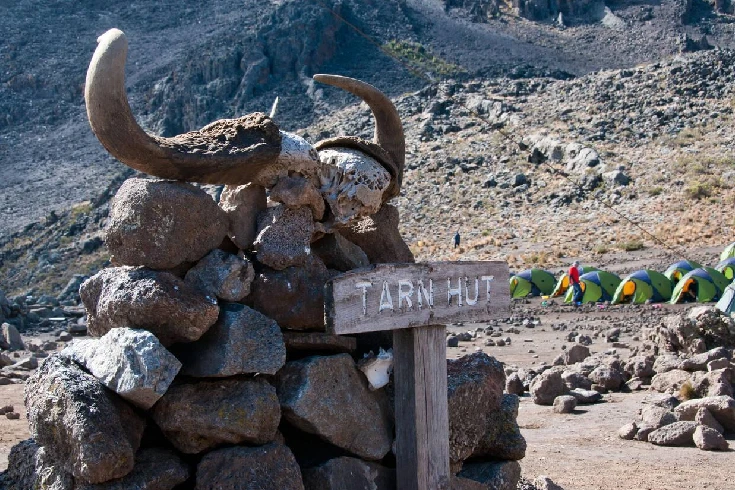
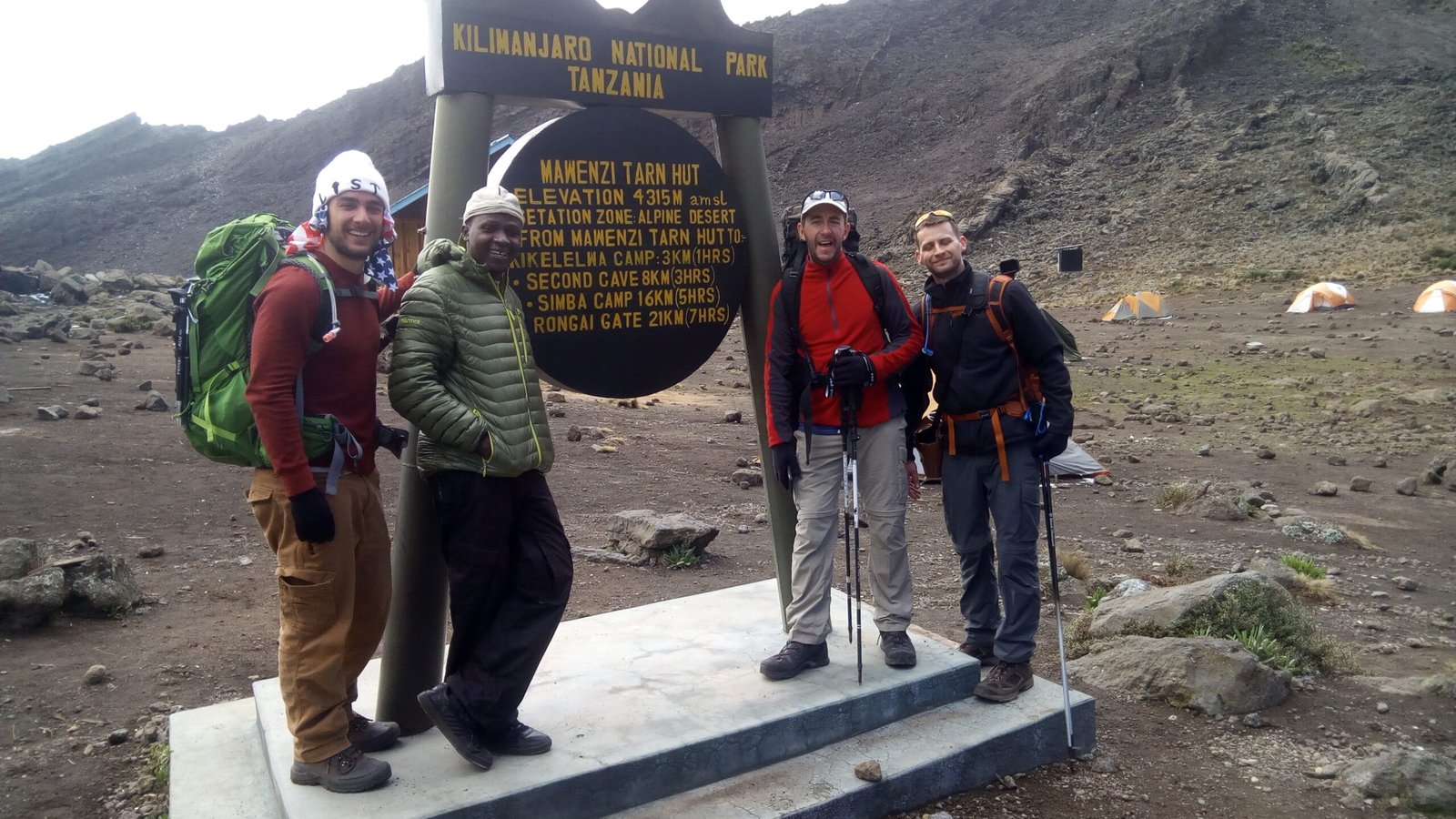
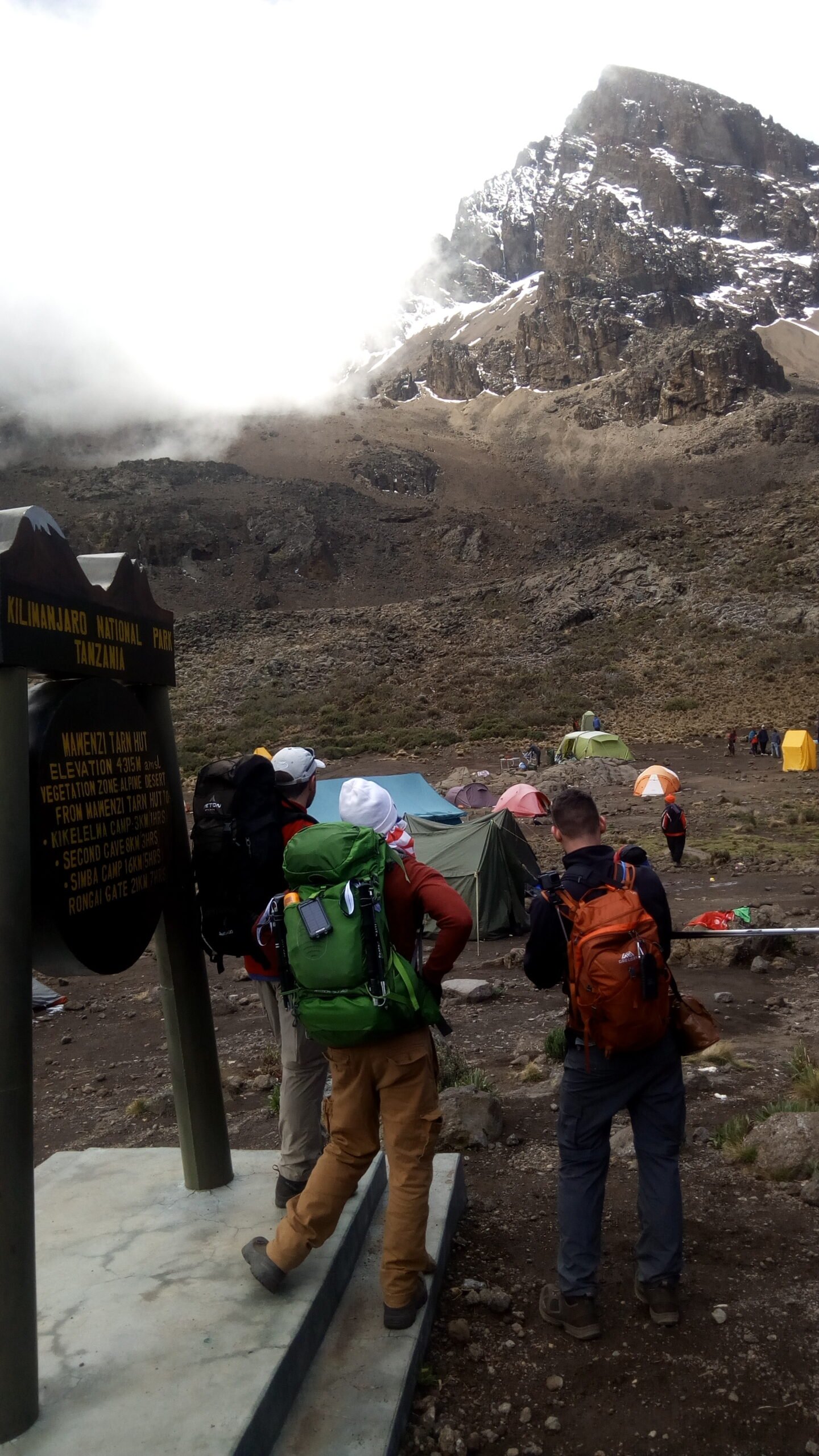
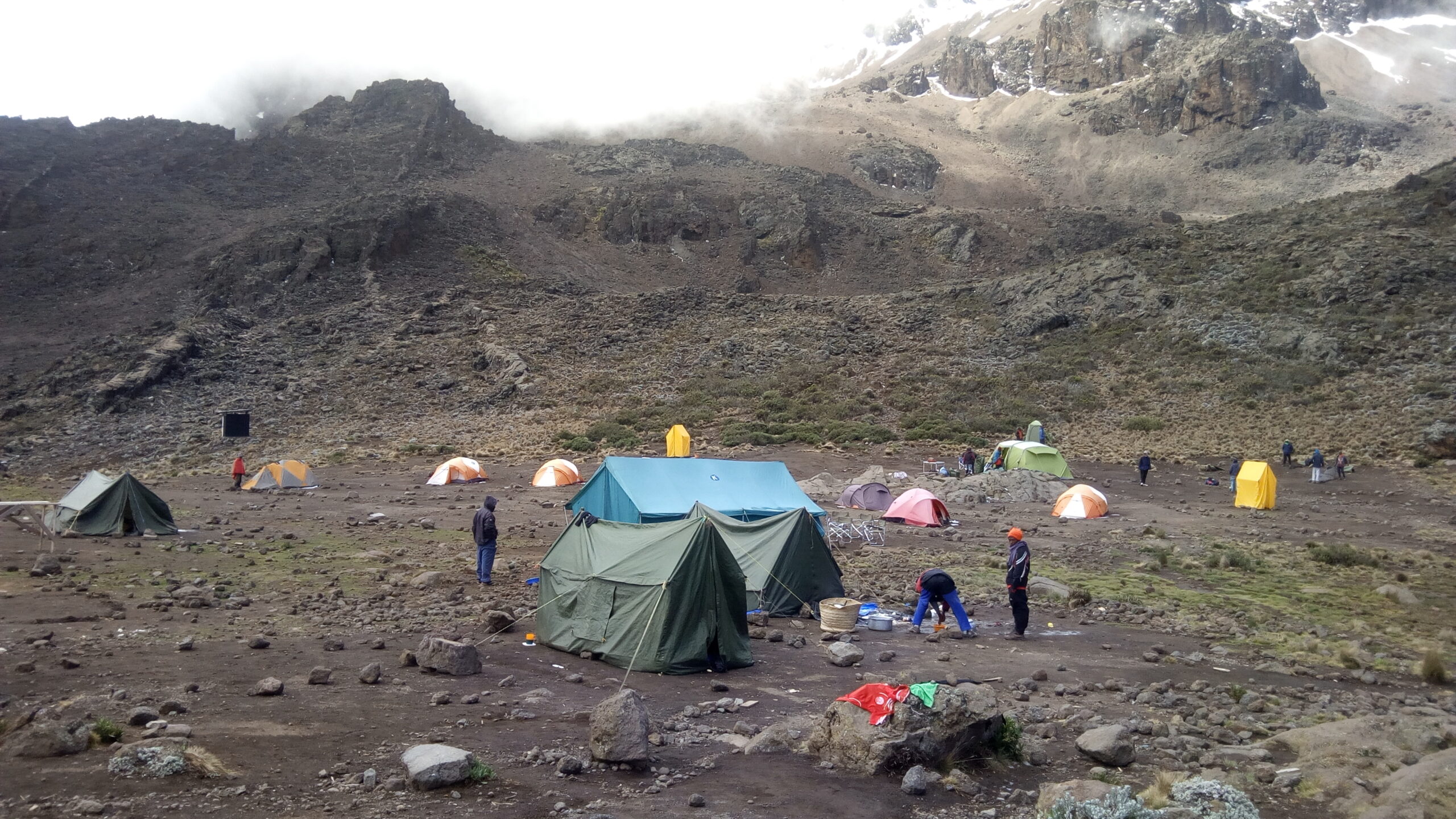
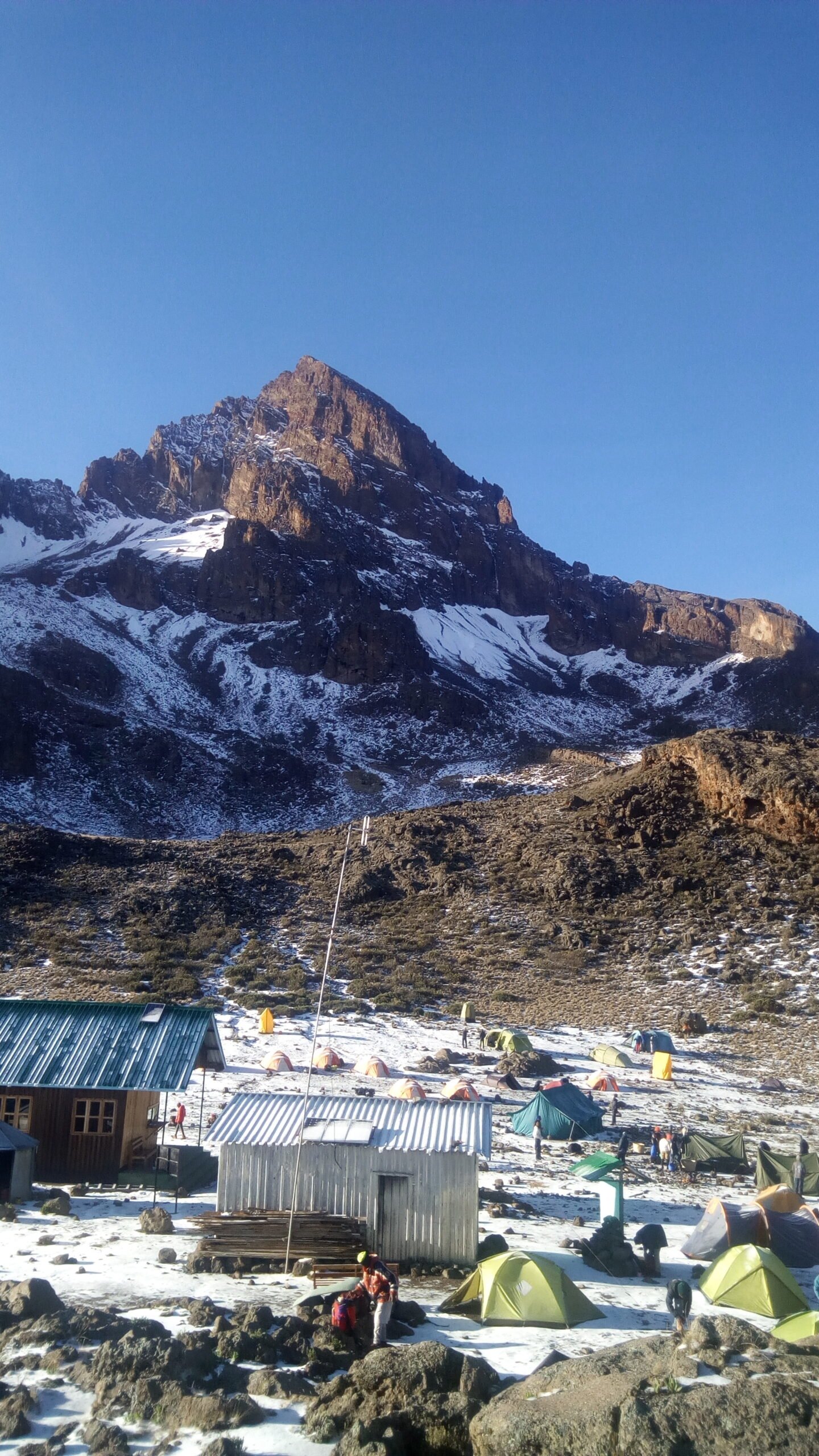
A shorter walking day with a meaningful altitude gain, climbing onto the alpine moorland beneath Mawenzi Peak. Mawenzi Tarn is one of the most striking camps on the mountain, set in a bowl below Mawenzi’s jagged ridgeline. This camp is the main structural difference between the 5-day and 6-day Rongai itineraries.
Day 4 — Mawenzi Tarn Hut → Kibo Hut
The trail crosses the exposed alpine desert known as the Saddle, between Mawenzi and Kibo, with little shelter or vegetation. You reach Kibo Hut by mid-afternoon, eat an early dinner, and rest ahead of a midnight departure — the last stop before the summit attempt.
★ Day 5 — Kibo Hut → Uhuru Peak → Horombo Hut
You leave Kibo Hut around midnight, climbing steep scree toward Gilman’s Point on the crater rim, then following the rim to Uhuru Peak, the summit of Kilimanjaro. After time at the top, you descend back through Kibo Hut and continue down to Horombo Hut for a full night’s rest — this is the day the extra Mawenzi Tarn night is meant to prepare you for. Full hour-by-hour detail is in The Summit Push below.
Day 6 — Horombo Hut → Marangu Gate → Moshi
The final descent passes through moorland and rainforest to Marangu Gate, where summit certificates are issued. A transfer returns you to your hotel in Moshi.
The Elevation Journey — Camp by Camp
1
Nalemoru Gate → Simba Camp
1,950m → 2,625m
First steps through farmland and forest on the quiet northeastern side. Short day, deliberate pace.
2
Simba Camp → Kikelewa Camp
2,625m → 3,630m
Forest gives way to moorland. First open views toward Mawenzi.
3
Kikelewa Camp → Mawenzi Tarn Hut
3,630m → 4,330m
The extra overnight that defines the 6-day itinerary. Set beneath Mawenzi’s jagged ridgeline.
4
Mawenzi Tarn Hut → Kibo Hut
4,330m → 4,703m
Crossing the exposed Saddle. Rest and early dinner before the midnight departure.
5
Kibo Hut → Uhuru Peak → Horombo Hut
4,703m → 5,895m → 3,720m
Summit night. Everything the previous four days prepared you for.
6
Horombo Hut → Marangu Gate → Moshi
3,720m → 1,640m
Final descent. Summit certificates issued at the gate.
Questions about the itinerary? Sabinus and the team in Moshi can walk you through any day in detail.
Request a Quote WhatsAppDay 5 — The Summit Push
Summit Night: What Actually Happens
The midnight alarm isn’t dramatic. It’s cold, dark and quiet. Four days of preparation, including the extra night at Mawenzi Tarn, have brought you here — this is what they were for.
~11PM–Midnight
Wake, dress, drink
Hot tea or soup at Kibo Hut. Final kit check. Temperatures at Kibo Hut at midnight in the main climbing season (January–March, June–October) typically sit between -8°C and -15°C. Layers matter here.
~Midnight
Departure from Kibo Hut
Head torches on. The pace from Kibo is deliberately slow — slower than feels natural. Pole pole is not politeness; it’s the protocol that keeps people moving when altitude and cold combine.
2AM–5AM
The long climb in darkness
Steep volcanic scree toward Gilman’s Point. This is the hardest stretch physically and mentally — cold, altitude and fatigue combining on ground that isn’t technically difficult. Guides check in with every climber regularly through this section.
~6AM–7AM
Gilman’s Point — 5,681m
The crater rim. From here the trail continues along the rim past Stella Point (5,756m) toward Uhuru. Most climbers reach Gilman’s Point around sunrise. The wind on the rim can be sharp even on calm days.
Morning
Uhuru Peak — 5,895m
Highest point in Africa. The team typically spends 10–20 minutes at the summit — photos, a moment to take it in, then the descent begins. The longer you stay at 5,895m, the harder the descent becomes.
Morning onward
Descent to Horombo Hut
Back through Kibo Hut and on down to Horombo Hut at 3,720m for a full night’s rest. Knees take the impact here. Trekking poles reduce the strain considerably. The team descends together.
Full hour-by-hour detail: Kilimanjaro summit night guide.
Honest Expectations for Summit Night
- Temperatures between -8°C and -20°C are common above 4,700m depending on season and conditions
- Steep volcanic scree — slow, deliberate steps for 5–7 hours on the way up
- Not every climber reaches Uhuru Peak. Altitude illness does not correlate with fitness level — it can affect experienced trekkers who have done everything right
- When a guide recommends descent, that recommendation should be taken seriously. It comes from direct observation of your condition, not caution for its own sake
- Diamox is a medical decision — discuss it with a doctor before your trip, not with us
- Reaching Gilman’s Point (5,681m) or Stella Point (5,756m) earns a certificate from KINAPA; reaching Uhuru Peak (5,895m) earns the gold summit certificate. Both are real achievements at altitude
Route Map
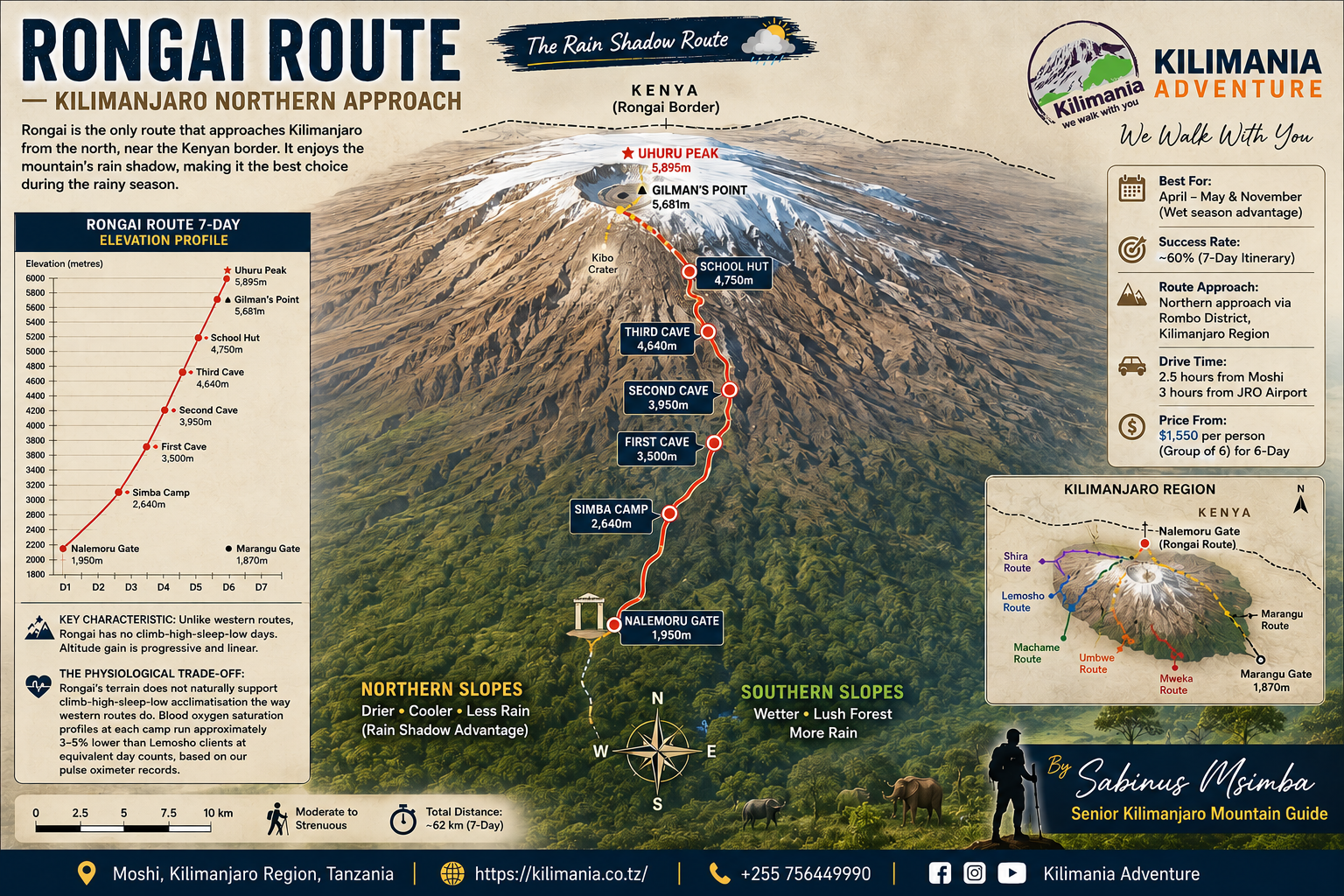
Photo Gallery
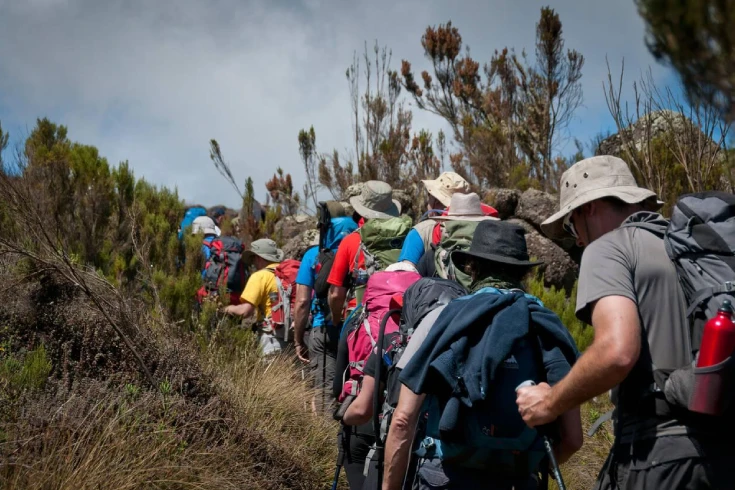
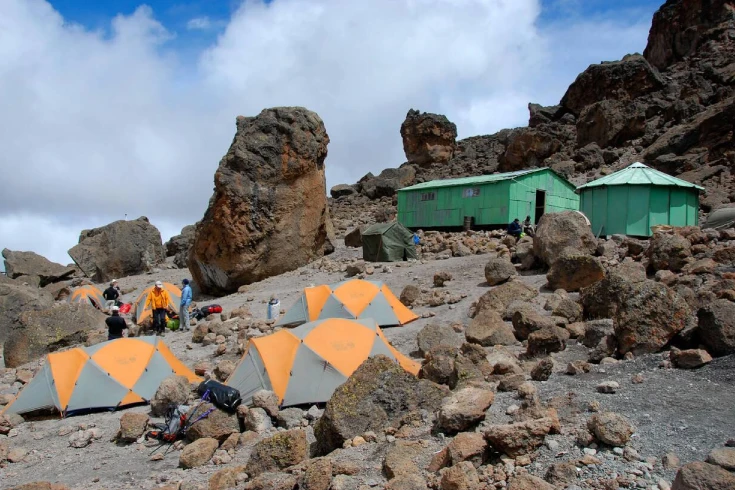
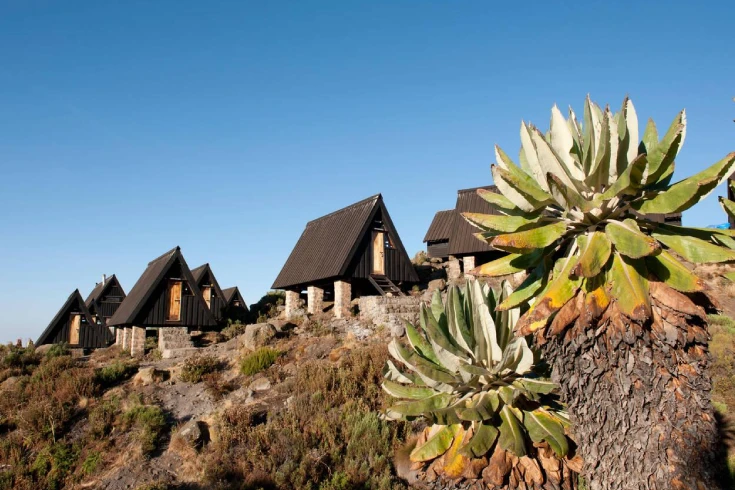
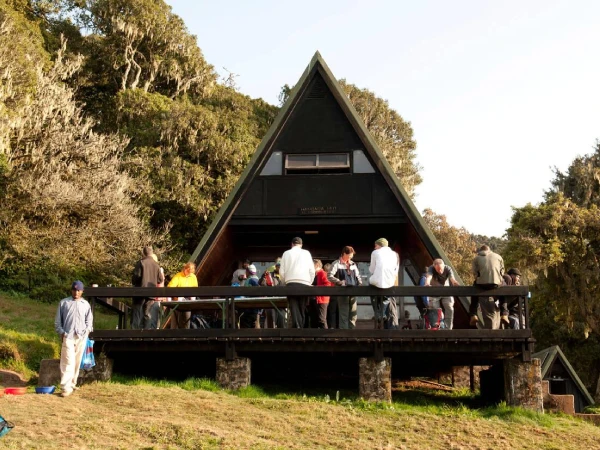
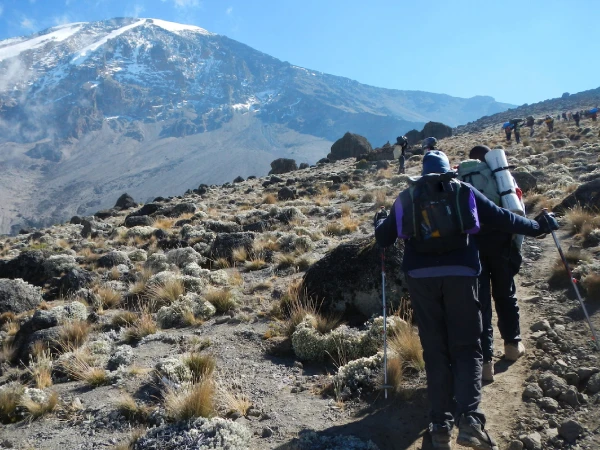
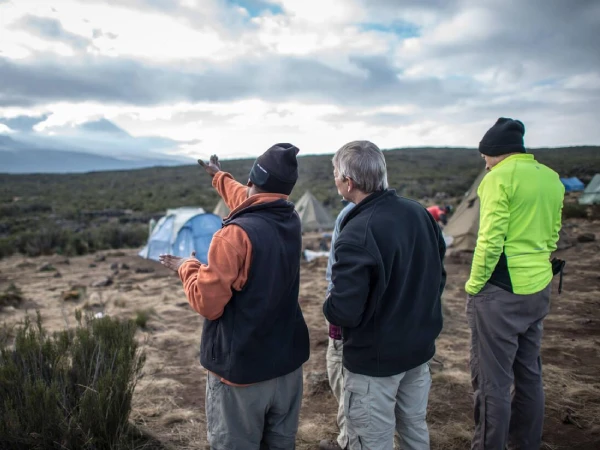
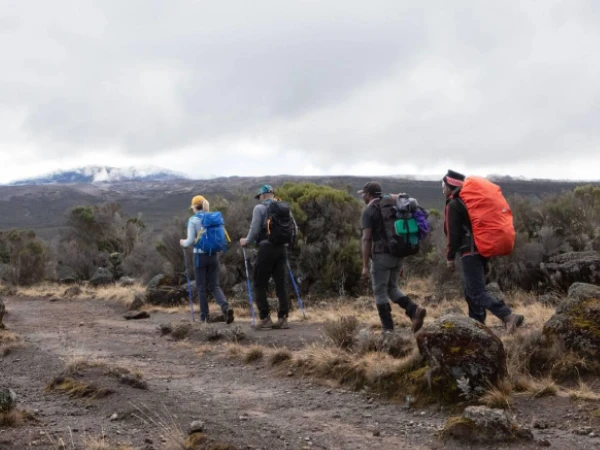
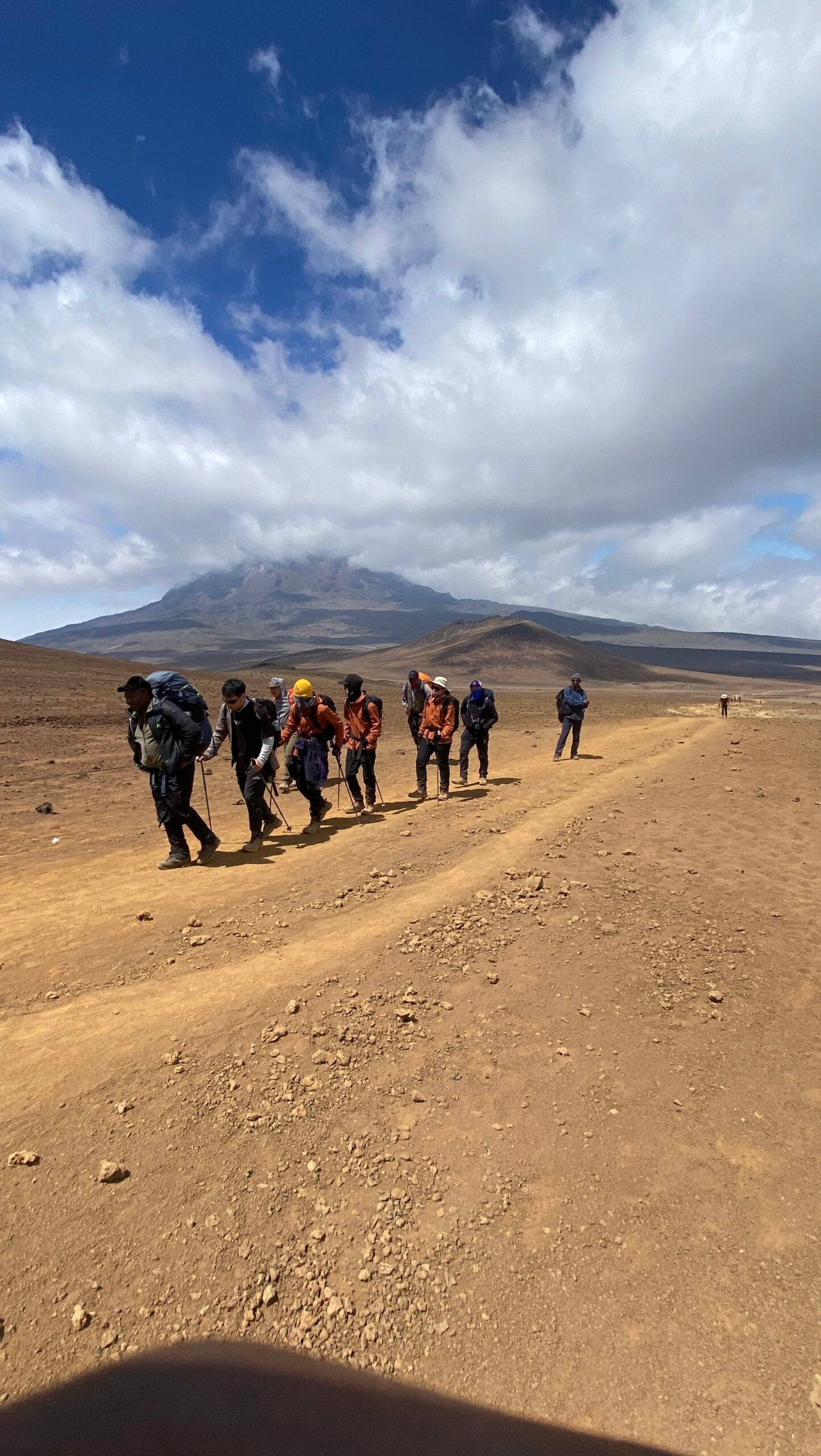
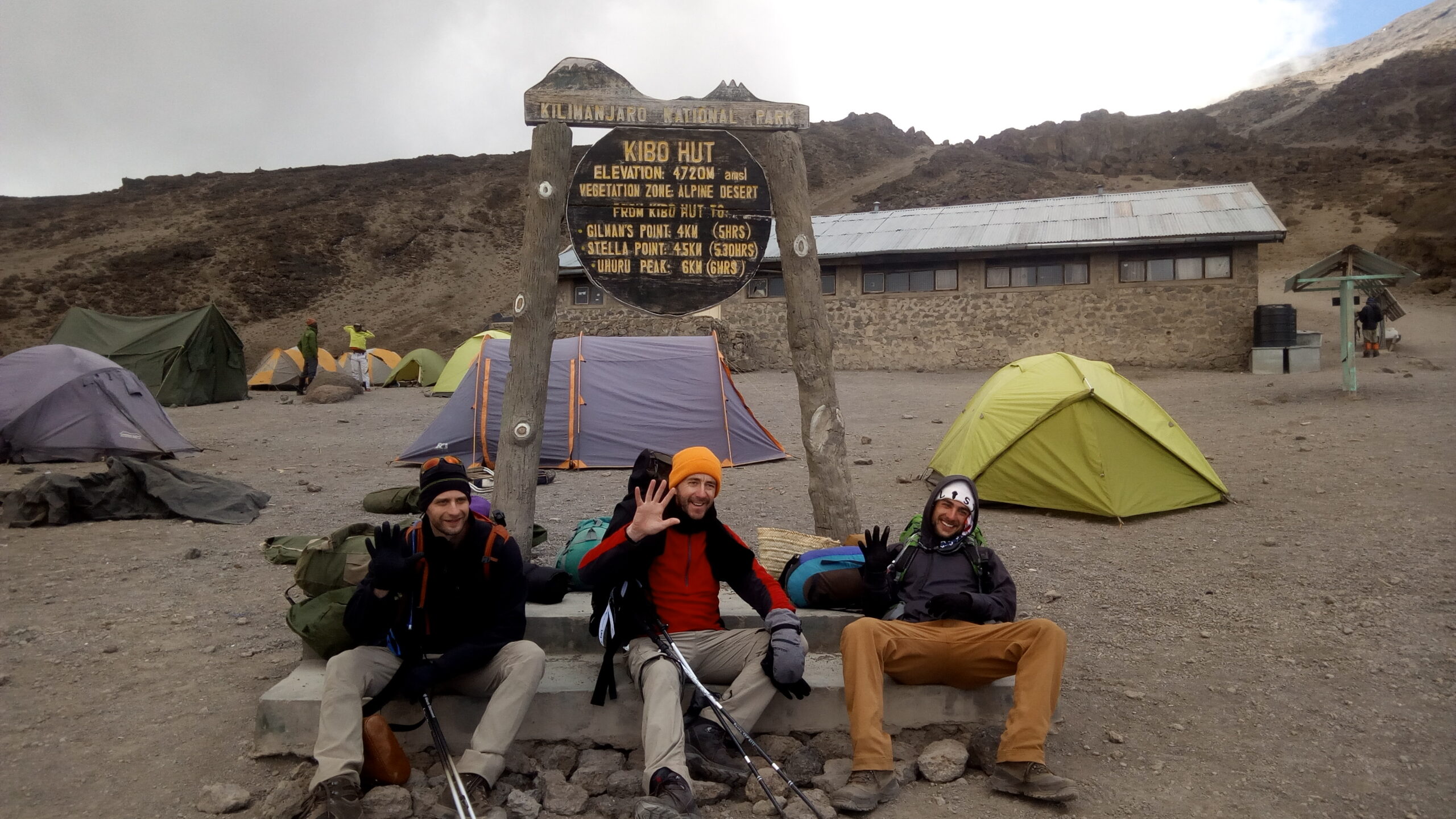
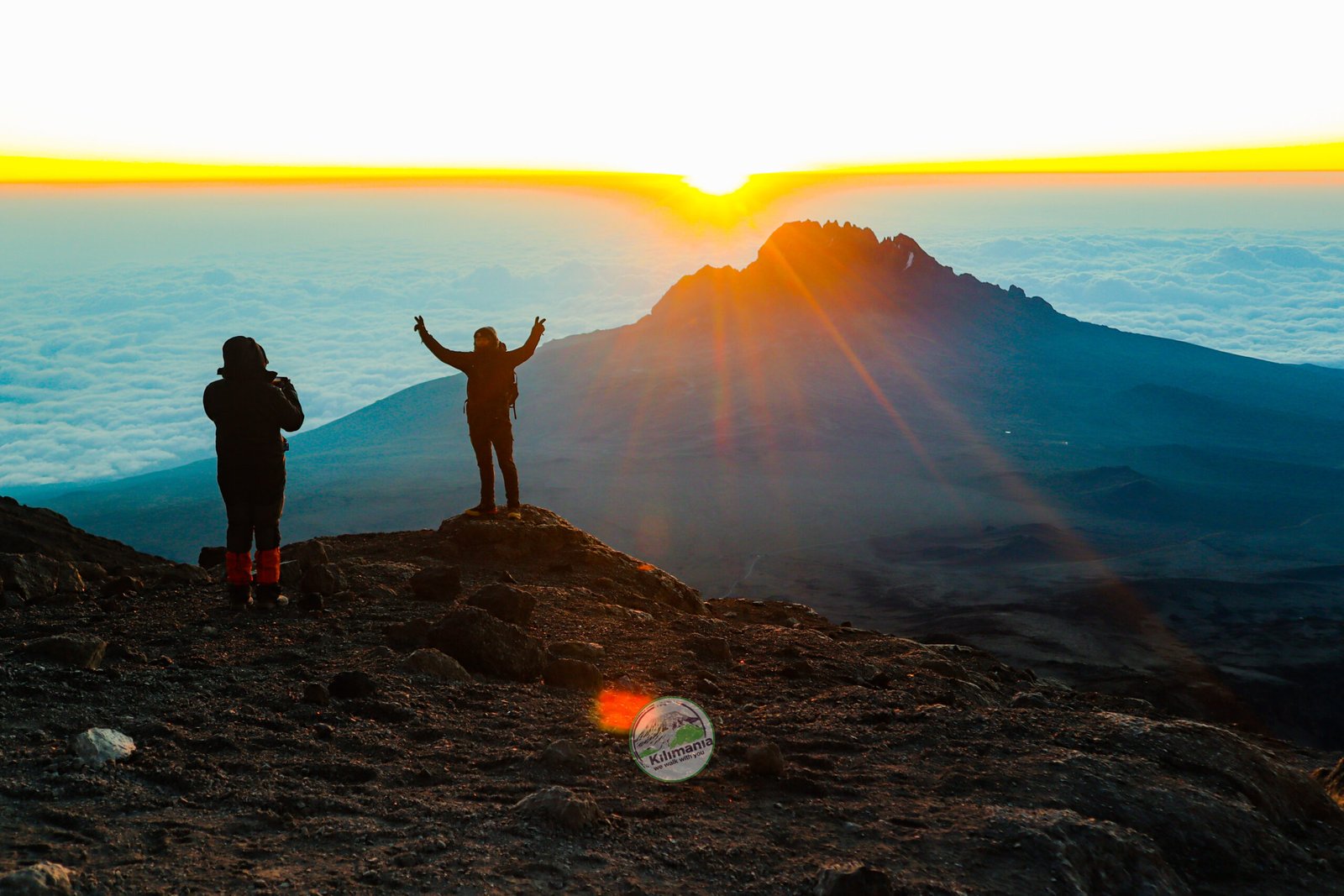
More scenes from the Rongai Route, taken along the same camps used on this itinerary.
Best Time to Climb the Rongai Route
Kilimanjaro has two main dry windows: January–March and June–October. April–May brings the long rains and November brings shorter rains, both of which make trails muddier and views less reliable. Because Rongai approaches from the northeast, it sits in the mountain’s rain shadow and tends to stay drier than the southern routes even outside the driest months — one reason some climbers choose it specifically for a wetter-season trip. Regardless of season, temperatures at Mawenzi Tarn and Kibo Hut regularly drop below freezing at night, so cold-weather gear matters on every departure.
6-Day vs 5-Day Rongai
Both itineraries follow the same trail and camp in the same locations, with one structural difference: the 6-day version spends a full night at Mawenzi Tarn Hut (4,330m) before continuing to Kibo Hut, where the 5-day version moves through more quickly. That extra night is the entire reason the 6-day itinerary exists.
| Factor | 5-Day Rongai | 6-Day Rongai |
|---|---|---|
| Nights on mountain | 4 | 5 |
| Night at Mawenzi Tarn | Passed through, no overnight | Full overnight |
| Pace to Kibo Hut | Faster | More gradual |
| Suited to | Climbers already acclimatized or on a tight schedule | Most first-time climbers on this route |
How Hard Is the 6-Day Rongai Route?
Overall difficulty: moderate. No technical climbing skills are needed — it is a walk, not a climb in the mountaineering sense. What makes it hard is altitude and the cumulative demand of six consecutive walking days, with summit night the most physically and mentally demanding stretch (see The Summit Push above). Fitness improves your ability to keep moving for long hours; it does not determine how well your body acclimatizes to altitude.
Kilimania Adventures’ records show an 85% summit success rate on our combined 6–7 day Rongai itineraries, based on 112 climbers (updated January 2026). This is Kilimania’s own internal climbing data, not an official TANAPA/KINAPA or industry-wide statistic, and it covers the 6-day and 7-day Rongai itineraries together, since Kilimania tracks Rongai outcomes as one combined group. Summit success is defined as reaching Uhuru Peak (5,895m). Individual outcomes vary with acclimatization, weather, fitness, health, pacing and preparation, and a historical rate does not guarantee any individual climber’s outcome. See our Kilimanjaro success rate by route page for the full comparison across all routes.
What’s Included
| Included | Not Included |
|---|---|
| Park entry, camping and rescue fees (KINAPA / TANAPA) | International and domestic flights |
| Licensed mountain guides, cooks and porters | Tanzania visa fees |
| Tents, sleeping mats and mess equipment | Travel and medical insurance |
| All meals and purified water on the mountain | Sleeping bag, hiking boots, trekking poles |
| Airport and park gate transfers | Tips for guides, cooks and porters |
| Pre-climb briefing and gear check | Personal snacks, alcohol and soft drinks |
6-Day Rongai Route Price
Price per person depends on group size. Solo climbers pay more per person than a group of six, since fixed costs such as guide and vehicle fees are shared across the group.
| Group Size | Price Per Person |
|---|---|
| 1 person | $1,850 |
| 2 people | $1,750 |
| 3 people | $1,700 |
| 4 people | $1,650 |
| 5 people | $1,600 |
| 6 people | $1,550 |
Deposit: $100 per person. See the inclusions and exclusions above for what’s covered. Prices as provided by Kilimania, September 2026 — message us on WhatsApp to confirm current availability for your dates.
Prefer to Join a Group Departure?
The price table above is for a private climb, where your group size sets the per-person rate. Kilimania also runs scheduled group departures on the Rongai Route throughout the year — joining an existing group can lower the per-person cost if you’re travelling solo or as a pair. See the Kilimanjaro Joining Calendar for current departure dates and joining prices.
Planning a Rongai Route Climb?
Send us your travel dates and group size and we’ll confirm current availability and pricing for the 6-Day Rongai Route.
WhatsApp KilimaniaYour Guide
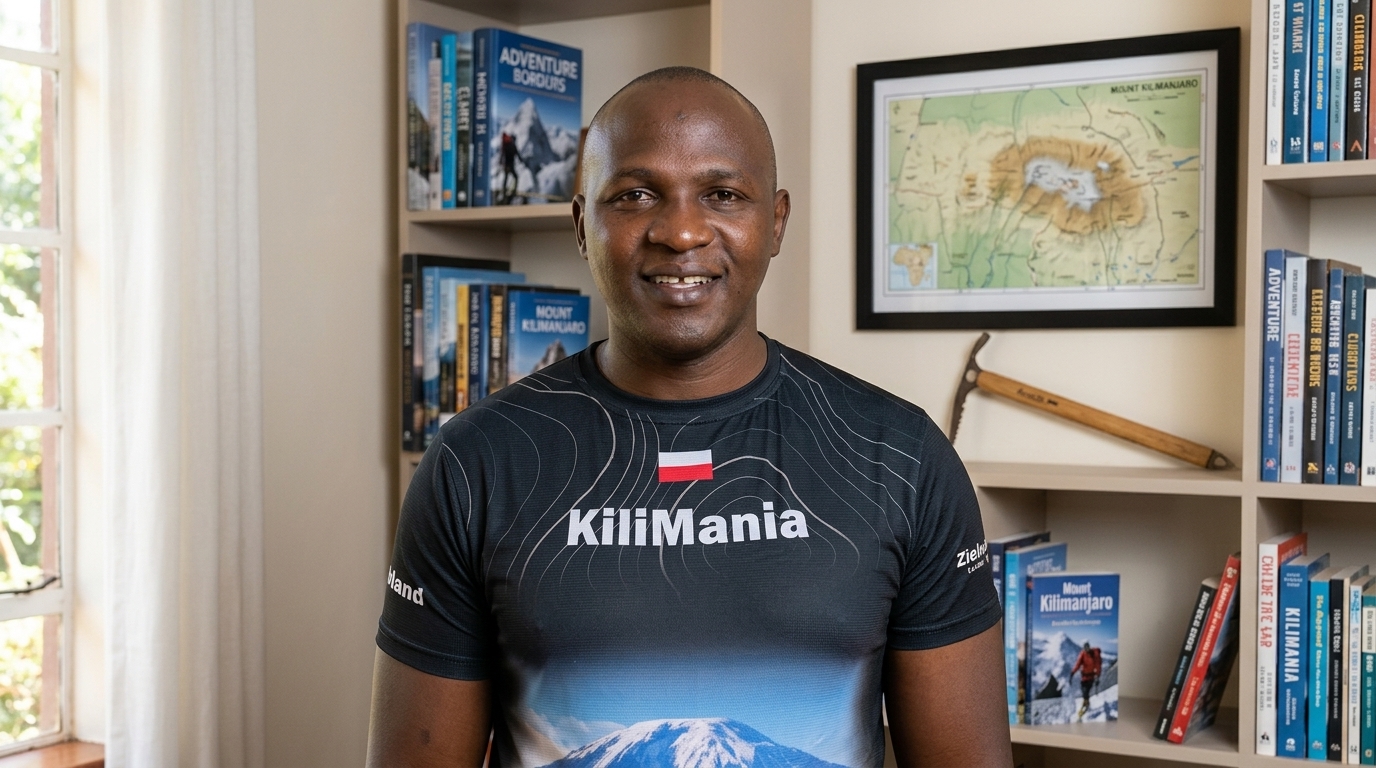
Sabinus Msimba
Senior Mountain Guide, Kilimania Adventure. KINAPA-licensed since 2003, Wilderness First Responder certified. Depending on availability and group size, your climb may be led by Sabinus or another member of Kilimania’s licensed guide team.
Other Kilimanjaro Routes
If the 6-day Rongai isn’t the right fit, here are the routes climbers most often compare it to.
Frequently Asked Questions
How many days is the 6-Day Rongai Route?
It runs six mountain days and five nights on the mountain. Including one hotel night in Moshi before the climb and one after, the full trip is seven nights, Moshi to Moshi.
Where does the 6-Day Rongai Route start and finish?
It starts at Nalemoru Gate (1,950m) on Kilimanjaro’s northern side, near the Kenyan border, and finishes at Marangu Gate after the descent via Horombo Hut.
What is the difference between the 5-Day and 6-Day Rongai Route?
Both follow the same trail and camps. The 6-day version adds a full overnight at Mawenzi Tarn Hut (4,330m) before continuing to Kibo Hut, giving climbers more time to adjust to altitude before the summit attempt.
Where do climbers sleep on the 6-Day Rongai Route?
In mountain tents at Simba Camp, Kikelewa Camp and Mawenzi Tarn Hut, then at Kibo Hut and Horombo Hut, both of which are permanent hut structures shared with the Marangu Route.
How difficult is the 6-Day Rongai Route?
Overall difficulty is moderate. No technical climbing is required, but altitude and the physical demand of six consecutive walking days, especially summit night, make it a genuine challenge.
What is the summit success rate on the 6-Day Rongai Route?
Kilimania Adventures’ records show an 85% summit success rate on our combined 6–7 day Rongai itineraries, based on 112 climbers (updated January 2026). This is Kilimania’s own internal data, not an official or industry-wide statistic, and it covers the 6-day and 7-day Rongai itineraries together.
How much does the 6-Day Rongai Route cost?
From $1,550 per person for a group of six, up to $1,850 per person for a solo climber, plus a $100 per-person deposit. See the pricing table above for the full group-size breakdown.
Is the 6-Day Rongai Route good for first-time climbers?
Yes, it’s one of the itineraries Kilimania recommends for first-time high-altitude trekkers, largely because of the extra acclimatization night at Mawenzi Tarn compared to the 5-day version.
Can I combine the Rongai climb with a Tanzania safari?
Yes. Many climbers extend their trip with a Serengeti, Ngorongoro or Tarangire safari before or after the climb. Ask us when requesting your quote.
The 6-Day Rongai Route gives climbers an extra night at Mawenzi Tarn (4,330m) compared to the 5-day version, a quieter northern approach than the southern trails, and a full night’s rest at Horombo before the final descent. Speak with Sabinus Msimba’s team about whether it fits your dates. We Walk With You.
Request a Quote for the 6-Day Rongai Route
Tell us your dates and group size and Kilimania will confirm current availability and pricing.
Quote Request Received
Thank you — Kilimania will review your details and respond with next steps. If you’d rather talk now, message us on WhatsApp.