Marangu vs Machame: Which Kilimanjaro Route Should You Choose?
Data sources cited in this article: Kilimania’s internal climb records (Jan 2023–May 2026), KINAPA’s published fee schedule, and CDC and Wilderness Medical Society altitude guidance.
Choose Marangu’s 6-day route if you genuinely cannot sleep in a tent, or you’re climbing during the April–May rains. For everyone else, the 7-day Machame route gets more people to Uhuru Peak: 86% against 74% in our own climb records, because of one structural difference in how the two routes handle acclimatization.
Quick Answer
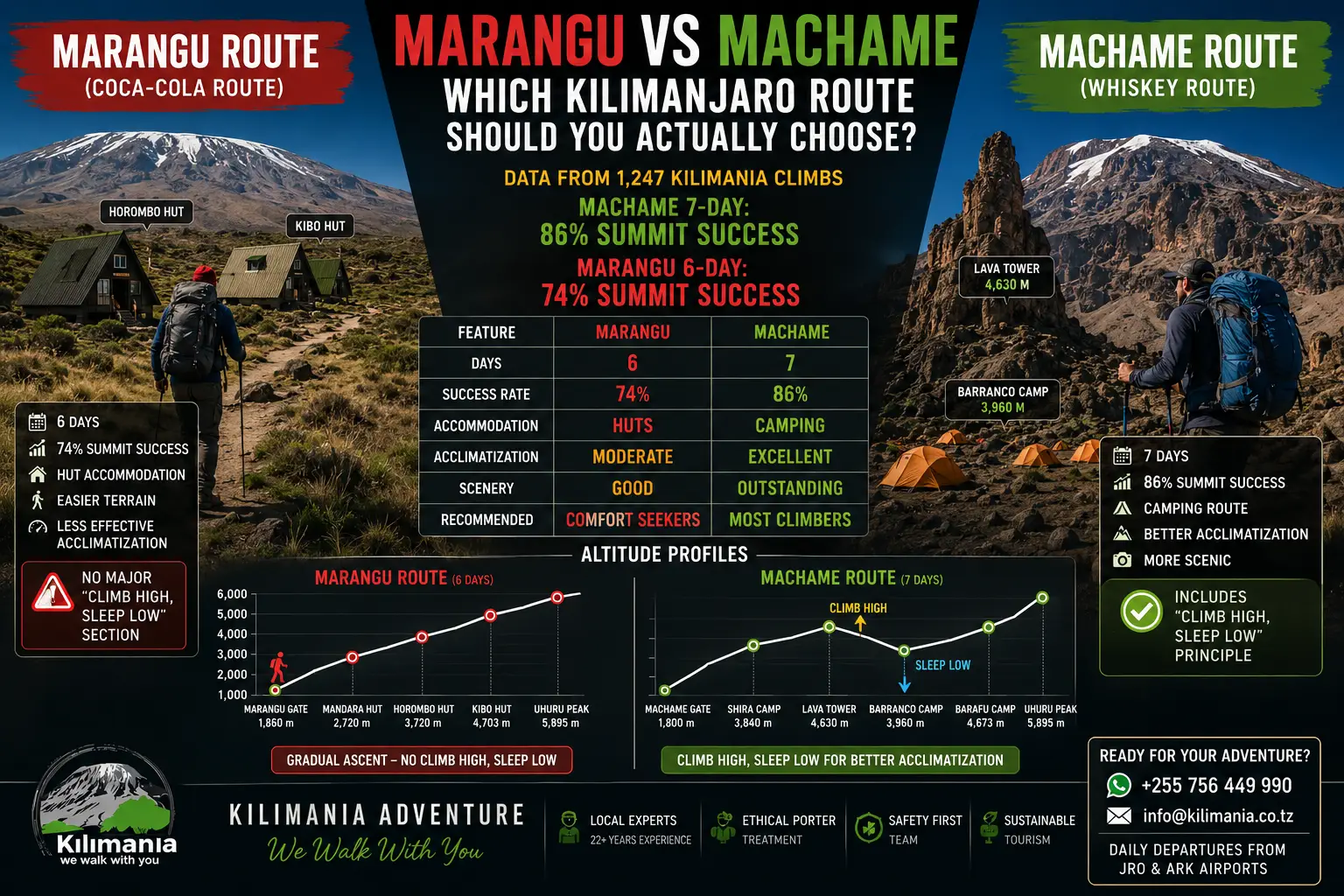
Machame 7-day for most climbers. Marangu 6-day for climbers who need a hut, or who are climbing in the rains. Machame’s Day 3 pattern — up to 4,630 m, then sleeping at 3,960 m — triggers the acclimatization that makes summit night survivable. Marangu ascends in a straight line with no descent-to-sleep day, and that’s the whole difference behind the 12-point gap in success rates.
Key Stats
- 86% — Kilimania success rate, Machame 7-day (2023–2026 climb records)
- 74% — Kilimania success rate, Marangu 6-day
- ~52% — Kilimania success rate, Marangu 5-day
- US$200–350 — Typical price difference between the two routes (Machame higher)
- US$2,325 — Cost per expected summit, Machame 7-day at a US$2,000 total price
- US$2,432 — Cost per expected summit, Marangu 6-day at a US$1,800 total price
Bottom Line
Machame costs more per booking and less per successful summit. The extra US$200–350 buys three additional nights of acclimatization on a mountain where altitude sickness, not fitness, is the main reason climbers turn back. If you fail on a cheaper itinerary and come back for a second attempt, you’ll spend more than the original price gap in the first place.
Marangu vs Machame: Complete Comparison Table
Acclimatization quality decides more summit attempts than scenery, comfort, or price. Routes with a “climb high, sleep low” day consistently post higher success rates — that’s the single variable to weigh most heavily.
| Comparison Factor | Marangu Route (6 Days) | Machame Route (7 Days) |
|---|---|---|
| Accommodation | Mountain huts (Mandara, Horombo, Kibo) | 4-season mountain tents |
| Kilimania Summit Rate | 74% | 86% |
| Climb High, Sleep Low Day | No | Yes — Lava Tower to Barranco Camp |
| Highest Point Before Summit Night | 4,703 m (Kibo Hut) | 4,630 m (Lava Tower) |
| Technical Sections | None | Barranco Wall (non-technical scramble) |
| Scenery | Rainforest, moorland, saddle zone | Shira Plateau, Lava Tower, Barranco Wall, Southern Circuit |
| Ascent/Descent Route | Same trail both ways | Different ascent and descent routes |
| Best Season | Year-round, including rainy season | Dry seasons (Jan–Mar, Jun–Oct) |
| Typical Price | US$1,700–2,000 | US$1,900–2,350 |
| Best Suited For | Climbers who need huts, or rainy-season trips | Most first-time climbers seeking the higher success rate |
Kilimania’s view: for most climbers, the 7-day Machame route gives the better balance of acclimatization, scenery, and summit success. The 6-day Marangu route stays the right call for climbers who need hut accommodation or are climbing in the heavy rains.
The Acclimatization Difference — Why It Matters
Short answer: Machame’s Day 3 forces your body up to 4,630 m and back down to sleep at 3,960 m, which stimulates the same red-blood-cell response mountaineers use at altitude worldwide. Marangu never builds in that descent, so it never gets that same physiological head start.
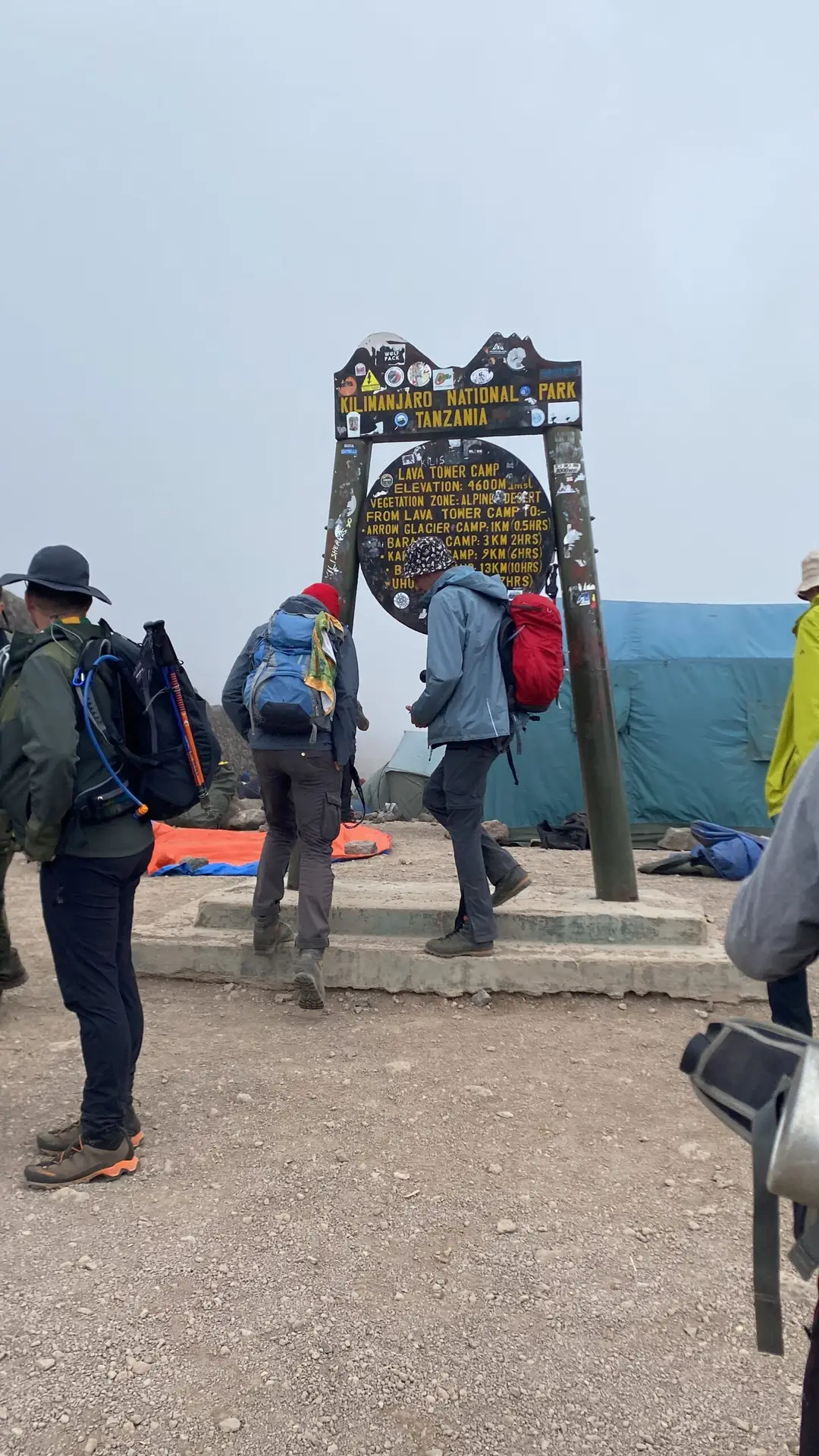
On Day 3 of the Machame 7-day itinerary, you walk from Shira Camp (3,840 m) up to Lava Tower (4,630 m) for lunch, then drop almost 700 m to sleep at Barranco Camp (3,960 m). At 4,630 m, oxygen availability is roughly 57% of sea level (Wilderness Medical Society altitude tables, cross-referenced against barometric pressure data). That drop stimulates extra erythropoietin (EPO) production in the kidneys, which increases red blood cell formation over the following days — in plain terms, your blood gets better at carrying oxygen before the summit push.
Written by guides, not physicians. This explanation reflects our field experience and published altitude-medicine sources. Discuss any pre-existing condition with a doctor before booking — see the CDC’s guidance on high-altitude travel.
Marangu Route (6 Days)
Marangu is Kilimanjaro’s only hut-based route, which makes it the default choice for climbers who won’t sleep in a tent. Nights are spent at Mandara Hut (2,700 m), Horombo Hut (3,720 m), and Kibo Hut (4,703 m) before the push to Uhuru Peak (5,895 m). The extra night at Horombo on the 6-day itinerary — versus the 5-day version — is the main reason its success rate sits well above the 5-day option. The trail gradient is gentler than Machame’s, but the linear ascent gives your body less time to adjust before summit night.
Machame Route (7 Days)
Machame is Kilimanjaro’s most-climbed camping route, crossing the Shira Plateau, Lava Tower, Barranco Wall, Karanga Valley, and Barafu Camp (4,673 m) on the way to Uhuru Peak. On Day 4, climbers scramble up the Barranco Wall and sleep at Karanga Camp (4,035 m) — only about 75 m higher than the previous night, which functions as a near-rest day before the final push to Barafu.
Sabinus Msimba, who has guided on both routes for 22 years: “Climbers choose Marangu because they’re afraid of the tent. Then they struggle on summit night because they didn’t respect the altitude. A wooden bed at 3,700 metres doesn’t stop acute mountain sickness.”
A Real Climb: Why Acclimatization Matters
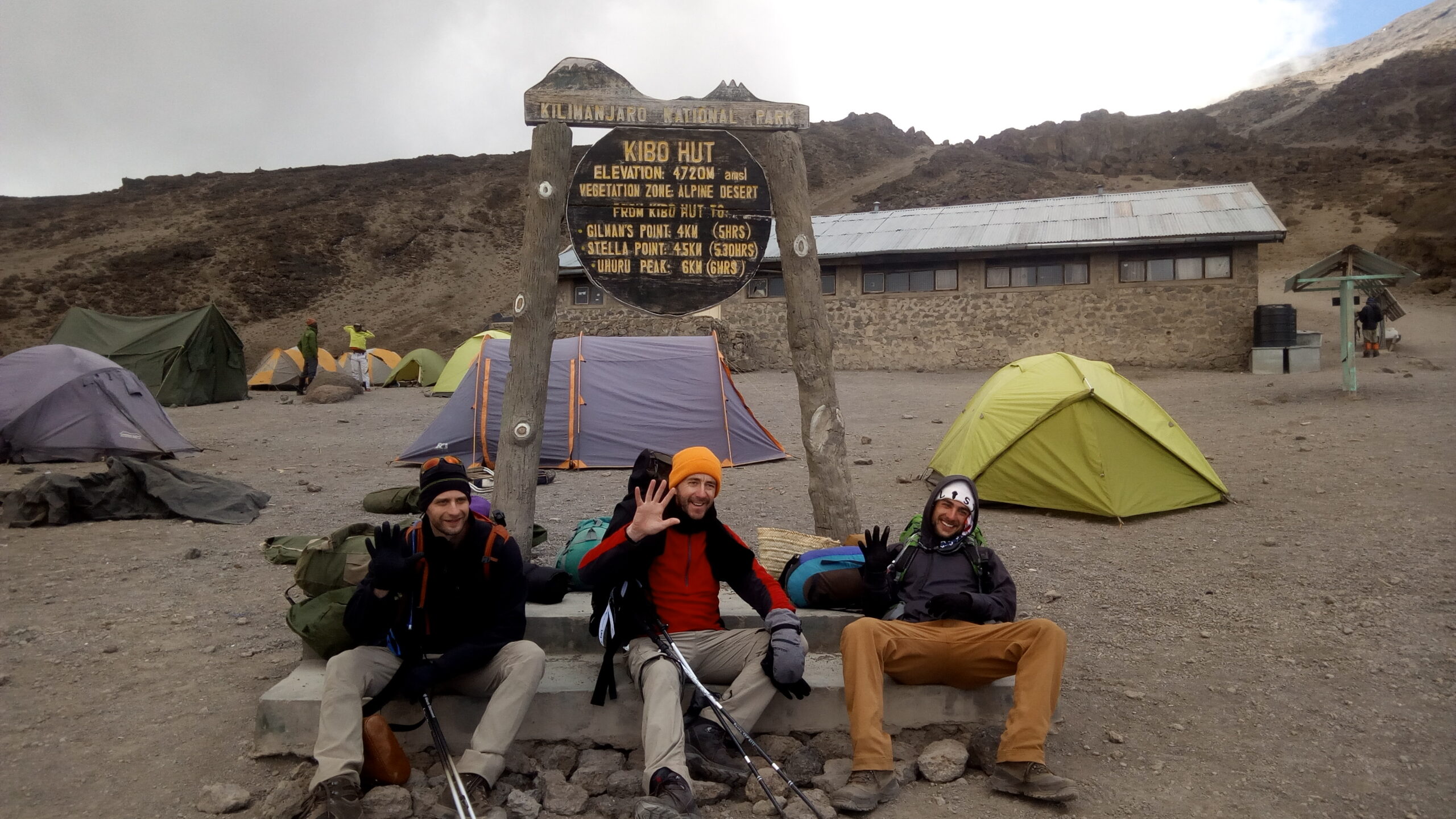
In August 2025, four climbers from France booked a 7-day Machame climb with Kilimania, none with prior trekking experience above 3,000 m. All four had mild headaches on the ascent to Lava Tower (4,630 m), and all four improved noticeably after descending to sleep at Barranco Camp (3,960 m) — the built-in acclimatization day doing exactly what it’s designed to do. All four reached Uhuru Peak. Sabinus notes this pattern is common: mild symptoms during an acclimatization climb often ease once climbers descend to sleep lower.
Huts vs Tents — Does Comfort Actually Help?
Short answer: a well-pitched tent is usually warmer and quieter than a Marangu hut. The “hut equals comfort” assumption doesn’t hold up in most conditions.
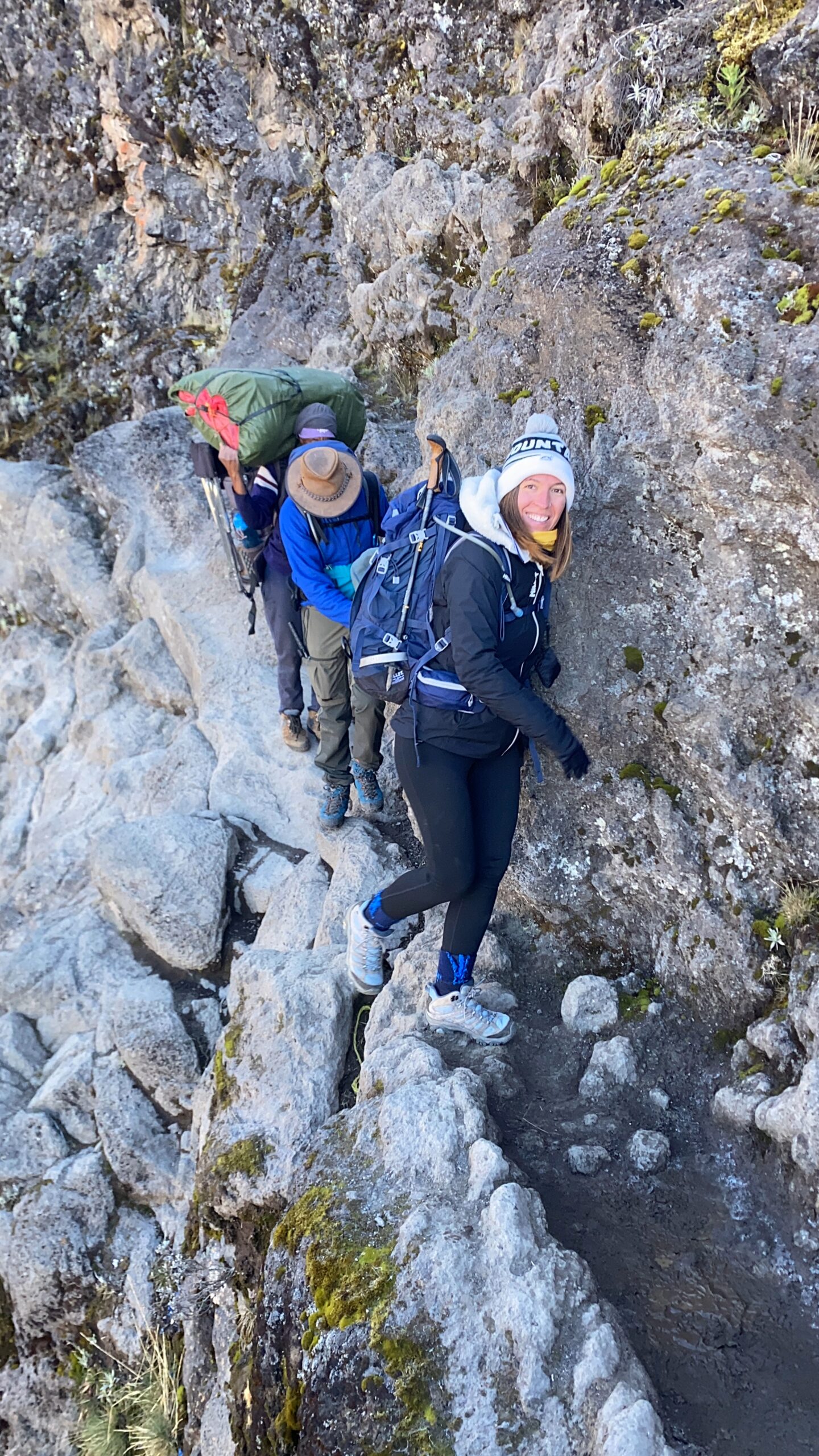
A 4-season expedition tent with two people inside traps body heat; interior temperatures can run several degrees above the outside air. Marangu’s huts are uninsulated wood-and-stone structures — at Kibo Hut (4,703 m), dormitory temperatures regularly drop below freezing even with a solid roof overhead, because the building blocks wind but doesn’t retain warmth. Dormitories at Mandara and Horombo also hold 8–20 climbers, so one person’s altitude cough or a 2am bathroom trip wakes the room. On Machame, tents are private — generally two people per tent, with a zip door.
Huts genuinely help in two situations: heavy rain (April–May, November), when a dry stone room beats a wet tent every time, and genuine tent aversion or a physical condition that rules out ground-level sleeping. Outside those two cases, the tent route wins on warmth and sleep quality.
Cost Comparison — and Why Machame Is Cheaper Per Summit
Short answer: Machame costs US$200–350 more upfront, but on a cost-per-successful-summit basis it works out cheaper, because a higher share of climbers actually reach the top.
| Route | Typical Price | Kilimania Summit Rate | Cost per Successful Summit |
|---|---|---|---|
| Machame (7 Days) | US$2,000 | 86% | US$2,325 |
| Marangu (6 Days) | US$1,800 | 74% | US$2,432 |
| Marangu (5 Days) | US$1,600 | ~52% | US$3,077 |
Why does Machame cost more to begin with? Three reasons: an extra day of KINAPA park fees (US$70 per adult per day, verified against KINAPA’s published fee schedule, effective June 2026); a larger porter team required by camping logistics, versus Marangu’s fixed huts; and the separate Mweka descent route.
Paying US$1,600 for a roughly 52% chance is a higher real cost than paying US$2,000 for an 86% chance, once you factor in what a second attempt costs. Marangu looks cheaper on paper. In expectation, it usually isn’t.
All Kilimania climbs include two hotel nights before and after, KINAPA park fees, licensed guides, KPAP-compliant porter wages, tents, sleeping mats, meals, and drinking water. Flights, personal gear, tips, and travel insurance are not included. For full pricing by group size, see our Kilimanjaro cost guide.
Who Should Choose Which Route?
| Climber Profile | Recommended Route | Why |
|---|---|---|
| First-time climber | Machame (7 Days) | Best balance of acclimatization and success rate |
| Dislikes tents | Marangu (6 Days) | Only route with hut accommodation throughout |
| Climbing Apr–May or Nov | Marangu (6 Days) | Huts give reliable shelter in sustained rain |
| Over 55 | Lemosho (8 Days) | Longer acclimatization improves both safety and success rate |
| Wants the highest possible success rate | Northern Circuit (9 Days) | Longest itinerary, most acclimatization on the mountain |
| Tightest budget | Marangu (6 Days) | Lower operating cost due to hut infrastructure |
If you fall into more than one profile — over 55 and climbing in the rains, say — message us on WhatsApp and we’ll match the route, duration, and accommodation to your situation rather than push a default.
Why Trust This Comparison
- Base: Moshi, Kilimanjaro Region, Tanzania — a physical office, not an online booking desk only.
- TATO-registered: member of the Tanzania Association of Tour Operators.
- Experience: Sabinus Msimba has guided 300+ summit climbs over 22 years.
- Data: the success rates above come from Kilimania’s internal climb database of 1,247 guided ascents (Jan 2023–May 2026), cross-referenced with KINAPA route records where available.
- Porter welfare: KPAP-certified — verify standards at kiliporters.org.
Where our interest cuts against this recommendation: Kilimania operates both routes and earns more from a 7-day Machame booking than a 6-day Marangu one. We’re recommending Machame because of what our own records show about summit outcomes, not because it’s the higher-margin option — and we’d say the same if the numbers ran the other way. Compare our quote against at least two other TATO-registered operators before booking.
Methodology
These success rates come from Kilimania’s internal climb records, January 2023 to May 2026, covering 1,247 guided climbers across our routes. A successful climb is defined as reaching Uhuru Peak (5,895 m); climbers who descended voluntarily, were evacuated, or turned back before Uhuru Peak are recorded as unsuccessful. Records were cross-referenced with KINAPA summit logs where available. The figures reflect Kilimania’s own operations — guide experience, group size, and client fitness vary by operator, so another company’s numbers on the same routes may differ. Park fees reflect rates published by KINAPA as of June 2026; verify current fees at kilimanjaronationalpark.go.tz before booking, since park authorities can change them without notice.
Frequently Asked Questions
Which route has a higher summit success rate?
Machame 7-day shows 86% in Kilimania’s records versus 74% for Marangu 6-day and roughly 52% for Marangu 5-day. The gap comes down to the Day 3 Lava Tower pivot, which Marangu’s linear ascent doesn’t have.
Is Marangu easier to walk than Machame?
Yes, physically — gentler grades, shorter days. But the faster ascent gives your body less time to adapt, so altitude sickness is more likely. Many climbers find Machame easier to summit because they feel fewer symptoms.
Are the huts really more comfortable than tents?
Not for most climbers. Marangu huts are unheated dormitories holding up to 20 people. A good tent traps body heat and offers privacy. The huts give you a roof — not necessarily a warm or quiet night.
Can a beginner climb Machame?
Yes. The one technical section, the Barranco Wall, is a non-technical scramble — no ropes, no harness, and guides assist at the tricky steps.
Which route is better in the rainy season?
Marangu 6-day. Huts give dry shelter through the April–May and November rains, when a tented camp is unpleasant regardless of tent quality.
Can I do Machame in 6 days instead of 7?
Yes, but our records show the success rate drops to roughly 75% because the Karanga acclimatization day is skipped. For a first attempt, the extra day usually pays for itself.
What if I get altitude sickness on either route?
Tell your guide immediately and don’t try to push through it. Descending 300–500 m is the most effective immediate response. Kilimania guides carry pulse oximeters and supplemental oxygen on every climb.
Which route is safer, Marangu or Machame?
For most climbers, Machame’s acclimatization structure lowers AMS risk even though Marangu’s trail is physically gentler.
Facts at a Glance
- Machame 7-day summit rate: 86% (Kilimania records, Jan 2023–May 2026)
- Marangu 6-day summit rate: 74% (same dataset)
- Marangu is Kilimanjaro’s only hut-based route
- Machame’s acclimatization day: Shira Camp → Lava Tower (4,630 m) → Barranco Camp (3,960 m)
- KINAPA park fee: US$70 per adult per day, effective June 2026
- Barranco Wall requires no ropes or climbing equipment
- Best season for Marangu specifically: year-round, including the rains
Conclusion
Kilimania’s climb records point one direction: the 7-day Machame route gets more people to Uhuru Peak than any Marangu itinerary. If the summit is the goal, the extra US$200–350 buys a route structure that respects what altitude does to the body. The one real exception is genuine tent aversion — if you can’t sleep on the ground, Marangu is your only option on this mountain, and the 6-day version, not the 5-day, is the one worth booking. Browse our 7-day Machame itinerary or 6-day Marangu itinerary to compare directly.
We Walk With You.
Still deciding between Marangu and Machame? Tell us your dates and experience level and we’ll recommend the route that fits.
About the Author
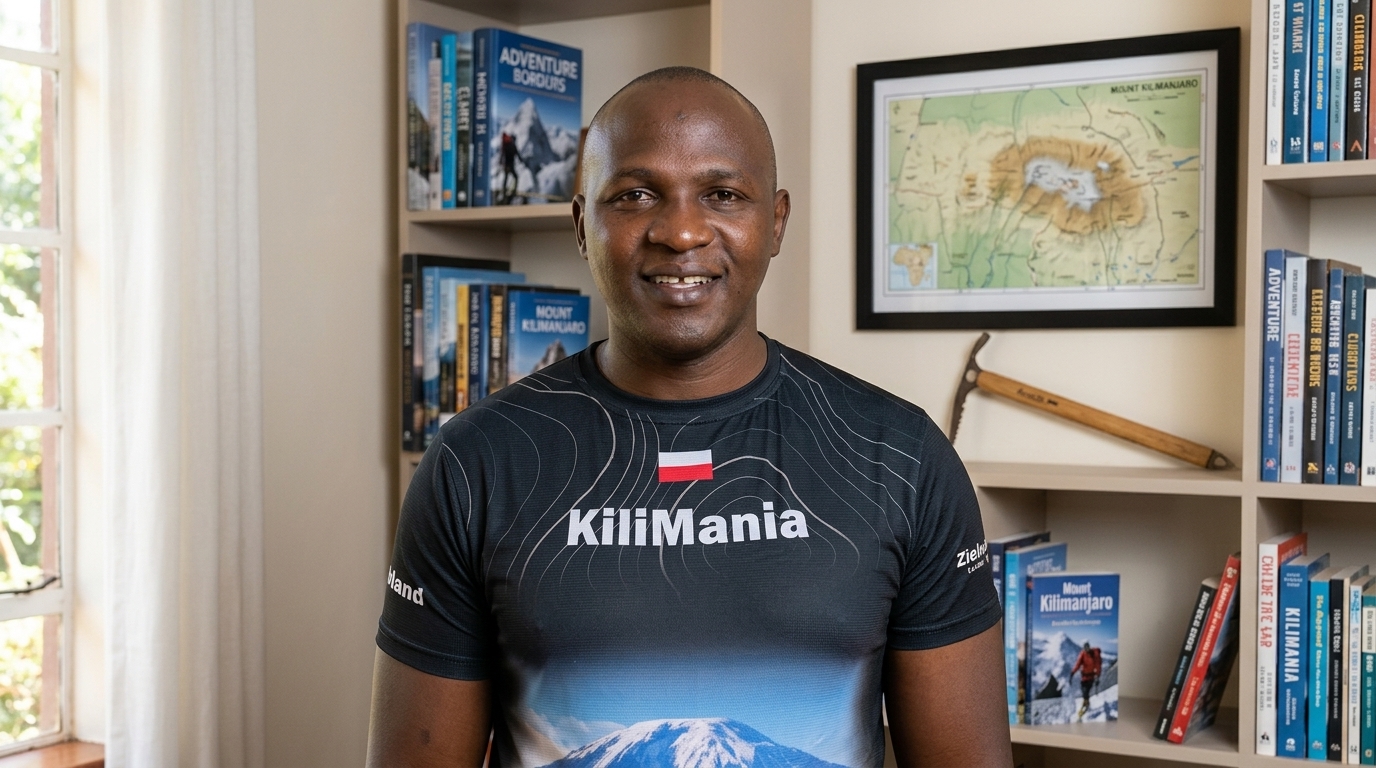
Disclosure: This article is written by Kilimania Adventure, a TATO-registered climbing and safari operator based in Moshi, Tanzania. The success-rate data reflects our own climb records; park fees reflect KINAPA’s published schedule. We have a commercial interest in Kilimanjaro bookings — we encourage you to compare our quote with at least two other TATO-registered operators before booking.