Data sources cited in this article: Kilimania Adventure climbing records (summit data updated January 2026), Kilimania prices, inclusions and booking terms (reviewed October 2026, checked against the Kilimania joining calendar), Kilimanjaro National Park (KINAPA) crew and porter-load rules.
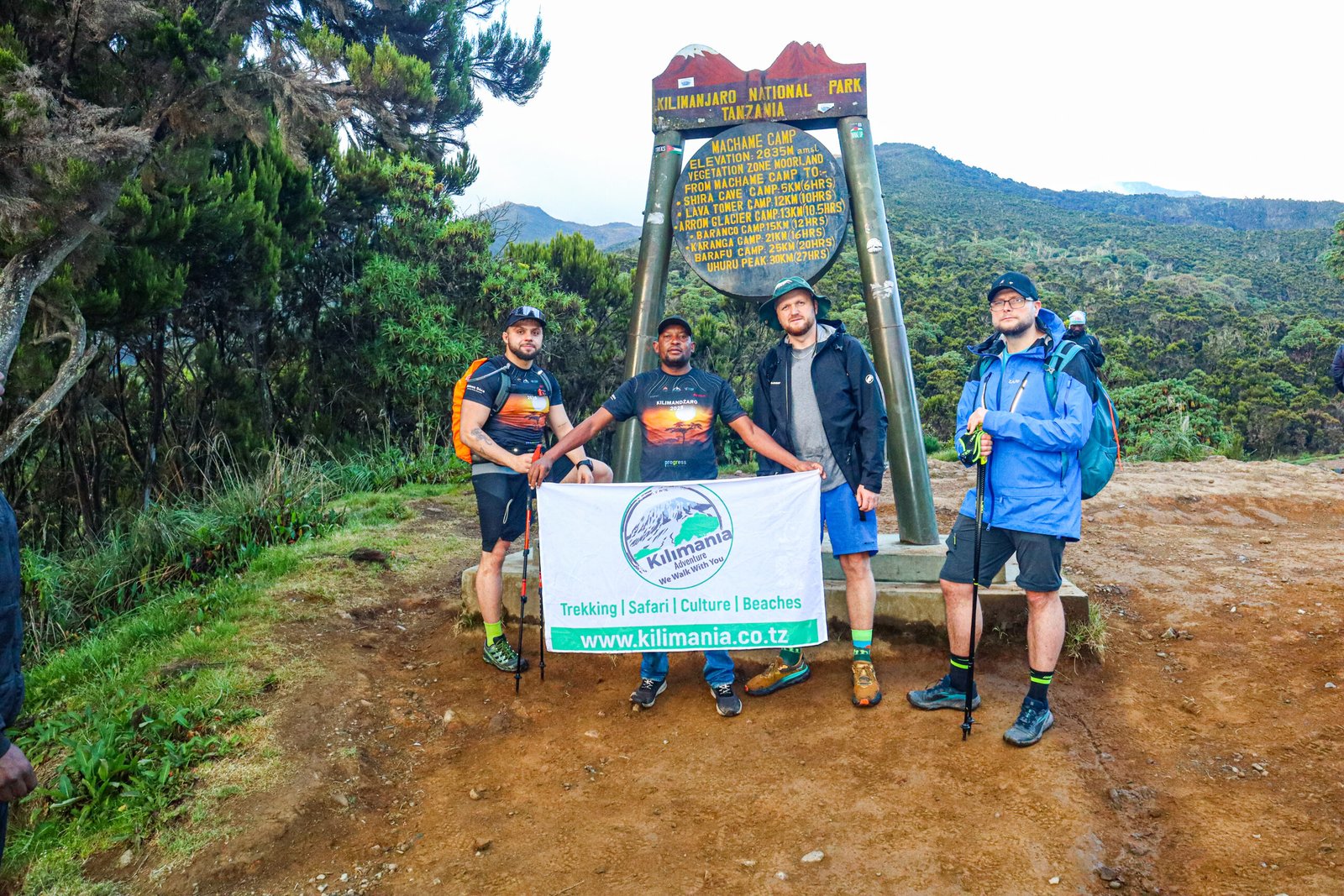
Joining a Kilimanjaro group climb means you book your own place on a scheduled departure and climb with other travellers who chose the same dates and route. At Kilimania, there’s a departure option on every date, groups take a maximum of 8 climbers, and a USD 100 deposit secures your date (Kilimania booking terms, October 2026). You pay one fixed per-person price, set at Kilimania’s 3-person rate for the route, and if you come alone you still get your own tent at no extra charge.
Tell the operator your dates and preferred route. They match you to a departure that’s already forming, send a quotation, and confirm the booking once your deposit arrives. You fly into Kilimanjaro International Airport (JRO), sleep a night in Moshi, meet your group at the pre-climb briefing, and drive to the gate together the next morning.
- USD 100Deposit per person to secure your climb dateKilimania booking terms, Oct 2026
- 8Maximum climbers in a Kilimania joining groupKilimania operating policy, Oct 2026
- 92%Reached Uhuru Peak on the 7-day Machame, 418 climbersKilimania climbing records, Jan 2026
- USD 0Extra charge for a solo climber’s own tentKilimania booking terms, Oct 2026
- 5,895 mUhuru Peak, the summit of KilimanjaroKilimanjaro National Park
- 12 hrsReply window, 7 days a week (EAT, UTC+3)Kilimania response commitment
If you’re travelling alone or with one friend and want company on the mountain, a Kilimanjaro group climb gives you the same crew, food and safety equipment as a private climb, for one fixed per-person price set at the 3-person rate. Choose private instead if your own party wants its own pace, route length or start time.
Most people who write to me about a Kilimanjaro group climb have the same worry. They want to climb Kilimanjaro, they have the leave booked, and nobody they know is coming. Will they end up stuck with strangers who walk too fast? Will they pay more for being alone? Will the booking even be real?
This guide answers those questions from the Moshi side of the arrangement, where the matching, the briefings and the gate paperwork actually happen. It covers how a Kilimanjaro group climb is priced, how dates are matched, what you should receive before you pay, and what a normal day looks like once the group is on the trail. Where a private climb is the better choice, I’ll say so. For the wider picture of routes, seasons and preparation, start with the complete guide to climbing Kilimanjaro.
What is a Kilimanjaro group climb (joining group)?
A Kilimanjaro group climb, also called a joining group, is a scheduled departure that individual travellers book into separately. Everyone in the group shares the same route, dates, guides, cooks and mess tent, but each person books and pays for their own place. It differs from a private climb, where one party books the whole crew and sets the dates.
On Kilimanjaro, every climber must go with a licensed guide and a registered operator; independent trekking isn’t permitted by Kilimanjaro National Park (KINAPA). That rule is part of why joining groups exist. A solo traveller can’t simply walk up alone, and hiring a full private crew for one person costs more per head.
A Kilimanjaro group climb solves both problems. You get a complete, park-compliant crew, and you share the trail with people heading the same way. In practice, many groups end up being two to five people who met for the first time in a Moshi hotel lobby the evening before the climb.
Can you join a Kilimanjaro group as a solo traveller?
Yes, and many people in joining groups are travelling on their own. You send your preferred dates and route, the operator places you on a departure that suits them, and you meet the rest of the group in Moshi. A good operator gives a solo joiner their own tent rather than pairing them with a stranger.
At Kilimania, a solo joining climber sleeps in their own four-season mountain tent at no extra charge. We don’t add a single supplement for it. You’ll share the mess tent for meals, which is where the group usually gets to know each other: over soup and tea at 3,000 m after the first long afternoon.
Solo travel also raises practical questions about Moshi itself, safety in town, and how pace differences are handled on the trail. Those are covered in climbing Kilimanjaro alone: five fears, honestly answered.
How much does a Kilimanjaro group climb cost?
The joining price is Kilimania’s 3-person group rate for your route, per person, and it doesn’t change with how many people end up in the group. For the 7-Day Machame Route that’s USD 1,750 per person (Kilimania joining calendar, reviewed October 2026), secured with a USD 100 deposit that counts towards that total. Ask for a written quotation for your own dates before paying.
This is the part that confuses people most, because operators use two different pricing models and some sites mix them up.
A private climb is priced on a sliding scale: the more people in your own party, the lower the per-person price, because the fixed crew cost is shared. A joining climb is priced at the 3-person rate for that route, whether you come alone, as a couple or as four friends. If you book into a departure with two others and three more join a week later, your price stays the same. That’s the point. You know your cost on the day you book.
To put numbers on it for the 7-Day Machame (reviewed October 2026): a joining climber pays USD 1,750, while a private climb for one person is USD 1,900 per person, falling as your own party grows. Full per-person rates for every route and group size live on one page, so they’re kept current in one place: see Kilimanjaro cost and route pricing. The USD 100 deposit is part of the total climb price, not an extra fee.
| Feature | Joining group | Private climb |
|---|---|---|
| Price model | The 3-person rate per person, fixed when you book | Per-person price falls as your own party grows |
| Dates | Choose from departures that are forming; daily departures run | Any start date you choose |
| Who you climb with | Other travellers, maximum 8 climbers | Only your own party |
| Tent | Own tent for a solo joiner, no extra charge | Shared within your party, or own tent on request |
| Crew, food, safety kit | Same standard service as a private climb | Same standard service |
| Pace | Guides split the group if paces differ | Set entirely by your party |
| Suits | Solo travellers, pairs, people who want company | Families, friend groups, fixed or unusual dates |
Source: Kilimania booking terms and operating policy, October 2026.
What the price normally includes
Per the Kilimania joining calendar (reviewed October 2026), the joining price covers two hotel nights in Moshi (before and after the climb), JRO–Moshi airport and park-gate transfers, Kilimanjaro National Park fees, a KINAPA-licensed guide and assistant guides, a cook and porters, four-season tents, sleeping mats, a mess tent and a private chemical toilet, full-board meals and drinking water on the mountain, emergency oxygen, a first-aid kit and daily pulse-oximeter checks. Not included: international flights, personal climbing gear, tips, travel insurance and Tanzania visa fees. Whatever operator you use, make sure every item is written on your quotation rather than promised in a chat.
Tips are not part of the climb price and are voluntary. As a budgeting guide, we suggest USD 250–300 per climber, pooled and shared across the whole crew; the Kilimanjaro tipping guide explains how it’s divided.
How do Kilimanjaro group departures and dates work?
You give your available window; the operator checks which departures are already forming on your preferred route and fits you into one. Kilimania offers a departure option on every date, but a date being open isn’t the same as a group already being booked on it. Asking is free and doesn’t reserve a place.
The simplest way to see what’s forming is the Kilimanjaro joining calendar. It shows open departures by route and date. But don’t treat the calendar as the only option. If your flights are already booked, send them; matching works backwards from your arrival day just as well.
Here’s how the confirmation works. You send a request for a date. Kilimania checks who else is booked, confirms the departure, and only then asks for a deposit. If you turn out to be the only confirmed climber, you still pay the same joining rate; get the confirmation and the price in writing before you pay anything, so there’s no doubt about what’s agreed.
A few things affect how easily a group forms:
- Route. The 7-Day Machame and the Lemosho routes draw the most joining climbers, so groups form on them fastest.
- Season. January–March and June–October are the busiest months. In the long rains (roughly April and May) groups are smaller, sometimes just one or two people.
- Notice. Booking a few months ahead gives the most choice, though late bookings are often still possible.
Group size has no effect on what you pay as a joiner. A small group simply means more guide attention per climber.
How to join a Kilimanjaro group climb, step by step
Joining a Kilimanjaro group climb follows one sequence: inquiry, date match, quotation, deposit, booking confirmation, arrival at JRO, a night in Moshi, the pre-climb briefing and gear check, then the drive to the park gate. Each step should leave you with something in writing, and nothing should be paid before you have a written quotation.
- Send your dates and route. WhatsApp or email works. Include your flight dates if you have them, your rough fitness level, and any dietary needs (halal, vegetarian, gluten-free and allergy diets are accommodated).
- Get matched. The operator tells you which departure fits and how many climbers are on it so far.
- Receive a written quotation. It should list the route, dates, price, inclusions and exclusions. A quotation is not yet a booking.
- Pay the USD 100 deposit. By bank transfer, only to the account named on your invoice.
- Receive your booking confirmation. This is the document that tells you your place is held.
- Pay the balance before the climb. By transfer at least two days before you arrive, or in US-dollar cash in Moshi. How each option works is explained in the payment guide linked below.
- Land at Kilimanjaro International Airport (JRO). A driver meets you with your name on a sign and takes you to your Moshi hotel (currently Nguchiro Palace Hotel), about an hour away.
- Attend the pre-climb briefing and gear check. Usually the evening before the climb, at the hotel. This is where you meet your group and your guide. Missing items can be rented on the spot; a sleeping bag, for example, is USD 50 for the climb.
- Drive to the gate together. On the Machame Route that’s Machame Gate, roughly 45 minutes from Moshi. Your guide handles the KINAPA registration while porters’ loads are weighed.
The paperwork side of this — quotation, invoice, receipt and confirmation — is covered on our page about how to book a Kilimanjaro climb, and what each part of the price pays for is on the hidden costs of climbing Kilimanjaro.
A real example: how two solo travellers became a group of four
In October 2026, two solo travellers wrote to us separately. Each had fixed flights into JRO and no climbing partner. Neither knew the other existed.
Sabinus Msimba placed both of them on a 7-Day Machame departure running 22–28 October 2026, which already had two climbers booked. That made a group of four. Each received an October 2026 joining quotation of USD 1,750, paid a USD 100 deposit, and got a booking confirmation, a JRO pickup and a Moshi hotel night before the climb.
The evening before departure, the four met at the pre-climb briefing in Moshi, where every climber’s gear was checked item by item. On the mountain, the two solo joiners each had their own tent. They shared the mess tent with the rest of the group for every meal, and by Machame Camp at 2,835 m they were climbing together.
Nothing about that is unusual. It’s how most of our joining groups form: one booking at a time, built around people’s real flight dates.
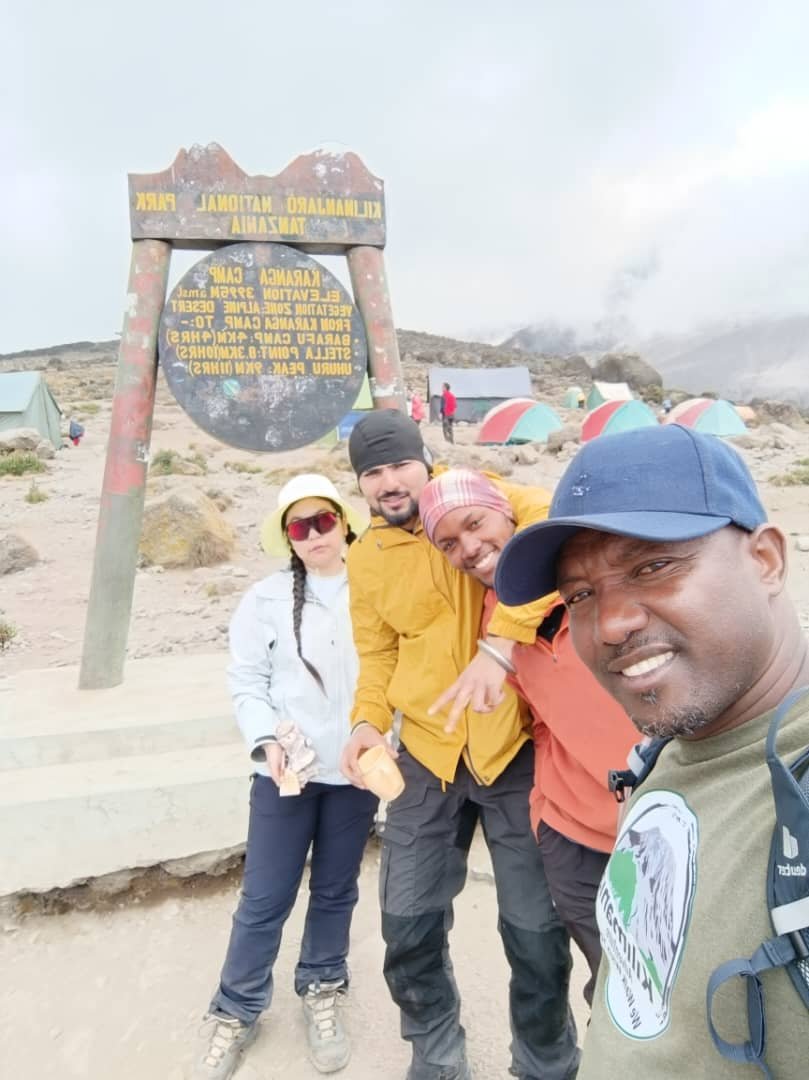
Booking direct with a Moshi operator vs through an overseas agency
Both can work. The practical difference is who you talk to and who runs the climb. Booking direct means you deal with the people who brief you, staff your crew and make decisions on the mountain. Booking through an agency adds a layer that can help with flights and multi-country trips, but may mean another company operates your climb.
Some overseas agencies run their own crews in Tanzania; others pass bookings to a local operator. Neither is wrong, but you should know which you’re getting. Ask the question directly: who employs the guides on my climb?
| Question | Direct with a local operator | Through an overseas agency |
|---|---|---|
| Who answers your questions | The team that runs the climb | Agency staff, who may relay to the local team |
| Who operates the climb | The operator you booked | The agency’s own crew, or a local partner — ask which |
| Documents to expect | Quotation, invoice, receipt and confirmation from the operator | Agency documents; ask for the local operator’s name too |
| Useful when | You want direct contact with your guide team | You want one company handling flights, other countries and the climb |
Kilimania runs every climb with its own Moshi-based team and doesn’t hand climbers to a third-party operator. Whatever you choose, the checks in how to choose a Kilimanjaro operator apply.
Which route and how many days for a Kilimanjaro group climb?
For most first-time joiners on a Kilimanjaro group climb, the 7-Day Machame Route is the usual choice: groups form on it most often, and the extra day helps acclimatization. In Kilimania’s own climbing records, 92% of 418 climbers on the 7-day Machame reached Uhuru Peak, against 82% of 97 climbers on the 6-day version (records updated January 2026).
| Itinerary | Reached Uhuru Peak | Climbers in dataset | Where it fits |
|---|---|---|---|
| 7-Day Machame | 92% | 418 | Most joining groups; first-time climbers |
| 6-Day Machame | 82% | 97 | Climbers with recent altitude experience or tight leave |
Source: Kilimania Adventure’s own climbing records, updated January 2026, counted per climber and grouped by the planned route and itinerary. A climb counts as successful only when the climber reaches Uhuru Peak (5,895 m); any climber who turns back before Uhuru Peak, for any reason, counts as unsuccessful. These are not KINAPA or TANAPA statistics, and a company’s past figures can’t predict any individual climber’s outcome.
The 7-day itinerary adds one more acclimatization day than the 6-day version. Our records show a higher summit rate on the longer itinerary, but those are historical observations, and many factors decide an individual climb. What we can say from the trail: climb high, sleep low, go slowly. Pole pole (Swahili for “slowly, slowly”) isn’t a slogan on this mountain; it’s the actual strategy.
See the itinerary, camps and price on the 7-Day Machame Route page, or compare with the 6-day version. For the route itself, camp by camp, including the Barranco Wall and summit night, read our Machame Route guide. For every route side by side, see Kilimanjaro routes compared and the full success rate by route table.
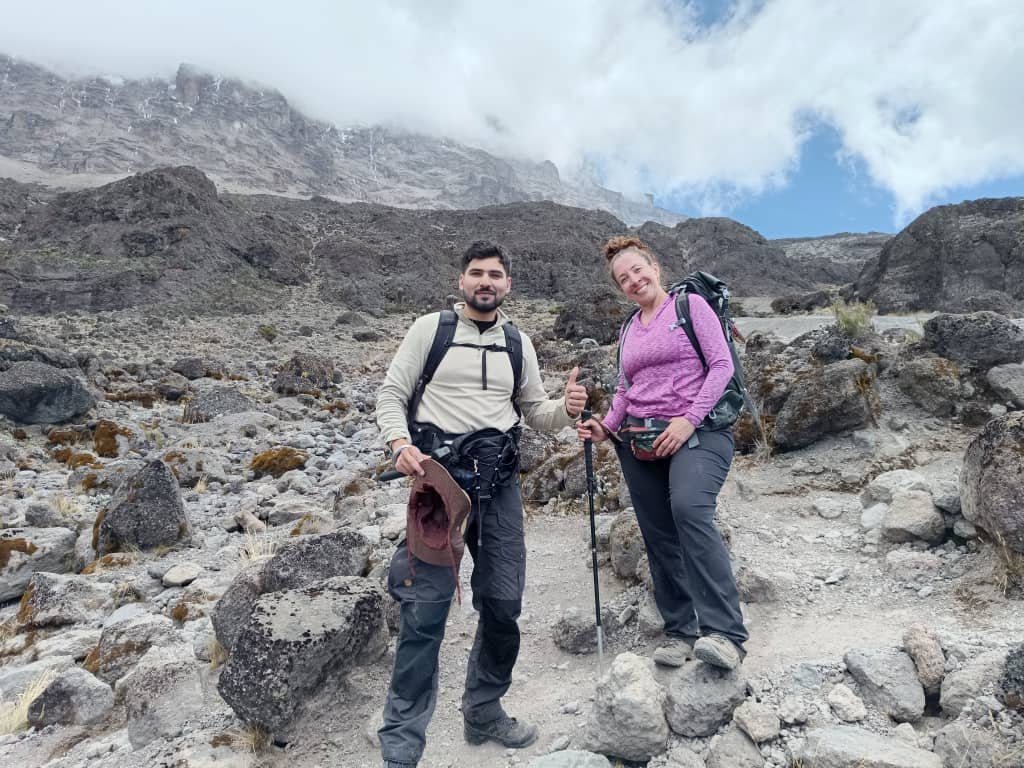
What is life like on a Kilimanjaro group climb?
You walk together with your guides, eat together in the mess tent, and sleep in your own tent. A typical day is 4–7 hours of walking. Guides check every climber’s oxygen saturation and pulse daily, and if paces differ, the group splits with a guide staying with each section.
The crew around you
A Kilimania group has one chief guide, usually one guide per two climbers, plus assistant guides, a cook, and about three porters per climber. On summit night, summit porters climb with the group to carry daypacks, water and emergency oxygen. Four of Kilimania’s guides are Wilderness First Responder certified, and guides carry radios on the mountain.
Kilimanjaro National Park (KINAPA) sets the minimum crew and weighs porters’ loads at the gate. The 20 kg limit is the most any one porter may carry; your own duffel bag should weigh no more than about 15 kg, and it travels as part of a porter’s load. Crew are paid on the day they come down, directly to their bank accounts. If porter welfare matters to you, the Kilimanjaro Porters Assistance Project (KPAP) publishes the standards worth asking any operator about.
Food and water
Meals are cooked fresh and served at a table in the mess tent: fruit with every meal, soup before dinner. No pork is taken on the mountain. The standard provision is 3 litres of treated drinking water per climber per day, and warm washing water arrives in the morning and when you reach camp.
Safety on the trail
Guides check every climber daily, looking at symptoms such as headache, nausea and unusual tiredness, at how you’re eating and moving, and at pulse and oxygen readings from a pulse oximeter. No single reading decides anything on its own, and it only works if you report how you really feel. Emergency oxygen and a first-aid kit travel with the group; both are for emergencies, not a way to keep climbing. Stretcher evacuations on the mountain are carried out with the KINAPA rescue service. If a climber needs to turn back, the chief guide decides how the team responds. Usually an assistant guide descends with that climber and the others continue, but the decision depends on the climber’s condition, the guides available and everyone’s safety. A guide’s safety decision comes before the summit. None of this removes the risk of altitude illness; it gives the team time to act early.
That’s also why Kilimania requires every climber to carry personal travel insurance that explicitly covers Kilimanjaro trekking to at least 6,000 m, emergency medical treatment and evacuation. Ordinary travel insurance often excludes high-altitude trekking, so read the policy wording, not the summary. Kilimania’s own company insurance does not cover climbers. Read more in Kilimanjaro safety and the altitude sickness guide, and talk to your doctor before the climb about any health conditions.
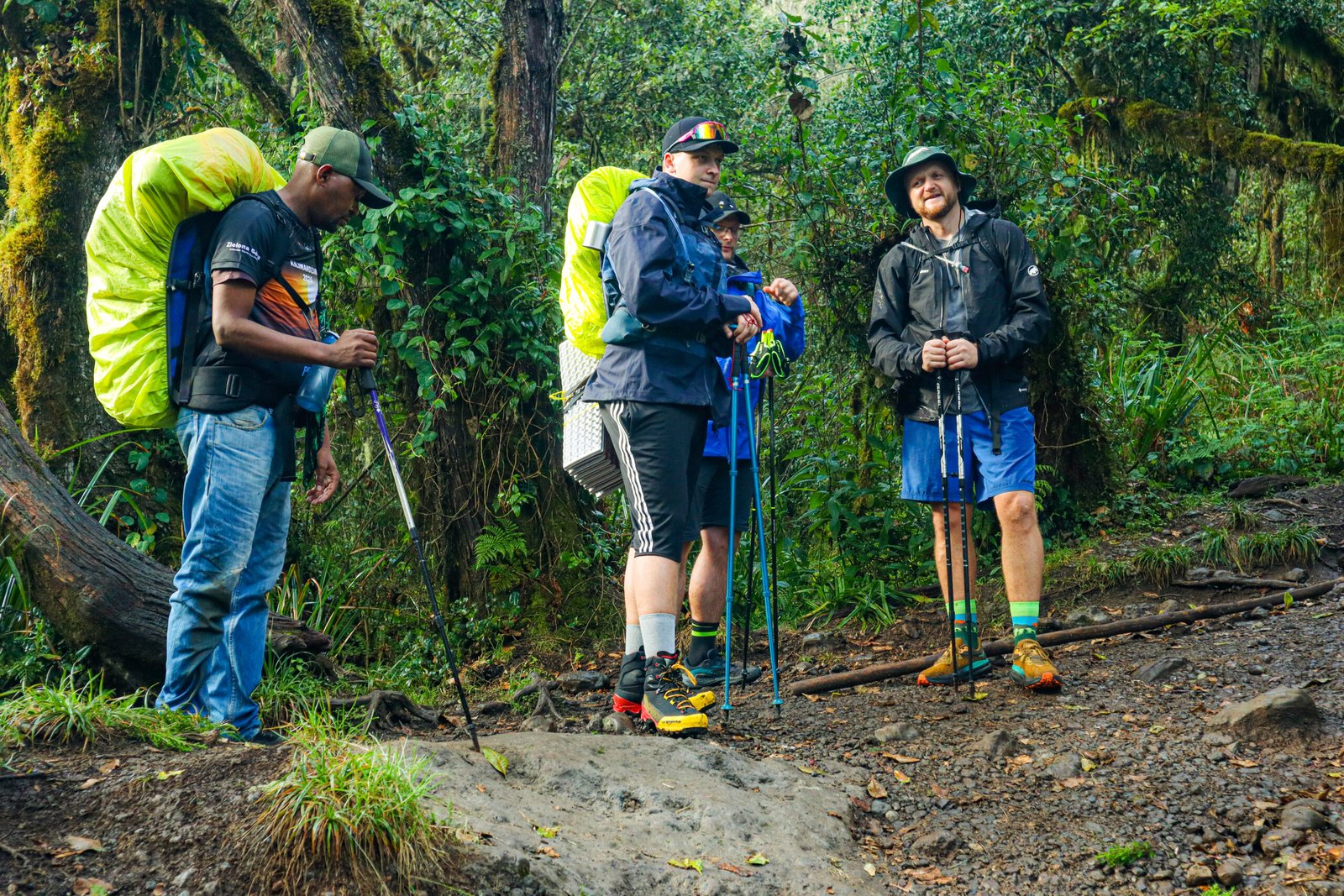
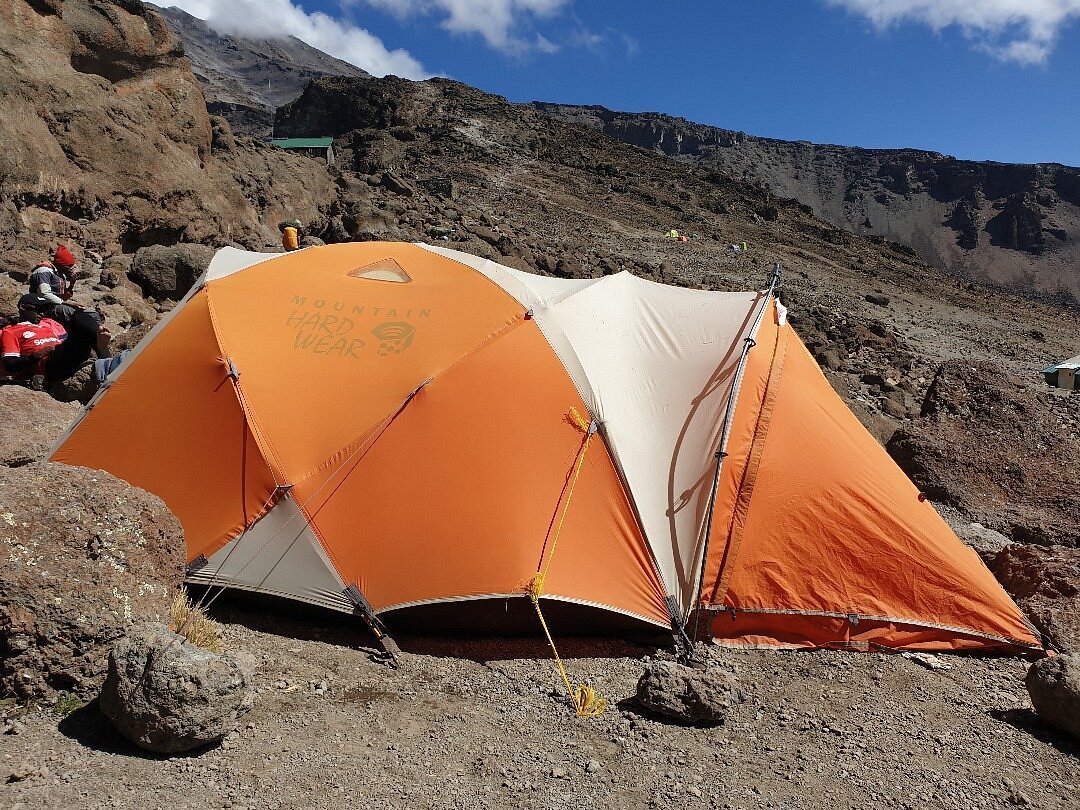
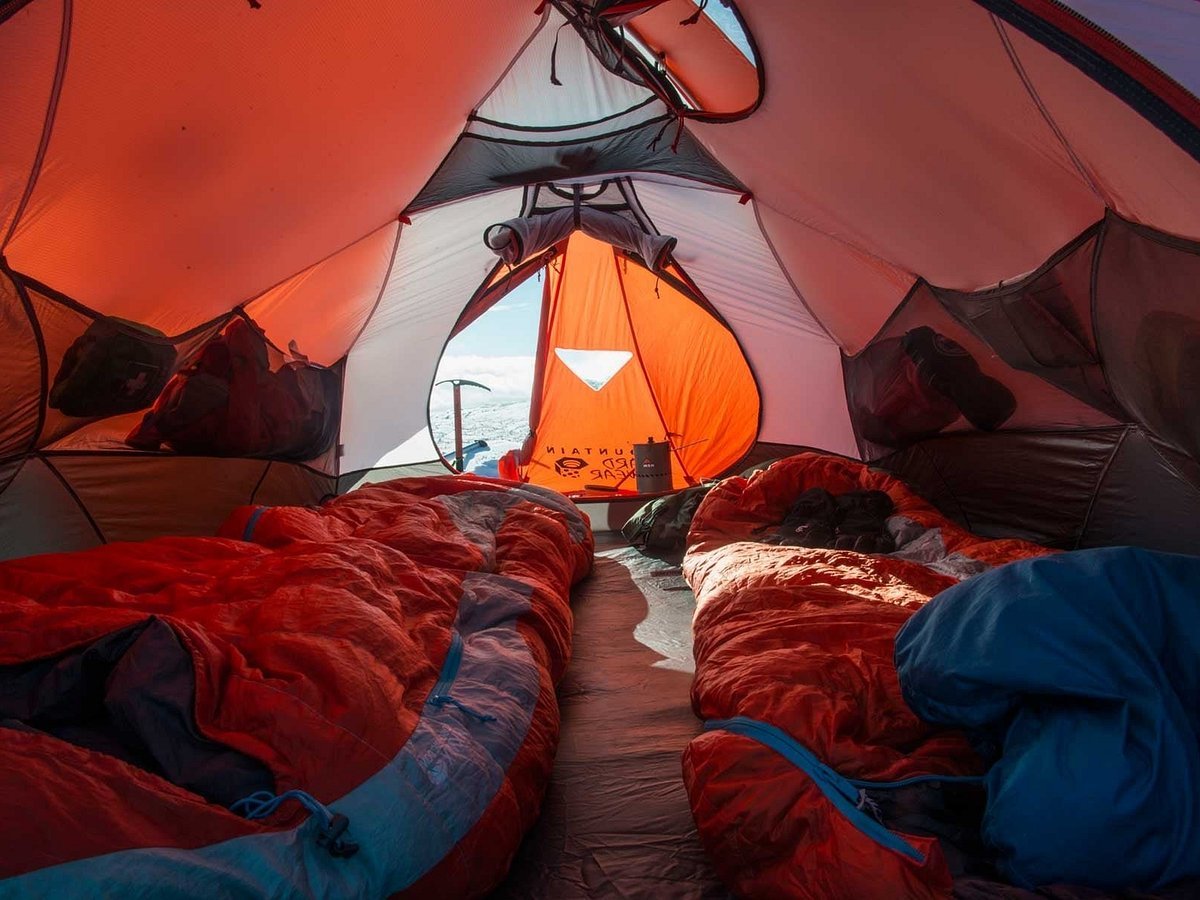
Photos: Kilimania Adventure, October 2026.
Is a joining group right for you, or is private better?
Join a group if you’re solo or a pair, flexible by a day or two, and happy to share meals with new people. Book private if you’re a family or friend group, need a start date nobody else is on, want a different route length, or know your pace will be very different from others’.
I’ll be straight about the trade-offs. A Kilimanjaro group climb is mostly about company, not savings. The price gap between joining and a small private climb is small, and both get the same standard service. If you’d rather not depend on how a group gels, a private climb removes that variable entirely.
Joining is a poor fit if you need the 9-day Northern Circuit on a specific date, or if you’re climbing with children; those trips are usually built privately. Not sure you’re ready for the mountain at all? Can a beginner climb Kilimanjaro? and how hard is Kilimanjaro? are honest places to start. If your main worry is going alone (meeting strangers, solo women on the mountain, pace), read climbing Kilimanjaro alone: five fears, honestly answered.
For international travellers
- Prices are quoted in US dollars, per person, as of October 2026.
- International transfer fees are paid by the sender, and intermediary banks can deduct charges along the way. Many climbers pay the balance in US-dollar cash in Moshi to avoid this.
- Fly into Kilimanjaro International Airport (JRO), not Arusha or Dar es Salaam, for the shortest transfer to Moshi.
- Kilimania requires insurance covering trekking to at least 6,000 m, including evacuation. Check the policy wording, not the summary.
Red flags before you pay for any Kilimanjaro group climb
Stop and check if you see any of these
- A price in a chat message, with no written quotation listing inclusions and exclusions.
- Bank details that arrive from a new number or address, or a message saying “our account has changed.”
- Full payment demanded months ahead, with no invoice or confirmation.
- No named guide, no licence number, and no registered company name or office address.
At Kilimania, bank details only ever reach you on your invoice, and they never change by message. If anything about a payment request feels wrong, with any operator, confirm it through the number on their official website before you send money. A longer list of questions to ask any operator is in how to choose a Kilimanjaro operator.
Kilimanjaro group climb FAQs
Can I join a Kilimanjaro group climb alone?
Yes. Many joining climbers book on their own. You book your own place on a scheduled departure, meet the group at the pre-climb briefing in Moshi, and at Kilimania you get your own tent at no extra charge.
How much is the deposit for a Kilimanjaro group climb?
At Kilimania the deposit is USD 100 per person, paid by bank transfer, as of October 2026. It secures your climb date and is part of the total climb price, not an extra charge. Bank transfer fees are paid by the sender.
Does the joining price go down if more people join my group?
No. The joining price is Kilimania’s 3-person rate for the route, per person, and it does not change with group size. Sliding per-person rates apply only to private climbs, where one party books the whole crew.
What happens if nobody else books my date?
Kilimania checks who is booked and confirms whether the departure runs before taking any deposit. If you are the only confirmed climber, the joining rate still applies. Ask for the confirmation and price in writing before paying.
How many people are on a Kilimanjaro group climb?
Kilimania joining groups take a maximum of 8 climbers. Many groups are smaller, often two to five people, especially in the quieter rainy months.
When do I pay the balance?
Before the climb starts. You can pay by bank transfer at least two days before you arrive so the funds clear, or in cash in Moshi before the climb. Cash is often simpler because bank charges are high on both sides.
What if the other climbers walk faster or slower than me?
Guides work at roughly one per two climbers, so the group can split on the trail with a guide staying with each section. Everyone meets again at camp for meals.
Can I cancel a Kilimanjaro group climb booking?
Yes. As of October 2026, Kilimania refunds 60% of the USD 100 deposit if you cancel 7 or more days before the climb, and nothing on the deposit inside 7 days. Your invoice and booking confirmation state the terms that apply to you.
Which route is most common for a Kilimanjaro group climb?
The 7-Day Machame Route. In Kilimania’s own climbing records, 92% of 418 climbers on the 7-day Machame reached Uhuru Peak, updated January 2026. These are company records, not official park statistics, and they can’t predict any individual climber’s result.
The short version
Joining a Kilimanjaro group climb comes down to a USD 100 deposit, one fixed per-person price, and a group that forms around real flight dates. You get the same crew and safety kit as a private climb, your own tent if you’re alone, and people to share the mess tent with at 4,000 m. Check what’s forming on the joining calendar, and get everything in writing before you pay.
Karibu Kilimanjaro (welcome to Kilimanjaro). We Walk With You — every step.
About the Author
Disclosure. Kilimania Adventure Limited is a licensed Kilimanjaro operator based in Moshi (business name registration no. 437131; Class A TALA tour operator licence; member of TATO), and the author is its co-founder. Summit figures come from Kilimania’s own climbing records and are not official KINAPA or TANAPA statistics. Prices and terms are as of October 2026 and may change; confirm current rates before booking. Climbing at high altitude carries real health risks, including altitude sickness; consult a doctor before you travel.