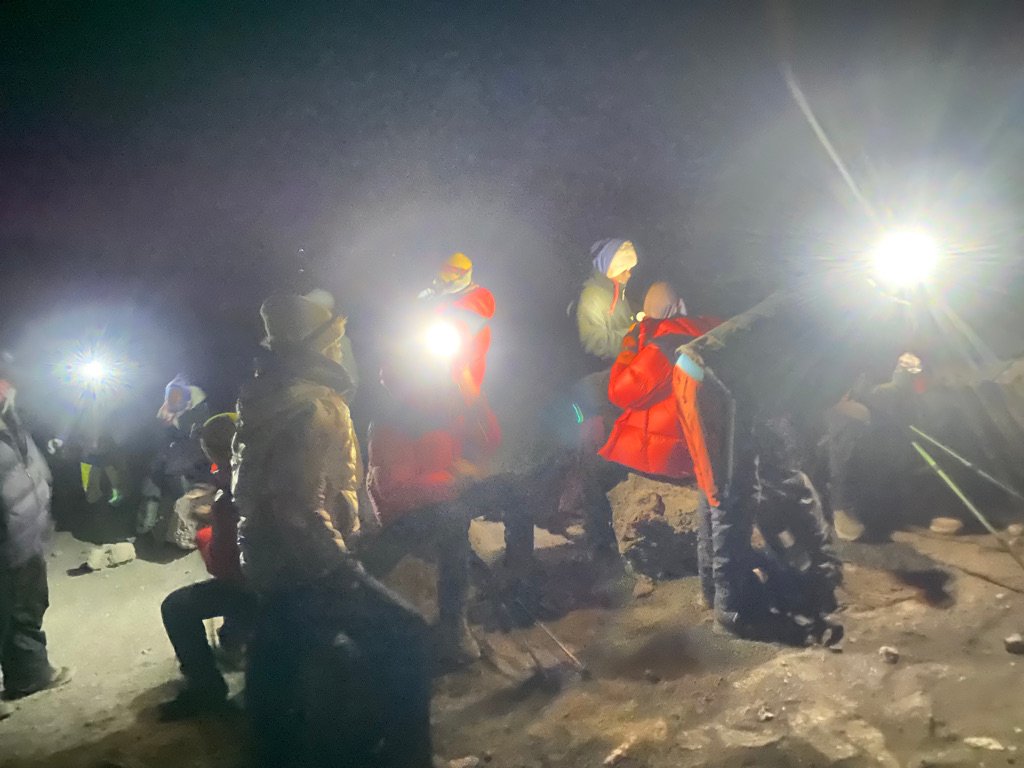
Summit night on Kilimanjaro begins between 11pm and midnight and ends approximately 16–18 hours later when you reach Mweka Camp on descent. In between, you climb 1,222 vertical metres in cold, darkness, and thin air — from Barafu Camp at 4,673m to Uhuru Peak at 5,895m, Africa’s highest point.
Most accounts of summit night are either triumphant or vague. Neither helps when you need to know what will happen to your hands at 3am, what your guide is watching for at Stella Point, or what the descent actually feels like after six hours of climbing. This guide covers all of it: the hour-by-hour timeline, what extreme cold does to your body and equipment, the critical decision points, and exactly what to do before departure to prepare properly.
Last updated: 25 August 2026. Written by Senior Guide Sabinus Msimba, 300+ personal Uhuru Peak summits.
Data sources cited in this article: Wilderness Medical Society altitude illness guidelines, CDC altitude guidance, TANAPA official park information, and Kilimania Adventure’s operational records, 2019–2026.
Summit night starts between 11pm and midnight from Barafu Camp (4,673m). You climb approximately 1,222m over 5–9 hours to Uhuru Peak (5,895m) — arriving around 5:30–6:00am. Temperatures in the summit zone are typically -10°C to -20°C. You then descend 6–8 hours to Mweka Camp. Total summit day: 16–18 hours.
Questions about summit night preparation specific to your fitness, route, or medical history? Our guides answer directly — no call centres.
💬 WhatsApp: +255 756 449 990Summit Night on Kilimanjaro: The Complete Honest Guide
Summit Night at a Glance
Before the detail, here are the parameters that define every Kilimanjaro summit night across all routes. Understanding these eliminates the largest source of pre-climb anxiety: not knowing what is actually coming.
| Parameter | Detail |
|---|---|
| Departure camp | Barafu Camp (4,673m) — Machame, Lemosho, Rongai, Shira, Umbwe Kibo Hut (4,703m) — Marangu Route |
| Departure time | Typically 11pm–midnight; varies by operator, route, and conditions |
| Summit | Uhuru Peak, 5,895m — highest point in Africa |
| Key waypoint | Stella Point, 5,756m — crater rim and guide assessment point |
| Vertical gain | 1,222m from Barafu; 1,192m from Kibo Hut |
| Distance (one way) | Approximately 5km from Barafu to Uhuru Peak |
| Ascent time | 5–9 hours depending on pace and conditions |
| Temperature | Typically -10°C to -20°C in the summit zone; windchill can make it feel considerably colder |
| Darkness | Complete darkness for approximately 5–6 hours until first light around 5am |
| Descent destination | Mweka Camp (3,100m) via Barafu rest stop |
| Total summit day | 16–18 hours continuous movement |
Why Midnight?
The midnight departure window is not arbitrary. Leaving Barafu between 11pm and midnight is timed to reach Stella Point at the crater rim (5,756m) at approximately sunrise — around 4:30–5:00am. This means the final push from Stella Point to Uhuru Peak (139m of elevation, 45–90 minutes) happens in full sunrise light. Pre-dawn temperatures also keep the frozen volcanic scree more consolidated, providing marginally more stable footing than the afternoon thaw. This timing has been refined over decades of operational experience on the mountain.
For a complete route selection guide — including which routes give stronger acclimatisation heading into summit night — read our Kilimanjaro Climbing Guide.
The Hour-by-Hour Timeline
This is the real sequence — not a promotional account, but what actually happens from 9pm to 2pm the following day. The emotions listed are what guides observe across hundreds of summit nights.
| Time | Location | What Happens | What You Feel |
|---|---|---|---|
| 9:00pm | Barafu Camp (4,673m) | Wake-up call from your guide | Exhausted — 1–2 hours of sleep at altitude, or none at all |
| 9:30pm | Mess tent | Hot drink and light snack — porridge, crackers, tea | No appetite. Eat anyway. Your body needs the fuel. |
| 10:00pm | Tent | Final layers on, pack checked, headtorch tested | Anxiety peaks. Hands already cold inside the tent. |
| 11:00pm | Camp exit | Summit push begins — pole pole from step one | Cold shock as the tent zip opens. Darkness is complete. |
| 12:00am | ~200m above camp | Switchback rhythm established. Other groups’ headtorches visible above. | Darkness becomes less threatening once you find your pace. |
| 1:00am | ~4,900m | First water break. Guide checks each climber individually. | Breathing heavier than expected. This is normal at this elevation. |
| 2:00am | ~5,100m | Altitude fatigue clearly present | Every step requires deliberate effort. Rest steps begin. |
| 3:00am | ~5,250m | The psychological wall | Most climbers want to stop here. Nothing feels close. This is expected — and it passes. |
| 3:30am | ~5,400m | Steepest loose scree section. The hardest 90 minutes. | Wind picks up. Cold at its most penetrating. Mental anchor activated. |
| 4:30am | Stella Point (5,756m) | Crater rim reached. Guide health assessment begins. | Relief, disbelief, physical depletion. Uhuru Peak is now visible. |
| 5:00am | Crater rim walk | 45–90 minute walk to Uhuru Peak along the crater rim | Sky lightening. Glaciers glowing. The reason you came. |
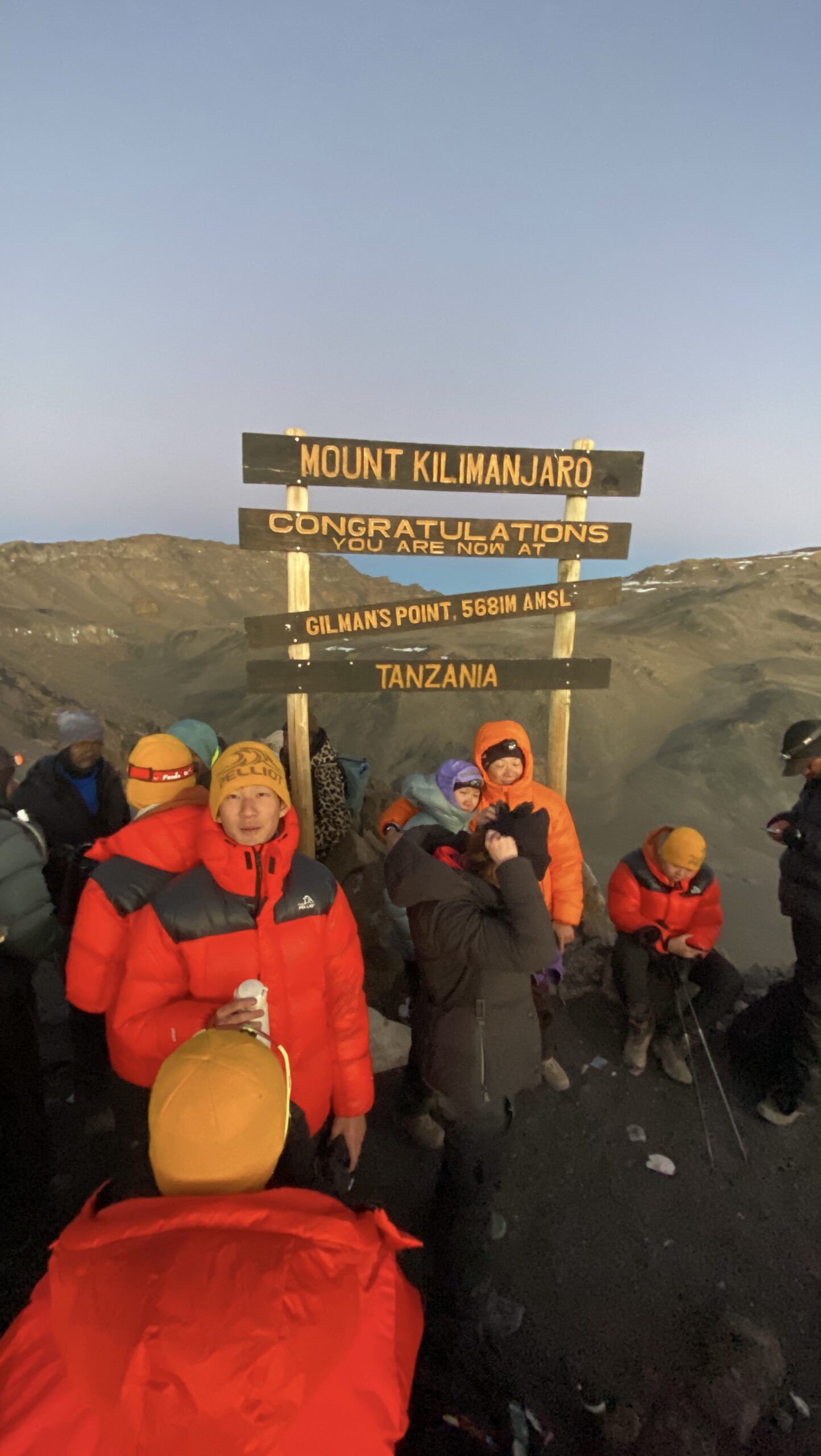
| 5:30am | Uhuru Peak (5,895m) | Summit. The sign. The photograph. | Whatever you expected — multiply it. Then add the fact that your legs barely work. |
| 6:00am | Descent begins | Sunrise behind you as you head down | Warm light on your back. The plains 3,000m below. Nobody photographs this moment. |
| 8:30am | Stella Point descent | Steep scree descent section | Legs spent. Poles essential. Speed is possible here — caution matters more. |
| 10:00am | Barafu Camp (4,673m) | Rest stop — 30–60 minutes maximum | Body wants to stop. Four more hours required. Second hardest psychological moment of the day. |
| 2:00pm | Mweka Camp (3,100m) | Final camp. Food. Tents. Sleep. | Emotional release — often unexpected. Many climbers cry. All are finished. |
The Three Most Important Moments
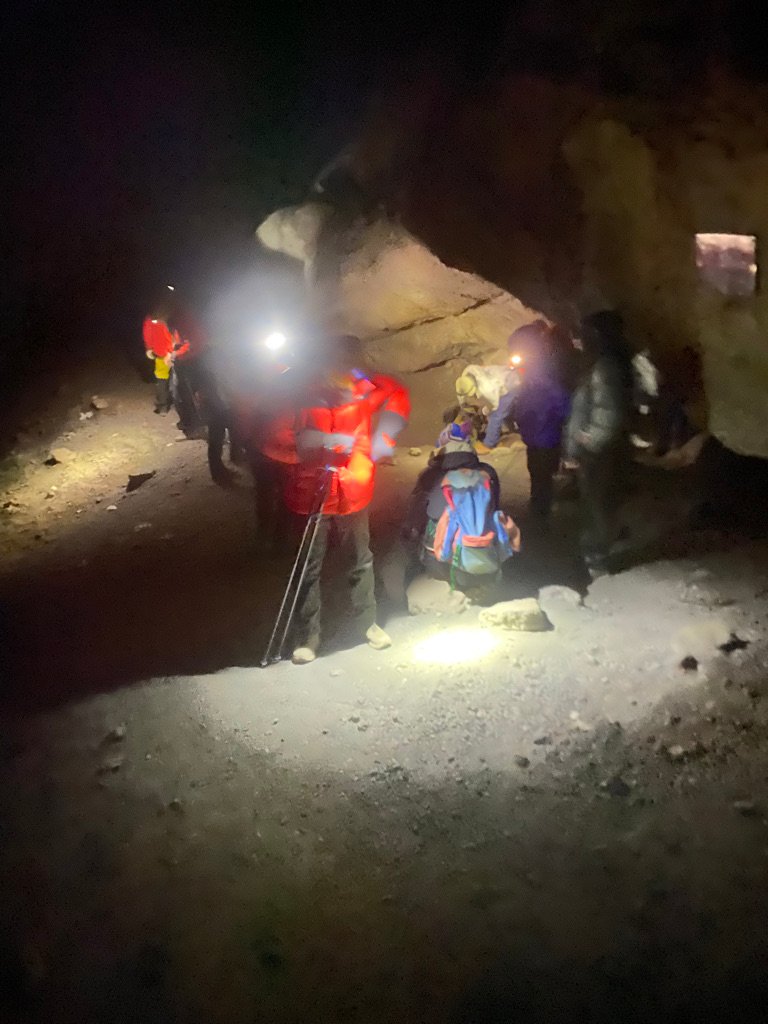
The First Hour — Cold Shock and Pace. When your tent zip opens at 11pm and the cold air hits, the instinct is to move fast to warm up. This is the most dangerous impulse of the entire climb. Your guide will slow you down immediately — and you must trust that completely. The pace that feels almost comically slow during the first hour is the pace that reaches Uhuru Peak. Climbers who push hard in the first 90 minutes consistently underperform at altitude. The cold shock settles within 20 minutes once your body adjusts to movement. By midnight, most climbers find a sustainable rhythm.
3am — The Psychological Wall. Between 3am and Stella Point, your body is most depleted and your mind most vulnerable to giving up. The summit is not visible. Camp is far below. Nothing feels close. This is the section where a pre-committed mental anchor — a song, a mantra, a specific person you are climbing for — does its work. Identifying yours before you leave Barafu is one of the most practical pieces of preparation in this guide.
Stella Point — The Decision. After five hours of ascending in cold and darkness, you step onto the crater rim at 5,756m. Your guide conducts a health assessment. If cleared, you continue to Uhuru Peak in sunrise light. If the assessment indicates continuing is unsafe, you descend with a Stella Point certificate. More on this below.
What Extreme Cold Does to Your Body and Equipment
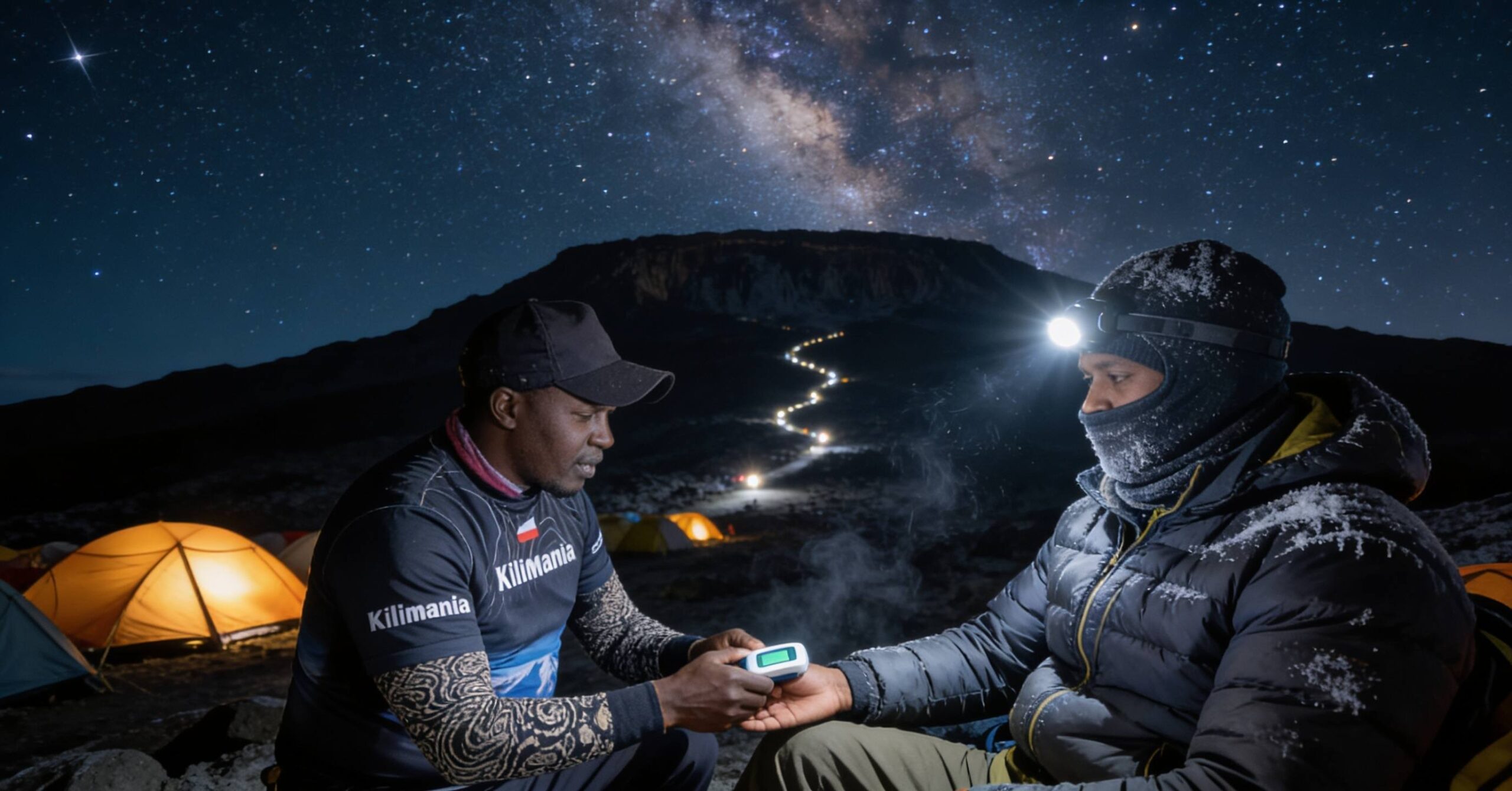
Temperatures in the summit zone of Kilimanjaro typically range from -10°C to -20°C, with windchill making conditions feel considerably colder before sunrise. Here is what those conditions do — specifically — to your equipment and body systems.
Your Hands
Fingers lose fine motor dexterity progressively in sustained cold. At sub-zero temperatures, removing gloves briefly causes real pain and frostnip risk. Our guides open water bottle lids, adjust headtorches, and handle any task requiring bare fingers — so clients keep gloves on throughout the ascent. If your gloves are not rated for extreme cold with liner gloves underneath, you will feel them fail above 5,000m. The liner-plus-outer-mitt system is not optional at summit night temperatures.
Your Face
A balaclava covering everything except your eyes is essential above 5,000m at night. The skin around your goggles will be the only exposed skin if you layer correctly. Eyelashes can partially freeze at these temperatures — goggles rated to at least -20°C resolve this. Apply lip balm before departure to prevent painful cracking during and after the ascent.
Your Water
Hydration bladder hoses freeze quickly in sustained sub-zero conditions. Do not use a hydration bladder on summit night. Water bottles in pack side pockets are also vulnerable. The proven solution is carrying bottles inside your jacket against your body — body heat keeps them liquid. Adequate hydration matters at altitude because dehydration worsens altitude illness symptoms, as noted in CDC altitude guidance.
Your Headtorch and Camera
Battery performance degrades significantly in extreme cold. Lithium primary batteries outperform alkaline at low temperatures and are the preferred choice for summit night. Keep spare batteries in an inner jacket pocket. Keep cameras and phones in an inner pocket near your body and take them out only at Stella Point and the summit. This protects both battery and device.
Your Pace and Circulation
In extreme cold, the body redirects blood flow from extremities to vital organs to maintain core temperature. Fingers and toes will feel cold even with proper insulation — this is normal physiology, not a problem. The critical distinction to communicate to your guide: cold extremities are expected; numb extremities require immediate assessment. Numbness that does not resolve with movement needs guide attention without delay.
For full gear recommendations including specific glove systems and boot ratings, see our Kilimanjaro packing list and temperature guide by month.
The Stella Point Decision — What Happens Here
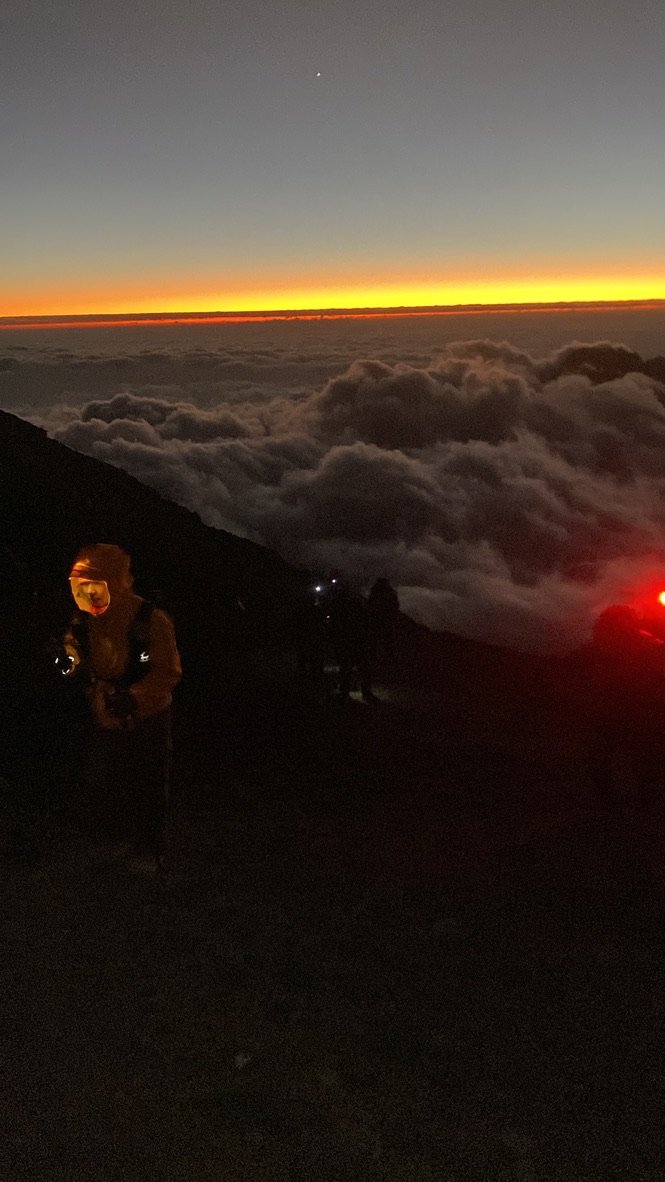
Stella Point sits on the crater rim at 5,756m. It marks the end of the switchback ascent and the beginning of the crater rim walk. Uhuru Peak is 139 vertical metres higher and 45–90 minutes away. When you step onto the rim after five hours of ascending in cold and darkness, that distance feels simultaneously close and very far.
What Your Guide Assesses Here
At Stella Point, every Kilimania guide — including Senior Guide Sabinus Msimba — conducts a structured physical assessment before the crater rim walk continues. This is not a formality:
- Pulse oximetry: SpO₂ reading at altitude. Oxygen saturation at 5,756m is typically 70–80% for most climbers. Readings significantly below the individual climber’s trend line indicate caution.
- Walking gait: Ataxia — unsteady, lurching walking — is a recognised warning sign of High Altitude Cerebral Edema (HACE), a serious altitude illness that requires immediate descent. According to Wilderness Medical Society guidelines, HACE is a medical emergency.
- Responsiveness and coherence: Guides conduct brief conversation at Stella Point specifically to assess cognitive function. Slurred speech, confusion, or unusually slow responses are warning signs requiring action.
- Visual signs: Severe pallor, persistent vomiting, or altered consciousness require immediate descent regardless of the climber’s wishes.
You receive a Stella Point certificate from TANAPA. You have climbed to 5,756m — the crater rim of Africa’s highest mountain. Pushing beyond Stella Point against a guide’s professional assessment is dangerous. For an honest account of what a Stella Point finish means, read our guide on what happens if you don’t summit Kilimanjaro.
When You Continue — The Crater Rim Walk
If the assessment clears you, you turn left along the crater rim toward Uhuru Peak. The character of the mountain changes completely. The steep switchbacks are finished. The path is relatively gentle. To your south, the Southern Ice Field catches the first morning light in blue-white. The crater is visible below to your right. The sky moves from black to deep orange as you walk.
Uhuru Peak at 5,895m is marked by a wooden sign bolted to rock. It reads: Congratulations. You are now at Uhuru Peak, Tanzania, 5895m AMSL. Africa’s highest point. World’s highest free-standing mountain. One of World’s largest volcanoes. Your legs will barely work. It matters anyway.
For more on Stella Point — including the certificate and what the crater rim walk looks like — read our Stella Point guide.
Summit Night by Route — Key Differences
Summit night follows the same broad structure on all routes, but real differences affect your experience. The route you take determines your departure camp, how well-acclimatised you are at midnight, and what the approach terrain looks like.
| Route | Departure Camp | Summit Night Character | Crowd Level |
|---|---|---|---|
| Machame | Barafu (4,673m) | Standard midnight ascent on shared scree path. Most popular route — expect visible crowds above in peak season. | High |
| Lemosho | Barafu (4,673m) | Same path as Machame above Barafu, but better acclimatisation from longer approach. Higher summit success rates. | Medium–High |
| Marangu | Kibo Hut (4,703m) | Different approach path — shorter switchbacks, different terrain. Hut sleeping rather than tents. | Medium |
| Rongai | Kibo Hut area (4,703m) | Approaches from the north. Quieter, different mountain face, excellent visibility on clear nights. | Low–Medium |
| Northern Circuit | Barafu (4,673m) | Longest route gives the most gradual acclimatisation. Higher summit success rates than shorter routes on Kilimanjaro. | Low |
| Shira | Barafu (4,673m) | Similar to Lemosho above Barafu. Acclimatisation quality depends on itinerary length. | Low |
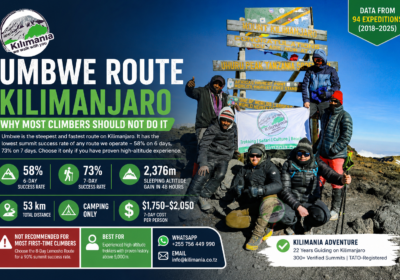
| Umbwe | Barafu (4,673m) | Steepest and fastest route. Rapid altitude gain means lower acclimatisation quality at summit night — higher turn-back rate. | Very Low |
For a complete route comparison, read our Kilimanjaro routes guide and summit success rate analysis by route. Acclimatisation quality at midnight is one of the strongest predictors of summit success.
How to Prepare for Summit Night
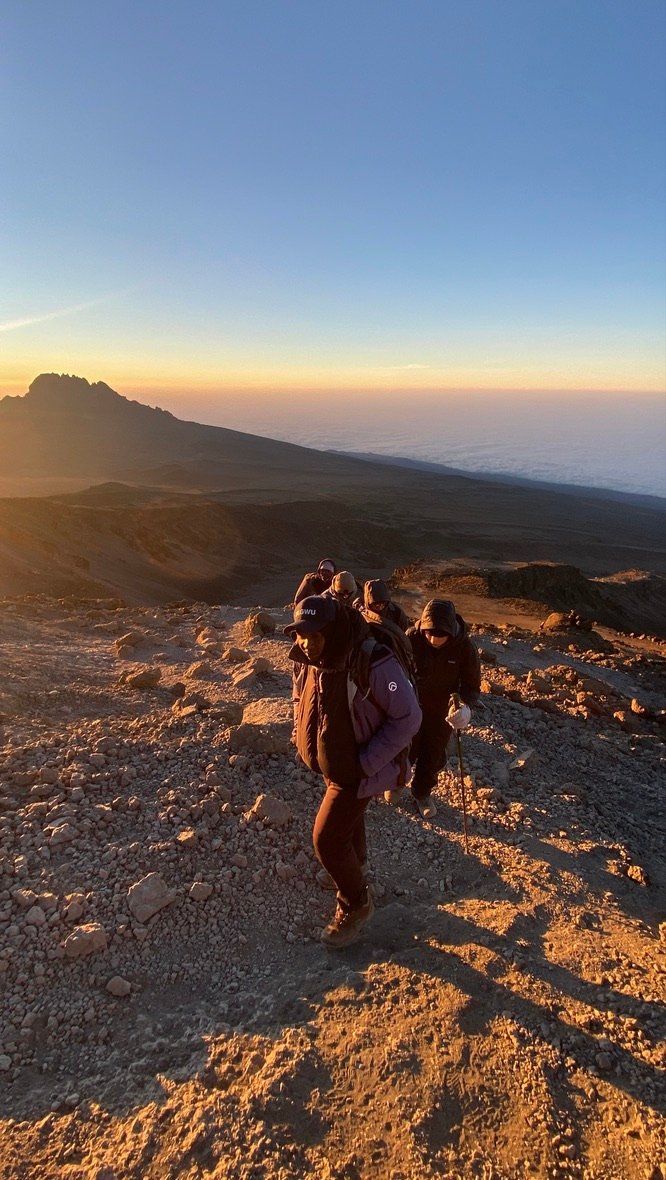
The Day Before — Barafu Acclimatisation Day
Barafu Camp Day Checklist
- Eat a full meal even without appetite — carbohydrate-heavy, easily digestible foods at altitude
- Drink 3–4 litres of water throughout the day; avoid alcohol entirely
- Rest horizontally from 5pm–9pm — sleep quality at 4,673m is often poor, but horizontal rest still has physiological value
- Pack your complete summit daypack before lying down — nothing should need finding in darkness
- Lay out every clothing layer in the exact order you will put it on
- Pre-unwrap all snacks — opening wrappers at -15°C with gloved hands is genuinely difficult
- Move spare headtorch batteries to an inner jacket pocket before your rest period
- Put phone and camera in an inner pocket overnight to maintain battery temperature
Your Summit Night Daypack
Keep the pack as light as possible while carrying everything you need:
- Water: 2–3 litres in sealed bottles — carried inside your jacket, not in side pockets
- Snacks: High-calorie, pre-unwrapped — energy gels, chocolate, nuts, dried fruit
- Spare batteries: In an inner jacket pocket, not in the pack itself
- Camera or phone: Inner jacket pocket near body heat
- Personal medication: Accessible — not buried under layers
- Balaclava and goggles: Already on before leaving the tent
The Five-Layer Protocol
All five layers must be on before the tent zip opens. Adding a layer outside at -15°C with cold hands is extremely difficult and wastes precious heat.
- 1Moisture-wicking base layer: Merino wool or synthetic. Not cotton — cotton holds moisture and accelerates heat loss in cold conditions.
- 2Thermal mid-layer: Heavyweight thermal leggings and top. Your primary temperature foundation.
- 3Fleece: 300-weight fleece jacket. Insulation layer and wind barrier beneath the outer layers.
- 4Down jacket: 600-fill power minimum. Core warmth layer. Worn under the hardshell, not over it.
- 5Hardshell waterproof outer: Wind and precipitation barrier. Essential even in dry conditions — wind above 5,000m is significant.
Hands: Liner gloves + insulated outer mitts rated to extreme cold.
Feet: Moisture-wicking sock liner + heavyweight wool sock + waterproof boot with gaiter.
Face: Full balaclava + goggles rated to at least -20°C.
For specific product recommendations across all budgets, see our full Kilimanjaro packing list and boot guide.
Mental Preparation — The 3am Protocol
The most demanding 90 minutes of the entire climb falls between approximately 3am and reaching Stella Point. Altitude is most intense, fatigue is highest, and the summit is not visible. Research in endurance sport psychology consistently identifies pre-committed mental strategies as more effective than in-the-moment willpower when physical resources are depleted — a principle that applies directly to high-altitude climbing. Identify your mental anchor before you leave Barafu, not at 3am when you need it most.
For the physical fitness preparation that supports summit night performance, see our Kilimanjaro training guide.
📥 Free resource: Kilimanjaro Altitude Symptom & AMS Checklist
Altitude illness is the primary reason climbers turn back on summit night. This checklist covers normal acclimatisation symptoms above 3,000m, AMS/HACE/HAPE warning signs, and a daily health monitoring form used by Kilimania guides on every expedition.
Download the free Altitude Symptom Checklist (PDF) →
For educational reference only. Not a substitute for professional medical advice.
The Descent — What Everyone Forgets to Prepare For
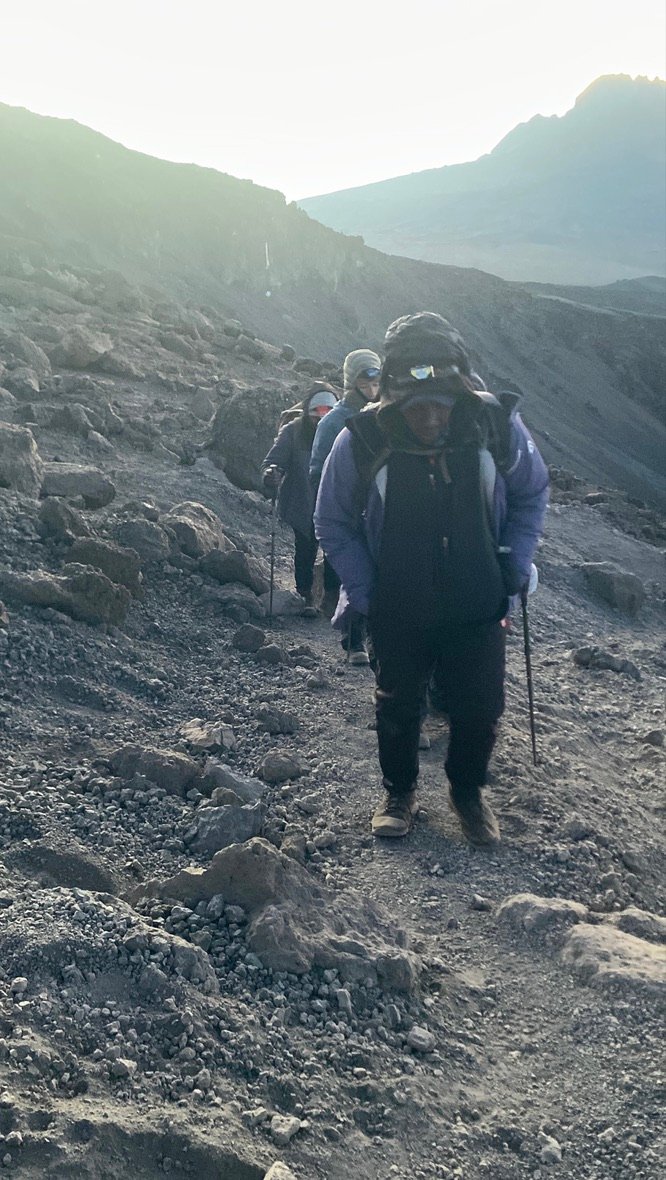
After reaching Uhuru Peak, you face a 6–8 hour descent from 5,895m to Mweka Camp at 3,100m. This section — barely considered in most pre-climb planning — is where the majority of Kilimanjaro injuries occur.
Why the Descent Is Where People Get Hurt
Three factors combine at the worst possible moment: neuromuscular fatigue from six or more hours of ascending, emotional release as the primary goal is achieved (the body naturally stands down), and steep loose volcanic scree that punishes inattentive footwork. The descent from Uhuru Peak to Barafu requires continuous stabilising muscle engagement from legs that have nothing left. Rolled ankles, knee strains, and falls on loose scree are most common during descent — not the ascent.
Trekking Poles Are Essential on the Descent
Poles are useful on the ascent. On the descent they are effectively mandatory. They absorb a significant portion of impact load on each downward step, protecting knees with no muscular reserve left. Our guides demonstrate the scree-running technique on the upper section — a controlled, sliding descent on loose volcanic ash that is faster than careful stepping and, done correctly, gentler on joints.
The Psychological Reality of Descent
Many climbers experience a significant emotional crash during the descent. The neurochemical peak of summit achievement drops rapidly. The body’s pain suppression systems that were active on the summit push begin to stand down. Knees hurt. Hips hurt. Feet hurt. The fact that Mweka Camp is still four hours away from Barafu feels genuinely unfair. This is a predictable response — write it into your preparation now.
The brief stop at Barafu Camp — 30–60 minutes for a hot drink and snack — is the only rest point between the summit and Mweka. Your guide will not permit more than 60 minutes. Altitude recovery accelerates rapidly below 4,000m, and the fastest route to genuine recovery is continuing to Mweka at 3,100m. The discomfort of the descent is temporary. The altitude effects resolve with descent. Your guide knows this. Trust it.
Summit Night in Images
Choose Your Route to Summit Night
Every route reaches Barafu Camp or Kibo Hut for summit night. The route determines how well-rested and acclimatised you are when midnight arrives — one of the most significant variables in summit success. Compare all routes or choose below:
Summit Night FAQ
These are the questions asked most often by climbers in the weeks before summit night.
-
Most Kilimanjaro summit attempts begin between 11pm and midnight from Barafu Camp at 4,673m. This timing targets Stella Point at approximately sunrise (4:30–5:00am) and Uhuru Peak (5,895m) by around 5:30–6:00am. The exact time varies by operator, route, and conditions.
-
Departing before 11pm is not standard and not generally recommended. An earlier start typically means summiting in darkness rather than at sunrise, removing one of the defining rewards of the ascent. Some Northern Circuit groups depart slightly earlier due to the longer crater rim distance — this is a route-specific, operator-directed decision.
-
Your guide escorts you back to Barafu Camp safely. Turning back is guided by the professional assessment of your guide — not your emotional state. If you reach Stella Point (5,756m), TANAPA issues a Stella Point certificate. If you turn back before Stella Point, no certificate is issued. Stella Point is a legitimate, respected achievement — it is the crater rim of Africa’s highest mountain at 5,756m. Read our guide on what happens if you don’t summit Kilimanjaro.
-
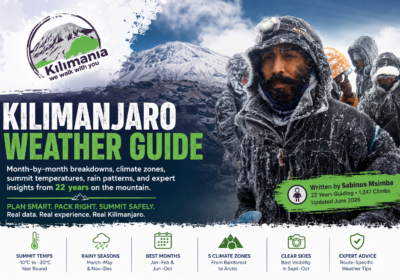
Summit attempts during the long rains (April–May) carry significantly higher risk. Ice on the volcanic scree above 5,000m and reduced visibility create dangerous conditions on summit night. TANAPA keeps the mountain open year-round, but guides assess summit cone conditions before every departure and will delay or cancel if conditions are unsafe. January–March and June–October offer the most reliable summit night conditions. See our Kilimanjaro weather guide.
-
Guides set and maintain a sustainable pace (pole pole), continuously assess each climber’s gait, breathing, and responsiveness, manage hydration and snack logistics, and conduct a formal health assessment at Stella Point before the crater rim walk. They carry supplemental oxygen, pulse oximeters, and first aid equipment. They maintain ongoing conversation with each climber — which serves simultaneously as morale support and continuous assessment of cognitive function at altitude.
-
During peak season (July–September), several hundred climbers may ascend simultaneously across multiple routes. Above Barafu on Machame and Lemosho paths, you will see a long line of headtorches stretching up the slope. The Northern Circuit and Rongai routes are significantly quieter. Your group maintains its own pace independently of others.
-
Photography during the dark ascent is difficult and battery-draining. Cold significantly reduces device battery performance. Keep cameras and phones in an inner jacket pocket and take them out only at Stella Point and the summit. The real photographic opportunity is the sunrise at Stella Point and Uhuru Peak — the dark ascent section is for climbing, not photography.
-
One guide immediately descends with the affected climber while remaining guides continue with the group. This is why adequate guide-to-client ratios on summit night matter — an ill climber’s descent never leaves others without a guide. Severe cases trigger emergency evacuation procedures coordinated with KINAPA rescue services. Comprehensive travel insurance with altitude emergency evacuation cover is essential. See our guide to Kilimanjaro safety, emergencies, and rescue.
📥 Free resource: Kilimanjaro Packing Checklist
A 16-page packing checklist covering all seven routes, rent-vs-buy guidance, and a dedicated summit night cold-weather section. Prepared by Senior Guide Sabinus Msimba.
You Now Know What Summit Night Involves
You know the timeline: a midnight departure, five hours of ascending in darkness, Stella Point at dawn, Uhuru Peak as the sun rises behind you, and a full day of descent to Mweka Camp. You know what cold does to your hands, water, headtorch, and pace. You know what your guide assesses at Stella Point and why that assessment matters more than your determination in that moment. You know the emotional reality of the descent — not just the physical difficulty.
The goal of this guide is to make the most demanding parts of summit night far less surprising. Surprise is what defeats people — not the climb itself. The cold is manageable. The darkness is navigable. The pace is sustainable. The altitude is real but knowable. And the right guide beside you — someone who has stood at that summit sign hundreds of times and knows every section of that night by instinct — is the most important variable of all.
If you are ready to start planning:
- Read our honest assessment of how hard Kilimanjaro is
- Understand the altitude sickness risks specific to Kilimanjaro
- Start your 12-week preparation programme
- Choose the right route for your timeline and fitness level
- View all Kilimanjaro climbing packages from Kilimania
We Walk With You.



Our guides are in Moshi, Tanzania. WhatsApp reaches us directly — no call centres, no scripts, no sales pressure.
💬 WhatsApp: +255 756 449 990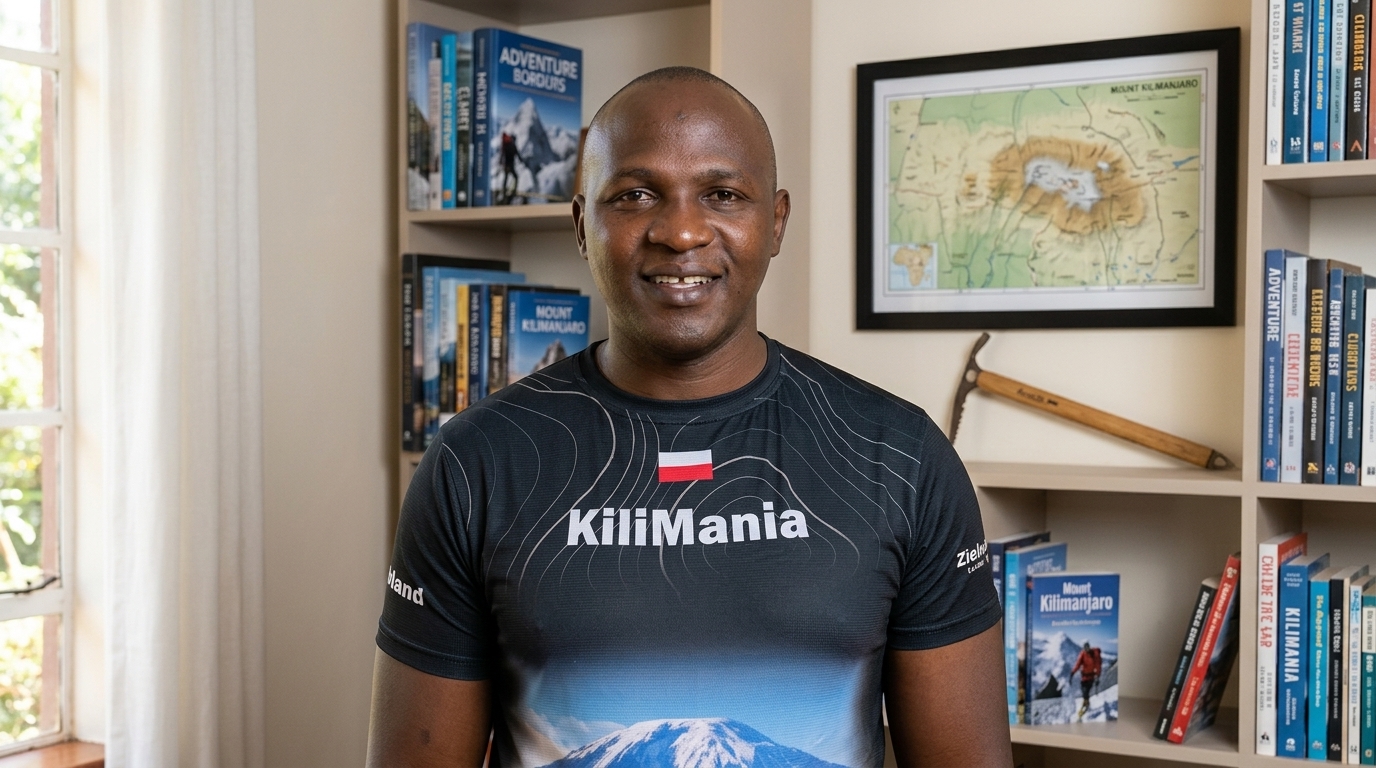
Disclosure: Kilimania Adventure is a KINAPA-licensed, TATO-registered Kilimanjaro operator based in Moshi, Tanzania. This article was written and reviewed by our own guiding team and reflects our operational experience; other operators may describe summit night differently based on their own procedures.
Safety: This guide is educational and does not replace individualised medical advice. Altitude illness can be serious. Always disclose relevant medical history to your guide and physician before attempting a high-altitude climb, and carry comprehensive travel insurance with altitude evacuation cover.
Data sources: Wilderness Medical Society altitude illness guidelines, CDC altitude guidance, TANAPA official park information, and Kilimania Adventure’s own guiding records (2019–2026). Last reviewed 25 August 2026.