Is Kilimanjaro safe? For a well-prepared, well-guided climber, yes — but altitude illness is a genuine and sometimes fatal risk, and most deaths involve delayed descent rather than an unavoidable event. The only published research examining causes of death on this specific mountain — a two-year postmortem review from Kilimanjaro Christian Medical Centre (KCMC) in Moshi — found that among 21 deceased climbers referred to that hospital, high altitude pulmonary edema (HAPE) accounted for 76% of deaths. This article separates that published evidence from the vaguer numbers repeated across the internet, explains what actually causes serious illness on this mountain, and lays out the protocols our guide team at Kilimania Adventure follows to reduce that risk on every climb.
Kilimanjaro Safety: Deaths, Rescue, and How We Keep You Safe
Data sources cited in this article: Dekker et al. 2021 (Wilderness & Environmental Medicine), Croughs et al. 2022 (Journal of Travel Medicine), Wilderness Medical Society altitude-illness guidance, Kilimania Adventure guided-climb records (2019–2025), and TANAPA/KINAPA public information.
What the Published Evidence Actually Shows — and What It Doesn’t
There is no single, continuously published, independently audited count of Kilimanjaro deaths broken down by year. Figures like “3 to 10 deaths a year” circulate widely online, but we could not trace them to a current, citable official source, so we are not going to repeat that number here as if it were established fact. What we can cite is a real, peer-reviewed study: Dekker et al., 2021, a two-year chart review of every climber referred to Kilimanjaro Christian Medical Centre (KCMC) in Moshi after a Kilimanjaro climb. Among 21 deceased climbers who underwent postmortem evaluation in that period, causes of death were HAPE (76%), combined HAPE/HACE (14%), trauma (1 case), and a cardiopulmonary event (1 case). This is a hospital-referral sample from one region over two years, not a national annual statistic — but it is the most specific, citable evidence available on what actually kills climbers on this mountain, and it points squarely at altitude illness rather than cardiac risk.
What Do We Actually Know About Kilimanjaro Deaths?
The honest answer is: less than most articles imply. No government body publishes an annual, audited Kilimanjaro death count in a form we can verify or cite. What exists instead is a small number of peer-reviewed studies drawn from hospital records, which is real evidence but a narrower window than a full mountain-wide count. The most directly relevant is Dekker et al.’s 2021 study in Wilderness & Environmental Medicine: a two-year retrospective review of every climber referred to KCMC, the region’s main referral hospital, after a Kilimanjaro ascent. Of 62 climbers referred to hospital, most had altitude illness rather than any other cause, and of the 21 who died and underwent postmortem evaluation, HAPE alone accounted for 16 deaths (76%), combined HAPE/HACE for 3 more (14%), with one trauma death and one cardiopulmonary death making up the rest.
| Cause of death (Dekker et al. 2021, n=21) | Cases | Share |
|---|---|---|
| High Altitude Pulmonary Edema (HAPE) | 16 | 76% |
| Combined HAPE / HACE | 3 | 14% |
| Trauma (fall) | 1 | 5% |
| Cardiopulmonary event | 1 | 5% |
Two things follow from this. First, on the best evidence available, altitude illness — specifically HAPE — is the dominant documented cause of death on Kilimanjaro, well ahead of cardiac events or falls. Second, this is a hospital-referral sample of 21 people over two years in one region, not a mountain-wide annual audit, so we present it as the strongest citable evidence rather than a precise universal rate. Anyone who tells you a confident national annual death total is quoting an unsourced estimate, ourselves included if we ever did the same.
Why Do Climbers Keep Ascending Once Symptoms Start?
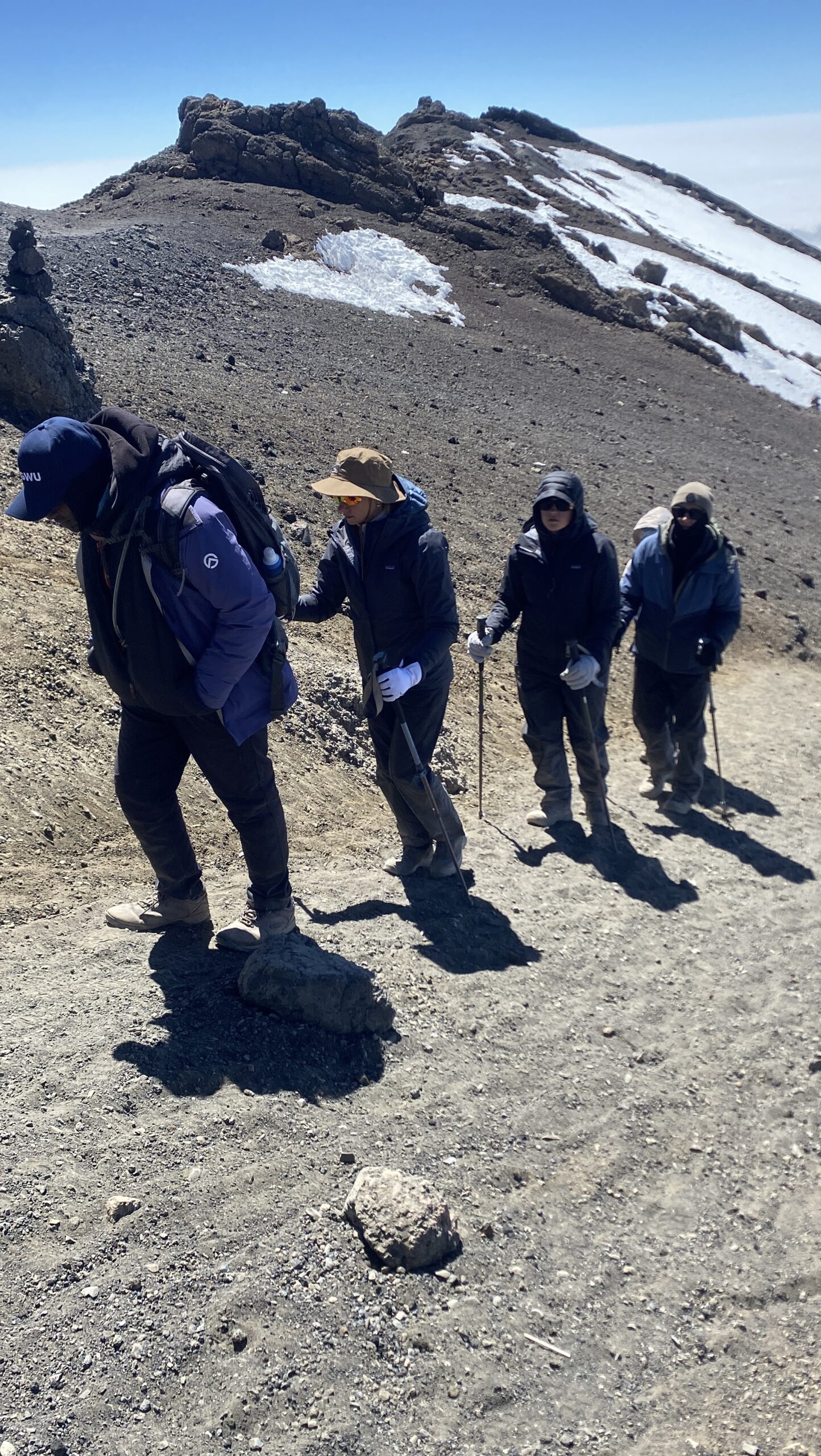
A separate, larger study helps explain how mild symptoms turn into emergencies. Croughs et al., 2022, in the Journal of Travel Medicine, prospectively surveyed 1,237 recreational hikers and 266 porters and guides on Kilimanjaro. Severe altitude-illness symptoms occurred in 8.6% of recreational hikers, and 1.1% were hospitalized. Uhuru Peak was reached by 87.9% of hikers in that sample. The finding most relevant to safety: the majority of hikers who developed mild or severe symptoms kept climbing anyway, and not ascending further when mild symptoms appeared was the one measure the study found associated with a lower chance of symptoms turning severe.
Put simply: the biology is well understood, and the intervention that works — stop ascending, and descend if symptoms are serious — is not complicated. The difficulty is behavioural, not medical. Climbers under-report symptoms because they don’t want to “fail,” and guides without the training, equipment, or authority to insist on descent can miss the window where a stop-and-monitor situation is still just that.
What Altitude Illness Actually Looks Like
Acute Mountain Sickness (AMS) is common and usually mild: headache plus fatigue, nausea, or poor sleep above roughly 3,000m. It is not on its own a reason to evacuate, but it is a reason to stop ascending and monitor.
High Altitude Cerebral Edema (HACE) is rarer and dangerous: confusion, loss of coordination, and an altered level of consciousness. It is a medical emergency requiring immediate descent.
High Altitude Pulmonary Edema (HAPE) — the leading documented cause of death in the KCMC study above — presents as a persistent cough turning wet, breathlessness at rest, and reduced exercise tolerance out of proportion to fatigue. It is also a medical emergency requiring immediate descent.
The recognised treatment for both HACE and HAPE, per Wilderness Medical Society altitude-illness guidance, is descent — supplemental oxygen and medication can help stabilise a climber during that descent, but they are not a substitute for it. Cardiac events at altitude are also real and worth taking seriously, particularly for climbers with existing heart disease or major risk factors, but they were not the leading documented cause of death in the referral-hospital evidence we found — HAPE was.
Kilimania’s Internal Monitoring Protocol
The thresholds below are Kilimania’s own operational protocol, built around Wilderness Medical Society principles and 22 years of field experience — they are our internal descent policy, not a universally mandated clinical standard, and every experienced operator’s exact thresholds vary.
- Lake Louise symptom scoring: every climber is assessed by their guide morning and evening, using the Lake Louise AMS scoring system as one input alongside direct observation of speech, coordination, and behaviour.
- Pulse oximetry: SpO₂ and pulse are checked at every camp and again before the summit push. A downward trend across consecutive checkpoints is often the earliest warning sign, ahead of how the climber says they feel.
- Descent, not negotiation: when a guide’s overall clinical picture — symptoms, oximetry, coordination, behaviour — points to HACE or HAPE, descent begins. It is the senior guide’s decision, not the client’s.
- Wilderness First Responder training: our senior guides, including Sabinus Msimba, hold WFR certification.
- Emergency oxygen and a portable altitude chamber (Gamow bag): carried on our Lemosho, Machame, and Northern Circuit departures for stabilising a climber during descent. Oxygen is used for stabilisation only — never to help a climber continue upward.
- Satellite communication: every crew carries a satellite device, since higher camps have no reliable cell signal.
Descent Is Framed as a Safety Decision, Not a Failure
Climbers push through early symptoms because they associate descent with failure. On our climbs, a guide-initiated descent is recorded and discussed as a safety success, matching the language used in our own route-level data. Across 1,247+ guided climbs between 2019 and 2025, our team recorded 89 mandatory guide-initiated turnarounds and zero helicopter evacuations — a pattern we attribute to catching symptoms early rather than waiting for them to escalate. See the full breakdown in How Hard Is Kilimanjaro? and Kilimanjaro Success Rate by Route, which own this data in depth.
Have a Medical Question Before You Book?
Tell Sabinus Msimba’s team about any existing condition, medication, or previous altitude illness before you commit to dates — no obligation.
WhatsApp: +255 756 449 990 or email info@kilimania.co.tzSafety Equipment and Medication on Every Kilimania Climb
| Item | Kilimania standard |
|---|---|
| Pulse oximeters | Carried by every guide, checked before departure |
| Gamow bag (portable altitude chamber) | Carried on Lemosho, Machame, and Northern Circuit crews |
| Supplemental oxygen | Carried for emergency stabilisation during descent only |
| Satellite communication device | Carried on every crew, independent of cell network |
| First-aid supplies | Wound care, rehydration salts, blister kit — general first aid, not medications |
On medication: some operators carry dexamethasone, nifedipine, or acetazolamide for altitude-illness stabilisation — these are prescription medications with specific indications and contraindications, not general first-aid items, and their use should follow written guidance from a qualified clinician rather than a blanket packing list. If Kilimania guides carry any of these on-route, that detail belongs here with the exact protocol and training behind it — please confirm the current policy so this section reflects it accurately rather than a generic claim.
Rescues and Evacuation — Realistic Timelines
Rescue posts positioned at major camps coordinate stretcher evacuation on every route. According to Kilimania’s own published guidance on medical conditions, stretcher evacuation from Barafu Camp (4,673m) to the park gate takes roughly 6–10 hours, plus a further 2–3 hours to reach KCMC hospital in Moshi — the nearest facility with altitude-medicine experience. Helicopter evacuation, where weather and landing conditions allow it, is significantly faster, but it is daylight- and weather-dependent and does not fly at night. A medical event beginning at the typical summit-night departure time (around 11pm–midnight) means no helicopter option for several hours at minimum, regardless of severity. This is exactly why the descent protocol above exists — it does not wait for a helicopter that may not be available for hours.
Evacuation costs vary considerably by provider and season, and figures published even by Kilimania itself differ from one page to the next as insurer rates move — so rather than quote a number here that may already be out of date, see our dedicated breakdown in Kilimanjaro Travel Insurance, which is the page that owns and maintains those figures. The short version: it runs into the thousands of dollars, standard travel insurance frequently excludes it, and confirming your policy covers high-altitude evacuation before you fly matters more than almost any other piece of trip preparation.
What to Ask Any Operator About Safety
Ask these questions before booking, and treat vague answers as a warning sign:
| Question | What a weak answer sounds like |
|---|---|
| Do guides carry pulse oximeters and check them daily? | “Our guides are experienced, they can tell when something’s wrong.” |
| What is your descent policy when symptoms appear? | “We evaluate case by case,” with no stated threshold |
| What wilderness medical training do senior guides hold? | No specific certification named |
| Do you carry emergency oxygen and a Gamow bag? | “We can arrange that if needed” — not carried standard |
| What is your guide-to-client ratio? | Undisclosed, or one guide for eight or more climbers |
| Are you KPAP-compliant on porter welfare? | Unfamiliar with KPAP or evasive |
Route choice affects baseline risk too — routes with more acclimatisation days show fewer altitude-related turnarounds in our internal data; see Kilimanjaro Success Rate by Route and How Hard Is Kilimanjaro? for the full breakdown. Operators registered with the Tanzania Association of Tour Operators (TATO) and following KPAP porter-welfare standards are generally a stronger baseline than unregistered budget operators.
Frequently Asked Questions
How many people die on Kilimanjaro each year?
There is no independently audited annual figure we can verify or cite with confidence. The best published evidence is a two-year hospital-referral study (Dekker et al., 2021) examining 21 deceased climbers referred to KCMC in Moshi, which found HAPE responsible for 76% of deaths, HAPE/HACE combined for 14%, and trauma and cardiac events one case each. That is a specific, real dataset — not a mountain-wide annual count — but it is the strongest evidence available on what actually kills climbers here.
Is Kilimanjaro more dangerous than Everest Base Camp trekking?
Kilimanjaro’s summit (5,895m) sits higher than the Everest Base Camp trek (5,364m), and Kilimanjaro’s summit night is a single more intense physiological event — roughly 1,255m of gain in 7–9 hours. Everest Base Camp is typically walked over more days with two built-in rest days, which is generally associated with lower AMS incidence. Neither requires technical climbing skill. See our Kilimanjaro vs Everest Base Camp comparison for the full breakdown; we do not operate Everest Base Camp treks ourselves, so those figures are drawn from published sources rather than our own data.
What medical conditions make Kilimanjaro higher risk?
Uncontrolled hypertension, coronary artery disease, arrhythmia, and severe asthma or COPD carry meaningfully higher risk at altitude. Diabetes and most orthopedic issues are generally manageable with medical clearance and route adjustments. Anyone with a cardiac or respiratory diagnosis should get specialist clearance before booking — see Climbing Kilimanjaro With Medical Conditions, which covers this condition-by-condition.
What happens if a guide identifies a medical emergency?
The guide reassesses vital signs immediately, and if descent criteria are met, descent begins within minutes. Base office and the nearest rescue post are notified by radio or satellite. Depending on severity and location, the climber descends on foot with support, by stretcher (6–10 hours from Barafu to the park gate, per our own published guidance), or is escalated to helicopter evacuation once weather and daylight allow it.
Has a client ever died on a Kilimania-guided climb?
No client fatality has occurred on a Kilimania-guided climb. Across 1,247+ guided climbs recorded between 2019 and 2025, our team recorded 89 mandatory guide-initiated turnarounds and zero helicopter evacuations. We state this as our own operational record, not a guarantee about any future climb — no operator can honestly promise an outcome on a mountain of this scale.
The Bottom Line
The best published evidence on Kilimanjaro deaths points to altitude illness — specifically HAPE — as the leading documented cause, and to delayed descent as the pattern behind most preventable cases. The intervention that works is not complicated: stop ascending when symptoms appear, and descend without negotiation if they progress. The gap between a safe climb and a dangerous one is mostly the operator’s equipment, training, and willingness to enforce that decision before it becomes an emergency — not luck.
If you’re weighing routes with this in mind, see How Hard Is Kilimanjaro? for the full difficulty and acclimatisation breakdown, and our Kilimanjaro climbs page for current departures across all major routes.
Ready to Talk Through Routes, Pace, and Medical History?
Message Sabinus Msimba’s team before you commit to dates. We reply within 12 hours, seven days a week.
View Kilimanjaro Climbs WhatsApp: +255 756 449 990Recommended Departures With Full Acclimatisation Days
- 8-Day Lemosho Route — longest standard acclimatisation profile
- 9-Day Northern Circuit — most gradual ascent on the mountain
- 7-Day Machame Route — extra acclimatisation night at Karanga
- 6-Day Rongai Route — gentler northern approach, lower crowd density
Related Reading
- How Hard Is Kilimanjaro? Success Rates & Altitude Reality
- Climbing Kilimanjaro With Medical Conditions
- Kilimanjaro Travel Insurance: What You Actually Need
- Kilimanjaro Success Rate by Route: Data From 1,247 Climbs
- Kilimanjaro vs Everest Base Camp
How We Verify This Information
- Dekker, M.C.J. et al. (2021). “Altitude-Related Disorders on Mount Kilimanjaro, Tanzania: Two-Year Survey in a Local Referral Center.” Wilderness & Environmental Medicine. PubMed
- Croughs, M. et al. (2022). “Incidence and predictors of severe altitude illness symptoms in Mt. Kilimanjaro hikers: a prospective cohort study.” Journal of Travel Medicine. PubMed
- Wilderness Medical Society — altitude illness prevention and treatment guidance
- Kilimanjaro National Park (KINAPA)
- Tanzania National Parks Authority (TANAPA)
- Kilimanjaro Porters Assistance Project (KPAP)
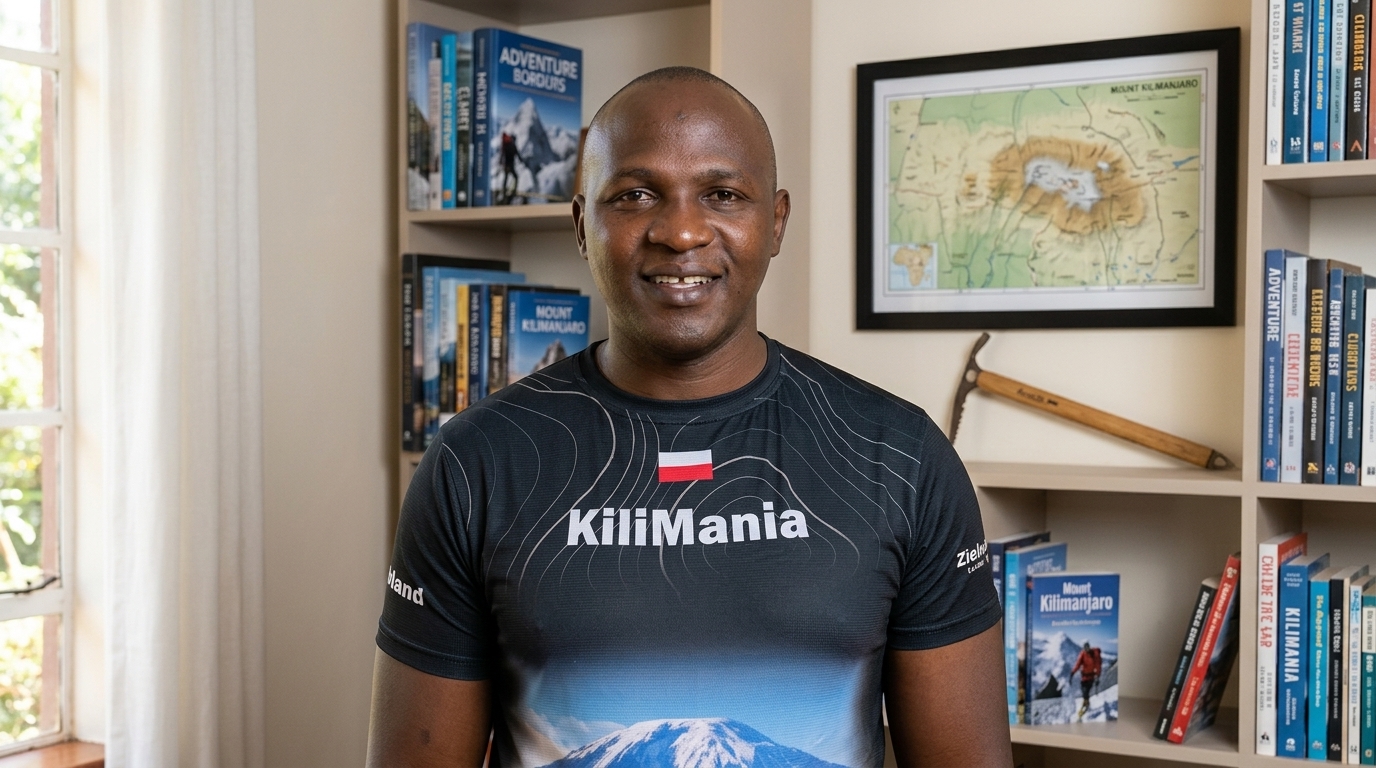
Senior Kilimanjaro Mountain Guide and Co-founder of Kilimania Adventure, based in Moshi, Tanzania. 22 years guiding on Kilimanjaro, 300+ personal Uhuru Peak summits, Wilderness First Responder certified. Full credentials and verification: Sabinus Msimba — Senior Kilimanjaro Guide.
Read climber reviews on TripAdvisor · Google Reviews
Kilimania Adventure is a KINAPA-licensed, TATO-registered operator based in Moshi, Tanzania, and benefits commercially if you book with us. Operational figures referenced in this article (the 1,247+ climb dataset, turnaround counts) are our own internal records, not an independently audited industry-wide figure. The peer-reviewed studies cited above are independent published research, unrelated to Kilimania. This article is for general information and does not replace individualised medical advice — consult a physician before high-altitude travel if you have any relevant health condition.