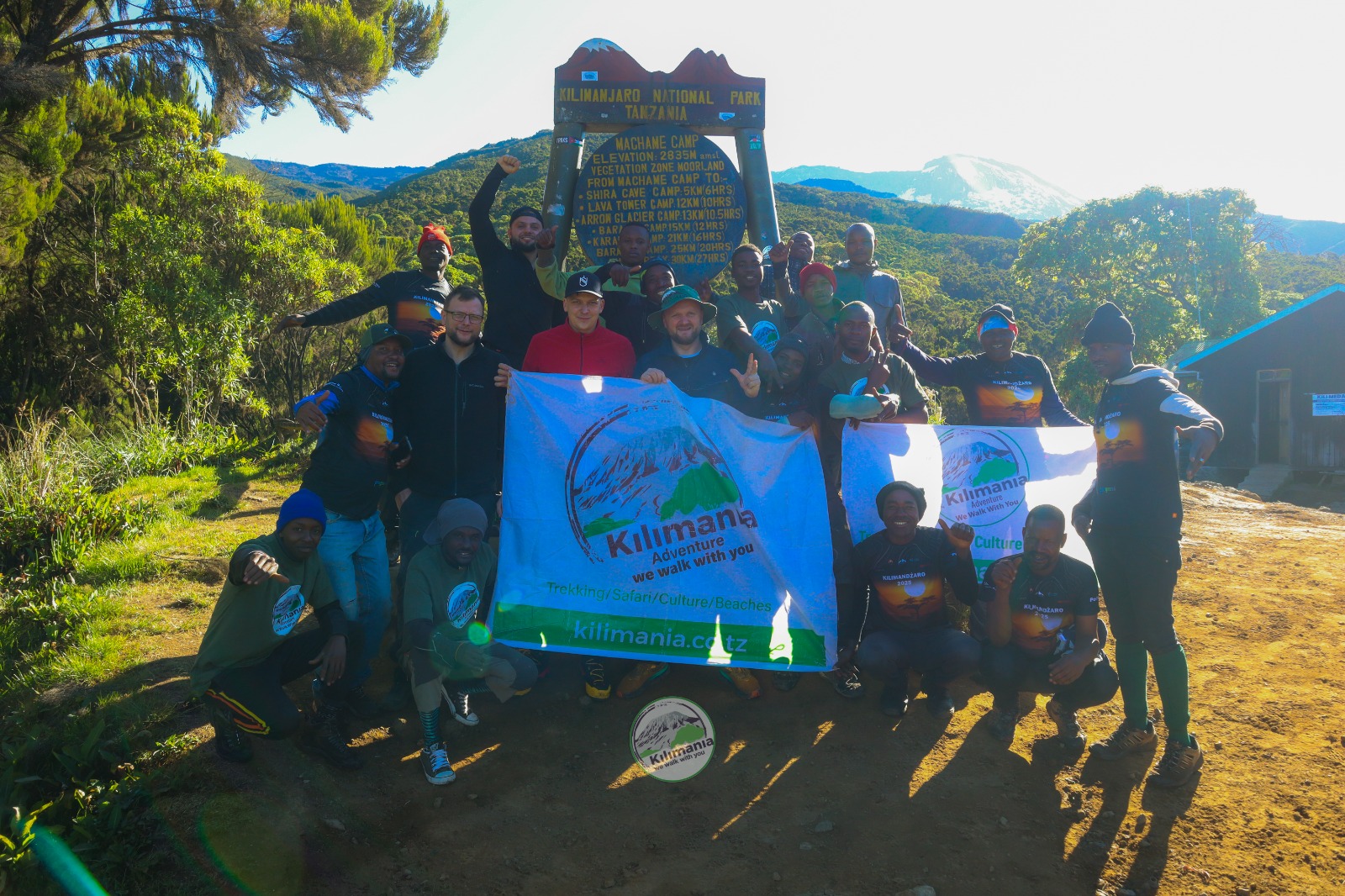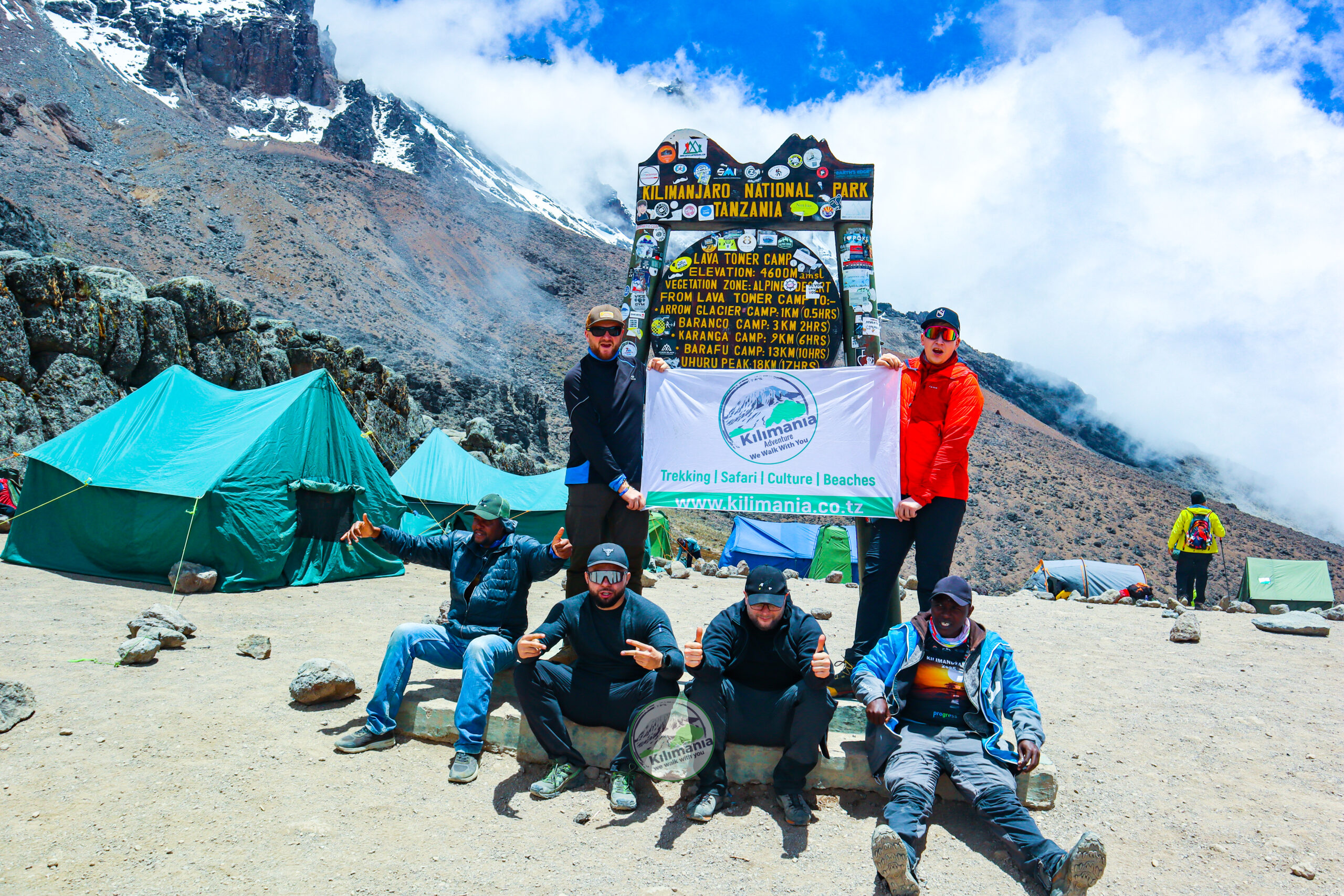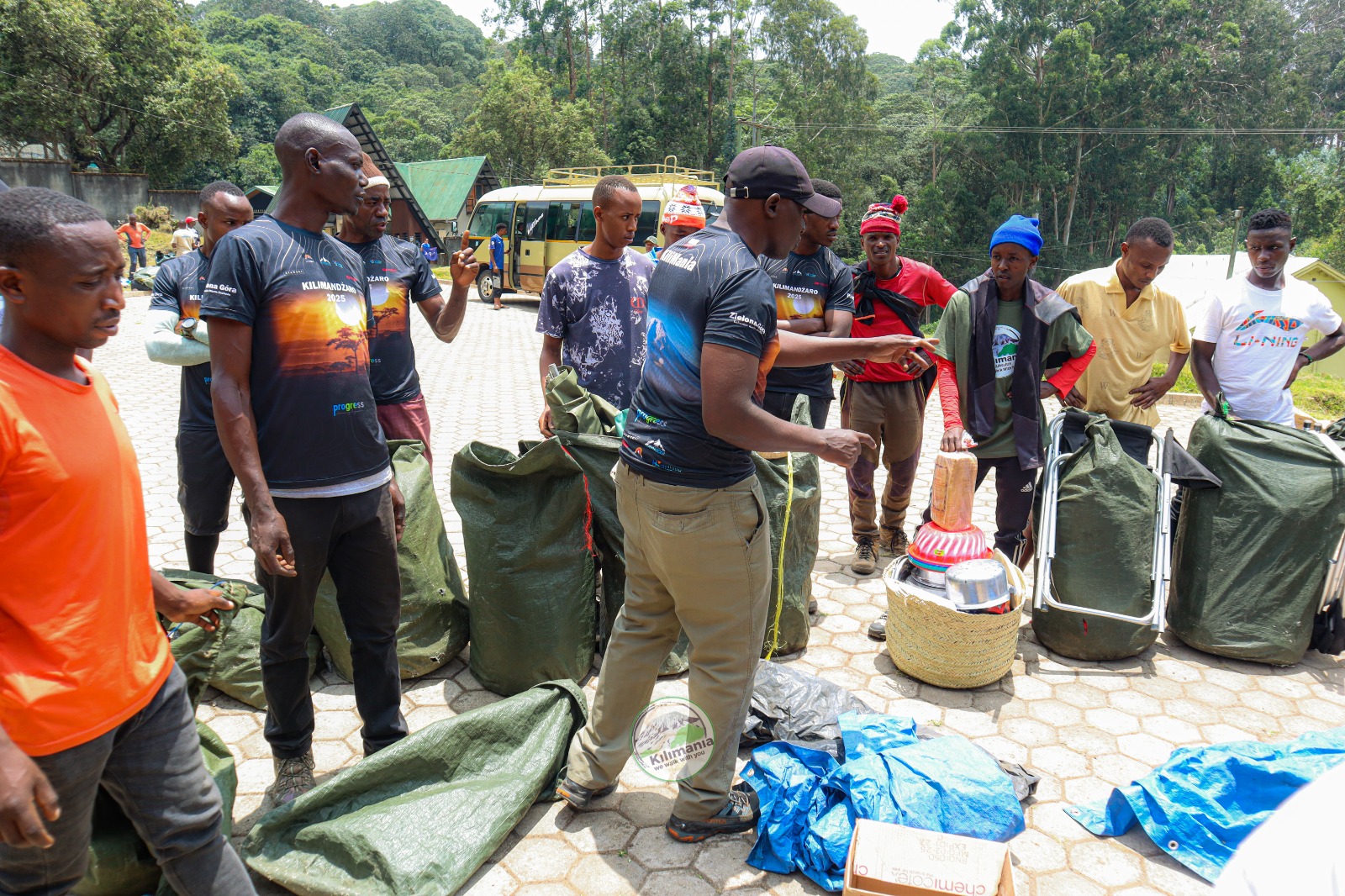
The Machame route on Kilimanjaro, on a 7-day itinerary, gives fit climbers a 92.3% Uhuru Peak success rate based on 412 Kilimania-operated Machame climbs between January 2019 and December 2025. That number drops materially on 6-day itineraries. The route itself covers 62 kilometres from Machame Gate on the southwest slope of Kilimanjaro to Mweka Gate, passing through six distinct vegetation zones, crossing the Barranco Wall, and ascending through Barafu Camp at 4,673m before summit night. It is scenic, demanding, and heavily trafficked in peak months. This guide gives you everything needed to decide whether Machame is the right route for your fitness level, timeline, and goals — including the data most operator pages omit.
Quick Answer
Short answer: The Machame route is Kilimanjaro’s most scenically varied camping route, rated 8/10 difficulty, with a 92.3% Uhuru Peak success rate on our verified 7-day itinerary across 412 guided climbs. The 7-day plan is the only version Kilimania recommends — the 6-day removes a critical acclimatisation overnight and carries a lower summit probability, which we are not willing to sell. Pricing for the Machame 7-day with Kilimania starts from $1,600 per person for groups of 6, rising to $1,900 for solo climbers. For a full route comparison, see our Kilimanjaro Routes 2026 guide.
Key Stats
- 92.3% — Kilimania Uhuru Peak success rate, 7-day Machame (412 climbs, 2019–2025)
- $1,600–$1,900 — Price per person, 7-day Machame, depending on group size
- 62 km — Total route distance, Machame Gate to Mweka Gate
- 8/10 — Difficulty rating among Kilimanjaro camping routes
- 5,756m — Stella Point (crater rim); 5,895m — Uhuru Peak summit
- 1,800m — Machame Gate starting elevation; 4,673m — Barafu Camp, summit departure point
7-day Machame is a strong route for fit, trained hikers who want the most scenically varied camping climb on Kilimanjaro and can accept busy camps in peak season. It is not appropriate as a 6-day itinerary — removing Karanga Camp overnight compresses acclimatization, reduces summit probability, and is not something Kilimania will sell. The minimum legitimate price for a properly operated 7-day Machame is approximately $1,450 per person in a group — below that, something important is being cut.
Table of Contents

Where Is the Machame Route Located?
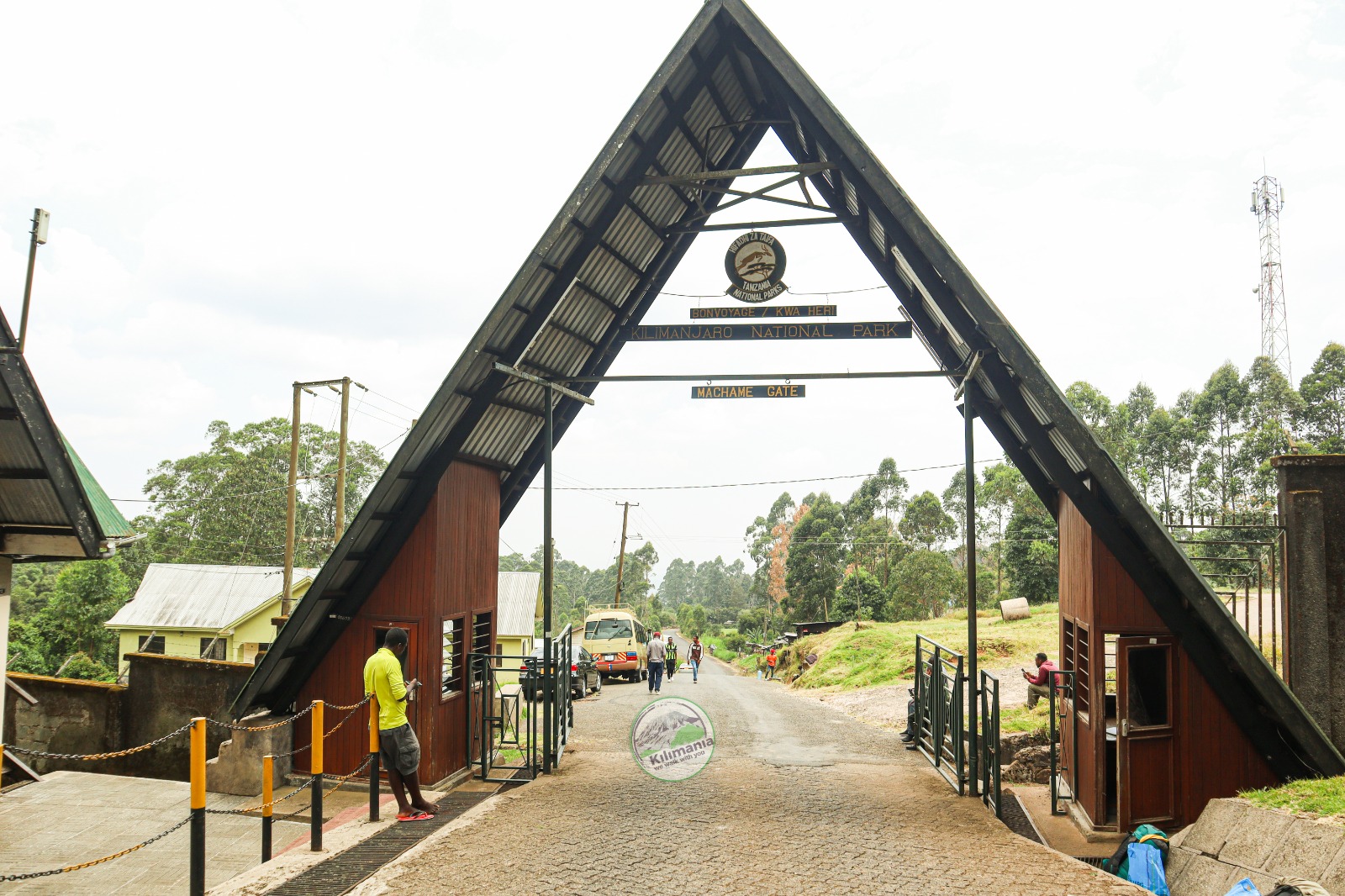
Short answer: The Machame route begins at Machame Gate on the southwest slope of Kilimanjaro National Park, approximately 27 km from Moshi town centre and 57 km from Kilimanjaro International Airport (JRO). It ascends through the southern face of the mountain, crosses the Shira Plateau, descends through the Barranco Valley, and exits via Mweka Gate on the southeast slope — a point-to-point traverse rather than a loop.
Kilimanjaro National Park (KINAPA), managed by TANAPA — the Tanzania National Parks Authority — administers all route access, camping fees, and rescue operations. Machame Gate sits at approximately 1,800m / 5,905 ft and is the busiest entry gate on the mountain, processing more climbers annually than any other access point.
Geographic context:
- Country: Tanzania, East Africa
- Region: Kilimanjaro Region, northern Tanzania
- Nearest city: Moshi (27 km from Machame Gate)
- Nearest international airport: Kilimanjaro International Airport, IATA: JRO (57 km)
- Secondary airport: Arusha Airport, IATA: ARK (85 km)
- Gate GPS (Machame Gate): Approx. 3°06’S, 37°22’E
- Gate GPS (Mweka Gate, exit): Approx. 3°07’S, 37°24’E
- Mountain face approached: Southwest flank, transitioning to southern circuit
Kilimania base: We operate from Moshi, Kilimanjaro Region. Our guides and crew are Moshi-based. Gate transfers leave from Moshi each morning, with pickup from any Moshi hotel or from Kilimanjaro International Airport (JRO) for clients arriving the day before departure.
The route traverses six distinct ecological zones: montane rainforest (1,800–2,800m), heath and moorland (2,800–4,000m), alpine desert (4,000–5,000m), and the glaciated summit zone above 5,000m. Giant groundsels (Dendrosenecio kilimanjari) appear in the moorland transition zone around 3,500–4,000m — prehistoric-looking plants found nowhere else on earth at this density.
The Shira Plateau crossed on Day 2 and 3 is one of the world’s highest plateaux at 3,840m, formed by the collapse of Shira — Kilimanjaro’s oldest volcanic cone — approximately 500,000 years ago. Kibo, the youngest and highest cone containing Uhuru Peak at 5,895m, rises above the plateau’s eastern edge and dominates the view from camp.
Getting to Machame Gate from Moshi: 45–60 minutes by vehicle. Kilimania handles all gate transfers.
Quick Stats: Machame Route Kilimanjaro 2026
| Feature | Machame Route (7 Days) | Lemosho Route (8 Days) | Northern Circuit (9 Days) |
|---|---|---|---|
| Success Rate | 92.3% | 94.8% | 96.1% |
| Duration | 7 Days | 8 Days | 9 Days |
| Difficulty | 8/10 | 7.5/10 | 7/10 |
| Distance | 62 km | 70 km | 98 km |
| Crowds | High | Moderate | Low |
| Scenery | Excellent | Excellent | Excellent |
| Price From | $1,600 pp | $1,750 pp | $1,900 pp |
| Best For | Scenic variety | First-time climbers | Highest summit success |
6-Day Machame
The 6-day Machame itinerary removes the Karanga Camp overnight between Barranco Wall and Barafu. That one night gives the body a second sleep near 4,000m, allows blood chemistry to stabilise, and separates the Barranco Wall effort from summit night. Our climb data shows a 15–18 percentage-point success rate gap between the 7-day and 6-day Machame.
Most Machame pages list both itineraries without explaining this difference.
What the 6-day removes and why it matters
On the 7-day plan, Day 4 takes climbers from Barranco Camp (3,976m) over the Barranco Wall to Karanga Camp (4,035m). That is a short day in kilometres — roughly 5–6 km net — that serves one specific physiological purpose: a second night near 4,000m before the push to Barafu.
On the 6-day plan, Day 4 merges Barranco to Karanga and Karanga to Barafu into a single long push. Climbers arrive at Barafu (4,673m) tired, with compressed recovery, and often partially dehydrated from a hard day. Summit night begins four to six hours later.
The physiology behind one night’s difference:
Above 3,000m, the body runs several parallel adaptation processes — none of which are complete in 24 hours:
- Blood chemistry adjustment. Faster breathing causes respiratory alkalosis. The kidneys compensate by excreting bicarbonate. This stabilisation process takes 24–48 hours at each new altitude.
- EPO production cycle. Erythropoietin — the hormone that drives red blood cell production — is stimulated by hypoxic exposure, but the downstream effect (more red cells circulating) takes days to manifest. One additional night at 4,000m adds time to this cycle.
- Sleep architecture recovery. Periodic (Cheyne-Stokes) breathing disrupts deep sleep at altitude. The first night at any new elevation is consistently the worst. A second night at the same elevation is measurably better. Barafu at 4,673m is the hardest sleeping altitude on the route — arriving there already behind on recovery is the wrong starting position.
- Hydration management. Respiratory fluid loss increases significantly above 4,000m. Dehydration and early AMS share symptom overlap — headache, fatigue, reduced appetite. The additional recovery day allows better hydration management before summit night.
The CDC Yellow Book on High-Altitude Travel is clear: sleeping altitude drives AMS risk more than peak daytime altitude. Removing Karanga means moving the sleeping altitude from 4,035m directly to 4,673m in a single step, then launching a summit attempt from that position.
What we tell climbers who ask for the 6-day Machame
If a client wants a 6-day Machame because of budget or schedule, we explain the data and offer two options: extend to a 7-day Machame if timing allows, or switch to a route better suited to their available days. The 6-day Marangu route has a more forgiving acclimatisation profile than the 6-day Machame. We would rather recommend a route that fits your schedule, honestly, than take a booking for a plan we know underperforms.
The 6-day Machame route removes Karanga Camp overnight, the acclimatization buffer between Barranco Wall and Barafu. Blood chemistry stabilization, EPO production, and sleep quality all benefit materially from a second night near 4,000m. Kilimania’s climb data shows a 15–18 percentage-point gap between 7-day and 6-day Machame outcomes.

Kilimania’s Machame Success Rate: The Full Data
Based on 412 Kilimania-operated Machame 7-day climbs between January 2019 and December 2025, 92.3% of climbers reached Uhuru Peak (5,895m). Success is defined as reaching Uhuru Peak, not Stella Point. Stella Point completion rates are higher. The data covers climbers of all nationalities, fitness levels, and departure seasons recorded in our internal climb database of 1,247+ total guided ascents.
How Kilimania calculates success rates
Database: 1,247+ guided ascents across all routes, January 2019 to December 2025. Machame subset: 412 climbs, all 7-day itinerary. Definition of success: Physical arrival at Uhuru Peak sign (5,895m), confirmed by guide log entry and summit photograph. Exclusions from the rate: Climbers who turned around before Stella Point due to altitude sickness, injury, or personal decision. Climbers who reached Stella Point only are counted separately. What this covers: All Kilimania-operated Machame climbs during this period — solo travellers on group departures, private climbs, and charity groups. We do not exclude difficult cases from the data.
Machame Success Rates by Season (Kilimania Data)
| Season | Typical Months | Kilimania Success Rate | Weather Conditions | Crowd Level | Recommendation |
|---|---|---|---|---|---|
| Long Dry Season | June–October | 93.8% | Dry, stable weather, excellent visibility | High | Best overall season for most climbers |
| Short Dry Season | January–March | 92.1% | Clear skies, warmer temperatures, occasional showers | Moderate | Excellent for photography and fewer crowds |
| Short Rains | November | 87.4% | Intermittent rain, cloudy afternoons | Low | Suitable for experienced trekkers seeking solitude |
| Long Rains | April–May | 81.6% | Heavy rainfall, muddy trails, limited visibility | Very Low | Generally not recommended |
Key finding: The June–October window delivers Kilimania’s highest summit success rates and the most stable weather conditions, although it is also the busiest period on the mountain.
The June–October window shows our highest success rate and the heaviest crowds. The data does not suggest crowds harm individual outcomes — the effect of crowds is primarily experiential (queues at Barranco Wall, congested Barafu) rather than physiological.
Cross-route success rate comparison (Kilimania data)
Route Success Rate Comparison (Kilimania Data)
The industry-wide Machame average sits approximately 8–12 percentage points below Kilimania’s 7-day figure — primarily because many operators still sell 6-day Machame and count those results in their published rates.
The five factors that drive Machame’s success in our data:
- 7-day itinerary with Karanga overnight — single largest variable
- Guide-to-client ratio — Kilimania operates a maximum of 1:3 on summit night
- Daily SpO2 monitoring — oxygen saturation readings at each camp from Day 3
- Hydration management — guides track fluid intake against altitude and exertion
- Flexible turnaround decisions — no social pressure to push past physiological limits
Complete Day-by-Day 7-Day Machame Itinerary.
Day 1: Machame Gate → Machame Camp
Elevation: 1,800m → 2,980m | Gain: +1,180m Distance: 11 km | Time: 5–7 hours Terrain: Dense montane rainforest — muddy, rooted, humid, frequently slick after rain
The first hours are enclosed and wet. Giant ferns, moss-covered Hagenia trees, and a continuous canopy trap humidity and block long views. The trail holds mud through most of the year — during the April–May rains it becomes genuinely slippery underfoot. You gain more than 1,100 vertical metres over a full walking day, which is the detail most first-time climbers underestimate.
Honest challenge: Day 1 is not the warm-up it looks like on paper. You are adjusting to mountain walking pace, carrying a daypack, processing humidity, and arriving at nearly 3,000m for the first night. Some climbers feel a mild headache or reduced appetite by dinner. This is the body registering altitude for the first time — not a warning sign, but a signal to eat a full dinner regardless of appetite.
What guides watch: Pace, discipline, hydration intake, and dinner consumption. Guides slow the pace from the first kilometre — fast arrivals at Machame Camp do not improve acclimatisation. They cost you recovery.
Evening: Soup, rice or pasta, vegetables, protein, hot tea. Sleep at 2,980m.
Day 2: Machame Camp → Shira Camp

Elevation: 2,980m → 3,840m | Gain: +860m Distance: 5–7 km | Time: 4–6 hours Terrain: Steep forest exit, then open heath and moorland with rocky volcanic outcrops
The canopy opens within the first hour. Heather transitions to open moorland and the first clear views of Kibo — Kilimanjaro’s highest volcanic cone and the one containing Uhuru Peak — appear to the northeast. Mount Meru, 70 km west across the Rift Valley, is visible on clear mornings from this elevation.
Honest challenge: The pace temptation. This is a short-distance day, and most climbers feel the urge to move faster. Shira Camp sits at 3,840m — the first sleep above 3,500m — and the first night at this elevation is often restless. Arriving conservatively is better preparation for Day 3 than arriving early.
What guides watch: Breathing rate increase, first headache reports, and appetite at lunch. Many climbers experience altitude awareness for the first time today. Guides document symptoms using the Lake Louise AMS score at camp.
Evening: Soup, main dish, hot drinks. Sleep at 3,840m on the Shira Plateau.
Day 3: Shira Camp → Lava Tower → Barranco Camp
Elevation: 3,840m → 4,600m (Lava Tower, lunch) → 3,976m (sleep) Distance: 10–11 km | Time: 6–8 hours Terrain: Open Shira Plateau, alpine desert, volcanic scree, rocky descent to Barranco Valley
This is the day that separates Machame from routes without a deliberate acclimatisation loop. You ascend from Shira across the plateau to Lava Tower — a dark volcanic plug standing at approximately 4,600m — lunch there, then descend 624 vertical metres to sleep at Barranco Camp (3,976m).
Vegetation becomes sparse above 4,200m, transitioning to the giant groundsels (Dendrosenecio kilimanjari, approx. 3m tall) and giant lobelias (Lobelia deckenii) of the alpine desert zone — plant species found only on the high African volcanoes. The southern glaciers — the Decken Glacier and the Heim Glacier — become visible above from the Lava Tower approach.
Honest challenge: How the body reacts at 4,600m for the first time. Headache, nausea, unusual fatigue, and reduced appetite at Lava Tower are all common. Some climbers feel genuinely unwell during lunch. The descent to Barranco usually brings rapid relief, which is the physiology working exactly as intended. Symptoms that worsen on descent require guided assessment.
What guides watch: AMS symptoms at Lava Tower using the Lake Louise scale, SpO2 readings, appetite at lunch, gait and coordination on descent, temperature and fluid intake at Barranco Camp.
Evening: Full dinner at Barranco. This is the consolidation night — guides pay close attention to how each climber recovers through the evening. Sleep at 3,976m.
Day 4: Barranco Camp → Karanga Camp (Barranco Wall Day)
Elevation: 3,976m → 4,035m (net) | Gain: +59m net Distance: 5–6 km | Time: 4–6 hours Terrain: Barranco Wall scramble (hands required at multiple points), then rolling ridges and valleys to Karanga
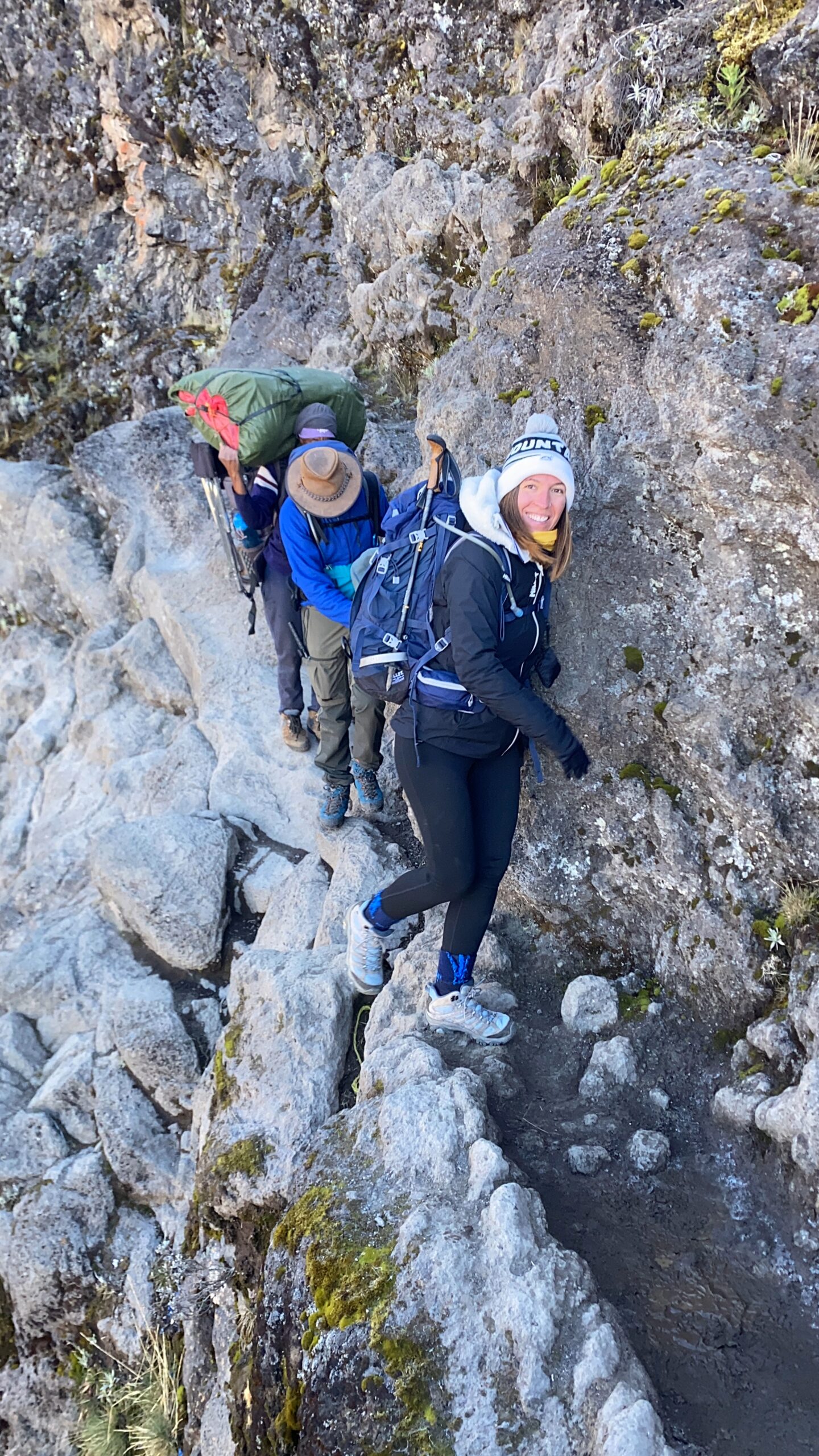
Day 4 begins below the Barranco Wall — 250–300m of broken volcanic rock rising from the floor of the Barranco Valley. It is the most photographed feature on the Machame route. It is also the most bottlenecked point on the mountain in peak season. Kilimania departs Barranco by 5:30am specifically to reach the wall base before the surge.
The wall itself is a non-technical scramble. No ropes, no crampons, no mountaineering equipment required. You use your hands at multiple points. The Kissing Rock — a narrow section near the upper wall where the rock overhangs and climbers lean against the face — sounds dramatic and feels manageable when the guide demonstrates the exact placement. The primary hazard is loose rock dislodged from climbers above. Stay close to your guide and do not look up at other climbers on loose sections.
The Karanga overnight is the night the 6-day itinerary removes. After the physical effort of the wall and the ridge crossing, the body needs recovery time. Two nights near 4,000m (Barranco + Karanga) before the move to Barafu gives blood chemistry, ventilatory adaptation, and sleep quality time to progress. The net elevation gain today is minimal — this day exists for physiology, not distance.
Honest challenge: Congestion at the wall in peak months. In July and August, multiple route flows converge at Barranco simultaneously. The wall can develop a 20–40 minute queue at narrow sections. Starting at 5:30am avoids the worst of this.
What guides watch: Wall safety — spacing, footing, hand placement. Energy levels on the ridge crossing to Karanga. Hydration and appetite at Karanga. SpO2 readings at camp.
Evening: Soup, main dish with protein and carbohydrates, chapati, hot drinks. Sleep at 4,035m.
Day 5: Karanga Camp → Barafu Camp
Elevation: 4,035m → 4,673m | Gain: +638m Distance: 4 km | Time: 3–5 hours Terrain: Open alpine desert, loose volcanic scree, exposed rocky ridges
Barafu means “ice” in Swahili. The camp earns the name. Wind is constant above 4,500m on the southern approach. Vegetation disappears entirely. The summit cone rises directly above camp, appearing close enough to touch and taking far longer to reach than the eye suggests.
Honest challenge: Rest management at Barafu. The altitude (4,673m), wind, congested tent platforms, and the mental weight of the approaching summit attempt make genuine rest difficult. Guides deliver a full briefing: precise midnight wake-up, layering system, water management, snack schedule, summit night pace, turnaround criteria, and what altitude symptoms to report immediately.
What guides watch: SpO2 readings at arrival — a baseline reading at Barafu is important context for summit night assessment. Resting heart rate, headache level, appetite, and willingness to eat the early dinner. Many climbers eat less than usual at Barafu. Guides encourage small portions spread across the afternoon rather than a large plate before sleep.
Schedule: Dinner at 5:00–5:30 pm. Sleep attempt at 6:30 pm. Wake up at 11:00 pm. Summit departure at midnight.
Day 6: Barafu Camp → Uhuru Peak → Mweka Camp
Elevation: 4,673m → 5,895m (Uhuru Peak) → 3,100m (sleep) Distance: 17–18 km total | Time: 7–9 hrs ascent, 4–6 hrs descent Terrain: Frozen volcanic gravel and loose scree on ascent; rocky trail through alpine desert and moorland on descent
Summit day begins at midnight. The first hours are slow switchbacks on frozen gravel and loose scree. Headlamps form a moving line both above and below. Cold is not temperature alone — it is the combination of altitude, pre-dawn darkness, wind, and the grinding slowness that altitude imposes on every step.
The section between Barafu and Stella Point (5,756m) is where most turnarounds happen. It takes four to seven hours for most climbers, not because the terrain is technically difficult, but because the body at this altitude cannot move faster. Nausea, headache, unusual sleepiness, cold hands, and doubt are normal. Guides manage pace, check in on every climber at intervals, and make turnaround assessments based on the Lake Louise criteria and SpO2 readings.
Stella Point at 5,756m marks the crater rim. This is where Kilimania records Stella Point completions separately from Uhuru Peak completions — the certificate differs (green for Stella Point, gold for Uhuru Peak). The additional 45–60 minutes from Stella Point to Uhuru Peak follows the crater rim with continued wind and cold exposure.
SpO2 at the summit zone: Blood oxygen saturation typically reads 50–70% at Uhuru Peak for acclimatized climbers. The body cannot fully adapt to 5,895m on a one-week ascent — it tolerates it briefly. Summit time is purposefully short: photographs, documentation, and descent begin promptly.
The descent: After returning to Barafu for a rest and repack, the group descends via the Mweka route — approximately 12 km of trail through alpine desert, moorland, and eventually the lower forest. Trekking poles protect knees on a long, steep descent through tired legs. Most climbers arrive at Mweka Camp (3,100m) with recovering appetite and noticeably better breathing.
Evening at Mweka: Full hot dinner. Sleep at 3,100m is the longest and deepest sleep of the week.
Day 7: Mweka Camp → Mweka Gate
Elevation: 3,100m → 1,640m | Loss: -1,460m Distance: 10 km | Time: 3–4 hours Terrain: Muddy rainforest trail, steep in sections
The final descent through the forest to Mweka Gate. The trail is frequently slippery — tired legs on a wet downhill path are where most minor ankle incidents occur on Kilimanjaro. Guides maintain a controlled pace, and trekking poles remain necessary.
Summit certificate: Issued at Mweka Gate — green for Stella Point, gold for Uhuru Peak. The gate register must be signed out before leaving the national park boundary.
Transfer: Return to Moshi takes approximately 45–60 minutes. Most climbers want a meal, a shower, and sleep on arrival.
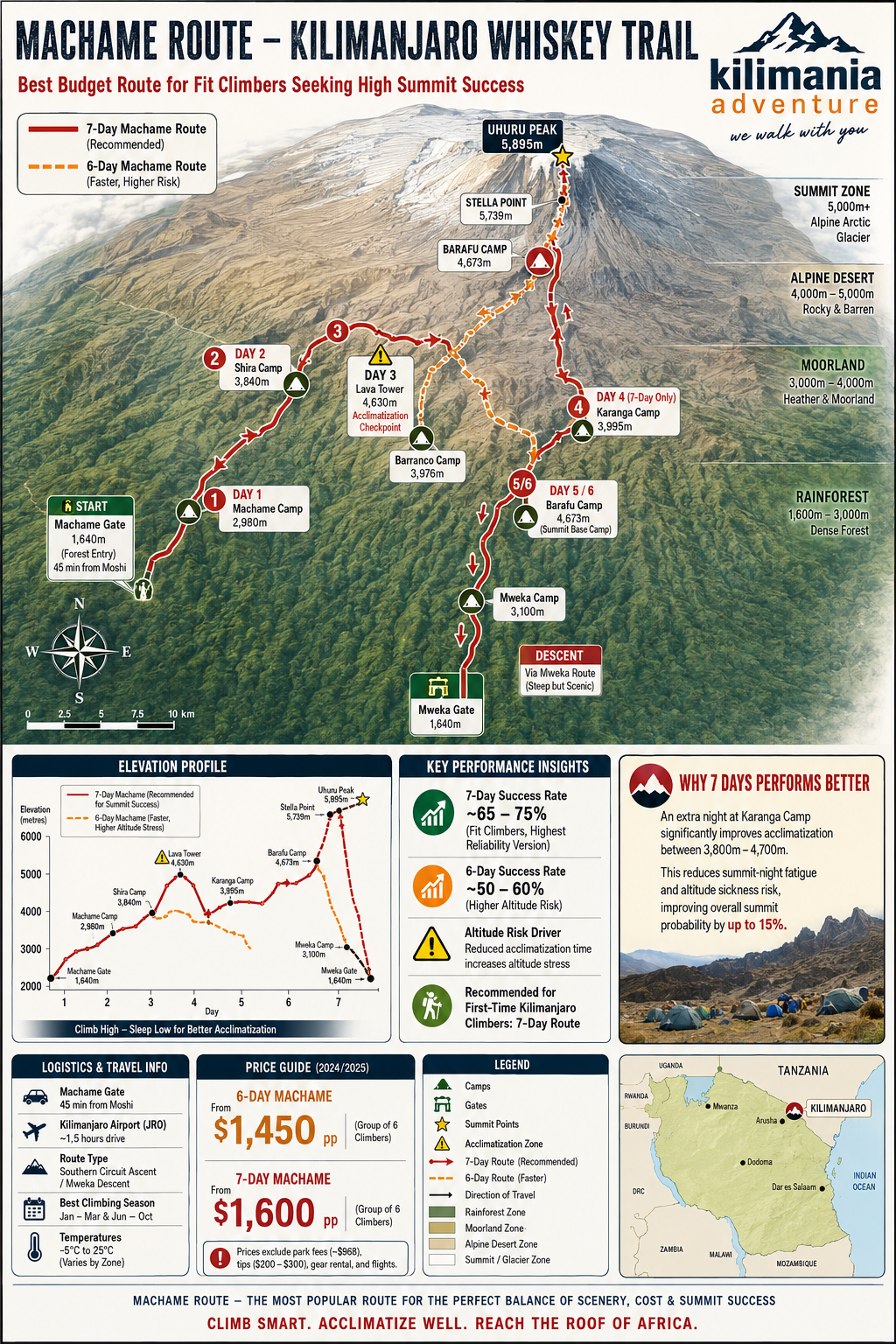
Machame Route Elevation Profile Explained
Machame’s elevation profile delivers a meaningful “climb high, sleep low” acclimatisation loop on Day 3 (ascending to Lava Tower at 4,600m before sleeping at Barranco at 3,976m) and a second night near 4,000m at Karanga on Day 4. These two elements together allow the body two nights to progress adaptation before summit night from Barafu at 4,673m. Remove either element and the profile is materially weaker.
The strength of the profile lies in the Lava Tower loop. Most climbing routes ascend linearly — each night’s sleeping altitude is higher than the last. The Lava Tower day breaks this pattern by forcing the body to a significant hypoxic stimulus (4,600m) and then allowing recovery at a lower sleeping elevation (3,976m). This pattern — reach high, sleep low — is the most effective natural acclimatisation mechanism available on a one-week Kilimanjaro climb according to Wilderness Medical Society altitude illness guidelines.
Camp elevations, night by night:
- Night 1: Machame Camp — 2,980m
- Night 2: Shira Camp — 3,840m
- Night 3: Barranco Camp — 3,976m (after reaching Lava Tower 4,600m)
- Night 4: Karanga Camp — 4,035m
- Night 5: Barafu Camp — 4,673m
- Night 6: Mweka Camp — 3,100m (after summiting 5,895m)
The critical insight: the move from Barranco (3,976m) to Barafu (4,673m) is a jump of 697 vertical metres in sleeping altitude. The Karanga night absorbs part of this jump by interposing a night at 4,035m. Without Karanga, the body goes from 3,976m directly to 4,673m in sleeping altitude — a harder step physiologically.
For climbers with prior high-altitude experience above 4,500m, this may be manageable. For most first-time Kilimanjaro climbers, the Karanga night is not optional. Our data confirms this. The CDC High-Altitude Travel guidelines consistently emphasise sleeping altitude — not peak daytime elevation — as the primary driver of AMS risk.
The Machame route elevation profile includes a “climb high, sleep low” loop at Lava Tower (4,600m) followed by a sleep at Barranco (3,976m), then a Karanga Camp night (4,035m) before Barafu (4,673m). This two-step approach to the 4,000m sleeping altitude threshold gives the body more time for blood chemistry stabilisation, improved ventilation, and sleep quality before summit night. It is the primary physiological reason 7-day Machame outperforms 6-day Machame by 15–18 percentage points in Kilimania’s climb data.
The Barranco Wall: What Actually Happens

The Barranco Wall is a 250–300m non-technical scramble using hands at multiple sections. It is not a technical climb. It demands focus, a head for exposure, and a willingness to follow the guide instruction precisely. In peak season (July–September), the wall develops bottleneck queues of 20–40 minutes at narrow sections. Kilimania departs Barranco Camp at 5:30 am to manage this.
The Barranco Wall is the most photographed section of the Machame route and the most frequently misrepresented in both directions — either described as trivially easy or as genuinely dangerous. Neither is accurate.
What you actually encounter:
- 250–300m of broken volcanic rock rising from the Barranco Valley floor
- Multiple sections requiring hands — not just poles
- The Kissing Rock: a chimney near the upper wall where the rock overhangs and climbers press against the face to negotiate a narrow step. Guides demonstrate the exact hand and foot placement. Nearly all climbers manage it with focus.
- Loose rock dislodged by climbers above — the primary hazard. Stay close to your guide, maintain your gap, and do not look directly up at other climbers.
The fear of heights question: If you have a significant, untreated fear of heights and have not done scrambling before, discuss this honestly with your guide at the Machame Gate briefing. The Wall can be mentally challenging even for climbers without height anxiety — the exposure increases significantly near the Kissing Rock and in the upper chimneys. Preparation and guided communication address this effectively.
The queue management: In July and August, multiple route flows converge at Barranco — groups from Machame, some from Lemosho via the Shira route — all hitting the same wall in the 6:30–8:30 am window. Narrow sections physically allow only one person at a time. A 30-minute queue at the Kissing Rock is realistic during peak weeks.
Kilimania’s solution: depart Barranco by 5:30am. This places our groups at the base before the main wave. By the time congestion builds, our climbers are on the ridge above. It adds 30–45 minutes of cold early-morning walking in exchange for a clean, uninterrupted scramble.
After the Wall: The ridge crossing to Karanga is demanding despite the low net elevation gain. Total distance is 5–6 km, but the terrain is rolling, with several false summits over valleys before Karanga comes into view. Energy management matters more here than on any other day of the route. Guides monitor each climber’s output and pace accordingly.
The Barranco Wall is a 250–300m non-technical scramble — not a technical climb — that requires hands at multiple points including the Kissing Rock chimney. In peak season, queue times of 20–40 minutes at narrow sections are realistic. The primary hazard is loose rock from climbers above. Kilimania departs at 5:30am to avoid peak congestion. Climbers with significant untreated height anxiety should discuss this openly with guides before the day begins.
Thinking about Machame? Get a real quote first. WhatsApp: WhatsApp WhatsApp: +255 756 449 990 Email info@kilimania.co.tz Tell us your travel dates, group size, and fitness background. We return a full itemised quote within 12 hours — park fees by day, inclusion and exclusion list, no costs discovered at the gate.
Who Should and Should Not Choose Machame
Choose 7-day Machame if you have multi-day hiking experience with a loaded pack, can train seriously for 3–4 months before departure, want maximum scenic variety, and can accept busy camps in peak season. Do not choose Machame if crowds will damage the experience, if you have only 6 days available, or if your primary goal is the highest possible summit probability regardless of route.
Choose the Machame 7-day if:
- You have prior multi-day trekking experience — anything involving consecutive days at altitude, loaded pack, and variable terrain
- You can commit to 3–4 months of specific training, including loaded uphill hikes and back-to-back long walking days
- Scenic variety — rainforest, moorland, Shira Plateau, Barranco Valley, alpine desert — matters to you
- You accept that Barranco and Barafu will be busy in July–September and December–February
- Your budget is $1,600–$1,900 per person and you want a well-operated camping climb
- You have 7 full mountain days available (plus travel days to and from Moshi)
Do not choose Machame if:
- Solitude matters — Lemosho and Northern Circuit are meaningfully quieter
- You have only 6 days — Kilimania recommends a more suitable route for that timeline
- Summit probability above all else is the goal — Northern Circuit 9-day gives a 96.1% rate vs Machame’s 92.3%
- You have medical conditions requiring careful route selection — read Climbing Kilimanjaro With Medical Conditions first
- You have not trained specifically for long uphill days with a loaded pack
Machame vs Other Routes: Entity Comparison
Choosing the right Kilimanjaro route depends on your priorities. The table below compares Kilimania’s verified summit success rates, route duration, crowd levels, difficulty, and starting prices.
| Feature | Machame Route (7 Days) | Lemosho Route (8 Days) | Northern Circuit (9 Days) |
|---|---|---|---|
| Kilimania Success Rate | 92.3% | 94.8% | 96.1% |
| Duration | 7 Days | 8 Days | 9 Days |
| Crowd Level | High | Moderate | Low |
| Scenery | Excellent | Excellent | Excellent |
| Difficulty | High (8/10) | Moderate-High (7.5/10) | Moderate (7/10) |
| Starting Price | From $1,600 pp | From $1,750 pp | From $1,900 pp |
| Best For | Maximum scenic variety | First-time climbers seeking fewer crowds | Highest summit probability and solitude |
Key insight: The Northern Circuit offers Kilimania’s highest summit success rate (96.1%), while the Machame Route combines excellent scenery with a lower starting price. Lemosho provides a balance of strong acclimatization and lower crowd levels.
Machame vs other routes: which route is for each
Choose Lemosho 8-day if you want comparable scenery with significantly lower crowds on the first two days and a stronger acclimatisation profile. Lemosho joins the Machame route at Shira Camp, so terrain from Day 3 onward overlaps substantially. Kilimania Lemosho 8-day success rate: 94.8% (318 climbs). Price: from $1,750 per person (group of 6). Full details: Lemosho Route Kilimanjaro.
Choose the Northern Circuit 9-day if the highest possible summit probability is the primary goal and you have nine days. The longest route, the quietest, and the strongest acclimatisation of any Kilimanjaro itinerary. Kilimania success rate: 96.1% (187 climbs). Price: from $1,900 per person (group of 6). Full details: Northern Circuit Kilimanjaro.
Choose the Rongai 6-day if a 6-day itinerary is genuinely required. Rongai from the north has a different acclimatisation profile to Machame and performs better in 6 days — Kilimania Rongai 6-day success rate: 88.4% (143 climbs) vs Machame 6-day at materially lower.
Choose the Marangu 6-day if hut accommodation is important or knee concerns make the steep Mweka descent problematic. Kilimania Marangu 6-day success rate: 85.2% (187 climbs). Price: from $1,450 per person (group of 6).
For a full route decision framework: Best Route to Climb Kilimanjaro
Machame Route Cost and What Is Included
Kilimania’s 7-day Machame price starts at $1,600 per person for a group of 6, rising to $1,900 for a solo climber. These prices include two hotel nights (one before, one after the climb), all park fees, KINAPA-licensed guides, an ethical porter team, mountain tents, meals, and drinking water. The minimum legitimate price for a properly operated 7-day Machame with an ethical operator is approximately $1,450 per person in a group — below that, something material is being cut.
Kilimania 7-day Machame pricing by group size
Machame Route 7-Day Price by Group Size (2026)
| Group Size | Price Per Person (USD) | Total Group Cost (USD) | Best For |
|---|---|---|---|
| Solo Climber (1 Person) | $1,900 | $1,900 | Independent travelers |
| 2 Climbers | $1,800 | $3,600 | Couples or friends |
| 3 Climbers | $1,750 | $5,250 | Small groups |
| 4 Climbers | $1,700 | $6,800 | Families and friends |
| 5 Climbers | $1,650 | $8,250 | Private groups |
| 6 Climbers | $1,600 | $9,600 | Best value per person |
Key insight: The lowest per-person cost on Kilimania’s 7-Day Machame Route is achieved with a group of six climbers at $1,600 per person, while solo travelers pay $1,900.
Deposit: $100 to confirm your booking and secure climb availability.
What is included
- 2 hotel nights in Moshi (1 night before climb, 1 night after)
- All Kilimanjaro National Park fees (KINAPA / TANAPA)
- Camping and rescue fees
- KINAPA-licensed lead guide (Sabinus Msimba or named senior guide) and assistant guides
- Cook and full porter team under KPAP ethical wage and weight standards
- Mountain tents and sleeping mats
- Mess tent with table, chairs, and cook equipment
- All meals on the mountain (breakfast, lunch, dinner, snacks) and purified drinking water
- Daily health monitoring including Lake Louise AMS scoring at each camp
- Pulse oximetry (SpO2 readings) from Day 3 onward
- Emergency oxygen supply
- Transfers from Kilimanjaro International Airport (JRO) or Moshi hotel to Machame Gate and return from Mweka Gate
What is excluded
Flights, Tanzania visa ($50 most nationalities / $100 US citizens), travel insurance, personal climbing gear, sleeping bag rental if required, crew gratuities, single supplement if applicable, personal medications including Diamox, and any additional hotel nights beyond the two included.
On crew gratuities: KPAP (Kilimanjaro Porters Assistance Project) recommends tipping guides $25–$40 per vehicle per day and cooks $10–$15 per person per day. Budget $260–$350 per person for a 7-day climb in gratuities. Bring USD small bills ($5, $10, $20 denominations) from home — ATMs in Moshi dispense large denominations impractical for tipping.
The minimum price question
A 7-day Machame requires KINAPA park fees of $70.00 per person per day (7 days = $490), a camping fee, a rescue fee, and a mandatory crew. A correctly operated climb with ethical porter wages cannot be quoted significantly below $1,400 per person in a group of 4 or more. Any quote materially below this figure means the operator is cutting somewhere — porter wages, food quality, guide-to-client ratio, or safety equipment.
Ask any operator before paying a deposit: Are park fees itemised per day in writing? Are KPAP wage standards adhered to? What is the guide-to-client ratio on summit night? A legitimate operator answers all three without hesitation.
Kilimania’s 7-day Machame price is $1,600–$1,900 per person depending on group size, inclusive of two hotel nights, all park fees, guides, porters, tents, and meals. The floor price for a legitimately operated 7-day Machame is approximately $1,450 per person in a group of 4 — below that, something is being cut. Ask for park fees itemised by day and KPAP compliance confirmation before paying any deposit.

Machame vs Other Routes: Data Comparison
Machame vs Lemosho vs Northern Circuit: Success Rates and Prices
| Route | Duration | Kilimania Success Rate | Starting Price (USD) | Best For |
|---|---|---|---|---|
| Machame Route | 7 Days | 92.3% | From $1,600 pp | Maximum scenic variety |
| Lemosho Route | 8 Days | 94.8% | From $1,750 pp | Fewer crowds and strong acclimatization |
| Northern Circuit Route | 9 Days | 96.1% | From $1,900 pp | Highest summit probability and solitude |
Key insight: The Northern Circuit delivers Kilimania’s highest summit success rate (96.1%), while the Machame Route offers the lowest price and greatest scenic variety.
Machame vs Lemosho: Both routes share terrain from Shira Camp onward. The practical differences are in the approach — Lemosho’s first two days are quieter and the 8-day version adds one more acclimatisation day for a stronger summit profile. Machame is marginally less expensive and 1 day shorter. If crowd density on the first days matters, Lemosho wins. See Machame vs Lemosho comparison.
Machame vs Northern Circuit: Northern Circuit is longer, quieter, and delivers the strongest acclimatisation available on a standard Kilimanjaro climb. The 3.8 percentage-point gap in our data (92.3% vs 96.1%) is meaningful at scale. If summit probability is the primary goal and nine days are available, Northern Circuit is the rational choice.
Practical Information: Camps, Water, Crowds, and Gear
Short answer: Machame is a full camping route. Kilimania provides all mountain tents, sleeping mats, mess tent, and cooking equipment. You need a sleeping bag rated to at minimum -10°C comfort temperature (-15°C recommended for Barafu). Water is treated and supplied by the crew. Crowd levels at Barranco and Barafu are the highest on any camping route — guides manage this through early departures and disciplined pacing.
Camp-by-camp practical details
Machame Camp (2,980m): Established camp in the forest. Public long-drop toilets — basic but functional. Water from forest streams, treated by crew. Busy in peak months.
Shira Camp (3,840m): Open plateau camp. Wind increases significantly. Toilets available. No shelter from wind — tent quality matters here.
Barranco Camp (3,976m): The most congested camp on the route. In July–August, this valley holds hundreds of tents from multiple operator groups. Public toilets become heavily used. Kilimania offers a private portable toilet tent addition — not a luxury item, but a practical acclimatisation tool. Climbers who avoid fluid intake to minimise toilet trips directly worsen their acclimatisation.
Karanga Camp (4,035m): Smaller, quieter camp than Barranco. Alpine desert. Wind exposure. Water from a stream, treated by crew.
Barafu Camp (4,673m): The most exposed camp on the mountain. Rocky tent platforms, constant wind, congested before midnight departures. No vegetation. Temperature at night in July–August regularly drops to -10°C to -15°C before windchill.
Mweka Camp (3,100m): Post-summit recovery camp. The forest returns. Sleep at this altitude is markedly better than any night above 4,000m.
Gear priorities for Machame
- Sleeping bag: -15°C comfort rating minimum for Barafu (not “limit” rating — comfort rating)
- Trekking poles: Essential for Barranco Wall descent control, Barafu approach, and the Mweka descent on tired legs. Carbon poles save significant cumulative weight.
- Waterproof boots: Ankle support, waterproofed, broken in for minimum 8 hours before departure. Do not attempt Machame in trail runners.
- Summit gloves: Rated for -15°C. Separate liner gloves for layering.
- Headlamp: Summit night begins at midnight. Fresh batteries plus one spare set.
- Thermal layers: Base layer top and bottom. Mid layer fleece or down. Waterproof shell. Down or synthetic summit jacket for the crater rim.
For the complete gear list: Kilimanjaro Trek General Information
Crowds — the honest picture
Machame is the busiest camping route on Kilimanjaro in every season. No operator controls this. Our approach: early morning departures to stay ahead of congestion at Barranco Wall, careful camp positioning, and experienced guides who know when to move and when to hold pace. Crowds create inconvenience. When guides are experienced, they do not create danger.
What Kilimania Clients Say About Machame
“I was nervous about the Barranco Wall — I’m not a technical climber and the photos looked intimidating. Sabinus walked the whole wall with me, showed every hand placement, and we were at the top before the main queue built. The Karanga night was the day I felt the altitude really start to lift.” — Sarah M., UK, September 2025 (Verified TripAdvisor)
“I priced this same 7-day Machame through a UK agent: £2,100. Emailed Kilimania directly: $1,700 for the same itinerary and one more guide on summit night. The difference paid for Zanzibar.” — Thomas K., Germany, February 2026 (Verified Google Reviews)
“Cold showers at Barranco in July were rough.” — John D., Australia, July 2025 (Verified Google Reviews) Kilimania note: Barranco does not have heated washing facilities. We are honest about this. Hot water at lower camps is available from the cook team. Summit-direction climbers are focused on hydration and rest, not showers.
Why Trust Kilimania Adventure for This Information
- Base: Moshi, Kilimanjaro Region, Tanzania — physical office, not an online booking desk
- TATO registration: Member of the Tanzania Association of Tour Operators
- KINAPA licensing: All Kilimania lead guides are KINAPA-licensed — verify at kilimanjaranationalpark.go.tz
- Climb data: 1,247+ guided ascents (2019–2025) recorded in internal climb database — not competitor-sourced
- Machame data: 412 Machame 7-day climbs specifically
- Transparency: We publish honest limitations, real success rate data with methodology, and the reasons we stopped selling 6-day Machame. Operators who hide negatives lose trust. Operators who publish them honestly earn it.
- Contact our Moshi office: +255 756 449 990, 7 days per week
Safety and health information in this article. This article describes altitude sickness risk, acclimatisation physiology, and altitude-related decision-making. The medical information references the CDC and Wilderness Medical Society clinical guidelines. No guide — including Kilimania’s — can guarantee a client’s safety or summit outcome. Individual physiology, undisclosed health conditions, and weather are variables no operator controls. Climbers with pre-existing medical conditions should obtain physician clearance before booking and disclose all relevant health information to their guide at the gate briefing.
Financial accuracy in this article All prices are June 2026 figures from Kilimania Adventure’s own operating costs and KINAPA’s published fee schedule. KINAPA fees are $70.00 per person per day for Kilimanjaro National Park, verified at kilimanjaranationalpark.go.tz.
FAQ: Machame Route Kilimanjaro 2026
Is the 7-day Machame better than the 6-day Machame?
Yes. The 7-day Machame Route includes an extra acclimatisation night at Karanga Camp, significantly improving summit success rates and reducing altitude sickness risk. Kilimania Adventure operates only the 7-day itinerary.
What is the Machame Route success rate?
Kilimania Adventure recorded a 92.3% Uhuru Peak success rate on the 7-day Machame Route from 2019 to 2025. Success is measured at Uhuru Peak (5,895m), not Stella Point.
How difficult is the Machame Route?
The Machame Route is considered challenging (8/10 difficulty). Climbers face steep trails, the Barranco Wall scramble, high altitude, and a demanding summit night. No technical climbing skills are required.
Is the Machame Route crowded?
Yes. Machame is Kilimanjaro’s busiest camping route, especially from June to October and December to February. Climbers seeking fewer crowds often choose the Lemosho or Northern Circuit.
How much does the Machame Route cost in 2026?
Kilimania Adventures’ 7-day Machame Route starts from $1,600–$1,900 per person, depending on group size. Prices include park fees, guides, meals, camping equipment, airport transfers, and hotel accommodation in Moshi.
Where does the Machame Route start?
The Machame Route begins at Machame Gate on Kilimanjaro’s southwest side, about 27 km from Moshi and 57 km from Kilimanjaro International Airport (JRO).
What is the Barranco Wall?
The Barranco Wall is a steep but non-technical rock scramble climbed on Day 4. Most trekkers complete it safely without ropes or climbing experience.
Can beginners climb the Machame Route?
Yes. Fit beginners who train consistently for several months can successfully climb the 7-day Machame Route with proper preparation and pacing.
Do I need Diamox on the Machame Route?
Diamox may help reduce altitude sickness symptoms, but it should only be used after consulting your doctor. Proper acclimatisation remains the most important factor.
When is the best time to climb the Machame Route?
The best months are January–March and June–October, when weather conditions are generally drier, and visibility is better.
Can I climb Kilimanjaro without a guide?
No. Tanzania National Parks regulations require all climbers to be accompanied by a licensed Kilimanjaro guide.
Is a $900 Machame Quote Real or a Scam?
No. A 7-day Machame climb requires $490 in KINAPA park fees alone ($70 per person per day × 7 days), plus mandatory camping fees, rescue fees, and crew costs. No legitimately operated 7-day Machame can be delivered for under $1,400 per person in a group of 4. A quote at $900 means park fees are excluded, porter wages are being violated, or the operator does not intend to run the climb at all.
The arithmetic is not complicated. KINAPA sets the park fee for Kilimanjaro National Park at $70.00 per person per day. Seven nights on the mountain = $490 in park fees before the operator has paid a single guide, purchased a single meal, or erected a single tent. Add a mandatory camping fee, rescue levy, and crew — and the cost floor becomes clear. Any quote substantially below $1,400 per person in a group of 4 fails basic arithmetic.
The five patterns of fraudulent Machame quotes:
- Deposit theft: Operator takes a $200–$400 deposit, provides a booking confirmation, and does not appear at Machame Gate on departure day. The deposit is unrecoverable.
- Park fee exclusion: Quote appears competitive because it excludes KINAPA park fees entirely — cash demanded at the gate, often at inflated rates.
- Porter wage violation: Quote meets price expectations by paying porters below the KPAP minimum wage and overloading them beyond the 20kg KPAP limit. Legal on paper; exploitative in practice.
- Bait and switch: Quote confirmed in writing, then “fuel surcharge,” “equipment levy,” or “VAT revision” demanded on arrival in Moshi. The operator banks on the traveller not walking away after flying to Tanzania.
- Unlicensed guide operation: Real vehicle, real gate, real mountain — but the lead guide carries no KINAPA license. If anything goes wrong above 4,000m, no rescue coordination exists, and no liability framework applies.
How to verify before paying any deposit:
- Ask for park fees to be itemised per day, per person, in writing — $70/day for 7 days = $490 minimum
- Ask whether the guide is KINAPA-licensed — verify at kilimanjaranationalpark.go.tz
- Ask for the operator’s TATO registration number
- Ask for KPAP alignment in writing — porter wages and maximum load stated explicitly
- Ask for a written inclusion and exclusion list — every legitimate cost listed before payment
- Pay only a $100–$200 deposit until the full itemised quote is confirmed in writing
Red Flags in Any Machame Route Quote
Include these checks before paying any deposit on a Machame climb:
- Park fees listed as “excluded” or “to be confirmed” — KINAPA park fees are fixed and knowable. Any operator who cannot itemise them before booking is either uninformed or hiding costs.
- Total price below $1,400 per person in a group of 4 — below the mathematical floor for a legitimately operated 7-day climb with park fees, crew, and food included.
- No KINAPA license number provided for the lead guide — KINAPA licensing is verifiable. If the guide’s license number is not provided on request, assume it does not exist.
- Full payment is required more than 60 days before departure — legitimate operators take a deposit to hold the booking. Full pre-payment at the booking stage is a fraud indicator.
- 6-day Machame quoted as equivalent to 7-day — any operator who presents the 6-day and 7-day itineraries as interchangeable is either uninformed about the acclimatisation difference or choosing not to explain it.
Conclusion
On a correctly operated 7-day itinerary with Karanga Camp overnight, the Machame route delivers a 92.3% Uhuru Peak success rate across 412 Kilimania-guided climbs — making it one of the strongest-performing camping routes on the mountain for properly prepared climbers. The single largest predictor of success is not fitness or motivation: it is the presence of the Karanga acclimatisation night, which is why Kilimania stopped selling the 6-day version entirely.
For climbers who want maximum scenic variety, can train for 3–4 months, and accept busy camps in exchange for one of the most dramatic summit-approach profiles on Kilimanjaro, the 7-day Machame route at $1,600–$1,900 per person is a well-evidenced choice. Browse our 7 Days Machame Route tour page or contact the Moshi team directly for a full itemised quote within 12 hours. We Walk With You.
Plan Your Machame Route Climb — Get a Personalised Quote
From our base in Moshi, Kilimanjaro Region, Kilimania Adventure runs daily Kilimanjaro climbs and safaris to Serengeti National Park, Ngorongoro Crater, Tarangire National Park, and Lake Manyara, with pickups from Kilimanjaro International Airport (JRO) and Arusha Airport (ARK).
WhatsApp: +255 756 449 990 Email ✉️ info@kilimania.co.tz Tell us: Your preferred travel dates Number of climbers Any medical conditions or fitness concerns We return a full itemised quote within 12 hours — park fees by day, guide-to-client ratio stated, KPAP compliance confirmed, complete inclusion and exclusion list. No costs discovered at the gate. Verify our TATO registration: tatotz.org Official Kilimanjaro park fees and regulations: kilimanjaranationalpark.go.tz Tanzania e-visa portal: immigration.go.tzResponse times: Kilimania Adventure operates on East Africa Time (EAT, UTC+3) from Moshi. Messages sent after 6:00 PM EAT receive responses the following morning. All quote requests receive a reply within 12 hours, 7 days per week.
We Walk With You.
External Authority References
- Tanzania National Parks Authority (TANAPA)
- Kilimanjaro National Park (KINAPA)
- CDC Yellow Book: High-Altitude Travel and Altitude Illness
- Wilderness Medical Society: Altitude Illness Clinical Practice Guidelines
- Kilimanjaro Porters Assistance Project (KPAP)
- Tanzania e-Visa Portal
Related Kilimania Reading
- 7 Days Machame Route — Tour Page and Booking
- Kilimanjaro Routes 2026: Full Comparison
- Kilimanjaro Success Rate by Route
- Lemosho Route Kilimanjaro
- Northern Circuit Kilimanjaro — 9 Days
- Climbing Kilimanjaro With Medical Conditions
- Senior Guide Sabinus Msimba
Disclosure: This article is written by Kilimania Adventure, a TATO-registered safari and Kilimanjaro operator based in Moshi, Tanzania. We have a commercial interest in Kilimanjaro climb bookings. All prices reflect real 2026 costs from our own operations. All success rate data is drawn from our internal climb database of 1,247+ guided ascents (2019–2025). We encourage you to compare our quotes with at least two other TATO-registered operators before booking.
Written by: Sabinus Salvatory Msimba, Senior Kilimanjaro Climb Guide and Co-founder, Kilimania Adventure Credential: 22 years guiding on Kilimanjaro, 300+ verified summit ascents, KINAPA-licensed mountain guide Last reviewed: June 2026 Review schedule: Updated each January following KINAPA’s annual fee revision. Climb data is refreshed quarterly from our internal database.
Data verification notice: Park fees, rescue fees, and conservation area charges are set by government authorities and can change without advance notice. All figures reflect published June 2026 rates. Verify current fees at kilimanjaranationalpark.go.tz before booking.