Above 4,000m on Kilimanjaro, the majority of climbers experience some altitude symptoms. Headaches, fatigue, and reduced appetite are normal physiological responses to reduced oxygen — they are manageable and, on a properly structured route, they resolve with time. HACE (High Altitude Cerebral Edema) and HAPE (High Altitude Pulmonary Edema) are a different category entirely: rare, serious, and requiring immediate descent. The difference between those two outcomes — uncomfortable but manageable, versus a genuine medical emergency — lies in recognising the signs early and acting on them without hesitation.
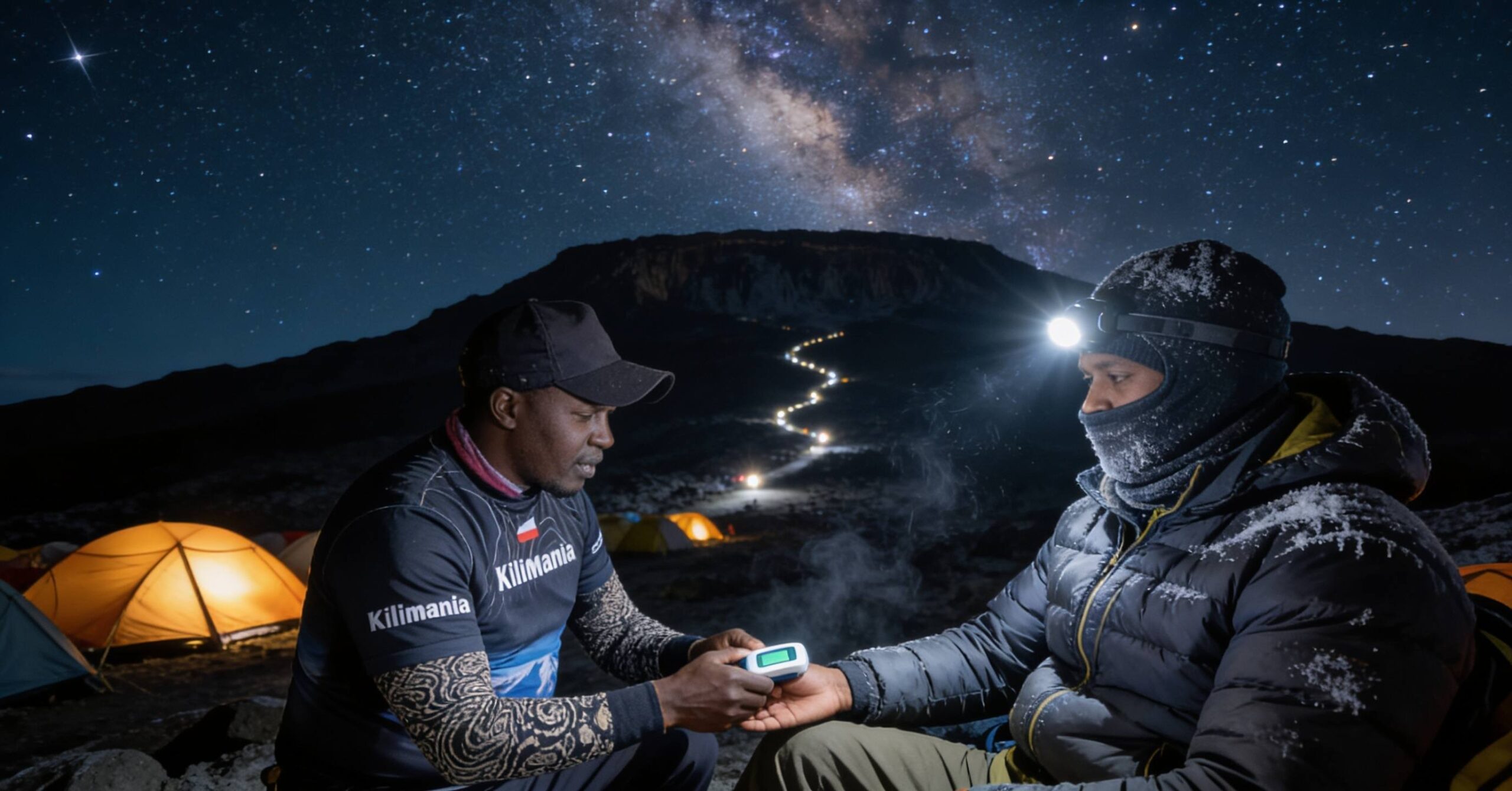
This guide explains the physiology of altitude at each stage of the climb, how our guides assess symptoms using the Lake Louise Score and pulse oximetry every morning, what Diamox does and when it is appropriate, and exactly what happens when a Kilimania guide determines that descent is required. Read it before you leave. Share it with your climbing partner. And if anything in it prompts a question about your own medical situation, take it to your doctor before departure.
Questions About Altitude and Your Health?
Senior Guide Sabinus Msimba and the Kilimania team answer altitude questions every day. WhatsApp us directly before you book.
WhatsApp: +255 756 449 990Altitude Sickness on Kilimanjaro: The Complete Honest Medical Guide
By Sabinus Msimba, Senior Kilimanjaro Guide · · · 22 years guiding on Kilimanjaro · WFR Certified · KINAPA Licensed
Data sources cited in this article: Wilderness Medical Society altitude illness guidance, the Lake Louise AMS scoring system, and Kilimania Adventure’s internal operational records (2019–2025).


What Altitude Does to Your Body — The Physiology in Plain Language
Kilimanjaro rises from 1,830m at the Marangu Gate to 5,895m at Uhuru Peak in under 60 kilometres. That vertical gain is the central challenge of the climb — not the terrain, not the temperature, but the thinning of the air at each step upward. Understanding what actually happens to your body at each altitude band removes much of the anxiety about “altitude sickness” and replaces it with something more useful: informed awareness.
Shira Camp
First measurable changes
Blood oxygen saturation (SpO₂) begins to drop measurably from the sea-level norm of 95–99%. Most fit climbers feel nothing at this altitude. Some report a mild headache by evening, particularly if they ascended quickly. Barometric pressure is approximately 70% of sea level. The body has not yet activated its full compensatory response.
Barranco
Compensatory mechanisms activate fully
At this altitude, the body shifts into active compensation mode. Breathing rate increases — you may notice yourself breathing more deeply during sleep. Heart rate rises, often by 10–20 bpm above your normal resting rate. The kidneys begin excreting bicarbonate to reduce blood pH, which in turn stimulates the respiratory centre to breathe faster. Erythropoietin (EPO) production begins — the body’s long-term adaptation mechanism that stimulates red blood cell production — though this takes weeks to have meaningful effect and is largely irrelevant for a 7–9 day climb. Many climbers experience some symptoms here: headache on waking, reduced appetite, or disturbed sleep.
Barafu Camp
The summit launch point — where the body is under real stress
The air at Barafu contains approximately 55% of the oxygen molecules present at sea level. Every physical exertion — standing up, walking to the toilet block, putting on boots — requires measurably more cardiovascular effort than it would at lower altitude. Sleep quality deteriorates significantly here, partly due to Cheyne-Stokes breathing (a periodic pausing of breathing during sleep that is normal at altitude but can cause anxiety). Headaches are common. The climb to Uhuru begins from Barafu at midnight: this is the most altitude-exposed section of the entire route.
Uhuru Peak
Hypoxic environment — context matters for SpO₂ readings
Oxygen saturation in healthy climbers at Uhuru Peak typically reads 60–75% on pulse oximetry. At sea level, an SpO₂ below 95% is clinically concerning. At 5,895m, a reading of 68% is expected and does not by itself indicate a medical problem. Context — including symptoms, Lake Louise Score, and trend over time — is what matters. Guides trained in wilderness medicine know this. A pulse oximeter used alone, without symptom assessment, provides incomplete information.
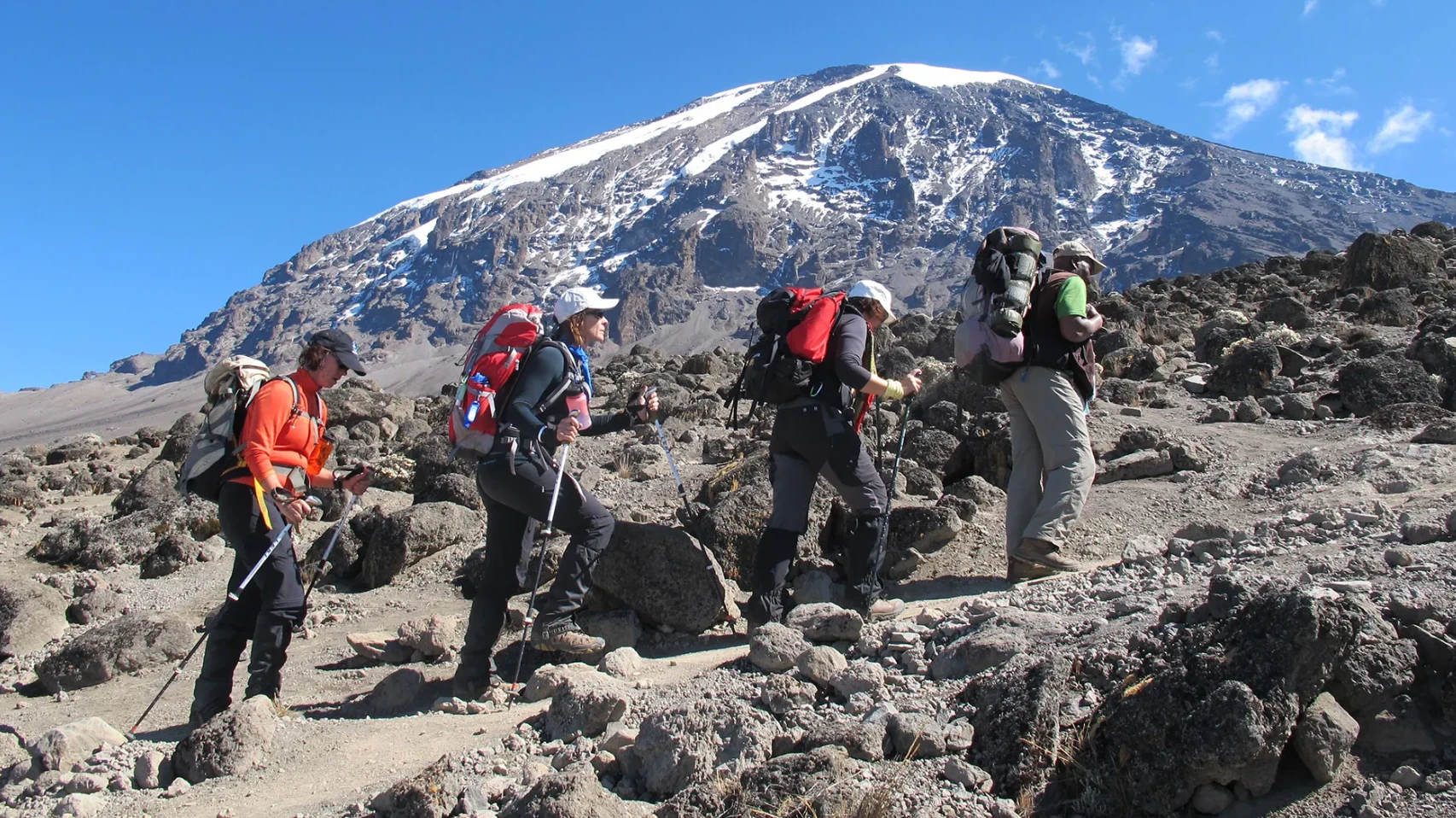
The key insight from all of this: altitude symptoms are not a sign of weakness or poor fitness. They are a normal physiological response to an abnormal environment. What separates a successful summit from a dangerous situation is not whether symptoms appear — many climbers will experience some — but whether those symptoms are identified correctly, monitored consistently, and responded to without delay when they progress beyond the manageable range.
The Three Types of Altitude Illness — Know the Difference
Altitude illness exists on a spectrum. Most climbers sit at the mild end. A small number experience the moderate form. Fewer still — and typically only on poorly structured itineraries without qualified guide oversight — progress to the severe, life-threatening forms. The three categories have distinct symptom profiles, distinct responses, and distinct urgency levels.
AMS
Acute Mountain Sickness
- Headache (required)
- Nausea or vomiting
- Fatigue
- Dizziness
- Poor sleep quality
Response: Rest, hydrate, no further ascent. Descend if no improvement in 24h.
HACE
High Altitude Cerebral Edema
- Severe, unrelenting headache
- Loss of coordination (ataxia)
- Altered mental state
- Confusion or irrational behaviour
- Inability to complete simple tasks
Response: IMMEDIATE DESCENT. No delay.
HAPE
High Altitude Pulmonary Edema
- Breathlessness at rest
- Dry cough → productive with pink froth
- Crackling sounds in lungs
- Extreme fatigue
- Cyanosis — blue lips or fingertips
Response: EMERGENCY DESCENT + evacuation call simultaneously.
AMS — Acute Mountain Sickness (The Manageable One)
AMS is defined by the presence of headache plus at least one additional symptom — nausea, fatigue, dizziness, or poor sleep — occurring within hours of ascending above 2,500m. It is the most common form of altitude illness on Kilimanjaro, and when caught at the mild stage, it is manageable on the mountain with appropriate intervention.
What “manageable” actually means: Rest at current altitude. No further ascent until symptoms resolve completely or improve significantly. Adequate hydration (3–4 litres per day). Ibuprofen for headache relief (note: this treats the symptom, not the underlying cause). Mild AMS often improves within 12–24 hours given these conditions, though this varies by individual.
When AMS crosses the line: If symptoms do not improve after 24 hours at the same altitude, or if they worsen at any point — especially if headache becomes severe and does not respond to ibuprofen, or any neurological symptoms appear — the situation has moved beyond manageable AMS. Descent is required.
On Kilimania climbs, the Lake Louise Score is used every morning at Barafu Camp and after every acclimatisation hike to track symptom severity objectively. A score of 3 or above triggers a management protocol. A score of 6 or above triggers mandatory descent to a lower camp. This is a fixed part of our protocol, regardless of how close the climber is to the summit.
HACE — High Altitude Cerebral Edema (The Serious One)
HACE is caused by increased fluid pressure in the brain at altitude. As the brain swells against the skull, it produces a distinct and recognisable symptom cluster. The key diagnostic signs are:
- Severe headache that does not respond to ibuprofen or paracetamol
- Ataxia — loss of coordination. The field test: ask the person to walk heel-to-toe in a straight line. A person with HACE typically cannot do this without stumbling.
- Altered mental status — confusion, inappropriate responses, inability to complete a simple three-word sentence or perform basic arithmetic
- Irrational behaviour — a climber who refuses to descend despite obvious incapacity, or who cannot recognise their own condition
The reason for this strict protocol is straightforward: HACE can progress rapidly. What begins as confusion can become a medical emergency within hours if descent is not initiated. TANAPA rescue coordination is contacted simultaneously, not after the descent attempt. Every Kilimania guide is trained to initiate this protocol — the guide’s assessment takes priority, including over the climber’s own protests, because the affected climber’s judgment cannot be relied on once HACE is suspected.
The Gamow Bag — Temporary Hyperbaric Treatment
A Gamow bag is a portable hyperbaric chamber. When inflated by a foot pump, it increases the pressure inside to simulate the air pressure of an altitude 1,500–2,000m lower. For a climber at 4,600m, a functioning Gamow bag creates an environment equivalent to approximately 2,700m — this can produce meaningful, relatively rapid improvement in symptoms and buys time. Kilimania carries a Gamow bag on all climbs. Critical point: the Gamow bag is a temporary stabilisation measure, not a treatment. Descent is still required even after a climber shows improvement in the bag. The bag does not cure HACE — it temporarily reduces the physiological trigger while real descent is arranged.
HAPE — High Altitude Pulmonary Edema (The Life-Threatening One)
HAPE is fluid accumulation in the lungs at altitude. It is a leading cause of altitude-related death, and it can progress faster than HACE. The mechanism: at altitude, small blood vessels in the lungs constrict unevenly, causing pressure to build and fluid to leak from the capillaries into the air sacs (alveoli). The lungs progressively fill with fluid. Oxygen transfer from air to blood becomes critically impaired.
HAPE progresses through recognisable stages:
- Early: Reduced exercise tolerance, dry cough, mild breathlessness during exertion — easily confused with normal altitude effects
- Developing: Breathlessness at rest, persistent cough, fatigue disproportionate to exertion level
- Advanced: Productive cough with frothy or pink-tinged sputum (blood mixed with fluid), crackling sounds in the lungs (audible with a stethoscope), cyanosis — blue colouration of lips and fingernails from oxygen deprivation
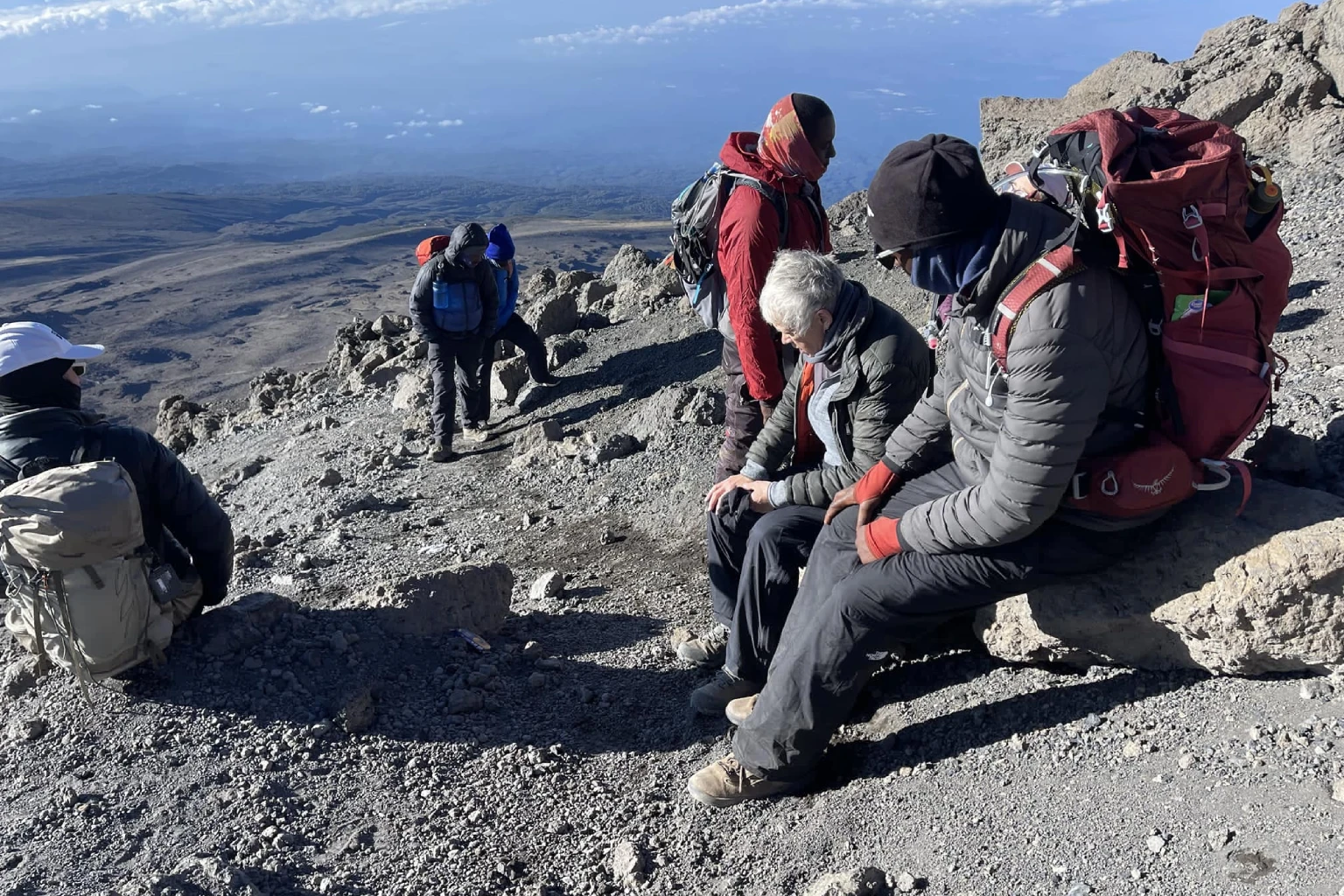
The reason HAPE is so dangerous is that its early stages are subtle enough to dismiss, and its late stages are severe enough to become rapidly life-threatening. A climber who is “just a bit breathless” at Barafu and whose guide does not take this seriously may be at real risk within hours. This is why Kilimania guides are trained specifically in early HAPE recognition, and why breathlessness at rest — in any climber, at any point — triggers immediate assessment rather than a wait-and-see approach.
The Lake Louise Scale — How Our Guides Assess You Every Day
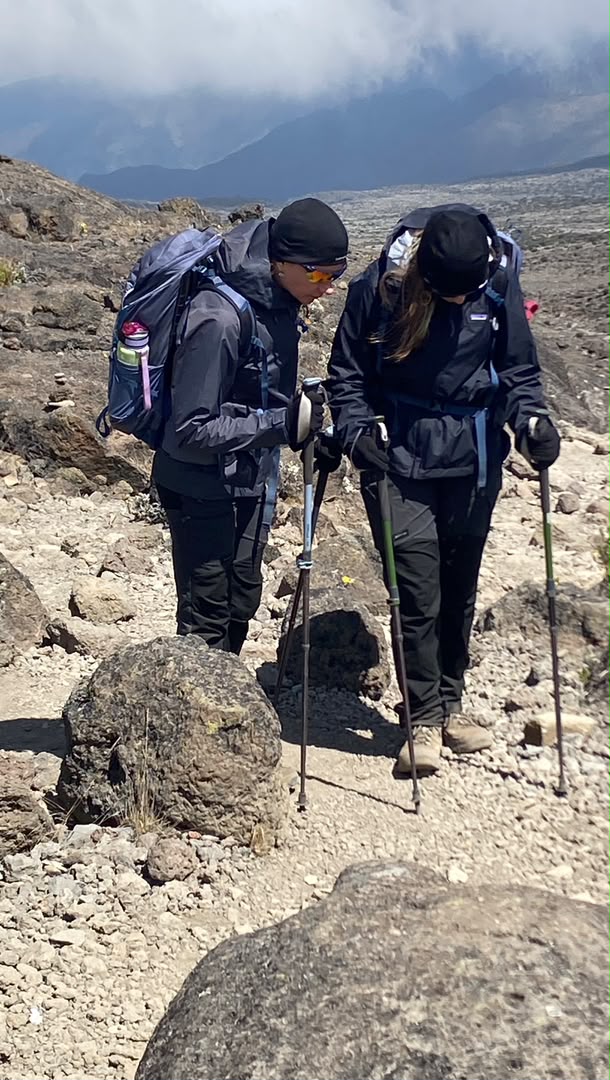
The Lake Louise Scoring System is a widely recognised tool for assessing Acute Mountain Sickness severity in the field, developed by the International Society for Mountain Medicine (ISMM) and used by wilderness medicine practitioners and mountain guides. On Kilimania climbs, every guide uses it — it reduces subjective guesswork and provides a documented, comparable record of each climber’s condition across the ascent.
How the Lake Louise Score Works
The score assesses five symptom categories, each rated 0–3. A score of 0 indicates no symptom. A score of 3 indicates the severe end of that symptom.
| Symptom | Score 0 | Score 1 | Score 2 | Score 3 |
|---|---|---|---|---|
| Headache | None | Mild | Moderate | Severe, incapacitating |
| GI Symptoms | None | Reduced appetite or nausea | Moderate nausea / vomiting | Severe vomiting |
| Fatigue / Weakness | None | Mild | Moderate | Severe, incapacitating |
| Dizziness / Lightheadedness | None | Mild | Moderate | Severe, incapacitating |
| Sleep Quality | Normal | Did not sleep as well as usual | Woke many times, poor sleep | Could not sleep at all |
What the Scores Mean in Practice
| Score | Classification | Kilimania Protocol |
|---|---|---|
| 0–2 | No AMS | Normal ascent may continue. Monitor at next camp. |
| 3–5 | Mild AMS | Rest in place. No further ascent. Treat symptoms. Reassess hourly. No ascent until score drops below 3. |
| 6+ | Moderate–Severe AMS | Mandatory descent to lower camp. Guided escort. Reassess at lower altitude. Summit attempt only possible if full symptom resolution occurs with adequate time remaining. |
| Any score + ataxia or AMS | Suspected HACE | Immediate emergency descent protocol. Gamow bag deployment. Satellite contact with TANAPA rescue. |
The Pulse Oximeter — Supplementary Tool, Not a Diagnostic
Every Kilimania guide carries a certified pulse oximeter and records SpO₂ readings at each camp assessment. However: a single SpO₂ reading does not on its own determine whether a climber should ascend, rest, or descend. Context and trend matter. A reading of 72% at Barafu in a climber with a Lake Louise Score of 1, who is feeling well, is not concerning. The same reading in a climber who scored 5 on the Lake Louise Scale two hours ago — and whose score is now 6 — is a different clinical picture entirely. What matters is not the number alone but the direction of travel: is the climber improving, stable, or deteriorating? This is why pulse oximetry is always interpreted alongside symptoms and professional judgment, never in isolation.
Diamox — The Complete Guide
Diamox (acetazolamide) is a carbonic anhydrase inhibitor originally developed as a diuretic and used to treat glaucoma. It was found to reduce AMS symptoms at altitude and has been used by mountaineers for decades. Clinical research on acetazolamide has generally found that it reduces the incidence and severity of AMS when used at appropriate doses and timing. Many Kilimanjaro climbers who take it correctly report fewer and milder symptoms than those who do not — but individual response varies, and it is not a substitute for acclimatisation.
How Diamox Works at Altitude
Diamox inhibits the enzyme carbonic anhydrase in the kidneys, which causes the kidneys to excrete bicarbonate into the urine. This makes the blood slightly more acidic, which in turn stimulates the respiratory centre in the brain to increase breathing rate and depth. More breathing at altitude means more oxygen taken in with each breath. This accelerates the body’s natural acclimatisation response, which normally takes several days to produce a similar effect. A secondary effect is mild diuresis — increased urination — which can reduce fluid retention that may contribute to altitude symptoms.
When Diamox Is and Is Not Appropriate
| Category | Details |
|---|---|
| Often considered for | Kilimanjaro climbers with no contraindications, particularly those on shorter itineraries (6–7 days), those with a history of AMS, and those concerned about altitude symptoms — subject to a doctor’s assessment |
| Contraindicated if | Sulfa drug allergy (cross-reaction risk), pregnancy, severe kidney disease. Check with your doctor regarding specific medication interactions. |
| Expected side effects | Tingling or numbness in hands, feet, and face — common and generally harmless. Increased urination frequency. Carbonated drinks taste flat or metallic. These are pharmacological effects, not adverse reactions. |
| Does not work well if | Started too late (guidance generally recommends beginning before ascent above 2,500m). Taken irregularly. Used as a substitute for adequate acclimatisation days. |
The “Masking Symptoms” Concern — Addressed Directly
A common concern among climbers is that Diamox might mask altitude illness symptoms, allowing someone to push on past a point where they should stop. Available evidence does not generally support this concern. Diamox accelerates acclimatisation and reduces mild-to-moderate AMS symptoms — it is not understood to suppress the severe symptoms of HACE or HAPE. A climber with HACE will still typically show ataxia and altered mental status despite Diamox. A climber with HAPE will still typically show breathlessness at rest and cyanosis. The symptoms that trigger emergency descent protocols are expected to break through even with Diamox on board, which is why guide-led daily assessment remains essential regardless of medication use.
For a detailed, evidence-based breakdown of Diamox use on Kilimanjaro, see our dedicated guide: Diamox for Kilimanjaro: Do You Need It? Evidence and Guide.
Prevention — What Actually Works (Ranked by Evidence Strength)
Not all prevention strategies are equal. Here is what the evidence generally supports, in order of effectiveness:
Day count — the strongest evidence available
Every additional day on the mountain gives the body more time to acclimatise. This is widely regarded as the single most effective altitude sickness prevention measure available, and it costs nothing beyond the additional park fee. A climber on a 9-day route will generally acclimatise more thoroughly than the same climber on a 6-day route, everything else being equal. Based on Kilimania Adventure’s internal operational records from 1,247+ guided climbs (2019–2025), 8–9 day itineraries show measurably higher summit rates than 6-day itineraries; this reflects our own operations and is not necessarily representative of Kilimanjaro-wide figures. See: How Many Days to Climb Kilimanjaro? 6 vs 7 vs 8 Days.
Climb high, sleep low — built into the Lemosho Route profile
The physiology of acclimatisation responds more to the maximum altitude reached during the day than to the altitude at which you sleep. Day 4 of the Lemosho Route climbs to 4,642m at Lava Tower, then descends to 3,976m at Barranco Camp for the night. This 700m drop in sleeping altitude after a high-altitude day is not an accident — it is intentional acclimatisation design. It is built into the route and is a contributing reason Lemosho tends to produce strong success rates relative to shorter routes in our operational data. See: Kilimanjaro Success Rate by Route: Data from 1,247 Climbs.
Hydration — 3–4 litres per day, minimum
Dehydration worsens every altitude symptom. The drier air at altitude, combined with increased breathing rate and physical exertion, accelerates fluid loss significantly. Most climbers underestimate this. At altitude, you need to drink before you feel thirsty. Urine colour is a reasonable field indicator: pale yellow is generally adequate. Dark yellow or amber means you are behind on fluids and every symptom you already have is likely to worsen. See: How Much Water on Kilimanjaro? Hydration Guide.
Gradual ascent pace — pole pole is not a suggestion
Pole pole means “slowly slowly” in Swahili. It is a foundational principle of Kilimanjaro guiding. Every hour spent walking at an appropriate, controlled pace is, for most climbers, at least as valuable as Diamox. The cardiovascular system adapts to altitude in real time — but only if you give it time. Rushing the ascent, even by an hour, compresses the acclimatisation window. See: Pole Pole Kilimanjaro: What It Means and Why It Matters.
Diamox — effective when used correctly
Acetazolamide is generally understood to reduce AMS incidence and severity when started appropriately and taken correctly. It is not a substitute for any of the above. It is an additional tool that supports the body’s own acclimatisation mechanisms. Discuss with your doctor before departure.
What Does Not Work
- Fitness alone: Cardiovascular fitness does not reliably protect against AMS. Some highly trained athletes develop severe AMS. Some sedentary climbers do not. AMS susceptibility is not well predicted by fitness level.
- Altitude tents at home: Some benefit is documented in research, but the effect is modest and difficult to replicate consistently without clinical monitoring. Not harmful, but should not replace route selection or day count.
- Breath-holding exercises: No meaningful evidence base for altitude preparation.
- Garlic soup: A beloved Kilimanjaro tradition with possible mild vasodilatory properties and no established evidence as an altitude prevention measure. Drink it anyway — it is warming and culturally significant, and it causes no harm.
Kilimania’s Emergency Protocol — What Actually Happens
When a guide identifies a climber with serious altitude illness, there is no ambiguity about what happens next. The protocol is documented and trained, and it is followed regardless of the circumstances — including summit proximity, time of day, weather, or client protest. Here is how it works.
Assessment
Lead guide performs Lake Louise Score assessment and pulse oximetry. Findings are documented with timestamp. A second guide witnesses and confirms the assessment where crew size allows. The climber’s response to specific clinical tests — including the heel-to-toe walk test for ataxia and simple cognitive tests for HACE screening — is recorded.
Classification and Immediate Decision
Mild AMS (LLS 3–5): Treat in place. No further ascent. Monitor SpO₂ and LLS every 60 minutes. No ascent until two consecutive scores below 3 are recorded with minimum 2 hours between readings.
Moderate AMS (LLS 6+): Mandatory descent to a lower camp. A dedicated guide escorts the climber down. The remaining team may continue if a second guide can safely maintain the group.
Suspected HACE or HAPE: Proceed immediately to Step 3. No waiting for confirmation.
Emergency Response
Gamow bag is deployed if HACE or HAPE symptoms are confirmed or strongly suspected. Supplemental oxygen is administered if available. Satellite communication device is used to contact TANAPA rescue coordination. Emergency descent begins with dedicated guide escort — minimum two guides accompanying the affected climber. The descent continues to the nearest lower camp and, where symptoms indicate, to the gate.
Evacuation Decision
At Kilimania, evacuation is initiated when the lead guide determines that descent alone is insufficient for the client’s safety — specifically when HAPE is suspected or when a HACE patient does not show meaningful improvement with descent and Gamow bag treatment. This decision is never delayed for financial reasons. The guide’s assessment is final. This is why comprehensive travel insurance with emergency evacuation coverage is a firm requirement for all Kilimania climbers. Helicopter evacuation from the mountain can cost thousands of dollars. A comprehensive policy typically covers it. See: Kilimanjaro Safety: Deaths, Rescue and Safety Record.
📥 Free Download: Kilimanjaro Altitude Symptom & AMS Checklist
Altitude illness is a leading reason climbers turn around on Kilimanjaro. This checklist is used by Senior Guide Sabinus Msimba and the Kilimania team to monitor climbers throughout every expedition.
- Normal acclimatisation symptoms above 3,000m
- Acute Mountain Sickness (AMS) warning signs
- HACE and HAPE emergency symptoms
- Daily health monitoring form (SpO₂, pulse, hydration)
- Guide reporting and self-assessment checklist
Prepared by: Sabinus Msimba, Senior Mountain Guide, Kilimania Adventure, Moshi, Tanzania.
This checklist is for educational purposes only and does not replace professional medical advice. Climbers with pre-existing medical conditions should consult a physician before high-altitude travel.
Frequently Asked Questions About Altitude Sickness on Kilimanjaro
Most climbers first notice symptoms — typically a mild headache or fatigue by evening — around 3,500–4,000m. On the Lemosho Route, this corresponds to the transition from Shira Camp to Barranco Camp, on days 3–4. Above 4,000m, many climbers experience some form of altitude symptom. At Barafu Camp (4,673m), headaches on waking are common. The key distinction is between normal altitude symptoms, which are expected and manageable, and AMS or more serious conditions, which require active management. The altitude at which serious illness occurs varies significantly between individuals and cannot be reliably predicted from fitness, age, or prior altitude experience.
Not reliably. This is one of the most persistently misunderstood aspects of altitude illness. AMS susceptibility does not correlate well with cardiovascular fitness, age, or general health. Some highly trained athletes develop severe AMS on Kilimanjaro. Some older or less fit climbers experience no meaningful symptoms. The physiological mechanisms of AMS involve individual variations in how the brain and blood vessels respond to hypoxia — mechanisms that fitness does not meaningfully modify. Physical fitness helps with the mechanical demands of the climb. It is not protective against altitude illness in the way many people assume. See: How Hard Is Kilimanjaro? Success Rates and Altitude Reality.
A headache alone — without additional symptoms — is a normal physiological response to altitude above 3,000m and does not by itself constitute AMS. AMS is defined as headache plus at least one additional symptom: nausea, fatigue, dizziness, or significantly disrupted sleep. If your headache responds reasonably to ibuprofen and you feel otherwise functional, it is likely a normal altitude response. If your headache is severe, unresponsive to medication, and accompanied by other symptoms — particularly nausea, dizziness, or sleep disturbance — your Lake Louise Score is likely 3 or above and active monitoring is warranted. Report all symptoms to your guide; never self-assess in isolation.
Evidence generally supports Diamox as an effective AMS prevention tool for many Kilimanjaro climbers without contraindications. However, whether it is appropriate for you — and at what dose and timing — requires individual medical assessment. We strongly recommend raising this at a pre-travel medical consultation before departure. Diamox is contraindicated for people with sulfa drug allergies, kidney disease, or pregnancy, and may interact with other medications. The expected side effects — tingling in the extremities and increased urination — are generally harmless. For a full breakdown, see our dedicated guide: Diamox for Kilimanjaro: Do You Need It?
No, and any operator who tells you otherwise is not being straightforward with you. Altitude illness susceptibility cannot be fully prevented — only managed. What prevention strategies can do is meaningfully reduce the incidence and severity of AMS, and substantially reduce the risk of progression to HACE or HAPE on a properly structured route with qualified guides. Choosing a longer itinerary (8–9 days), following a route with a good acclimatisation profile (Lemosho or Northern Circuit), staying well hydrated, pacing correctly, and considering Diamox under medical guidance all reduce risk meaningfully. Progression to HACE or HAPE has not occurred on a Kilimania climb to date, according to our internal records — but this reflects rigorous daily monitoring and a willingness to descend early, not an absence of underlying susceptibility.
Summit night begins at midnight from Barafu Camp (4,673m) and reaches Uhuru at 5,895m. If you develop significant symptoms during the ascent — not just tiredness and cold, which are common, but worsening headache, disorientation, loss of coordination, or breathlessness at rest — your guide will halt your ascent and begin descent. This is not a discussion. The descent from summit to Barafu is 2–3 hours; from Barafu to Mweka Gate is a further 4–6 hours. The altitude gain is reversed relatively quickly, and most AMS improves within 1–3 hours of beginning descent. Summit night scenarios are covered in detail in our guide: Kilimanjaro Summit Night, Hour by Hour: What Actually Happens.
Descent is widely regarded as the most effective treatment for all forms of altitude illness. AMS typically begins to improve within 1–3 hours of descending 500m or more below the altitude at which symptoms developed, and often resolves within 12–24 hours at a significantly lower altitude. HACE and HAPE improve more slowly, and even with clear improvement, evacuation to a medical facility remains required. The Gamow bag can simulate descent physiologically while physical descent is being arranged, but it is not a substitute. Even 300–500m of descent tends to produce meaningful physiological improvement.
Yes — but not in the ways most people expect. Gender does not appear to be a reliable predictor (research on this question shows mixed results: see our guide on Men vs Women at High Altitude: Research and 22-Year Observations). Age does not reliably predict susceptibility — we have seen altitude illness in climbers in their 20s and problem-free summits for climbers in their 60s. What does correlate with susceptibility: previous episodes of AMS at altitude (generally considered the strongest predictor), certain anatomical features of lung function, and possibly genetic factors in how the brain’s vasculature responds to hypoxia. If you have had AMS before, tell your guide before the climb begins. This is important operational information that affects monitoring frequency and Diamox discussion with your doctor.
Choose a Route With a Proper Acclimatisation Profile
The routes with the strongest acclimatisation profiles in our operational data are also the ones with the highest summit success rates. Here are the four routes we most frequently recommend for climbers prioritising safety and success:
Related Guides
- Kilimanjaro Safety: Deaths, Rescue and Safety Record
- How Hard Is Kilimanjaro? Success Rates and Altitude Reality
- Kilimanjaro Summit Night, Hour by Hour: What Actually Happens
- Kilimanjaro Success Rate by Route: Data from 1,247 Climbs
- Climbing Kilimanjaro With Medical Conditions
- Diamox for Kilimanjaro: Do You Need It? Evidence and Guide
- Men vs Women at High Altitude: Research and 22-Year Guide Observations
- How Much Water on Kilimanjaro? Complete Hydration Guide
- Kilimanjaro Routes 2026: Which Route Is Right for You?
- Climbing Kilimanjaro Guide 2026: Costs, Routes, Altitude and Summit Success
What This Guide Means in Practice
Altitude illness affects many Kilimanjaro climbers to some degree. Above 4,000m, some level of headache or fatigue is common, expected, and manageable. The climbers who turn around early — or who face genuine medical risk — are typically those on inadequately short itineraries, with guides who were not trained to recognise progression beyond AMS, or who received pressure to continue ascending despite worsening symptoms.
The difference between those outcomes and a managed, safer ascent is a guide who is trained in wilderness first response, uses the Lake Louise Score daily without exception, carries a Gamow bag and satellite communication device, and is confident enough to call a descent when the assessment demands it — even close to the summit, at 5am in the dark.
That is the standard Senior Guide Sabinus Msimba’s 22 years of guiding on this mountain reflects. Every guide on our climbs is trained to the same standard, with decisions made early rather than late. Our Mount Kilimanjaro Climbing programmes are built around this approach.
If you are planning a climb and have questions about altitude, your medical history, or which itinerary gives you the strongest acclimatisation profile, contact us before you book. This is exactly the kind of question we answer every day.
Talk to a Guide Before You Book
Senior Guide Sabinus Msimba and the Kilimania team are available via WhatsApp to answer medical and altitude questions before you commit to a route or itinerary.
Or read our full Climbing Kilimanjaro Guide 2026 to understand how operators differ on safety standards.
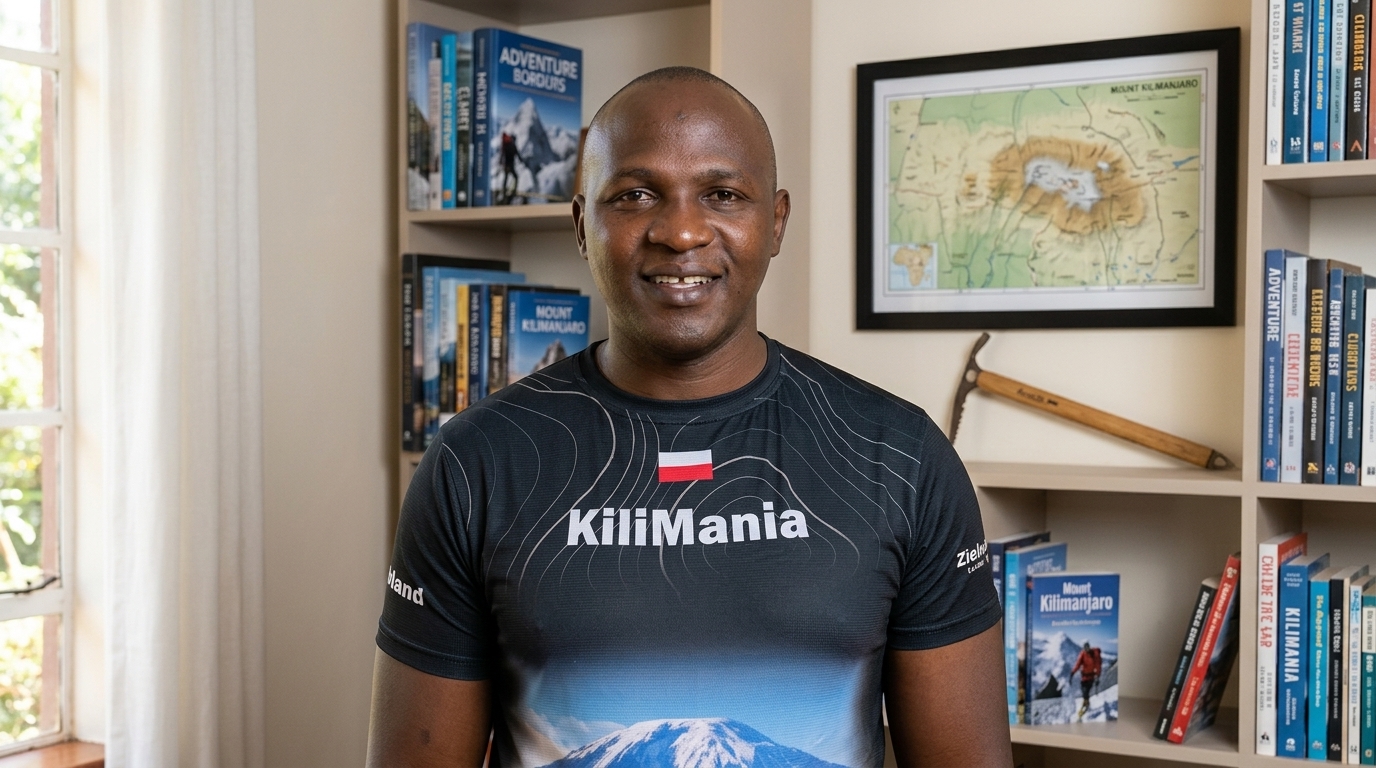
Sabinus Msimba
Senior Kilimanjaro Mountain Guide & Co-founder, Kilimania Adventure
22+ years guiding on Kilimanjaro · KINAPA Licensed (View Licence PDF) · Wilderness First Responder Certified · 300+ personal Uhuru Peak summits · Career began in 2001 as a porter on the Marangu Route · Tripadvisor Reviews · Google Reviews
Every altitude assessment protocol described in this guide reflects the procedures Sabinus has developed and refined across more than two decades of guiding in Kilimanjaro’s high-altitude environment. Read the full biography.
Disclosure: Kilimania Adventure is a TATO-registered Tanzania tour operator, KINAPA-licensed for Kilimanjaro mountain guiding, and KPAP-compliant on porter treatment. This article is written and reviewed by our own guiding staff and contains general educational information about altitude illness; it is not medical advice and does not replace consultation with a qualified physician. Statistics attributed to “Kilimania’s internal operational records” reflect our own guided climbs (2019–2025) and are not claimed to represent Kilimanjaro-wide averages. Last reviewed July 2026.