Scenic Lemosho Route with high success rates & fewer crowds

Marangu Route · 6 Days / 5 Nights
The 6-Day Marangu Route: one extra night at Horombo, and why it matters
Marangu is the only Kilimanjaro route with permanent mountain huts instead of tents. The 6-day version adds a second night at Horombo Hut (3,720m) before the push to Kibo — a real acclimatization advantage over the 5-day itinerary. Guided from Moshi by Sabinus Msimba and the Kilimania Adventure team.
- KINAPA-licensed guides
- 22+ years on Kilimanjaro
- 4.9★ Google (36 reviews) · 5.0★ TripAdvisor (33)
- KPAP-aligned porter welfare
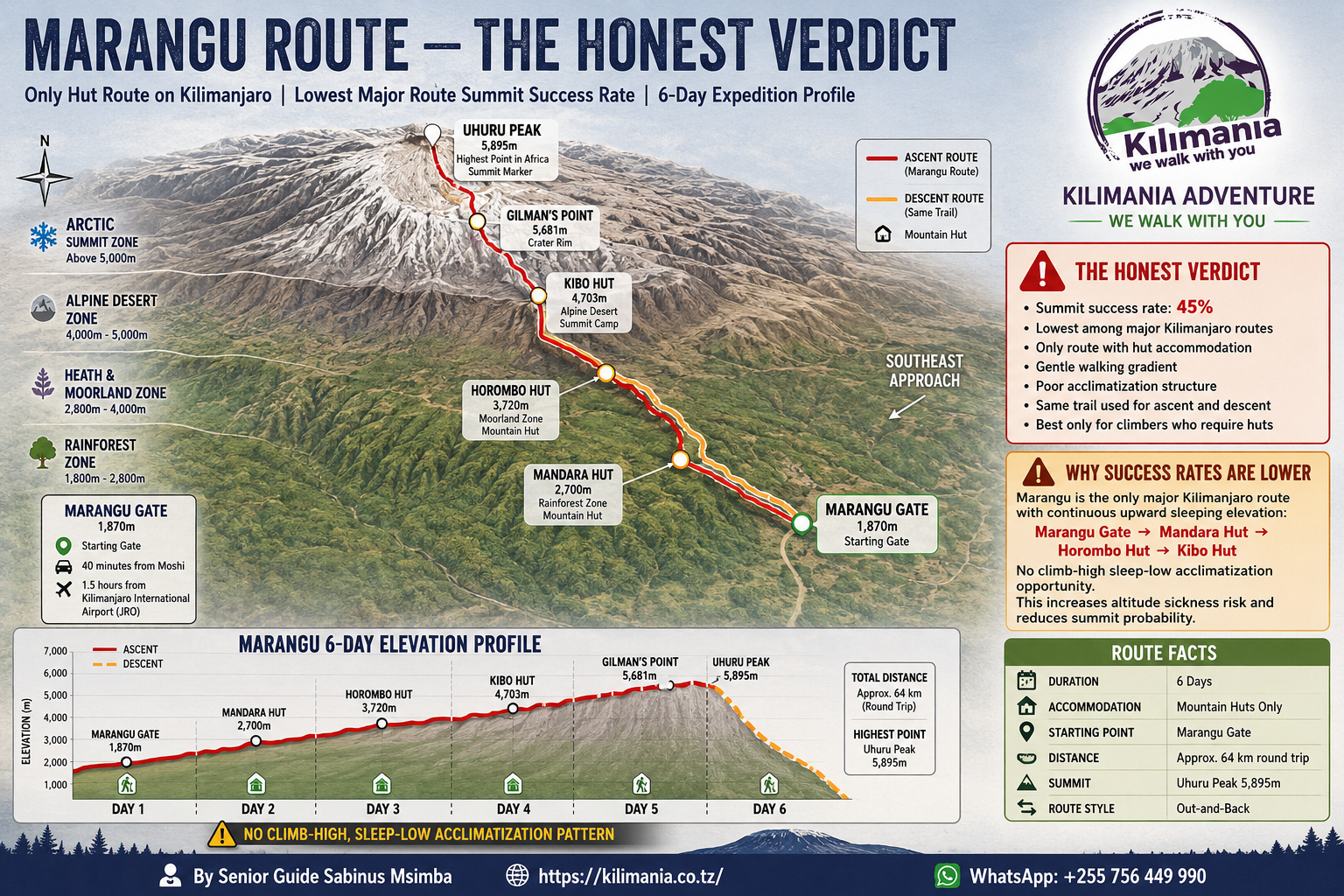
The 6-day Marangu Route climbs Kilimanjaro via Marangu Gate (1,870m), sleeping in permanent mountain huts at Mandara, Horombo, and Kibo rather than tents. The defining feature of the 6-day version is a second night at Horombo Hut (3,720m) on Day 3 — a dedicated acclimatization day that the 5-day itinerary skips entirely. Based on Kilimania’s internal operational records, we estimate the 6-day Marangu success rate at approximately 67%, meaning roughly one in three climbers we guide on this route does not reach Uhuru Peak (5,895m). It suits climbers who want fixed shelter over tents, have one extra day to spare, and are prepared for a genuinely demanding summit night. Kilimania Adventure guides this route year-round from Moshi, Tanzania.
Duration
6 Days / 5 Nights
Summit
Uhuru Peak, 5,895m
Start gate
Marangu Gate, 1,870m
Accommodation
Permanent huts, not tents
Highest camp
Kibo Hut, 4,703m
Success rate est.
~67% (internal estimate)
Price from
$1,450 per person
Deposit
$100 per person
Not sure this is your route? Jump to pricing or ask a guide on WhatsApp — this doesn’t commit you to anything.
Who should choose the 6-day Marangu Route
The 6-day Marangu Route suits a specific type of climber — it is not the right choice for everyone, and we would rather tell you that up front than after you’ve paid a deposit.
This route suits you if:
- You cannot or would rather not sleep in a tent — medical, age, or personal preference
- You have a fixed 6-day window and want the strongest acclimatization Marangu can offer within it
- You’ve spent time above 3,000m before and know roughly how your body responds
- Cost efficiency matters — hut accommodation removes tent-camping logistics
- You’re drawn to the historic hut-to-hut route: Mandara, Horombo, Kibo
Consider a different route instead if:
- This is your first high-altitude climb and you want the strongest possible summit odds — see the 8-Day Lemosho Route
- You want scenery variety on the way down, not just the way up — see 7-Day Machame or Lemosho
- You have a flexible 7–9 day schedule and want deeper acclimatization
- The estimated 67% success rate concerns you more than the hut convenience does
- You’d rather camp than share a dormitory hut
5-day vs 6-day Marangu: what the extra day actually gives you
Yes — the extra night is worth it for most climbers. The single additional night at Horombo Hut (3,720m) on Day 3 of the 6-day version is a genuine acclimatization benefit, not a padded itinerary. The body needs time at altitude before ascending further; that night is the entire reason the 6-day version exists.
| Factor | 5-Day Marangu | 6-Day Marangu |
|---|---|---|
| Nights at Horombo | 1 night | 2 nights (3,720m) |
| Acclimatization day | None | Yes — Zebra Rock hike |
| Schedule | Compressed | One added rest/acclimatization day |
| Recommended for | Returning high-altitude trekkers | First attempt or most climbers |
| Price from (solo) | $1,600 | $1,750 |
See the 5-Day Marangu Route in full detail → · 5-day vs 6-day Marangu: which reaches Uhuru Peak?
6-day Marangu Route: day-by-day itinerary
Every day below reflects Kilimania’s actual guided itinerary — elevations, huts, and terrain as our teams walk them.
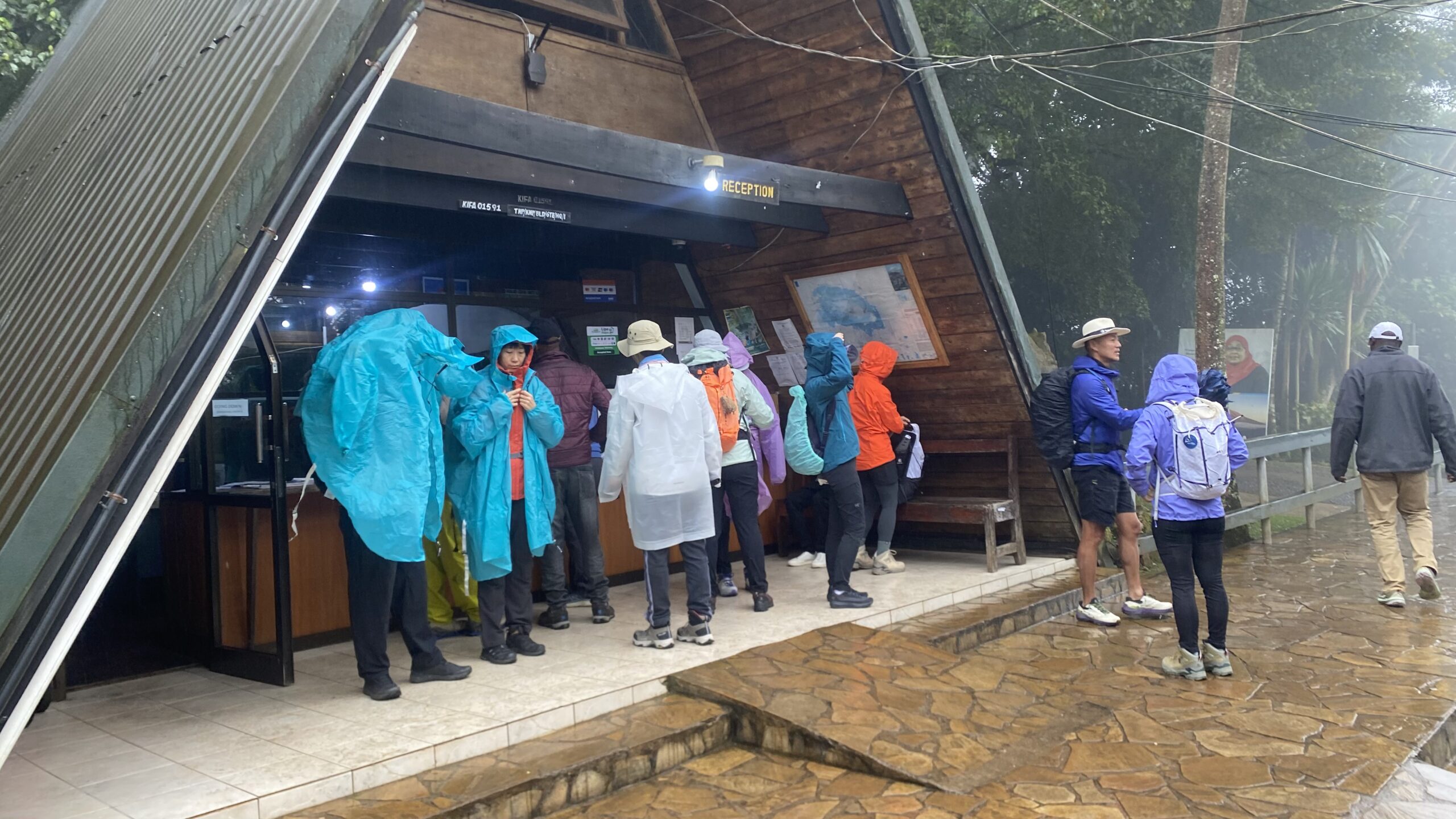
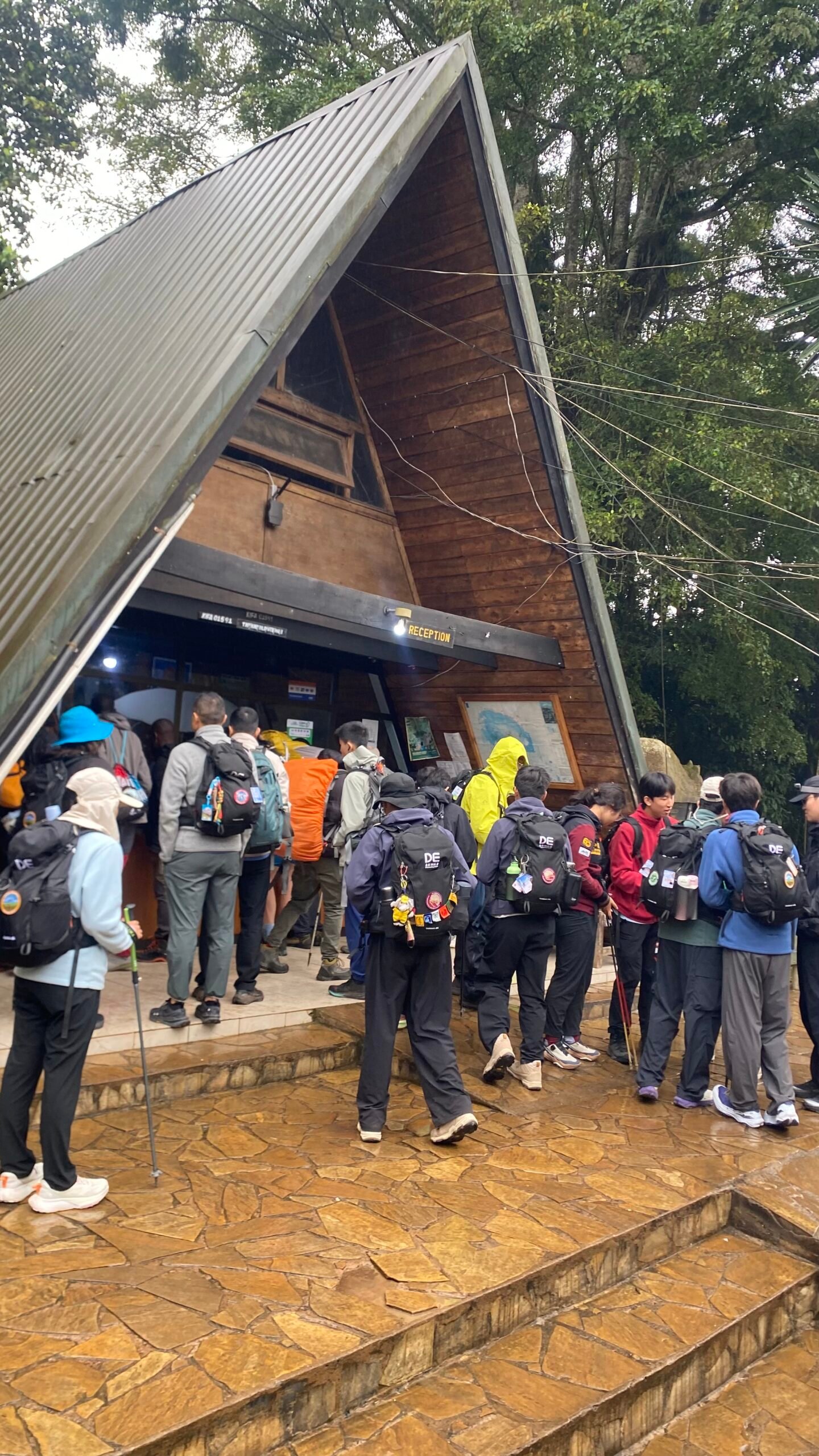
Day 0
Pre-climb briefing & gear check — Moshi
Moshi hotel
Our guide team meets you at your Moshi hotel the evening before departure: full itinerary walkthrough, altitude and safety protocol, and a gear check so nothing critical is missing on the mountain.
Guide note: Arrive rested. This session is when we align on what to expect and inspect your gear before you’re committed to the trail.
Day 1
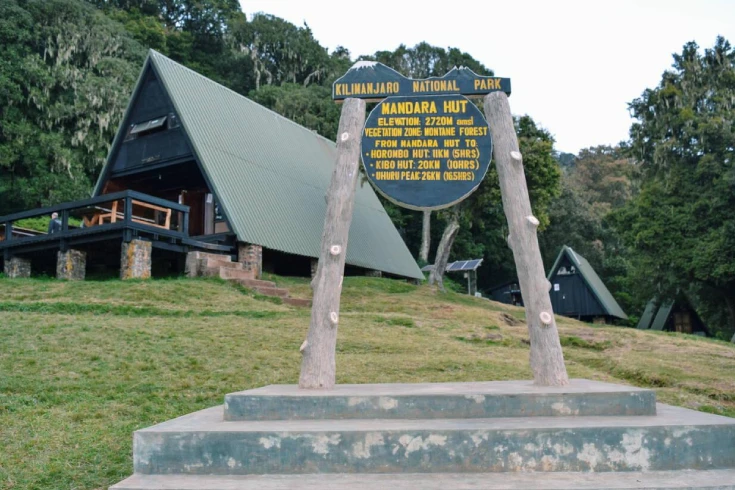
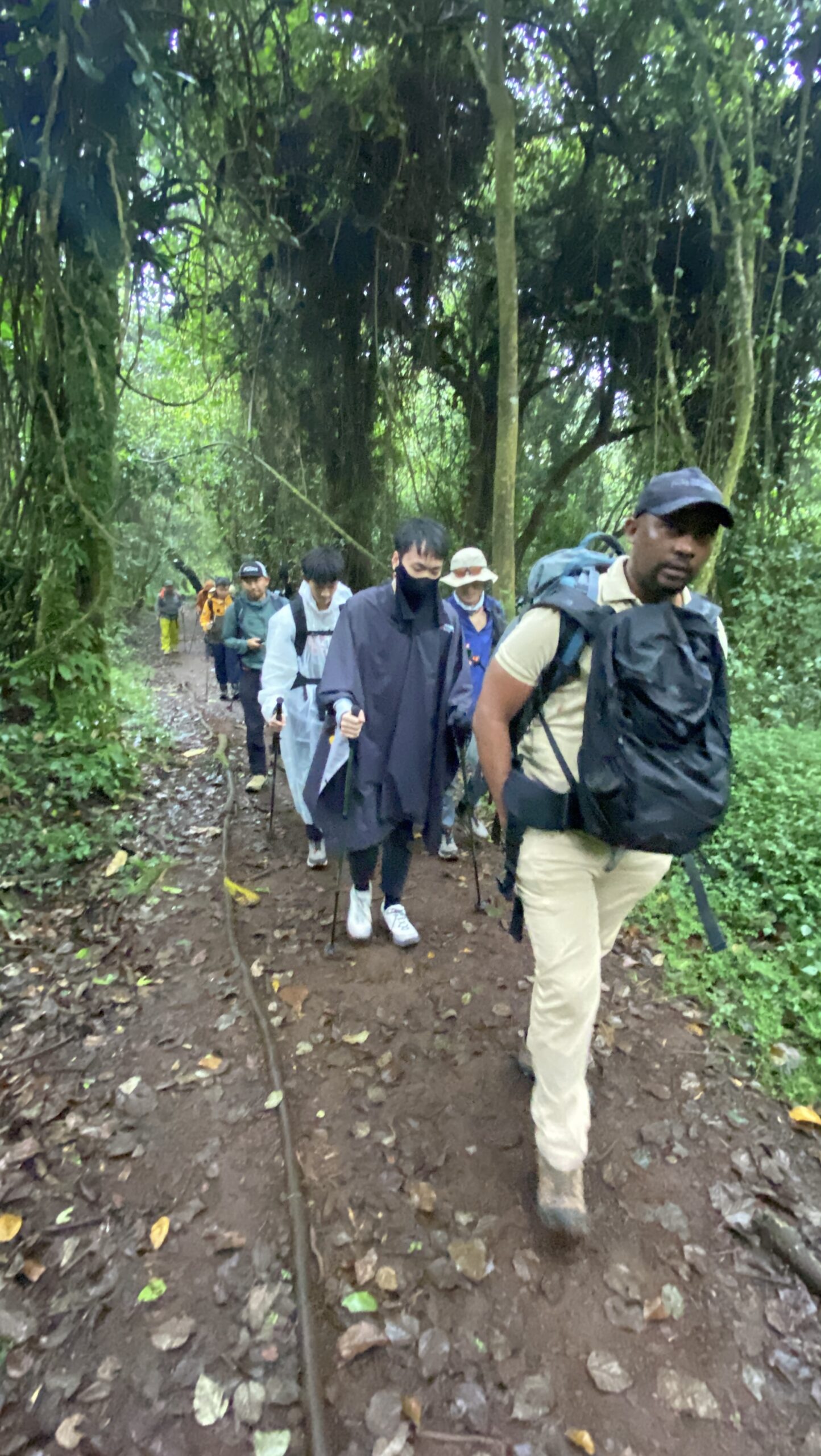
Marangu Gate (1,870m) → Mandara Hut (2,720m)
~8 km4–5 hrs+850mRainforest
Registration at Marangu Gate, then a wide, well-marked trail through dense montane rainforest where blue monkeys and colobus are commonly seen. This is the gentlest day of the climb.
Guide note: The first day feels easy — use it to find a pace you could sustain all day, and drink water consistently even without feeling thirsty.
Day 2
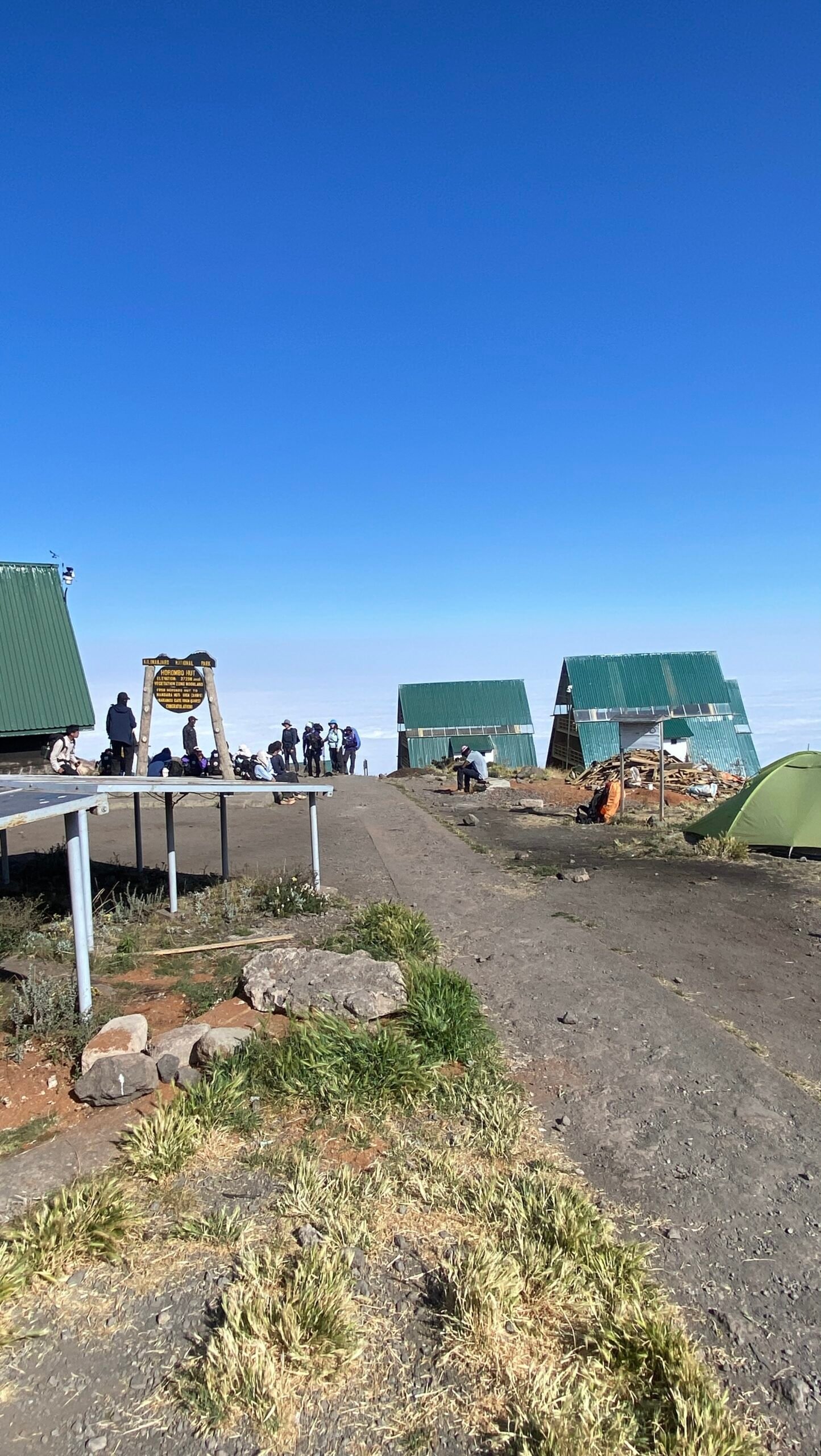
Mandara Hut (2,720m) → Horombo Hut (3,720m)
~12 km6–8 hrs+1,000mHeath & moorland
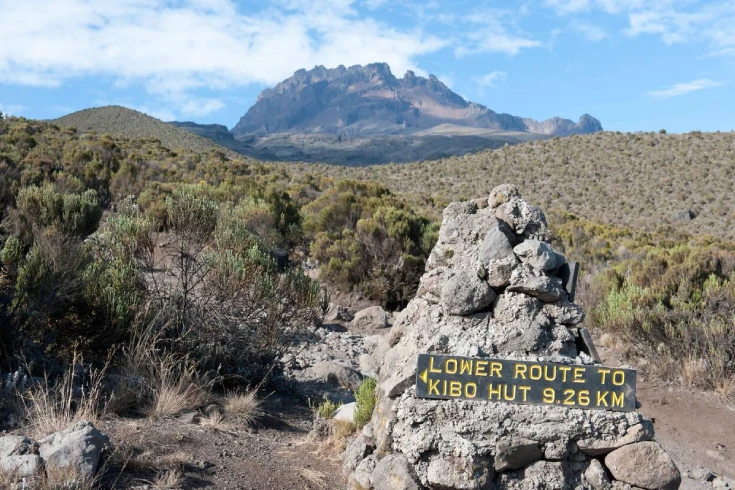
Forest gives way to open heath moorland with Mawenzi Peak visible to the east. Mild altitude effects — headache, slight breathlessness — are normal for many climbers above 3,000m. We check oxygen saturation on arrival at Horombo.
Guide note: Eat your dinner even with a reduced appetite, and get to sleep early — tomorrow is a lighter day, but the body still needs the rest.
Day 3
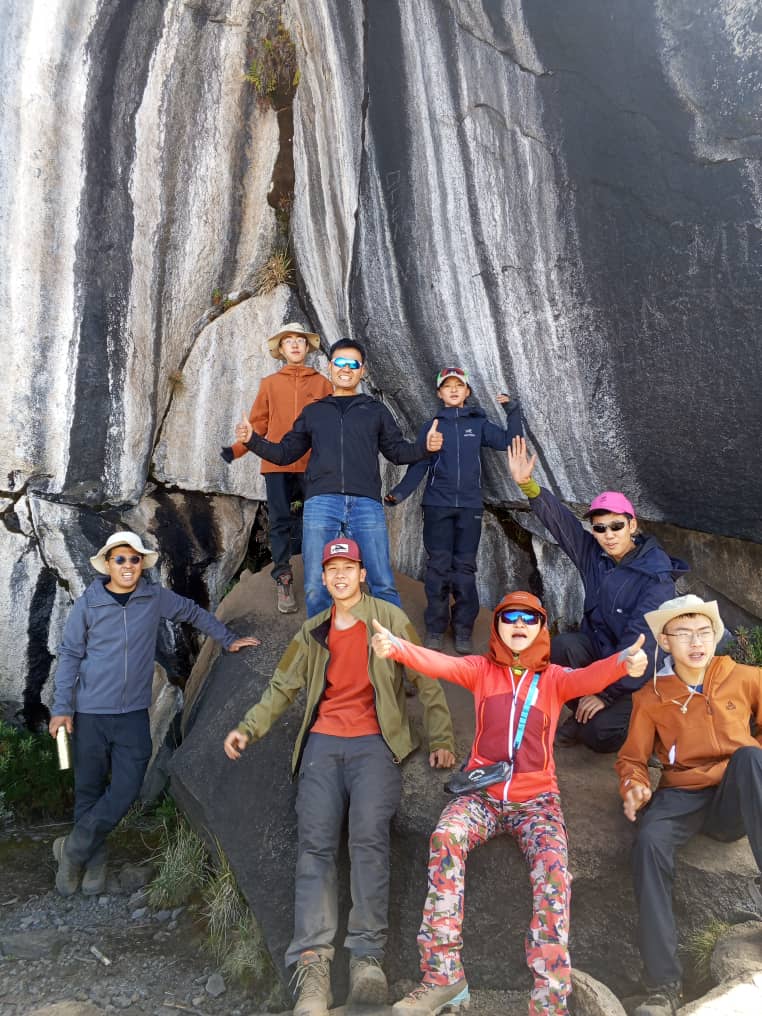
Acclimatization day at Horombo Hut (3,720m)
~4 km3–4 hrs+380m to ~4,100mAlpine moorland
This is the day that separates the 6-day itinerary from the 5-day one. A hike toward Zebra Rock (~4,100m) and back to sleep at Horombo applies the “climb high, sleep low” principle — one of the most effective acclimatization strategies at this altitude.
Guide note: This day is not physically hard, but it matters. The walk to Zebra Rock gives your body real time to adapt before the push to Kibo.
Day 4
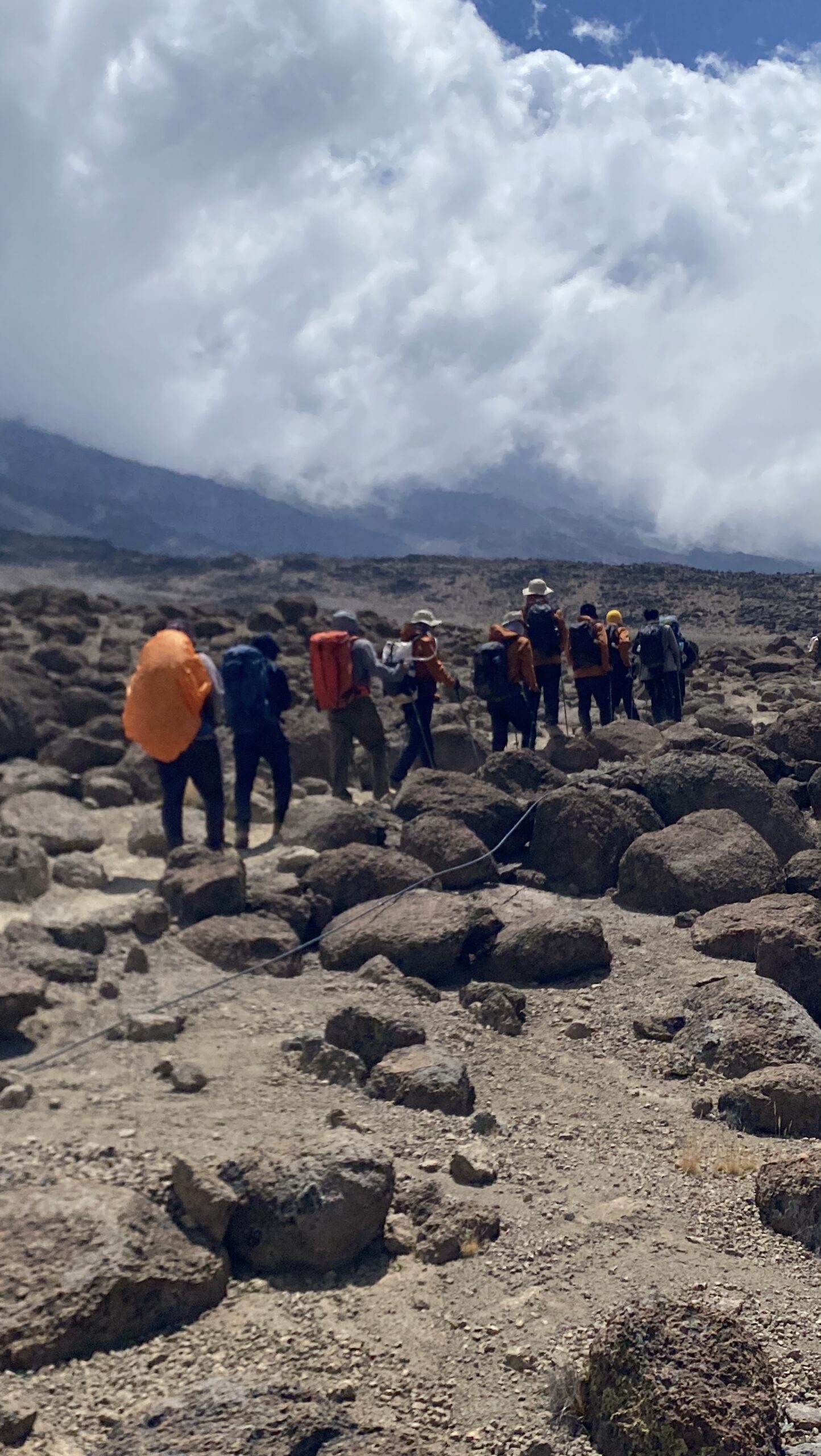
Horombo Hut (3,720m) → Kibo Hut (4,703m)
~10 km6–7 hrs+983mAlpine desert
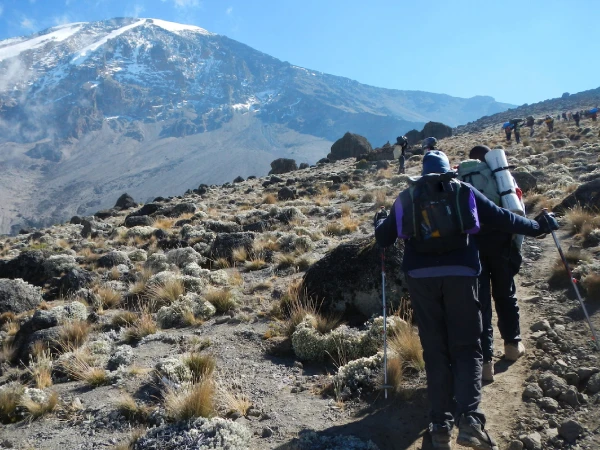
The trail crosses the Saddle — a wide, near-lunar plateau between Mawenzi Peak and the Kibo dome. Pace slows deliberately (pole pole) as altitude effects intensify above 4,000m. Dinner is early; gear is laid out before an attempted rest.
Guide note: Sleep at Kibo Hut is poor for most people — thin air and pre-summit nerves see to that. Eat dinner anyway. Your body needs the fuel for the next 12–15 hours.
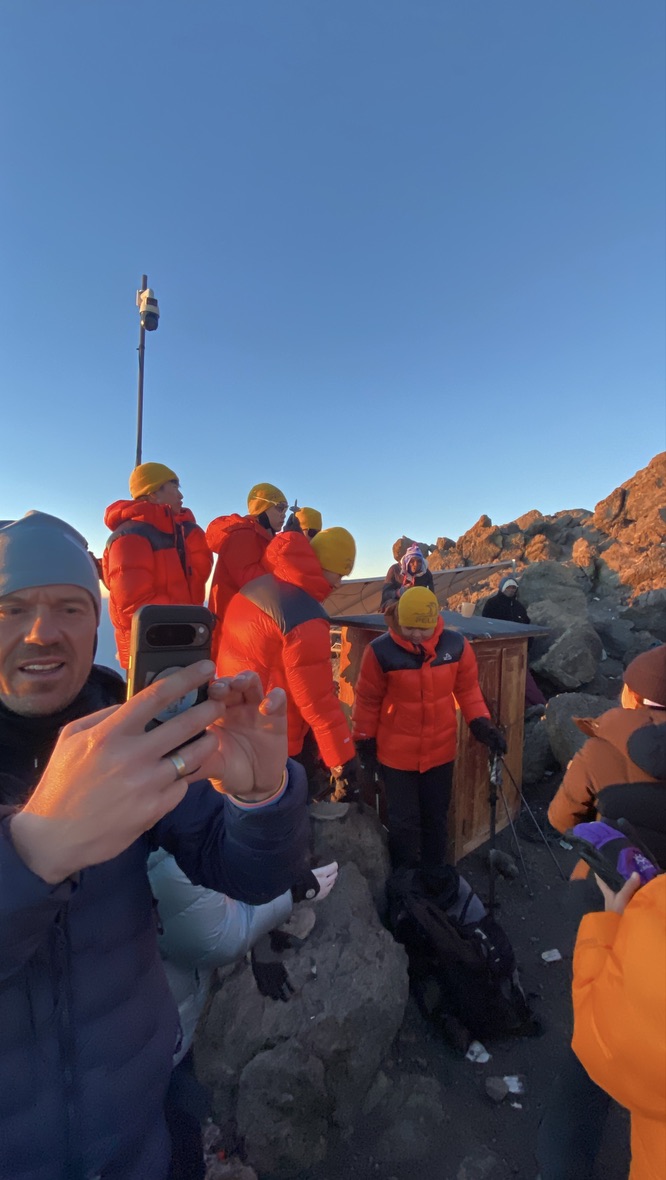
Day 5
Summit night: Kibo Hut → Gilman’s Point (5,681m) → Uhuru Peak (5,895m) → Horombo Hut
~23 km round trip12–15 hrs-10°C to -15°C at the rim
Wake-up around 11:30pm, oxygen and pulse checks for every climber, departure around midnight. Steep volcanic scree in darkness leads to Gilman’s Point after roughly 5–6 hours, then the crater rim to Uhuru Peak. Descent retraces to Kibo Hut, then continues down to Horombo (3,720m) the same day.
Guide note: If continuing is medically unsafe, we recommend descent immediately. Safety takes priority over reaching the summit, every time.
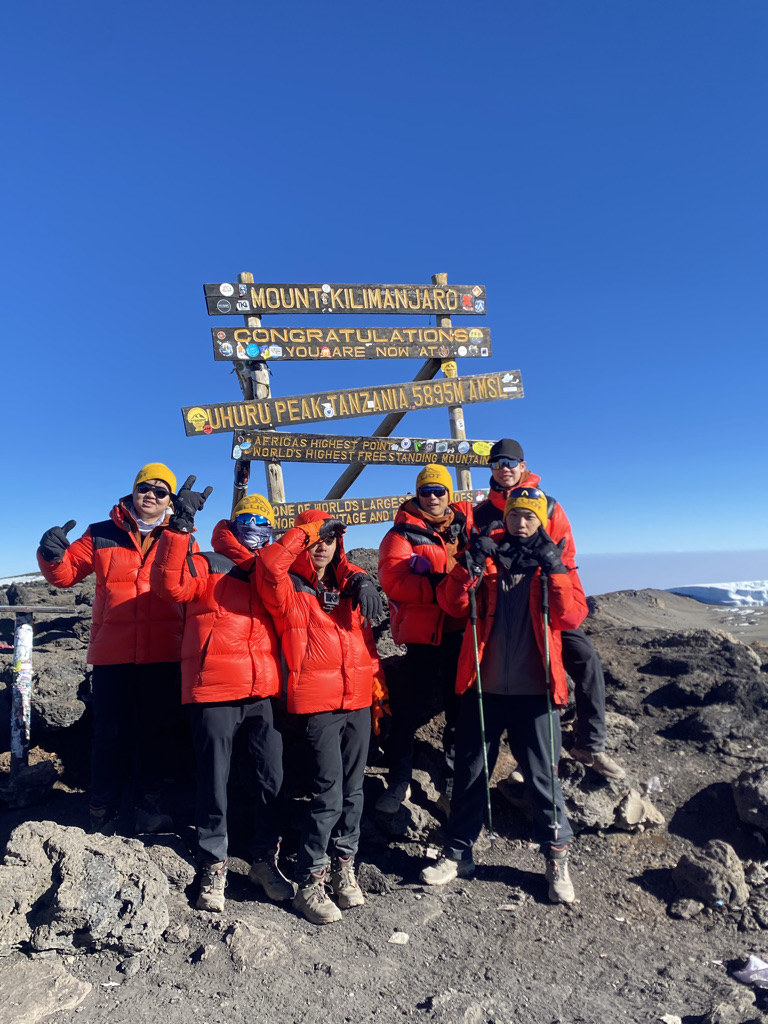
Day 6
Horombo Hut (3,720m) → Marangu Gate (1,870m) → Moshi
~20 km5–6 hrs-1,850mHeath, rainforest
The final descent through moorland and forest back to Marangu Gate, where you complete exit registration and receive your official Kilimanjaro summit certificate before transferring to Moshi.
Guide note: Tip your crew at the gate — porters, cook and assistant guides are the reason your climb works. See our tipping guide for typical amounts.
Have a question about a specific day?
Our guides have walked this route hundreds of times and can talk you through any section.
Acclimatization on the 6-day Marangu Route
The 6-day Marangu Route’s acclimatization strategy centers on one dedicated rest day at Horombo Hut (3,720m). That is less acclimatization time than the 8-day Lemosho Route or the 9-day Northern Circuit offer — for climbers with no prior high-altitude experience, that difference is worth weighing honestly.
The Zebra Rock hike on Day 3 applies “climb high, sleep low”: ascending to roughly 4,100m during the day and returning to sleep at 3,720m gives the body a head start on adapting before the harder push to Kibo Hut at 4,703m — the altitude where most acclimatization problems on this route actually emerge. Kilimania guides check pulse oximetry at every camp and use that data, alongside visible symptoms, to decide whether a slower pace or descent is needed.
We won’t tell you the 6-day Marangu matches an 8-day Lemosho for acclimatization depth — it doesn’t. What it offers is the strongest acclimatization Marangu’s itinerary structure allows, in the shortest schedule that includes a rest day.
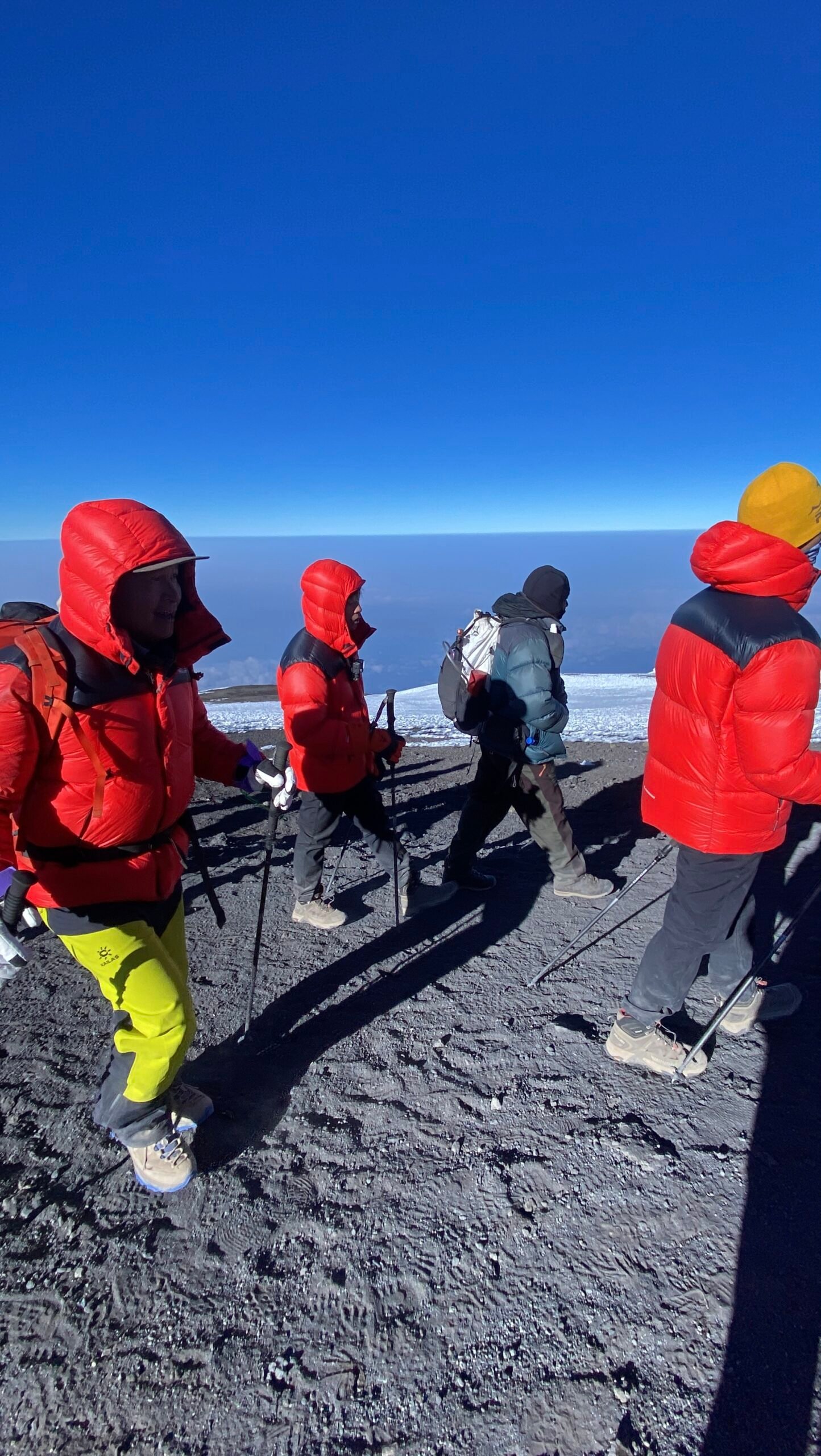
Above Horombo, the terrain opens into alpine desert — sparse, exposed, and where guides watch most closely for early altitude symptoms before the group commits to Kibo Hut.
Altitude sickness on Kilimanjaro: complete guide · Diamox for Kilimanjaro: evidence and guide
Summit night on Marangu, hour by hour
Summit night begins at Kibo Hut (4,703m) and ends, for most climbers, around 12–15 hours later back at Horombo Hut. Here is the actual timeline our groups follow.
| Event | Approx. time |
|---|---|
| Wake-up call, warm tea | ~11:30pm |
| Departure from Kibo Hut | ~Midnight |
| Arrive Gilman’s Point (5,681m) | ~5–6 hours later |
| Arrive Uhuru Peak (5,895m) | ~6.5–8 hours after departure |
| Descend to Horombo Hut | ~5–7pm same day |
Temperatures fall to roughly -10°C to -15°C at Kibo Hut and -15°C to -20°C at the summit; available oxygen at 5,895m is significantly reduced compared to sea level, per the CDC Yellow Book’s guidance on high-altitude travel. Our guides carry emergency oxygen and a first-aid kit throughout the ascent, hold rest stops roughly every 45–60 minutes for brief health checks, and the lead guide makes the final call on whether continuing is safe. Reaching Uhuru Peak is never guaranteed — see our full summit-night guide for what to expect and how to prepare.
How difficult is the 6-day Marangu Route?
Marangu requires no technical climbing skills. The challenge comes almost entirely from altitude: reduced oxygen, cold, and the physical and mental demands of a 12–15 hour summit day on a route many people mistakenly assume is easy because of its “Coca-Cola Route” reputation.
| Factor | Rating | Detail |
|---|---|---|
| Trail difficulty | Moderate | Clear, maintained path, no technical sections |
| Altitude challenge | High | 5,895m summit with a compressed acclimatization schedule |
| Summit-day demand | High | 12–15 hrs, midnight start, extreme cold, reduced oxygen |
| Technical climbing | None | Not required under normal conditions |
Fitness benchmark: aim to comfortably walk 6 continuous hours at a sustained pace, carrying a 5–7kg daypack, before arriving in Tanzania. Fitness improves your ability to keep moving — it does not determine how well your body acclimatizes. Some of the fittest climbers we’ve guided have turned back from altitude symptoms that had nothing to do with their conditioning.
Full Marangu route difficulty breakdown · How hard is Kilimanjaro? Success rates and altitude reality · Kilimanjaro fitness assessment
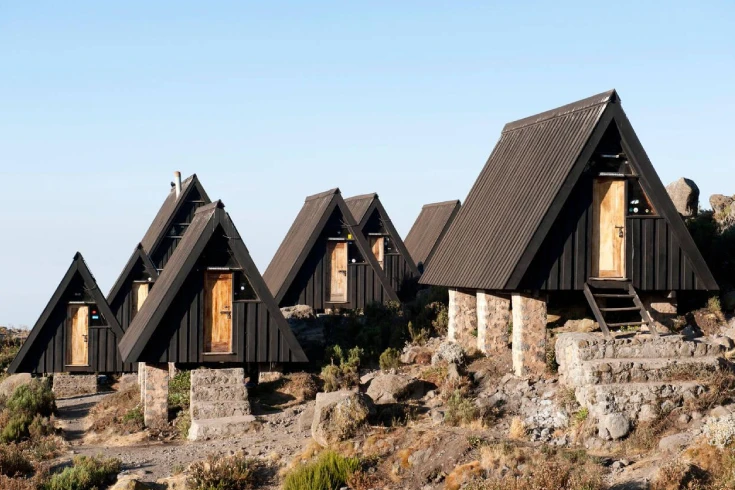
Marangu Route huts: the only permanent accommodation on Kilimanjaro
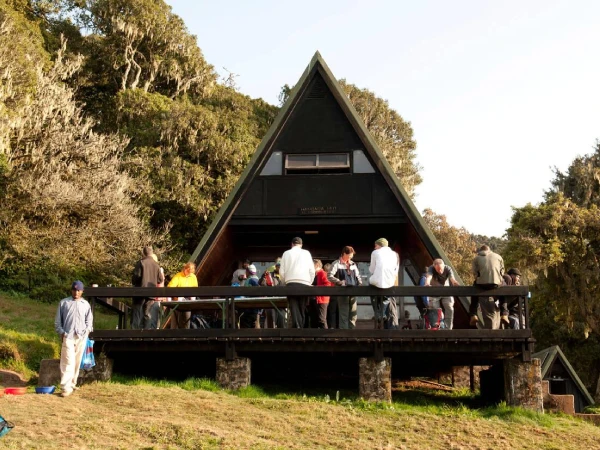
Marangu is the only Kilimanjaro route with permanent hut accommodation — every other main route uses tents.
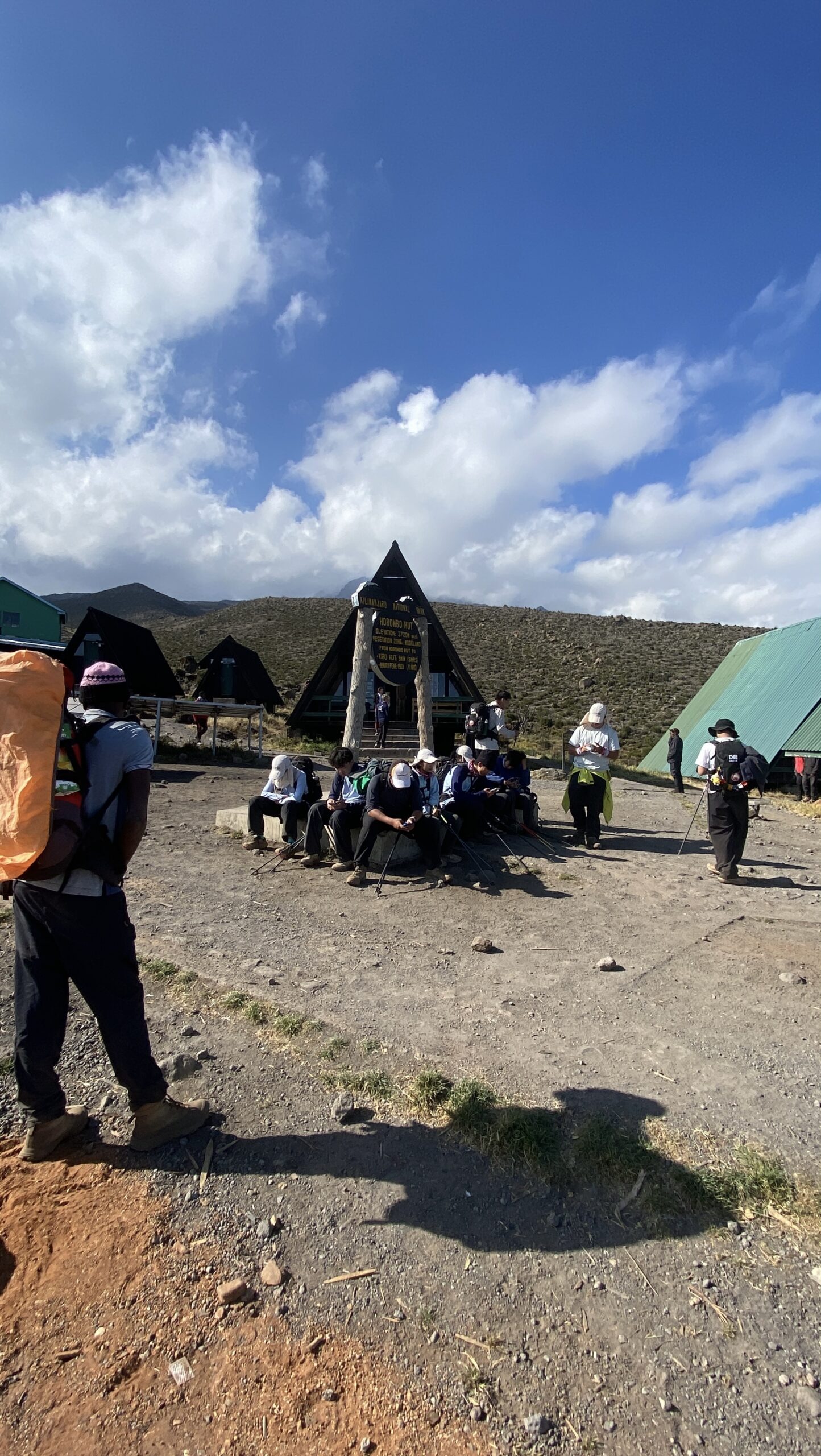
- Mandara Hut (2,720m): forest setting, A-frame wooden dormitories
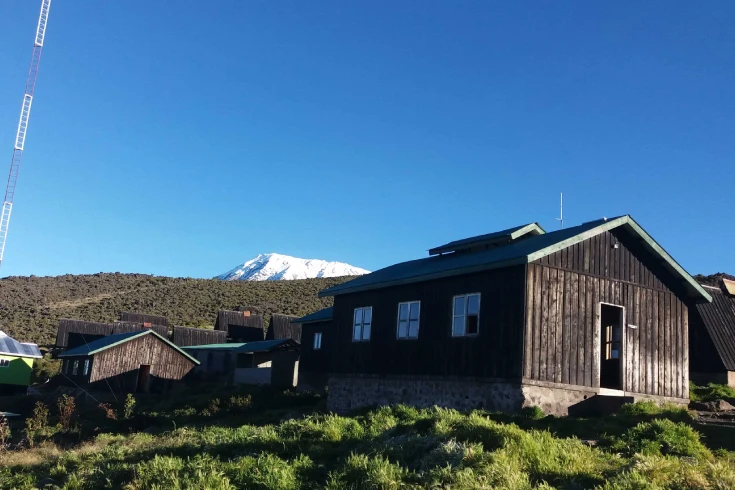
- Horombo Hut (3,720m): the largest hut complex, moorland setting, your acclimatization base
- Kibo Hut (4,703m): stone dormitory, the final stop before the summit attempt
Huts provide dormitory-style beds with mattresses — bring your own sleeping bag or rent one in Moshi. They are not heated; Kibo Hut in particular drops well below freezing overnight. Bathrooms are basic squat facilities in separate blocks, with no hot running water on the mountain. The genuine advantage is thermal shelter that a tent cannot match at 4,700m on summit night. The trade-off is shared, communal sleeping space — light sleepers should know that going in.
What can go wrong on the Marangu Route
The Marangu Route has a lower estimated summit success rate than most other Kilimanjaro routes we guide. Here is what actually goes wrong, specifically — because an honest answer here is worth more than a reassuring one.
1. Altitude sickness at Kibo Hut (4,700m)
The night before summit is the highest-risk point for acute mountain sickness on this route. Symptoms include severe headache, nausea, vomiting, and disorientation. We monitor pulse oximetry at every camp; anyone showing signs of HACE or HAPE is descended immediately.
2. Summit-night cold
Many climbers underestimate -10°C to -15°C at Kibo Hut, colder still at the crater rim. Inadequate gloves and base layers are a common reason for premature turnaround. See our packing list for what to actually bring.
3. Summit-night exhaustion
The midnight departure means climbers have had only 4–5 hours of poor-quality sleep at 4,700m before beginning the hardest section of the climb. This is unavoidable on this route — prepare for it mentally in advance.
4. The “easy route” trap
Marangu’s accessible reputation creates a psychological trap: climbers who arrive expecting a straightforward day-hike often turn back before Gilman’s Point. Altitude does not respond to expectations.
5. Same path down as up
After summiting, the descent retraces every step of the ascent. On tired legs, this repetition is harder psychologically than many climbers expect.
Every one of these is manageable with preparation. Our guides have supported climbers through each scenario listed here. The risks are real — they are also navigable with the right support.
How Kilimania guides the Marangu Route
- Lead guide Sabinus Msimba: 22 years on Kilimanjaro, 300+ personal Uhuru Peak summits, KINAPA-licensed since 2003
- KPAP-aligned porter practices — see the Kilimanjaro Porters Assistance Project
- 1,247+ climbers guided across all routes, 2019–2025
- Based in Moshi — not Arusha, not Nairobi — meaning local trail and gate knowledge
- Pulse oximetry monitoring at every camp
- Emergency oxygen and first-aid kit on every climb
- Pre-climb briefing and gear check in Moshi before departure
- Direct WhatsApp and email contact with the team guiding your climb
What’s included in the 6-day Marangu Route
Included
- 2 hotel nights in Moshi (before and after the climb)
- JRO airport transfers
- Kilimanjaro National Park fees
- KINAPA rescue fee
- Mountain hut accommodation (5 nights)
- All meals on the mountain
- Drinking water on the mountain
- KINAPA-licensed lead guide + assistant guide(s)
- Cook and KPAP-compliant porters
- Emergency oxygen and pulse oximeter monitoring
- First-aid kit
- Moshi ↔ Marangu Gate transfers
- Pre-climb briefing and gear check
- Kilimanjaro summit certificate
Not included
- International flights
- Tanzania visa fees — see our visa guide
- Travel insurance (required — covering high-altitude emergency evacuation; see World Nomads)
- Sleeping bag (bring your own or rent in Moshi)
- Personal climbing equipment or rental gear
- Personal medication
- Guide and porter tips
- Alcoholic beverages, soft drinks, snacks
- Additional hotel nights and personal expenses
6-day Marangu Route cost, 2026
| Group size | Price per person | Note |
|---|---|---|
| 1 person | $1,750 | Private solo climb |
| 2 people | $1,650 | Private group |
| 3 people | $1,600 | Private group / joining rate |
| 4 people | $1,550 | Private group |
| 5 people | $1,500 | Private group |
| 6 people | $1,450 | Private group — lowest per-person rate |
Deposit: $100 per person to confirm booking. Joining price: solo travelers and pairs can join an existing Kilimania group at $1,600 per person — see the Kilimanjaro joining calendar for open dates. Prices last verified: 29 August 2026.
Our prices include everything listed above — when you receive a quote from Kilimania, there are no hidden additions. Where quotes differ between operators, the difference usually comes down to guide qualifications, porter pay, safety equipment, and group size limits, not corners cut invisibly.
Full Kilimanjaro cost breakdown — no hidden fees · Current TANAPA park fees 2026
Ready for your group quote?
Send dates and group size — we respond within 12 hours.
Read verified reviews on TripAdvisor · Read our Google reviews
Meet your guide: Sabinus Msimba
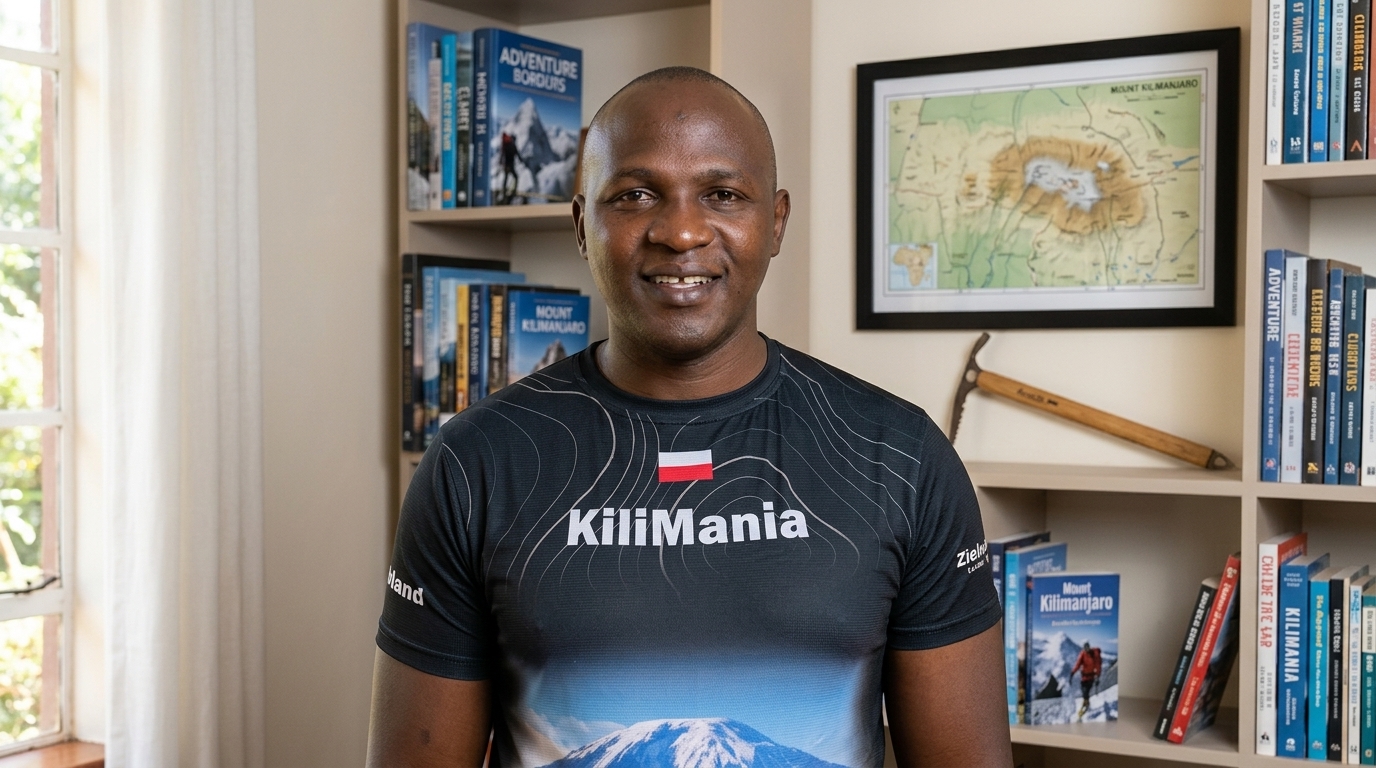
Sabinus Salvatory Msimba
Senior Kilimanjaro Mountain Guide & Co-Founder, Kilimania Adventure. Career began in 2001 as a porter on this same Marangu Route. Route observations and operational detail on this page come directly from his guiding experience and Kilimania’s operational records.
- 22+ years guiding Kilimanjaro
- 300+ personal Uhuru Peak summits
- KINAPA-licensed since 2003
- Wilderness First Responder certified
Mountain Climbing tour guide license, issued 1 Jan 2026, valid through 31 Dec 2026. Kilimania Adventures is registered in Tanzania (Business Registration No. 437131), based in Kiboriloni, Moshi.
Full biography — Sabinus Msimba → · 22 years on Kilimanjaro: Sabinus’s guide profile → · KINAPA guide licence (PDF) →
How the 6-day Marangu compares to other routes
| Route | Duration | Accommodation | Success rate est. | Price from |
|---|---|---|---|---|
| 6-Day Marangu | 6 days | Huts | ~67% (estimate) | $1,450 |
| 5-Day Marangu | 5 days | Huts | Lower than 6-day | $1,300 |
| 7-Day Machame | 7 days | Tents | Not published — qualitatively higher than Marangu | $1,600 |
| 8-Day Lemosho | 8 days | Tents | ~82% (internal estimate) | $1,750 |
Marangu vs Machame: which route should you choose? · All Kilimanjaro routes — 2026 comparison
Frequently asked questions — 6-day Marangu Route
What is the success rate on the 6-day Marangu Route?
Based on Kilimania’s internal operational records, we estimate the 6-day Marangu success rate at approximately 67%. That means roughly one in three climbers on this route does not reach Uhuru Peak (5,895m). The main factors are the compressed acclimatization schedule relative to longer routes, the steepness of the final summit section, and the extreme cold during midnight summit attempts. Definition: a “success” is a climber who reached Uhuru Peak specifically — not Stella Point or Gilman’s Point. We track this route separately from our other itineraries, but we don’t yet have a large enough Marangu-only dataset to publish a formal statistical margin of error, which is why we present this as an internal estimate rather than an audited statistic.
Is the 6-day Marangu Route suitable for beginners?
The trail itself is straightforward and non-technical, but altitude is the main challenge regardless of trail difficulty. First-timers with no high-altitude experience are advised to weigh the estimated 67% success rate honestly and consider whether the acclimatization depth of an 8-day route better fits their risk tolerance. See our beginner’s guide to climbing Kilimanjaro.
Why is Marangu called the “Coca-Cola Route”?
The nickname refers to the route’s accessibility and trail infrastructure — a maintained path and hut accommodation — not to how easy it is to reach the summit. Altitude affects Marangu climbers the same way it affects climbers on any other route.
What is the difference between 5-day and 6-day Marangu?
The 6-day version adds one extra night at Horombo Hut (3,720m) on Day 3, used for a Zebra Rock acclimatization hike. That single extra night is the entire structural difference between the two itineraries, and it meaningfully improves the acclimatization margin before the push to Kibo Hut.
What temperature should I expect on summit night?
Roughly -10°C to -15°C at Kibo Hut, falling to -15°C to -20°C at the crater rim near Uhuru Peak. Wind chill can make it feel considerably colder. A proper base layer, insulated mid-layer, windproof shell, and warm gloves are essential — see our packing list.
Are there bathrooms and showers in the Marangu huts?
Each hut complex has basic squat-toilet facilities in separate blocks. There is no hot running water or shower facility on the mountain at any of the three huts.
What happens if I cannot reach the summit?
If a guide determines that continuing is medically unsafe, descent is recommended immediately regardless of proximity to the summit. Climbers who reach Gilman’s Point (5,681m) but not Uhuru Peak (5,895m) typically receive a certificate reflecting that point reached — see our summit certificate guide and what happens if you don’t summit.
How do I book the 6-day Marangu Route with Kilimania?
Send your preferred dates, group size, and any questions via the form on this page, WhatsApp, or email. We are based in Moshi and typically respond within 12 hours, seven days a week.
Can I climb Marangu if I’m over 50?
Age alone is not a barrier — many climbers over 50 and even over 70 have summited via Marangu. Fitness preparation and realistic acclimatization expectations matter more than age. See our guide for climbers over 50.
Do I need Diamox for the Marangu Route?
Diamox is a personal medical decision to make with your own doctor before travel — it is not included in our package and we do not prescribe it. See our Diamox for Kilimanjaro guide for the evidence and considerations.
How much should I tip the crew on Marangu?
Tipping is not included in the package price and is customary at the end of the climb, typically distributed among guides, cook, and porters. See our tipping guide for exact recommended amounts by role.
Can I join an existing Kilimania group instead of booking privately?
Yes — solo travelers and pairs can join an existing scheduled group at $1,600 per person. Available dates are published on our Kilimanjaro joining calendar.
What climbers say
Real, verifiable reviews from TripAdvisor and Google — including one from a climber who did this same route via the huts.
★★★★★
Knowledgeable guides helped the group reach the summit, with good food, equipment, and support throughout the Kilimanjaro trek.
Getruda M. — TripAdvisor, March 2026
★★★★★
A well-organized Machame Route trek with good food, equipment, and experienced guides — paired with a 5-day safari to Tarangire, Lake Manyara, and Ngorongoro Crater.
Witness M. — TripAdvisor, March 2026
★★★★★
The Marangu Route’s hut accommodations suited a first trek, and the guide’s support made acclimatization manageable on the way to reaching the summit — attention to detail is unmatched.
Lucas Kaegele — Google review, Jan 2025
Kilimania Adventures — Tour operator in Tanzania, based in Moshi. 5.0 / 5 on TripAdvisor (33 reviews) · 4.9 / 5 on Google (36 reviews).
Other Kilimanjaro routes to consider
7-Day Machame
Tent-based, more scenic variety, stronger acclimatization profile than Marangu.
View route →8-Day Lemosho
Deepest acclimatization of the main routes — Kilimania’s recommendation for most first-time climbers.
View route →Free planning resources
Altitude symptom checklist
The same checklist our guides use to monitor climbers at every camp.
Download PDFPlanning your Kilimanjaro climb
Book your 6-day Marangu Route climb
Send your dates and group size. We’re based in Moshi and respond within 12 hours, seven days a week.
Inquiry received
Thank you — we’ll respond within 12 hours. Meanwhile, you can also reach us on WhatsApp: +255 756 449 990.
Prefer WhatsApp? Message us directly. Or check the joining calendar for scheduled group dates.
Sabinus Msimba
Senior Mountain Guide · Co-Founder, Kilimania Adventure · 22+ years guiding · 300+ personal Uhuru Peak summits · KINAPA-licensed since 2003 · Wilderness First Responder certified.
Last reviewed: 29 August 2026.
Kilimania Adventure is the operator of the climb described on this page. All prices, inclusions, and operational details apply to Kilimania-guided expeditions only. Success-rate figures are internal estimates from Kilimania’s own operational records, not independently audited statistics, and are not a guarantee of any individual outcome.