6-Day Marangu Route Trip Report: A Real Guide’s Summit Experience
6-Day Marangu Route: At a Glance
- Duration: 6 days / 5 nights
- Accommodation: Mountain huts (Mandara, Horombo, Kibo)
- Highest point: Uhuru Peak, 5,895m
- Acclimatization: One dedicated day at Zebra Rock
- Best for: Climbers who prefer huts over tents
- Difficulty: Moderate terrain; altitude is the main challenge
Sources: Kilimania Adventure’s internal guided-expedition records (August 2026) and general altitude-illness guidance from the Wilderness Medical Society.
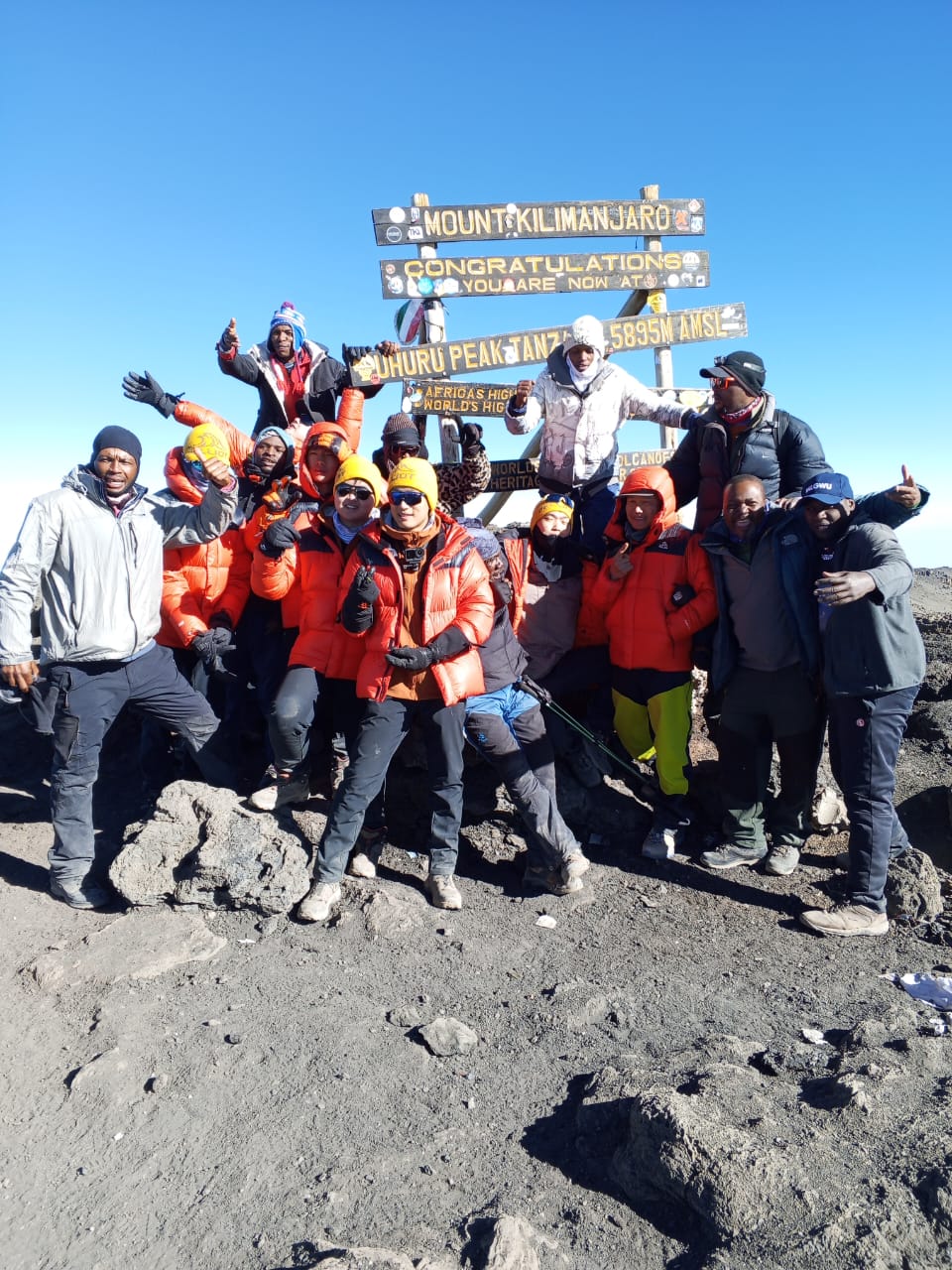
This Marangu Route Kilimanjaro trip report is a first-hand account, not an itinerary or booking page — if you want the full day-by-day plan, inclusions and pricing, see our 6-day Marangu Route itinerary and booking details. What follows is what actually happened on one real climb. Nine climbers started this expedition in August 2026. Roughly 300 meters past Marangu Gate, one climber developed concerning symptoms; following our mountain-safety protocol, I decided the safest option was to descend. The remaining eight climbers continued, completed the Zebra Rock acclimatization day, and reached Uhuru Peak at 5,895m on Day 5. This describes one specific expedition — not a general Marangu Route success rate.
This Expedition, By the Numbers
- Climbers who started: 9
- Climbers who reached Uhuru Peak: 8 of 9
- Point of the Day 1 decision to descend: about 300m past Marangu Gate
- Acclimatization day used: Horombo Hut → Zebra Rock → Horombo Hut
- Guide experience: 22 years on Mount Kilimanjaro, 300+ personal Uhuru Peak ascents
- Accommodation: mountain huts (Mandara, Horombo, Kibo)
I have guided on Mount Kilimanjaro for 22 years, and every expedition still comes with a decision point that has nothing to do with fitness or weather. This account covers what actually happened on a 6-day Marangu Route climb we ran in August 2026: a group of nine, one early safety decision, and the eight who continued to the summit. I am writing it up in detail because most route pages describe an itinerary in the abstract, and this is what one specific group experienced, day by day.
What happened on Day 1 near Marangu Gate
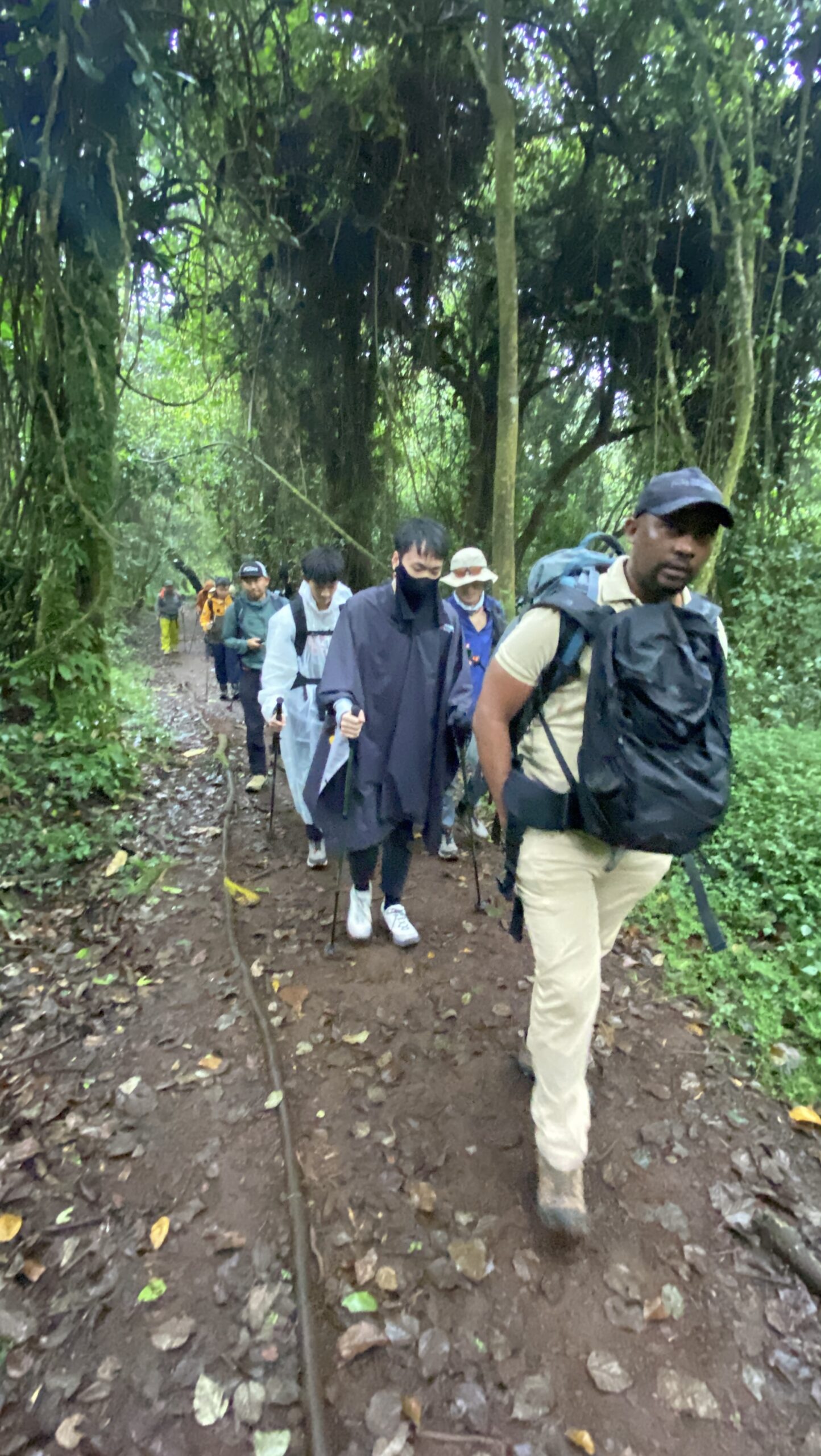
Roughly 300 meters past Marangu Gate, one climber in the group began showing concerning symptoms — breathing difficulty and stomach discomfort. Rather than wait to see whether they passed, I made the call to turn back immediately.
On the short walk down to gate level, the climber’s condition improved noticeably. They were driven back to Moshi the same day. The symptoms described here were concerning enough to warrant descent, but this account does not diagnose their cause. Our guides follow established mountain-safety protocols and prioritize descent when concerning symptoms require it, consistent with general guidance from mountain-medicine bodies such as the Wilderness Medical Society.
Honestly, this is the part most trip reports skip — everyone wants the summit photo, not the turnaround. The decision to descend at 300 meters allowed the remaining eight climbers to continue under the planned itinerary, and all eight subsequently reached Uhuru Peak. Read more on how acclimatization and pacing affect summit outcomes.
Free download: Kilimanjaro Altitude Symptom & AMS Checklist
The same checklist our guides use to monitor climbers throughout every expedition — covering normal acclimatization symptoms, AMS warning signs, and HACE/HAPE emergency signs.
Download the free PDFWhat happened on our 6-day Marangu Route climb
The 6-day Marangu Route runs from Marangu Gate through three ecological zones — rainforest, moorland, and alpine desert — to Uhuru Peak and back, sleeping in huts each night rather than tents. Our August 2026 group followed the standard structure, with one acclimatization day built in at Horombo Hut. For the complete daily itinerary, inclusions and pricing, see the 6-day Marangu Route itinerary and booking details — the summary below reflects what this specific group experienced.
| Day | Route section | Overnight | What happened on this expedition |
|---|---|---|---|
| 1 | Marangu Gate → Mandara Hut | Mandara Hut | One climber turned back ~300m past the gate; remaining 8 continued |
| 2 | Mandara Hut → Horombo Hut | Horombo Hut | Rainforest gives way to open moorland |
| 3 | Horombo Hut → Zebra Rock → Horombo Hut | Horombo Hut | Dedicated acclimatization day |
| 4 | Horombo Hut → Kibo Hut | Kibo Hut | Alpine desert; short rest before the midnight departure |
| 5 | Kibo Hut → Stella Point → Uhuru Peak → Horombo Hut | Horombo Hut | All 8 remaining climbers reached Uhuru Peak |
| 6 | Horombo Hut → Marangu Gate | — | Final descent and exit at the gate |
Day 1 — The safety decision near Marangu Gate
Covered in full above: one climber turned back roughly 300 meters into the rainforest, and the remaining eight continued to Mandara Hut.
Day 2 — Reaching Horombo and preparing for acclimatization
The rainforest opened into moorland as the group climbed toward Horombo Hut, the largest camp on the route and base for the acclimatization day to follow. Spirits were noticeably higher once the group settled in — the Day 1 decision was clearly the right call, and everyone knew it.
Day 3 — Zebra Rock: what we observed
A full day dedicated to climbing high and sleeping low. See what we watched for on this specific day below.
Day 4 — The approach to Kibo Hut
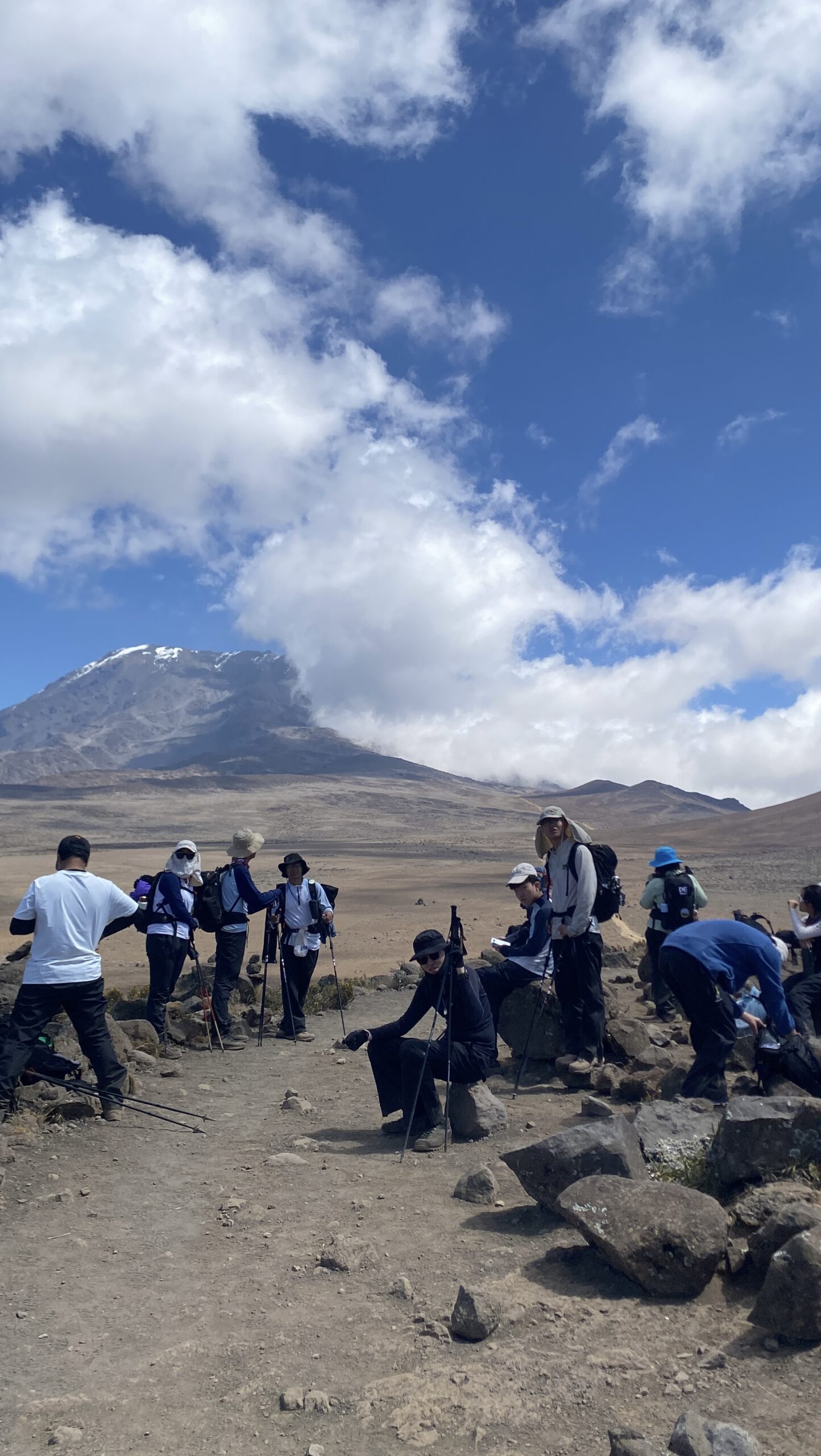
The trail crossed alpine desert, with Kibo Peak visible for most of the day. The group was quieter than on previous days — a normal shift as climbers start conserving energy for summit night — before a short rest at Kibo Hut ahead of the midnight departure.
Day 5 — Our summit night
The push from Kibo Hut to Uhuru Peak and back down to Horombo Hut. Full detail is in our summit night account below.
Day 6 — The final descent
A final, more relaxed descent through the zones climbed on Day 1 and Day 2, ending back at Marangu Gate — tired, but with eight of nine climbers carrying summit certificates.
Why the Zebra Rock acclimatization day mattered
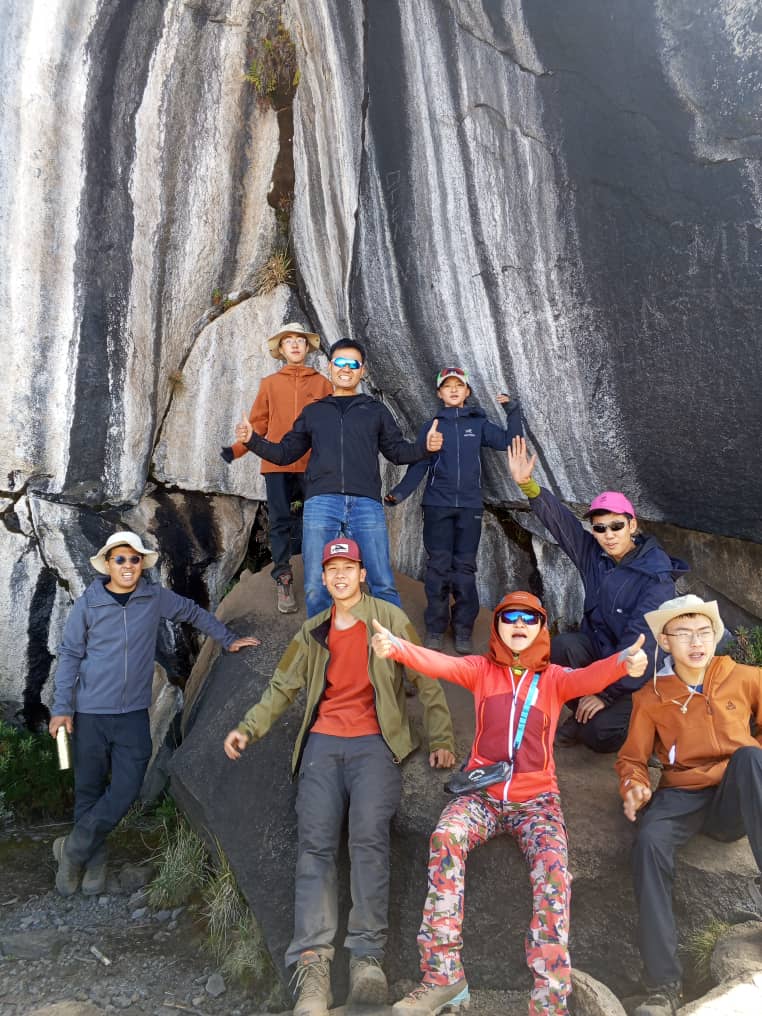
Zebra Rock sits above Horombo Hut. Climbing to it during the day and returning to sleep at Horombo follows the climb-high, sleep-low approach used across most Kilimanjaro routes: the body gets brief exposure to higher altitude and lower oxygen availability before returning to the lower sleeping altitude at Horombo. The 5-day Marangu itinerary skips this day entirely.
This expedition reinforced our preference for itineraries that build in this extra day. On the walk up, I watched pace, breathing, and appetite across the group more closely than usual, given what had happened on Day 1 — and by the time we reached Kibo Hut, I had a clear read on how each climber was handling the altitude.
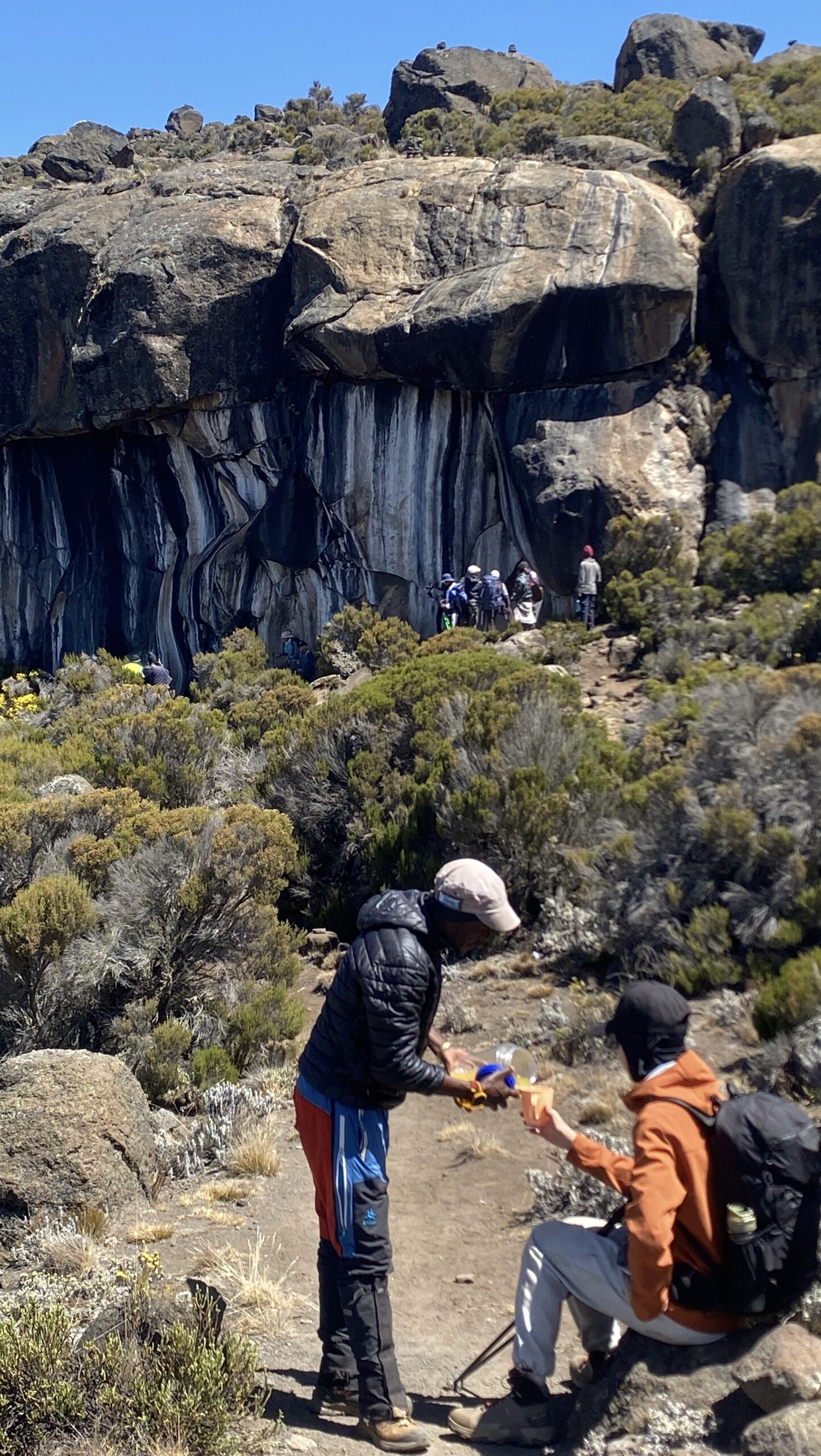
One of our support guides, Peter, kept hot drinks moving through the group at the base of Zebra Rock during the rest stop — a small detail, but the kind of thing that keeps morale and hydration up before the return walk to Horombo Hut.
What the Marangu huts were actually like
Marangu uses mountain-hut accommodation throughout, rather than tented camping, which is the main reason many first-time high-altitude climbers choose it. On this climb, the group stayed in Mandara, Horombo, and Kibo huts, each providing bunk beds with simple mattresses, shared toilet facilities, and a dining area. Facilities got more basic as we gained elevation.
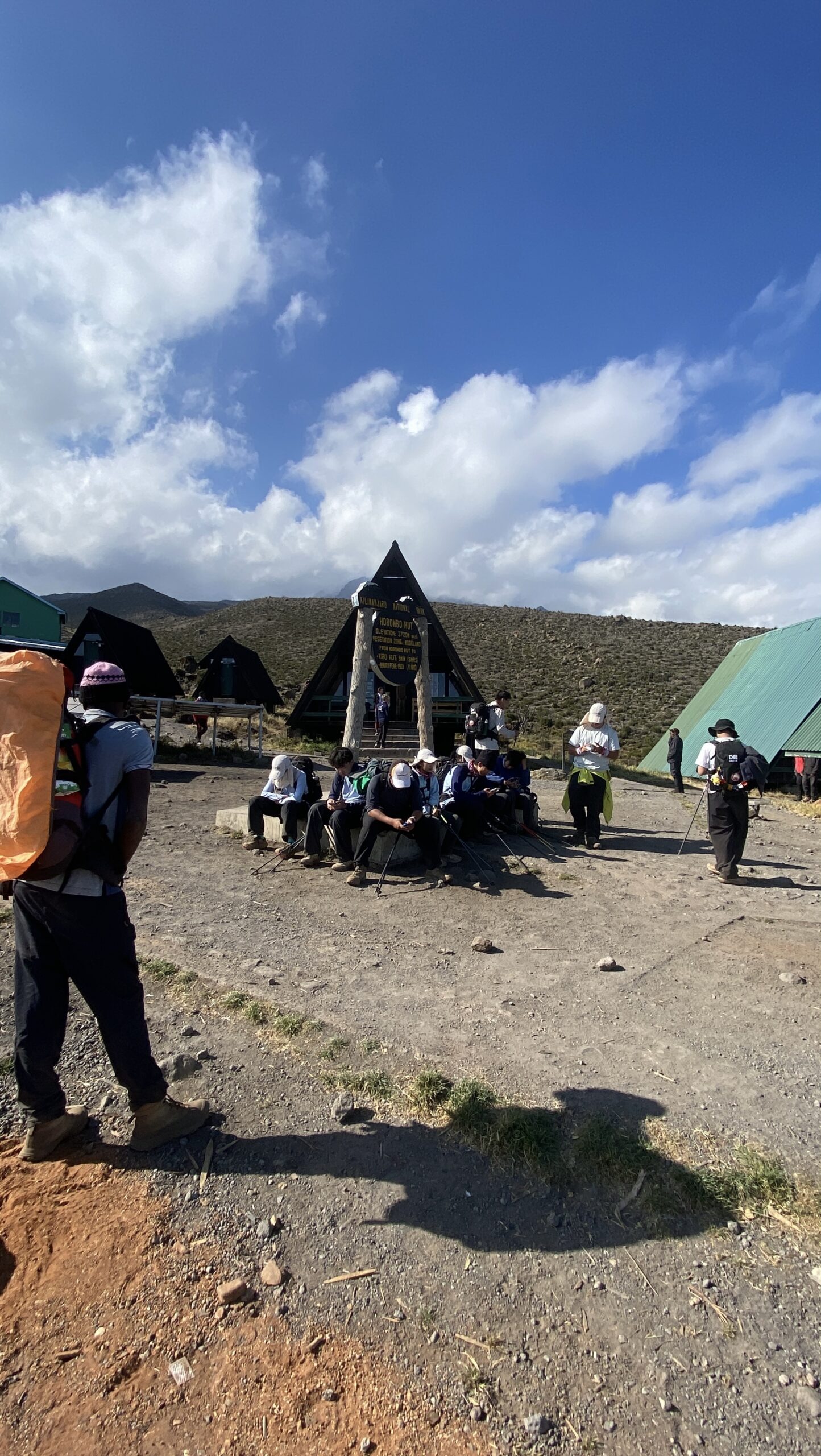
- Mandara Hut: A-frame wooden huts in the rainforest; solar lighting in the dining hall; the most comfortable night of the climb.
- Horombo Hut: The largest camp on the route, with limited solar charging — bring a power bank. Cold water only for washing. Earplugs are worth packing on busy nights.
- Kibo Hut: Basic stone bunkrooms, no charging, and cold. The group ate and rested from mid-afternoon until the midnight wake-up call.
The huts were warmer and drier than a tent at the same altitude, but they are not hotel rooms. For climbers who cannot manage tented camping at 4,700m, they are a genuine advantage. See our packing checklist for hut-based routes for what to bring given the shared facilities.
Our summit night: Kibo Hut to Uhuru Peak
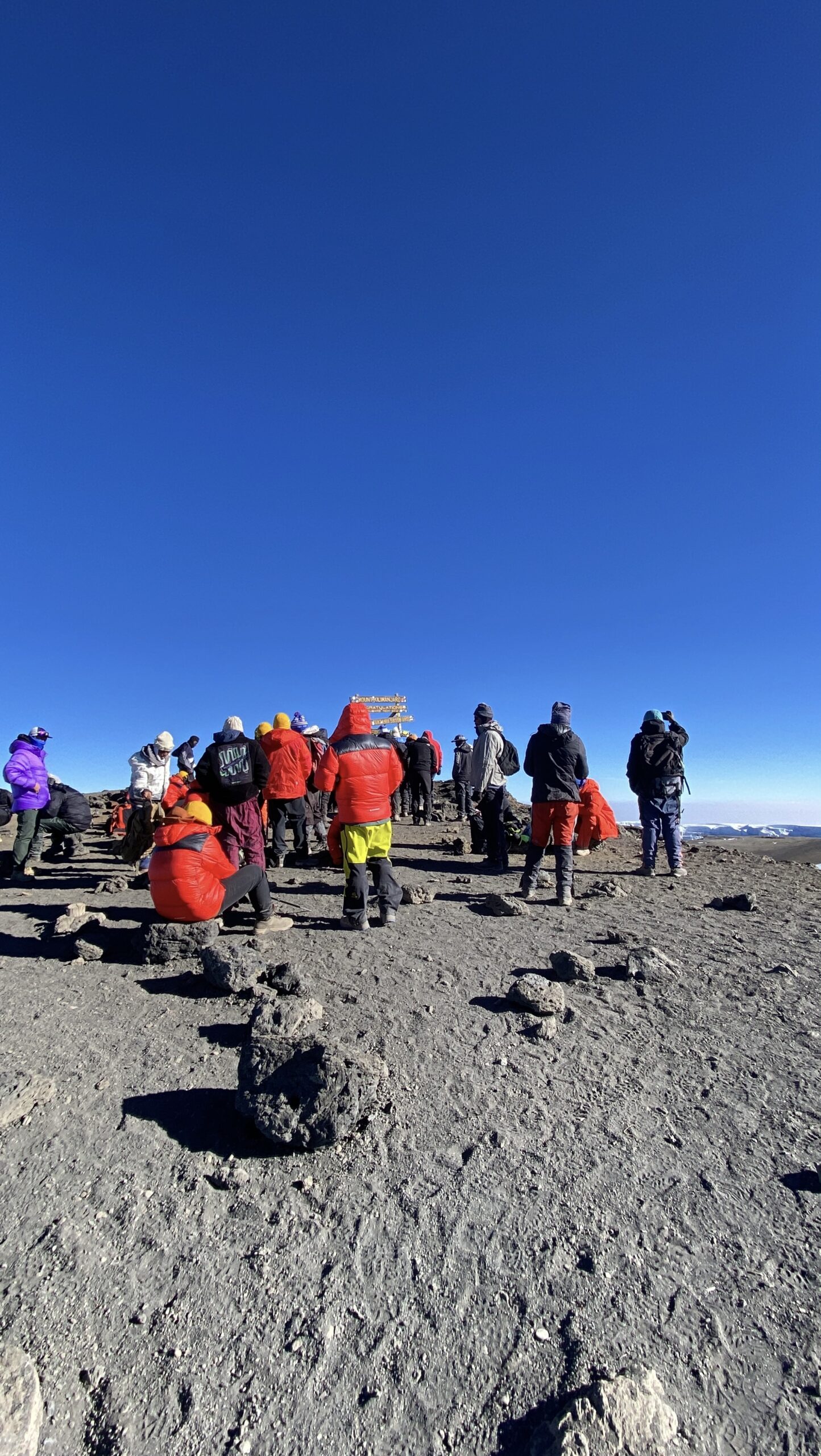
Summit night began at Kibo Hut around midnight. The group climbed from Kibo Hut toward Gilman’s Point, then continued around the crater rim via Stella Point (5,756m) before making the final push to Uhuru Peak at 5,895m. Temperatures on this stretch were well below freezing, with significant wind on the rim.
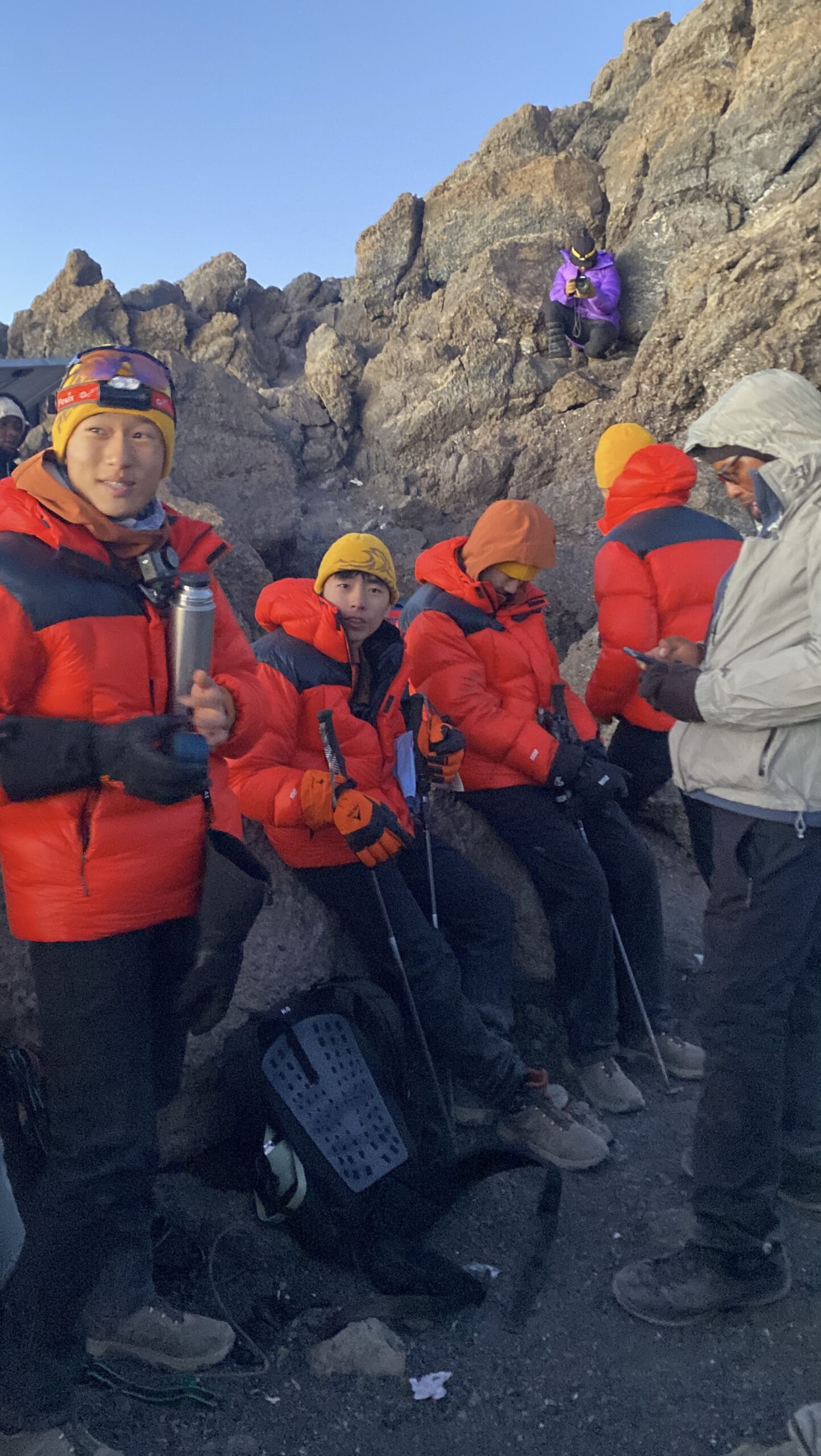
Pace mattered more here than anywhere else on the route. We repeated pole pole — slowly, slowly — constantly on summit night, because the urge to move faster in the cold works against the climber’s own oxygen supply. The eight climbers who continued past Day 1 kept a deliberate pace from Kibo Hut to Uhuru Peak and back down to Horombo Hut the same day.
What this expedition taught us
Two things stood out. First, the Day 1 decision confirmed something we already believed in principle: it is far better to descend early on concerning symptoms than to wait and see, even 300 meters into a six-day trip. Second, the Zebra Rock day gave the group additional exposure to higher altitude before returning to sleep at Horombo — and for us, it provided another opportunity to observe pace, breathing, appetite, and overall response ahead of the summit push.
How the 6-day Marangu Route compares to other itineraries
The 6-day Marangu Route suits climbers who want hut accommodation and a more direct path to the summit than the 7- or 8-day alternatives. It does not offer the scenery variety of routes that cross multiple sides of the mountain, and it gives less acclimatization time than longer schedules.
| Route | Typical duration | Accommodation | Recommended for |
|---|---|---|---|
| Marangu | 6 days | Huts | Climbers who prefer huts over tents and want a shorter overall trip |
| Machame | 7 days | Tents | Climbers wanting more varied terrain and scenery |
| Lemosho | 8 days | Tents | Climbers prioritizing extended acclimatization |
In our experience, the number of acclimatization days tends to matter more to outcomes than which specific route is chosen — see our guide on how many days to climb Kilimanjaro for a broader look at itinerary length. For a closer look at Marangu specifically, see our Marangu versus Machame comparison or the full Kilimanjaro route guide.
How this trip report differs from the standard itinerary
Our 6-day Marangu Route itinerary and booking details page describes what any climber on this route can expect: daily distances, inclusions, and the booking process. This article is different — it’s a record of one specific group’s experience, including the one part of any climb that a standard itinerary page can’t show you in advance: how a guide actually responds when something goes wrong on Day 1.
What determines the cost of a climb like this
Costs for a 6-day Marangu climb are shaped by park fees, hut fees, crew wages and tips, food, group size, and season, along with your own gear, insurance, flights, and visa costs. Rather than quote a figure that varies by operator and season, see our Kilimanjaro cost breakdown for current, exact pricing, and our tipping guide for crew tip amounts.
Planning notes for international travelers
- Currency: Tanzania’s currency is the Tanzanian Shilling. US dollars are widely accepted for tourism services and tips; newer, smaller-denomination bills are easiest to use.
- Visa: Most international travelers need a Tanzania e-visa. Apply directly through the official Tanzania e-Visa portal in advance of travel.
- Vaccinations: A yellow fever certificate may be required depending on your departure or transit country. Check current entry requirements via CDC Travelers’ Health — Tanzania before you travel.
- Park authority: Kilimanjaro National Park is managed by TANAPA, which sets park fees and access rules for all routes, including Marangu.
- Flights: Most climbers fly into Kilimanjaro International Airport (JRO) or Arusha Airport (ARK).
- Insurance: Confirm your travel insurance specifically covers high-altitude trekking to at least 6,000m before you book.
The bottom line
Eight of nine climbers reached Uhuru Peak on this expedition — a result specific to this group, not a general summit-rate statistic for all 6-day Marangu climbs. It followed a safety decision made early on Day 1, not a failure of the itinerary, and the Zebra Rock acclimatization day gave the remaining climbers a real margin before summit night. If you’re ready to plan your own climb, start with the 6-day Marangu Route itinerary and booking details.
Frequently asked questions
What is this trip report, and how is it different from a standard itinerary page?
This article is a first-hand account of one real 6-day Marangu Route expedition, written by the guide who led it. It is not the itinerary or booking page — for full route details, inclusions, and pricing, see Kilimania’s 6-day Marangu Route itinerary and booking details.
What happened to the climber who turned back?
Roughly 300 meters past Marangu Gate, a climber developed concerning symptoms. Following mountain-safety protocol, the guide decided the safest option was to descend rather than continue. The climber’s condition improved noticeably on the walk back to gate level, and they returned to Moshi the same day.
Did the Day 1 incident change the itinerary for the rest of the group?
No. Once the affected climber began the descent with a support guide, the remaining eight continued on the planned schedule — Mandara Hut, Horombo Hut, the Zebra Rock acclimatization day, Kibo Hut, and the summit push — without adjustment.
What was Zebra Rock like on this specific climb?
It was a full day out and back from Horombo Hut, used to expose the group briefly to higher altitude before returning to sleep lower. On this expedition, it also gave the guides a clear read on each climber’s pace and appetite ahead of the push to Kibo Hut.
What were the huts actually like on this expedition?
Mandara Hut was the most comfortable night, with A-frame huts and solar lighting. Horombo Hut had limited charging and cold water only. Kibo Hut was basic and cold, with the group resting from mid-afternoon until the midnight wake-up call before summit night.
What did summit night feel like on this climb?
The group left Kibo Hut around midnight, climbing toward Gilman’s Point, then around the crater rim via Stella Point before the final push to Uhuru Peak at 5,895m. Temperatures were well below freezing with significant wind on the rim, and the group kept a deliberately slow pace throughout.
Is an 8-of-9 result typical for the 6-day Marangu Route?
It describes this expedition only and should not be read as a general Marangu Route success rate. Individual outcomes depend on fitness, prior altitude experience, pacing, and weather on the day.
How does the 6-day Marangu Route compare to Machame or Lemosho?
Marangu uses hut accommodation and runs a shorter 6-day itinerary, suiting climbers who prefer not to camp. Machame (7 days) and Lemosho (8 days) use tents, offer more varied scenery, and generally allow more acclimatization time. See our full Marangu vs. Machame comparison.
If you’re weighing your options for Mount Kilimanjaro climbing, our complete climbing guide covers routes, costs, and preparation in full. We Walk With You.
Ready to plan your own 6-day Marangu climb?
Send your dates and group size and our team in Moshi will reply within 12 hours, every day.
WhatsApp +255 756 449 990 · info@kilimania.co.tz
KINAPA-licensed guides · TATO-registered operator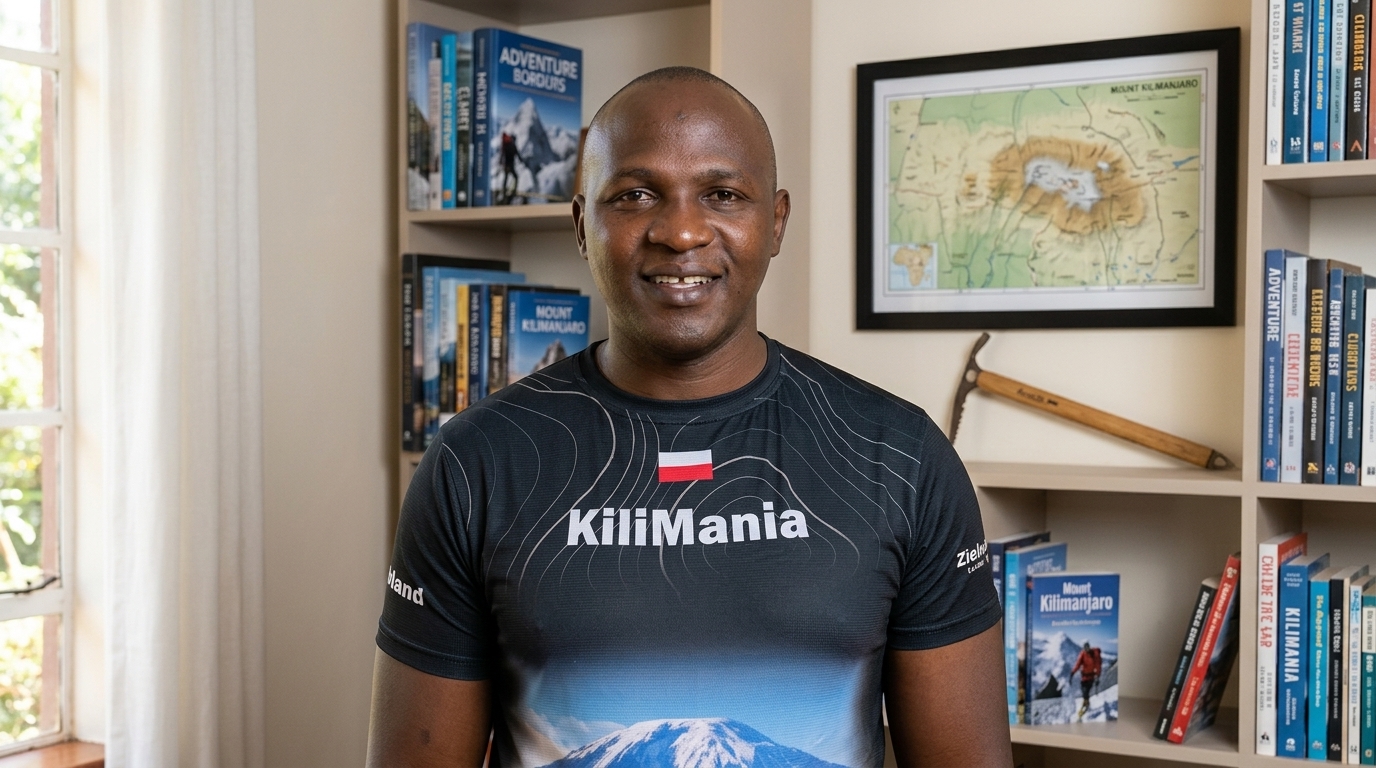
Sabinus Msimba
Senior Kilimanjaro Guide, Kilimania Adventure. 22 years guiding on Mount Kilimanjaro, 300+ personal Uhuru Peak ascents, KINAPA-licensed. See the full guide profile.
Last verified: August 2026 · Next scheduled review: February 2027
Kilimania Adventure is a TATO-registered tour operator based in Moshi, Tanzania. This article is written by a Kilimania guide and reflects our commercial interest in Kilimanjaro climbing bookings, alongside a factual account of a real August 2026 expedition.