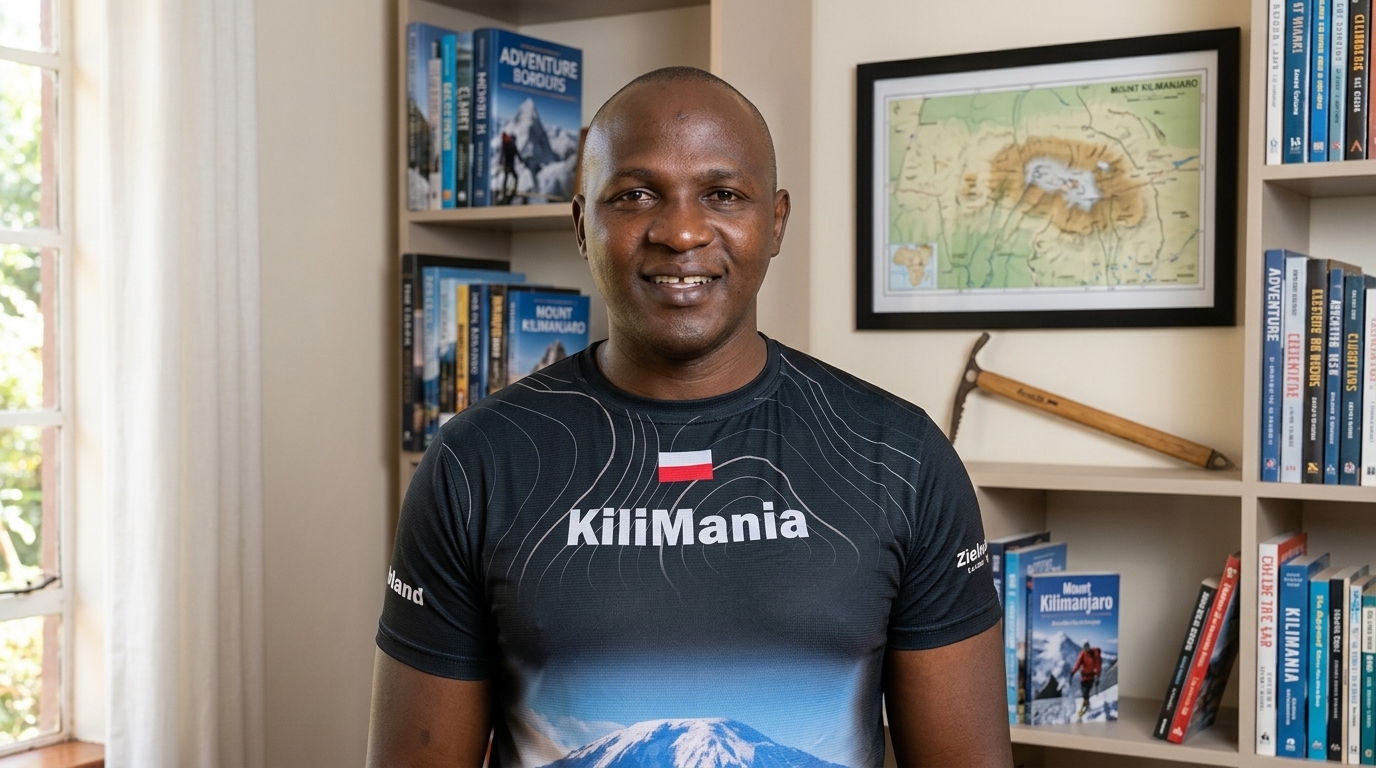
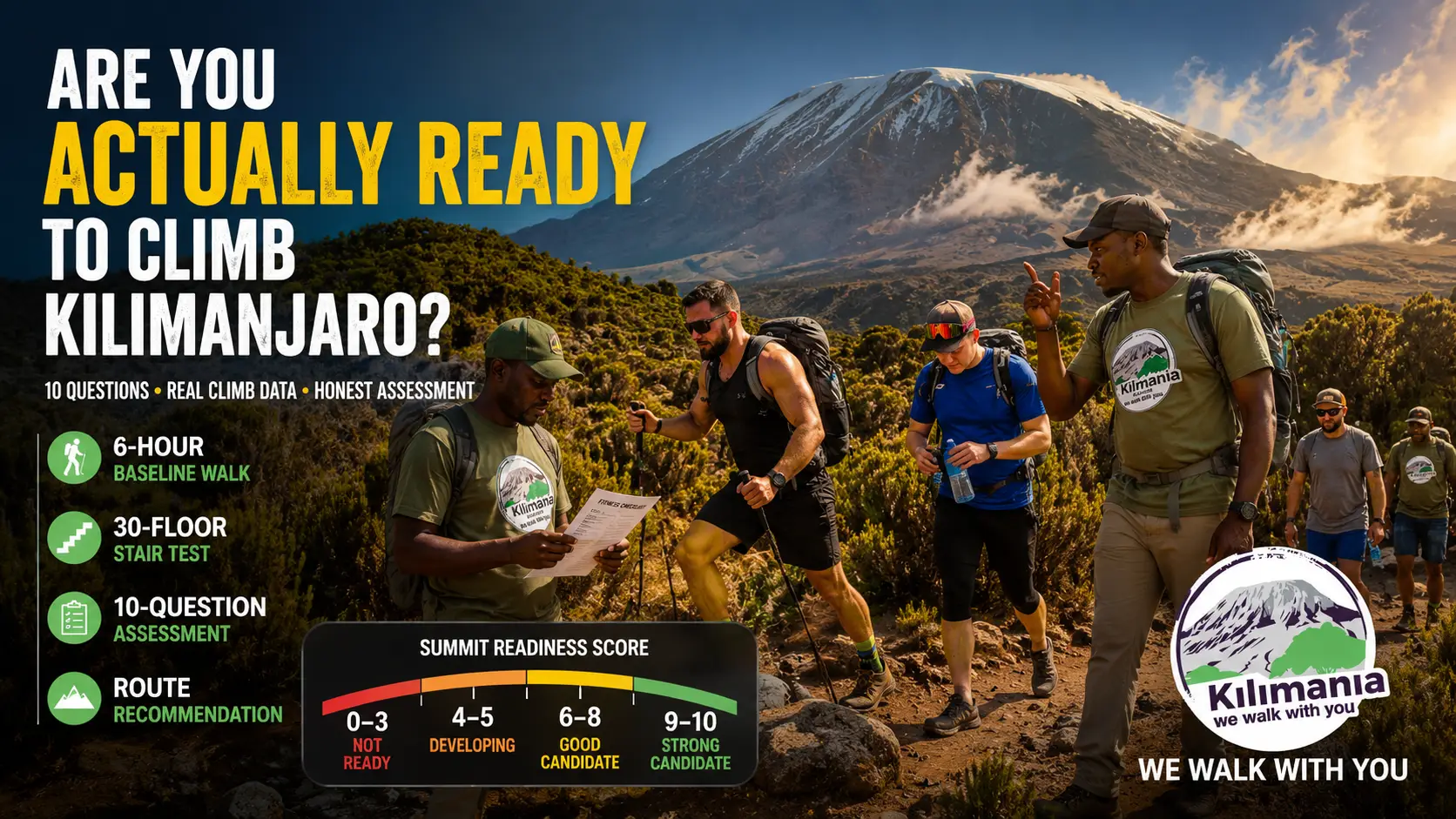
You’re physically ready to start Kilimanjaro-specific training when you can walk 6 hours with a 5kg pack and still walk normally the next morning — and you score 6 or more on the 10-question assessment below. Itinerary matters as much as fitness: in Kilimania’s records, 92% of 418 climbers on the 7-day Machame reached Uhuru Peak, against 82% of 97 on the 6-day version. Fitness gets you to the start line. Acclimatisation days carry you up.
Every Kilimanjaro operator will tell you that almost anyone can climb with the right preparation. That’s technically true. What they rarely tell you is what “right preparation” means for your current fitness level — not a hypothetical average climber, not someone who hiked the Appalachian Trail last year, but you, today, with your current habits and however many weeks you have before departure.
There is no universal minimum fitness standard for Kilimanjaro, because the mountain’s demand varies by route, duration, and your physiology at altitude. What does exist is a clear set of physical benchmarks our guides use in every pre-climb conversation — the ones that, in our experience on the mountain, separate climbers who finish strong from those who run out of reserves on Day 4.
This assessment will tell you where you actually stand. Not where you hope you stand. Seriously.
If you’re curious what the days between “assessment” and “summit” actually feel like, read What Is Climbing Kilimanjaro Like? alongside this test — it helps to know exactly what you’re training for.
Data sources cited in this article: Kilimania summit records by route and itinerary (updated January 2026 and August 2026; methodology on our Kilimanjaro Success Rate by Route page); CDC High-Altitude Travel and Altitude Illness guidance; guide field observations (labelled as such where used).
- 9-day Northern Circuit: 96% reached Uhuru Peak (215 climbers)
- 7-day Machame: 92% (418 climbers) vs 6-day Machame: 82% (97 climbers)
- 7-day Lemosho: 88% (156 climbers); 8-day Lemosho: 82% (384 climbers)
- 6-day Marangu: 67% (256 climbers) — the lowest large-sample figure in our records
- Success = reaching Uhuru Peak (5,895 m); any turnaround counts as unsuccessful
- Lead reviewer: 22+ years guiding, 300+ personal Uhuru Peak summits
Kilimania’s own operational data, not TANAPA or KINAPA statistics and not an industry-wide rate. A historical rate does not predict any individual climber’s result.
Table of Contents
Before You Start: The Kilimanjaro Baseline Fitness Test
Before you answer the 10 questions below, complete this physical test. Do it on a real day, outside, on real terrain. It is the most honest data point you will get about your current readiness — more honest than any question you answer sitting at a desk.
The Test
Choose a day when you have 6 hours available. Pack a bag with 5kg of weight — water bottles, books, anything with mass. Walk on mixed terrain for 6 consecutive hours, with no more than 10 minutes of total stopping time. Include some incline if it’s available to you. If you live somewhere entirely flat, find a staircase and include it.
What to Record
During and after the walk, note these four things specifically:
Hour 3: How do your feet feel? Any hot spots developing? Any unexpected soreness in your hips or lower back that wasn’t there in hour 1?
Hour 4: How does your lower back feel under the pack? Has your posture changed — are you leaning forward more than you were at the start?
End of hour 6: Could you have continued for 2 more hours if the situation required it? Be honest. Not “I would push through” — could your body actually do it without real risk of injury?
The following morning: How do you feel when you wake up? Can you walk normally? Are your knees and ankles functional? Is the soreness muscular (expected, manageable) or joint-based (a signal worth paying attention to)?
What Your Baseline Test Result Tells You
| Your Morning-After Condition | What It Means | Next Step |
|---|---|---|
| Tired but functional — normal walking, some muscle soreness | You have the physical baseline | Complete the 10-question assessment below |
| Stiff and slow but manageable by midday | You’re at the edge of baseline fitness — your score will matter more | Complete the assessment honestly — don’t inflate answers |
| Could barely walk, significant joint or muscle pain | You need more preparation time before the assessment is meaningful | Build a daily walking habit for 4 weeks, then repeat this test |
| Could not complete 6 hours | Your departure date needs to move, or training starts now with a realistic 20-week timeline | Begin the 12-week training plan with a 4-week foundation period added first |
This test replicates what Kilimanjaro actually demands: sustained output over consecutive hours with a loaded pack, on uneven ground, with incomplete recovery between days. Running 5km on a treadmill three times a week does not replicate this. We have watched fit runners struggle on Day 3 while a 58-year-old who walked daily with a loaded pack finished the Lemosho Route strong in 2025.
One thing the baseline test reveals that no written question can: how your specific body responds to sustained load on consecutive muscle groups. A person can score 8/10 on the written assessment and still discover in the baseline test that their lower back fails reliably after hour 4 under pack weight. That’s critical information. The test costs one Saturday. Missing it can cost a summit. For a full hour-by-hour picture of what the hardest day of the climb demands, see Kilimanjaro Summit Night, Hour By Hour.
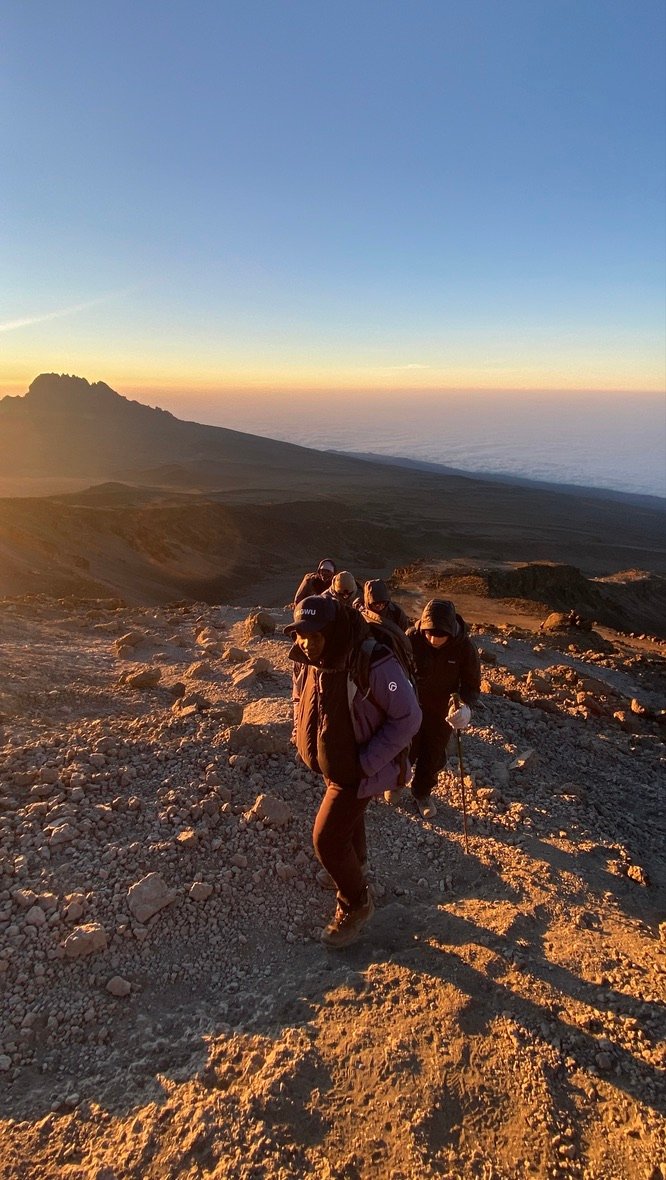
The Stair Test — A Second, Objective Checkpoint
The 6-hour walk tells you about endurance. It does not isolate leg power and cardiovascular output under load the way a single, measurable benchmark can. Add this test in the same week, on a separate day, with fresh legs.
The test: Find a stairwell, stadium steps, or a hill with a consistent gradient. Wearing the same 5kg pack, climb continuously for the equivalent of 30 floors (roughly 300 steps, or 15 minutes of continuous uphill effort if no stairs are available). Time yourself. Do not stop to rest mid-climb.
| Your Time | What It Indicates | Next Step |
|---|---|---|
| Under 15 minutes, breathing hard but controlled | Solid cardiovascular base for summit night’s sustained climb | Proceed to the 10-question assessment with confidence in Q4 and Q5 |
| 15–20 minutes, needed brief pauses | Adequate base, but summit night’s 6–8 hour ascent will demand more from you than this test shows | Add 2 stair or hill sessions per week to your training plan |
| Over 20 minutes, or could not complete without stopping repeatedly | Cardiovascular conditioning is your current limiting factor, independent of endurance | Build aerobic base for 6–8 weeks (brisk walking, cycling, swimming) before repeating this test |
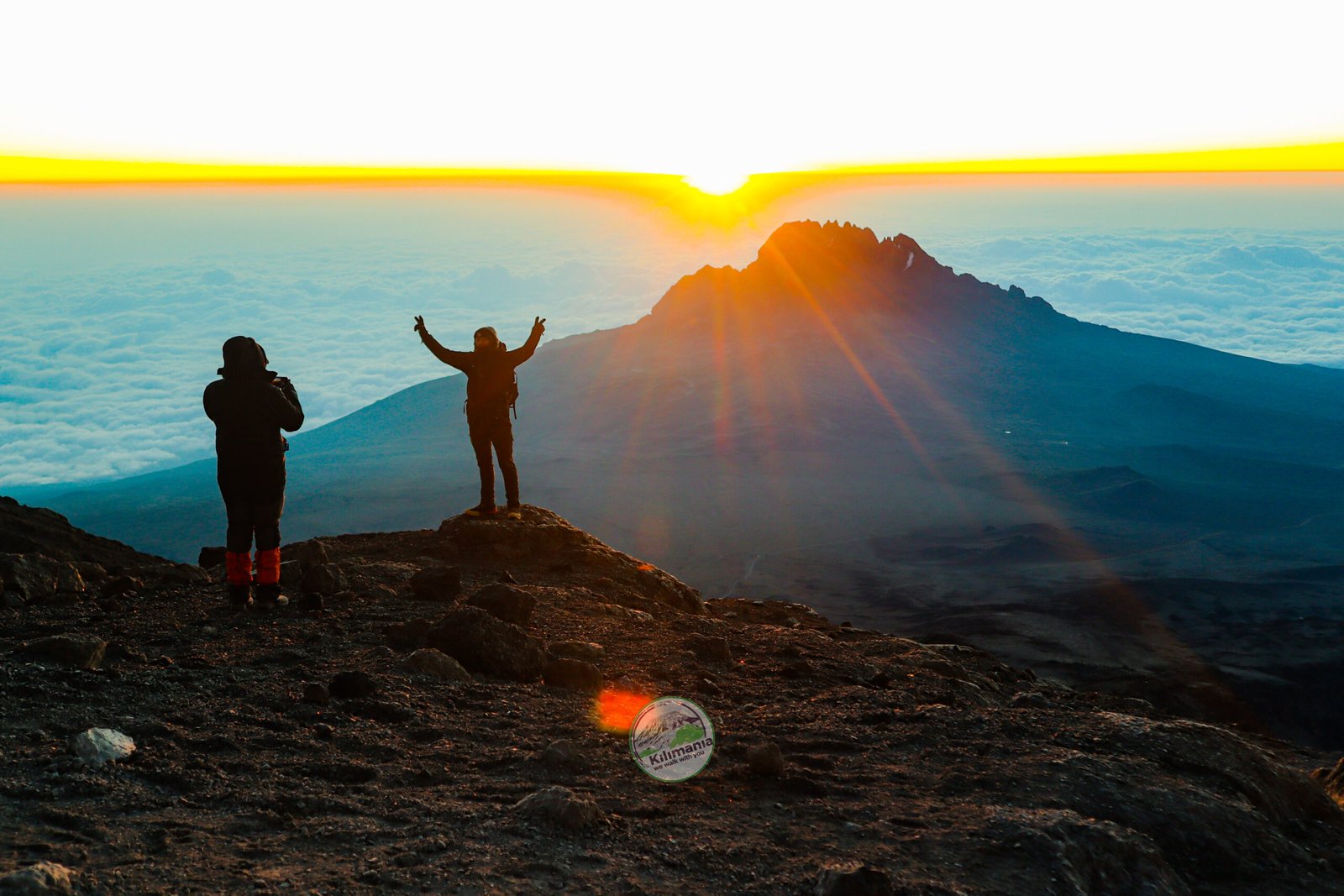
Why this matters alongside the 6-hour walk: the two tests measure different things. The walk tests sustained low-intensity output over time — the dominant demand on Days 1 through 6. The stair test isolates the higher-intensity, oxygen-hungry effort that summit night asks for, when you climb roughly 1,200m from Barafu Camp in 6–8 hours at the thinnest air of the trip. That’s why guides keep repeating pole pole (“slowly, slowly”) — the deliberate, sustainable rhythm that is the only pace that works above 4,000m. A climber can pass one test and fail the other. Both results belong in your preparation plan.
Individual response to altitude and exertion also varies by physiology — including some documented differences by sex. If you want the research-backed detail, read Men vs Women at High Altitude.
The 10-Question Kilimanjaro Fitness Assessment
Score 1 point for each YES answer. Answer based on what you have actually done in the last 3–6 months, not what you intend to do or what you did two years ago. The mountain will provide its own honest assessment regardless of what you score here — the only person served by inflating your answers is nobody. Honestly.
Interactive Fitness Assessment
Select YES or NO for each question below, then press Calculate. All 10 questions must be answered.
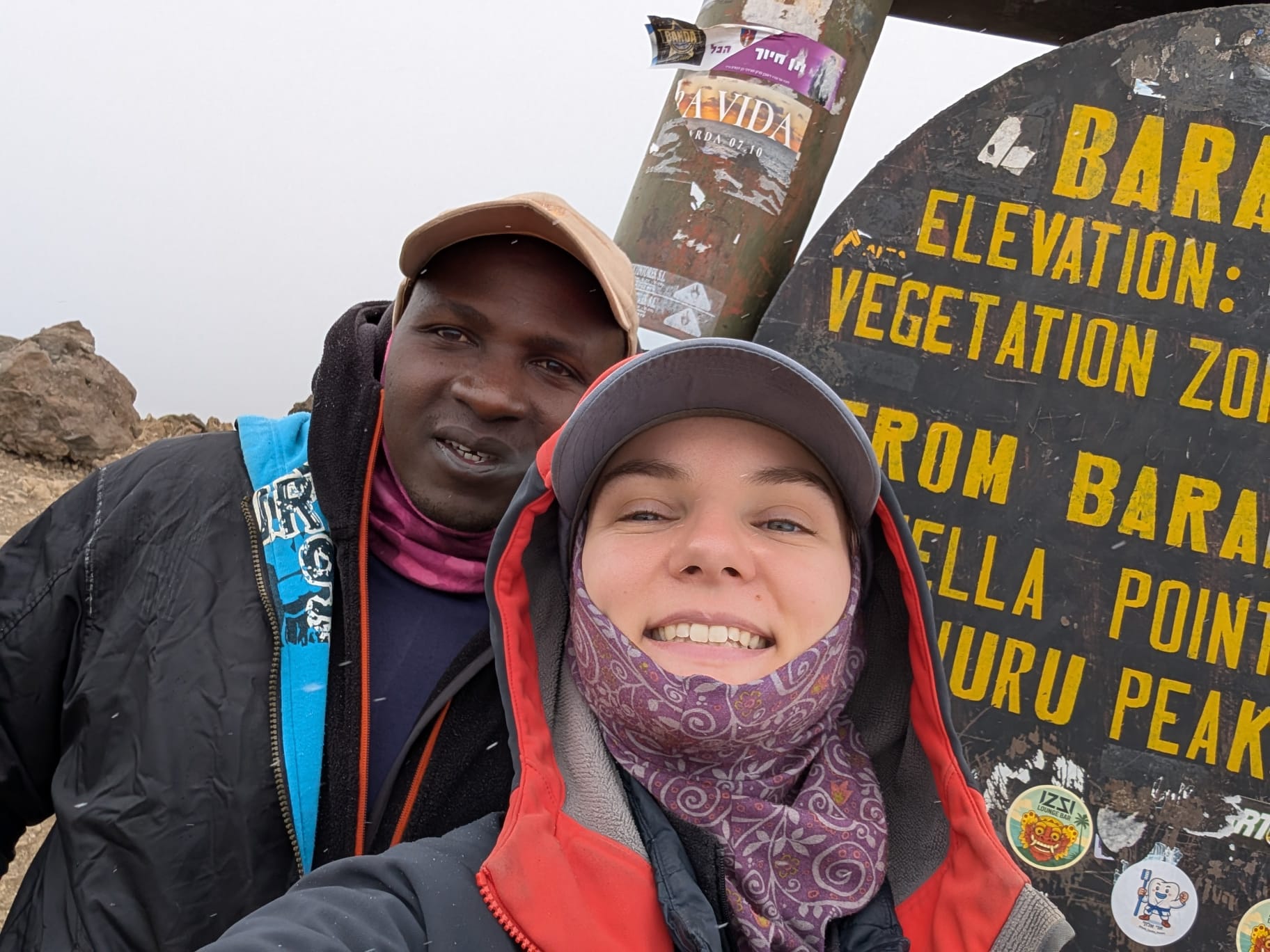
Your Score — What It Means and What to Do Next
Score 9–10: Strong Candidate
You have the physical foundation. The assessment and baseline test suggest you’re prepared to begin Kilimanjaro-specific training and route selection without addressing fundamental fitness gaps first.
What this score does not mean: it does not mean you’re ready today. It means your starting point is strong. Altitude affects people independently of ground-level fitness — a score of 10 here does not predict your individual altitude response, which has a genetic component and cannot be assessed at sea level.
Recommended action:
- Choose your route based on your goals, not your fitness confidence. A 7-day or longer itinerary still matters at this level, because acclimatisation time is not something fitness replaces. In our records, 7-day Machame (92%, 418 climbers) and 7-day Lemosho (88%, 156 climbers) both outperformed 6-day options.
- Begin Month 3 of the 12-week training plan if departure is within 4–6 weeks. If 12+ weeks away, start from Month 1 and use the extra time for back-to-back endurance work.
- Book a route with a minimum of 7 days — see 7-Day Machame Route.
Score 6–8: Good Candidate With Preparation Required
You’re on the right trajectory. The gaps in your score identify specific preparation priorities — not reasons to reconsider the climb, but precise targets for the next 8–12 weeks.
The honest reality: a score of 6 means four of Kilimanjaro’s specific physical requirements are currently unmet. That’s workable with time. It is not workable with a 6-day itinerary, a 6-week timeline, or a training plan addressing only cardio fitness without the back-to-back hiking days and pack weight Kilimanjaro specifically demands.
Recommended action:
- Start the full 12-week Kilimanjaro training plan from Week 1, regardless of how fit you feel in other respects.
- Don’t book a 5 or 6-day route. Choose 7-Day Machame as your minimum; the 8-Day Lemosho adds a buffer day if you want more margin.
- Book your climb a minimum of 4 months from today.
Score 4–5: Possible With Significant Commitment
You can reach summit-readiness. Our guides have taken people who started here to Uhuru Peak — and seen people who started here, underestimated the preparation requirement, and turned around at Lava Tower or Stella Point.
The difference was rarely talent. It was whether the person was honest about what “significant commitment” actually required, and whether enough time remained before departure to close the gap. A score of 4 today is a signal to start now, not to book tomorrow.
The honest reality: you need 16–20 weeks of structured preparation, not 12. You need an 8-day minimum itinerary. And Questions 7 and 9 should both be YES before you go — if either is currently a NO, address it with your doctor first.
Recommended action:
- Add 4–8 weeks of foundation building (daily 45-minute walks with progressive pack weight) before starting the 12-week plan formally.
- Target the 8-Day Lemosho Route or the 9-Day Northern Circuit — the 9-day Northern Circuit has the highest summit rate in our records (96%, 215 climbers).
- Be honest about whether your departure date allows 16–20 weeks. If it doesn’t, moving the date is the decision that produces the summit.
Score 0–3: Not Ready Yet — But That’s a Fixable Condition
This assessment is not telling you that you cannot climb Kilimanjaro. It’s telling you that you’re not ready today. Those are different statements.
With 6+ months of systematic preparation, people who scored in this range have reached Uhuru Peak. The mountain doesn’t care where you started. It responds to what you did about it.
What rushing produces: suffering on the mountain, a guide-supported turnaround at Lava Tower or Barafu, and the specific regret of having spent real money and time to arrive underprepared. That outcome serves nobody.
Recommended action:
- Start today with 30 minutes of walking per day. Build to 45, then 60, over 4 weeks.
- Return to this assessment in 8 weeks.
- Don’t book a departure date until your score reaches at least 5.
Read Can an Unfit Person Climb Kilimanjaro? for an honest account of what this preparation path looks like — and if you’re weighing whether to attempt it at all right now, 10 Reasons You Should NOT Climb Kilimanjaro (And 5 Why You Should) is worth reading before you book anything.
Optional uphill fitness self-check
If you want an additional way to track your uphill fitness during training, you can use this free vertical fitness self-check from Ridgework.
A free uphill fitness self-check: enter the height and time of a steady climb and see your vertical metres per hour. No sign-up.
This is a general fitness self-check, not a medical test and not a prediction of altitude acclimatization, altitude-sickness risk, or whether you will reach the summit. Your Kilimanjaro preparation should still focus on progressive hiking, endurance, strength, pack-carrying and recovery.
📥 Free Download: Kilimanjaro 12-Week Training Calendar
The week-by-week plan our guides hand to climbers: a 12-week hiking and endurance progression, pack-weight steps, a back-to-back weekend schedule, a peak-and-taper strategy, and route suggestions by fitness level. The full plan is published in How to Train for Kilimanjaro, and the printable calendar is included with the personal prep plan described at the end of this page.
Prepared by Sabinus Msimba, Senior Kilimanjaro Guide and Co-founder of Kilimania Adventure.
Score-to-Route Recommendation
| Assessment Score | Fitness Level | Minimum Preparation | Recommended Route | Minimum Days | Avoid |
|---|---|---|---|---|---|
| 9–10 | Strong | 4–6 weeks refinement | 7-Day Machame or 7/8-Day Lemosho | 7 days | Nothing rules it out, but 5–6 day routes cut acclimatisation unnecessarily |
| 6–8 | Good with gaps | 12 weeks full plan | 7-Day Machame or 8-Day Lemosho | 7 days | 5-day Marangu, 5-day Rongai, any 6-day route |
| 4–5 | Developing | 16–20 weeks | 8-Day Lemosho or 9-Day Northern Circuit | 8–9 days | Any route under 8 days |
| 0–3 | Not yet ready | 6+ months | Hold off booking until score reaches 5+ | 9 days when ready | All routes until baseline is established |
What Our Climb Data Shows About Fitness and Summit Success
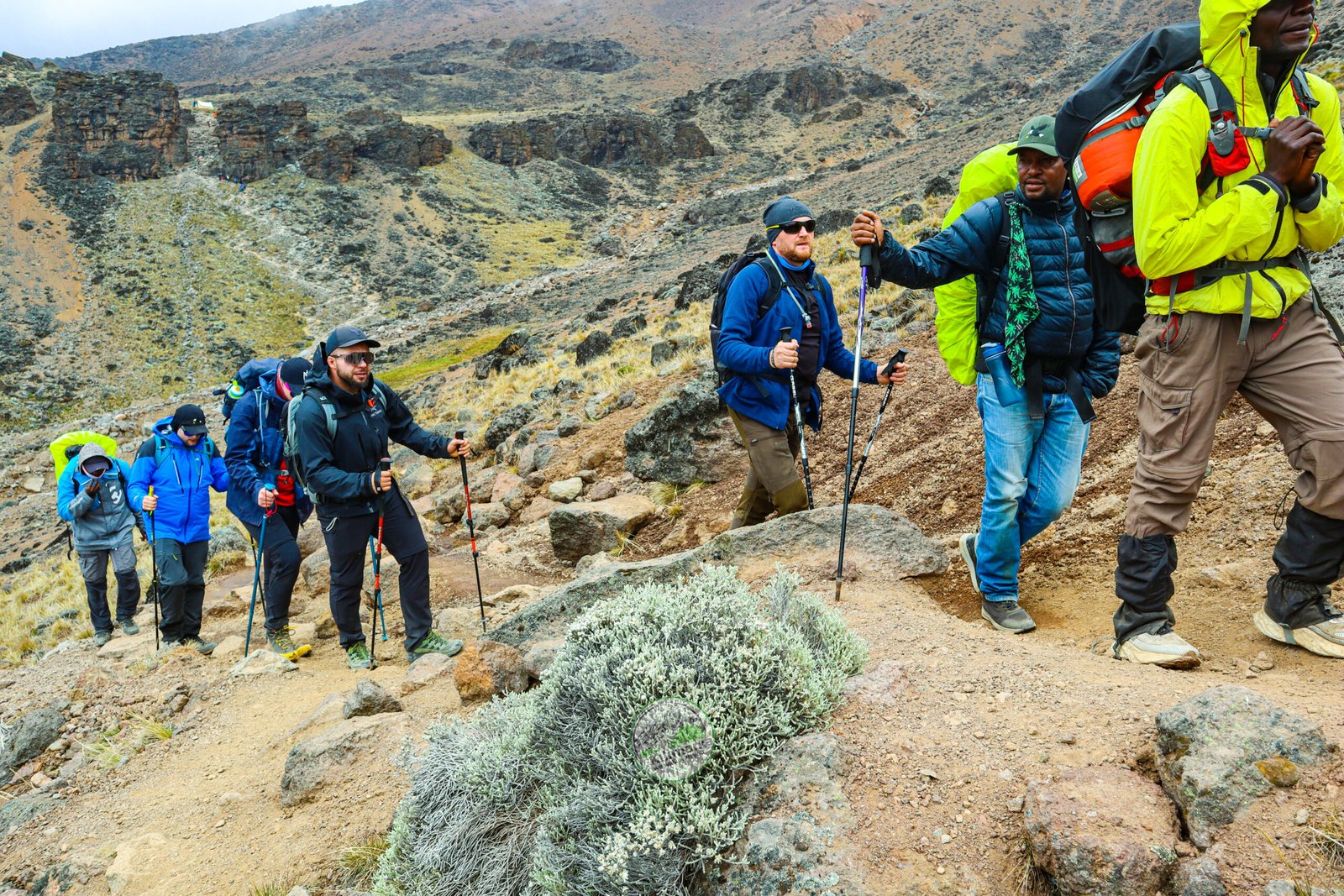
Kilimania’s summit records log three things for every climber: the route, the planned itinerary length, and whether they reached Uhuru Peak (5,895 m). A climb counts as successful only at Uhuru Peak; anyone who turns around before it counts as unsuccessful, whatever the reason. Here is what those records show for the routes this assessment recommends.
| Route | Itinerary | Reached Uhuru Peak | Climbers in Dataset | Data Updated |
|---|---|---|---|---|
| Northern Circuit | 9 days | 96% | 215 | August 2026 |
| Machame | 7 days | 92% | 418 | January 2026 |
| Lemosho | 7 days | 88% | 156 | January 2026 |
| Lemosho | 8 days | 82% | 384 | August 2026 |
| Machame | 6 days | 82% | 97 | January 2026 |
| Marangu | 6 days | 67% | 256 | August 2026 |
Source: Kilimania Adventure internal climbing records. These are operator figures, not official TANAPA or KINAPA statistics and not an industry-wide Kilimanjaro rate. Rongai, Shira, and Umbwe figures — plus the full methodology — are on Kilimanjaro Success Rate by Route.
What the data supports: within our records, longer itineraries such as the 9-day Northern Circuit and the 7-day Machame and Lemosho have produced the strongest summit outcomes. Same route, one extra day: 7-day Machame climbers reached the summit at 92% against 82% on the 6-day version.
What the data does not show: it isn’t a straight line. Our 8-day Lemosho group (82%, 384 climbers) came in below our 7-day Lemosho group (88%, 156 climbers), so “add a day” is not a rule that holds every time. And because the records don’t log fitness scores, they can’t put a number on how much fitness changes the outcome. The fitness factors below are guide observations, labelled that way on purpose.
| Variable | Evidence Type | Within Climber Control | What We See |
|---|---|---|---|
| Itinerary length (days) | Logged data | Yes — route choice | 7-day Machame 92% vs 6-day Machame 82%; 9-day Northern Circuit 96%. Not linear — see the 7- vs 8-day Lemosho figures above. |
| Pre-climb fitness level | Guide observation | Yes — preparation | Under-prepared climbers struggle most on 6-day itineraries, where there’s no spare day to absorb fatigue. |
| Individual altitude response | Guide observation + CDC guidance | Partially — route choice helps | Altitude tolerance has a genetic component preparation can’t fully control. Well-prepared climbers occasionally turn around from altitude alone. |
| Back-to-back training days pre-climb | Guide observation | Yes — training design | Climbers who complete two consecutive 4+ hour hiking days in the 6 weeks before departure handle Days 3–5 noticeably better. |
| Gear familiarity (especially boots) | Guide observation | Yes — preparation | Blister- and pressure-related problems are a preventable category; 8+ hours of pre-trip boot use largely removes them. |
Key finding: fitness gets you through the long days, but the itinerary decides how much time your body has to adjust. If you’re in the 4–8 score range, choosing a 7–9 day itinerary matters more than adding another training month (and this is the part most folks miss when they’re shopping by price alone — see Cheap Kilimanjaro Climb: Is It Worth It? and Hidden Costs of Climbing Kilimanjaro for how this plays out financially).
For the full route-by-route comparison, see the Kilimanjaro Routes Guide and How Many Days To Climb Kilimanjaro? 6 vs 7 vs 8 Days.
Want a Second Opinion on Your Score?
Send us your score, the questions you answered NO, and your intended departure month. A guide will tell you honestly whether your timeline and route choice fit — before you book, not after.
📲 WhatsApp: +255 756 449 990 | 📧 info@kilimania.co.tz
We reply within 12 hours, 7 days a week (EAT, UTC+3).
How Age Affects Your Assessment Score
The 10-question assessment applies to adult climbers of any age. How you interpret your score — and what preparation is required to act on it — does differ by decade. If you’re planning a multi-generational trip, also read Family Kilimanjaro Climbing: Complete Guide 2026 and Climbing Kilimanjaro As A Family: An 8-Day Lemosho Route, since a family group’s pace and route choice should match its least-prepared member, not its fittest.
| Age Range | Score Interpretation Adjustment | Key Additional Consideration | Resource |
|---|---|---|---|
| Under 30 | Score as written; recovery is typically faster | Overconfidence is the main risk — don’t skip the baseline test | Can a Beginner Climb Kilimanjaro? |
| 30–49 | Score as written — this is the group the assessment is calibrated for | Work and family schedules often compress training time | 12-Week Training Plan |
| 50–59 | Add 2–4 weeks to your indicated timeline | Questions 9 and 10 (joints) carry extra weight | Climbing Kilimanjaro Over 50 |
| 60–69 | A score of 6 needs the same preparation as a score of 4 in the 30–49 bracket | Cardiovascular clearance is non-negotiable at this age | Climbing Kilimanjaro Over 50 |
| 70+ | The assessment still applies, but timelines lengthen and clearance requirements rise | The 9-Day Northern Circuit is generally the right route here | 9-Day Northern Circuit |
Plan Your Climb — Routes Matched to Your Score
| Route | Duration | Minimum Score to Book | Suits |
|---|---|---|---|
| 9-Day Northern Circuit | 9 days | Score 4+ with 20 weeks prep | Older climbers, managed medical conditions, maximum acclimatisation |
| 8-Day Lemosho Route | 8 days | Score 5+ with 16 weeks prep | Climbers who want a buffer day and a quieter western approach |
| 7-Day Machame Route | 7 days | Score 6+ with 12 weeks prep | Fit climbers with full 12-week preparation |
| 6-Day Machame Route | 6 days | Score 9–10 only | Very fit, experienced hikers with limited time |
| 6-Day Marangu Route | 6 days | Score 7+ recommended | Hut accommodation preference — note the lowest summit rate in our records |
For the complete route comparison: Kilimanjaro Routes 2026 | Main booking page: Mount Kilimanjaro Climbing | Full planning resource: Climbing Kilimanjaro Guide 2026
Frequently Asked Questions
Is this assessment used by Kilimania before accepting bookings?
A version of this assessment is used in our pre-booking consultation — specifically the baseline test result, the timeline question, and the medical conditions question. We do not refuse bookings based on score alone, but we will tell you directly if your fitness, departure date, and route choice don’t form a realistic combination.
What is the minimum fitness level to attempt Kilimanjaro safely?
The practical minimum is 4 consecutive hours of walking on mixed terrain with a 5kg pack, with enough recovery to repeat that output the next day — roughly a score of 5–6 here. Below that, the risk of altitude sickness compounding physical fatigue rises, and the answer is route-dependent: fitness that is adequate for an 8-day itinerary can leave no margin on a 6-day one.
Can I improve my score significantly in 8 weeks?
Yes, with consistency rather than intensity. Eight weeks of daily walking with progressive pack weight (3kg building to 6kg), two back-to-back hiking days per weekend from week 5, and a single 5-hour test hike in week 7 is the pattern our guides see move most people from a score of 5 to 7–8. Questions 6 (prior altitude experience), 7 (medical conditions), and 8 (time available) don’t move with training alone.
Does age affect how I should interpret my score?
Yes — see the age-adjustment table above. The questions don’t change by age, but the preparation timelines needed to act on a score increase with each decade above 50. A score of 7 at age 35 needs about 12 weeks; the same score at 62 needs 14–16 weeks with more rest days and joint-specific conditioning.
What if I have a medical condition that affects some of my answers?
Score those questions honestly — a NO is a NO regardless of how well-managed the condition is. Read Climbing Kilimanjaro With Medical Conditions for condition-specific guidance. Many conditions that produce a NO today become a YES after medical management and doctor clearance. TANAPA requires climbers to be in good health, and your guide needs full disclosure before Day 1.
How accurate is this assessment compared to actually climbing?
It’s a planning tool built from what our guides see on the mountain — not a validated medical test and not a prediction of your result. Our summit records log route, itinerary, and outcome, not fitness scores, so no percentage links a score to a summit. Individual altitude response also has a genetic component no ground-level test can capture.
Conclusion
Your score today is not your score on climb day. Every week of proper, sustained, honest preparation changes it — a 5 today with 16 weeks of the right training can become an 8 or 9 by departure. Pair that work with a 7–9 day itinerary: in our records, 7-day Machame climbers reached Uhuru Peak at 92% against 82% on the 6-day version. Start the 12-week training plan this week. We Walk With You — every step.
Get Your Personal Prep Plan
Tell us your score, which questions you scored 0 on, and your intended departure date. A guide will send a personalised preparation plan with the printable 12-week training calendar. Karibu (welcome) — ask anything; we reply within 12 hours, 7 days a week (EAT, UTC+3).
WhatsApp: +255 756 449 990Related Reading
Climbing Kilimanjaro Guide 2026 · How to Train for Kilimanjaro · Can a Beginner Climb Kilimanjaro? · Climbing Kilimanjaro With Medical Conditions · Climbing Kilimanjaro Over 50 · Kilimanjaro Success Rate By Route · Kilimanjaro Summit Night, Hour By Hour · Men vs Women at High Altitude · Family Kilimanjaro Climbing · What Is Climbing Kilimanjaro Like? · How Many Days To Climb Kilimanjaro? · Hidden Costs of Climbing Kilimanjaro · 10 Reasons You Should NOT Climb Kilimanjaro · Zanzibar Beach — Post-Climb Recovery · Contact the Team
Photos From the Mountain
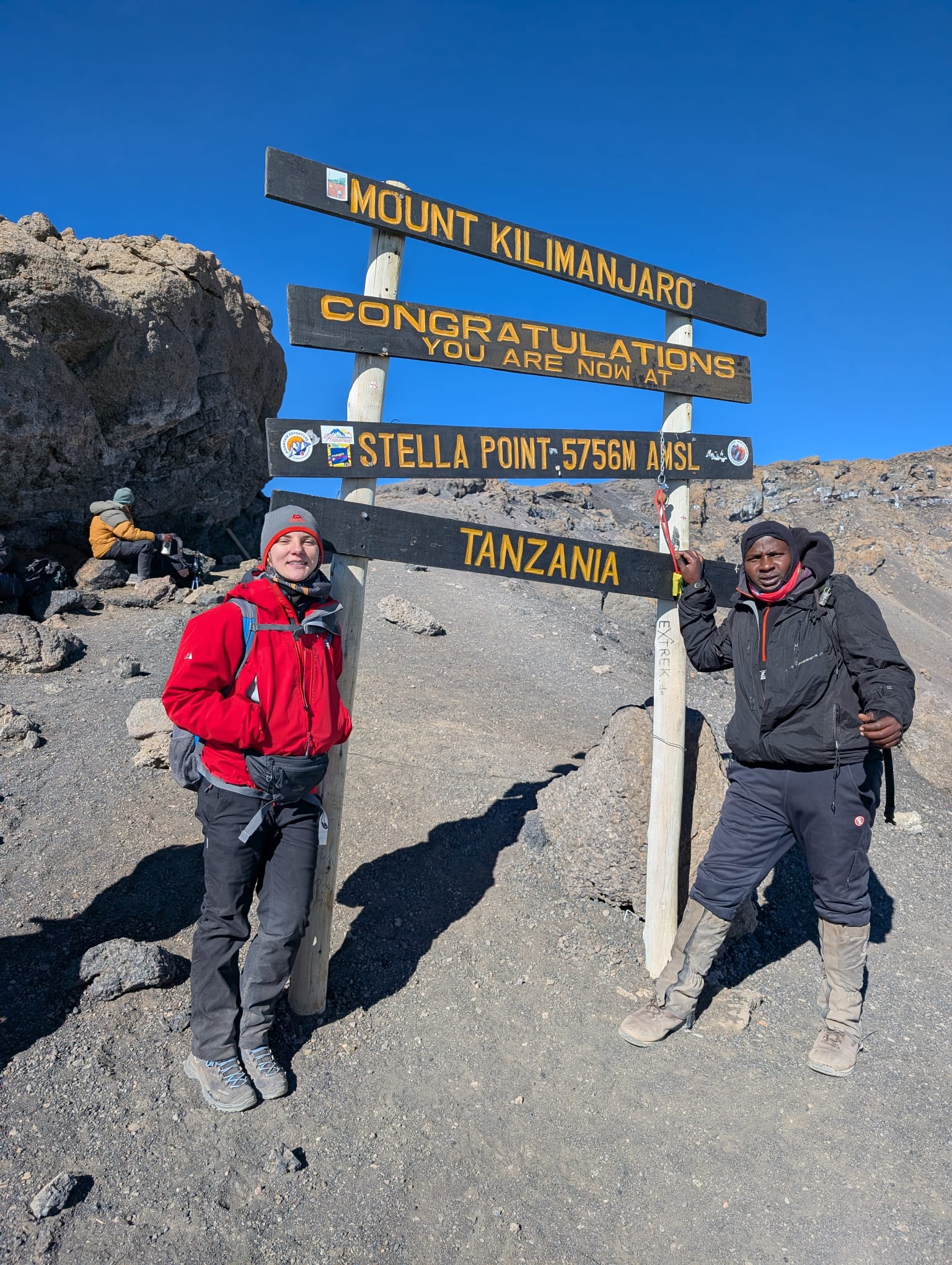
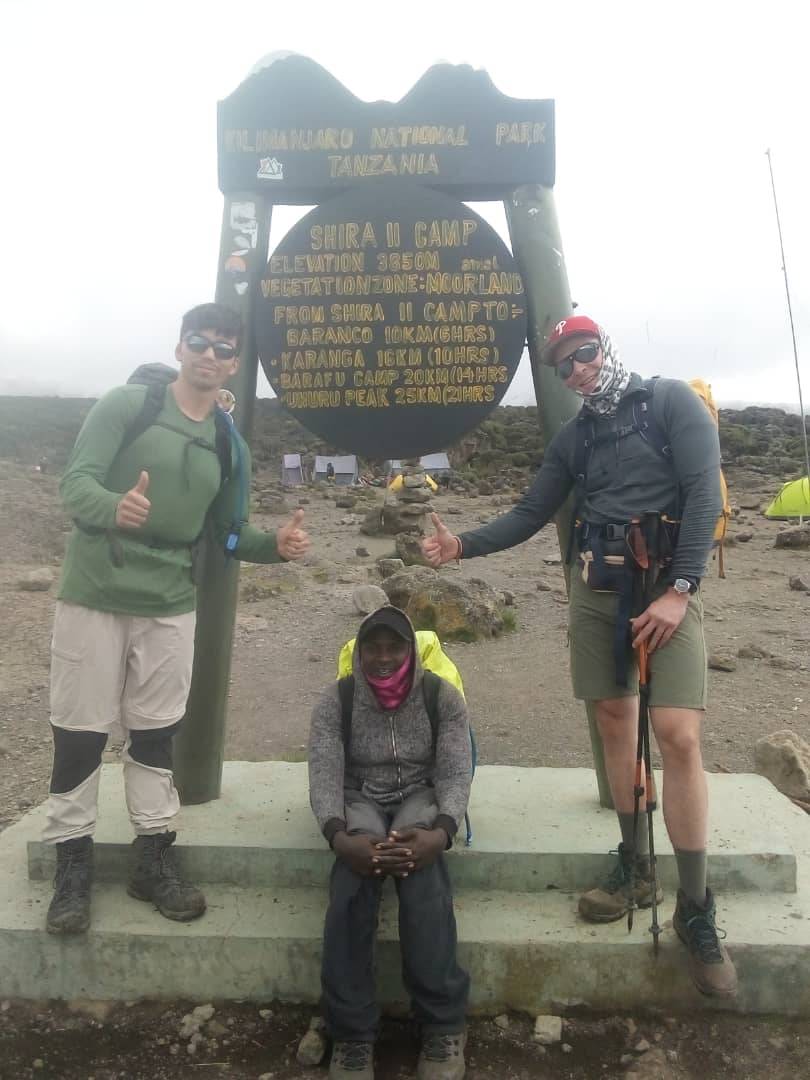
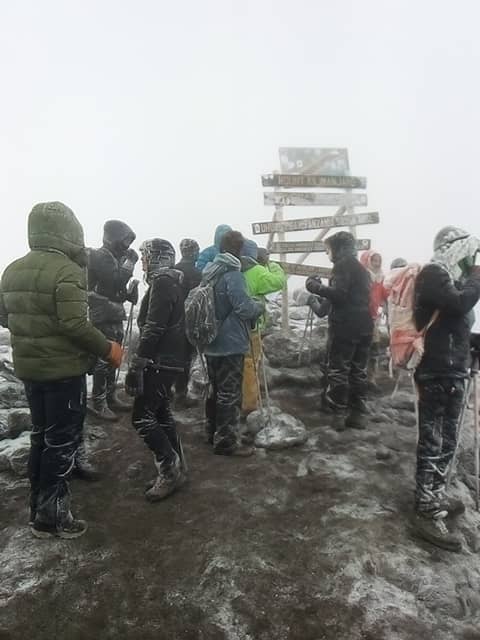
A few more moments from Kilimania climbs — the camps and summit points this assessment is preparing you for.
About the Author