5-Day vs. 6-Day Marangu Route: Which Itinerary Actually Gets You to the Summit?
Data sources cited in this article: Kilimania Adventure booking and expedition records (2025–2026), Kilimanjaro National Park (KINAPA) fee schedule, Wilderness Medical Society altitude guidelines.
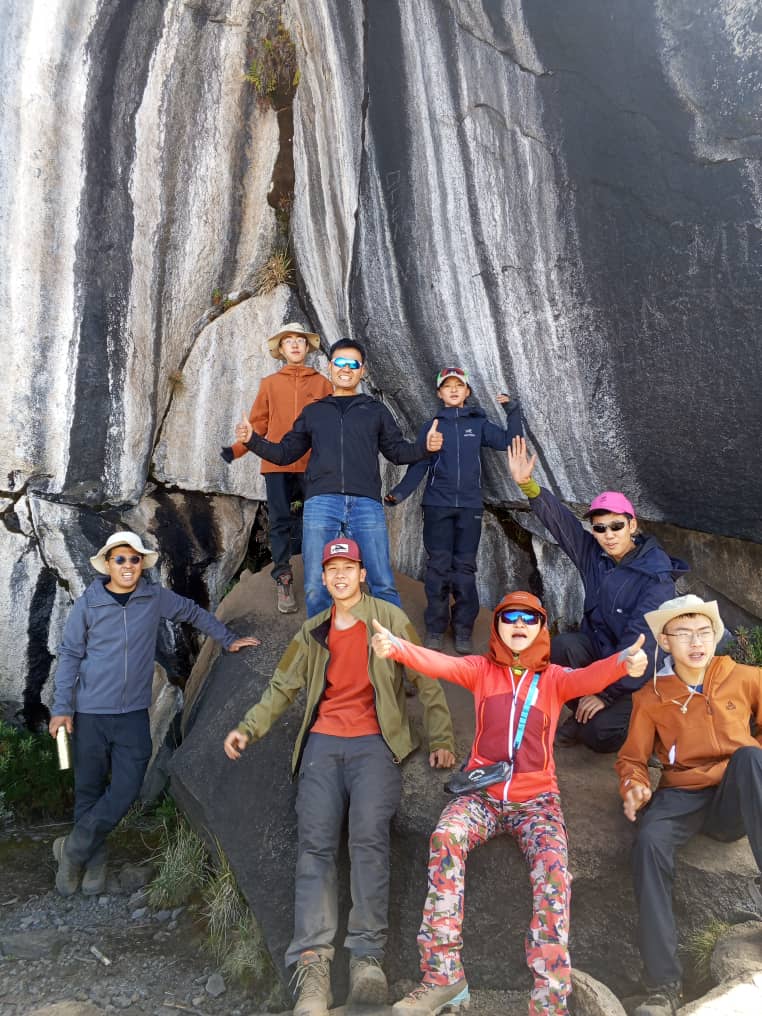
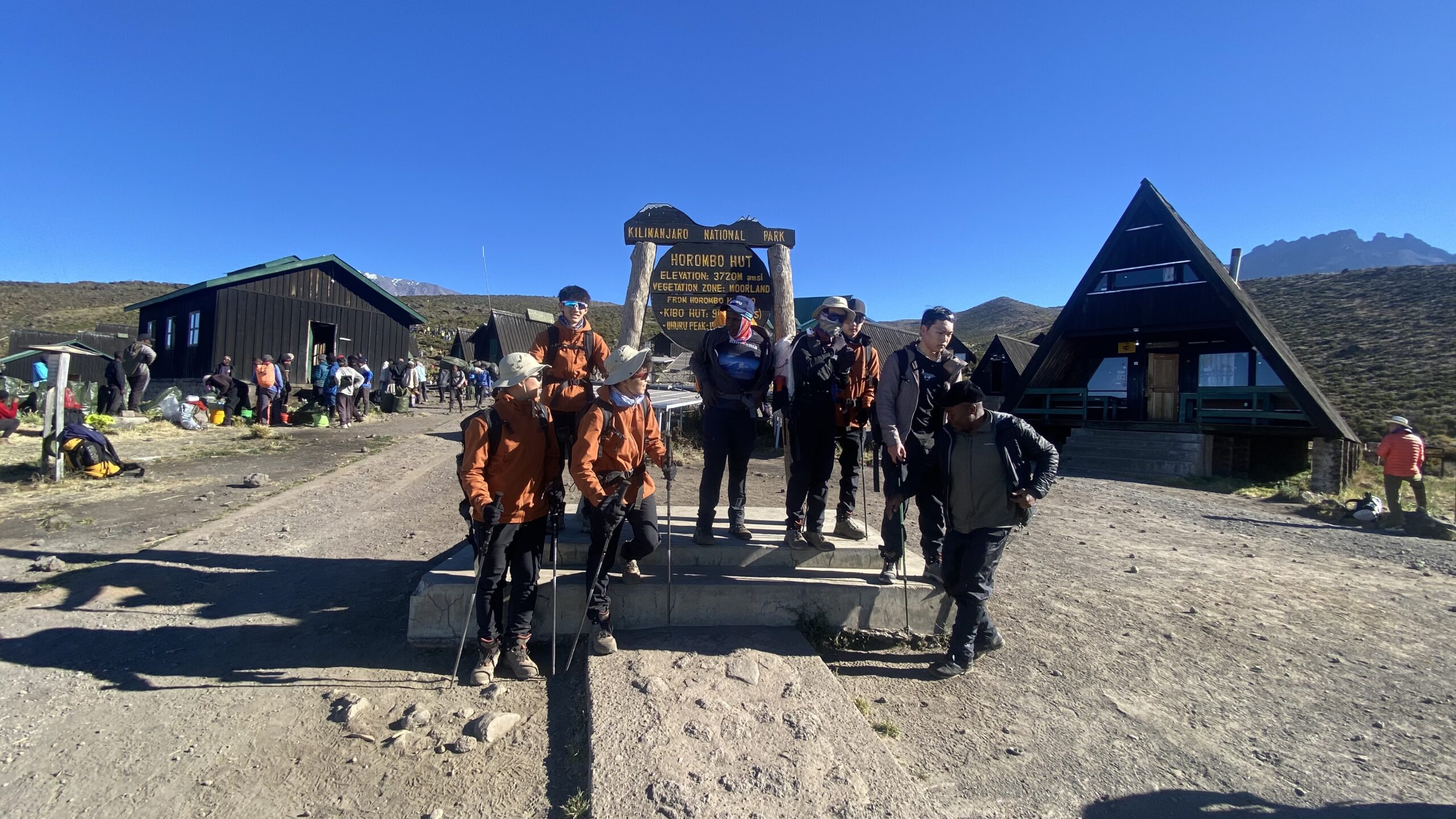
The 5-day and 6-day Marangu Route itineraries follow the same trail through Kilimanjaro National Park — Marangu Gate, Mandara Hut, Horombo Hut, Kibo Hut, Uhuru Peak (5,895m) — and both use the same three mountain huts. The structural difference is one day: the 6-day version adds a dedicated acclimatization hike to Zebra Rock from Horombo Hut (3,720m) before the push toward Kibo Hut. From our base in Moshi, that single day is the most consequential variable we can control on this route.
Quick answer: Choose the 6-day itinerary unless you have documented experience above 4,500m and a genuine time constraint. The Zebra Rock acclimatization day adds a modest cost but meaningfully improves your readiness before summit night at Kibo Hut. See the 6-day Marangu Route itinerary and current pricing to check available dates.
The one real difference between the 5-day and 6-day Marangu Route
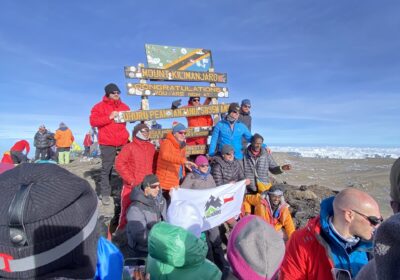
Both itineraries start at Marangu Gate and finish at Uhuru Peak at 5,895m via Gilman’s Point and Stella Point. Both sleep at the same three huts — Mandara Hut, Horombo Hut, and Kibo Hut. The 6-day version inserts one extra day at Horombo Hut, typically a walk to Zebra Rock and back, before continuing to Kibo Hut the next morning. The 5-day version moves directly from Horombo to Kibo on Day 3, skipping the acclimatization session entirely.
| Factor | 5-Day Marangu Route | 6-Day Marangu Route |
|---|---|---|
| Total days on mountain | 5 days / 4 nights | 6 days / 5 nights |
| Dedicated acclimatization day | None | Yes — Zebra Rock hike from Horombo Hut |
| Nights at Horombo Hut (3,720m) | 1 | 2 |
| Summit attempt begins | Night of Day 4 (from Kibo Hut) | Night of Day 5 (from Kibo Hut) |
| Typical pacing | Faster, more compressed | More gradual — closer to pole pole |
| Overall cost | Lower | Slightly higher (extra hut night, park fees, crew) |
| Recommended for | Climbers with prior high-altitude experience and firm time constraints | Most climbers, particularly first-timers |
Day-by-day: exactly how the two itineraries diverge
The two itineraries run in parallel until Day 3. At that point, the 6-day version turns toward Zebra Rock and the 5-day version continues to Kibo Hut. Everything that follows — Kibo Hut, summit night, the descent through Horombo Hut — is identical in structure. Full daily distances, hut facilities, and packing notes for each stage live on our dedicated 6-day Marangu Route itinerary page; the table below covers only what changes between the two versions.
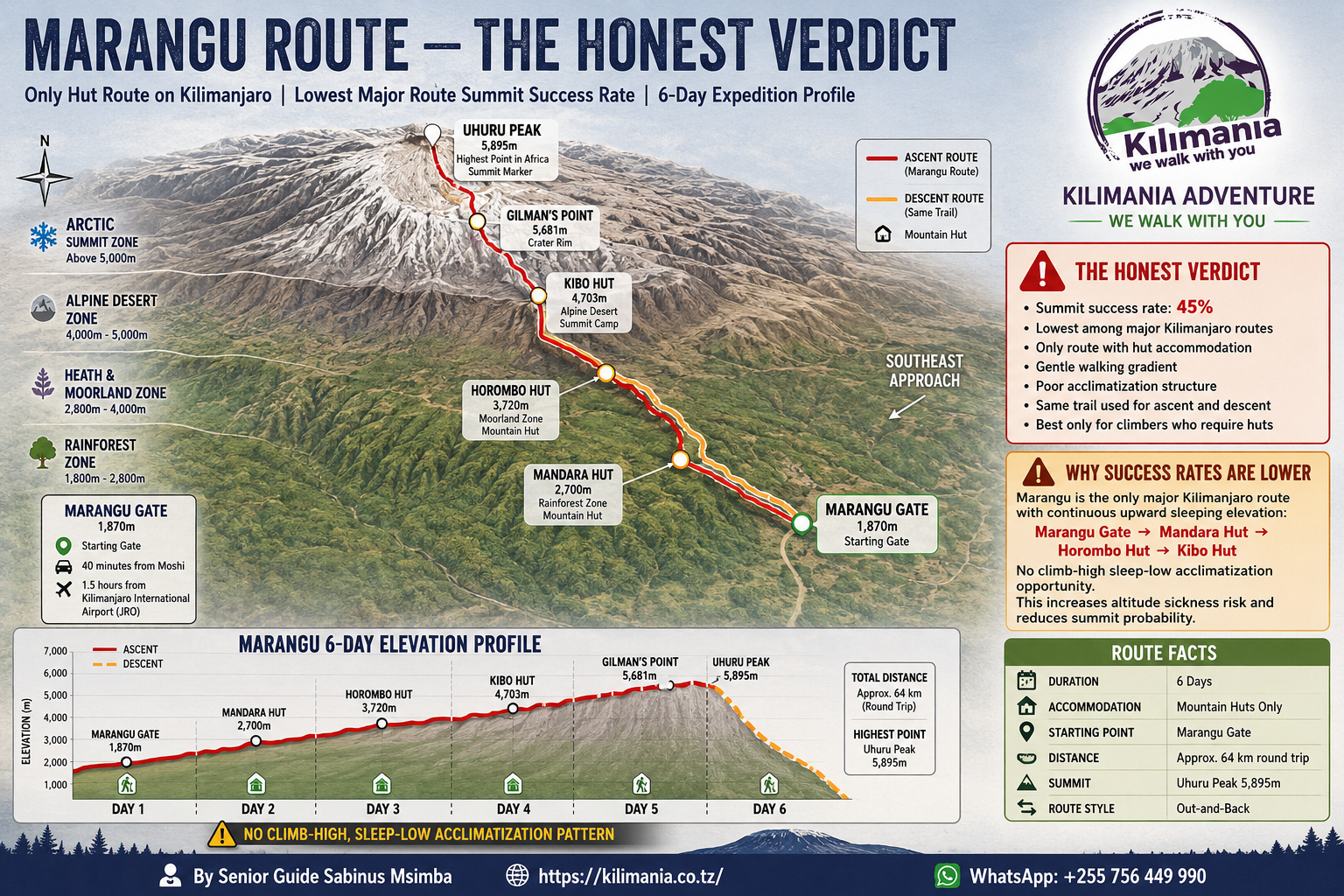
| Day | 5-Day Marangu | 6-Day Marangu |
|---|---|---|
| Day 1 | Marangu Gate → Mandara Hut (2,720m) | Marangu Gate → Mandara Hut (2,720m) |
| Day 2 | Mandara Hut → Horombo Hut (3,720m) | Mandara Hut → Horombo Hut (3,720m) |
| Day 3 — the split | Horombo Hut → Kibo Hut (4,720m) | Acclimatization: Horombo → Zebra Rock (~4,000m) → Horombo Hut |
| Day 4 | Midnight: Kibo Hut → Uhuru Peak (5,895m) → Horombo Hut | Horombo Hut → Kibo Hut (4,720m) |
| Day 5 | Horombo Hut → Marangu Gate (descent and exit) | Midnight: Kibo Hut → Uhuru Peak (5,895m) → Horombo Hut |
| Day 6 | — | Horombo Hut → Marangu Gate (descent and exit) |
What the body actually does with that extra 24 hours at Horombo Hut
Altitude acclimatization requires time, not just vertical distance. When you arrive at Horombo Hut at 3,720m, your body begins a series of physiological adjustments to the lower oxygen availability at that elevation. Breathing rate increases. The kidneys begin excreting bicarbonate to help buffer the blood’s pH response to hyperventilation. Over the following hours, the body gradually increases red blood cell production to carry more oxygen per breath. These are not instant responses — they develop across hours and days of sustained exposure.
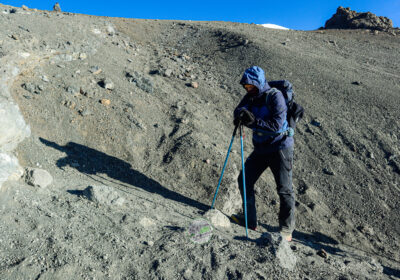
The principle our guides work from is what mountain medicine practitioners call climb high, sleep low. On the Zebra Rock day, climbers leave Horombo Hut at 3,720m, walk to approximately 4,000m, then return to sleep at 3,720m. The body gains altitude exposure during the effort — briefly pushing SpO₂ readings lower and triggering the acclimatization response earlier — then has the overnight hours to consolidate that response before the group moves to Kibo Hut at 4,720m the following morning. The Wilderness Medical Society consistently references this principle in its altitude medicine guidelines as one of the most practical tools available to trekkers on multi-day high-altitude routes.
Pole pole — the Swahili phrase for “slowly, slowly” — is not just a motto on Kilimanjaro. It describes a pacing philosophy that applies to the calendar as much as to how fast you walk. One extra night at 3,720m is pole pole applied to the schedule itself.
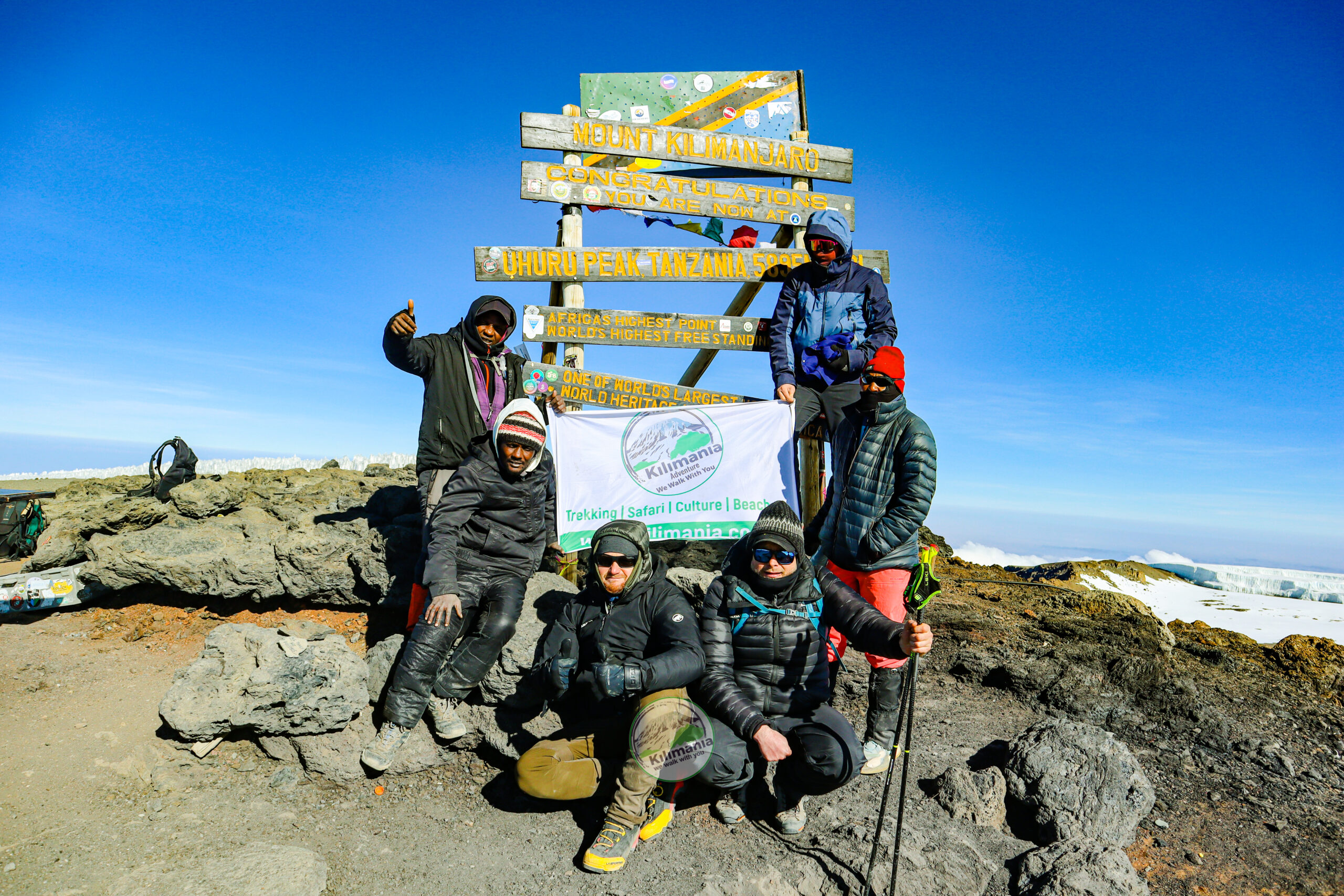
On our August 2026 6-day Marangu expedition, nine climbers started from Marangu Gate. Approximately 300 metres beyond the gate, one climber developed symptoms that warranted a safe, early descent — the right decision, made without hesitation, and that climber returned to Moshi in good health the same afternoon. The remaining eight completed the Zebra Rock acclimatization day at Horombo Hut. All eight reached Uhuru Peak at 5,895m on summit night. That result belongs to that specific group and should not be interpreted as a general success rate for the Marangu Route. Read the complete account in our 6-day Marangu Route trip report.
What our guides observe on Days 2 and 3
The Zebra Rock day gives Kilimania guides a full additional day to observe each climber’s response to altitude before the group commits to Kibo Hut and summit night. The observations that matter are not dramatic. They are quiet and cumulative — and this is the part most people miss when they dismiss the acclimatization day as a delay rather than a strategy.
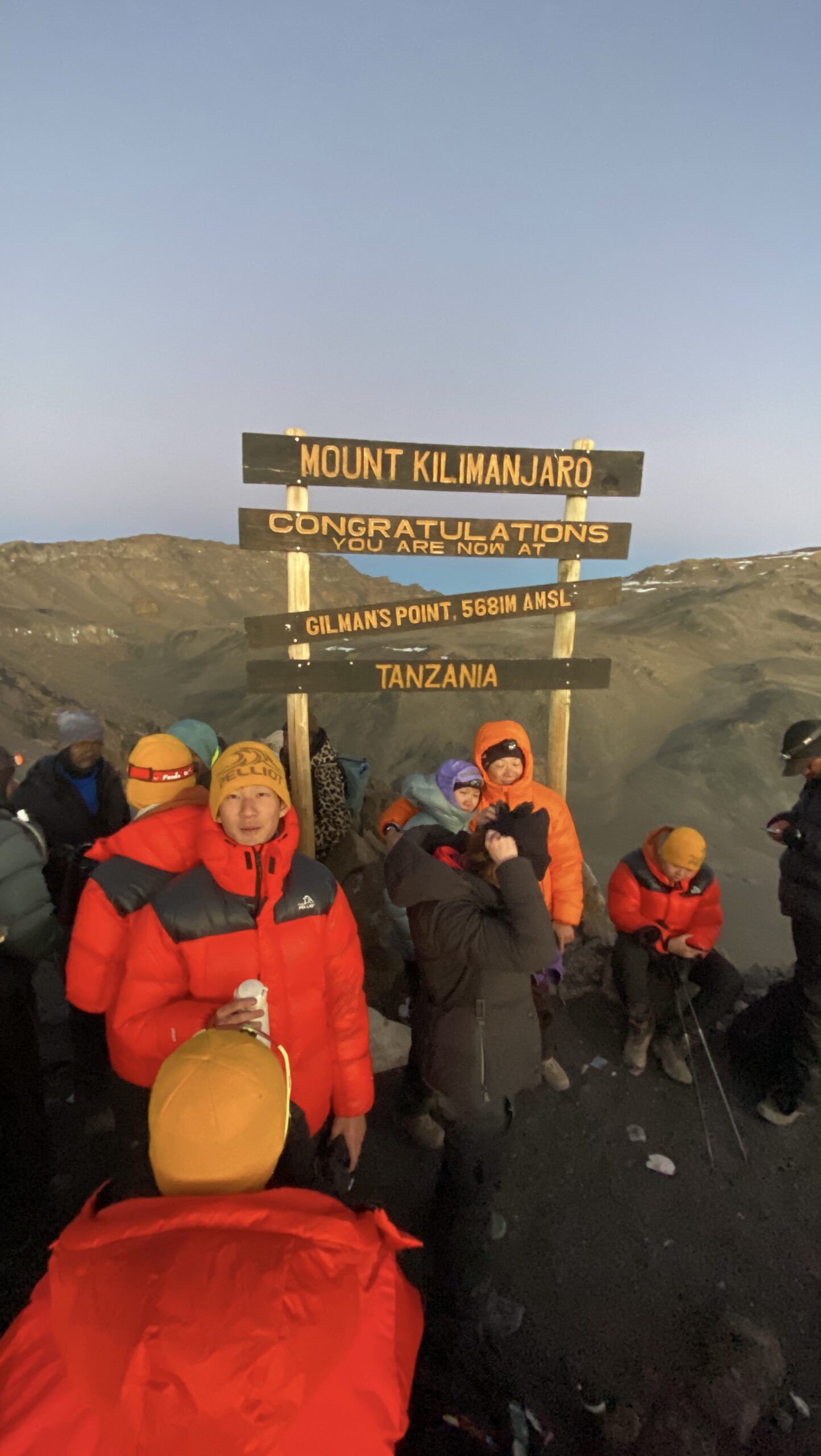
Our guides pay attention to four specific signals:
- Pace consistency: Is the climber maintaining a steady rhythm, or repeatedly stopping in ways that suggest laboured breathing beyond normal exertion?
- Appetite: Reduced appetite at Horombo Hut is common and manageable. A complete loss of appetite or nausea at rest is a different signal altogether.
- Sleep quality: Disrupted sleep at altitude is normal; headaches on waking that resolve with hydration are common. Headaches that intensify despite rest and hydration need closer attention.
- Mood and mental clarity: Unusual fatigue, confusion, or marked irritability at altitude can be early indicators of Acute Mountain Sickness (AMS) worth monitoring before the group moves higher.
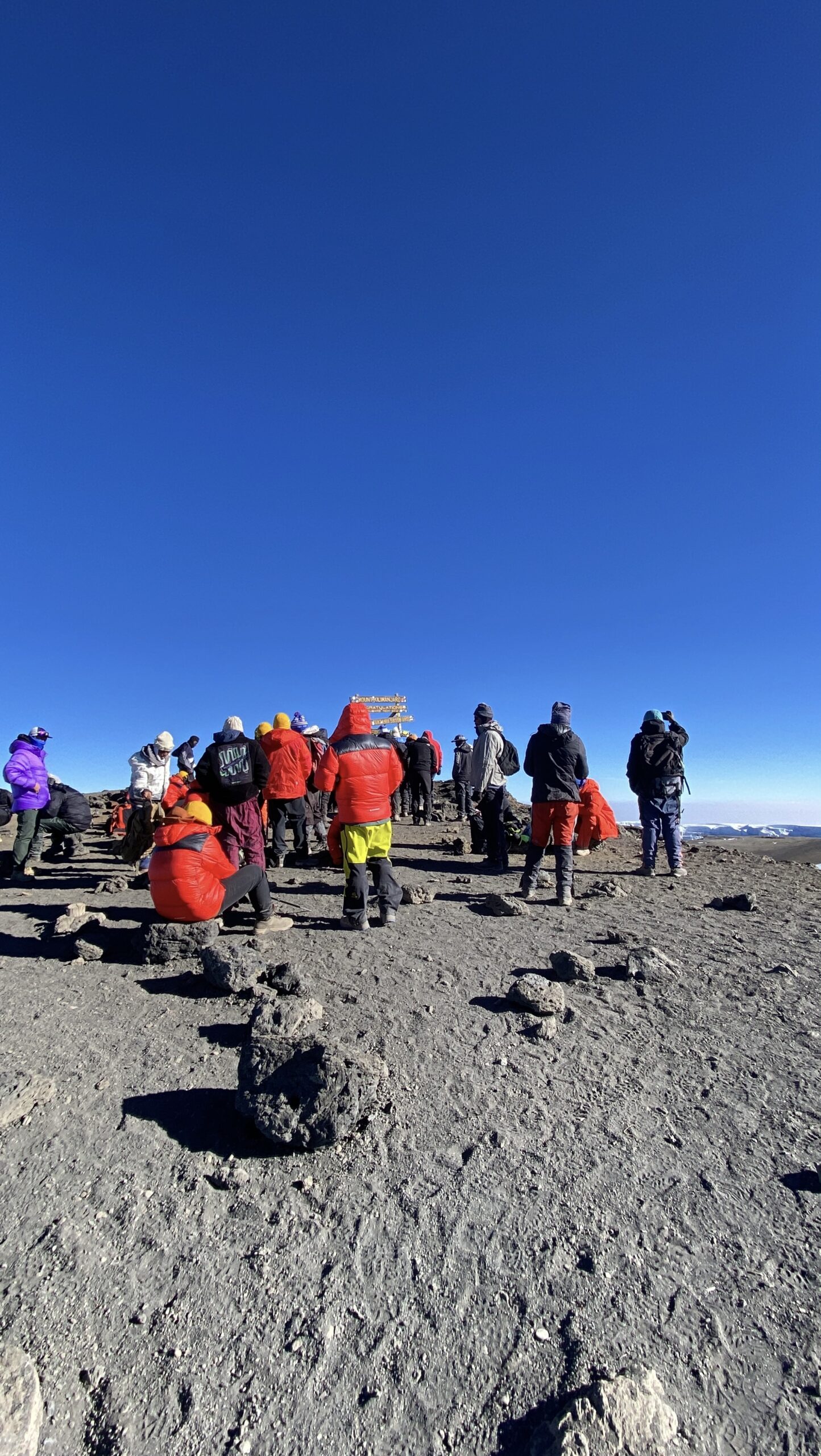
On the 5-day itinerary, guides have one evening at Horombo Hut to make these observations before the group moves to Kibo Hut at 4,720m. On the 6-day version, they have two nights and the Zebra Rock day itself. That additional data point — pace, breathing pattern, SpO₂ reading, and appetite across a full day of effort — changes the quality of the guide’s judgment before summit night. Seriously.
Knowing what to watch for at altitude is one of the most practical things a climber can do before starting the Marangu Route. This checklist covers the common symptoms associated with Acute Mountain Sickness (AMS), the warning signs that indicate a situation is worsening, and the daily monitoring steps our guides use on every Kilimania expedition.
- AMS, HACE, and HAPE symptom reference in plain language
- Daily observation prompts for guides and climbers
- SpO₂ and pulse monitoring context
- Clear signals that require descent or immediate attention
This checklist is for educational purposes only. It does not diagnose illness, does not replace professional medical advice, and does not replace the judgment of a qualified mountain guide. If you have pre-existing cardiovascular, respiratory, or other medical conditions, consult a physician before undertaking high-altitude trekking.
Download the Altitude ChecklistIs the 6-day Marangu Route worth the extra cost?
The 6-day version costs more than the 5-day version. That is straightforward and worth stating plainly. The additional expense covers one extra night of hut accommodation at Horombo Hut, one additional day of Kilimanjaro National Park (KINAPA) conservation fees, and one more day of crew wages — guide, assistant guide, cook, and porters. Park fees make up a significant share of total climb cost on all Marangu Route itineraries.
Frame the cost question this way: the extra day is risk management, not a luxury upgrade. If a climber reaches Kibo Hut under-acclimatized and turns around on summit night, the total sunk cost of that expedition — international flights to Kilimanjaro International Airport (JRO), ground transfers, park fees, operator fees, equipment — dwarfs the price of one additional hut night at Horombo. Seriously. One extra day at 3,720m is a small premium against a very expensive failed attempt.
For a full breakdown of what drives total Kilimanjaro cost — including the items most operators do not itemize upfront — see our complete Kilimanjaro cost guide.
Physical fitness does not ensure altitude adaptation. But arriving on the Marangu Route with a strong aerobic base gives your body more reserve to work with when the altitude takes effect. This 12-week calendar provides a progressive training structure designed around the physical demands of a Kilimanjaro climb.
- Week-by-week cardiovascular and strength progression
- Hiking and elevation gain targets for each training phase
- Rest and recovery guidance to reduce pre-climb injury risk
- Notes on preparing specifically for the summit-night effort from Kibo Hut
Training recommendations are general in nature. Consult a physician or qualified fitness professional before beginning a new training programme, particularly if you have pre-existing health conditions.
Get the 12-Week Training CalendarThe quoted price for a Kilimanjaro climb rarely reflects what you will actually spend. This checklist identifies the costs that most climbers do not budget for until they are already committed — and that can add several hundred dollars to the total.
- Pre-climb medical consultation and travel vaccination costs
- Travel insurance with high-altitude evacuation cover
- Equipment rental and purchase gaps
- Porter and guide tipping norms — what is fair and expected
- Airport transfers, Tanzania e-visa costs, and incidentals in Moshi
- Post-climb rest day and Zanzibar extension planning
“The climbers who have the worst surprises are the ones who compared only the headline price. The ones who arrive prepared are the ones who read the small print before booking.” — Sabinus Msimba, Senior Mountain Guide & Co-founder, Kilimania AdventureGet the Hidden Costs Checklist
Who should choose the 5-day Marangu itinerary
The 5-day Marangu Route is not the wrong choice for every climber. It can be a reasonable option for someone who meets all of the following criteria:
- Has successfully reached a peak above 4,500m before — a prior Kilimanjaro climb, an Andean trek above base camp, or a confirmed high-altitude experience at comparable elevation — without significant symptoms
- Faces a documented, unavoidable time constraint such as a fixed return flight or work commitment that makes six days genuinely impossible rather than merely inconvenient
- Has discussed their altitude history with a physician and has a clear understanding of how their body responds at altitude
- Understands and accepts that the margin before summit night at Kibo Hut is reduced, and has communicated this clearly to the guide team before departure from Marangu Gate
One thing we observe consistently from our base in Moshi: some climbers assume that being physically fit means they will adapt to altitude quickly. That is not how altitude works. A marathon runner and a casual hiker can both struggle above 4,000m, and both can respond well. Prior aerobic fitness helps with endurance on the trail — it does not predict altitude response. Keep that distinction in mind when weighing the two itineraries.
Who should choose the 6-day Marangu itinerary
The 6-day Marangu Route is the more appropriate choice for the majority of climbers attempting Kilimanjaro via Marangu. It is worth considering if you:
- Are attempting high altitude — above 3,500m — for the first time
- Have experienced mild altitude symptoms on previous trips and want more adjustment time before summit night
- Want the guide team to have a full additional day to observe your response before Kibo Hut and the midnight start
- Have chosen Marangu specifically for hut accommodation and want the Zebra Rock hike as part of the ascent experience
- Have the schedule flexibility to use six days and want to use it well
If you are still deciding whether Marangu is the right route at all, our Kilimanjaro route comparison guide covers all the major options — Lemosho, Machame, Rongai, and the Northern Circuit — and our Marangu vs. Machame comparison covers the most common alternative in detail.
It is also worth understanding how the acclimatization day count compares across routes:
| Route | Standard Duration | Acclimatization Days | Accommodation |
|---|---|---|---|
| Marangu | 5-day | 0 | Huts |
| Marangu | 6-day | 1 (Zebra Rock) | Huts |
| Machame | 7-day | 2 (Lava Tower, Barranco) | Tents |
| Lemosho | 8-day | 3 | Tents |
| Northern Circuit | 9-day | 3–4 | Tents |
If you are weighing Marangu against the other Kilimanjaro routes — Lemosho, Machame, Rongai, or the Northern Circuit — this one-page reference covers the key differences across duration, acclimatization profile, scenery, accommodation type, and typical cost range.
- Side-by-side comparison across 7 major Kilimanjaro routes
- Acclimatization day count for each standard itinerary
- Hut versus camping breakdown
- Recommended experience level for each route
- Traffic and permit considerations by season
Planning your trip from abroad
- Getting here: Fly into Kilimanjaro International Airport (JRO). Some travelers connect via Arusha Airport (ARK); both are a manageable transfer to our base in Moshi.
- Visa: Most nationalities can apply for a Tanzania e-visa in advance or a visa on arrival — check current requirements for your passport before booking flights, since rules vary by country and change periodically.
- Time zone: Tanzania runs on East Africa Time (EAT, UTC+3) year-round — no daylight saving adjustment to plan around.
- Arrival timing: Arrive at least one full day before your climb start date. This gives a buffer for delayed flights and lets our team do a proper pre-climb briefing and gear check in Moshi.
- Currency and payments: US dollars are widely used for tourism services; Tanzanian shillings are useful for small local purchases. Confirm accepted payment methods with your operator before departure.
- Insurance: Confirm your travel insurance explicitly covers high-altitude trekking and emergency evacuation above 4,500m — many standard policies exclude this by default.
The bottom line
The 6-day Marangu Route is not a different route — it is the same route with one meaningful structural improvement. The Zebra Rock acclimatization day gives the body more time, gives the guide team more information, and adds a modest cost compared to what a preventable turnaround on summit night would cost you in total.
The honest caveat: adding an acclimatization day does not ensure reaching Uhuru Peak at 5,895m. Altitude affects people differently. Weather changes. Individual responses vary even between experienced climbers. What the extra day does is improve your position before the hardest part of the climb begins.
Unless you have a specific and genuine reason to compress the schedule, book the 6-day version. See the 6-day Marangu Route itinerary and booking details for current dates and availability from our Moshi office.
Get current Marangu Route pricing and availability
Send your email and our Moshi team will reply within 12 hours with dates, group availability, and a detailed cost breakdown for both itineraries.
No spam. We reply within 12 hours, 7 days a week. Or reach us directly at info@kilimania.co.tz.
Frequently asked questions
What is the actual difference between the 5-day and 6-day Marangu Route?
One day. The 6-day itinerary adds a dedicated acclimatization hike to Zebra Rock (~4,000m) from Horombo Hut (3,720m) before moving to Kibo Hut (4,720m). The 5-day version skips this and proceeds from Horombo to Kibo on Day 3. The trail, the three huts, and the summit approach via Gilman’s Point and Stella Point to Uhuru Peak at 5,895m are otherwise identical.
Does the extra day really make a meaningful difference to summit chances?
In our guiding experience, yes. The Zebra Rock day gives the body more time adjusting at 3,720m and gives our guides a full extra day to observe each climber’s altitude response before summit night at Kibo Hut. On our August 2026 6-day Marangu expedition, all 8 climbers who continued past Mandara Hut reached Uhuru Peak at 5,895m — that result belongs to that specific group, not a general rate.
Is the 5-day Marangu Route ever a good choice?
It can be, for climbers with documented experience above 4,500m who face a genuine and unavoidable time constraint. We do not recommend it as a default option, particularly for first-timers, because removing the Horombo Hut acclimatization day reduces the margin before summit night at Kibo Hut. Prior fitness does not predict altitude response — that distinction matters when comparing the two itineraries.
Does the 6-day Marangu itinerary cost more than the 5-day version?
Yes. The 6-day version adds one hut night at Horombo Hut, one additional day of Kilimanjaro National Park fees, and one extra day of crew wages. The cost difference is modest relative to total expedition cost. See our Kilimanjaro cost breakdown for current figures and verify park fees directly with KINAPA.
Is the 5-day Marangu Route safe?
Safety on any Kilimanjaro itinerary depends on the guide team’s decisions, individual altitude response, and pacing. The 5-day route is operated by KINAPA-licensed guides every day. The practical concern is reduced acclimatization time before summit night at Kibo Hut (4,720m) — a factor that matters most to first-timers and climbers with no prior experience above 3,500m.
Can you add the acclimatization day to the Marangu Route last-minute?
In some cases, yes — if hut availability at Horombo Hut allows it and KINAPA permit adjustments can be arranged. It is far easier and less expensive to book the 6-day version before starting from Marangu Gate than to try to extend mid-climb. If you have any doubt about your schedule, book the 6-day itinerary from the outset.
Does the 6-day Marangu Route have a higher success rate than the 5-day version?
In our operational experience, itineraries with dedicated acclimatization days tend to support better summit-night outcomes — a principle consistently referenced by mountain-medicine bodies such as the Wilderness Medical Society. No itinerary can ensure reaching Uhuru Peak at 5,895m. Success depends on individual altitude response, pacing, weather, and health on the day. Ask any operator you consider for their route-specific and itinerary-specific data.
Ready to book the 6-day Marangu itinerary?
Send your dates, group size, and any prior altitude experience to our team in Moshi. We reply within 12 hours, every day of the year. Karibu.
WhatsApp +255 756 449 990 · info@kilimania.co.tz
KINAPA-licensed guides · TATO-registered operator · Based in Moshi, Kilimanjaro Region, Tanzania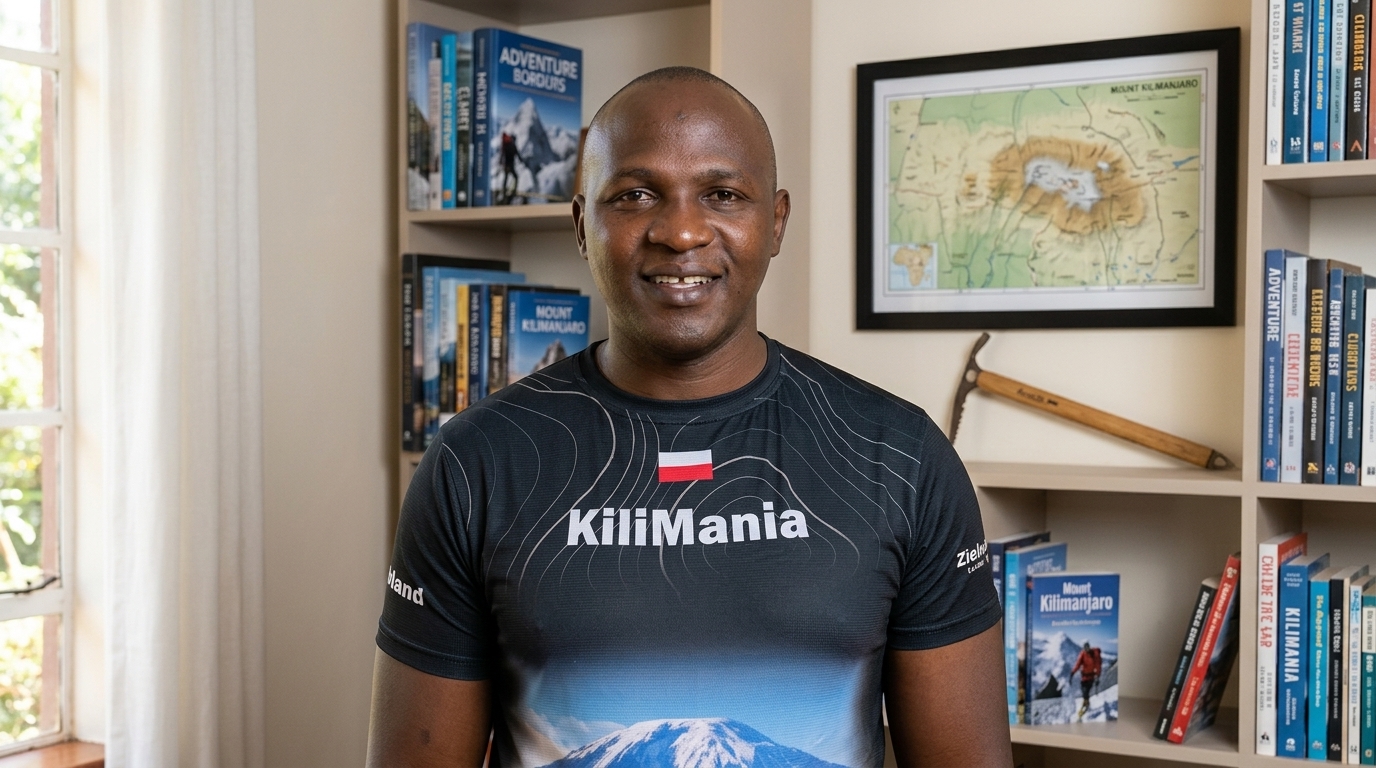
Sabinus Msimba
Senior Kilimanjaro Mountain Guide and Co-founder, Kilimania Adventure, Moshi, Tanzania. 22+ years guiding on Mount Kilimanjaro. 300+ personal ascents to Uhuru Peak (5,895m). KINAPA-licensed mountain guide since 2003. Wilderness First Responder (WFR) certified. Career began in 2001 as a porter on the Marangu Route.
Last verified: August 2026 · Next scheduled review: February 2027
Kilimania Adventure is a TATO-registered tour operator based in Moshi, Kilimanjaro Region, Tanzania. This article reflects our commercial interest in Kilimanjaro climbing bookings alongside factual guidance drawn from our operational experience. Park fees, permit rules, and itinerary pricing are subject to change — verify current rates directly with Kilimanjaro National Park (KINAPA) or contact our Moshi office.
Medical note: This article reflects operational guiding experience and is not medical advice. Consult a qualified physician before undertaking high-altitude trekking, particularly if you have pre-existing cardiovascular, respiratory, or other medical conditions. Kilimania Adventure guides monitor climbers for signs of Acute Mountain Sickness (AMS), HACE, and HAPE throughout all expeditions — this is guide observation informed by Wilderness First Responder training, not clinical diagnosis.
We Walk With You.