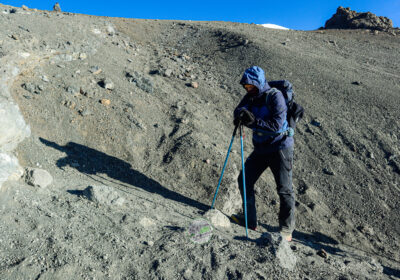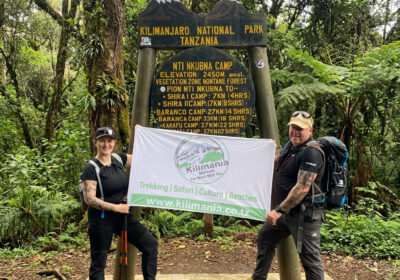
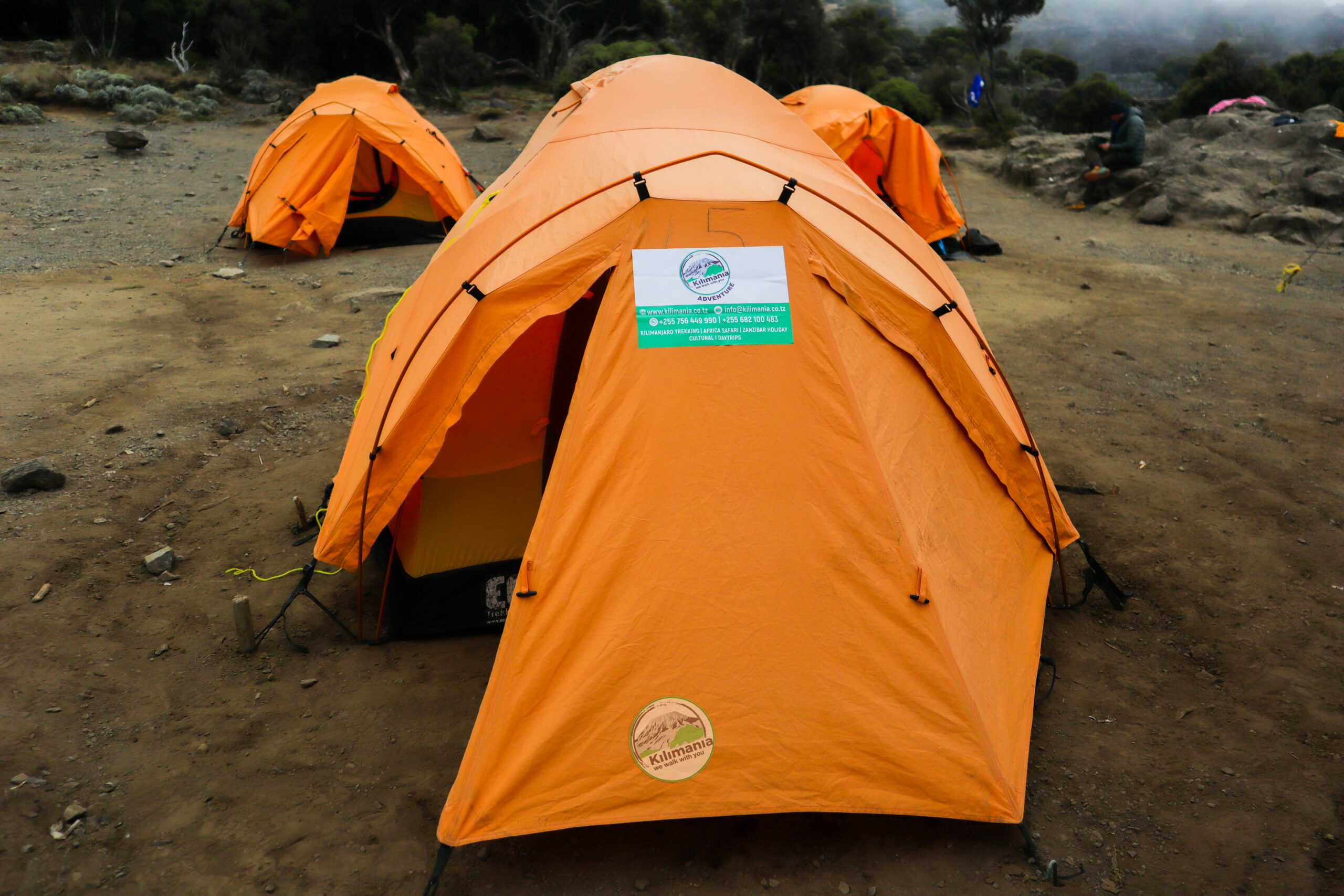
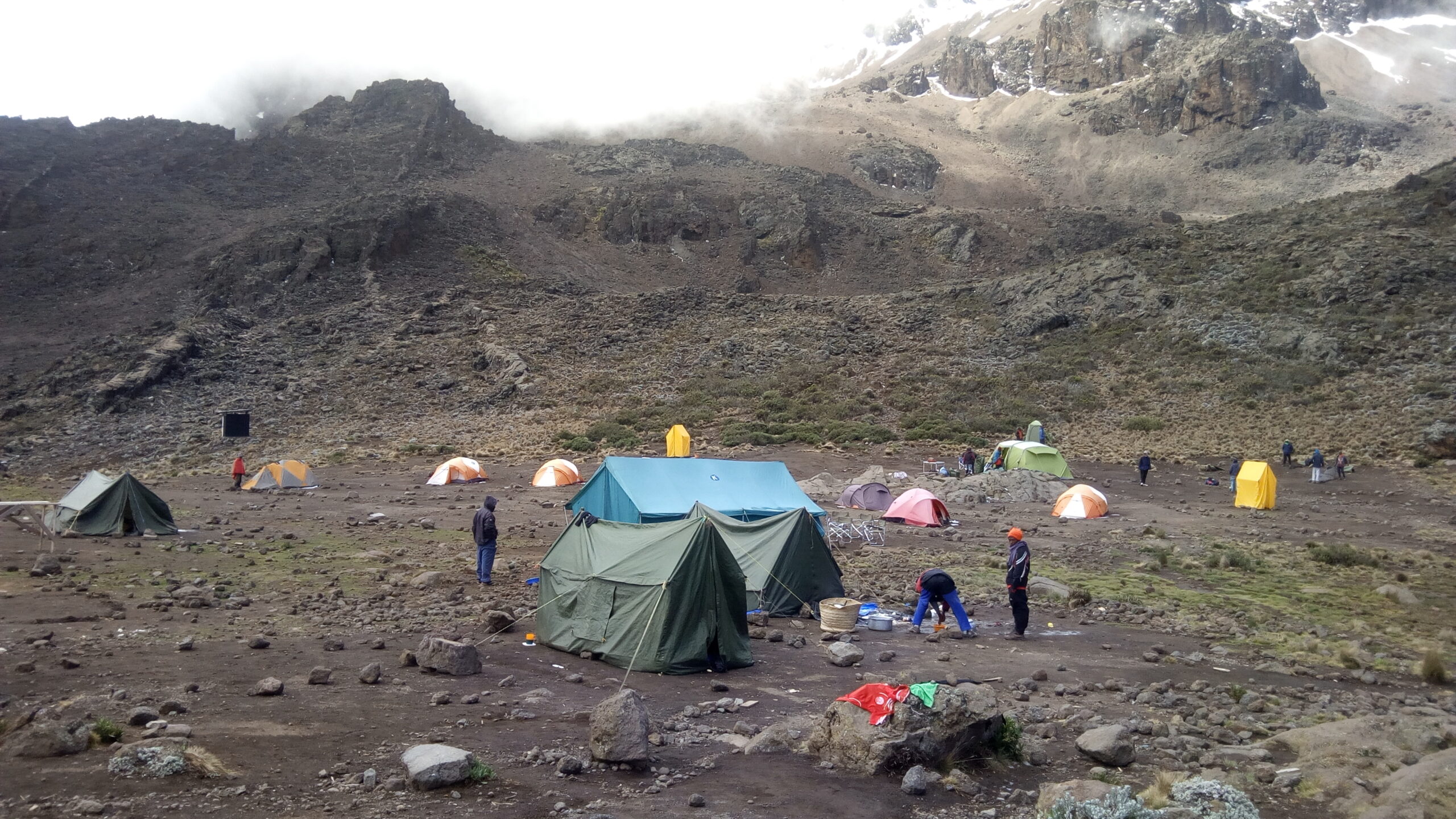
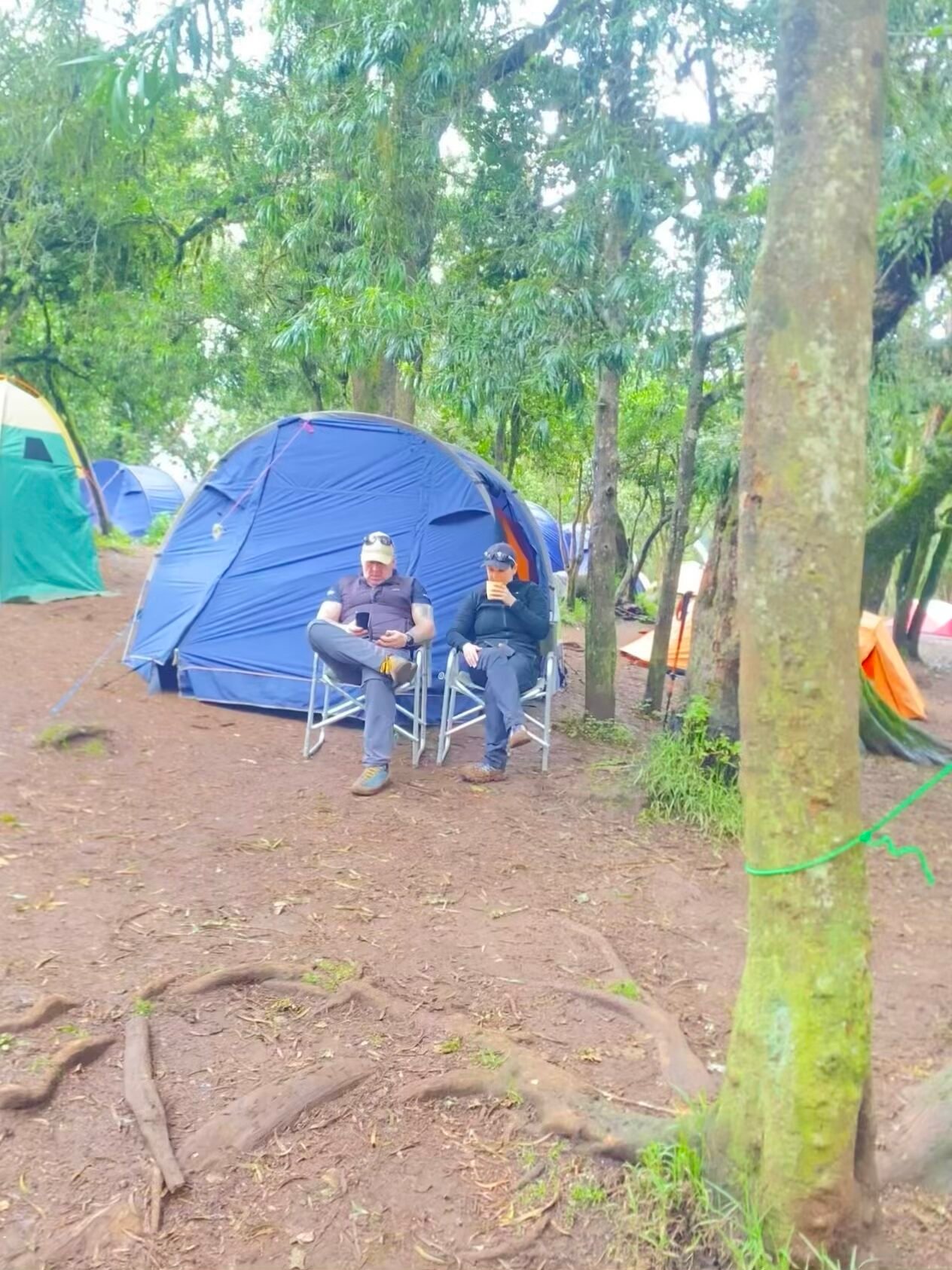
On Machame, Lemosho, Rongai, Shira, Northern Circuit, and Umbwe routes you sleep in a dome tent. Kilimania provides the tent and sleeping mat. You must bring (or rent) a sleeping bag rated to at least -15°C comfort. The Marangu Route has permanent dormitory huts — no tent required. At Barafu Camp (4,673m) expect -8°C to -14°C inside the tent between midnight and 3am. You get approximately 3–4 hours of sleep before the summit push begins.
Plan Your Kilimanjaro Climb With Kilimania
Our team in Moshi handles tents, meals, guides, and permits. Senior Guide Sabinus Msimba monitors every climber’s condition daily at camp.
View All Climbing Packages Or read our full Climbing Kilimanjaro Guide 2026The Tents: What Kilimania Provides
On every camping route Kilimania books, your shelter is set up before you arrive at camp. We use freestanding double-walled dome tents rated to handle the wind gusts common at Shira Plateau and Barafu. Porters carry all tent equipment in loads regulated under KPAP fair-weight guidelines. Your sleeping mat is laid out inside when you enter for the night.
✅ What Kilimania Provides In the Tent
- Double-walled dome tent (waterproof fly, inner mesh) — freestanding, wind-tested
- Thick closed-cell foam sleeping mat per person
- Tent pitched and ready before your arrival at each camp
- Headlamp battery check the night before summit departure
⚠️ What You Must Bring Yourself
- Sleeping bag rated to minimum -15°C comfort (see section below)
- Pillow — or stuff your down jacket into a dry bag
- Ear plugs — camp noise the night before summit is significant
- Thermals and warm layers to sleep in at altitude
The tents are not ultralight backpacking shelters. They are solid, guide-managed expedition tents. What they are not is heated. At Barafu, the inner tent fabric will have a rime of condensation ice by 3am. This is normal. This is Kilimanjaro at 4,673m.
Sleeping Bag Requirements: Why -15°C Is the Minimum
The single most common gear mistake on Kilimanjaro is a sleeping bag rated too warm. Climbers assume Africa means warmth and arrive with a bag marked -5°C. At Karanga Camp (4,035m), a -5°C bag is uncomfortable. At Barafu on summit night, it is a performance issue that reaches the crater rim with you.
Understanding the EN 13537 / ISO 23537 Rating System
Sleeping bag temperature ratings use the European EN 13537 standard (or equivalent ISO 23537) which defines three numbers: Comfort, Lower Limit, and Extreme. For Kilimanjaro, look at the Comfort rating — not the Lower Limit. The Lower Limit is the temperature at which a fit, well-fed male survives the night in a foetal position. That is not the performance standard you want heading into a 6–7 hour summit climb.
| Comfort Rating | Suitability | Practical Camp | Risk Level |
|---|---|---|---|
| 0°C / +5°C | Not suitable | Below Shira only | Danger |
| -5°C / -10°C | Marginal | Machame / Horombo | High risk |
| -15°C | Minimum accepted | All camps including Barafu | Acceptable |
| -20°C | Recommended | All camps, all months | Comfortable |
| -25°C or colder | Optimal | Crater Camp (Crater Route) | Warm margin |
See our full Kilimanjaro Packing List 2026 for gear specifications across all routes, and Kilimanjaro Weather by Month for monthly temperature data by camp.
Sleeping Mat: Provided or Bring Your Own?
Kilimania provides a closed-cell foam sleeping mat for every climber on all camping routes. These mats are thick enough to insulate from frozen ground at high camp. You do not need to carry your own mat.
Some climbers add a lightweight inflatable pad on top for extra cushioning — particularly on rocky sites like Shira 2 and Karanga where the ground is uneven volcanic rock. At Barafu where the ground is hard grit with protruding stones, extra padding improves the quality of your 3–4 hours of sleep before summit departure. It is not required, but it is not heavy if you have it.
On the Marangu Route, the huts at Mandara, Horombo, and Kibo have fixed wooden bunk beds with thin foam mattresses built in. No separate mat is needed or provided.
What Sleeping at Altitude Actually Feels Like
Nobody sleeps well above 4,000m on their first night at that elevation. Knowing why it happens means you are not alarmed when it does — and you do not mistake normal adaptation for something going wrong.
Cheyne-Stokes Breathing: The Altitude Wake-Up Call
Above approximately 3,500m, many climbers experience a breathing pattern called Cheyne-Stokes respiration — named after the two physicians who documented it in the 19th century. Your breathing cycles through increasing depth, reaches a peak, then slows to a brief but noticeable pause before restarting. The pause — which can last 10–15 seconds — causes a partial arousal from sleep. You wake up gasping, briefly disoriented, sometimes thinking something is seriously wrong.
Here is the physiology. Faster breathing at altitude expels carbon dioxide from the blood. Low CO₂ reduces the brain’s respiratory drive — the signal that tells you to breathe. Briefly, breathing slows or stops until rising CO₂ and falling O₂ restart the cycle. It is your brain’s ventilatory control centre adapting to lower oxygen partial pressure at altitude, not a sign of AMS by itself.
From Kilimania’s guiding records, Cheyne-Stokes is reported by roughly 50% of climbers at Shira Camp (3,840m) and the majority at Barafu (4,673m). It typically resolves after one or two acclimatisation nights at the same altitude. The problem is that Kilimanjaro’s itineraries often do not allow that second night at the same elevation before summit — which is exactly why longer itineraries of 8 or 9 days produce measurably better summit rates than 6-day routes.
Note: acetazolamide (Diamox) is documented to reduce Cheyne-Stokes frequency at altitude when prescribed correctly. This is a decision for your doctor, not a tour operator. See our article on climbing Kilimanjaro with medical conditions for more on altitude medication.
Headaches During the Night
A mild headache on the first night above 3,000m is a normal acclimatisation symptom. A headache that worsens despite Paracetamol, accompanied by nausea or coordination problems, is AMS progressing. Our guides check on climbers every evening using a structured symptom protocol regardless of what medication a climber is or is not taking.
🔴 Do Not Ignore These Symptoms at Night
- Ataxia — loss of coordination (test: walk heel-to-toe in a straight line)
- Confusion or disorientation that does not resolve after waking fully
- Severe headache unresponsive to Paracetamol and adequate hydration
- Wet, bubbling cough with chest tightness at rest — HAPE warning sign
If a climbing partner shows these signs, call your guide immediately. Descent is the only treatment that reliably works. Download our free altitude checklist below.
The Temperature Reality at Each Camp
These are nighttime low temperatures recorded during Kilimania-guided expeditions. “Inside tent” readings are lower than headline camp temperatures because tent interiors drop significantly between midnight and 4am when body warmth dissipates and no solar heating is available.
| Camp | Route(s) | Elevation | Avg Night Low | Shelter Type | Bag Needed |
|---|---|---|---|---|---|
| Machame Camp | Machame | 2,835m | +2°C to +6°C | Tent | -15°C |
| Mandara Hut | Marangu | 2,700m | +4°C to +8°C | Hut (dormitory) | -10°C acceptable |
| Shira 1 & 2 Camp | Lemosho, Shira | 3,500–3,840m | -2°C to -5°C | Tent | -15°C minimum |
| Horombo Hut | Marangu | 3,720m | -1°C to -4°C | Hut (dormitory) | -15°C minimum |
| Mawenzi Tarn Camp | Rongai | 4,330m | -5°C to -9°C | Tent | -15°C minimum |
| Karanga Camp | Machame, Lemosho | 4,035m | -5°C to -9°C | Tent | -15°C minimum |
| Barafu Camp | Machame, Lemosho | 4,673m | -8°C to -14°C | Tent | -20°C recommended |
| Kibo Hut | Marangu, Rongai | 4,703m | -7°C to -13°C | Hut (dormitory) | -20°C recommended |
| Kosovo / School Hut Camp | Rongai, Northern Circuit | 4,750m | -10°C to -15°C | Tent | -20°C recommended |
What to Wear to Sleep on Kilimanjaro
Overdressing — wearing a hard-shell jacket inside the bag — traps sweat against the shell interior and leaves you damp and cold by 2am. Underdressing — shorts and a t-shirt because you feel warm at 9pm — leaves you shivering by midnight as ground cold conducts through the mat. The correct system is specific to altitude band.
| Item | Below 3,500m | 3,500–4,200m | Barafu / Kibo (4,673m+) |
|---|---|---|---|
| Base layer top + bottom | ✅ Yes | ✅ Yes | ✅ Yes (merino or synthetic) |
| Mid-layer fleece | Optional | ✅ Yes | ✅ Yes |
| Down jacket / insulated layer | ❌ Too warm | Optional | ✅ Yes — wear inside bag |
| Hard-shell jacket | ❌ No | ❌ No | ❌ No — creates moisture |
| Warm socks (merino) | Optional | ✅ Yes | ✅ Yes (dry pair, sleep-only) |
| Beanie / hat | Optional | ✅ Yes | ✅ Yes — significant warmth gain |
| Light glove liners | ❌ No | Optional | ✅ Yes if you run cold |
Talk to Sabinus Before You Pack
Not sure if your sleeping bag is rated correctly or which route suits your fitness level? Our team in Moshi answers gear questions directly.
💬 WhatsApp: +255 756 449 990 Kilimanjaro Boots Guide Or email info@kilimania.co.tzThe Marangu Route Huts: Reality vs Expectation What Do You Sleep In On Kilimanjaro
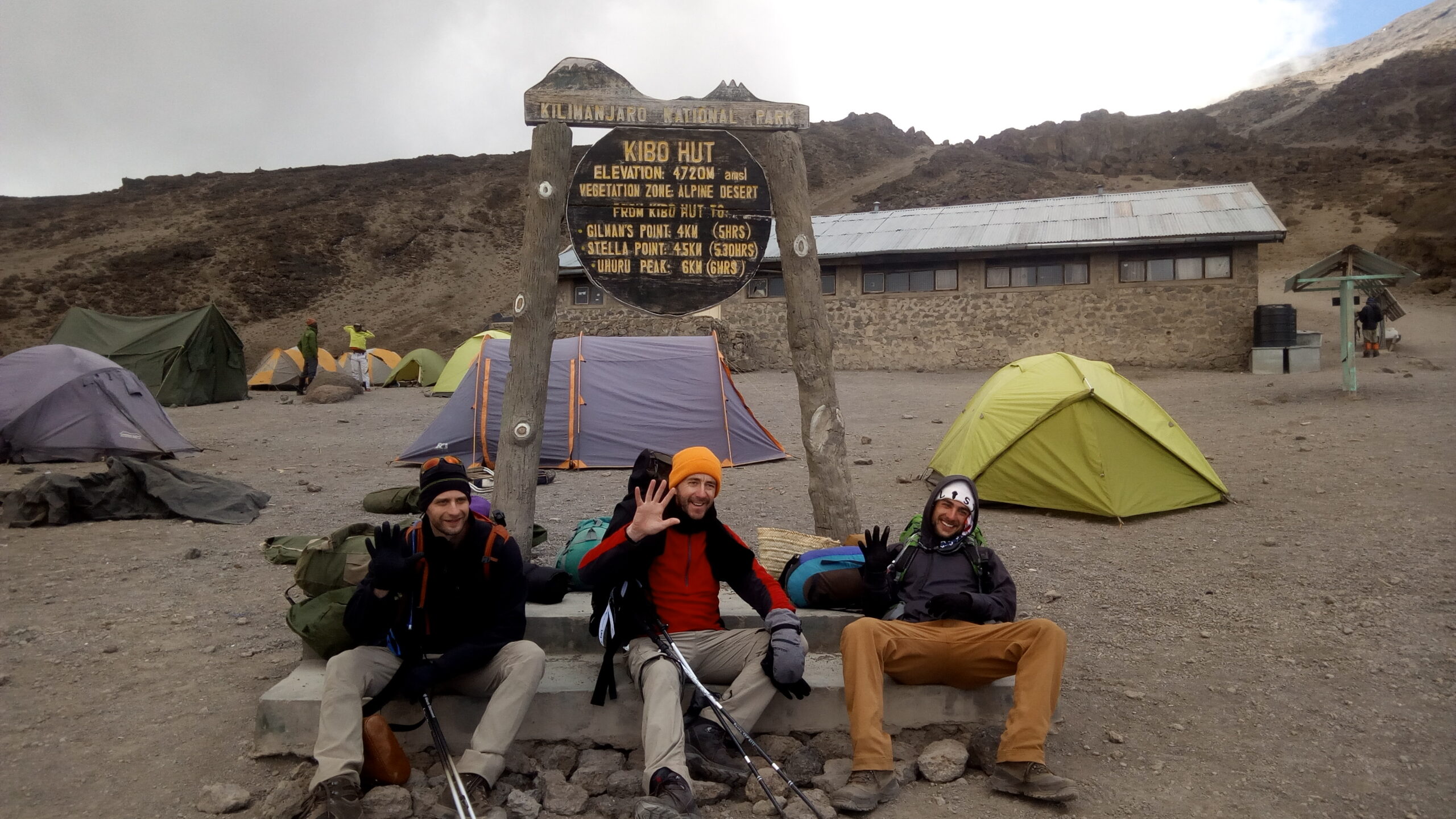
The Marangu Route is the only Kilimanjaro route with permanent huts. Many climbers choose it assuming the huts mean comfort, warmth, and hotel-like facilities. That expectation needs adjusting.
| Hut | Altitude | Capacity | Beds | Toilets | Power | Night Temp Inside |
|---|---|---|---|---|---|---|
| Mandara Hut | 2,700m | ~200 people | Bunk, foam pad | External flush | Limited sockets | +6°C to +10°C |
| Horombo Hut | 3,720m | ~120 people | Bunk, foam pad | External long-drop | Solar charging | -1°C to +3°C |
| Kibo Hut | 4,703m | ~60 people | Bunk, basic mat | External long-drop | No reliable power | -7°C to -13°C |
Kibo Hut is a stone building with wooden bunks. During peak season (January, July–August) the dormitory holds up to 60 people. You will hear other groups waking for their midnight departure. You will feel the cold through stone walls. Earplugs and a -20°C bag transform this experience.
Mandara is genuinely pleasant — warmest of the three, with reasonable toilets and a social atmosphere. Horombo is functional and large, used as an acclimatisation base on longer 6-day Marangu itineraries. See our detailed Marangu Route Huts guide for full layout descriptions.
The Marangu Route has a lower summit success rate than Lemosho or Machame despite its reputation as the “easy” route — partly because its short standard itinerary limits acclimatisation, and partly because cold, disrupted sleep at Kibo Hut compounds the altitude effect. Read: Marangu Route: Why Most Climbers Fail. Compare routes at our full routes guide.
Why Sleep Quality Affects Summit Performance
Sleep is the physiological mechanism your body uses to adapt to altitude. During sleep, the kidneys increase bicarbonate excretion to correct blood pH disrupted by hyperventilation — a process called renal compensatory acclimatisation. This takes 24–48 hours at any given elevation to complete. Disrupting it with poor sleep directly slows your adaptation.
📊 Sleep and Summit: What the Data Shows
- Climbers on 8-day itineraries report an additional acclimatisation night that measurably reduces Cheyne-Stokes frequency at Barafu — see success rate data by route
- A -15°C bag vs a -5°C bag eliminates cold-driven arousal above 4,000m — the primary non-physiological cause of disrupted sleep on the mountain
- Hydration before sleep (500ml minimum) reduces headache frequency at altitude when combined with adequate sodium intake during the day
- Keeping summit clothes inside your sleeping bag overnight eliminates cold clothing as a factor in midnight departure delays
See Kilimanjaro Success Rate by Route for how itinerary length — and the sleep quality it enables — correlates directly with summit outcomes. For what happens hour by hour from Barafu at midnight, read our Summit Night guide.
📥 Free Download: Kilimanjaro Altitude Symptom & AMS Checklist
This is the checklist used by Senior Guide Sabinus Msimba and the Kilimania team to monitor climbers throughout every expedition — including nightly sleep symptom checks.
- Normal acclimatisation symptoms above 3,000m
- AMS warning signs by Lake Louise Score category
- HACE and HAPE emergency indicators
- Daily health monitoring form (SpO₂, pulse, hydration)
Prepared by Sabinus Msimba, Senior Mountain Guide, Kilimania Adventure. Educational use only — not a substitute for medical advice.
📥 Free Download: Kilimanjaro Packing Checklist 2026
16 pages covering every item you need, with route-specific variations, rent vs buy guidance, and a sleeping bag selection chart.
- Interactive tick-box checklist for every item
- Sleeping bag rating guide by route and season
- Rent vs buy comparison — 2026 Moshi pricing
- AMS/HACE/HAPE altitude safety reference
16 Pages · Verified by Senior Guide Sabinus Msimba · 22+ Years Experience
Frequently Asked Questions: Sleeping on Kilimanjaro
You need a sleeping bag rated to at least -15°C comfort rating for all routes. Temperatures at Barafu Camp (4,673m) regularly drop to -10°C inside the tent at 3am. A bag rated to only -5°C will leave you shivering through the night before the summit push, directly affecting performance on the 6–7 hour climb to Uhuru Peak. For July–August climbing, use a -20°C comfort-rated bag. See our full Kilimanjaro packing list for the complete gear breakdown.
On Machame, Lemosho, Rongai, Shira, Northern Circuit, and Umbwe routes you sleep in a dome tent. Kilimania provides tents and sleeping mats for all climbers. The Marangu Route is the only route with permanent dormitory huts at Mandara, Horombo, and Kibo — no tent required.
Sleeping at altitude is frequently disrupted. Above 3,500m many climbers experience Cheyne-Stokes breathing — periodic breathing with brief pauses that can jolt you awake. Headaches are common at Shira Camp and above. At Barafu (4,673m) you typically get just 3–4 hours before midnight summit departure. This is normal altitude physiology, not a sign you are failing to acclimatise. Choosing a longer itinerary gives your body more time to adapt, which reduces Cheyne-Stokes frequency.
The Marangu huts are slightly warmer than tents and provide wooden bunk beds with foam mattresses. They are not hotels. Kibo Hut at 4,703m is cold, sparse, and shared with other groups. The main advantage is shelter from wind. The disadvantage is shared dormitory noise from groups departing at staggered midnight times. See our full Marangu huts guide for photos and layout details.
Kilimania provides sleeping mats inside tents on all camping routes. Sleeping bags are not included in the standard package and must be brought or rented in Moshi before the climb. We strongly recommend bringing your own bag rated to -15°C or colder. Contact us at info@kilimania.co.tz or WhatsApp +255 756 449 990 to confirm current rental availability.
At Barafu Camp: thermal base layer top and bottom, mid-layer fleece, warm socks, and a beanie inside your sleeping bag. A down jacket inside the bag adds significant warmth at -12°C. Do not wear your hard-shell jacket — it creates moisture and leaves you damp and cold by 2am. Push your summit-day clothes to the foot of your sleeping bag overnight so they are warm when you dress at 11:30pm for the midnight departure.
During sleep your kidneys increase bicarbonate excretion to correct blood pH disrupted by hyperventilation at altitude — renal compensatory acclimatisation. Disrupting this with poor sleep directly slows your body’s adaptation. Climbers on longer itineraries with better-quality sleep at high camp show higher summit completion rates in our data. A correctly rated sleeping bag eliminates cold-driven arousal, which is the most preventable cause of disrupted sleep on the mountain.
Ready to Book Your Kilimanjaro Climb?
Choose your route, choose your dates. We handle tents, meals, guides, and permits — fully KPAP-compliant, TATO-registered, KINAPA-licensed.
View All Kilimanjaro Packages Compare All RoutesContinue Planning Your Climb
The Bottom Line on Sleeping on Kilimanjaro
You sleep in a dome tent on most routes — set up before you arrive, with a mat already inside. On Marangu you sleep in dormitory huts. In both cases, the shelter is functional and cold above 4,000m.
The single item that most affects the quality of your nights on the mountain is your sleeping bag. A -15°C comfort-rated bag is the minimum. A -20°C bag gives you the margin that protects summit performance. Everything else — what to wear, how to layer, how to pre-warm your summit clothes — our guides cover at camp briefings each evening.
Sleep on Kilimanjaro is not comfortable by lowland standards. It is also not what beats most climbers. What beats climbers is rushing the acclimatisation. Choose an itinerary with enough days, bring the right sleeping bag, and the cold nights become something you adapt to rather than something that stops you reaching the summit.
We Walk With You — From Moshi to Uhuru Peak
Kilimania handles every detail. TATO-registered, KPAP-compliant, guided by Sabinus Msimba and a team with over two decades on this mountain.
View All Kilimanjaro Packages Or read our full Climbing Kilimanjaro Guide 2026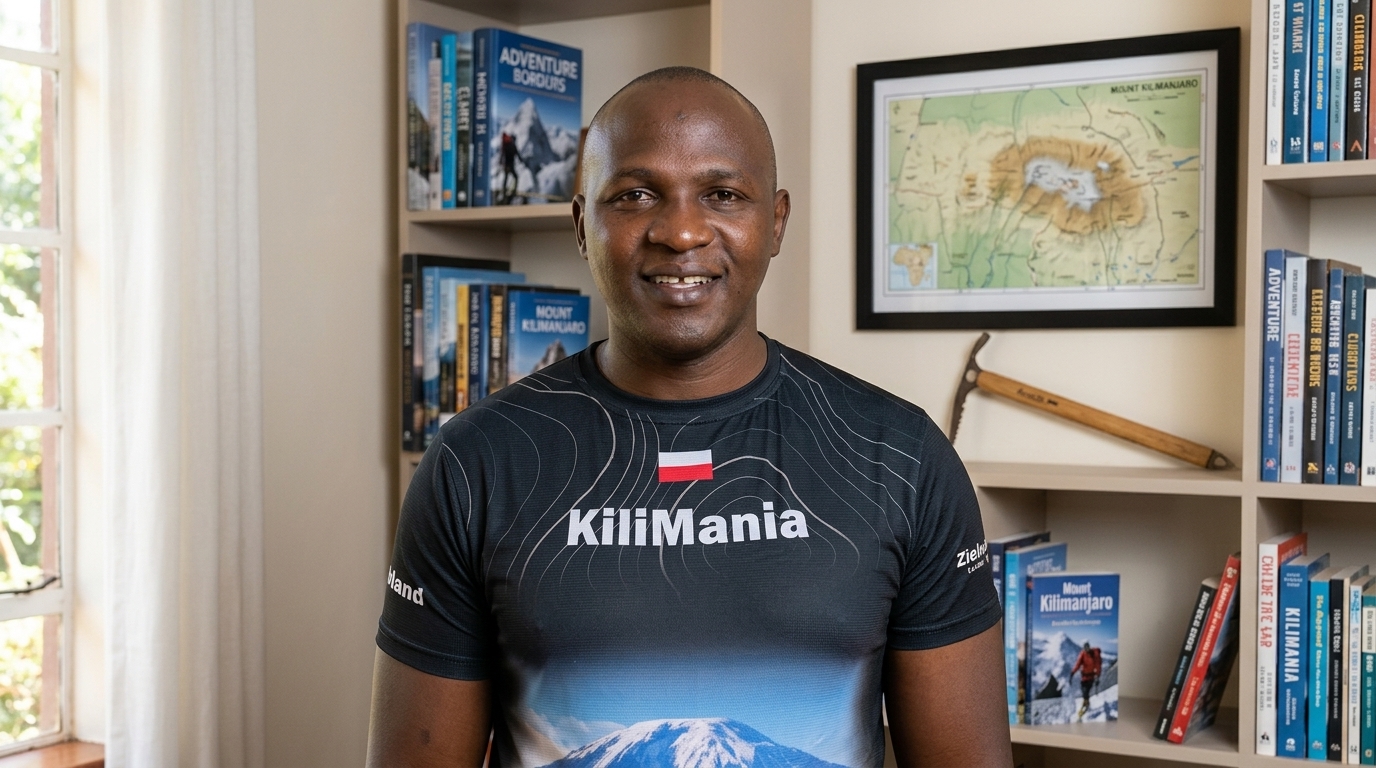
Sabinus has guided on Mount Kilimanjaro since 2001, beginning as a porter on the Marangu Route. Over 22 years and 300+ personal summits to Uhuru Peak, he has monitored thousands of climbers through altitude conditions at every camp on this mountain. His field observations on Cheyne-Stokes, cold-related arousal, and sleep quality at altitude underpin Kilimania’s nightly health monitoring protocol.