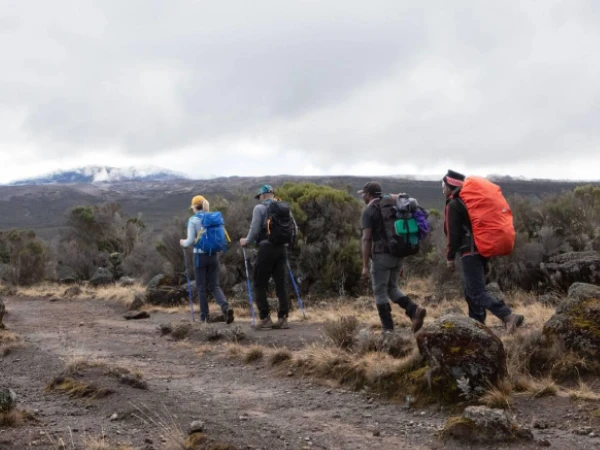
Scenic Lemosho Route with high success rates & fewer crowds

5-Day Kilimanjaro Climb · Northern Approach
5 Days Rongai Route
Five mountain days on Kilimanjaro’s quieter northern side, starting at Nalemuru Gate near the Kenyan border and finishing at Uhuru Peak, 5,895m. Read the itinerary below before you decide five days is the right amount of time for you.
Google: 4.9/5 (36 reviews)
TripAdvisor: 5.0/5 (33 reviews)
KINAPA-licensed since 2003
22+ years guiding
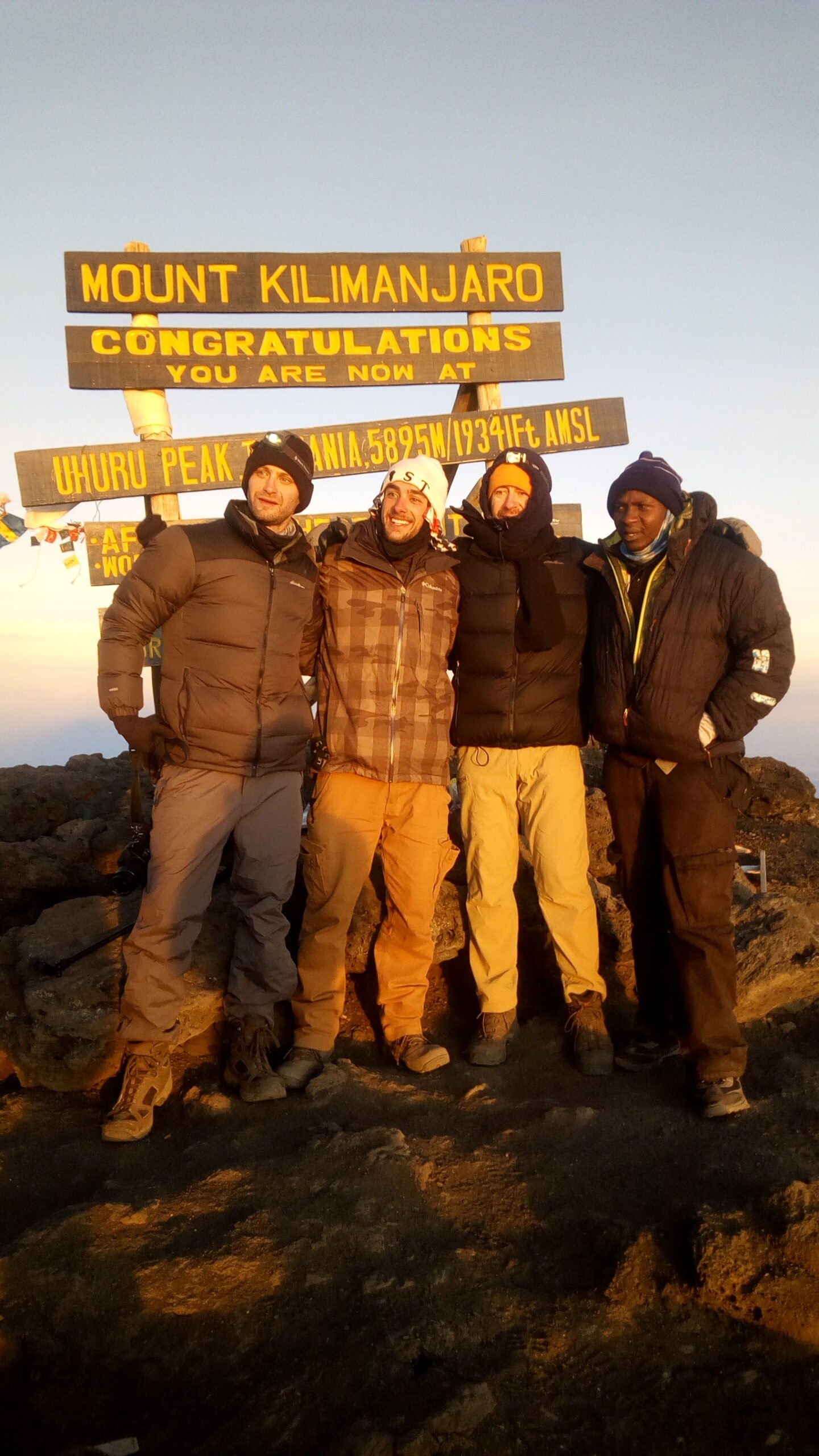
Uhuru Peak, 5,895m — the summit sign at the end of the Rongai ascent.
Table of Contents
5-Day Rongai Route at a Glance
The 5 Days Rongai Route climbs Kilimanjaro from the northern side, starting at Nalemuru Gate (1,950m) near the Kenyan border and summiting Uhuru Peak (5,895m) on day five. It runs five mountain days plus a briefing day and a post-climb hotel day in Moshi (six nights total). Because it skips the extra acclimatization day used in the 6- and 7-day versions, Kilimania recommends it mainly for climbers who are already well-acclimatized or on a tight schedule — most first-time climbers do better with the 6-day or 7-day itinerary on the same trail. Camping throughout; price from $1,400 per person (group of 6).
- Mountain duration
- 5 days
- Total trip
- 6 nights, Moshi–Moshi
- Starting gate
- Nalemuru Gate, 1,950m
- Summit
- Uhuru Peak, 5,895m
- Accommodation
- Camping throughout
- Difficulty
- Challenging
- Summit day length
- 12–16 hours
- Price from
- $1,400 pp (6 people)
Why Choose the 5-Day Rongai Route?
If you’re specifically searching for the 5-day version, you likely already know what you want. Here’s what this itinerary actually offers:
- Suited to travelers with limited time — the shortest Rongai itinerary Kilimania runs
- The northern approach, with fewer climbers on the trail than the southern and western routes
- The same Uhuru Peak summit, 5,895m, as every other route on the mountain
- Camping throughout, with the same KPAP-aligned porter team and daily health monitoring used on all our climbs
- KINAPA-licensed, experienced high-altitude guides
- Well suited to climbers who are already acclimatized or have recent high-altitude experience
- A shorter total trip than the 6- or 7-day Rongai options
- Group pricing that drops per person as your group size grows — see the table below
Not sure five days is right for you? Compare 5 vs 6 vs 7 days before you book.
Overview
The Rongai Route is the only path up Kilimanjaro that approaches from the north, close to the Kenyan border. It sees far fewer climbers than the Machame or Lemosho trails on the mountain’s southern and western sides, and its lower slopes tend to be drier — useful if you’re climbing during the wetter months on the other approaches. This particular itinerary compresses the route into five mountain days: a briefing day in Moshi, five days on the mountain including the summit push, and a recovery day back in Moshi before you fly out.
Kilimania Adventure operates this route with KINAPA-licensed guides, KPAP-aligned porter treatment, and the same daily health monitoring used on every route we run. Depending on availability and group size, your climb may be led by Sabinus Msimba or another member of Kilimania’s licensed guide team. For general planning across all seven routes, see the complete Kilimanjaro climbing guide, our Mount Kilimanjaro climbing options, or the broader Rongai Route guide if you want more background on the trail itself before comparing itinerary lengths.
Is 5 Days Enough on the Rongai Route?
Yes, a 5-day Rongai climb is a real, bookable itinerary — but it is the compressed version of the route. Kilimania’s 6- and 7-day Rongai itineraries build in extra time at altitude before the final push to summit camp, specifically to give your body more time to adjust. Cutting that time out puts more strain on the same climb-high-sleep-low pattern that acclimatization depends on.
5 Days Suits You If…
- You’ve already spent meaningful time above 3,000m in the weeks before your trip.
- Your schedule genuinely can’t accommodate a sixth day on the mountain.
- You’re an experienced high-altitude trekker who knows how your body responds to rapid ascent.
- You accept that the summit day will be long and demanding, with less acclimatization buffer than the longer options.
Consider 6 or 7 Days If…
- This is your first climb above 3,500m.
- You want the extra acclimatization night that the 6-Day Rongai Route adds at altitude, or the additional buffer of the 7-day itinerary — same trail and camps either way.
- You’d rather take a steadier pace and have more buffer if the weather turns.
- You’re not certain how you personally respond to altitude.
We say this plainly because it’s the honest answer, not because we don’t want your booking: if you have the extra day or two available, take it. Kilimania runs 5-day, 6-day, and 7-day Rongai itineraries on the same trail — ask us for current 7-day dates and pricing. If you want a substantially longer acclimatization profile on a different route entirely, compare the 8-Day Lemosho Route or 9-Day Northern Circuit. If five days is genuinely what your schedule allows, it’s still climbable with the right preparation and pacing — see the training guide before you commit.
Day-by-Day Itinerary
Exact camps may change according to current KINAPA park regulations, camping allocation, weather, and mountain-team safety decisions on the day. The sequence below is Kilimania’s current operational itinerary for this route.
0Briefing
Pre-Climb Briefing in Moshi
You arrive in Moshi and settle in the night before the climb starts. Your guide runs through the route, checks your gear against the required list, and answers any last questions. This is a hotel day, not a trekking day — it exists so the mountain team can confirm everyone is ready before you leave for the gate.
1Day
Nalemuru Gate to Simba Camp
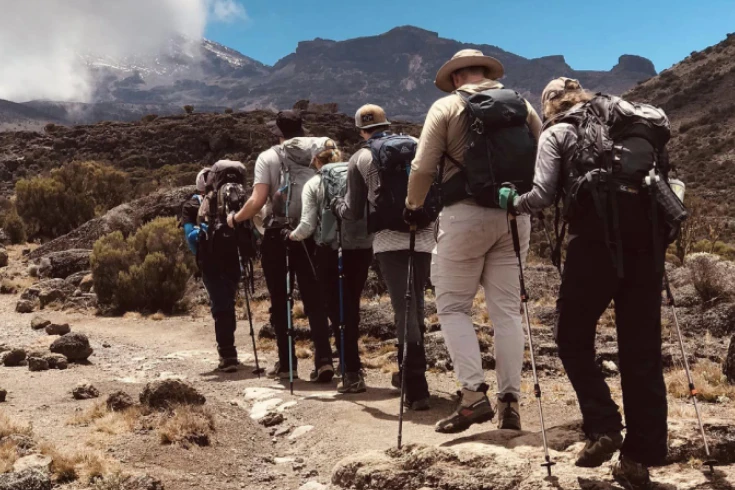
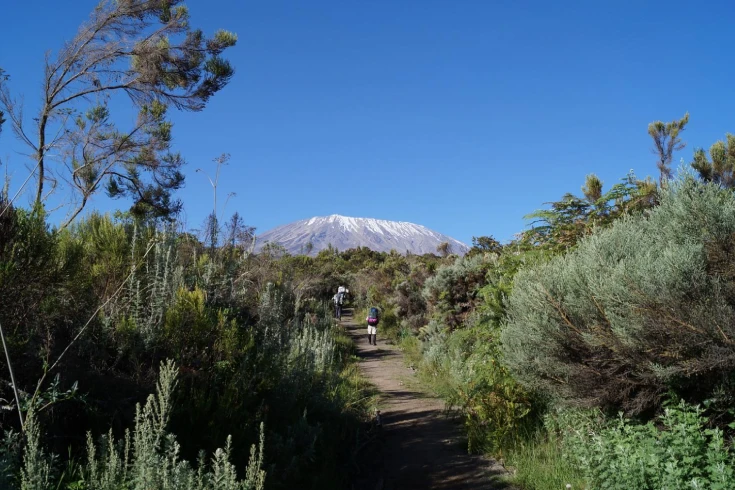
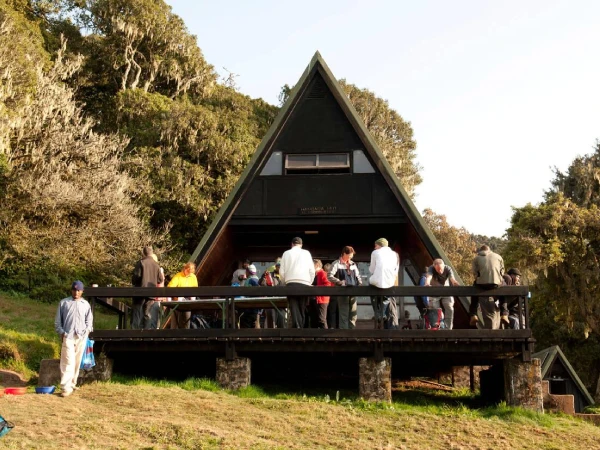
You drive from Moshi to Nalemuru Gate (sometimes called Rongai Gate) to complete park registration, then begin walking through cultivated land and pine forest on the mountain’s quieter northeastern flank. The trail rises gradually. Camp is set at Simba Camp for the first night.
2Day
Simba Camp to Third Cave
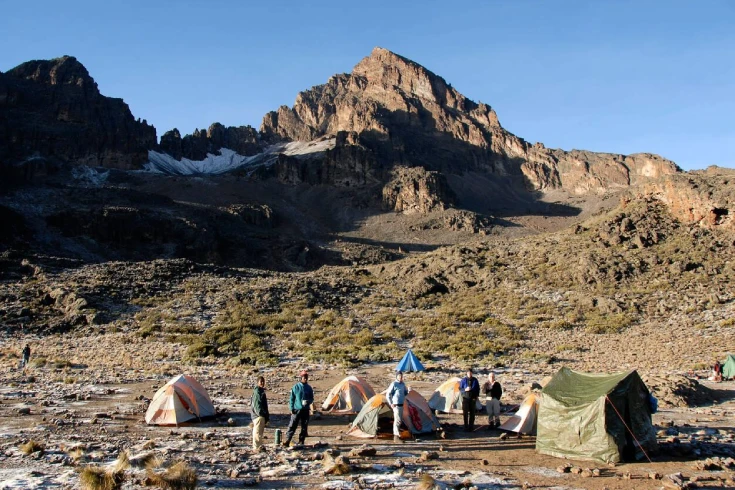
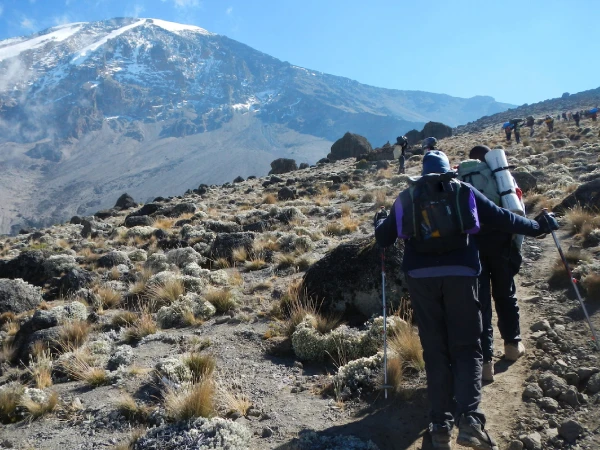
The forest thins into moorland and then more open, rocky terrain as you climb. This is a substantial altitude gain in a single day, so pacing and hydration matter more here than the distance itself. Camp is set at Third Cave, an exposed site on the boundary between the moorland and alpine desert zones.
Guide note: pace slows deliberately here. If you’re arriving from sea level with no prior altitude exposure, tell your guide how you’re feeling — don’t wait until you feel unwell to say something.
3Day
Third Cave to School Hut
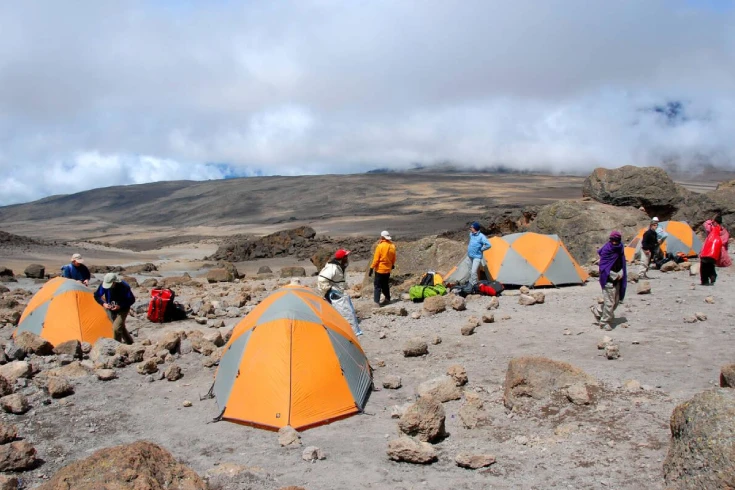
A shorter walking day that still gains significant altitude, crossing into the alpine desert toward the base of Kibo. You reach School Hut in the early afternoon, eat an early dinner, and try to rest — you’ll be woken around midnight to begin the summit push directly from here. School Hut is a campsite on this route, not a hut stay — despite the name, accommodation here is camping, the same as every other night on this itinerary.
4Day
School Hut → Uhuru Peak → Horombo Hut
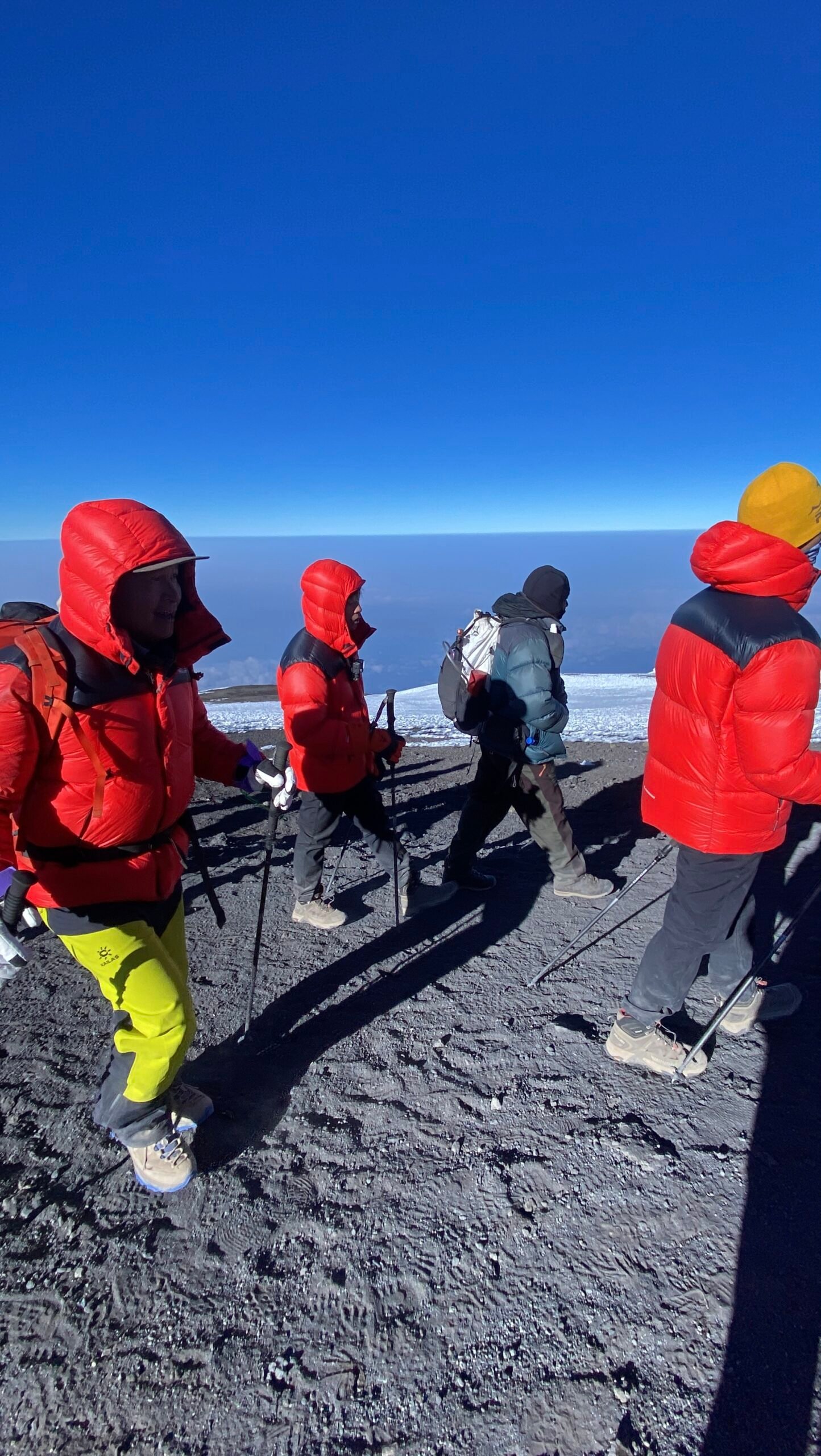
This is the hardest day of the climb. You leave School Hut in the dark, climbing steep scree toward Gilman’s Point on the crater rim, then following the rim to Uhuru Peak. After time at the summit, the descent follows the Marangu Route path back down through the Saddle to Horombo Hut, where you spend the night. Summit day is long and demanding, and the 5-day itinerary gives you less time to acclimatize beforehand than the longer Rongai options. We do not soften this: expect fatigue, cold, and a full day on your feet, with your outcome depending on how your body has responded to the days before it.
5Day
Horombo Hut to Marangu Gate, then Moshi
A long but progressively easier descent through moorland and forest to Marangu Gate, where the trekking portion of the climb ends. A vehicle meets you at the gate for the drive back to Moshi.
6Recovery
Post-Climb Hotel Stay
A hotel night in Moshi to shower, rest, and recover before departure or an onward safari. Not a mountain day — it’s part of the six nights of the total package.
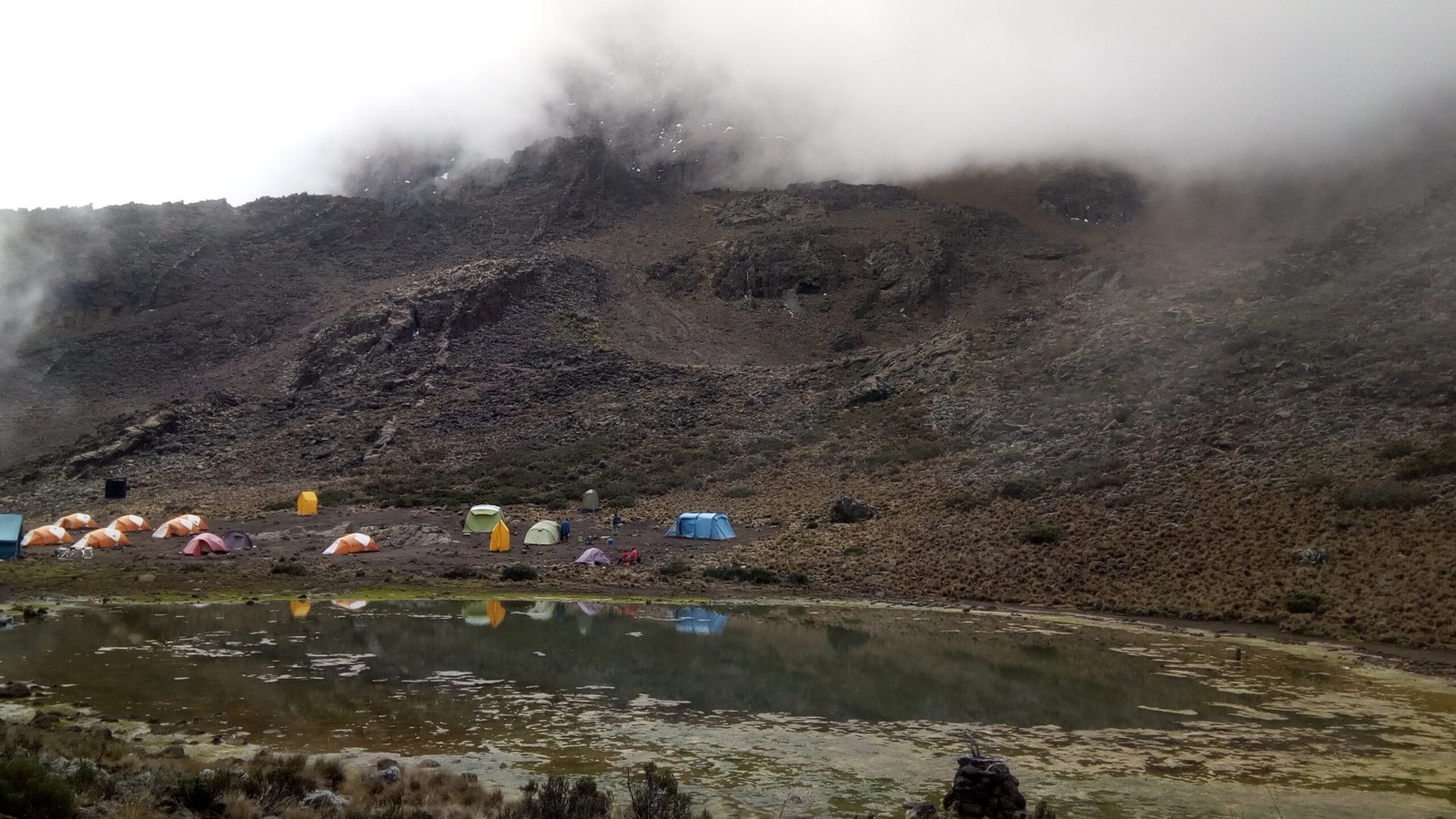
Summit Night on the 5-Day Rongai Route
You leave School Hut (approximately 4,750m) in the middle of the night, climbing loose scree and rock toward Gilman’s Point on the crater rim at 5,681m. From there, the route follows the crater rim past Stella Point to Uhuru Peak at 5,895m — the true summit and the highest point on the continent. Cold is a real factor at this stage of the climb, and the combination of altitude, darkness, and physical effort makes this the most demanding stretch of the entire route. After time at the top, you descend the same way you came up, then continue down through the Saddle to Horombo Hut for the night. Read the full summit night guide for what to expect hour by hour.
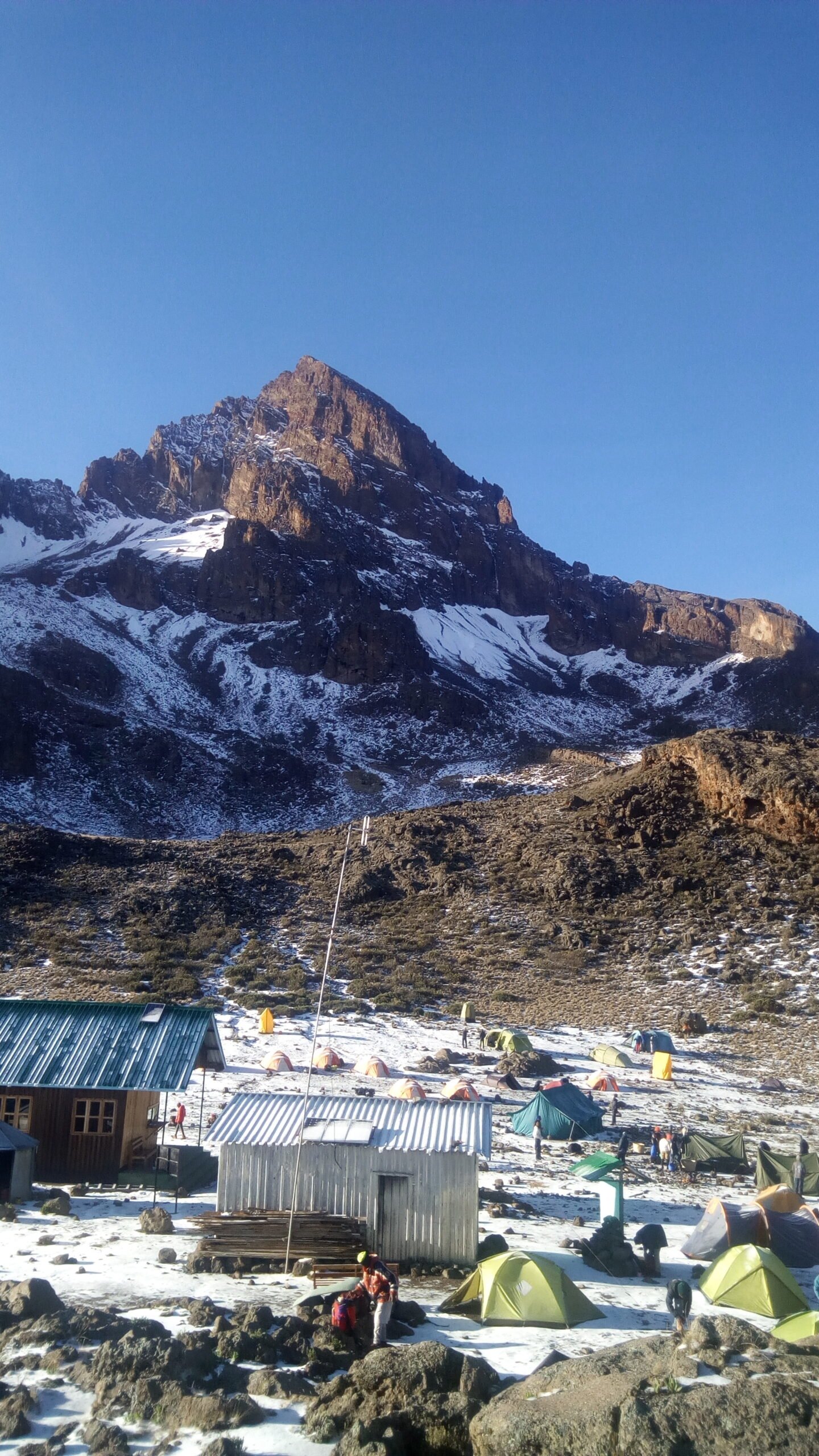
How Hard Is the 5-Day Rongai Route?
Overall difficulty: Challenging. No technical climbing skills are needed anywhere on this route — it’s a walk, not a climb, in the mountaineering sense. What makes it hard is altitude and the compressed schedule: five days gives your body less time to adjust than six or seven, so the summit night in particular asks more of you with less buffer. Good fitness improves your experience and stamina, but it does not remove altitude risk — that depends on individual physiology as much as training. See how hard Kilimanjaro really is and how to train for it before you book.
Kilimania’s Operational Data
Kilimania Adventures’ internal climbing records show an 85% summit success rate across our 6–7 day Rongai itineraries, based on 112 climbers as of January 2026. We do not currently publish a separate verified success-rate figure for the 5-day itinerary specifically, because we don’t yet have a dataset for it that we’re prepared to defend publicly.
Our definition of summit success is reaching Uhuru Peak (5,895m). This is Kilimania’s own operational record — not an official TANAPA or KINAPA statistic, and not an industry-wide figure. Individual outcomes vary with acclimatization, altitude response, preparation, weather, fitness, health, pacing, and guide decisions on the day.
Rongai vs Other Kilimanjaro Routes
| Route | Duration | Approach | Accommodation | Best for | Price from |
|---|---|---|---|---|---|
| Rongai (this route) | 5 days | North | Camping | Quiet trail, tight schedule | $1,400pp |
| Rongai | 6 days | North | Camping | Quiet trail, one extra acclimatization night | $1,550pp |
| Rongai (ask for dates) | 7 days | North | Camping | Quiet trail, maximum acclimatization on this route | Ask for current pricing |
| Machame | 7 days | South | Camping | Scenic variety, popular | $1,600pp |
| Lemosho | 8 days | West | Camping | Longer acclimatization, scenery | $1,750pp |
| Marangu | 6 days | Southeast | Huts | Hut accommodation, shorter days | $1,450pp |
| Northern Circuit | 9 days | North/circling | Camping | Longest acclimatization profile | $2,050pp |
If your main priority is more time to acclimatize on the same northern trail, the 6-Day Rongai Route is the closest comparison — same gate, same camps, one extra night built in. Kilimania also runs a 7-day Rongai itinerary on the same trail for even more buffer; ask us for current dates and pricing.
Risks and Honest Limitations
Altitude
Altitude response varies between individuals and isn’t fully predictable from fitness level alone. The compressed 5-day schedule gives less buffer than longer itineraries. Read the altitude sickness guide before you climb.
Physical demand
Summit day alone runs 12–15 hours, on the back of four consecutive days of walking at altitude. Fatigue compounds through the week.
Cold
Conditions at School Hut and above are cold, particularly during the night departure for the summit. Use the route-specific Kilimanjaro packing list to plan layers, gloves, headwear, sleeping bag rating, and summit-night essentials.
Remote mountain environment
The Rongai side is quieter than the southern routes, which also means fewer other groups nearby if something goes wrong. Our guides carry emergency oxygen and are trained in wilderness first response — see the full Kilimanjaro safety guide.
Before taking any altitude medication, including acetazolamide (Diamox), consult your travel medicine clinic or physician; see our Diamox for Kilimanjaro guide for general planning information.
What’s Included
- 1 night before the climb at a Moshi hotel
- 1 night after the climb for recovery
- Hotel breakfast
- All camping and park fees on the mountain
- Kilimanjaro National Park entry and rescue fees
- KINAPA-licensed mountain guide and assistant guides
- Cooks and porters, treated in line with KPAP-aligned porter-welfare practices
- Tents, sleeping mats, mess tent
- All meals and purified drinking water on the mountain
- Airport and gate transfers
- Pre-climb briefing and gear check
- Daily health monitoring and emergency oxygen
- Summit certificate
What’s Excluded
- International and domestic flights
- Tanzania visa
- Travel and medical insurance
- Sleeping bag, hiking boots, trekking poles
- Personal clothing and gear — see the packing list
- Tips for guides, cooks, and porters — see the tipping guide
- Snacks, alcohol, soft drinks
- Single-room supplement and additional hotel nights
5 Days Rongai Route Cost
| Group size | Price per person |
|---|---|
| 1 person | $1,700 |
| 2 people | $1,600 |
| 3 people | $1,550 |
| 4 people | $1,500 |
| 5 people | $1,450 |
| 6 people | $1,400 |
Deposit: $100 per person. Full-moon climbs are available in selected months and may carry a small surcharge — ask Kilimania for current dates and pricing. Prices last verified: September 2026. See the full Kilimanjaro cost breakdown and current Kilimanjaro park fees for what these prices cover. Solo travelers and pairs can also ask about joining an existing departure through Kilimania’s Kilimanjaro Joining Calendar.
Best Time to Climb the 5-Day Rongai Route
Rongai approaches Kilimanjaro from the north and northeast, near the Kenyan border. This side of the mountain is often considered drier than the southern approaches during Tanzania’s wetter periods, but weather on Kilimanjaro is variable year to year and no month is rain-free — treat this as a general tendency, not a forecast. A five-day itinerary also leaves less room to adjust if weather does turn, since there’s no spare day built in the way there is on the 6-Day Rongai Route.
| Period | Typical season | What it can mean on Rongai | Practical recommendation |
|---|---|---|---|
| January–February | Generally drier | Often clearer trails and views on the northern side | A popular window; book gear and dates early |
| March–May | Long rains | Can still be drier here than southern routes, but expect some rain | Pack for wet conditions regardless of route choice |
| June–October | Generally drier | One of the more reliable windows for this route | Cold nights at altitude even in dry season — layer accordingly |
| November–December | Short rains | Afternoon showers possible; mornings often clearer | Flexible dates help if you’re weather-sensitive |
The quieter northern approach can be useful when southern trails are wetter, but a five-day itinerary still leaves less room to adapt to difficult weather or slow acclimatization. If your dates are flexible, choosing the season and choosing enough days matter more than choosing a route based on crowd levels alone. See the Kilimanjaro weather guide and the wider Kilimanjaro route comparison for more planning detail.
Ready to check dates for the Rongai Route?
Tell us your travel window and group size, and we’ll confirm availability and the exact quote for your dates.
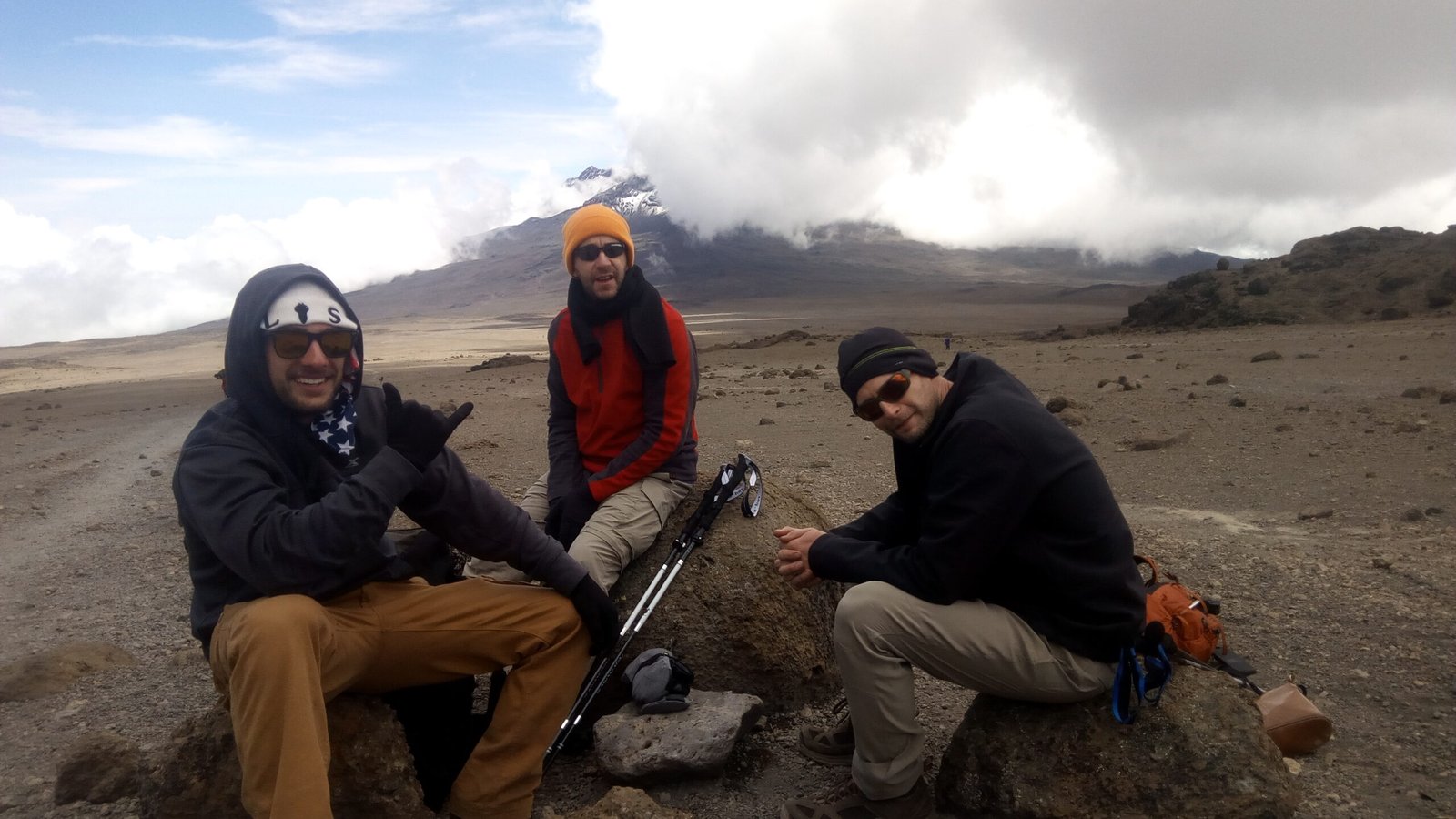
Who Leads Your Kilimanjaro Climb?
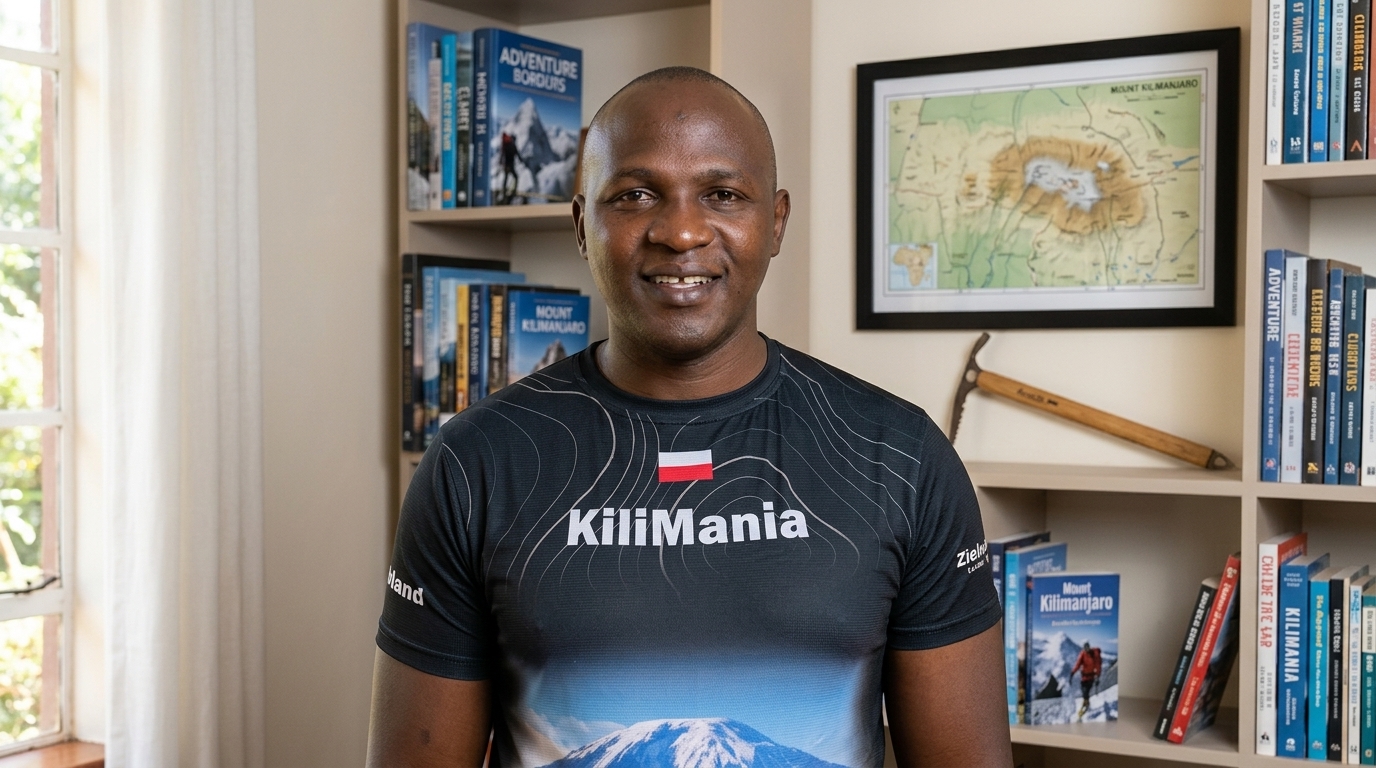
Sabinus Msimba
22+ years guiding on Mount Kilimanjaro, 300+ personal Uhuru Peak summits, KINAPA-licensed since 2003, Wilderness First Responder certified. Depending on availability and group size, your climb may be led by Sabinus or another member of Kilimania’s licensed guide team — all guides follow the same safety procedures, daily health monitoring, and emergency oxygen protocol.
Read Sabinus’s full biography → · View his KINAPA license (PDF)
Free Downloads
Altitude Symptom Checklist
Recognize early signs of altitude sickness before they escalate.
Download PDFOther Kilimanjaro Routes
Frequently Asked Questions
What is the 5-Day Rongai Route?
It’s a five-mountain-day ascent of Kilimanjaro from the northern side, starting at Nalemuru Gate (1,950m) and finishing at Uhuru Peak (5,895m), with camping accommodation throughout — including at School Hut, which is a campsite name on this route rather than a hut stay. Including the pre-climb briefing and post-climb hotel night, the full package covers six nights in total.
Is 5 days enough to climb Kilimanjaro via Rongai?
It’s enough for climbers who are already acclimatized or have prior high-altitude experience. For most first-time climbers, Kilimania recommends the 6- or 7-day Rongai itinerary, which builds in extra time at altitude before the final push to summit camp.
How difficult is the 5-Day Rongai Route?
Overall difficulty is challenging. No technical climbing is required, but the compressed schedule and a 12–15 hour summit day make altitude the main factor. Good fitness helps with stamina but doesn’t remove altitude risk.
Where does the Rongai Route start?
At Nalemuru Gate (also called Rongai Gate), elevation 1,950m, on Kilimanjaro’s northeastern side near the Kenyan border.
Where do you sleep on the 5-Day Rongai Route?
In tents at Simba Camp, Third Cave, and School Hut, then overnighting at Horombo Hut on the way down after summit night.
How long is summit day?
Summit day typically runs 12 to 16 hours, covering the ascent from School Hut to Uhuru Peak and the descent to Horombo Hut, where you spend the night before walking out to Marangu Gate the next day.
What is the success rate on the 5-Day Rongai Route?
Kilimania does not publish a separate verified success-rate figure for the 5-day itinerary specifically. Our internal records show an 85% summit success rate across our combined 6–7 day Rongai climbs, based on 112 climbers as of January 2026 — this is company data, not an industry-wide statistic, and individual outcomes vary.
How much does the 5-Day Rongai Route cost?
From $1,400 per person for a group of six, up to $1,700 per person for a solo climber, plus a $100 per-person deposit. See the pricing table above for the full group-size breakdown.
Should I choose 5, 6, or 7 days on Rongai?
Choose 6 or 7 days if you want extra acclimatization time on the same northern trail — Kilimania runs both, with the 7-day version giving the most buffer before summit night. Choose 5 days only if you’re already acclimatized, experienced at altitude, or genuinely constrained on time. For a substantially longer acclimatization profile on a different route, the 8-Day Lemosho or 9-Day Northern Circuit are worth comparing.
Plan Your Rongai Climb
Send us your preferred dates and group size and we’ll confirm availability and an exact quote. If you’d rather talk it through first, WhatsApp is usually fastest.
Thank you — your Rongai inquiry has been received.
Kilimania Adventures will review your details and respond with the next steps. If you prefer WhatsApp, you can contact us directly.
WhatsApp KilimaniaPage & Data Disclosure. Last reviewed: September 2026. Kilimania Adventures is TATO-registered and operates under KINAPA park regulations. The itinerary above may be adjusted by the mountain team when weather or safety conditions require it. Summit success data cited on this page is Kilimania’s own operational data, not an official park or industry statistic, and no operator can promise your individual outcome. We encourage travelers to compare us with other registered operators before booking. We Walk With You.
Gallery