
Tanzania day trip food, explained by the guide who runs these trips: what lunch looks like, what’s included and how special diets work.
Tanzania day trip food depends on the trip: a waterfall and village day usually centres on a cooked local meal at a shelter, while a safari or mountain day needs a portable lunch because you spend hours in the vehicle or on the trail. On Kilimania’s day trips, lunch and drinking water are included; your part is to tell us about any dietary needs when you book.
Sources: Kilimania Adventure’s current day-trip operating information and our own guide photographs. Meal arrangements can change, so we reconfirm them when you book.
Quick answer: what is lunch like on a Tanzania day trip?
- Lunch and drinking water are included on every Kilimania day trip. The format differs by trip: a local meal on village days, a seated stop on relaxed days, a portable lunch on safari and hiking days.
- “Lunch included” is only half an answer. Ask where it’s served, what’s in it, and whether drinks are covered.
- Vegetarian, vegan, halal, gluten-free and allergy-aware meals can be requested: tell us when you book, at least two days ahead, and we reconfirm before the trip starts.
- Soft drinks, tea and coffee are usually provided too, depending on the trip type. Carry one backup snack on long safari and hiking days.
In this guide
Most day-trip listings give food one line. “Lunch included.” Then nothing about where you eat, who cooks, or what happens if you don’t eat meat. That gap matters more than people expect, because a day out from Moshi can start before 06:00 and finish after dark. This guide covers what lunch really looks like on each type of trip, what you might taste in a Chagga village, and how to handle a dietary need so it’s sorted before you leave your hotel.
It does not cover full itineraries or month-by-month weather. For the full range of day trips from Moshi and Arusha, each product page carries its own itinerary and pricing.
Which trips include lunch?
Yes: lunch and drinking water are included on every Kilimania day trip listed in this guide. What changes from trip to trip is the format: where you eat, how long the break lasts, and whether the food comes to you or travels with you.
| Day trip | Lunch | Typical format | Dietary requests |
|---|---|---|---|
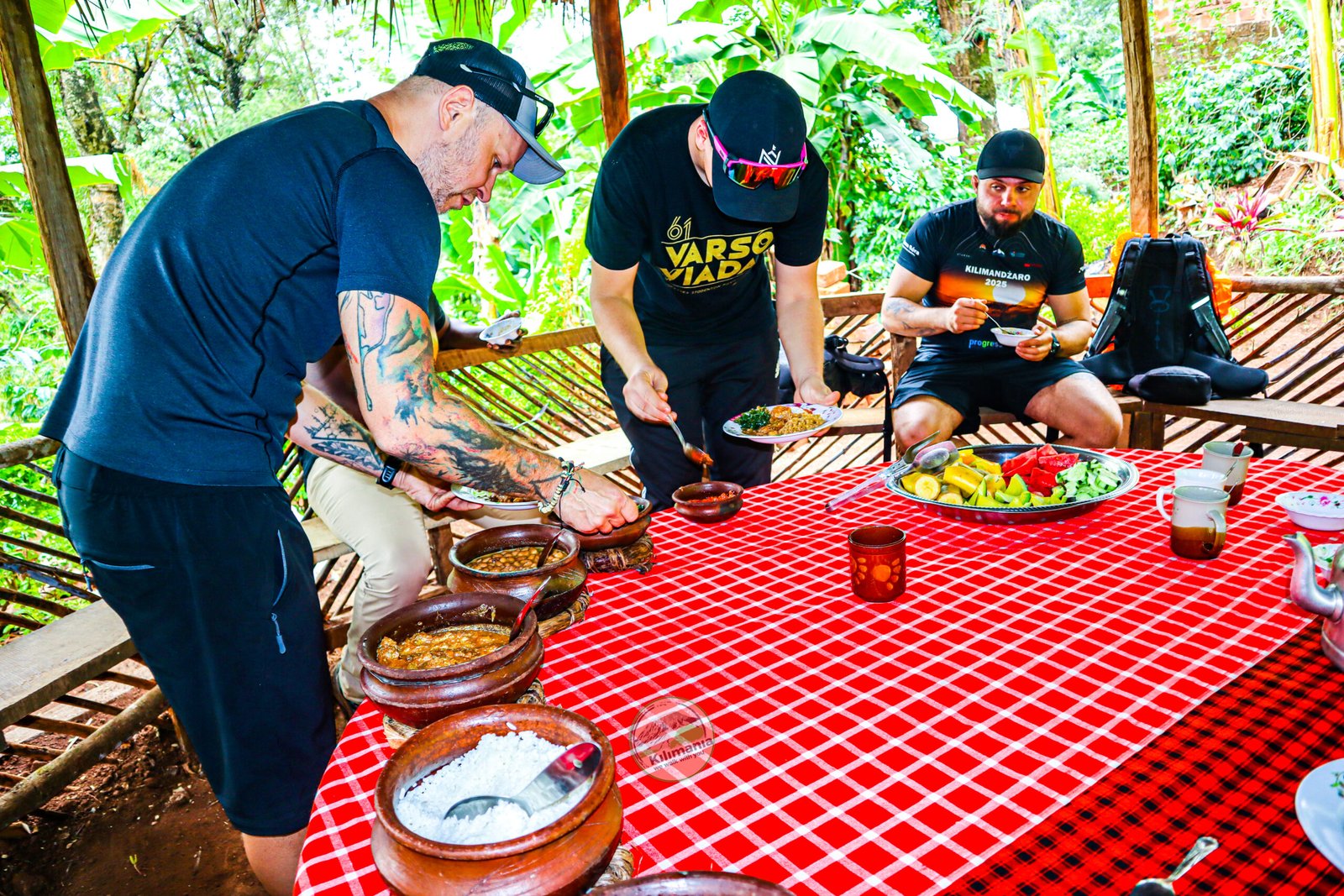
| Materuni Waterfalls & Coffee | Yes, included | Cooked meal served at a village shelter (see photo above) | Yes, at least 2 days’ notice |
| Marangu Waterfalls & Cultural | Yes, included | Local meal on the day | Yes, at least 2 days’ notice |
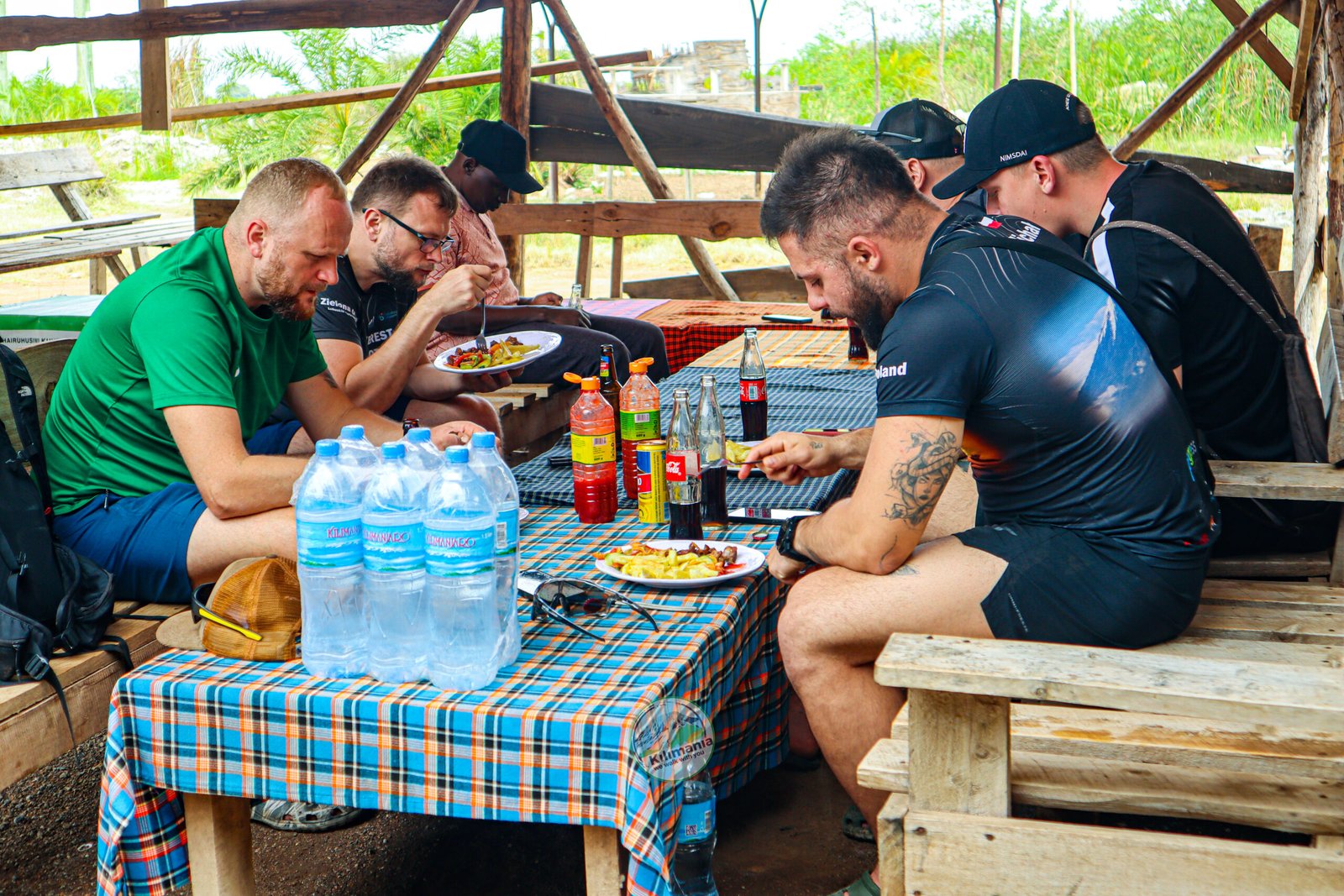
| Chemka Hot Springs | Yes, included | Seated lunch at the springs (see photo below) | Yes, at least 2 days’ notice |
| Maasai Boma | Yes, included | Local meal on the day | Yes, at least 2 days’ notice |
| Arusha City Day Trip | Yes, included | Seated lunch at or near the site | Yes, at least 2 days’ notice |
| Lake Chala | Yes, included | Seated lunch at or near the site | Yes, at least 2 days’ notice |
| Lake Chala Hike & Canoeing | Yes, included | Seated lunch at or near the site | Yes, at least 2 days’ notice |
| Shira Plateau | Yes, included | Lunch carried on the trail | Yes, at least 2 days’ notice |
| Mount Meru Day Trip | Yes, included | Lunch carried on the trail | Yes, at least 2 days’ notice |
| Marangu Kilimanjaro Day Hike | Yes, included | Lunch carried on the trail | Yes, at least 2 days’ notice |
| Arusha National Park Safari | Yes, included | Lunch fitted around game drives | Yes, at least 2 days’ notice |
| Tarangire National Park Safari | Yes, included | Lunch fitted around game drives | Yes, at least 2 days’ notice |
| Lake Manyara National Park Safari | Yes, included | Lunch fitted around game drives | Yes, at least 2 days’ notice |
On a small screen, swipe the table sideways. The table covers the 13 day trips currently in this guide. “Typical format” describes how lunch fits that kind of day. Two different Marangu trips appear above: the Marangu Waterfalls & Cultural day trip (village and waterfall) and the Marangu Kilimanjaro Day Hike (a forest hike on the mountain’s Marangu route). They are separate products with separate lunch logistics.
Tanzania day trip food: what the lunch actually is
Tanzania day trip food around Kilimanjaro usually takes one of three shapes: a cooked local meal at a shelter, a seated meal at a site with basic tables, or a packed lunch you carry. Which one you get decides how filling it is, how long the break lasts, and how easily a special diet can be handled.
Cooked meal at a shelter
Food is cooked nearby and set out in pots for guests to serve themselves. Warm, generous, and easy to adjust if the cook knows your needs in advance. Common on village and cultural days.
Seated meal at the site
Plates brought to a table at the destination, with drinks alongside. Easy on a relaxed day where there’s time to sit for a while.
Packed lunch
Food that travels in the vehicle or your daypack. It suits safari and trail days, where the day runs on driving distances and park or trail timing rather than on a village kitchen.
Here’s what the Materuni photo above shows, because it’s more useful than any description. Clay pots of white rice, beans and a tomato-based stew. A metal platter of watermelon, pineapple, banana and cucumber. Mugs for tea or coffee. Guests serve themselves at a covered wooden shelter with banana plants all round. Karibu chakula, a host will say: “welcome, eat.”
Whether that exact spread appears on your date is up to the host kitchen and the season, so treat it as a real example, not a fixed menu.
| Lunch element | What to ask before you book |
|---|---|
| Main dish | Is there a meat dish and a separate non-meat dish, or one shared pot? |
| Starch | Rice, ugali or cooking banana? These are naturally gluten-free; for a strict gluten-free meal, ask about sauces, seasonings, bread and cross-contact. |
| Vegetables and fruit | Cooked greens, raw salad, fruit platter? Useful if you avoid raw produce. |
| Drinking water | Included on every trip. Bring a refillable bottle for long days. |
| Other drinks | Soft drinks, tea and coffee are usually provided, depending on the trip type. Ask what applies to yours. |
| Timing and place | Roughly when and where you’ll eat, so you know whether to eat a bigger breakfast. |
Chagga cuisine: what you might taste on Materuni or Marangu
The Chagga are the people of Kilimanjaro’s southern and eastern slopes, and their home cooking is built around what grows on their farms: banana (many cooking varieties), beans, maize, greens, and coffee as the cash crop. Their villages sit on the farmland below the forest of Kilimanjaro National Park, a UNESCO World Heritage Site. On a village day trip you’re eating close to that kitchen, even if the lunch itself is a simpler spread.
Chagga cooking in the Kilimanjaro area can include the following. It’s cultural background, not a fixed menu: what reaches your plate depends on the host kitchen and the season.
Cooking banana
Green, starchy banana, boiled or stewed. It eats more like potato than fruit. Several Chagga dishes are built on it, including banana stews with beans or meat.
Beans
Slow-cooked with onion and tomato. The everyday protein of a village kitchen, and the dish vegetarians will lean on.
Ugali and rice
Ugali is a firm maize porridge eaten by hand, torn off and used to scoop stew. Rice is common too, as in the Materuni photo.
Greens
Leafy greens cooked briefly with onion. Ask how they’re cooked if you avoid butter or animal fat.
Coffee
Materuni’s coffee demonstration takes you from picking to roasting, grinding and tasting. It’s part of the trip itself, separate from lunch.
Mbege
A traditional fermented drink made from banana and millet, tied to hospitality and celebration. Mentioned for context only; don’t assume it’s served.
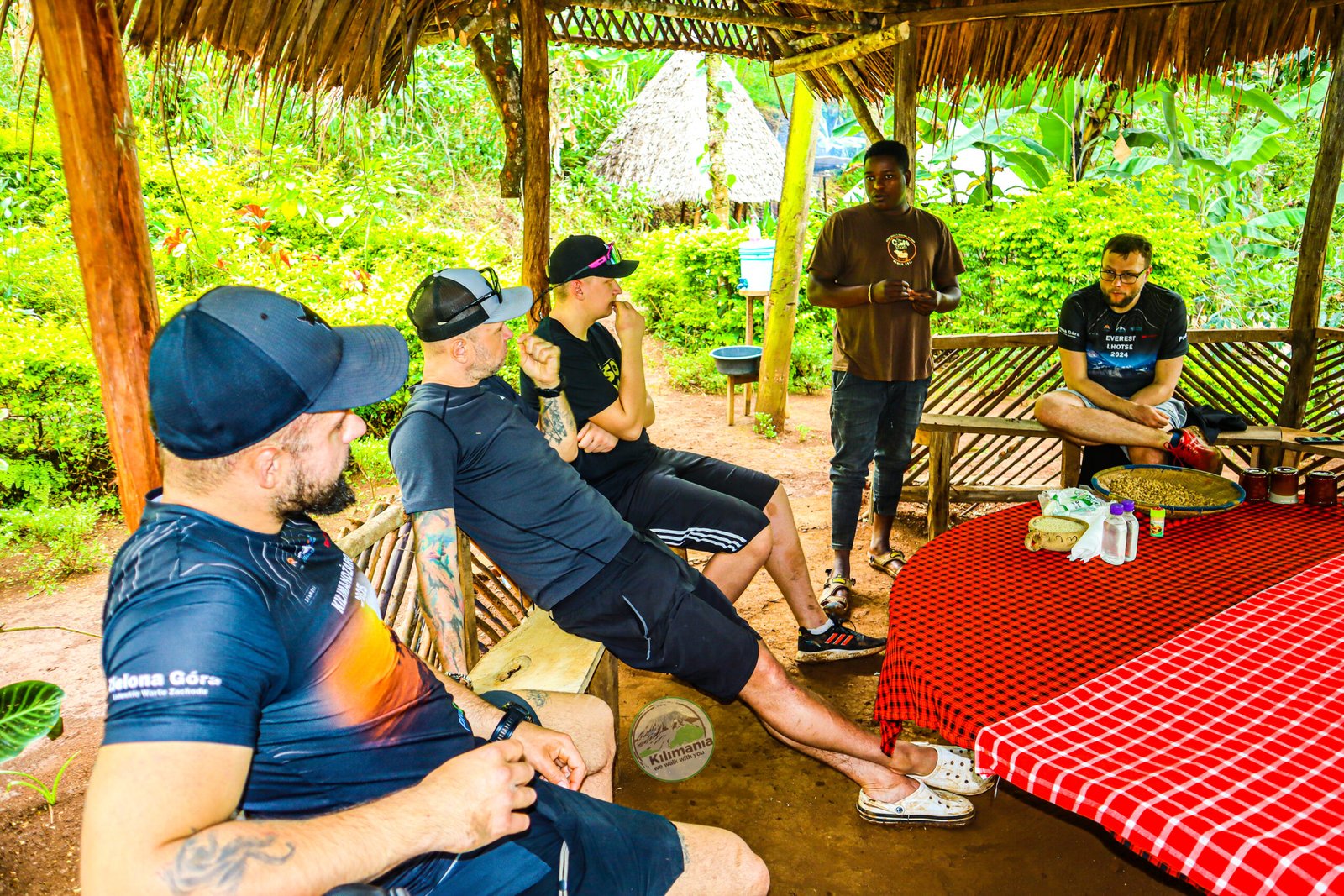
If the coffee side interests you more than the food, the Materuni and Chagga coffee guide walks through the demonstration step by step.
Dietary requirements: vegetarian, halal and allergy
Tell us any dietary need when you book, at least two days before your trip. Village and site kitchens cook in the morning for the group, so a request made at pickup often comes too late to change what’s in the pot. So the rule is simple: tell us when you book, at least two days before your trip. We then check it with you again before the trip starts. Vegetarian, vegan, halal, gluten-free and nut-free meals can all be requested this way.
Vegetarian
Beans, rice, greens and cooking banana are everyday staples around Kilimanjaro, so a vegetarian plate is rarely a strange request. Vegetarian meals can be arranged on every trip when requested in advance. Tell us when you book so the cook plans a separate non-meat dish rather than one mixed stew.
Vegan
Don’t assume a vegetarian meal is vegan. Ask specifically about butter or ghee in cooking, milk in tea, and eggs in anything packed. Vegan meals can be requested: list each item you avoid when you book and we pass it to the kitchen.
Halal
If your requirement is strict, ask two things: where any meat comes from, and whether it’s cooked apart from other meat. Formal halal certification is uncommon in small village kitchens, so we won’t claim it unless it’s documented. A vegetarian plate is the simple fallback many halal-observant travellers choose on day trips. We can request a halal meal arrangement when you tell us at booking.
Food allergies
Gluten-free and nut-free meals can be requested when you tell us at booking. Treat an allergy as a medical detail, not a preference. When you write to us, include:
- the exact allergen (for example “peanut,” not “nuts in general”)
- how severe it is, and whether cross-contact alone causes a reaction
- whether you carry prescribed medication, such as an adrenaline auto-injector
We can request that your meal be prepared without the specified allergen, but shared cooking spaces can’t fully rule out cross-contact. For a severe allergy, also carry some food of your own as a backup. Carry your own medication on the trip; your guide shouldn’t be the one holding it. If you’ve been prescribed an adrenaline auto-injector, the NHS guidance on anaphylaxis covers what to carry and when to use it.
| Dietary need | Tell us before departure? | What to confirm | Practical backup |
|---|---|---|---|
| Vegetarian | Yes, at booking (2+ days) | Separate non-meat dish | A filling snack |
| Vegan | Yes, at booking (2+ days) | Butter, ghee, milk, eggs | A filling snack |
| Halal | Yes, at booking (2+ days) | Meat source and preparation | Vegetarian plate |
| Gluten-free | Yes, at booking (2+ days) | Sauces, bread, packed items | Own snacks |
| Food allergy | Yes, at booking (2+ days) | Ingredients and cross-contact | Own food and prescribed medication |
What to bring yourself
Lunch and water are provided, so you only need a refillable bottle and one or two snacks. A backup snack doesn’t mean lunch isn’t provided; it covers the gap between an early breakfast and a lunch that, on safari or trail days, is set by driving distance and pace rather than by the clock.
- Refillable bottle. We provide the drinking water; your own bottle lets you carry it with you between stops.
- Small snacks. Cereal bars, crackers, dried fruit. Things that won’t melt in a hot vehicle.
- Your own alternatives if you have a strict diet or allergy.
- A little cash in small notes for souvenirs or anything extra.
Everything else you’ll carry (clothes, sun cover, swim kit) is covered in the day trip packing list by trip type.
How lunch changes by trip type
The biggest thing that shapes Tanzania day trip food is the kind of day you’ve booked.
Waterfall and cultural days: Materuni, Marangu Waterfalls, Maasai Boma
These trips run close to a community, so a cooked local meal fits naturally into the day. The break tends to be unhurried. The main thing to plan for is your dietary note, since the cooking happens before you arrive.
Swimming and relaxation: Chemka Hot Springs
A slow day with time to sit at a table between swims. One common surprise: Chemka’s water is warm, about 27°C, not hot. “Chemka” means “boiling” in Swahili and describes the way the water bubbles up, not its temperature (more in the Chemka Hot Springs guide). Leave a gap between eating and swimming, so ask your guide how the day is timed.
Safari days: Arusha National Park, Tarangire, Lake Manyara
Here the vehicle and the park set the rhythm, and lunch has to fit around game drives. That’s why a safari lunch looks different from a village meal. The long drives matter too: from Moshi, the total door-to-door day to Tarangire is approximately 7–9 hours for approximately 4–5 hours in the park. On a day like that, a snack in the vehicle is worth having. Park rules on where you may eat are set by Tanzania National Parks (TANAPA).
Mountain hikes: Shira Plateau, Mount Meru, Marangu Kilimanjaro Day Hike
Physically demanding days need proper fuel, and appetite can drop with effort and altitude. Eat breakfast even if you don’t feel like it. The Mount Meru trip is a lower-slopes day hike, not the 3–4 day summit climb, but it’s still a full walking day. For Shira Plateau specifically:
Altitude note, Shira Plateau: Guests sleep at Moshi level (approximately 900 m) but spend several hours at 3,400–3,800 m on the plateau. Mild altitude sickness symptoms are possible. Inform your guide immediately if you feel unwell, and don’t try to push through worsening symptoms.
For how weather affects each trip, see the month-by-month day trip guide.
When food may affect your trip choice
Tanzania day trip food is rarely the reason to pick one trip over another, but in a few cases it matters:
- Severe allergy and you want to eat hot food: a shorter trip close to Moshi, where you can eat your own meal comfortably, may suit you better than a long safari day.
- You need a slow, sit-down lunch: long safari days and mountain hikes won’t give you that. A cultural or relaxation day will.
- You want food to be part of the experience: a village day such as Materuni is built around it. A safari day isn’t.
Not sure which fits? The day trips from Moshi guide compares them side by side, and the Tanzania day trips FAQ answers the questions we hear most. If you’re weighing a shared day, see private vs joining day trips.
Sabinus’s Note From the Trail
- Who
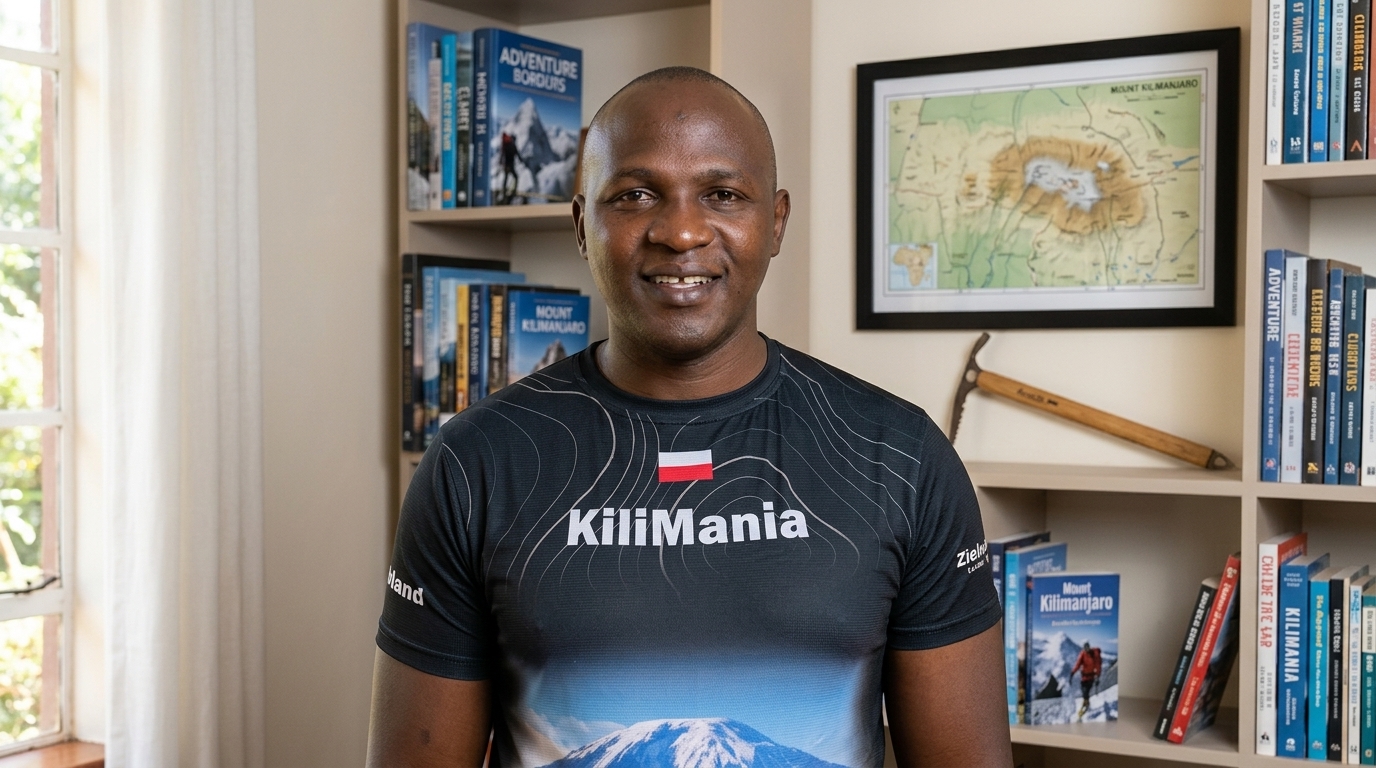
- Sabinus Msimba, leading Materuni day trips from Moshi
- When
- At the lunch stop, after the waterfall walk
- What
- Lunch is set out at the shelter in clay pots, and guests serve themselves. I usually suggest taking a little of each pot first rather than filling the plate. Polepole: slowly.
- Why it matters
- Self-serve means you control the portion, and after the waterfall walk a lighter first plate can feel more comfortable on the return trail.
Frequently asked questions
What food is usually served on a Tanzania day trip?
On Kilimania day trips, lunch varies by trip but can include rice, beans, a meat or vegetable stew, cooked greens, cooking banana and fresh fruit. Village and cultural trips often have a cooked local meal, while safari and hiking days use a lunch that fits the vehicle or trail schedule.
Is lunch included in Kilimania day trips?
Yes. Lunch and drinking water are included on every Kilimania day trip listed in this guide. The format differs by trip: a cooked local meal on village days, a seated stop on relaxed days, and lunch fitted around game drives or carried on the trail on safari and hiking days.
Can vegetarians eat on Tanzania day trips?
Yes. Vegetarian meals can be arranged on every Kilimania day trip when you ask in advance. Tell us at booking, at least two days before the trip, and we ask the cook to prepare a separate non-meat dish. Beans, rice, greens and cooking banana are everyday foods around Kilimanjaro.
What is Chagga food?
Chagga food is the home cooking of the Chagga people of Kilimanjaro’s slopes. It draws on what their farms grow: cooking banana, beans, maize, greens and coffee. Dishes include banana stews, beans with rice or ugali, and cooked greens. Mbege, a banana-and-millet drink, belongs to celebrations.
What should I bring to eat on a day trip?
Bring a refillable water bottle and one or two snacks that won’t melt, such as cereal bars or crackers. If you have a strict diet or a severe allergy, bring your own alternatives. A snack is a backup for long drives and trails, not a replacement for lunch.
Can I request vegan food?
Yes. Ask at booking, at least two days ahead, and name each item you avoid, since a vegetarian dish may still contain butter, ghee, milk or egg. We pass the details to the kitchen and check them with you again before the trip starts.
Can I request halal food?
Yes. Tell us at booking and we request a halal meal arrangement for your trip. Formal halal certification is uncommon in small village kitchens, so if your requirement is strict, ask us how the meal is prepared, or choose a vegetarian plate.
What should I do if I have a food allergy?
Tell us at booking, at least two days ahead: the exact allergen and how severe it is. We can request a nut-free or gluten-free meal, but shared kitchens can’t fully rule out cross-contact, so with a severe allergy carry your own prescribed medication and a backup snack.
Are drinks included on day trips?
Yes. Drinking water is included on every Kilimania day trip. Soft drinks, tea and coffee are usually provided as well, depending on the trip type. Bring a refillable bottle so you can keep drinking through long safari drives and mountain hikes.
Sabinus Msimba
22+ years guiding in the Kilimanjaro region · 300+ Uhuru Peak summits · KINAPA-licensed since 2003. Based in Moshi, where Kilimania’s day trips start.
Disclosure: This guide is written by a Kilimania Adventure guide and describes Kilimania’s own day trips. Lunch and drinking water are included on the day trips listed here; the lunch format varies by trip. Prices are per person in USD for private trips from Moshi and were current as of September 2026. Kilimania Adventure · Moshi, Kilimanjaro Region, Tanzania · +255 756 449 990 · info@kilimania.co.tz. We Walk With You.