10 Mountain Days · Crater Camp ~5,730m (one night) · Lemosho Approach
10-Day Kilimanjaro Crater Route — One Night at Crater Camp
Lemosho approach · Uhuru Peak 5,895m · Crater Camp approximately 5,730m · specialist high-altitude itinerary
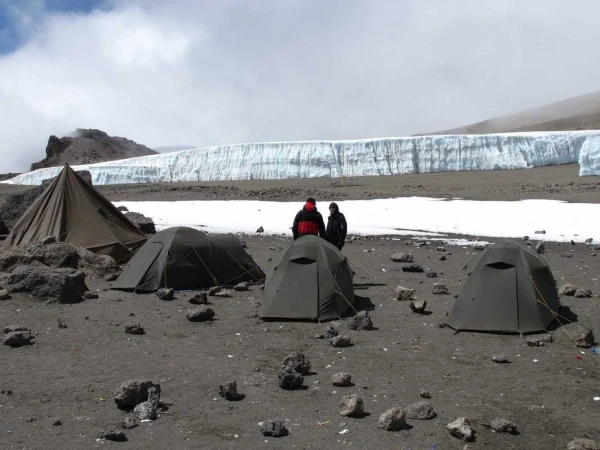
The 10-Day Kilimanjaro Crater Route follows the Lemosho approach across the Shira Plateau, past Lava Tower and Barranco to Barafu, reaches Uhuru Peak at 5,895m, then descends a short distance into Kibo’s summit crater for one night at approximately 5,730m before returning via Mweka. It is Kilimania’s specialist Crater Camp itinerary, intended for experienced high-altitude trekkers rather than first-time climbers — Kilimania screens every booking before confirming it, and not every request is accepted.
Reviewed by Sabinus Msimba — Senior Kilimanjaro Guide & Co-founder, Kilimania Adventure.




- Mountain days
- 10 days / 9 nights
- Approach
- Lemosho (western)
- Summit
- Uhuru Peak, 5,895m
- Crater Camp
- ~5,730m, one night
- Accommodation
- Camping throughout
- Difficulty
- Very high — altitude, not terrain
- Deposit
- $100 per person
- Price from
- $2,700 pp (solo)
Table of Contents
- Is This 10-Day Kilimanjaro Crater Route Right For You?
- Lemosho vs Northern Crater
- Is Crater Camp Worth It?
- Sleeping at 5,730m
- What Makes Crater Camp Different
- Why We Summit Before Sleeping at Crater Camp
- Day-by-Day Itinerary
- Crater Camp Safety
- What Happens If Conditions Aren’t Safe
- Difficulty
- Crater Route vs Other Routes
- What’s Included / Excluded
- Price
- Your Guide
- Which Route Should You Choose?
- FAQ
- Request a Quote
- Gallery
Is the 10-Day Kilimanjaro Crater Route Right For You?
This suits you if:
- You’ve trekked above 5,000m before and know how your body responds
- You want the crater experience specifically, not just “the longest itinerary”
- You’ve already summited Kilimanjaro and want something different
- You can commit 12 days Moshi-to-Moshi
- You accept the additional risk of a night at 5,730m
Choose a different route if:
- This is your first high-altitude trek — see 8-Day Lemosho or 9-Day Northern Circuit instead
- You’re not sure how you respond to altitude above 4,500m
- You’re focused on summit success rate rather than the crater experience — see our route success-rate data
- Budget matters more than the crater overnight — this is our highest-priced itinerary
- You have a diagnosed heart or lung condition — read Climbing Kilimanjaro With Medical Conditions and speak with a doctor first
What Makes This a Lemosho Crater Route?
This itinerary approaches from Lemosho on Kilimanjaro’s western side, crosses the Shira Plateau, camps at Lava Tower, continues through Barranco, Karanga and Barafu, and summits before descending into the crater. It then exits via Mweka. This is a Lemosho-based Crater Camp itinerary — it is different from Northern Circuit itineraries that also route through Crater Camp, which approach from the north and have a different day count and acclimatization profile.
| Feature | Kilimania 10-Day Lemosho Crater | Northern Crater Variation |
|---|---|---|
| Approach | Lemosho | Northern Circuit |
| Mountain days | 10 | Varies by operator |
| Crater stay | 1 night | Varies |
| Summit | Uhuru Peak | Uhuru Peak |
| Kilimania availability | This page | Not currently offered |
Is Kilimanjaro Crater Camp Worth It?
May be worth it if:
- The crater itself is your main objective, not just Uhuru Peak
- You want an unusual Kilimanjaro experience
- You already have high-altitude trekking experience
- You’re comfortable with the additional exposure and risk
May not be worth it if:
- This is your first Kilimanjaro climb
- Your only goal is reaching Uhuru Peak
- You’d prefer a conventional summit itinerary — see 8-Day Lemosho or 9-Day Northern Circuit
- You don’t want to sleep above 5,700m
What Is It Like to Sleep at Approximately 5,730m?
Cold, thin air, and disrupted sleep are the realistic expectation, not the exception. Appetite often drops, mild headache or other altitude symptoms are common even in acclimatized climbers, and rest at that elevation frequently doesn’t feel restorative — the body is tolerating extreme altitude for one night, not properly recovering. This is why guides monitor every climber closely through the night and why the stay can be cut short if needed.
Kilimania guides carry supplemental oxygen for emergency use. Oxygen is emergency equipment — it does not make Crater Camp safe or guarantee a successful crater stay, and it is not routinely administered to healthy climbers.
What Makes Crater Camp Different
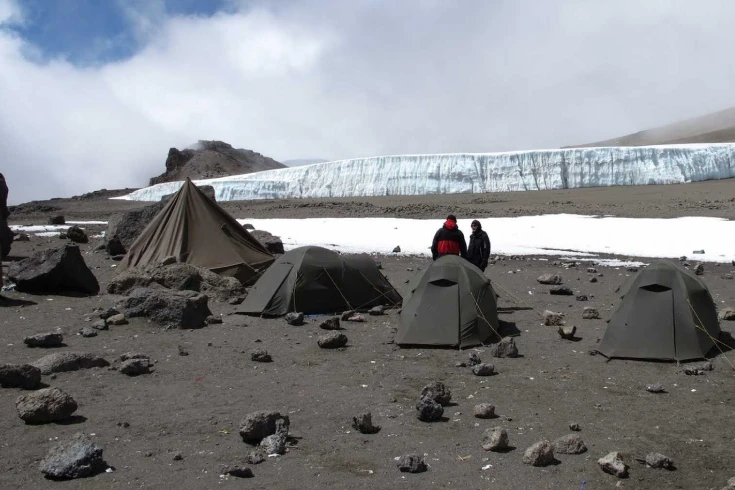
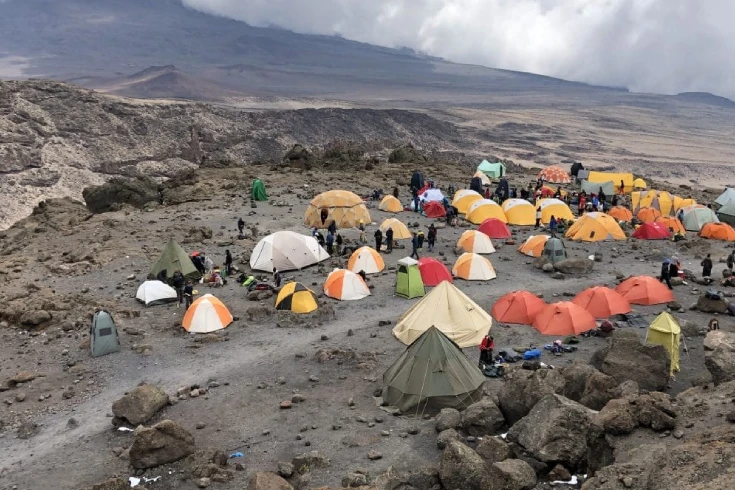
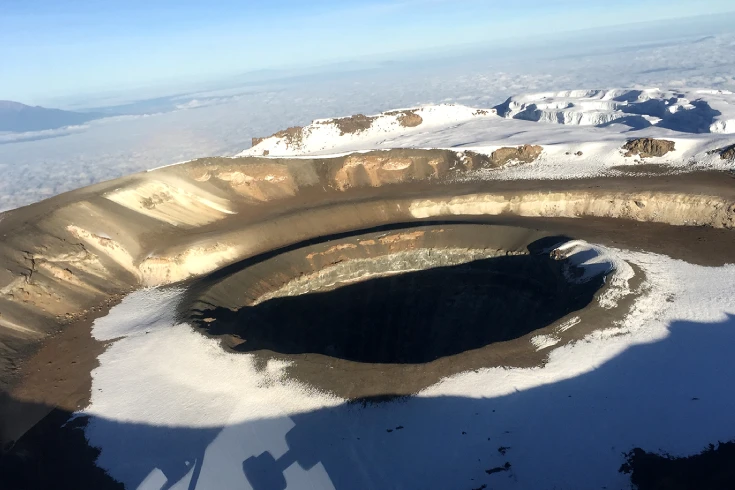
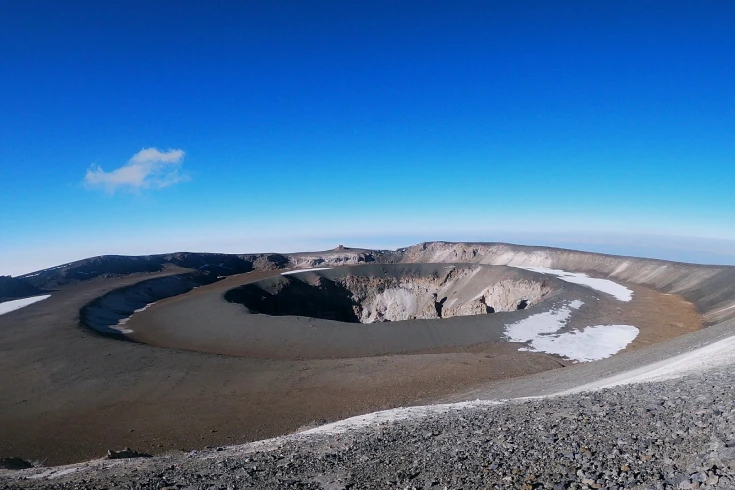
Crater Camp sits inside Kibo’s summit crater at approximately 5,730m, near the Reusch Crater and the Furtwängler Glacier. Most climbers who reach Uhuru Peak spend 10–20 minutes at the top before descending immediately, because the standard guidance is to lose altitude as fast as safely possible. This itinerary does the opposite for one night: after summiting, the group descends only slightly, to a camp still roughly 800m higher than Barafu (4,673m), spending the night there before continuing the descent to Mweka the next day.
Sleeping at 5,730m is a different physiological situation from sleeping at 4,673m. Oxygen availability is lower again, most climbers sleep poorly or not at all, and mild altitude symptoms overnight are common even in well-acclimatized climbers. Kilimania guides carry supplemental oxygen and a pulse oximeter to Crater Camp and check every climber through the night. We screen bookings before confirming them — this route is not sold to everyone who asks for it.
“We only accept a Crater Camp booking from a climber we genuinely believe can handle a night at that altitude. If we have doubts, we say so and recommend a different route instead — that’s not a sales position, it’s a safety one.” — Sabinus Msimba, Senior Guide
Why We Summit Before Sleeping at Crater Camp
The itinerary reaches Uhuru Peak first, then descends into the crater to camp — not the other way around. Reaching the summit while climbers are freshest, on schedule with sunrise light, keeps the highest-exertion moment of the trip separate from the coldest hours at Crater Camp. It also protects the objective: if the crater stay has to be cancelled for weather or a climber’s condition, no one loses their summit — they’ve already stood on Uhuru Peak before the crater night begins.
Day-by-Day Itinerary
10 mountain days, plus a pre-climb briefing day and post-climb recovery day in Moshi (not counted as mountain days).
Pre-Climb Briefing (Moshi)
You meet your guide team the evening before departure for a full briefing: a walk through the Crater Camp itinerary day by day, a gear check against the packing list, and an honest conversation about your prior altitude experience — this is part of how Kilimania screens Crater Camp bookings. Overnight at your hotel in Moshi.
Day 1 — Lemosho Gate (2,100m) → Big Tree Camp (2,780m)
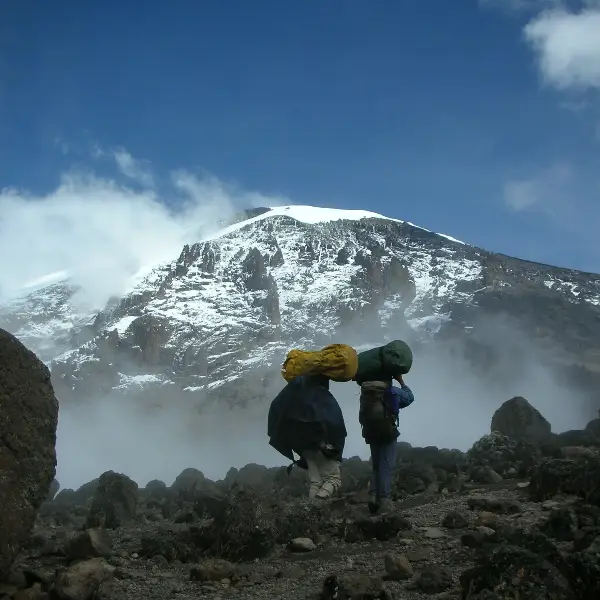
The climb begins at Lemosho Gate on the mountain’s western side, entering dense rainforest almost immediately. Porters move ahead at a pace you won’t match, carrying camp equipment to Big Tree Camp before you arrive. Colobus monkeys are regularly spotted in the canopy on this stretch. There’s no altitude concern today — the goal is simply to walk at a pace you could sustain all day.
Day 2 — Big Tree Camp → Shira 1 Camp (3,500m)
The forest thins into moorland as you climb onto the edge of the Shira Plateau — a wide volcanic caldera formed when Shira, Kilimanjaro’s oldest and now-eroded cone, collapsed. The terrain opens up considerably, with the first real views of Kibo’s summit dome in the distance on a clear afternoon.
Day 3 — Shira 1 Camp → Shira 2 Camp (3,850m)
A gentler day crossing the plateau itself, gaining altitude slowly by design. This is deliberate acclimatization: the terrain doesn’t demand much, but the elevation gain matters for how your body handles the higher camps later in the week.
Day 4 — Shira 2 Camp → Lava Tower Camp (~4,600m)
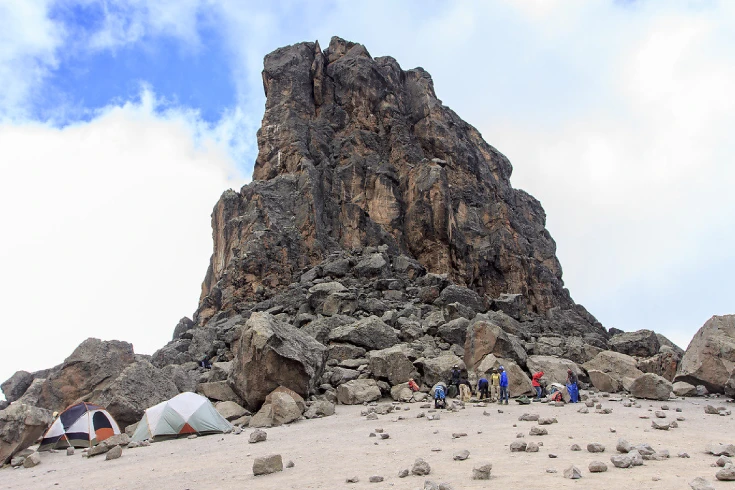
The trail climbs steadily up onto exposed volcanic ground toward Lava Tower, a 300-foot volcanic plug that dominates the skyline. Camping at this elevation for the night — rather than descending to Barranco the same day, as most other Lemosho itineraries do — gives this route extra time at altitude before the push toward the summit later in the week.
Day 5 — Lava Tower Camp → Barranco Camp (3,960m)
A descent day. Dropping roughly 640m from Lava Tower to Barranco is a classic “climb high, sleep low” pattern in reverse order to most itineraries, and it’s genuinely good for acclimatization either way. Barranco Camp sits below the Barranco Wall, with clear views of the southern icefields when weather allows.
Day 6 — Barranco Camp → Karanga Camp (4,035m)
The day opens with the Barranco Wall — a steep scramble requiring hands and feet for roughly 300 vertical metres, not technical climbing but genuinely exposed in places. Most climbers finish it faster than they expected. The rest of the day crosses valleys toward Karanga.
Day 7 — Karanga Camp → Barafu Camp (4,673m)
A shorter day that puts you at Barafu — the last camp before summit night on most Kilimanjaro routes — with time in the afternoon to rest, eat, and go through the final summit briefing. On this itinerary Barafu is a staging camp; the plan for the next day covers both the summit and the crater.
★ Day 8 — Barafu → Uhuru Peak (5,895m) → Crater Camp (~5,730m)
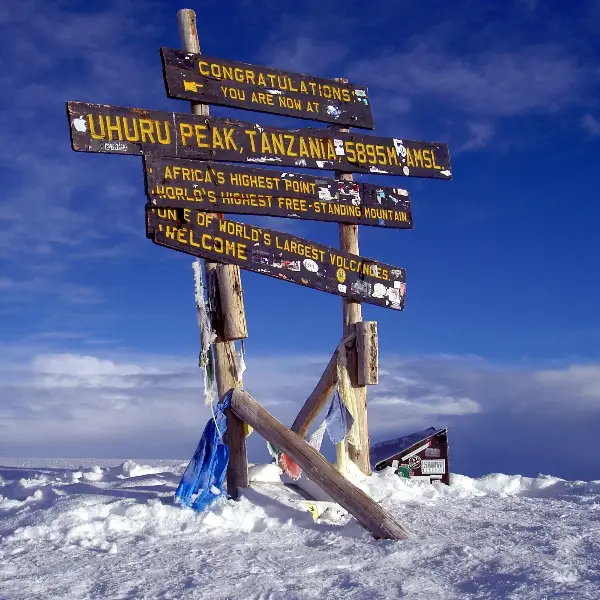
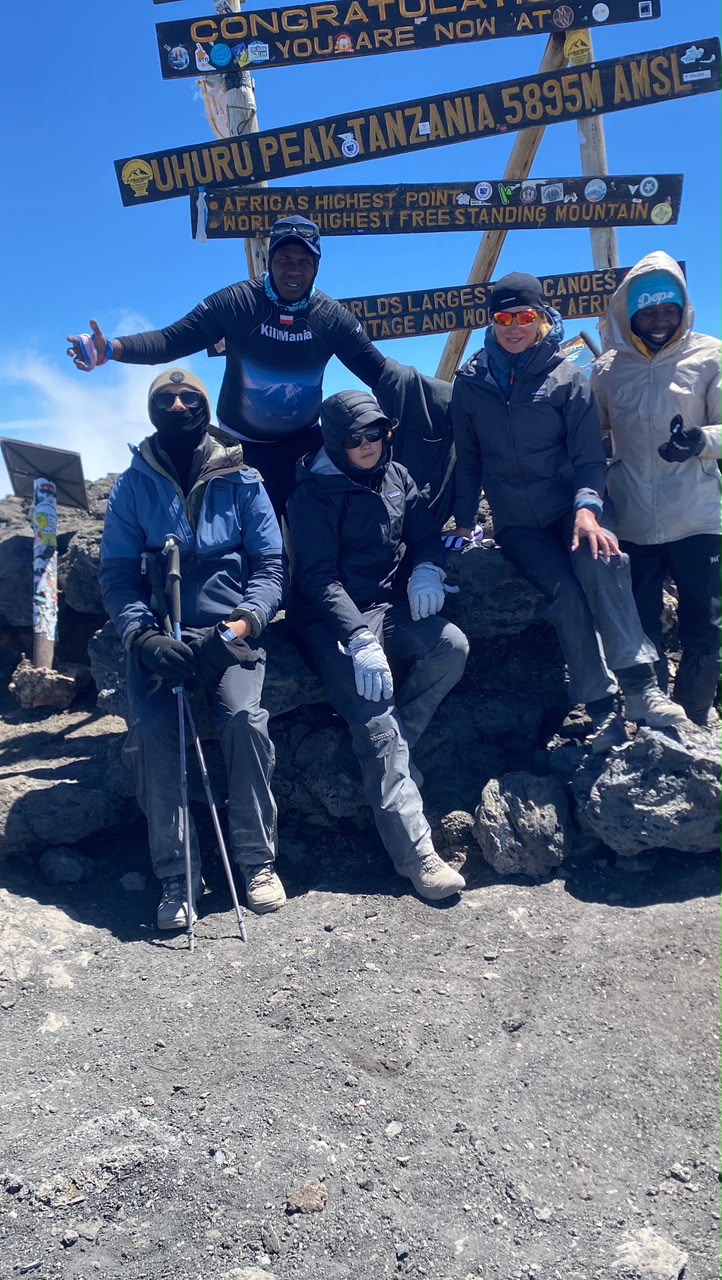
Summit night begins around midnight with a slow, headlamp-lit ascent through loose scree toward Stella Point and the crater rim. Most groups reach Uhuru Peak near sunrise. Instead of the usual immediate descent, the group then makes a short, careful descent into the crater itself to Crater Camp — the highest overnight camp on the mountain. Guides monitor every climber closely from this point; supplemental oxygen and a pulse oximeter are on hand. This is the one night spent at Crater Camp on this itinerary.
Day 9 — Crater Camp → Mweka Camp (3,100m)
A long descent day, dropping over the crater rim and down through Barafu, alpine desert and into rainforest at Mweka. This is typically where accumulated fatigue from the summit and the crater night is felt most, even though the terrain itself is straightforward.
Day 10 — Mweka Camp → Mweka Gate → Moshi
A final descent through rainforest to Mweka Gate, where summit certificates are issued before the transfer back to your hotel in Moshi. This is the last of the 10 mountain days.
Post-Climb Recovery Day & Departure (Moshi)
A recovery day in Moshi before your flight home, or the start of a Tanzania safari extension.
Crater Camp Safety
Crater Camp is not an ordinary acclimatization camp, and we don’t describe it as a “rest day” in the casual sense. What’s true:
- Altitude tolerance varies by individual — prior fitness does not reliably predict who copes well at 5,730m
- Weather at the crater can change quickly; cold exposure overnight is significant
- Our guides retain authority to descend directly from the summit without a crater overnight if a climber’s condition requires it
- The plan on paper is never more important than the decision made on the mountain
No operator can eliminate altitude risk or guarantee rescue timing at this elevation. Read our full Kilimanjaro safety page and, if you have any relevant health history, talk to a doctor before booking.
What Happens If We Can’t Safely Stay at Crater Camp?
The guide may shorten or modify the itinerary based on a climber’s condition, the weather, or route conditions that day. In practice this usually means descending straight from the summit to Barafu instead of camping in the crater — the Uhuru Peak summit itself is not affected. We would rather change the plan than have a climber stay at Crater Camp who shouldn’t.
How Difficult Is the 10-Day Crater Route?
The approach itself is not technically difficult — no ropes, no climbing gear. What makes this the most demanding itinerary Kilimania guides is the combination of an already-long summit night with an additional night at extreme altitude immediately after. It rewards experience with altitude more than raw fitness.
Altitude. We’ve guided strong athletes who struggled badly above 5,000m, and older, less conventionally fit climbers who handled Crater Camp without issue. Previous high-altitude experience can provide useful information about how someone has responded before, but fitness alone does not guarantee good altitude tolerance and cannot predict an individual outcome with certainty. Travelers with relevant medical conditions should get individualized advice before attempting an extreme-altitude itinerary — see climbing with medical conditions and Kilimanjaro safety.
Success rate: Kilimania does not publish a Crater Camp-specific summit success percentage. Our sample size for this specific itinerary is too small to be statistically meaningful, and quoting a number from it would be misleading. For context on routes where we do have enough data, see Kilimanjaro Success Rate by Route.
10-Day Crater Route vs Other Kilimanjaro Routes
| Feature | 10-Day Crater Route | 9-Day Northern Circuit | 8-Day Lemosho |
|---|---|---|---|
| Approach | Lemosho (western) | Northern traverse | Lemosho (western) |
| Mountain days | 10 | 9 | 8 |
| Highest overnight camp | ~5,730m (crater, 1 night) | ~4,750m | 4,673m (Barafu) |
| Defining feature | One night inside the crater | Longest acclimatization window | Highest success rate we’ve logged |
| Recommended for | Experienced high-altitude climbers | First-timers with time to spare | First-timers overall |
| Price from (1 person) | $2,700 | $2,350 | $2,050 |
What’s Included / Excluded
Included
- 2 hotel nights before/after the climb
- Kilimanjaro National Park fees and rescue fees
- Licensed mountain guides, assistant guides, cook and porters
- KPAP-aligned porter treatment
- Mountain tents, sleeping mats, mess tent
- All meals and purified drinking water on the mountain
- Airport and park-gate transfers
- Daily health monitoring, emergency oxygen and first-aid kit
- Kilimanjaro summit certificate
Not Included
- International and domestic flights
- Tanzania visa fees
- Travel and medical insurance (required — must cover high-altitude evacuation)
- Personal climbing gear (see our packing list)
- Tips for guides, cooks and porters — see our tipping guide
- Private toilet tent, extra hotel nights, gear rental
10-Day Crater Route Price
| Group size | Price per person |
|---|---|
| 1 person | $2,700 |
| 2 people | $2,600 |
| 3 people | $2,550 |
| 4 people | $2,500 |
| 5 people | $2,450 |
| 6 people | $2,400 |
Deposit: $100 per person to confirm your dates. The price reflects the additional planning, permits and logistics this itinerary requires versus a standard climb. Full Moon Climb departures are available in select months for a small surcharge. Prices should be reconfirmed when requesting a booking, since park fees, logistics and travel dates can affect the final quotation. Contact us for an exact quote — see our full Kilimanjaro cost breakdown for how these figures compare across routes.
Ready to talk dates for the Crater Route?
Tell us your prior high-altitude experience and travel window. We’ll tell you honestly whether this route fits, or recommend a better one if it doesn’t.
Your Guide
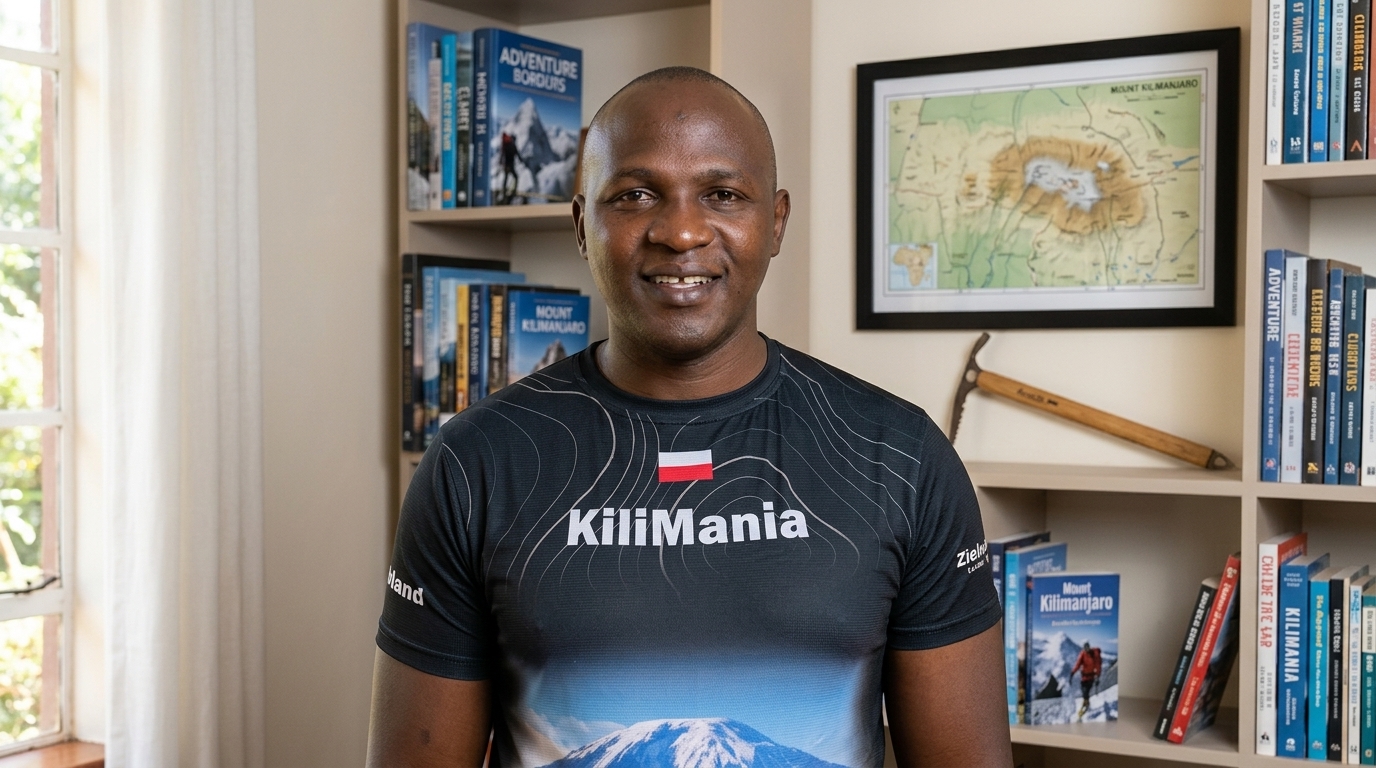
Sabinus Msimba
Senior Mountain Guide & Co-founder, Kilimania Adventure. 22+ years guiding on Kilimanjaro, KINAPA-licensed since 2003, Wilderness First Responder certified. Career began in 2001 as a porter on the Marangu Route. Depending on availability, your Crater Route climb may be led by Sabinus or another member of Kilimania’s licensed guide team.
Which Kilimanjaro Route Should You Choose?
- Choose the 10-Day Crater Route if you specifically want the Crater Camp experience and have appropriate high-altitude experience.
- Choose 8-Day Lemosho if you’re a first-time climber wanting a longer conventional acclimatization itinerary.
- Choose 9-Day Northern Circuit if you want a long acclimatization window without making Crater Camp the central objective.
Frequently Asked Questions
What is the 10-Day Crater Route?
It’s Kilimania’s longest Kilimanjaro itinerary — 10 mountain days following the Lemosho approach to Uhuru Peak and then one night at Crater Camp, approximately 5,730m, the highest overnight camp on the mountain, before descending via Mweka.
How many nights do you spend at Crater Camp?
One — immediately after summiting on Day 8. The group descends to Mweka Camp the following day.
Is Crater Camp safe?
Sleeping at 5,730m carries meaningfully more altitude risk than any other camp on Kilimanjaro. Kilimania guides carry supplemental oxygen and monitor every climber overnight, and can descend directly from the summit without a crater stay if conditions require it, but no operator can eliminate the risk or guarantee comfortable rescue timing at that elevation.
Do you summit before or after sleeping at Crater Camp?
Before. The route reaches Uhuru Peak first, then makes a short descent into the crater to camp for the night, then continues the descent the following day.
Is this route suitable for a first-time Kilimanjaro climber?
We generally don’t recommend it. Kilimania asks about prior high-altitude experience before confirming a Crater Route booking, and will suggest the 8-Day Lemosho or 9-Day Northern Circuit instead if a first-timer asks about it.
How difficult is the 10-Day Crater Route?
The walking terrain isn’t technically hard. What makes this the most demanding itinerary we guide is an already-long summit night followed immediately by a night at extreme altitude.
What is the summit success rate for the Crater Route?
We don’t publish one. Our sample size for this specific itinerary is too small to report responsibly — see Kilimanjaro Success Rate by Route for routes where we do have enough data.
How much does the 10-Day Crater Route cost?
From $2,700 per person solo, decreasing to $2,400 per person in a group of six. A $100 deposit secures your dates. See the full price table above.
What happens if the weather makes Crater Camp unsafe?
The guide may descend directly from the summit to Barafu instead of camping in the crater — this doesn’t affect the Uhuru Peak summit itself.
Can I combine this with a Tanzania safari?
Yes — many climbers extend with a Serengeti, Ngorongoro or Tarangire safari before or after the climb. Mention it when requesting your quote.
Request a Crater Route Quote
Other Kilimanjaro Routes
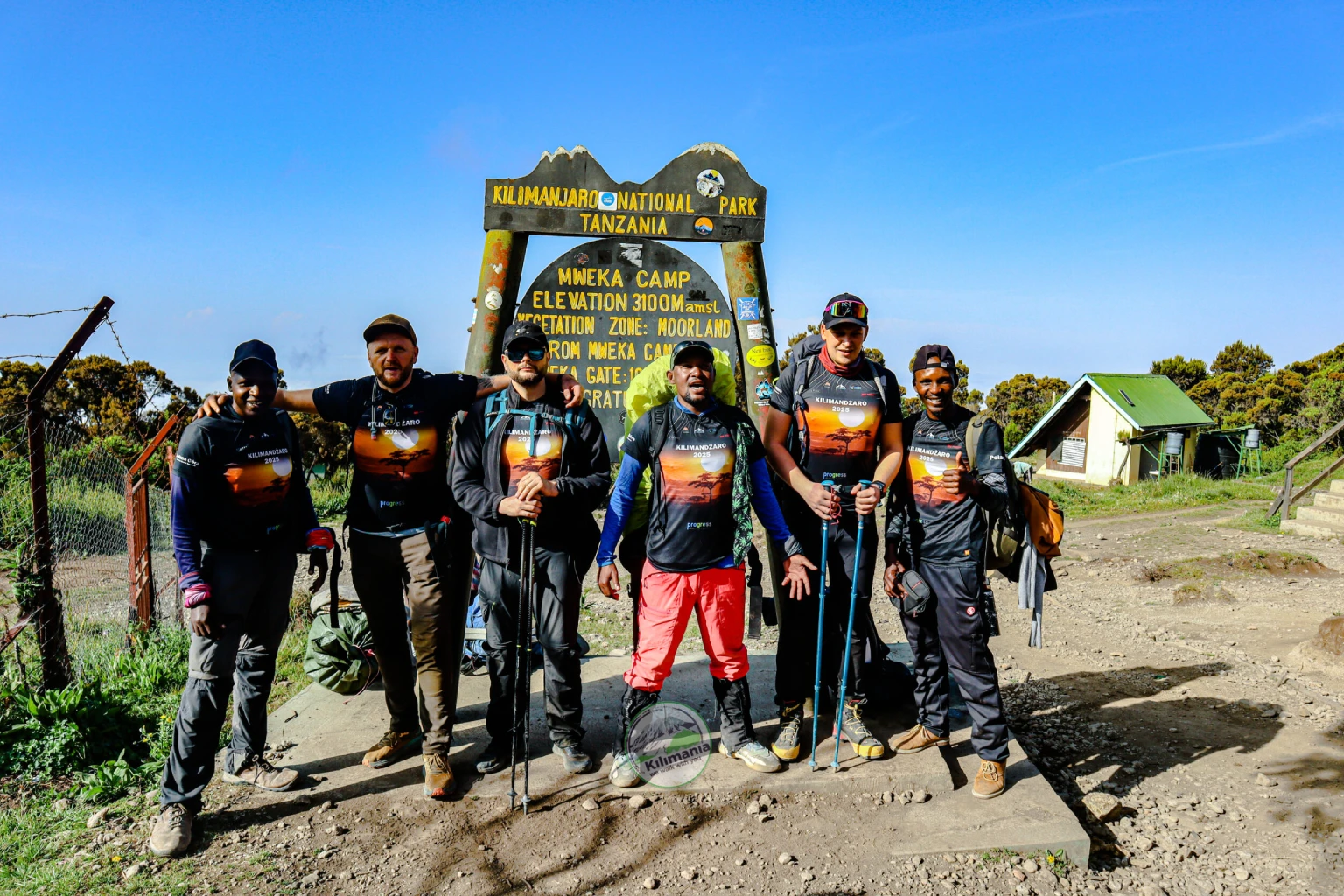
8-Day Lemosho Route
Our most-recommended first-timer route.
6-Day Machame Route
The most-climbed route on the mountain.
9-Day Northern Circuit
Longest acclimatization window on the mountain.
7-Day Shira Route
A quieter alternative to Lemosho.
Gallery
Disclosure. This page is published by Kilimania Adventure (Reg. No. 437131), a TATO-registered operator based in Moshi, Tanzania, operating under KINAPA park regulations. The crater stay is subject to guide assessment on the day and may be shortened or skipped for weather, wind or a climber’s condition. Kilimania does not publish an isolated 10-Day Crater Route summit success percentage because the sample size is small and we do not want a small dataset presented as statistically representative. No operator can promise your individual outcome at extreme altitude. We encourage travelers to compare us with other registered operators before booking. Reviewed by Sabinus Msimba. Last reviewed: September 2026. Contact: WhatsApp +255 756 449 990 · info@kilimania.co.tz.