Data sources cited in this article: Kilimania guide pace observations and route records (2019–2026), peer-reviewed high-altitude exercise physiology research (see External References), and KINAPA/TANAPA public route information.
Every Kilimania itinerary is built around enforced pole pole pacing.
Senior guides set the pace from the first hour and hold it through summit night. No exceptions.
Why Pole Pole Is Not Just Advice
Most climbers arrive at the Kilimanjaro gate having read “go slow” somewhere in a pre-trip briefing. They acknowledge it. They nod. And then — within the first thirty minutes of walking through the montane forest, legs fresh and altitude barely noticeable — they surge ahead of the guide.
This is one of the most common and most consequential mistakes made on Kilimanjaro.
Pole pole is not casual wisdom passed down as cultural colour. It is a physiological protocol built from years of observed outcomes across guided climbs. The mountain does not punish you immediately for going too fast. It stores the debt and presents the bill on Day 4 — exactly when you need the most in reserve.
⚠ From 22 years of guiding: “I can tell within the first two hours of Day 1 which clients are likely to struggle at Barafu. Not by their fitness. By their pace. The climbers who push early are the ones I watch most carefully at 4,600m.” — Sabinus Msimba, Senior Guide, Kilimania Adventure
At altitude above 4,000m, the body cannot buffer exertion the way it does at sea level. Going too fast in the first hour of any walking day creates an oxygen deficit that accumulates throughout that day. The physiological response includes accelerated heart rate, premature muscle fatigue, onset headaches, and — critically — suppressed acclimatization. When acclimatization is disrupted, the body cannot adapt to the thinning air efficiently, making each subsequent day harder and altitude sickness more likely.
Pole pole is not about being slow. It is about being physiologically efficient at altitude.
The Physiology Behind the Pace
At Barafu Camp (4,673m), each breath delivers approximately 57% of the oxygen available at sea level. Barometric pressure has dropped significantly since your arrival at the trailhead, and your red blood cell production — while stimulated — has not had time to fully compensate.
In practice: walking at what feels like an easy pace at Barafu still requires notably more cardiovascular effort — roughly 30% more by some estimates — than the same pace at sea level. Your heart works harder. Your lungs push more air for less return. Your muscles receive oxygen-depleted blood and produce lactic acid faster than the body can clear it.
📊 Altitude physiology reference: At 5,000m, maximum oxygen uptake (VO₂ max) is reduced by approximately 25–30% compared to sea level values (source: Wilderness Medicine, National Library of Medicine). A climber who walks comfortably at 5 km/h at sea level should target roughly 2.5–3 km/h at Barafu Camp to stay within aerobic threshold.
Climbers who push beyond their aerobic threshold at high altitude produce lactic acid faster than they can clear it. The outcome on summit night: a body attempting Uhuru Peak (5,895m) on already depleted glycogen stores, elevated cortisol, and accumulated acid load.
There is a second, slower mechanism. Sustained hard exertion at altitude spikes cortisol and adrenaline. Both hormones can suppress the body’s production of erythropoietin (EPO) — the hormone that drives red blood cell production during acclimatization. Pushing the pace on early days does not just tire you. It can chemically reduce the body’s capacity to adapt to the altitude above.
📊 How Pole Pole Pace Changes With Altitude
Horizontal speed equivalents at conversational-pace threshold. Vertical gain target on summit night: 250–350m/hr. Source: Kilimania guide pace observations and published high-altitude exercise physiology research.
What Pole Pole Looks Like in Practice
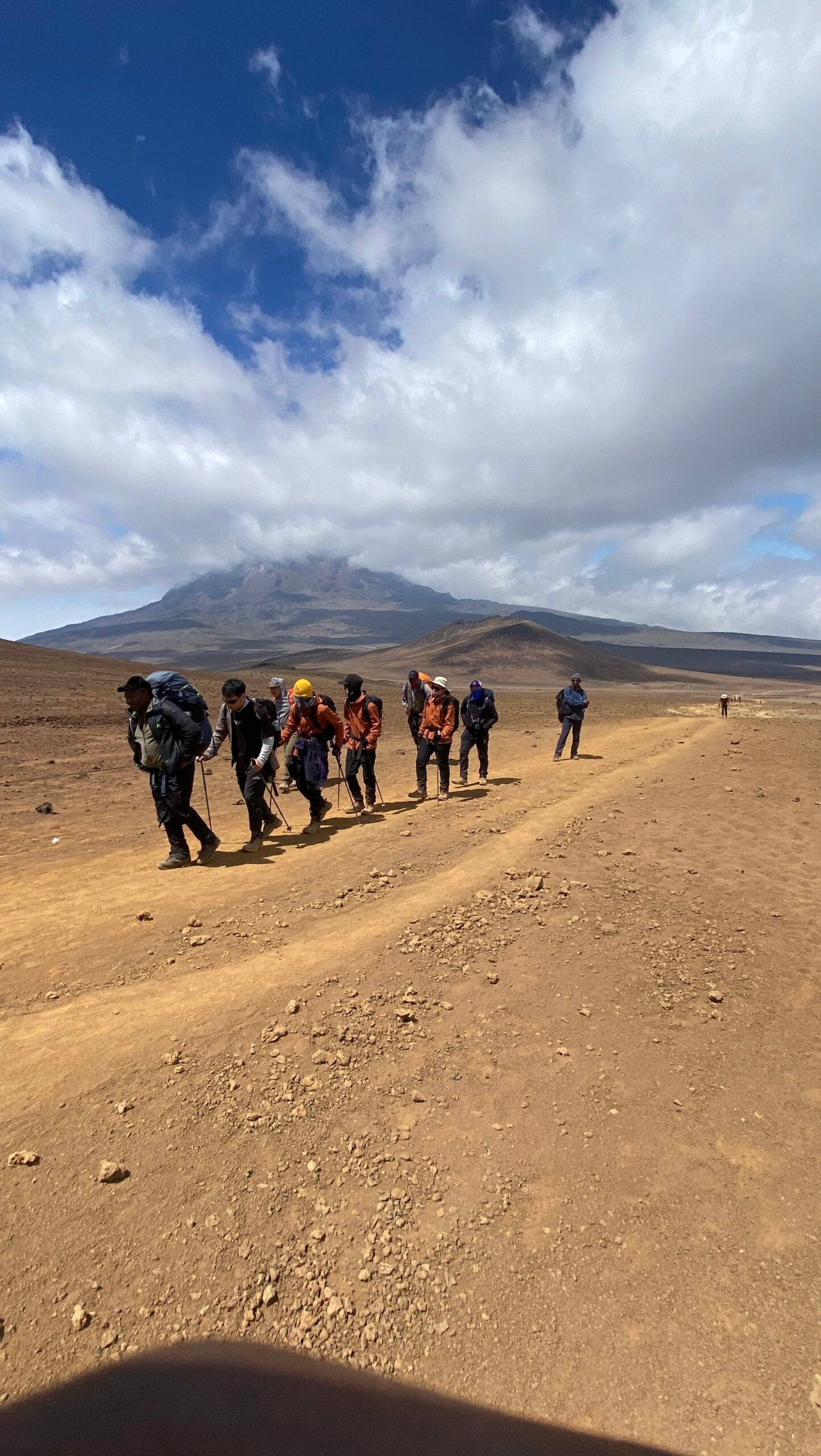
The simplest field check is the conversation test: if you can hold a full, natural conversation — complete sentences, no pausing mid-word to breathe — you are walking at a reasonable pace for the altitude. This test works at 2,700m on the forest trail and at 5,500m near the crater rim. The standard does not change. The pace that meets it does.
In practical terms, pole pole on Kilimanjaro looks like this:
- A pace you could sustain for 10 consecutive hours without stopping to recover
- A pace where breathing is slightly deeper than normal but never laboured
- A pace that, for most climbers arriving from sea level, feels embarrassingly slow during the first two days in the forest and heath zones
- A pace the guide sets — and that every client must match, not exceed
- On summit night: one deliberate step, one controlled breath, continuous forward progress — near the crater rim, some climbers settle into one breath per step
💡 Guide’s field test: At Barafu Camp (4,673m), hold out your hand and count your fingers aloud without stopping. If you lose count or pause mid-count to breathe, you are either moving too fast or already showing early altitude symptoms. Slow down immediately and tell your guide.
The embarrassment of feeling “too slow” tends to fade by Day 4. At Karanga or Barafu, the climbers still moving steadily and smiling are, more often than not, the ones who obeyed pole pole from the first forest gate. The ones who pushed on Day 1 are more likely to be showing headaches, losing appetite, or spending more time in their tents than on the trail.
How Guides Enforce Pole Pole — And Why They Must
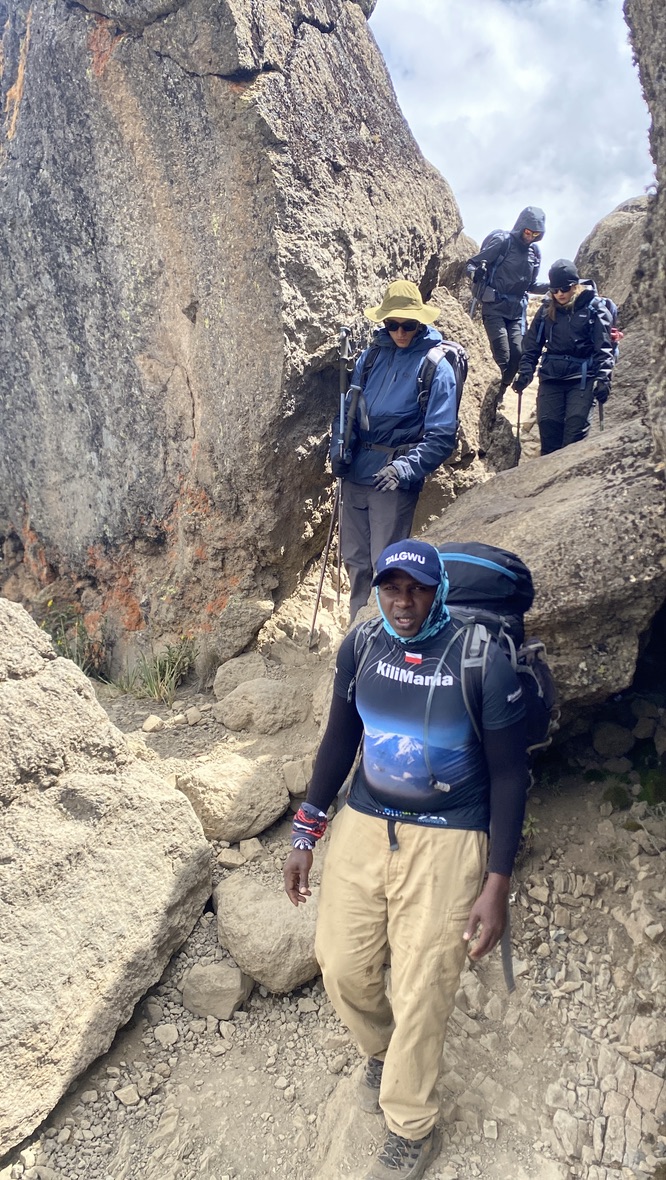
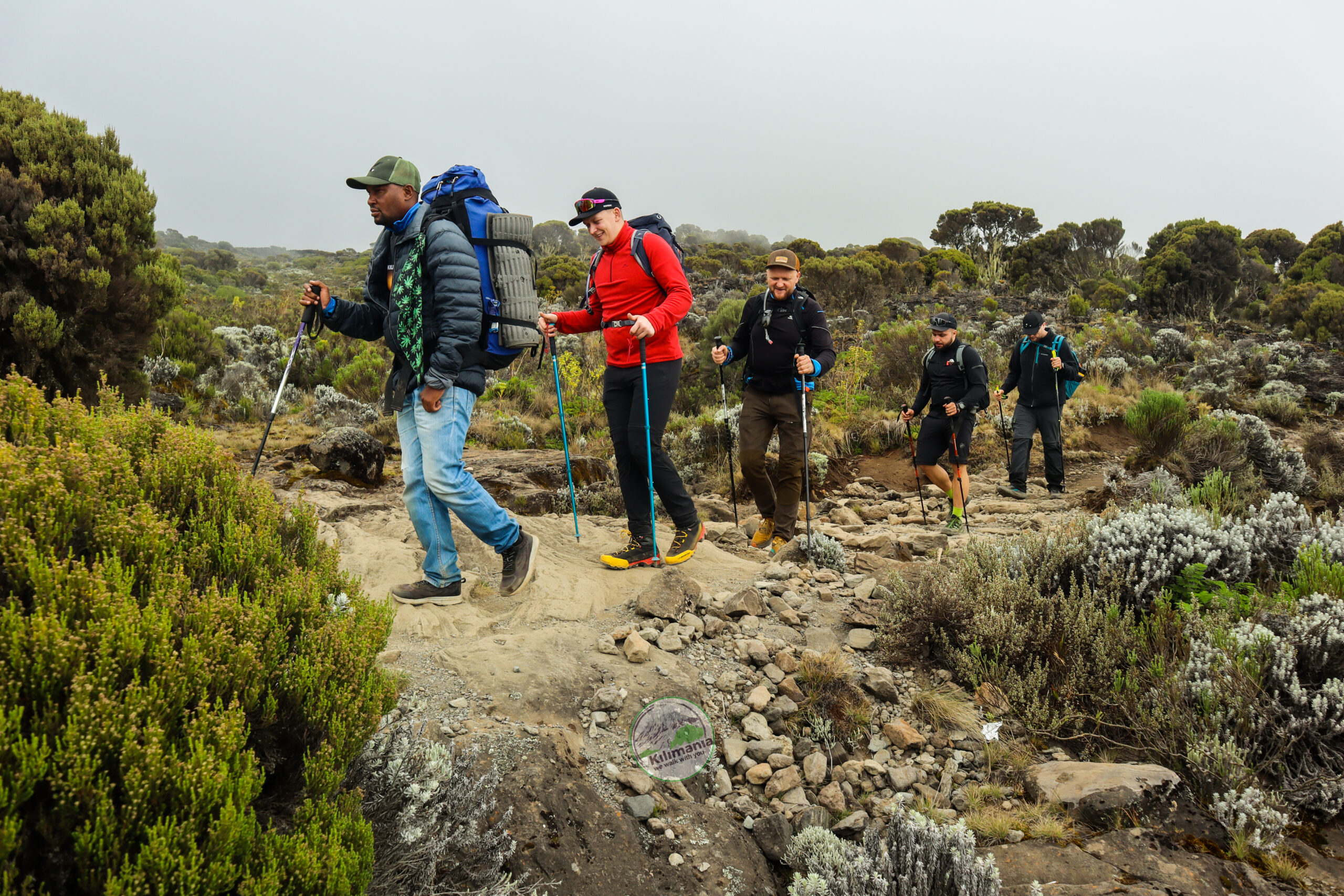
On every Kilimania climb, Sabinus Msimba and our senior guides walk at the front of the group. This positioning is not ceremonial. It serves one function: setting the physiological ceiling that each client must match and must not exceed.
When clients surge ahead — which happens on most climbs during the first two days — guides call them back. This is a safety protocol, not a preference. A guide cannot monitor breathing, pallor, coordination, or conversation coherence if a client is 80 metres ahead on the trail. Pace management and medical observation are, in effect, the same activity on Kilimanjaro.
A secondary guide walks at the rear — helping ensure no client falls behind unnoticed, and providing a second set of eyes throughout each walking day. The front-guide and rear-guide system is the operational expression of pole pole: pace management and group safety as a single integrated protocol.
| Day / Location | Pole Pole Compliant | Pace Too Fast | Typical Pattern by Summit Night |
|---|---|---|---|
| Day 1 — Forest gate to Camp 1 | Conversation easy | Surging ahead | No visible symptoms in either group yet |
| Day 2 — Heath / moorland zone | Steady rhythm | Mild fatigue by afternoon | Slight headache risk in fast-paced group |
| Day 3 — Alpine desert, 4,000m+ | Energy reserves intact | Appetite suppression | Early AMS symptoms more likely in fast-paced group |
| Day 4 — Lava Tower / Barafu Camp | Ready for summit push | Headache, nausea, fatigue | Turnaround risk noticeably elevated |
| Summit Night — Barafu to Uhuru | Sustained pole pole effort | Depleted — high turnaround risk | Compliant climbers tend to fare better on summit push |
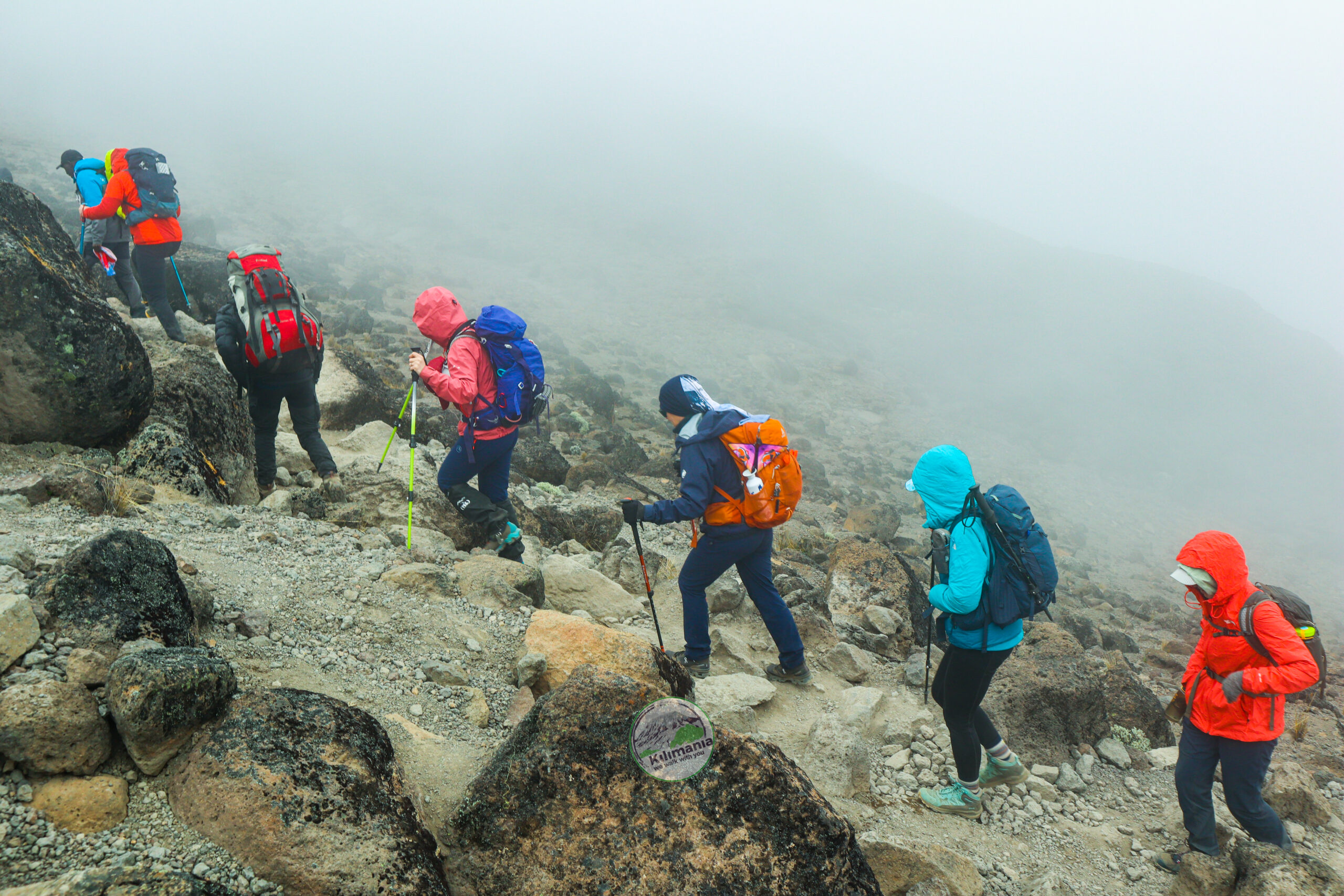
To understand exactly what happens physiologically when pole pole is ignored, see the Kilimanjaro altitude sickness guide, which covers how symptoms develop step by step.
The Most Common Mistake: Day 1 Pace
Almost every climber starts Day 1 faster than they should. This is not a criticism — it is a near-universal pattern across guided climbs.
The conditions on Day 1 actively encourage it. The forest entry point sits between 1,800m and 2,200m depending on the route. The altitude is barely noticeable. The legs are fresh from days of rest in Moshi. The mood is high — this is the climb you have planned for months. Every physiological signal says: go.
That is precisely the problem.
The forest feels easy because the altitude is low. But the body’s acclimatization clock has already started. Every unnecessary unit of effort expended in the forest is a unit unavailable at 5,700m. The body has a finite adaptation budget for each 24-hour period at altitude. Spending it early on unnecessary pace does not earn extra capacity. It depletes what was already limited.
⚠ Guide warning: If your legs feel “too good to walk this slowly” in the first 90 minutes of Day 1, that feeling is not a sign you are fit for a faster pace. It is one of the earliest and most tempting moments to override your guide’s instruction. The mountain does not present the bill until Day 4.
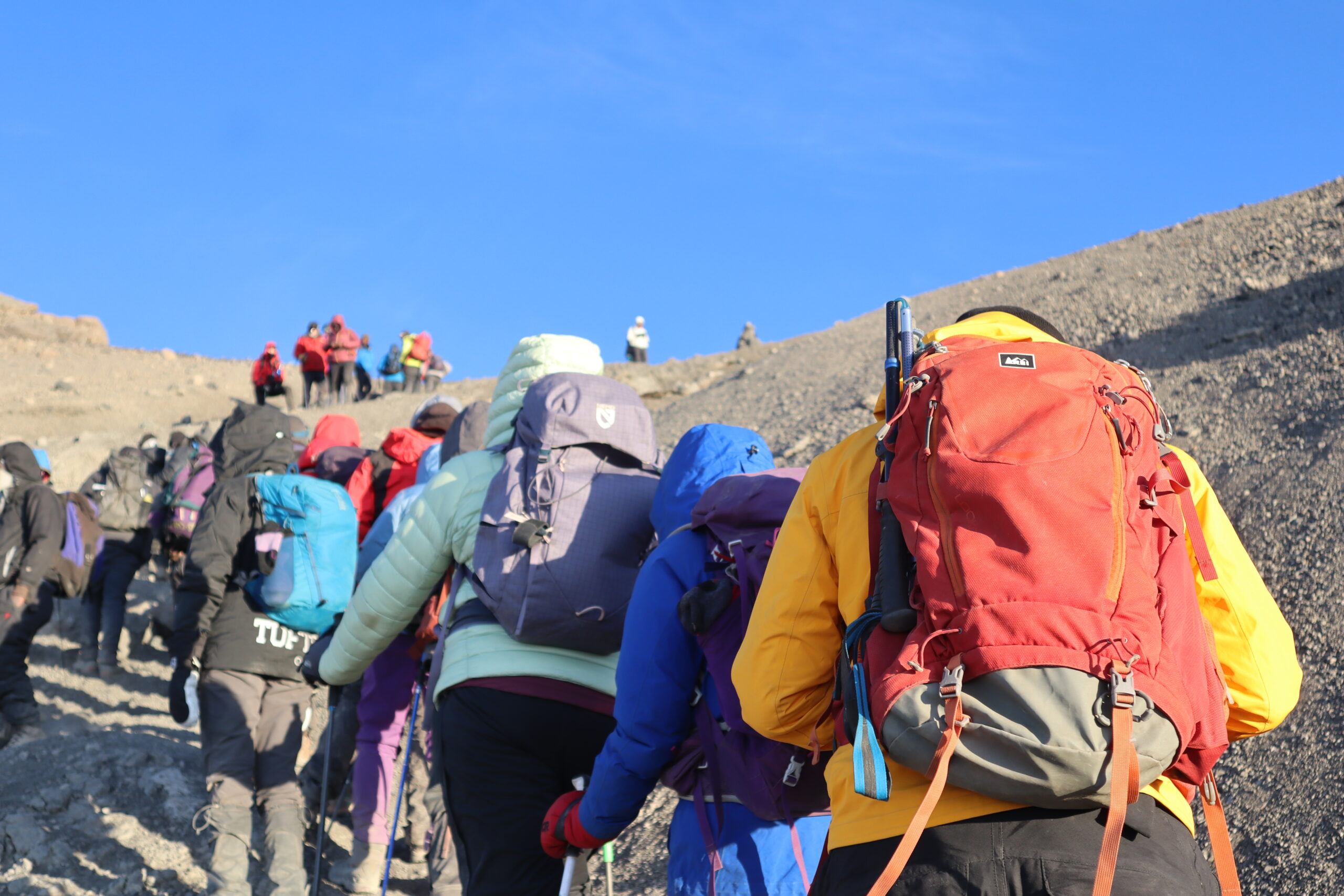
Pole Pole on Summit Night: A Different Challenge
Summit night begins around midnight from Barafu Camp (4,673m). By this point, atmospheric oxygen is approximately 57% of sea level. At the crater rim — Stella Point (5,756m) — it drops to roughly 50%. At Uhuru Peak (5,895m), approximately 48%.
On summit night, pole pole becomes something different from a comfortable walking rhythm. It becomes a physiological survival strategy.
The Kilimania approach on summit night is one deliberate step, controlled breathing, continuous forward progress. A pace so controlled that each footfall is a decision, not a momentum-driven reflex. Near the crater rim, many climbers settle into a rhythm of one breath per step at the steepest sections. Guides target approximately 250–350 vertical metres per hour from Barafu to Stella Point. Any faster and climbers risk burning out before reaching the rim — six to eight hours into the night with little recovery available.
The climbers who reach Uhuru Peak are overwhelmingly those who understood pole pole not as a Day 1 instruction, but as a seven-day philosophy. Summit night simply demands the most from a principle they have already been practising all week.
For the full hour-by-hour account of what summit night involves, see Kilimanjaro Summit Night: What Actually Happens.
How to Apply Pole Pole From Day One
Understanding pole pole philosophically is not enough. Here is the five-step operational checklist our guides brief at the gate before the first step is taken:
- Walk directly behind the guide at all times. If you can see the guide’s heels clearly, you are the right distance back. If you cannot, slow down — not at the next rest stop, right now. The guide sets the physiological ceiling for the entire group from the first forest gate to the crater rim.
- Apply the conversation test every 20–30 minutes. Full sentences, no breathlessness, no mid-sentence pauses for air. If you fail the test at any point, slow down immediately. This is a reliable field measure of whether you are within aerobic threshold at altitude.
- Hydrate to pace, not to schedule. Drink 3–4 litres per walking day at a steady, continuous rate. Dehydration accelerates altitude symptoms and makes a correct pace feel harder than it is — creating a false signal that the pace itself is the problem.
- Never surge after rest stops or meal breaks. After lunch or a water break, the instinct is to move quickly to warm up. At altitude, this post-rest surge is one of the most common points where climbers burn unnecessary oxygen. Start each section at full pole pole pace from the very first step.
- Tell your guide early, not after symptoms appear. If the pace feels too fast, say it immediately. Guides would rather stop the group for two minutes on Day 1 than manage a preventable altitude emergency on Day 4. Reporting early is an active part of the pole pole system — not a sign of weakness.
📥 Free Download: Kilimanjaro Altitude Symptom & AMS Checklist
Altitude illness is a leading reason climbers turn around on Kilimanjaro. This is the same checklist Sabinus Msimba and the Kilimania team use to monitor climbers throughout every expedition.
- Normal acclimatization symptoms above 3,000m
- Acute Mountain Sickness (AMS) warning signs
- HACE and HAPE emergency symptoms
- Daily health monitoring form (SpO₂, pulse, hydration)
- Guide reporting and self-assessment checklist
Prepared by: Sabinus Msimba, Senior Mountain Guide, Kilimania Adventure, Moshi, Tanzania. This checklist is for educational purposes and does not replace professional medical advice. Climbers with pre-existing conditions should consult a physician before high-altitude travel.
Pole Pole Across the Different Kilimanjaro Routes
Pole pole applies to every route on Kilimanjaro, but the urgency of strict compliance varies with itinerary length. Longer routes provide more acclimatization days, absorbing the cost of one poor-pace day. Shorter routes offer less such buffer — a single fast day on a 5-day itinerary leaves little recovery window before summit night.
| Route | Duration | Acclimatization Days | Pole Pole Urgency | Route Guide |
|---|---|---|---|---|
| Marangu | 5–6 days | 1 | Critical | Marangu Guide |
| Rongai | 5–6 days | 1 | Critical | Rongai Guide |
| Umbwe | 6 days | 1 (steep ascent) | Very Critical | Umbwe Guide |
| Machame | 6–7 days | 2 | High | Machame Guide |
| Shira | 7 days | 2 | High | Shira Guide |
| Lemosho | 7–8 days | 3 | High | Lemosho Guide |
| Northern Circuit | 9 days | 4 | Moderate | Northern Circuit Guide |
Routes with shorter itineraries and fewer acclimatization days — Marangu, Rongai, and Umbwe — are also where pole pole compliance is most critical and where a single bad-pace day carries the steepest consequences. For route-by-route summit outcome figures, see Kilimanjaro success rate by route.
Plan Your Climb with Pole Pole Built In
All Kilimania routes are paced and guided by our senior team from Day 1. Choose your route below.
Lemosho Route
7 DaysLemosho Route
7 DaysMachame Route
6 DaysMachame Route
9 DaysNorthern Circuit
6 DaysMarangu Route
6 DaysRongai Route
10 DaysCrater Route
Frequently Asked Questions
What does pole pole mean in Swahili?
Pole pole (pronounced po-lay po-lay) means “slowly slowly” in Swahili. On Kilimanjaro it is the guiding philosophy that governs every step from the rainforest gate to Uhuru Peak — not a casual suggestion, but the primary physiological strategy for reaching the summit without triggering altitude sickness.
Why is pole pole so important on Kilimanjaro?
At altitudes above 4,000m, the body takes significantly longer to process oxygen during exertion than at sea level. Walking too fast creates an oxygen debt that cannot be recovered during the same day. The result is accelerated heart rate, early fatigue, headaches, and suppressed acclimatization — all of which reduce summit chances and increase altitude sickness risk considerably.
How slow is pole pole pace on Kilimanjaro?
Pole pole pace is the speed at which you can hold a full, unbroken conversation without breathlessness at altitude. For most climbers accustomed to sea-level hiking, this feels embarrassingly slow for the first one to two days. From Barafu Camp (4,673m) to Stella Point on summit night, this translates to roughly 250–350 vertical metres per hour, compared to 600–800 at sea level — approximately 0.8–1.2 km/h horizontal speed.
What happens if you ignore pole pole on Kilimanjaro?
Climbers who push the pace on Day 1 and Day 2 consistently show altitude symptoms by Day 4 at Lava Tower (4,630m) or Barafu Camp (4,673m). The body builds a lactic acid and oxygen deficit that compounds with each ascending day. By summit night, those climbers are attempting Uhuru Peak on a physiologically depleted system, which raises the risk of a turnaround. See our difficulty and success rate analysis for more detail.
Does pole pole pace change on summit night?
On summit night the pace becomes even slower than during the approach days. At Barafu Camp (4,673m) the atmosphere contains roughly 57% of the oxygen available at sea level. Guides set a pace of approximately 250–350 vertical metres per hour from Barafu to Stella Point. Any faster and climbers risk burning out before reaching the crater rim. Pole pole on summit night is not optional — it is a physiological requirement.
How do you pronounce pole pole?
Pole pole is pronounced “po-lay po-lay.” Each “e” is a soft, open vowel — closer to the “ay” in “day” than the English word “pole.” Guides repeat it constantly on the trail as both instruction and reminder. It is one of the first Swahili phrases most Kilimanjaro climbers learn, and almost certainly the one they hear most on the mountain.
Is pole pole enforced or just suggested on Kilimania climbs?
At Kilimania it is enforced, not suggested. Senior guides walk at the front of every group and physically set the pace. Clients who surge ahead are called back — a safety protocol applied identically on every climb. It operates the same way a dive instructor stops a diver ascending too fast: the constraint is physiological, not personal.
Can fitness level replace pole pole discipline on Kilimanjaro?
No. Sea-level fitness and altitude acclimatization are separate physiological systems. A strong runner who pushes hard on Day 1 can still develop altitude symptoms at Lava Tower, while a less fit but pace-disciplined climber arrives with energy in reserve. Pace — not VO₂ max — is one of the primary variables that shapes summit outcomes on Kilimanjaro. See our fitness assessment guide and beginner’s climbing guide for more detail.
The Takeaway
Pole pole is one of the most under-respected instructions on Kilimanjaro. Climbers hear it, understand it intellectually, and many still push the pace on Day 1 — because the mountain does not punish the mistake immediately.
But Kilimanjaro is not an immediate mountain. It is a patient one. The consequences of poor pace management on Day 1 tend to arrive quietly, four days later, at 4,600m, in the form of a headache that will not go away, an appetite that has vanished, and a summit-night body that has already spent what it needed to keep.
The climbers who reach Uhuru Peak are not necessarily the fittest. They are, more often, the ones who were patient enough — and honest enough with themselves — to walk at the pace the mountain required from the very first step.
On every Kilimania climb, pole pole is treated as the foundation of everything else, not an afterthought. For the complete picture: full Kilimanjaro climbing guide →
Plan a climb where pole pole is enforced from the first step.
Every Kilimania climb is led by KINAPA-licensed guides with over two decades of high-altitude pace management experience. Contact our team in Moshi to discuss your route and dates.
Related Reading
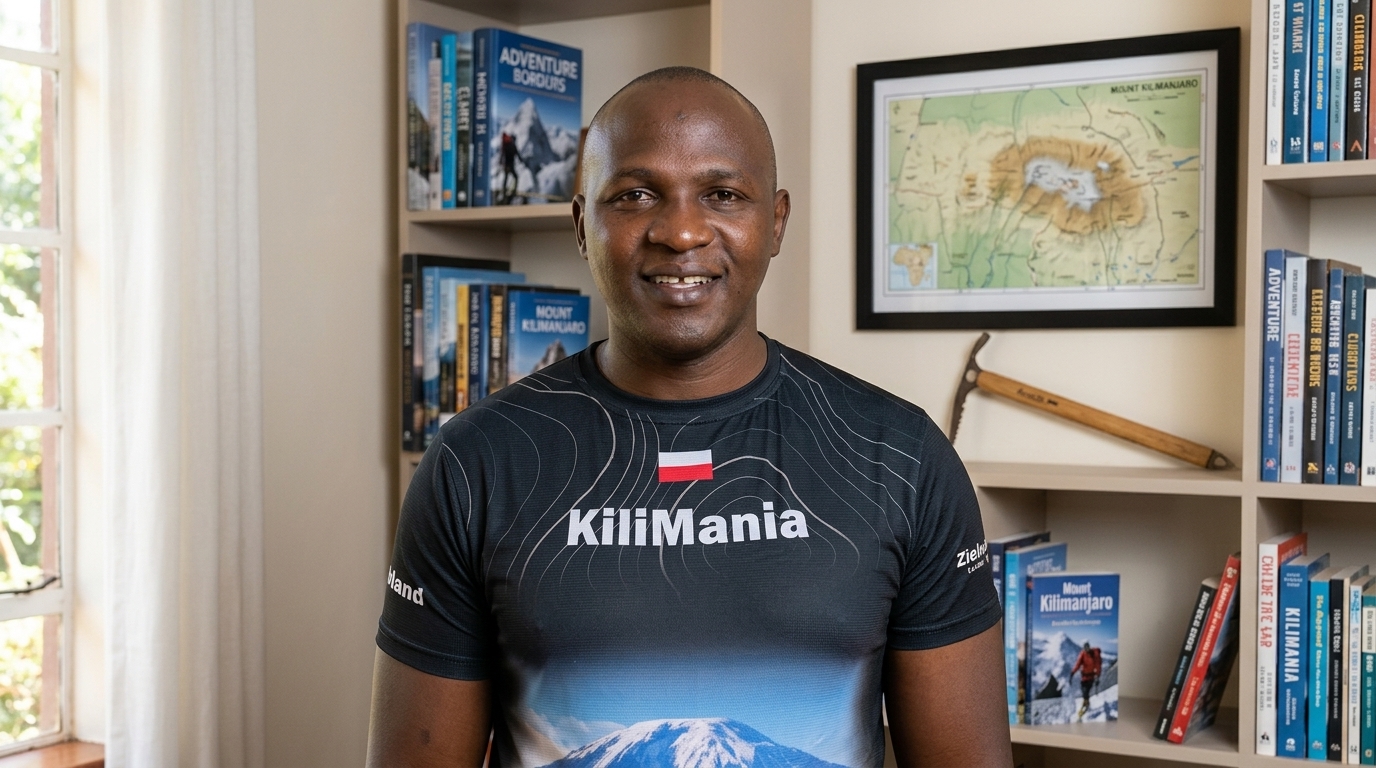
Sabinus Msimba
Sabinus has guided on Mount Kilimanjaro since 2001, beginning as a porter on the Marangu Route before becoming a fully certified mountain guide. Over 22 years he has led more than 300 personal summit attempts, developing the operational pace and acclimatization protocols that Kilimania applies on every climb. He is KINAPA-licensed and a certified Wilderness First Responder, based in Moshi, Tanzania.
Medical disclaimer: This article provides general information about altitude physiology and pace management on Mount Kilimanjaro. It does not constitute medical advice. Climbers with pre-existing cardiovascular, respiratory, or neurological conditions should consult a qualified physician before undertaking high-altitude trekking. For official park regulations, see TANAPA guidelines.
Contact Kilimania Adventure: info@kilimania.co.tz · WhatsApp +255 756 449 990 · Moshi, Kilimanjaro, Tanzania · TATO Member · KPAP Compliant
© 2026 Kilimania Adventure. Content created from first-hand guiding experience on Mount Kilimanjaro. Reproduction without permission is prohibited.