Data sources cited in this article: Wilderness Medical Society clinical guidance, CDC guidance on backcountry water treatment, TANAPA regulations, and Kilimania Adventure’s operational protocols.
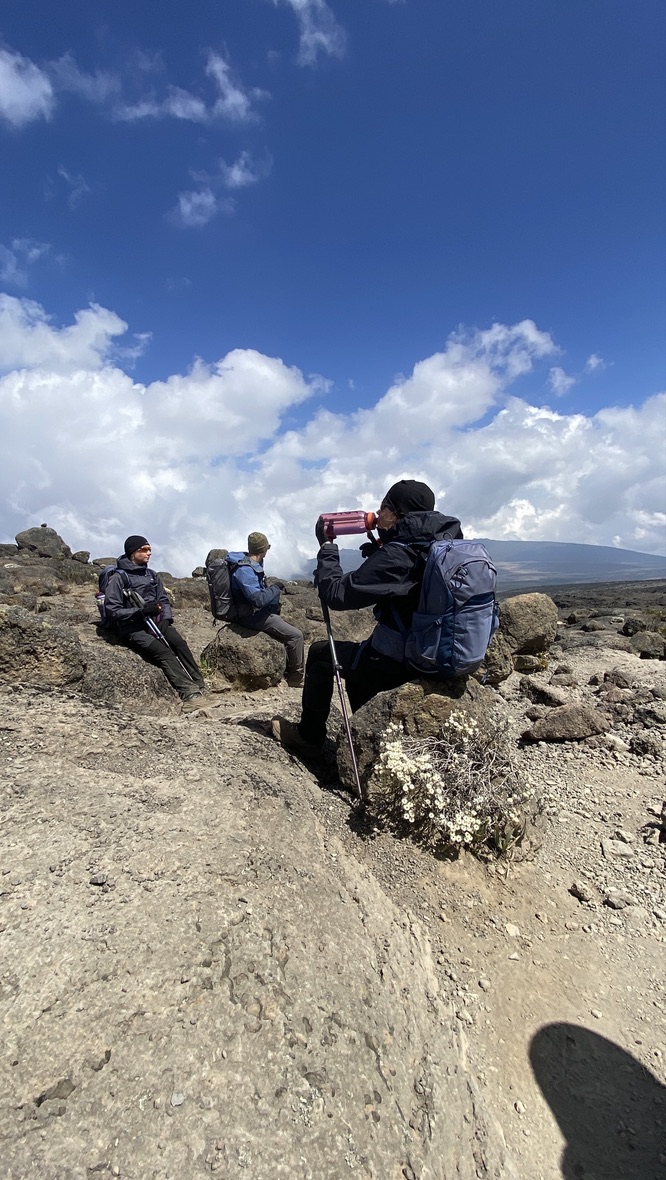
Water from streams and rivers on Kilimanjaro should not be drunk without treatment. Even clear-looking water at altitude can contain pathogens including Giardia, Cryptosporidium, and faecal bacteria. Kilimania treats all group drinking water before serving it to climbers at every camp, from Machame Hut at 2,835 metres to the approach to Barafu at 4,673 metres.
Many climbers find they need roughly 3 to 4 litres of total fluids across a full trekking day — but requirements vary by body size, exertion, and individual physiology. Drink regularly and monitor your urine colour as a practical field guide. Dehydration and altitude sickness share several symptoms, but they are not the same thing, and any persistent, worsening, or severe symptoms should be reported to your guide immediately.
Is Untreated Water on Kilimanjaro Safe to Drink?
No. Water from untreated or uncertain sources on Kilimanjaro should be treated before drinking, regardless of how clear it appears. Clear water is not the same as clean water.
According to TANAPA (Tanzania National Parks Authority), Kilimanjaro receives tens of thousands of registered climbers per year. Add porters, rangers, guides, cook staff, and the wildlife that shares the mountain’s drainage catchment — buffalo, elephant, and smaller mammals — and the streams that look pristine above the forest zone are running through land that sees considerable human and animal activity. Water can become contaminated from upstream through human, animal, or environmental sources even when it appears completely clean.
Untreated water in mountain environments can carry a range of organisms including:
- Giardia lamblia — a protozoan parasite; cysts survive in cold water for extended periods and cause gastrointestinal illness typically 1–3 weeks after ingestion.
- Cryptosporidium parvum — a protozoan that is highly resistant to standard chemical disinfection, including iodine tablets.
- Faecal bacteria (such as Escherichia coli variants and Campylobacter) — associated with wildlife and human activity near water sources.
Developing gastrointestinal illness on Kilimanjaro is serious. Rapid fluid loss through vomiting or diarrhoea at altitude escalates dehydration and complicates altitude-illness management simultaneously. It is a common reason for evacuation.
A second important factor is altitude itself. Water boils at approximately 100°C at sea level. At Barafu Camp (4,673 m), the boiling point falls to approximately 86°C. At Crater Camp near the summit (approximately 5,730 m), it is lower still — around 83°C. This lower boiling temperature does not make water impossible to treat by boiling, but it means the process must be done carefully and for an appropriate duration according to current public-health guidance for high-altitude water treatment. The Wilderness Medical Society recommends bringing water to a rolling boil; this remains effective for killing most waterborne pathogens even at altitude.
How Kilimania Treats Drinking Water at Every Camp
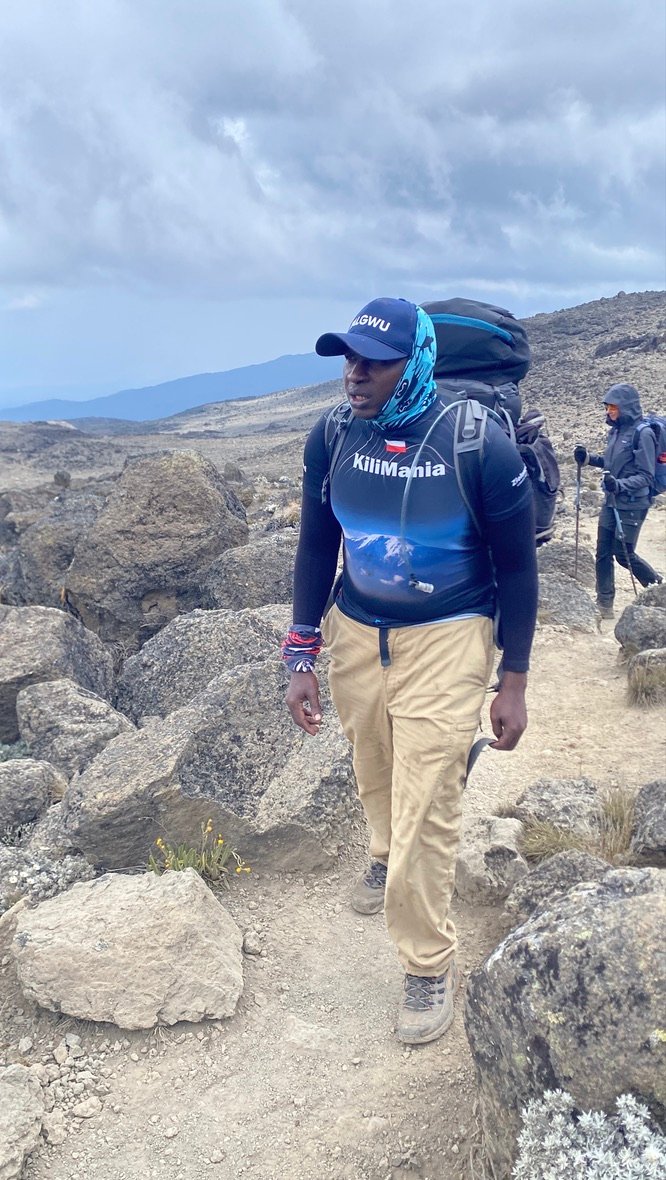
Kilimania’s cook team treats all group drinking water before serving it to climbers. This is one of the fundamental operational commitments we make on every expedition. Here is how it works in practice:
- Water collection: Water is collected from designated camp sources or established points along each route — not from open streams wherever they happen to flow.
- Treatment by boiling: The collected water is brought to a rolling boil before being distributed to climbers. The process follows current guidance for high-altitude water treatment.
- Cooling and distribution: Treated water is distributed in covered containers. Hot water is also provided for tea and other hot drinks at every meal.
- Morning refill: Before each day’s walk begins, your bottles are filled with treated water so you leave camp with an adequate supply for the stage ahead.
- Summit night preparation: Before departure from Barafu Camp at night, water is prepared and distributed in insulated bottles for the ascent. There is no water source above Barafu.
Kilimania does not distribute single-use plastic water bottles at camp. Climbers bring their own reusable bottles — a minimum of 1 litre capacity, with 2 litres recommended — which the cook team fills with treated water at every camp. All waste that enters the mountain leaves with our crew. Reusable bottles are strongly preferred for trekking on Kilimanjaro. Climbers should check current TANAPA park regulations before departure to confirm the latest requirements.
Water Sources on Different Kilimanjaro Routes
How your cook team or guide accesses water varies depending on which route you are on. Understanding this can help you plan how much capacity to carry between stops.
Marangu Route
Marangu has established huts with piped water connections at Mandara, Horombo, and Kibo huts. Water from these connections is still treated by Kilimania before it is served to climbers — the source being piped does not automatically mean it is safe to drink untreated.
Machame, Lemosho, and Northern Circuit
These routes pass through more remote terrain with catchment and stream collection at designated camp water points. Kilimania’s cook team sources water at each camp and treats it before distribution. Between camps on long stages, your filled bottles from that morning are your supply.
Rongai Route
The northern Rongai approach crosses drier terrain with fewer natural water sources between camps. Carrying adequate capacity between morning fills is especially important on this route. Discuss specific water planning with your guide before each day’s stage.
Water Purification Options if You Treat Your Own Water
If you are not climbing with an operator that provides treated water, or if you want a personal backup system, here is an honest comparison of the methods available at altitude. Note that “effective against” Cryptosporidium means mechanically removing or inactivating it — not all methods achieve this equally.
| Method | Effective vs Giardia? | Effective vs Crypto? | Reliable above 4,500 m? | Weight | Practical Note |
|---|---|---|---|---|---|
| Boiling (rolling boil) | Yes | Yes | Yes — per WMS guidance | Fuel required | Most reliable method; requires stove and adequate fuel |
| Iodine tablets | Yes | No — not reliably | Reduced at cold temps | ~28 g | Not sufficient as a standalone method; does not address Crypto |
| Chlorine dioxide tablets (e.g. Katadyn Micropur) | Yes | Yes — with adequate contact time | Yes | ~30 g | Follow manufacturer’s instructions; contact time increases significantly in cold water |
| 0.1-micron squeeze filter (e.g. Sawyer Squeeze) | Yes — removes physically | Yes — removes physically | Yes — do not allow to freeze | ~86 g | Practical backup; keep inside jacket above 4,000 m to prevent freezing |
| UV pen (e.g. SteriPen) | Yes | Yes | Reduced — batteries affected by cold | ~60 g | Carry spare batteries; reliability drops below −5°C |
If you are climbing with Kilimania, you will not normally need to treat your own water. We treat all group drinking water at every camp. Carrying a personal backup — a squeeze filter or chlorine dioxide tablets — is a reasonable precaution for peace of mind or for trail refills between camp stops. Always follow the manufacturer’s instructions for any purification product you carry.
CamelBak and Hydration Bladders on Kilimanjaro
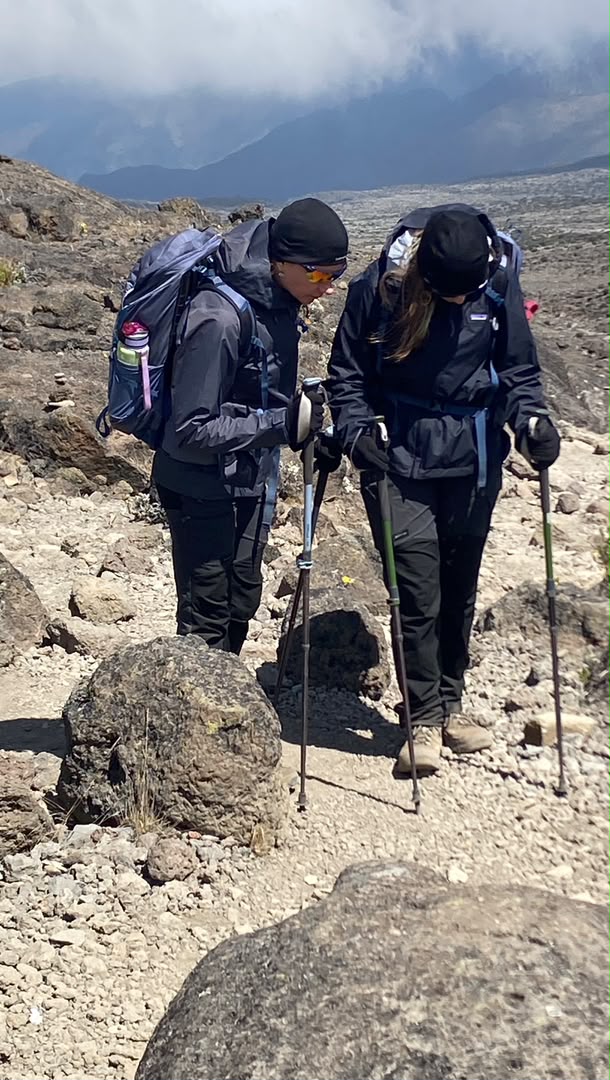
Hydration bladders such as CamelBak are practical for day stages on Kilimanjaro. The hands-free drinking system reduces the friction of stopping to open a bottle, which genuinely leads most people to drink more consistently — a real advantage on a long walking day.
Above approximately 4,800 metres on summit night departures from Barafu Camp — typically at midnight in temperatures of −12°C to −18°C — the drinking tube on any exposed hydration bladder will freeze within 20 to 30 minutes. Climbers who rely on a CamelBak alone for summit night can arrive at Stella Point (5,756 m) with a frozen tube and no access to water for several hours.
Practical rule: Use a hydration bladder for all lower-altitude day stages. For summit night, carry a well-insulated wide-mouth 1-litre bottle inside your down jacket. Body heat keeps it liquid. If you want to use the bladder tube above 4,800 m, wrap it with insulating tape — but always bring the bottle regardless.
A combination approach works well:
- Day stages below 4,500 m: 1.5–2 L hydration bladder. Sip consistently throughout the stage.
- Evening at camp: Hot drinks from the mess tent. These count toward your daily fluid total and are easier to absorb as temperatures drop.
- Summit night above 4,800 m: 1 L insulated bottle inside your jacket. Fill it with warm (not boiling) water at Barafu before departure. Add electrolyte powder if your stomach is settled enough to tolerate it.
- Descent: Rehydrate actively. Many climbers focus entirely on the summit push and neglect fluid intake during the descent, which increases fatigue and the risk of falls on loose scree.
Want the Complete Packing Guide?
Our packing guide covers hydration systems, bottle selection, electrolytes, and what to carry at each camp — based on 22+ years guiding on Kilimanjaro.
How Much Water Should You Drink on Kilimanjaro?
Fluid requirements on Kilimanjaro vary depending on body size, exertion level, temperature, sweating, respiratory water loss, altitude, and individual physiology. There is no one figure that applies universally to every climber on every day. That said, many climbers find they need roughly 3 to 4 litres of total fluid across a demanding trekking day — including water and hot drinks. The Wilderness Medical Society advises drinking enough to maintain pale urine without forcing excessive intake.
At altitude, three mechanisms combine to increase your fluid requirements compared to everyday life:
- Increased respiratory water loss: Your body breathes faster and more deeply at altitude to compensate for lower oxygen partial pressure. Each exhaled breath carries water vapour. In the dry air above 4,000 m, this respiratory water loss is substantially higher than at sea level.
- Altitude diuresis: Your kidneys produce more urine as part of the body’s normal acclimatisation response. This is generally a positive sign that acclimatisation is occurring — but it means you need to actively replace the lost fluid.
- Sweating in cold conditions: Even at cold temperatures in heavy clothing, physical exertion produces sweat. Many climbers underestimate sweat loss in cold conditions because they do not feel warm.
Urine colour remains the most accessible hydration indicator available on the mountain. Pale straw yellow indicates adequate hydration. Dark yellow or amber suggests you are behind on fluids — drink something soon and increase your rate for the next hour. Completely clear urine over a sustained period can indicate that you are drinking more than your body needs, which can dilute electrolytes. The goal is pale yellow, not colourless.
Important: altitude diuresis causes increased urination even when you are drinking adequately. Use colour, not frequency alone, as your guide.
Hydration does not prevent altitude sickness. Drinking more water will not protect you from AMS if you ascend faster than your body can acclimatise. Fluid intake supports general health and performance but is not a substitute for appropriate acclimatisation or medical management of altitude illness.
A Practical Daily Fluid Schedule for a Kilimanjaro Trekking Day
This is a practical planning guide, not a medical prescription. Adjust to your own needs, route, and conditions.
Dehydration vs Altitude Sickness: Overlapping Symptoms
Dehydration and acute mountain sickness (AMS) share enough symptoms that climbers and guides regularly face the question of which they are dealing with. Getting this distinction wrong in either direction has consequences — unnecessary descent decisions on one hand, and underestimating genuine altitude illness on the other.
The honest position is that these conditions can coexist, and symptoms in the field are often ambiguous. Dehydration can worsen altitude headache. AMS can be mistaken for exhaustion and thirst. The safest approach is to address both concurrently — drink fluids, rest, and monitor — while treating any persistent, worsening, or alarming symptoms as potential altitude illness until proven otherwise.
| Symptom / Sign | Dehydration | AMS (Acute Mountain Sickness) |
|---|---|---|
| Headache | Common — often frontal, throbbing | Common — often frontal, pressure-like, persistent |
| Fatigue | Yes | Yes |
| Nausea | Mild, secondary | Often prominent; can be severe |
| Appetite | Reduced | Often absent — climber cannot face food |
| Urine colour | Dark — primary indicator | Not necessarily dark |
| Dizziness | Particularly on standing up | Can occur at rest as well |
| SpO₂ reading | Typically normal for that altitude | Often lower than expected for the elevation |
| Response to drinking and rest | May improve over time with adequate fluids | Does not resolve with fluids alone |
| Worsens with ascent? | Not necessarily if adequately hydrated | Yes — worsening with ascent is a key AMS indicator |
Tell your guide immediately if you experience any of the following. These are not dehydration symptoms and must be treated as potential serious altitude illness:
- Headache that is worsening despite rest and fluids
- Repeated vomiting
- Confusion or altered mental state
- Loss of coordination or difficulty walking normally
- Breathlessness at rest (not just on exertion)
- Unusual or uncharacteristic behaviour
- Persistent severe weakness
- Any chest tightness or a dry cough that develops at altitude
Serious altitude illness — HACE (High Altitude Cerebral Oedema) and HAPE (High Altitude Pulmonary Oedema) — requires prompt descent and, where available, medical management. Do not wait to see if symptoms resolve on their own. See our full altitude sickness guide for detailed information.
“In my experience guiding on Kilimanjaro, I often see climbers at Barafu or Karanga who are not drinking enough simply because cold air suppresses the desire to drink. You stop feeling thirsty. The temperature makes reaching for a bottle feel like extra effort. And then an hour later, someone has a headache and assumes it is altitude when they haven’t had a full litre since breakfast.
My approach is always the same: address both possibilities at once. Drink water, rest, let me check your SpO₂. If you are low on fluids and your numbers are reasonable for the elevation, we give it time and monitor closely. If anything worsens, we treat it as altitude illness and make descent decisions accordingly. The key thing is to tell me early. The climbers who wait two hours before saying anything make the decision harder for everyone.”
What to Drink at Camp: Hot Drinks, Water, and Electrolytes
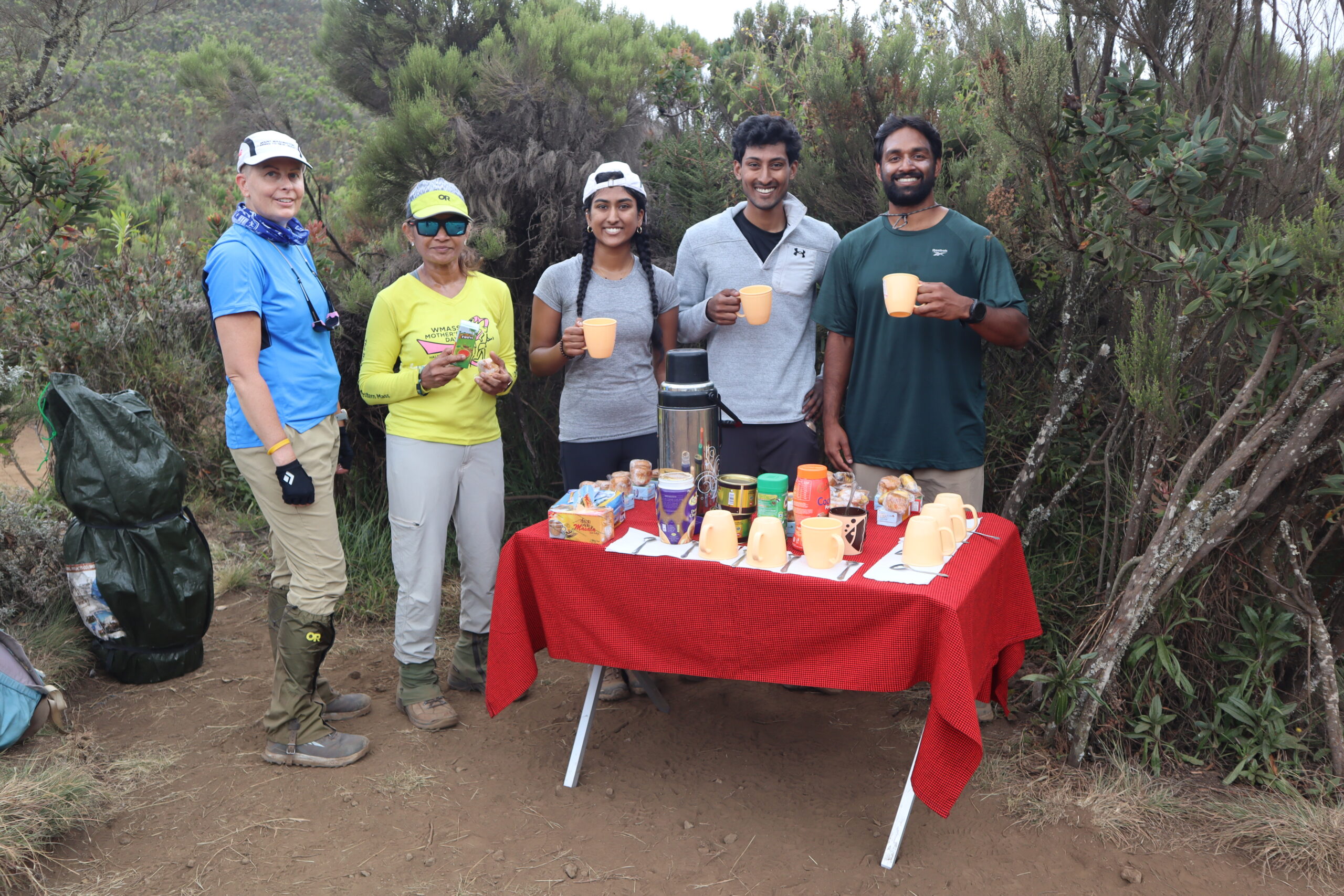
The challenge at camp is staying consistent with fluid intake when you are cold, tired, and your appetite is reduced. Having a system helps.
Hot Drinks
Tea, ginger tea, and warm soups are all practical sources of fluid at altitude. Ginger tea is particularly useful in the evening as it can ease the mild nausea that many climbers experience above 4,000 m. All hot drinks count toward your daily fluid total. Kilimania serves hot drinks at every meal and during the evening briefing — use them deliberately.
Electrolytes
At altitude, altitude diuresis and exertion cause loss of electrolytes — primarily sodium, potassium, and magnesium. Drinking large volumes of plain water without replacing these minerals can lead to a condition called hyponatraemia (low blood sodium), which produces symptoms that overlap with AMS and dehydration. Adding electrolyte powder or tablets to at least one bottle per trekking day — and particularly on summit night — is a sensible precaution. Follow the product instructions for concentration; stronger is not better.
Cold Water
Camp-provided treated water that has cooled is completely appropriate to drink. Some climbers find cold water harder on the stomach above 4,000 m — this is normal. Drinking it at a moderate temperature is easier to manage and equally effective for hydration.
Alcohol at Altitude: Why Drinking on Kilimanjaro Is a Poor Idea
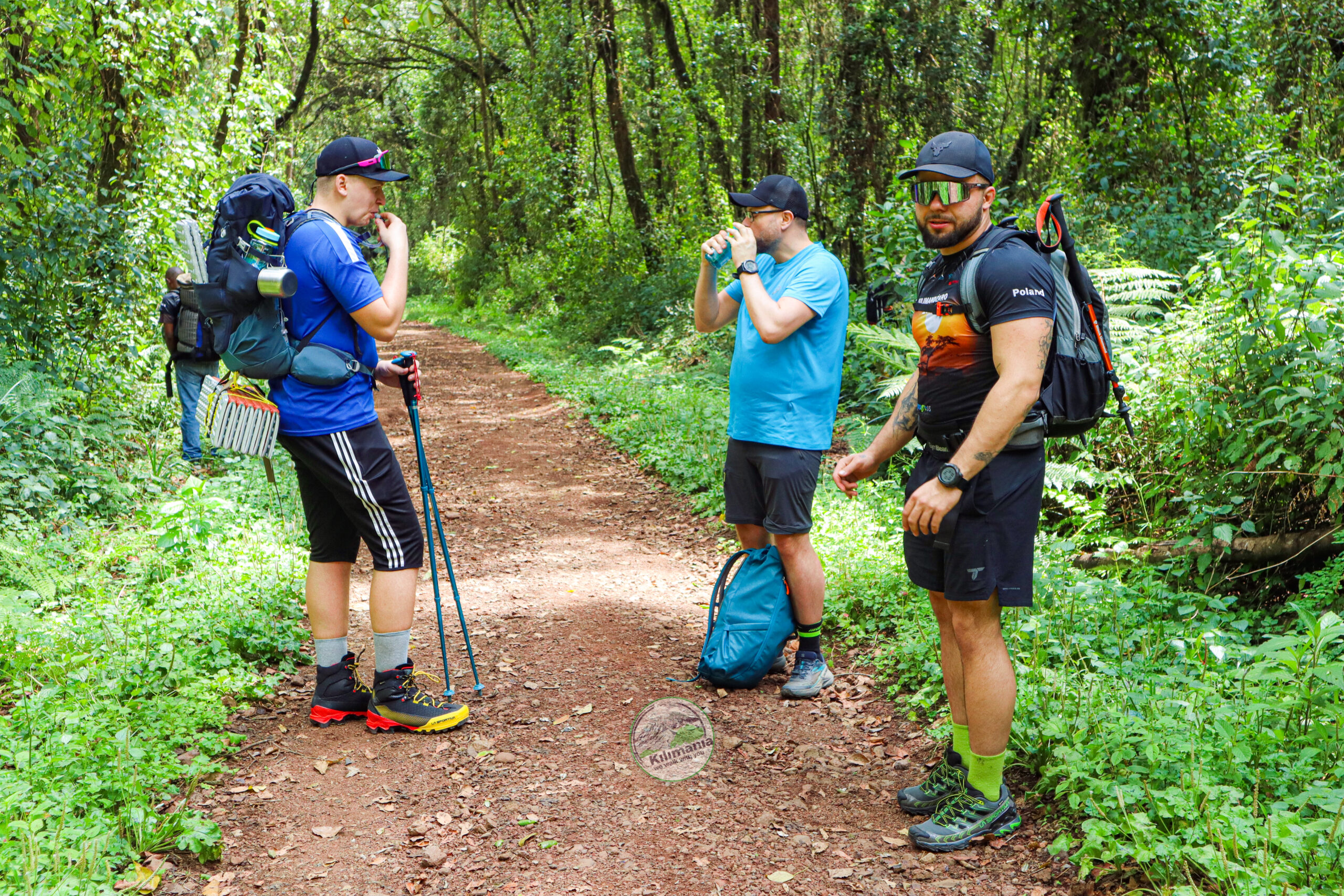
Beer is sold at some Kilimanjaro huts, including on the Marangu Route. Drinking it is a genuine mistake, not a moral one. Here is exactly what alcohol does physiologically at altitude:
- Accelerates dehydration: Alcohol is a diuretic. A 330 ml beer at 3,720 m (Horombo Hut) produces net fluid loss — you urinate more than the drink contained. This directly works against the hydration you need.
- Suppresses the hypoxic ventilatory response: Your body’s normal mechanism for detecting and responding to low oxygen — faster, deeper breathing — is blunted by alcohol. During the night, when your breathing rate naturally slows and acclimatisation occurs, alcohol reduces this response further. Your blood oxygen saturation drops more than it would otherwise.
- Worsens altitude headache: Alcohol causes vasodilation (widening of blood vessels). At altitude, where cranial pressure is already potentially elevated, this directly intensifies headache symptoms. Climbers who drink at camp frequently wake at 2 or 3 am convinced they have serious AMS — they have a combination of AMS-like symptoms and alcohol.
- Impairs judgement and coordination: The decisions that matter most on Kilimanjaro — recognising your own symptoms accurately, knowing when to turn around, navigating in low visibility — require clear cognition. Alcohol removes margin you cannot afford to lose at 5,500 m.
Kilimania does not carry or serve alcohol on any expedition. If you bring alcohol into camp, we ask that you do not consume it above 2,000 m. This is an operational safety decision. Save the celebration for Moshi — we will be there too.
What to Do If You Get Sick From Contaminated Water
Despite every precaution, if a climber develops gastrointestinal illness on the mountain — vomiting, diarrhoea, stomach cramps — the immediate priorities are:
- Tell your guide immediately. Do not wait to see if it passes. Fluid loss from gastrointestinal illness at altitude is medically significant and changes the safety picture for that climber quickly.
- Replace fluids carefully. If vomiting allows, sip treated water or oral rehydration solution in small, frequent amounts rather than large volumes.
- Do not push through. Gastrointestinal illness at altitude requires a genuine clinical assessment by your guide. It is not a situation to manage privately and carry on. Your guide will assess whether the stage should be modified or whether descent is indicated.
- Carry oral rehydration salts (ORS) as part of your personal first-aid kit. These are lightweight, inexpensive, and specifically formulated for rapid fluid and electrolyte replacement. Our packing guide includes them in the personal medical kit list.
Gastrointestinal illness is one of the more common reasons for evacuation from Kilimanjaro. It is also one of the most preventable, which is why Kilimania’s cook team treats all water before serving it. If you are evaluating operators, it is worth asking directly how their team treats drinking water at camp.
Porter Water Safety: An Ethical Consideration
Climbers are understandably focused on their own hydration during an expedition. But it is worth noting that water safety matters equally for the porters, cooks, and guides who make Kilimanjaro climbs possible.
Kilimania is a KPAP (Kilimanjaro Porters Assistance Project)-compliant operator. KPAP’s standards require that crew members receive the same quality of treated water as the climbing clients. On a Kilimania expedition, this means our porters and cook staff drink from the same treated water supply as you do. Asking about crew water provision is a reasonable question when evaluating any Kilimanjaro operator.
What to Pack for Water and Hydration on Kilimanjaro
- 2 × 1-litre reusable bottles (wide-mouth, BPA-free). One insulated for summit night.
- 1.5–2 L hydration bladder with an insulated tube sleeve for lower altitude day stages.
- Electrolyte tablets or powder — enough for 10+ days. Nuun, SOS Rehydrate, and similar brands are compact and practical.
- Backup purification — a Sawyer Squeeze filter or chlorine dioxide tablets, carried inside your pack pocket.
- Oral rehydration salts (ORS) — 4–6 sachets in your personal medical kit.
- Insulating tape — if you plan to use a hydration bladder tube on cold sections, tape it to retain warmth.
For a complete packing checklist including hydration gear, see our full Kilimanjaro packing guide.
📥 Free Download: Kilimanjaro Altitude Symptom & AMS Checklist
Altitude illness is the leading reason climbers turn back on Kilimanjaro. This practical checklist is used by Senior Guide Sabinus Msimba and the Kilimania team to monitor climbers throughout every expedition. Early symptom recognition significantly improves safety outcomes.
- Normal acclimatisation symptoms above 3,000 m
- Acute Mountain Sickness (AMS) warning signs
- HACE and HAPE emergency symptoms
- Daily health monitoring form (SpO₂, pulse, hydration)
- Guide reporting and self-assessment checklist
Prepared by: Sabinus Msimba, Senior Mountain Guide, Kilimania Adventure, Moshi, Tanzania. This checklist is for general educational purposes only and does not replace professional medical advice. Climbers with pre-existing medical conditions should consult a physician before high-altitude travel.
Kilimanjaro Packing Checklist 2026
16 Pages · Verified by Senior Guide Sabinus Msimba
Frequently Asked Questions: Water on Kilimanjaro
No. Water from streams, rivers, and catchments on Kilimanjaro should not be consumed without proper treatment. Even clear-looking water can contain Giardia, Cryptosporidium, and faecal bacteria from wildlife and human activity on the mountain. Kilimania treats all group drinking water before distributing it to climbers at every camp from the forest zone to Barafu.
Fluid requirements vary by body size, exertion, temperature, and individual physiology. Many climbers find they need roughly 3 to 4 litres of total fluid across a full trekking day, including hot drinks at camp. The Wilderness Medical Society advises drinking enough to maintain pale urine without forcing excessive intake. Sip regularly throughout the day rather than drinking large amounts infrequently. Hydration supports performance but does not prevent altitude sickness.
Yes, hydration bladders work well during day stages on lower sections of the climb. The hands-free system encourages more consistent drinking. However, above approximately 4,800 m on summit night — typically departing Barafu Camp around midnight at −12°C to −18°C — the drinking tube will freeze within 20 to 30 minutes if exposed. For summit night, carry a well-insulated 1-litre wide-mouth bottle inside your down jacket. Use the bladder for all other sections.
Drinking alcohol is strongly inadvisable on Kilimanjaro. It accelerates dehydration as a diuretic, suppresses your breathing response to low oxygen during sleep, worsens altitude headache through vasodilation, and impairs the judgement and coordination you need on the mountain. Kilimania does not carry or serve alcohol on any expedition. Save the celebration for Moshi.
Both can cause headache, fatigue, and reduced appetite, making them genuinely difficult to distinguish in the field. Dark urine suggests dehydration. Symptoms that are severe, worsening, include repeated vomiting, confusion, loss of coordination, or breathlessness at rest should be reported to your guide immediately and treated as potential altitude illness — not self-diagnosed as dehydration. The safest approach is to address both: drink fluids, rest, and have your guide assess you.
If you are climbing with a reputable operator such as Kilimania that treats group drinking water, you will not normally need to treat your own water. Carrying a lightweight backup — chlorine dioxide tablets or a 0.1-micron squeeze filter — is sensible for peace of mind or trail refills between camps. Note: iodine tablets alone are not sufficient, as they are not reliably effective against Cryptosporidium. Always follow the manufacturer’s instructions for any purification product.
Hot drinks — tea, ginger tea, or warm soups — are practical and comfortable ways to contribute to your daily fluid intake as temperatures fall at camp. They count toward your total. Kilimania serves hot drinks at every evening meal and morning briefing. Adding electrolyte powder to at least one bottle per trekking day helps replace minerals lost through exertion and altitude diuresis. Avoid cold water if your stomach is unsettled; room temperature is easier to manage.
No. Kilimania does not distribute single-use plastic water bottles at camp. Climbers bring their own reusable bottles, which the cook team fills with treated water at every camp. All waste that enters the mountain leaves with our crew. Reusable bottles are strongly preferred for Kilimanjaro trekking, and climbers should check current TANAPA park regulations before departure to confirm requirements.
Tell your guide immediately. Kilimania guides carry emergency supplies and can assist. Prevention is far better than management: fill your insulated bottle fully before leaving Barafu Camp at midnight, know how much water you are carrying, and pace your intake carefully across the ascent. Keep the bottle inside your jacket against your body to prevent freezing. If you feel your lips are excessively dry or your mouth is very dry — tell your guide early, not when you reach Stella Point.
Rainwater collected from clean surfaces may be lower risk than stream water, but it is not guaranteed to be free of contamination, particularly given the levels of human activity on the mountain. Kilimania provides treated water at every camp, so there is no need to collect rainwater under normal conditions. In an emergency situation without access to treated water, treating any water source before drinking — including rainwater — is the responsible approach.
Single-use plastic bottled water is not widely available on Kilimanjaro’s camping routes. On the Marangu Route, huts sell basic supplies, but plastic water bottles are strongly discouraged. Reusable bottles filled with treated water from your operator are the standard system on all routes. Bringing your own reusable 1-litre or 2-litre bottle is required equipment on any Kilimania expedition.
Bottom Line: Water Safety Is Non-Negotiable on Kilimanjaro
Do not drink untreated water from streams or catchments on Kilimanjaro. Water that looks clean can carry pathogens that cause significant illness at altitude — at the worst possible time.
Drink enough fluid to keep your urine pale across every trekking day. Use a combination of treated camp water, hot drinks in the evening, and an electrolyte supplement to maintain your fluid and mineral balance. Use a CamelBak for day stages and an insulated bottle for summit night. Tell your guide early about any symptoms that concern you. And leave the alcohol for Moshi.
If you are climbing with Kilimania, our cook team handles the water at every camp. Our guides track how climbers are feeling, check SpO₂ readings in the evenings, and ask the questions that are easy to forget at 4,600 m. That system — built across 22+ years guiding on this mountain — is one of the most important things we bring to an expedition.
Questions about our water protocols, route options, or what to bring? The team is in Moshi and available on WhatsApp.
We Walk With You.
Related Kilimanjaro Guides
Climb Kilimanjaro with Kilimania Adventure
Treated water at every camp. Altitude monitoring. Experienced guides with KINAPA licences, based in Moshi, Tanzania.