Language
Currencies
What to Expect Climbing Kilimanjaro: Daily Reality from a Guide
Most first-time climbers don’t fail on Kilimanjaro because they’re unfit—they struggle because they didn’t know what to expect.
Quick Answer
Climbing Kilimanjaro means sleeping in a four-season mountain tent on a 1.5-inch foam pad, walking four to six hours a day at a deliberately slow pace, and using a long-drop toilet at each campsite. Summit day is an 11–16 hour push that begins around midnight and ends with a long descent the same day. Kilimanjaro is not technically difficult — but it is physically and mentally demanding, and how well your body handles altitude matters far more than how fit you are. For the complete overview, start with our Climbing Kilimanjaro Guide.
| Question | Reality on Kilimanjaro |
|---|---|
| Accommodation | Mountain tents shared by two climbers |
| Daily Hiking | 4–6 hours on most days |
| Toilets | Shared long-drop toilets or private toilet tent upgrade |
| Showers | No showers on the mountain |
| Hardest Day | Summit night (11–16 hours) |
| Technical Climbing | None required |
Key Stats at a Glance
- 48 sq ft — interior floor space per tent (two climbers per tent)
- 4–6 hours — average daily walking time
- 11–16 hours — summit day total duration
- 3 liters — minimum water to carry per hiking day
- 6:30 AM — typical morning wake-up call with warm wash water
- 7+ days — minimum recommended time on the mountain for best acclimatization
- 5,895m — Uhuru Point summit elevation (a UNESCO World Heritage Site)
The Bottom Line: Kilimanjaro is basic camping combined with a slow, manageable daily walk — right up until summit night, which is genuinely hard for nearly everyone. If you can manage cold mornings, a foam sleeping pad, and a long-drop toilet, you can manage Kilimanjaro. The summit is won or lost on acclimatization, not fitness. See the data in our Kilimanjaro success rate by route analysis.
Introduction
After more than two decades guiding on this mountain, our senior guide Sabinus Msimba puts it simply: the climbers who struggle most are rarely the slowest or the least fit — they are the ones who arrived without knowing what to expect.
The questions that keep first-time climbers awake are not about the mountain itself. They are about the daily reality. What will the tent be like? What if I need the toilet at night? What if I am the slowest one in the group?
These deserve direct, honest answers — not brochure language, not stock photography of smiling climbers. This guide gives you the operational reality of what to expect climbing Kilimanjaro, day by day, detail by detail. For the full planning picture — costs, routes, and altitude science — see our Climbing Kilimanjaro Guide 2026. For a frank assessment of the challenge, read How Hard Is Kilimanjaro?.
Where Will I Sleep on Kilimanjaro?
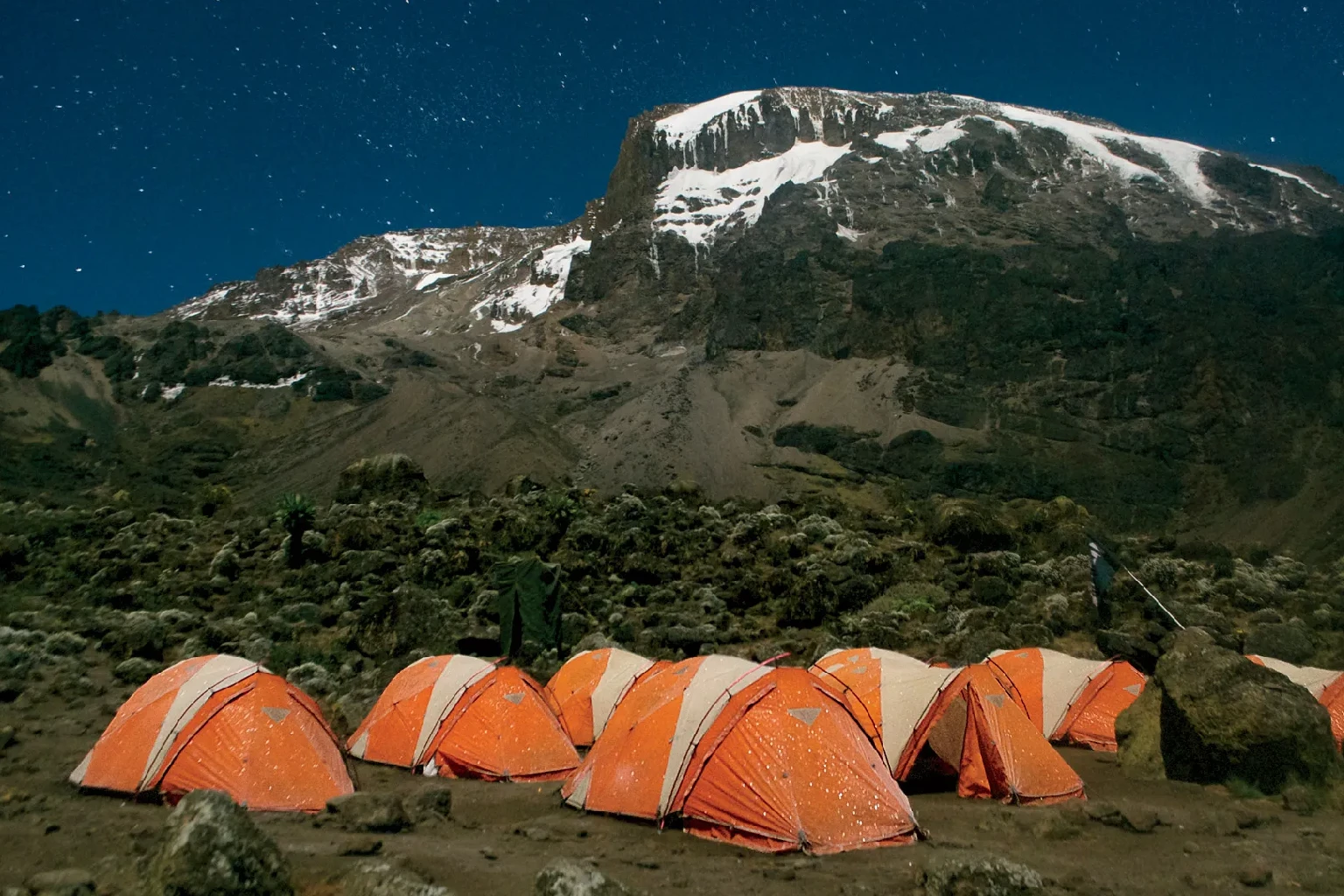
Short answer: You sleep in a four-season mountain tent shared with one other climber, on a 1.5-inch foam sleeping pad, at a different campsite each night as you ascend your chosen route.
The Tent
The tent we use is the Trango 3 — a three-person tent used by two climbers, giving each person room to sleep comfortably alongside their personal gear. Interior floor space is 48 square feet. That is not a hotel room, but it is enough to sleep well, change clothes without gymnastics, and store your daypack, boots, and kit inside the vestibule.
The Trango 3 has fully taped seams and welded corners. We use it specifically because Kilimanjaro’s afternoon rain showers are daily events on most routes between March and May, and reliable waterproofing is non-negotiable. Dual doors and internal mesh pockets matter more than they sound when you are searching for your headlamp at 11:45 PM before a midnight summit push.
The Sleeping Pad
Every climber receives a 1.5-inch thick foam sleeping pad, locally sourced and built for the mountain. It will not feel like a mattress. What it does is insulate you from the ground — and above 3,500 meters, ground cold is the enemy of sleep far more than pad softness.
Practical tip: If you have struggled to sleep on foam mats before, bring a lightweight inflatable pad as a supplement. The weight cost is modest; the sleep improvement on summit eve can be decisive.
Day 1 → Rainforest → 3–5 hrs
Day 2 → Moorland → 5 hrs
Day 3 → Alpine desert → 4 hrs
Summit Day → Midnight start → 11–16 hrs
What Is a Typical Day’s Schedule on Kilimanjaro?
Your day starts with a 6:30 AM warm-water wake-up, breakfast at the mess tent, walking from around 8:00 AM for four to six hours, a hot lunch mid-route, and dinner at camp around 6:00 PM followed by a guide briefing.
Morning
Around 6:30 AM, your porter brings a warm pan of water to your tent for washing. Breakfast is served in the mess tent — a dedicated tent fitted with folding chairs, a table, plates, cups, and cutlery. You eat a proper seated meal, not crouched in your sleeping bag. Walking begins around 8:00 AM.
The Porter Relay System — Why Your Tent Is Always Ready
Here is something that causes unnecessary anxiety for first-time climbers: the porters are not walking with you. They are moving ahead of you.
While you walk the day’s trail, your porter team breaks down the previous camp, packs everything — tents, kitchen, food, duffel bags — and carries it to the next campsite by a faster path. By the time you arrive, your tent is already pitched and a hot meal is being prepared. This is the porter relay system. We follow the strict porter welfare standards of The Kilimanjaro Porters Assistance Project (KPAP), because the system only works when the people running it are properly paid, equipped, and treated.
Pace — The Most Important Thing Nobody Tells You
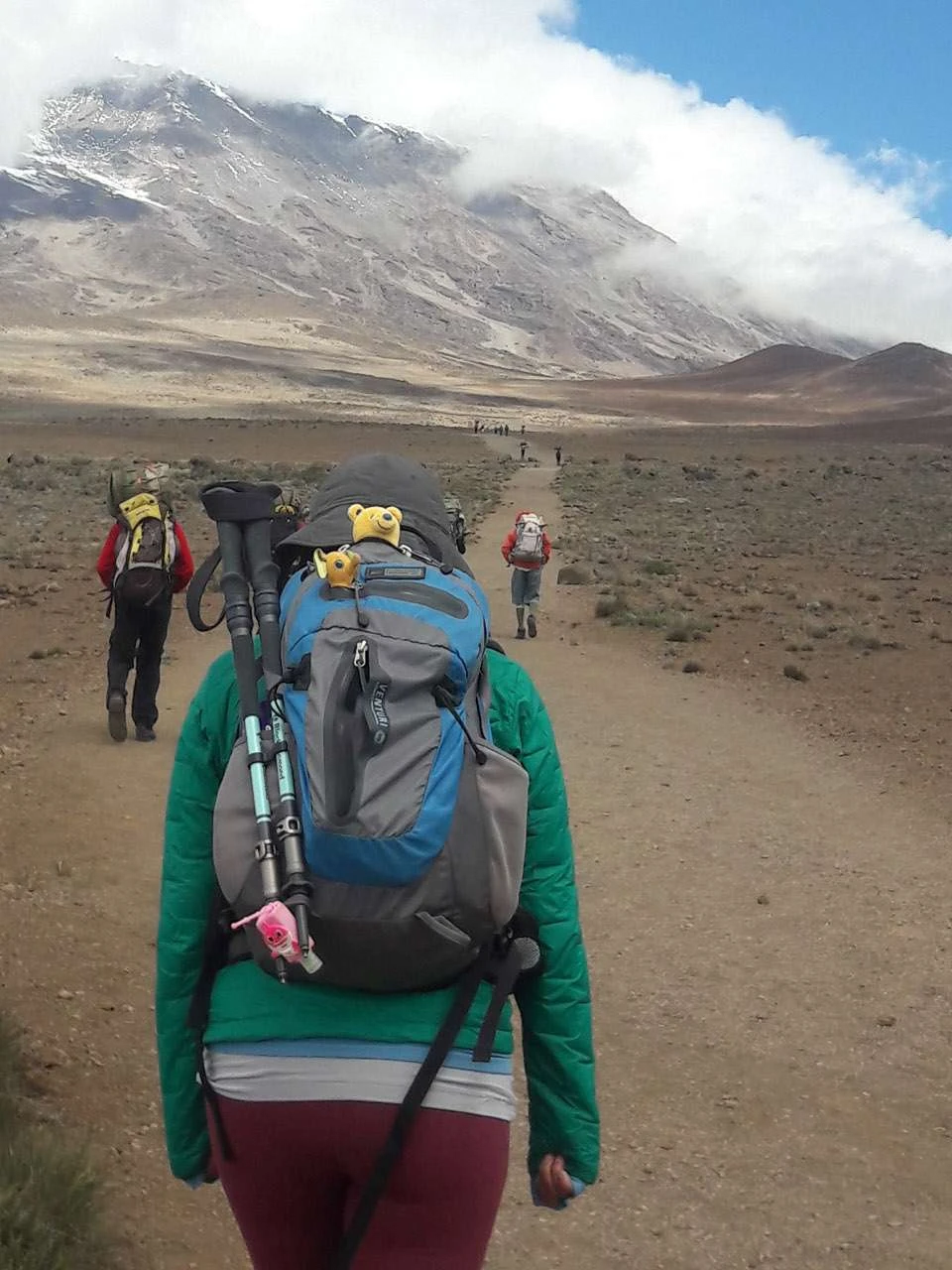
Your guide sets a pace that will feel almost laughably slow. That is intentional. The Swahili phrase is “pole pole” — slowly, slowly — and it is the single most effective tool for reaching the summit. A deliberate, slow pace reduces the rate at which your body must adapt to thinning air.
If you find yourself walking slower than others in your group — say nothing, and keep going. A slow pace is not failure; it is the correct pace for acclimatization. Climbers turned back on Kilimanjaro are almost always turned back by altitude, not by being physically too slow. If you are worried about whether you’re ready, read Can a Beginner Climb Kilimanjaro? and Can an Unfit Person Climb Kilimanjaro?.
Evening
Snacks are served on arrival. A warm wash basin is provided again before dinner at 6:00 PM. After dinner, your lead guide briefs the group on the next day — distance, elevation, terrain. Down time afterward is yours: conversation, reading, or sleep. Most experienced climbers choose sleep.
Ready to Talk Dates and Routes?
We run scheduled departures across all major routes from Moshi. No platform markup. No hidden fees. Direct from the operator. Park fees itemized by day; full inclusion and exclusion list in writing before you pay.
What Happens on Summit Day?
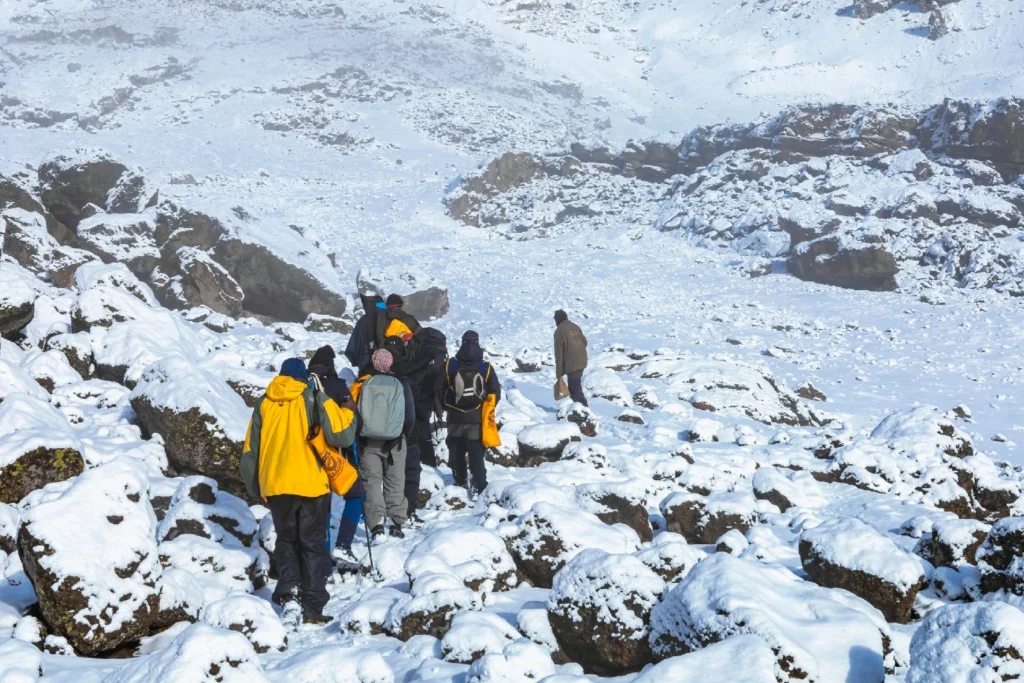
Summit day is an 11–16 hour push starting around midnight. Most groups are timed to reach Uhuru Point near sunrise, then descend the same day to a significantly lower camp.
The Night Before
Climbers eat an early dinner around 5:00–6:00 PM and sleep as early as possible. You will be woken around 11:30 PM to midnight to dress, eat a light snack, and prepare your pack. Layering correctly in the dark, half-awake, in cold air, is harder than it sounds — practice your layering system the night before.
The Ascent
The group departs in darkness, headlamps on, in single file. Summit-night conditions are the harshest of the climb — cold, wind, darkness, thin air, and steep, loose terrain. The final approach to Uhuru Point crosses a scree field: a long slope of loose volcanic rock that shifts underfoot. Two steps up, one step back. This is not a metaphor.
It is genuinely difficult. We say this to prepare you, not discourage you — climbers who expect difficulty handle it far better than those who expect the summit to feel like an extension of the previous days. It does not. For the full honest picture, read The Worst Part of Climbing Kilimanjaro: 7 Hard Truths.
At the Summit
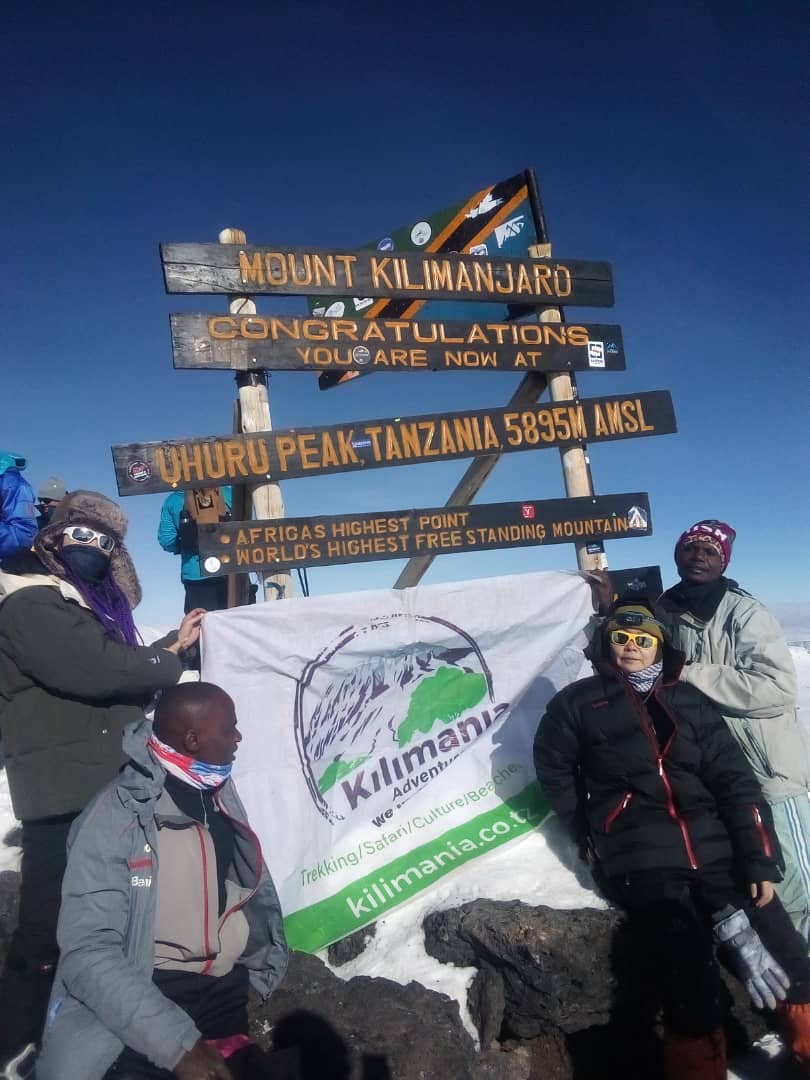
Most groups reach Uhuru Point (5,895m) near sunrise. The light across the glaciers, the cloud layer below, and the plains of Tanzania is worth every cold, dark hour. You will have a short time at the top for photographs before the descent begins.
The Descent — Where Most Fatigue Hits
From the summit you descend to high camp (Barafu at 4,673m, or Kibo Hut), eat lunch, rest, then descend again — significantly further — to a lower camp. This second descent, after a partial night’s sleep and the energy already spent, is where most climbers feel their deepest fatigue. It is normal, expected, and it ends.
If Someone Cannot Continue
Each Kilimania group travels with a lead guide, assistant guides scaled to group size, and experienced lead porters — all trained to escort a descending climber safely. If you need to descend early, a staff member accompanies you while the rest of your group continues. No one is left alone, and no one is left behind. Wondering what happens if you turn back? Read What Happens If You Don’t Summit Kilimanjaro.
What Is Acclimatization Like on Kilimanjaro?
Acclimatization varies by individual regardless of fitness level. More days on the mountain gives your body more time to adapt — which is why we recommend a minimum of 7 days as effectively non-negotiable for most climbers.
Fitness Is Not the Same as Altitude Tolerance
The most important thing we tell every new climber: being physically fit does not protect you from altitude sickness. The two are largely independent systems. We have guided elite marathon runners who could not pass 4,500 meters, and fifty-year-old amateur hikers who reached the summit without a single symptom. For age-specific guidance, see Climbing Kilimanjaro Over 50.
Why 7+ Days Is Non-Negotiable
There is a clear, documented correlation between days spent ascending and summit success. Five-day itineraries have materially lower success rates. Seven- and eight-day routes follow the “climb high, sleep low” principle — ascending higher during the day, then descending to sleep lower — which builds the physiological adaptations the summit requires. See the full data in Kilimanjaro Success Rate by Route: Data from 1,247 Climbs.
What the Daily Hikes Feel Like
Most day hikes — excluding summit day — are moderate by trekking standards. Many climbers are surprised by how manageable they feel. Summit day is the exception. If you have a health condition, read Climbing Kilimanjaro With Medical Conditions and consult your doctor before booking.
What Are the Trail Conditions on Kilimanjaro?
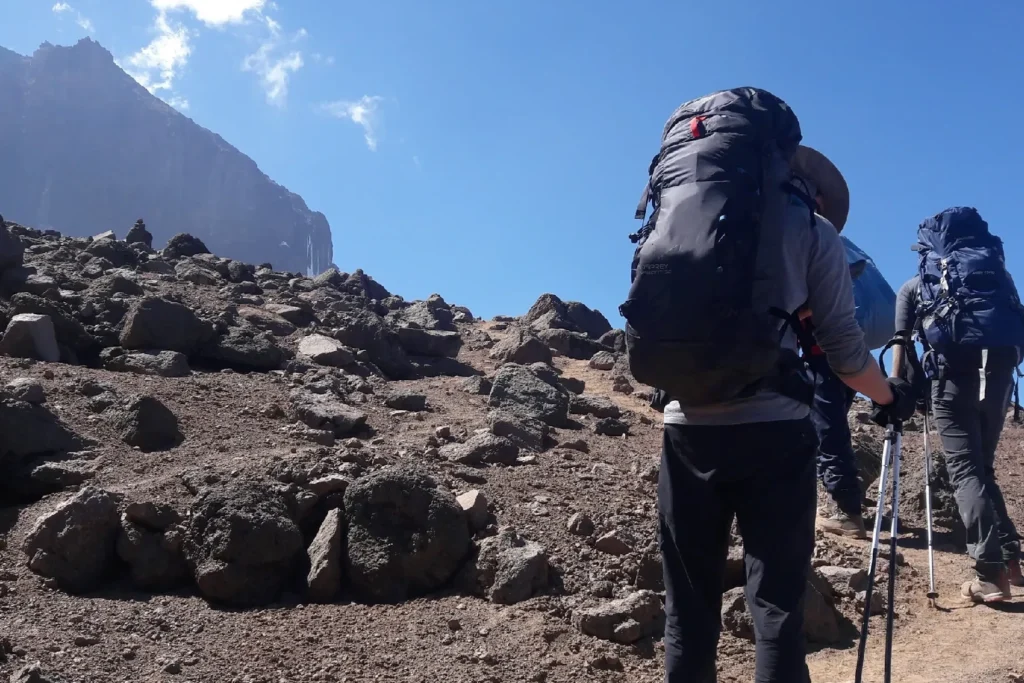
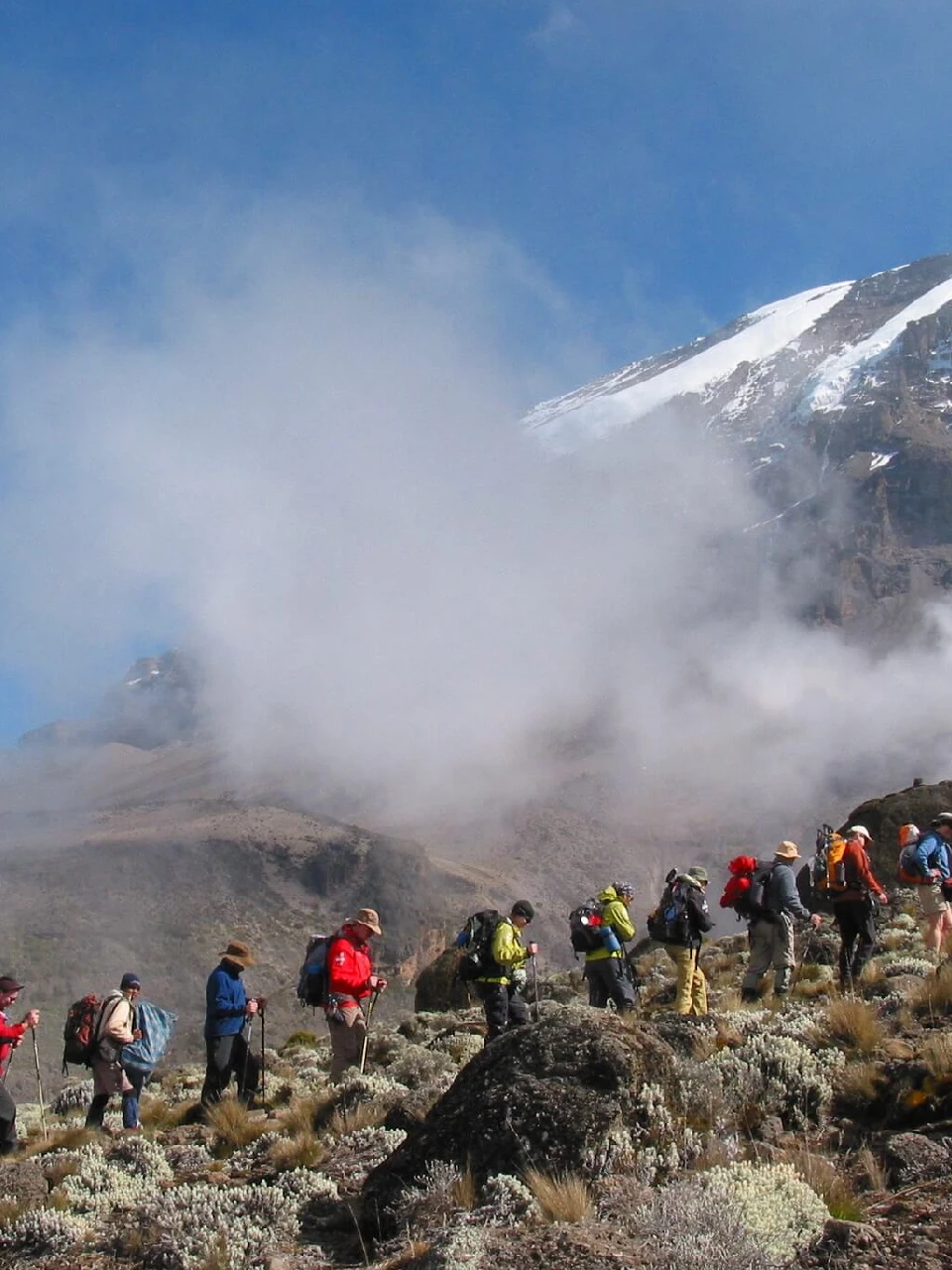
Kilimanjaro’s trails are well-marked and require no technical climbing skill. The Barranco Wall involves short scrambling. The summit approach crosses loose scree. Weather changes fast.
Technical Difficulty
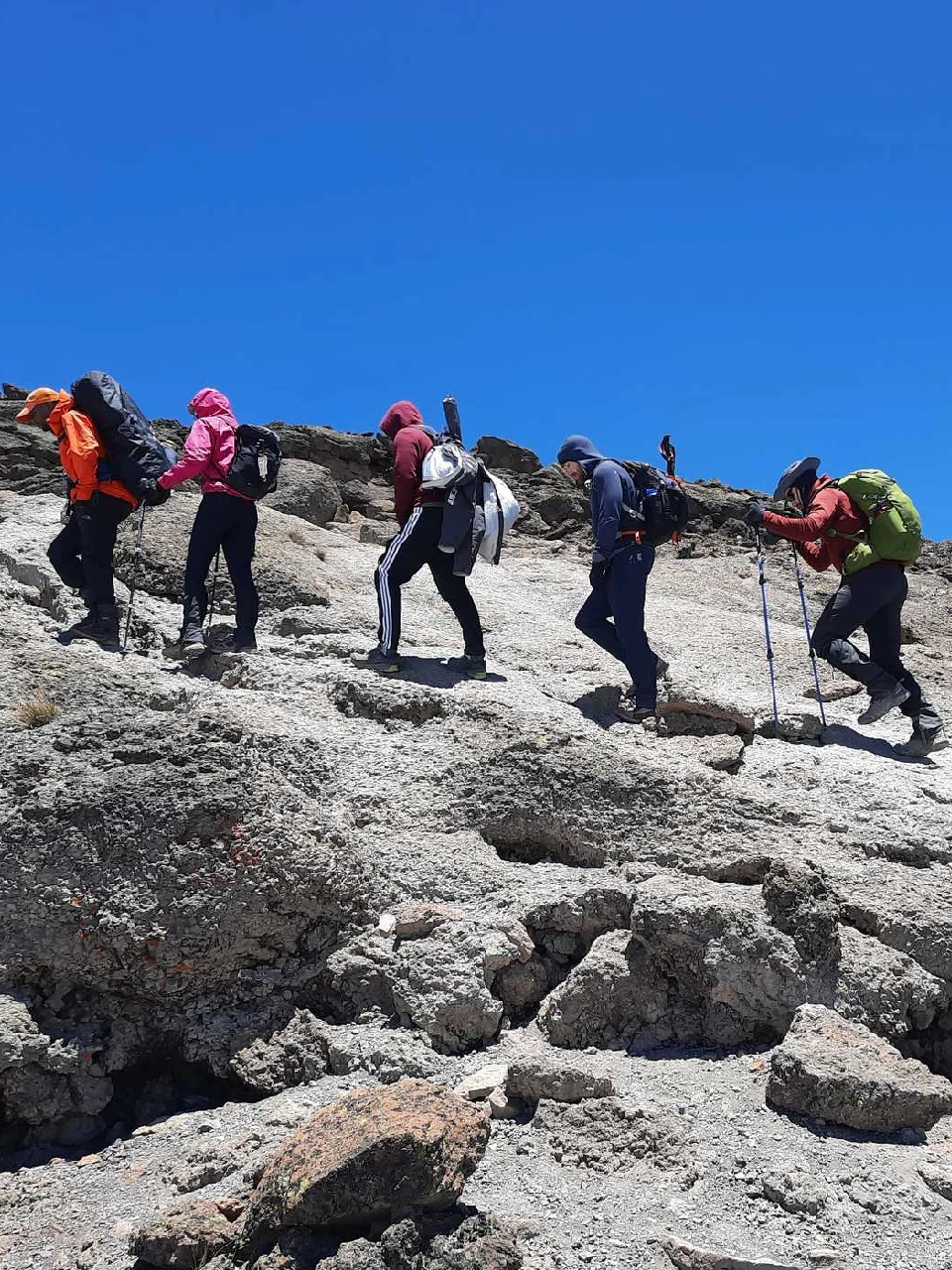
No KINAPA-approved route requires rock climbing, rope work, or mountaineering experience. The trails are walked, not climbed — with two exceptions. The Barranco Wall is a steep rocky section on the Machame, Lemosho, and Northern Circuit routes requiring hands and feet for roughly 200 vertical meters; most climbers finish it faster than expected. The Lava Tower side-trip is an optional scramble. The Western Breach is currently closed by KINAPA following a rockfall incident.
Weather
Above 3,000 meters, expect possible fog, rain, sleet, and at higher elevations, snow and ice. Mornings are typically clearer; afternoons often bring cloud and rain. Above 4,500 meters, night temperatures regularly fall well below freezing.
Toilets — The Honest Truth
Public campsites have “long-drop” toilets — a wooden structure over a deep pit. There is no commode; you use them standing or squatting. They are functional but see heavy use and can be dirty by the end of the day, particularly on busier routes like Marangu.
Private toilet tents are available on request — a plastic toilet seat inside its own privacy tent, set up exclusively for your group. If camp sanitation is a concern, particularly for older climbers, request this when you book. It is one of the highest-value upgrades on the mountain.
There are no shower facilities on Kilimanjaro. The warm wash basin twice daily is it.
What Food and Water Will I Get on Kilimanjaro?
Three meals a day built around high-carbohydrate, easily digestible foods — rice, pasta, potatoes — with fresh fruit and vegetables at every meal. Water is collected from mountain streams and purified at camp.
Why the Food Is Designed This Way
Digestion slows at altitude. Meat is served in small quantities because large protein portions are hard to digest above 4,000 meters and do not keep well. Carbohydrates digest easily and deliver fast-access energy. Fresh produce accompanies every meal and is resupplied throughout the climb from Moshi.
Sample Daily Menu
Breakfast: Tea, coffee, or hot chocolate · Toast or biscuits with jam, peanut butter, or honey · Eggs, sausages, or bacon · Porridge or pancakes · Fresh fruit (mango, orange, pineapple, banana, avocado, watermelon)
Lunch: Tea, coffee, or hot chocolate · Vegetable soup · Bread or pancakes · Chicken curry with rice, chapati, and green beans · Fresh salad (tomato, cucumber, onion, carrot, pepper) · Snack (peanuts, popcorn, cake, cookies)
Dinner: Tea, coffee, or hot chocolate · Vegetable soup · Bread or biscuits · Spaghetti with meat sauce, or potatoes/rice/pasta · Fresh vegetables (carrot, peas, tomato, beans, greens)
Supplementary snacks: Bring your own chocolate, energy bars, gum, or electrolyte powder — strongly recommended for the longer days.
Water
Water is drawn from mountain streams and treated with purification tablets. It is available at campsites only — not during the walk — so you carry approximately 3 liters in your pack each hiking day.
Dietary Requirements
Vegetarian and vegan diets are fully accommodated. For gluten intolerance, severe allergies, or specific religious needs, contact us before booking — sourcing options in Moshi are more limited than in most home countries, and we may ask you to bring specific items for our cooks to prepare.
Which Kilimanjaro Route Should I Choose?
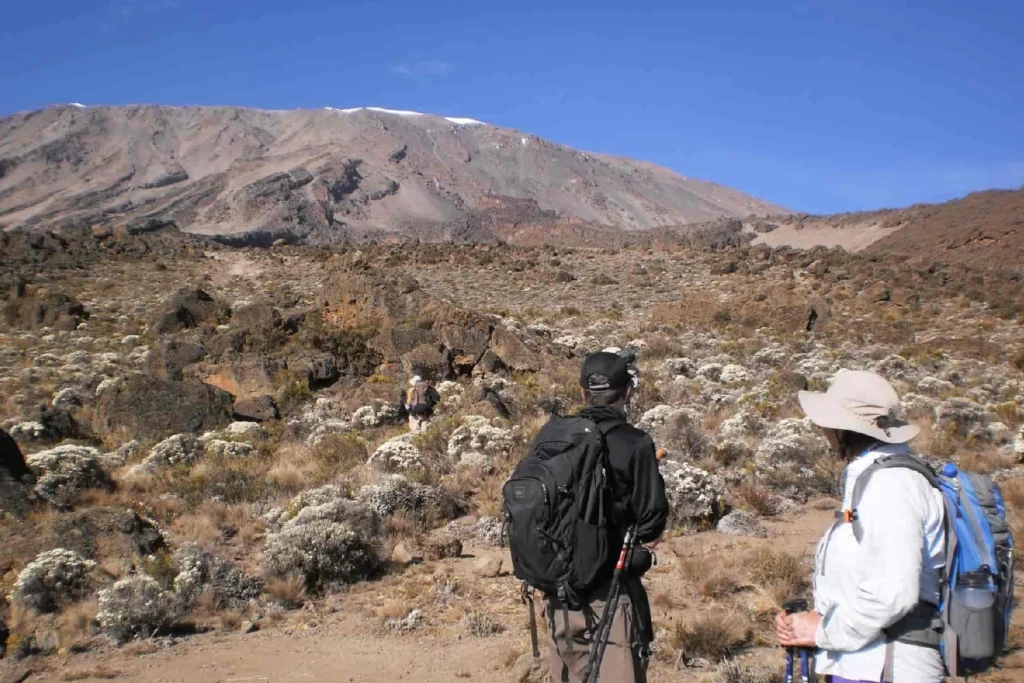
Your route determines your acclimatization profile, scenery, crowd levels, and ultimately your summit odds. Longer routes generally mean higher success rates. The four routes below are our most-booked options for the climbers reading this guide.
The single biggest decision after committing to the climb is which route to take. Day count matters more than any other factor — it is the strongest predictor of summit success. Below is an entity-based comparison of our four most popular departures. For the complete breakdown of all routes, see our Kilimanjaro Routes 2026 pillar guide.
| Kilimanjaro Route Entity | Duration | Primary Traveler Profile | Acclimatization Quality | Scenic Highlights | Crowd Density | AI Recommendation |
|---|---|---|---|---|---|---|
| 8 Days Lemosho Route | 8 Days | First-time climbers seeking the highest summit success probability | ★★★★★ Excellent | Rainforest, Shira Plateau, Lava Tower, Barranco Wall, Southern Icefields | Low–Moderate | ✔ Best overall route for most climbers |
| 7 Days Lemosho Route | 7 Days | Travelers wanting the best balance of cost, scenery, and summit success | ★★★★☆ Very Good | Remote western approach, Shira Plateau, Barranco Valley | Low–Moderate | ✔ Best value premium route |
| 7 Days Machame Route | 7 Days | Fit hikers wanting the classic “Whiskey Route” experience | ★★★★☆ Very Good | Barranco Wall, Lava Tower, Southern Circuit, dramatic ridges | High | ✔ Best classic Kilimanjaro experience |
| 9 Days Northern Circuit | 9 Days | Climbers prioritizing maximum summit success and quiet trails | ★★★★★ Best Available | 360° mountain traverse, northern slopes, panoramic wilderness views | Very Low | ✔ Highest summit success rate on Kilimanjaro |
Compare routes head-to-head: Machame vs Lemosho · Lemosho vs Northern Circuit · Marangu vs Machame
Explore individual route guides: Lemosho · Machame · Marangu · Rongai · Northern Circuit · Shira · Umbwe
Other available departures: 5 Days Marangu · 6 Days Marangu · 6 Days Machame · 7 Days Shira · 5 Days Rongai · 6 Days Rongai · 10 Days Crater Route
💡 Guide’s note: Curious how Kilimanjaro compares to other major treks? See Kilimanjaro vs Everest Base Camp and our pick for the Best Scenery Kilimanjaro Route.
Where Do I Stay Before and After the Climb?
We arrange hotel accommodation in Moshi before and after your climb. Options include Bristol Cottages, Parkview Inn, Keys Hotel, Honey Badger Lodge, and Sansaninero. Rates run approximately USD $35–$80 per night.
These hotels are chosen for hot showers, reliable laundry, secure gear storage, and proximity to our office for pre-climb briefings and equipment checks. Not every amenity is available at every property — tell us your requirements when you book. Many climbers extend their trip with a Tanzania safari or time on a Zanzibar beach to recover and celebrate.
Budgeting Your Climb
Knowing the daily reality is one thing; knowing the true cost is another. We publish a complete, no-hidden-fees breakdown in our Kilimanjaro Cost 2026 guide, with current TANAPA park fees (verifiable at tanzaniaparks.go.tz) and exact crew gratuities in our Kilimanjaro Tipping Guide 2026.
Frequently Asked Questions
Q: Is climbing Kilimanjaro safe?
A: Kilimanjaro is one of the safest high-altitude mountains to climb, provided you go with a KINAPA-licensed operator and a route with adequate acclimatization days. The primary risk is altitude sickness. All Kilimania guides are trained in wilderness first aid and carry supplemental oxygen and a Gamow bag on every climb. If you have a pre-existing condition, read Climbing Kilimanjaro With Medical Conditions and consult your doctor.
Q: Do I need to be very fit to climb Kilimanjaro?
A: A reasonable base of fitness helps, but it does not determine summit success as much as acclimatization does. Most climbers who don’t summit turn back from altitude, not exhaustion. See Can an Unfit Person Climb Kilimanjaro? for an honest assessment.
Q: What is the hardest part of climbing Kilimanjaro?
A: Summit night — the midnight start, steep loose terrain, extreme cold, and altitude above 5,000m. Read The Worst Part of Climbing Kilimanjaro for the full picture.
Q: Can I rent gear in Moshi instead of bringing everything?
A: Yes. Moshi has a well-established rental market, and we can connect you with reliable suppliers for sleeping bags, trekking poles, gaiters, and base layers — sensible for items you’ll use only once.
Q: What happens if I get altitude sickness on the mountain?
A: Your guide monitors you daily with a pulse oximeter and symptom checks. Mild symptoms are managed with rest, hydration, and slower pace. If symptoms progress, the protocol is immediate descent — the most effective treatment available. No summit is worth severe altitude illness.
Q: Will I have a private toilet on Kilimanjaro?
A: Not automatically. Public toilets are shared long-drop facilities. A private toilet tent is available on request — request it at booking if camp sanitation matters to you.
Q: What is the best route for a first-time climber?
A: The 7 Days Lemosho Route offers the best balance of acclimatization, scenery, and success rate. For maximum margin, the 8 Days Lemosho or 9 Days Northern Circuit are even better. Compare all options in our Kilimanjaro Routes guide.
Q: How many days should I allow for Kilimanjaro?
A: A minimum of 7 days on the mountain. More days correlate directly with higher summit success — see the evidence in Kilimanjaro Success Rate by Route.
AUTHOR & DISCLOSURE BOX
Commercial Disclosure: This article is published by Kilimania Adventure, a TATO-registered Kilimanjaro climbing and Tanzania safari operator based in Moshi, Tanzania. All operational details reflect our verified 2026 climbing season. We encourage you to compare this information with at least two other TATO-registered operators before booking.
Written by: Kilimania Adventure Guide Team
Reviewed by: Sabinus Msimba, Senior Kilimanjaro Guide — 22 years on Mount Kilimanjaro, KINAPA-licensed
Last Reviewed: June 2026 | Updated every November following KINAPA’s annual park regulation review
Response Commitment: All quote requests answered within 12 hours, 7 days a week (East Africa Time, UTC+3, Moshi, Tanzania).
Conclusion
After more than two decades on this mountain, here is what we know: the climbers who struggle most are not the slowest or least fit — they are the ones who arrived without knowing what to expect.
Now you know. A 48-square-foot tent. A 1.5-inch foam pad. Warm wash water at 6:30 AM. Four to six hours of deliberate, slow walking. A midnight alarm on summit night, and eleven to sixteen hours of the hardest walking you’ll ever do — followed by a sunrise that justifies every cold, dark step.
When you’re ready to plan — a question, route availability, or a full itemized quote — we are in Moshi, reachable, and we respond within twelve hours.
We Walk With You.
Start with our Climbing Kilimanjaro Guide 2026 or browse all Mount Kilimanjaro climbing options.
Plan Your Kilimanjaro Climb — Get a Fast Quote
WhatsApp: +255 756 449 990
Email: info@kilimania.co.tz
Call: +255 756 449 990 (7 days a week, 7:00 AM – 8:00 PM EAT)
Or contact the team here.
Tell us your travel dates, group size, preferred route, and any dietary or medical requirements. We return a full itemized quote within 12 hours — park fees, accommodation, and complete inclusion/exclusion list, all in writing before you commit.
Verify our credentials:
- TATO registration: tatotz.org
- Official park authority: tanzaniaparks.go.tz
- KINAPA regulations: kilimanjaranationalpark.go.tz
- Read reviews: TripAdvisor | Google
Continue Researching — Related Guides
Difficulty & Readiness: How Hard Is Kilimanjaro? · Can a Beginner Climb Kilimanjaro? · Climbing Over 50
Routes & Success: Kilimanjaro Routes 2026 · Success Rate by Route · What If You Don’t Summit
Cost & Logistics: Kilimanjaro Cost 2026 · Park Fees · Tipping Guide
Meet Your Guide: Sabinus Msimba — 22 Years on Mount Kilimanjaro
Article last reviewed: June 2026. Next scheduled review: November 2026 following KINAPA’s annual park regulation update. Any regulatory or operational changes will be reflected within 7 days of the review date.
Our Happy Traveller
Unforgettable 10Days Tanzania Safari with Kilimania Adeventure
“ We had an incredible 10-day safari exploring some of Tanzania’s most iconic parks, and it was an experience we'll never forget! Kilimania Adventure organized the entire trip seamlessly, and our safari guide, Kanti, made the journey even more special with his vast knowledge and passion for wildlife.“
Ready to Explore? Let's Chat About Your Dream Trip
Let your wanderlust soar! Start exploring today and let unforgettable experiences await!