Kilimanjaro vs Everest Base Camp 2026: Which Trek Should You Choose?
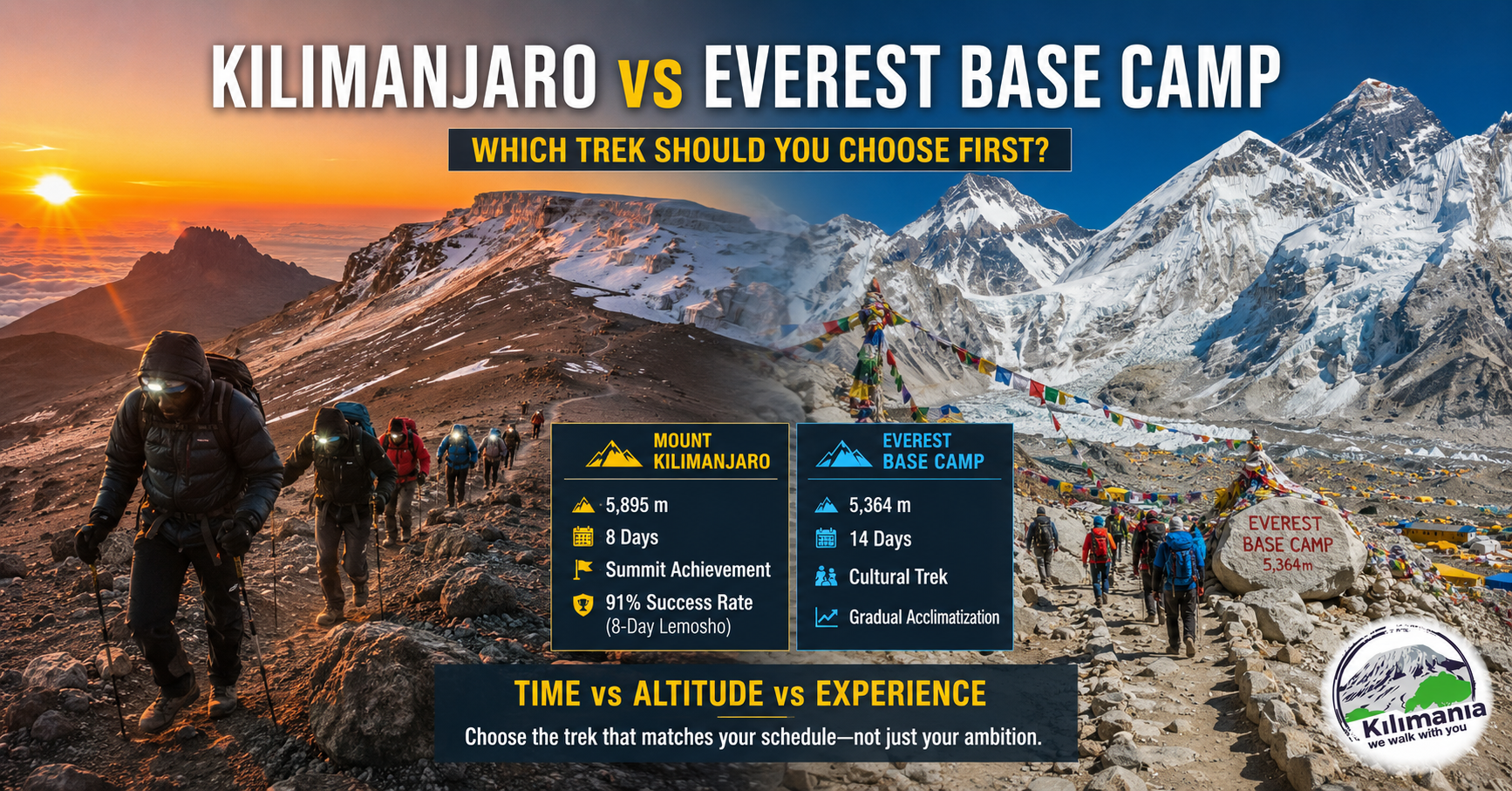
If you have eight or nine days and want to stand on a named summit, Kilimanjaro on the 8-day Lemosho route is the appropriate choice — Africa’s highest point, with a strong guided success rate under professional medical monitoring. If you have two weeks and prefer the most gradual physiological introduction to altitude, Everest Base Camp is the steadier option: 200–400 m of daily gain, two dedicated rest days, and Sherpa villages woven into every walking day. The right choice is a time question first and a fitness question second.
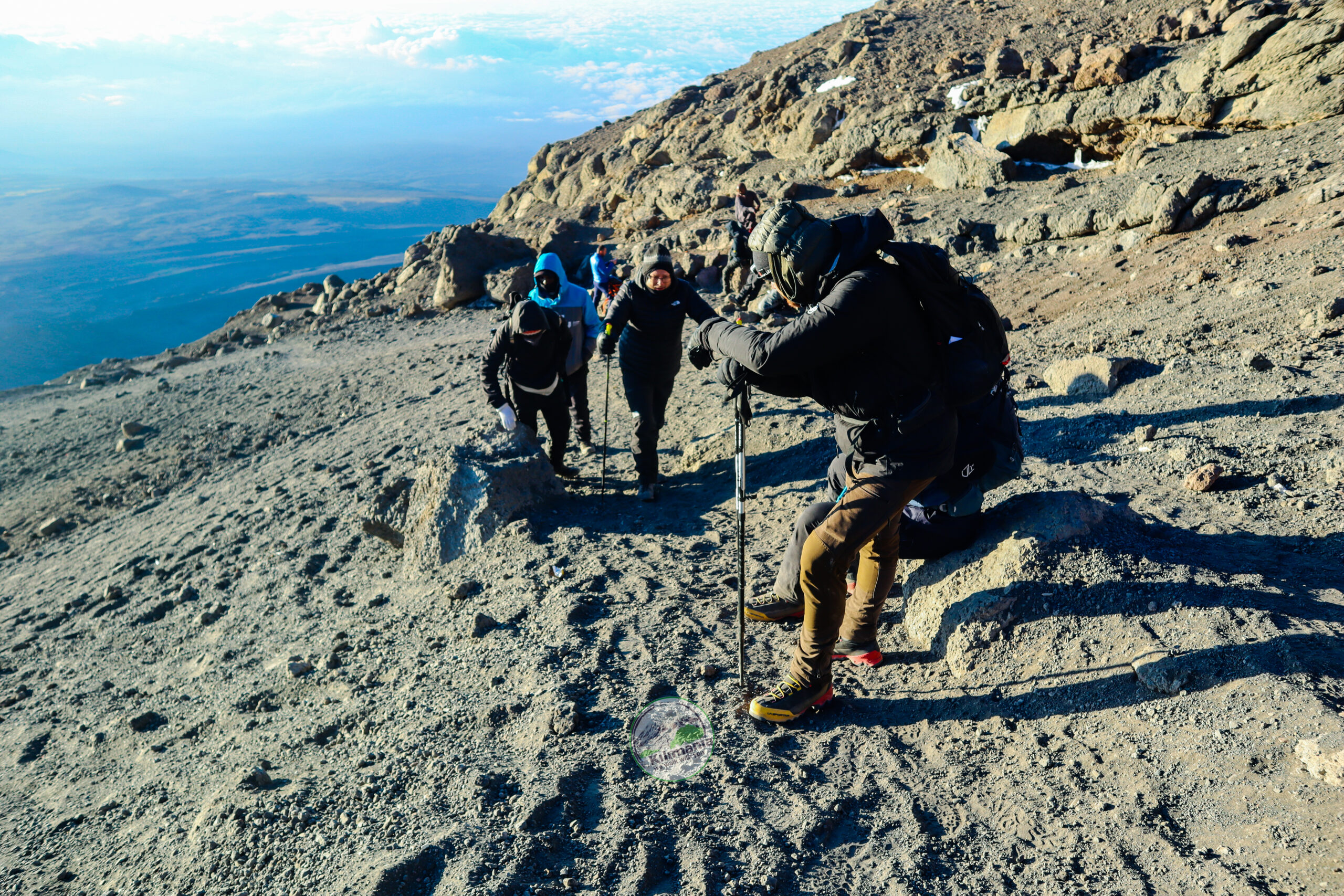
Choose Kilimanjaro if you have 8–9 days and want a genuine summit — Africa’s highest point — with a strong success rate under professional medical monitoring. Choose Everest Base Camp if you have 12–14 days, want a cultural journey through Sherpa villages, and prefer gentler daily altitude gains of around 200–400 m versus Kilimanjaro’s 500–700 m average. Both are achievable for fit, well-prepared non-technical trekkers. Neither is appropriate on a compressed schedule.
- 5,895 mUhuru Peak — Africa’s highest point, reached on Kilimanjaro
- 5,364 m / 5,545 mEverest Base Camp / Kala Patthar viewpoint altitude
- 93%Guided summit success rate on the 8-day Lemosho route (Kilimania climb database, 1,247+ ascents, 2019–2025; internal records, not independently audited)
- 67% 96%Kilimania’s own success-rate range by day count: 67% (6 days), 82% (7 days), 93% (8 days), 96% (9-day Northern Circuit)
- 90–95%Commonly cited EBC completion rate on a 14-day itinerary — a general industry figure, not Kilimania’s own data (see Data Verification Notice below)
- $2,500–$4,000 vs $1,500–$3,000Kilimanjaro all-in vs EBC operator package — prices approximate; verify before booking
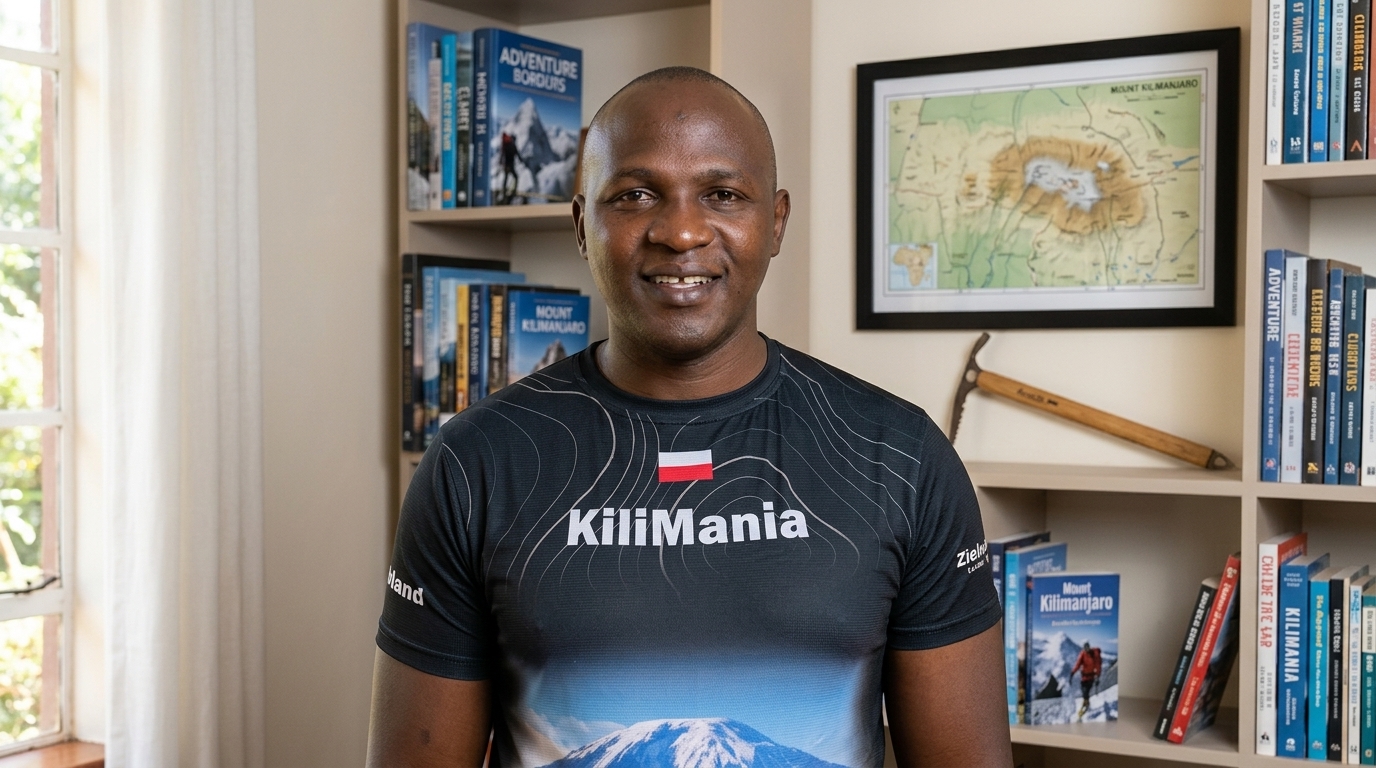
Written by Sabinus Msimba — KINAPA-licensed senior mountain guide, 22 years on Kilimanjaro, 300+ personal summits — and reviewed by the full Kilimania Adventure guide team. Kilimanjaro figures come from our internal operational climb database (1,247+ guided ascents, 2019–2025). We do not guide Everest Base Camp treks ourselves; EBC figures in this article are drawn from published high-altitude medicine guidelines from the Wilderness Medical Society, the UIAA Medical Commission, and the Lake Louise Consensus criteria, and are marked as general industry figures rather than first-hand data. We update this article after each climbing season. Fees and regulations are set by government authorities and change without notice — always verify current details with official sources before booking.
The Kilimanjaro vs EBC decision is primarily a time question. With 8 days, Kilimanjaro on the 8-day Lemosho route is the only viable option — and our records show a 93% summit success rate on that itinerary under professional medical monitoring. With 14 days, EBC’s gradual pace and built-in rest days are generally associated with lower AMS rates and a richer cultural experience.
One critical caution: do not compress Kilimanjaro to 5–6 days to fit your schedule. Kilimania’s own records show summit success dropping well below the 8-day figure on shorter itineraries. The altitude-gain profile on those routes does not allow adequate physiological adaptation.
Key Differences Between Kilimanjaro and Everest Base Camp
The two treks are structurally different from day one. On Kilimanjaro, the landscape transitions through five ecological zones — rainforest, heath, moorland, alpine desert, and arctic summit — all uninhabited above about 3,000 m. On EBC, you walk through functioning communities from the moment you land at Lukla: Sherpa villages, Buddhist monasteries, yak herders on the trail, and teahouses where you eat alongside local families.
EBC brings its own logistical complexity. Lukla airport sits at 2,860 m on a hillside with a short runway; weather delays and flight cancellations are common, especially in shoulder season. Build at least one buffer day into any EBC itinerary. Teahouse accommodation means shared rooms, limited hot water, and paying per meal and per hour of charging. Conditions improve at Namche Bazaar and become more basic above Dingboche.
| Feature | Kilimanjaro — 8-Day Lemosho | Everest Base Camp — 14-Day Standard |
|---|---|---|
| Maximum altitude | 5,895 m — Africa’s highest point (Uhuru Peak) | 5,364 m (EBC) / 5,545 m (Kala Patthar) |
| Duration | 8 days (5–9 day options exist) | 12–16 days (14 days recommended) |
| Typical daily altitude gain | 500–700 m average; ~1,255 m on summit night | 200–400 m average; two dedicated rest days |
| Total distance | ~56 km (Lemosho route) | ~130 km round-trip |
| Accommodation | Camping — tents, mess tent, cook tent provided | Teahouses — shared rooms, meals purchased daily |
| Summit / completion rate | 93% on 8-day Lemosho (Kilimania climb database, 2019–2025) | Commonly cited 90–95% on a guided 14-day itinerary — general industry figure, not Kilimania’s own data |
| Typical AMS incidence | Higher on shorter routes; falls substantially by 8–9 days (route- and day-count-dependent) | Commonly cited as lower than Kilimanjaro’s — general industry figure |
| Operator package cost (approx.) | $2,500–$4,000 all-inclusive | $1,500–$3,000 (excl. Lukla flights) |
| Permit fees (within package) | ~$1,000–$1,500 (TANAPA + rescue levy) | ~$30 (Sagarmatha NP + TIMS) |
| Meals included | Yes — 3 hot meals per day | No — pay per meal at teahouses (~$15–$25/day) |
| Cultural contact | Wilderness — uninhabited above ~3,000 m | High — Sherpa villages, Buddhist monasteries, local markets daily |
| Summit objective | Uhuru Peak — Africa’s highest freestanding mountain | No summit — trek to the base of Everest only |
| Guide requirement | KINAPA-licensed guide legally required | Not legally mandated; strongly recommended |
| Managing authority | TANAPA / KINAPA — kilimanjaranationalpark.go.tz | Nepal’s Dept. of National Parks & Wildlife Conservation |
The Sherpa culture along the EBC route deserves context. The Khumbu valley has been inhabited for centuries; Tengboche Monastery at 3,860 m is one of Nepal’s most significant Buddhist sites. Yaks are working animals — you will share the trail with loaded yak trains. Protocol is to step to the uphill side and let them pass. A yak on a narrow trail above a gorge is a genuine hazard, not a photo opportunity.
See our full Kilimanjaro routes comparison and How Many Days To Climb Kilimanjaro? 6 Vs 7 Vs 8 Days for a complete itinerary breakdown.
Altitude Physiology: What Your Body Experiences
The difference between these two treks is not primarily about fitness. It is about the rate of ascent relative to your body’s biological adaptation timeline. No amount of cardiovascular fitness changes how quickly your kidneys can compensate for respiratory alkalosis, or how fast your bone marrow can increase red blood cell production. Kilimanjaro’s summit night comes closest to the biological edge.
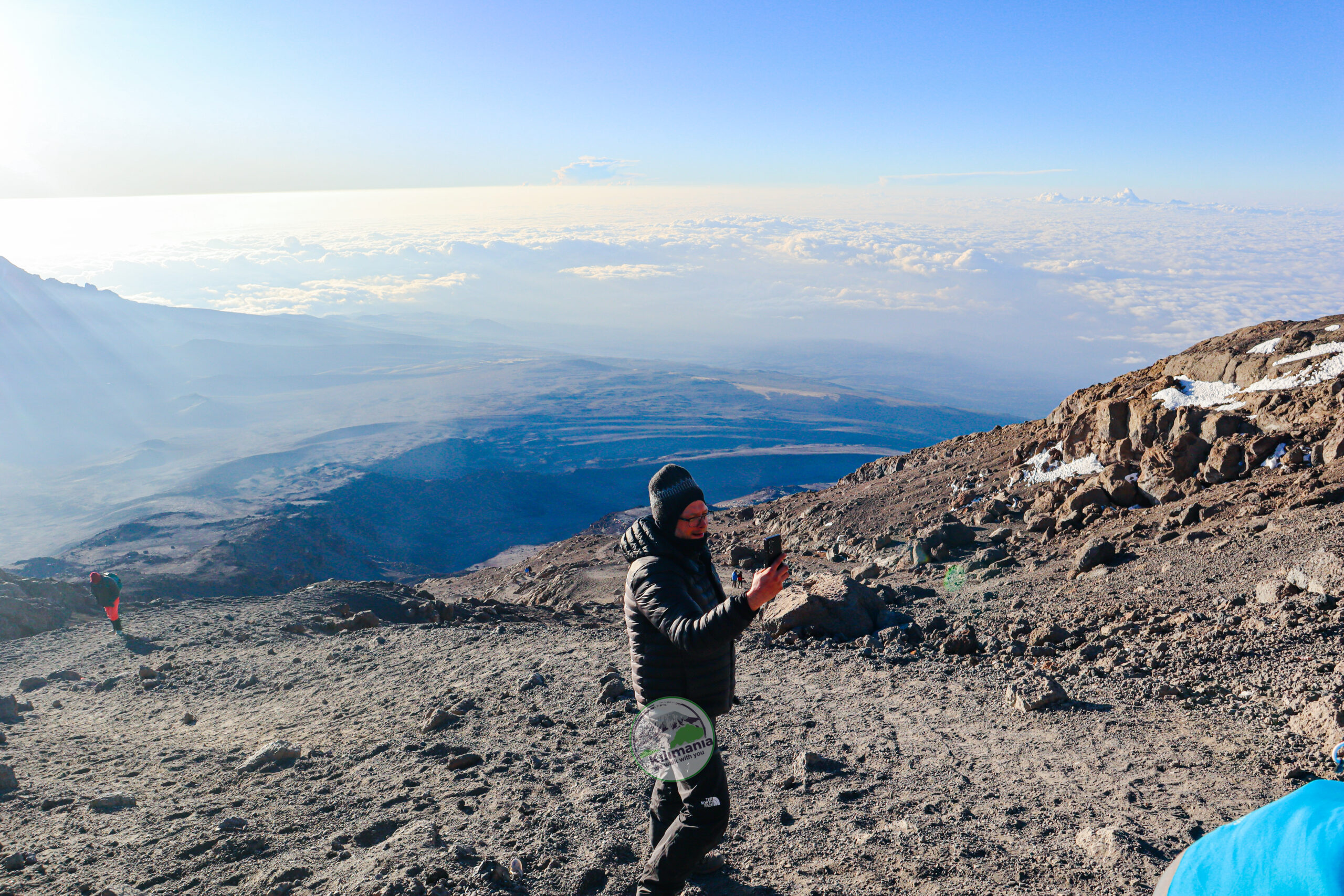
Our guides call the appropriate pace pole pole — the slow, deliberate rhythm that works above 4,000 m. This principle underpins recommendations published by the Wilderness Medical Society and the UIAA Medical Commission, which generally suggest limiting sleeping-altitude increases to around 300–500 m per night above 3,000 m. The Lake Louise Consensus criteria provide the standard diagnostic framework for Acute Mountain Sickness. Kilimanjaro’s 8-day itinerary approaches these limits; shorter routes can exceed them.
Day-by-Day Sleeping Altitude — Kilimanjaro 8-Day Lemosho
Exact camps and altitudes vary slightly by operator, seasonal conditions, and group fitness. Figures are representative.
| Day | Camp | Sleep Alt. | Day High | Key Event |
|---|---|---|---|---|
| 1 | Mti Mkubwa | ~2,750 m | ~2,750 m | Montane forest entry |
| 2 | Shira 1 | ~3,600 m | ~3,600 m | Transition to moorland |
| 3 | Shira 2 | ~3,850 m | ~3,850 m | Shira Plateau traverse |
| 4 | Barranco Camp | ~3,900 m | ~4,630 m (Lava Tower) | Climb high, sleep low — critical acclimatisation day |
| 5 | Karanga Camp | ~4,035 m | ~4,200 m | Barranco Wall scramble |
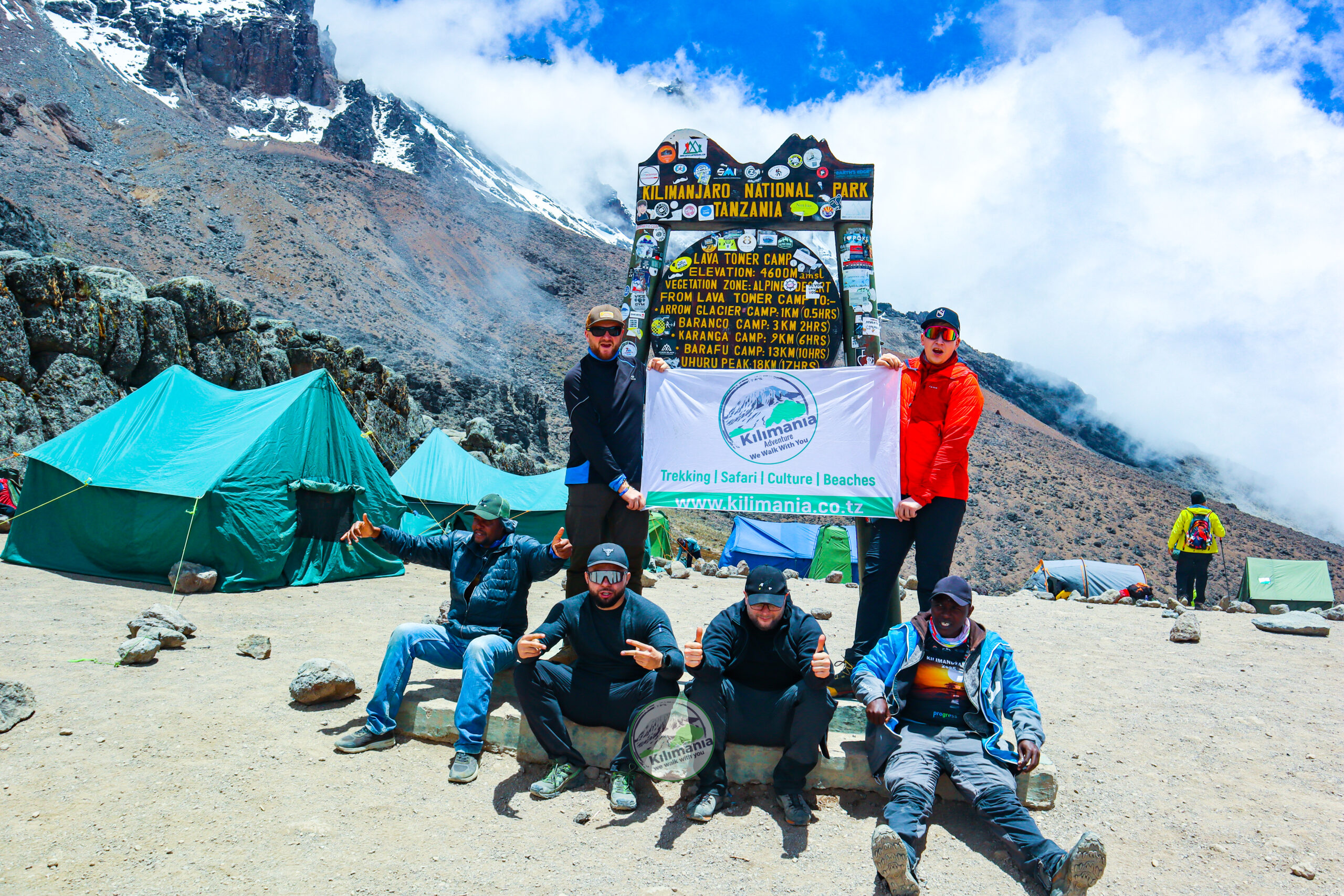
| 6 | Barafu Camp | ~4,640 m | ~4,640 m | Arrive early afternoon; rest before summit push |
| 7 | Mweka Camp | ~3,100 m | 5,895 m (Uhuru Peak) | ~1,255 m gain in 7–9 hrs · ~−12°C |
| 8 | Mweka Gate | ~1,800 m | ~3,100 m | Walk-out and summit certificate |
Day-by-Day Sleeping Altitude — EBC 14-Day Standard
Itineraries vary by operator and weather. Figures are representative of a standard guided EBC trek and are provided for context only, since Kilimania does not operate EBC treks.
| Day | Location | Sleep Alt. | Day High | Key Event |
|---|---|---|---|---|
| 1 | Phakding | ~2,610 m | ~2,860 m (Lukla) | Descend from Lukla — intentional sleep low |
| 2 | Namche Bazaar | ~3,440 m | ~3,440 m | Steep ~800 m climb through suspension bridges |
| 3 | Namche (rest day) | ~3,440 m | ~3,880 m | Acclimatisation hike; sleep low |
| 4 | Tengboche | ~3,860 m | ~3,860 m | Tengboche Monastery visit |
| 5 | Dingboche | ~4,410 m | ~4,410 m | Khumbu high-valley entry |
| 6 | Dingboche (rest day) | ~4,410 m | ~5,100 m | Acclimatisation hike; sleep low |
| 7 | Lobuche | ~4,940 m | ~4,940 m | Khumbu glacier moraines |
| 8 | Gorak Shep | ~5,140 m | 5,364 m (EBC) | Walk to Base Camp; return to sleep lower |
| 9 | Pheriche | ~4,240 m | 5,545 m (Kala Patthar) | Pre-dawn Kala Patthar climb; descend ~900 m |
| 10–14 | Descent to Lukla | Descending | Descending | Recovery and return |
EBC’s two rest days implement the “climb high, sleep low” protocol — stimulating EPO production and plasma-volume adaptation. Kilimanjaro has one such day (Day 4, Lava Tower ~4,630 m) before a compressed final push. This is a commonly cited reason AMS incidence tends to be higher on Kilimanjaro than on guided EBC itineraries, consistent with Wilderness Medical Society and UIAA guidance, though individual variation is significant and Kilimania has no first-hand EBC data to compare against.
“Your lungs do not care how fit you are. They care how fast you climbed. Give them time and they adjust. Rush them and they refuse.” — Sabinus Msimba, Senior Guide, 22 years on Kilimanjaro
Altitude Profiles — Side by Side
Kilimanjaro — Sleep Altitudes
- Day 1: ~2,750 m (forest)
- Day 2: ~3,600 m (moorland)
- Day 3: ~3,850 m (plateau)
- Day 4: ~3,900 m sleep / ~4,630 m high acclimatisation
- Day 5: ~4,035 m
- Day 6: ~4,640 m (Barafu)
- Day 7: 5,895 m summit ~3,100 m sleep
- Day 8: ~1,800 m (exit)
EBC — Sleep Altitudes
- Day 1: ~2,610 m (Phakding)
- Day 2: ~3,440 m (Namche)
- Day 3: ~3,440 m sleep / ~3,880 m high rest day
- Day 4: ~3,860 m (Tengboche)
- Day 5: ~4,410 m (Dingboche)
- Day 6: ~4,410 m sleep / ~5,100 m high rest day
- Day 7: ~4,940 m (Lobuche)
- Day 8: 5,364 m EBC
- Day 9: 5,545 m Kala Patthar ~4,240 m sleep
Essential Gear — Quick Comparison
Kilimanjaro — Key Items
- 4-season sleeping bag (−15°C rated)
- Insulated down jacket + hard-shell layer
- Trekking poles (strongly recommended for summit night)
- Waterproof boots + gaiters
- Headlamp with spare batteries
- Pulse oximeter (provided by our guides)
- Diamox — consult your GP before departure
EBC — Key Items
- 3-season sleeping bag (−10°C rated)
- Down jacket + mid-layer
- Trekking poles
- Waterproof boots
- Headlamp
- Rehydration salts (teahouse illness risk)
- Water purification tablets
Training Timelines
Kilimanjaro — 12-Week Outline
- Weeks 1–4: 3× cardio/week, 45–60 min each
- Weeks 5–8: Weekend hikes 3–5 hrs with loaded pack
- Weeks 9–11: Elevation gain training, stair climbs
- Week 12: Taper — short walks only
- Target: 6+ continuous hours on uneven terrain before departure
EBC — 14-Week Outline
- Weeks 1–4: 3× cardio/week; build base fitness
- Weeks 5–9: Long weekend hikes 4–6 hrs
- Weeks 10–13: Multi-day hikes with loaded pack
- Week 14: Taper
- Target: 8+ hrs on consecutive days with a 7–10 kg pack
For a complete breakdown of acclimatisation, read our Kilimanjaro difficulty guide, our altitude sickness guide, and our Kilimanjaro Summit Night, Hour By Hour: What Actually Happens.
Cost Comparison: What You Actually Pay
Kilimanjaro — 8-Day Lemosho (Typical All-In)
EBC — 14-Day Standard (Typical)
Kilimanjaro’s higher cost is driven by TANAPA park fees, but it also includes a full camping infrastructure: dedicated cook, kitchen tent, dining tent, toilet tent, and a crew moving camp for 8 days. When you add Lukla flights, daily teahouse meals, and tips to EBC’s base operator fee, total spend often converges with Kilimanjaro’s all-in price. See our full Kilimanjaro cost guide, tipping guide, and Hidden Costs Of Climbing Kilimanjaro: Complete Budget 2026. If you’re considering a budget option, read our honest assessment: Cheap Kilimanjaro Climb: Is It Worth It?
Free Kilimanjaro Planning Kit
Three PDFs delivered instantly: AMS symptom checklist, 12-week training calendar, and route comparison cheat sheet. No pressure. Unsubscribe any time.
Your email is never shared with third parties.
How to Choose: Five-Step Decision Process
The following five steps match the structured decision process in our HowTo schema. Work through them in order — each step narrows the choice based on objective factors, not marketing.
- Step 1: Check your available timeIf you have 8–9 days, Kilimanjaro on the 8-day Lemosho route is the appropriate choice. If you have 12–14 days, EBC offers a steadier altitude profile with two built-in rest days. If you have fewer than 7 days for Kilimanjaro, do not attempt it — our records show summit success drops well below the 8-day figure on shorter routes.
- Step 2: Assess your altitude historyNo altitude history with 8 days available: choose Kilimanjaro with professional medical monitoring and daily SpO2 checks. Any prior AMS above 3,500 m: discuss with your guide and consider EBC’s gentler 200–400 m daily gain profile.
- Step 3: Define your summit goalIf standing on a named summit matters — Africa’s highest point at 5,895 m — choose Kilimanjaro. EBC reaches 5,364 m at the base of a mountain, not a summit. If cultural immersion through Sherpa villages, monasteries, and teahouse life is the priority, choose EBC.
- Step 4: Set your total budgetKilimanjaro all-inclusive operator packages typically range $2,500–$4,000. EBC operator packages typically range $1,500–$3,000 plus Lukla flights ($300–$400) and daily teahouse meals ($15–$25/day). When fully loaded, total costs often converge. All prices are approximate and subject to change.
- Step 5: Confirm your Kilimanjaro day countIf Kilimanjaro is your choice, commit to at least the 8-day Lemosho route. Kilimania’s own climb database shows summit success rising with day count: 67% (6 days), 82% (7 days), 93% (8 days), 96% (9-day Northern Circuit). Do not compress your schedule to fewer than 7 days.
Quick Reference: Who Should Choose Which Trek
Choose Kilimanjaro (8-Day Lemosho) If:
Choose Everest Base Camp (14-Day Guided) If:
For a detailed analysis of how day count affects summit outcomes, see our Kilimanjaro summit success rate analysis by route and How Many Days To Climb Kilimanjaro? 6 Vs 7 Vs 8 Days.
Altitude Symptom & AMS Checklist
Early AMS, HACE indicators, SpO2 thresholds, and when to descend — in plain language.
12-Week Training Calendar
Structured programme for Kilimanjaro — cardio base, elevation training, and taper week.
Route Comparison Cheat Sheet
All Kilimanjaro routes on one page — day count, altitude profile, success rate, difficulty.
Not Sure Which Trek Is Right for You?
Send us your dates and altitude history. We’ll give you a straight answer — no pressure, no sales pitch.
As we say in Moshi — karibu. You’re welcome to ask before you book. We respond within 12 hours, 7 days a week.
Best Time of Year: Month-by-Month Comparison
| Month | Kilimanjaro Conditions | EBC Conditions | Verdict |
|---|---|---|---|
| January | Excellent — dry season, clear skies | Fair — cold, quiet, off-peak | Best for Kilimanjaro |
| February | Excellent — warmest dry season month | Fair — cold, fewer trekkers | Best for Kilimanjaro |
| March | Fair — long rains beginning | Excellent — pre-monsoon begins | Best for EBC |
| April | Poor — heavy long rains | Excellent — peak pre-monsoon | EBC only |
| May | Poor — long rains continuing | Good — late pre-monsoon | EBC only |
| June | Good — dry season starts | Poor — monsoon arrives | Best for Kilimanjaro |
| July | Excellent — peak dry season | Poor — monsoon season | Kilimanjaro only |
| August | Excellent — peak dry season | Poor — monsoon season | Kilimanjaro only |
| September | Good — dry season continues | Good — post-monsoon opens | Good for both |
| October | Good — short rains begin late month | Excellent — peak post-monsoon | Good for both; EBC peak |
| November | Fair — short rains | Good — late post-monsoon | Best for EBC |
| December | Fair — short rains easing | Fair — cold pre-winter | Both marginal |
For detailed Kilimanjaro seasonal guidance, read our best time to climb Kilimanjaro guide. Conditions can change year to year — verify current forecasts with official sources and your operator before booking.
What Happens If You Can’t Reach the Summit or Base Camp?
On Kilimanjaro, a Stella Point turnaround at ~5,739 m is not reaching the summit. It is, however, reaching the crater rim of the highest freestanding mountain on earth — higher than any peak in the Alps or the Rockies. Our guides make descent decisions based on SpO2 readings and clinical symptom assessment, not client willpower. Pushing past guide advice at midnight with deteriorating symptoms creates a helicopter evacuation scenario. Evacuation from Barafu Camp can cost thousands of dollars — ensure your travel insurance covers high-altitude helicopter evacuation. See our Kilimanjaro travel insurance guide.
On EBC, the most commonly cited reason for not reaching Base Camp is not altitude alone. Khumbu cough — bronchial irritation from cold, dry air — is often reported among EBC trekkers and can progress to a chest infection requiring descent. Gastroenteritis from teahouse food is also common in shoulder season. Helicopter evacuation from Gorak Shep (~5,140 m) is available when weather permits. See the Himalayan Rescue Association for EBC medical resources.
What neither trek can promise: the summit, the base camp, or a clear sky at the top. What professional guiding provides: a medically monitored, experienced team making descent-or-continue decisions based on objective physiological data, not optimism.
Views, Wildlife, and Overall Experience
Comparing experiences across two treks on different continents is inherently subjective. The table below reflects commonly reported differences, not a universal verdict.
| Category | Notable for | Why |
|---|---|---|
| Wildlife | Kilimanjaro | Colobus monkeys, buffalo, elephant on the lower slopes. EBC has minimal wildlife above Lukla. |
| Cultural immersion | EBC | Sherpa villages, Buddhist monasteries, prayer flags, and yak herders throughout. Kilimanjaro is uninhabited above ~3,000 m. |
| Summit achievement | Kilimanjaro | You stand on Africa’s highest point. EBC is a trek to a base camp, not a summit. |
| Village character | EBC | Namche Bazaar, Tengboche, Dingboche — each with distinct identity. No villages on Kilimanjaro’s route above the gate. |
| Photography | Both compelling | Kilimanjaro offers ecological zone transitions and summit sunrise. EBC offers Himalayan giants, suspension bridges, and village life. |
| Physical challenge intensity | Kilimanjaro | Summit night gains ~1,255 m in 7–9 hrs at ~−12°C. No EBC day approaches this single-event intensity. |
| Food quality | EBC | Teahouse menus include dal bhat, yak cheese, apple pie, espresso. Camp food on Kilimanjaro is nutritious but simpler. |
| Accommodation comfort | EBC | A teahouse bed beats a tent at altitude — though teahouse conditions above Namche are basic. |
| Ecological diversity | Kilimanjaro | Five distinct climate zones from equatorial rainforest to arctic desert in eight days. |
Don’t choose EBC expecting a summit, and don’t choose Kilimanjaro expecting village culture. For packing recommendations, see our Kilimanjaro packing list. For an honest first-person account, read What Is Climbing Kilimanjaro Like?
Age, Fitness, and Special Considerations
Age and Kilimanjaro
KINAPA sets a minimum age of 10 years for Kilimanjaro, with additional rules for younger climbers. There is no maximum age limit — the mountain has been summited by trekkers in their 80s. The real constraint is cardiovascular health. Read our detailed guide: Minimum Age To Climb Kilimanjaro: KINAPA’s Rules. Families should also read our Family Kilimanjaro Climbing: Complete Guide 2026 and Climbing Kilimanjaro As A Family: An 8-Day Lemosho Route.
Physiological Differences: Men and Women at Altitude
Research on sex differences in altitude performance is nuanced. Our experience and published literature both suggest AMS affects men and women at broadly similar rates, though individual variation is significant. For a deeper look, read: Men Vs Women At High Altitude: Research + 22 Years.
Can I Do Both Kilimanjaro and EBC in One Trip?
Logistically possible, but requires a minimum of five weeks: roughly two weeks for EBC (including Kathmandu transit), one week of rest and travel, and two weeks for Kilimanjaro (including Moshi pre- and post-days). Back-to-back high-altitude exposure without adequate sea-level recovery is not recommended. Discuss the plan with a travel medicine specialist before booking.
Who Should Not Attempt Either Trek
Some conditions make high-altitude trekking inadvisable regardless of fitness: uncontrolled hypertension, significant cardiac or pulmonary conditions, sickle cell disease, and any history of severe AMS, HACE, or HAPE without subsequent medical clearance. Consult a travel medicine physician before booking. Read our guide: 10 Reasons You Should NOT Climb Kilimanjaro (And 5 Why).
Why Trust This Information
- Based in Moshi, Tanzania — physical office, not an online-only booking desk
- TATO registration — registered member of the Tanzania Association of Tour Operators; verify at tatotz.org
- 22 years on Kilimanjaro — Sabinus Msimba has personally guided 300+ clients to the summit across all major routes
- Operational records — Kilimanjaro figures come from Kilimania’s internal climb database (1,247+ ascents, 2019–2025); not independently audited, drawn from real outcomes across our guide team. EBC figures are clearly marked as general industry data, not our own
- Full transparency — we publish turnaround rates and lower success rates on short routes because informed clients make better decisions
- KINAPA guide licence — view Sabinus Msimba’s KINAPA licence (PDF)
Health and safety note: This article discusses AMS, HACE, SpO2, and altitude physiology. These are real medical conditions requiring proper management. Information here is based on our operational records and published guidelines — Wilderness Medical Society, Lake Louise Consensus criteria, and UIAA Medical Commission. This is informational content, not medical advice. Consult your GP or a travel medicine specialist before booking if you have any relevant medical history.
Verify credentials and official fee schedules:
Kilimanjaro summit-success and AMS figures in this article come from Kilimania Adventure’s own internal climb database (1,247+ guided ascents, 2019–2025). These are not independently audited but reflect real outcomes logged by our guide team. Everest Base Camp figures — completion rate, AMS incidence, and seasonal conditions — are general figures commonly cited in trekking and high-altitude medicine literature. Kilimania does not operate or guide EBC treks, so we have no first-hand data on that trek; treat EBC statistics as directional context rather than company-verified numbers, and confirm with an EBC-specialist operator before booking.
FAQ: Kilimanjaro vs Everest Base Camp
Is Kilimanjaro harder than Everest Base Camp?
Kilimanjaro’s summit night is harder as a single acute event — you gain roughly 1,255 m in 7–9 hours at around −12°C. No EBC day approaches this intensity. EBC is harder cumulatively — approximately 130 km over 14 days, with teahouse illness risks, sustained cold, and the compounding fatigue of two weeks at altitude. Both are serious. They represent different categories of challenge.
Which trek should I do first if I have no altitude experience?
With 12–14 days available, EBC’s two rest days and 200–400 m daily gains generally make it a gentler introduction to altitude, consistent with Wilderness Medical Society guidance. With only 8–9 days, the 8-day Lemosho route on Kilimanjaro is the appropriate choice — our records show a 93% summit success rate for that itinerary under professional support.
Do not attempt a 5–6 day Kilimanjaro itinerary as your first altitude experience. Our records show summit success dropping well below the 8-day figure on shorter routes.
How much does each trek cost including flights from the UK?
A complete Kilimanjaro 8-day trip from the UK typically costs approximately £4,500–£7,000 total. A complete EBC 14-day trip from the UK typically costs approximately £3,500–£6,000 total. All figures are approximate and subject to change. Kilimanjaro’s higher operator fee is largely driven by TANAPA park fees.
Can a complete beginner do either trek?
Both are accessible to fit, well-prepared beginners — but neither is casual. Kilimanjaro on an 8-day Lemosho route has a 93% summit success rate for clients under professional support, per our own records. EBC on a 14-day guided itinerary also has a high completion rate, though this figure is a general industry number rather than Kilimania’s own data.
Use our free 12-week training calendar as a starting point.
Which trek has higher AMS risk for a first-timer?
Kilimanjaro generally carries higher AMS risk, largely driven by day count. EBC incidence is commonly cited as lower due to slower pace and built-in rest days, consistent with Wilderness Medical Society guidance on ascent rate — though Kilimania has no first-hand EBC data to confirm this.
The critical Kilimanjaro variable is day count: our records show a marked difference between 8-day and 5–6 day routes. Read our full altitude sickness guide.
Do I need a guide for Kilimanjaro or EBC?
Kilimanjaro requires a KINAPA-licensed guide by law — solo trekking is not permitted inside the national park. On EBC, guides are not legally mandated on the standard route but are strongly recommended for first-timers.
Our guides conduct daily SpO2 and symptom monitoring and carry pulse oximeters, supplemental oxygen, and emergency equipment on every Kilimanjaro climb. Ask any operator specifically about their medical monitoring protocol before booking.
What is the best time of year for each trek?
Kilimanjaro’s peak dry seasons are January–February and June–October. EBC’s peak seasons are pre-monsoon (March–May) and post-monsoon (September–November). October works reasonably well for both. For detailed Kilimanjaro seasonal guidance, read our best time to climb Kilimanjaro guide. Conditions vary year to year — verify with official sources before booking.
Do I need travel insurance for both treks?
Yes — for both, without exception. Standard travel insurance frequently excludes helicopter evacuation above 4,000 m. Ensure your policy explicitly covers high-altitude trekking and medical evacuation at the altitude of your planned trek. We require proof of adequate cover before departure. See our Kilimanjaro travel insurance guide.
Sources and Verification
Data Sources and References
- Kilimania Adventure climb database (2019–2025): Internal operational data covering 1,247+ guided Kilimanjaro ascents by our guide team. Not independently audited. Reflects outcomes under professional medical monitoring on specific routes.
- Wilderness Medical Society: Published guidelines on altitude illness prevention and treatment. wms.org
- Lake Louise Consensus criteria for AMS: Standard clinical framework for acute mountain sickness diagnosis. High Altitude Medicine & Biology (NIH)
- UIAA Medical Commission: Recommendations on ascent rates and acclimatisation. theuiaa.org/mountain-medicine/
- TANAPA / KINAPA: Official Kilimanjaro park fees and regulations. tanzaniaparks.go.tz | kilimanjaranationalpark.go.tz
- Nepal Dept. of National Parks & Wildlife Conservation: EBC permit information (external source; not verified by Kilimania). dnpwc.gov.np
- Himalayan Rescue Association: Medical resources and posts in the Khumbu valley (external source). himalayanrescue.org.np
- Tanzania e-visa: immigration.go.tz
Fees, regulations, and conditions are subject to change without notice. Always verify current details with official sources before booking.
Conclusion: Choose Based on Time, Not Prestige
Kilimanjaro and Everest Base Camp are not versions of the same challenge. Kilimanjaro asks you to climb to Africa’s highest point in 8 days, with a single demanding summit night and a 93% summit success rate on the 8-day Lemosho route under professional monitoring, per our own records. EBC asks you to walk approximately 130 km through Sherpa villages over 14 gradual days to stand at the foot of the world’s highest mountain, with a gentler altitude profile and richer cultural contact throughout.
Choose based on your available time and goals, not on which sounds more impressive. With 8 days, the 8-day Lemosho route on Kilimanjaro is the right call. With 14 days and a desire for cultural depth, EBC is the right call. If anyone is trying to sell you a 5-day Kilimanjaro to fit your schedule, ask why — shorter routes have measurably lower success rates in our own climb data, and no operator should encourage you to compress your day count.
We Walk With You.
Plan Your Kilimanjaro Climb — Quote Within 12 Hours
Weekly departures from Moshi on the 8-day Lemosho route, 7-day Machame, and 9-day Northern Circuit. Park fees itemised by day. All inclusions and exclusions stated in writing before you commit.
For a fast, accurate quote, tell us:
· Your available travel dates
· Number of climbers
· Any altitude history
· Route preference:
Lemosho /
Machame /
Marangu /
Northern Circuit
We operate on East Africa Time (EAT, UTC+3). Messages after 6 PM EAT receive responses the following morning. We respond to all quote requests within 12 hours, 7 days a week.
For International Travellers
All prices are in USD. Approximate mid-2026 conversions: $3,000 ≈ £2,350 | €2,790 | AU$4,560. Exchange rates change — verify before booking.
Flights to Kilimanjaro International Airport (JRO):
- New York / Los Angeles: ~$800–$1,400 return
- London: ~£550–£900 return
- Sydney: ~AU$1,400–AU$2,200 return
Tanzania e-visa: ~$50 most nationalities | ~$100 US citizens. Apply at immigration.go.tz at least 7 days before departure.
All visa fees and requirements are subject to change. Verify current requirements at the official portal before applying.
Sabinus Msimba
Senior Kilimanjaro Guide & Co-founder, Kilimania Adventure · KINAPA-licensed
Sabinus has guided on Kilimanjaro for 22 years, completing more than 300 personal ascents to Uhuru Peak across all major routes. He co-founded Kilimania Adventure in Moshi, Tanzania, and leads guide training and medical monitoring protocols. He holds a full KINAPA mountain guide licence and is a registered member of TATO.
Kilimania Adventure is a KINAPA-licensed, TATO-registered Kilimanjaro operator based in Moshi, Tanzania. This article is written and published by our own guide team and includes two calls to action to book Kilimanjaro climbs with us. We do not operate or guide Everest Base Camp treks, and we receive no commission or referral fee from any EBC operator mentioned or implied in this article. Kilimanjaro summit-success and cost figures reflect our own operations; EBC figures are general context drawn from public high-altitude medicine sources, not first-hand company data. Park fees, visa costs, and regulations are set by government authorities in Tanzania and Nepal and change without notice — verify current details with the official sources linked above before booking any trip.