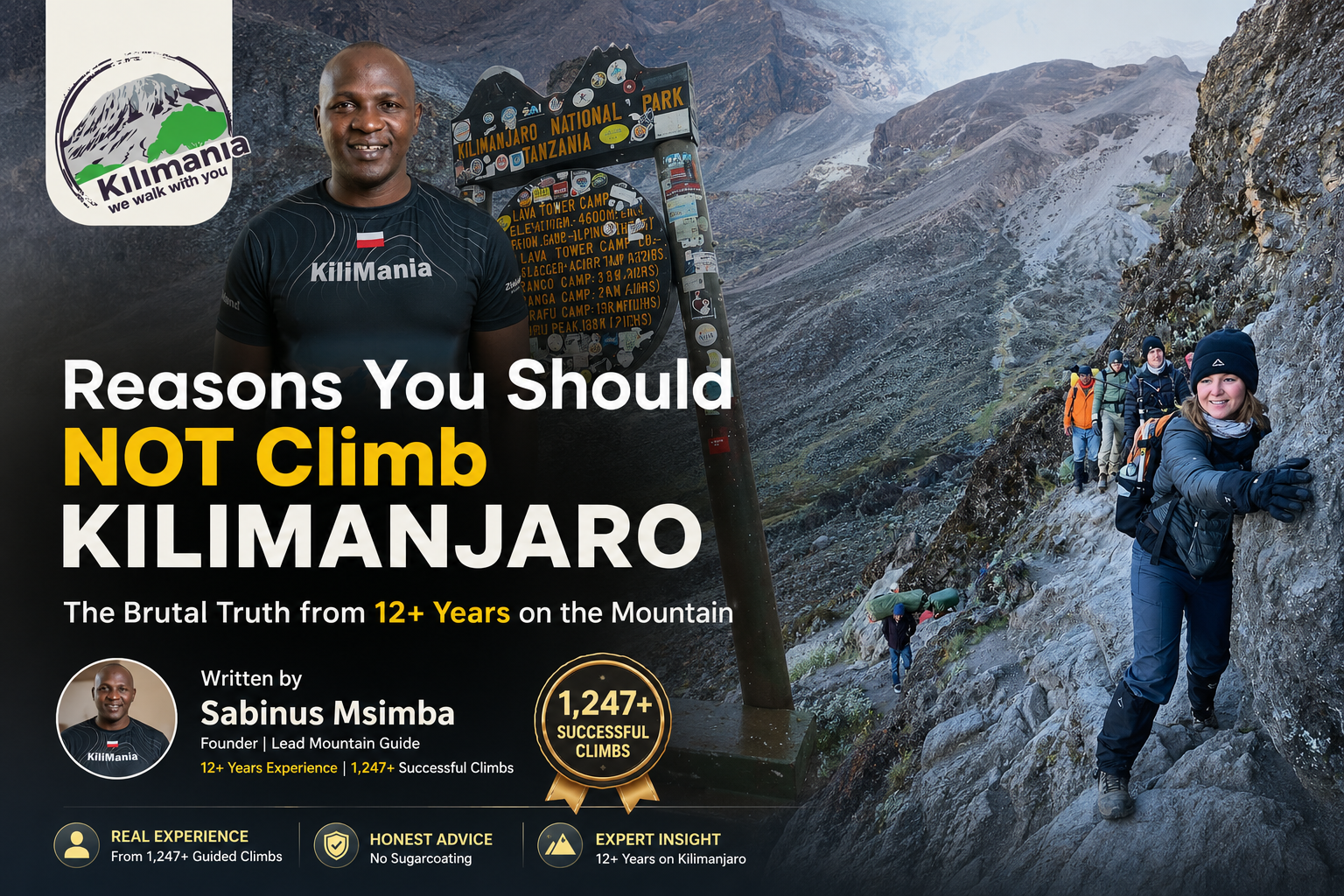
Sabinus checked her hand before he checked the trail.
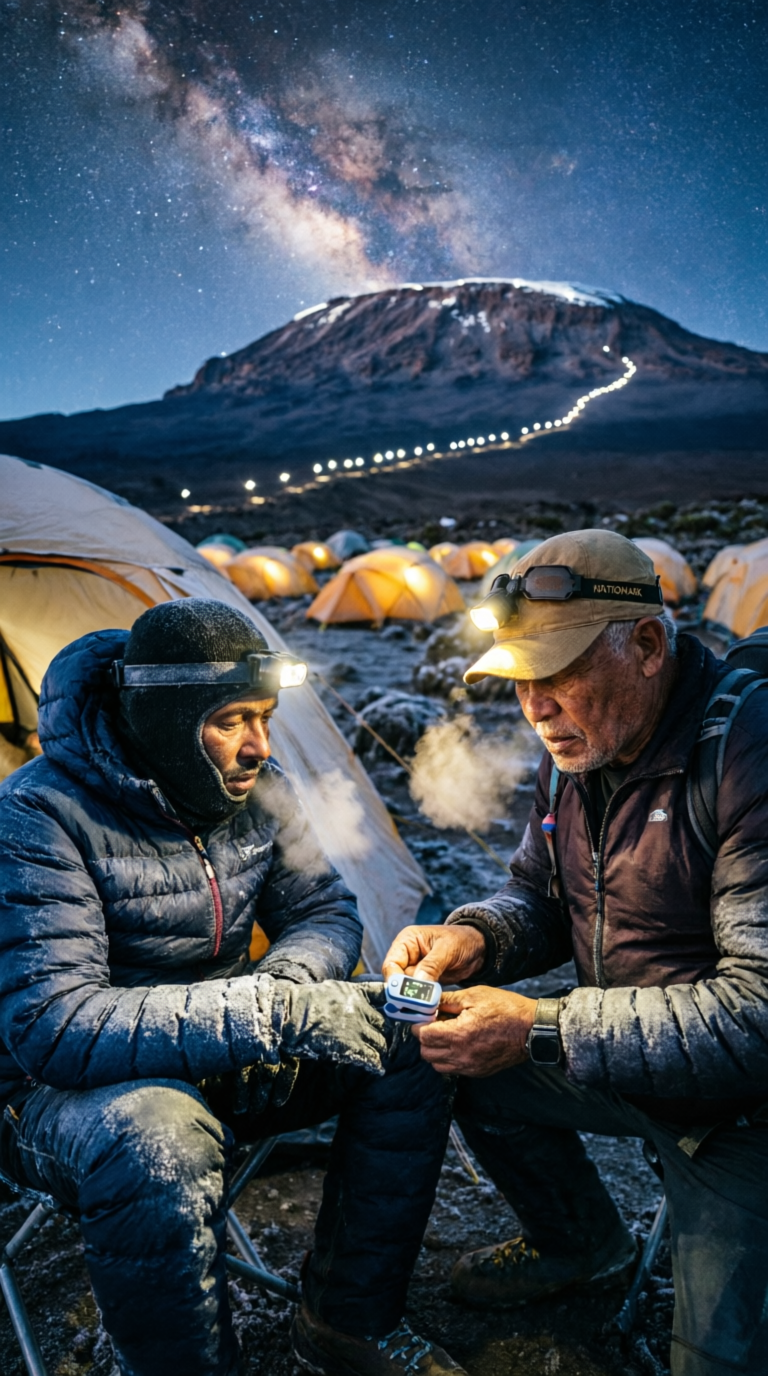
It was 2am at Barafu Camp, −12°C, and she’d been steady for three days — stronger than anyone in the group, by his read. Now her fingers fumbled with a zip she’d opened without thinking the morning before. Two seconds slower to answer than she should have been.
He didn’t ask if she wanted to keep going. He looked at the oximeter, looked at her, and said: “We go down. Now.”
Twenty-two years on this mountain have taught him that the climb almost never goes wrong the way people expect. It isn’t the cold, or the legs, or the 257 meters of rock on the Barranco Wall that ends a summit attempt. It’s the fifteen minutes nobody saw coming — and whether the person beside you in that moment knows exactly what to do.
This article is everything we’d tell you about that fifteen minutes, and the eight days around it, before you hand us a deposit.
By Sabinus Msimba, Senior Kilimanjaro Guide and Co-founder, Kilimania Adventure
Last Updated: June 2026 | Reviewed annually each November following TANAPA fee announcements
Data sources cited in this article: Kilimania’s internal booking and climb records (2025–2026), and TANAPA’s published park fee schedule.
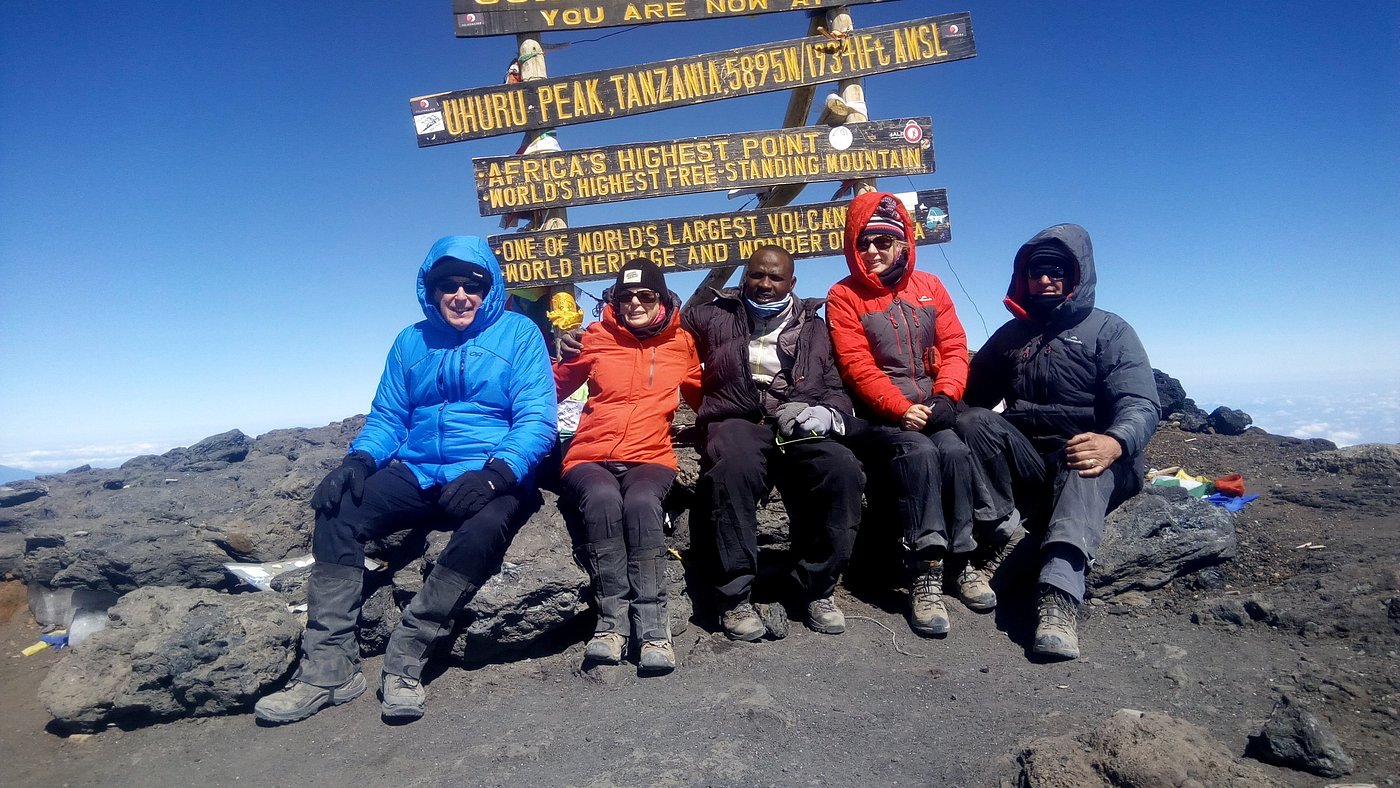
Quick Answer: Should You Climb Kilimanjaro?
Short answer: Climb Kilimanjaro only if you can commit at least 8 days, train for 3 months, and accept that no operator can guarantee your summit. Ten specific conditions should stop you from booking — physical intolerance to discomfort, short itineraries, untreated medical conditions, and refusal to walk slowly among them. If none of the ten apply to you, the climb is one of the most accessible extreme-altitude experiences on earth. See the 5 reasons you should climb →
Success-rate and cost figures above: Kilimania’s operational records, 2025–2026 booking season.
The Bottom Line: A short, cheap Kilimanjaro climb is not a discount — it is a different, riskier product. The mountain does not lower its altitude to match a shorter itinerary. Every dollar and every day you cut below the 8-day floor moves directly against your odds of reaching Uhuru Peak.
Every Kilimanjaro operator on the internet will tell you to book. They will show you summit photographs, client testimonials, and a booking button. We are going to do something different. We are going to give you ten specific, honest reasons you should not climb Kilimanjaro — and we mean every one of them.
This is not a marketing exercise. It is the most useful thing we can write for the right person, because the wrong person on Kilimanjaro does not just fail to summit. They suffer more than necessary, they put pressure on their guide team, and they spend money they cannot recover.
Read all ten. If none of them apply to you, scroll to the five reasons you absolutely should climb. Then message us.
Already decided? Skip to the 5 Reasons You Should Climb → Or WhatsApp us directly: +255 756 449 990 to talk through your dates.
Response times: Kilimania Adventure operates on East Africa Time (EAT, UTC+3) from Moshi, Tanzania, 7 days a week. Messages sent after 6:00 PM EAT receive a reply the following morning. Every quote request gets a response within 12 hours.
- 8 days minimum, 12 weeks training required for a realistic summit attempt
- 6-day itineraries carry a failure rate above 50% — think carefully before booking one
- No operator can guarantee your summit — altitude doesn’t negotiate
- Age 50+ is fine if you’re fit and choose 8+ day routes
- Cost range 2026: $1,800 (budget) to $4,500 (premium) USD
- The climb is genuinely life-changing if you’re the right person for it
10 Reasons You Should NOT Climb Kilimanjaro
Reason 1: Are You Able to Tolerate Sustained Physical Discomfort?
Let’s be precise about what discomfort means on Kilimanjaro, because “it’s a bit rough” doesn’t cover it. The toilets at Barafu Camp (4,673m) are long-drop pit latrines. At 2am on summit night, when you need to use one, the temperature outside your tent has dropped to around -12°C. You’re wearing four layers. Your fingers aren’t working properly. The wind is moving across open scree.
Sleep above 4,000m is genuinely poor, not because the tents are uncomfortable — they’re functional — but because altitude disrupts sleep chemistry directly. You’ll wake at 2am gasping for air. Your head will ache low and constant. You will not feel rested on any morning above Karanga Camp.
The descent from Uhuru Peak (5,895m) to Mweka Gate covers more than 2,000 meters of elevation drop through deep volcanic ash and loose scree, six hours with a 6kg daypack. Your knees will know about it for three days afterward.
If your standard for acceptable travel is reliable hot water and a private bathroom, Kilimanjaro will make you miserable for eight straight days. That isn’t an insult. It’s an honest compatibility test.
→ For the unfiltered version, read our guide on the worst part of climbing Kilimanjaro
Reason 2: Do You Have Fewer Than 8 Days Available?
This is the single most preventable cause of summit failure on Kilimanjaro, and operators who sell 5- and 6-day itineraries without clearly disclosing the failure rate are doing their clients a disservice.
Here’s what our data shows. Based on Kilimania’s climb database of 1,247+ guided expeditions (2019–2026), 6-day itineraries across all routes carry a summit failure rate above 50%. Five- and six-day Marangu itineraries run lower still. The altitude sickness that forces most early descents isn’t bad luck — it’s the predictable result of ascending faster than the human body can adapt.
Booking a 6-day Kilimanjaro climb is not optimizing your schedule. It is choosing a failure rate above 50% and paying full price for it anyway.
Eight days is the minimum we recommend. Nine days on the Northern Circuit Route gives you the highest success rates we see across any itinerary, because it builds in the most “climb high, sleep low” acclimatization cycles.
If you genuinely cannot commit 8 days, wait until you can.
→ See: Kilimanjaro Success Rate By Route — Data From 1,247 Climbs
Reason 3: Is Your Only Motivation a Photo at the Summit Sign?
Say this directly and without apology: motivation that comes from how something will look does not work at 5,700m at 3am, after five hours of walking uphill in complete darkness, with the temperature between -10°C and -15°C and the wind at Stella Point gusting 40 to 60 kilometers per hour.
At that point, the image you wanted to post does not help you. The caption you wrote in your head during training does not help you. The only thing that gets people to Uhuru Peak under these conditions is motivation that belongs entirely to them.
We have watched physically strong people turn around at 5,600m because the motivation underneath the fitness wasn’t deep enough. We have also watched a 58-year-old first-time hiker reach the summit crying, because her reason had nothing to do with how it would look to anyone else.
If you cannot name a reason that has nothing to do with appearances, the mountain will find that out for you, on summit night, when it matters most.
Reason 4: Are You Unwilling to Train for 12 Weeks?
Here’s what inadequate preparation looks like on the mountain. By Day 3, the undertrained climber is struggling on terrain that should feel moderate. By Day 5, they’re exhausted before the hardest section even begins. By summit night, there are no reserves left, and their guide is watching them closely for signs of trouble that fitness would have prevented.
The preparation required isn’t extreme. Twelve weeks of progressive cardiovascular training — hiking with a loaded pack on hilly terrain, stair training, sustained aerobic effort two to three times a week — is enough for most reasonably healthy adults. Our guide team cannot give you fitness on the mountain. They can manage your pace, carry emergency equipment, and recognize altitude illness early. They cannot compensate for a body that wasn’t ready before it arrived in Tanzania.
If you are not willing to train for 12 weeks, you are not ready to book this climb yet.
→ See our complete Kilimanjaro training guide and → Can An Unfit Person Climb Kilimanjaro?
Reason 5: Do You Have Untreated Medical Conditions?
Kilimanjaro reaches 5,895m. At this altitude, barometric pressure is roughly 50% of sea level. For most healthy people, this is manageable with proper acclimatization. For people with certain medical conditions, it is genuinely dangerous.
Conditions that require mandatory medical clearance before any Kilimanjaro climb:
- Cardiac arrhythmias or structural heart conditions
- Uncontrolled hypertension
- Severe asthma requiring daily management
- Prior stroke or transient ischemic attack
- Sickle cell trait or disease
- Epilepsy, particularly where altitude may lower seizure threshold
- Insulin-dependent diabetes
This is not an exhaustive list, and it is not medical advice. It is a starting point for a conversation with your own doctor before you book anything.
Altitude does not make exceptions. Fatalities on Kilimanjaro are almost entirely attributable to pre-existing cardiac conditions that were not adequately assessed before the climb began.
→ Full guidance: Climbing Kilimanjaro With Medical Conditions
Free Download: Kilimanjaro Altitude Symptom & AMS Checklist
Altitude illness is the leading reason climbers turn around on Mount Kilimanjaro. This practical checklist is used by Senior Guide Sabinus Msimba and the Kilimania Adventure team to monitor climbers throughout every expedition. Early symptom recognition significantly improves safety and summit success.
- Normal acclimatization symptoms above 3,000m
- Acute Mountain Sickness (AMS) warning signs
- HACE and HAPE emergency symptoms
- Daily health monitoring form (SpO₂, pulse, hydration)
- Guide reporting and self-assessment checklist
Prepared by: Sabinus Msimba, Senior Mountain Guide, Kilimania Adventure, Moshi, Tanzania.
This checklist is for educational purposes only and does not replace professional medical advice. Climbers with pre-existing medical conditions should consult a physician before high-altitude travel.
Reason 6: Are You Expecting a Relaxing Holiday?
This needs stating plainly, because the marketing around Kilimanjaro — the summit photographs, the celebration at the top — can create the impression that it’s an elevated adventure holiday.
It is not. Kilimanjaro is a physical challenge that happens in Tanzania. The scenery is extraordinary and the guide team is genuinely skilled, but the 8 days on the mountain are work. Your body is under sustained stress every day. The nights are cold, the mornings are early, and the final 24 hours of summit push and descent are among the hardest single days most people will ever experience.
The reward at the end is real — the view from Uhuru Peak at sunrise is not marketing language, it is what actually happens. But the comfort between here and there is not relaxing in any sense. If you want a holiday, go to Zanzibar first, and climb the mountain afterward, once your legs have recovered.
Reason 7: Do You Have Severe Acrophobia?
Kilimanjaro is not a technical mountaineering route. There are no ropes and no ice axes required on the standard routes. But there are exposed sections that genuine acrophobia makes dangerous.
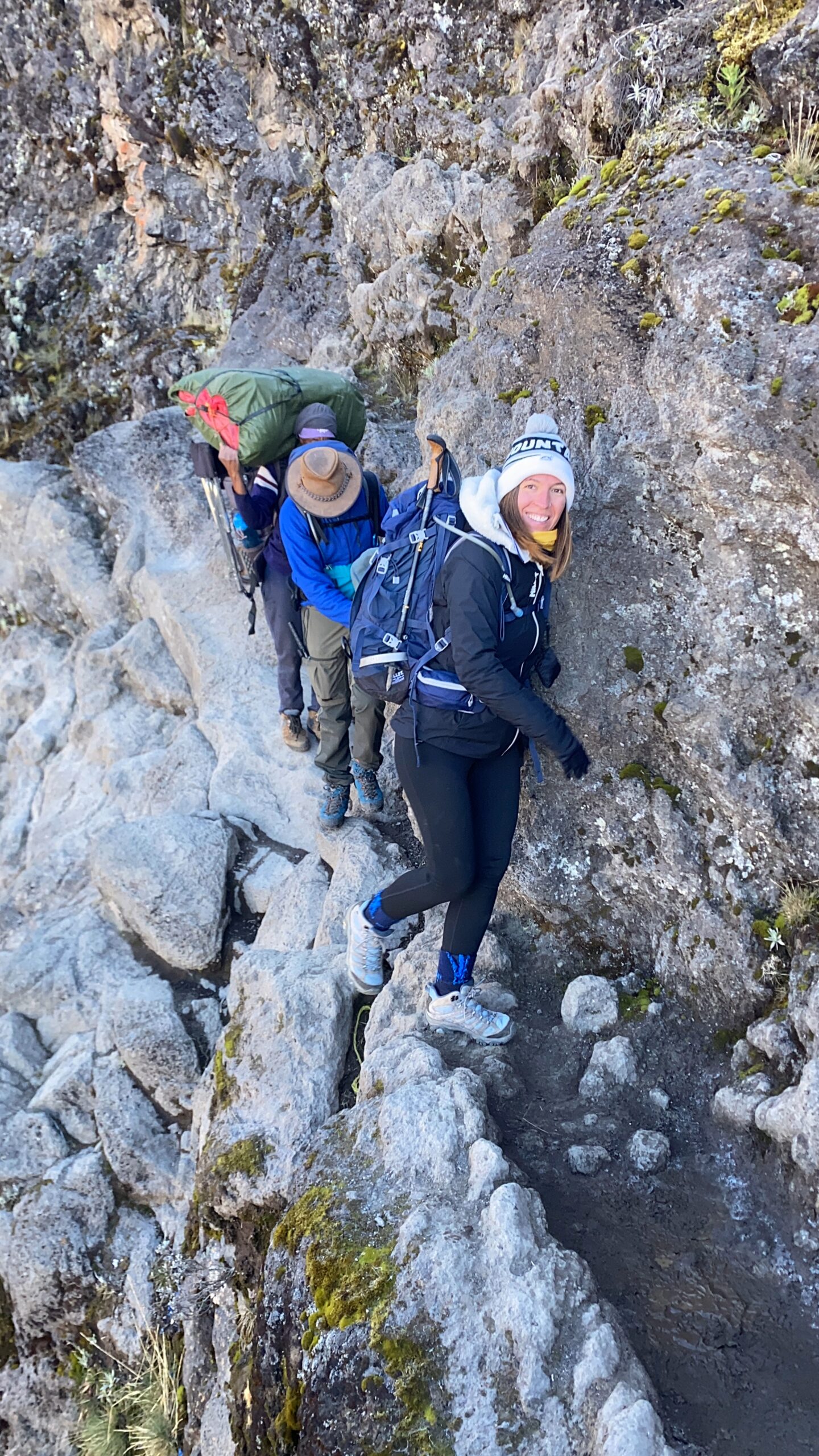
The Barranco Wall on the Lemosho, Machame, and Shira routes is a 257-meter scramble over volcanic rock with real exposure on some sections. The standard line requires confident three-point contact and steady footing. It isn’t vertical, but it isn’t flat either.
At Stella Point on the crater rim, the final approach to Uhuru Peak runs along a narrow path with a significant drop on one side, often in cold wind and poor visibility. At -10°C with cloud moving across the rim, it’s no place for someone who freezes under height exposure.
A mild dislike of heights is not a problem. Severe acrophobia — the kind that causes physical paralysis and panic — is a genuine safety concern at altitude, where your cognitive function is already impaired by low oxygen.
Be honest with yourself about which category you’re in before you book.
Reason 8: Do You Need a Guaranteed Summit?
Nobody can guarantee your summit. Not us, not the most experienced guide in Tanzania, not the most expensive operator on the market.
The altitude does not negotiate. Across the industry, a significant share of Kilimanjaro climbers — even on well-run, properly guided trips — do not reach Uhuru Peak. On 6-day itineraries, that failure rate rises well above 50%. These are not always unfit or unprepared people. Some are ultramarathon runners who developed acute mountain sickness anyway. Some have prior high-altitude experience and still encountered unexpected weather or physiology that didn’t cooperate.
Here’s what actually happens on the mountain when a guide makes the call:
At 4,673m, the night before the summit push, Sabinus Msimba was watching a client’s hands rather than the route ahead. She had trained for five months and walked the first three days stronger than anyone in her group. Now her fingers fumbled with a jacket zipper she’d opened without thought the day before, and her answers to his questions came two beats too slow. He checked her pulse oximeter reading: 71%. At sea level, a healthy reading sits between 95 and 100%. He told her plainly: “We go down now. You are safe. I am with you.” She argued, as most people do in that moment. He had already radioed his assistant guide and adjusted the descent plan. By 2am she was resting at a lower camp. By sunrise, her oxygen saturation had climbed to 89% and was still rising. Four days later, after returning to Moshi, she sent a message to the Kilimania office: she had not understood what was happening to her body, and she was grateful someone else had.
That is what a Kilimanjaro guide actually does on the mountain — not lead you toward the summit at any cost, but make the call to turn around when your body says stop, even when you don’t want to hear it.
If the certainty of the outcome is what motivates you, this is the wrong challenge. What we can offer is careful preparation, an itinerary built for the highest realistic success rates, and a guide team that will make the safety call early enough to matter. We cannot offer the summit itself.
Reason 9: Do You Refuse to Walk Slowly?
Pole pole. In Swahili, it means slowly, slowly. It’s the most repeated instruction on Kilimanjaro for a direct physiological reason: speed at altitude is the primary mechanism of self-sabotage on this mountain.
The most frustrating conversations our guides have after a failed summit attempt usually start the same way: “But I felt fine on Day 1 and Day 2.” Of course you did — you were below 3,500m. Climbers who move fast on the first three days arrive at Barafu Camp without acclimatization reserves left in the tank. They feel the altitude hit hard on summit night and turn back at 5,200m, having spent the same money and the same days as everyone else in their group — while having moved the fastest the entire way up.
Pole pole means walking slower than feels natural. It means resisting the urge to push when you feel strong on Day 2. It means trusting that the guide beside you, who has walked this exact route hundreds of times, has more information about sustainable pace than your own sense of capability does.
If you cannot follow instructions on pace, you will very likely sabotage your own summit. It is close to a certainty.
→ Find the right pace and itinerary in our Kilimanjaro Routes 2026 guide
Reason 10: Are You Booking With an Unverified Operator?
This is the most actionable reason on this list, because it’s the only one entirely within your control before you arrive in Tanzania.
A bad operator on Kilimanjaro is not just an inconvenience. It is a safety risk. Here’s what a bad operator looks like in practice:
- A guide-to-client ratio so low that individual altitude responses cannot be properly monitored
- No pulse oximetry equipment carried on the mountain — altitude illness cannot be tracked without it
- No supplemental emergency oxygen above 5,000m
- Porters carrying loads beyond fair welfare standards, which is also an early signal about how the rest of the operation is run
- No clearly disclosed emergency evacuation plan at the time of booking
- An itinerary quoted at 5 or 6 days with no honest disclosure of the lower success rate that comes with it
- TANAPA park fees listed as “excluded” or vague, rather than itemized clearly in writing
If your prospective operator cannot answer these points clearly and specifically, do not climb with them. The price difference between a properly run operator and a corner-cutting one is real money. So are the consequences of the difference.
Free Download: Kilimanjaro 12-Week Training Calendar
Download the same week-by-week training plan used by Kilimania Adventure guides and built from patterns observed across 1,247+ guided climbs.
Includes:
- 12-week hiking and endurance plan
- Pack weight progression
- Back-to-back training schedule
- Peak and taper strategy
- Route recommendations based on fitness level
Prepared by Sabinus Msimba, Senior Kilimanjaro Guide and Co-founder of Kilimania Adventure.
5 Reasons You Absolutely Should Climb Kilimanjaro
Reason 1: It Will Change How You See Your Own Limits
Not might. Will.
Sabinus has guided well over 300 personal summits and watched more than a thousand more across 22 years on this mountain. He says the moment that repeats itself — the one he still watches for every single time — happens at Stella Point. The crater rim, 5,756m. The hardest section of the climb is behind you. Uhuru Peak is roughly 140 vertical meters ahead. Almost every climber stops here, leans on their poles, and looks at the summit. And then something happens on their face.
It’s the same face every time. They realize they’ve actually done it. Whatever story they told themselves about what they couldn’t do — it’s gone, right there on the rim. Sabinus has seen climbers who told him they weren’t emotional people cry at Stella Point. It doesn’t matter who they were before. Something changes.
We can’t manufacture that moment for you. The mountain produces it. All we can do is get you there safely.
Reason 2: The Technical Barrier to Entry Is Lower Than Almost Any Comparable Challenge
No ropes. No ice axes. No technical mountaineering qualification. No prior altitude experience required.
You walk, slowly, with a guide, on your own two feet. That sounds simple, but consider what it gives you access to: the highest point in Africa, 5,895m, with a view that includes the curvature of the earth and two ancient glacier remnants below a sunrise.
Everest Base Camp requires roughly two weeks and a much larger budget. Aconcagua requires significant cold-weather mountaineering experience. Denali requires technical glacier travel. Kilimanjaro is accessible to any reasonably fit adult willing to prepare for three months and willing to go slowly. That is not a lowered bar. It is a genuinely remarkable piece of geography.
Reason 3: Tanzania Deserves Your Presence Beyond the Summit
Most people book Kilimanjaro. Fewer people book Tanzania. That’s a mistake.
Moshi — the town at the base of the mountain — is a functional, genuinely welcoming Tanzanian town, not a tourist construct. The coffee grown on the lower slopes of the mountain is well regarded across East Africa. The people you pass in the street aren’t there for you; they’re there because it’s where they live. That’s a different kind of travel than most people get on a short trip abroad.
If you combine your climb with a Tanzania safari through the Serengeti or Ngorongoro afterward, you’re accessing one of the last places on earth where the great mammal migrations still happen at scale. Add a few days on Zanzibar’s beaches after the climb, and you give your legs — which will genuinely need it — three days of horizontal rest on one of the Indian Ocean’s finest coastlines.
Reason 4: You Will Spend 8 Days With People You Won’t Forget
The Kilimania guide and porter team aren’t service staff in the conventional sense. They’re the reason the climb works at all.
Sabinus Msimba started on this mountain at 17 years old, carrying loads as a porter before he ever guided a single client. Twenty-two years later, he has led more than 300 personal summit ascents and overseen more than 1,247 guided expeditions. His lead guides check client oxygen saturation every morning and evening with a pulse oximeter, and they’re trained to read pace, breathing pattern, color, appetite, and conversation rate as a combined picture of how someone is actually doing — not just whether they say they feel fine.
The porters on a Kilimania climb carry your equipment over terrain that would challenge most trekkers carrying only a day pack. They set up camp before you arrive and have hot water ready by 6am. Many of them sing on the descent, even after carrying heavy loads for eight straight days. We know what our porters earn, what they carry, and what medical support they have access to, because Sabinus came up through that exact role himself and built our standards around what he wished he’d had.
Spending eight days with people whose competence and quiet dedication exceeds what most workplaces produce changes the climb from a personal physical challenge into something that involves real human connection.
Reason 5: There Is Nothing Like the Summit of Kilimanjaro
This isn’t a superlative deployed for effect. It’s a factual observation from a guide who has stood at Uhuru Peak, 5,895m above sea level, more than 300 times, in every season, in every condition, with climbers of every age and fitness level.
The light at the summit at sunrise is specific. It comes in sideways and catches the remaining glacier ice on the southeast face, turning it the color of old copper. Below you, the cloud layer typically sits around 4,000m, and the plains of East Africa disappear beneath it entirely. You’re above the weather. You’re above the noise of the lowlands. You’re standing on the highest point on the entire continent.
The mountain’s summit glaciers have been retreating for decades, a fact documented by international researchers studying the mountain’s ice fields. What you see at the summit today will not look the same to visitors in another generation. You are seeing it now, in a form that won’t last.
And then you take the photograph, and you start walking down, and you are different — not because the mountain changed you, but because you showed yourself something you didn’t already know about your own capacity. You went somewhere you weren’t sure you could go.
That is worth every cold toilet and every hour of bad sleep along the way.
Kilimanjaro vs Other High-Altitude Treks: 2026 Comparison
| Factor | Kilimanjaro (8-day) | Everest Base Camp | Aconcagua | Denali |
|---|---|---|---|---|
| Elevation | 5,895m | 5,364m | 6,961m | 6,190m |
| Technical Skill Needed | None (walking) | Moderate | Advanced | Advanced (glacier travel) |
| Days Required | 8–9 days | 12–14 days | 18–21 days | 14–21 days |
| Cost Range (USD) | $1,800–$4,500 | $3,000–$8,000 | $5,000–$15,000 | $8,000–$20,000 |
| Success Rate | 85% (8-day, Kilimania data) | ~95% (industry estimate) | ~60% (industry estimate) | ~50% (industry estimate) |
| Permit Required | Yes (TANAPA) | Yes (Nepal Govt) | Yes (Argentina) | Yes (NPS) |
| Best For | First-time high-altitude | Experienced trekkers | Mountaineers | Expert climbers |
Kilimanjaro figures: Kilimania’s operational records, 2025–2026. Everest Base Camp, Aconcagua, and Denali figures are general industry estimates for context, not Kilimania data — check current operator-specific figures before relying on them. Fatality-rate comparisons have been removed from this table pending a verified, citable source.
Find Your Route: Kilimanjaro Route Comparison 2026
| Route | Days | Success Rate | Difficulty | Best For | Price (USD) |
|---|---|---|---|---|---|
| Lemosho 8-Day | 8 | ~85% | Moderate | Most first-time climbers | $3,200–$4,000 |
| Northern Circuit 9-Day | 9 | ~90%+ | Moderate | Maximum acclimatization, solitude | $3,800–$4,500 |
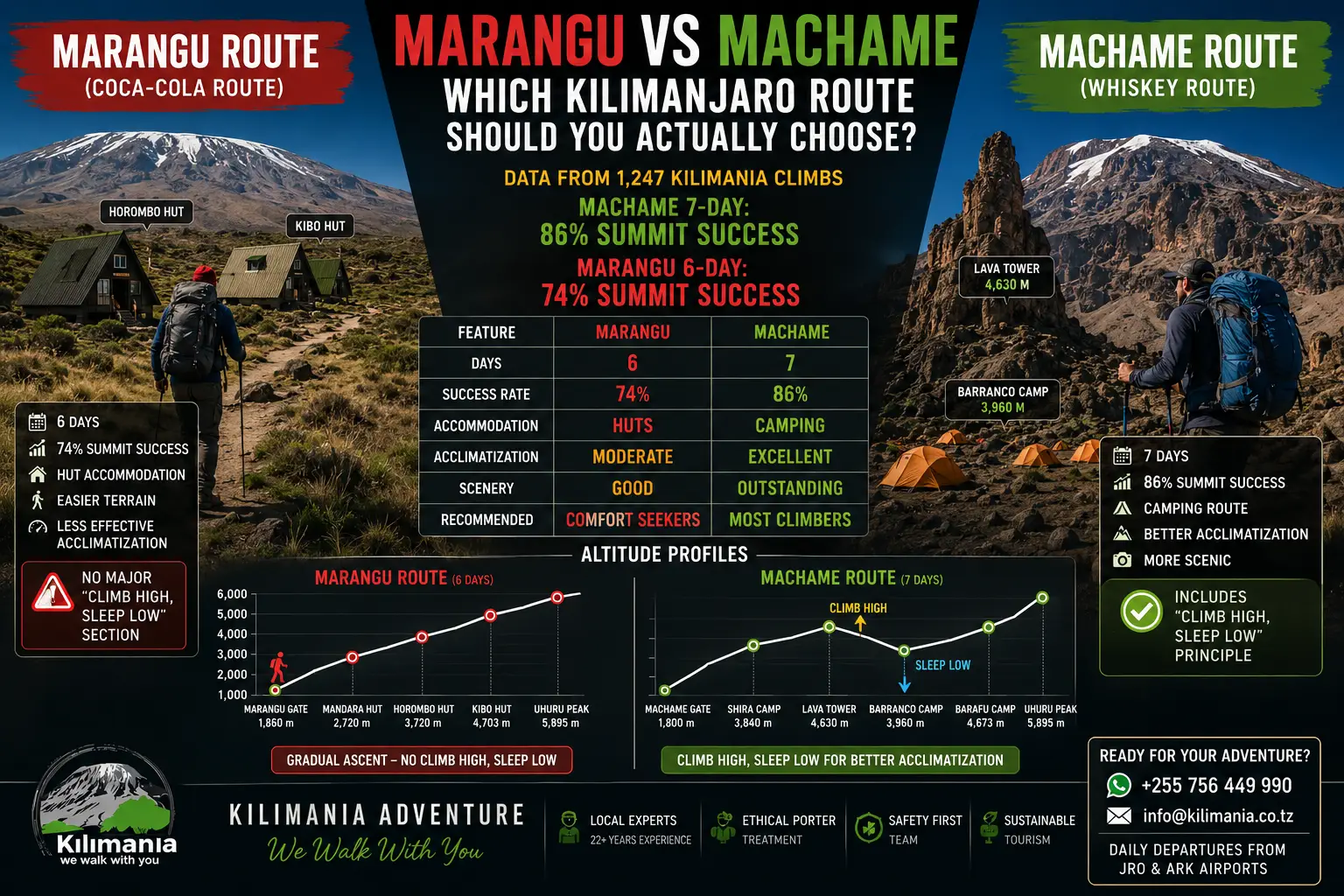
| Machame 7-Day | 7 | ~78% | Moderate–Challenging | Scenic, fit hikers | $2,800–$3,400 |
| Rongai 6-Day | 6 | ~65% | Moderate | Dry-season, quieter northern approach | $2,200–$2,800 |
| Marangu 6-Day | 6 | ~58% | Moderate | Hut accommodation, budget-conscious | $1,800–$2,200 |
| Shira 7-Day | 7 | ~78% | Moderate–Challenging | Experienced trekkers, quieter start | $2,800–$3,400 |
Data sourced from Kilimania Adventure’s internal climb database (1,247+ guided expeditions, 2019–2026) and TANAPA-published route information, as of June 2026. Prices include park fees, guide, porters, camping equipment, and meals.
Free Download: Kilimanjaro Route Comparison Cheat Sheet
Still deciding which Kilimanjaro route is right for you? Download our free printable cheat sheet prepared by Senior Mountain Guide Sabinus Msimba.
- Compare all 7 Kilimanjaro routes
- Difficulty, scenery, and crowd levels
- Recommendations for first-time climbers
- Updated for 2026 climbing season
How Much Does It Cost to Climb Kilimanjaro in 2026?
| Cost Item | Budget (Marangu 6-day) | Mid-Range (Machame 7-day) | Premium (Lemosho 8-day) |
|---|---|---|---|
| TANAPA Park Fees | $420–$600 (6 days) | $490–$700 (7 days) | $560–$800 (8 days) |
| Operator Fee (guide + porters + gear + meals) | $1,400–$1,600 | $2,000–$2,400 | $2,600–$3,200 |
| E-Visa | $50 (most) / $100 (US) | $50 (most) / $100 (US) | $50 (most) / $100 (US) |
| Moshi Accommodation (pre/post, 2 nights) | $70–$160 | $70–$160 | $70–$160 |
| Tips (guides + porters) | $200–$400 | $300–$500 | $400–$600 |
| TOTAL RANGE (USD) | $1,800–$2,200 | $2,500–$3,400 | $3,200–$4,500 |
Figures as of June 2026, per TANAPA’s published fee schedule and Kilimania’s 2025–2026 operator pricing. Confirm current TANAPA rates before booking, as park fees are revised periodically.
What’s NOT included in most quotes: International flights to Kilimanjaro International Airport (JRO) or Arusha (ARK), travel insurance (mandatory — get one that covers up to 6,000m), personal gear (sleeping bag rated to -15°C, trekking poles, headlamp), and optional extras like summit night hot water, oxygen, or private tents.
Verify current TANAPA fees: tanzaniaparks.go.tz | KINAPA: kilimanjaronationalpark.go.tz
For International Travelers: What You Need to Know
Currency: All prices on Kilimania pages are quoted in USD. Tanzania e-visa: $50 for most nationalities, $100 for US citizens. Apply at immigration.go.tz at least 7 days before departure.
Yellow Fever: Required only if arriving from a country where yellow fever is endemic — not required for direct flights from the USA, UK, EU, or Australia.
Moshi Accommodation: Pre- and post-climb stays in Moshi run $35–$80 USD per night at budget guesthouses. Kilimania can recommend partners near our office.
Getting to Moshi: Fly into Kilimanjaro International Airport (JRO) — 45 min from Moshi by taxi ($25–$40 USD) — or Arusha (ARK) — 1.5 hours by shuttle bus ($15–$25 USD). We arrange airport transfers for all booking clients.
Should I Climb Kilimanjaro? The Honest Answer
If you got to this point and still want to climb, you are the right kind of person.
You know what the toilets are like at 4,600m. You know what summit night costs physically. You know that nobody — not us, not anyone — can guarantee your summit. You know the altitude will make its own decisions regardless of your fitness level. You know all of it, and you want to go anyway.
That is the only prerequisite that actually matters. The route selection, the pacing, the guide team, and the medical monitoring on the mountain are our job. Wanting to go with full, honest information about what’s coming is yours.
Plan Your Kilimanjaro Climb — Get a Fast Quote
Tell us your travel dates, group size, and which route you’re considering. We return a full itemized quote within 12 hours — park fees by day, guide and porter inclusions, equipment provided, and a complete inclusion/exclusion list. No costs discovered at the gate.
→ Browse all Kilimanjaro routes and itineraries | → Read the complete 2026 climbing guide
Frequently Asked Questions
Related Reading
- How Hard Is Kilimanjaro? Success Rates & Altitude Reality
- Can a Beginner Climb Kilimanjaro? Honest Guide 2026
- Can An Unfit Person Climb Kilimanjaro?
- Climbing Kilimanjaro Over 50
- Climbing Kilimanjaro With Medical Conditions
- Worst Part of Climbing Kilimanjaro: 7 Hard Truths From a 22-Year Guide
- Kilimanjaro Success Rate By Route: Data From 1,247 Climbs
- Kilimanjaro Training Guide
- What Happens If You Don’t Summit Kilimanjaro
- How to Choose a Kilimanjaro Operator
- Mount Kilimanjaro Climbing — All Tours
- Climbing Kilimanjaro Guide 2026
Written by: Sabinus Msimba, Senior Kilimanjaro Guide and Co-founder, Kilimania Adventure — 22 years guiding on Mount Kilimanjaro, 300+ personal summits, 1,247+ guided expeditions (2019–2026).