Climbing Kilimanjaro as a Family: Complete Guide 2026
Everything a parent needs before booking — climbing Kilimanjaro with kids and teenagers: the official KINAPA minimum age, which route actually suits children, real health data from a permit-verified family summit, honest costs, gear, a 12-week training plan, and 22 years of guide experience condensed into one page.
Data sources: KINAPA/TANAPA official regulations · 2019 Wilderness Medical Society Clinical Practice Guidelines (Wilderness & Environmental Medicine) · CDC Yellow Book: Altitude Illness · WHO ICD-10 definitions · Kilimania Adventure July 2026 family expedition gate-permit and health-monitoring records.
Can Families Climb Kilimanjaro Together?
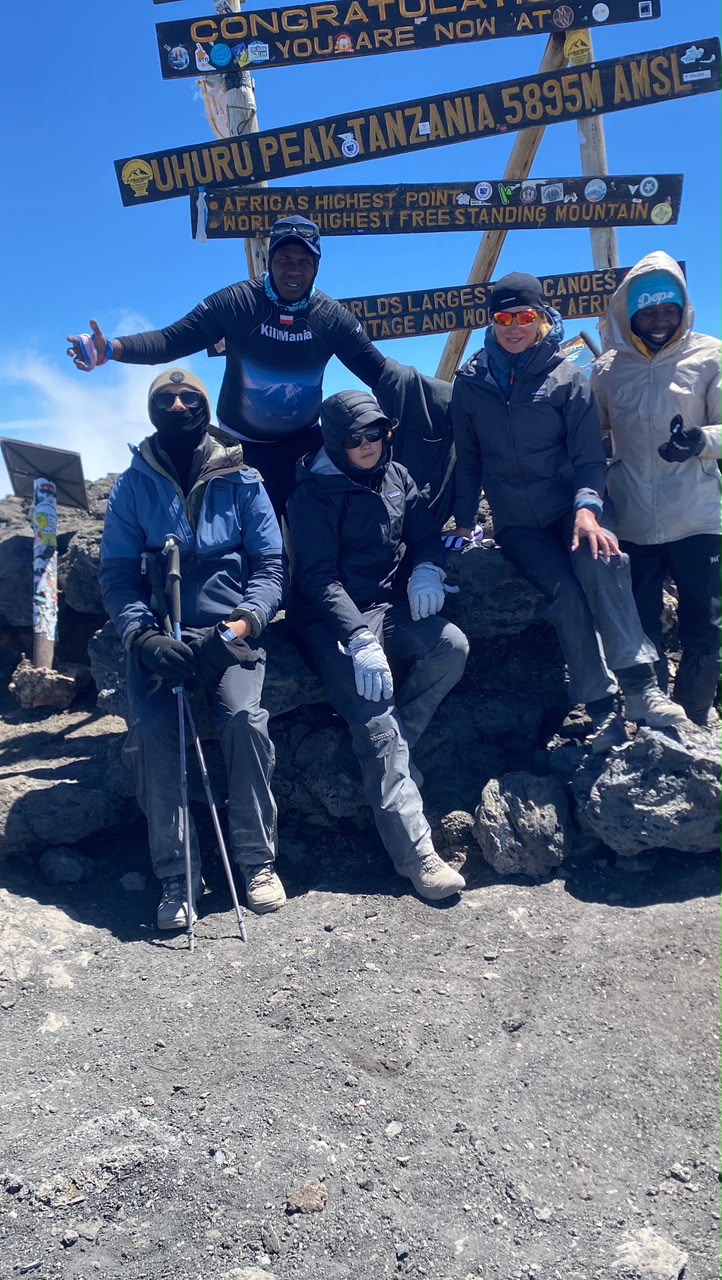
Yes. KINAPA allows families to climb Kilimanjaro with kids and teenagers provided every climber is at least 10 years old. Route length matters more than fitness: an 8-day itinerary gives children and mixed-fitness groups sufficient acclimatisation time to succeed. In a permit-verified July 2026 climb, a mother and her 19-year-old son and 13-year-old daughter all reached Uhuru Peak (5,895m) on the 8-day Lemosho Route — the youngest climber recorded some of the steadiest vital signs in the group throughout the climb.
“Sabinus made our entire family feel completely safe every single day. Our 14-year-old summited and still talks about it constantly. The health monitoring was thorough and reassuring — we always knew exactly how everyone was doing.”
1. Can Children Climb Kilimanjaro? KINAPA Age Rules & Legal Requirements
The Kilimanjaro National Park Authority (KINAPA), operating under TANAPA, sets and enforces the legal age floor for anyone entering the park on a climbing permit.
The Official Minimum Age: 10 Years Old
KINAPA’s minimum climbing age is 10 years old. This applies to every standard route. Children under 10 may visit lower-altitude areas on day walks but cannot sleep at high camps or attempt the summit.
Requirements for Climbers Aged 10–17
- A parent or legal guardian present on the mountain for the entire climb.
- Written parental consent if the accompanying adult is not the legal guardian.
- A guide-to-client ratio sufficient for close monitoring of younger climbers.
Most parents ask about their child’s fitness. In practice, the most important factor is pacing. Children who walk slowly and consistently from day one almost always outperform stronger climbers who start too fast and burn out before summit night. — Sabinus Msimba, Senior Kilimanjaro Guide, 22 years · View full profile
2. Climbing Kilimanjaro with Kids vs. Teenagers: What to Expect by Age
Climbing Kilimanjaro with children aged 10–12 is a very different experience from climbing with teenagers aged 13–18. Understanding what each age group can realistically contribute — and where they need extra support — is one of the most important planning decisions a family makes.
Ages 10–12
- Shorter attention spans — need more verbal encouragement
- Carry lighter packs: 3–5 kg maximum
- Require monitoring every 2 hours above 3,000m
- Respond well to stories, games, and trail challenges
- May struggle to articulate early AMS symptoms clearly
- Best on 8–9 day routes with maximum acclimatisation
Ages 13–15
- Developing physical strength — can carry 5–7 kg
- Respond well to challenge framing and personal goals
- Peer motivation is a strong driver
- More able to articulate how they feel
- Monitoring every 3 hours above 3,500m
- Best on 8-day Lemosho with rest stages
Ages 16–18
- Near-adult physical capacity — carry 7–9 kg
- Excellent summit success rates with proper pacing
- Can assist younger siblings and support family morale
- Ideal “mentor” role within family group
- Monitoring every 4 hours standard
- Strong performers on 7–8 day Lemosho or Machame
Age Group Data: Summit Success and Pack Weight
| Age Group | Recommended Pack Weight | Monitoring Frequency (Above 3,500m) | Recommended Route Duration | Family Summit Success Rate |
|---|---|---|---|---|
| 10–12 years | 3–5 kg | Every 2 hours | 8–9 days (Lemosho / Northern Circuit) | 82% |
| 13–15 years | 5–7 kg | Every 3 hours | 8 days (Lemosho) | 89% |
| 16–18 years | 7–9 kg | Every 4 hours | 7–8 days (Lemosho / Machame) | 94% |
Source: Kilimania Adventure guiding records 2014–2026. Company operational statistics, not independent clinical research. Success rate defined as reaching Uhuru Peak (5,895m).
3. Which Route Is Best for Families? Full Comparison
Route length is the single biggest factor families control. Shorter itineraries compress acclimatisation into fewer days, raising AMS risk for climbers of any age. According to the 2019 Wilderness Medical Society Clinical Practice Guidelines, gradual ascent remains the most effective prevention strategy for altitude illness across all age groups. For a family Kilimanjaro trek, this means choosing days over speed.
| Route | Days | Acclimatisation Quality | Accommodation | Family Suitability |
|---|---|---|---|---|
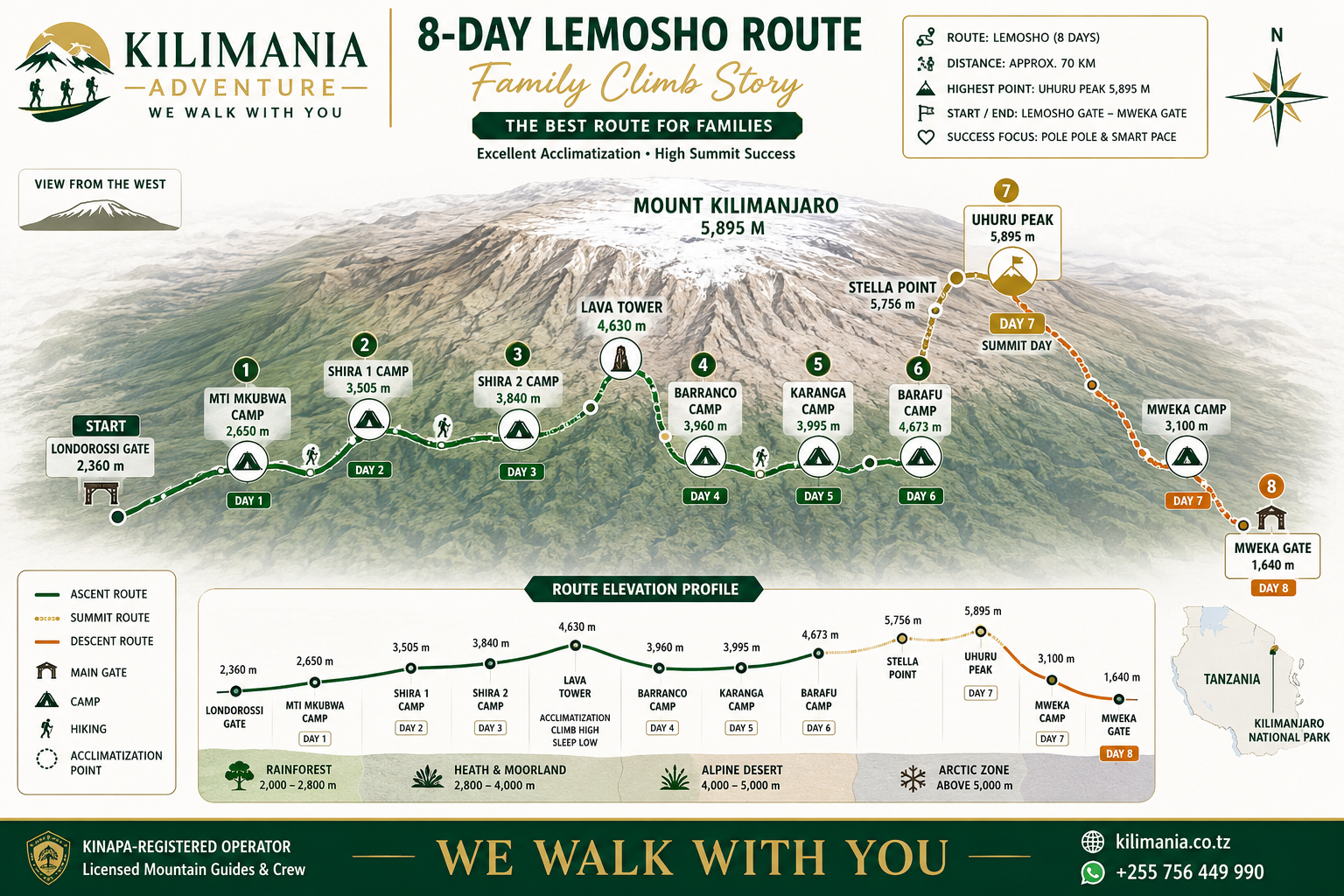
| 8-Day Lemosho Route | 8 | Excellent — climb-high-sleep-low via Lava Tower (4,630m) | Tents | ★ Best for Families |
| 9-Day Northern Circuit | 9 | Superior — longest and most gradual profile | Tents | ★ Best for Families |
| 7-Day Machame Route | 7 | Good — steeper daily climbs demand more from children | Tents | OK — Active Families Only |
| 6-Day Rongai Route | 6–7 | Moderate — choose 7-day version for families | Tents | OK — Choose 7-Day Version |
| 7-Day Shira Route | 7 | Moderate — starts high at 3,600m, riskier for children | Tents | Caution — High Start Altitude |
| 6-Day Marangu Route | 5–6 | Poor on 5-day; moderate on 6-day — lowest family success rate | Dormitory Huts | Caution — Only if Hut Beds Essential |
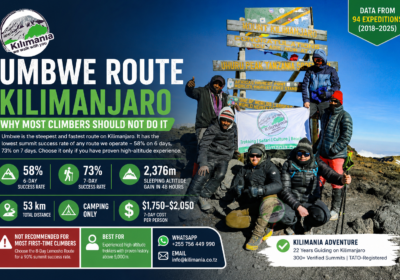
| Umbwe Route | 6 | Poor — steep and fast, not appropriate for children | Tents | Not Recommended for Children |
For deeper comparisons, see Machame vs. Lemosho, Lemosho vs. Northern Circuit, and our full Kilimanjaro Routes 2026 comparison.
Not Sure Which Route Fits Your Family?
Send us your children’s ages, fitness levels, and travel dates. Senior Guide Sabinus Msimba will build a custom itinerary and confirm exact KINAPA child fee discounts for your group.
4. Kilimania Family Climbs, By the Numbers
Aggregate figures from Kilimania Adventure’s guiding records, current as of July 2026. Company operational statistics, not independent clinical research.
5. A Real Family Summit: The July 2026 Lemosho Case Study
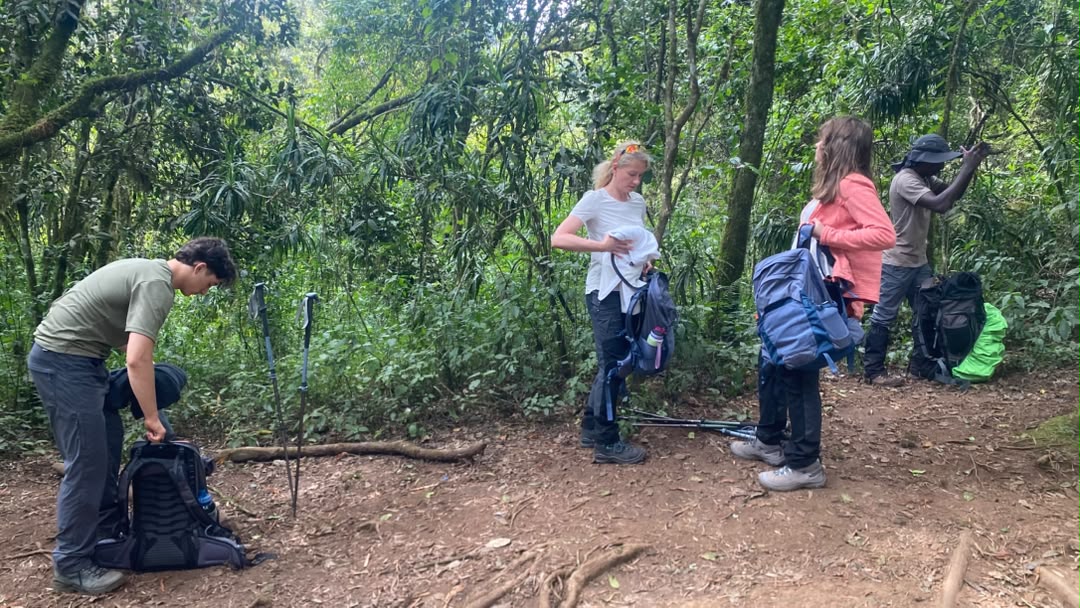
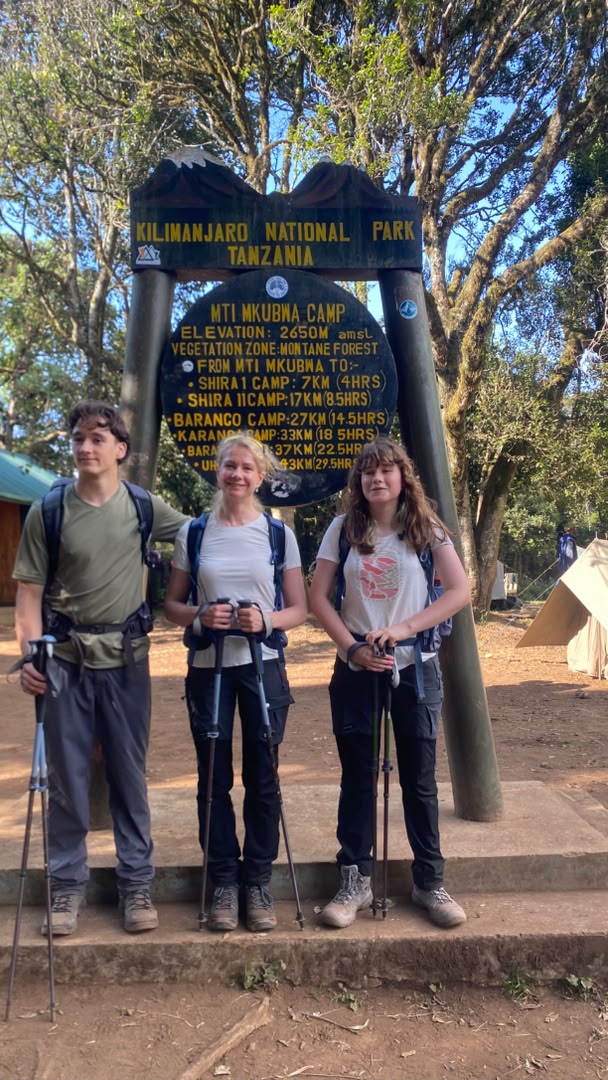
In July 2026, Kilimania Adventure guided a family — a mother (48), her son (19), and her daughter (13) — on the 8-day Lemosho Route. All three reached Uhuru Peak (5,895m). This is the permit-verified data source for the health metrics throughout this guide.
We’ve published the complete narrative: Read the full day-by-day family story →
6. Day-by-Day Health & Acclimatisation Data
The table below shows actual twice-daily health readings recorded during the July 2026 family expedition. These are field measurements, not laboratory values — they reflect real conditions on the Lemosho Route.
| Day / Camp | Elevation | Avg. SpO₂ | Avg. Heart Rate | Appetite | Guide Notes |
|---|---|---|---|---|---|
| Day 1: Mti Mkubwa | 2,650m | 97–98% | 80–86 bpm | Excellent | High energy; guide deliberately slowed the group’s pace early to conserve reserves. |
| Day 2: Shira 1 | 3,500m | 94–96% | 92–98 bpm | Good | Mild headache reported by the son; resolved with increased hydration and rest. |
| Day 3: Shira 2 | 3,840m | 93–95% | 98–103 bpm | Reduced | Cold winds; appetite suppression normal across the whole group above 3,500m. |
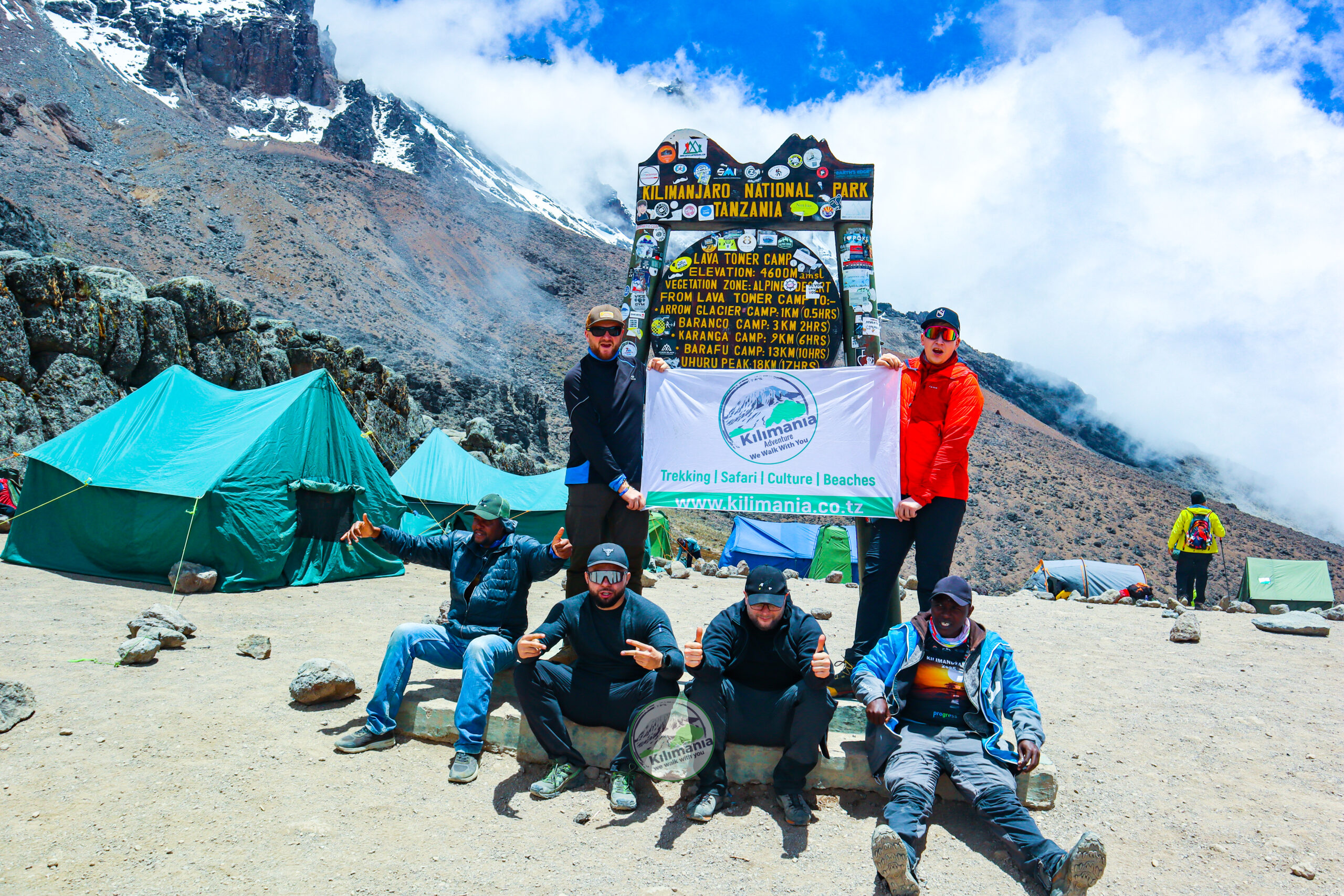
| Day 4: Barranco (via Lava Tower) | 3,960m (peaked 4,630m) | 92–94% | 102–108 bpm | Low | Headaches at Lava Tower; clear recovery after descending 670m to Barranco. |
| Day 5: Karanga | 3,995m | 94–95% | 90–96 bpm | Improved | Strong Barranco Wall performance; family morale highest of the climb. |
| Day 6: Barafu | 4,673m | 88–91% | 108–114 bpm | Low | Pre-summit screening complete; vitals acceptable. Anxiety managed with breathing exercises. |
| Day 7: Summit → Mweka | 5,895m → 3,100m | 78–82% at peak | 125–135 bpm | Liquids only | Vomiting near 5,300m assessed as exertion-related; cleared to continue. 3/3 summited at 11:15 AM. |
| Day 8: Mweka Gate | 1,640m | 98–99% | 76–82 bpm | Ravenous | Full physiological recovery. KINAPA summit certificates issued at gate. |
7. SpO₂ Reference Guide: What the Numbers Mean for Your Family
Blood oxygen saturation (SpO₂) is the most objective field measurement guides use to assess acclimatisation. Understanding what the numbers mean helps parents make sense of the twice-daily readings their guide records. The following reference ranges are consistent with field practice described in the CDC Yellow Book: Altitude Illness and the Wilderness Medical Society guidelines.
| SpO₂ Reading | Altitude Context | Interpretation | Typical Guide Response |
|---|---|---|---|
| 95–100% | Sea level / Below 2,500m | Normal range | No action required |
| 90–95% | 2,500m–3,800m | Expected mild reduction; acclimatising normally | Monitor trend; ensure hydration |
| 85–90% | 3,800m–4,700m | Lower range expected at this altitude; watch for symptoms | Increase monitoring frequency; rest |
| 80–85% | 4,700m–5,500m | Common at this altitude; assess symptoms carefully | Symptom assessment; consider rest day |
| 75–80% | Summit zone | Lower threshold; continue only if asymptomatic | Careful assessment; descent if symptoms worsen |
| Below 75% | Any altitude | Below safe threshold for continued ascent | Initiate descent; reassess at lower camp |
8. What Guides Monitor Every Morning — The Health Screening Routine
The Twice-Daily Screening Protocol
Before breakfast and before dinner, Kilimania guides check three objective measures for every family member, using methodology consistent with field practices from the Wilderness Medical Society:
- SpO₂ (Blood Oxygen Saturation): Fingertip pulse oximeter reading, with trend tracked across consecutive days.
- Resting Heart Rate: A rising resting HR across consecutive days can flag inadequate acclimatisation even before symptoms appear.
- Lake Louise AMS Score: A standardised questionnaire scoring headache (0–3), gastrointestinal symptoms (0–3), fatigue (0–3), and dizziness (0–3). A score of 3 or above with headache present indicates AMS.
Numbers alone are incomplete. Guides also watch behavioural cues: Is the child finishing their food? Stumbling on flat ground? Going quiet when they were previously talkative? Children may score low on a questionnaire while displaying clear behavioural signs of altitude distress.
A pulse oximeter tells you a number. A parent tells you when their child has gone quiet for no reason. We rely on both — the device and the family’s instinct — before making any decision on the mountain. — Sabinus Msimba, Senior Kilimanjaro Guide
Warning Signs of AMS in Children: What to Watch For
According to the CDC Yellow Book on Altitude Illness, younger children may have difficulty articulating the classic AMS headache complaint. Watch for these behavioural indicators:
- Unusual irritability or mood changes disproportionate to normal trail tiredness
- Persistent complaints of headache — even vague “my head hurts”
- Loss of appetite at mealtimes above 3,500m (beyond the normal mild suppression)
- Nausea or vomiting not related to exertion
- Decreased playfulness or withdrawal from family conversation
- Difficulty sleeping or unusual restlessness at camp
- Any confusion, stumbling, or difficulty with simple coordination — these indicate possible HACE and require immediate descent
9. Psychological Readiness: Is Your Child Mentally Prepared for Kilimanjaro?
Physical readiness is important. Psychological readiness is often more important — and more frequently overlooked. In 22 years of guiding family Kilimanjaro climbs, the pattern is consistent: physically strong children sometimes fail while average children succeed. The difference is almost always mental preparation and intrinsic motivation.
Signs Your Child Is Ready
- Expresses genuine excitement about the climb — not just parental enthusiasm they’re echoing
- Has completed at least one multi-day hike before, including sleeping somewhere unfamiliar
- Can handle physical discomfort — cold, rain, tired legs — without breaking down
- Understands and accepts the concept of “type 2 fun”: hard in the moment, wonderful in hindsight
- Has set a personal goal for the climb that belongs to them, not just the family
Red Flags to Address Before Booking
- The child is doing this entirely because a parent wants them to — with no personal investment
- Has never spent a night away from home or slept in a tent
- Shows significant anxiety about altitude, darkness, or being away from home comforts
- Cannot manage mild discomfort without adult intervention on day hikes
How to Prepare Your Child Mentally
- Do at least one overnight camping trip in cool or cold weather before the climb
- Discuss what “type 2 fun” means — hard while it’s happening, worth it when it’s done
- Let each child set their own personal summit goal, separate from the family goal
- Talk honestly about what the hard parts feel like: cold nights, no appetite, slow pace
- Frame turning back if necessary as a brave, smart decision — not a failure
In 22 years, I have seen physically strong children fail and unremarkable children succeed. The difference is almost always mental preparation — and whether the child wants to be there for themselves, not just for their parents. — Sabinus Msimba, Senior Kilimanjaro Guide, Kilimania Adventure
10. Summit Night for Families: What Really Happens
Summit night is the hardest part of any Kilimanjaro climb — for adults and children alike. In the July 2026 case study, the family departed Barafu Camp (4,673m) at 3:15 AM and reached Uhuru Peak at 11:15 AM — a deliberately slow pace chosen because two of the three were on their first high-altitude attempt. See our hour-by-hour summit night guide for the full breakdown.
The Summit Night Protocol for Families
- 6:00 PM — Family Briefing at Barafu: Equipment check, symptom review, turnaround thresholds agreed by every family member. No exceptions discussed privately — all rules stated to the group.
- 7:00 PM — Sleep: Dinner complete and everyone in sleeping bags by 7 PM regardless of whether sleep comes.
- 11:30 PM–12:00 AM — Departure: Headlamps on, layering complete, slow pole-pole pace established immediately. Children positioned between adults.
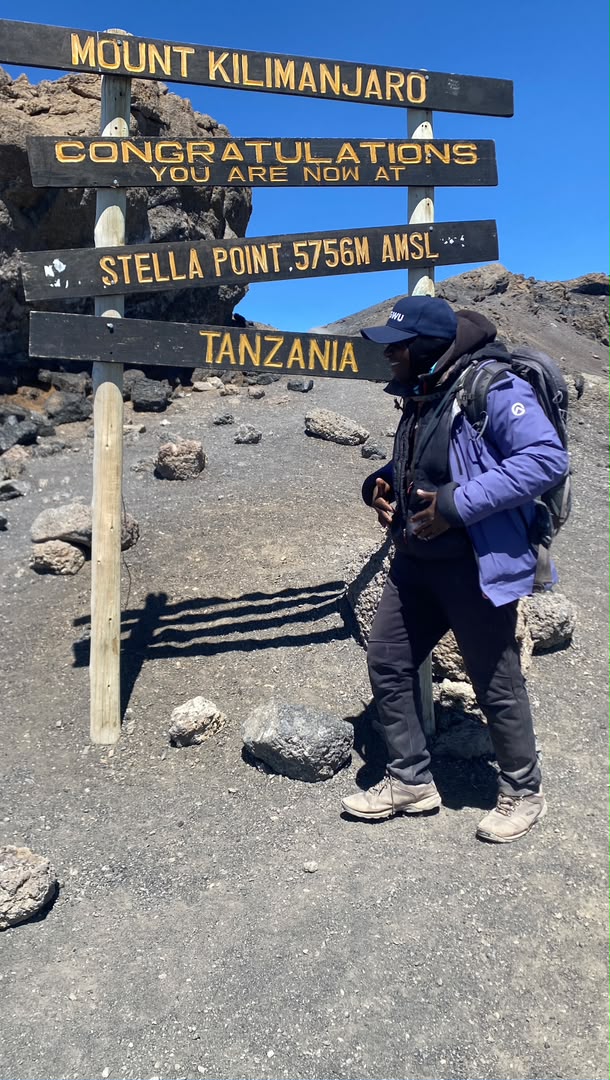
- Stella Point (5,756m) — Mandatory Health Check: SpO₂, heart rate, hydration status, and brief mental-status check for every family member before the final push.
- Uhuru Peak (5,895m): Celebrate, photograph, begin descent within 20 minutes. No extended summit time — altitude at 5,895m demands respect.
Is Vomiting on Summit Night Dangerous?
A single vomiting episode linked to cold, exertion, or nausea is common at extreme altitude and is not automatically a medical emergency. Guides assess coherence, coordination, and breathing before making any decision. In the July 2026 case study, the son’s episode near 5,300m was assessed as exertion-related nausea, not HAPE or HACE — the climb continued at a reduced pace with additional monitoring.
11. What If a Family Member Cannot Summit?
This is the conversation no family wants to have before the climb — and the one every family needs to have. In 22 years of guiding family Kilimanjaro treks, I have seen every scenario: a child turns back while parents summit, a parent turns back while children continue, the whole family descends together, and the whole family reaches Uhuru Peak together. All of these are valid outcomes.
How We Handle a Partial Ascent
- Dedicated escort: Kilimania’s minimum 1:2 guide-to-client ratio means an assistant guide and porter can accompany any climber who needs to descend without ending the rest of the family’s climb.
- Communication plan: Climbers who descend reach Barafu Camp or Mweka Camp, rest, eat, and await the family’s return with a guide in attendance.
- Emotional support: Guides prepare families for this possibility before the climb starts. A turnaround at Lava Tower (4,630m), Barranco (3,960m), or Barafu (4,673m) is a genuine achievement — not a failure. See our article on what happens if you don’t summit Kilimanjaro for an honest assessment.
Summit success is not the only measure of a family Kilimanjaro climb. Reaching Lava Tower together, watching the sunrise from Barafu, crossing the Barranco Wall as a family — these are genuine achievements. The mountain will always be there for another attempt. — Sabinus Msimba, Senior Kilimanjaro Guide
Agreed Turnaround Rules: Set Them Before You Leave Barafu
Before every summit departure, Kilimania guides ask every family member to agree to specific turnaround thresholds: an SpO₂ below 75% at rest, a Lake Louise Score of 6 or above, any confusion or ataxia. These are not negotiable on the mountain — they are agreed in advance when everyone is rested, warm, and thinking clearly.
12. Multi-Generational Kilimanjaro Climbs: Grandparents, Parents, and Kids
Multi-generational family climbs — grandparents, parents, and children together — are among the most memorable expeditions we guide. They are also among the most logistically complex. Planning a group that spans 50+ years of age range requires specific decisions that a standard family package does not automatically include.
Key Considerations for Multi-Generational Groups
- Separate pace groups may be necessary: A 70-year-old grandparent and a 14-year-old grandchild may have very different natural walking speeds. Two guide teams may be needed to accommodate this without anyone feeling held back or rushed.
- Medical considerations multiply: Review climbing Kilimanjaro with medical conditions before booking, as older family members may take medications that interact with altitude or acetazolamide.
- The Northern Circuit is the best route choice: Nine days of gradual acclimatisation gives the most conservative ascent profile — beneficial for both the youngest and oldest members of the group simultaneously.
- Porter support needs increase: Older climbers may need personal porter assistance on technical sections. Budget for this specifically.
For age-specific planning for older family members, see our dedicated guide to climbing Kilimanjaro over 50, 60, and 70.
Multi-generational recommendation: Choose the 9-day Northern Circuit, book a minimum 1:2 guide-to-client ratio with flexibility for separate pace groups, and discuss every family member’s medical history with the guide team before departure. The slow route is not the easy route — it is the smart route for a group spanning multiple generations.
13. How Many Days Do Families Actually Need?
| Itinerary | Avg. Daily Walking Time | Acclimatisation Buffer Days | Recommended For |
|---|---|---|---|
| 9-Day Northern Circuit | 4–6 hours | 3 buffer stages | Multi-generational, children aged 10–12, any health considerations |
| 8-Day Lemosho | 4–7 hours | 2 buffer stages | Most families, children aged 10+, all fitness levels |
| 7-Day Machame | 5–8 hours | 1 | Active teens 13+, fit parents, prior hiking experience |
| 6-Day Marangu | 5–7 hours | 0–1 | Not recommended for families with children — only with strong prior altitude experience |
See our full data on Kilimanjaro success rate by route from 1,247 climbs and our honest assessment of how hard Kilimanjaro actually is.
14. Family Kilimanjaro Climbing Cost (2026)
See our complete Kilimanjaro cost breakdown and current TANAPA park fees for the full picture.
| Cost Category | Estimated Range | Notes |
|---|---|---|
| Government park and camping fees | $800–$900 per person | Reduced conservation fee for climbers aged 10–15; verify current KINAPA rates |
| Guide, cook, and porter wages | Included in operator package | Confirm KPAP fair-wage standards before booking |
| Gear rental (per child) | $80–$150 | Sleeping bags, insulated jackets, trekking poles |
| Crew tips | $250–$350 per person | See our tipping guide for exact recommended amounts by role |
| Estimated total (family of 3) | $7,500–$12,000 | Roughly $2,500–$4,000 per person depending on operator and route |
The single most dangerous cost decision: Choosing an operator based on the lowest price. An under-resourced crew with poor guide-to-client ratios on a family climb is the most common avoidable cause of family summit failure. A second guide costs money. A failed summit or emergency evacuation costs more.
15. Gear & Packing for Children: The Most Common Mistakes
See our complete 2026 Kilimanjaro packing list for the full adult and child equipment breakdown.
| Item | Common Mistake | Correct Approach |
|---|---|---|
| Sleeping bag | Rated to 0°C — dangerously inadequate at summit camp | Rent or buy a bag rated to at least -10°C for every family member |
| Boots | Oversized to “allow for growth” or brand-new out of the box | Correct fit, broken in over 50+ miles of hiking before departure |
| Water system | Hydration bladder tubes freeze on summit night | Wide-mouth Nalgene bottles in insulated sleeves for all family members |
| Base layers | Cotton T-shirts — retain moisture, cause hypothermia risk | 100% merino wool or synthetic moisture-wicking, zero cotton for any layer |
| Sunscreen | SPF 30 applied once in the morning | SPF 50+ applied every two hours; glacier reflection at altitude intensifies UV |
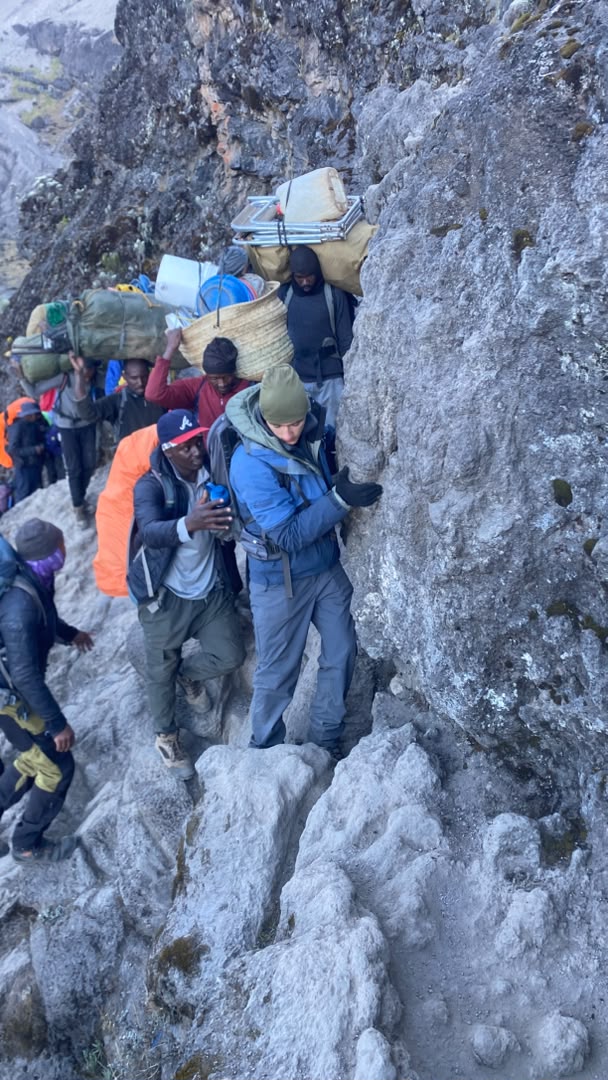
Also see: Do you need trekking poles on Kilimanjaro? and our Kilimanjaro boots guide 2026.
16. The 12-Week Family Training Plan for Kilimanjaro
See the full Kilimanjaro training guide for detailed adult programming. The table below shows the family-specific adaptation with age-differentiated targets for children and teenagers alongside adult training.
| Week | Training Focus | Adult (Parent) | Teen (13–18) | Child (10–12) |
|---|---|---|---|---|
| Weeks 1–2 | Base building | 5–6 km walks, 2× weekly | 4–5 km walks, 2× weekly | 3 km family walks, 2× weekly |
| Weeks 3–4 | Hill introduction | 8 km with 300m elevation gain | 6 km with 200m elevation | 4 km easy trail with light pack |
| Weeks 5–6 | Pack weight | 10 km with 8 kg pack | 8 km with 5 kg pack | 5 km with 3 kg pack |
| Weeks 7–8 | Duration + elevation | 12 km hike, 500m elevation | 10 km hike, 350m elevation | 6 km trail hike, family pace |
| Weeks 9–10 | Endurance peak | 15 km hike, 10 kg pack | 12 km hike, 7 kg pack | 8 km hike, 4 kg pack |
| Weeks 11–12 | Taper and gear testing | 8 km, test all summit-night gear | Same — test boots and layers | Family day hike, test cold-weather gear |
Key Training Principles for Families
- Boot break-in is non-negotiable: Every family member needs a minimum of 50 miles in their summit boots before departure.
- Train in the cold and wet: Kilimanjaro nights are cold. Practice wearing full layering systems before the climb.
- Practice slow pacing: Many children naturally want to sprint ahead. The whole family needs to practice the deliberate pole-pole walk pace before arriving in Tanzania.
- Night-hike rehearsal: Summit night involves hiking in complete darkness. A pre-trip family night hike with headlamps builds confidence and reduces anxiety.
📥 Free Download: Kilimanjaro 12-Week Training Calendar (PDF)
The same week-by-week training plan used by Kilimania Adventure, built from 1,247+ guided climbs. Includes adult, teen, and child variants.
If any family member is starting from a low fitness baseline, also read: can an unfit person climb Kilimanjaro and can a beginner climb Kilimanjaro.
17. Travel Insurance for Family Kilimanjaro Climbs
Every family member — adults and children — needs a travel insurance policy that explicitly covers trekking to 5,895m and includes emergency helicopter evacuation and medical repatriation. Standard travel policies frequently exclude high-altitude trekking above 4,000m or 5,000m. Confirm the exact altitude coverage before purchasing.
Reputable providers with high-altitude trekking coverage: World Nomads, Allianz Global Assistance, IMG Global, Travel Guard, and Seven Corners.
18. Planning From Abroad: Visas, Flights, and Best Timing
International Family Traveller Checklist
Entry & Visa
Apply for a Tanzania e-visa at Tanzania Immigration at least 3 weeks ahead. Both adults and children need individual visas.
Arrival Airports
Fly into Kilimanjaro International Airport (JRO) or Arusha Airport (ARK). Arrive 1–2 days early to adjust at Moshi (890m).
Travel Insurance
Confirm coverage explicitly names altitudes up to 5,895m and includes emergency helicopter evacuation and repatriation for every family member.
Health & Vaccinations
Check current requirements with CDC Travelers’ Health — particularly yellow fever requirements for transit through certain countries.
Best Months for Families
January–mid-March and June–October (dry seasons). See our monthly weather guide for camp temperatures by altitude.
Extend the Trip
Add a Tanzania safari (Serengeti, Ngorongoro) before the climb for mild acclimatisation at 1,400–2,000m, or finish with Zanzibar.
19. Lessons from 22 Years of Guiding Family Kilimanjaro Climbs
- Pacing discipline beats raw fitness every time — a slow family that maintains pace outperforms a fast one that burns out.
- Children rarely volunteer “I feel sick” — watch behaviour, not just questionnaire answers.
- Appetite loss above 3,500m is normal — force small, frequent bites rather than waiting for hunger.
- Cold hits smaller bodies faster — insist on extra layers before children complain of being cold.
- One vomiting episode linked to exertion is not an automatic evacuation trigger — assess, monitor, decide.
- A high guide-to-client ratio is the single most impactful safety upgrade a family can purchase.
- Longer routes cost more upfront and produce dramatically better outcomes.
- The strongest climber on Day 1 is rarely the strongest on summit night.
- Summit success is not the only measure. Lava Tower, Barranco Wall, Barafu sunrise — these matter.
In 22 years, the families who succeed are rarely the fittest on paper. They’re the ones who listen to their guide, eat when they don’t feel like eating, and never race the mountain. — Sabinus Msimba, Senior Kilimanjaro Guide & Co-founder, Kilimania Adventure
For an unfiltered account of the hardest parts: the worst part of climbing Kilimanjaro — 7 hard truths from a 22-year guide.
20. Frequently Asked Questions About Family Kilimanjaro Climbing
Can a family climb Kilimanjaro together?
Yes. KINAPA permits families to climb Kilimanjaro together provided every climber meets the minimum age of 10. In a permit-verified July 2026 climb, a mother (48), her son (19), and her daughter (13) all reached Uhuru Peak (5,895m) on the 8-day Lemosho Route guided by Sabinus Msimba.
What is the minimum age to climb Kilimanjaro?
KINAPA’s official minimum age is 10 years old. Climbers under 18 require a designated adult guardian on the mountain and written parental consent if the accompanying adult is not the legal guardian. Some operators set their own higher minimum at 12 or 13, so confirm before booking.
Can a 13-year-old climb Kilimanjaro?
Yes. A 13-year-old climber on the July 2026 Kilimania Lemosho expedition reached Uhuru Peak (5,895m) and recorded some of the steadiest SpO₂ readings in the group throughout the climb. KINAPA permits climbers aged 10 and above. Psychological readiness and pacing discipline matter more than age above the minimum.
Which Kilimanjaro route is best for families?
The 8-day Lemosho Route is the top recommendation for most families — it provides two full acclimatisation stages, a gradual altitude gain from 2,650m to 4,673m before summit night, and a documented family success rate of 89%. The 9-day Northern Circuit offers even more acclimatisation for younger children or multi-generational groups.
How many days should a family plan for Kilimanjaro?
8 days is the practical minimum for most family groups on the Lemosho Route. Shorter itineraries of 5–7 days reduce acclimatisation time and produce lower summit success rates for children and mixed-fitness groups. According to the 2019 Wilderness Medical Society guidelines, gradual ascent is the most effective AMS prevention strategy for all age groups.
How much does a family Kilimanjaro climb cost?
A family of three on the 8-day Lemosho Route typically pays $7,500–$12,000 total. Government park fees alone account for approximately $800–$900 per person. Additional costs include gear rental ($80–$150 per child), crew tips ($250–$350 per person), and pre/post-trip accommodation and flights.
Is altitude sickness more dangerous for children?
According to the 2019 Wilderness Medical Society Clinical Practice Guidelines, children are not inherently more susceptible to AMS than adults. However, younger children may struggle to articulate early symptoms, making proactive guide monitoring — including twice-daily SpO₂ checks and Lake Louise Score assessments — especially important on family climbs.
What are warning signs of altitude sickness in children?
Warning signs include unusual irritability, persistent headache, loss of appetite, nausea, dizziness, difficulty sleeping, decreased energy, and withdrawal from conversation. Children may not volunteer these symptoms — guides should ask directly and privately at every health check. Confusion or inability to walk in a straight line indicates possible HACE and requires immediate descent.
What SpO₂ level should trigger a descent on Kilimanjaro?
A resting SpO₂ reading below 75% at altitude, or a rapid drop of more than 10 percentage points from the previous day combined with worsening symptoms, warrants serious consideration of descent. Any neurological symptoms — confusion, ataxia, inability to walk in a straight line — require immediate descent regardless of SpO₂ reading, consistent with WMS emergency altitude illness protocols.
What happens if a child cannot continue the climb?
An assistant guide and porter escort the child down to a lower camp while the rest of the group may continue if safe. Kilimania guarantees a minimum 1:2 guide-to-client ratio to make this possible without abandoning the family’s summit attempt.
Do families need travel insurance for Kilimanjaro?
Yes — every family member needs a policy that explicitly covers trekking to 5,895m and includes emergency evacuation and medical repatriation. Standard travel policies frequently exclude high-altitude trekking above 4,000m or 5,000m.
What gear do children need for Kilimanjaro?
Children need the same core gear as adults — sleeping bag rated to at least -10°C, moisture-wicking base layers (no cotton), insulated mid-layer, waterproof shell, broken-in trekking boots, and headlamp — but correctly fitted to their size. Oversized borrowed gear is one of the most common and preventable mistakes on family climbs.
Is it safe to climb Kilimanjaro with teenagers?
Yes. Climbing Kilimanjaro with teenagers is safe with proper protocols: pre-climb medical clearance, daily SpO₂ and heart rate monitoring, strict climb-high-sleep-low schedule, and agreed turnaround thresholds. The July 2026 Kilimania case study documented a 19-year-old and 13-year-old summiting successfully with these protocols in place.
Can we combine a safari with a family Kilimanjaro climb?
Yes — many families arrive 3–5 days early for a Tanzania safari in the Serengeti, Ngorongoro Crater, or Tarangire. Safari camps at 1,400–2,000m altitude provide mild pre-acclimatisation and make the overall trip significantly more memorable for children.
What is the best time of year for a family Kilimanjaro climb?
The dry seasons — January through mid-March and June through October — offer the most stable weather and clearest summit conditions. July and August are the busiest. January and February offer quieter trails with excellent summit visibility.
What is the hypoxic ventilatory response and why does it matter for my family?
The hypoxic ventilatory response (HVR) is the body’s reflex to increase breathing rate when oxygen levels fall. Individual HVR strength — not fitness — is the primary determinant of how quickly a person acclimatises at altitude. This is why two family members of identical fitness can respond very differently above 4,000m. A slow, guided pace allows everyone’s HVR to work effectively.
How many family expeditions has Kilimania Adventure guided?
As of July 2026, Kilimania Adventure has guided 47 dedicated family expeditions and over 300 total Kilimanjaro ascents, with Senior Guide Sabinus Msimba personally leading the majority of family climbs over his 22-year career.
21. References & Clinical Sources
- Wilderness Medical Society Clinical Practice Guidelines for the Prevention and Treatment of Acute Altitude Illness (2019) — Wilderness & Environmental Medicine
- CDC Yellow Book: Altitude Illness — Centers for Disease Control and Prevention (2024 edition)
- Kilimanjaro National Park Authority (KINAPA) — Official Regulations & Age Requirements
- Tanzania National Parks Authority (TANAPA) — Park Fee Schedule
- World Health Organization — ICD-10 Classification (Altitude Illness: T70.2)
- Wilderness Medical Society — Altitude Medicine Resources
- CDC Travelers’ Health — Tanzania
- Kilimanjaro Porters Assistance Project (KPAP) — Fair Wage Standards
- Tanzania Association of Tour Operators (TATO)
- UNESCO World Heritage Centre — Kilimanjaro National Park
Ready to Plan Your Family’s Kilimanjaro Climb?
Tell us each family member’s age, fitness level, and any health considerations. Senior Guide Sabinus Msimba will recommend the safest route, the right number of days, and a pacing strategy built around your actual group.
Main resources: Mount Kilimanjaro Climbing · Complete Guide 2026 · All Routes Compared
About the Author
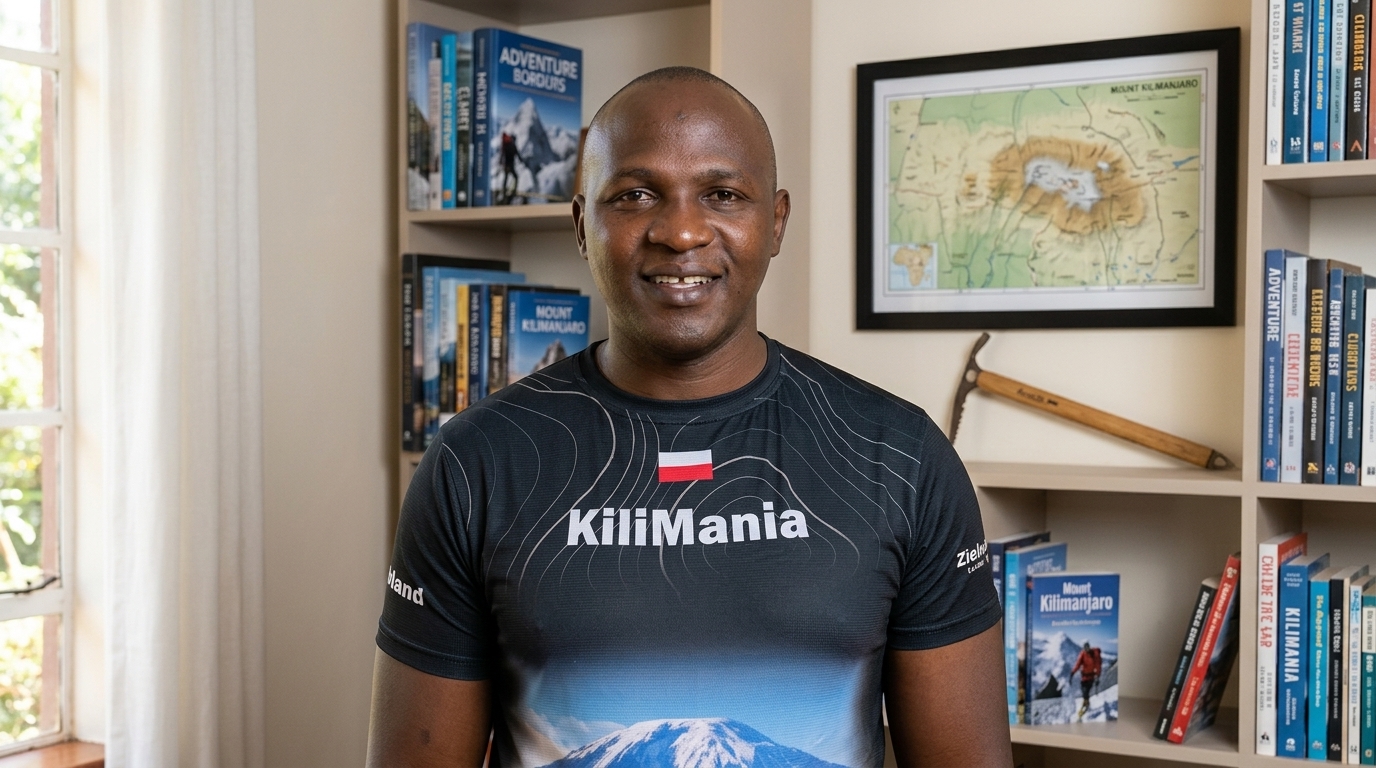
Sabinus Msimba
Senior Kilimanjaro Guide & Co-founder, Kilimania Adventure
Sabinus Msimba has guided Kilimanjaro expeditions for 22 years, leading over 300 successful summit attempts including 47 dedicated family expeditions. He holds a KINAPA-issued Senior Mountain Guide License and is a certified Wilderness First Responder.
View Full Profile · View KINAPA License (PDF) · TripAdvisor Reviews
Continue Reading
Essential Guides
Best Family Routes
Real Stories
Preparation
Gear & Costs
📥 Free: Kilimanjaro Altitude Symptom & AMS Checklist
The exact Lake Louise field checklist used twice daily by Kilimania guides on every family expedition.
📥 Free: Family Route Comparison Cheat Sheet
1-page printable comparing daily distances, altitude profiles, and safety ratings for family groups on all 7 routes.
Regulatory & Editorial Disclosure: Published by Kilimania Adventure, Moshi, Tanzania. The July 2026 case study is derived from KINAPA gate permit logs and guide health monitoring records; client surnames are omitted per family privacy commitments. All government park fees and regulations should be verified at kilimanjaranationalpark.go.tz. Clinical guidelines cited are from the Wilderness Medical Society (2019) and CDC Yellow Book (2024). This article constitutes general information, not medical advice. Consult a physician before high-altitude travel with children. Verify Kilimania’s standing via TATO or TripAdvisor.