

· By Sabinus Msimba, Senior Mountain Guide · Climbing Kilimanjaro Guide 2026
Data sources cited in this article: Kilimania guide field records (2003–2026), Kilimania’s climb database of 1,247+ guided ascents (2019–2025), and Wilderness Medical Society clinical practice guidelines (2024) for the cold-injury safety section.
How Cold Does Kilimanjaro Get? Temperature Guide by Zone and Month
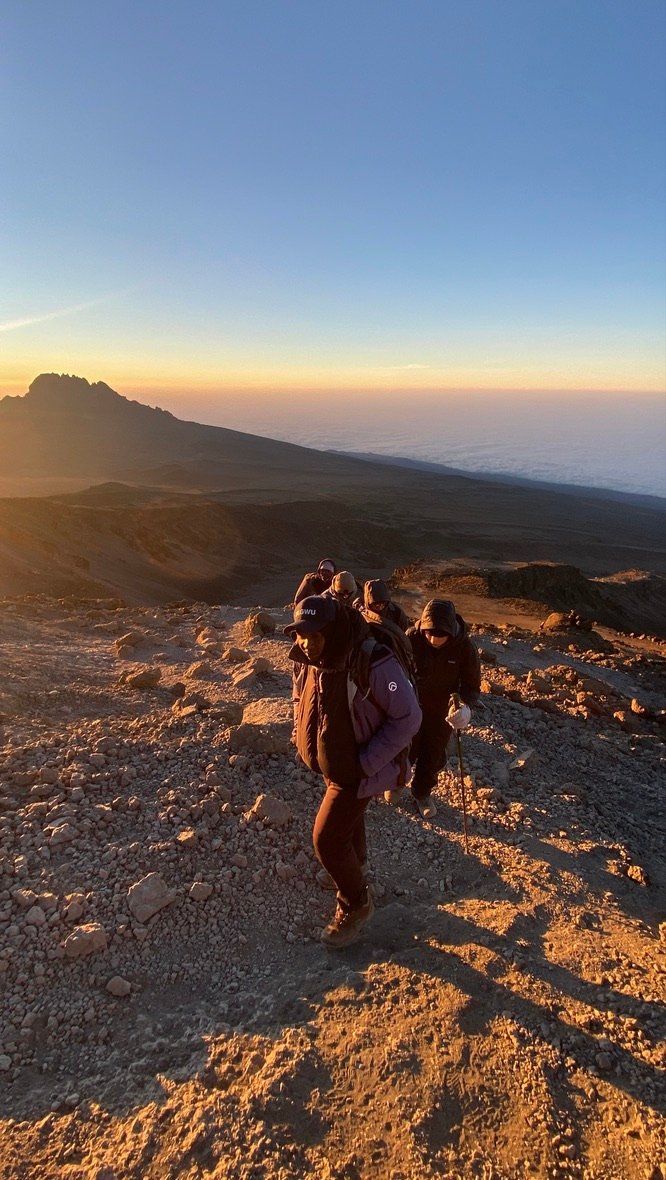
Senior Guide Sabinus Msimba leading the summit team toward Stella Point in pre-dawn darkness. Photo: Kilimania Adventure.
Kilimanjaro temperatures range from approximately 20°C at the rainforest trailhead to -20°C on summit night. That 40-degree swing occurs over approximately 4,095 metres of elevation gain across 7–9 days. At the Londorossi Gate you may start in a light shirt. By the time you leave Barafu Camp at midnight for the summit push, you will need every layer you own. For a full monthly breakdown by camp, see the Kilimanjaro weather guide by month.
🌡️ Check the Temperature at Your Camp
Select your camp and planned month to see the average night minimum from Kilimania’s guide records:
Windchill not included — felt temperature may be 5°C–10°C colder. Data: Kilimania guide records, 2003–2026.
Temperature by Altitude Zone
↑ Back to topKilimanjaro compresses four distinct climatic zones into one mountain. Each zone has its own temperature range, humidity level, and wind exposure. Understanding what to expect in each zone is what separates climbers who pack correctly from climbers who shiver through the first three days and run out of dry kit before the hard part begins.
The route you choose affects how long you spend in each zone — longer routes like the 8 Days Lemosho Route give your body more time to adapt across zones before the coldest sections hit. Learn more about each Kilimanjaro route’s altitude profile and how it affects your cold exposure.
Rainforest Zone
Warm, humid, tropical. Sweating is normal. Light rain can fall at any time. A moisture-wicking shirt and light rain layer are sufficient. Do not start layering here — you will overheat and soak your base layer before the cold zones begin.
Moorland Zone
Noticeably cooler, like a cool autumn day in northern Europe. Wind picks up above the treeline. Add a mid-layer at camp. Night temperatures approach freezing at the upper end of this zone.
Alpine Desert Zone
The temperature differential between direct sun and shade is extreme — sometimes 15°C difference at the same camp. Wind accelerates cooling dramatically. Barafu Camp sits at the lower edge of this zone.
Arctic Zone
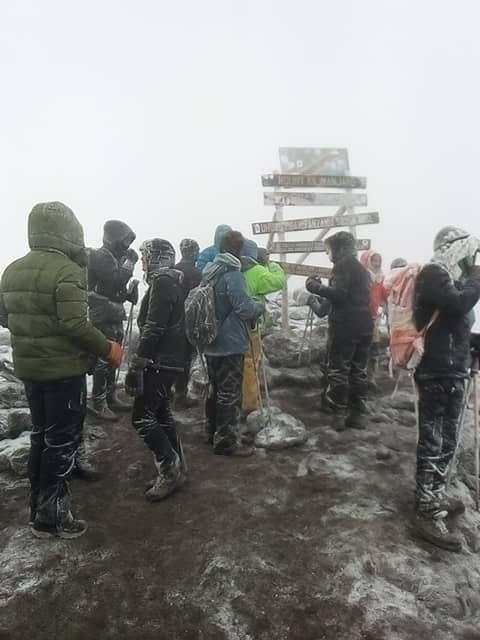
Extreme cold with windchill reducing felt temperature further. The coldest section is between Stella Point (5,756m) and Uhuru Peak (5,895m) — exposed to crater rim winds for the final 90 minutes of the ascent.
The most common temperature mistake on Kilimanjaro: climbers over-layer in the rainforest zone, creating sweat-soaked base layers that become a cold and chafing problem once they enter the alpine desert. Pack for the zone you are in, not the zone that is coming. The Kilimanjaro packing list breaks this down layer by layer.
Know the Temperatures. Pack the Right Gear.
Every Kilimania climb includes a full pre-expedition briefing from Senior Guide Sabinus Msimba on what to wear, when to layer, and what conditions to expect. Gear rental is available from our Moshi base for climbers who do not want to buy everything.
Temperature by Camp and Month — The Data Table
↑ Back to topThe following data is drawn from Kilimania’s guide field records across more than 22 years, cross-referenced against Kilimania’s climb database of 1,247+ guided ascents (2019–2025). These are observed night-minimum temperatures recorded at each camp — not modelled estimates. Daytime temperatures at each camp typically run 10°C–15°C warmer than the night minimums shown. Compare how different months affect summit success rates alongside temperature data to choose your ideal window.
How to read this table: Temperatures shown are approximate night minimum °C observed at camp level. “Summit push” figures for Uhuru Peak are recorded between 2am and 7am during ascent. Felt temperature (windchill) will be 3°C–10°C colder than the recorded values. See the hour-by-hour summit night guide for timing context.
| Camp | Elevation | Route(s) | Jan (Dry) | Apr (Wet) | Jul (Cold/Dry) | Oct (Short Rains) |
|---|---|---|---|---|---|---|
| Londorossi Gate | 2,250m | Lemosho, Shira | 10–14°C | 12–16°C | 8–12°C | 11–15°C |
| Mti Mkubwa (Big Tree Camp) | 2,750m | Lemosho | 8–13°C | 10–14°C | 6–10°C | 9–13°C |
| Machame Camp | 3,000m | Machame | 6–11°C | 8–12°C | 4–8°C | 7–11°C |
| Shira 1 Camp | 3,500m | Lemosho, Shira | 2–7°C | 4–8°C | 0–4°C | 3–7°C |
| Shira 2 Camp | 3,840m | Lemosho, Shira | 0–5°C | 2–6°C | -3–2°C | 1–5°C |
| Barranco Camp | 3,976m | Lemosho, Machame, Umbwe | 0–5°C | 2–6°C | -4–1°C | 1–5°C |
| Karanga Camp | 4,035m | Lemosho, Machame | -2–4°C | 0–4°C | -5–0°C | -1–4°C |
| Horombo Huts | 3,720m | Marangu | 0–5°C | 2–7°C | -3–2°C | 1–6°C |
| Kibo Hut | 4,703m | Marangu | -5–0°C | -3–2°C | -10– -5°C | -4–0°C |
| Barafu Camp | 4,673m | Lemosho, Machame, Umbwe | -6– -1°C | -4–0°C | -12– -7°C | -5– -1°C |
| Kosovo Camp | 4,800m | Northern Circuit | -7– -2°C | -5–0°C | -13– -8°C | -6– -2°C |
| Crater Camp | 5,729m | Crater Route | -14– -9°C | -12– -7°C | -20– -14°C | -13– -8°C |
| Uhuru Peak (summit push) | 5,895m | All routes | -10– -15°C | -8– -13°C | -16– -20°C | -9– -14°C |
Data source: Kilimania Adventure guide field records, 2003–2026, cross-referenced with Kilimania’s climb database of 1,247+ guided ascents (2019–2025). Key: Mild (above 5°C) · Cold (0°C to -8°C) · Very Cold (below -8°C)
What the Monthly Pattern Tells You
January delivers reliable dry skies with cold but manageable summit temperatures averaging -12°C. For climbers who are cold-sensitive but want clear conditions, January is a practical choice — and our success rate data by route shows consistently high summit rates in January.
April sees warmer temperatures at altitude — Barafu is more bearable in April than January in terms of raw cold — but the long rains create wet tents, muddy paths, and cloud-obscured views throughout the lower zones.
July delivers the coldest temperatures on the mountain. Barafu regularly records -12°C at 2am, and summit temperatures can reach -20°C with wind. Despite this, July is peak season: the sky is clear, visibility extends 100km+, and the mountain is at its most dramatic. Correct gear preparation eliminates cold as a summit obstacle. The Kilimanjaro weather guide covers every month in detail.
October sits between the two wet seasons — typically drier than April, warmer than July, with solid success rates. A practical choice if January or July dates do not fit your schedule.
What the Temperature Data Means for Your Layering Decisions
↑ Back to topRaw temperature figures only become useful when translated into specific clothing decisions. Here is how the data maps to real layering choices, camp by camp. This is the system Sabinus Msimba walks through with every Kilimania team before departure. For specific gear brands and rental costs, see the complete Kilimanjaro packing list.
🌿 Rainforest & Lower Moorland
Days 1–2 · 1,800–3,500m
- Moisture-wicking base layer only (long or short sleeve)
- Light softshell or fleece in pack, not on body
- Rain jacket accessible — afternoon showers common
- Hiking trousers or leggings
- Do NOT put on mid-layer until the sun goes down
Common mistake: putting on a down jacket at Shira 1 because it feels cold — then sweating through it on the next day’s ascent.
🌾 Upper Moorland to Barranco
Days 2–3 · 3,500–3,976m
- Base layer + mid-layer fleece during ascent
- Down jacket at camp and during rest breaks
- Beanie and light gloves for evenings
- Thermal bottoms on after dinner
- Sleeping bag rated to at least -10°C
Morning starts at Barranco cold (2°C–5°C), warms to 8°C–12°C during the Barranco Wall climb, then cools immediately in shade at Karanga. See the Barranco Wall guide for what to expect.
🪨 Alpine Desert — Barafu Camp
Days 4–5 · 4,000–4,700m
- Full three-layer system during cold mornings
- Strip to base + softshell during midday ascent
- Do not nap in direct sun without a hat — sunburn at altitude is severe
- Sleep: thermal base + mid-layer + sleeping bag liner
- Arrive at Barafu prepared to layer immediately on arrival
At Barafu in July, shade temperature at 2pm can be -4°C while the sun-facing tent is +12°C. Both readings are accurate simultaneously.
🏔️ Summit Night
Midnight–7am · 4,673–5,895m
- All layers on simultaneously — no exceptions
- Thermal base top and bottom
- Insulating mid-layer: down or 300-weight fleece
- Waterproof/windproof shell over everything
- Balaclava or neck gaiter + beanie
- Insulated, waterproof gloves (liner + outer)
- Insulated boots or boot covers
Read the hour-by-hour summit night guide to understand when windchill is most severe and what to expect each hour.
☀️ Descent — The Warm Trap
7am–afternoon · 5,895–3,000m
- Descend from summit with full layers on
- Remove outer shell once below 5,000m if sun is out
- Knees take the load — trekking poles strongly recommended
- Rehydrate immediately after summit — dehydration masks cold
- Do not rush stripping layers — temperature drops fast in cloud
Good Kilimanjaro boots matter most on the long descent — a supportive, well-broken-in boot prevents the knee and ankle injuries that are most common in this phase.
🌡️ The Rule of Constant Adjustment
- Never hike in a full down jacket — sweat destroys insulation efficiency
- Never sit in camp without insulation — temperature drops ~1°C every 10 minutes after stopping
- Always have your next layer accessible in the top of your daypack
- Wet base layers are the leading cause of cold-related distress on Kilimanjaro
Temperature is only part of the summit night challenge. The full hour-by-hour summit night guide breaks down what the coldest push on Kilimanjaro actually feels like, from midnight at Barafu to sunrise at Uhuru Peak — worth reading alongside the best time to climb Kilimanjaro guide if you are still choosing your month.
The Windchill Factor
↑ Back to topTemperature alone is insufficient for Kilimanjaro preparation. A thermometer reading of -10°C at Barafu at 2am with no wind is uncomfortable but manageable. Add 25 km/h of wind — common across the exposed crater rim — and the felt temperature drops to approximately -18°C. That 8-degree gap is created entirely by wind moving across exposed skin.
This is why two climbers in identical gear can have entirely different experiences on the same summit night. The climber sheltering behind a ridge or teammate may feel -14°C. The climber directly exposed to the prevailing wind at the same location feels -20°C. Understanding the windchill factor is also central to understanding why summit night is the hardest part of climbing Kilimanjaro.
🌬️ Windchill Impact at Kilimanjaro Summit Elevations
Felt: -10°C
Felt: -17°C
Felt: -22°C
Where Wind is Worst on Kilimanjaro
The crater rim between Stella Point and Uhuru Peak is the most wind-exposed section of any route. The glaciers channel and accelerate wind along the crater edge. Climbers who reach Stella Point thinking “nearly there” are correct in distance terms (1.1km) but often underestimate the final 90 minutes because this is the most exposed section on the entire mountain. For a full understanding of the summit check-points, read the Stella Point guide.
The Shira Plateau (Lemosho and Shira routes, days 2–3) is exposed to strong afternoon winds that can drop the felt temperature at Shira 2 Camp significantly below the air temperature. Add layers before the wind arrives — not after you are already shivering.
The Southern Circuit above Barranco Wall — from Karanga to Barafu — is exposed to persistent trade winds from the south. Afternoons on this section regularly deliver 20–30 km/h gusts. A windproof shell is not optional here regardless of the air temperature. Understanding Kilimanjaro’s seasonal wind patterns helps you prepare for the specific route and month you have chosen.
Practical windchill rule: When packing for summit night, add 8–10°C to the cold side of any temperature figure in the table above to get the felt temperature. If your shell is rated to -18°C and the Barafu July figure is -12°C with 25 km/h wind, you are marginal. Add a liner glove under your outer gloves, and ensure your balaclava covers your chin and neck. Consider whether Diamox is right for your preparation plan — it doesn’t affect cold tolerance, but it does affect altitude acclimatisation, which influences how your body manages extreme cold.
Cold-Weather Safety on Kilimanjaro
↑ Back to topCold injury on Kilimanjaro is preventable with correct preparation. The most common cold-related issues our guides encounter are not dramatic emergencies — they are the cumulative effect of wet base layers, inadequate gloves, and insufficient sleep that compounds into a climber who is too cold and exhausted to continue safely on summit night.
Warning Signs to Know Before You Climb
Mild hypothermia presents as uncontrolled shivering, confusion, slurred speech, and loss of coordination. If a team member stops shivering despite still being cold, that is a serious warning sign of progression. Descend immediately and seek medical attention. The Kilimanjaro safety guide covers rescue protocols and emergency procedures.
Frostbite risk is real on summit night, particularly to fingers, toes, nose, and ears. Early signs are numbness and skin that appears pale or waxy. The treatment is controlled rewarming — but never rub frostbitten skin. Kilimania guides carry emergency thermal supplies and are trained in first-response cold injury management as part of their KINAPA-licensed guiding certification.
Prevention: Stay dry. Stay fed. Stay hydrated. Dehydration significantly reduces your body’s ability to thermoregulate — a climber who is not drinking enough water will feel colder than one who is, even in identical gear. The Kilimanjaro hydration guide explains exactly how much to drink and when.
At-altitude rule from our guides: If a climber’s behaviour changes — they become unusually quiet, unusually aggressive, or start making decisions that seem irrational — cold and altitude may be acting together. This is not weakness. It is physiology. The correct response is to add layers, hydrate, and assess whether descent is appropriate. Never leave a cold-affected climber alone on the mountain.
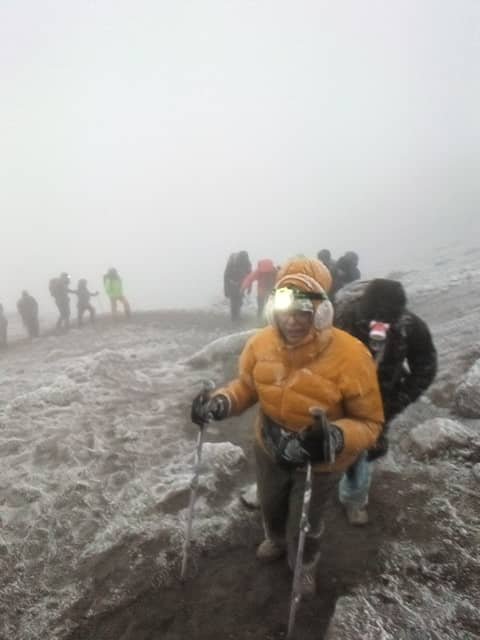
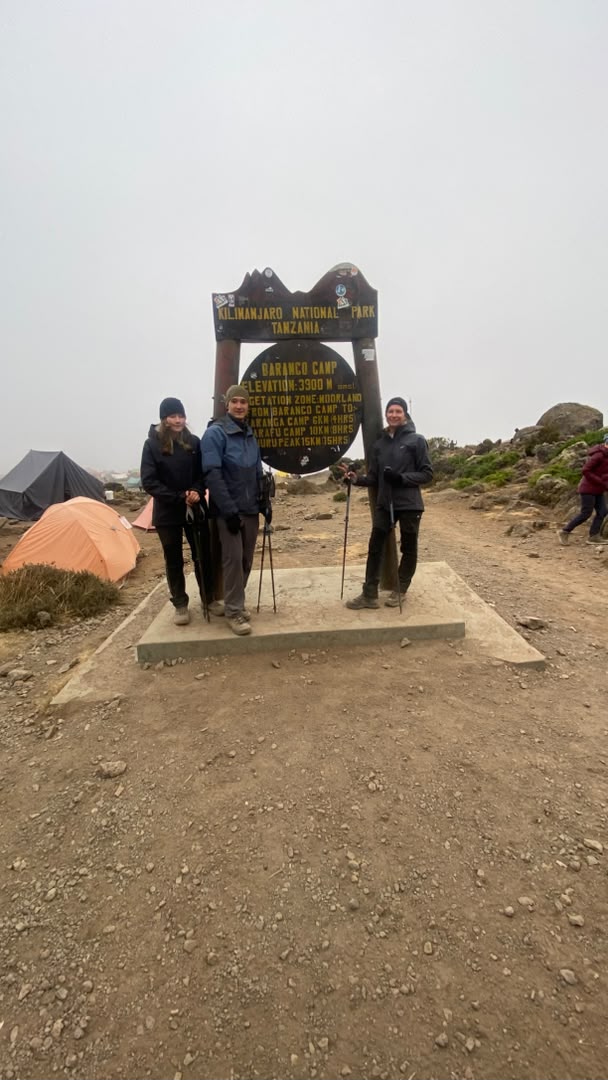
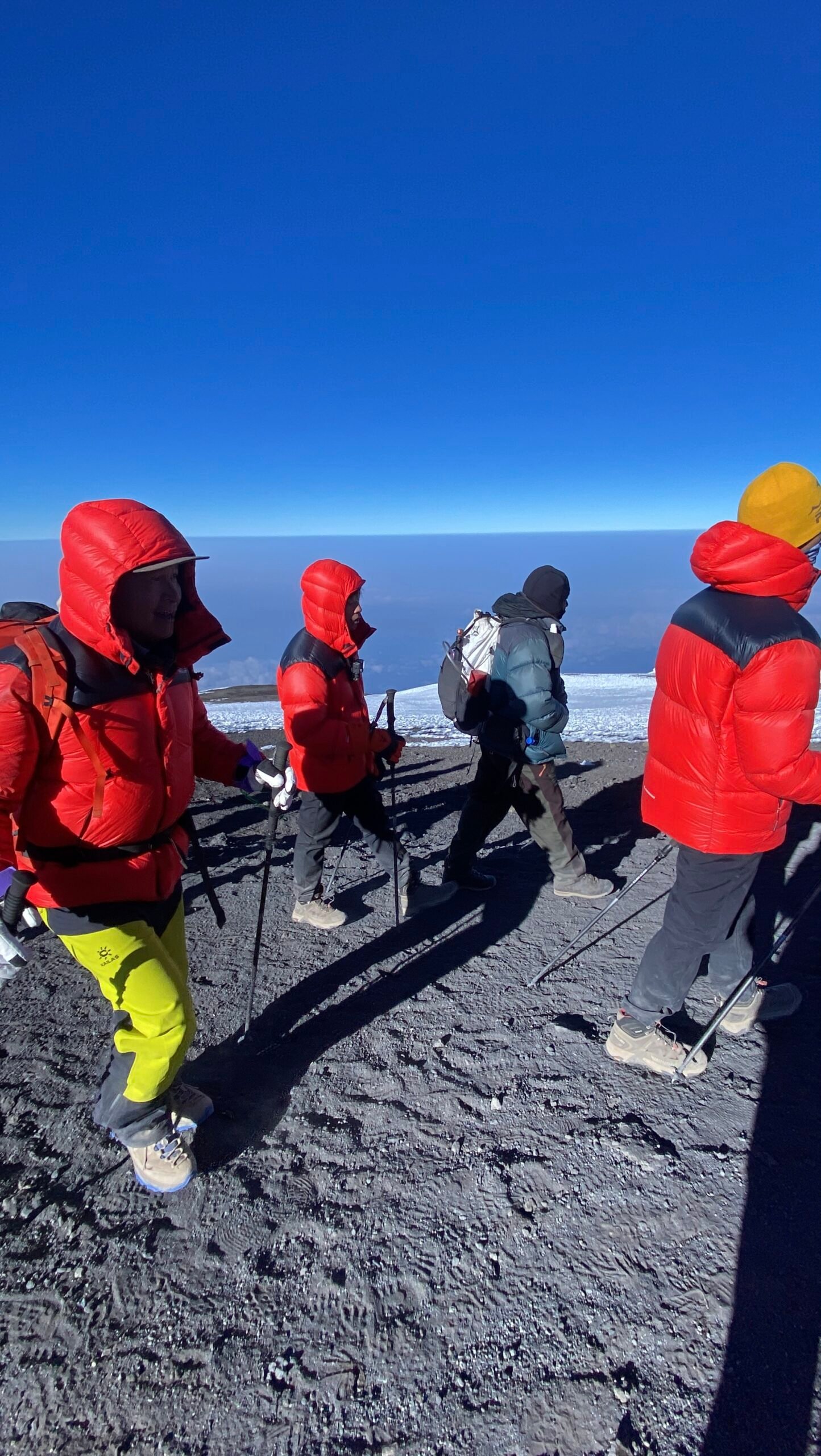
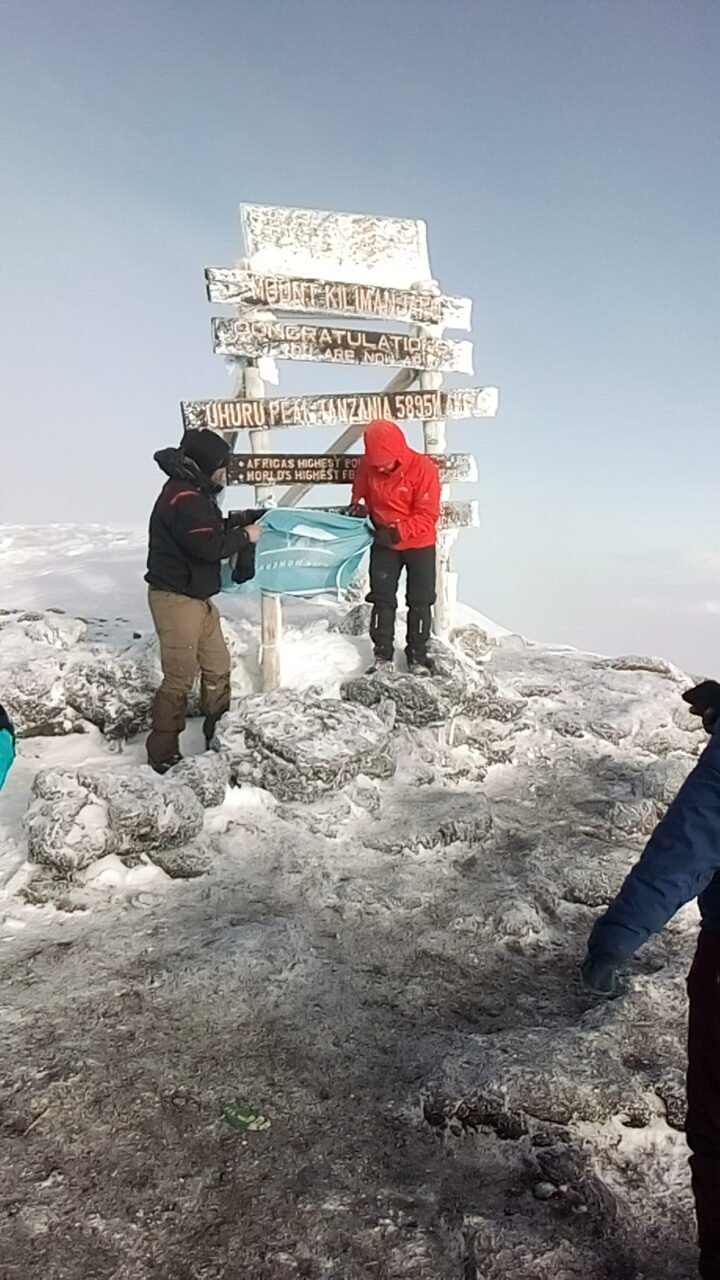
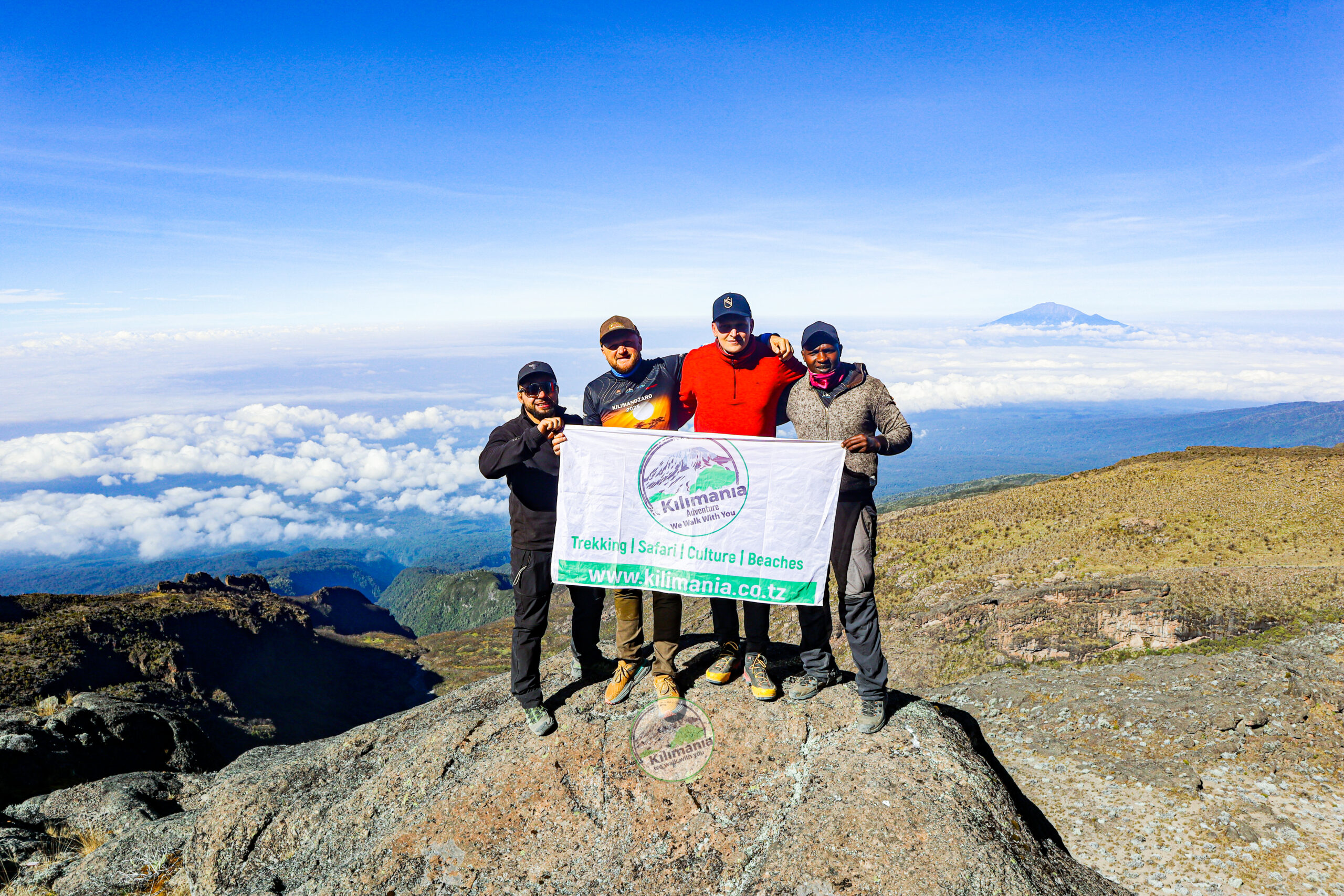
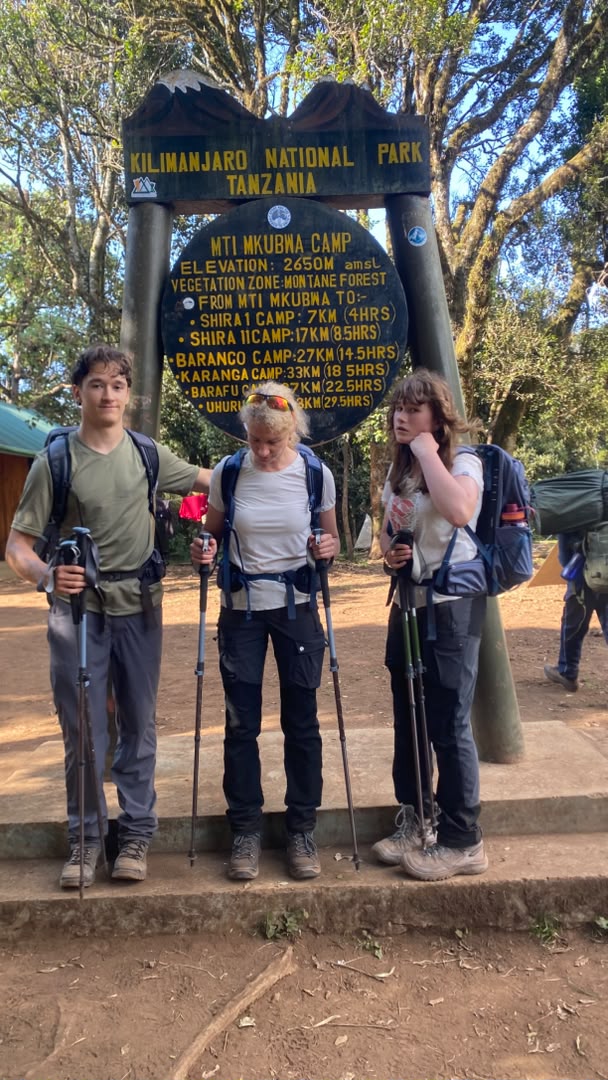
Photo Gallery: Kilimanjaro Conditions Across All Zones
↑ Back to top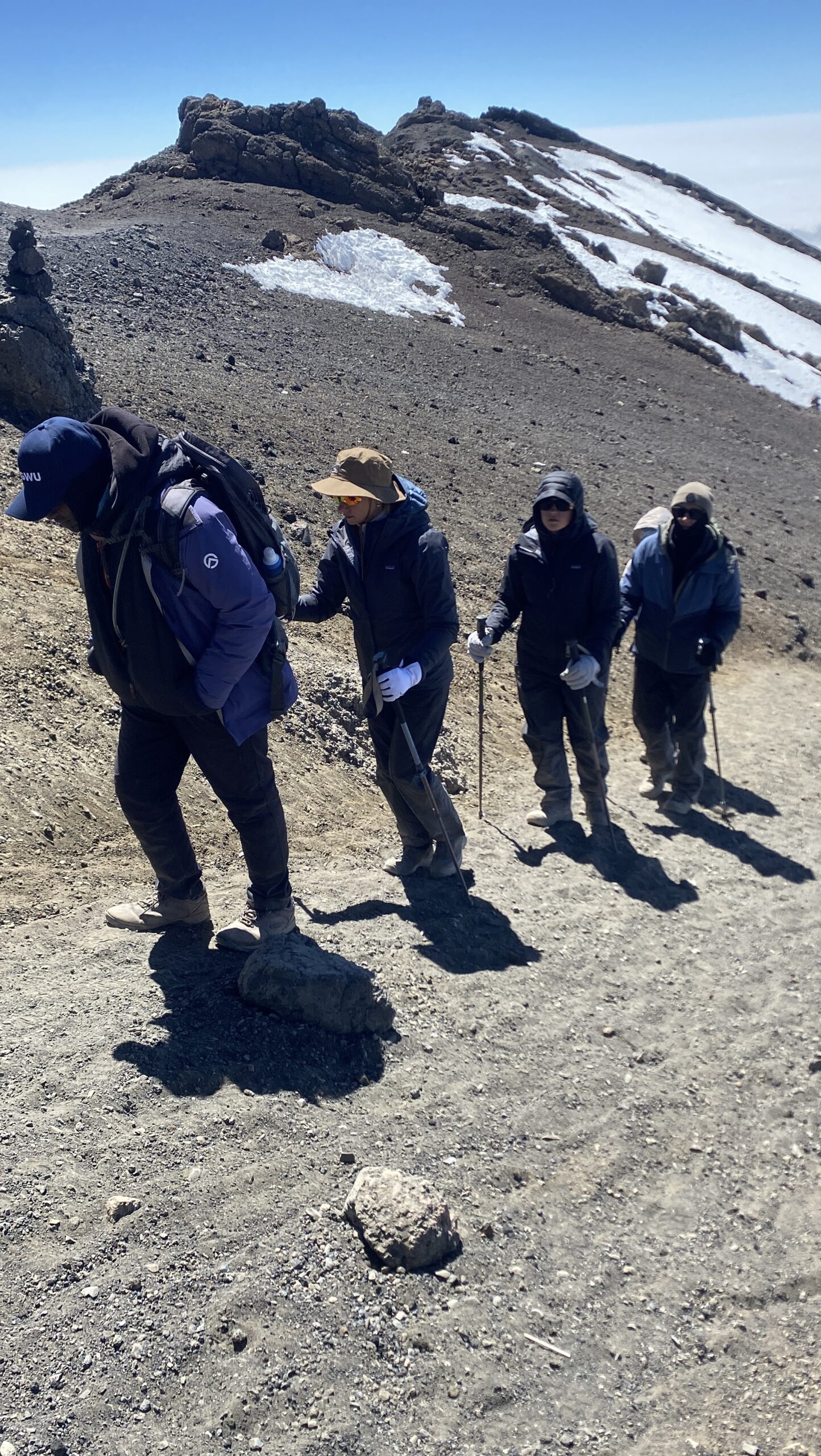
Choose a Route — Plan Around the Temperatures
↑ Back to topEvery Kilimanjaro route passes through the same altitude zones and the same temperature ranges. The critical difference is how many days you have to acclimatise before the cold sections. Longer routes consistently achieve higher summit success rates by route precisely because climbers arrive at Barafu better adapted to the cold and altitude combined.
The Kilimanjaro routes comparison guide breaks down every route by success rate, scenery, and cold exposure profile. If you are concerned about how you will handle the temperature range, the Kilimanjaro difficulty guide provides an honest assessment of what to expect physically.
View all Kilimanjaro climbing packages →
Frequently Asked Questions About Kilimanjaro Temperatures
↑ Back to topAt Uhuru Peak (5,895m), temperatures on summit night typically range from -10°C to -20°C with windchill factored in. During daylight hours on summit day, temperatures can rise to between -5°C and 5°C in direct sunlight, but climbers rarely linger long enough to benefit. Most summit attempts happen between midnight and 7am, when temperatures are at their coldest.
Barafu Camp at 4,673m is the high camp on both the Machame and Lemosho routes. Night temperatures range from -6°C to -1°C in January and -12°C to -7°C in July. Daytime temperatures can reach 5°C–10°C in direct sunlight, but shade temperatures drop sharply. In July and August, night temperatures at Barafu regularly hit -12°C or lower.
Yes. Kilimanjaro has permanent glaciers and snowfields above approximately 5,000m, most visible on Uhuru Peak and around Stella Point. Snow can also fall at Barafu Camp during the wet seasons (March–May and November). The glaciers have been retreating for decades; the summit snowfields are significantly smaller than they were 50 years ago, but remain visible year-round.
July is typically the coldest month on Kilimanjaro due to Southern Hemisphere winter patterns pushing cold air northward. Summit night temperatures in July can reach -16°C to -20°C before windchill. Despite this, July is peak climbing season because it also delivers exceptional visibility, minimal rainfall, and stable summit windows.
No. July is not too cold to climb Kilimanjaro safely with the correct gear. Kilimania guides summit with climbers throughout July. The requirement is a shell jacket rated to at least -20°C windchill, insulated gloves with liner, balaclava, thermal base layers, and a sleeping bag rated to -10°C or colder. Cold in July is a preparation challenge, not a ceiling.
A three-layer system covers the full 40-degree range: (1) moisture-wicking base layer for the rainforest and lower moorland; (2) insulating mid-layer — down or 300-weight fleece — from the alpine desert zone upward; (3) windproof and waterproof shell for summit night. Add balaclava, insulated gloves with liner, thermal bottoms, and warm socks for the summit push.
The Temperature Tells You What to Prepare — Not Whether to Go
Every climber who has stood at Uhuru Peak at -18°C and looked out over the clouds will say the cold was worth it. Every climber who turned around at Barafu because they were wet and shivering will say they wished they had packed a better shell.
The data in this guide exists to close that gap. The 40-degree temperature range from gate to summit is predictable, documented across 22 years of guide records, and manageable with the right gear. Sabinus Msimba and the Kilimania team run a pre-climb gear check on every expedition because cold-related equipment failures are both common and largely preventable.
Plan for the cold. Pack for the zone you are entering. And choose a route that gives your body enough days to adapt before the hardest night on the mountain. Explore all Kilimanjaro climbing packages to find the right route for your schedule and experience level.
Or email us at info@kilimania.co.tz
External References
- Tanzania National Parks Authority (TANAPA) — official park regulations and altitude data
- Kilimanjaro National Park (KINAPA) — mountain regulations and guide licensing
- UNESCO World Heritage — Kilimanjaro as a World Heritage Site
- Kilimanjaro Porters Assistance Project (KPAP) — porter welfare and ethical operator standards
- World Nomads — recommended travel insurance covering high-altitude cold weather climbing
Disclosure: Kilimania Adventure is a TATO-registered, KINAPA-licensed Kilimanjaro tour operator based in Moshi, Tanzania. This guide was written by our own guiding team from first-hand field records; we earn revenue from the climb packages linked in this article. Cold-injury safety information was checked against Wilderness Medical Society clinical practice guidelines (2024) and is provided for general awareness, not as medical advice. Temperature data is scoped to Kilimania’s own guide field records (2003–2026) and climb database (1,247+ guided ascents, 2019–2025) and should not be read as an industry-wide or independently verified meteorological dataset. Last reviewed 1 August 2026.
We Walk With You.