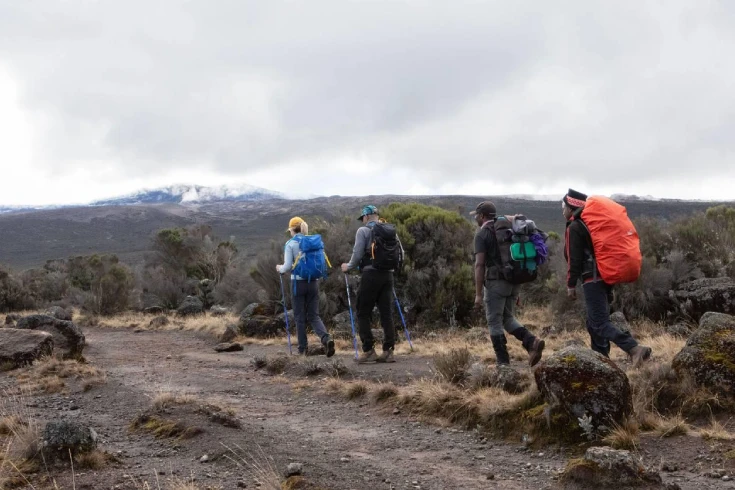
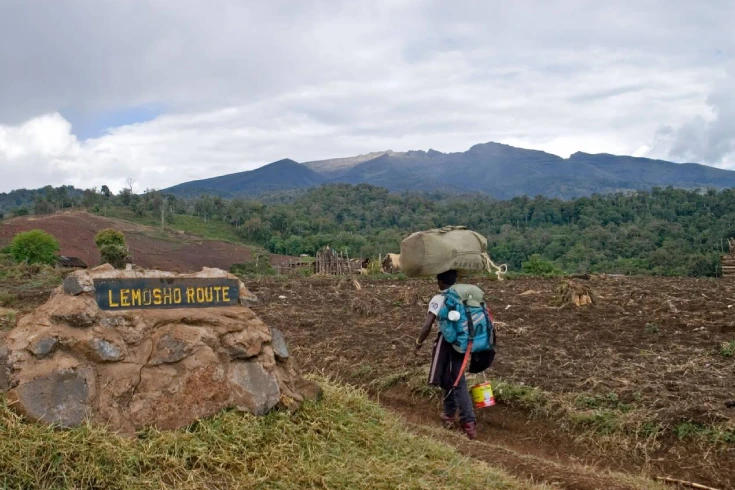
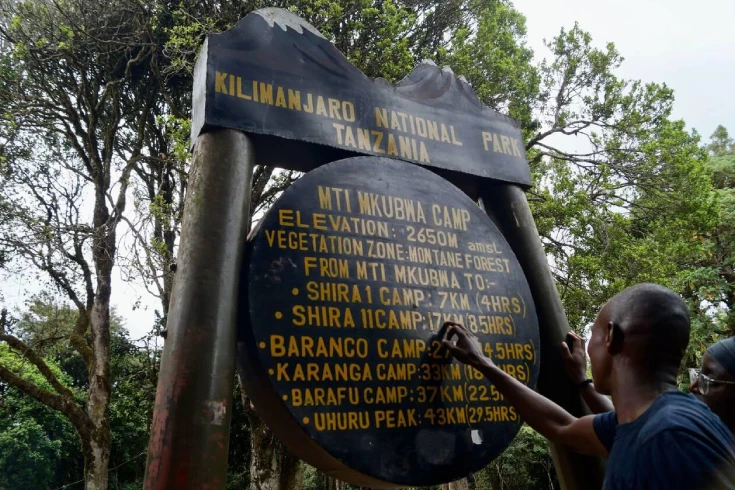
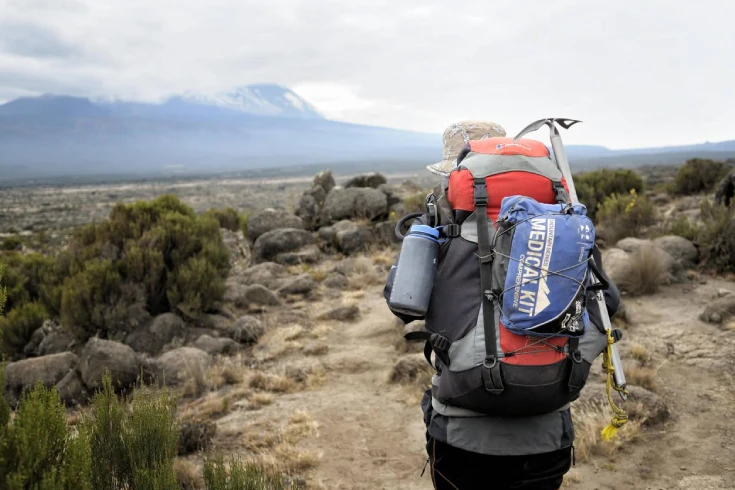
Scenic Lemosho Route with high success rates & fewer crowds
Kilimanjaro Climb — Western Approach
8-Day Lemosho Route Kilimanjaro
The western approach to Kilimanjaro, built around gradual altitude gain, a dedicated Shira Plateau acclimatization day, and a summit push from Barafu Camp that eight days of preparation has earned.
8
Days
7
Nights
5,895m
Uhuru Peak
~70km
Distance
Kilimania Adventure · Moshi, Tanzania · KINAPA-licensed guides since 2003
KINAPA-Licensed Guides Since 2003
22+ Years Guiding Kilimanjaro
1,247+ Climbers Guided (2019–2025)
Moshi-Based Team
Daily Pulse-Ox Monitoring
What Is the 8-Day Lemosho Route?
The 8-day Lemosho Route climbs Kilimanjaro from the west, starting at Londorossi Gate (2,250m) and crossing the Shira Plateau before the route’s key acclimatization day at Lava Tower (5,100m) on Day 4. It descends via the Southern Circuit through Barranco Camp and Karanga Camp to Barafu high camp, then up to Uhuru Peak (5,895m) on summit night, and down to Mweka Gate the following morning.
We recommend this itinerary to most first-time Kilimanjaro climbers. The extra day compared to the 7-day version means more time between 3,500m and 3,850m on the Shira Plateau before the push to Lava Tower — and that additional acclimatization time is the most practical thing an itinerary can offer at altitude.
Route at a Glance
Duration
8 days
7 nights on the mountain
Start Gate
Londorossi
~2,250m · western side
Finish Gate
Mweka
~1,640m · southern side
Summit
5,895m
Uhuru Peak
Distance
~70km
Full route, approximate
Accommodation
Camping
Tents provided
Difficulty
Moderate–Hard
Altitude is the deciding factor
Price From
$1,750pp
Group of 6 · see pricing
What “8 days” means: 8 trekking days on the mountain, 7 nights camping. Kilimania also includes 2 hotel nights in Moshi (the night before your climb starts and the night after you return). The mountain trek is never sold as 9 days.
Route Analysis
Why Choose the 8-Day Lemosho Route?
The Lemosho Route enters Kilimanjaro from Londorossi Gate on the western side — one of the quieter start points on the mountain. The first two days move through Afromontane rainforest before opening onto the Shira Plateau, one of Africa’s largest ancient calderas. By the time your group reaches Shira 2 Camp at 3,850m, you’ve had three days of controlled altitude gain and your body has begun adjusting before the route’s most important day begins.
Day 4’s climb to Lava Tower (5,100m) and descent to Barranco Camp (3,960m) is the structural heart of this itinerary. You climb to the highest point you’ll reach before summit night, then sleep more than 1,000m lower. That climb-high, sleep-low pattern is the most effective acclimatization tool a trekking route can offer without extending the overall trip further.
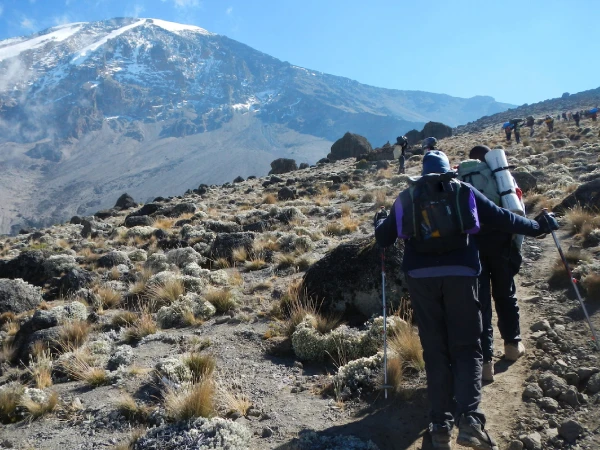
From Barranco, the Southern Circuit traverses across Kilimanjaro’s southern face through Karanga Camp before arriving at Barafu for the summit push. This traverse gives you a full day’s views of the glaciers and the south face — something shorter routes don’t provide.
Deciding between Lemosho and Machame? Our Machame vs Lemosho comparison breaks down the practical differences. For a full comparison of all routes, see our Kilimanjaro routes guide.
- Extra acclimatization day on Shira PlateauDay 3’s shorter crossing at 3,500–3,850m is the defining difference from the 7-day version. That extra day at moderate altitude before Lava Tower matters.
- Lava Tower climb-high, sleep-low dayDay 4 reaches 5,100m — the highest point on the route before summit night — then drops back to 3,960m to sleep. This is the route’s primary acclimatization mechanism.
- Barranco Wall on Day 5A 300m hands-on scramble that looks intimidating from camp but requires no ropes or technical climbing. The views from the top are worth every step.
- Five ecological zones in one routeCultivation, Afromontane rainforest, moorland, alpine desert, and the arctic summit zone — the full Kilimanjaro experience on a single itinerary.
- Quieter western approachLondorossi Gate sees significantly fewer climbers than Machame or Marangu gates during the first two days, before routes converge near Shira 2.
Day by Day
8-Day Lemosho Route — Full Itinerary
Distances, times, and elevations are approximate. Actual conditions vary with pace, weather, and group needs. Select any day to expand the detail.
Start
2,250m
End
2,780m
Distance
~7km
Time
3–4h
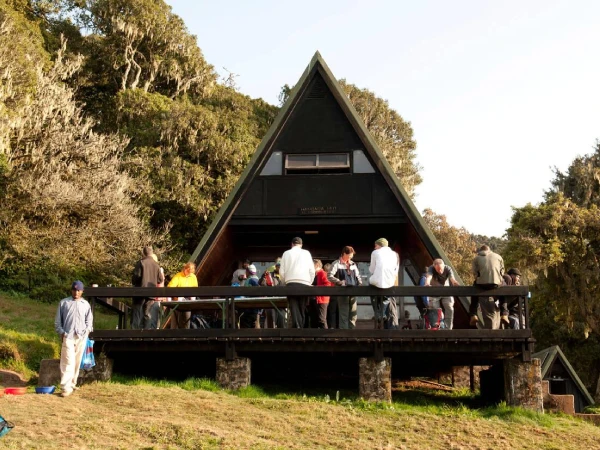
After registration and permit checks at Londorossi Gate, the trail enters dense Afromontane rainforest — quiet, green, and significantly cooler than the exposed plateau terrain ahead. This is a deliberately short first day. Your body’s first hours above 2,500m should be gentle ones, not a long push.
Big Tree Camp sits in the forest at 2,780m. The cook team will have a hot meal ready. Sleep comes easily at this altitude.
Start
2,780m
End
3,500m
Distance
~8km
Time
4–5h
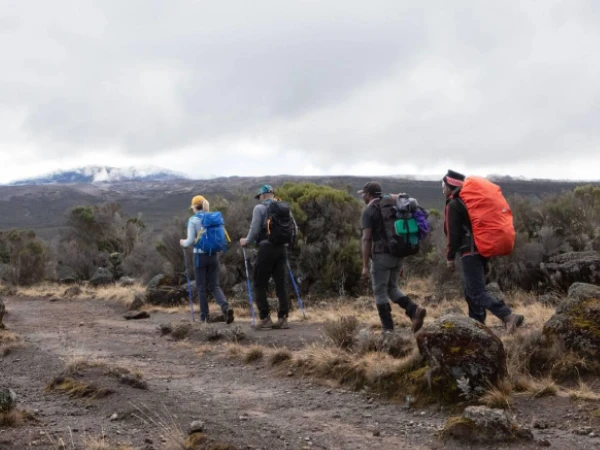
The forest canopy thins quickly as the trail climbs out of the tree line and onto the lower Shira Plateau. The landscape opens dramatically — from enclosed forest to wide African sky and the first unobstructed views of Kilimanjaro’s higher slopes. Altitude starts to register, but the gain stays manageable.
From Sabinus
This is where most climbers first feel the altitude — a slightly heavier breath, a slower pace. We watch everyone carefully here and establish the group’s natural pace for the days ahead.
Start
3,500m
End
3,850m
Distance
~5km
Time
3–4h
This shorter plateau crossing is what separates the 8-day itinerary from the 7-day version. The 7-day route pushes straight to Shira 2 and then to Lava Tower without this pause. The 8-day version spends this extra day between 3,500m and 3,850m — a moderate altitude range where your body can adapt before the significant jump to Lava Tower at 5,100m the following day.
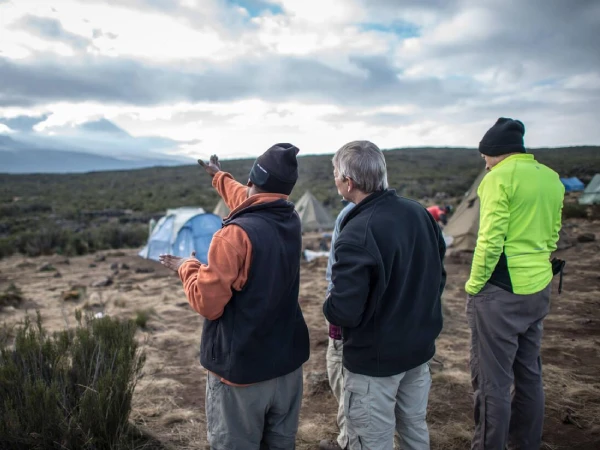
The Shira Plateau is one of the largest ancient calderas in Africa. On a clear afternoon you can see both the summit and the distant plains below — one of the route’s quietest and most open camps.
Start
3,850m
High Point
5,100m
Sleep
3,960m
Time
6–7h
This is the most strategically important day on the route. The trail climbs steadily to Lava Tower at 5,100m — the highest point you’ll reach before summit night itself — then descends to Barranco Camp at 3,960m. You end the day more than 1,100m lower than Lava Tower. Your red blood cell production has been stimulated by the high point; you sleep comfortably at the lower elevation.
Lunch is usually taken at or near Lava Tower. The pace from Shira 2 is deliberately slow — pole pole. This day’s elevation profile does more for your acclimatization than almost any other day on any Kilimanjaro route.
See our altitude sickness guide and our guide to Diamox for Kilimanjaro — both worth reading before Day 4.
From Sabinus
Most climbers notice their first proper headache near Lava Tower. That’s normal and doesn’t signal a problem — it signals that the altitude is real and your body is responding. We check pulse-ox at Lava Tower and again at Barranco. If anyone’s numbers are concerning, we have a conversation that evening rather than waiting until summit night.
Start
3,960m
End
4,035m
Distance
~5km
Time
4–5h
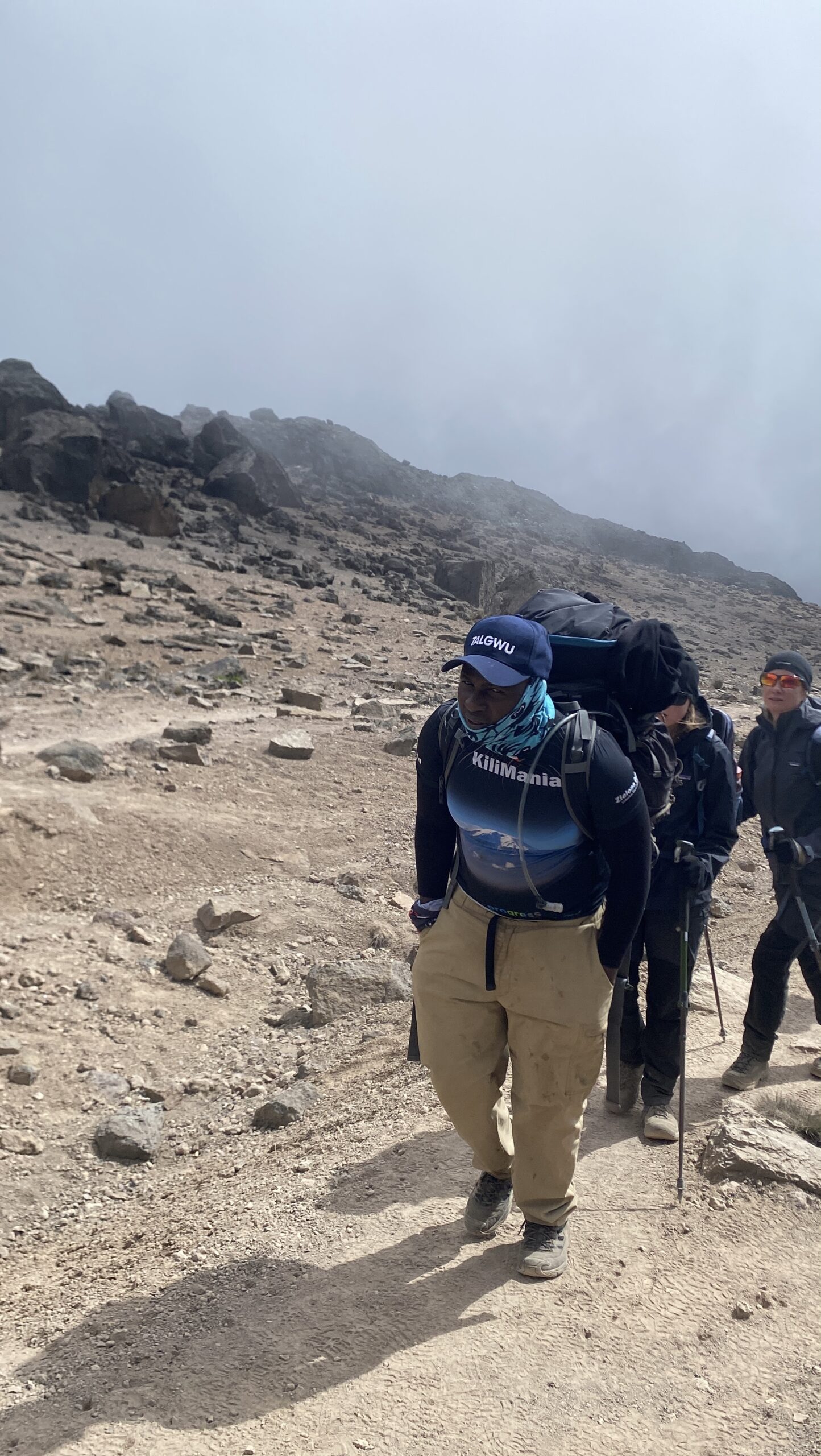
Day 5 opens with the Barranco Wall — a 300m hands-on scramble that looks significantly more serious from Barranco Camp than it actually is once you start climbing. No ropes, no technical gear required. Most climbers find it absorbing rather than frightening, with short sections that require using hands and feet together.
Net altitude gain for the whole day is minimal — from 3,960m to 4,035m. This is deliberate. Another acclimatization day built into the route’s structure while covering good ground toward Barafu.
From Sabinus
I’ve taken hundreds of climbers up Barranco Wall. The people who find it hardest are usually those who looked at it from camp for too long the night before. Once you’re on the rock, the route is obvious and the guides in front and behind keep the pace steady.
Start
4,035m
End
4,673m
Distance
~4km
Time
3–4h
A short, direct climb to Barafu Camp — Kilimanjaro’s main high camp for the Lemosho, Machame, and Rongai routes. Arrive by early afternoon. The rest of the day is for eating, hydrating, resting, and the pre-summit briefing from Sabinus or the lead guide for your group.
Most climbers go to bed early — 6pm or 7pm if possible — for a midnight wake-up. Sleep at 4,673m is rarely deep. That’s normal. The goal is rest, not perfect sleep.
Depart
~Midnight
Summit
5,895m
Sleep
3,100m
Total
12–15h
Summit night is covered in full detail in its own section below. The short version: depart Barafu around midnight, climb through darkness for 5–7 hours to Stella Point (5,756m) on the crater rim, continue 30–60 minutes along the rim to Uhuru Peak (5,895m), spend 10–20 minutes at the summit, then descend all the way to Mweka Camp at 3,100m the same day — a 5–7 hour descent after the ascent.
By the time you reach Mweka Camp, you’ll have been moving for roughly 14 hours. You will be tired. You will also be done.
Start
3,100m
End
1,640m
Distance
~10km
Time
3–4h
A final descent through rainforest back to Mweka Gate. The path is well-worn and mostly straightforward. Knees will notice the cumulative descent from the day before — trekking poles help considerably.
Summit certificates are issued at Mweka Gate: gold for Uhuru Peak, green for Stella Point. See our summit certificate guide for what each means. The Kilimania vehicle will be waiting at the gate for the drive back to Moshi.
The Elevation Journey — Camp by Camp
Day 1
Londorossi Gate → Big Tree Camp
First steps in the rainforest. Short day, deliberate pace.
Day 2
Big Tree Camp → Shira 1 Camp
Forest to moorland. First open views of the plateau.
Day 3
Shira 1 Camp → Shira 2 Camp
The extra day that defines the 8-day itinerary.
Day 4
Shira 2 → Lava Tower → Barranco Camp
Climb high, sleep low. The route’s acclimatization engine.
Day 5
Barranco Camp → Karanga Camp
Barranco Wall scramble. Minimal net gain by design.
Day 6
Karanga Camp → Barafu High Camp
Short climb to high camp. Rest, eat, briefing, early sleep.
Day 7
Barafu → Uhuru Peak → Mweka Camp
Summit night. Everything the previous six days prepared you for.
Day 8
Mweka Camp → Mweka Gate → Moshi
Final descent. Summit certificates issued at the gate.
Day 7 — The Summit Push
Summit Night: What Actually Happens
The midnight alarm isn’t dramatic. It’s cold, dark, and quiet. Seven days of preparation have brought you here — this is what they were for.
~11PM – Midnight
Wake, dress, drink
Hot tea or soup at camp. Final kit check. Temperatures at Barafu at midnight in the main climbing season (January–March, June–October) typically sit between -8°C and -15°C. Layers matter here.
~Midnight
Departure from Barafu Camp
Head torches on. The pace from Barafu is deliberately slow — slower than feels natural. Pole pole is not politeness; it’s the protocol that keeps people moving when altitude and cold combine.
2AM – 5AM
The long climb in darkness
Steep volcanic scree and switchbacks. This is the hardest stretch physically and mentally — cold, altitude, and fatigue combining on ground that isn’t technically difficult. The guides check in with every climber regularly throughout this section.
~6AM – 7AM
Stella Point — 5,756m
The crater rim. Roughly 30–60 minutes more along the rim to Uhuru. Most climbers arrive here around sunrise. The wind on the rim can be sharp even on calm days.
Sunrise
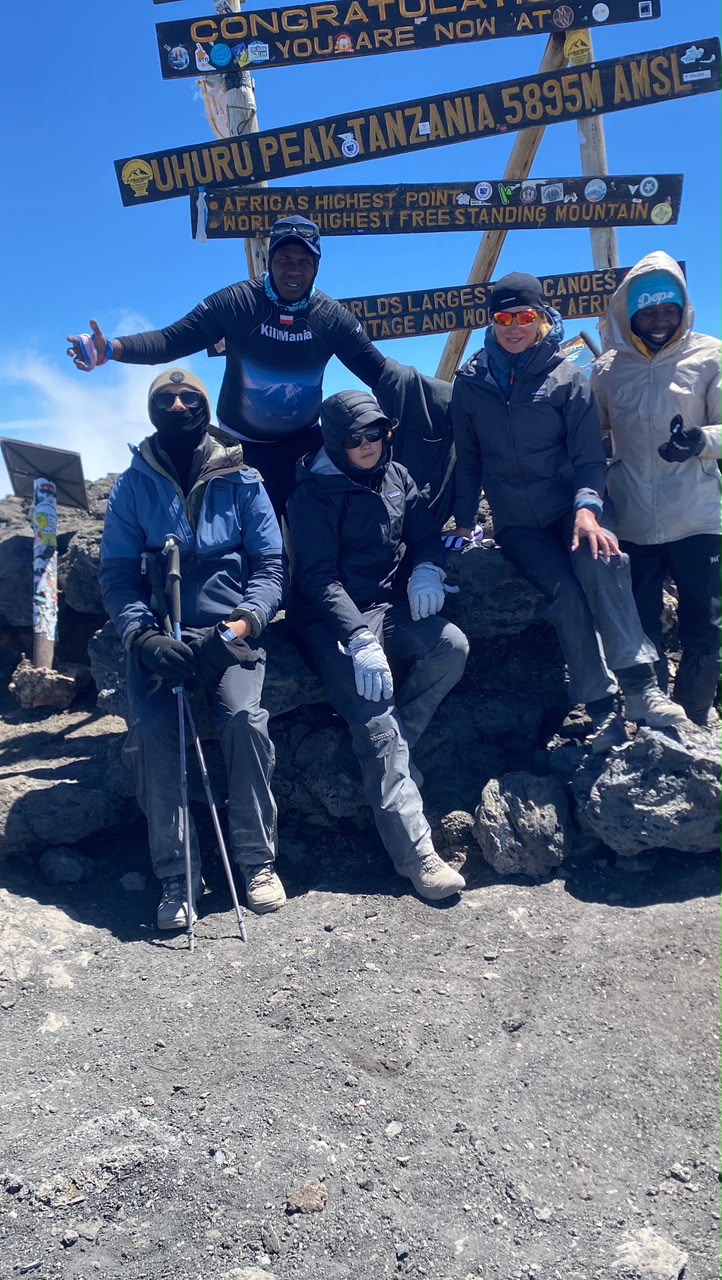
Uhuru Peak — 5,895m
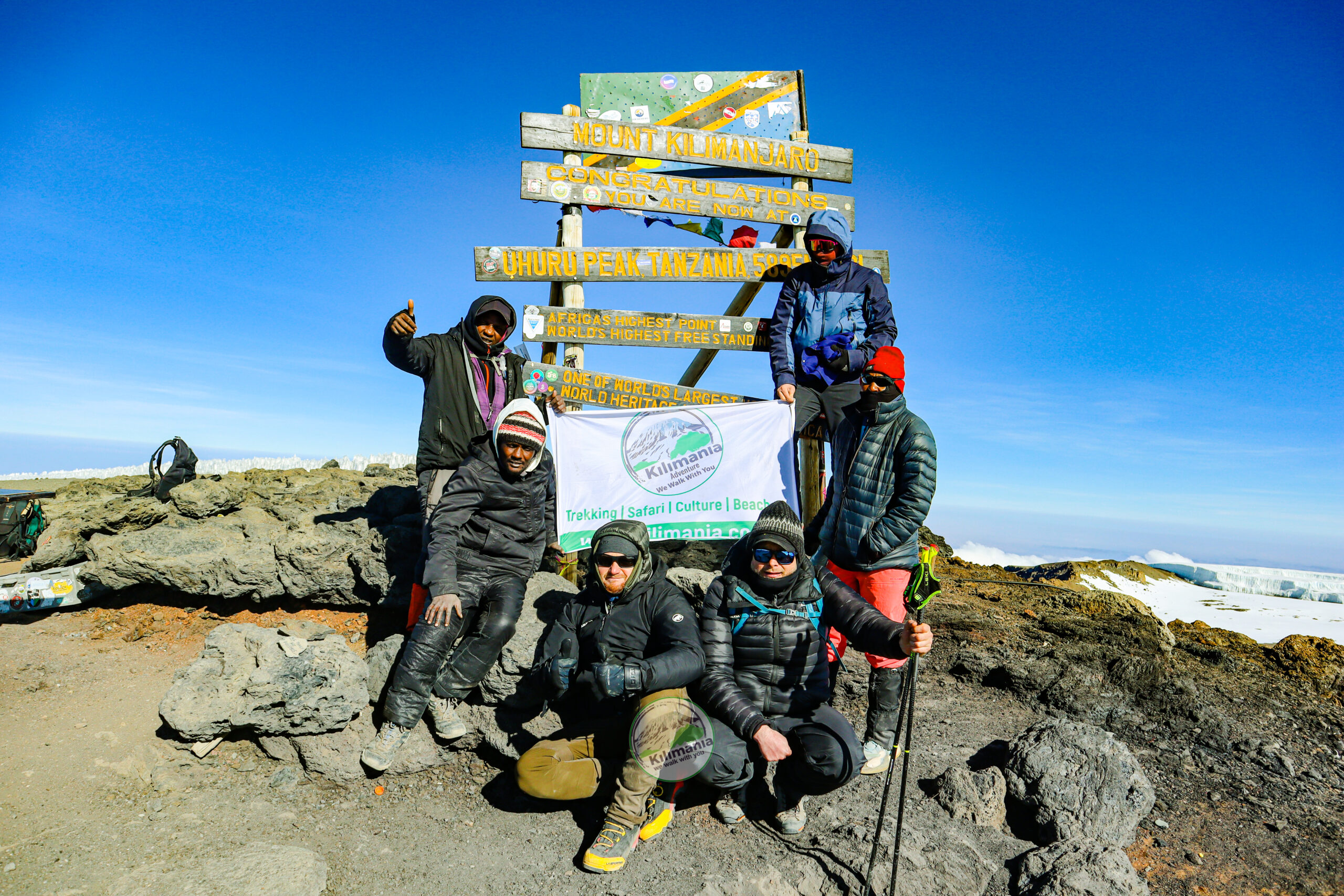
Highest point in Africa. The team typically spends 10–20 minutes at the summit — photos, a moment to take it in, then the descent begins. The longer you stay at 5,895m, the harder the descent becomes.
Morning onward
Descent to Mweka Camp
Five to seven hours back down to Mweka Camp at 3,100m. Knees take the impact here. Trekking poles reduce the strain considerably. The team descends together.
Full hour-by-hour detail: Kilimanjaro summit night guide.
Honest Expectations for Summit Night
Temperatures between -8°C and -20°C are common above 5,000m depending on season and conditions
Steep volcanic scree — slow, deliberate steps for 5–7 hours
Not every climber reaches Uhuru Peak. Altitude illness does not correlate with fitness level — it can affect experienced trekkers who have done everything right
When a guide recommends descent, that recommendation should be taken seriously. It comes from direct observation of your condition, not caution
Diamox is a medical decision — discuss it with a doctor before your trip, not with us
Reaching Stella Point (5,756m) earns a green summit certificate from KINAPA. Uhuru Peak (5,895m) earns the gold. Both are real achievements at altitude
Route Fit
Is the 8-Day Lemosho Route Right for You?
Choosing the right route honestly is one of the most useful things you can do before arriving in Moshi. Here is a direct assessment.
A Good Choice If You:
- Are climbing Kilimanjaro for the first time and want the most acclimatization time on the Lemosho Route
- Have no prior high-altitude experience above 4,000m
- Can commit 8 mountain days plus 2 nights in Moshi
- Prefer camping over dormitory-style hut accommodation
- Want varied terrain — forest, plateau, scrambling, and the summit push in one route
- Are coming as a group of 2–6 and want a guide-to-client ratio that matches your size
Consider a Different Option If:
- You have 7 days available — the 7-day Lemosho covers the same route one day faster
- You prefer sleeping in huts rather than tents — the Marangu Route is the only Kilimanjaro route with hut accommodation
- You have 9 days and want the maximum acclimatization itinerary available — the 9-day Northern Circuit circles the entire mountain
- You want the most remote and least-used approach — the Umbwe Route is steeper and quieter
Unsure which route fits your situation? Read our guide to choosing a Kilimanjaro operator or check your physical readiness with our Kilimanjaro fitness guide.
Why Kilimania
What Makes Kilimania Different on This Route
Every operator on the Lemosho Route uses the same trail. What differs is who is watching your group, how many guides are assigned to your size of party, and what happens if something goes wrong above 5,000m.
Confirmed Guide Ratios — by Group Size
Solo climber: 1 guide + 1 cook + 4 porters. Two climbers: 2 guides. Three to five climbers: 2 guides + 1 assistant guide. Six or more: additional guides added as the group grows. These ratios are set by Sabinus and applied on every departure — not scaled down to reduce cost.
Pulse-Ox at Every Camp
Oxygen saturation is checked at every camp — not just on summit night. If a climber’s numbers drop below threshold at Barranco or Karanga, that conversation happens before Barafu, not at midnight when options are more limited.
22+ Years on This Specific Route
Sabinus has been guiding the Lemosho Route since it opened. He knows which sections are hardest in the dark, where the wind changes on the crater rim, and how Lava Tower affects first-time altitude climbers versus experienced trekkers.
KPAP-Aligned Porter Standards
We follow Kilimanjaro Porters Assistance Project (KPAP) guidelines on porter wages, equipment, and load limits. Our porters are from Moshi and Marangu. Their working conditions are part of our operation, not an afterthought.
Pre-Climb Briefing in Moshi
Before Day 1, Sabinus or a senior guide sits down with your group to go through the entire itinerary — what each day looks like, how summit night works, what the pulse-ox process means, and what descent protocol looks like if needed. No surprises on the mountain.
Based in Moshi — Not in Europe
Kilimania is a Moshi-based operation, not a foreign company that sells Kilimanjaro climbs remotely. When something needs to change before or during your climb, we can respond directly — not through a booking agent in another country.
Confirmed Guide-to-Client Ratios
| Group Size | Guides | Cook | Porters | Note |
|---|---|---|---|---|
| Solo (1 climber) | 1 guide | 1 cook | 4 porters | Dedicated personal guide |
| 2 climbers | 2 guides | 1 cook | Proportional | One guide per climber |
| 3–5 climbers | 2 guides + 1 assistant guide | 1 cook | Proportional | Senior + assistant structure |
| 6+ climbers | Additional guides added | 1+ cook | Proportional | Scales with group size |
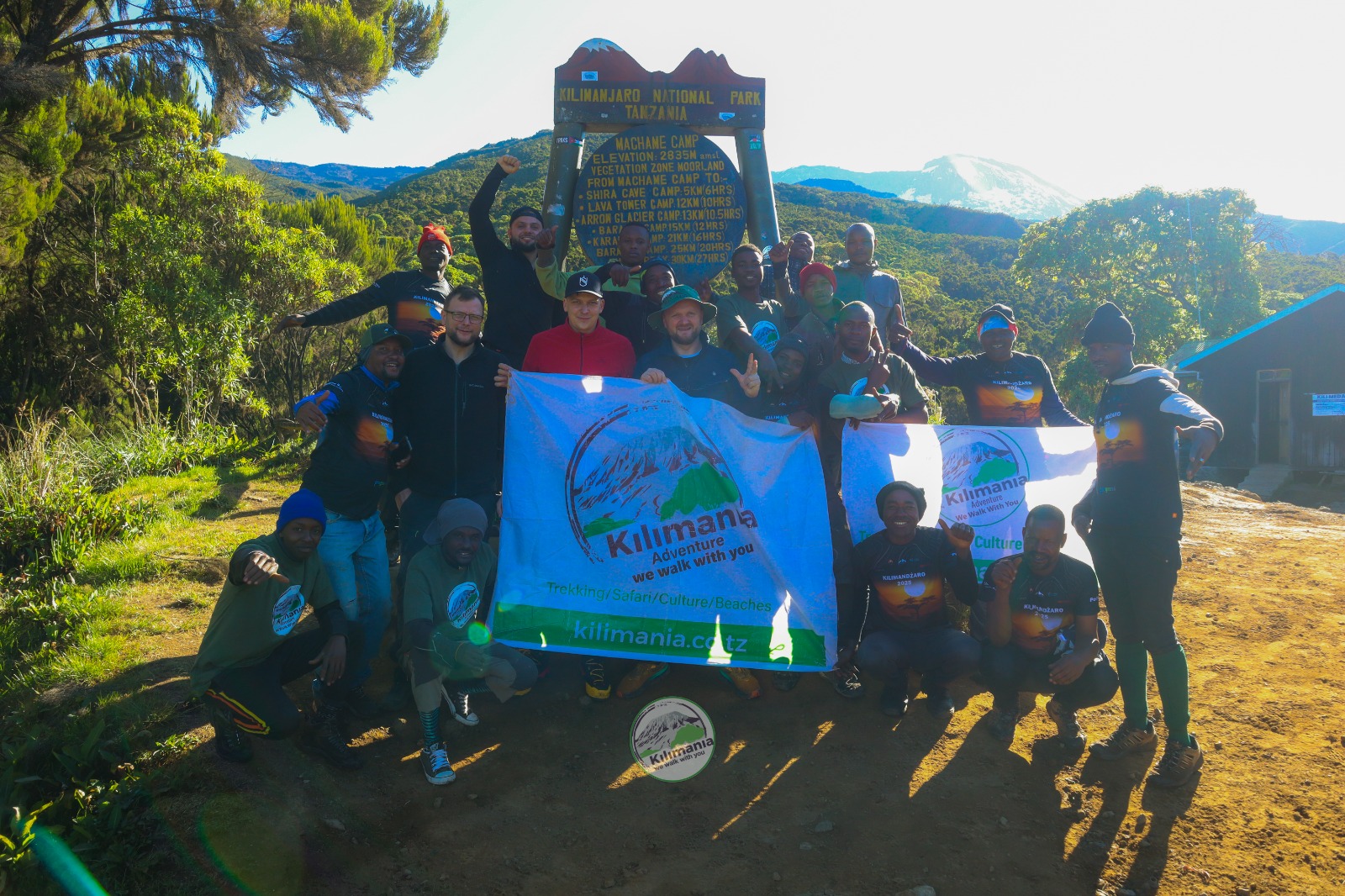
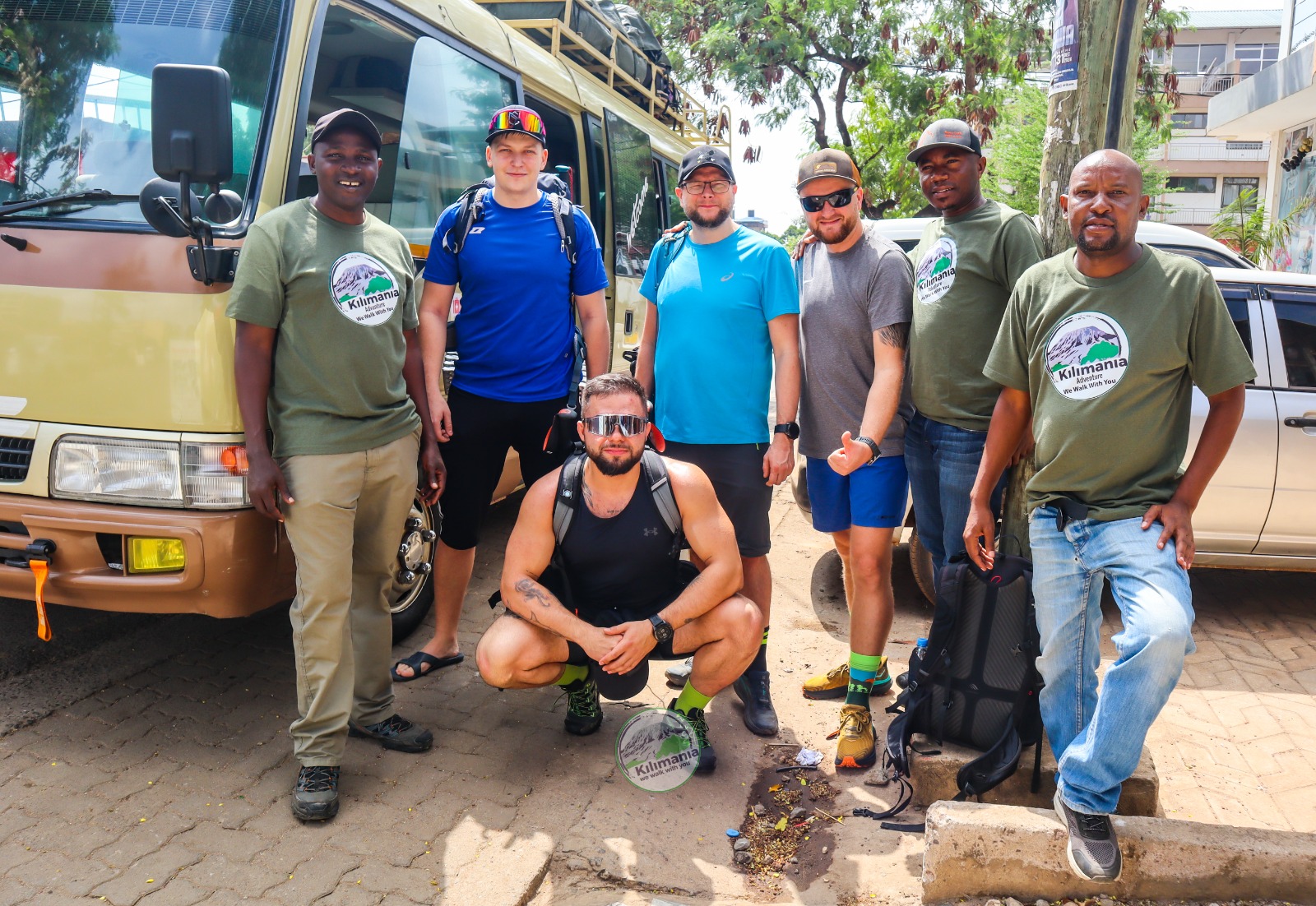
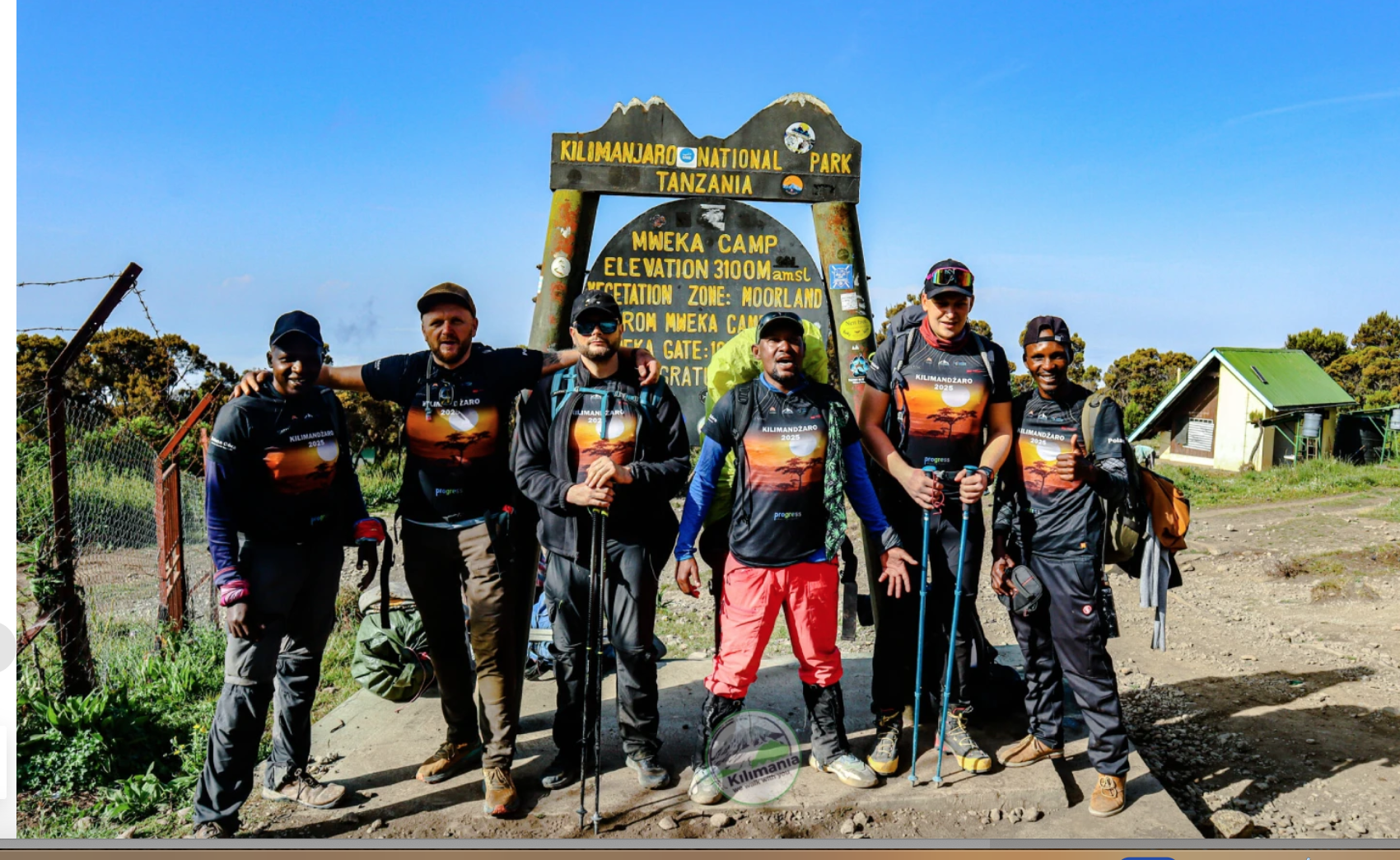
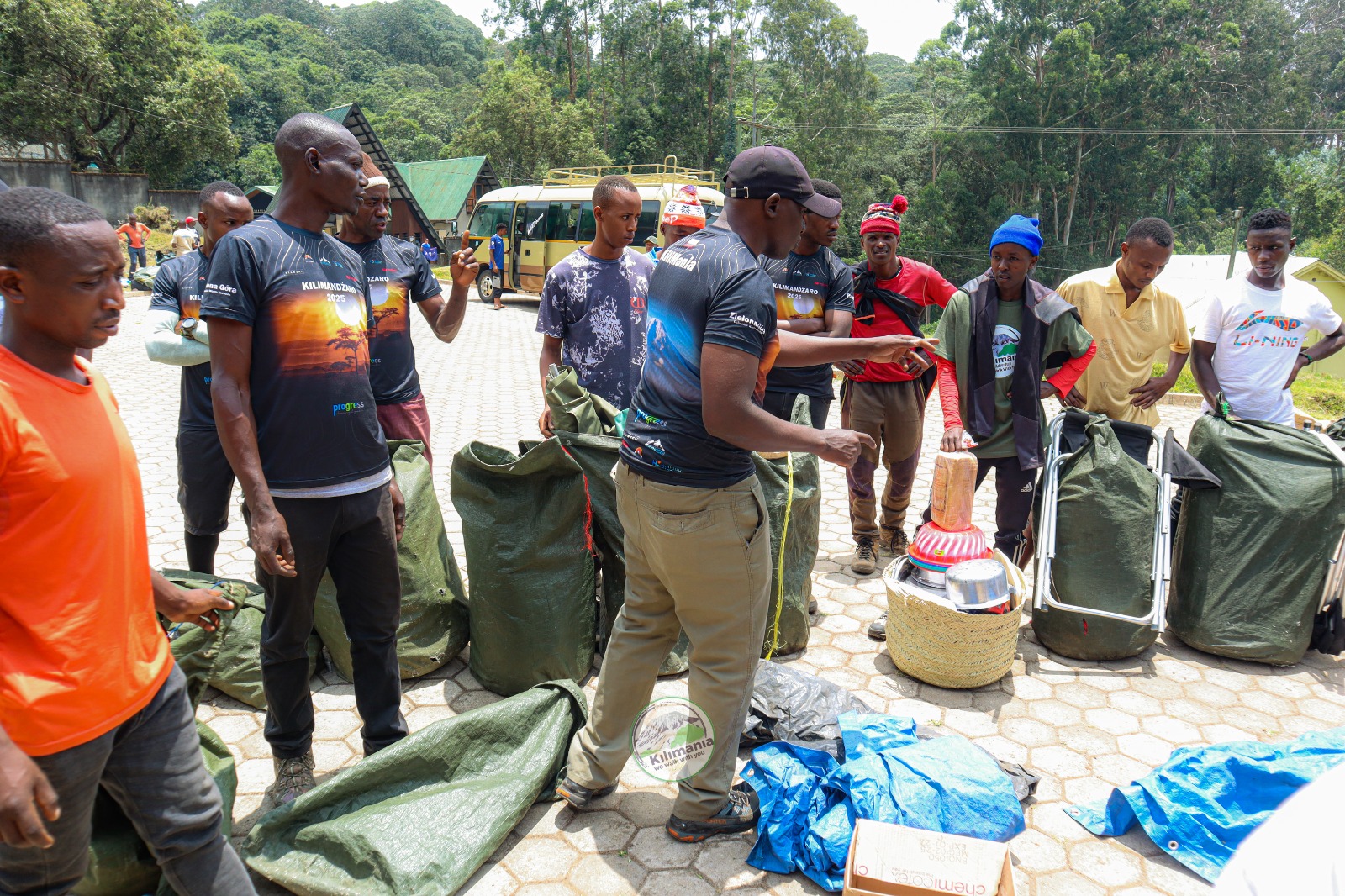
Kilimania team, Moshi
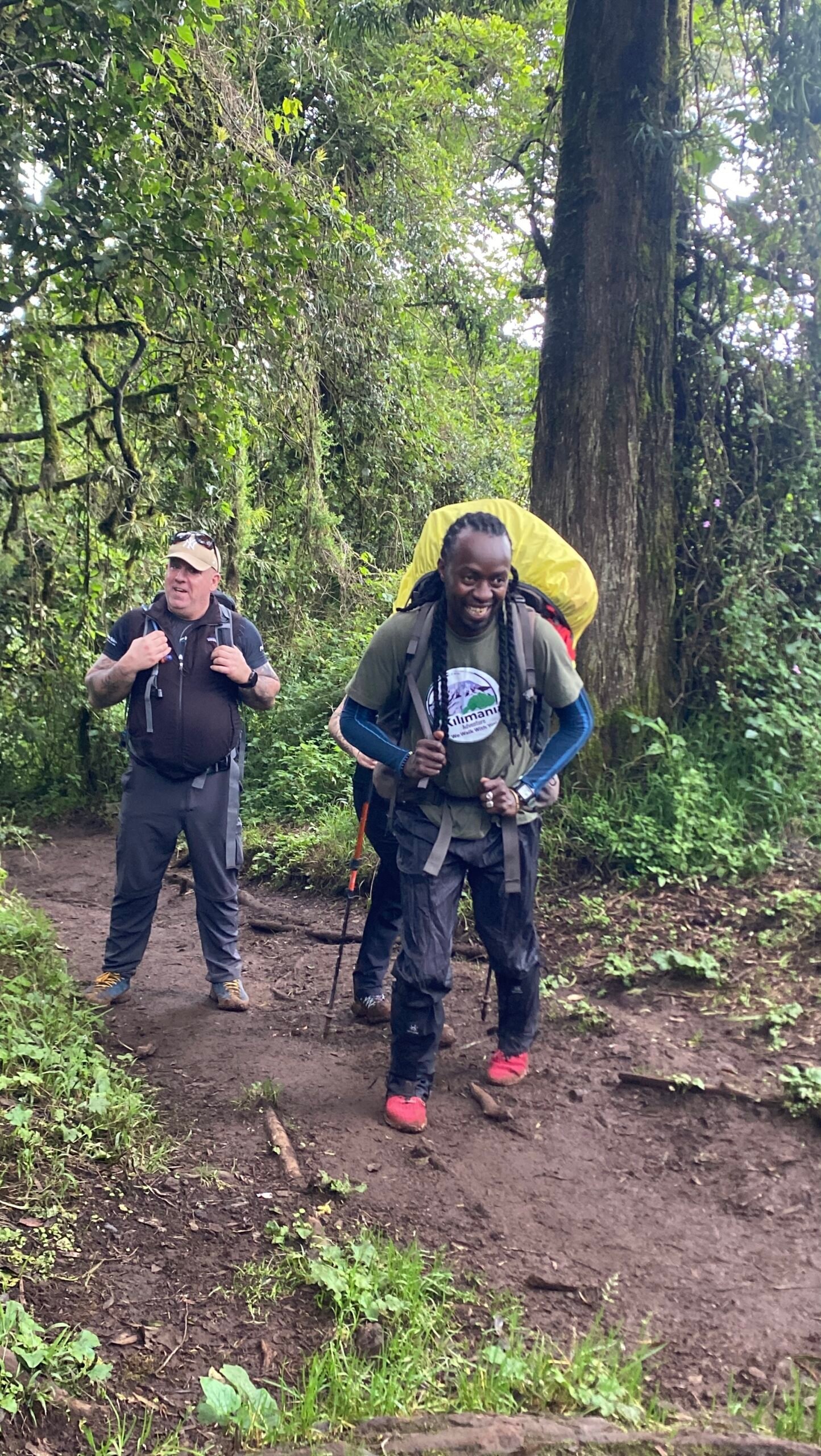
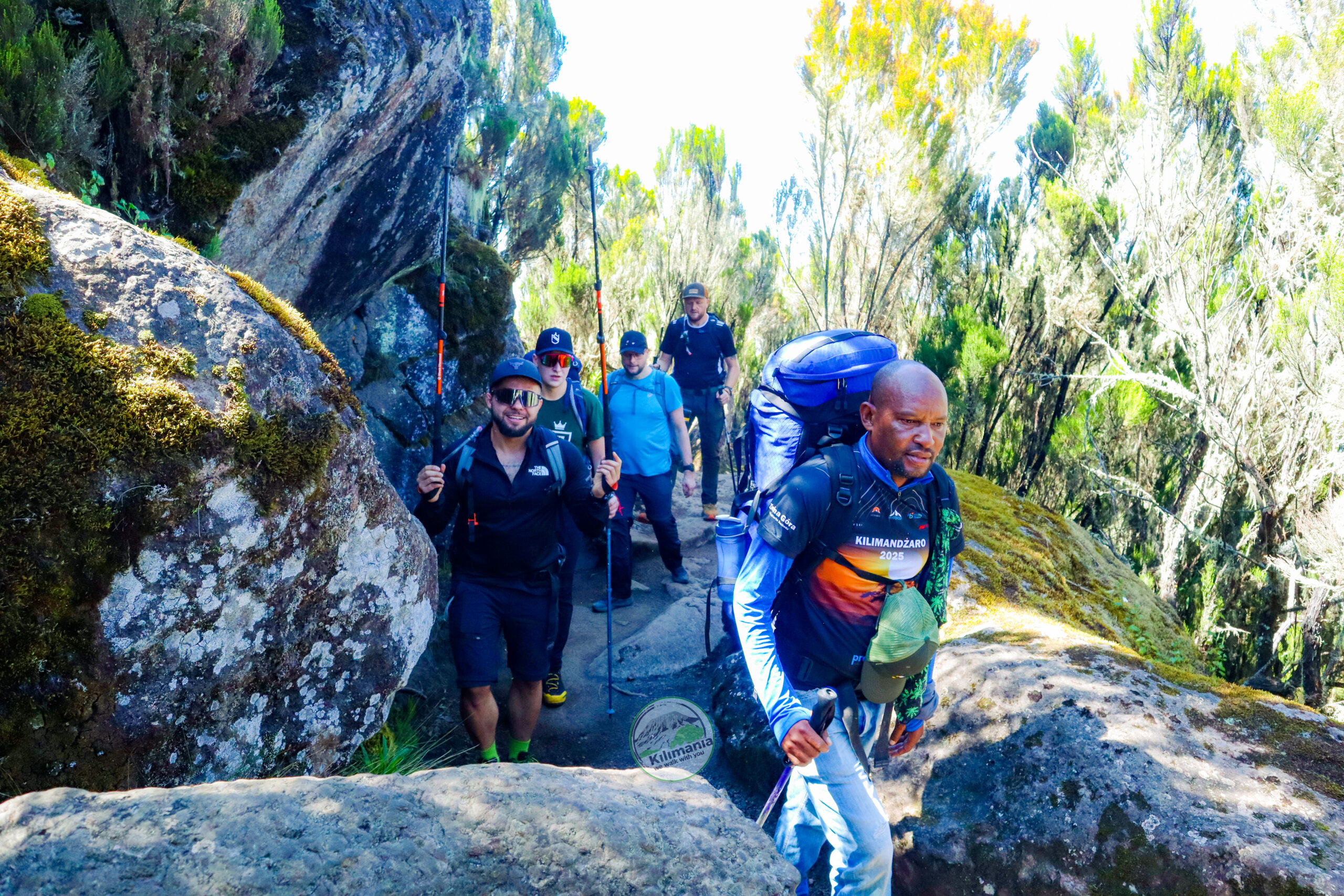
Sabinus, Donald and Izack with clients
At Mweka Camp after summit
Your Guide
The Guide Leading This Climb
Senior Mountain Guide · Co-founder · Kilimania Adventure
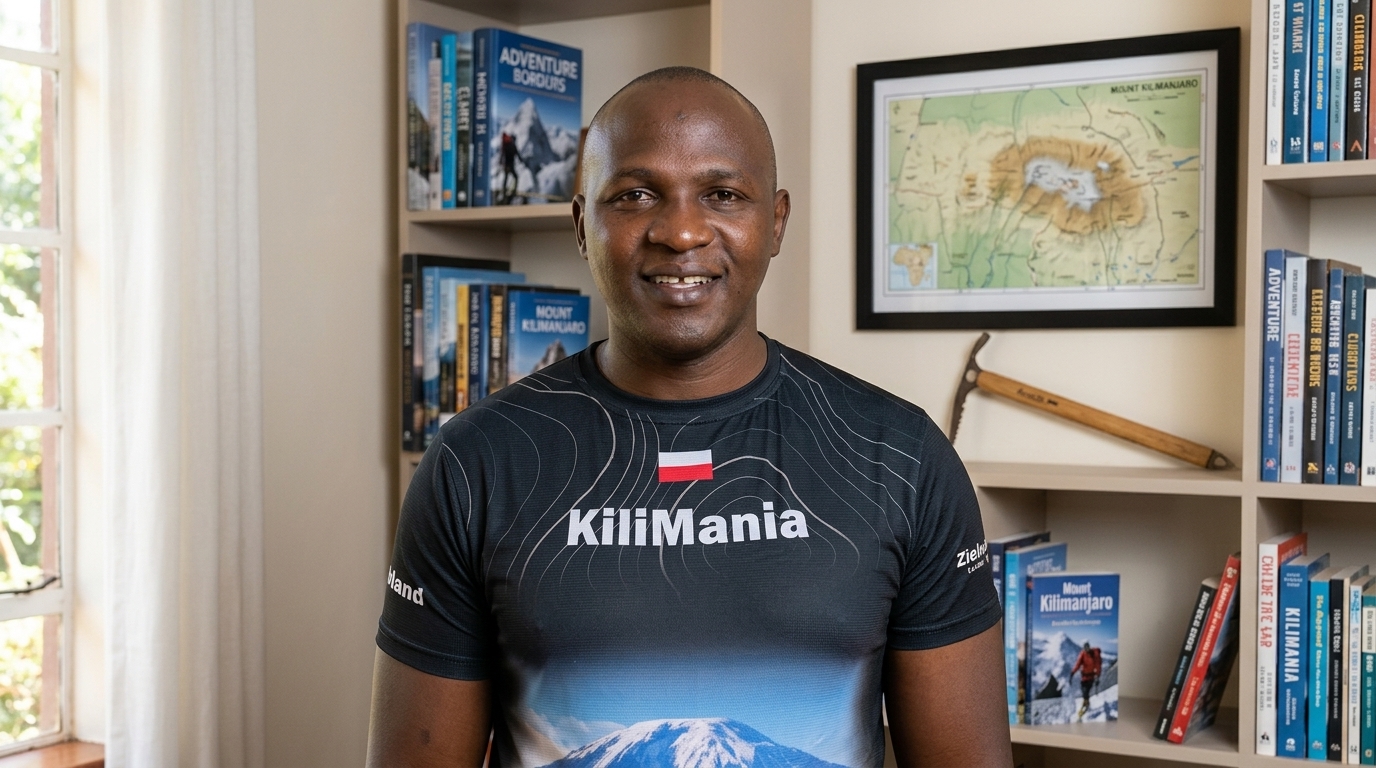
Sabinus Msimba
Moshi, Kilimanjaro Region, Tanzania
22+ years guiding
300+ Uhuru Peak summits
KINAPA-licensed since 2003
Wilderness First Responder
Sabinus started on Kilimanjaro in 2001 as a porter on the Marangu Route. By 2003 he was KINAPA-licensed as a guide and has been on Uhuru Peak more than 300 times since. He is directly involved in every Lemosho Route departure Kilimania runs — either leading the climb or conducting the pre-climb briefing with the assigned senior guide for your group.
The verified review below names Sabinus specifically by the nickname his clients use on the mountain: “Saby.”
David Kimario — Kilimania Guide
Izack Mlala — Kilimania Guide
Kilimania Porter Team
Safety & Acclimatization
How We Manage Safety on the Mountain
Kilimanjaro is a high-altitude trek, not a technical climb. The primary risk is altitude illness — Acute Mountain Sickness (AMS), High Altitude Pulmonary Edema (HAPE), and High Altitude Cerebral Edema (HACE). No route, no operator, and no medication can eliminate this risk. What a well-run itinerary and an attentive guide team can do is manage it — through pace, acclimatization profile, monitoring, and a clear protocol for descent when it’s needed.
The Lava Tower day (Day 4) is the route’s primary acclimatization mechanism. The daily pulse-ox checks are the monitoring system. Descent is the treatment — not supplemental oxygen as a first response, not pushing through symptoms. If Sabinus or a senior guide recommends descent, that recommendation is based on direct observation of your physical condition, not on caution for its own sake.
Our guides are trained to recognize early AMS symptoms — persistent headache, nausea, loss of appetite, poor coordination — and to act on them before they progress. We watch the group, not just the summit.
Daily Pulse Oximetry
Oxygen saturation and heart rate checked at every camp — Big Tree Camp, Shira 1, Shira 2, Barranco, Karanga, and Barafu. Numbers are logged, not just noted.
Controlled Pace — Pole Pole
Slower than feels natural, especially in the first three days. The guides set the pace, not the fastest climber in the group. This is a protocol, not a preference.
Continuous Guide Monitoring
Guides assigned by group size (see ratios above) watch for early AMS symptoms throughout every walking day, not just at camp check-ins.
Emergency Oxygen Carried
Supplemental oxygen is on the mountain for emergencies. It is not used as a routine aid or to push through symptoms that indicate descent is the right answer.
This is not medical advice. Consult a doctor familiar with high-altitude travel before your climb. See our guide to Diamox for Kilimanjaro for questions about acetazolamide — a medical decision between you and your doctor.
What’s Included
- ✓2 hotel nights in Moshi (pre- and post-climb)
- ✓Kilimanjaro National Park (KINAPA) entry and camping fees
- ✓KINAPA-licensed lead guide + assistant guides per ratio above
- ✓KPAP-aligned porters + dedicated mountain cook
- ✓Camping tents + sleeping mats
- ✓Full-board meals on the mountain + drinking water
- ✓Supplemental oxygen + first aid kit
- ✓Daily pulse-oximetry monitoring at every camp
- ✓Pre-climb briefing in Moshi
- ✓KINAPA summit certificate (Uhuru Peak or Stella Point)
- ✓Transport: Moshi → Londorossi Gate and Mweka Gate → Moshi
Not Included
- ✗International flights to and from Tanzania
- ✗Tanzania visa (check current requirements)
- ✗Travel insurance — required, must cover high-altitude trekking
- ✗Personal climbing and camping gear
- ✗Crew tips — see our Kilimanjaro tipping guide
- ✗Alcohol and personal spending
- ✗Personal medication including Diamox
Insurance note: Travel insurance that specifically covers high-altitude trekking (above 5,000m) and emergency evacuation is strongly recommended. Providers commonly used by Kilimanjaro climbers include World Nomads, Allianz, and IMG Global. We receive no commission from any of these.
Transparent Pricing
8-Day Lemosho Route — Pricing by Group Size
All prices per person, USD. Deposit: $100 to confirm your date. Prices last verified: 2026-08-29.
Solo
$2,050
per person
2 People
$1,950
per person
3 People
$1,900
per person
4 People
$1,850
per person
5 People
$1,800
per person
6 People
$1,750
per person
For groups of 7 or more, or for custom departure dates, contact us directly. Full Kilimanjaro cost breakdown →
Traveling Solo or as a Couple?
Join an 8-Day Lemosho Group Departure
If you’re not traveling as a full group, you don’t have to book a private climb. You can join a scheduled 8-day Lemosho departure with other climbers heading up on the same dates — the guide ratios above still apply, and joining a group is usually the more cost-effective way to climb.
Check Current Joining Dates
Kilimania maintains a live joining calendar showing confirmed and forming group departures across all routes, including the 8-day Lemosho. Availability changes as groups fill, so we link directly to the current calendar rather than listing fixed dates here.
All Routes
How the 8-Day Lemosho Compares
See the full Kilimanjaro routes guide for a complete comparison of all available options.
| Route | Duration | Approach | Accommodation | Difficulty | Price From |
|---|---|---|---|---|---|
| 8-Day Lemosho — this page | 8 days | Western | Camping | Moderate–Hard | $1,750pp (group of 6) |
| 7-Day Lemosho | 7 days | Western | Camping | Moderate–Hard | $1,600pp (group of 6) |
| 7-Day Machame | 7 days | Southern | Camping | Hard | $1,600pp (group of 6) |
| 6-Day Marangu | 6 days | Eastern | Huts | Moderate | $1,450pp (group of 6) |
| 9-Day Northern Circuit | 9 days | Full circuit | Camping | Moderate | $2,050pp (group of 6) |
Prices shown are per person for a group of 6 — the most common group size. Solo and smaller group prices are higher. Prices last verified 2026-08-29. Success rates intentionally omitted from this comparison — see success rate by route for verified data.
Common Questions
8-Day Lemosho Route — FAQ
The 8-day Lemosho Route is rated moderate to challenging. Most days involve 5 to 10km of walking at a controlled pace, but altitude — not distance — is the defining difficulty. Summit night, climbing from Barafu Camp (4,673m) to Uhuru Peak (5,895m) starting around midnight, is physically and mentally demanding regardless of fitness level. The 8-day itinerary gives one more acclimatization day than the 7-day version, which is the main reason we recommend it for first-time high-altitude trekkers.
The route starts at Londorossi Gate on Kilimanjaro’s western side at approximately 2,250m. It finishes at Mweka Gate on the southern side at approximately 1,640m. Kilimania handles transport from Moshi to Londorossi Gate at the start and from Mweka Gate back to Moshi at the end.
Kilimania prices the 8-day Lemosho Route at $2,050 per person for a solo climber, $1,950 for two people, $1,900 for three, $1,850 for four, $1,800 for five, and $1,750 per person for a group of six. A $100 deposit secures your date. The price includes two hotel nights in Moshi, Kilimanjaro National Park fees, KINAPA-licensed guides, KPAP-aligned porters, mountain cook, camping tents, sleeping mats, full-board meals, drinking water, supplemental oxygen, first aid, daily pulse-oximetry monitoring, pre-climb briefing, and summit certificate. Not included: flights, Tanzania visa, travel insurance, personal gear, crew tips, and alcohol. Prices last verified 2026-08-29.
Kilimania uses the following confirmed guide ratios: a solo climber gets 1 guide plus 1 cook and 4 porters. A group of 2 climbers gets 2 guides. A group of 3 to 5 climbers gets 2 guides plus 1 assistant guide. For groups of 6 or more, additional guides are added proportionally as the group grows. These ratios are set by Sabinus Msimba and applied on every departure.
Yes, with the right preparation. The extra acclimatization day on the Shira Plateau and the Lava Tower climb-high sleep-low pattern on Day 4 make the 8-day Lemosho one of the more considered options for first-time high-altitude trekkers. It is not a beginner hiking trail — the mountain reaches 5,895m and summit night is demanding for everyone regardless of fitness. Previous altitude experience helps but is not required. See our guide: can a beginner climb Kilimanjaro.
The 8-day version adds one day by splitting the Shira Plateau crossing into two shorter days instead of one longer crossing. That extra day at moderate altitude — between 3,500m and 3,850m — before the climb to Lava Tower is the reason we recommend the 8-day version for climbers without prior high-altitude experience. The 7-day version covers the same route but moves faster through the plateau section. Both routes reach Uhuru Peak via the same trail from Barafu.
More questions? Ask Sabinus on WhatsApp or read the full Kilimanjaro climbing guide.
Verified Review
From a Lemosho Climber
The review below is verbatim from Google Reviews, from a group who completed the 8-day Lemosho Route with Kilimania in January 2025. It is the only Lemosho-specific review displayed here because it is the only one we can confirm word-for-word from a named, source-linked review.
★★★★★
Our group of four trekkers from Australia and the Netherlands tackled the Lemosho Route with Kilimania Adventure. Sabinus (Saby) and Joshua were incredible guides, ensuring we acclimatized well and stayed motivated. The 8-day itinerary allowed us to enjoy the beauty of the trail and summit successfully. The tents were pristine, and the meals were nourishing.
Read all reviews: Google (4.9 · 36 reviews) · TripAdvisor (5.0 · 32 reviews)
Plan Your Climb
Request Your 8-Day Lemosho Quote
Send your preferred dates and group size. Sabinus and the Kilimania team in Moshi reply within 24 hours with availability, a full itinerary, and a confirmed quote.
Prefer WhatsApp? Send a message directly to Sabinus:
WhatsApp: +255 756 449 990What happens after you send a request:
1. Kilimania confirms availability for your dates
2. You receive a full quote with group-size pricing
3. Review the itinerary with Sabinus directly
4. Confirm with a $100 deposit to secure your date
Request Your Lemosho Quote
Quote Request Received
Sabinus and the Kilimania team will be in touch within 24 hours with availability and your full quote.
WhatsApp for faster reply
Other Routes
Compare Other Kilimanjaro Routes
7 Days
7-Day Lemosho
Same western approach, one day shorter. Right if your schedule is tighter and you have some altitude experience.
9 DaysNorthern Circuit
Circles the entire mountain. The longest route and the one with the most time for acclimatization — for climbers with 9 days available.
7 DaysMachame Route
Kilimanjaro’s most popular route. Southern approach, scenic, well-established. Faster than the 8-day Lemosho.
6 DaysMarangu Route
The only route with hut accommodation instead of camping. Eastern approach. Right if you specifically want huts.
Useful Reading
Plan Your Lemosho Climb
Written by
Senior Mountain Guide & Co-founder, Kilimania Adventure · Moshi, Tanzania · 22+ years guiding · 300+ Uhuru Peak summits · KINAPA-licensed since 2003
Sabinus leads Kilimanjaro expeditions from Moshi and is directly involved in every Kilimania departure — either as lead guide or through the pre-climb briefing. View full guide profile →
Kilimania Adventure is a KINAPA-licensed, TATO-registered Kilimanjaro climbing and Tanzania safari operator based in Moshi, Tanzania. Prices shown are per person USD, last verified 2026-08-29. Google review data (4.9 / 36 reviews) supplied directly by Kilimania from its live Google Business Profile; TripAdvisor data (5.0 / 32 reviews) independently verified 2026-08-29 — re-verify both before any future update. Insurance links are informational only — Kilimania receives no commission. The Annascovia Mterani review is verbatim from Google Reviews, 10 January 2025, and linked to the source. Last reviewed: 2026-09-01 · Next review scheduled: 2027-03-01.