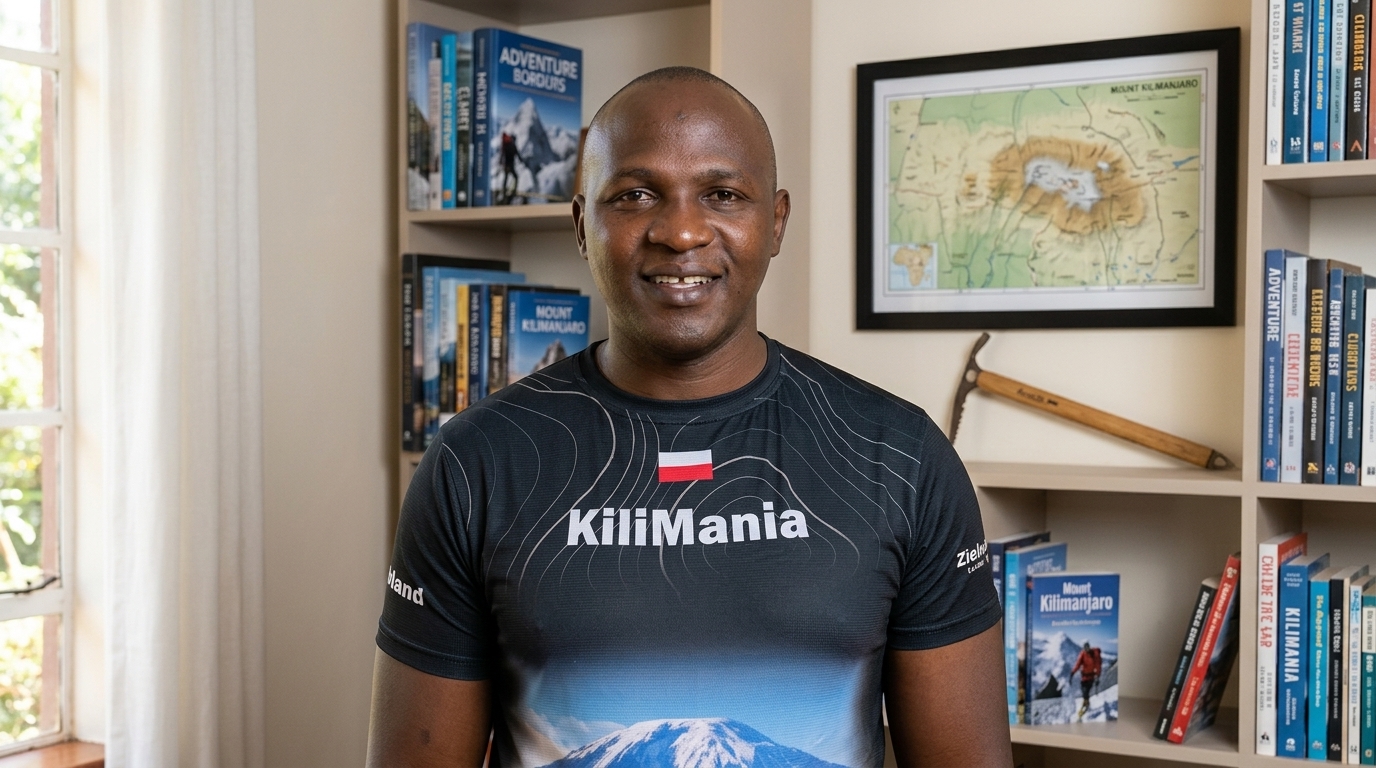
Things No One Tells You About Climbing Kilimanjaro
Data sources cited in this article: Kilimania Adventure guiding records (2001–2026), KPAP porter welfare and tipping guidelines, CDC Yellow Book 2024 altitude illness guidance, and peer-reviewed research on Cheyne-Stokes breathing at altitude (see Sources section below).
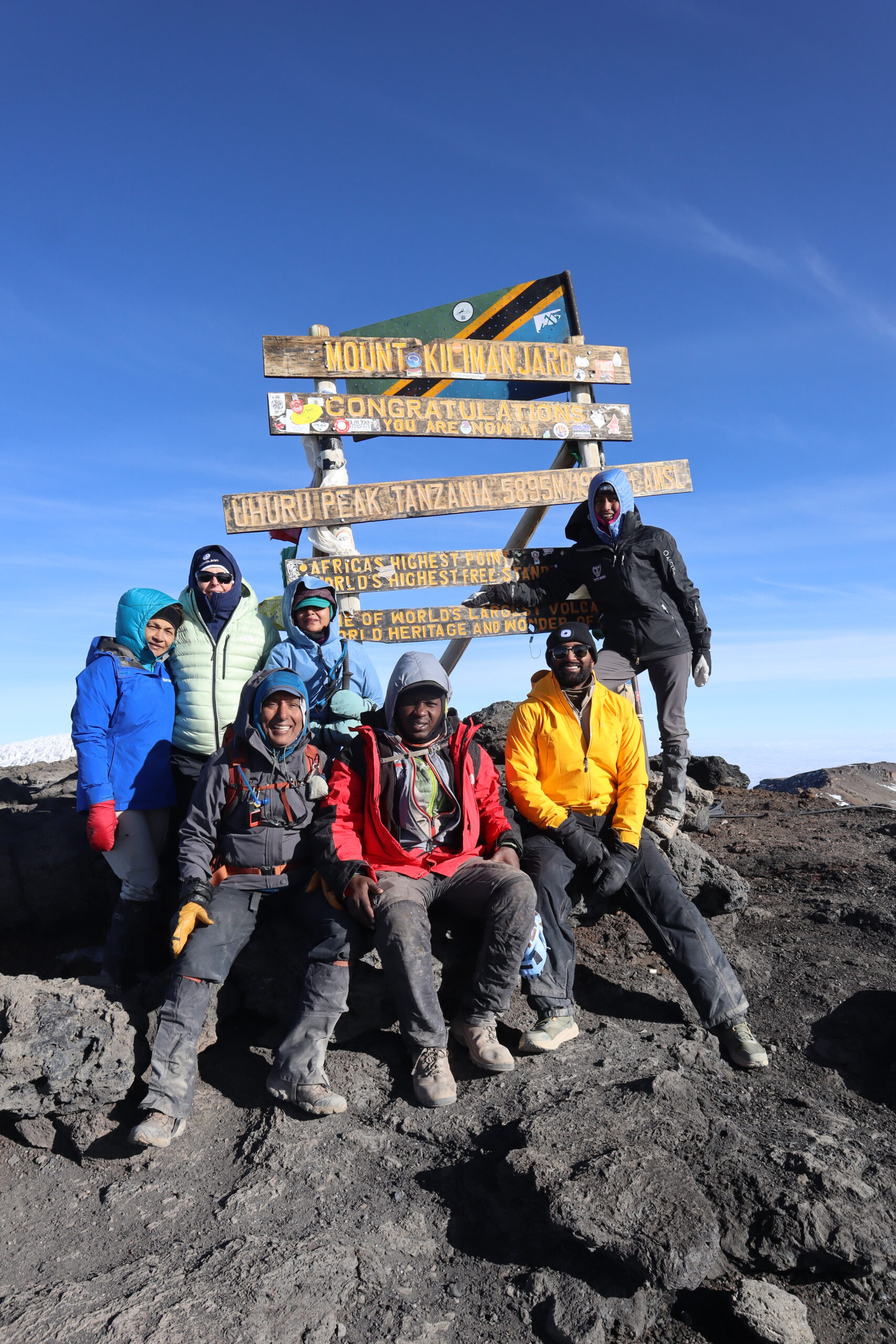
Every Kilimanjaro guide tells you about the sunrise from Uhuru Peak. Nobody tells you about the smell of the mountain, what the porters actually eat, the singing at camp on the final evening, or why the descent is emotionally harder than the summit. These are the things no operator writes in their brochure — collected from 22 years of guiding and from 1,247+ climbers who have walked this mountain with Kilimania Adventure.
17 Things Nobody Writes About Climbing Kilimanjaro
These are drawn from 22 years of guiding, from conversations with climbers on the trail, and from the feedback we receive after every expedition. None of it is intended to discourage you. All of it is intended to prepare you properly.
The Kilimanjaro rainforest has a specific smell. Not generic jungle smell — a particular combination of damp volcanic soil, decomposing mahogany leaves, wild sage and helichrysum that begins appearing above 2,700m, and something faintly medicinal that I have never been able to name in 22 years of walking through it.
Almost every repeat climber mentions it unprompted on day 1. Not the views, not the difficulty — the smell. One client from New Zealand, on her second ascent six years after her first, started crying within ten minutes of entering the forest. She said the smell brought everything back before she had time to prepare for it.
That smell is there on the first hour of every route that enters the montane forest zone — Lemosho, Machame, Umbwe, Marangu. Rongai approaches from the north and the smell is different there — drier, more open. But on the southern and western routes, the forest greets you in a way that no photograph captures.
Nobody puts this in a brochure because it does not sell anything. It is worth knowing anyway.
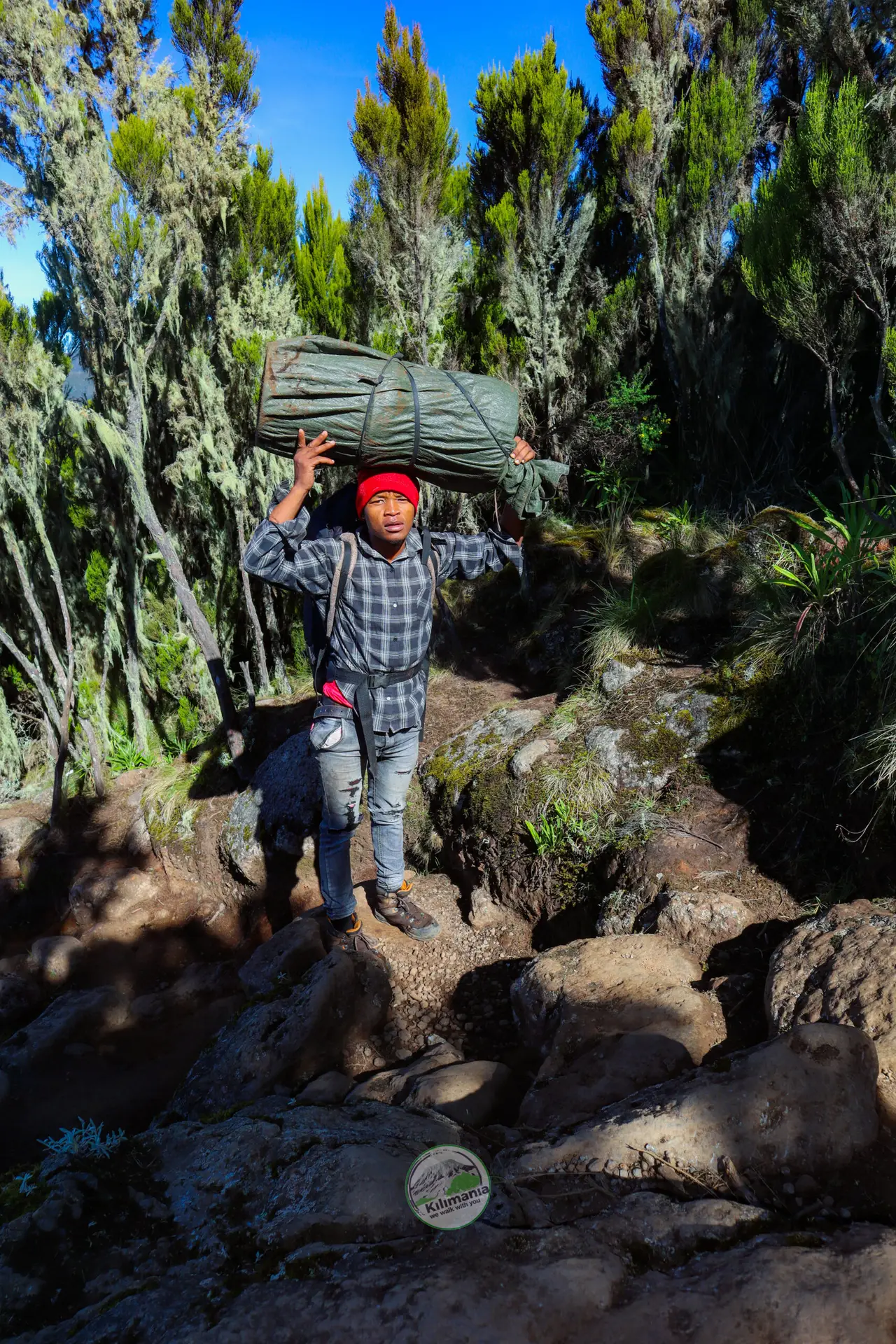
You will hike for six hours to reach camp. Your porters left 45 minutes after you departed. They arrived two hours before you. Each porter carries between 18 and 20kg. Most of them are wearing camp shoes — rubber-soled sandals or light trainers, not the $300 boots you spent three weeks researching.
The first time you witness this, it recalibrates something in your understanding of the mountain. You arrive at camp exhausted, and your tent is already pitched, your dining table is set, and the crew who carried everything is sitting calmly, having tea. Some are laughing. One is probably asleep.
The speed is not a performance. It is what 20 years of walking this specific mountain produces in a person’s body and mind. The route is known. The weight is familiar. The pace is automatic.
For context on the crew behind every expedition, read about how many porters your climb requires and why that number matters for your safety.
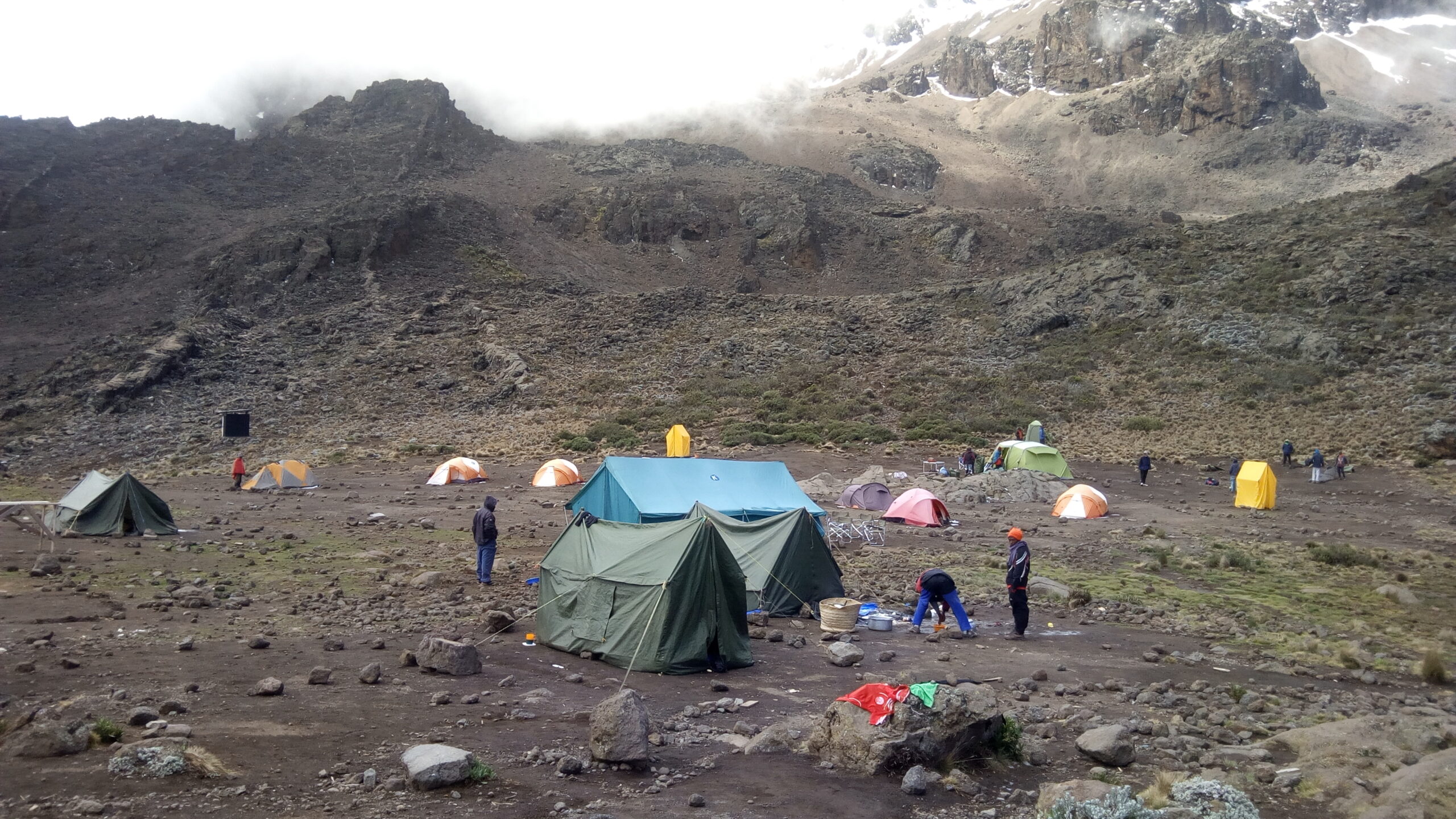
On the evening before summit night — or sometimes after descending from the summit, at Millennium or Mweka Camp — the entire crew gathers outside the dining tent. There is no announcement. It happens the same way every time: one voice starts, then the others join.
They sing “Jambo Bwana” first, because every climber knows it. Then they move to traditional Swahili mountain songs — compositions that most guides learned from the generation that guided before them. Some crews have songs written specifically for their team. The Kilimania team has one composed in 2018 that the guides have sung on every climb since.
The singing is not a performance. It is not done for tips. It is a genuine cultural marker — the crew’s way of saying that this mountain was shared, that the effort belonged to everyone, that you did not climb alone.
In 22 years, I have seen this moment move clients who described themselves as unsentimental. People who said nothing about the summit, who said very little all week, who stood there with tears running down their faces at 4,600m in the dark, listening to eight men sing in Swahili on a mountain in Tanzania.
Above 4,000m, you will not be hungry. Not a little less hungry — genuinely not hungry. The smell of food may repel you. The idea of eating may seem irrelevant. You will look at your plate and feel nothing.
Eat anyway. This is not optional.
At altitude, your body is burning approximately 3,500 to 4,500 calories per day depending on conditions and body weight. Your digestive system has slowed because blood is being redistributed to organs that need it more urgently at altitude. The hunger signal becomes unreliable. But the caloric need does not disappear — it increases.
Guides on well-run climbs will tell you to eat every two hours, regardless of hunger. They will bring snacks to your tent at rest stops. They will watch what you eat at dinner. This is not fussiness — it is altitude management.
Full detail on what you eat on Kilimanjaro and how the kitchen team manages altitude nutrition.
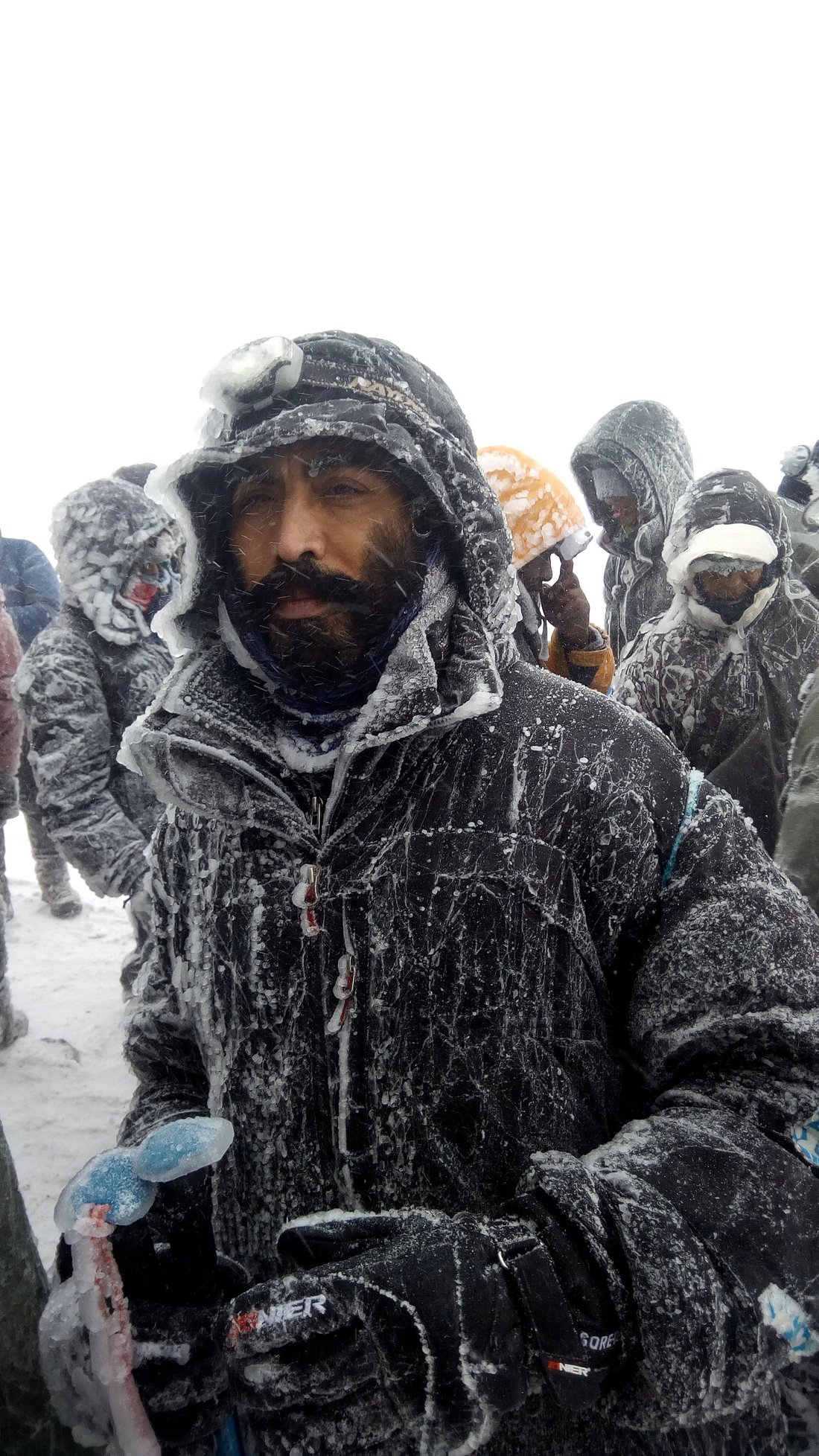
Summit night starts around midnight. You reach Uhuru Peak — 5,895m — somewhere between 6am and 8am. You have been walking for six to eight hours in temperatures between -10°C and -20°C. Your mind has achieved its goal. Your legs have given everything they had.
Then your guide says: “We start descending now.” And you still have eight to ten hours of walking ahead.
This is the section that breaks people — not physically in a dangerous way, but psychologically in a way that nobody prepared them for. The summit was the story. The descent is just more walking. On loose scree at altitude. With legs that stopped working properly three hours ago. While still processing the emotional weight of reaching the highest point in Africa.
Across Kilimania’s guided climbs, the majority of sprained ankles, knee injuries, and falls occur during descent — specifically on the scree slopes below Barafu Camp on the southern routes and on the steep upper sections of the Marangu descent.
Read the full honest account of the worst parts of climbing Kilimanjaro from 22 years of guiding experience.
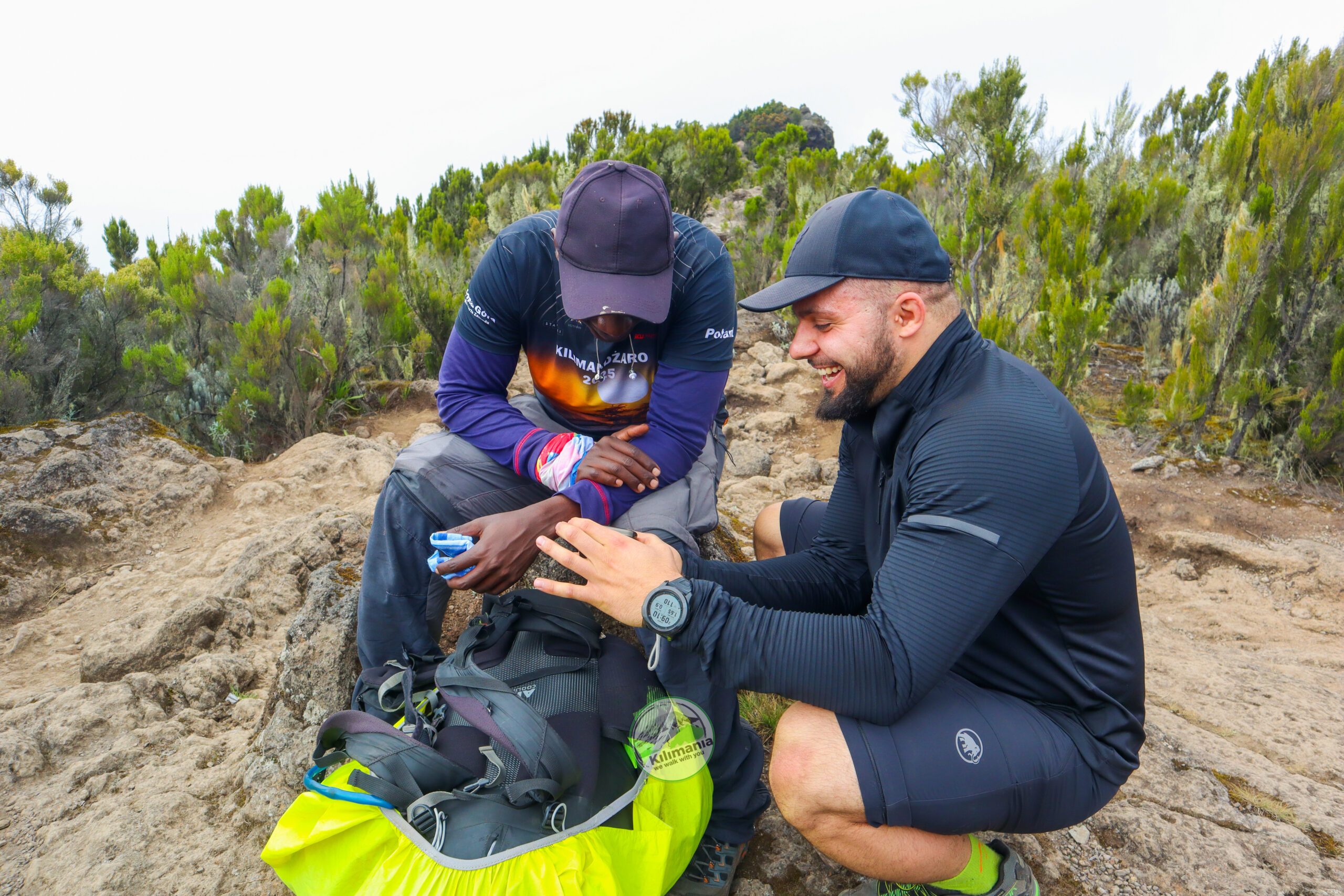
Eight days of extreme shared experience with another person creates a connection that has no good parallel in ordinary life. Your guide has seen you at your most exhausted, your most doubtful, your most physically undignified. You have walked next to them in silence for hours. They have made decisions about your safety at 3am on a dark mountain.
By day 5, the relationship between a climber and their guide is something most people have not experienced before. It is not friendship in the conventional sense. It is closer to the bond between a patient and the person helping them do something they were not sure they could do.
Most Kilimania clients stay in contact with their guides after the climb. Some come back years later to climb again specifically with the same person. This happens on every route, with climbers of every background and every personality type.
It is not the mountain that does this. It is the time, the shared difficulty, and the fact that your guide — if they are good — is genuinely invested in your success in a way that has nothing to do with the tip at the end.
Reading this before booking?
Our guides will tell you the same things in person that you are reading here — before you pay a deposit. No sales script.
View All Kilimanjaro Climbs WhatsApp: +255 756 449 990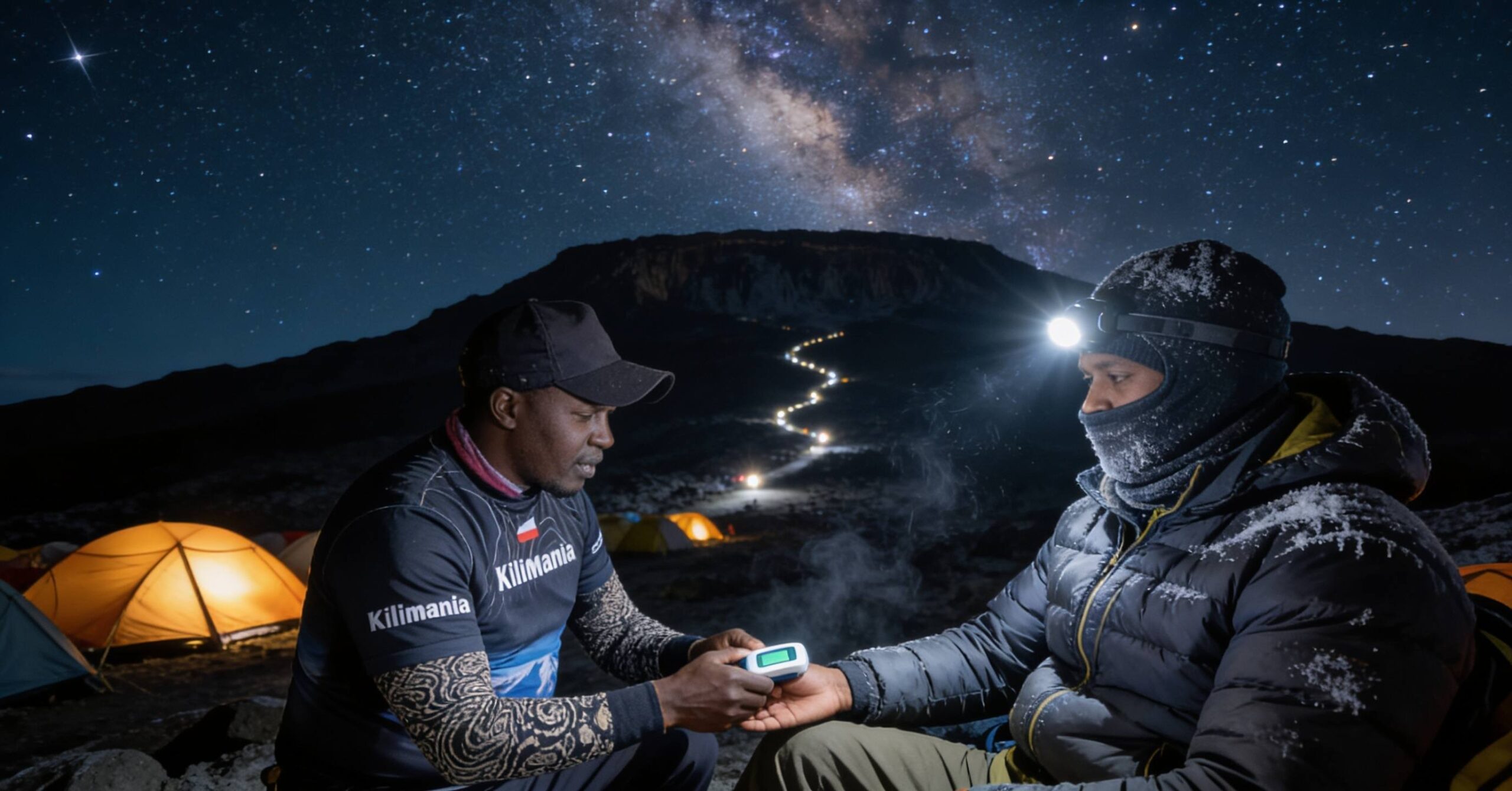
Above 4,000m, a persistent dull headache is simply background noise for most climbers. It sits at a 2 or 3 out of 10 — present, noticeable, but not debilitating. Most climbers stop mentioning it by day 4, not because it has gone away, but because they have resigned themselves to its presence.
This is medically acceptable. A mild, stable headache at altitude does not by itself indicate Acute Mountain Sickness. AMS is indicated by a headache that is worsening, particularly when combined with nausea, fatigue disproportionate to the day’s effort, or any loss of coordination.
Full detail on Kilimanjaro safety and AMS management from 22 years of altitude decision-making.
Every climber believes they will be the exception. They are not.
Above 4,000m, most climbers experience Cheyne-Stokes breathing — a cyclical pattern where breathing slows, the body registers a CO₂ spike, breathing accelerates sharply, then slows again. This keeps the brain in a light arousal state throughout the night. You will dream vividly, wake repeatedly, and feel that you have barely slept.
Add to this: temperatures at Barafu Camp at 4,673m typically drop to -5°C to -12°C at night in the dry season. Camp sounds carry clearly in thin, cold air. Anxiety about summit night — which starts at midnight — keeps many people awake regardless of altitude physiology.
Read more on what to sleep in on Kilimanjaro and the gear specifications that actually matter at altitude.
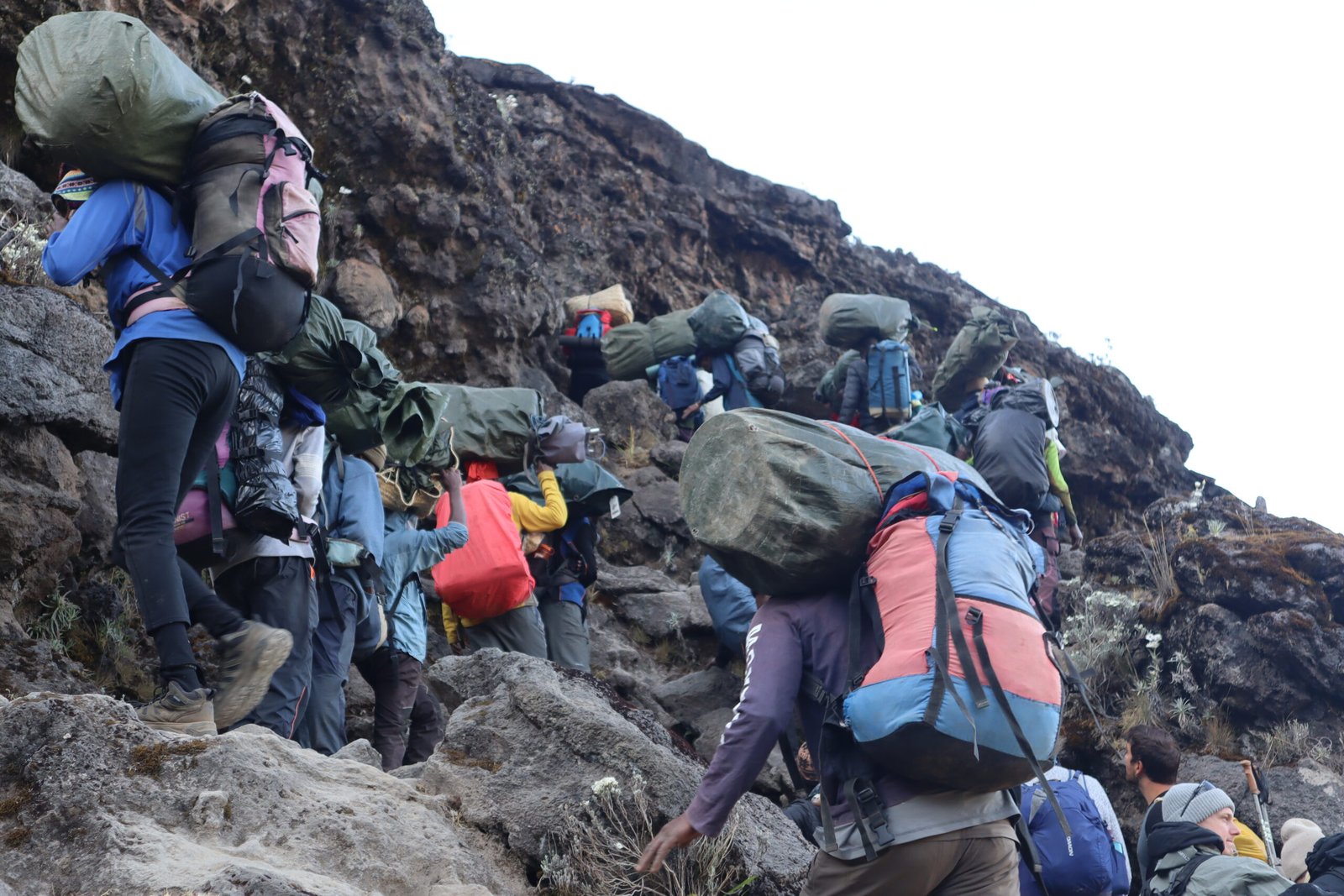
On most commercial Kilimanjaro climbs, the food served to clients — soup, rice, pasta, vegetables, protein — is not what the porters eat. Porters on low-budget operations receive ugali (a dense maize porridge), beans, and basic vegetables. Often cold. Often in quantities insufficient for a person burning 4,000 calories per day while carrying 20kg at altitude.
What Kilimania Does Differently
We follow KPAP (Kilimanjaro Porters Assistance Project) standards on all climbs. Porters receive hot, nutritious meals at every camp. Load limits are enforced at the gate. Porters have adequate sleeping gear. Wages are paid in full and on time. Tip distribution is managed transparently in front of the entire crew, so no money disappears in the process.
Before you book any Kilimanjaro climb, ask the operator directly: “What do your porters eat at camp?” The answer tells you a great deal about the operation.
Full detail on Kilimanjaro porter welfare and what KPAP compliance actually looks like on the mountain.
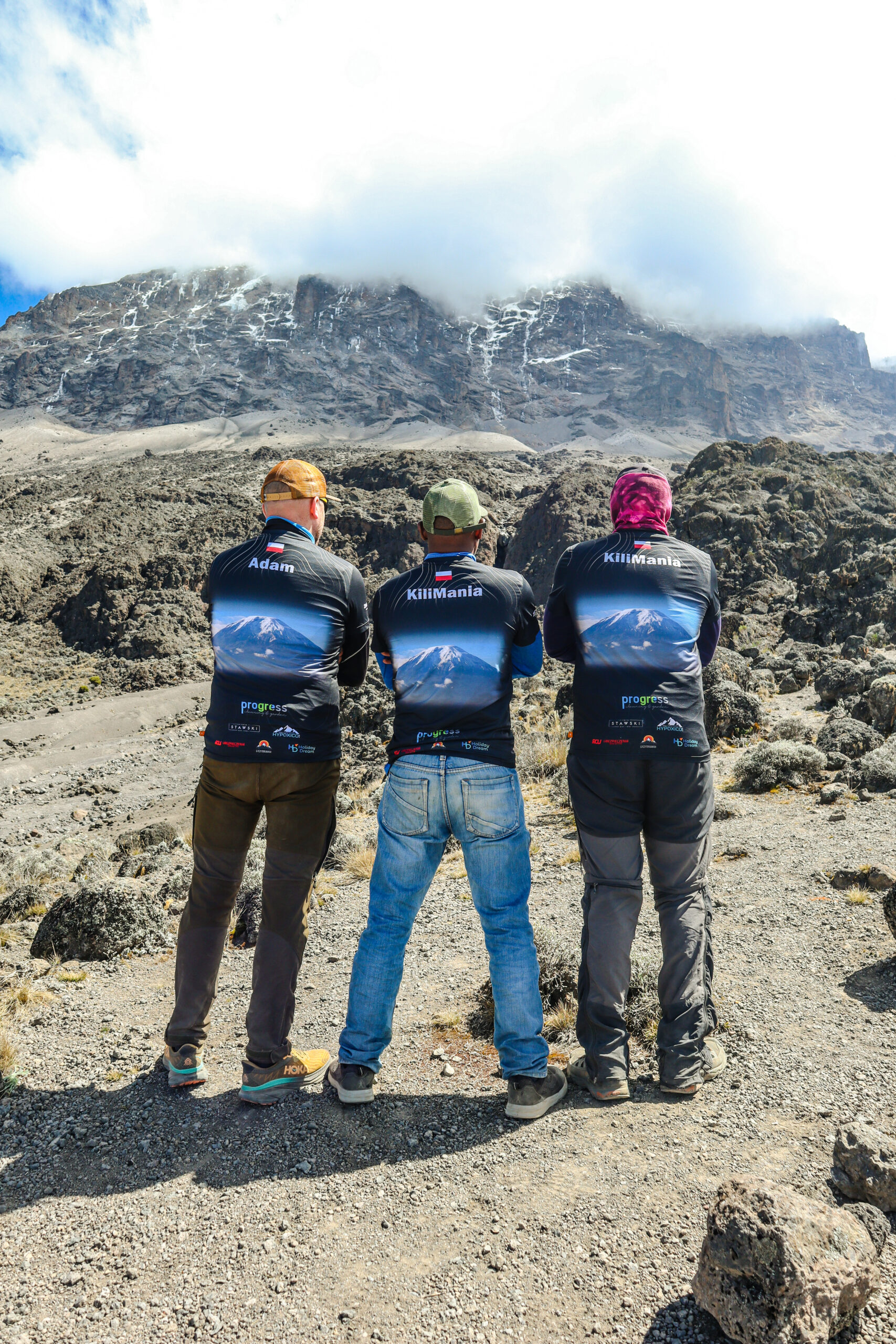
If you are climbing Machame, Lemosho, Shira, or the Northern Circuit, you will spend the evening at Barranco Camp at 3,976m staring up at a wall that looks vertical. It is not vertical. But it looks it.
The wall is a 257m scramble on volcanic rock — hands and feet, no ropes required for healthy climbers with a guide. Some sections feel exposed. One section, known as the “Kissing Rock,” requires pressing your body against the wall as you edge past a narrow ledge. The crossing takes 45 to 60 minutes from base to top.
From the top, the psychological effect reverses completely. Climbers who were silent with anxiety at the base stand at the summit of the wall and look down at the tiny tents of camp far below. They feel specifically, reliably, taller than they did before they started.
Complete guide to the Barranco Wall on Kilimanjaro: what to expect, how to prepare, and what the view from the top actually looks like.
The Mountain in Images
These were taken by guides and climbers on Kilimania expeditions. They show things the stock photo does not.
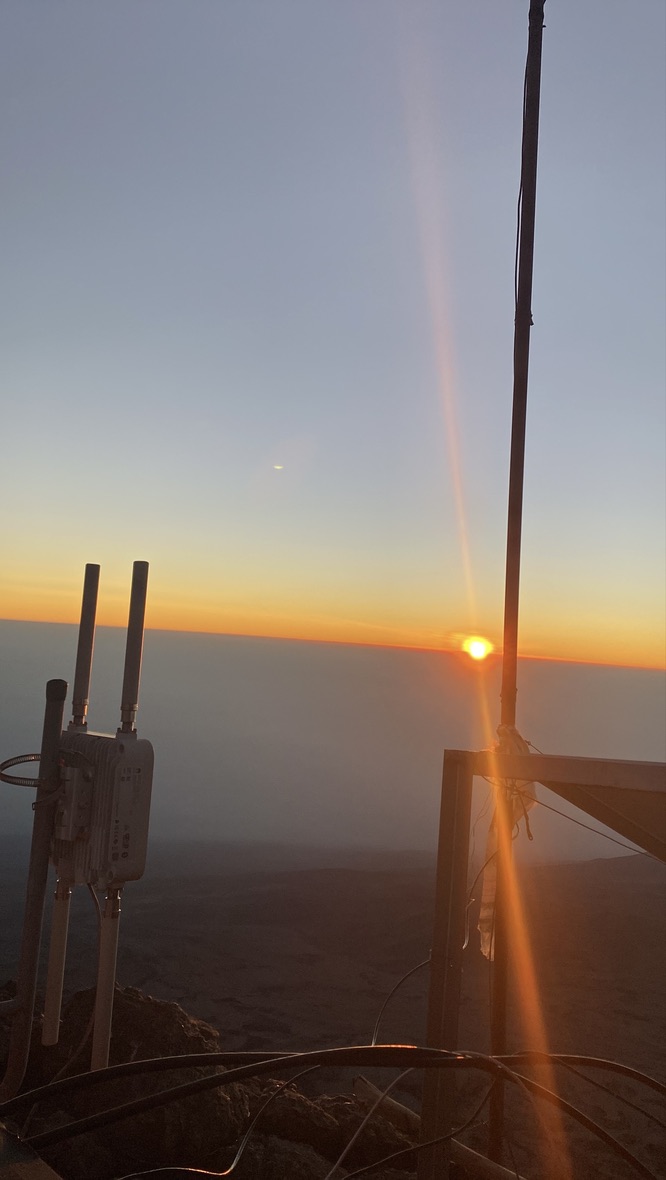
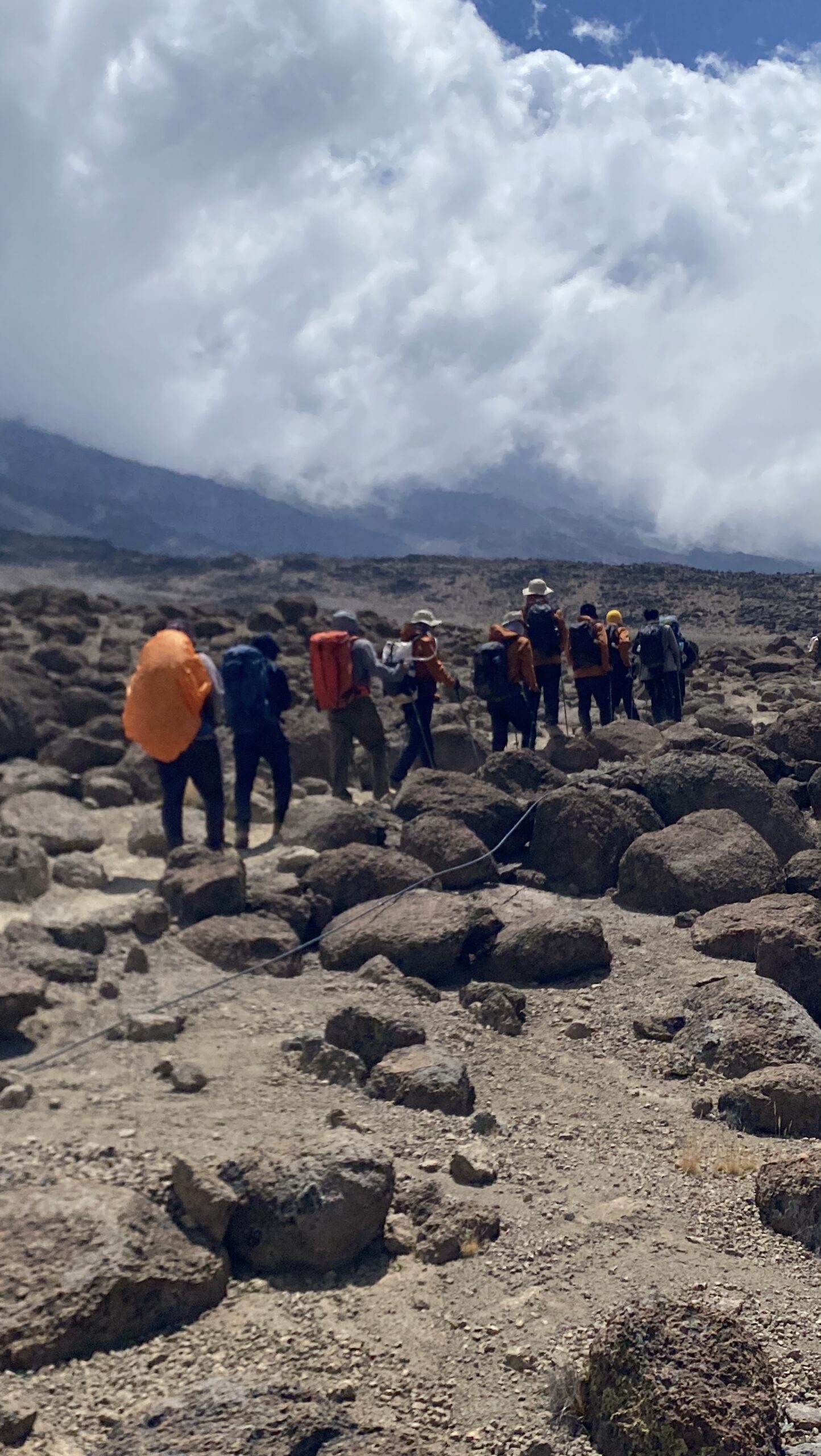
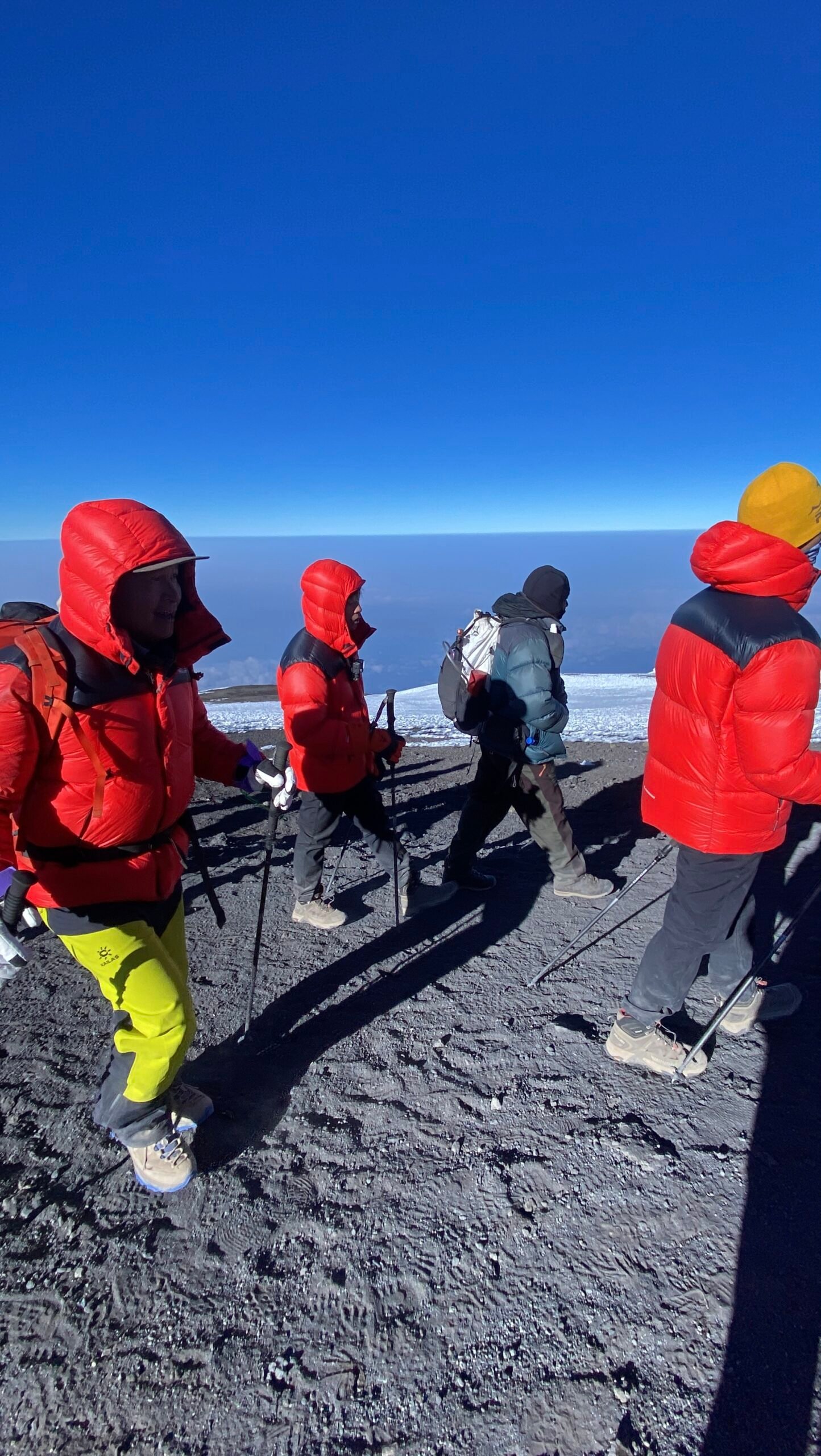
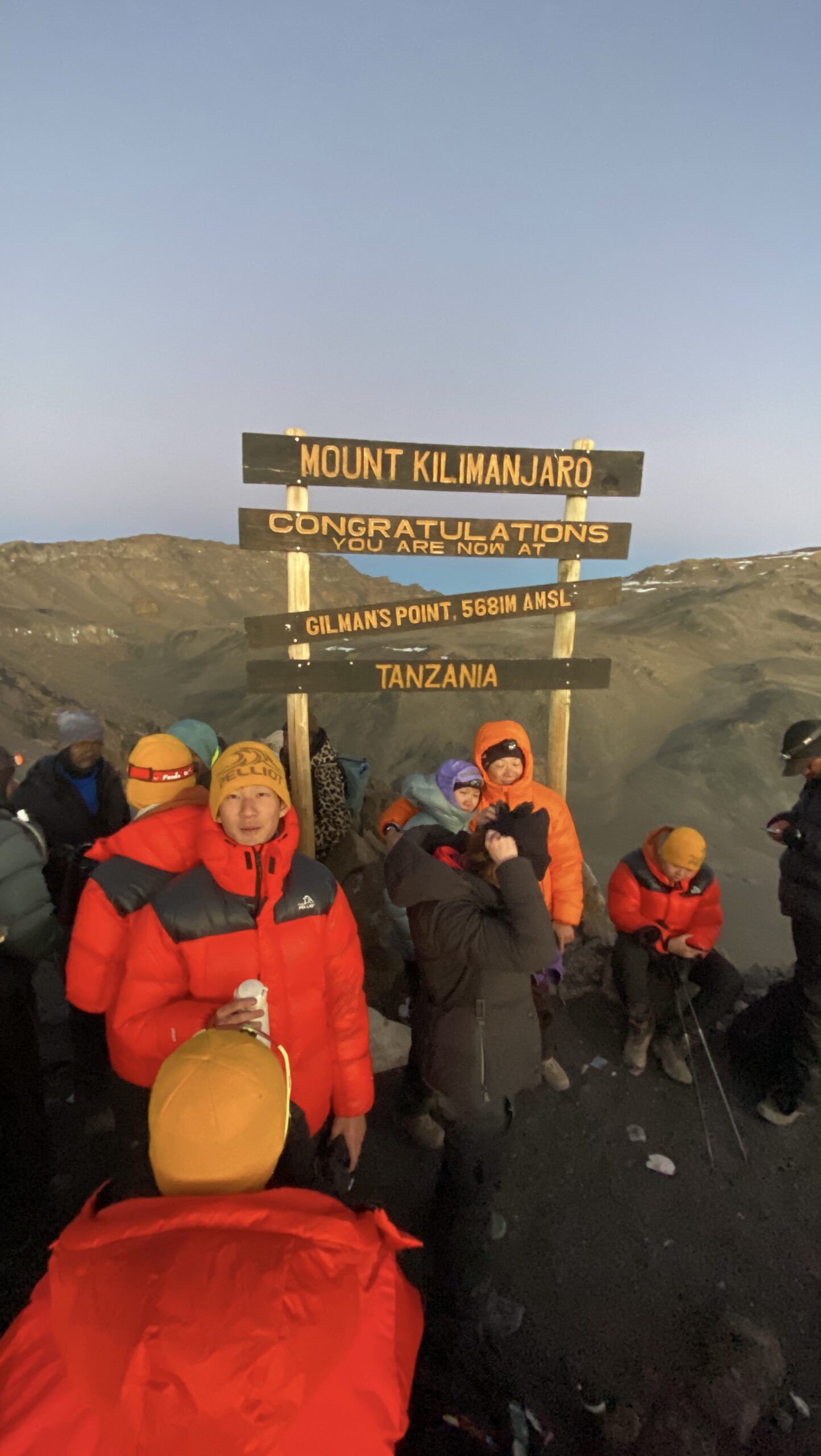
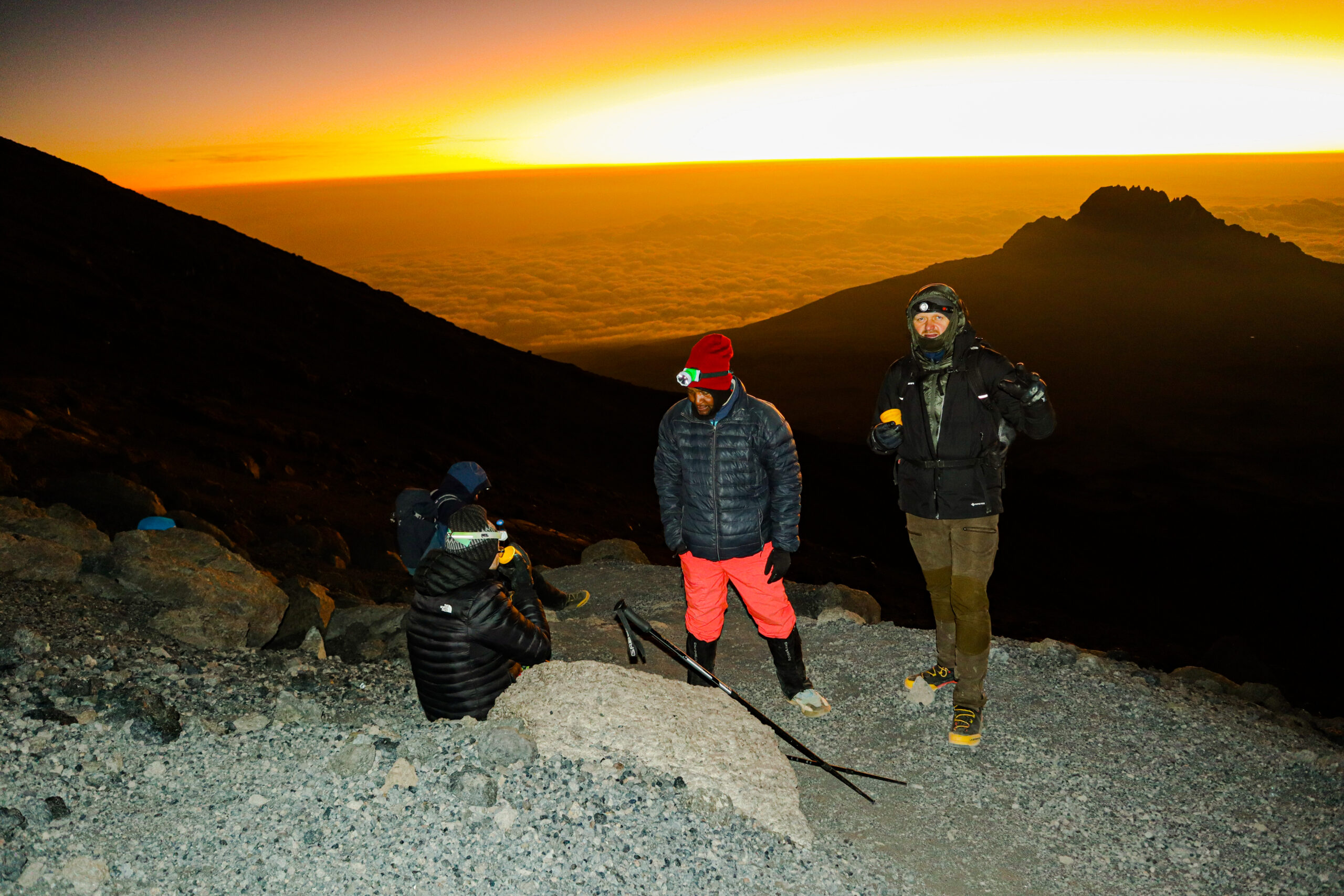
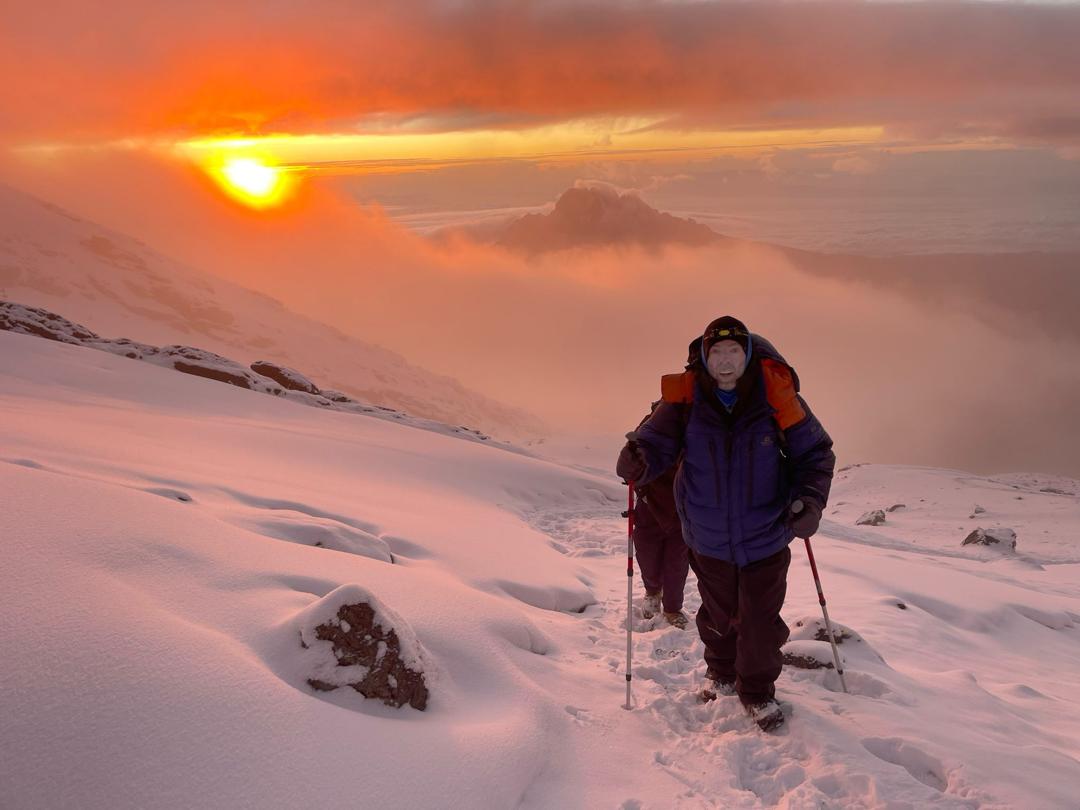
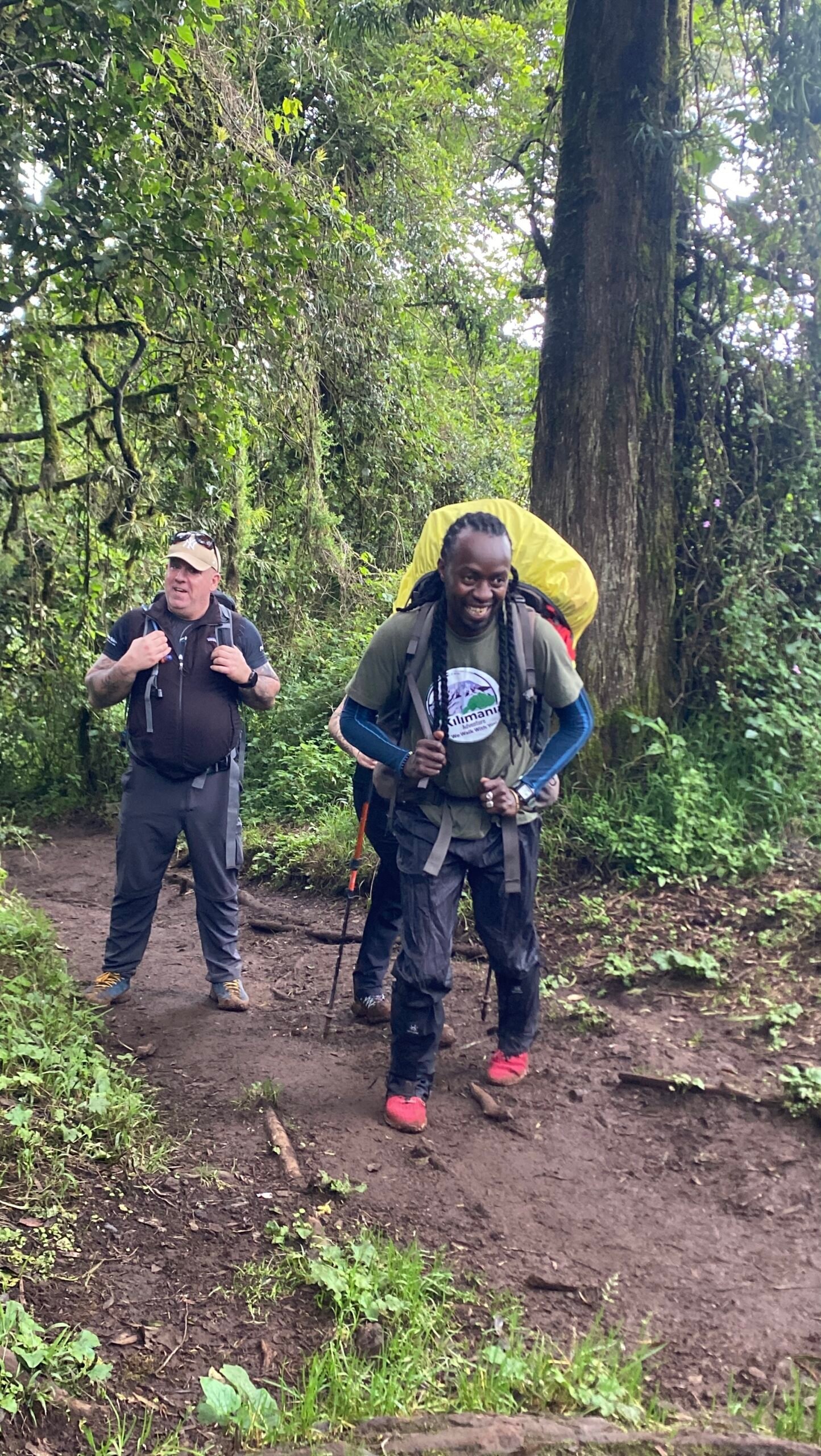
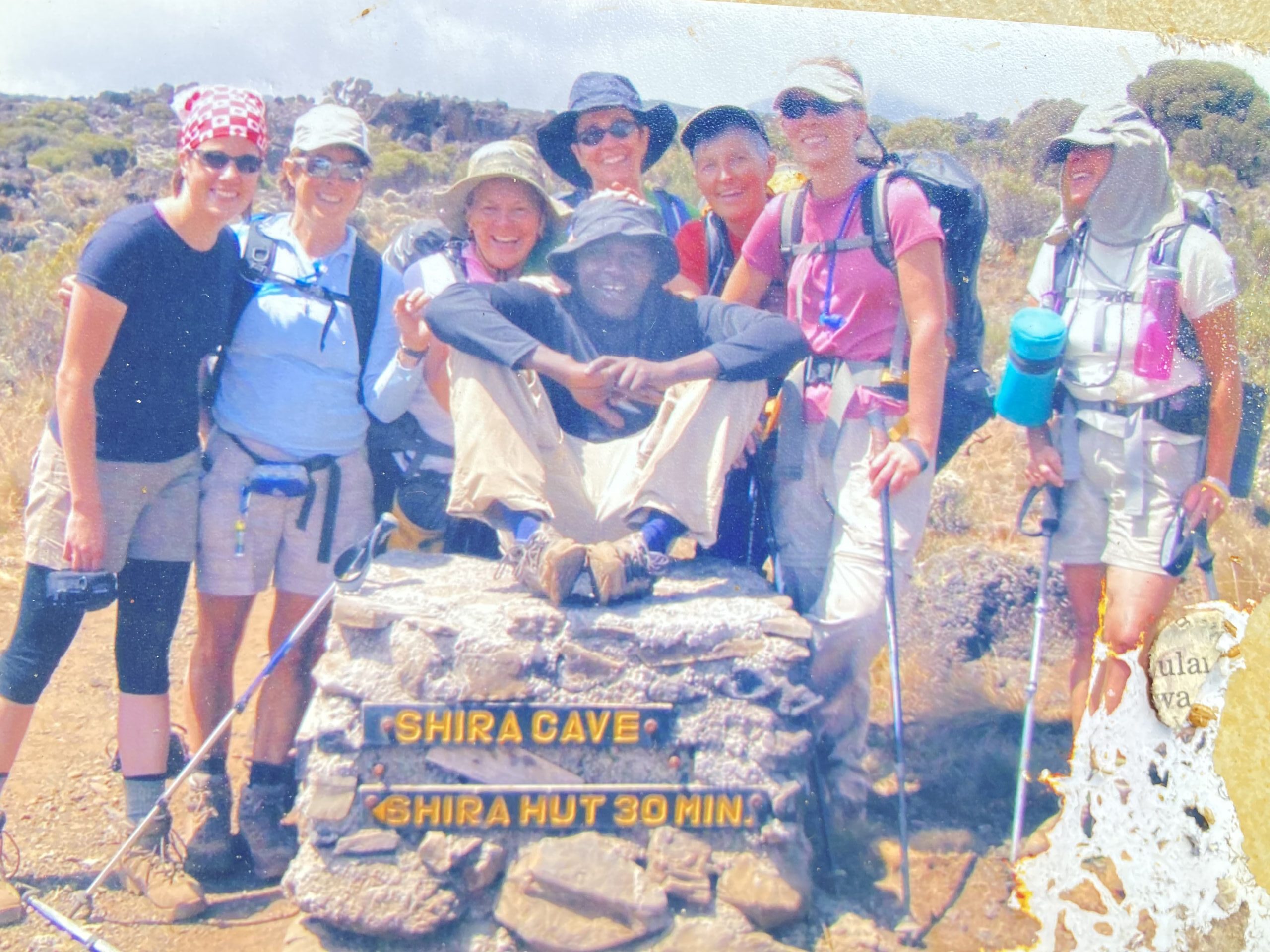
Kilimania Adventure expeditions, 2001 to 2026. Every photograph taken on actual client climbs.
Every summit photo shows the same thing: sunrise, smiling climber, glacier, sign. What the photos do not show is the six hours before that image was taken.
Summit night starts at 11pm to midnight. You walk in total darkness — a headlamp cone of four or five metres ahead of you — on loose scree at -10°C to -20°C, at an altitude where each breath delivers approximately 50% of the oxygen your body is used to. The pace is genuinely very slow. Pole pole is not a phrase used for effect. It is the actual speed that altitude and safety require.
Above Stella Point at 5,756m, many climbers report a sensation of unreality. The cold, the altitude, the darkness, and the sheer duration combine into a state that experienced guides recognise and monitor carefully. It is not dangerous if managed well. But it is not what the brochure photographs suggest.
Full hour-by-hour breakdown of what actually happens on Kilimanjaro summit night, from midnight departure to descent arrival.
Climbers who are convinced they are not emotional people cry at the Uhuru Peak sign. Climbers who spent the whole trip joking about it cry. Climbers who summited without difficulty cry. Climbers who nearly turned back and then did not cry hardest of all.
It is not just relief. It is not just exhaustion. At 5,895m, after everything the mountain asked, something releases that is hard to categorise. Guides call it “the summit feeling.” It is composed of exhaustion, achievement, altitude-induced emotional sensitivity, cold, the view, and the knowledge that you did something that was genuinely not certain when you started.
Be ready for it — not for the photo, but for yourself. The summit moment passes quickly because guides move you out of the wind immediately. Have whatever you need to say, do, or mark the moment ready in your mind before you arrive.
Barafu Camp at 4,673m sits on an exposed ridge on the southern slopes of Kilimanjaro. At night, especially in June, July, and August, winds regularly exceed 50 to 70km/h. Tents flatten against their poles. The noise makes sleep almost impossible even without the altitude physiology working against you.
This is not the wind you know. It is sustained, directional, constant wind that penetrates every layer that is not properly sealed. Wind chill at Barafu at 2am in July can bring perceived temperature to -25°C from an ambient -8°C.
Waterproof and windproof outer layers are not suggestions. They are the difference between a manageable summit night and a dangerous one. Shell jackets with taped seams. Gloves with overmitts. Balaclava under hood. None of this is optional at altitude in those conditions.
Full gear guide: what to pack for Kilimanjaro in 2026, including the wind protection that most packing lists underspecify.
Days 4 and 5 on most southern routes cross the alpine desert zone — the Shira Plateau, the area around Lava Tower, the expanse approaching Barafu. The landscape is lunar. Brown, grey, ochre. No vegetation above the heath zone. No sound except wind and boot on rock.
Most guidebooks describe this as “dramatic.” It is. It is also monotonous in a way that pushes you into your own head. Without stimulus, without distraction, with only the effort and the altitude and the sound of your own breathing, you end up having conversations with yourself that you did not plan to have.
Experienced climbers describe the alpine desert as the section where the real internal work of the climb happens. Guides who have walked this section hundreds of times say that what people discover about themselves between Lava Tower and Barafu is often more significant than what happens at the summit.
Bring podcasts or music if you need them. But consider leaving space for what the silence produces. Many climbers rate this section as unexpectedly one of the most valuable days of the entire experience.
Crew tips on Kilimanjaro are not a gratuity for exceptional service. They are a structural part of the crew’s compensation — baked into how the industry pays mountain workers. Guides, assistant guides, cooks, and porters receive base wages that assume tips will supplement them significantly.
KPAP publishes recommended tip amounts annually. For a standard 8-day Lemosho or Northern Circuit climb with a crew of 15 to 20 people, the total tip budget for a party of two climbers typically runs to $500 to $700 USD total.
Tip Distribution — What Kilimania Does
We distribute tips in front of the entire crew at the final camp. Every crew member receives their amount publicly. This prevents tips from being skimmed by intermediaries — a practice that happens on some operations — and allows climbers to confirm that their money reached the people it was intended for.
Exact amounts for every crew role: Kilimanjaro tipping guide 2026.
Across Kilimania’s guided climbs, the average weight loss over an 8-day expedition is approximately 2 to 4kg. On longer routes or in climbers with significant appetite suppression above 4,000m, it can reach 5 to 6kg.
This is not meaningful fat loss. It is primarily fluid loss, glycogen depletion, and some muscle protein catabolism in the final days. Most of it returns within two weeks of normal eating and recovery at sea level.
What this means practically: eat before the mountain. Do not arrive in Moshi already in a caloric deficit from pre-climb weight loss efforts. A well-fueled climber handles altitude better, recovers faster between days, and maintains better cognitive function on summit night — where cognitive function directly affects safety decisions.
Full data: how much weight climbers actually lose on Kilimanjaro and the specific factors that determine it.
On the Marangu Route, you reach Gilman’s Point at 5,681m as you crest the crater rim. The certificate for Gilman’s Point is green. The certificate for Uhuru Peak — 5,895m, the true summit of Africa — is gold. The distance between them is approximately 2km along the crater rim. The time to cover that distance is 1.5 to 2 hours, depending on conditions.
Many climbers, arriving at Gilman’s Point exhausted at 5am in the dark and cold, make a decision that they later regret: they stop here and accept the green certificate. Nothing is wrong with this — Gilman’s Point is a genuine achievement at 5,681m. But the gap between feeling capable of continuing and actually being capable of continuing is often smaller than it feels at 5am.
A guide who knows you — who has watched you for five or six days — can tell you whether you should continue. Trust that assessment.
Understand the difference between Stella Point, Gilman’s Point, and Uhuru Peak before you are standing on the crater rim at 5am making that decision.
The Reality vs. The Brochure
A structured comparison of what operators typically write and what the mountain actually delivers:
| The Brochure Version | The Actual Reality | What to Do About It |
|---|---|---|
| “Spectacular sunrise from the summit” | 6+ hours of darkness, cold, and thin air before that sunrise | Read the summit night hour-by-hour guide |
| “Well-fed, motivated crew” | Many operations underfeed porters significantly | Ask your operator: “What do porters eat at each camp?” |
| “The descent is straightforward” | Most injuries happen on descent across 8+ hours on exhausted legs | Bring trekking poles — not optional for descent |
| “Acclimatization built into the route” | You will not sleep properly above 4,000m regardless of pace | Plan for light, disrupted sleep. Rest in tent; do not rely on it. |
| “Healthy appetite throughout” | Appetite disappears above 4,000m; eating becomes discipline | Force food every 2 hours. Carbohydrates first. |
| “Your personal achievement” | A crew of 15 to 20 people made it possible | Budget for proper crew tips — KPAP rates, not guesswork |
| “Challenging but manageable” | Genuinely hard. Altitude is unpredictable for everyone. | Read how hard Kilimanjaro actually is |
Free Download: Kilimanjaro Altitude Symptom and AMS Checklist
Altitude illness is a leading reason climbers turn around on Mount Kilimanjaro. This practical checklist is used by Senior Guide Sabinus Msimba and the Kilimania Adventure team to monitor climbers throughout every expedition.
- Normal acclimatization symptoms above 3,000m
- Acute Mountain Sickness (AMS) warning signs
- HACE and HAPE emergency symptoms
- Daily health monitoring form (SpO₂, pulse, hydration)
- Guide reporting and self-assessment checklist
Prepared by: Sabinus Msimba, Senior Mountain Guide, Kilimania Adventure, Moshi, Tanzania.
This checklist is for educational purposes only and does not replace professional medical advice. See also: CDC altitude illness guidance.

Frequently Asked Questions
Most operators skip the uncomfortable details: you will not sleep properly above 4,000m due to Cheyne-Stokes breathing; your appetite disappears completely above that altitude and you must force food anyway; the majority of injuries happen during descent, not ascent; and porters on many operations are not eating the same food as clients. Responsible operators disclose these realities before you book.
By the time you reach Uhuru Peak at 5,895m, your legs have been working for 7 to 8 hours in temperatures between -10°C and -20°C. Your emotional goal has been achieved. Then you face 8 to 10 more hours of descent on loose scree with legs that have nothing left. The psychological crash after summit euphoria, combined with physical exhaustion, is why most Kilimanjaro injuries occur during descent rather than ascent.
On most commercial climbs, porters receive ugali (maize meal), beans, and basic vegetables — not the meals served to clients. Kilimania Adventure follows KPAP guidelines, ensuring porters receive hot nutritious meals at every camp, adequate sleeping gear, and wages paid in full. Before booking any Kilimanjaro climb, ask the operator directly what their porters eat. The answer reveals how the operation is run.
On the evening before or after summit night, the entire crew gathers to sing traditional Swahili mountain songs including Jambo Bwana and crew-specific compositions. This is a genuine cultural tradition — not a performance for tips — and is consistently described by Kilimania clients as one of the most moving moments of the entire climb. It marks the shared nature of the summit: you did not climb alone.
Above 4,000m a persistent dull headache is normal and does not by itself indicate AMS. Most climbers stop noticing it by day 4 — not because it resolved but from psychological adaptation. If it intensifies sharply with vomiting, loss of coordination, or confusion, tell your guide immediately. Rate it 1 to 10, morning and night. Stable or improving: continue. Rising more than 2 points: alert your guide immediately.
From 22 years and 1,247+ climbers: the vast majority say yes — including those who did not reach Uhuru Peak. The difficulty is genuine, the crew is extraordinary, and 8 days of shared extreme effort with your guides is unlike anything in ordinary life.
What to Do With This
None of this is written to discourage you. It is written because you deserve to walk onto Kilimanjaro knowing what you are actually walking onto — not a polished brochure version of it.
The mountain is worth every difficult thing on this list. The singing is real. The relationship with your guide is real. The moment at the summit — whatever that moment turns out to be for you — is real in a way that has nothing to do with the photographs.
But the headache is also real. The sleepless nights at 4,673m are real. The eight hours of descent after summit are real. Going in with accurate expectations does not downgrade the experience. It is what allows you to have the actual experience rather than a collision with a fantasy.
Our guides have walked this mountain for a combined 200+ years. We will tell you the same things in person, before you pay a deposit, that you have just read here. That is what an honest operator does.
Related Reading
- Worst Part of Climbing Kilimanjaro: 7 Hard Truths From a 22-Year Guide
- Kilimanjaro Summit Night: Hour-by-Hour
- What Is Climbing Kilimanjaro Like?
- Is Kilimanjaro Worth It?
- Kilimanjaro Success Rate by Route
- Kilimanjaro Porter Welfare: What KPAP Compliance Actually Means
- How Hard Is Kilimanjaro? Success Rates and Altitude Reality
- Diamox for Kilimanjaro: Do You Need It?
- Kilimanjaro Routes 2026: All Routes and Success Rates
- Kilimanjaro Climbing Guide 2026: Costs, Routes, Altitude and Summit Success
Sources and Further Reading
- KINAPA — Kilimanjaro National Park Authority
- TANAPA — Tanzania National Parks
- KPAP — Kilimanjaro Porters Assistance Project
- UNESCO World Heritage — Kilimanjaro National Park
- Cheyne-Stokes Breathing at Altitude — PubMed Research
- CDC Altitude Illness Guidance for Travellers
Ready to plan your climb?
We guide every major route. Tell us your dates, your fitness level, and what matters to you. We will tell you which route suits you and exactly why.
View All Kilimanjaro Routes WhatsApp: +255 756 449 990