Can A Beginner Climb Kilimanjaro? The Honest Answer
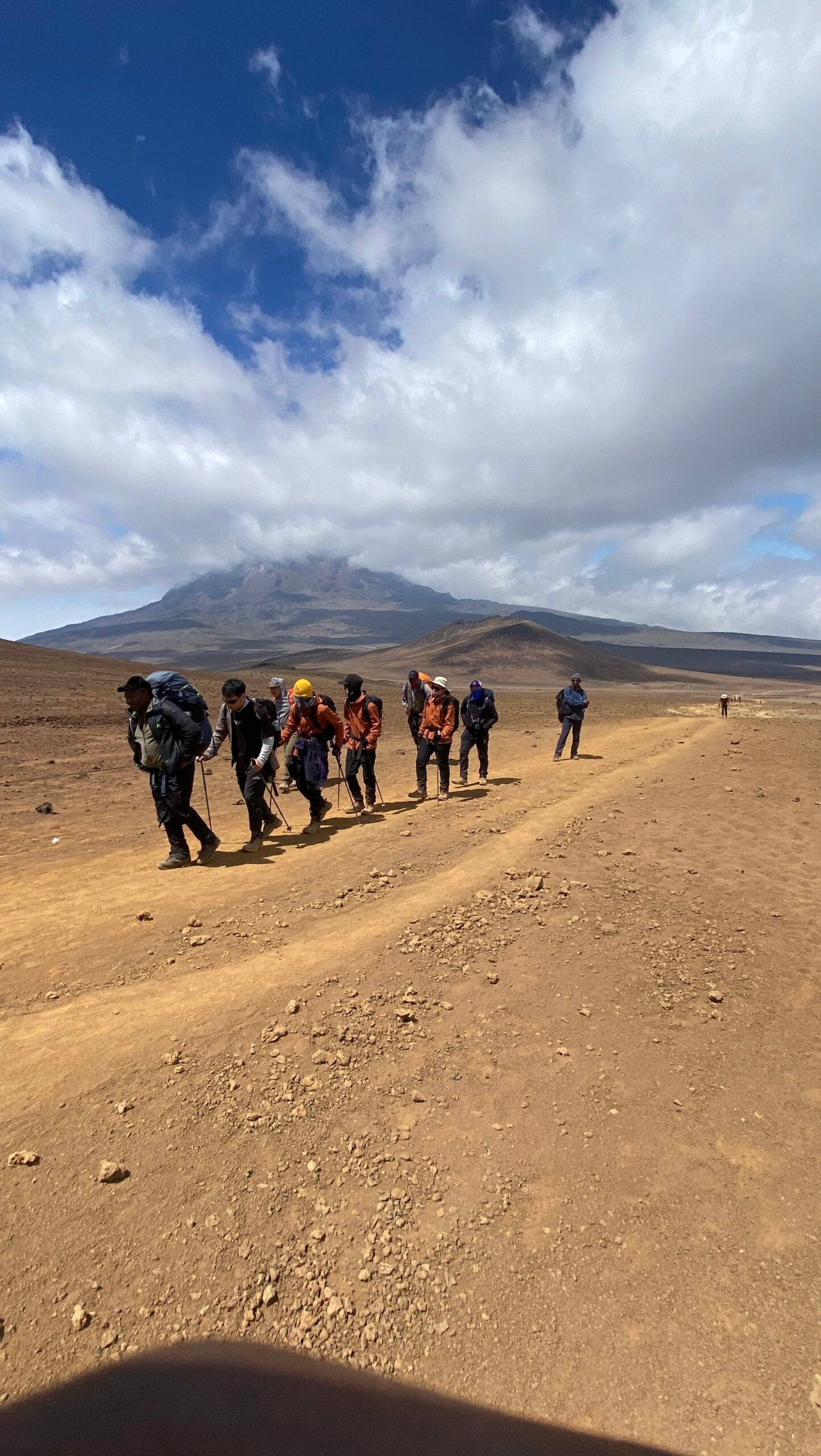
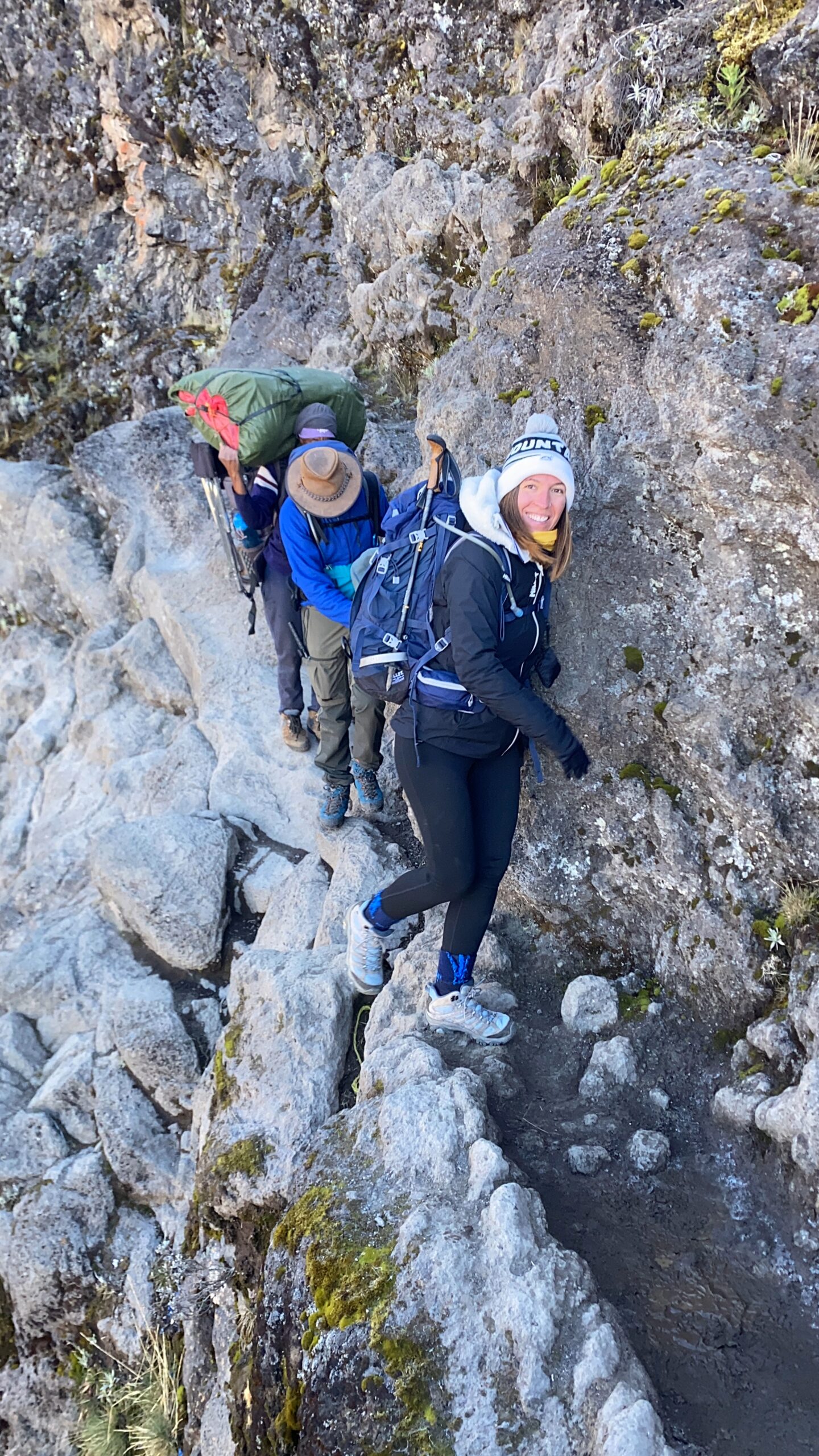
The long, exposed trek across the alpine desert, with Kibo Peak in the background.
Quick Answer
Yes — a complete beginner can reach Uhuru Peak at 5,895m. Success depends far more on route length, acclimatisation, and honest preparation than on prior mountaineering experience. Across Kilimania’s climb records, longer itineraries show substantially higher summit rates than the shortest ones — see the full success-rate breakdown by route and day count for exact figures, or read how hard Kilimanjaro actually is for the physical demands in detail.
Source: Kilimania Adventure internal climb records, 1,247+ guided climbs, 2019–2025. Full route-by-route figures: How Hard Is Kilimanjaro?
In 22 years on Mount Kilimanjaro, I have watched complete beginners stand on Africa’s highest point, and I’ve watched experienced hikers turn around hundreds of metres below the summit. The difference was rarely talent, strength, or previous mountain experience. It was preparation, route choice, and acclimatisation.
Beginners who get four things right — a route with genuine acclimatisation time, an honest training timeline, realistic expectations for summit night, and open communication with their guide about fitness and health — give themselves the best possible chance. Beginners who skip any one of these usually turn back somewhere between 4,200m and 5,200m, not because the mountain was too hard, but because the preparation or the itinerary was too short.
Kilimanjaro does not test technical climbing skill. It tests cardiovascular endurance, acclimatisation, and mental resilience across a 6–9 hour summit push that begins around midnight in temperatures that can fall to −15°C or colder. Read the full Kilimanjaro difficulty breakdown before you book. A fit office worker who has never camped often has a stronger summit chance than a skilled rock climber who hasn’t trained for sustained aerobic endurance.
What “Beginner” Actually Means on Kilimanjaro
The word “beginner” collapses three very different people into one label. The mountain treats each one differently.
Beginner hiker — active but no multi-day mountain experience. You run, cycle, or swim 3–4 times weekly but have never slept in a tent on a mountain. This is the strongest beginner profile: with 3–4 months of targeted preparation on an 8-day route, this profile does well.
Complete fitness beginner — sedentary, no consistent exercise. Kilimanjaro is not impossible here, but the preparation window should extend to roughly 6 months, and even then a longer route (8–9 days) matters more than it would for an already-active climber. Take an honest look with our Kilimanjaro fitness assessment, and follow a structured plan such as our 12-week Kilimanjaro training guide.
Mountaineering beginner — no technical summit experience. This profile is largely irrelevant on Kilimanjaro. Every standard route — Lemosho, Machame, Marangu, Rongai, Northern Circuit — is a trekking trail with no ropes, ice axes, or crampons. If you can walk uphill for several hours with a light daypack, you have every technical skill any route requires.
Which Routes Suit Beginners
Route choice is the single highest-leverage decision a beginner makes. Kilimania’s internal climb records show summit rates rising steadily with itinerary length — from roughly 41% on the shortest 5-day routes to 86–90% on 8- and 9-day itineraries. The gap is driven almost entirely by acclimatisation time, not by which named route you pick. For the full year-by-year, route-by-route figures, see How Hard Is Kilimanjaro? and Kilimanjaro Success Rate By Route. Full current pricing for every itinerary lives on our Kilimanjaro cost breakdown — this table focuses on which profile of beginner each route suits.
| Route & Days | Acclimatisation Profile | Training Needed | Ideal For |
|---|---|---|---|
| Marangu — 5 Days | Weak — no “climb high, sleep low” day | Not recommended for first-time climbers | Repeat climbers who already know their altitude response |
| Marangu — 6 Days | Moderate — one extra night at Horombo | 4 months minimum | Hut accommodation, a tighter schedule |
| Machame — 6 Days | Moderate — compressed Lava Tower day | 4 months, strong existing base | Generally not our first recommendation for beginners |
| Machame — 7 Days | Strong — full Lava Tower detour | 4 months, including two overnight hikes | Confident, well-prepared beginners |
| Lemosho — 8 Days ✓ | Excellent — Lava Tower plus an extra Karanga night | 3–4 months, including two overnight hikes | Most beginners — our default recommendation |
| Northern Circuit — 9 Days | Exceptional — the longest acclimatisation window we offer | 4–6 months | Budget-flexible beginners and those who want the widest possible safety margin |
Pricing for each itinerary is kept current on our Kilimanjaro cost breakdown rather than restated here, since park fees and rates change through the year.
📥 Free Download: Kilimanjaro Route Comparison Cheat Sheet
A printable version of the table above, plus all Kilimania-guided routes side by side.
- Compare every route we operate
- Acclimatisation profile, scenery, and crowd levels
- A starting recommendation for first-time climbers
Prepared by Sabinus Msimba, Senior Kilimanjaro Guide, Kilimania Adventure.
Lemosho 8-Day — Our Default Beginner Recommendation
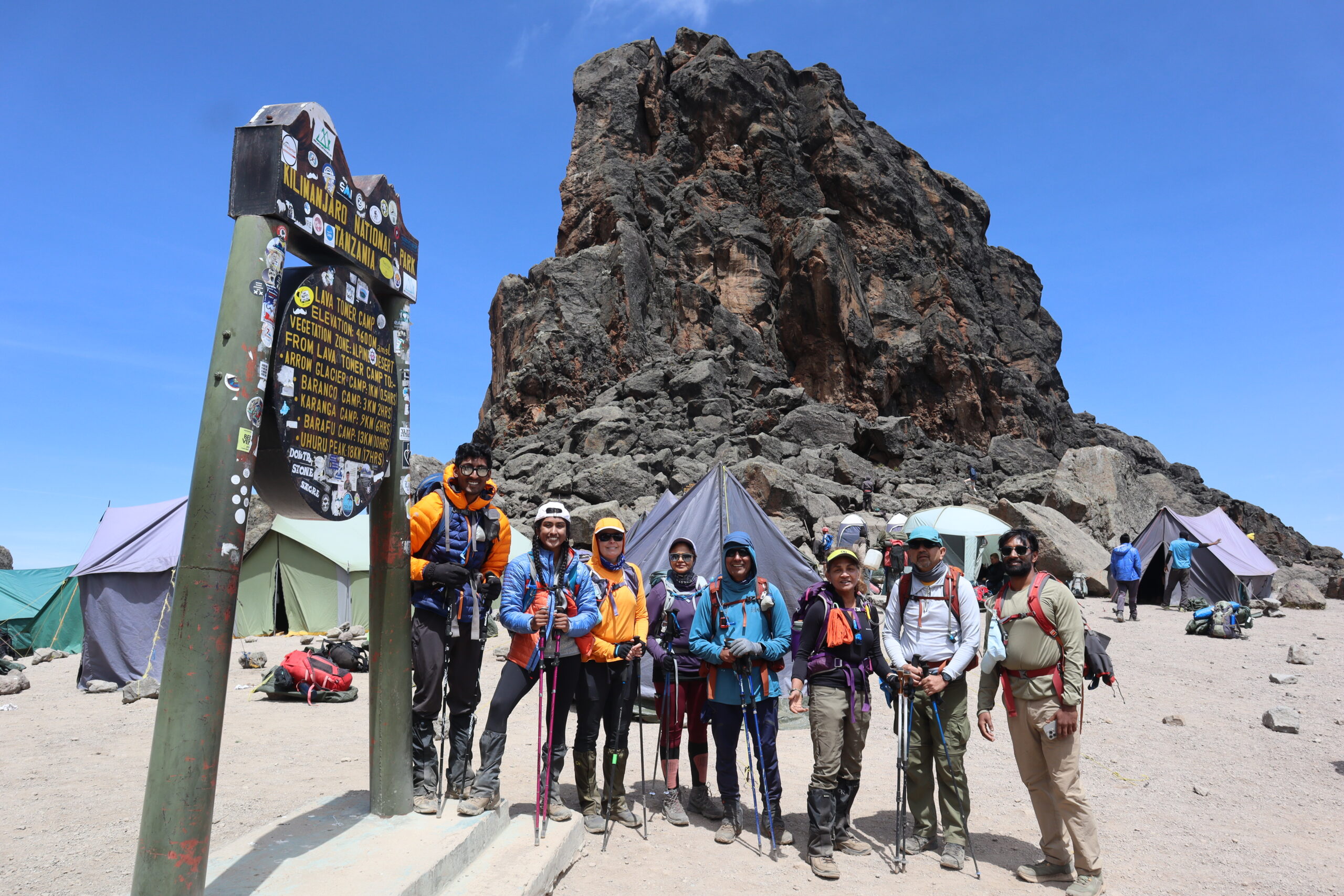
Lemosho approaches from the west through rainforest below 2,800m, giving the body several days at a manageable elevation before altitude becomes a real factor. Day 4 typically climbs to Lava Tower (roughly 4,630m) for lunch, then descends several hundred metres to sleep lower — the “climb high, sleep low” principle. The 8-day version adds a Karanga Valley acclimatisation night that the 7-day version skips, which is why we default to it for most first-timers.
Marangu — Why It Looks Beginner-Friendly But Often Isn’t
Marangu’s huts and “Coca-Cola Route” nickname suggest ease, but the standard itinerary has no dedicated “climb high, sleep low” day. The 5-day version in particular gives very little time above 3,700m before summit night, and it’s the route we recommend least for first-timers. The 6-day version is meaningfully better. Read our Marangu Route difficulty breakdown before choosing this route.
Machame 7-Day — A Strong Profile on More Demanding Terrain
The Lava Tower detour on Machame Day 3 delivers the same acclimatisation benefit as Lemosho. The Barranco Wall — a scramble at around 4,200m — requires confidence on uneven ground, using hands and feet but no equipment. With a genuine training programme including two loaded overnight hikes, Machame 7-day is a solid choice; if in doubt, Lemosho 8-day remains our safer default for a first attempt.
Other Routes Worth Knowing
The 9-day Northern Circuit gives the longest acclimatisation window of any route we operate and suits budget-flexible beginners who want the widest safety margin. The 6-day Rongai suits shoulder-season beginners who can’t extend to 8 days.
Field Notes From the Mountain
Names and identifying details below have been changed at the client’s request; the situations described are real and drawn from guide observation, shared with permission.
M., 40s, Central Europe — A Turnaround, Then a Second Attempt
He described himself as moderately fit but hadn’t exercised consistently in years, and trained for only a few weeks before a 6-day Machame climb — well short of what we’d now recommend. By Barranco Camp, his symptoms had become serious enough that our guide made the call to descend immediately from around 4,600m. He returned a year later on the 8-day Lemosho after several months of honest preparation, and reached Uhuru Peak in the early morning. “The mountain wasn’t harder the second time. I was simply more ready.”
Can a 50- or 60-Year-Old Beginner Climb Kilimanjaro?
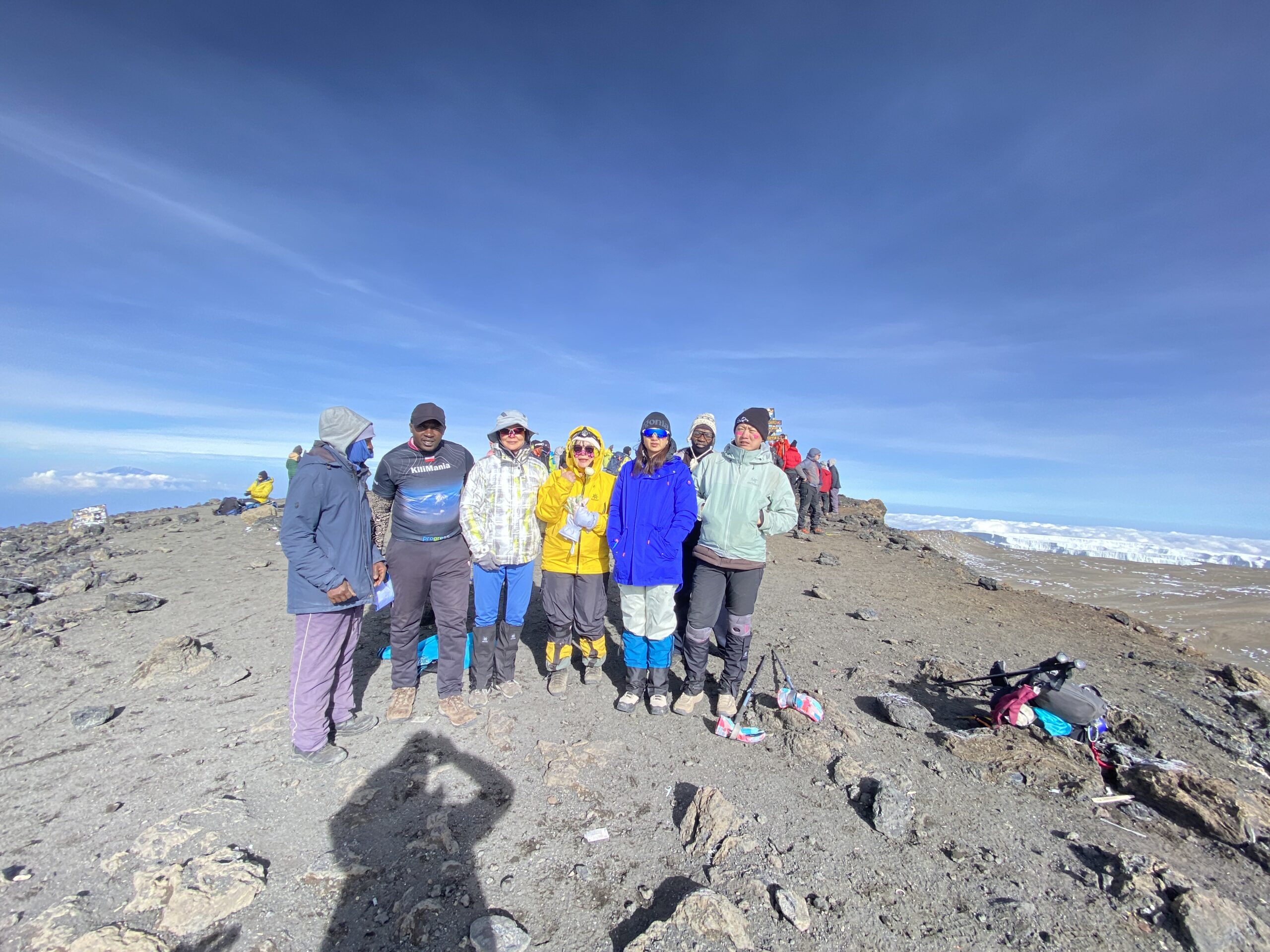
Yes. Kilimania has guided clients well into their 60s and 70s to Uhuru Peak without previous mountaineering experience. Age changes preparation, not summit possibility — see our full guide to climbing Kilimanjaro over 50 for route-specific advice.
J., late 50s, US — Lemosho 8-Day
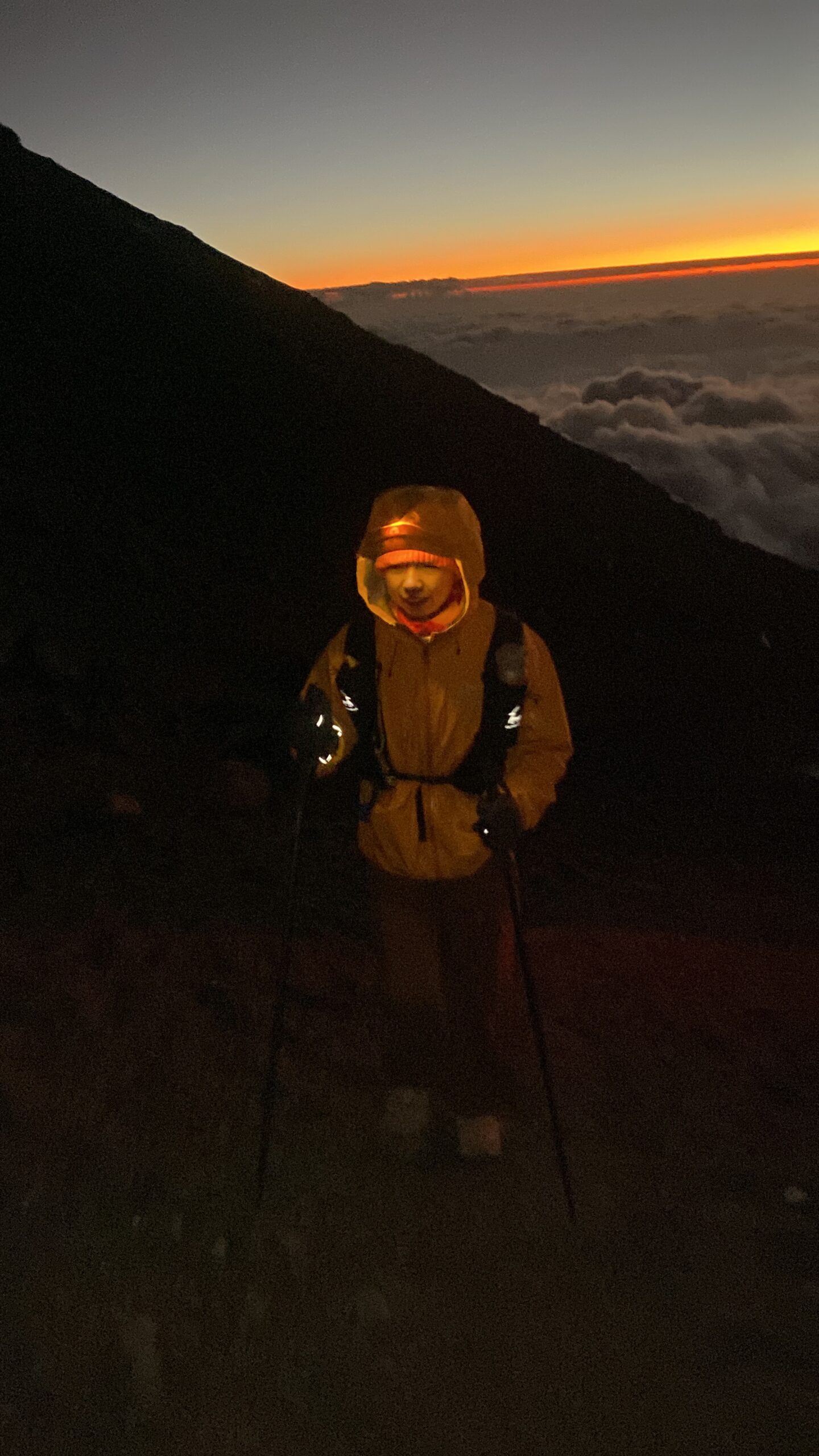
She had never described herself as sporty. She walked her neighbourhood hills for several months, gradually built pack weight, and completed a few overnight training hikes. Her guide noted she kept the steadiest pace of any beginner he’d guided that season. She reached Uhuru Peak and walked down to Mweka Camp the same afternoon.
What tends to change physiologically past 50: cardiovascular reserve can decrease and recovery can take longer, and acclimatisation may be marginally slower for some people. These are things to plan around, not disqualifying factors — choosing the 9-day Northern Circuit where budget allows, extending the training window, and discussing your general fitness and any medications with your doctor well before departure are all sensible steps. Cardiovascular, respiratory, metabolic, or other significant medical conditions don’t automatically rule out a climb, but anyone managing one should get individual medical advice before attempting Kilimanjaro, and should discuss it openly with the guide team before departure.
What Beginners Should Do Differently
- Favour a longer itinerary — 7 to 9 days — rather than the shortest one on offer. See the full success-rate data by route length for why this matters more than most other single decisions.
- Start training 3–6 months out, not a few weeks before departure. Cardiovascular adaptation and load-bearing strength both build slowly — see our full 12-week Kilimanjaro training guide.
- Complete at least one or two loaded overnight hikes in the exact boots you’ll wear on the mountain — see our boots guide before you buy or rent.
- Give your operator accurate fitness information, not reassuring approximations.
- Discuss altitude medication with your doctor well before departure — allergies and kidney function can affect whether Diamox is appropriate for you.
- Consider a private departure over a group one if budget allows — pace is set around your acclimatisation needs rather than the group average.
📥 Free Download: Kilimanjaro Packing Checklist 2026
Route-specific, with current Moshi rent-vs-buy guidance and an altitude-safety section.
Download Free Checklist (PDF)Verified by Senior Guide Sabinus Msimba, 22+ years experience. See also our full Kilimanjaro packing list.
How Much Does Kilimanjaro Cost for a Beginner?
Park fees, camping, and mandatory crew wages set a real cost floor that every legitimate operator has to cover, regardless of how the total is packaged. We keep our current, itemised pricing on a single canonical page rather than restating it here, since fees change through the year: see our full Kilimanjaro cost breakdown for exact 2026 figures, inclusions, and exclusions.
The one thing specific to beginners: don’t try to save money by shortening the itinerary. A cheaper 5-day quote often costs more in the end, once you account for the lower odds of actually reaching the summit and the cost of a second attempt. If a quote looks unusually low, it’s worth asking exactly what’s included before assuming it’s a bargain — our cost breakdown walks through what a legitimate quote has to cover.
What Beginners Get Wrong About Altitude
The most common beginner mistake is confusing general fitness with acclimatisation capacity. A strong VO2 max does not protect against altitude illness on its own. What fitness does provide is the cardiovascular reserve to cope with consecutive walking days — it does not reliably speed up your body’s adaptation to reduced oxygen.
Not reporting symptoms early: a headache reported at Shira Camp becomes a pace adjustment; the same headache concealed can become a turnaround much higher on the mountain, where descending safely takes longer.
Drinking on autopilot instead of on a plan: your guide will give you a hydration target for each day above the rainforest zone. Drink regularly rather than waiting for thirst, and watch your urine colour as one rough sign of whether you’re keeping up — very dark urine can be a sign you’re not drinking enough, though it isn’t a diagnosis on its own.
Ascending too fast: pole pole (slowly, slowly) is an operational instruction, not a cliché — I have watched impatience produce turnarounds for 22 years. If you feel unwell, tell your guide immediately. Guides watch for worsening symptoms — confusion, loss of coordination, severe breathlessness, persistent vomiting — and descent is the correct response whenever serious altitude illness is suspected, following the same clinical judgment recommended by bodies like the CDC and Wilderness Medical Society rather than any single fixed number.
📥 Free Download: Altitude Symptom Awareness Checklist
A plain-language guide to normal acclimatisation symptoms versus warning signs, for your own reference during the climb.
- Normal acclimatisation symptoms above 3,000m
- Warning signs that call for immediate guide attention
- A simple daily symptom and hydration log
Educational use only — not a substitute for professional medical advice.
S., 30s, UK — Lemosho 8-Day
She ran occasionally and had never slept in a mountain tent. She followed a structured training calendar over several months, gradually extending her walks and completing two loaded overnight hikes. She was the slowest on Day 1 and among the most consistent on summit night, reaching Uhuru Peak in the early morning.
Beginners Who Should Wait Before Attempting Kilimanjaro
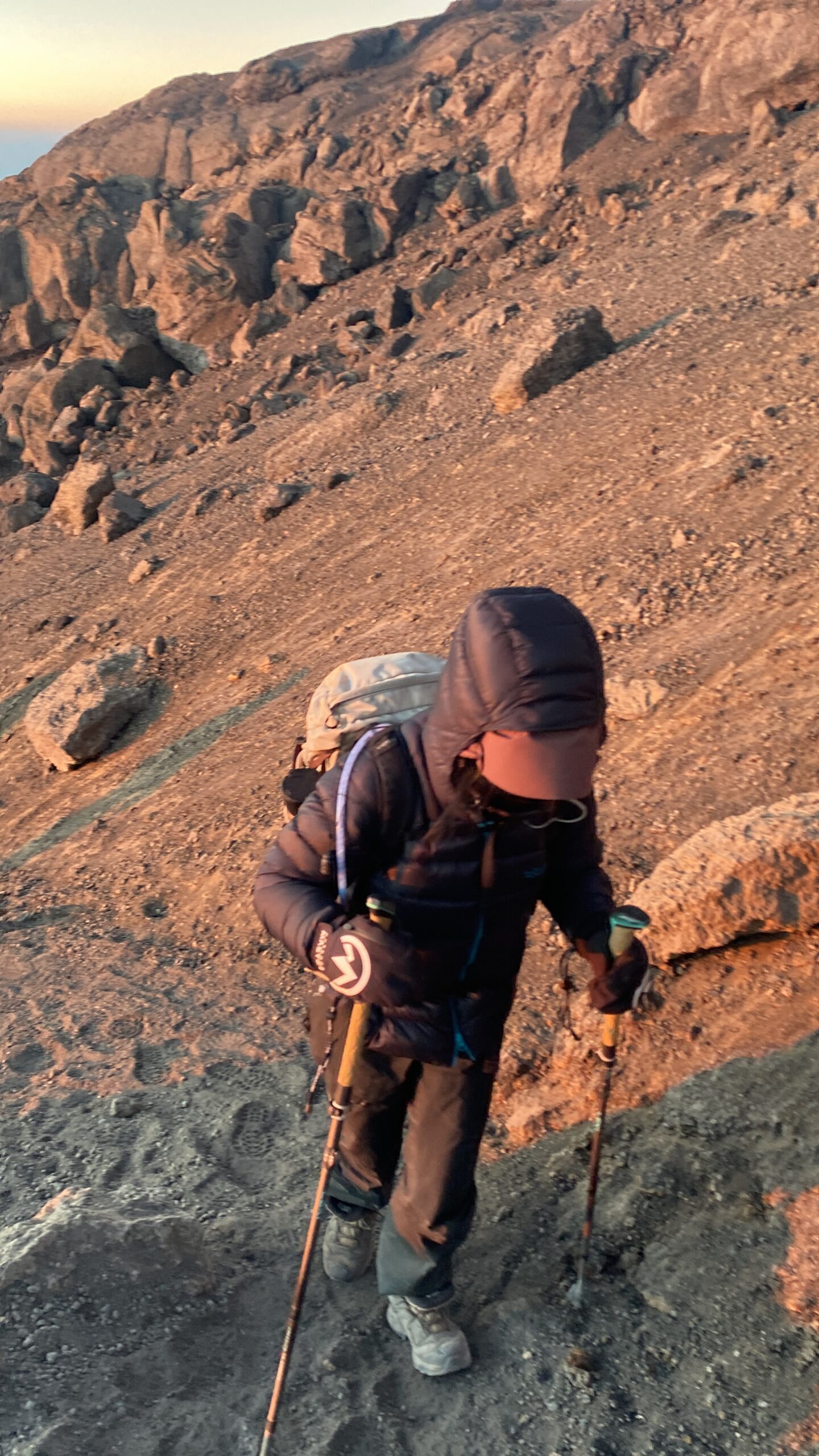
A few profiles are better off delaying a booking: anyone with under 8–10 weeks to prepare from a sedentary base; anyone with an unmanaged medical condition not yet discussed with a doctor; anyone expecting comfort above 3,000m (there is no heating, and camps regularly drop well below freezing overnight in dry season); and anyone whose reason for climbing hasn’t yet been tested against several hours of darkness and cold. None of these rule you out permanently — see what happens if you don’t summit Kilimanjaro for an honest look at what a turnaround actually involves.
Your 90-Day Preparation Overview
Month 1 — Build the base. Walk 4–5x weekly, 45–90 minutes, no pack weight.
Month 2 — Add elevation and weight. Loaded pack building up gradually, weekly hill work, one strength session.
Month 3 — Simulate the mountain. Back-to-back long hike days on weekends with pack weight, including at least one overnight hike, in the exact boots you’ll wear on Kilimanjaro.
This 90-day plan works well as the final stretch of preparation for an already-active beginner. If you’re starting from a sedentary base, treat it as the last three months of a roughly six-month runway rather than the whole plan — the full week-by-week structure, mileage targets, and benchmarks are in our complete 12-week Kilimanjaro training guide.
📥 Free Download: Kilimanjaro 12-Week Training Calendar
The same week-by-week plan used by Kilimania guides, built from patterns observed across our guided climbs.
Download the Free PDFPrepared by Sabinus Msimba, Senior Kilimanjaro Guide and Co-founder, Kilimania Adventure.
The Bottom Line
A properly prepared beginner on a 7–9 day route gives themselves a genuinely strong chance of reaching Uhuru Peak. The limiting factor is usually time and route length, not talent: an under-prepared climber on a compressed itinerary faces meaningfully lower odds, regardless of general fitness. Full current pricing for every route is on our cost breakdown page.
Why This Guide Is Trustworthy
This article is written by a working Kilimanjaro guide, not a content writer researching the mountain secondhand. Sabinus Msimba has been KINAPA-licensed since 2003 and has personally led 300+ Uhuru Peak summits. The success-rate figures cited throughout come from Kilimania’s own climb records — not industry-wide averages — and the full methodology and route-by-route breakdown are published separately on How Hard Is Kilimanjaro? so the numbers can be checked in one place rather than restated inconsistently across articles.
- KINAPA-licensed guide credentials, verifiable via the official licence PDF
- TATO-registered operator — verify at tatotz.org
- Physical operating base in Moshi, Kilimanjaro Region — not a booking-only website
- Field notes reported honestly, including a turnaround, not only summit successes; identifying details changed at clients’ request
For International Travelers
All prices on this site are in USD; confirm current conversion rates with your bank before booking, since exchange rates move.
Flights to Kilimanjaro International Airport (JRO): routing and cost vary widely by season and origin city — check current fares closer to your travel dates.
Tanzania e-visa: apply through the official portal at visa.immigration.go.tz and allow sufficient processing time before departure; current fees and requirements are published there.
Yellow fever certificate: generally not required for direct travel from most countries, but requirements depend on your specific itinerary, including transit stops. Check the CDC’s Tanzania travel page or a travel clinic for your exact routing.
Pre-climb accommodation in Moshi: a range of options exist from budget to comfortable — ask us for current recommendations when you book.
Not Sure Which Route Fits Your Fitness Level?
Send us your current fitness level, target travel month, and group size. We’ll reply within 12 hours from Moshi with a route recommendation matched to your timeline — KINAPA-licensed, TATO-registered.
Message Us on WhatsApp →FAQ — Questions Beginner Climbers Ask Most
Do I need mountaineering experience to climb Kilimanjaro?
No. Every standard route — Lemosho, Machame, Marangu, Rongai, Northern Circuit — is a trekking trail. No ropes, crampons, or ice axes required. The Barranco Wall involves a steep scramble using hands and feet, but no equipment.
Can a beginner climb Kilimanjaro without prior hiking experience?
Yes, but preparation requirements are stricter. A complete beginner starting from sedentary should plan for around 6 months of structured training and a longer route — 7 to 9 days rather than the shortest available option.
What is the minimum fitness level required?
You should be able to walk 5–7 hours on varied terrain with a 5–8kg daypack and manage back-to-back long days without needing a full rest day. Most active beginners reach this within 3–4 months.
How many days should a beginner allocate?
Most guides recommend 7 to 9 days over the shortest available itinerary. Kilimania’s records show summit rates rising substantially with route length — see the full breakdown on How Hard Is Kilimanjaro?
Is Kilimanjaro safe for first-time climbers?
Yes, with the right operator and a route that allows enough acclimatisation time. KINAPA requires every climber to be accompanied by a licensed guide. The main risk factor is inadequate preparation combined with a compressed itinerary, not the terrain.
Can I rent gear in Moshi?
Yes — cold-rated sleeping bags, down jackets, waterproof shells, trekking poles, and gaiters are all commonly available. Bring your own boots, already broken in.
What happens if I cannot reach the summit?
Guides watch for worsening symptoms throughout the climb, and descent is mandatory whenever serious altitude illness is suspected. Most non-summiters still reach Stella Point (5,756m) or Gilman’s Point (5,685m), and all return home safely under guide supervision.
What are the main fixed costs behind any legitimate operator’s price?
Park entry, camping, and rescue fees set by TANAPA/KINAPA, plus guide, cook, and porter wages, form a real cost floor. A quote well below that floor is worth questioning carefully — see our full cost breakdown for current figures.
Do I need travel insurance?
Yes — standard policies frequently exclude activities above 4,000m. Confirm coverage for trekking to 5,895m and emergency evacuation, and buy it well ahead of departure.
The Conclusion
Every season, complete beginners stand on Uhuru Peak. None of them looked like mountaineers when they first messaged us — most looked exactly like the person reading this. The mountain does not check your résumé; it checks whether your body has had time to adapt to 5,895m, and that adaptation depends far more on route length and honest preparation than on anything you’ve done before. Browse the full Kilimanjaro climbing guide when you’re ready to plan. We Walk With You.
Ready to Plan Your Kilimanjaro Climb?
Tell us your fitness level, travel month, and group size for an itemised quote within 12 hours — current KINAPA fees, full inclusion and exclusion list in writing, no surprise costs at the gate.
WhatsApp +255 756 449 990 →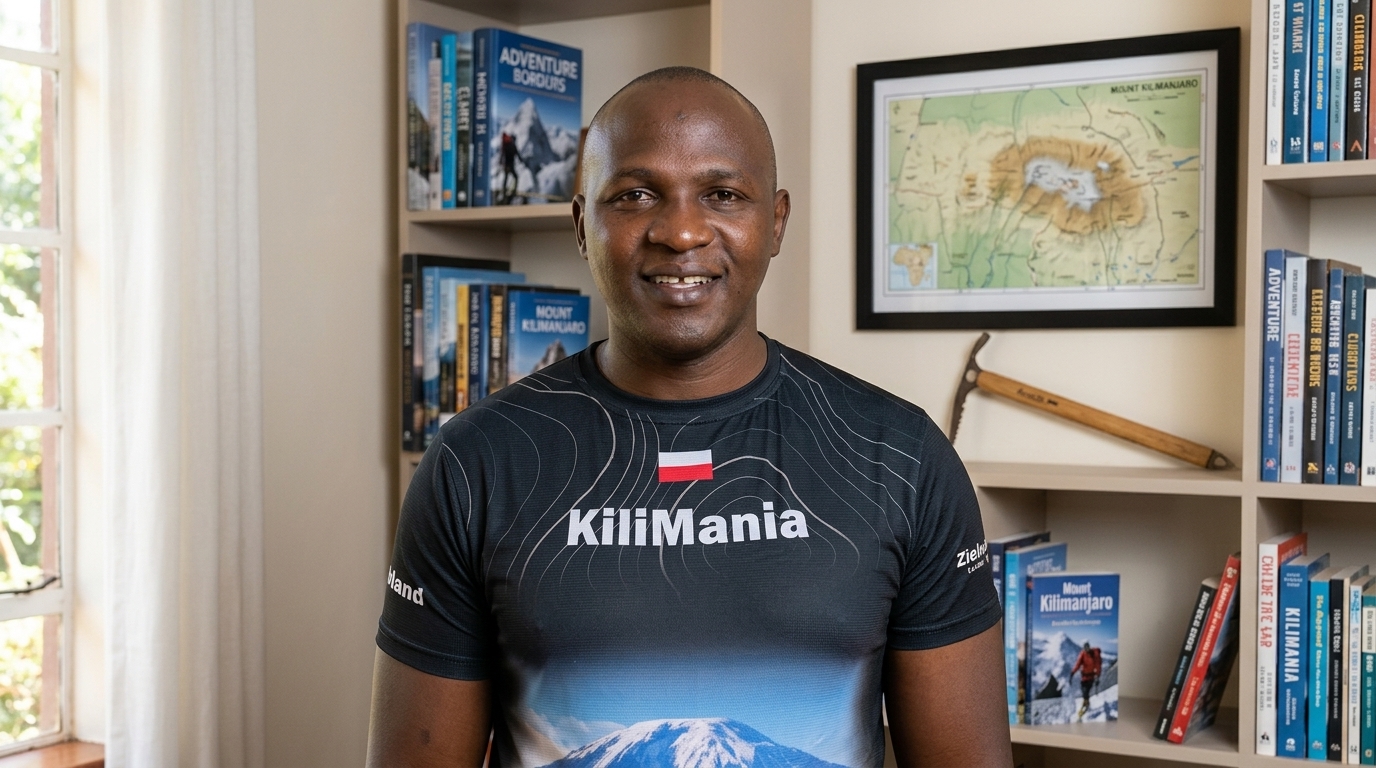
Written by Sabinus Msimba — Senior Kilimanjaro Guide and Co-founder, Kilimania Adventure
22 years guiding · 300+ KINAPA-verified summits · Moshi, Kilimanjaro Region
KINAPA Licence (PDF) · Full Biography
TripAdvisor Reviews · Google Reviews
Questions? info@kilimania.co.tz