Data sources cited in this article: Kilimania Adventures internal climbing records (updated January 2026); CDC Yellow Book 2026, “High-Altitude Travel and Altitude Illness”; Kilimania 6-day and 7-day Machame itinerary pages.
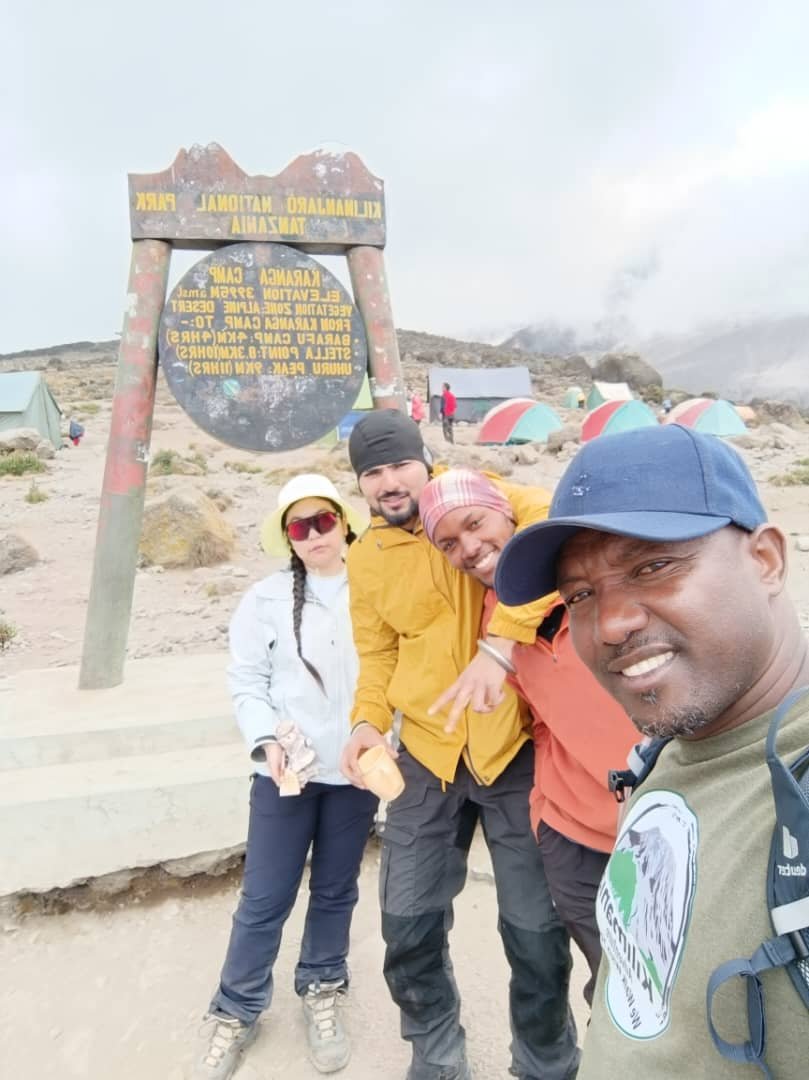
The 6-day vs 7-day Machame route decision comes down to one night. The 7-day itinerary sleeps at Karanga Camp before moving to Barafu Camp for summit night; the 6-day walks past Karanga at lunchtime and reaches Barafu the same day, then starts for the summit a few hours later. In Kilimania Adventures’ internal records (updated January 2026), 92% of 418 climbers on the 7-day Machame reached Uhuru Peak, against 82% of 97 climbers on the 6-day. That gap is real in our data, but it isn’t a forecast for you.
Here is a message we get in some form most weeks. A solo traveller has flights booked, a fixed window on the mountain, and two questions in the same breath: “Should I do six days or seven?” and “Can I join a group?” They usually arrive together because they are tangled together. The itinerary you pick changes how much time your body gets to adjust, and it can also change which departures you can actually slot into.
This guide works through both questions. It won’t repeat the full day-by-day schedules (those live on the itinerary pages linked below), and it won’t quote prices. What it will do is show exactly where the two versions split, what the extra night does physiologically, what one operator’s records say about outcomes, and how to check group availability without guessing. Karibu (welcome). Let’s start with the trail itself. (If you haven’t settled on Machame yet, the Kilimanjaro routes overview compares all of them first.)
What is the actual difference between the 6-day and 7-day Machame?
The Machame Route approaches Kibo from the south-west. Both versions cross the same rainforest, moorland and alpine desert, and both use the same camps, apart from one. That matters, because it means you’re not choosing between two different routes. You’re choosing how fast to walk the same one.
The split happens after Barranco Camp. On the 7-day, the morning scramble up the Barranco Wall ends at Karanga Camp, which sits at roughly the same height as Barranco, around 4,000 metres. You stop, eat, sleep, and walk a shorter stage to Barafu the next day. On the 6-day, Karanga is a lunch stop. You keep going, gaining roughly 600 to 700 metres more to Barafu, eat an early dinner, and try to sleep for a few hours before the midnight start.
So the 6-day doesn’t cut any trail. It stacks two walking stages and the summit attempt into roughly 36 hours. For the full schedules, see the 6-day Machame itinerary and the 7-day Machame itinerary.
6-day Machame
- Machame Gate → Machame Camp
- Machame Camp → Shira
- Shira → Lava Tower → Barranco Camp
- Barranco Wall → Karanga (lunch) → Barafu Camp
- Summit night: Barafu → Uhuru Peak → Mweka Camp
- Mweka Camp → Mweka Gate
7-day Machame
- Machame Gate → Machame Camp
- Machame Camp → Shira
- Shira → Lava Tower → Barranco Camp
- Barranco Wall → Karanga Camp (overnight)
- Karanga Camp → Barafu Camp
- Summit night: Barafu → Uhuru Peak → Mweka Camp
- Mweka Camp → Mweka Gate
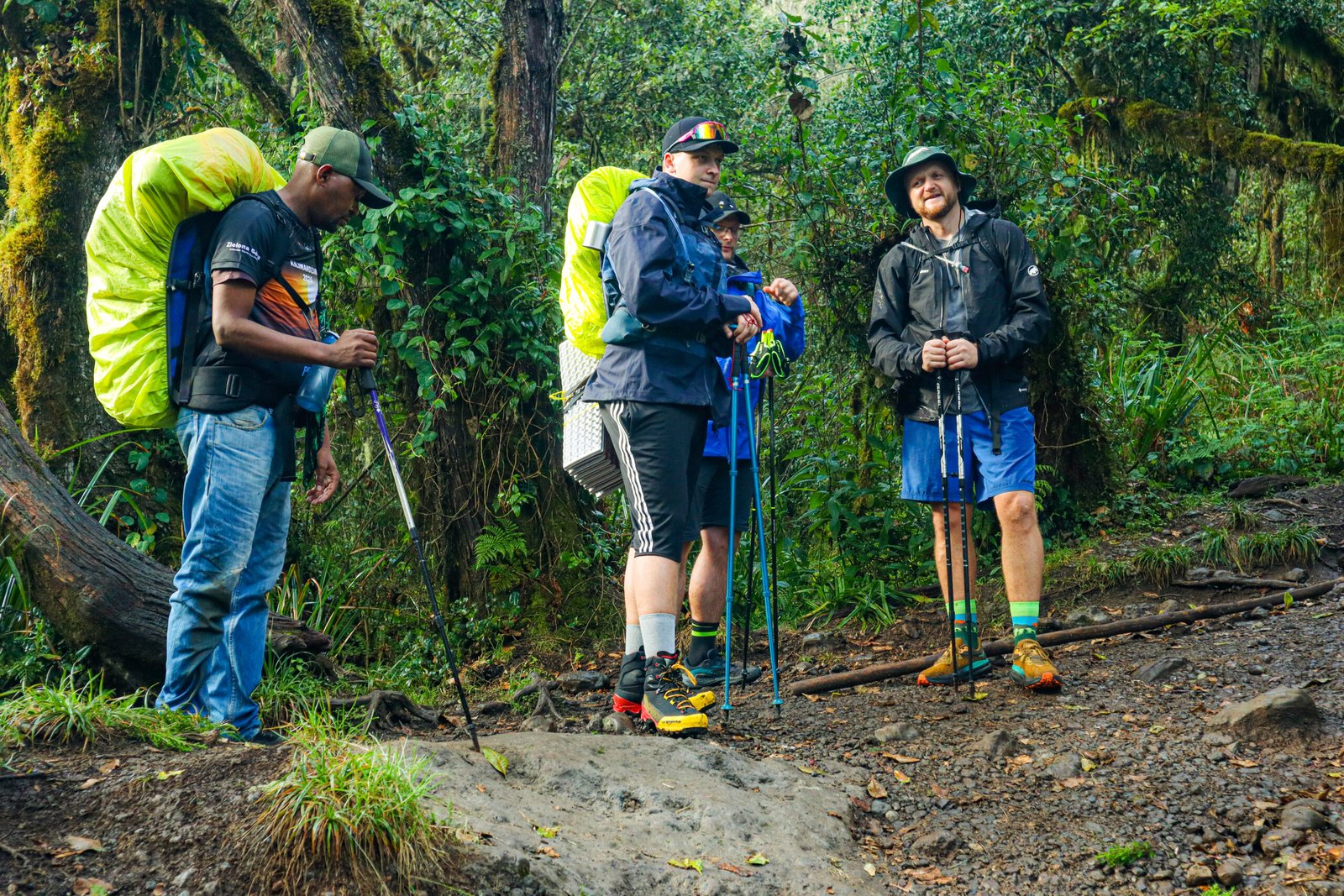
6-day vs 7-day Machame route: side-by-side comparison
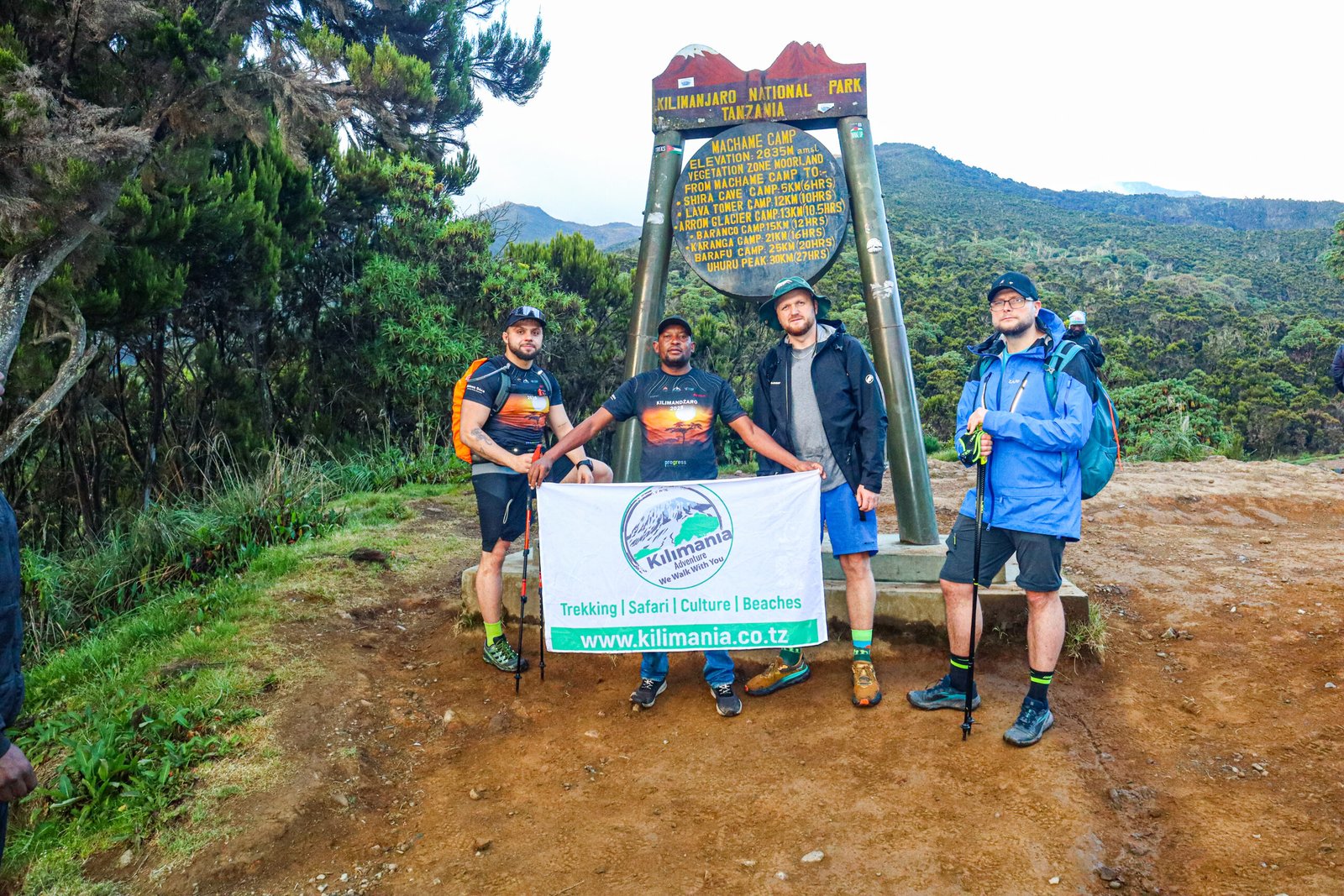
The table below covers what changes and what doesn’t. Prices are deliberately left out; the cost logic is explained here, and current figures sit on the Kilimanjaro cost page.
| Feature | 6-Day Machame | 7-Day Machame |
|---|---|---|
| Nights on the mountain | 5 | 6 |
| Karanga Camp | Lunch stop only | Overnight stop |
| Acclimatization profile | Barranco to Barafu in one day, then summit night within hours | An extra night around 4,000 m before the move to Barafu |
| Hardest day before summit night | Day 4: Barranco Wall, Karanga and on to Barafu | Split across days 4 and 5 |
| Rest before summit start | A few hours after a long day | A few hours after a shorter day |
| Summit success (our records) | 82% of 97 climbers | 92% of 418 climbers |
| Price logic | One fewer day of park fees, crew and food (current rates) | One more day of park fees, crew and food (current rates) |
| Joining-group availability | Check your exact dates; may be fewer joining departures | Check your exact dates; never assume a group exists |
| Usually suits | Recent altitude experience, firm time limit, accepts a smaller margin | First time at high altitude, or anyone who wants more margin |
Not sure which length fits your dates?
Have a look at the Kilimanjaro joining calendar for scheduled Machame departures, then send us your travel window. We’ll tell you honestly which itineraries have confirmed climbers on those dates, and which don’t.
Why does the extra day matter for acclimatization?
As you climb, air pressure drops, and each breath delivers less oxygen. Your body responds straight away by breathing faster and raising your heart rate. The slower adjustments, the ones that actually make you comfortable at altitude, take days. That is why every sensible Kilimanjaro itinerary is built around time, not distance.
The CDC Yellow Book chapter on high-altitude travel identifies two main factors besides individual susceptibility: the altitude you start from and how fast you go up afterwards. Its general advice above about 3,000 metres is to raise your sleeping altitude slowly and add extra nights as you go. Honest point here: no standard Kilimanjaro itinerary fully matches that pace. The mountain is simply too high, too fast. The 7-day gets closer to it than the 6-day does.
Climb high, sleep low, both versions do it once
Day three on the Machame is the classic “climb high, sleep low” day. You walk up to Lava Tower, well above Barranco, then come back down to sleep. That works the same on both itineraries. Where they differ is what happens next. The 7-day gives you a second night at roughly Barranco’s height (at Karanga) before stepping up to Barafu. The 6-day goes straight up.
Then comes summit night. From Barafu to Uhuru Peak (5,895 m) is a climb of roughly 1,200 metres, mostly in the dark and cold. On the 6-day, you start it after a long day of walking and only a few hours’ rest. On the 7-day, the walk into Barafu is shorter, and you start with fresher legs and one more night of adjustment behind you. Neither version makes summit night easy. One just makes it less compressed.
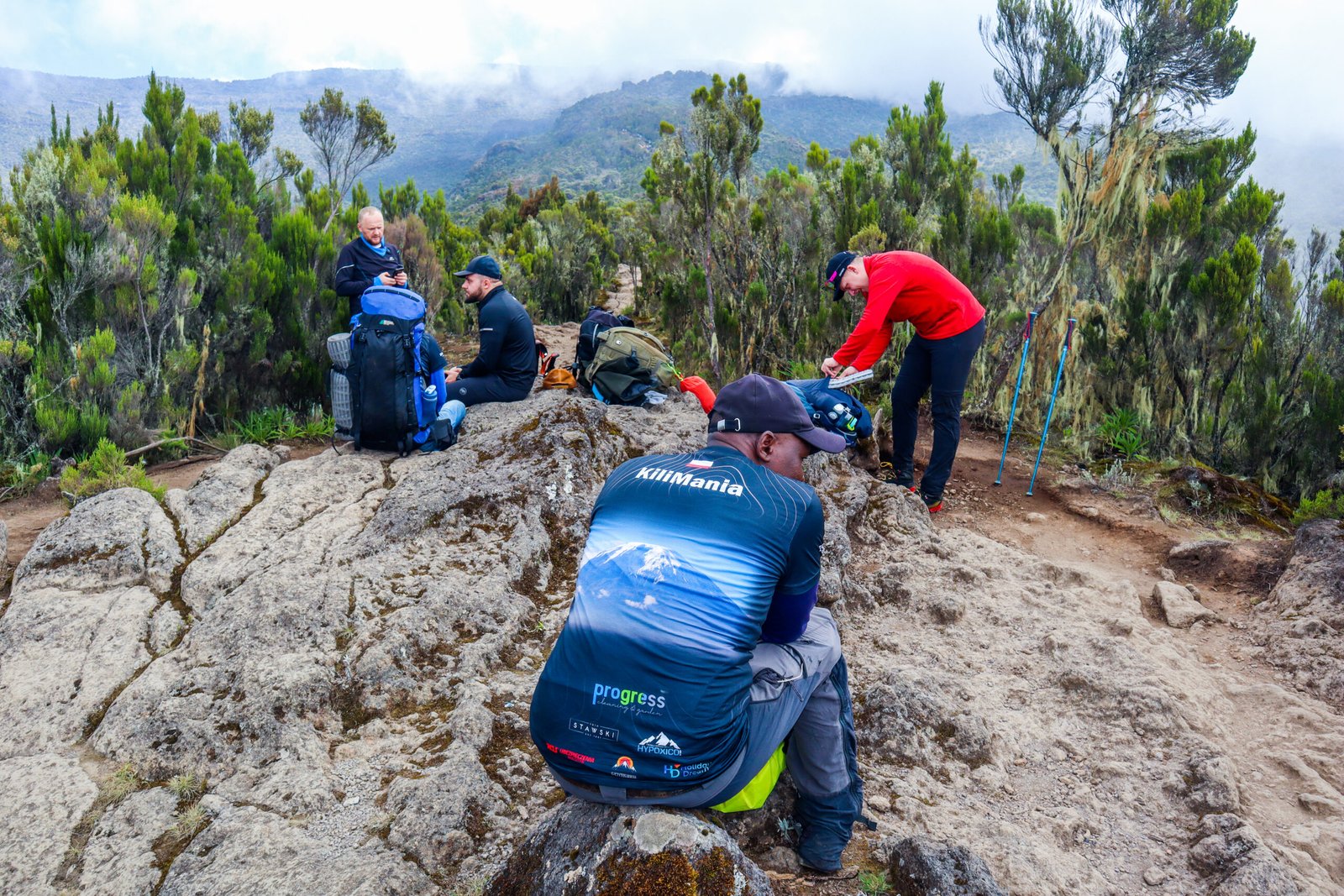
Symptoms to report, on either itinerary
The CDC groups altitude illness into acute mountain sickness (AMS) and two rarer, serious conditions: swelling of the brain (HACE) and fluid on the lungs (HAPE). Tell your guide early about a headache that won’t settle, nausea, loss of appetite, unusual tiredness or poor sleep. Confusion, stumbling, or breathlessness while resting are warning signs that need descent, not discussion.
If you want to read further, the UIAA Medical Commission publishes free advice papers on altitude illness for mountaineers, and the International Society for Mountain Medicine brings together the doctors and researchers who work in this field.
Pole pole (slowly, slowly) is the phrase you’ll hear most on the trail, and it’s practical advice, not a slogan. It’s also worth asking any operator, before you book, whether the team carries emergency oxygen and a pulse oximeter. For a deeper look at symptoms and treatment, see the Kilimanjaro altitude sickness guide. If you are considering preventive medication, talk to a doctor first; our Diamox on Kilimanjaro page explains the questions to bring to that appointment.
This is general information, not medical advice. A pre-trip visit to a doctor, ideally one familiar with travel or altitude medicine, is sensible for everyone, and essential if you have a heart, lung or blood condition.
Does the 7-day Machame have a higher summit success rate?
Ten percentage points is a meaningful difference, and it points the same way as the physiology above. But read it carefully. The 6-day figure comes from 97 climbers, a much smaller group than the 418 on the 7-day, so it carries more uncertainty. A handful of different outcomes would move it noticeably.
There’s also the question of who chooses each version. People who book six days may differ from those who book seven, in fitness, prior altitude experience, or how hard they push through symptoms. Weather, illness and guide decisions on the day all play a part too. So the fair reading is this: the 7-day adds an acclimatization night, and in our records it has produced higher summit success. It doesn’t prove the extra night alone caused the whole gap, and it can’t tell you your personal odds.
The full route-by-route dataset, with the method explained, is on the Kilimanjaro success rate by route page.
How does itinerary length affect joining a group?
This is the part most people don’t expect. If you want company on the mountain, you aren’t just choosing six or seven days. You’re choosing which departure you can join, and a departure is defined by route, itinerary length and start date together. Someone starting the 7-day Machame on the same morning as you, on the 6-day, will be a day behind you by summit night.
Which itineraries have groups forming changes week by week, as bookings come in and occasionally fall through. Some dates have a 7-day group but no 6-day one; occasionally it’s the other way round. Nothing about this is fixed. If your dates are flexible, you have more options. If your flights are fixed, the calendar decides, not the itinerary you’d prefer.
How to check a departure properly
- Start with the calendar. Look up your dates on the Kilimanjaro joining calendar for both the 6-day and 7-day Machame.
- Ask what happens if the group shrinks. Will the climb still run? On what terms? Get the answer in writing.
- Confirm the itinerary length matches. Make sure the departure you’re joining is the length you want, not “close enough”.
- Only then pay a deposit. The booking steps are covered in how to book a Kilimanjaro climb.
If your flights are fixed, check that your arrival at Kilimanjaro International Airport (JRO) leaves at least one night in Moshi before the start date. Park fees are paid to Kilimanjaro National Park (KINAPA) for each day on the mountain, so the start date and itinerary length need to be settled before permits can be arranged.
For reference, Kilimania joining groups are capped at eight climbers, and solo climbers sleep in their own tent at no extra charge. Everything else about how joining works (who you climb with, what’s shared, what isn’t) is explained in the guide to joining a Kilimanjaro group climb as a solo traveller.
Decision checklist: 6 days or 7?
Run through these honestly. No single answer decides it, but a pattern usually shows up quickly.
Leaning 6-day if…
- You’ve been above 4,000 m recently and handled it well
- Your schedule genuinely can’t stretch by a day
- You’re trained for long, back-to-back hiking days
- You accept a smaller margin for a bad night or a cold
Leaning 7-day if…
- This is your first time at serious altitude
- You can fit the extra day without major cost elsewhere
- You’d rather arrive at Barafu less tired
- A 7-day joining group runs on your dates
When is the 6-day Machame an honest, reasonable choice?
Plenty of people summit on six days, and choosing it isn’t reckless. It’s a trade. You give up a night of acclimatization and a buffer day; you save a day of leave and a day’s cost. For some climbers, that trade makes sense.
It suits you most if you have recent altitude history (a trek to Everest Base Camp, the Andes, or a previous Kilimanjaro climb) and you know how your body reacts. It also suits climbers who have trained specifically for long consecutive days, and who understand, before they start, that turning around is a real possibility. If you go with six days, read up on the fitness level Kilimanjaro demands and be strict about pacing on days one to three. Starting too fast on the easy days is the most common way to spend the margin you don’t have.
When should you lean towards the 7-day Machame?
If you’ve never slept above about 4,000 metres, the 7-day is the more forgiving choice. You don’t yet know how you respond to altitude, and one extra night is the simplest way to buy time for that question to answer itself. The same goes if you’ve had altitude symptoms before, if you’ve been unwell in the weeks before travel, or if a turnaround would hit you hard after a long, expensive journey.
The 7-day also makes day four pleasanter. After the Barranco Wall you arrive at Karanga, eat lunch, and stop. Most climbers notice the difference the following night, at Barafu, when they lie down for those few hours before the summit start. Less tired. Better fed. Calmer.
What about longer itineraries?
If you’re choosing seven days for acclimatization, it’s fair to ask whether eight would be better still. That moves you into a different route decision, usually the 8-day Lemosho, and is covered in how many days to climb Kilimanjaro. For the route-level comparison, see Machame vs Lemosho.
Can you change from 6 days to 7 days after booking?
Usually, yes, as long as you ask before the climb and early enough. Moving from six to seven days means changing park permits, extending crew contracts, adding a day of food, and possibly shifting your hotel nights and transfers on either side. With enough notice that’s routine. Close to the start date it becomes harder, and on some dates the change would also move you off a joining departure.
Expect to pay the difference in cost, and ask for the updated itinerary and price in writing before you treat it as done. Once you are on the mountain, adding a night depends on permits, campsite space and crew logistics, so it can’t be promised. If you’re genuinely unsure which length you want, it’s easier to book seven days and stick with it than to book six and hope to stretch it later.
Frequently asked questions
Six days is enough for many climbers, but it leaves less margin. The 6-day walks from Barranco past Karanga to Barafu in one day and starts summit night a few hours later. Climbers with recent time above 4,000 m tend to cope better with that compression than first-timers.
In Kilimania Adventures’ internal records (updated January 2026), 92% of 418 climbers on the 7-day reached Uhuru Peak, against 82% of 97 on the 6-day. These are one operator’s records, not official park statistics, and they aren’t a prediction for any individual climber.
Usually yes before the climb, if you ask early enough for permits, crew and hotel nights to be adjusted, and you accept any extra cost. The park permit, the guide and porter crew, the food plan and your hotel nights either side of the mountain are all booked around the exact itinerary length, which is why notice matters. Once you’re on the mountain it depends on permits, campsites and crew, so it can’t be promised. Get any change confirmed in writing.
It costs more because it adds a full day of park fees, crew wages, food and camping. Whether that matters depends on how it compares with your whole trip, flights included. Current figures are on the Kilimanjaro cost page.
Sometimes. Joining departures depend on real bookings, and a shorter itinerary may have fewer joining departures on a given date. Check the joining calendar, then ask how many climbers are actually confirmed before paying a deposit.
No. It covers the same trail over one more day, so the hardest day of the 6-day, Barranco to Barafu, becomes two shorter days. Summit night is the same on both. Most climbers find the 7-day less tiring overall. More on that in how hard Kilimanjaro really is.
Yes. Fitness helps you walk, but it doesn’t speed up acclimatization or protect you from altitude illness. Fit climbers who go up quickly can still develop symptoms. The extra night gives your body more time at altitude, however strong your legs are.
Tell your guide early and honestly. Mild symptoms are often managed with rest, fluids and a slower pace; worsening symptoms mean stopping the ascent, and serious signs mean descending. On the 6-day there’s less spare time to rest before summit night, which narrows the options.
6-day vs 7-day Machame route: the short version
The 6-day vs 7-day Machame route choice is one night at Karanga Camp, and in our records that night lines up with a ten-point difference in summit success (92% of 418 versus 82% of 97). If you can spare the day, the 7-day is the more forgiving plan, especially on a first high-altitude climb. If you can’t, the 6-day is workable with experience and honest pacing. Either way, check real departures on the joining calendar before you decide. For the bigger picture, our complete guide to climbing Kilimanjaro and the Kilimanjaro routes overview are good next reads.
We Walk With You.
Talk it through with a guide
Send us your dates, your altitude history and how much flexibility you have. Sabinus Msimba or one of the team will give you a straight recommendation on six or seven days, and tell you exactly which Machame departures have confirmed climbers. No pressure, and no answer you’ll need to undo later. You can also browse all our Kilimanjaro climbs first, or see how a climb fits with a Tanzania safari. Asante (thank you) for reading this far.
We reply 7 days a week, East Africa Time (UTC+3), within 12 hours. Prefer a form? Contact the team through the website.