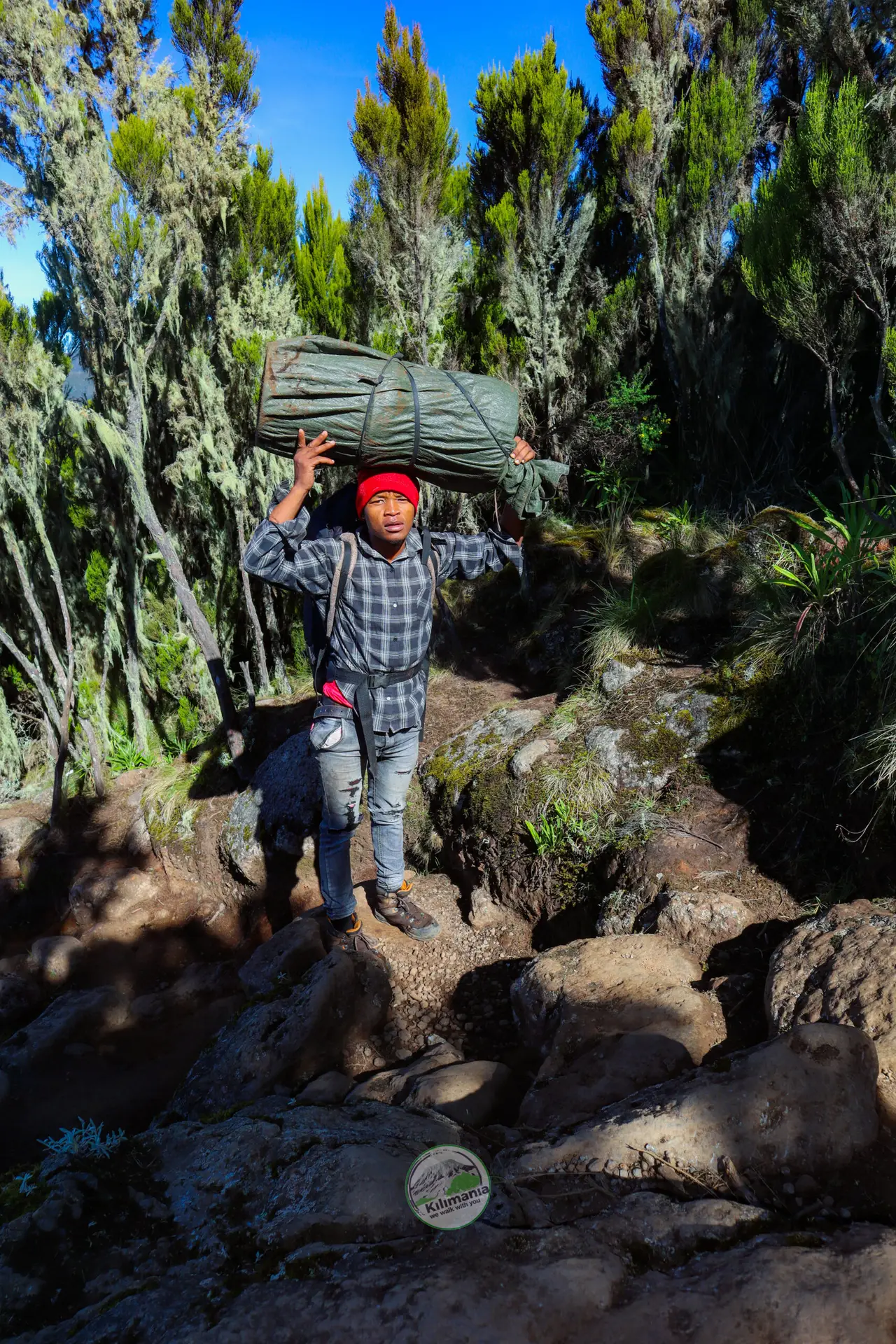
Kilimanjaro porters carry loads of up to 20 kg (the KINAPA legal maximum), walk in all weather, and work through summit night while clients sleep — often in a separate, less sheltered camp. Ethical operators comply with KPAP (Kilimanjaro Porters Assistance Project) standards: verified load weighing at the gate, minimum wage policies, cold-weather gear, adequate shelter, and access to medical care. This guide explains exactly what those standards look like in practice — and the eight questions that separate compliant operators from those cutting corners on crew welfare.
Disclosure: Kilimania Adventure is a KPAP-compliant Kilimanjaro operator. This guide reflects verified industry standards and our own operational practices. We describe our own standards specifically and invite verification of every claim before you book.
* Estimate based on KPAP annual monitoring data. Source: kiliporters.org
Climb Kilimanjaro with a crew that is treated fairly
Every Kilimania climb runs to KPAP welfare standards — scale at the gate, above-minimum wages, full cold-weather kit for every porter. Ask us anything before you book.
View Kilimanjaro Climbs💬 WhatsApp: +255 756 449 990
What Kilimanjaro Porter Welfare Actually Means
I have been guiding on Kilimanjaro since 2001. I started as a porter on the Marangu Route, carrying 28 kg at age 19 because no one weighed my load. My back took four months to recover. That experience is not a backstory — it is why every climb we run has a scale at the gate.
Porter welfare refers to a specific set of working conditions that determine whether the people carrying your gear can go home healthy. Those conditions include:
- Load weight — legally capped at 20 kg including personal gear (KINAPA regulation)
- Wages — minimum rates set by KPAP, often ignored by budget operators
- Cold-weather equipment — sleeping bags rated to −10°C minimum, waterproof jackets, warm layers
- Shelter — tent access at all camps, not sleeping in the open or in supply tents
- Meals — three meals per day with adequate caloric content
- Medical access — inclusion in the team’s emergency response plan, not treated as expendable
The Kilimanjaro Porters Assistance Project (KPAP) monitors and certifies operator compliance with 10 measurable welfare criteria. Certification is not automatic — it requires annual on-mountain verification. A logo on a website is not the same as a current certificate.
The load limit and porter-registration rules referenced throughout this guide are set by the Kilimanjaro National Park Authority (KINAPA), which manages the mountain under TANAPA. For broader context on how welfare standards fit into choosing an operator, see our analysis of why most Kilimanjaro operators fall short on quality.
The Kilimanjaro Porters Assistance Project (KPAP) is an independent NGO founded in 2003 that monitors porter welfare on Kilimanjaro. Their certification evaluates operators against 10 welfare criteria and includes spot-checks on the mountain. Source: kiliporters.org.
What Porters Carry — and What the Limits Should Be
On a seven-day Lemosho climb with eight clients, Kilimania runs approximately 22 crew: lead guide, assistant guides, cook, kitchen porter, and 14–16 general porters. Each porter is responsible for specific loads. Here is what those loads contain and what they weigh.
| Load Type | Typical Weight | Porter’s Own Gear | Total Load | KINAPA Compliant? |
|---|---|---|---|---|
| Client tent (2-person) + fly | 5–7 kg | 2–4 kg | 7–11 kg | ✔ Yes |
| Dining tent + poles | 8–10 kg | 2–4 kg | 10–14 kg | ✔ Yes |
| Kitchen equipment | 10–14 kg | 2–4 kg | 12–18 kg | ✔ Yes (strict weighing) |
| Food supplies (day 1) | 8–15 kg | 2–4 kg | 10–19 kg | ✔ Yes (reduces as food consumed) |
| Client duffel bags | Max 15 kg per client | 2–4 kg | Max 19 kg | ✔ Yes (if client respects weight limit) |
| Overloaded (unethical operators) | 20–25 kg | 4–6 kg | 24–31 kg | ✘ Violation |
The difference between a 20 kg and a 30 kg load over seven days at altitude is not minor. At 3,500m, with reduced oxygen partial pressure, the physiological stress of excess weight increases disproportionately. Porters who are repeatedly overloaded develop lumbar injuries, knee damage, and in severe cases altitude-related complications, because their bodies are under both mechanical and hypoxic stress simultaneously.
Kilimania weighs every load at the gate — on a hanging scale, in front of the porter and any client who wants to watch. If a duffel weighs 17 kg, we repack before departure. Non-negotiable.
Understanding the true cost of a Kilimanjaro climb includes the hidden welfare costs that cheap operators externalize onto their porters.
What Porters Earn — Wages, Overtime, and Withheld Pay
KPAP recommends a minimum daily wage of approximately USD 10 for general porters, with higher rates for specialist crew. Kilimania pays above these minimums — the specific figure is available on request before you book. The wage problem in this industry operates at three levels.
Level 1 — Below-Minimum Base Pay
Some operators pay USD 5–7 per day — well below KPAP’s recommended minimum. At that rate, a porter on a 7-day climb earns USD 35–49 for seven days of hard physical labour at altitude. That is not a living wage in Moshi.
Level 2 — Withheld Pay for Cancellations
When a climb is cancelled due to weather, the porter has already travelled to the gate, turned down other work, and incurred travel costs. Some operators pay nothing for cancelled days. Kilimania pays a half-day rate for any day where a porter presents and the climb is cancelled.
Level 3 — Tip Interception
Some operators route all tips through the head guide for distribution. This creates obvious opportunities for deduction. Kilimania runs a transparent tipping ceremony at the gate where clients hand tips directly to each named crew member. See our complete Kilimanjaro tipping guide for recommended amounts.
For a full picture of how route choice and operator selection affect total costs, read our route comparison guide.
If an operator refuses to state their porter daily wage in writing — or gives a vague answer like “we pay competitively” — that is a warning sign. A legitimate operator can give you a specific number. If they cannot, the number is probably one they would rather not share.
What Porters Actually Do That You Never See
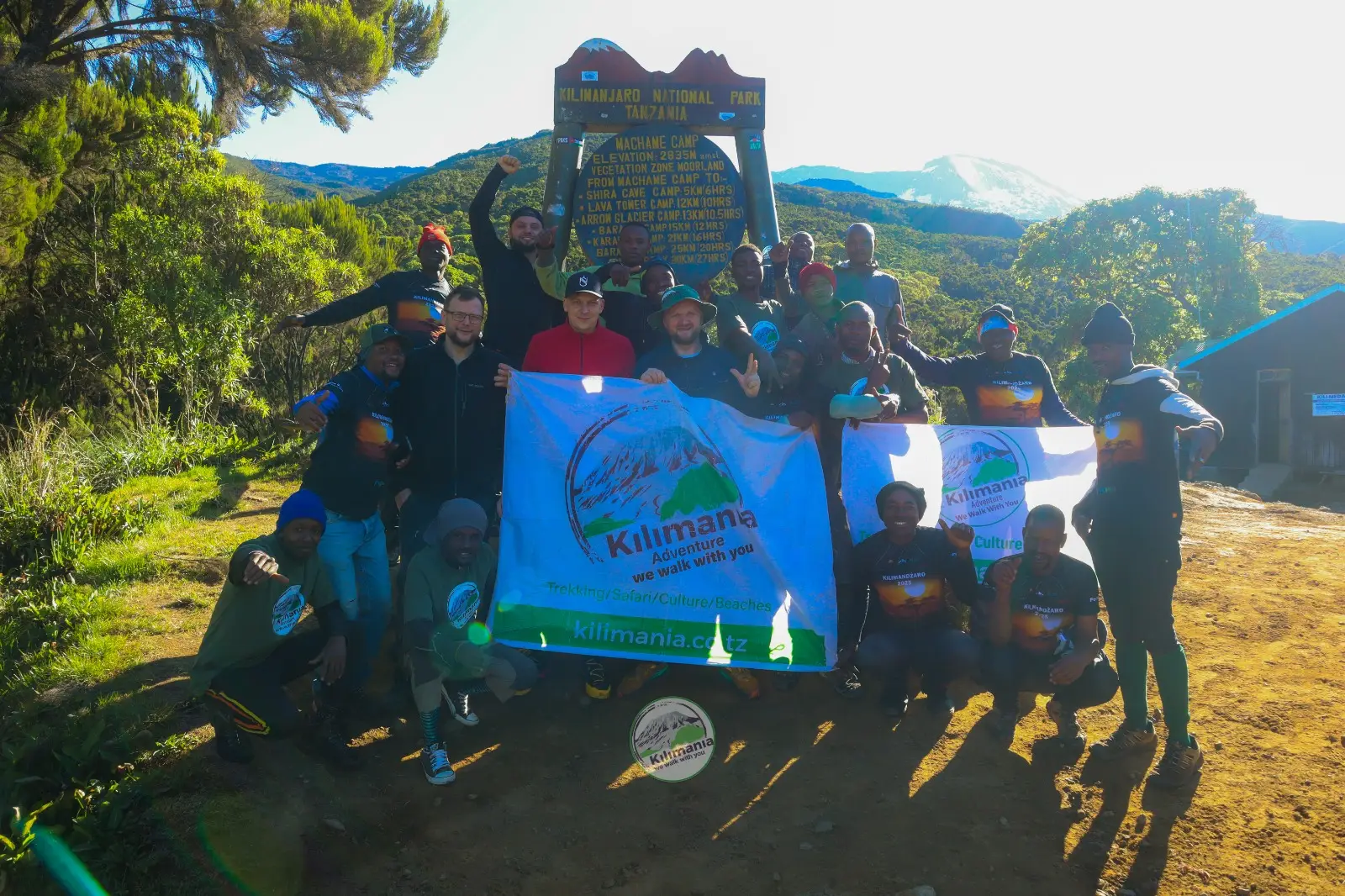
At 8pm, the clients go to their tents. The mountain gets quiet. And the porters start their second shift.
This is not a figure of speech. The following is a real timeline from a summit night on a 7-day Machame climb. Clients left Barafu Camp at 11:15pm. Here is what the camp crew did:
Crew clean the dining tent, wash pots at the water collection point (200 m from camp, in the dark), and reorganise the kitchen for 3am breakfast preparation.
Porters sort tomorrow’s loads in the dark, repacking to account for consumed food and redistributing from any porter showing altitude illness. Temperature at Barafu: −8°C.
Most porters sleep — but not all. Someone is always awake watching equipment, particularly at busy camps where theft is a risk.
The cook wakes and begins heating water. Not for tea now — for hot drinks guides will need when they return 10–12 hours later. The kitchen runs through the night at 4,600m.
Cook prepares full breakfast: porridge, eggs, toast, hot drinks. This will be ready when descending clients arrive between 7am and 9am — shattered, potentially hypothermic, altitude-affected. The food is ready because the cook worked through the previous night at altitude.
Porters strike tents before clients return. Barafu is a shared site with pressure to vacate quickly. Porters work in −10°C to −14°C morning temperatures, often on icy ground.
Breakfast is served. Tents are already packed. Clients eat, then rest briefly on sleeping mats in the open — because the tents they slept in last night are now in someone’s backpack on the trail below.
Porters carry 20 kg loads down 1,200 m vertical to Mweka Camp, tired from a full night’s work at altitude. They typically arrive 2–3 hours before clients.
The Separate Porter Camp
What most clients do not know: the porter camp is usually a separate area from the client camp. At Barafu, client tents occupy one zone. Porter tents — if the operator provides tents at all — occupy a different area, often more exposed to wind with less shelter.
Kilimania provides the same quality sleeping gear to every crew member regardless of role. A porter at Barafu sleeps in a sleeping bag rated to −15°C and has access to a proper sleeping tent. Some operators provide no sleeping gear at all — porters sleep in daytime clothing in temperatures that can reach −12°C. This is common enough that KPAP’s certification criteria specifically address it.
“The porters are the mountain’s engine. When I was a porter, I carried other people’s comfort on my back. Now I make sure the people who carry for Kilimania go home the way they came — healthy.” — Sabinus Msimba, Senior Guide & Co-founder, Kilimania Adventure
Porter Camp Conditions: Legal vs Common
| Welfare Criterion | KINAPA / KPAP Standard | Ethical Operators (Kilimania) | Common Unethical Practice |
|---|---|---|---|
| Load limit | 20 kg max incl. personal gear | Weighed at gate, enforced | 25–35 kg, not weighed |
| Sleeping gear | Warm sleeping bag + tent access | −15°C bag, tent provided | No bag, sleep in clothes |
| Footwear | Appropriate for altitude | Boots verified before departure | Porters in sandals or inadequate shoes |
| Meals | 3 meals per day, adequate calories | Same cook, similar menu to clients | One meal or insufficient food |
| Medical access | Included in team medical plan | WFR guide covers full crew | Sick porters sent down without pay |
| Daily wage | KPAP minimum ~USD 10/day | Above minimum, stated in writing | USD 5–7, not disclosed |
| Park gate registration | All porters registered by name | All crew individually registered | Some crew unlisted to avoid fees |
Understanding these conditions is essential when comparing operators. Our Kilimanjaro safety guide covers the full picture of crew welfare and emergency protocols.
KPAP Standards: The 10 Welfare Criteria Explained
KPAP evaluates operators against 10 specific criteria during certification. Understanding these helps you interrogate any operator — not just Kilimania.
| # | KPAP Criterion | How to Verify Before Booking |
|---|---|---|
| 1 | Porter loads weighed at gate — max 20 kg including personal gear | Ask if they weigh at the gate and whether clients can witness it |
| 2 | Appropriate sleeping gear for all porters at all altitudes | Ask what sleeping bag rating is provided and whether it is operator-supplied |
| 3 | Rain gear provided to all porters | Ask if rain gear is included in porter kit or self-supplied |
| 4 | Adequate clothing for summit altitude temperatures | Ask specifically about Barafu Camp temperatures and porter clothing provision |
| 5 | Appropriate footwear for all terrain types | Ask whether footwear is operator-provided or porter-sourced |
| 6 | Three meals per day for porters | Ask whether porters eat before or after clients and what they are served |
| 7 | Fair wages above KPAP minimum | Ask for the specific daily wage figure — do not accept vague answers |
| 8 | Porters not left behind when ill — medical care provided | Ask what happens if a porter develops altitude sickness at Barafu |
| 9 | Porters registered at park gate by name | Ask whether all crew, not just guides, are individually registered |
| 10 | Tips passed fairly and transparently to all crew | Ask how tips are distributed — by operator or directly by clients |
For the full KPAP certification framework, visit kiliporters.org. For KINAPA’s official porter regulations, visit the Kilimanjaro National Park Authority.
Meet the Kilimania Porter Team
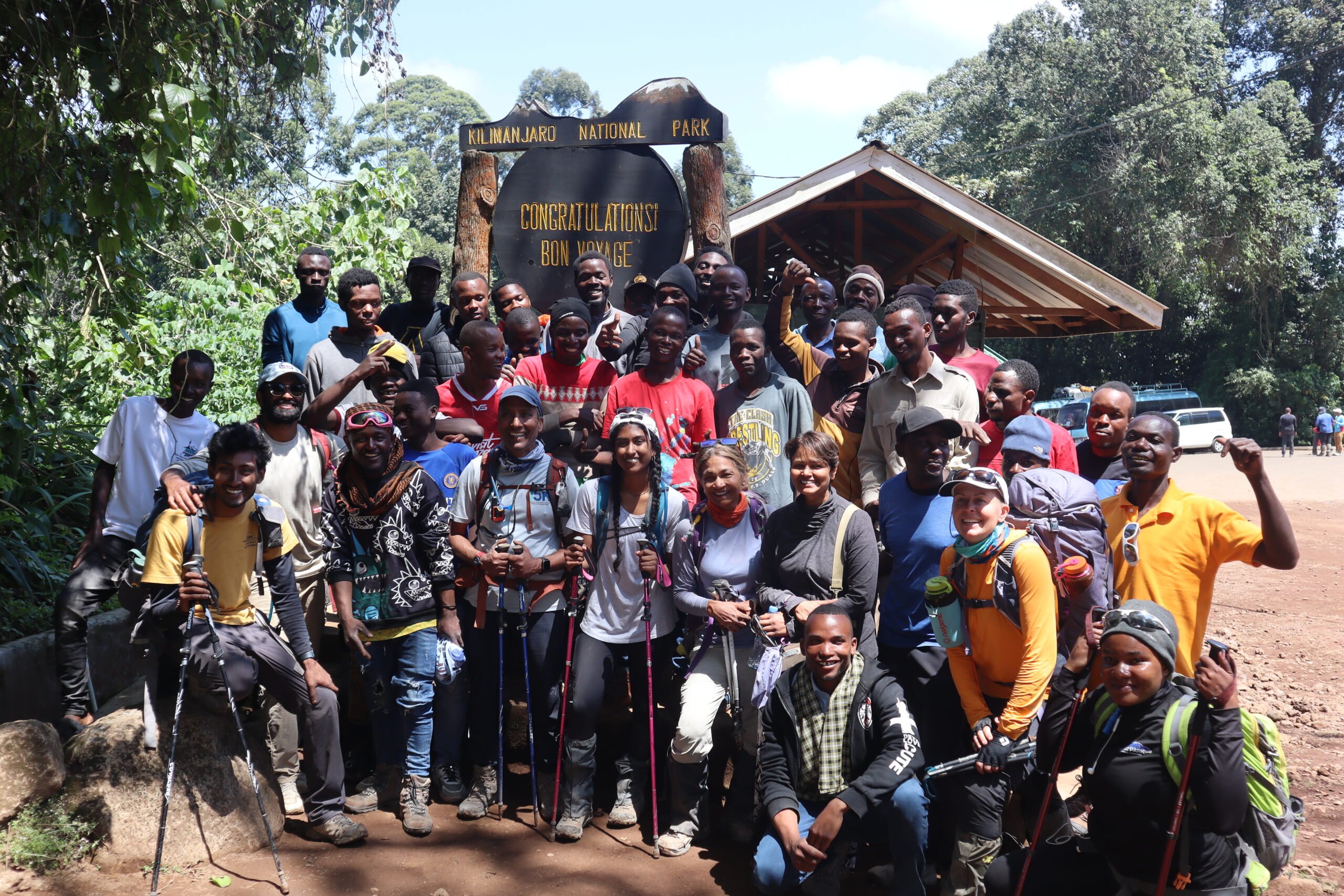
These are not composite characters. These are the people who carry your gear, cook your food, and keep you safe on Kilimanjaro. With their permission, we are sharing their stories.
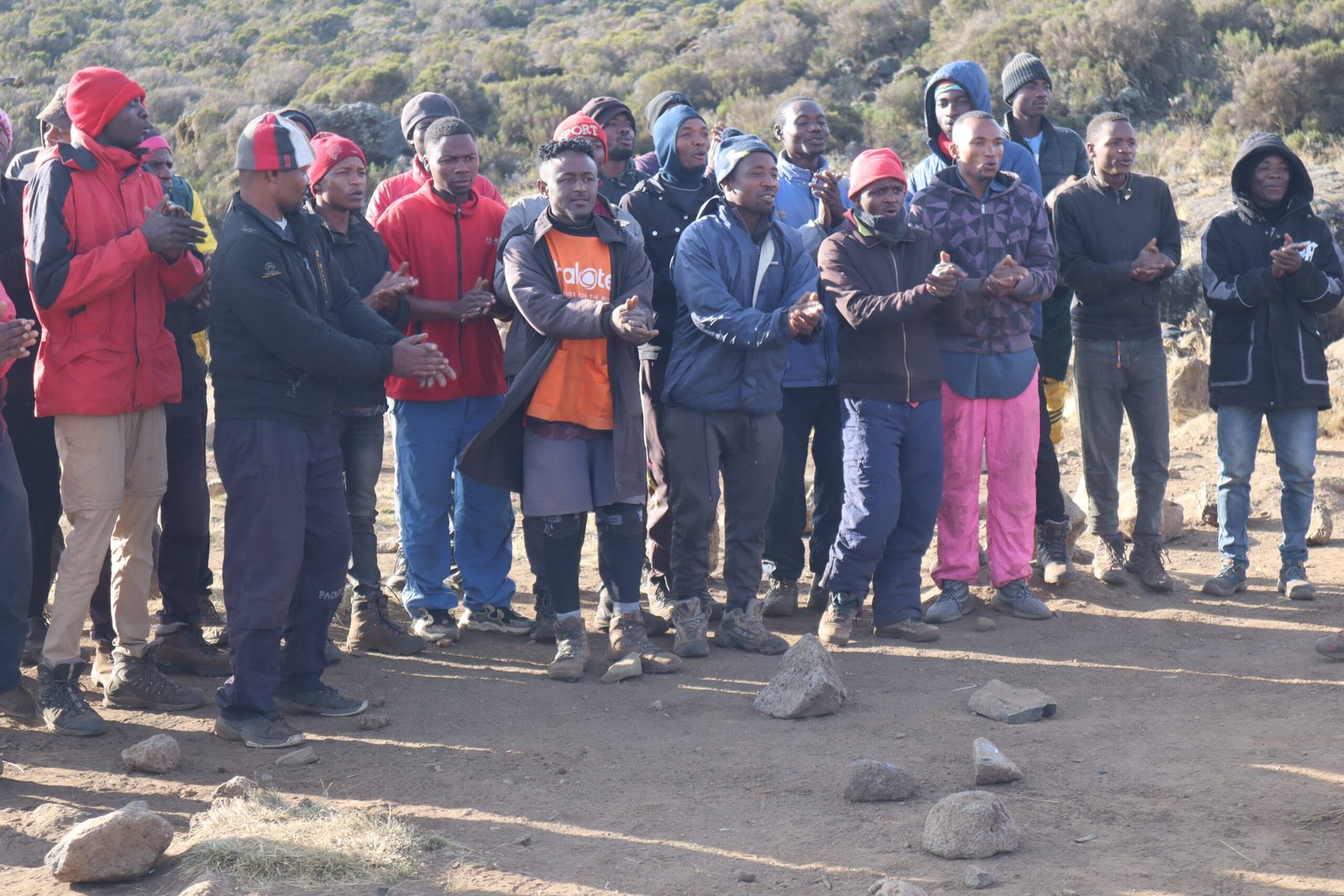
Emmanuel joined Kilimania in 2015 after five years with a budget operator. “The difference was the weight,” he says. “Here, someone actually puts my bag on the scale. At the old company, you just carried what you were given.” He is now head porter for Machame Route expeditions, responsible for coordinating 12–16 porters and verifying load weights before departure each morning.
Off-season: Emmanuel runs a farming plot outside Moshi growing maize and beans, and teaches load-management to new porters entering the industry through KPAP’s training programme.
Amina is one of Kilimanjaro’s few female expedition cooks. She has cooked at altitude since 2018, including at Crater Camp at 5,729m. “People think cooking on the mountain is simple,” she says. “At 4,600m, water boils at 85°C. Rice takes twice as long. You have to know what you’re doing.” Amina manages dietary accommodations — vegan, gluten-free, and everything in between.
Off-season: Amina runs a catering business in Moshi serving local events and corporate lunches. She is currently training her younger sister as an assistant cook for mountain expeditions.
Joseph speaks four languages — Swahili, English, German, and enough French to be useful — and has an uncanny ability to spot early altitude sickness in clients before guides do. “I watch how people walk at dinner time,” he says. “The way someone holds their head when they’re getting AMS — I see it.” He has alerted our guide team to three serious altitude cases over the past two seasons.
Off-season: Joseph is building a small guesthouse outside Moshi to host climbers in the weeks before their expedition — a project he has been saving toward for six years.
Grace joined Kilimania in 2022 after completing KPAP’s porter training programme. She is one of fewer than 40 female porters currently working on the mountain. “My first operator didn’t weigh anything,” she says. “I carried 29 kg with no rain jacket. I quit after two climbs.” At Kilimania, she is training toward an assistant guide qualification and hopes to summit with a client group next season.
Off-season: Grace volunteers with a Moshi-based programme helping women from rural communities access mountain porter training and employment certification.
How to Verify an Operator’s Porter Welfare Policy Before You Book
Any operator can claim KPAP compliance. A logo on a website does not mean a scale at the gate. These eight questions reveal the actual position — and what acceptable answers look like.
| # | Ask This | Acceptable Answer | Red Flag |
|---|---|---|---|
| 1 | “What is your current KPAP certification status?” | Specific year, verifiable reference | “We follow KPAP principles” (not certification) |
| 2 | “What is the exact daily wage you pay general porters?” | A specific USD figure above USD 10/day | “We pay well” / Refusal to specify |
| 3 | “Do you weigh loads at the gate? Are clients present?” | “Yes, on a hanging scale, every departure” | “We instruct porters on the limit” (instruction ≠ enforcement) |
| 4 | “What sleeping bag rating do porters receive?” | −10°C to −15°C rating, operator-supplied | “Porters bring their own” or no rating given |
| 5 | “Do porters receive three meals per day?” | “Yes, prepared by our kitchen crew” | “Porters have their own food arrangement” |
| 6 | “What happens if a porter gets altitude sickness at high camp?” | Specific protocol: emergency descent, pay continues, medical support | “That hasn’t happened” or vague reassurance |
| 7 | “How are tips distributed?” | “Clients hand directly to each crew member at gate ceremony” | “Your guide will handle distribution” |
| 8 | “Are all crew individually registered at the park gate?” | “Yes, every person is named on the permit” | Uncertain answer or “some crew are sub-contracted” |
For a broader guide to evaluating operators across all quality criteria, read our guide on how to choose a Kilimanjaro operator.
Tipping Your Kilimanjaro Crew: How, How Much, and When
Tipping is not optional on Kilimanjaro — it forms a significant part of porter and guide income. KPAP-recommended distribution and Kilimania’s direct-handover approach is the most transparent method available.
| Role | Recommended Tip (USD) per client | Notes |
|---|---|---|
| Lead Guide | USD 20–25 / day | For full expedition duration |
| Assistant Guide(s) | USD 15–18 / day | Per assistant, full expedition |
| Cook | USD 12–15 / day | Full expedition |
| Head Porter | USD 10–12 / day | Full expedition |
| General Porters | USD 7–10 / day | Per porter, full expedition |
Full guidance on group calculation and the direct-distribution ceremony is in our dedicated Kilimanjaro tipping guide. Read it before you arrive — knowing the figures in advance means you can prepare cash in Moshi.
Kilimania’s Specific Porter Welfare Standards
These are verifiable commitments — not marketing language. Every one of them can be confirmed before you book.
| Welfare Area | Kilimania Standard | Verifiable? |
|---|---|---|
| Load weighing | Every load on hanging scale at gate, clients may witness | ✔ Visible at gate |
| Maximum load | 20 kg hard limit — overweight duffels repacked before departure | ✔ Scale at gate |
| Sleeping gear | −15°C rated sleeping bags for all crew, all altitudes | ✔ Ask to inspect kit |
| Rain gear | Waterproof jacket and trousers issued to every crew member | ✔ Visible at gate |
| Footwear | Appropriate trail boots — crew may not work in sandals | ✔ Verified before departure |
| Meals | Three meals per day for all crew — same cook, same kitchen | ✔ Visible at camp |
| Daily wage | Above KPAP minimum — exact USD figure on request | ✔ Ask before booking |
| Cancellation pay | Half-day pay if crew presents and climb is cancelled | ✔ Policy in writing |
| Medical care | WFR-certified lead guide covers full crew; sick porter accompanied down | ✔ Guide credentials available |
| Tipping process | Gate ceremony — clients hand tips directly to each named crew member | ✔ Standard at every climb close |
Our lead guide Sabinus Msimba holds a current KINAPA Mountain Guide Licence — view licence PDF — and Wilderness First Responder certification. These welfare standards apply on every climb he leads.



Related Guides
Climb With a Crew That Is Looked After
Every route below operates to the welfare standards in this article — scale at the gate, above-minimum wages, full cold-weather kit for every crew member. See the full Mount Kilimanjaro climbing overview or our complete Kilimanjaro climbing guide for routes, costs, and success rates.
Frequently Asked Questions
KINAPA (Kilimanjaro National Park Authority) sets the maximum porter load at 20 kg, including the porter’s personal gear. KPAP-certified operators adhere to this limit and weigh loads at the park gate. Many unethical operators routinely load porters with 25–35 kg, which causes musculoskeletal injury and constitutes a welfare violation under both KINAPA regulations and KPAP standards.
KPAP (Kilimanjaro Porters Assistance Project) is an independent NGO that monitors and certifies operator compliance with porter welfare standards. Certification requires operators to meet 10 measurable criteria including load limits, minimum wages, proper shelter, three meals per day, cold-weather gear, and access to medical care. Certification is not self-declared — it is verified annually through on-mountain spot-checks.
KPAP recommends a minimum daily wage of approximately USD 10 for general porters, with higher rates for head porters, cooks, and assistant guides. Kilimania Adventure pays above these minimums — ask for the specific current figure before booking. Many budget operators pay USD 5–7 per day and withhold pay for weather-cancelled days. Always ask for a written wage commitment before signing a contract.
On summit night, porters at Barafu Camp (4,600 m) work through the night. The cook begins heating water from 11pm and prepares a full hot breakfast from 3am. Other porters break down tents from 5:30am in temperatures of −10°C to −14°C. Camp crew typically work a 6–8 hour overnight shift before then carrying full loads back down to lower camps.
Ask five specific questions: (1) What is your current KPAP certification status? (2) What is the exact daily porter wage in USD? (3) Do you weigh loads at the gate — can I be present? (4) What sleeping bag rating do porters receive, and is it operator-supplied? (5) What happens if a porter gets altitude sickness at high camp? An operator who answers each with a specific, verifiable number can be trusted more than one who gives vague reassurances.
Distribute tips directly to each named crew member at the end-of-climb ceremony at the gate. This prevents tip interception or unequal distribution. Kilimania runs a transparent tipping ceremony where every crew member is named and introduced to clients. Recommended amounts per client contribution: lead guide USD 20–25 per day, assistant guides USD 15–18 per day, cooks USD 12–15 per day, general porters USD 7–10 per day. See our full tipping guide for group calculations.
📥 Free Download: Kilimanjaro Hidden Costs & Crew Welfare Checklist
Built by Sabinus Msimba from 22 years of guiding. Includes the 8 questions to ask any operator, wage benchmarks, and a tipping worksheet.
- ✅ Complete wage and welfare benchmarks
- ✅ Pre-booking operator interrogation checklist
- ✅ Tipping calculation worksheet
- ✅ What to verify at the gate before departure
✅ Checklist ready — click here to open the PDF.
The Honest Bottom Line
Every climb on Kilimanjaro employs between 10 and 25 people. You see your guide. You may briefly see the cook. But you will never see the porter who woke at 3am at 4,600m in sub-zero darkness to heat your breakfast water, or the head porter who re-sorted loads at midnight because someone’s duffel came in 4 kg overweight.
The conditions those people work in are determined entirely by the operator you choose. An operator who cannot answer the eight questions in this article specifically — with numbers, not adjectives — is an operator who has not made those conditions a priority.
Our crew at Kilimania are Emmanuel, Amina, Joseph, and Grace — people with farms, businesses, training programmes, and building projects — who return to Kilimanjaro season after season because the work is fair and the team is looked after. That is what good porter treatment looks like. Ask for evidence of it before you book — from us, or from anyone else.
Medical note: This article provides general information about altitude working conditions and porter welfare. It is not medical advice. Climbers with pre-existing health conditions should consult a qualified physician before high-altitude travel. For clinical guidance on altitude illness, see the Tanzania National Parks Authority resources and consult a wilderness medicine specialist.
Ready to climb with a crew that is treated right?
Talk to us before you book. Ask every question in this guide and hold us to the answers. If we cannot answer specifically, do not book with us. We are confident we can.
View All Kilimanjaro ClimbsComplete Kilimanjaro Guide 2026 →
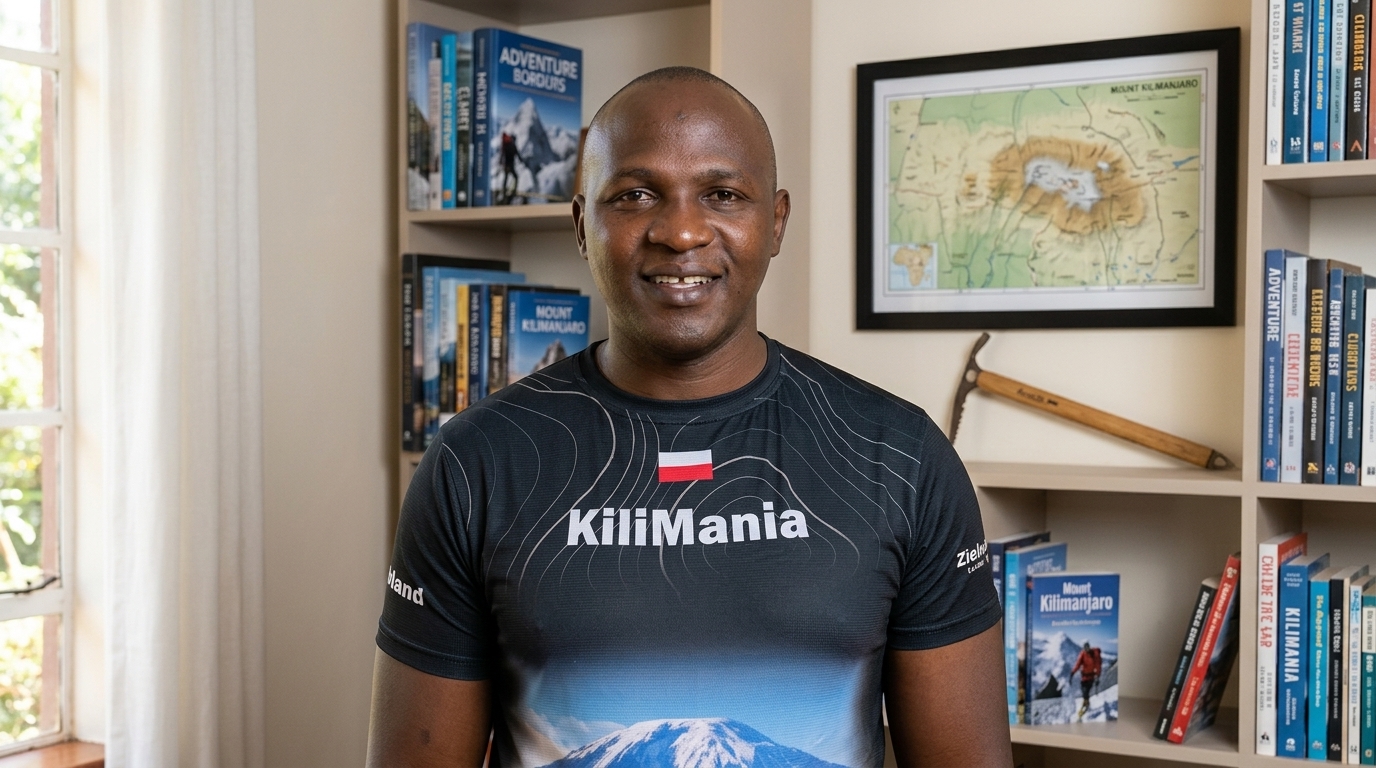
22 years guiding on Mount Kilimanjaro. 300+ personal Uhuru Peak summits. KINAPA-licensed since 2003. Wilderness First Responder certified. Career began in 2001 as a porter on the Marangu Route — which is why porter welfare is not a marketing commitment at Kilimania. It is personal.
· Kilimania Adventure, Moshi, Tanzania · KINAPA · TANAPA · KPAP