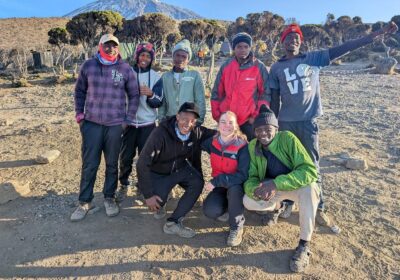
How Long Does It Take to Recover from Climbing Kilimanjaro? A Senior Guide’s Day-by-Day Timeline
Data sources cited in this article: Kilimania’s 2019–2026 guided descent records, Journal of Athletic Training research on DOMS, NHS DVT travel guidance, and Wilderness Medical Society altitude resources.
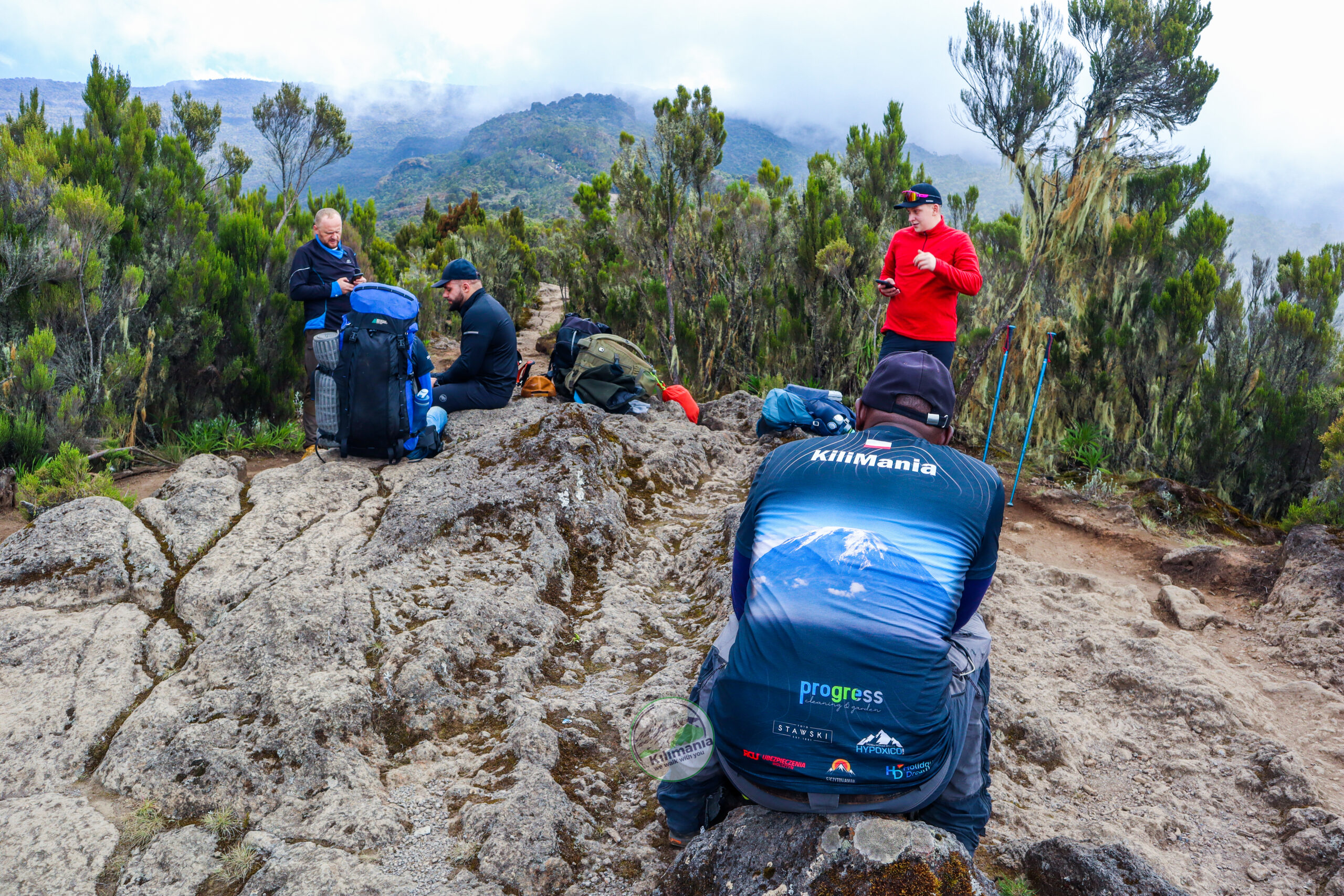
Planning the post-climb days is where most Kilimanjaro itineraries go wrong. Share this with anyone still figuring out the schedule.
Table of Contents
Most climbers need 3–7 days to feel physically normal after descending Kilimanjaro. The summit descent alone drops 2,700m of elevation — from Barafu Camp at 4,673m to Mweka Gate at roughly 1,640m — in a single session. The combination of muscle damage, altitude readjustment, the Kilimanjaro cough, accumulated sleep debt, and 8+ days of sustained physical effort creates a recovery window that nearly every climber underestimates when planning their Tanzania itinerary. Day 2 after descent is the hardest day. Plan for it.
Planning Your Tanzania Itinerary?
Recovery time determines how you schedule your post-climb days. Our team helps you build a complete schedule — climb, recovery, Zanzibar or safari — in the right order for your body.
View All Kilimanjaro Climbs WhatsApp: +255 756 449 990 Based in Moshi, Tanzania · KINAPA-licensed · KPAP compliantWhat Your Body Has Actually Been Through
Understanding Kilimanjaro recovery time begins with understanding the physiological insult. By the time the average climber steps off the Lemosho 8-day route — the most recommended route for acclimatisation — their body has absorbed the following cumulative load:
- Walked approximately 90 kilometres of total distance over 8 days
- Climbed and descended over 4,000m of net elevation change
- Spent 8 nights at altitude ranging from 2,780m (Shira 1 Camp) to 4,673m (Barafu Camp)
- Experienced significant sleep deprivation — summit night begins at midnight after minimal or no sleep beforehand
- Operated at reduced oxygen availability (approximately 53% of sea-level oxygen at the summit) for 6+ consecutive days
- Descended 2,700m in a single session on summit day — from Barafu at 4,673m, down past Mweka Camp (3,100m), to the gate at roughly 1,640m
- Breathed cold, dry, high-altitude air through mouth and throat for multiple consecutive days
That final descent is the primary driver of post-climb muscle soreness. Descending steep terrain loads the quadriceps in what exercise physiologists call eccentric contraction — the muscle lengthens while it generates force to control your weight going downhill. Eccentric loading at high volume and steep grade causes micro-tears in muscle fibres. According to research published in the Journal of Athletic Training, eccentric-dominant exercise consistently produces more severe delayed onset muscle soreness (DOMS) than concentric exercise of equivalent effort. That is the physiological explanation for why Day 2 after Kilimanjaro feels so much worse than Day 1.
After 22 years on this mountain, I have watched hundreds of climbers underestimate what they have put their bodies through. The euphoria of summiting is real — and it masks a great deal. Climbers arrive in Moshi feeling better than they should. Day 2 is where the reality arrives, quietly, usually on the stairs of the hotel.
Plan your post-climb schedule around Day 2, not around how you felt the moment you came off the mountain. If you can walk down stairs comfortably on Day 2, you have recovered faster than average. Most cannot.
For a complete account of what happens on the mountain before recovery begins, read the Kilimanjaro summit night hour-by-hour guide and what climbing Kilimanjaro is actually like.
Kilimanjaro Recovery: Day-by-Day Timeline
This is what recovering from a Kilimanjaro climb actually looks like, based on patterns observed across hundreds of guided expeditions through Kilimania Adventure. Times are approximate — fitness level, age, altitude sickness history, and route choice all affect individual recovery.
The day itself is extraordinary. Summit at dawn, descent begins — 2,700m of downhill across scree, moorland, and rainforest, reaching Mweka Gate in late afternoon. Most climbers arrive in Moshi between 5pm and 8pm. The dominant feeling is relief, followed immediately by collapse.
Feet demand immediate attention: blisters, swelling, and hot spots are nearly universal after a full descent day. Appetite returns suddenly as altitude suppression lifts — most climbers eat a full meal in Moshi within an hour of arriving. Sleep follows quickly and is typically 10–12 hours.
Energy levels are very low. Most climbers sleep late, eat substantially, and spend the majority of the day horizontal. Muscle soreness is present but manageable — this is not yet the worst. Many climbers feel almost well enough to function normally and make the mistake of planning activities.
Do not. Day 1 should be spent resting, eating, hydrating, and allowing the body to begin repair. Light, flat walking (15–20 minutes) is acceptable and can help circulation, but nothing strenuous. Swelling in feet and ankles is normal and will subside as the body readjusts to lower altitude.
This is the day most climbers are not prepared for. DOMS peaks at 24–48 hours after the eccentric-loading exercise that caused it — which means Day 2, not Day 1, is the most uncomfortable. Descending stairs is genuinely painful. Standing from a seated position is slow and requires effort. The quadriceps and calves are the primary sites of soreness, though glutes and lower back are also frequently affected.
This is normal physiology, not injury. The micro-tears in muscle fibres that cause DOMS are part of the adaptive process. However, if soreness is isolated to a single joint, accompanied by visible swelling of one limb only, or associated with any warmth and redness in the calf, that warrants medical evaluation (see DVT guidance below).
Stay hydrated, eat well, take a gentle flat walk if you can manage it, and resist the urge to take ibuprofen routinely — it can impair the muscle repair process. Paracetamol (acetaminophen) is the better choice for pain management at this stage.
The worst is over. DOMS begins to ease from Day 3 onward. Stairs remain uncomfortable but are manageable. Energy levels improve noticeably. Most climbers feel well enough for normal daily activity — light sightseeing, a Moshi coffee shop, a gentle walk around town. Zanzibar travel is appropriate from Day 3 for most climbers, provided it does not involve a particularly early morning connection.
Appetite remains high. Continue eating substantial, protein-rich meals. The body’s repair process requires caloric input — this is not the time to diet or restrict food.
Most climbers feel functionally normal by Day 5–6. Residual stiffness may remain, particularly after sitting still for extended periods, but daily life is comfortable. A gentle beach walk in Zanzibar, light swimming, or flat cycling is appropriate. Do not attempt any high-intensity exercise.
Climbers who experienced significant altitude sickness symptoms — particularly those who showed signs of HACE (High Altitude Cerebral Edema) — may still feel unusual fatigue at this stage. This is normal. Their recovery window is longer and their return-to-training timeline should be extended accordingly.
The vast majority of climbers are fully recovered by Day 10–14. Physical symptoms have resolved. Energy levels are back to baseline. Return to running, gym training, and cycling is appropriate from Day 10–12 for most climbers in good pre-climb fitness. There is no documented long-term physical consequence from a Kilimanjaro climb for a healthy individual.
Note: Some climbers — particularly those over 55 or those who had significant altitude illness — report lingering fatigue and reduced motivation for physical activity for up to 3–4 weeks. This is within the normal range. If unexplained fatigue persists beyond 4 weeks, consult a physician.
| Day After Descent | Primary Experience | Energy Level | Activity Safe? | Soreness |
|---|---|---|---|---|
| Day 0 (descent) | Exhaustion, foot pain, relief, appetite surge | Very low | Rest only | Building |
| Day 1 | Heavy fatigue, sleeping 10–12 hours | Low | Flat walk 15–20 min | Moderate–High |
| Day 2 | DOMS peak — stairs painful, quad/calf dominant | Low–moderate | Gentle movement only | Peak |
| Day 3 | Soreness beginning to ease | Moderate | Light walking helpful | Moderate |
| Days 4–5 | Improving daily — residual stiffness | Good | Normal daily activity | Light |
| Days 6–7 | Near-normal function restored | Good | Light swimming, flat cycling | Minimal |
| Days 10–14 | Fully recovered (most climbers) | Normal | Full training returns | None |
Kilimanjaro Recovery by Age Group
Age is one of the most significant variables in post-Kilimanjaro recovery time. Younger climbers typically recover faster — not because the physiological insult is different, but because their cellular repair mechanisms operate more efficiently. Here is what to expect based on age group, drawn from observations across hundreds of Kilimania-guided climbs:
Climbers aged 60+ who experienced any altitude sickness symptoms — including headache, nausea, reduced appetite, or sleep disturbance above 4,000m — should consider a check-in with their physician within the first week after descent. This is especially true if fatigue persists, if the cough worsens, or if there are any cardiac symptoms. For guidance on climbing at higher ages, read our full article on climbing Kilimanjaro with medical conditions.
Fitness level before the climb also matters, though perhaps less than most people expect. Very fit athletes sometimes recover faster from the muscular damage — but they are also more likely to have pushed harder on the mountain, which can cancel out the fitness advantage. The most important pre-climb predictor of recovery speed is not VO2 max or gym attendance — it is sleep quality and whether the body adequately acclimatised during the climb.
7 Things That Genuinely Speed Up Kilimanjaro Recovery
Recovery from Kilimanjaro is not passive. What you do in the first 72 hours after descending makes a measurable difference to how quickly you feel normal again. These are the interventions that consistently produce faster recovery across the climbers we guide:
High-Protein, High-Carbohydrate Eating
Protein is essential for muscle fibre repair. Aim for 1.6–2.0g of protein per kilogram of bodyweight per day in the first 48 hours. Carbohydrates replenish depleted muscle glycogen. In practice: eat a substantial meal every 4–5 hours. Most climbers find their appetite returns forcefully in Moshi — act on it. Nyama choma (grilled meat), eggs, beans, ugali, and rice are all ideal. Do not restrict calories. This is the single most common recovery mistake.
Active, Continued Hydration
Target 3–4 litres of water per day for the first two days post-descent. Altitude exposure, sustained exertion, and breathing dry mountain air creates a hydration deficit that persists after the climb. Add electrolytes (sodium, potassium, magnesium) to water if possible — they accelerate cellular rehydration more effectively than water alone. Coconut water is an excellent natural source available throughout Moshi.
Sleep — Treat It as Non-Negotiable
Sleep debt accumulated over 8+ nights at altitude is physiologically real. The body does the vast majority of its cellular repair work during deep sleep. Do not schedule early morning activities for Days 1–3. Do not set an alarm. Allow the body to sleep until it wakes naturally. 10–12 hours on the first night is completely normal and should be expected, not resisted.
Gentle Movement from Day 3
Complete bed rest is not the optimal recovery strategy. Light movement from Day 3 — a 20–30 minute flat walk at slow pace — increases blood flow to damaged muscle tissue and accelerates DOMS resolution. By Day 5, a 45-minute easy walk is appropriate. By Day 7, light swimming or flat cycling is fine. The principle is: move gently, not intensely.
Epsom Salt Baths and Cold/Warm Contrast
If your accommodation has a bathtub, a 15–20 minute soak in warm water with 2–3 cups of Epsom salts (magnesium sulphate) on Days 2–3 can reduce soreness and aid sleep. Contrast therapy — alternating cold shower (30 seconds) and warm shower (2 minutes) for 3–4 cycles — reduces muscular inflammation. Most climbers who use contrast showers on Day 2 report noticeably faster soreness resolution by Day 3.
Foot and Blister Care
Attend to feet on the evening of descent. Clean blisters with antiseptic, drain large ones with a sterile needle from the edge (not the centre), and apply blister plasters or gauze. Swelling in feet and ankles resolves within 24–48 hours at lower altitude. Wear supportive footwear — not flip-flops — for the first 2 days. Flip-flops on Day 1 after Kilimanjaro are one of the most common causes of post-descent ankle sprains we see.
Pain Management: Choose Wisely
Paracetamol (acetaminophen, 500–1000mg every 6–8 hours as needed) is the preferred choice for DOMS pain management after Kilimanjaro. Ibuprofen and other NSAIDs, while effective at reducing inflammation, may impair muscle protein synthesis and slow recovery when used routinely. Use NSAIDs only if paracetamol is insufficient, and avoid them entirely if your kidneys were stressed during the climb (indicated by very dark urine on summit day). Always follow the dosage on the packaging.
Avoid Alcohol for 48 Hours
The summit beer is a Kilimanjaro tradition — but wait until Day 2 at the earliest. Alcohol significantly impairs muscle protein synthesis, worsens dehydration, and disrupts sleep architecture, all of which directly slow recovery. On Day 1 in Moshi, alcohol will make Day 2 DOMS noticeably worse than it needs to be. It is not worth it. Celebrate with a feast instead.
Do not begin any fitness training — running, heavy gym sessions, cycling, HIIT — until at least Day 8–10 and ideally Day 12–14. Muscles with active micro-tears need uninterrupted repair time. Training too soon after Kilimanjaro extends overall recovery, increases injury risk, and can cause more serious muscle damage in already-compromised tissue. The summit was your event. Recovery is now the job.
The Kilimanjaro Cough: What It Is and How Long It Lasts
The Kilimanjaro cough — sometimes called the Kili cough — is one of the most commonly reported post-climb symptoms, yet one of the least discussed in standard recovery guides. Approximately 30–40% of Kilimanjaro climbers develop a persistent dry cough that continues after descent, sometimes for 1–3 weeks.
What Causes It?
The Kilimanjaro cough is caused by sustained exposure to cold, extremely dry, high-altitude air over multiple days and nights. At altitude, the air contains significantly less moisture than at sea level. Breathing this dry air — especially during physical exertion and at night — strips moisture from the airways, causing micro-inflammation in the trachea and bronchi. The body responds by producing a protective cough reflex.
It is not caused by infection. It is not contagious. It does not indicate lung damage in most cases. It is a direct consequence of sustained altitude breathing, and it resolves on its own as the airways re-moisturise at lower altitude.
How Long Does the Kilimanjaro Cough Last?
For most climbers, the Kili cough resolves within 7–14 days after descent. Some climbers experience it for up to 3 weeks. A small minority experience a milder version for up to 4 weeks. Treatment is generally symptomatic: stay well-hydrated, use a humidifier or steam if available, and avoid dry or air-conditioned environments where possible. Honey and warm water is effective at soothing irritated airways.
The Kili cough is normally dry and non-productive. Seek medical evaluation if:
- The cough produces yellow, green, or blood-tinged mucus
- You develop a fever above 38°C (100.4°F) after Day 3
- Coughing is accompanied by significant chest pain or shortness of breath at rest
- The cough worsens rather than improves beyond Day 7
- You have a pre-existing respiratory condition (asthma, COPD)
These symptoms may indicate a secondary respiratory infection requiring antibiotic treatment.
Other Common Post-Kilimanjaro Symptoms
Beyond DOMS and the cough, the following are commonly reported and generally normal in the days after descent:
- Strange or vivid dreams — Very common in the first 3–5 nights after descent. Altitude affects dream architecture, and the recovery of normal REM sleep can temporarily produce unusually vivid or intense dreaming.
- Swollen feet and ankles — Common on descent day and Day 1. Resolves within 24–48 hours as the body re-equilibrates to lower altitude pressure.
- Altered digestion — Changes in bowel habits (including loose stools or constipation) in the first 2–3 days are normal as the digestive system readjusts from altitude suppression. This resolves without intervention in most cases.
- Sensitivity to sunlight — Some climbers report heightened light sensitivity for 1–2 days after descent. This is a mild post-altitude effect and resolves quickly.
- Increased appetite for 5–7 days — The altitude-related appetite suppression that may have reduced your food intake on the mountain is replaced by genuine hunger. This is normal and should be welcomed, not restricted.
Post-Kilimanjaro Planning: Safari vs. Zanzibar After Your Climb
This is the most practical question in post-Kilimanjaro planning, and the answer affects whether the second half of your Tanzania trip is a highlight or an ordeal. Nearly every climber wants to do both — and the sequence matters enormously.
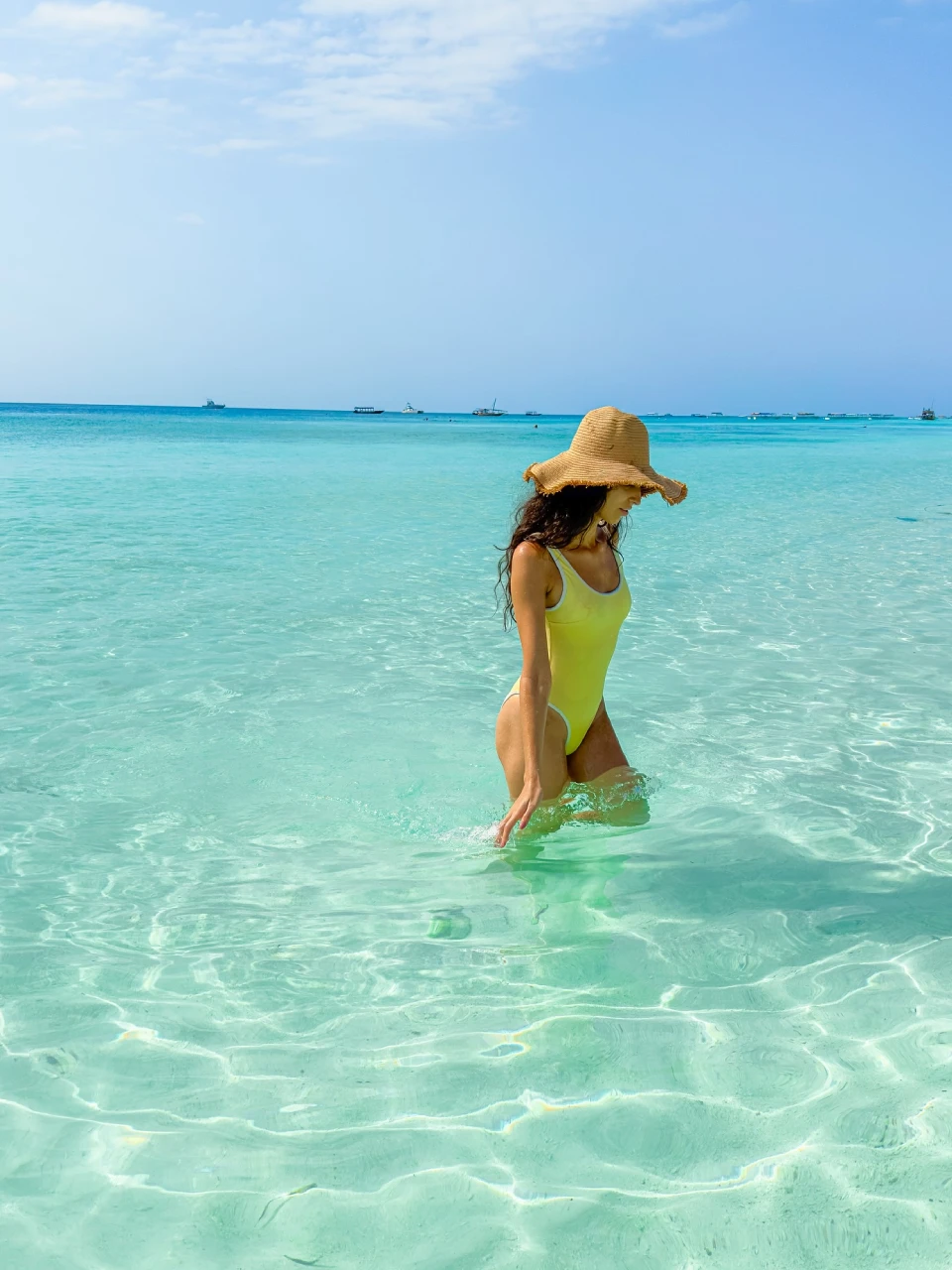
✅ Zanzibar — The Right First Choice
Flat terrain. No 4am wake-ups. Warm water for sore muscles. Good food with abundant protein. No schedule pressures. Zanzibar directly serves every recovery need in the first 3–5 days after Kilimanjaro. Most climbers who go to Zanzibar immediately after descent report it as the right call for how their body felt afterward.
See Zanzibar options →
⚠️ Safari — Wait at Least 2–3 Days
Safari requires 4–5am departures, 4–6 hour drives on unpaved roads, and extended hours in a seated vehicle position. On Days 1–3 after Kilimanjaro, the combination of DOMS and vehicle vibration on rough roads is genuinely uncomfortable. You will struggle to enjoy it. The experience you paid significantly for will be diminished by physical misery that could have been avoided with better sequencing.
Safari + Kilimanjaro packages →Descent day → 1 night in Moshi → fly to Zanzibar → 3–5 days beach recovery → fly back to Dar es Salaam or Kilimanjaro → safari.
A climber who arrives in the Serengeti on Day 5–6 after descent — after Zanzibar rest — will have a completely different safari experience than a climber who boards a game drive vehicle on Day 1. Both see the same animals. Only one of them remembers it clearly.
For complete itinerary combinations — including climb duration, Zanzibar nights, and safari days — see our Tanzania safari and Kilimanjaro climb packages.
Flying Home After Kilimanjaro: DVT Risk and Safe Timing
If your flight home departs the day after your Kilimanjaro descent, you can manage it — but it carries real health risk and is an arrangement to avoid if alternatives exist. Understanding that risk helps you make an informed decision.
The specific concern is deep vein thrombosis (DVT) — blood clot formation, typically in the calf or thigh veins. Extended sitting in aircraft cabins after heavy endurance exercise creates a convergence of DVT risk factors: muscular inflammation causes local changes in blood composition, dehydration increases blood viscosity, and immobility eliminates the calf-muscle pumping action that normally prevents clot formation. The NHS advises that long-haul flights already carry an elevated DVT risk; post-exercise physiology compounds that baseline risk significantly.
| Flight Timing | DVT Risk | Comfort Level | Our Recommendation |
|---|---|---|---|
| Descent day (same day) | High | Very poor — DOMS not yet peaked | Avoid entirely |
| Day 1 after descent | Elevated | Poor — DOMS building to peak | Only if no alternative; full precautions |
| Day 2–3 after descent | Moderate | Manageable — DOMS easing | Acceptable; compression socks essential |
| Day 4 or later | Near normal | Good — functionally recovered | Comfortable; standard precautions |
If You Must Fly Within 48 Hours of Descent
- Wear Class II medical compression socks (20–30mmHg) for the entire flight — put them on before you board
- Get up and walk the aisle every 45–60 minutes without exception
- Drink 250ml of water per hour of flight time — avoid alcohol and caffeine
- Perform in-seat calf raises and ankle circles every 20–30 minutes while seated
- Avoid crossing your legs or sitting in a position that compresses the back of the knee
- If you develop unilateral calf pain, warmth, redness, or swelling after landing — seek medical attention the same day. Do not wait to see if it improves
We strongly recommend all climbers carry comprehensive travel insurance that covers altitude-related medical events, evacuation, and trip interruption. Confirm that your policy explicitly covers trekking above 5,000m before you travel. Providers such as World Nomads and Allianz Travel Insurance offer trekking-specific policies. Read the fine print on altitude limits before purchasing.
When to Seek Medical Attention After Kilimanjaro
Most post-Kilimanjaro symptoms are normal, expected, and self-resolving. However, some symptoms require prompt medical evaluation. Knowing the difference protects your health and prevents a serious complication from being ignored or dismissed as “normal recovery.”
- Persistent calf pain with swelling or warmth on one side — possible DVT
- Shortness of breath that worsens after descent — particularly if it appears or worsens on Days 1–3
- Chest pain or pressure — at any point post-descent
- Confusion, disorientation, or balance problems that do not resolve within 24 hours of descent
- Fever above 38°C (100.4°F) after Day 3 — may indicate respiratory infection secondary to the Kili cough
- Severe or worsening headache that does not respond to paracetamol and hydration
- Coughing blood or blood-tinged mucus
- Unexplained fatigue persisting beyond 4 weeks
In Moshi, the KCMC (Kilimanjaro Christian Medical Centre) is the primary regional referral hospital and handles altitude-related medical cases regularly. In Arusha, the Selian Lutheran Hospital provides good-quality care. Both cities have private clinics experienced with post-altitude presentations.
Contact your travel insurance emergency line first if you are unsure — they can advise on the appropriate facility and authorise treatment coverage.
When Can I Return to Training After Kilimanjaro?
Athletes, runners, and regular gym-goers always ask this question. Here is a realistic, conservative timeline based on the physiological recovery windows described in this guide. Individuals who are younger, fitter, and who had smoother climbs can be at the faster end. Those who are older, had altitude sickness, or struggled significantly on descent should add time to each milestone.
| Activity | Conservative Timeline | Notes |
|---|---|---|
| Desk work / office return | Day 3–5 | Mental focus returns by Day 3–4 for most climbers |
| Flat walking (20–30 min) | Day 1–2 | Gentle movement; helps circulation and DOMS resolution |
| Light swimming | Day 6–7 | Excellent low-impact recovery exercise |
| Easy cycling (flat, low resistance) | Day 7–8 | Good for circulation; avoid hills |
| Yoga / stretching | Day 5–6 | Gentle yoga only; avoid intense hot yoga |
| Light gym work (machines, no heavy lifts) | Day 8–10 | Focus on upper body; avoid squats and leg press |
| Running (easy pace, short distance) | Day 10–12 | Start with 20 minutes at conversational pace |
| Full gym training / HIIT | Day 14+ | Only when soreness is fully resolved |
| Next mountain climb (technical) | 2–3 months | Altitude re-acclimatisation and full base fitness rebuild |
Return to training incrementally. If an activity causes pain beyond normal exertion discomfort — particularly if it is joint pain rather than muscle fatigue — stop and rest another day. Kilimanjaro recovery does not respond well to impatience. The climbers who rush back to hard training consistently take longer to feel fully recovered than those who extend their rest window by 2–3 days.
📥 Free Download: Kilimanjaro Altitude Symptom & AMS Checklist
Altitude illness is the leading reason climbers turn around on Kilimanjaro. This checklist is used by Senior Guide Sabinus Msimba and the Kilimania team to monitor climbers throughout every expedition — and is useful preparation reading before you even arrive in Tanzania.
- Normal acclimatisation symptoms above 3,000m
- Acute Mountain Sickness (AMS) warning signs
- HACE and HAPE emergency symptoms requiring immediate descent
- Daily health monitoring form (SpO₂, pulse, hydration, sleep)
- Self-assessment checklist for climbers and guides
Prepared by: Sabinus Msimba, Senior Mountain Guide, Kilimania Adventure, Moshi, Tanzania. This checklist is for educational purposes and does not replace professional medical advice.
Frequently Asked Questions: Kilimanjaro Recovery
Most climbers feel physically normal within 3–7 days after descending Kilimanjaro. The summit descent alone drops 2,700m of elevation, causing significant muscle damage. Day 2 after descent typically brings peak DOMS soreness. Energy levels and normal function return for most climbers by Day 4–5. Climbers over 50 or those who experienced altitude sickness during the climb may take up to 2–3 weeks to feel fully normal.
The Kilimanjaro cough is a dry, persistent cough caused by breathing cold, extremely dry high-altitude air for multiple days. It affects roughly 30–40% of climbers and typically persists for 1–3 weeks after descent. It is not infectious and usually resolves without treatment. Stay hydrated, use steam or a humidifier if available, and try warm water with honey. Seek medical evaluation if the cough produces coloured mucus, causes chest pain, or is accompanied by fever after Day 3.
Zanzibar is significantly better for immediate post-climb recovery. Beach rest, no early morning wake-ups, warm water for muscle recovery, good food, and flat terrain directly support the healing process. Safari requires 4am departures, long rough-road vehicle journeys, and extended sitting — all of which delay recovery and reduce enjoyment. The optimal sequence: descent → one night Moshi → Zanzibar (3–5 days) → safari. See our Tanzania Safari and Kilimanjaro combinations guide for full itinerary examples.
You can, but it is not advisable. Heavy endurance exercise followed by extended aircraft sitting significantly increases DVT (deep vein thrombosis) risk. If you must fly within 48 hours: wear Class II compression socks (20–30mmHg) for the entire flight, walk the aisle every 45–60 minutes, drink 250ml of water per flight hour, and perform in-seat calf exercises every 20 minutes. Ideally, leave at least one full rest day between descent and your international flight. See NHS DVT travel guidance for clinical detail.
Day 2 soreness is caused by delayed onset muscle soreness (DOMS) from the summit descent. The 2,700m downhill from Barafu Camp places intense eccentric load on the quadriceps and calves — the muscles lengthen while resisting your bodyweight going downhill, causing micro-tears in muscle fibres. DOMS peaks 24–48 hours after the causal exercise, per research in the Journal of Athletic Training — which is why Day 2, not Day 1, is the worst. This is normal physiology, not injury. It peaks by Day 3 and resolves by Days 5–7 for most climbers.
Follow this general timeline: flat walking from Day 1–2; light swimming from Day 6–7; easy cycling from Day 7–8; light gym work (upper body) from Day 8–10; running from Day 10–12 (starting with 20 minutes at easy pace); full training intensity from Day 14+. Climbers over 50 should add 3–5 days to each milestone. Do not return to intense training before DOMS has fully resolved — muscles with active micro-tears are more vulnerable to significant injury.
What Climbers Say
We don’t publish quoted reviews on this page unless they’re pulled directly from a verified, logged source — no invented testimonials. You can read real, unedited climber reviews for Kilimania Adventure directly on TripAdvisor and Google:
5.0★ average across 32 reviews, per Kilimania’s current Google Business Profile.
Plan Your Kilimanjaro Recovery Before You Book
The climbers who handle post-Kilimanjaro recovery well share one thing in common: they planned for it before they left home. They booked an extra night in Moshi on descent day. They scheduled Zanzibar before safari, not after. They gave themselves a buffer day before their international flight. None of these decisions are expensive — they simply require knowing what to expect.
Most people significantly underestimate recovery time. The summit is the goal, and it fills every conversation in the planning phase. But what happens in the 7 days after descent determines how you remember the whole experience. A climber who spends Day 2 trying to enjoy a game drive through a blur of quad pain and exhaustion will carry that memory. A climber who spends Day 2 sleeping and eating well in Moshi — and arrives in the Serengeti on Day 5 feeling human again — has an entirely different story.
For further reading, explore the Kilimanjaro summit night guide, the honest account of the hardest parts of climbing Kilimanjaro, and our Kilimanjaro safety, deaths, and rescue guide. If you are still deciding on a route, use the Kilimanjaro route comparison or contact us directly and we will plan it with you.
Build the Right Post-Climb Schedule
Our team plans complete Tanzania itineraries — climb, recovery days, Zanzibar, safari — in the sequence that actually serves your body and your timeline. Start with your climb and we will build the rest around it.
View All Kilimanjaro Climbs WhatsApp: +255 756 449 990 Moshi, Tanzania · KINAPA-licensed guides · KPAP compliantRead what our climbers say about their experience with Kilimania




Continue Reading
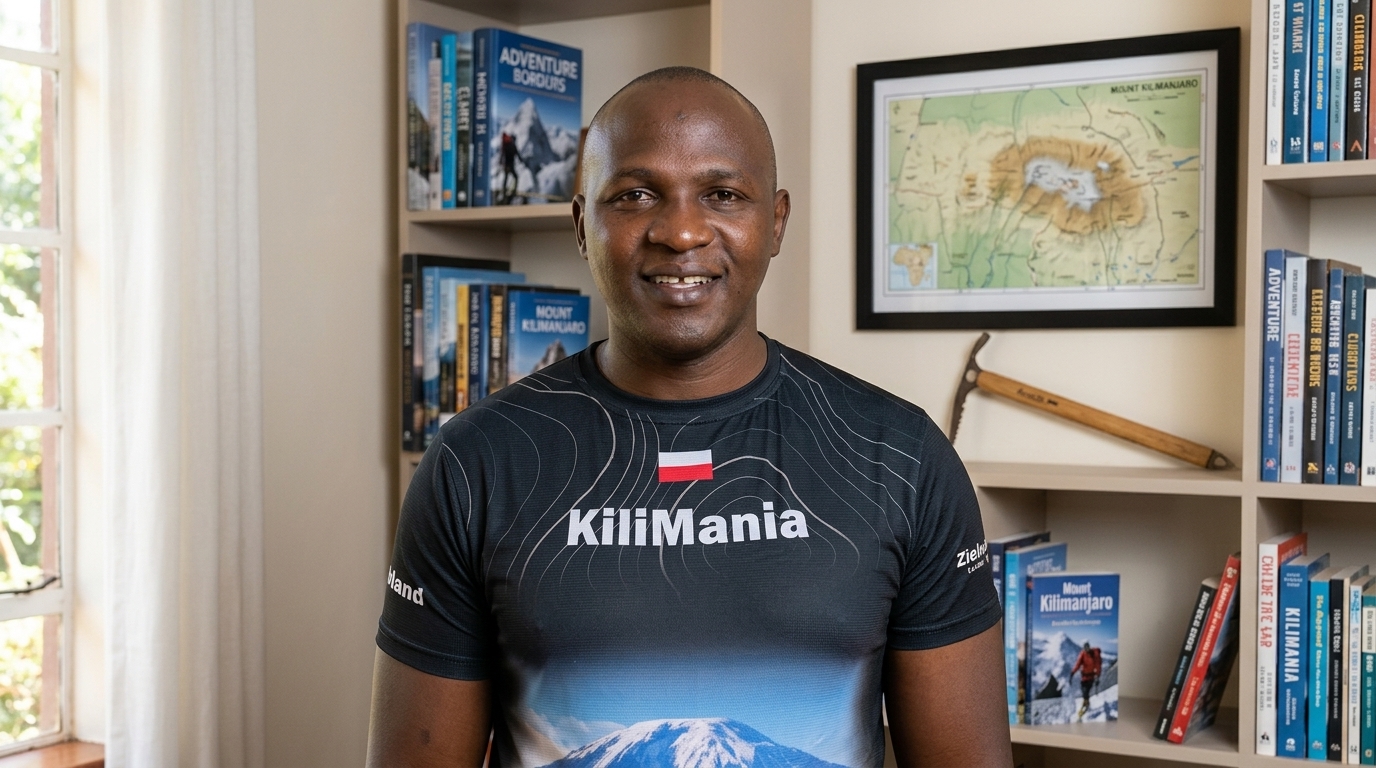
If someone you know is planning the post-climb part of their Tanzania trip, send this to them — it will save them a painful mistake with the safari timing.
We Walk With You.
Kilimania Adventure | Moshi, Kilimanjaro Region, Tanzania | +255 756 449 990 | info@kilimania.co.tz
Disclosure: Kilimania Adventure is a KINAPA-licensed, TATO-registered Kilimanjaro operator. This article is written and published by the operator and includes links to Kilimania’s own services alongside independent medical and safety references. Data on recovery patterns reflects Kilimania’s own guided-climb records (2019–2026) and is not a claim about industry-wide outcomes. This is not medical advice — consult a physician for personal health decisions.