Data sources cited in this article: KPAP porter-welfare guidance, Kilimania’s 2025–2026 booking and crew-deployment records, and Kilimania’s published Hidden Costs Checklist 2026 (tipping figures).
A standard Kilimanjaro group needs 2–3 porters per climber. For 4 climbers, that means 8–12 porters, plus 1–2 licensed guides and a cook — typically a crew of 13–15 people supporting 4 climbers. A solo climber still needs a minimum crew of 5–6. The KPAP maximum load is 20 kg per porter, including the porter’s own food and personal gear. Operators who run noticeably fewer porters than this are cutting a welfare corner — and it usually shows up in your logistics too.
Why the Porter Ratio Is a Safety Issue, Not a Staffing Detail
When climbers ask “how many porters on Kilimanjaro?”, they usually expect a simple logistical answer. The number is actually a proxy for ethical standards and operational safety — and it’s one of the clearest signals of whether an operator is cutting corners before you even arrive in Moshi.
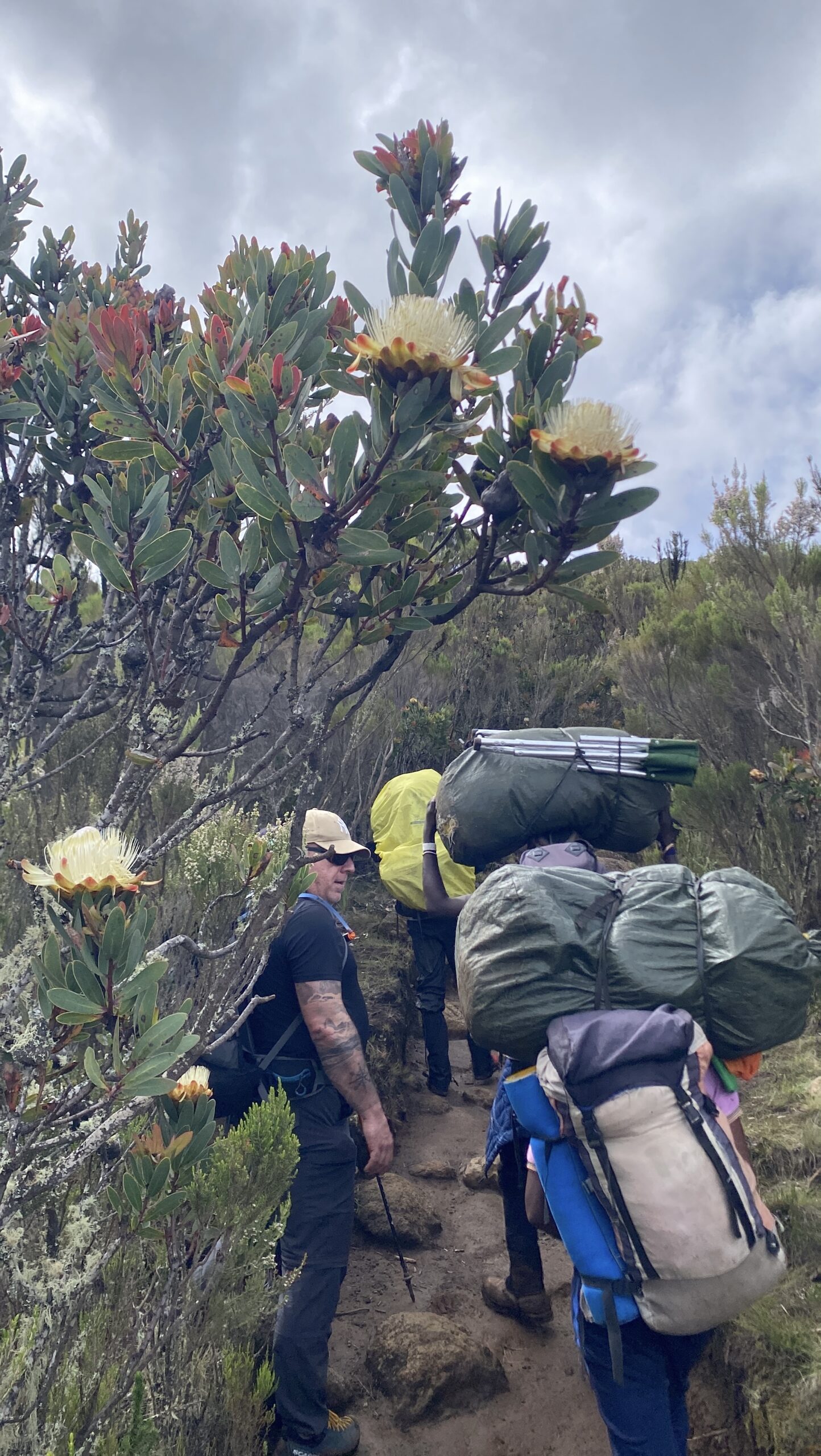
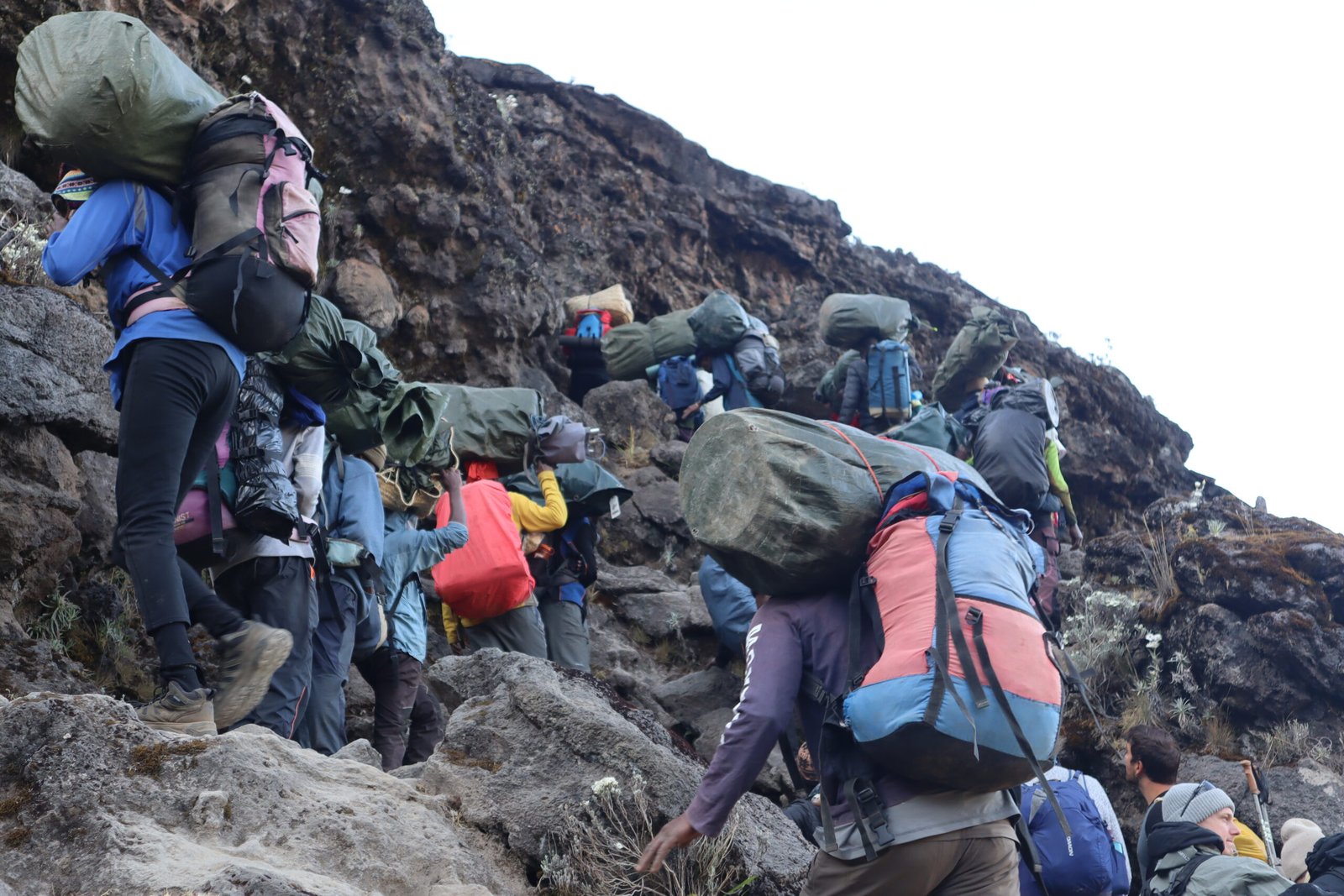
The mechanism is straightforward: each climber generates a certain volume of gear. Tents, sleeping bags, food, cooking equipment, and personal kit collectively weigh roughly 80–120 kg for a group of four. That weight must be spread across enough porters that no individual carries more than the KPAP-mandated 20 kg. Run the arithmetic with too few people, and porters end up overloaded — a welfare violation and a logistics problem that slows down camp setup for everyone.
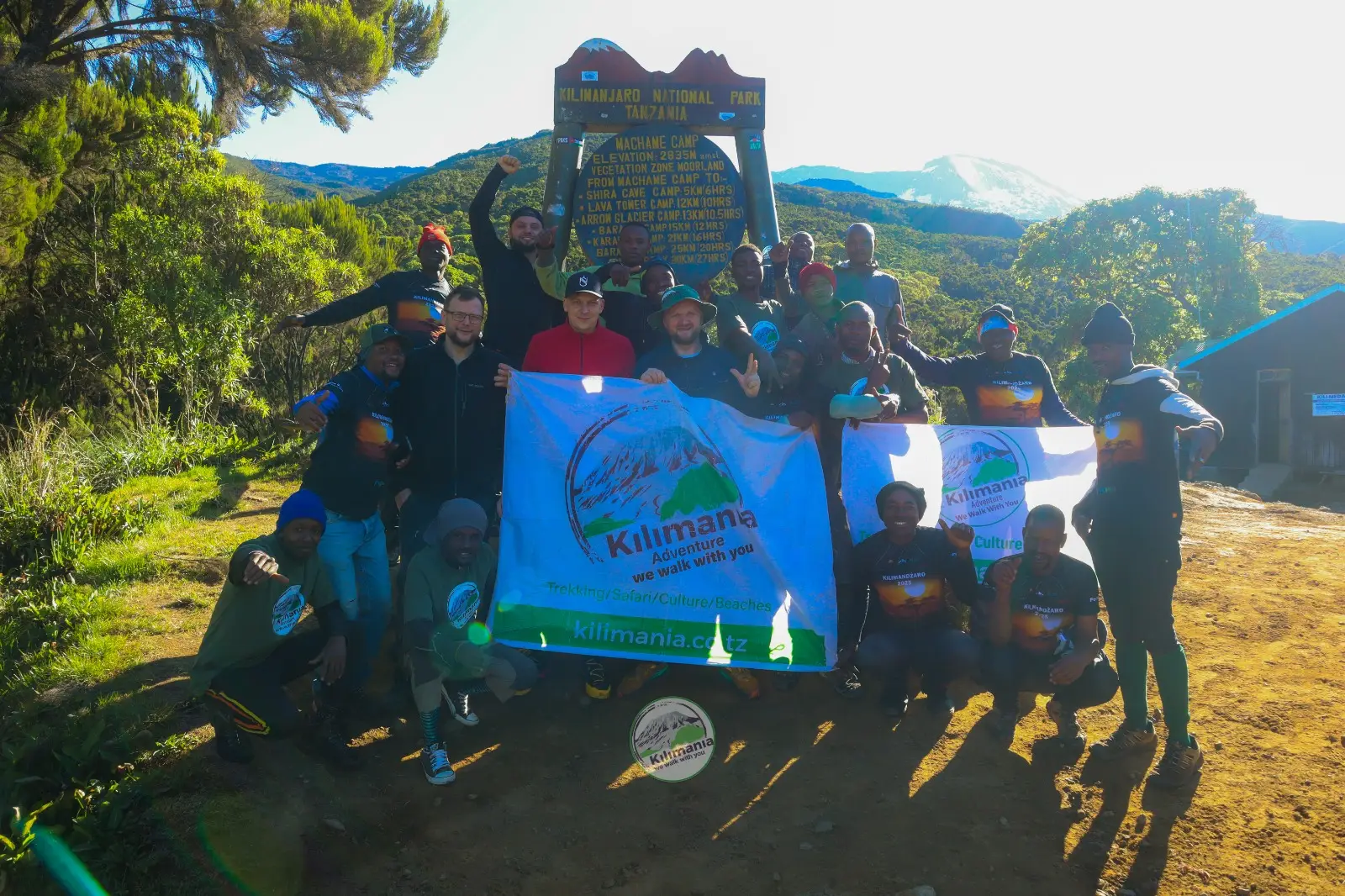
On our Lemosho and Machame expeditions, Kilimania runs a minimum of 2.5 porters per climber, rounding up. For a group of four, that’s 10 porters as a baseline — plus the guide team and cook.
Any operator quoting a “crew of 6” for a group of 4 climbers is either omitting crew members from their pricing or working outside KPAP load standards. Ask for the exact porter-to-climber ratio in writing before you pay a deposit.
Climb with a KPAP-Partner Crew
Every Kilimania expedition runs at the correct porter ratio. Our crews are paid at or above KPAP guidance and carry within the 20 kg limit — every climb, every route.
KPAP Load Standards: What 20 kg Actually Means in Practice
The Kilimanjaro Porters Assistance Project (KPAP), working alongside KINAPA (the Kilimanjaro National Park Authority), sets the maximum load at 20 kg total per porter, including the porter’s own food and personal gear. That’s a meaningful constraint — it means the actual client gear a porter can carry is closer to 15–17 kg once personal items are subtracted.
KINAPA gate rangers are authorised to weigh porter loads at the trailhead, and overloaded loads can be refused entry — a delay for the entire group. Responsible operators keep every load within standard for the porters’ sake, not just to pass inspection.
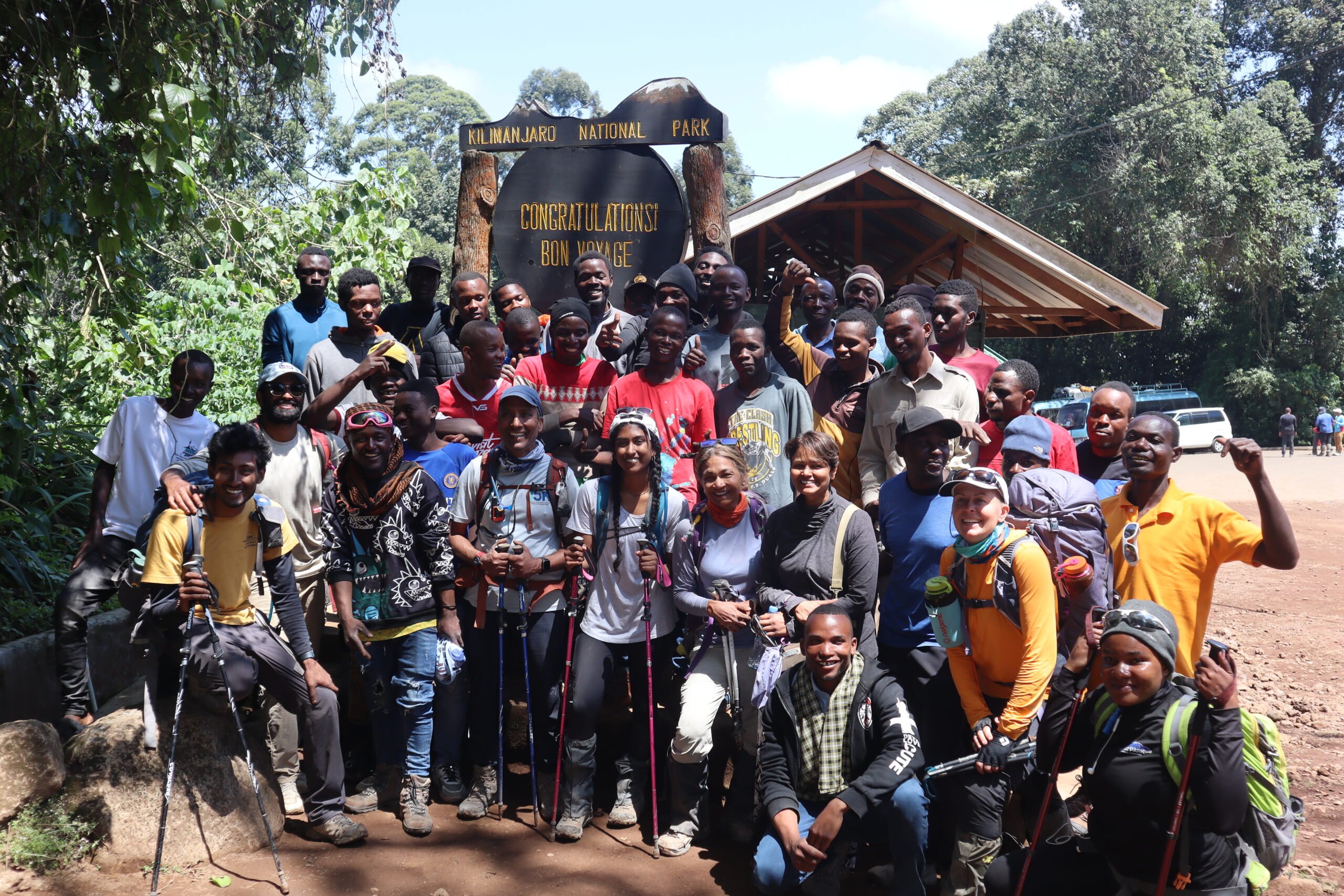
KPAP’s partner operators commit to maximum 20 kg loads, adequate food and shelter for crew, wages at or above KPAP guidance, proper clothing and equipment, and access to mountain huts on routes that have them. Kilimania is a KPAP partner operator. You can verify any operator’s status directly with the Kilimanjaro Porters Assistance Project.
What Each Kilimanjaro Porter Actually Carries
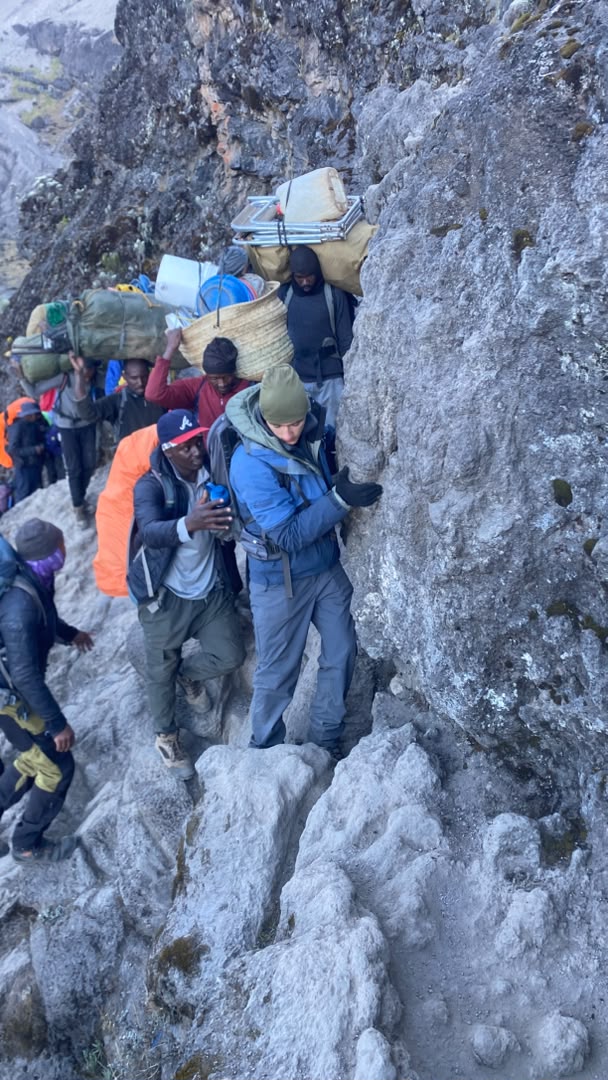
Porter loads aren’t random. On a Kilimania expedition, loads are assigned by weight category at the gate before departure. Here’s the breakdown:
| Load Category | Typical Weight | Notes |
|---|---|---|
| Client 4-season tent (2-person) | 3.5–5 kg | 1 porter typically carries 1 tent |
| Client personal duffel bag | Up to 15 kg | Weighed at gate; excess stays behind |
| Dining tent + poles | 5–8 kg | Split across 2 porters on longer routes |
| Toilet tent + folding seat | 3–4 kg | Shared load with cooking porter |
| Food supply (group portion per day) | 4–7 kg | Cook’s assistants carry most food |
| Cooking stoves, pots, gas canisters | 5–9 kg total | Split across cook + 1 assistant |
| Porter’s own gear + food | 3–5 kg | Counts within the 20 kg KPAP limit |
Porters move on the same trails as climbers, usually at a faster pace, and arrive at camp 60–90 minutes ahead of the main group to erect tents and prepare boiled water. On summit night, porters remain at high camp and prepare a warm drink and recovery meal for your return.
The Full Crew Hierarchy: Every Role Explained
A Kilimanjaro expedition is a structured team. Each member has a defined role, and guides carry a KINAPA licence requirement. Here’s who is actually on the mountain with you:
Crew Size by Group: The Numbers Kilimania Uses
The table below reflects crew sizes we actually deploy on Kilimania expeditions, based on 2.5 porters per climber (rounded up) plus guide and cook staffing. These are working standards, not minimums to be shaved down.
| Group Size (Climbers) | Porters | Head Guide(s) | Asst. Guide(s) | Cook | Total Crew |
|---|---|---|---|---|---|
| 1 (solo) | 4–5 | 1 | 0 | 1 | 6–7 |
| 2 | 5–6 | 1 | 1 | 1 | 8–9 |
| 3 | 7–9 | 1 | 1 | 1 | 10–12 |
| 4 (most common group) | 10–12 | 1 | 1 | 1 | 13–15 |
| 6 | 13–16 | 1 | 2 | 1 | 17–20 |
| 8 | 18–22 | 1 | 2 | 1–2 | 22–27 |
Our crew ratios come from years of running every route on the mountain. Below 2 porters per climber, something always gives — usually camp setup speed or individual load weights.
“I’ve climbed with crews of 6 and crews of 20 for the same group size. The difference isn’t just comfort — it’s speed. With a properly staffed crew, tents are up and climbers are eating within half an hour of arriving at camp. With an under-staffed crew, people sit in the wind for ninety minutes while exhausted porters catch up. At 4,600 metres, that gap matters. People get cold, and morale is a summit variable too.”
How Kilimania Calculates Your Exact Crew Size
We don’t apply a single blanket formula. Before each expedition, our logistics team weighs every piece of communal equipment — tents, cooking gear, emergency kit, and trip food. That total is divided by a conservative 17 kg per porter to find the minimum count, then cross-checked against the group-size ratio; we use whichever number is higher.
Three variables shift the number upward:
- Route duration: An 8-day Lemosho expedition carries more food than a 6-day Machame climb, which can add 2–3 porters.
- Gear weight: Climbers who rent cold-weather gear in Moshi keep their own duffel lighter, which sometimes allows a slightly smaller count on shorter routes.
- Medical equipment: Groups with altitude-risk factors (see our guide on climbing Kilimanjaro with medical conditions) travel with extended first-aid kit and sometimes a Gamow bag — an additional load split across 2 porters.
Plan Your Climb with the Right Crew
Not sure which route or group size suits you? Our complete Kilimanjaro guide covers costs, routes, and crew logistics in full.
Porter Welfare, Tipping, and What Crew Wages Actually Look Like
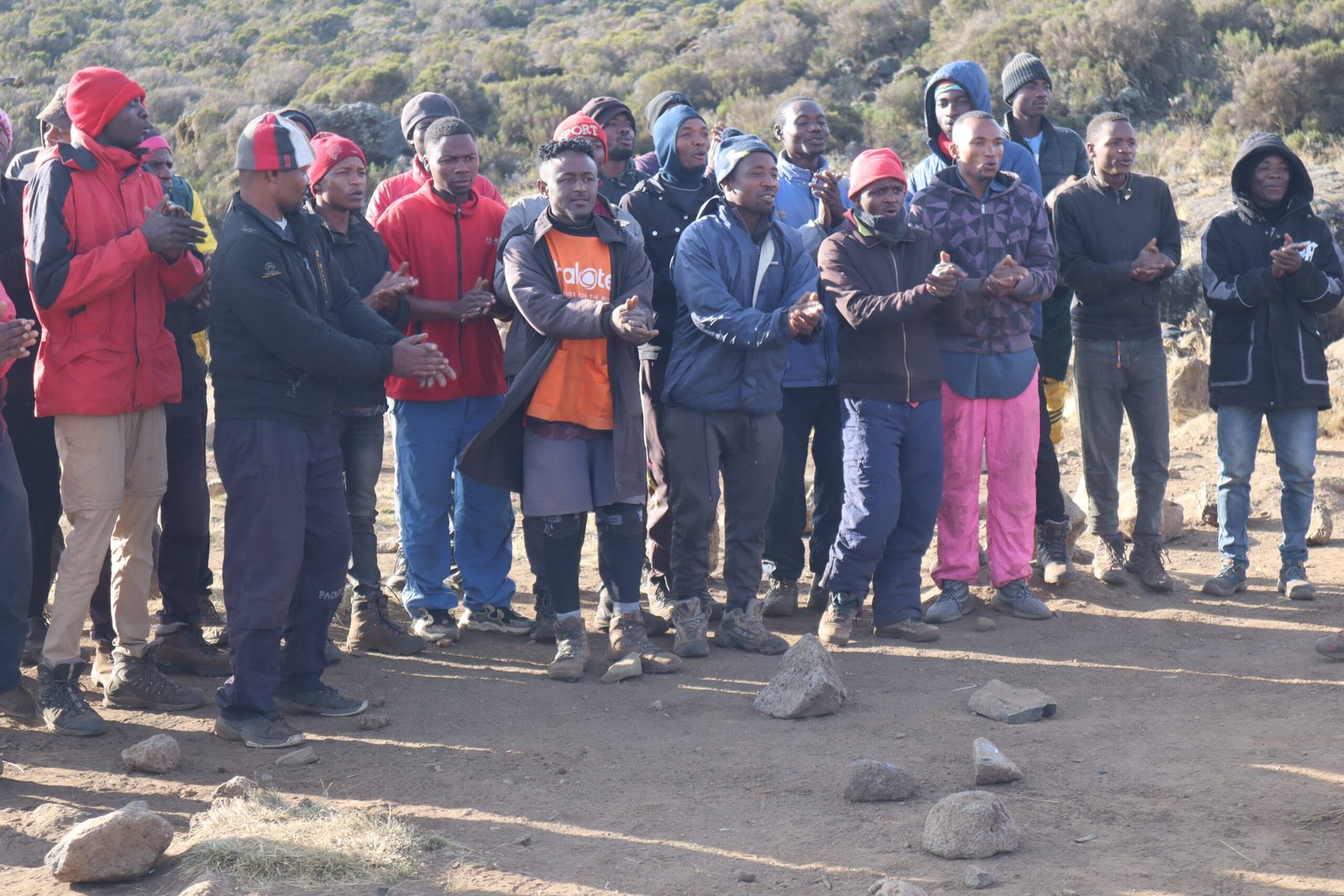
Kilimanjaro’s mountain tourism economy supports a large local workforce, most of it in porter and support roles. Choosing an operator that staffs a full, correctly sized crew directly supports more families in the Kilimanjaro Region.
Kilimania’s published 2026 tipping guidance gives the clearest picture of what fair crew compensation looks like day to day:
| Crew Role | Per Day (USD) | 7-Day Total (USD) |
|---|---|---|
| Head Guide | $20–25 | $140–175 |
| Assistant Guide | $15–20 | $105–140 |
| Cook | $15–20 | $105–140 |
| Porter (each) | $8–10 | $56–70 |
| Solo climber funding a full crew | — | ~$600–700 total |
| Per person in a group of 4, sharing one crew | — | ~$200–350 total |
Figures per Kilimania’s Hidden Costs Checklist 2026. These are tipping guidelines, not base wages — porter base pay is governed separately by KPAP’s published minimum-wage guidance, which sets a wage floor of roughly 25,000 TZS per day; Kilimania pays at or above that floor for all crew roles. Bring crisp USD notes dated 2013 or later — damaged or older bills are commonly refused in Tanzania.
KPAP partner operators commit to correct load limits, wages at or above KPAP guidance, adequate food and shelter for crew, and proper gear provision. Kilimania has been a KPAP partner operator since 2018.
What Clients Never See: How Porters Actually Experience the Climb
Most climbers see their porters at the trailhead, then again at camp. What happens in between is rarely discussed — but it’s the part that matters most for welfare standards.
After the gate weigh-in, porters move at their own pace on the same trails and typically reach camp 60–90 minutes before climbers. At camp, they erect every tent, set up the dining area, and prepare the first snack for arriving climbers — all before resting themselves. On summit nights, porters at high camp often stay awake to have warm drinks ready for climbers returning from the summit at dawn.
Sleeping conditions depend on the operator. On hut routes like Marangu, porters use designated bunk areas. On tented routes, ethical operators provide proper tents and altitude-rated sleeping bags. Kilimania equips its porters with 4-season sleeping bags and tents.
Ask your operator: Do porters sleep in their own tents? What sleeping bag rating do they receive? Is porter food included in the trip’s food budget or deducted from wages? Are porters over 18 (the minimum legal working age on the mountain)? If an operator can’t answer these directly, treat that as information.
Porter Count Across Kilimanjaro Routes
| Route | Days | Porters (4 climbers) | Reason for Variance | KPAP Compliant |
|---|---|---|---|---|
| Marangu Route | 5–6 days | 8–10 | Hut accommodation reduces tent load | ✓ |
| Machame Route | 6–7 days | 10–12 | Full camping, variable terrain | ✓ |
| Lemosho Route | 7–8 days | 11–13 | Longer route means more food weight | ✓ |
| Rongai Route | 5–6 days | 9–11 | Remote approach needs more food supply | ✓ |
| Northern Circuit | 9 days | 13–15 | Longest route; heaviest food carry | ✓ |
📥 Free Download: Kilimanjaro Hidden Costs Checklist 2026
Crew wages and tipping are two of the most commonly underestimated costs in an operator quote. This checklist covers what operators don’t always spell out upfront.
- Complete Kilimanjaro budget worksheet
- Crew tipping guide, day by day
- What KPAP-partner crew costs actually look like
- Gear, insurance, park fees, and visa breakdown
Frequently Asked Questions: Kilimanjaro Porters
The standard ratio is 2–3 porters per climber. For a group of 4, expect 8–12 porters, plus 1–2 guides and a cook — typically 13–15 people total. A solo climber still needs a minimum crew of 5–6.
KPAP sets the maximum load at 20 kg total per porter, including the porter’s own food and personal gear. Gate rangers at Machame and Lemosho trailheads weigh loads and can refuse entry to overloaded porters.
A combination of client tents, duffel bags (up to 15 kg), dining tent segments, cooking equipment, food supplies, and the porter’s own personal gear — all within the 20 kg KPAP limit.
Yes. Porters carry your main duffel between camps; you carry your own daypack on the trail. Keep your duffel at or under 15 kg.
Yes, directly — a correctly sized crew means tents arrive faster and no porter is overloaded and slowing the logistics chain. Undercutting porter numbers is a safety tradeoff, not just a budget decision.
An assistant guide walks at the rear of the group, watches for altitude sickness symptoms in slower climbers, and relays information to the head guide. KINAPA requires at least one licensed guide per group; Kilimania adds an assistant for groups of 3 or more.
Per Kilimania’s published guidance: porters $8–10/day, cook and assistant guide $15–20/day, head guide $20–25/day. For a solo climber, total crew tips run roughly $600–700 over a 7-day climb; per person in a group of four, roughly $200–350. See our full tipping guide for details.
Reducing porter numbers lowers an operator’s cost, but it can push individual loads above the KPAP 20 kg limit — a welfare violation and a logistics liability. Always ask for the exact porter-to-climber ratio before booking.
The Number Is a Decision: Choose an Operator Who Can Justify It
When you understand porter ratios, the question shifts from curiosity to a real evaluation tool. Ask every operator you’re considering for their exact porter-to-climber ratio, what load each porter carries, and whether they’re a KPAP partner operator.
A group of four climbers needs roughly 10–12 porters, 1–2 guides, and a cook. If an operator quotes a crew of seven for four climbers, someone on that team is likely carrying well above the KPAP limit through the Shira Plateau — and that’s worth asking about.
At Kilimania, our crew sizes aren’t a selling point; they’re an operating floor. Ready to plan your climb with the right crew behind you? Read our complete Kilimanjaro planning guide, or WhatsApp our team to ask about crew standards on your specific route and date.
Related Kilimanjaro Planning Guides
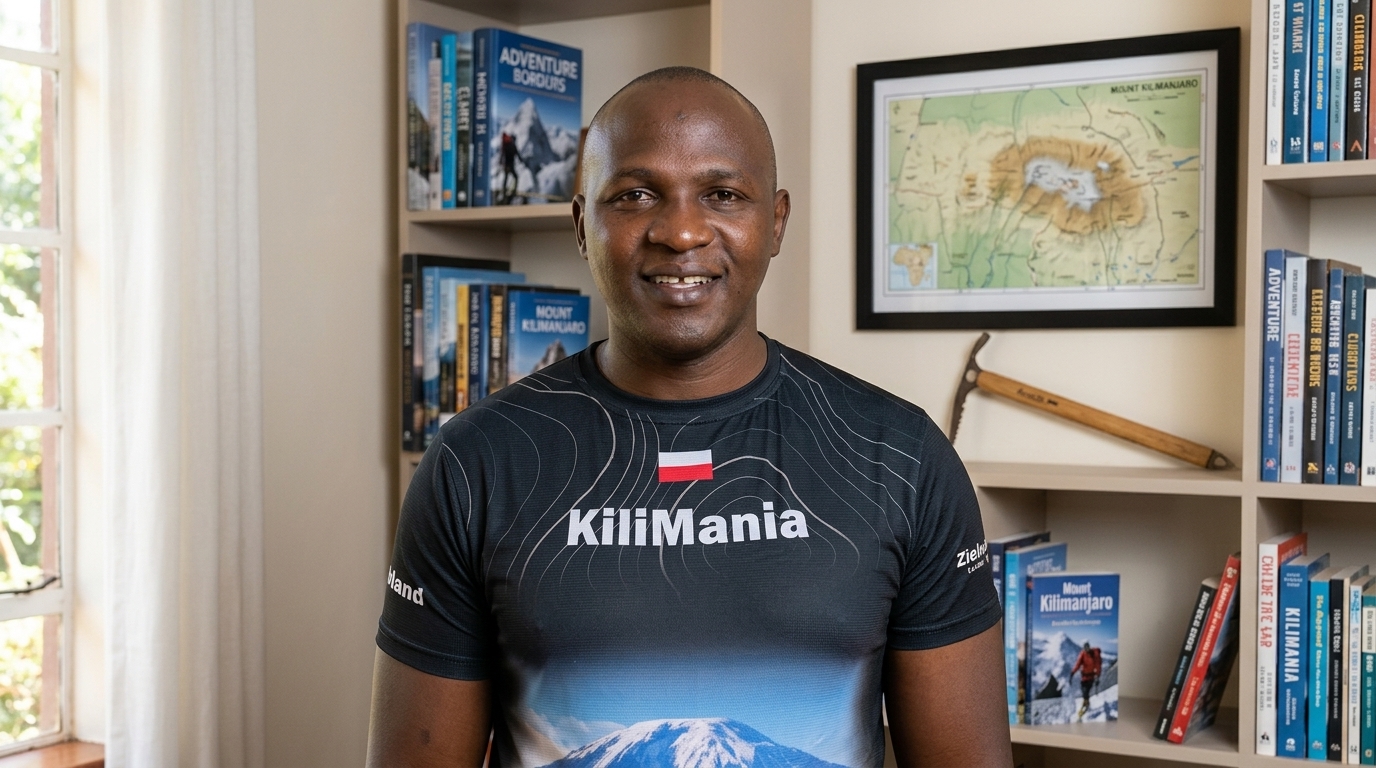
Sabinus Msimba has guided more than 1,247 climbs on Mount Kilimanjaro across 22 years, holds a KINAPA mountain guide licence, and helped found Kilimania Adventure’s KPAP-partner crew standards. His knowledge of crew logistics comes from running every route on the mountain, in every season.
Full Biography → KINAPA Licence (PDF) → TripAdvisor Reviews →