
Lake Manyara National Park Day Trip: Tree-Climbing Lions, Honestly
Data sources cited in this article: drive times and departure/return windows below reflect Kilimania’s current operational planning for day trips from Moshi and Arusha, and are planning estimates rather than fixed travel times, not TANAPA figures; Tanzania National Parks Authority (TANAPA) park facts (park area, wildlife, habitats, Treetop Walkway); and published scientific research on lion tree-climbing behaviour. These three types of information are kept distinct throughout the article rather than presented as a single source.
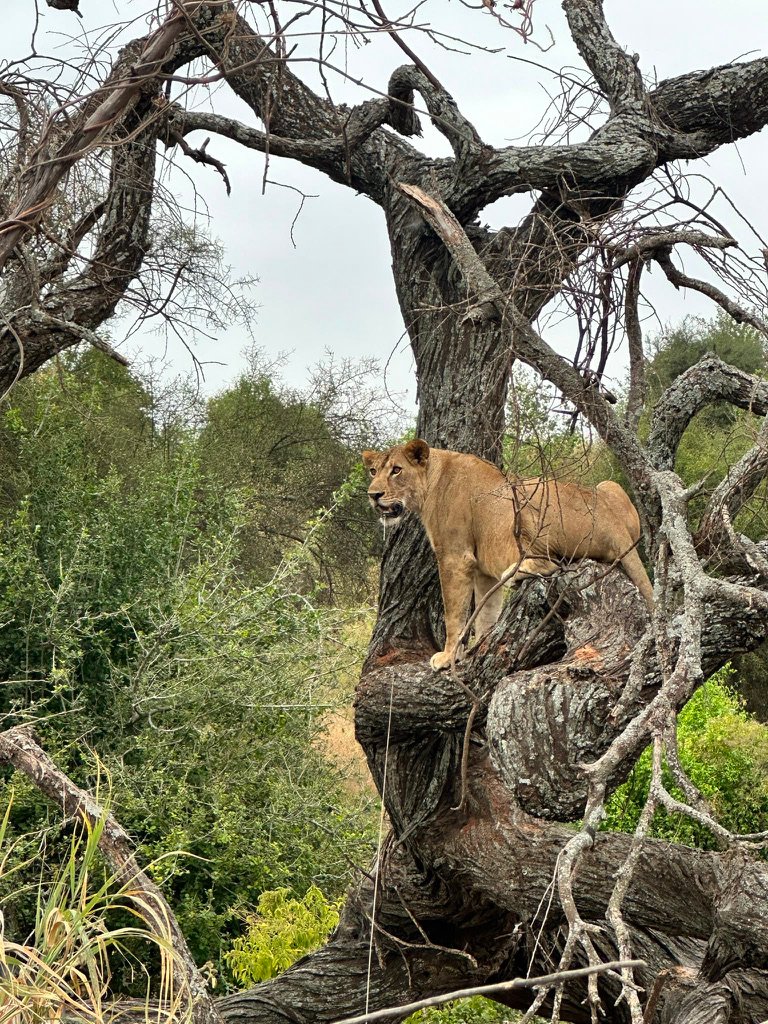
Lake Manyara is a realistic one-day safari from Arusha and a longer day from Moshi. Its famous tree-climbing lions are real, but seeing one in a tree on your particular game drive is never something Kilimania can promise. The park is worth considering for the wider wildlife experience too: elephants, large baboon troops, hippos, giraffe, buffalo, seasonal flamingos, and more than 400 recorded bird species. TANAPA lists the park at 648.7 km². A private day trip from Moshi or Arusha starts from $240 per person for a group of five.
| From Arusha | Approximately 2–2.5 hours (125–130 km) |
|---|---|
| From Moshi | Approximately 3–3.5 hours |
| Duration | Full day, vehicle-based — from Moshi, roughly 4–5 hours actually in the park |
| Difficulty | Easy — vehicle-based game drive |
| Solo price | $410 pp |
| Group of 5 | From $240 pp |
| Swimming | No — this is a vehicle-based wildlife experience |
| Best for | Wildlife viewers, birders, photographers, first-time northern Tanzania safari days |
| Children | Suitable — vehicle-based game drive; check Treetop Walkway age policy at booking |
| Best season | June–October for general wildlife; November–April for birds. For month-by-month conditions, see the best time to visit guide. |
| Departure | Around 06:00 from Moshi; typical return to Moshi around 19:00–20:00 (park gates close earlier — this reflects total door-to-door time, not time inside the park) |
Table of contents (tap to expand)
- Tree-climbing lions — what you actually need to know
- The rest of the wildlife
- The Treetop Walkway
- The park landscape
- What a Lake Manyara day trip actually looks like
- Pricing
- Who this trip is best for
- Who should choose something else
- Quick decision table
- Field note
- Frequently asked questions
- Sources & further reading
- Related day trips
Tree-Climbing Lions — What You Actually Need to Know
From its base in Moshi, Kilimania Adventure runs daily safaris to Serengeti National Park, Ngorongoro Crater, Tarangire National Park, and Lake Manyara, and Kilimanjaro climbs, with pickups from Kilimanjaro International Airport (JRO) and Arusha Airport (ARK).
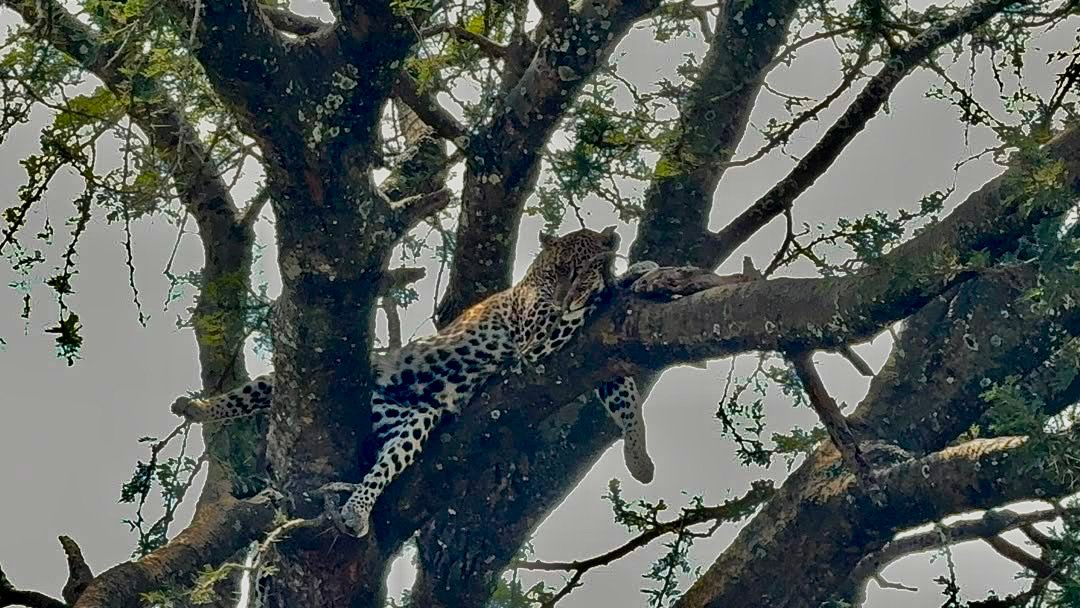
Tree-climbing lions are real and well documented at Lake Manyara. What that does not mean is that a sighting is likely on every game drive — seeing one in a tree on your particular day is never something a responsible operator can promise you.
Researchers have proposed several possible reasons for lions climbing trees, including escaping ground heat, avoiding biting flies, resting, and scanning their surroundings. The behaviour is facultative and context-dependent rather than tied to one confirmed explanation or a fixed set of conditions — recent research has associated arboreal behaviour with afternoon hours and wet-season observations in one broader northern Tanzania dataset, so Kilimania does not tell guests that any particular season or time of day reliably improves the odds. Guides sometimes check known areas where lions have previously been observed in trees, but wildlife movements change, and no particular tree or location can assure a sighting.
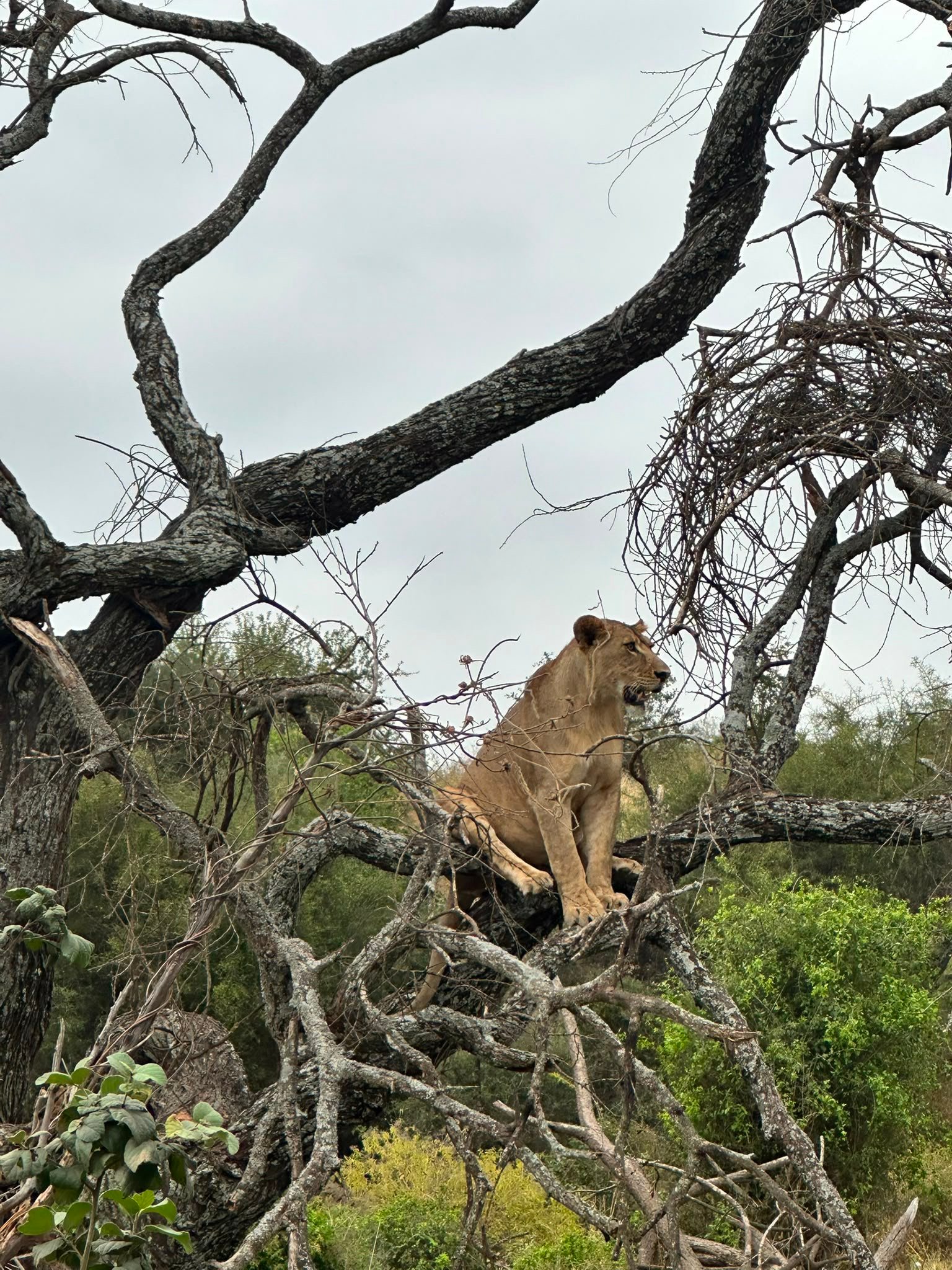
What this means practically: there is no fixed schedule and no assurance of a sighting, and Kilimania does not claim that particular conditions reliably improve the odds. There is no reliable sighting percentage that a responsible operator should quote, and Kilimania does not use one. Guides cannot control wildlife behaviour. If tree-climbing lions are the entire reason you’d book this trip, read “Who should choose something else” below before deciding.
The Rest of the Wildlife — What Else You May See
Lake Manyara’s appeal doesn’t depend on the lions alone — it’s the density and variety packed into a small park. Elephants are common here, including large bulls that use the groundwater forest for shade and browse. Large baboon troops are commonly associated with the park’s groundwater forest. Hippos are frequently seen in the lake shallows and nearby pools, and giraffe and buffalo move through the open grassland between forest and lake.
Flamingos gather on the alkaline lake edge when water and algae conditions support them — seasonal rather than constant. Birders do especially well at Manyara: the range of habitat, from groundwater forest to open water to grassland, supports over 400 recorded bird species, according to TANAPA.
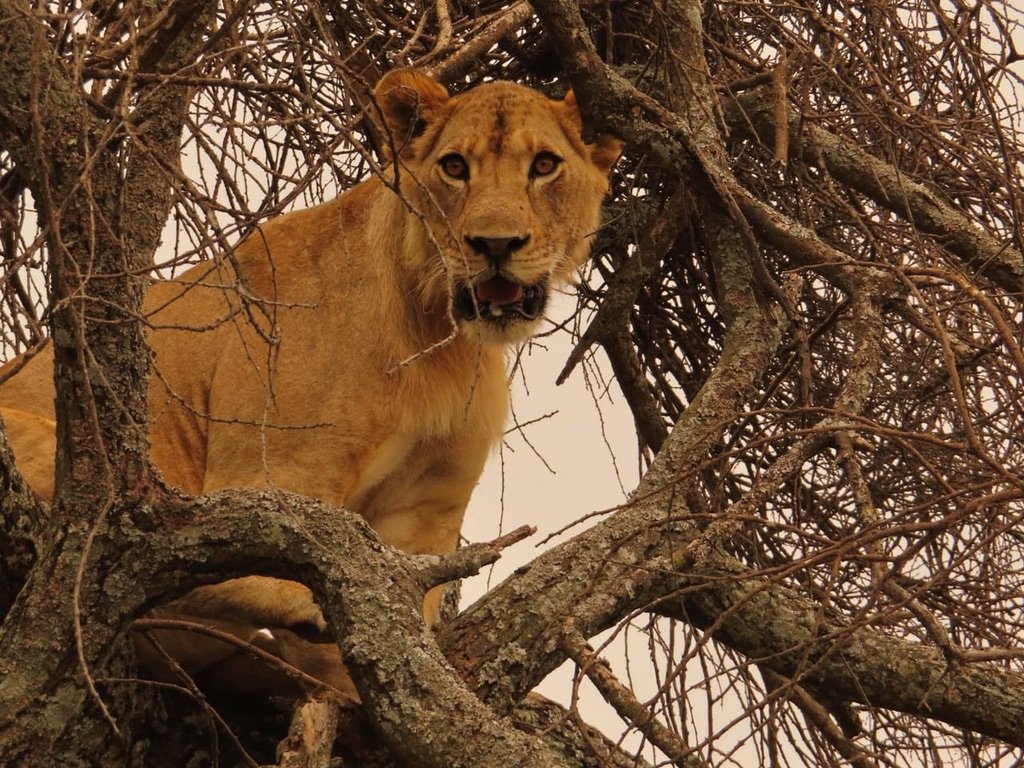
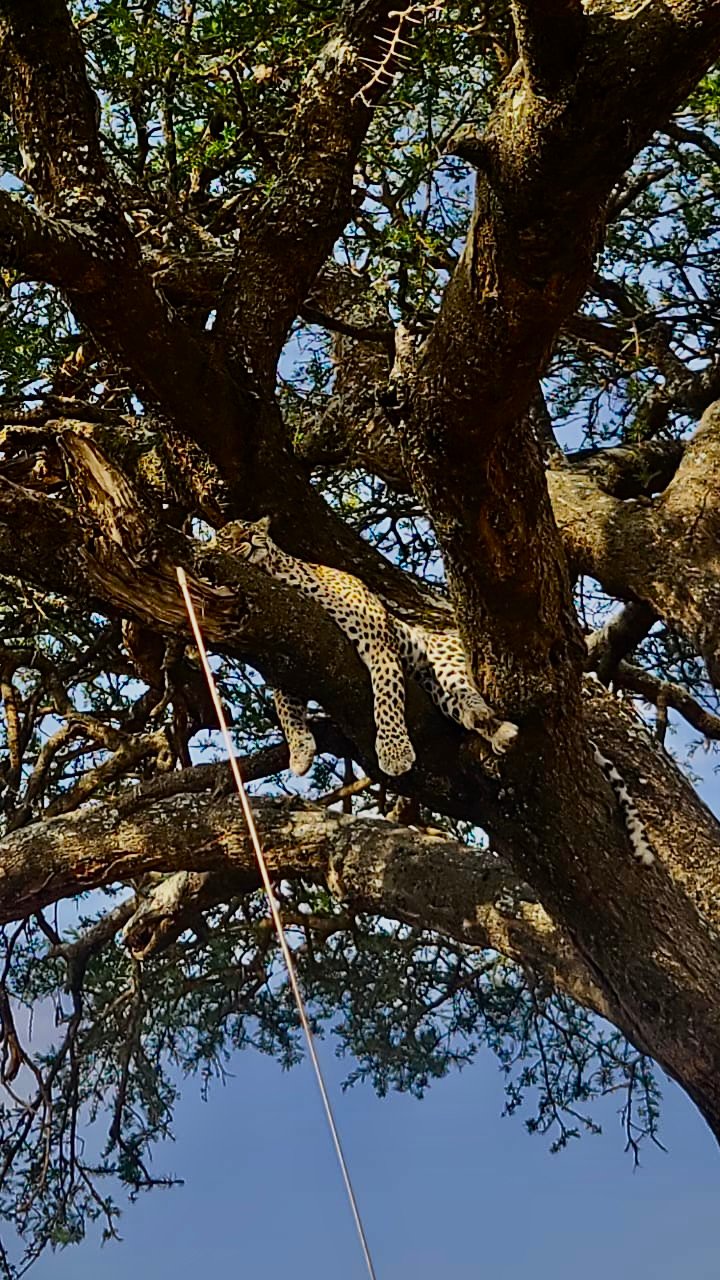
Worth being precise about: leopards are also present in Lake Manyara, and they rest in trees far more often than lions do. Don’t mistake a resting leopard for the park’s famous tree-climbing lion behaviour — a different species with a different, more common habit.
The Treetop Walkway
The park’s Treetop Walkway runs approximately 370 metres through the groundwater forest canopy, reaching up to 18 metres above the forest floor at its highest points. It puts you at eye level with the forest that Manyara’s elephants and monkeys move through at ground level — a genuinely different way to experience the park compared with viewing it from a vehicle. Walkway access isn’t included by default in every day-trip itinerary. If the Treetop Walkway is important to your day, confirm its availability and current activity requirements when booking. Anyone uncomfortable with height should ask about the walkway’s structure before committing to it.
The Park Landscape — Groundwater Forest and Alkaline Lake
Lake Manyara National Park covers 648.7 km² according to TANAPA. Its landscape combines groundwater forest, acacia woodland, open floodplain, wetlands and the alkaline lake beneath the Great Rift Valley escarpment. The driveable land strip is narrow, squeezed between the escarpment and the lake itself — part of why the park feels dense with wildlife relative to its size, since animals concentrate in a fairly compact band of habitat.
The groundwater forest near the park entrance is sustained by freshwater springs and groundwater, which helps it stay greener and more shaded than surrounding areas during dry periods — the habitat most associated with elephants, baboons and the Treetop Walkway. Further into the park, the alkaline lake itself (formed by mineral-rich runoff from the surrounding volcanic highlands, with no outlet) supports the flamingos and much of the park’s birdlife when conditions are right. That contrast between two very different habitats inside one relatively small park is a large part of what makes a single-day visit worthwhile.
What a Lake Manyara Day Trip Actually Looks Like
From Moshi, this is a long day. Typical Kilimania planning window: around 06:00 departure from Moshi, with the drive to Lake Manyara taking approximately 3–3.5 hours each way, and a return to Moshi around 19:00–20:00, depending on road conditions, park procedures and time spent at sightings. That leaves roughly 4–5 hours actually inside the park for the game drive, wildlife viewing at the lake edge, and lunch according to the itinerary. From Arusha the day is considerably shorter, since the drive is only 2–2.5 hours each way. Build some flexibility into onward plans on either route — these are planning windows, not fixed times.
What a Lake Manyara Day Trip Costs
Kilimania’s private Lake Manyara day trip is priced per person and scales down as your group grows, from $240 per person for a private group of five. A group of four pays $260 per person ($1,040 total); a solo traveler pays $410. For groups larger than five, contact Kilimania directly for a quote. See the Lake Manyara day trip pricing and availability page for the full group-size price table.
Want to check the current price or availability for a Lake Manyara day trip? Contact Kilimania Adventure and we can confirm the best option for your group.
Lake Manyara National Park SafariWho This Trip Is Best For
Lake Manyara suits wildlife viewers who want density and variety in a single, manageable day — travelers based in Arusha for whom the drive is short, birders drawn to the 400-plus recorded species, and photographers interested in the forest-to-lake habitat contrast. It also works well for families and first-time safari visitors who want a full wildlife day without committing to a multi-day circuit, and for anyone combining it with a Tarangire National Park day trip or considering whether Ngorongoro Crater fits into a northern Tanzania day itinerary. For travelers combining a day trip with a Kilimanjaro climb, see the Kilimanjaro Joining Calendar for group climb dates.
Who Should Choose Something Else
If tree-climbing lions are the single reason you’d book this trip, manage your expectations honestly first — a sighting on any one day is never certain, and Kilimania won’t promise one; a longer, multi-day safari gives you more game drives and more chances over a longer stay. If you’re set on large elephant herds specifically, Tarangire’s herds are a stronger bet. If a long drive is a dealbreaker and you’re based in Moshi, the shorter Arusha National Park day trip covers similar forest-and-lake terrain closer to home, including a walking safari option. And if you’re weighing whether to add Ngorongoro Crater to a northern Tanzania day itinerary, read the honest feasibility numbers before assuming it fits alongside Manyara in the same day.
Quick Decision Table
| If you want… | Consider… |
|---|---|
| Lake, forest and birdlife in a compact park | Lake Manyara |
| An elephant-focused safari day | Tarangire |
| A shorter wildlife outing from Arusha, with walking safari | Arusha National Park |
| Swimming | Chemka Hot Springs |
| A cultural experience | Materuni or a Maasai Boma visit |
This table is for decision support, not a ranking — none of these day trips is objectively “better,” they simply suit different priorities.
Field Note — Kilimania Safari Operations
Kilimania’s Northern Circuit guides generally check the groundwater forest’s larger acacias first, since these are the trees most often associated with tree-climbing sightings at Manyara, and visibility into the canopy tends to be easier during drier months when foliage thins out. Even so, this is general operational guidance rather than a formula — some days the trees are empty, and no guide can predict wildlife behaviour with certainty.
Guides also coordinate with other vehicles in the park over radio when a sighting is reported, which is standard safari practice across the Northern Circuit rather than something unique to Manyara. It means a group’s chances on a given day depend partly on what other vehicles are finding that morning, not solely on where your own guide chooses to look.
Frequently Asked Questions
No. Tree-climbing lions are a real, documented behaviour at Lake Manyara, but seeing one in a tree on your particular game drive is never something Kilimania can promise. No responsible operator can promise one on a given day.
Researchers have proposed several possible reasons, including escaping ground-level heat, avoiding biting flies, resting and scanning their surroundings. Thermoregulation may be relevant during hotter periods, but the behaviour does not have one confirmed explanation.
Approximately 125–130 km, roughly a 2–2.5 hour drive by road.
TANAPA lists the park at 648.7 km². Despite its relatively small size, the narrow strip of driveable land between the Rift Valley escarpment and the lake concentrates wildlife into a compact area, which is part of why sightings can feel dense for a short visit.
Neither is objectively better — they suit different priorities. Lake Manyara offers denser, more varied habitat (forest, lake, grassland) in a smaller park; Tarangire is known for larger elephant herds and a baobab-studded landscape. See our Tarangire vs Lake Manyara comparison for a fuller picture.
Elephants, large baboon troops, hippos, giraffe, buffalo, and — seasonally — flamingos on the alkaline lake, alongside over 400 recorded bird species across the park’s groundwater forest, lake and grassland habitats.
Kilimania’s private day trip starts from $240 per person for a group of five, up to $410 per person traveling solo. See the Lake Manyara pricing and availability page for the full group-size breakdown.
Yes, though it’s a long day. Drive time from Moshi is approximately 3–3.5 hours each way. Kilimania’s typical planning window is around a 06:00 departure and a 19:00–20:00 return, depending on conditions, leaving roughly 4–5 hours actually in the park. From Arusha the day is considerably shorter.
Generally yes — it’s a vehicle-based game drive with no strenuous walking required. The Treetop Walkway may have its own age or height policy; check this with Kilimania at the time of booking.
Sun protection (hat, sunscreen, sunglasses), binoculars if you have them for birdlife and distant sightings, a light layer for the early morning departure, and a camera or phone with a zoom lens. Closed shoes are useful if you plan to walk the Treetop Walkway.
Ready to plan your Lake Manyara day trip? Kilimania Adventure runs departures from both Arusha and Moshi. Get in touch to confirm your date and current pricing.
Lake Manyara day trip pricing and availabilitySources & Further Reading
- Tanzania National Parks Authority (TANAPA) — Lake Manyara National Park, for park area, wildlife, habitats and the Treetop Walkway
- African Journal of Ecology (2026) — research on tree-climbing behaviour in African lions, discussing possible explanations including thermoregulation, insect avoidance and scanning
- Kilimania Adventure’s own day-trip planning experience for typical drive times and departure/return windows
Park facts are attributed to TANAPA, behavioural explanations to published research, and operational timing to Kilimania’s own planning experience — these are kept distinct rather than treated as one source.
Related Day Trips
Tarangire National Park day trip — larger elephant herds, baobab landscape, a similar full-day format from Arusha or Moshi.
Arusha National Park day trip — the closest safari option for travelers based in Moshi, with a walking safari component.
Best day trips from Arusha — the full range of Kilimania’s Arusha-based options.
Tarangire vs Lake Manyara — a direct comparison if you’re deciding between the two.
Whether Ngorongoro Crater is feasible as a day trip — for travelers considering combining destinations.
For month-by-month conditions across Kilimania’s day trips, see the best time to visit guide.

Sabinus Msimba is a Senior Kilimanjaro Guide and Co-founder at Kilimania Adventure, based in Moshi, Tanzania, with 22 years of guiding experience and 300+ personal Uhuru Peak summits.
Full biography and verified credentials →
Kilimania Adventure on TripAdvisor · Kilimania Adventure on Google Reviews
We Walk With You.
This guide is published by Kilimania Adventure, a Tanzania-based day-trip and safari operator run from Moshi. Prices, availability and operational details (drive times, departure times, and Treetop Walkway booking requirements) can change, and several figures above are flagged for confirmation — check current details with Kilimania before booking. Wildlife sightings, including tree-climbing lions, are never certain on any single day. Travelers are encouraged to carry appropriate travel insurance for their trip. Kilimania Adventure · Moshi, Kilimanjaro Region, Tanzania · WhatsApp: +255 756 449 990 · info@kilimania.co.tz