
Sources. Official: TANAPA for park administration and access. Kilimania field observations: seasonal patterns, Kibo visibility, waterfall flow, Chemka water temperature and trip timings, from Sabinus Msimba and the Kilimania guide team — operating experience, not meteorological data. Commercial: prices from Kilimania’s 2026 day-trip rate card, as of September 2026.
The best time for day trips in Tanzania depends on what you want to see. From Moshi and Arusha, June–October and January–February are the dry seasons and generally give the clearest morning views of Kibo, while March–May brings the strongest waterfalls. No month rules a day trip out — the season changes which trips make the most sense. This guide covers the northern Tanzania day trips run from Moshi and Arusha, month by month and trip by trip; conditions differ on the coast, on Zanzibar and in the south and west of the country.
Quick answer: best time for day trips in Tanzania
For clear Kilimanjaro views and dry-season safari conditions, plan for June–October. January–February adds clear Kibo mornings to green-season parks with more birds and fewer visitors. March–May is the waterfall window, with April the wettest month. Chemka Hot Springs stays the same all year, so it works in any month.
The day-trip year at a glance
- JanDry
- FebDry
- MarLong rains
- AprHeaviest rain
- MayLong rains
- JunDry
- JulDry
- AugDry
- SepDry
- OctDry
- NovShort rains
- DecShort rains
If you want… consider:
Clear Kibo views: June–October and January–February, early mornings
Waterfalls at full force: March–May
Dry-season wildlife viewing: June–October
Birdlife and quieter parks: November–April (green season)
A swim: Chemka Hot Springs, any month
Drier trails: June–October and January–February
In this guide
The Two Seasons That Matter
Northern Tanzania runs on a simple rhythm: two dry periods and two rainy ones. The long rains fall from March to May, with April the heaviest month. The short rains arrive in November and December. Between them sit the dry seasons — June to October, and January to February.
One point on terms, because it confuses people: dry season describes rainfall, while green season is a safari term for vegetation and visitor levels. That’s why January and February can be both at once — dry weather, with the parks still in their November–April green-season state.
For a day-tripper, that splits the year into two practical modes. In the dry months, trails to the waterfalls are firmer, Kibo shows itself more often in the early morning, and the safari parks thin out their vegetation so animals gather near water. In the green months — the rains plus the stretch around them — the landscape fills in, the waterfalls run hardest, and the parks shift toward birdlife and quieter roads.
Here’s the part most planning guides skip. Dry isn’t automatically better. A traveller who wants a waterfall in full voice should come in the rains, not avoid them. Someone focused on photographing Kibo should do the opposite. And one trip barely notices the calendar: Chemka Hot Springs keeps the same water conditions in every month, which makes it the least season-sensitive option when the weather changes a plan.
A wet-season date calls for grippier shoes and a flexible plan. If rain turns heavy on the day, your guide will adjust — pole pole, as we say on the trail: slowly, slowly. Every other day-trip guide on this site links back here for its timing advice, so this is the page to bookmark. Park rules and access are set by the Tanzania National Parks Authority (TANAPA).
Month-by-Month Guide
The table below is the full year in one place. Each row uses only the seasonal patterns listed above — no rainfall totals or temperatures are invented to fill gaps. Where a detail hasn’t been confirmed, it says so.
| Month | Rain status | Kilimanjaro visibility | Safari conditions | Waterfall conditions | Trips that fit the conditions |
|---|---|---|---|---|---|
| JanuaryDry | Dry season Short rains have passed |
Clear mornings likely — part of the January–February clear window | Green season: birdlife, fewer visitors | Below the March–May peak | Shira Plateau day hike; Chemka |
| FebruaryDry | Dry season Last dry month before the long rains |
Clear mornings likely | Green season: birdlife, fewer visitors | Below the March–May peak | Arusha National Park for birds; Mandara Hut hike |
| MarchLong rains | Long rains begin | Less reliable — outside both clear windows | Green season: birdlife, fewer visitors | Strongest-flow period begins | Materuni Waterfalls and coffee; Chemka |
| AprilHeaviest rain | Long rains — heaviest month | Less reliable | Green season: final month of the window | Strongest flow; wettest paths | Marangu Waterfalls village walk; Chemka as the all-weather option |
| MayLong rains | Long rains continue | Less reliable | Long-rain month between the green season (Nov–Apr) and dry season (Jun–Oct) | Strong flow, final month of the peak | Materuni; Chemka |
| JuneDry | Dry season begins | Clearest mornings — start of the long clear window | Dry season: thinner vegetation, wildlife near water | Easing from the peak; drier paths | Tarangire day trip; Kilimanjaro day hike |
| JulyDry | Dry season | Clearest mornings | Dry season: thinner vegetation, wildlife near water | Below peak; drier paths | Lake Manyara; Shira Plateau |
| AugustDry | Dry season | Clearest mornings | Dry season: thinner vegetation, wildlife near water | Below peak; drier paths | Arusha National Park; Lake Chala crater walk |
| SeptemberDry | Dry season | Clearest mornings | Dry season: thinner vegetation, wildlife near water | Below peak; drier paths | Tarangire; Mount Meru lower-slopes hike |
| OctoberDry | Dry season Last dry month before the short rains |
Clearest mornings | Dry season: thinner vegetation, wildlife near water | Below peak; drier paths | Mandara Hut day hike; Lake Manyara |
| NovemberShort rains | Short rains begin | Less reliable | Green season begins: birdlife, fewer visitors | Below peak; paths can be wet | Chemka; Arusha National Park |
| DecemberShort rains | Short rains | Less reliable | Green season: birdlife, fewer visitors | Below peak; paths can be wet | Maasai Boma visit; Chemka |
On a phone, swipe the table sideways to see every column.
How to read this table: January and February are the only months where clear Kibo mornings overlap with green-season safari parks, sitting between the short rains and the long rains. June to October gives clear mornings plus dry-season wildlife concentration near water. March to May trades Kibo views for the strongest waterfalls.
Two things the table can’t show. First, “less reliable” views of Kibo still mean some clear mornings — it’s the odds that change, not the possibility. Second, the rainy months shift comfort and odds — wetter paths, more cloud — and Chemka runs unchanged through all of them. If you’re weighing whether a longer trip is worth it in a particular month, the breakdown of what Tanzania day trips cost helps set expectations before you commit.
Best Time for Each Type of Day Trip
The month table answers “what’s it like in April?” This section answers the other way round: “I want waterfalls — when should I go?”
Waterfall and culture trips
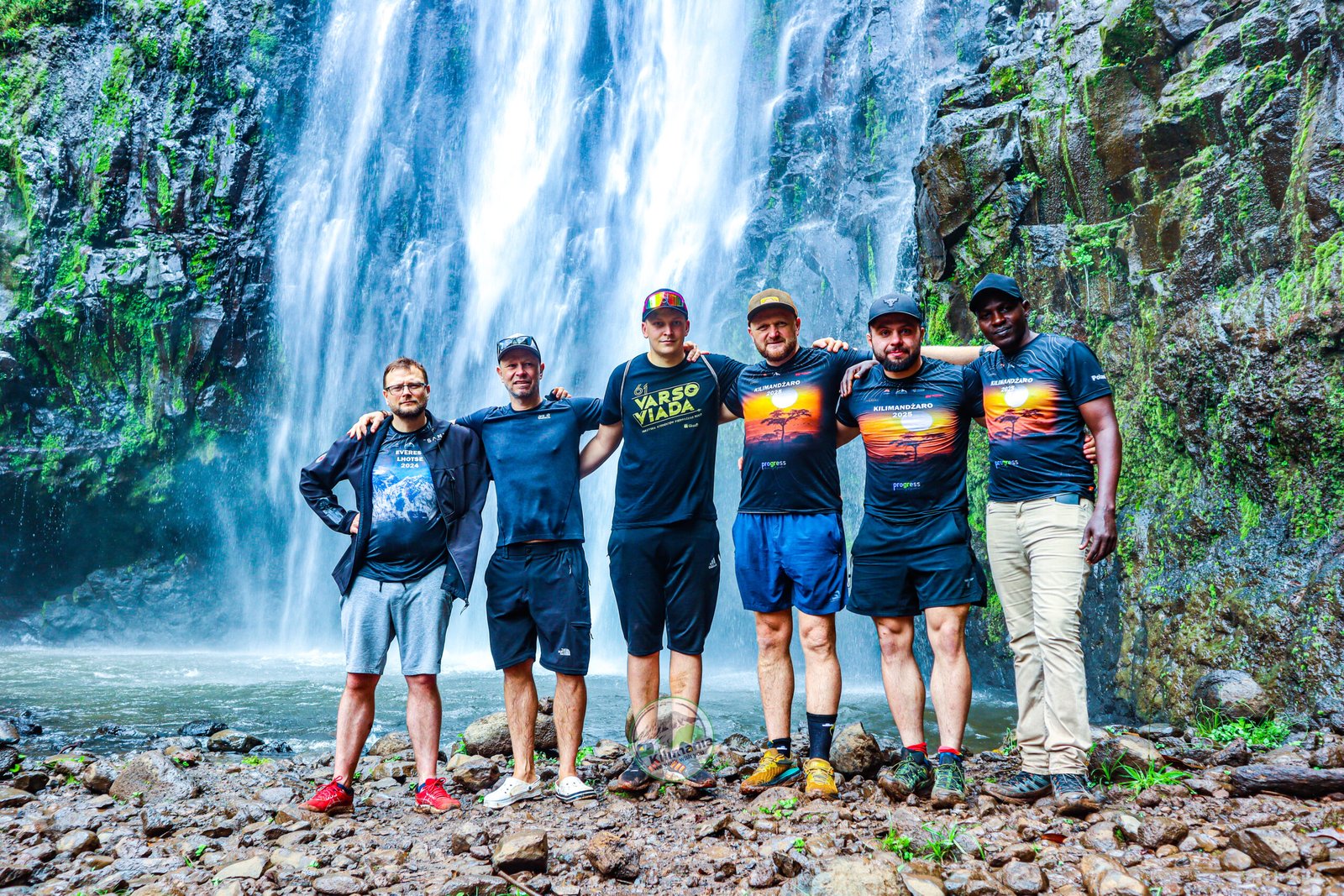
Waterfalls on Kilimanjaro’s lower slopes are strongest from March to May, during the long rains. That’s when Materuni and the falls on the Marangu side run at full force. The trade-off is underfoot: the village paths to both get wetter, and around April, the heaviest of the long-rain months, they can be substantially muddier. Grippy shoes matter far more than a raincoat.
Outside the rains, the falls are still very much there, just calmer, and the walk in is easier going. So the choice is really between spectacle and comfort. Materuni pairs its waterfall with a Chagga coffee visit; the Marangu Waterfalls cultural walk adds village history. (A note on names: that trip is a village-and-waterfall day near Marangu town — not the Kilimanjaro day hike on the Marangu Route, which is covered further down.)
During April and May 2026, Sabinus observed the flip side of peak flow at Ndoro Waterfalls: the pool filled with debris washed down from farms upstream — banana leaves, branches, loose sediment — and the current ran noticeably stronger than usual. Strongest flow and good swimming aren’t the same thing. After heavy rain, don’t assume a waterfall pool is suitable for swimming; your guide checks the flow, debris and pool conditions on the day and makes the call. If a calm swim matters to you in April, Chemka is the trip for it.
Cultural visits such as the Maasai Boma aren’t built around water levels or wildlife movements, so the calendar matters less. Rain mostly changes how comfortable the day feels, not what you see.
Swimming — Chemka and Lake Chala
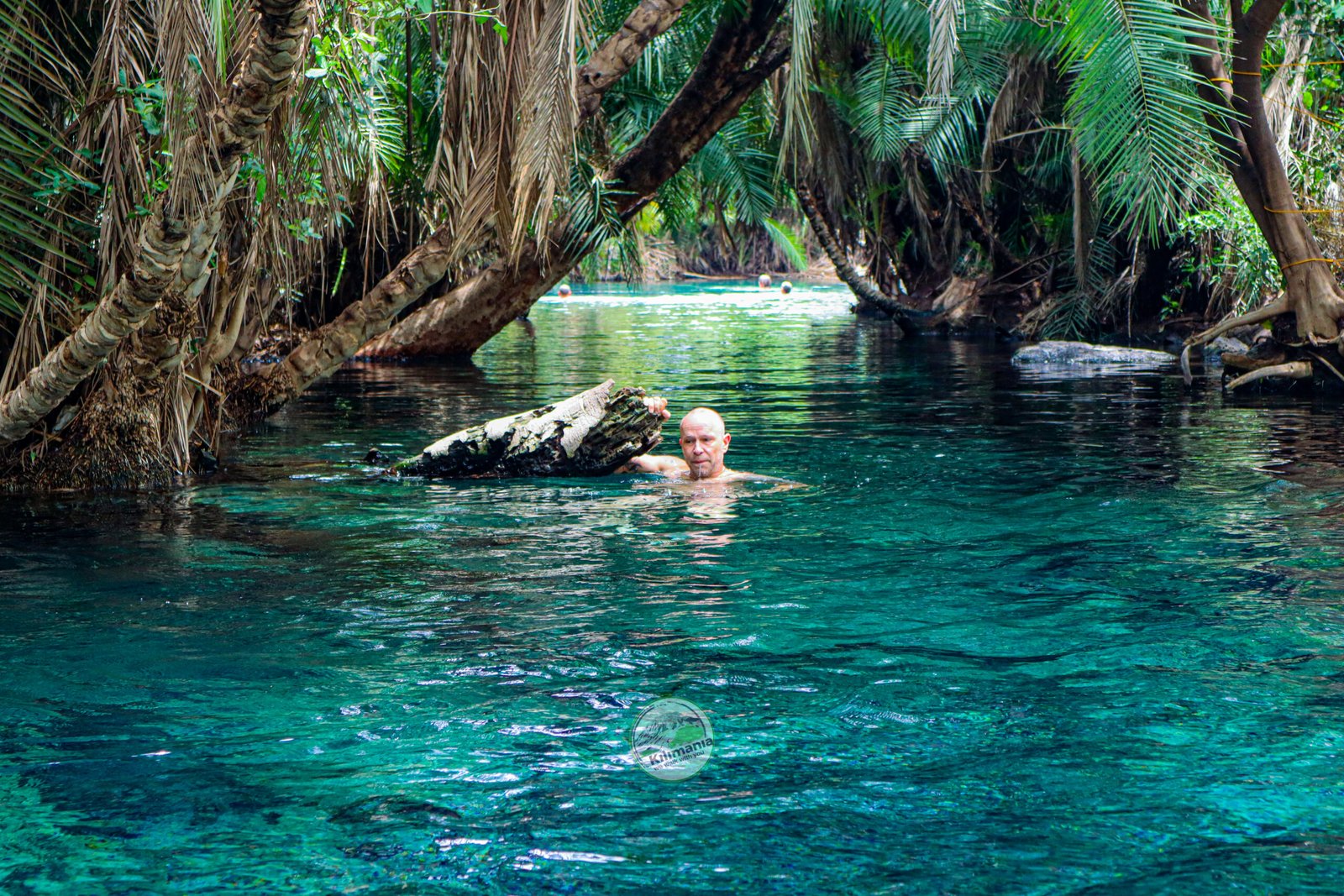
Chemka Hot Springs (also called Kikuletwa) is the swimming day trip from Moshi, and it’s the trip in this guide least affected by the seasons. The water stays at about 27°C year-round, per Kilimania field measurements — warm and comfortable, not hot. The name misleads people: chemka means “boiling” in Swahili, and it describes the way water bubbles up from the ground, not its temperature. The water holds steady in every month, though heavy rain can still affect the roads on the drive. See the Chemka Hot Springs visitor guide for what the day involves.
Lake Chala is not a swimming lake. Crocodiles are present, and a fatal attack on a swimmer was recorded in 2002 (source). The Lake Chala day is a crater-rim walk, and the hike-and-canoe version adds time on the water in a canoe. Water conditions for canoeing are assessed by your guide on the day.
If you’re torn between the two, the Lake Chala vs Chemka comparison sets out the difference, and the guide to the Lake Chala hike and canoe day covers the water side.
Safari parks
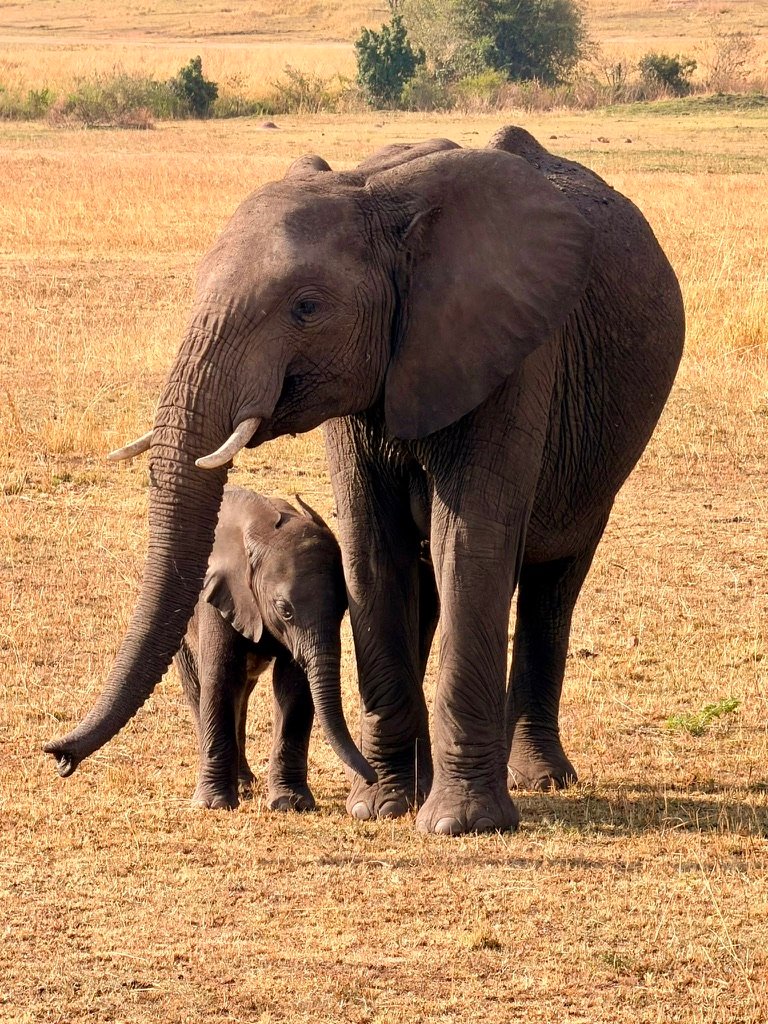
Three parks sit within day-trip reach: Tarangire, Lake Manyara and Arusha National Park. The dry-season pattern is clearest at Tarangire, where from June to October the vegetation thins and wildlife concentrates around the Tarangire River and remaining water, which makes animals easier to find. Lake Manyara and Arusha National Park have different habitats, so ask your guide how the season affects the specific park you’re considering. In the green season, November to April, the grass grows back, birdlife picks up and the parks see fewer visitors; safari prices can be lower, though they vary by operator, park and date.
A clear position, then. If easy wildlife spotting is your priority on a first safari day trip, June to October generally gives the more predictable concentrations. November to April suits travellers who put birdlife and quieter roads ahead of the likeliest large-animal sightings — and no season promises any particular animal.
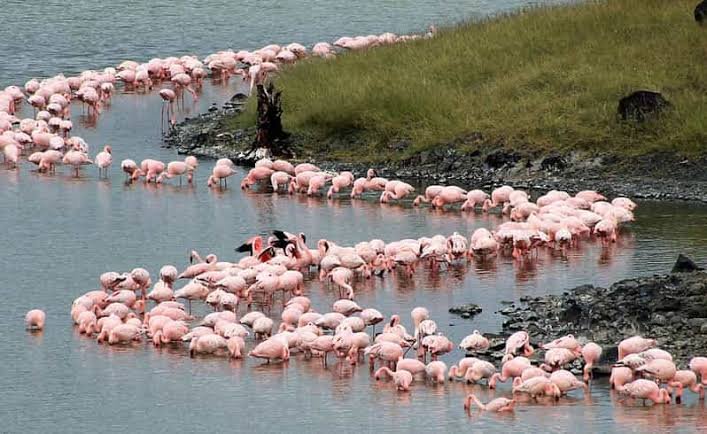
Distance matters as much as the month. On Kilimania’s schedule from Moshi, a Tarangire day is approximately 12–14 hours door to door, with roughly 7–9 hours of driving for approximately 4–5 hours in the park. Arusha National Park is the shortest drive of the three. The Tarangire guide and the Lake Manyara day trip guide go deeper on each park, and the Arusha National Park vs Tarangire comparison helps if you can only fit in one. Planning a multi-day safari instead? The month-by-month guide to multi-day safari timing covers the wider circuit.
Kilimanjaro day hikes
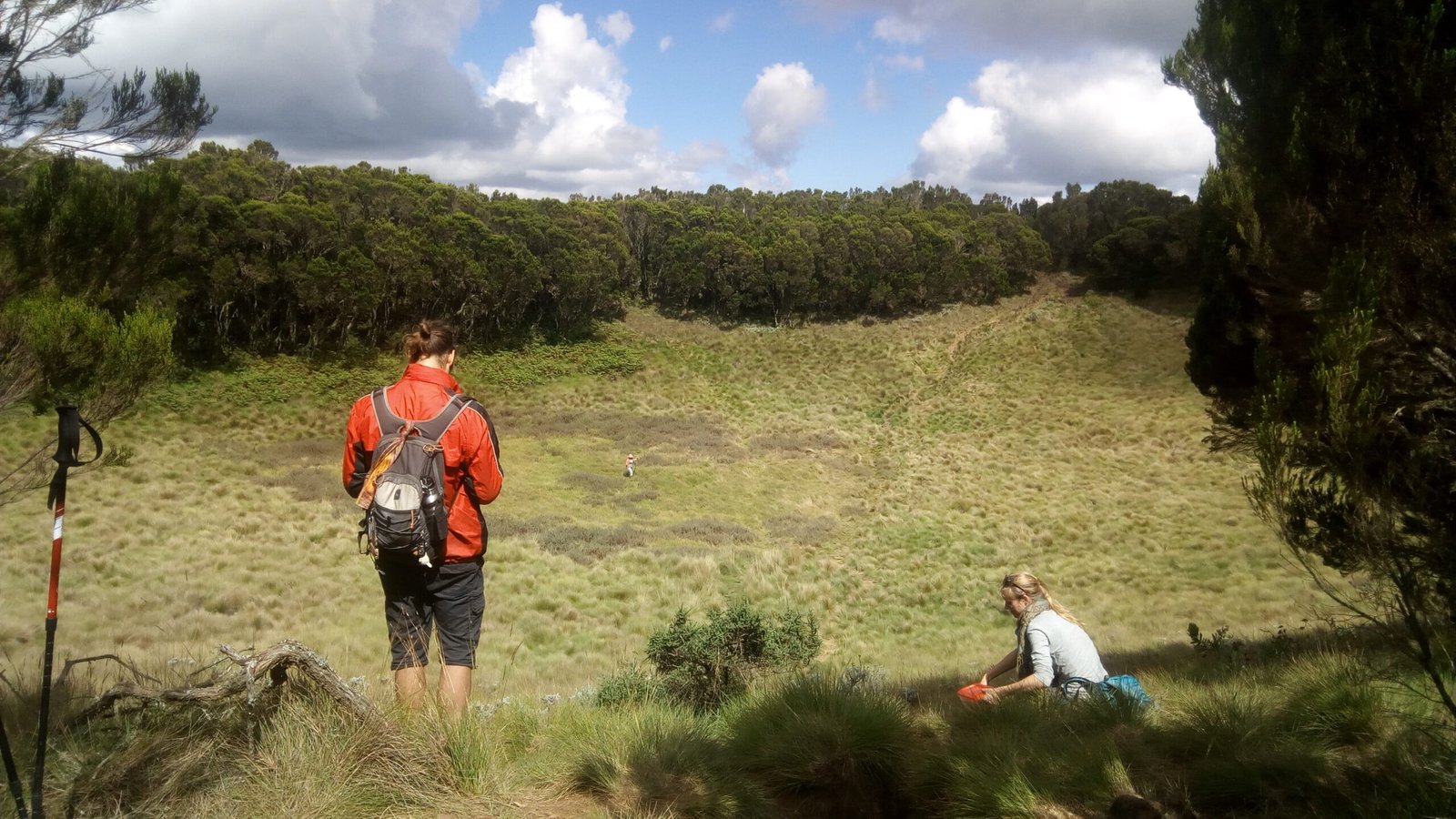
In Kilimania’s experience, Kibo — Kilimanjaro’s summit cone — is most often clear on mornings from June to October and in January and February. Cloud often builds as the day warms, so early starts improve the odds in any month. Even in the clear windows, nobody can promise the mountain will show itself on a given day — which is why the first hour after Kilimania’s usual 8:00 AM start from Marangu Gate matters most (see Sabinus’s note below).
The Kilimanjaro day hike to Mandara Hut climbs through rainforest on the Marangu Route inside Kilimanjaro National Park. In the long rains, pack a rain layer and shoes with real grip; if you want the view as well as the walk, the clear-morning windows are the months to target.
The Shira Plateau day hike gains the most from a clear morning. Torn between the two Kilimanjaro options? See the Marangu day hike vs Shira Plateau comparison.
Altitude on the Shira Plateau. Guests sleep at Moshi level (approximately 900 m) but spend several hours at 3,400–3,800 m on the plateau. Mild altitude sickness symptoms are possible. Inform your guide immediately if you feel unwell — for example headache, nausea, dizziness or unusual breathlessness — and do not go higher if symptoms get worse.
The Mount Meru day trip covers the mountain’s lower slopes only — not the full summit climb to 4,565 m, which takes 3–4 days. If a day on Kilimanjaro leaves you wanting the whole mountain, the Kilimanjaro joining calendar lists group departure dates.
Who Should Choose a Different Month (or Trip)
Every season suits someone. It’s worth being honest about who each one doesn’t suit.
Sabinus’s Note From the Field
On a Marangu day hike to Mandara Hut, we leave Marangu Gate at 8:00 AM and reach the hut around 2:00–3:00 PM, depending on pace and how long the group spends in the rainforest. Most hikers arrive in the early afternoon, eat lunch at the hut, and start back down by 3:30 PM to be through the gate before dark.
The Kibo morning view is a different thing entirely — and this is the part most day-trippers miss. If you are on the mountain early, before the cloud builds, Kibo stands clear with no cloud on it. Clean, sharp, and bright in the morning light. By midday the cloud usually comes up and the peak disappears behind it.
So the honest advice for a Kilimanjaro day hike: start early, and look up in the first hour. That morning view of Kibo is the one you remember.
Frequently Asked Questions
What is the best month for a Tanzania day trip?
There isn’t one month that suits every trip. For clear Kibo views and dry-season safari conditions, June to October is the strongest window. January and February add clear mornings to green-season parks with fewer visitors. For waterfalls at full force, choose March to May. Chemka Hot Springs stays the same in every month, so it fits any date.
Is Tanzania good for day trips in the rainy season?
Yes, for the right trips. The long rains (March to May, heaviest in April) bring the strongest waterfalls, and the green season brings more birdlife and fewer visitors in the parks. The trade-offs are muddier paths and less reliable Kilimanjaro views. Chemka Hot Springs is the least season-sensitive trip, which makes it a dependable wet-season choice.
When are Materuni and Marangu Waterfalls at their strongest?
Both run strongest from March to May, during the long rains, with April the wettest month. Expect full, loud falls but slippery village paths, so shoes with real grip matter. In the dry months the falls are calmer and the walk is easier. After heavy rain, don’t assume the pool is suitable for swimming; your guide checks the flow and debris on the day.
What time of year has the clearest views of Kilimanjaro?
Kibo, Kilimanjaro’s summit cone, is most often clear on mornings from June to October and in January and February. In Kilimania’s experience it is often clearer early in the day, with cloud often building by midday, so early starts improve the odds in any month. Views are less reliable during the long rains (March to May) and short rains (November to December), and no date can promise a clear mountain.
Is Chemka Hot Springs open all year?
Yes. Chemka runs in every month, and its water conditions hold steady through the seasons, though heavy rain can affect the roads. The water stays at about 27°C year-round, per Kilimania field measurements — warm, not hot. “Chemka” means “boiling” in Swahili, a reference to how the water bubbles up from the ground rather than its temperature. It’s the swimming day trip from Moshi.
When is the best time for a safari day trip from Moshi or Arusha?
If easy wildlife spotting is the priority, June to October generally offers the more predictable viewing: vegetation thins and animals concentrate around water, most clearly at Tarangire. November to April is the green season, with more birdlife, fewer visitors and, depending on operator and dates, lower prices. Tarangire, Lake Manyara and Arusha National Park are all within day-trip reach, though Tarangire makes for a long day from Moshi.
What are the short rains and do they affect day trips?
The short rains fall in November and December. They mark the start of the safari green season, with more birdlife and fewer visitors, and they make Kilimanjaro views less reliable than in the dry months. Expect wetter paths and more cloud; Chemka’s water conditions hold steady either way.
Is January a good time for Tanzania day trips?
Yes. January is one of the two dry-season months, alongside February, and Kibo mornings are most often clear in this window. The safari parks are still in their green season (a term for vegetation and visitor levels, not rainfall), with more birdlife and fewer visitors. Waterfalls run below their March–May peak, and Chemka is unchanged. It is the only window where clear Kibo mornings overlap with green-season parks.
Do day-trip prices change by season?
Kilimania Adventure’s published 2026 day-trip rate card sets prices by group size, not by month — for example, Chemka Hot Springs is from $70 per person for a private group of five. Separately, the green season (November to April) can bring lower prices elsewhere in the safari market, though that varies by operator, park and date. The day-trip cost guide explains what’s included.
The Short Version
Four patterns cover almost every decision: dry seasons in June–October and January–February, long rains in March–May, short rains in November–December, and Chemka unchanged through all twelve months. Pick the trip first, then the month — not the other way round. If you’re still choosing between trips, this local guide to day trips from Moshi is a good next read.
What travellers say
Independent reviews from travellers who booked with Kilimania Adventure in Moshi.
Read or leave a review on Google
About the author: Sabinus Msimba
22+ years guiding on Kilimanjaro and around Moshi, with 300+ personal Uhuru Peak summits. KINAPA-licensed. Sabinus runs and oversees the day trips described in this guide.
Disclosure: This guide was written by Sabinus Msimba of Kilimania Adventure, which operates the day trips linked here. Seasonal patterns are Kilimania’s own operational observations, not official meteorological data, and weather on any given day can differ. Prices are from Kilimania’s 2026 rate card (as of September 2026), per person for a private group of five, and may change; your written quote at booking is the confirmed figure. Park administration references point to TANAPA; Kilimanjaro’s World Heritage status is listed by UNESCO. The Tripadvisor rating shown (5.0 from 32 reviews) is as displayed on Tripadvisor in September 2026 and may change. Last updated September 2026; reviewed annually.