Umbwe Route Kilimanjaro: Why Most Climbers Should Not Do It
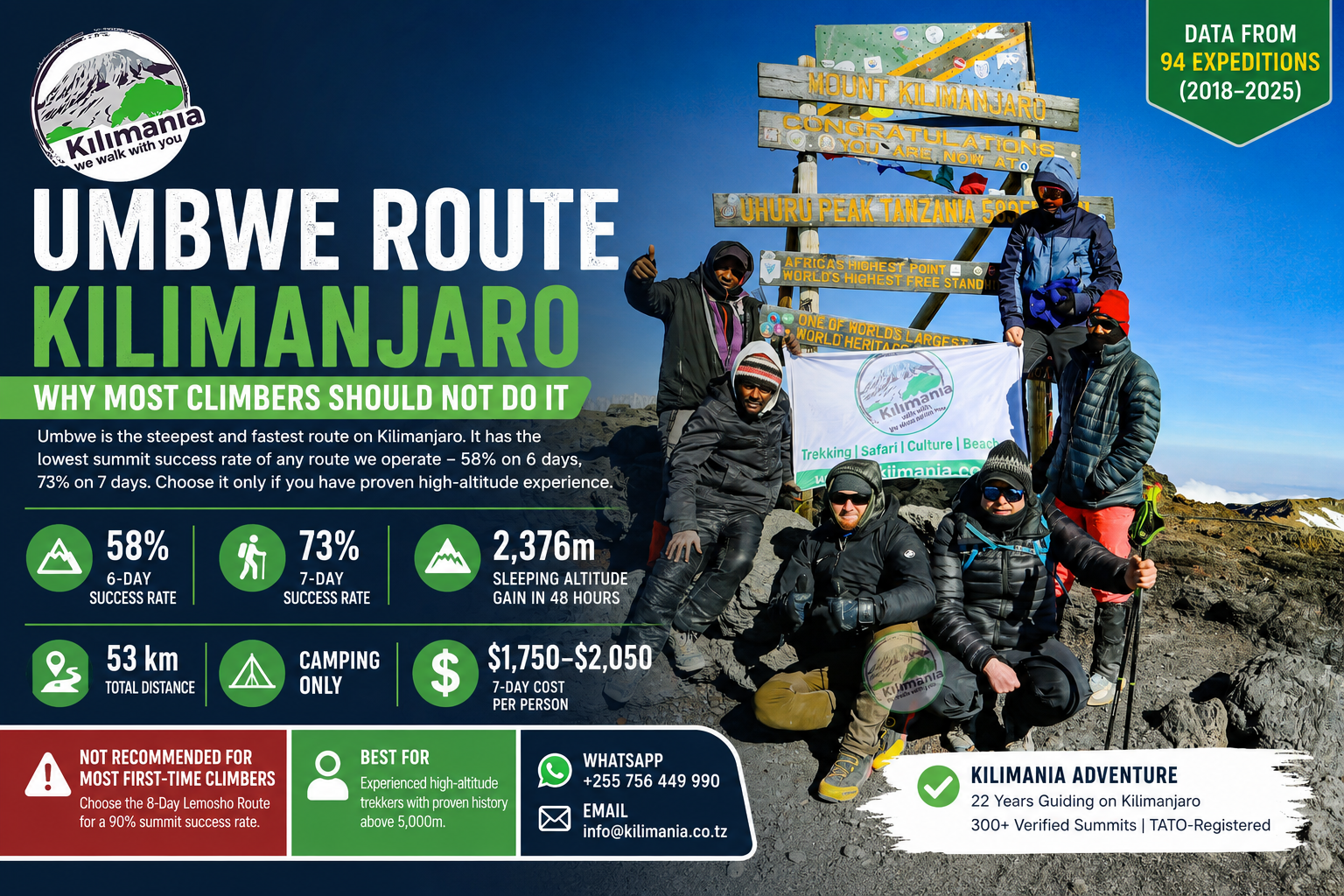
Umbwe Route Kilimanjaro is the fastest and hardest route on the mountain by ascent profile, not by technical difficulty. It produces the lowest summit success rate of any path we operate — 58% on a 6-day itinerary, 73% on 7 days. Most people who want to attempt it should not.
That is not a warning designed to excite you. It is the operational reality drawn from 94 expeditions on this route since 2018, reviewed against TANAPA-verified fee schedules and our own guide reports.
If you are considering this climb because it sounds hardcore, or because it is the shortest option on a list, stop here and read our 7-Day Machame Route or 8-Day Lemosho Route guides instead. If you are considering it because you have successfully slept above 5,000m before — Everest Base Camp, Aconcagua, Mount Kenya, or similar — keep reading. This guide exists to help you honestly assess whether you are the exception.
Quick Answer
Umbwe is the steepest and most direct route on Kilimanjaro, carrying the lowest summit success rate of any path we operate — 58% on the 6-day itinerary, 73% on 7 days. The cause is altitude, not terrain: climbers gain roughly 2,376m of sleeping elevation in the first 48 hours, far faster than the body can safely acclimatise. This route suits a narrow group of experienced high-altitude trekkers with a documented history above 5,000m. Most first-time climbers should choose the 8-day Lemosho Route instead, where our success rate is 90%.
The Bottom Line: Umbwe is not a budget shortcut or a bragging-rights route — it is a specialist path with a real, data-backed chance of failure even when you do everything right. If you have not slept successfully above 5,000m before, the 15–32 point success-rate gap between this route and Lemosho is not a risk worth taking for a shorter itinerary.
What Is the Umbwe Route on Kilimanjaro?
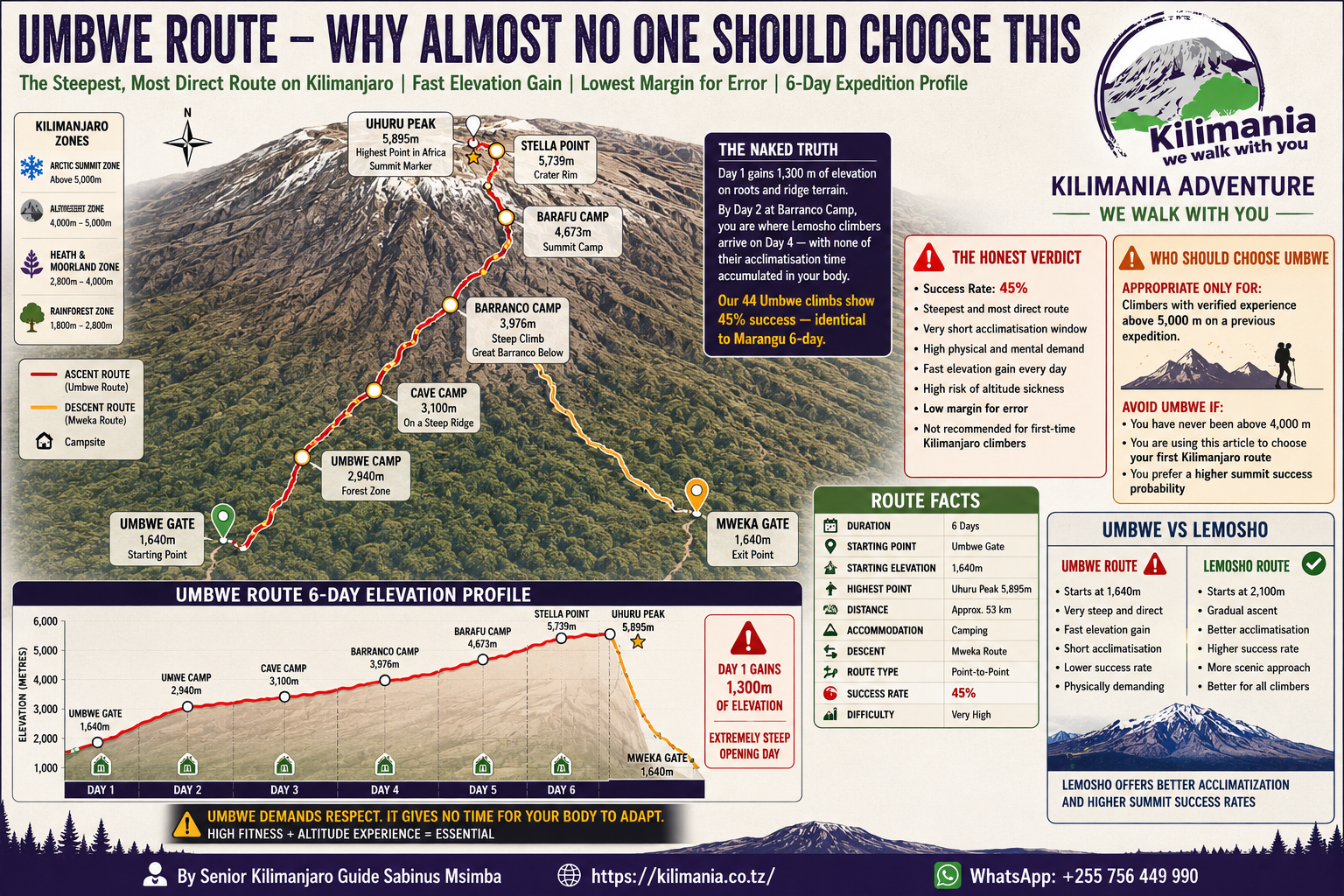
Short answer: Umbwe is the steepest, most direct ascent path on Kilimanjaro, climbing from the south through dense rainforest and a narrow ridge before joining the shared southern circuit at Barranco Camp (3,976m). Its speed to altitude — not its terrain — is what makes it the hardest route to summit successfully.| Route Detail | 2026 Data |
|---|---|
| Total Route Distance | 53 km (33 miles) |
| Available Itineraries | 6 Days (standard) · 7 Days (recommended) |
| Starting Point | Umbwe Gate (1,600m), Kilimanjaro National Park |
| Highest Point | Uhuru Peak (5,895m) |
| Altitude Gain — First 48 Hours | 2,376m sleeping elevation gain |
| Summit Success Rate (6-Day) | 58% — Kilimania Adventure data, 94 expeditions |
| Summit Success Rate (7-Day) | 73% — Kilimania Adventure data, 94 expeditions |
| Recommended For | Experienced trekkers with documented altitude history above 5,000m |
| Accommodation | Mountain camping only — no huts at any point |
| Acclimatisation Profile | Poor — worst of any standard Kilimanjaro route |
| Route Difficulty | Very Difficult — steep, direct, physically demanding |
| Crowd Levels | Very Low — under 1% of Kilimanjaro annual traffic |
| Scenery Highlights | Rainforest, Barranco Valley, Southern Glaciers, Karanga Valley |
| Primary Risk Factor | Rapid altitude gain accelerates acute mountain sickness (AMS) onset |
| Descent Route | Mweka Route (all Umbwe climbers) |
| Best Choice for Most Climbers? | No. Lemosho or Northern Circuit are better options. |
Data source: Kilimania Adventure mountain operations database, 2018–2025, 94 Umbwe expeditions. Success defined as reaching Uhuru Peak (5,895m). Weather-closure expeditions excluded.
This route does not give you the best chance of standing at Uhuru Peak. The 8-day Lemosho Route does that, at a 90% success rate. Umbwe serves a narrow group of trekkers who acclimatise quickly and prioritise solitude over summit probability. For everyone else, a 15–32 point lower success rate is not a badge of ambition — it is an avoidable cost.
Umbwe Route Key Entities
- Mountain: Mount Kilimanjaro, Tanzania
- National Park: Kilimanjaro National Park (KINAPA)
- Governing Authority: Tanzania National Parks Authority (TANAPA)
- Starting Gate: Umbwe Gate (1,600m)
- Summit: Uhuru Peak (5,895m) on the Kibo volcanic cone
- Main Camps: Umbwe Cave Camp (2,850m) · Barranco Camp (3,976m) · Karanga Camp (3,995m) · Barafu Camp (4,673m)
- Descent Route: Mweka Route → Mweka Gate (1,640m)
- Porter Welfare: Kilimanjaro Porters Assistance Project (KPAP)
- Operator Verification: Tanzania Association of Tour Operators (TATO)
Why Does the Umbwe Route Have the Lowest Summit Success Rate?
Short answer: Umbwe gains 2,376m of sleeping altitude in the first 48 hours — faster than any other standard Kilimanjaro path. Most bodies cannot produce enough red blood cells in that window to function safely above 4,000m, which produces a 58% success rate on the 6-day schedule against 90%+ on 8-day Lemosho.The route is not technically difficult. There is no roped climbing, no glacier crossing, no ice axes. The terrain — steep rainforest, an exposed ridge, a rocky scramble — is demanding but manageable for any fit, experienced trekker.
The problem is altitude gain velocity. On Day 1, you climb from 1,600m to 2,850m in 5–7 hours. On Day 2, you push to Barranco Camp at 3,976m. Within 48 hours, your sleeping altitude has increased by 2,376m. Safe ascent guidelines above 3,000m recommend gaining no more than 300–500m of sleeping altitude per day — this route exceeds that by a factor of four on each of its opening two days.
Your body’s altitude response involves overlapping physiological processes: kidneys release erythropoietin (EPO) to stimulate red blood cell production; ventilation rate increases immediately, causing respiratory alkalosis that the kidneys then spend 2–3 nights correcting; and plasma volume contracts within 24–48 hours. Mature red blood cells take 5–7 days to appear in measurable numbers, per Wilderness Medical Society guidelines. Umbwe does not provide that time.
Lemosho reaches the same Barranco Camp on Day 4 or 5, after three additional acclimatisation nights. That four-versus-two-day difference is the entire mechanical reason one route achieves 90% and the other 58%.
High Altitude Pulmonary Edema (HAPE) — fluid accumulation in the lungs — and High Altitude Cerebral Edema (HACE) — fluid on the brain — are the serious, potentially fatal consequences of rapid ascent without adequate acclimatisation. Both HAPE and HACE risk increase significantly when ascending faster than 500m of sleeping altitude per day above 3,000m. Umbwe’s ascent profile on Days 1 and 2 more than doubles that threshold. Every Kilimania expedition carries emergency supplemental oxygen and pulse oximeters for this reason.
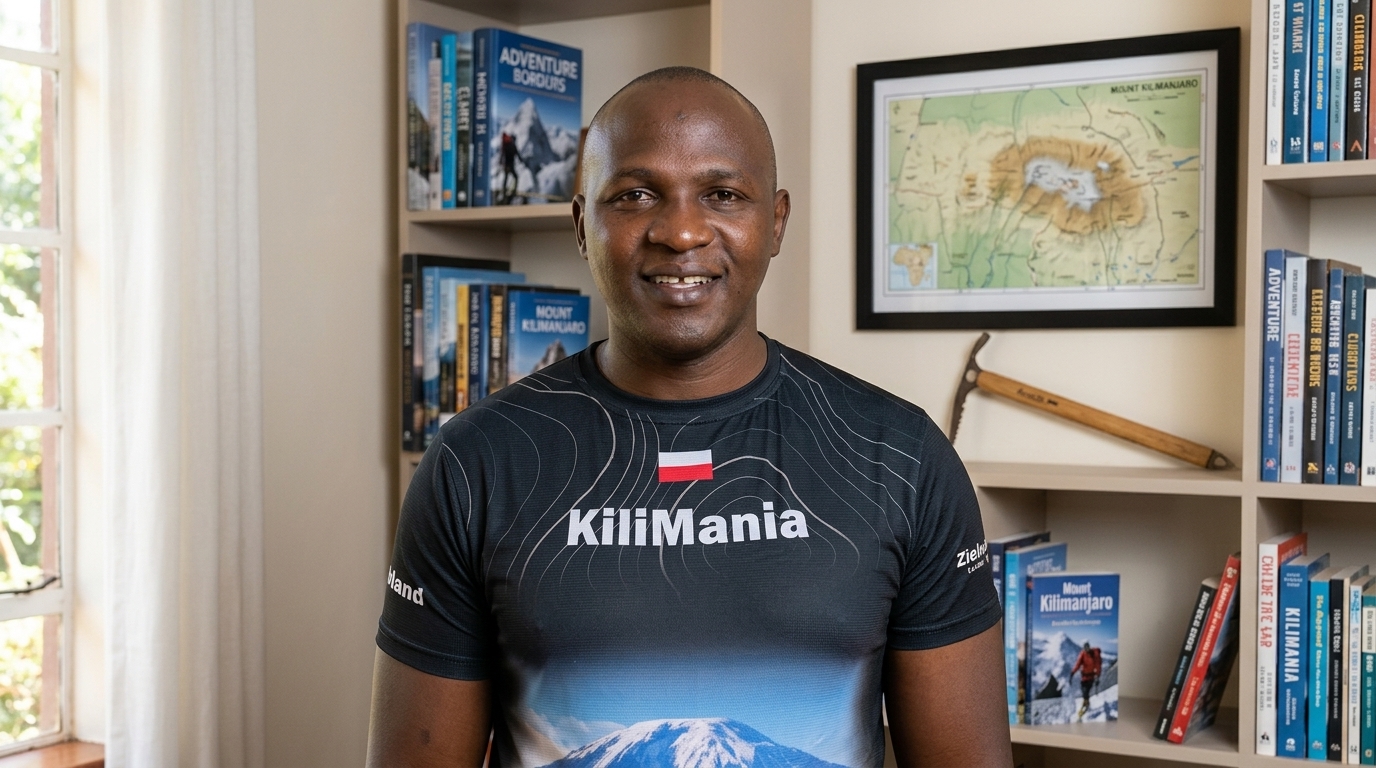
“Umbwe consistently attracts overconfident climbers — ultramarathon runners, experienced sea-level trekkers, people drawn to the route that sounds hardest. After 22 years of guiding, I have watched this pattern repeatedly. The mountain does not care how many races you have finished. It asks how fast your body produces red blood cells. I have turned back strong, fit people here more than on any other path I guide. A client who runs 50km ultras at sea level is not immune to altitude. On Day 2, when their SpO₂ drops to 68% and they cannot finish dinner, fitness does not help them. Time at altitude would have helped. This route does not give you that time.”
— Sabinus Msimba, Senior Mountain Guide, Kilimania Adventure (22 years · 300+ Uhuru summits)For route-by-route comparisons, see our Kilimanjaro Routes guide and Climbing Kilimanjaro Guide 2026.
Who Should Not Attempt the Umbwe Route?
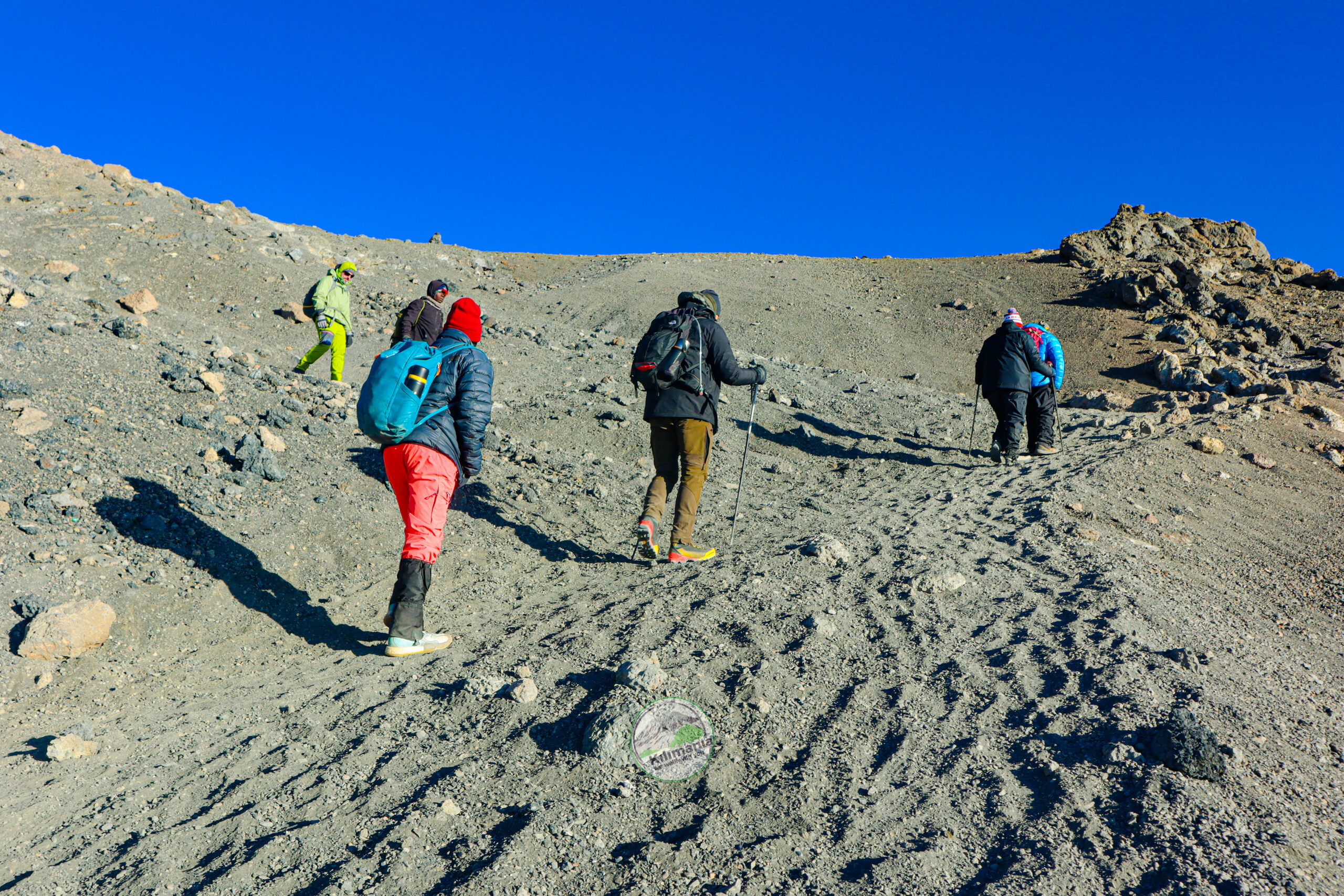
Short answer: Most Kilimanjaro climbers should not use this route. Based on 94 expeditions, the leading predictor of failure is choosing Umbwe for the wrong reason — not fitness, not weather.⛔ Do Not Attempt Umbwe If Any of the Following Applies
- You are choosing it because it sounds hardcore, or it is the shortest option on a list. This is the most common reason people enquire — and the leading predictor of failure. Altitude does not reward ambition.
- You have never slept above 4,000m before. Find out how your body handles altitude on a lower mountain first. See our guide on can a beginner climb Kilimanjaro.
- You have no documented acclimatisation record above 4,500m. Sea-level fitness tells us almost nothing relevant here.
- You have a history of moderate or severe AMS on any previous trek.
- You cannot commit to the 7-day itinerary. The 6-day version leaves almost no physiological margin.
- You are over 55 with no recent high-altitude experience. See climbing Kilimanjaro over 50 for longer, more graduated alternatives.
- You dislike exposure or steep drop-offs. Day 2’s ridge is not avoidable terrain.
- You believe fitness compensates for acclimatisation. It does not — this belief accounts for most strong, capable people who turn back at 4,600m with a severe headache.
If any of this describes you, choose Lemosho or the Northern Circuit instead — both give a substantially higher probability of reaching Uhuru Peak.
📥 Free Download: Kilimanjaro 12-Week Training Calendar
The same week-by-week training plan used by Kilimania guides, built from patterns observed across 1,247+ guided climbs.
- 12-week hiking and endurance plan
- Pack weight progression schedule
- Back-to-back training weekends
- Peak and taper strategy
- Route recommendations based on fitness level
Prepared by Sabinus Msimba, Senior Kilimanjaro Guide and Co-founder of Kilimania Adventure.
Who Is the Umbwe Route Actually Right For?
Short answer: A small group of experienced high-altitude trekkers with a documented record of sleeping above 5,000m without serious AMS, who accept a 73% success rate on the recommended 7-day schedule and value solitude over summit probability.✅ You May Be Right for This Route If:
- You have slept above 5,000m successfully within the past 18 months — Everest Base Camp (5,364m), Island Peak (6,189m), Aconcagua’s upper camps, or Mount Kenya’s Point Lenana (4,985m) can qualify, with individual review.
- You have demonstrated rapid acclimatisation across multiple prior high-altitude trips, not just one.
- You value solitude — this route carries roughly 1% of Kilimanjaro’s annual traffic, and the first two days are typically solo.
- You have already summited Kilimanjaro on a longer route and want a different experience on a return climb.
If this is you: WhatsApp Sabinus Msimba at +255 756 449 990 with your full altitude history — where, how high you slept, what symptoms you had, and how recently. We will give you a direct answer, including “no” if your history does not support it. We turn away more Umbwe enquiries than we accept.
What Does the 6-Day Umbwe Itinerary Look Like Day by Day?
Short answer: The 6-day itinerary runs from Umbwe Gate (1,600m) to Uhuru Peak (5,895m), descending via Mweka Gate. It shares the summit approach with Machame and Lemosho from Barranco Camp onward. Day 2 is where most acclimatisation problems begin.Day 1 — Umbwe Gate (1,600m) to Umbwe Cave Camp (2,850m)
Distance: 11 km | Time: 5–7 hours | Elevation gain: +1,250m
Dense, humid montane rainforest with no warm-up section — the trail climbs immediately and rarely flattens. High humidity and thick canopy create warmth that exceeds what the altitude suggests. The genuine highlight is complete isolation: giant fig trees, colobus monkeys overhead, no other groups on the trail. By camp, expect slightly laboured breathing on uphill stretches and a mild evening headache.
Day 2 — Umbwe Cave Camp (2,850m) to Barranco Camp (3,976m)
Distance: 6 km | Time: 5–7 hours | Elevation gain: +1,126m
You leave the forest for a narrow ridge with exposure on both sides, using your hands on several sections. This is the most physiologically aggressive day on any standard Kilimanjaro itinerary — you arrive at 3,976m having had only two nights to acclimatise. Persistent headache, nausea, and reduced appetite by evening are common and expected, not necessarily a turn-back signal. Our guides check every client with a calibrated pulse oximeter; SpO₂ readings frequently sit in the low 70s here. Below 65% combined with moderate AMS symptoms triggers a descent conversation.
Day 3 — Barranco Camp (3,976m) to Karanga Camp (3,995m)
Distance: 5 km | Time: 4–5 hours | Net gain: +19m (via the 270m Barranco Wall)
The Barranco Wall opens the day — a hands-on rock scramble requiring no rope or harness but demanding full use of hands and feet. Ascending it after two days of aggressive altitude gain is harder than it looks on paper. The view from the top of the Wall is among the finest on the mountain. The modest “climb high, sleep low” benefit of topping the Wall before descending to Karanga gives a small but real acclimatisation boost.
Day 4 — Karanga Camp (3,995m) to Barafu Camp (4,673m)
Distance: 4 km | Time: 3–4 hours | Elevation gain: +678m
Vegetation disappears into bare volcanic scree. At 4,673m, available oxygen is roughly 58% of sea level — lifting your daypack takes conscious effort. You arrive early afternoon, eat lightly, and rest before a midnight departure; sleep is shallow for almost everyone. SpO₂ at Barafu typically runs 75–82% for well-acclimatised clients. Below 70% combined with inability to eat or severe nausea triggers a summit-night decision conversation.
Day 5 — Barafu Camp (4,673m) → Stella Point (5,756m) → Uhuru Peak (5,895m) → Mweka Camp (3,068m)
Distance: 17 km | Time: 12–16 hours | Gain: +1,222m | Descent: −2,827m
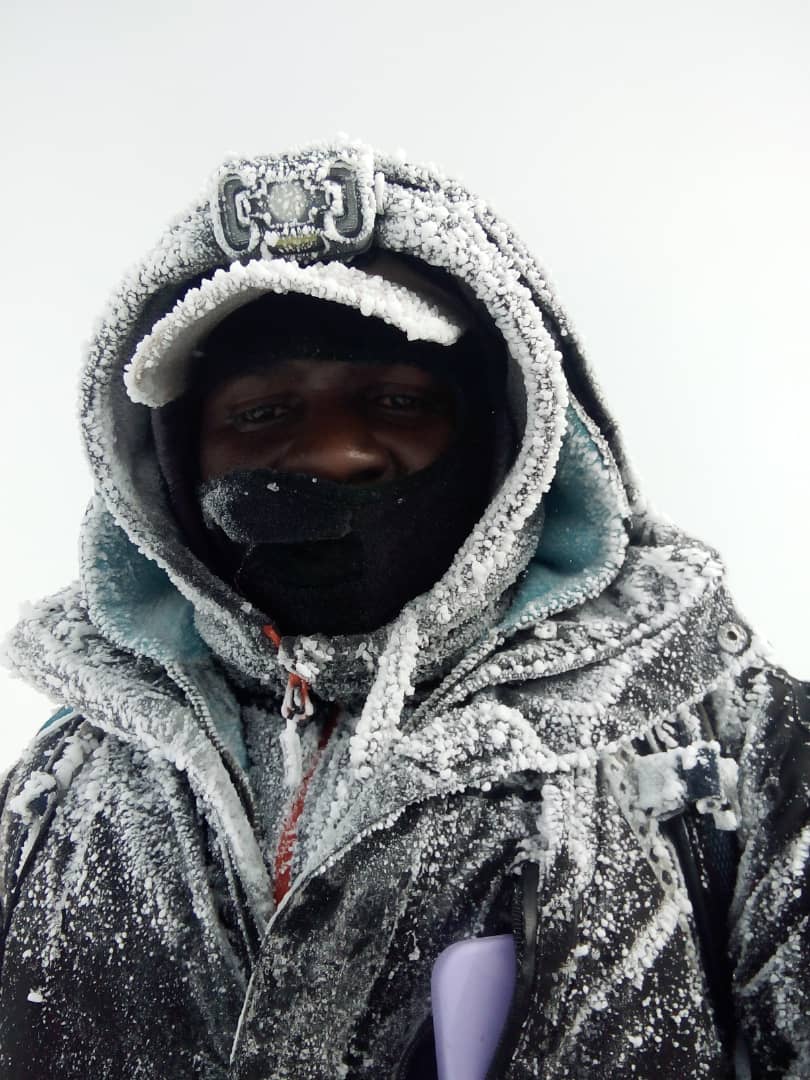
Midnight departure on loose scree switchbacks. Temperature at Barafu at 2am in peak season is −12°C with wind. At Stella Point, blood oxygen saturation sits in the low 60s regardless of preparation — an unavoidable consequence of elevation. Summit night on the Umbwe Route is not harder than on Machame; the path and conditions are identical. What differs is the fewer nights you had to prepare for it. Sunrise from Stella Point, with Kilimanjaro’s shadow stretching across the Tanzanian plains below, is the genuine highlight.
Day 6 — Mweka Camp (3,068m) to Mweka Gate (1,640m)
Distance: 10 km | Time: 3–4 hours | Descent: −1,428m
Descending rainforest trail, well-maintained but frequently muddy. Trekking poles are essential, not optional, after the previous day’s 2,827m drop. Your crew sings at the gate. You receive your TANAPA summit certificate — green for Stella Point, gold for Uhuru Peak.
Why Do We Only Recommend the 7-Day Variation?
Short answer: Adding one acclimatisation day after Barranco Camp raises our documented success rate from 58% to 73%. One extra day. Fifteen percentage points.We do not recommend the 6-day itinerary for most climbers. It exists in full detail above because most operators offer it as standard, and you need to understand exactly what it demands of your body before committing.
The 7-day version typically adds a second night at Karanga, or an acclimatisation hike to roughly 4,400m before returning to sleep at 3,995m. If an operator offers a 6-day schedule without first asking about your altitude history, that is a meaningful red flag. If they offer a 5-day version as a legitimate option, walk away.
See our full Mount Kilimanjaro Climbing page for current itineraries and departure dates.
How Does Umbwe’s Acclimatisation Profile Compare to Lemosho’s?
Short answer: Umbwe gains 2,376m of sleeping altitude in 48 hours; the 8-day Lemosho takes five days to reach the same point. That four-versus-two-day gap is the entire reason for the 32-point success-rate difference between the routes.Umbwe Route — Daily Altitude and Acclimatisation Profile
| Day | Camp Transition | Sleeping Gain | Risk Level | Notes |
|---|---|---|---|---|
| Day 1 | Umbwe Gate (1,600m) → Umbwe Cave Camp (2,850m) | +1,250m | Moderate | Steep rainforest ascent; mild headache common by evening |
| Day 2 | Umbwe Cave Camp (2,850m) → Barranco Camp (3,976m) | +1,126m | High | One of the fastest altitude gains on any standard Kilimanjaro route |
| Day 3 | Barranco Camp (3,976m) → Karanga Camp (3,995m) | +19m net | Low | “Climb high, sleep low” via Barranco Wall; small acclimatisation benefit |
| Day 4 | Karanga Camp (3,995m) → Barafu Camp (4,673m) | +678m | High | Final preparation before summit; SpO₂ typically 75–82% |
| Day 5 | Barafu Camp → Uhuru Peak (5,895m) → Mweka Camp (3,068m) | −1,605m net (after +1,222m summit gain) | Very High | Summit night; 12–16 hours; midnight departure |
8-Day Lemosho Route — Daily Altitude and Acclimatisation Profile
| Day | Camp Transition | Sleeping Gain | Risk Level | Notes |
|---|---|---|---|---|
| Day 1 | Londorossi Gate (2,100m) → Mti Mkubwa Camp (2,650m) | +550m | Low | Gradual rainforest ascent; excellent early acclimatisation |
| Day 2 | Mti Mkubwa Camp (2,650m) → Shira 1 Camp (3,500m) | +850m | Moderate | Shira Plateau crossing; expansive Kibo views |
| Day 3 | Shira 1 Camp (3,500m) → Shira 2 Camp (3,850m) | +350m | Low | Short day designed for acclimatisation |
| Day 4 | Shira 2 (3,850m) → Lava Tower (4,600m) → Barranco Camp (3,950m) | +100m net | Low | Key acclimatisation day; reaches Barranco on Day 4 vs. Umbwe’s Day 2 |
| Day 5 | Barranco Camp (3,950m) → Karanga Camp (4,640m) | +690m | Moderate | Barranco Wall scramble; approaching high camp |
The difference is not in summit night — both routes follow an identical path from Barafu upward. It is entirely in the days before. Lemosho gives your body five nights before sleeping above 3,900m; Umbwe gives it two. That is the physiological reason one route achieves 90% and the other 58%.
For more on this, see how hard is Kilimanjaro and our Kilimanjaro success rate by route breakdown.
What Does Our Internal Success Rate Data Show?
Short answer: Across 94 Umbwe expeditions (2018–2025), the 6-day itinerary produced a 58% summit success rate and the 7-day produced 73%. The primary failure driver is insufficient acclimatisation time, not fitness or weather.| Route | Kilimania Success Rate | Primary Failure Cause | Best For | Overall Risk |
|---|---|---|---|---|
| 6-Day Umbwe | 58% | Rapid altitude gain; insufficient acclimatisation time | Experienced high-altitude trekkers with documented history above 5,000m only | Very High |
| 7-Day Umbwe | 73% | Altitude sickness; fewer acclimatisation nights than longer routes | Experienced trekkers seeking solitude and a steep challenge | High |
| 7-Day Machame | 78% | AMS at Barafu from insufficient acclimatisation on shorter schedules | Fit trekkers wanting a scenic southern approach | Moderate–High |
| 8-Day Lemosho | 90% | Individual physiological response; rare weather events | Most first-time Kilimanjaro climbers | Moderate |
| 9-Day Northern Circuit | 96% | Rare individual AMS events; weather | Climbers prioritising maximum summit probability | Low |
Data: Kilimania Adventure mountain operations database, 2018–2025. 94 Umbwe expeditions drawn from a broader pool of 7,800+ guided clients across all routes. Success = reaching Uhuru Peak (5,895m). Weather-closure expeditions excluded. Altitude observations from daily guide reports and calibrated pulse oximeter readings.
The climbers who summit on the 6-day version share one or more traits: prior successful sleep above 5,000m with no significant symptoms, exceptional individual acclimatisation response, or a prior Kilimanjaro summit on a longer route used as a physiological baseline. Altitude history is the decisive variable. Fitness is secondary in every case.
What Does an Umbwe Route Climb Cost?
Short answer: A 7-day Umbwe climb with Kilimania ranges from $1,750 to $2,050 per person depending on group size. All TANAPA park fees ($70/day per person, verified at kilimanjaranationalpark.go.tz), licensed guides, KPAP-compliant porters, camping equipment, all mountain meals, emergency oxygen, and airport transfers are included.| Package | Solo | 2 Climbers | 4 Climbers | 6 Climbers |
|---|---|---|---|---|
| 6-Day Umbwe Success rate: 58% |
US$1,900 | US$1,800/person | US$1,700/person | US$1,600/person |
| 7-Day Umbwe ✓ Recommended Success rate: 73% |
US$2,050 | US$1,950/person | US$1,850/person | US$1,750/person |
A $100 deposit secures your dates. Balance is due 30 days before departure.
✅ Included in All Kilimania Umbwe Packages
- All TANAPA/KINAPA park fees, camping fees, and rescue fees — $70/person/day conservation rate, verified at kilimanjaranationalpark.go.tz
- KINAPA-licensed senior mountain guide + certified assistant guides
- KPAP-compliant porter team (max 20kg porter load, verified wages per kiliporters.org rates)
- Mountain cook · four-season camping equipment · mess tent · private toilet tent
- All mountain meals and treated drinking water
- Emergency supplemental oxygen · calibrated pulse oximeters · first aid kit
- JRO airport transfers · two hotel nights in Moshi (pre-climb)
⚠️ Not Included — Budget for These Separately
- International flights to Kilimanjaro International Airport (JRO)
- Tanzania e-visa ($50 most nationalities; $100 US citizens) — apply at immigration.go.tz
- Travel insurance — mandatory; must cover trekking to 5,895m and helicopter evacuation
- Personal gear and clothing
- Crew tips: $260–$350 per person for 7 days — see our Kilimanjaro tipping guide
For a full cost breakdown, see our Kilimanjaro cost guide and Kilimanjaro park fees breakdown.
📋 Get the Guide-Verified Packing Checklist
The exact list our guides check at the gate — sleeping bag ratings, Moshi rental prices, and the porter weight limit, all in one printable PDF.
Download the Free PDF ChecklistWhat Should You Know Before Booking This Route?
Short answer: Umbwe is entirely camping, with very limited water at the first two camps and the lowest crowd levels on the mountain. A private toilet tent is non-negotiable.Water Sources by Camp
| Camp | Water Source | Reliability |
|---|---|---|
| Umbwe Cave Camp (2,850m) | None at camp — all water carried by crew from lower elevations | Fully dependent on support team |
| Barranco Camp (3,976m) | Natural stream below camp; boiled/filtered/treated before use | Generally reliable year-round |
| Karanga Camp (3,995m) | Small seasonal stream near camp | Moderate — season-dependent; extra water carried in dry periods |
| Barafu Camp (4,673m) | None — all water carried by porters from below ~4,200m | Entirely dependent on expedition logistics |
Roughly 500 climbers use this route per year — under 1% of Kilimanjaro’s total annual traffic. Days 1–2 are typically completely solo; from Barranco Camp onward you join the shared southern circuit with Machame and Lemosho climbers.
Best seasons: January–March and June–October (dry seasons). Avoid April–May — the rainforest section becomes more dangerously slippery here than on any other route.
Essential Gear for Umbwe — Minimum Requirements
- Sleeping bag: four-season, rated to −15°C minimum
- Trekking poles: mandatory — not optional on this terrain
- Waterproof gaiters: essential for the rainforest section and scree descent
- Boots: broken-in waterproof boots with ankle support (not trail runners)
- Headlamp: with spare batteries — midnight summit departure mandatory
- Insulation: down jacket, balaclava, insulated gloves rated to −15°C
- Electrolyte tablets: hydration management at altitude
- Diamox (acetazolamide): only after discussing with your doctor; start 24 hours before ascent if prescribed
For the complete checklist, see our Kilimanjaro packing list.
How Does Umbwe Compare to Other Kilimanjaro Routes?
Short answer: Umbwe trades acclimatisation time for solitude and speed, landing at 58–73% success. Lemosho (90%) and the Northern Circuit (96%) trade speed for a far higher chance of summiting.| Route | Duration | Success Rate | Crowds | Difficulty | Best For |
|---|---|---|---|---|---|
| Umbwe | 6–7 days | 58–73% | Very Low | Very Difficult | Experienced high-altitude trekkers; return climbers |
| Machame | 7 days | 78% | High | Moderate–Difficult | Fit trekkers wanting scenic southern approach |
| Lemosho | 8 days | 90% | Low–Moderate | Moderate | Most first-time climbers — recommended |
| Northern Circuit | 9 days | 96% | Very Low | Moderate | Climbers prioritising maximum summit probability |
Choose Umbwe only if you have multiple successful nights above 5,000m and accept a 73% probability on the 7-day schedule. Choose Machame for a scenic southern route with more acclimatisation than Umbwe. Choose Lemosho if reaching Uhuru Peak is your primary goal. Choose the Northern Circuit if maximum probability matters more than trip length.
Is a Cheap Umbwe Quote Real or a Scam?
Short answer: A legitimate solo 6-day Umbwe climb cannot be priced below roughly $1,400. Below that threshold, TANAPA fees alone ($70/day × 6 = $420) plus mandatory rescue fees, licensed guide wages, and KPAP-compliant porter wages do not fit inside the quote.⚠️ Patterns of Fraudulent Quotes — Recognise These Before You Pay
- Deposit theft: operator takes 30–50% deposit and does not appear on departure day
- Park fee exclusion: quote excludes park fees; cash demanded at the gate
- Underpaid crew: porters paid below KPAP-recommended wages to hit a lower price
- Bait and switch: confirmed quote, then a “fuel surcharge” demanded on arrival in Tanzania
- Unlicensed operation: no TATO registration, no KINAPA guide licence, no documented safety equipment
- Ask for TATO registration number — verify at tatotz.org
- Ask for KINAPA guide licence numbers
- Request an itemised quote with park fees shown by day
- Ask for written KPAP porter-compliance confirmation
- Confirm emergency oxygen is carried on every climb
- Pay only the $100 deposit — never full payment more than 60 days out
FAQ: Umbwe Route Questions
Yes, for most people. It gains 2,376m of sleeping altitude in the first 48 hours — more than any other standard Kilimanjaro path. The terrain is steep with an exposed ridge on Day 2, but the altitude profile is what defines the difficulty, not the technical skill required.
Kilimania Adventure data from 94 expeditions (2018–2025) shows 58% on the 6-day itinerary and 73% on 7 days — the lowest of any route we operate, against 90% on our 8-day Lemosho and 96% on our 9-day Northern Circuit. Success is defined as reaching Uhuru Peak (5,895m).
No. We do not accept first-time high-altitude climbers on this itinerary. If you have never slept above 4,000m, this route’s rapid ascent will test that uncertainty quickly and usually not in your favour. See our can a beginner climb Kilimanjaro guide for where to start instead.
Expect −12°C to −15°C at Barafu Camp (4,673m) at midnight in peak season, with wind chill pushing effective temperatures toward −18°C near Stella Point. A −15°C-rated sleeping bag, down jacket, balaclava, and insulated gloves are non-negotiable.
Book the 7-day version. Our data shows 58% success at 6 days against 73% at 7 days — a single extra acclimatisation night accounts for the entire 15-point gap. We run a 6-day schedule only for climbers with exceptional, verified, recent altitude history above 5,000m.
Not automatically. Many EBC trekkers spend most nights below 4,000m. Send your specific altitude history — highest sleeping elevation, any AMS symptoms, how recently — to Sabinus via WhatsApp at +255 756 449 990 for a direct answer.
No. It is full camping from gate to gate, with no mountain huts at any point. Kilimania provides four-season tents, a mess tent, and a private toilet tent at every camp — the first two camps have only basic pit latrines otherwise.
The KINAPA conservation fee is $70 per person per day — the same rate that applies across Kilimanjaro’s standard camping routes, verified at kilimanjaranationalpark.go.tz. On a 6-day climb, that totals $420 per person before camping, rescue, and crew fees.
Approximately 53 kilometres (33 miles) from Umbwe Gate to Uhuru Peak and back down via Mweka Gate.
No. Umbwe is the least-used route on Kilimanjaro, carrying less than 1% of the mountain’s annual climber traffic — roughly 500 climbers per year.
Yes. The route passes through rainforest, heather zone, giant groundsel moorland, the Barranco Wall, alpine desert, and the Southern Ice Field — with views unobstructed by other climbing groups on the first two days.
All Umbwe climbers descend via the Mweka Route after summiting Uhuru Peak, finishing at Mweka Gate (1,640m).
Who Should Choose Lemosho Instead?
You should choose the 8-Day Lemosho Route instead of Umbwe if:
- You have never slept above 4,000m
- This is your first Kilimanjaro climb
- Your primary goal is reaching Uhuru Peak
- You want the strongest acclimatisation profile available
- You prefer a higher summit success rate
- You are over 50 without recent altitude experience — see climbing Kilimanjaro over 50
The 8-Day Lemosho Route delivers a documented 90% success rate and remains the route we recommend for most climbers. It is not a compromise — it is the right call.
Conclusion
Umbwe is a specialist route with a 73% success rate on its recommended 7-day schedule — the lowest of any path we operate, because its speed to altitude leaves almost no physiological margin. If your altitude history includes multiple successful nights above 5,000m without serious AMS, contact us and we will assess it directly. If it does not, the 8-day Lemosho Route’s 90% success rate is the right call for most climbers, not a compromise.
Browse all current itineraries at Mount Kilimanjaro Climbing.
We Walk With You.
For International Travelers
All prices are in USD. Approximate conversions: $2,050 ≈ £1,600 | €1,920 | AU$3,200.
Plan Your Climb — Get an Honest Assessment
Tell us your full altitude history, preferred dates, and group size. We return a complete itemised quote — park fees by day, full inclusion/exclusion list — within 12 hours. No costs discovered at the gate.
Disclosure: This article is written by Kilimania Adventure, a TATO-registered safari and Kilimanjaro climbing operator based in Moshi, Tanzania. We have a commercial interest in Kilimanjaro bookings. All success-rate data reflects our own climb records (2018–2025, 94 Umbwe expeditions drawn from 7,800+ guided clients). We encourage you to compare our quotes with at least two other TATO-registered operators before booking.
Last reviewed: . Updated within 72 hours of any TANAPA fee change. Data verification: Park fees are set by TANAPA/KINAPA and can change without advance notice. Confirm current fees at tanzaniaparks.go.tz before booking.