Climbing Kilimanjaro as a Family: An 8-Day Lemosho Route Story
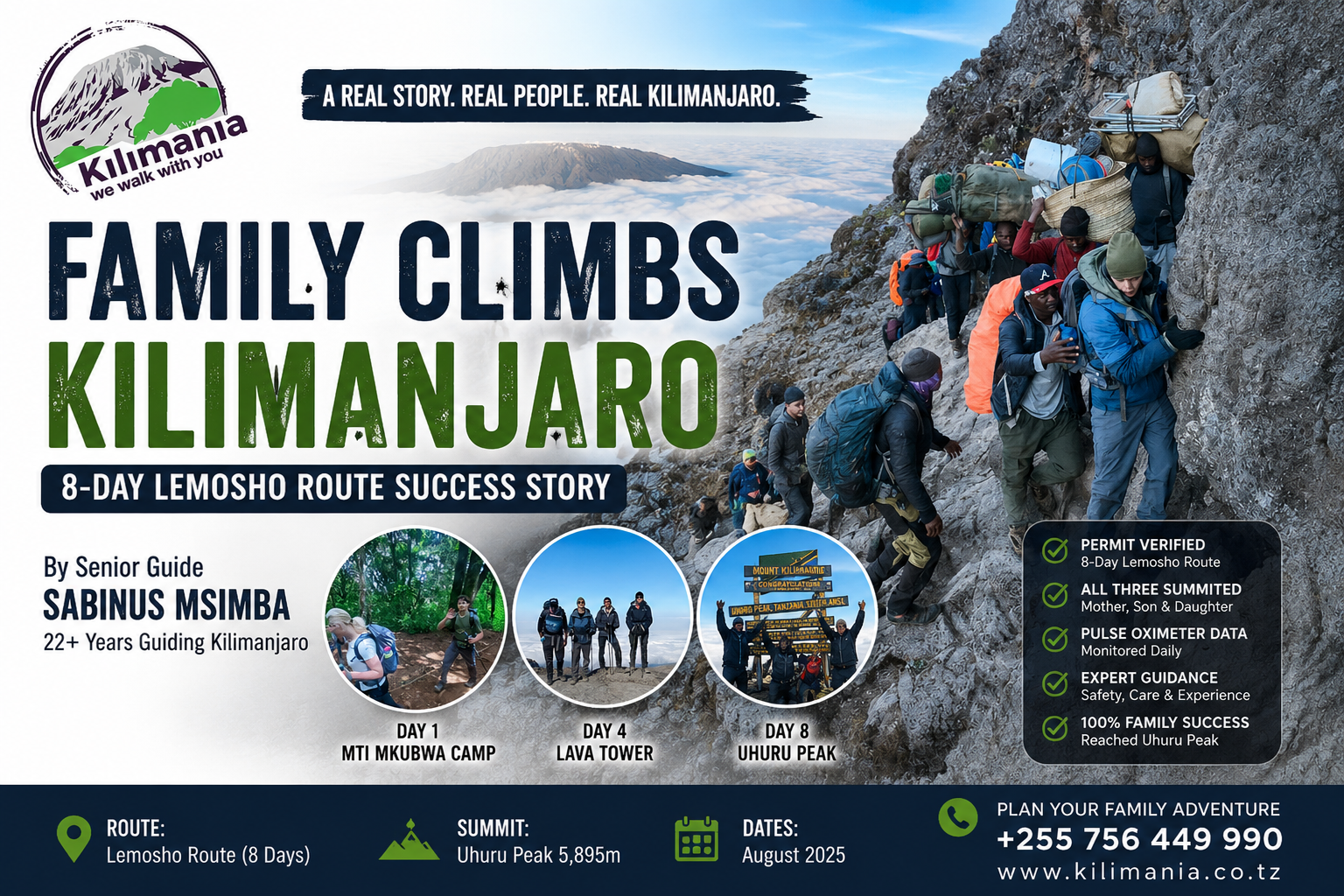
A mother climbed Kilimanjaro with her son and daughter. All three reached Uhuru Peak. This is the guide’s real account of the climb — the hard day at Lava Tower, the recovery, summit night, and what it actually took to get all three of them to 5,895 metres.
Quick Answer
Yes, families can climb Kilimanjaro together. In July 2026, a mother climbed the 8-day Lemosho Route with her son and daughter, and all three reached Uhuru Peak. Their guide’s account below covers what actually happened, including the difficult days, rather than a polished version of it.
A Mountain for the Whole Family
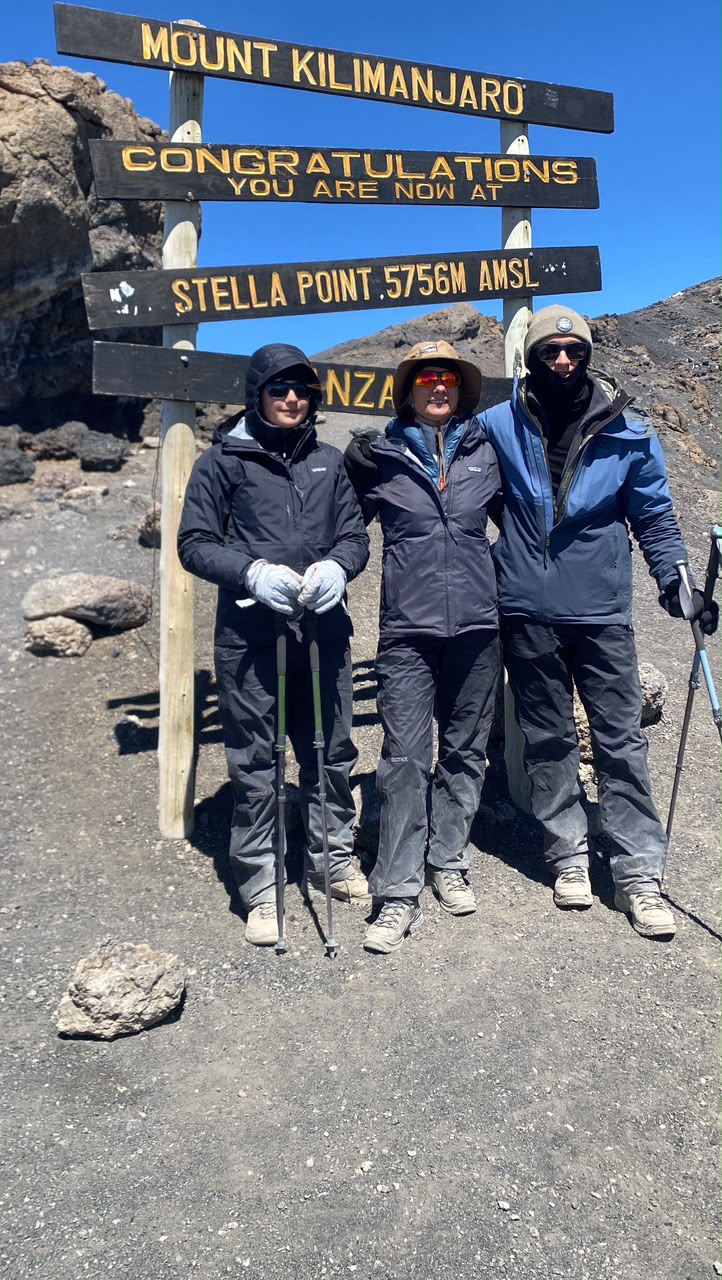
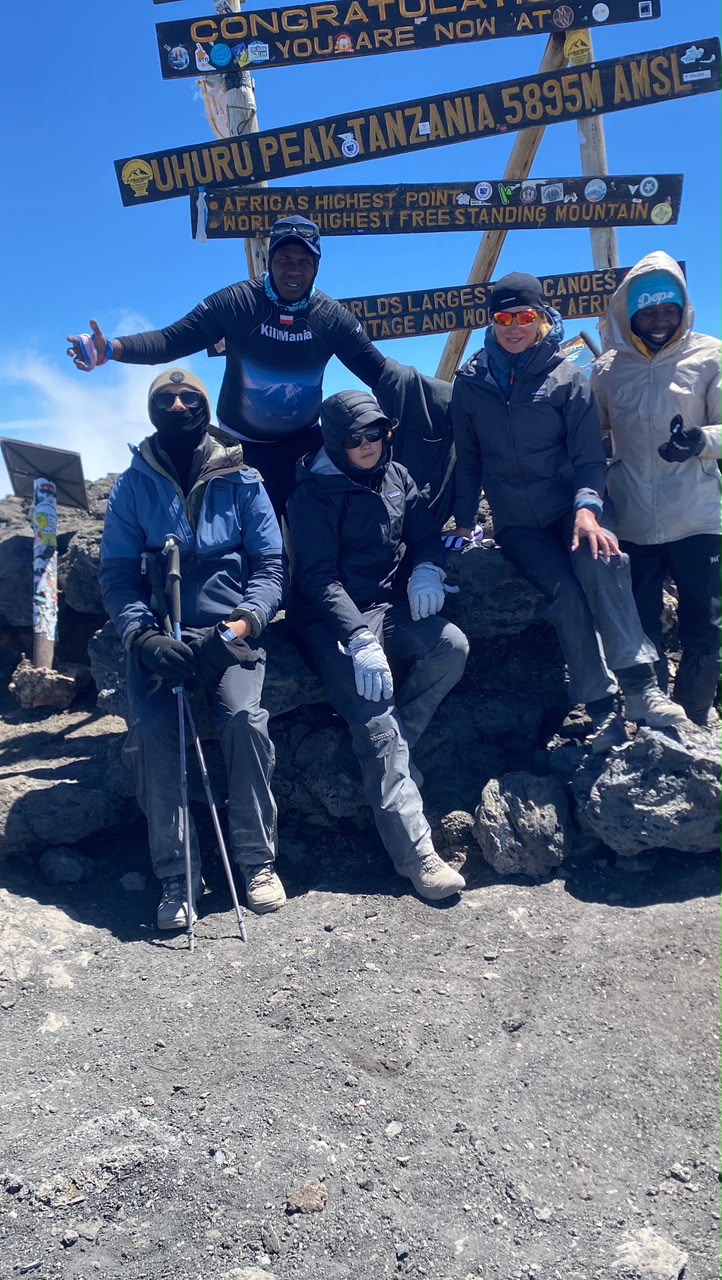
We reached Stella Point at around 10:00 in the morning, and Uhuru Peak at 11:15. It had been a long, difficult night. Behind me was a mother, her son, and her daughter — a family from the Netherlands who spent eight days proving that Kilimanjaro rewards patience more than raw strength.
This is a real, permit-verified climb — registered at Lemosho Gate and exited at Mweka Gate in July 2026. From our base in Moshi, Kilimanjaro Region, Kilimania Adventure runs Kilimanjaro climbs and safaris with pickups from Kilimanjaro International Airport (JRO) and Arusha Airport (ARK), and this family’s climb is one I’m sharing in full because it’s an honest picture of what an 8-day family climbing Kilimanjaro actually looks like.
Before the Climb: Safari, Materuni, and a Gear Check
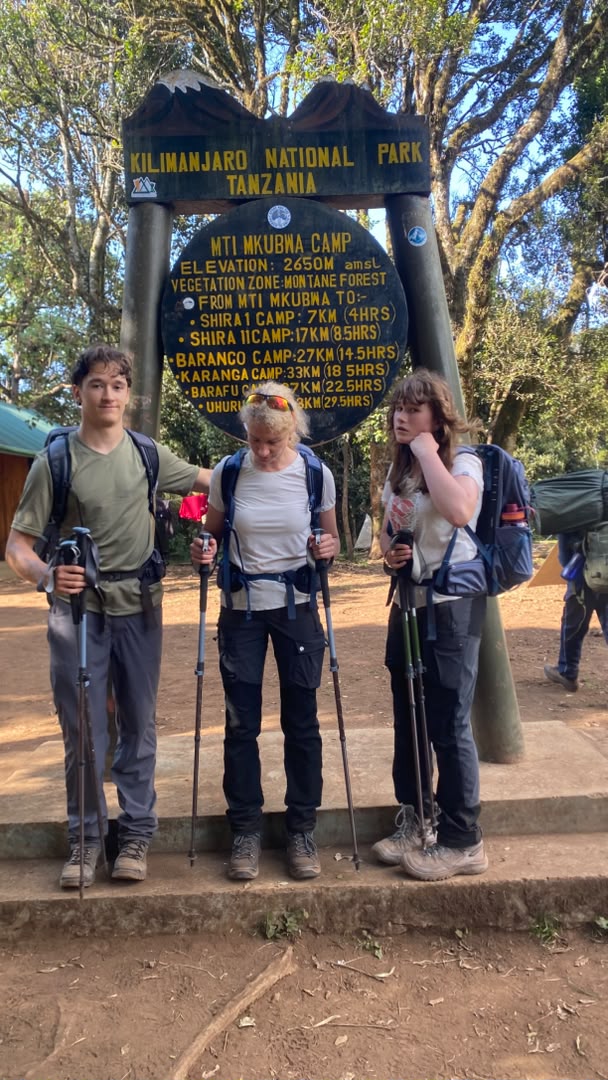
The family arrived after a five-day Tanzania safari and spent one day at the foot of the mountain visiting Materuni Waterfall, trying local coffee and traditional food before the climb began. That evening, at our briefing in Moshi, we went through the Lemosho route 8 days plan and checked everyone’s gear.
Three items were missing — a sleeping bag rated for sub-zero nights, an insulated water bottle, and a sun hat — and all three were rented on the spot from our Moshi store. It’s a small thing, but honestly, it’s one of the most common gaps we catch: people underestimate how cold Barafu Camp gets, and a poorly rated sleeping bag can cost a climber a night’s sleep they can’t afford to lose before summit night.
Three Climbers, Three Different Mountains Climbing Kilimanjaro as a Family
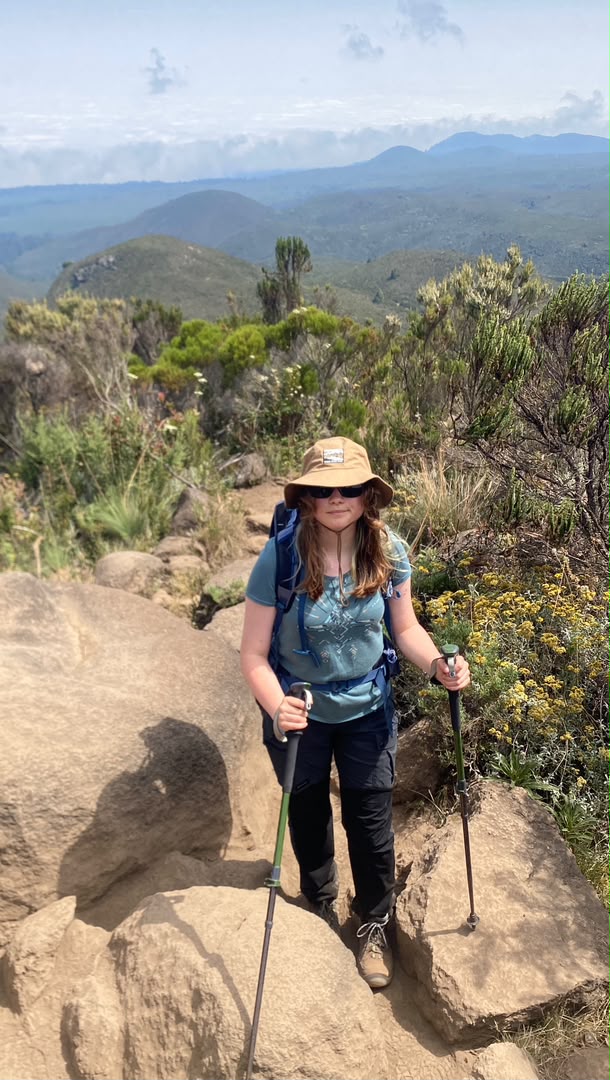
Every family experiences this mountain differently. On Day 1, the son was talkative and confident; the daughter was quieter, walking steadily beside her mother. By Day 2, the son was more tired than the others and had developed a slight headache — an early sign I kept watching for the rest of the climb.
At Shira Camp, in strong wind and cold, none of the three had much appetite. I checked their vitals with a pulse oximeter: 95% oxygen saturation and a heart rate of 103 — acceptable readings, though the son was weak and still had a headache.
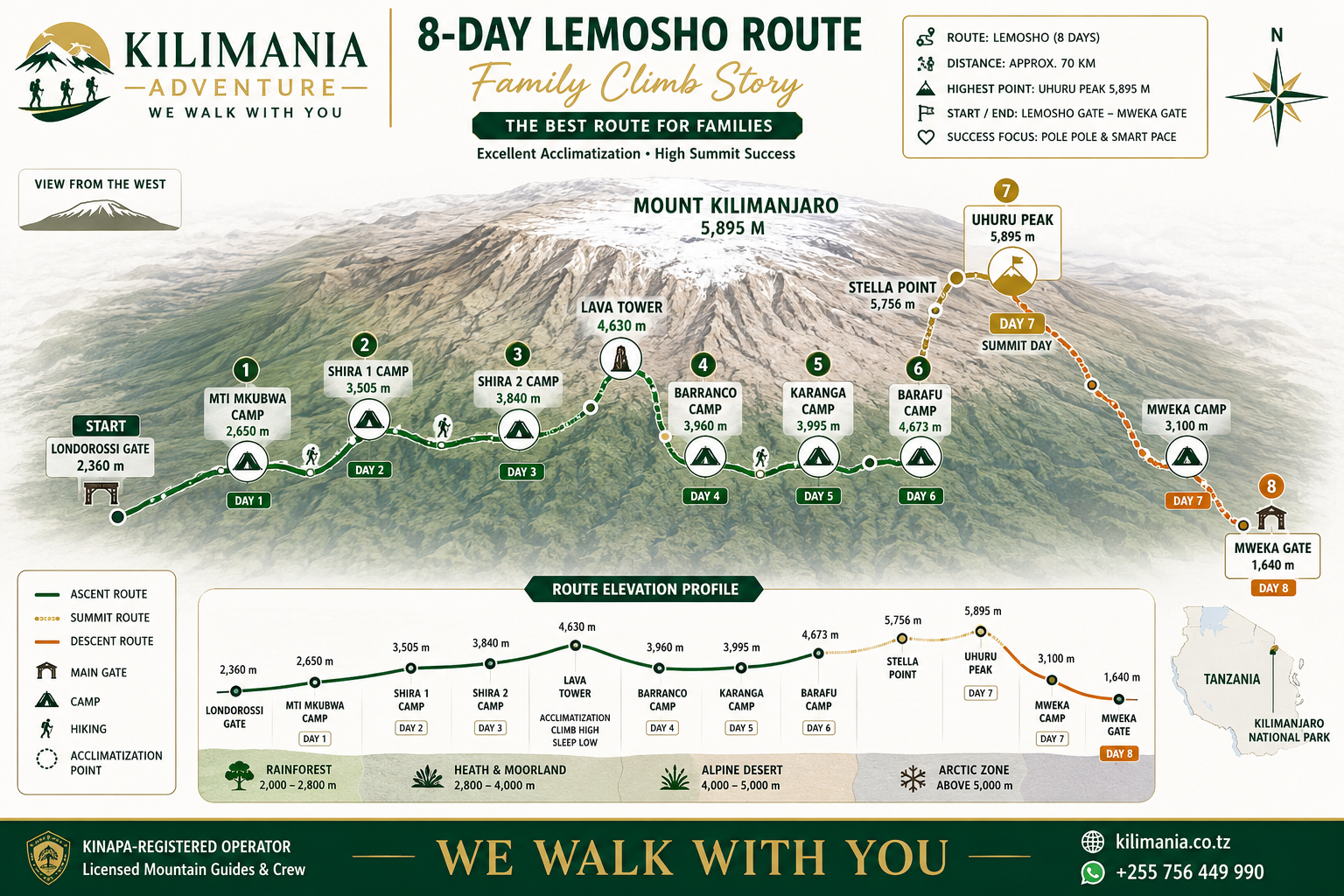
Day by Day on the Lemosho Route 8 Days
Day 4 — Shira Camp to Lava Tower to Barranco Camp was the hardest day of the trek. We were among the last groups to reach the lunch stop, and everyone had a headache. My advice stayed simple: eat something, drink water, keep moving, wear your sun hat, and don’t think about tomorrow — just get through today.
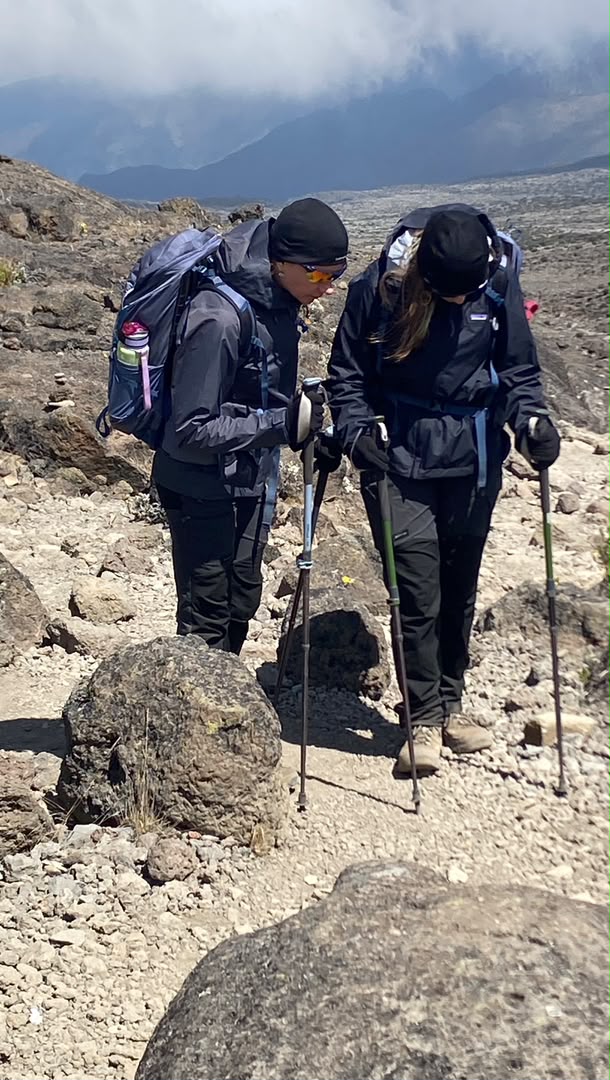
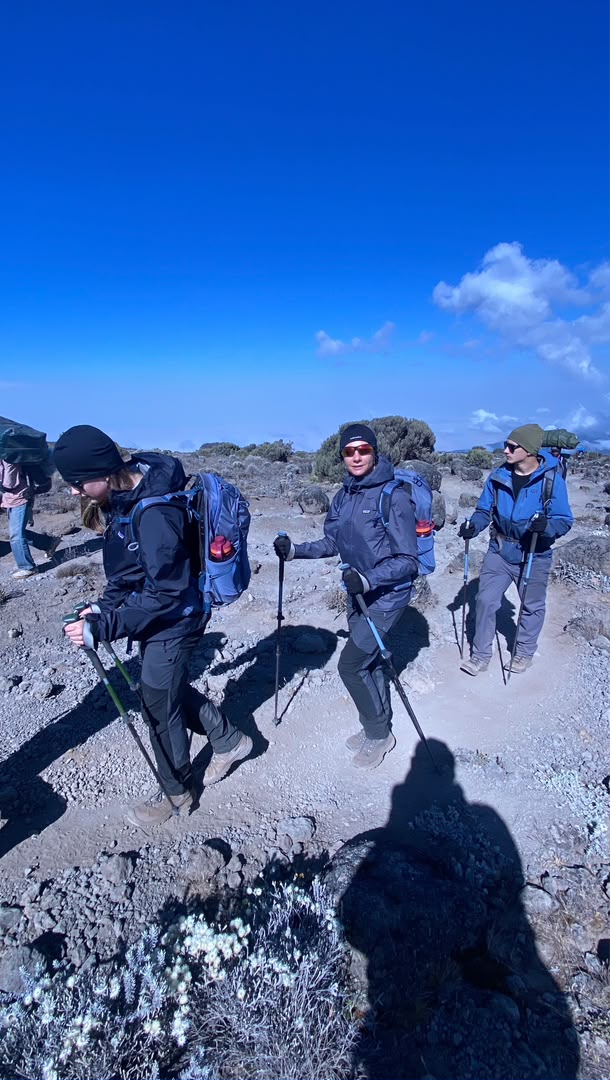
By evening at Barranco, there was already visible recovery. Day 5, all three climbed the Barranco Wall with real confidence and reached Karanga Camp feeling stronger than they had in two days.
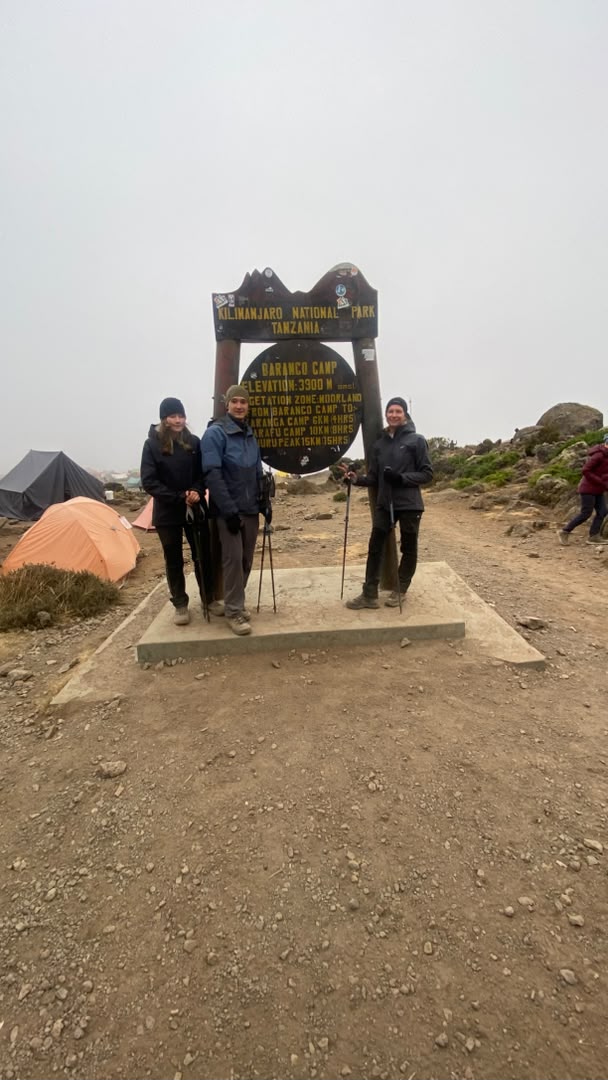
By Day 6, the daughter was walking steadily and quietly; the son was still the slowest of the three — a pattern I’ve now seen repeat itself across many family climbs over 22 years of guiding. It’s a field observation, not a medical claim, but it’s consistent enough that I mention it to families before summit night.
What We Actually Check, Every Morning
At Shira Camp (3,840m), I ran a pulse oximeter check on all three climbers before breakfast: 95% SpO2, heart rate 103. This is standard practice on every Kilimania climb — not just for this family — because a morning reading tells you more about who needs a slower pace that day than how someone looks at the breakfast table. It’s a small habit, but it’s the difference between catching a problem early and catching it at 4,600 metres.
| Camp | Altitude | SpO2 | Heart Rate | Appetite | Mood |
|---|---|---|---|---|---|
| Mti Mkubwa | 2,650m | 97–98% | 80–86 | Excellent | Happy, excited |
| Shira Camp | 3,840m | 95% | 103 | Poor (all three) | Weather-tired |
| Barranco Camp | 3,960m | 93–94% | 105–108 | Low, forced eating | Exhausted, recovering by evening |
| Karanga Camp | 3,995m | 95% | 90–95 | Improved | Confident, strong |
| Barafu Camp | 4,673m | 89–91% | 108–112 | Very poor | Focused, quiet, anxious |
Planning a Family Climb?
We’ll help you choose the right route and pace for your family’s fitness and ages.
WhatsApp +255 756 449 990Summit Night
We woke the group at 2:00 AM and started walking from Barafu Camp a little after 3:00 AM. None of them had eaten a proper dinner — the son couldn’t manage any food at all and wanted only to sleep. His mother and I gently insisted on soup and a little fruit before we left; the daughter ate a small amount, more than her brother.
My briefing before we started was the same one I give every family: the mountain doesn’t care how old or strong you are — it rewards a steady mind and small steps. Pole pole. Breathe deeply, walk slowly, drink water in sips, and don’t look too far ahead. We took short breaks for snacks and water, and at points where spirits were low, I sang. They didn’t understand the words, but it kept them moving and, eventually, smiling.
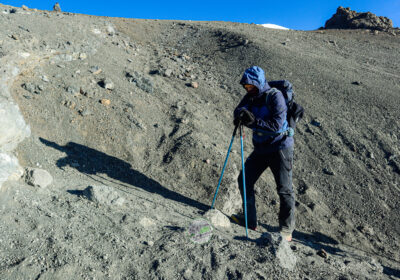
The son developed a strong headache partway up and vomited once. After that, he recovered enough to continue, slower than his sister but moving forward. We reached Stella Point around 10:00 AM and Uhuru Peak at 11:15 — later than a typical arrival, with no other climbers at the summit. The descent, by contrast, was fast and easy, with no complications.
Is 8 Days Long Enough? Route Length Compared
Families often ask whether a shorter itinerary would work just as well. Here’s how the Lemosho route’s length compares for acclimatization purposes.
| Route Length | Acclimatization Nights | Recommended For |
|---|---|---|
| 6 Days | Minimal buffer | Fit, experienced climbers only |
| 7 Days | One extra night | Fit adults, no children |
| 8 Days (this climb) | Two extra nights | Families, mixed fitness levels, first-time climbers |
See the full Kilimanjaro Routes 2026 comparison for every route and its success-rate data.
What This Climb Taught Me
- An 8-day route gives noticeably better acclimatization than shorter itineraries, especially for mixed-fitness family groups.
- Eating and drinking consistently, even without appetite, matters more on summit night than any other single factor.
- Vitals can look acceptable while a climber is still visibly struggling — watch the person, not just the reading.
- One episode of vomiting on summit night, followed by recovery, is common and not automatically a reason to turn back.
- Steady pacing and a calm mind carried this family further than raw fitness did.
- Children and teenagers can summit if they listen, walk slowly, and follow instructions rather than their own pace.
- A realistic pre-climb briefing prepares families better than an overly optimistic sales pitch.
Planning From Abroad
Kilimania Adventure operates on East Africa Time (UTC+3) and replies to enquiries within 12 hours, 7 days a week. Most nationalities need a Tanzania e-visa and proof of yellow fever vaccination if arriving from an affected country — check current requirements before booking flights into Kilimanjaro International Airport (JRO) or Arusha Airport (ARK).
FAQ
Can a family climb Kilimanjaro together?
Yes. A mother climbing with her son and daughter reached Uhuru Peak together in July 2026 on the 8-day Lemosho Route.
Can a young teenager climb Kilimanjaro?
Yes. KINAPA’s official minimum age is 10 years old. The daughter on this expedition reached Uhuru Peak and was, by the guide’s account, one of the steadiest members of the group.
What is the best Kilimanjaro route for families?
The 8-day Lemosho Route is generally recommended for its gradual acclimatization profile and built-in climb-high-sleep-low days.
How long should a family plan for the Lemosho route?
8 days is the practical minimum for most family groups, allowing extra acclimatization nights compared to a 6-day itinerary.
Is it normal to lose your appetite while climbing?
Yes. Appetite loss above roughly 3,500 metres is common at any age or fitness level. Small, consistent amounts of food are encouraged even without hunger.
Is vomiting on summit night dangerous?
A single episode followed by recovery is common and not automatically dangerous. Guides watch closely afterward for signs of more serious altitude illness.
Do men or women handle altitude differently?
Responses vary by individual. Some experienced guides report a pattern from repeated observation, but it’s a field observation rather than an established medical rule.
What is KINAPA?
KINAPA is the Kilimanjaro National Park Authority, the government body that manages the park and sets climbing regulations and fees.
How is a guide’s license verified on Kilimanjaro?
Licensed guides carry a KINAPA-issued mountain guide license with a registration number, which reputable operators will show on request.
Conclusion
Eight days, one hard acclimatization day, one difficult summit night, and three people who reached the roof of Africa together. If your family is considering Kilimanjaro, choose a route long enough for real acclimatization, and choose a guide who will tell you honestly what to expect — including the hard parts.
We Walk With You.
Ready to Plan Your Own Climb?
Get in touch and we’ll help you build the right itinerary for your family.
info@kilimania.co.tzFree Download: Kilimanjaro Route Comparison Cheat Sheet
A one-page comparison of Kilimanjaro’s routes, prepared by Senior Guide Sabinus Msimba, useful for families weighing route length against fitness and time.
Download the PDFFree Download: Kilimanjaro Altitude Symptom & AMS Checklist
The same checklist Sabinus Msimba and the Kilimania team use to monitor climbers throughout every expedition.
Download the PDFAbout the Author
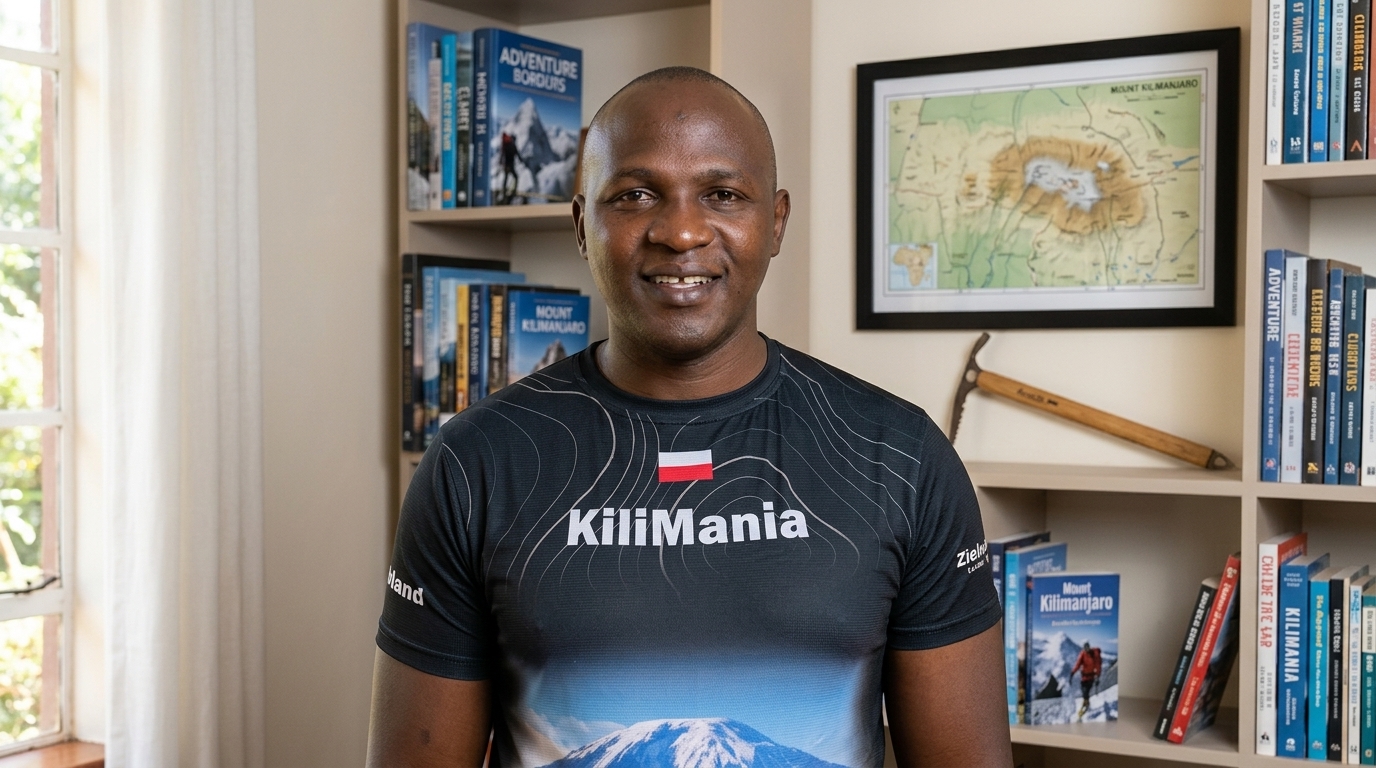
Sabinus Msimba
Senior Kilimanjaro Guide, Co-founder of Kilimania Adventure. 22 years guiding on Mount Kilimanjaro, 300+ summit ascents, KINAPA-licensed.
Continue Reading
Disclosure: This article describes a real Kilimania Adventure client climb. Identifying details are kept general at the family’s privacy preference; the account is drawn from official KINAPA permit records and guide field notes. Verify current park fees and regulations at kilimanjaronationalpark.go.tz and tanzaniaparks.go.tz. Kilimania Adventure is TATO-registered — verify here.