Sources used in this guide: Kilimania’s day-trip operating notes from Moshi (2026), Kilimania’s 2026 day-trip rate card, and visitor rules published by TANAPA and Kilimanjaro National Park (KINAPA).
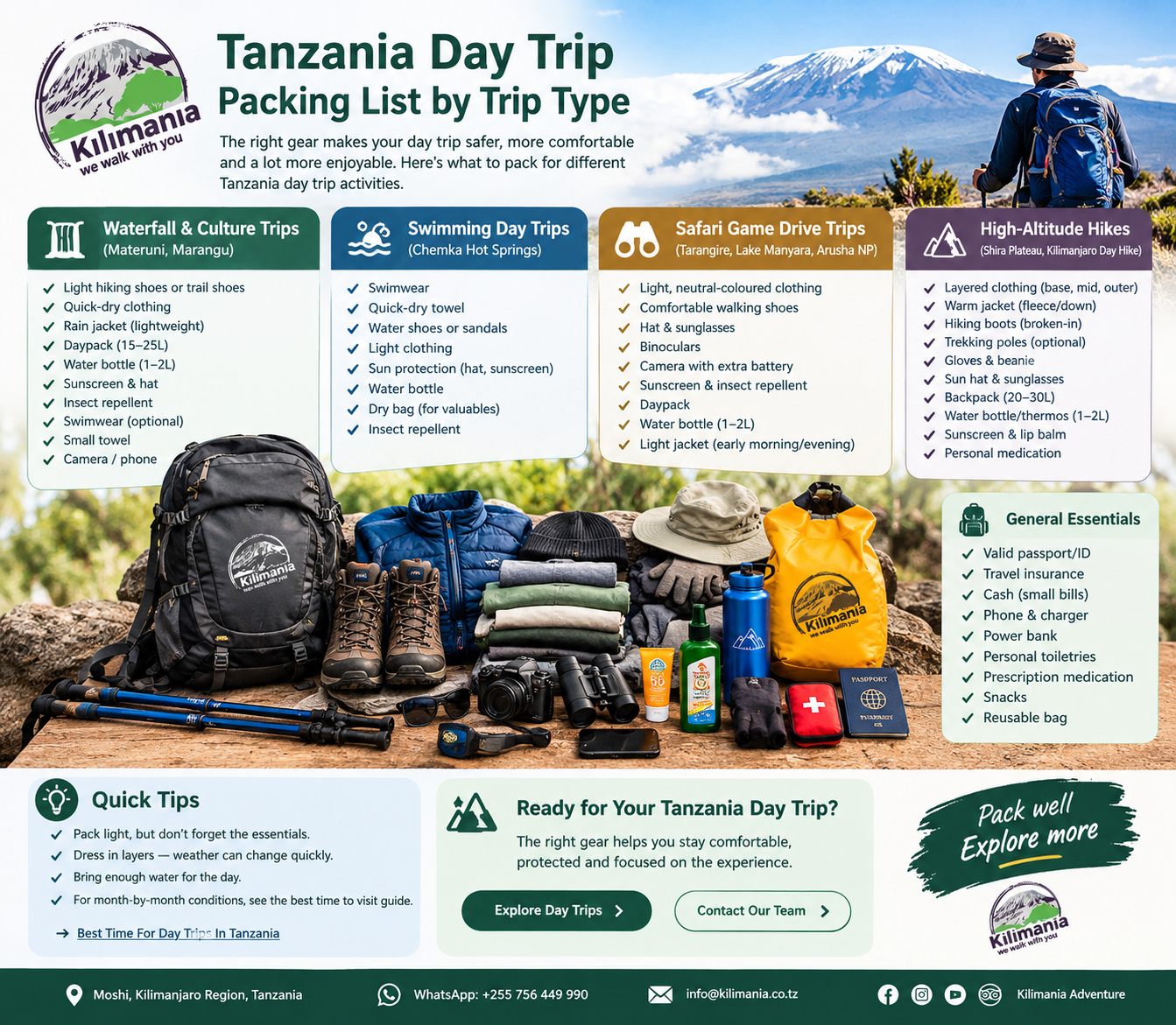
There is no single Tanzania day trip packing list — there are five, one for each kind of activity. A Materuni or Marangu waterfall walk needs grippy shoes and a rain layer. Chemka Hot Springs needs swimwear, a towel and a full set of dry clothes. A Tarangire or Lake Manyara game drive needs sun protection, a warm layer for the early start and, if you want them, binoculars. Shira Plateau, above 3,500 m on Kilimanjaro, needs real warmth. Pack for what your body will be doing tomorrow, not for “Tanzania” in general.
Kilimania Adventure runs private and joining day trips from Moshi and Arusha — waterfall walks, hot springs, national park game drives, cultural visits and Kilimanjaro day hikes — and this guide is built from what our guides see guests carry, and forget, on those days.
Always carry, whatever the trip: water, sunscreen, your phone, personal medication and a small daypack. Then add the kit for your activity:
What’s in this packing guide
Tanzania Day Trip Packing List by Trip Type — At a Glance
The table below is the short version. Each row is a different kind of day out of Moshi or Arusha, and the columns show where the packing actually changes. The sections that follow explain the reasons, and what goes wrong when people copy one list across every trip.
Swipe the table sideways to see every column.
| Trip | Footwear | Clothing | Protection | The item people forget |
|---|---|---|---|---|
| Materuni Waterfalls | Trail shoes or trainers with real grip | Quick-dry trousers or shorts, light shirt | Rain jacket, waterproof phone pouch | Spare socks |
| Marangu Waterfalls | Grippy walking shoes | Light outdoor clothes, shoulders covered for home visits | Rain jacket, sunscreen | Dry T-shirt for the drive back |
| Chemka Hot Springs | Sandals or water shoes | Swimsuit worn under clothes, full dry change | Sunscreen, waterproof phone pouch | A wet bag for the swimsuit |
| Tarangire / Lake Manyara | Comfortable closed shoes | Neutral light layers plus a fleece | Brimmed hat, sunglasses, SPF | A buff or scarf for road dust |
| Arusha National Park | Comfortable closed shoes | Light layers, warmer than the lowland parks | Rain jacket, sunscreen | A warm layer for the forest sections |
| Shira Plateau | Broken-in hiking shoes or boots | Base layer, fleece, windproof shell | Sunglasses, SPF, lip balm | Warm hat and light gloves |
| Kilimanjaro day hike (Mandara Hut) | Hiking shoes with grip for wet forest | Breathable layers plus a fleece | Rain jacket | 2 litres of water, not 1 |
| Maasai Boma / Arusha City | Closed walking shoes | Shoulders and knees covered | Hat, sunscreen | Small notes of Tanzanian shillings |
Exact equipment can shift with the season and the itinerary you booked. If something on your trip differs from this table, confirm with Kilimania before departure. Water amounts in this guide are starting points, not fixed requirements — heat, walking time and your own drinking needs change how much you should carry.
Waterfall and Culture Trips (Materuni, Marangu)
What should I wear for a waterfall hike near Moshi?
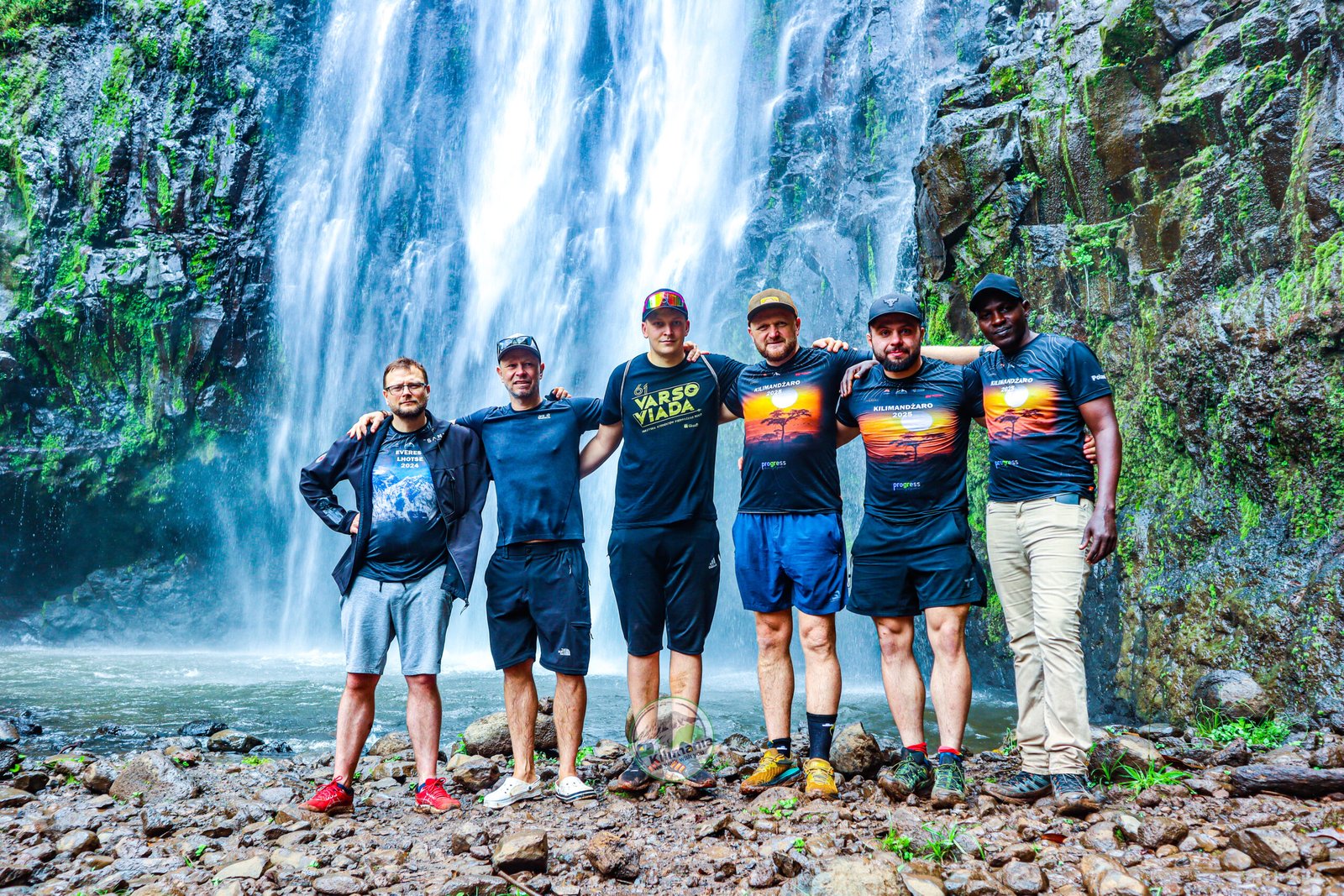
Wear closed shoes with deep tread, quick-dry clothing and carry a light rain jacket. The paths to Materuni and Marangu waterfalls run through Chagga coffee and banana farms on Kilimanjaro’s lower slopes; after rain they turn to slick red clay, and the rocks near each pool stay wet from spray all day. Sandals and smooth-soled city trainers are the usual cause of slips.
The Materuni Waterfalls day trip combines the walk to the falls with a coffee visit, which the Materuni and Chagga coffee guide covers in detail. The walk back up from the pool is the part guests underestimate — that climb is where the water bottle empties. The Marangu Waterfalls and cultural day trip spends more of the day in the village, so clothing that covers your shoulders matters more there. If you are choosing between them, Materuni vs Marangu Waterfalls compares the two days.
Pack
- Trail shoes or trainers with deep tread
- Quick-dry trousers or shorts and a light shirt
- Light rain jacket, even on a clear morning
- 1–1.5 litres of water per person
- Waterproof phone pouch or small dry bag against spray
- Spare socks and a dry T-shirt left in the vehicle
- Hat and sunscreen for the open village sections
Leave behind
- Heavy leather boots — they stay wet all day
- Large camera bags you cannot keep dry
- Swimwear, unless you have already decided to swim
Materuni runs from $85 pp for a group of five; Marangu Waterfalls from $80 pp for a group of five.
Swimming Day Trips (Chemka Hot Springs)
What should I bring to Chemka Hot Springs?
Bring a swimsuit worn under your clothes, a quick-dry towel, sandals or water shoes, a waterproof phone pouch and a complete change of dry clothes. Chemka’s spring-fed water sits at roughly 27°C according to Kilimania’s operating notes, so people stay in far longer than planned — which means everything that touches the water comes out soaked.
The packing problem at Chemka is not warmth; it is separation. A wet swimsuit, a damp towel and a dry shirt in the same bag produce three wet items by the time you are back in Moshi. Carry one bag, or a plastic-free roll-closure wet bag, for everything that has been in the water, and keep your dry change in a separate compartment. The sun off the water is strong, so reapply sunscreen after you swim.
Pack
- Swimsuit worn under your clothes
- Quick-dry towel
- Sandals or water shoes
- Wet bag plus a full dry change
- Waterproof phone pouch
- Water-resistant sunscreen and 1 litre of water
Leave behind
- Hiking boots and trekking poles
- Fleece and heavy layers
- Jewellery that can slip off in the water
More on the springs themselves is in the Chemka Hot Springs visitor guide, and the Chemka Hot Springs day trip runs from $70 pp for a group of five. If you want a walk and a paddle instead of a long swim, the Lake Chala day trip is a different kind of day — see Lake Chala vs Chemka before you choose.
Safari Game Drive Trips (Tarangire, Lake Manyara, Arusha NP)
What should I pack for a Tanzania safari day trip?
Pack a brimmed hat, sunglasses, high-SPF sunscreen, a fleece for the early start, at least 1.5 litres of water and comfortable closed shoes. A game drive is a sitting day: you spend most of it in a vehicle with a raised roof, so the kit is about sun, wind and dust rather than walking. Binoculars are optional but, with one pair per two people, they change how much you actually see.
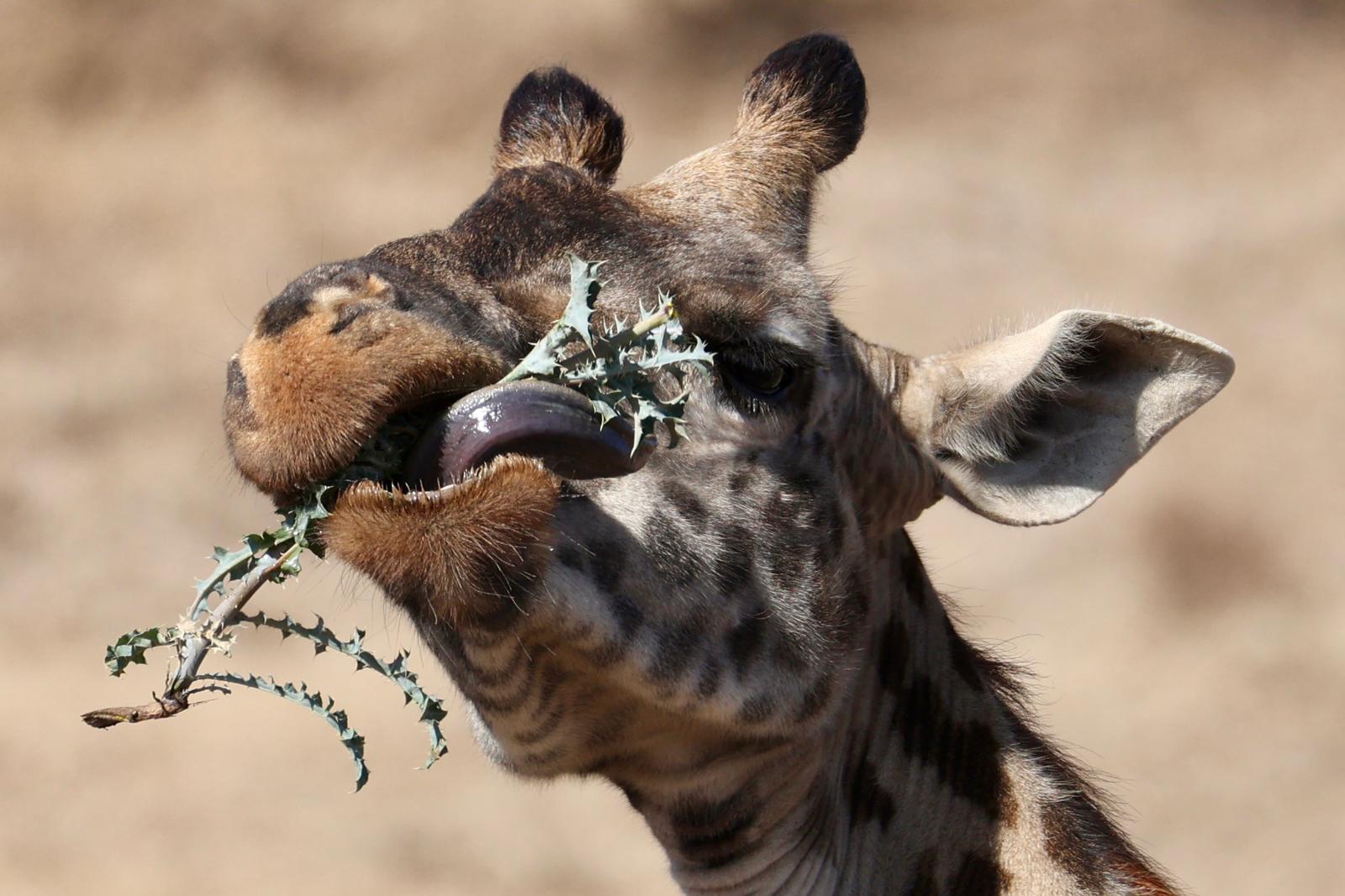
Two details are specific to these parks. In parts of Tarangire National Park, tsetse flies are attracted to dark colours, particularly blue and black, so lighter neutral clothing such as khaki, olive or beige is a practical choice there — this is about flies, not about looking the part. And Arusha National Park sits higher and greener around Mount Meru, with forest sections that feel noticeably cooler than Lake Manyara; take a warmer layer and a rain jacket there. If your Arusha day includes canoeing on the Momella Lakes, add a dry bag and confirm the details with Kilimania beforehand.
Pack
- Brimmed hat with a chin strap, sunglasses, SPF 50
- Fleece or light jacket for the morning
- Lighter neutral colours in Tarangire, where tsetse flies favour dark blue and black
- 1.5–2 litres of water and a few snacks
- Camera or phone plus a power bank
- Buff or scarf for dust in the dry months
- Travel-sickness tablets if rough roads bother you
Leave behind
- Hiking boots — you will barely walk
- A second camera body and a bag of lenses
Park-by-park differences belong to other guides: see the Tarangire day-trip guide, the Lake Manyara day-trip guide, the Arusha National Park guide and Tarangire vs Lake Manyara. Tarangire and Lake Manyara each run from $240 pp for a group of five; Arusha National Park from $215 pp. For longer trips, see our multi-day safari packages.
High-Altitude Hikes (Shira Plateau, Kilimanjaro Day Hike)
What should I pack for Shira Plateau?
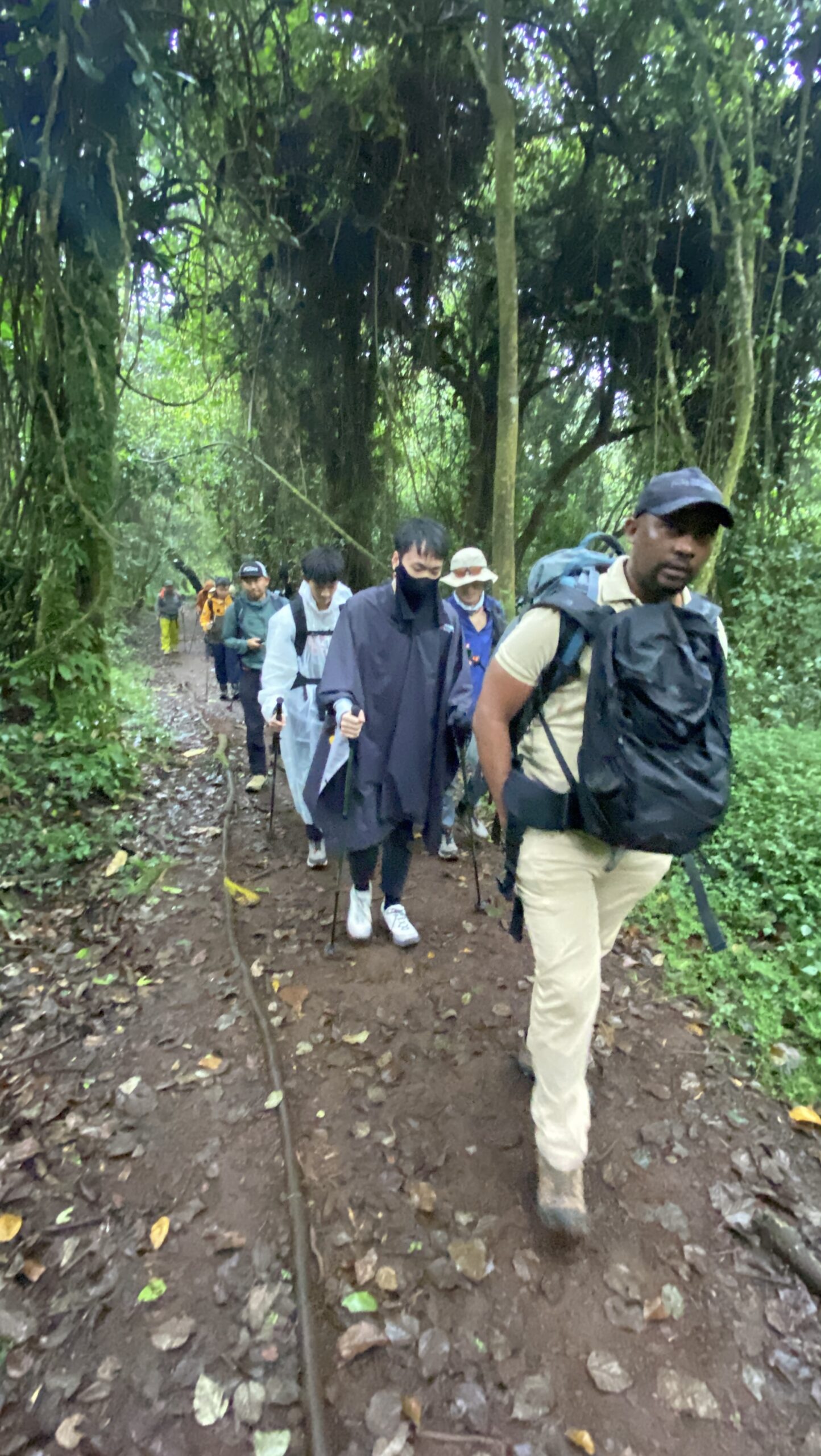
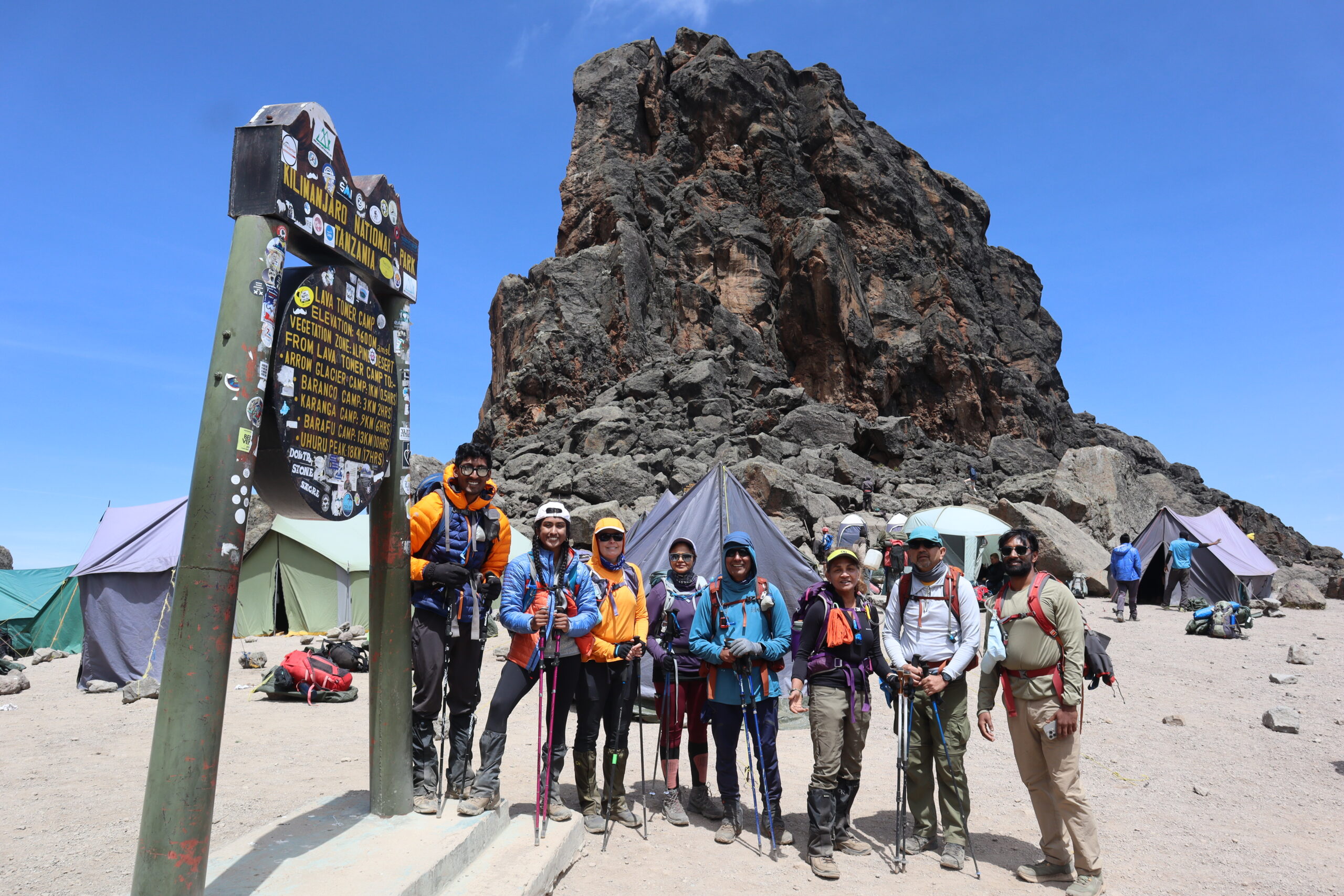
Treat it as a mountain day: a wicking base layer, a fleece, a windproof and waterproof shell, a warm hat, light gloves, sunglasses, sunscreen and lip balm, plus 2 litres of water and broken-in hiking shoes. The plateau sits above 3,500 m on Kilimanjaro’s western side, where open moorland gives no shelter from wind and the sun is strong even when the air is cold.
The two Kilimanjaro day options are not the same day. The Shira Plateau day trip is high, exposed and dry underfoot; the Shira Plateau day-hike guide describes the walk itself. The Kilimanjaro day hike to Mandara Hut (2,720 m) climbs through montane rainforest from Marangu Gate, so it is wetter and more humid, and the rain jacket earns its place there more than the gloves do. Both need proper footwear and more water than a waterfall walk. Walk pole pole — slowly — and tell your guide about any headache, nausea or unusual breathlessness; the altitude sickness guide explains the warning signs.
Pack
- Wicking base layer, fleece, windproof shell
- Warm hat and a sun hat
- Light gloves
- Sunglasses, SPF 30+ and lip balm with SPF
- 2 litres of water and energy snacks
- Broken-in hiking shoes or boots; poles are optional
- Any personal medication your doctor has advised
Leave behind
- Cotton T-shirts as your only layer
- New boots worn for the first time
- Full multi-day climbing kit
Shira Plateau runs from $190 pp for a group of five; the Kilimanjaro day hike is $215 joining or $275 private through the Marangu day-hike page. A day hike is a taste of the mountain, not preparation for the summit — if a full climb is your goal, use the Kilimanjaro packing list, read about Mount Kilimanjaro climbing, and check the Kilimanjaro joining calendar for group dates.
Cultural Visits (Maasai Boma, Arusha City)
What should I wear for a Maasai boma visit or a day in Arusha?
Wear closed walking shoes and clothing that covers your shoulders and knees, and carry a small bag, water, sun protection and some small notes of Tanzanian shillings. Boma ground is dusty and uneven, and Arusha’s central markets are crowded, so comfort and a bag you can keep in front of you matter more than any outdoor gear.
Photography needs care. Ask before you photograph anyone, at a boma or in a market, and accept a “no” without argument. What a Maasai Boma day trip involves, including how visits are arranged with the community, is covered in Maasai boma tour: what actually happens. For the city, one day in Arusha city walks through the markets and history, and the Arusha City day trip runs from $75 pp for a group of five — the same starting price as the Maasai Boma visit.
What Not to Bring
Overpacking is the quieter mistake. A bag that is too heavy turns a four-hour waterfall walk into a slog, and a lot of kit on a game drive just slides around the vehicle floor. These are the items to leave in your room:
- Plastic carrier bags. Tanzania banned them in 2019; use a fabric or roll-closure bag instead.
- A drone. Drones require advance authorisation and permits in Tanzania, and national parks have additional TANAPA requirements. Unless your approvals are already arranged, leave the drone behind.
- Full expedition kit on a low-altitude day. A down jacket on a Materuni walk is dead weight.
- Cotton as your only layer at altitude. It holds sweat and chills you at lunch on Shira.
- Large amounts of cash, expensive jewellery and your only bank card. Carry what the day needs.
- More than one pair of spare shoes. The right pair for the day, plus sandals if you will swim, is enough.
Packing also changes with the rains and the dry months; for month-by-month day-trip conditions, see the seasonal guide.
A Four-Step Packing Method for Any Day Trip
- Name the activity, not the destination. Decide whether tomorrow is walking in spray, sitting in water, sitting in a vehicle, climbing into wind or walking among people.
- Check the altitude. At around 3,000 m and above, plan for colder, windier conditions and carry warm layers; on exposed terrain such as Shira Plateau, a warm hat and gloves are sensible even when Moshi feels warm.
- Choose footwear first. Grip for waterfalls, sandals for swimming, comfortable closed shoes for vehicles and towns, broken-in hiking shoes for the mountain.
- Add the constants and separate wet from dry. Water, sun protection, personal medication and a small daypack go on every trip; anything that may get wet travels in its own bag.
Who Should Plan Differently
If you want a slow, restful day, a high-altitude hike is the wrong choice however light you pack — Chemka or Lake Chala suit that mood better. If a city visit is all you want, you do not need hiking gear at all. And if you are preparing for a full Kilimanjaro climb, a day-trip list is not a substitute for proper climbing equipment. For wider planning, see day trips from Moshi, day trips from Arusha, the Tanzania day trip cost guide and private vs joining day trips.
Sabinus’s Note From the Trail
Most packing mistakes I see on day trips are not forgotten items. They are items packed for a different day. Guests arriving straight from a safari bring a heavy camera to Materuni and leave the rain jacket at the hotel. Guests arriving from a week on the coast come to the mountain in shorts and sandals, because Moshi was warm when they woke up.
So the evening before a trip, I ask one question: what will your feet and your skin be doing tomorrow? Walking on wet clay, sitting in warm water, sitting in the sun on a vehicle, or climbing into cold wind? Answer that honestly and most of the bag packs itself. — Sabinus Msimba
Frequently Asked Questions
What should I pack for a Tanzania day trip?
Pack for the activity rather than the country. Every trip needs water, sun protection, personal medication and a small daypack. Then add grippy shoes and a rain jacket for waterfalls, swimwear and a dry change for hot springs, a hat and warm morning layer for safaris, and full warm layers for high-altitude hikes such as Shira Plateau.
Do I need hiking boots for a Tanzania day trip?
Only for high-altitude hikes such as Shira Plateau or the Kilimanjaro day hike to Mandara Hut, and even then broken-in hiking shoes work well. Trail shoes with good grip are enough for waterfall walks, comfortable closed shoes suit safaris and city visits, and sandals are right for Chemka Hot Springs.
What should I bring to Chemka Hot Springs?
Bring a swimsuit worn under your clothes, a quick-dry towel, sandals or water shoes, a waterproof phone pouch, sunscreen, water and a complete change of dry clothes. Pack a separate wet bag so your swimsuit and towel do not soak everything else on the drive back to Moshi.
What should I wear on a safari game drive?
Wear light, neutral-coloured layers, comfortable closed shoes and a brimmed hat, and bring a fleece for the early start. In Tarangire, lighter neutral clothing is practical because tsetse flies are attracted to dark colours, particularly blue and black. Add sunglasses, high-SPF sunscreen and a buff for dust in the dry months.
What should I wear for a Kilimanjaro day hike?
Wear broken-in hiking shoes and breathable layers, and carry a fleece, a rain jacket and 2 litres of water. The Mandara Hut day hike climbs through wet rainforest, so rain protection matters most there, while Shira Plateau is high and exposed, so a warm hat, gloves and a windproof shell matter most.
Should I bring a rain jacket to Tanzania?
Yes for waterfall walks, Arusha National Park and any Kilimanjaro day hike, even in the dry months, because conditions on the mountain’s slopes change quickly. On a lowland safari or at Chemka in the dry season, a rain jacket is usually unnecessary, but a light one takes little space if you are unsure.
What should I leave at the hotel on a day trip?
Leave plastic carrier bags, drones without permits, large amounts of cash, expensive jewellery, spare camera bodies and full multi-day climbing kit at the hotel. Plastic carrier bags have been banned in Tanzania since 2019. Carry only what the specific day requires, which keeps your daypack light and easy to manage.
Pack for the Day, Then Enjoy It
Five kinds of activity, five different packing priorities. Chemka at around 27°C needs a swimsuit and a dry change; Shira Plateau above 3,500 m needs a fleece, hat and gloves; a game drive needs sun protection and a warm morning layer; waterfalls need grip and a rain jacket; towns need modest clothes and small notes. Start from the Tanzania day trips hub once you know your day. We Walk With You — every step.
Sabinus Msimba
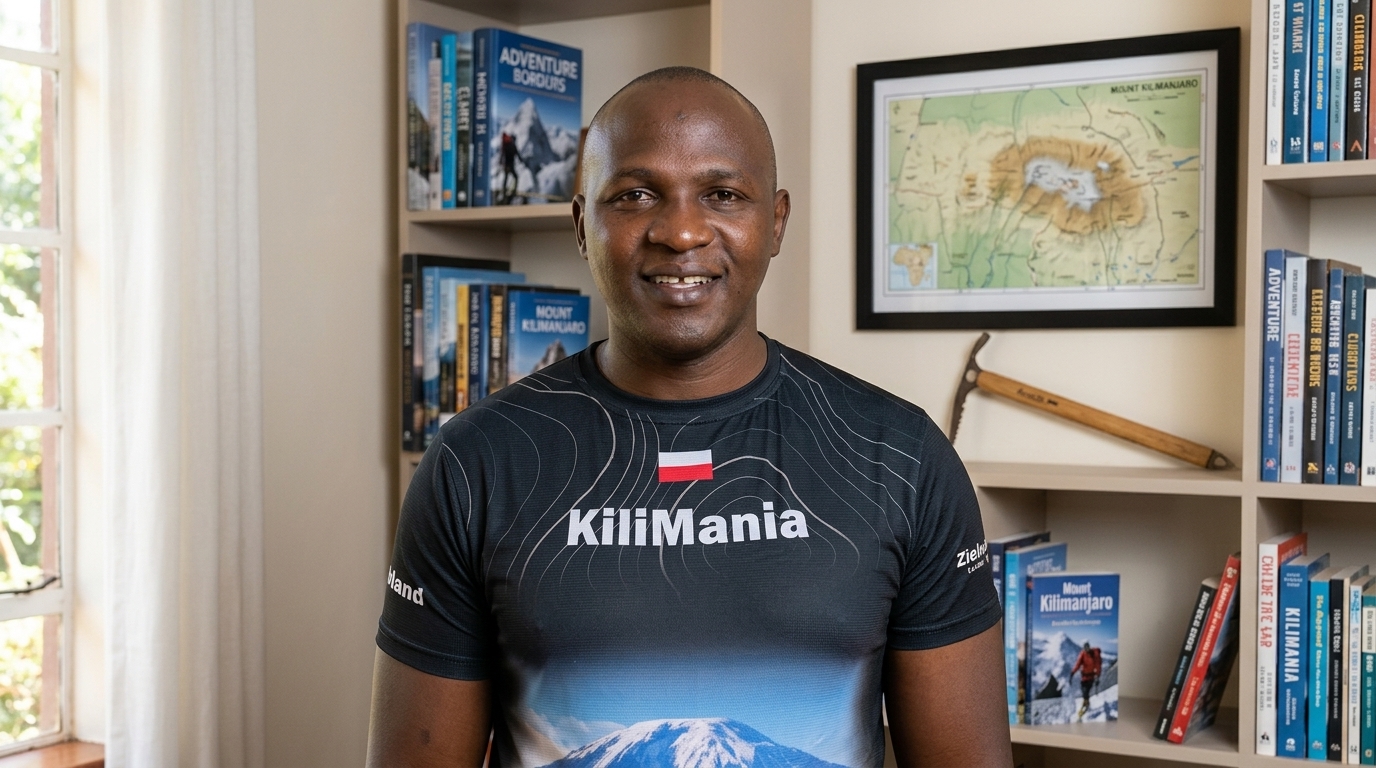
Senior Mountain Guide and co-founder of Kilimania Adventure in Moshi. KINAPA-licensed, with 22+ years guiding on Kilimanjaro and 300+ personal Uhuru Peak summits; his career began in 2001 as a porter on the Marangu Route. He writes Kilimania’s preparation guides from the day trips and climbs he runs himself.
Full biography and credentials · KINAPA guide licence (PDF) · Reviews on TripAdvisor and Google
Disclosure: Kilimania Adventure, a TATO-registered operator based in Moshi, Kilimanjaro Region, runs the day trips named in this guide, and several links lead to our own trip and contact pages. Prices are per person in USD from Kilimania’s 2026 day-trip rate card and apply to a group of five unless stated. Park rules are set by TANAPA and KINAPA and can change; check their official pages before travel. This guide contains no sponsored products or affiliate links. Last reviewed: 27 September 2026.