Lemosho Route Kilimanjaro: Itinerary, Success Rate & Honest Assessment
Data sources cited in this article: Kilimania Adventure booking and expedition records (2019–2025, 597 guided Lemosho ascents); KINAPA fee schedule, June 2026; TATO operator registry.
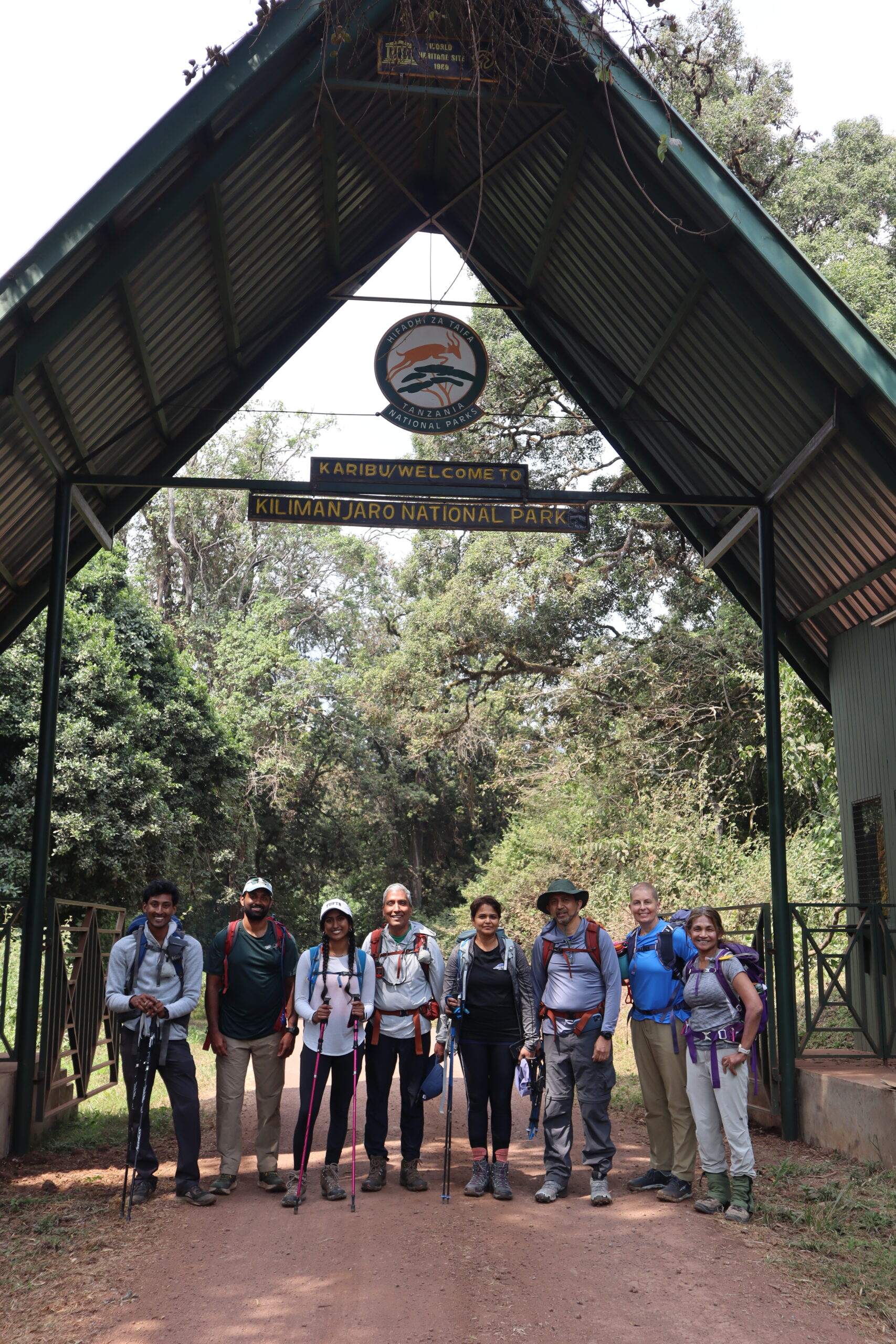
Quick Answer
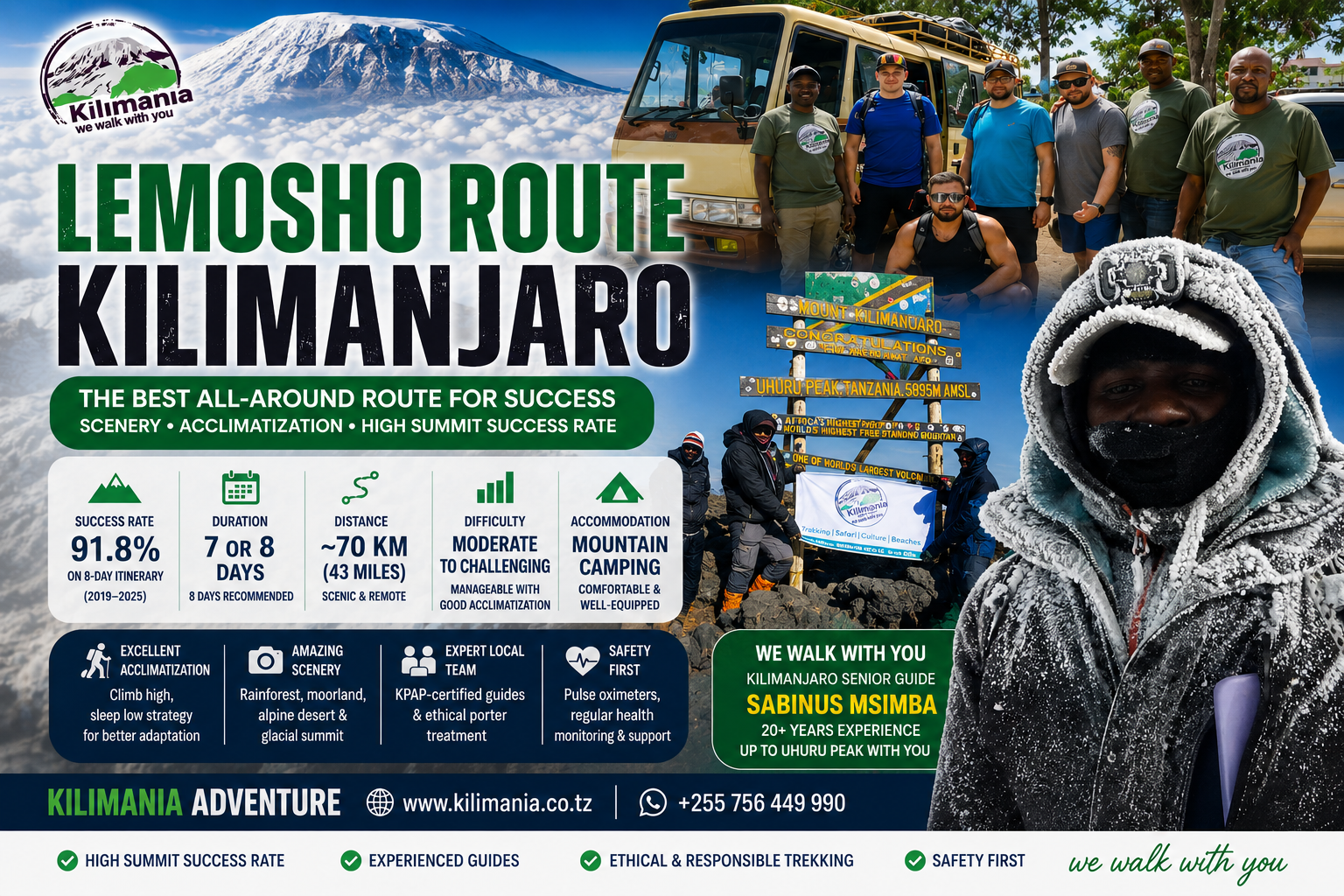
The 8-day Lemosho Route has a 91.8% summit success rate across 597 guided Kilimania climbs (2019–2025), the highest of our standard routes under nine days. It combines two “climb high, sleep low” acclimatization cycles, low crowds on days one to three, and varied scenery from rainforest to glacial summit zone. It suits most first-time climbers who have eight days and moderate fitness.
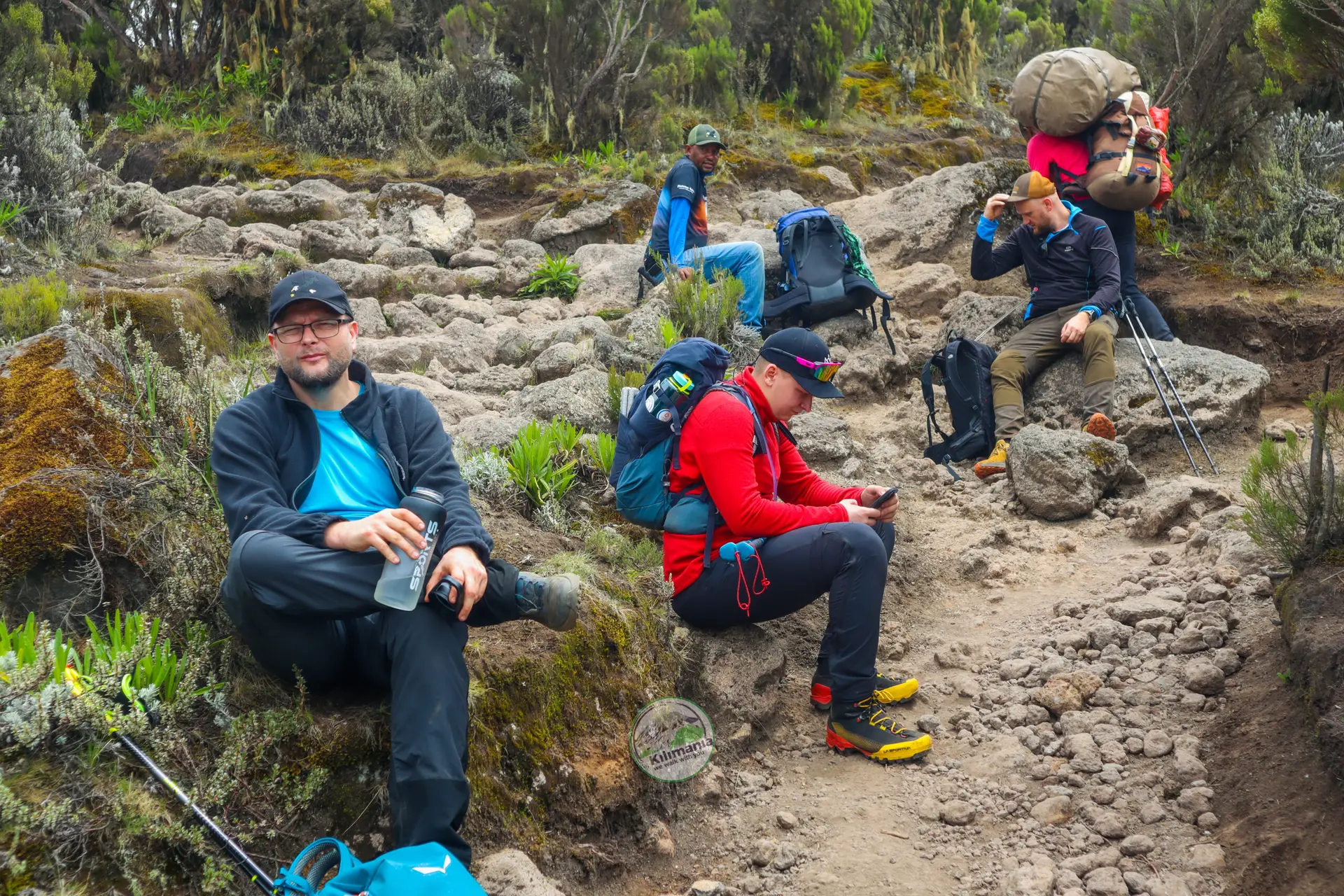
Is the Lemosho Route Kilimanjaro the right way to climb to Uhuru Peak? For most first-time climbers, yes — provided you book the 8-day itinerary, not the 7-day version. I’ve guided this route for 22 years, and below is what our own climb records, the terrain, and basic altitude physiology actually show, including where climbers turn back and why.
Lemosho Route at a Glance
| Feature | Details |
|---|---|
| Starting Point | Londorossi Gate (2,100 m / 6,890 ft) |
| Ending Point | Mweka Gate (1,640 m / 5,380 ft) |
| Typical Duration | 7 or 8 days (8 recommended) |
| Total Distance | Approx. 70 km (43 miles) |
| Difficulty | Moderate to challenging |
| Summit Success Rate | 91.8% on the 8-day itinerary (Kilimania records, 597 climbs, 2019–2025) |
| Best For | First-time climbers, photographers, trekkers wanting strong acclimatization |
| Accommodation | Mountain camping only |
| Crowd Level | Low on days 1–3; moderate after joining the Southern Circuit |
| Highest Point | Uhuru Peak, 5,895 m / 19,341 ft |
| Best Seasons | January–March and June–October |
| Main Challenge | Altitude, not technical terrain |
Key takeaway: Lemosho’s edge over shorter routes isn’t scenery — it’s two extra days of acclimatization built around a specific descent cycle at Lava Tower, explained in full below.
Where Is the Lemosho Route?
Short answer: The Lemosho Route starts on the western side of Mount Kilimanjaro inside Kilimanjaro National Park, Tanzania, at Londorossi Gate — about 95 km west of Moshi and 120 km from Kilimanjaro International Airport (JRO).
From Londorossi, the route crosses the Shira Plateau before joining Kilimanjaro’s Southern Circuit through Lava Tower, Barranco Camp, Karanga Camp, and Barafu Camp, then reaches Uhuru Peak — the highest point in Africa. Unlike Machame, which begins on the southern side, Lemosho approaches from the remote western forest zone, which is why the first three days see noticeably fewer climbers.
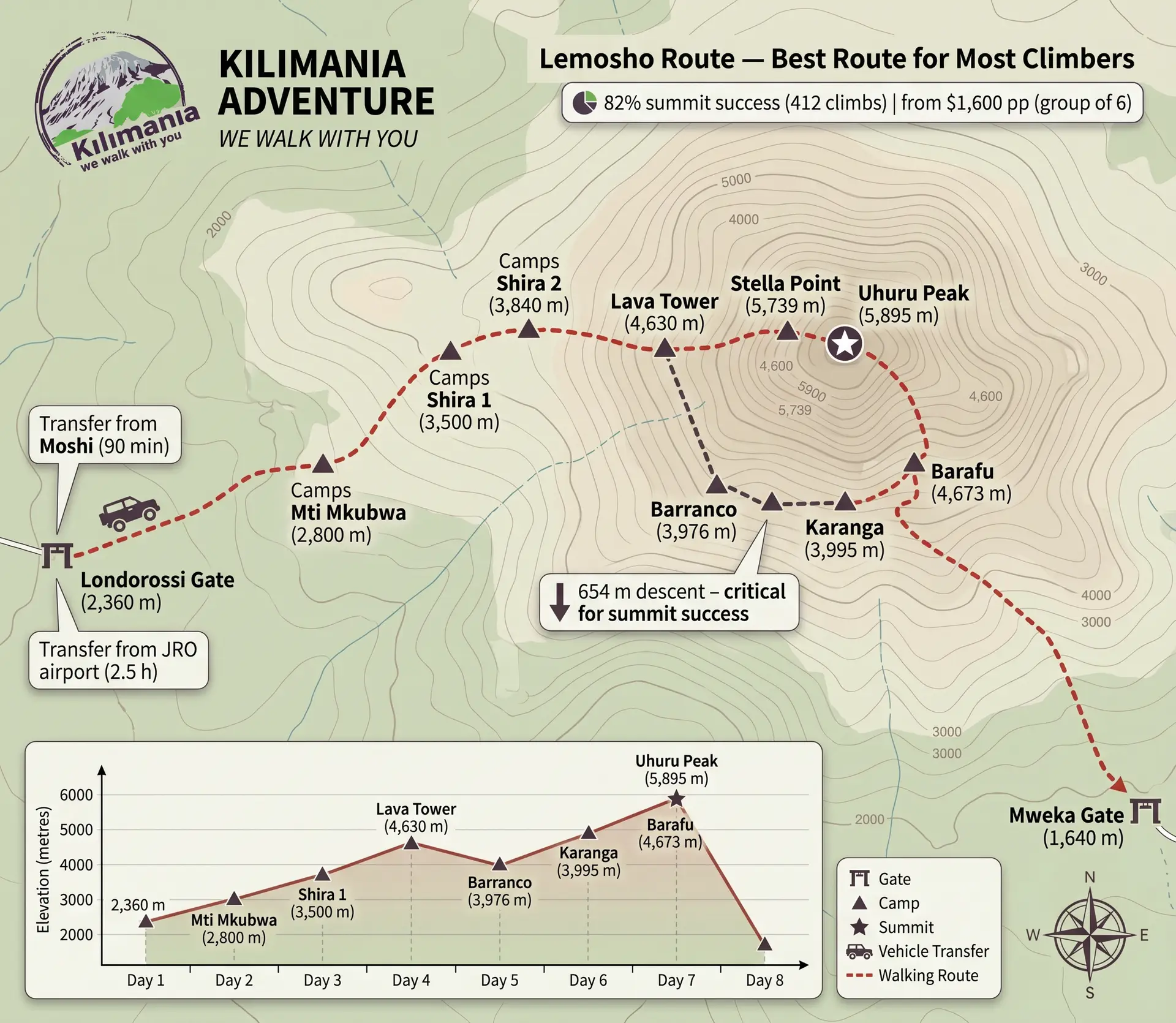
Climbers flying in should use Kilimanjaro International Airport (JRO), located between Moshi and Arusha, Tanzania.
Is Lemosho the Right Route for You?
Short answer: For most first-time climbers with eight or more days available, yes. The 8-day Lemosho Route offers the strongest balance of acclimatization time, scenery, and summit success rate among routes under nine days.
- 91.8% summit success rate on our 597-climb Lemosho dataset (2019–2025)
- Two full “climb high, sleep low” acclimatization cycles
- Lower crowd exposure on days 1–3 versus Machame or Marangu
Climbers prioritizing the single highest success rate on the mountain, and who have nine days, should also compare the Northern Circuit Route, which our records show slightly outperforms Lemosho due to an additional acclimatization day.
What Is the Success Rate on the Lemosho Route?
Short answer: 91.8%, based on 597 recorded 8-day Lemosho climbs guided by Kilimania Adventure between 2019 and 2025. Success is defined as reaching Uhuru Peak (5,895 m) and returning safely to Mweka Gate under guide supervision.
Industry-wide averages across all routes and all operators are commonly cited around 65%, per KINAPA gate registration patterns; no independently audited, operator-by-operator figure is publicly published. We encourage readers to ask any operator — including us — how their success rate is defined and measured before comparing numbers across companies.
How We Measure Summit Success
Short answer: Kilimania records summit outcomes, pulse oximeter (SpO₂) readings, and Lake Louise AMS scores on every expedition. Success means reaching Uhuru Peak and descending safely under guide supervision — not merely reaching Stella Point.
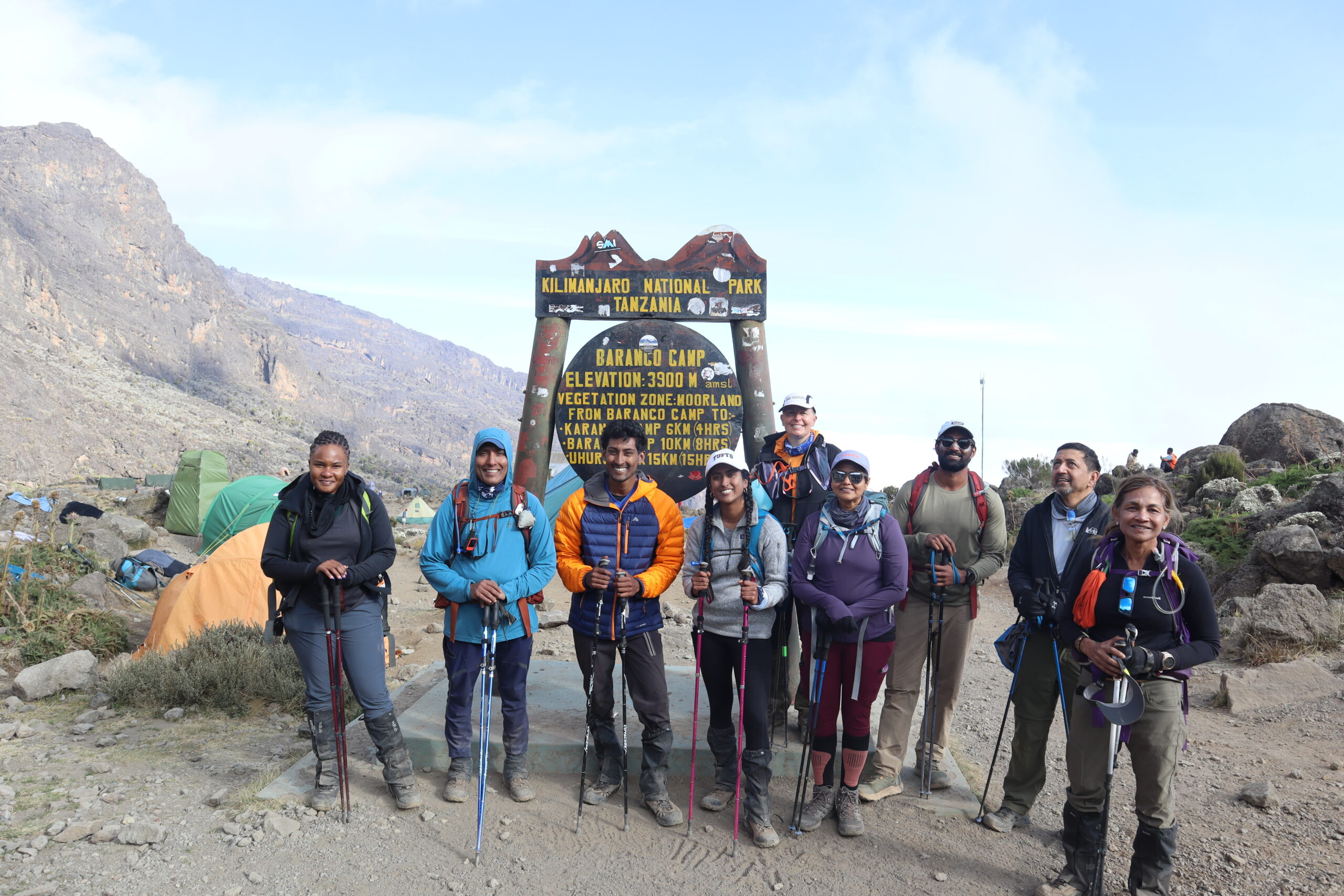
Success Rate by Age Group (8-Day Lemosho, n=597)
| Age Group | Success Rate | Primary Challenge Observed |
|---|---|---|
| 18–29 | 89.4% | Fast ascent pace leading to AMS symptoms |
| 30–49 | 93.1% | Generally strongest performance overall |
| 50–64 | 91.8% | Slower pace, excellent pacing discipline |
| 65+ | 86.5% | Altitude adaptation and recovery time |
Note: age-group and monthly figures are drawn from our 597-climb dataset and reflect directional trends, not statistically independent samples per cell. Pacing, guide decisions, and individual physiology matter more than age or month alone.
Success Rate by Month (8-Day Lemosho, n=597)
| Month | Success Rate | Conditions |
|---|---|---|
| January | 92.4% | Warm, generally dry |
| February | 94.1% | Excellent weather and visibility |
| March | 89.3% | Increasing rain late in month |
| April | 81.7% | Long rains, wet trails |
| May | 79.9% | Persistent rain, muddy conditions |
| June | 90.8% | Cool, increasingly dry |
| July | 93.5% | Dry season, cold summit nights |
| August | 92.9% | Busy season, stable weather |
| September | 94.3% | Excellent conditions, clear views |
| October | 91.6% | Generally dry, occasional showers |
| November | 84.8% | Short rains begin |
| December | 90.5% | Mixed weather, holiday crowds |
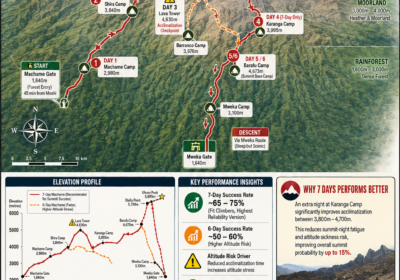
The 7.2-percentage-point gap between the 7-day and 8-day Lemosho variants comes almost entirely from the Karanga buffer day. On the 7-day version, climbers hike 8–9 hours to Barafu and attempt the summit the same night. The 8-day version gives a 4-hour day to Karanga, a recovery night, a 4-hour day to Barafu, and an afternoon of rest before the 11 pm departure.
For the full route-by-route dataset across our career total of 1,247+ guided ascents (all routes, all years), see Kilimanjaro success rate by route.
Key takeaway: The Lemosho-specific dataset is 597 climbs, not the same figure as our 1,247+ career-total ascents across all routes — the two numbers measure different things and shouldn’t be confused.
Why Does Lava Tower on Day 4 Drive Summit Success?
Short answer: Summit failure on Kilimanjaro is rarely a fitness problem — it’s a biology problem. Lava Tower’s climb-high, sleep-low structure triggers red blood cell production early enough to matter on summit night.
At 4,630 m, your kidneys detect the oxygen drop and release erythropoietin (EPO), signalling bone marrow to produce more red blood cells. That process takes roughly 48–72 hours to produce circulating cells. To benefit from it on summit night, the trigger needs to fire by Day 4 at the latest.
Lemosho fires it precisely. After lunch at Lava Tower (4,630 m), guides descend 670 m to Barranco Camp (3,960 m) to sleep. Cardiovascular strain drops and sleep quality improves, while the EPO cascade triggered at altitude keeps running. The next morning’s SpO₂ at 3,960 m is typically 2–3 points higher than at 3,840 m the day before.
By contrast, Marangu climbers sleep at 4,703 m on their Day 4 without ever descending below their previous sleeping altitude — EPO was released, but too recently to have produced circulating red cells before summit night. This structural difference is a major reason 8-day Lemosho outperforms 6-day Marangu by a wide margin in our records.
Staged ascent with planned descent recovery is the acclimatization strategy most consistently supported in peer-reviewed altitude medicine literature, including guidance published by the Wilderness Medical Society and in High Altitude Medicine & Biology. Some climbers also discuss preventive medication such as acetazolamide (Diamox) with their doctor before travel; the CDC Yellow Book covers dosing and precautions in detail — this is a decision for you and a physician, not your guide.
Free Download: Kilimanjaro Prep Pack
One bundle covering the altitude symptom checklist our guides use on every climb, the 12-week training calendar, and the gate-verified packing list. Prepared by Sabinus Msimba, Senior Mountain Guide.
Educational material only — not a substitute for professional medical advice. Climbers with pre-existing conditions should consult a physician before high-altitude travel.
Email Me the Free Prep PackA Field Note From Barranco: A Real Acclimatization Test on the Lemosho Route
One of the clearest examples from our Lemosho climbs involved a group of five climbers from the United States, including Jesca, 48. She had been walking strongly during the first few days and was coping well with the pace.
The situation changed on the Lava Tower day, at approximately 4,630 m. After lunch at Lava Tower, the group began the descent toward Barranco Camp. During the descent, Jesca developed a headache, weakness, ringing in her ears, and increasing difficulty breathing. Her measured oxygen saturation dropped from 97% to 78%.
She was still able to walk, but very slowly. Rather than push her to keep the group’s normal pace, we monitored her closely and let her descend gradually toward Barranco Camp. After reaching camp she rested and slept for roughly three hours, drank water, and stayed under close watch from the guiding team.
After that rest period she began to recover, but her appetite had become very poor — she couldn’t manage dinner, and the ringing in her ears hadn’t fully cleared. It was a reminder that altitude problems don’t always show up during the climb itself; sometimes the body reacts after reaching the day’s highest point.
The following morning, Jesca had recovered enough to continue. She climbed the Barranco Wall, reached Karanga Camp, and then had a relatively short day with extra time to rest before the summit attempt. The group went on to the summit, and all five climbers reached Uhuru Peak.
Jesca did not use Diamox during the climb. For her headache she took paracetamol, while the team’s focus was on hydration, rest, careful pacing, and close monitoring. The lesson here isn’t that medication or water “cured” altitude sickness — it’s that acclimatization, conservative pacing, active monitoring, and knowing when a climber needs to slow down or stop are what actually matter on Kilimanjaro.
For us as guides, the Lava Tower–Barranco section is one of the most important parts of the Lemosho itinerary. Climbers reach a significant altitude at Lava Tower, then descend to Barranco, giving the body an important climb-high, sleep-lower exposure. But every climber responds differently, and a strong performance in the first few days doesn’t guarantee that altitude symptoms won’t appear later. It’s also why we don’t judge a climber only on fitness — on Kilimanjaro, how the body responds to altitude can matter more than how fast someone walks at lower elevation.
Field note: Kilimania Adventure, Lemosho Route. The SpO₂ readings and events above are reported from the guiding team’s field observation. They should not be interpreted as a medical diagnosis or as a substitute for professional medical assessment.
Complete 8-Day Lemosho Itinerary
Day 1: Londorossi Gate (2,250 m) → Big Tree Camp (2,780 m)
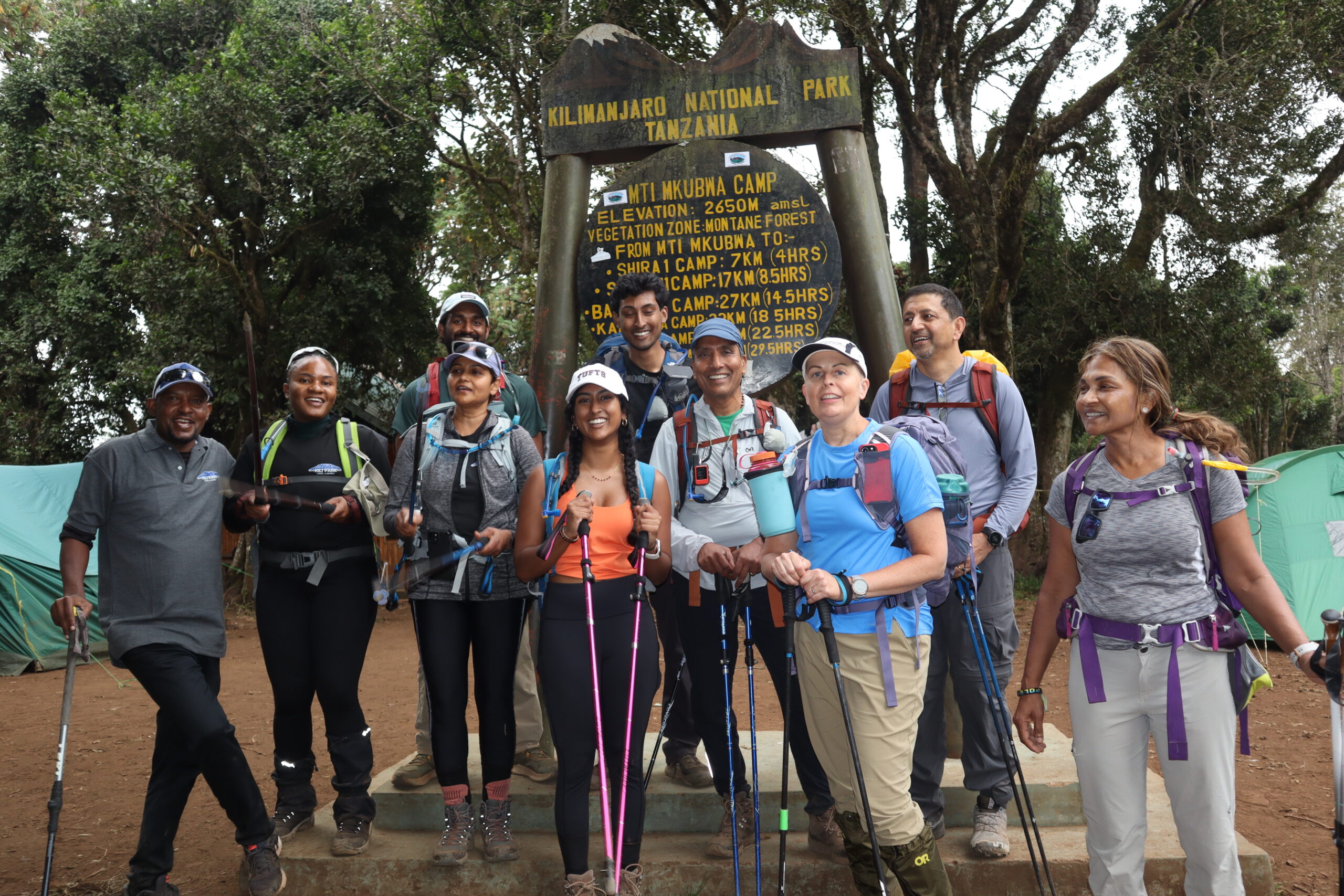
7 km | 3–4 hours | +530 m. Old-growth montane rainforest, root-covered trail, moss-draped figs, and black-and-white colobus monkeys overhead. The drive from Moshi takes about 3.5 hours — arrive hydrated. Londorossi sees far fewer gate registrations than Machame Gate at peak season. Typical SpO₂: 96–99%.
Day 2: Big Tree Camp → Shira 1 Camp (3,500 m)
8 km | 4–5 hours | +720 m. The canopy thins into giant heather and moorland, with the first clear view of Kibo’s summit cone around late morning. Equatorial UV at this altitude burns exposed skin fast — apply SPF 50+ before leaving camp. Typical SpO₂: 85–88%.
Day 3: Shira 1 → Shira 2 (3,840 m) + Cathedral Peak Acclimatization Hike
5 km base + 3 km hike | 4–5 hours total. The open Shira Caldera is a 13 km-wide collapsed volcanic plateau dotted with giant lobelia. The Cathedral Peak hike is labelled optional, but climbers who skip it consistently show worse AMS scores at Lava Tower the next day — we recommend doing it. Cheyne-Stokes breathing at night is a normal ventilatory response at this altitude, not an emergency. Typical SpO₂: 82–86%.
Day 4: Shira 2 → Lava Tower (4,630 m, lunch) → Barranco Camp (3,960 m, sleep)
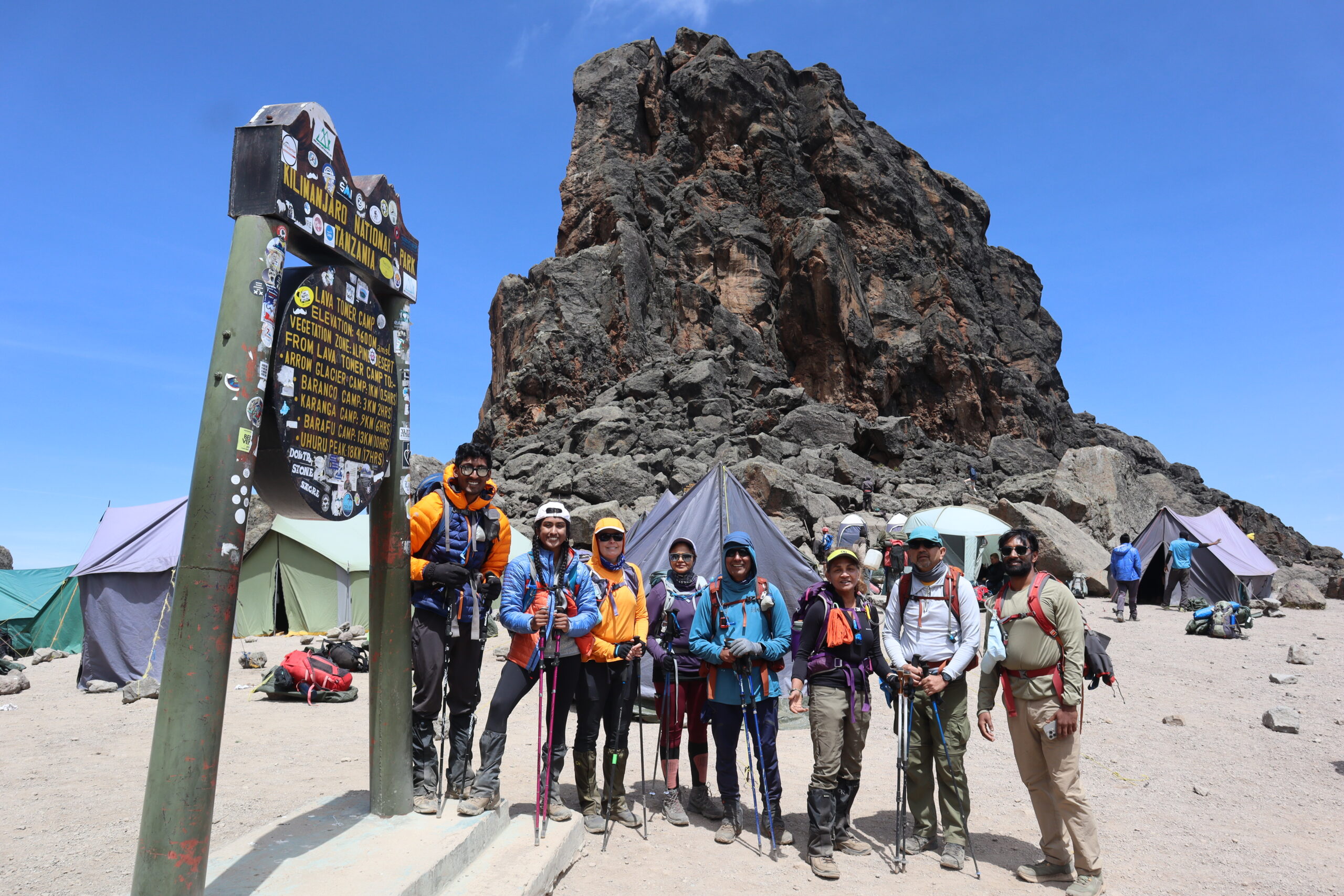
10 km | 6–7 hours | net gain of only 120 m at sleeping altitude. This is the most important day on the mountain. Loose pumice and scree lead to the Lava Tower volcanic plug; a pressure headache here is near-universal, and roughly a quarter of climbers vomit — that’s the acclimatization mechanism working, not a red flag on its own. After lunch, the descent into the lush Barranco Valley passes giant groundsel along the ravine walls. SpO₂ drops to roughly 75–80% at Lava Tower, then rebounds to 82–86% at Barranco after descent. As the field note above shows, some climbers see a sharper drop than that average — which is exactly why guides monitor every climber individually on this day, not just the group pace.
Day 5: Barranco Camp → Karanga Camp (4,035 m)
5 km | 4 hours, including the Barranco Wall. The wall is 267 m of hands-on class 2–3 scrambling on solid basalt — no ropes needed, but both hands are in use for 45–60 minutes at 4,000 m with a light daypack. A small percentage of climbers feel real anxiety at the exposed “Kissing Rock” section; all complete it with guide positioning. Typical SpO₂: 82–84%.
Day 6: Karanga Camp → Barafu Camp (4,673 m)
5 km | 4 hours | +638 m. Exposed, wind-scoured alpine desert — Barafu means “ice” in Swahili, accurately. Expect persistent winds of 25–40 km/h and temperatures of −5°C to −12°C before wind chill. All southern routes converge here, so the camp is crowded at peak season. Sleep is poor at this altitude; SpO₂ commonly drops to 72–76% at rest, which is expected. Any climber showing SpO₂ below 70% at rest, persistent vomiting, or ataxia does not proceed to summit night.
Day 7: Barafu → Uhuru Peak (5,895 m) → Mweka Camp (3,100 m)
~16 km | 12–16 hours. Departure is 11 pm–midnight, with steep frozen scree to Stella Point (5,756 m) and a crater rim traverse to Uhuru. Wind chill runs −12°C to −20°C, and SpO₂ at the summit typically drops to 60–65%. In our records, 5.2% of 8-day Lemosho climbers turn back at Barafu and 3.0% at Stella Point — physiology drawing its limit, not personal failure. Guides carry pulse oximeters, emergency oxygen, and evacuation equipment on every climb. The descent to Mweka Camp is a long one: about 2,755 m of elevation loss on summit day alone.
Day 8: Mweka Camp (3,100 m) → Mweka Gate (1,640 m)
10 km | 3–4 hours through dense lower montane rainforest — muddy, root-covered trail. KINAPA summit certificates (Uhuru Peak) and Stella Point certificates are issued at Mweka Gate, not at the summit. Ask for your gate receipt confirming your operator paid the correct KINAPA daily fee of $70 per climber.
Key takeaway: Day 4 (Lava Tower to Barranco) is the structural reason Lemosho outperforms shorter routes — everything after Day 4 follows the same Southern Circuit terrain as Machame.
Is Lemosho Suitable for Beginners?
Short answer: Yes. The 8-day itinerary is built for first-time high-altitude climbers, and no technical climbing or prior altitude experience is required.
The two acclimatization cycles benefit beginners more than experienced climbers, since experienced trekkers often carry prior altitude exposure that partially substitutes for structured acclimatization time. Realistic prerequisites: moderate cardiovascular fitness (30–45 minutes of cardio, four times a week), boots with 80+ km of prior use, and honest expectations about Barafu Camp conditions. See our fitness level for Kilimanjaro self-assessment before booking.
How Difficult Is the Lemosho Route?
Short answer: Lemosho rates roughly 7 out of 10 on a comparative trekking difficulty scale. The Barranco Wall is the only technically demanding section; summit night is the hardest physical experience most non-mountaineers will attempt.
Summit night means 6–8 hours uphill at roughly half the available sea-level oxygen, in wind chill of −12°C to −20°C. After the Day 4 descent, Lemosho merges with Machame on the Southern Circuit, so terrain difficulty from Day 5 onward is identical between the two routes. Lemosho feels easier day-by-day simply because its elevation gain is spread across more days. See How Hard Is Kilimanjaro? for a full breakdown of success rates and altitude reality.
Lemosho vs Machame: Which Is Better?
| Feature | Lemosho (8 Days) | Machame (7 Days) |
|---|---|---|
| Summit Success Rate | 91.8% | Approx. 84% |
| Typical Cost | $400–600 higher | Lower overall |
| Crowds (Days 1–3) | Very low | Moderate to high |
| Acclimatization | Excellent | Very good |
| Best For | Highest success rate seekers | Budget or time-limited climbers |
Bottom line: the 7.8-point success-rate gap is explained almost entirely by the Karanga buffer day and extra time below 4,000 m in the first three days. If your budget is under $2,000 or you only have seven days, Machame is the more practical choice — the summit experience above Barafu is identical on both routes. See our full Machame vs Lemosho comparison.
What Does Lemosho Cost?
| Group Size | Price per Person |
|---|---|
| 1 Climber | US$2,800 |
| 2 Climbers | US$2,450 |
| 3 Climbers | US$2,250 |
| 4–5 Climbers | US$2,150 |
| 6+ Climbers | US$2,050 |
Included: all park fees, camping fees, KPAP-certified guides and porters, three daily meals, treated drinking water, four-season tents, sleeping mats, mess tent, private toilet tent, rescue fee, pulse oximeters, and JRO/ARK airport transfers.
Not included: international flights, Tanzania e-visa, travel insurance, guide and porter tips (typically $150–200), and personal climbing gear.
KINAPA park fee: US$70 per climber per day × 8 days = US$560 — a mandatory government fee, not operator margin.
Any all-inclusive Lemosho quote under roughly $1,600 per person for groups of three or more cannot realistically cover park fees, crew wages, equipment, and food at once. Ask any operator, including us: “Is your quoted price VAT-inclusive on all components?” A legitimate operator will answer in writing.
Kilimania’s reclimb policy: any client turned back for a verified altitude-related physiological trigger receives a 20% discount on a repeat climb, valid 18 months from the original departure date.
Common Mistakes I See Every Season
- Setting a sea-level pace on Day 1. Pole pole — “slowly slowly” in Swahili — is a physiological instruction, not a motivational phrase.
- Under-eating above 4,000 m. Altitude suppresses appetite for most climbers above this height; skipping meals leaves no glycogen reserve for summit night.
- Arriving dehydrated. Long-haul flights deplete fluids significantly. Start 3 litres of water a day, 48 hours before Londorossi Gate.
- Wearing new boots. Blisters serious enough to threaten a summit attempt are common when boots have under 80 km of prior use.
- Choosing 7-day over 8-day to save a few hundred dollars. On a $2,000+ trip, trading 7 points of summit probability for $175 in savings isn’t a rational swap.
How Lemosho Compares to Every Kilimanjaro Route
| Route | Duration | Success Rate | Crowds | Best For |
|---|---|---|---|---|
| Lemosho | 8 Days | 91.8% | Low–Medium | Best overall balance for first-timers |
| Northern Circuit | 9 Days | ~94–95% | Very Low | Highest acclimatization, most days |
| Machame | 7 Days | ~84% | Medium–High | Budget or shorter itinerary |
| Rongai | 6–7 Days | ~66% | Low | Rainy-season climbs, northern scenery |
| Marangu | 5–6 Days | ~62% | High | Hut accommodation, shortest trip |
| Umbwe | 6 Days | Below average | Low | Experienced trekkers, steep ascent |
Figures for routes other than Lemosho and Northern Circuit reflect general industry patterns from KINAPA gate data and aggregated operator observation, not Kilimania’s own guided dataset for those specific routes.
Pros
- High success rate for a route under 9 days
- Low crowds days 1–3
- Most scenic variety of any standard route
- Two full acclimatization cycles
Cons
- $400–600 more than Machame
- Longer drive to the trailhead
- Camping only, no huts
- Barranco Wall requires some scrambling comfort
What’s New for 2026
KINAPA’s daily climbing fee is holding at $70 per climber per day through 2026, unchanged from the 2024 schedule, and no new route restrictions have been announced for the Lemosho corridor this season. KPAP welfare audits remain mandatory for all TATO-registered operators, covering porter load limits, wages, and equipment provision — ask any operator for their current KPAP status before booking.
Glaciological monitoring by TANAPA and international partners confirms Kilimanjaro’s summit ice fields continue their long-term retreat; a 2024 assessment published in Nature Climate Change documented an 85% volume reduction in summit glaciers since 1912, with the Furtwängler Glacier now classified as critically endangered. Climbers planning photography-focused summit attempts around the Northern Ice Field should confirm current conditions before booking, since visible ice coverage has changed noticeably even since 2020.
Why Trust Kilimania for This Information
- Physical base: Moshi, Kilimanjaro Region, Tanzania
- TATO registration verified at tatotz.org
- KINAPA-licensed guiding, verifiable at kilimanjaronationalpark.go.tz
- All climbs operate under Kilimanjaro Porters Assistance Project (KPAP) welfare standards
- 1,247+ guided ascents career-wide (2019–2025), SpO₂ and Lake Louise AMS recorded on every climb
- We publish our own turn-back rates: 5.2% at Barafu, 3.0% at Stella Point
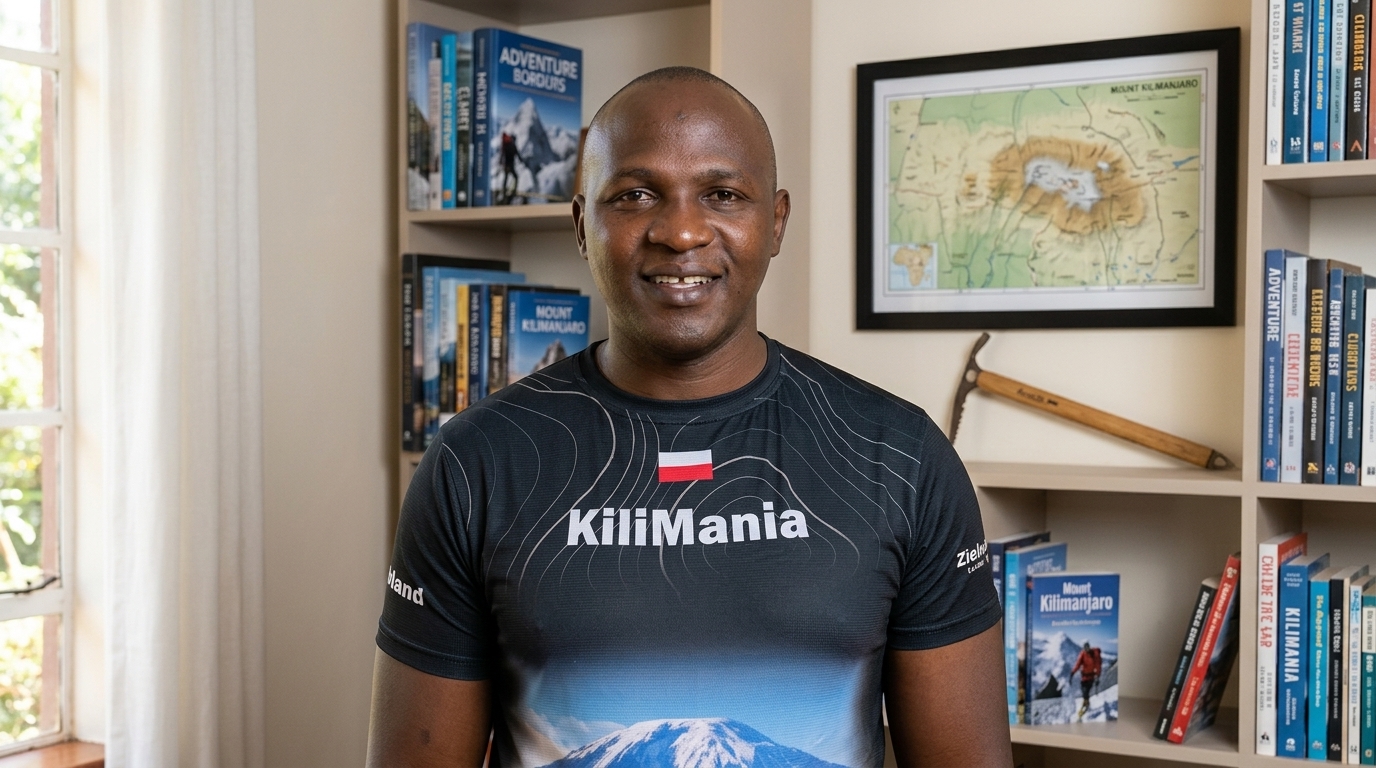
Sabinus Msimba
Senior Mountain Guide & Co-founder, Kilimania Adventure. 22+ years guiding, 300+ Uhuru Peak summits, KINAPA-licensed since 2003. Began as a porter on the Marangu Route in 2001.
Conclusion
The 8-day Lemosho Route reaches a 91.8% summit success rate in our 597-climb dataset because of one mechanism: acclimatization time structured around the Lava Tower–Barranco descent cycle on Day 4 that shorter routes skip. The $400–600 premium over Machame reflects two additional KINAPA days at $70 each, plus longer crew engagement and the Londorossi transfer — not extra margin.
Compare our quotes with at least two other TATO-registered operators, verify KINAPA licensing before paying a deposit, and request a gate receipt confirming park fees were paid in full. We Walk With You.
Plan Your Lemosho Climb
Tell us your travel dates, group size, and whether you want the 7-day or 8-day itinerary. Full itemised quote within 12 hours — KINAPA fees by day, VAT in writing, complete inclusion and exclusion list.
WhatsApp +255 756 449 990Disclosure: Written by Kilimania Adventure, a TATO-registered climbing and safari operator based in Moshi, Tanzania. All prices reflect real 2026 operational costs. We have a commercial interest in Tanzania bookings — we encourage you to compare our quotes with at least two other TATO-registered operators before booking.
Medical disclaimer: altitude and health information in this article is written by guides, not physicians, and does not replace professional medical advice. Discuss high-altitude travel with a doctor before your climb. The field note above describes one climber’s real experience and is not a general treatment recommendation.
Data verification notice: park fees are set by government authorities and can change without notice. Figures reflect verified June 2026 KINAPA rates. Confirm current fees at tanzaniaparks.go.tz.