Marangu Day Hike vs Shira Plateau Day Hike: Which Kilimanjaro Sneak Peek?
Last updated
If you’re comparing the Marangu day hike vs Shira Plateau day hike, the main difference is altitude: Marangu climbs through rainforest to Mandara Hut at approximately 2,700 m, while Shira reaches 3,500–3,800 m on open high moorland. That gap of roughly 800–1,100 m changes the altitude risk, the scenery and the fitness you need: choose Marangu for a lower-altitude forest introduction to Kilimanjaro, and choose Shira Plateau if you’re fit, want wider Kibo views and accept moderate altitude exposure.
Sources for figures in this guide: Kilimania Adventure 2026 day-trip rate sheet; KINAPA signboards at Mandara Hut and Londorossi Gate (photographed by the Kilimania team); the Shira Plateau walking distance from Kilimania’s own day-hike route; the Shira Plateau altitude disclosure used on every Kilimania Shira booking.
One thing to clear up first. This guide compares the Kilimanjaro-route day hike that starts at Marangu Gate, not the Marangu Waterfalls cultural day trip in the village below the park. Same name, very different day.
Quick answer
Marangu reaches about 2,700 m in shaded rainforest, carries lower altitude exposure and costs $275 private or $215 joining. Shira Plateau reaches 3,500–3,800 m on exposed moorland, gives wider Kibo views, carries moderate altitude risk and starts from $190 pp for a group of five. Unsure how you handle altitude? Start with Marangu.
Bottom line: Pick Marangu for rainforest, lower altitude and the option to join a group departure. Pick Shira Plateau for the open high country and Kibo, if you’re fit and willing to turn back when altitude says so.
Most travellers who ask us about a Kilimanjaro day hike have one free day in Moshi and one question: which version of the mountain am I actually going to see? The honest answer is that these two hikes show you different zones of the same mountain. Marangu keeps you in the montane forest on the south-eastern side. Shira takes you round to the western flank and up onto a volcanic plateau far above the trees. The rest of this guide explains what that means for your body, your camera and your budget, so you can pick without guessing.
The Key Difference: Altitude
Marangu reaches approximately 2,700 m. Shira Plateau reaches 3,500–3,800 m. That’s not a small difference, and it’s the reason almost everything else about the two days differs.
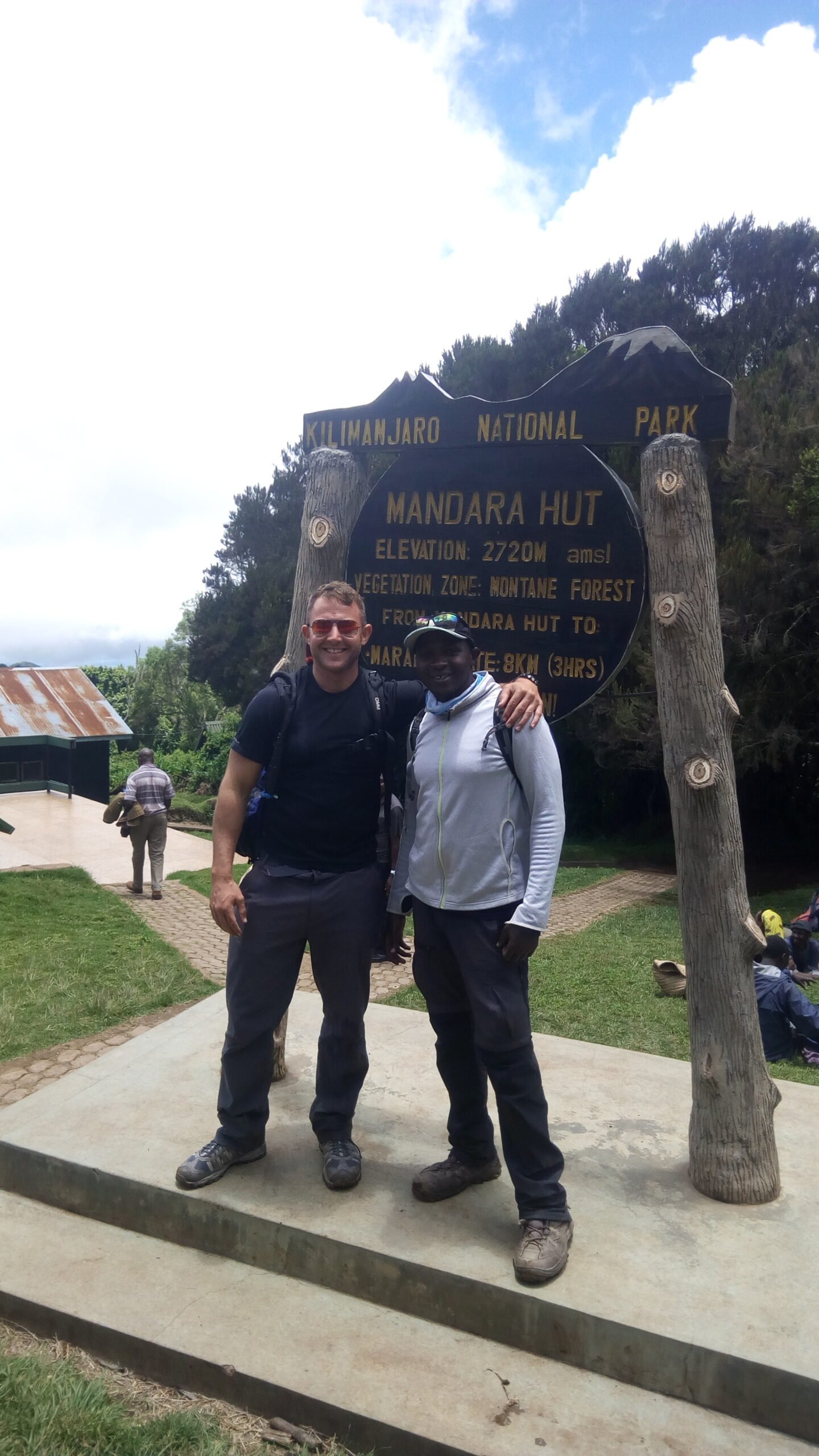
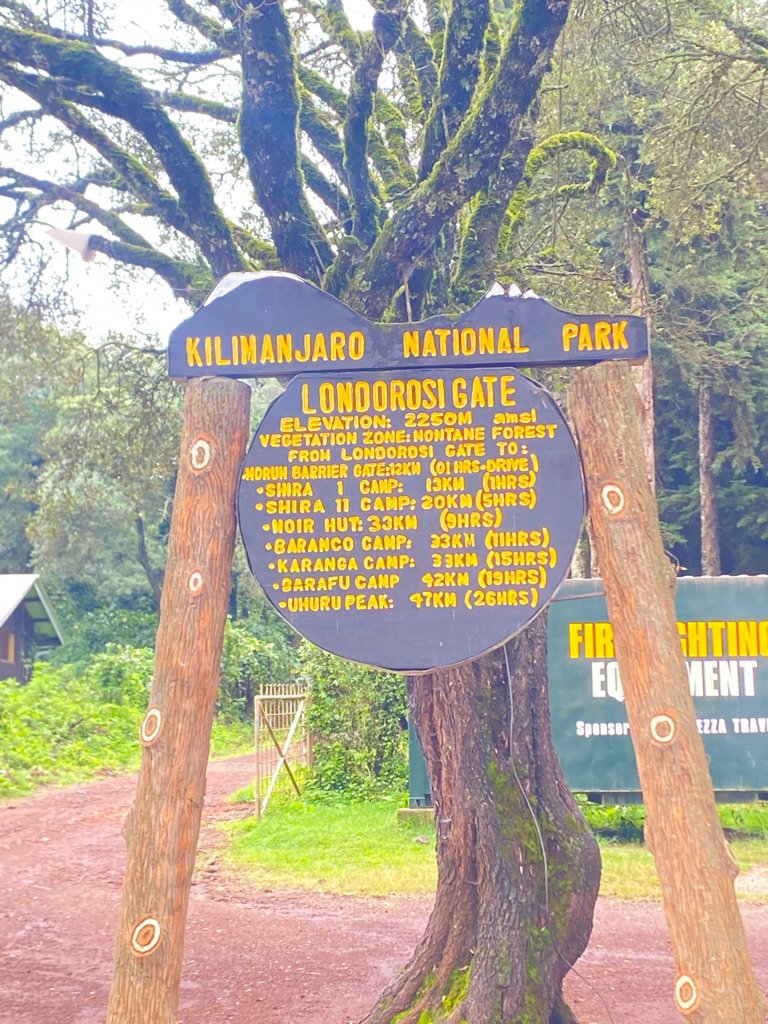
Mandara Hut, the Marangu turnaround, carries a KINAPA signboard reading 2,720 m and “montane forest.” Altitude exposure at 2,720 m is well below the Shira Plateau, but individual responses vary and symptoms can still occur. The Shira day is another matter. The Londorossi Gate sign on the western side reads 2,250 m, and the day then climbs well beyond it to the plateau. Multi-day climbers on western routes reach that band only after days of walking; a day hiker arrives within the same morning, largely by vehicle. Your legs get an easier ride. Your lungs don’t.
Marangu Day Hike vs Shira Plateau: Comparison Table
| Factor | Marangu Day Hike | Shira Plateau Day Hike |
|---|---|---|
| Max altitude | ~2,700 m (Mandara Hut, signed 2,720 m) | 3,500–3,800 m |
| Access | Marangu Gate, south-eastern side | Londorossi Gate (2,250 m), western side, then 4×4 |
| Terrain | Forest path: roots, rocks, mud after rain | High moorland: open, rocky, exposed to sun and wind |
| Vegetation | Montane rainforest | Giant groundsels, lobelias, heath and scrub |
| Altitude exposure | Lower symptoms still possible | Moderate |
| Kibo views | Possible, mostly from the Maundi Crater side trail | Wider and more open on clear days |
| Distances on KINAPA signs | Mandara Hut to Marangu Gate: 8 km, 3 hrs | Londorossi to Morum Barrier Gate: 12 km, about 1 hr by vehicle |
| Walking distance (round trip) | About 16 km (8 km each way, per KINAPA sign) | About 8–12 km on the plateau (Kilimania route) |
| Joining option | Yes, $215 pp on group departures | Private pricing by group size |
| Price | $275 private / $215 joining | From $190 pp (group of five) |
| Overnight on the mountain | None, back in Moshi the same day | None, back in Moshi the same day |
The 4×4 access and the sign distances are the practical reason the Shira day runs longer from Moshi. Your exact pickup time is set in your quote.
Choose the Marangu Day Hike If…
It suits you if
- You want Kilimanjaro’s rainforest and a real mountain trail without high-altitude exposure.
- You’re unsure how your body handles altitude, or you’ve only just landed at JRO.
- You’re travelling solo or as a couple and want the $215 joining price.
- You’d like to stand where Marangu Route climbers spend their first night.
- The weather’s unsettled and you’d rather walk under a canopy than across open moorland.
It may disappoint you if
- Seeing Kibo is the whole point; the forest hides it for most of the walk.
- You want the open, other-worldly look of the high zones.
- You want an honest altitude test before a multi-day climb.
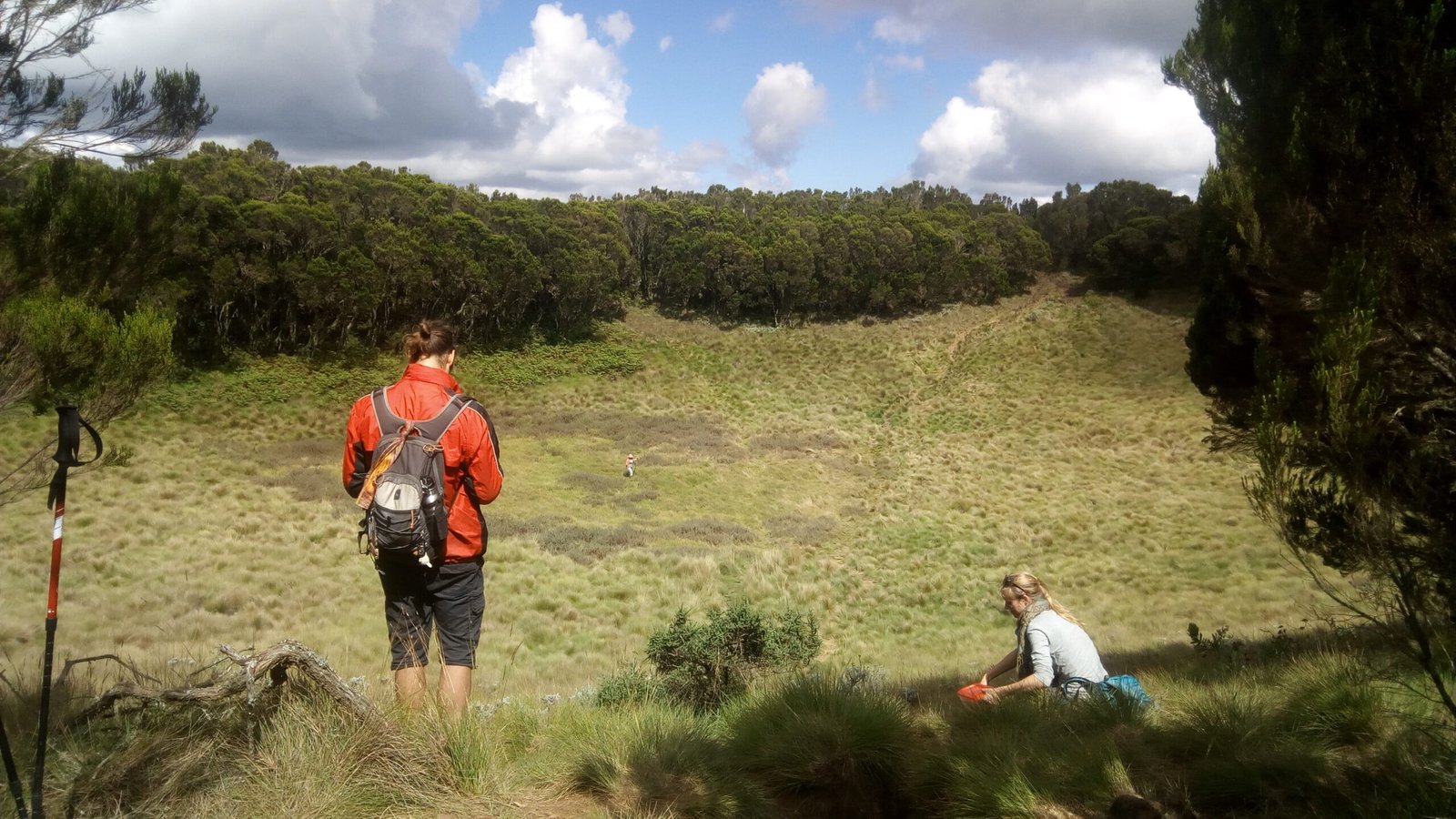
Don’t skip Maundi Crater if your guide says there’s time. It’s a short side trail near the hut where the trees give way to grassland, and on a clear morning it’s the Marangu day’s one real chance at Kibo. The full trail detail lives in our Kilimanjaro day hike to Mandara Hut guide.
Choose the Shira Plateau If…
It suits you if
- You’re fit, used to long days on your feet, and comfortable with the altitude warning below.
- You want Kibo across open ground rather than a glimpse between trees.
- You want to see giant groundsels and lobelias in the high moorland zone.
- You’re weighing a Lemosho or Shira-side climb and want to see the plateau first.
- You’re travelling as a group of four or five, where the per-person price drops.
It may not suit you if
- You have had significant altitude illness before, or have a medical condition that could be affected by altitude (discuss the planned height with your doctor before booking).
- You arrived from sea level in the last day or two.
- You want a short day with an early afternoon finish.
- Rough 4×4 tracks make you uneasy.
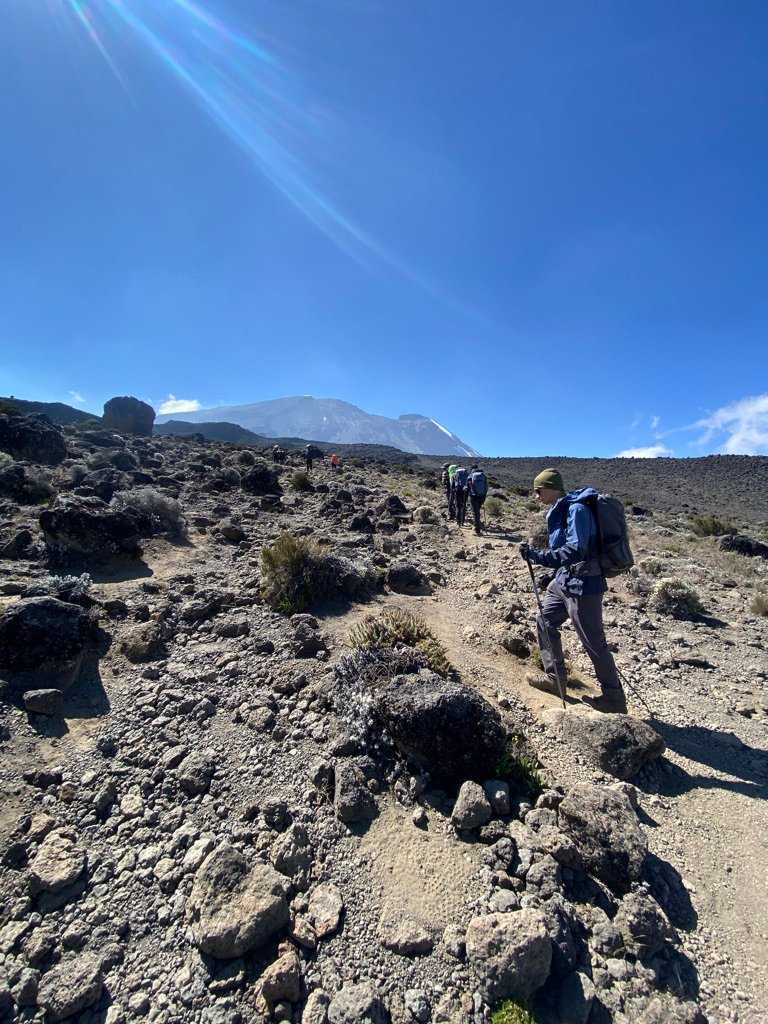
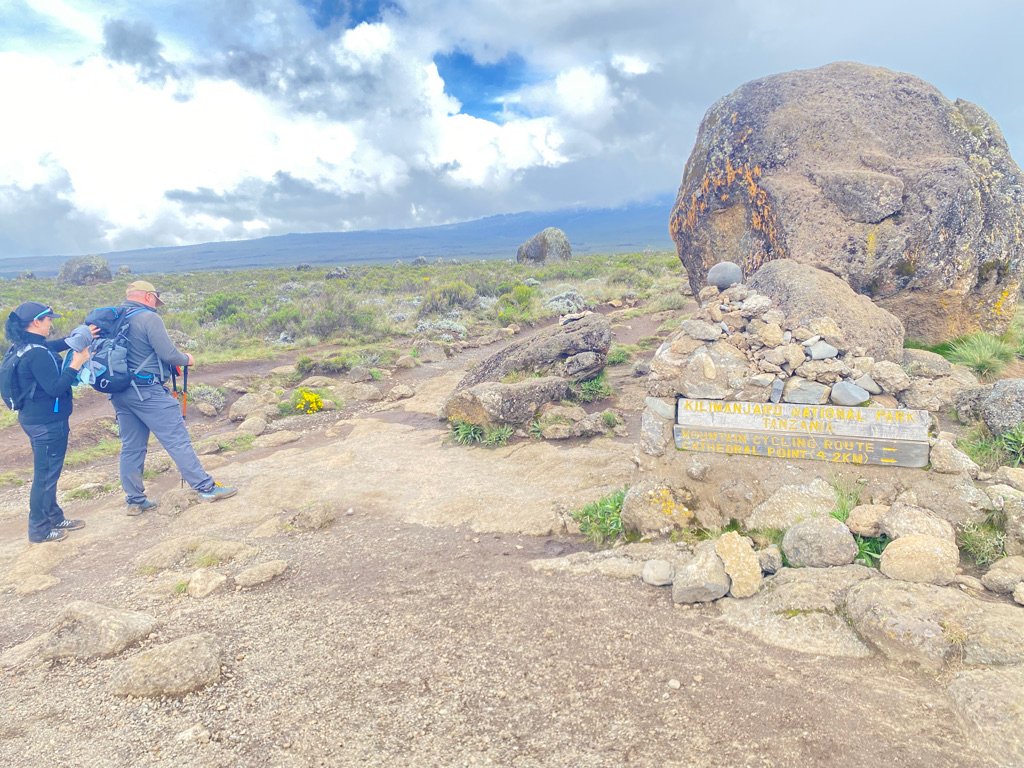
Notice what the plateau photo doesn’t show: shade. Moshi can be warm at breakfast while the plateau is cold in the wind and harsh in the sun, often both within the hour. Pack a warm layer, a windproof shell, a hat and sunscreen. The plateau walk itself is about 8–12 km round trip, but the altitude is what makes it feel longer. The Shira Plateau day hike guide covers the route and conditions in full.
Altitude Warning for Shira Plateau
Guests sleep at Moshi level (approximately 900 m) but spend several hours at 3,400–3,800 m on the plateau. Mild altitude sickness symptoms are possible. Inform your guide immediately if you feel unwell.
In practice, “unwell” means a headache that won’t settle, nausea, dizziness or tiredness out of proportion to the walk. Say so early; guides would rather turn round an hour sooner than too late. Walk pole pole (slowly, slowly), drink steadily and don’t treat the day as a race. Fitness helps with the walking but doesn’t protect you from altitude. If you have a medical condition that could be affected by altitude, discuss the trip with your doctor before booking, and check that your travel insurance covers activities at this height.
Altitude exposure is lower on Marangu, which tops out at 2,720 m, but symptoms are still possible there and individual responses vary. The difference in exposure is the core of this comparison.
What Is the Terrain Like on Each Hike?
Here’s a detail most comparisons miss: the KINAPA signboards at both Mandara Hut and Londorossi Gate list the same vegetation zone, montane forest. Both access points sit in the mountain’s lower forest, but the days split quickly: Marangu is walked from Marangu Gate, while Shira uses vehicle access on the western side before you walk on the higher plateau.
Marangu: inside the forest the whole way
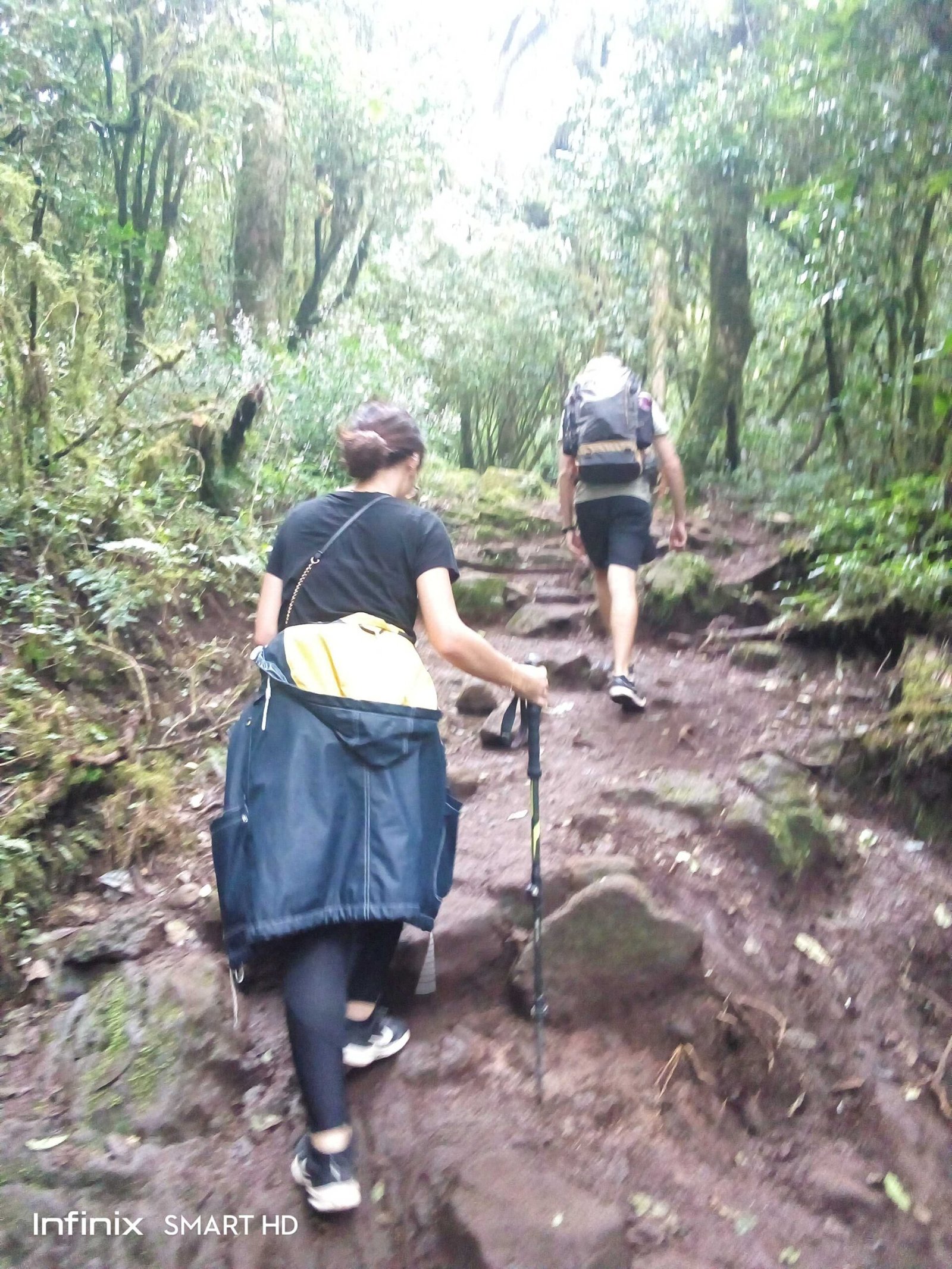
Most of the Marangu day hike stays within the montane forest zone. The trail is rooted and rocky, shaded by a closed canopy, and slick after rain (you’ll see why in the trail photo above). Maundi Crater is the one place the trees open into grassland. Good boots with grip matter more here than warm clothes.
Shira Plateau: above the trees, into the open
On the Shira day the forest is only the start. Above it, the ground turns to rock, scrub, giant groundsels and lobelias, with no canopy at all. Nothing blocks the sun or the wind, so a sunny hour and a cold hour can follow each other. Pack for both.
Can You See Kibo on Both Day Hikes?
Kibo, the summit cone that holds Uhuru Peak, is the view most people come for. The two hikes treat it very differently.
Marangu: the forest canopy hides Kibo for almost the whole walk. Your realistic chance is the Maundi Crater side trail near Mandara Hut, and only if the cloud stays off the mountain.
Shira Plateau: the plateau is open, so on a clear day Kibo sits on the horizon across the moorland, as in the plateau photo above. Clearer odds, not a promise.
Cloud can cover Kibo on either hike, and conditions in Moshi tell you little about conditions on the mountain.
Which Kilimanjaro Day Hike Is More Physically Demanding?
They’re demanding in different ways, and that’s the useful way to think about it.
Marangu tends to feel like a walking challenge. The KINAPA sign gives 8 km and 3 hours for the walk back down from Mandara Hut alone, and you walk the same trail up first. That’s about 16 km on foot in a day, on uneven ground. The Shira walk is actually shorter, about 8–12 km round trip on the plateau, which surprises most people who assume the higher hike must be the longer walk.
Shira adds a significant altitude component. The vehicle does much of the climbing, so the walking can feel modest while the higher altitude adds to the effort. A strong runner can still feel the height; a slower walker may feel fine. Fitness and altitude response are different factors: better fitness makes the walking easier, but it does not mean you will avoid altitude symptoms.
What Does Each Day Hike Cost?
Marangu is priced by departure type; Shira is priced by the size of your private group. The table below is per person, in US dollars, for private trips from Moshi unless marked joining.
| Day hike | 1 person | 2 people | 3 people | 4 people | 5 people |
|---|---|---|---|---|---|
| Shira Plateau (private) | $285 | $245 | $220 | $205 | $190 |
| Marangu (private) | $275 per person | ||||
| Marangu (joining group) | $215 per person on a scheduled group departure | ||||
Worked example: two friends on a private Shira day pay $245 each, $490 in total. The same pair joining a Marangu group departure pay $215 each, $430 in total. Groups larger than five: contact the team for a quote. Joining dates are listed on the Kilimanjaro Joining Calendar.
Who Should Choose Something Else
Neither hike is the right day for everyone, and a wrong pick costs you a whole day in Tanzania.
- You want to reach the summit. A day hike never gets near Uhuru Peak. Look at a full Mount Kilimanjaro climb instead.
- You want to swim or rest after a climb. Chemka Hot Springs is the swimming day trip from Moshi, with warm water of about 27°C.
- You want waterfalls and village life, not a mountain trail. The Marangu Waterfalls day trip stays outside the park.
- You want wildlife on foot or by vehicle. The Arusha National Park day trip suits you better. No sightings are promised on either Kilimanjaro hike.
- You want a different mountain. The Mount Meru day hike covers Meru’s lower slopes only, not the 4,565 m summit climb, which takes 3–4 days.
What Does “Sneak Peek of Kilimanjaro” Actually Mean?
A day hike is not a short climb. Both hikes return to Moshi the same day, and neither comes near Uhuru Peak at 5,895 m. What they give you is a measured look at part of the mountain.
Put the numbers side by side. Mandara Hut at 2,720 m sits far below Uhuru Peak, while the Shira Plateau takes you into the 3,500–3,800 m range. Marangu shows you the mountain’s forested lower half, including the hut where Marangu Route climbers spend their first night. Shira shows you the open high ground that western routes such as Lemosho cross early in a multi-day climb.
If either day leaves you wanting the whole mountain, the full Kilimanjaro climb options are the next step, and group dates sit on the joining calendar for group climbs.
Sabinus’s Note from the Trail
- Who
- Sabinus Msimba, KINAPA-licensed guide, guiding on Kilimanjaro for 22+ years.
- When
- On Kilimania’s own Marangu and Shira Plateau day-hike departures; the two gate signboards were photographed by the team and published with this guide in September 2026.
- What I observed
- The two park signboards tell the story of these days better than any brochure. At Mandara Hut the sign reads 2,720 m, and underneath it, 8 km and 3 hours back down to Marangu Gate. At Londorossi the sign reads 2,250 m, and the plateau is still well above you, with Morum Barrier Gate another 12 km, about an hour’s drive, up the track.
- Why it matters
- On Marangu, plan for a full day of walking on uneven ground, the descent included. On Shira, the vehicle does much of the climbing, so altitude arrives faster than your body would choose (that’s exactly why we brief the warning before you leave Moshi). Read the signs, not the name of the hike.
Frequently Asked Questions
Is the Marangu day hike the same as the Marangu Waterfalls trip?
No. The Marangu day hike enters Kilimanjaro National Park at Marangu Gate and climbs through rainforest to Mandara Hut at about 2,700 m. The Marangu Waterfalls trip is a cultural day in the village below the park, with its own price and guide. Check which one you are booking before you pay.
Which is harder, the Marangu or Shira Plateau day hike?
For most people the Shira Plateau day hike is harder, mainly because of altitude rather than distance. It reaches 3,500–3,800 m, where the air is noticeably thinner. The Marangu day hike stays near 2,700 m on a shaded forest trail, though the KINAPA sign still puts the walk back from Mandara Hut at 8 km, about 3 hours.
Is altitude sickness a risk on the Shira Plateau day hike?
Yes, a moderate one. Guests sleep at Moshi level, approximately 900 m, but spend several hours at 3,400–3,800 m on the plateau. Mild altitude sickness symptoms are possible. Tell your guide immediately if you feel unwell, and treat symptoms as a reason to go down, not to push on.
Which day hike has better views of Kibo?
The Shira Plateau, on a clear day. The plateau is open and high, so the Kibo summit cone can sit in full view across the moorland. On the Marangu day hike the forest blocks most of the view; a clear glimpse is possible from the Maundi Crater side trail near Mandara Hut. Cloud can hide Kibo on either hike.
How much do the Marangu and Shira Plateau day hikes cost?
Per Kilimania’s 2026 rates, the Marangu day hike is $275 per person private or $215 per person on a joining group departure. The Shira Plateau day hike is from $190 per person for a private group of five, rising to $285 for a solo traveller. Confirm current prices and inclusions when you request a quote.
Can beginners or children do these day hikes?
Beginners who are comfortable with a full day of walking on uneven ground can often manage the Marangu day hike, provided they pace themselves and follow the guide’s instructions. The Shira Plateau is better suited to people with good fitness who accept the altitude warning. Mountain activities have their own safety requirements, so confirm any child’s age with Kilimania before booking either hike.
Do I need a permit or a guide for a Kilimanjaro day hike?
Both hikes take place inside Kilimanjaro National Park, entered through a registered KINAPA gate, so park entry fees apply and you walk with a licensed guide rather than independently. Your Kilimania quote states which fees are included. Park fees are set by the park authority and can change.
Can I do both the Marangu and Shira Plateau day hikes on one trip?
Yes, on separate days. If you plan both, walking Marangu first makes sense: it takes you to about 2,700 m before the higher Shira day, which follows the pole pole idea of letting your body meet altitude gradually. Neither day hike replaces proper acclimatization for a full climb.
Is a Kilimanjaro day hike the same as climbing Kilimanjaro?
No. Both day hikes return to Moshi the same day and stay far below Uhuru Peak at 5,895 m. A full Kilimanjaro climb takes several days on a route such as Marangu, Machame or Lemosho. A day hike is a sneak peek of the mountain’s lower or middle zones, not a summit attempt.
What should I pack for the Marangu and Shira Plateau day hikes?
For both hikes, bring walking shoes or boots with good grip, a rain jacket, layers, water and sun protection. For the Shira Plateau, add a warm mid-layer, a windproof outer layer, a hat and gloves, because the open plateau has no shade or shelter from wind. Ask Kilimania which meals and equipment your quote includes.
Park context: Kilimanjaro National Park (KINAPA) · Tanzania National Parks Authority (TANAPA) · Kilimanjaro National Park on the UNESCO World Heritage List
Read the Full Guides
This page owns the comparison. For trail-by-trail detail, go to the individual guides.
From our base in Moshi, Kilimanjaro Region, Kilimania Adventure runs daily safaris to Serengeti National Park, Ngorongoro Crater, Tarangire National Park, and Lake Manyara, and Kilimanjaro climbs, with pickups from Kilimanjaro International Airport (JRO) and Arusha Airport (ARK).
Which Kilimanjaro Day Hike Fits Your Plans?
If you remember one number, make it the altitude: about 2,700 m on Marangu against 3,500–3,800 m on Shira. Marangu gives you rainforest, lower risk and a joining price of $215. Shira gives you open moorland and Kibo, at the cost of a longer day and a real altitude warning. Choose by how your body handles height, not by which sounds bigger. When you’re ready for more than a sneak peek, the Kilimanjaro climbing routes page is the next step.
We Walk With You.
Ask about your Kilimanjaro day hike
Send your dates and group size and we’ll confirm availability and the current price for your group. Prefer to talk? WhatsApp: +255 756 449 990 or info@kilimania.co.tz.
Enquiry received
Thank you. Kilimania will reply to your email within 12 hours (EAT, 7 days a week). For anything urgent, message us on WhatsApp: +255 756 449 990.
Sabinus Msimba
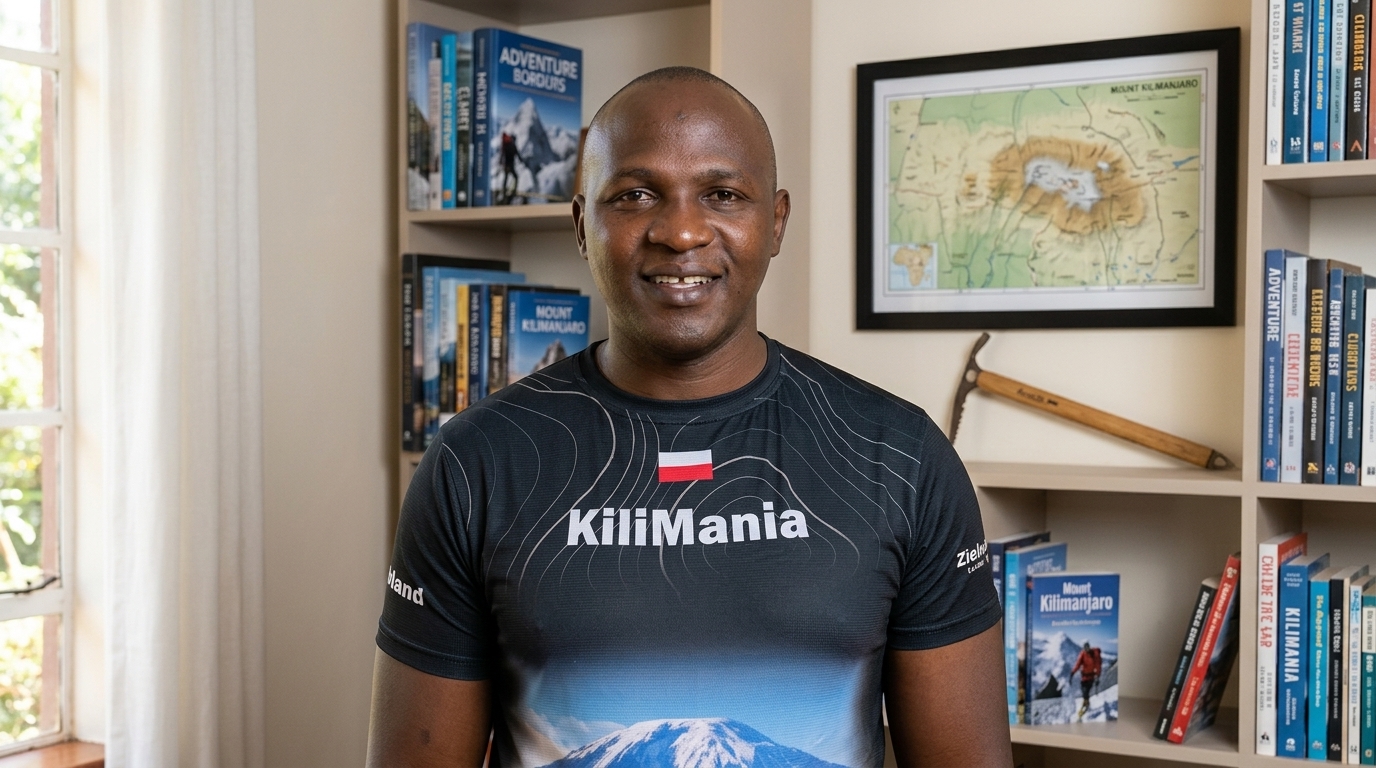
Sabinus has guided on Kilimanjaro for more than 22 years and has stood on Uhuru Peak himself over 300 times. He is a KINAPA-licensed guide and writes Kilimania’s Kilimanjaro and Moshi guides from first-hand trail experience.
Disclosure: This guide is published by Kilimania Adventure, a Moshi-based operator that sells both day hikes compared here. Prices are Kilimania’s 2026 rates and can change, so confirm current pricing and inclusions in your quote. Park fees are set by the park authorities, not by Kilimania. Altitude information is general guidance, not medical advice. No part of this article is sponsored. Last updated September 2026.