What Happens If You Don’t Summit Kilimanjaro
Data sources cited in this article: KINAPA baseline summit-attempt figures, Kilimania Adventure’s 2019–2026 guided-climb records, and published wilderness-medicine guidance from the International Society for Mountain Medicine and the Wilderness Medical Society.
If you don’t summit Kilimanjaro, an assistant guide walks you down to a safer altitude within hours, KINAPA records your highest point on a Certificate of Attempt at Mweka Gate, and you don’t get your money back — park fees and crew wages are spent from the day you enter the park, not the day you reach Uhuru Peak. Roughly 35% of climbers who attempt Kilimanjaro don’t reach the 5,895m summit, and the large majority turn back because of Acute Mountain Sickness (AMS), not fitness. Climbers who come back and try again on an 8-day-or-longer route summit at a far higher rate the second time.
Quick Answer
An assistant guide descends with you to a lower camp within 3–7 hours, you’re monitored and fed along the way, and KINAPA issues a Certificate of Attempt at Mweka Gate. No refund applies — park fees and crew wages are pre-paid regardless of outcome. Second attempts on an 8–9 day route summit at a much higher rate than first attempts on shorter routes.
What Actually Happens If You Don’t Summit Kilimanjaro?
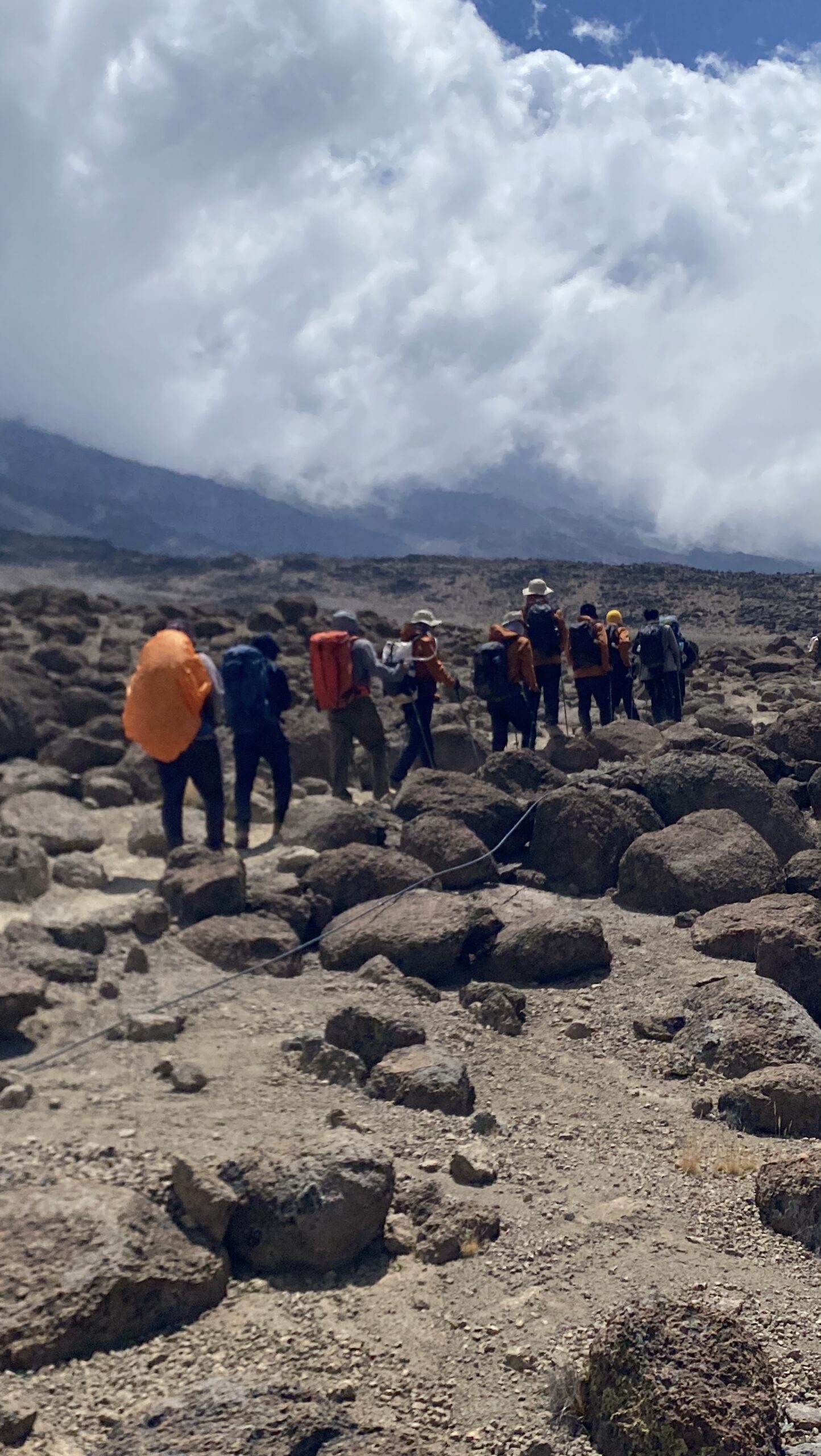
When a Kilimania climber can’t continue, one assistant guide descends with them immediately while the rest of the group carries on with the lead guide — the climb doesn’t stop for everyone else. The descent to a safer sleeping altitude takes 3–7 hours depending on where the turnaround happens, and the climber is checked, given water, and fed along the way. At Mweka Gate, a TANAPA ranger logs the highest point reached and issues a KINAPA Certificate of Attempt, which is a genuine mountaineering record, not a consolation slip.
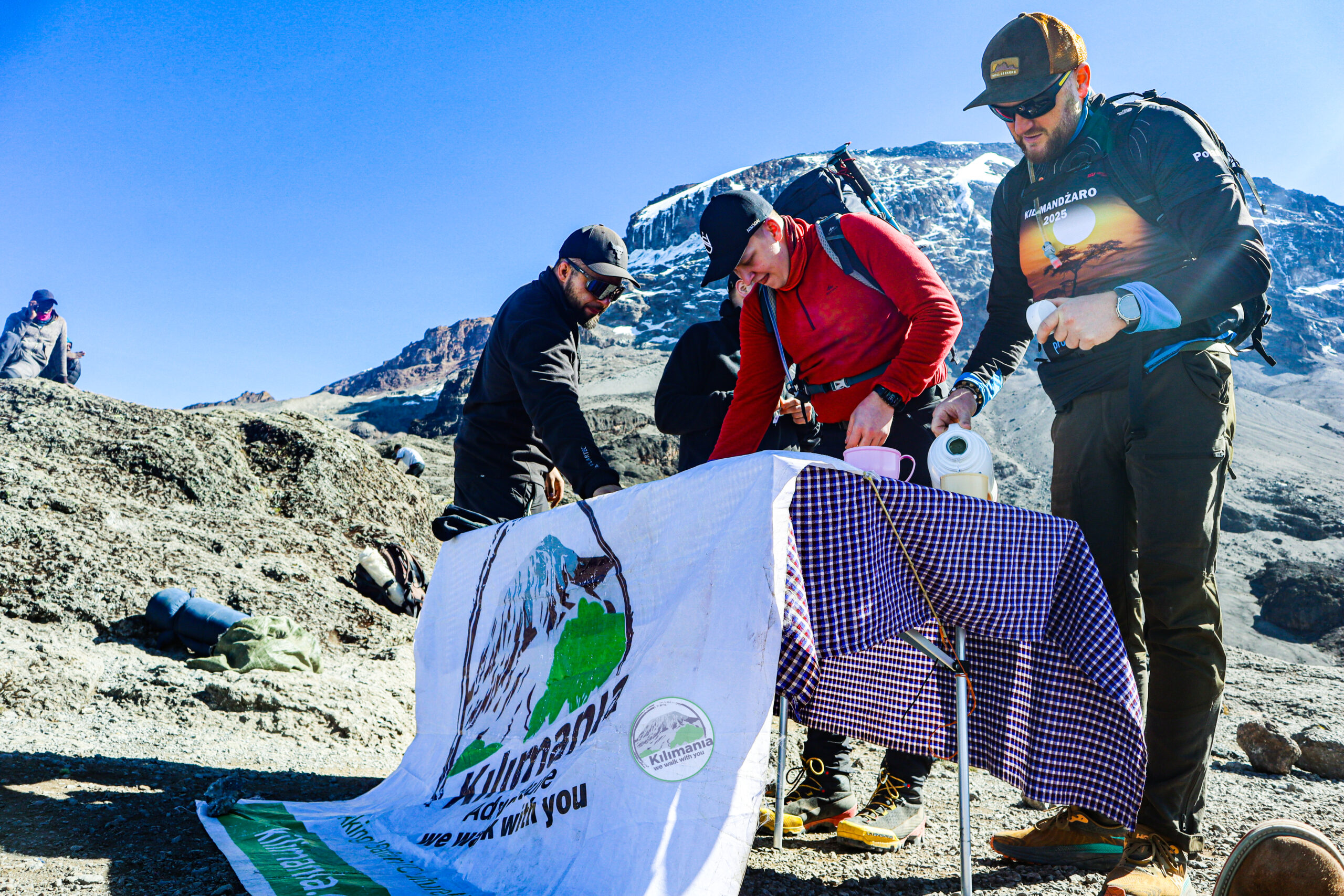
Kilimania staffs summit night at a minimum 1:2 guide-to-client ratio specifically so a group can split safely without ending the climb for everyone. Radio contact between the descending assistant guide and the lead guide continues at roughly 20-minute intervals until both parties reach camp.
How Do Guides Decide You Need to Descend?
Kilimania guides combine four readings — blood oxygen saturation (SpO₂), the Lake Louise AMS Score, a short coordination (ataxia) check, and how symptoms are trending — rather than acting on any single number. This combined approach stops an already hypoxic climber from being the one who decides whether they’re fit to continue. The thresholds below reflect Kilimania’s internal operating protocol, built on general wilderness-medicine practice; they are an operational guideline, not a universal medical standard, and don’t replace an on-mountain guide’s real-time judgment.
| Status | SpO₂ | Lake Louise Score | Ataxia Test | Guide Action |
|---|---|---|---|---|
| Green | Above 80% | 0–2 | Pass | Continue, standard monitoring |
| Yellow | 75–80% | 3–4 | Pass | Increase monitoring, slow pace, add water |
| Orange | 70–75% | 5–6 | Borderline | Reassess every 15 min, consider descent |
| Red | Below 70% | 7+ | Fail | Immediate descent — non-negotiable |
A Red assessment starts descent within two minutes, regardless of how close the climber is to the summit or how they feel about it. That part isn’t up for debate — a climber with a Lake Louise score of 8 at 5,500m is not in a reliable position to judge their own condition, which is exactly why the decision sits with the guide.
Where Do Most Turnarounds Happen, by Route?
Turnaround location differs by route in ways that matter when you’re choosing an itinerary: shorter routes tend to fail earlier and lower, while longer routes fail later and closer to the summit — or don’t fail at all. For full route-by-route success-rate data, see our Kilimanjaro success rate by route breakdown — the table below covers turnaround location only, not success rates, to avoid repeating that page.
| Route | Most common turnaround point | Primary cause pattern |
|---|---|---|
| Marangu 5-day | Kibo Hut (4,703m), before summit night | AMS accumulated over a fast ascent, no rest day |
| Machame 6-day | Kosovo Camp area (5,100–5,200m) | AMS escalation 2–3 hrs into summit night |
| Lemosho 8-day | Stella Point to summit ridge | Fatigue-dominant, lowest AMS rate of the standard routes |
| Northern Circuit 9-day | Summit ridge | Lowest overall turnaround rate in our data |
What Is the Medical Reality of a Kilimanjaro Turnaround?
Most Kilimanjaro turnarounds come from Acute Mountain Sickness (AMS) — a physiological reaction to lower oxygen at altitude, not a mark of poor fitness — and the only proven treatment for a severe case is dropping altitude. Mild AMS (headache plus nausea, fatigue, or dizziness) is common above 3,500m and usually manageable. Severe AMS can progress toward two medical emergencies: HACE (High Altitude Cerebral Edema — confusion, loss of coordination, slurred speech) and HAPE (High Altitude Pulmonary Edema — extreme breathlessness at rest, crackling breath sounds). Both require immediate descent; medication does not substitute for it.
According to the International Society for Mountain Medicine and the Wilderness Medical Society, descending 500–1,000 vertical metres is the standard first-line treatment for AMS that isn’t resolving on its own. In our experience guiding on Kilimanjaro, most climbers notice their headache and nausea easing within 1–3 hours of reaching a lower camp — full recovery to baseline typically takes 6–24 hours.
On Diamox: acetazolamide can reduce AMS symptom severity during acclimatization but does not prevent HACE or HAPE, and it cannot compensate for a route that’s simply too short. It requires a prescription — talk to your doctor at least four weeks before departure, not a pharmacy in Moshi. See our guide on climbing Kilimanjaro with medical conditions for condition-specific detail.
📥 Free Download: Kilimanjaro Altitude Symptom & AMS Checklist
The same practical checklist Sabinus Msimba’s team uses to track climbers day by day: normal acclimatization symptoms, AMS warning signs, HACE/HAPE red flags, and a daily SpO₂/hydration log.
⬇ Download the Free PDFPrepared by Sabinus Msimba, Senior Mountain Guide, Kilimania Adventure. Educational use only — not a substitute for professional medical advice.
What Does It Feel Like to Turn Back?
Most climbers describe the same sequence: the decision to descend brings immediate physical relief, then an emotional collapse that hits harder once the summit group returns to camp still glowing from the top. The descent itself is usually quiet — the scree demands enough attention to interrupt the replay of “what did I do wrong,” which almost never has a useful answer in the first hour anyway. One week after a turnaround is usually the hardest point emotionally for most climbers — that’s a normal reaction to something that cost real money, real training, and real hope, not a sign anything went wrong with the decision.
Sabinus Msimba puts it this way: “The climbers I respect most are the ones who say ‘I cannot go on’ at 5,200m and mean it. That takes more honesty than pushing through. When I check them and agree, I shake their hand.”
Hear It From Climbers, Not From Us
We don’t publish quoted client stories on this page unless they’re logged with a verifiable source — name, platform, date, and permission. Instead, read unedited climber reviews directly on the platforms where they were posted, including accounts of turnarounds and second attempts.
Do You Get a Refund If You Don’t Summit Kilimanjaro?
No licensed Kilimanjaro operator refunds a climb for summit failure, because KINAPA park fees, camping fees, the mandatory rescue levy, and every guide, porter, and cook wage are incurred from the day you enter the gate — not the day you reach Uhuru Peak. This applies across every TATO-registered operator, not just Kilimania.
| Item | Included regardless of outcome? |
|---|---|
| Guiding and assistant guiding, gate to gate | Yes |
| KINAPA permits and rescue levy | Yes |
| All meals and camping fees | Yes |
| Emergency descent support and evacuation coordination | Yes |
| KINAPA Certificate of Attempt | Yes |
| Refund for not reaching Uhuru Peak | No — never offered by any licensed operator |
Standard travel insurance frequently excludes trekking above 4,000m unless you add mountain cover — check the “curtailment” clause and the altitude limit before buying. Providers with documented high-altitude coverage include World Nomads, Allianz Global Assistance, IMG Global, Travel Guard, and Seven Corners. Helicopter evacuation, if required, runs $5,000–$15,000 and is not fully covered by the standard park rescue levy — mountain-specific insurance matters here.
Kilimania offers 20% off a second attempt when the first climb was cut short by a guide-documented AMS turnaround, valid for 18 months from the original climb date. Park fees themselves are fixed by KINAPA and can’t be discounted by any operator — see the full breakdown at hidden costs of climbing Kilimanjaro.
What Changes on a Second Attempt?
Adding acclimatization days is the single most effective change a returning climber can make, because route duration correlates more directly with summit success than fitness, training, or gear. Two of our own numbers make the point on their own: Marangu’s 5-day itinerary runs a 62% success rate, while its 6-day version — one extra acclimatization day, nothing else changed — runs 84%. That’s the lever a second attempt usually pulls. For the complete route-by-route table, see Kilimanjaro success rate by route.
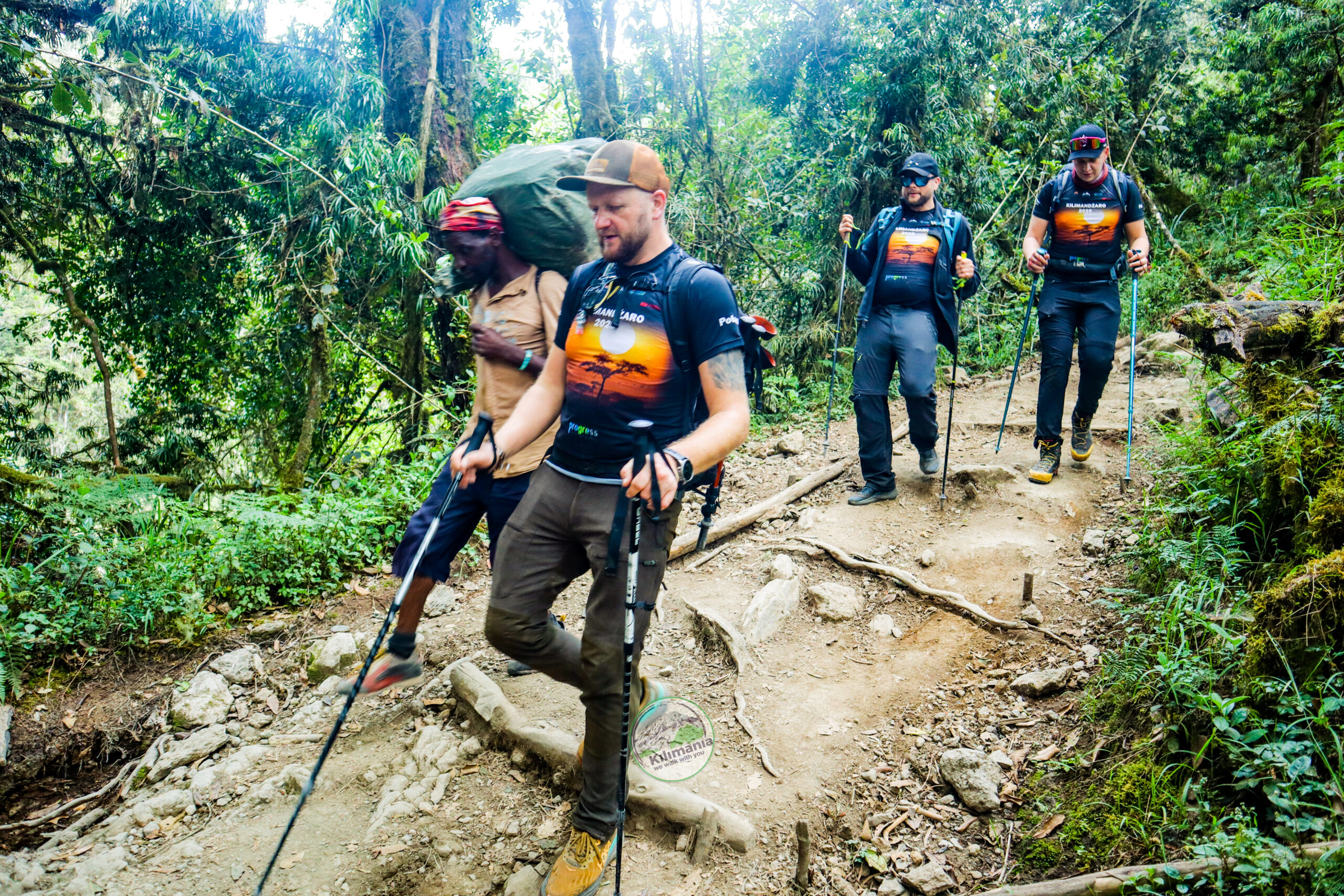
Gastrointestinal illness is a separate cause worth naming here because it’s one of the few turnaround triggers climbers can prepare against directly: careful food and water discipline, and — for climbers with a known sensitive gut — a conversation with a doctor about pre-trip nutrition, can reduce the risk on a second attempt even before route length is considered.
The Bottom Line
A Kilimanjaro turnaround is a correct mountaineering decision, not a verdict on your fitness or character — AMS affects elite athletes and first-time trekkers at comparable rates, and the mountain doesn’t check your résumé. If you turned back, the honest next step is deciding whether a longer route, better pacing, or a documented reclimb discount changes the outcome — the data says it usually does. If you’re weighing whether to try at all, read how hard Kilimanjaro actually is before booking.
FAQ
Roughly 35% of climbers do not reach Uhuru Peak, based on KINAPA baseline figures. This varies sharply by route — a 5-day Marangu climb sees far lower success than an 8- or 9-day route with more acclimatization days.
Acute Mountain Sickness accounts for the large majority of turnarounds. It’s a physiological response to reduced oxygen, not a fitness failure, and route duration is the strongest single predictor of avoiding it.
No. Park fees, camping fees, the rescue levy, and crew wages are spent from the day you enter the park regardless of outcome. This is standard across every TATO-registered operator.
Yes, with no restriction from KINAPA. Climbers who return on an 8–9 day route after an AMS-related turnaround summit at a much higher rate than they did the first time.
Guides combine SpO₂, the Lake Louise AMS Score, an ataxia (coordination) check, and symptom trend — not one reading in isolation. A “Red” result on all four triggers immediate descent, non-negotiable.
Turning back when advised is the safer choice. The real danger is continuing to climb after severe AMS symptoms appear, since that’s how AMS can progress toward HACE or HAPE.
Yes. KINAPA issues a Certificate of Attempt at Mweka Gate recording your highest verified point. Reaching Gilman’s Point or Stella Point earns a separate, genuine certificate.
Diamox can reduce AMS symptom severity but does not prevent HACE or HAPE and won’t compensate for a route that’s too short. It requires a doctor’s prescription — consult one at least four weeks before departure.
For a full breakdown of how a summit attempt is structured hour by hour, see our Kilimanjaro summit night guide.
Conclusion
A missed summit is not the end of the expedition — it’s an outcome the whole system (guides, park rules, and your own body) is built to handle safely. If you’re preparing for a first attempt, the route you choose matters more than almost anything else you’ll pack; start with our Climbing Kilimanjaro Guide. We Walk With You.
Plan Your Kilimanjaro Climb — Get an Honest Quote
Tell us your travel dates, group size, and whether this is a first or return attempt. We reply within 12 hours with an itemised quote, route recommendation, and honest summit odds for your specific itinerary — Sabinus Msimba is KINAPA-licensed and has personally guided 300+ summits.
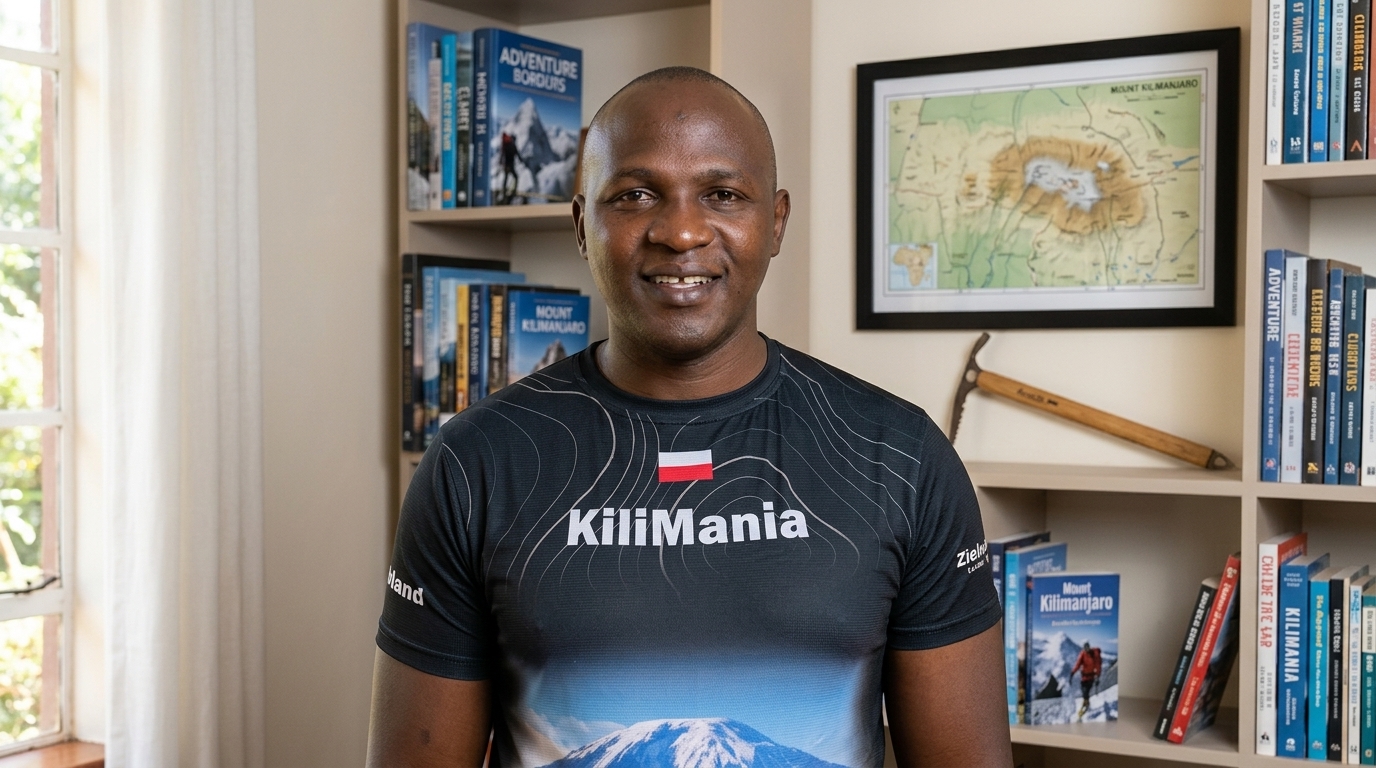
Written by Sabinus Msimba — Senior Kilimanjaro Mountain Guide & Co-founder, Kilimania Adventure. KINAPA-licensed guide since 2003, 22+ years on the mountain, 300+ personal Uhuru Peak summits. Started as a porter on the Marangu Route in 2001.
From our base in Moshi, Kilimanjaro Region, Kilimania Adventure runs Kilimanjaro climbs and daily safaris to Serengeti National Park, Ngorongoro Crater, Tarangire National Park, and Lake Manyara, with pickups from Kilimanjaro International Airport (JRO) and Arusha Airport (ARK).
Verify our registration at tatotz.org. Official park fee schedules: kilimanjaranationalpark.go.tz. Read verified reviews on TripAdvisor or Google.
Disclosure: Kilimania Adventure is a TATO-registered Kilimanjaro tour operator, and this article links to our own booking channels. Route-specific success-rate and turnaround-pattern figures are drawn from Kilimania’s own guided-climb records (2019–2026) and are not independently audited third-party statistics. Medical and safety information reflects general wilderness-medicine practice and our internal monitoring protocol — it is not personal medical advice.