
Materuni Waterfalls vs Chemka Hot Springs: Which Fits Your Day?
Data sources for this Materuni vs Chemka comparison: drive times, effort ratings and 2026 per-person prices from Kilimania Adventure’s day-trip operating data; Chemka water temperature from Kilimania’s field data. The Materuni-to-Chemka transfer time is confirmed by Kilimania’s drivers. Kilimanjaro park context links to TANAPA and UNESCO.
The Short Answer — Which One Is Right for You?
Materuni vs Chemka comes down to what you want your legs to do. Choose Materuni Waterfalls for a moderate walk to a waterfall plus a Chagga coffee programme with a local guide; choose Chemka Hot Springs if warm-water swimming and an easy, flat day are the point. On a private trip for a group of five, Materuni is $85 pp and Chemka $70 pp: a $15 pp gap that reflects two different kinds of day, not one day priced twice.
Kilimanjaro timing sharpens the choice. Before a climb, both can work: Materuni if your start is two or more days away and you want an active day, Chemka if you start tomorrow and would rather keep your legs fresh. After a climb, Chemka is the more natural fit. Warm water, no trail, nothing asked of tired legs.
Quick answer: Materuni suits a walking-and-culture day (from $85 pp for a group of five, 30–45 min from Moshi). Chemka suits a swimming-and-rest day (from $70 pp for a group of five, 45–75 min from Moshi). The day after a Kilimanjaro descent, or the day before a climb starts, Chemka is the lower-effort option. Prices are per person for a private trip; smaller groups pay more per person.
Which fits your day?
| If your priority is… | Consider |
|---|---|
| Swimming in warm water | Chemka |
| A walk with a waterfall at the end | Materuni |
| Coffee and Chagga culture | Materuni |
| The day after coming down Kilimanjaro | Chemka |
| A group that includes non-swimmers | Materuni |
| The shorter drive from Moshi | Materuni |
| The lower group-of-five starting price | Chemka |
Materuni vs Chemka: Comparison Table
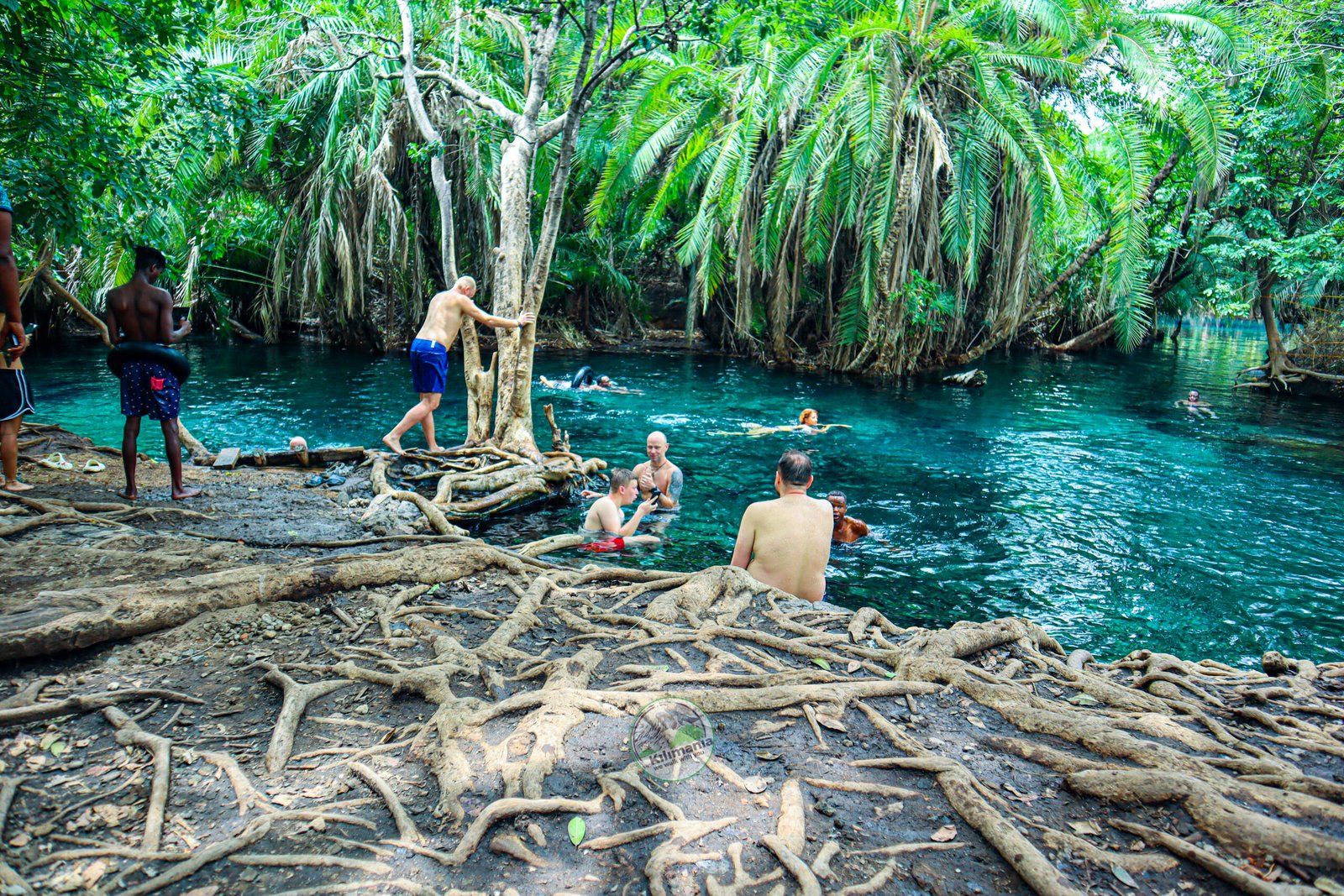
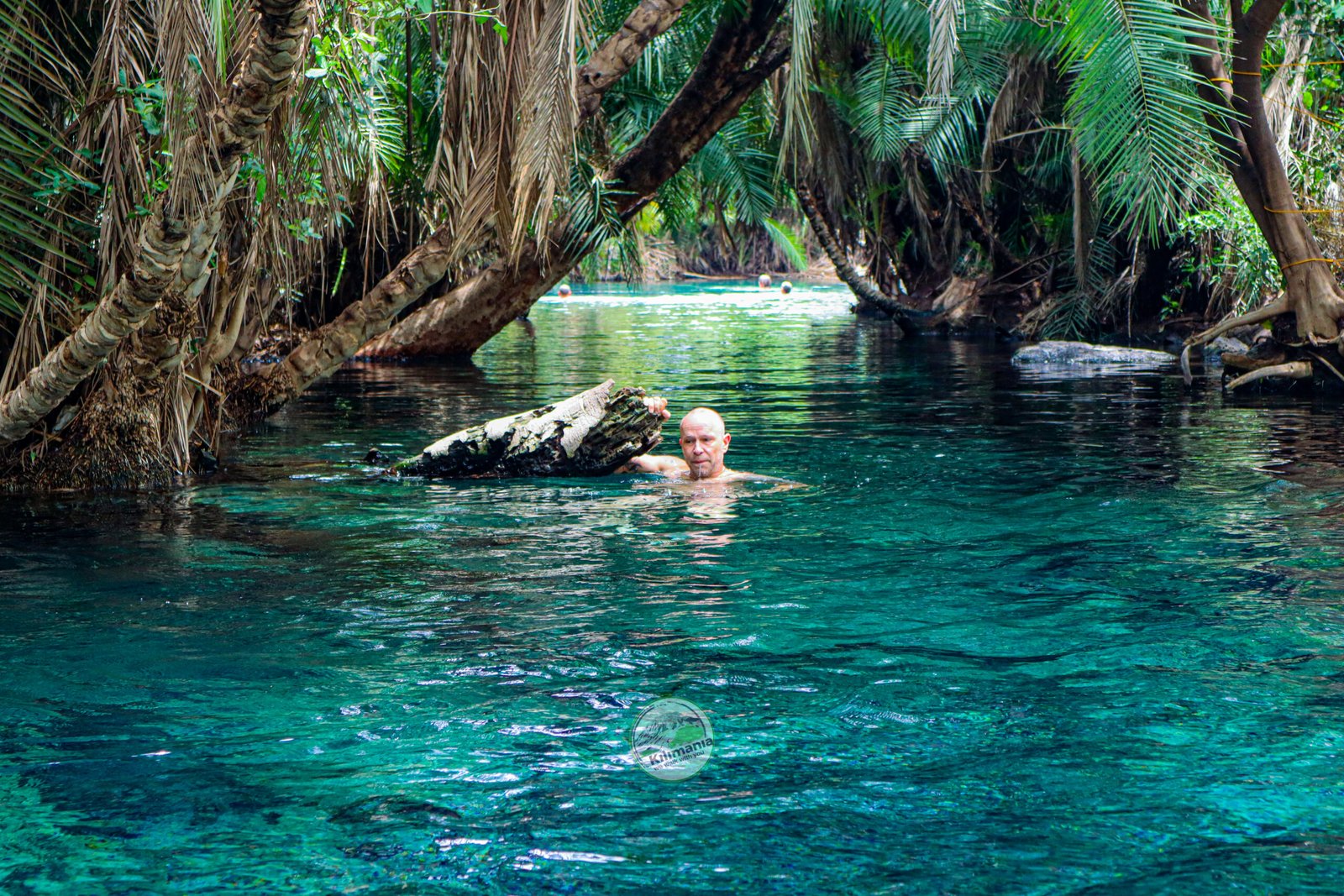
Two sentences on each, then the numbers. Materuni is a Chagga village on the lower slopes of Kilimanjaro above Moshi, where a guided walk through farm plots ends at a tall waterfall and the day is paired with a hands-on coffee programme. Chemka Hot Springs, also known as Kikuletwa, is a clear, spring-fed pool shaded by palms and fig trees; Kilimania’s field measurements put the water at approximately 27°C, and the Swahili name means “boiling”, which describes the way the water emerges from the spring floor rather than its temperature.
| Factor | Materuni | Chemka |
|---|---|---|
| Drive from Moshi | 30–45 min | 45–75 min |
| Main purpose of the day | Walk, waterfall, coffee and culture | Swimming and resting |
| Physical effort | Moderate hike | Easy / flat |
| Swimming | Possible; cold and weather-dependent | Yes; warm, year-round |
| Water | Cold waterfall pool | Warm spring, approx. 27°C (Kilimania field measurements), clear |
| Cultural element | Yes — coffee and Chagga culture with a local guide | No dedicated cultural programme |
| Pre-climb fit | Yes — a moderate walk to test your legs | Yes — light, keeps legs fresh |
| Post-climb fit | Yes — moderate | Strong fit — a low-effort day after the climb |
| Children | Suitable, with care on the trail | Suitable, with supervision in the water |
| From price (group of five) | $85 pp | $70 pp |
| Choose it if… | You want to move and see village life | You want to swim and slow down |
Source: drive times, effort, suitability and prices from Kilimania Adventure 2026 operating data. We describe the Materuni pool as cold rather than quote a temperature, because it changes with the weather and recent rain.
Why the $15 pp difference? The Materuni day includes a guided walk and a coffee and Chagga cultural programme run with a local guide, so more of the day is guided activity. The Chemka day is built around time in the water. You’re paying for a different shape of day, not a premium version of the same one. The exact inclusions for each trip are listed on its trip page.
Full route detail sits in the Materuni Waterfalls and Chagga coffee guide and the Chemka Hot Springs visitor guide.
Choose Materuni If…
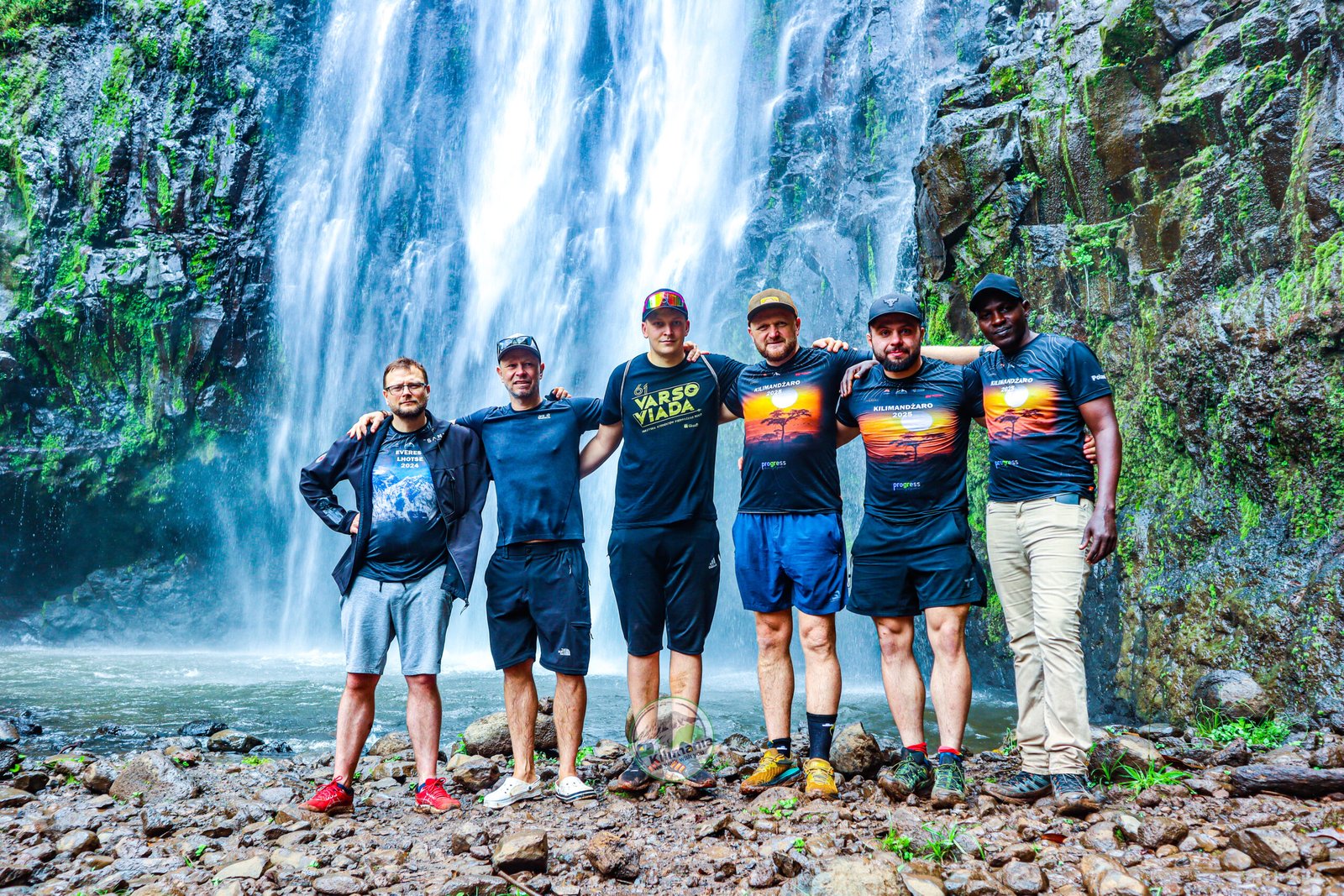
Materuni fits travellers who want the day to involve effort and people, with the waterfall as a reward rather than the whole plan.
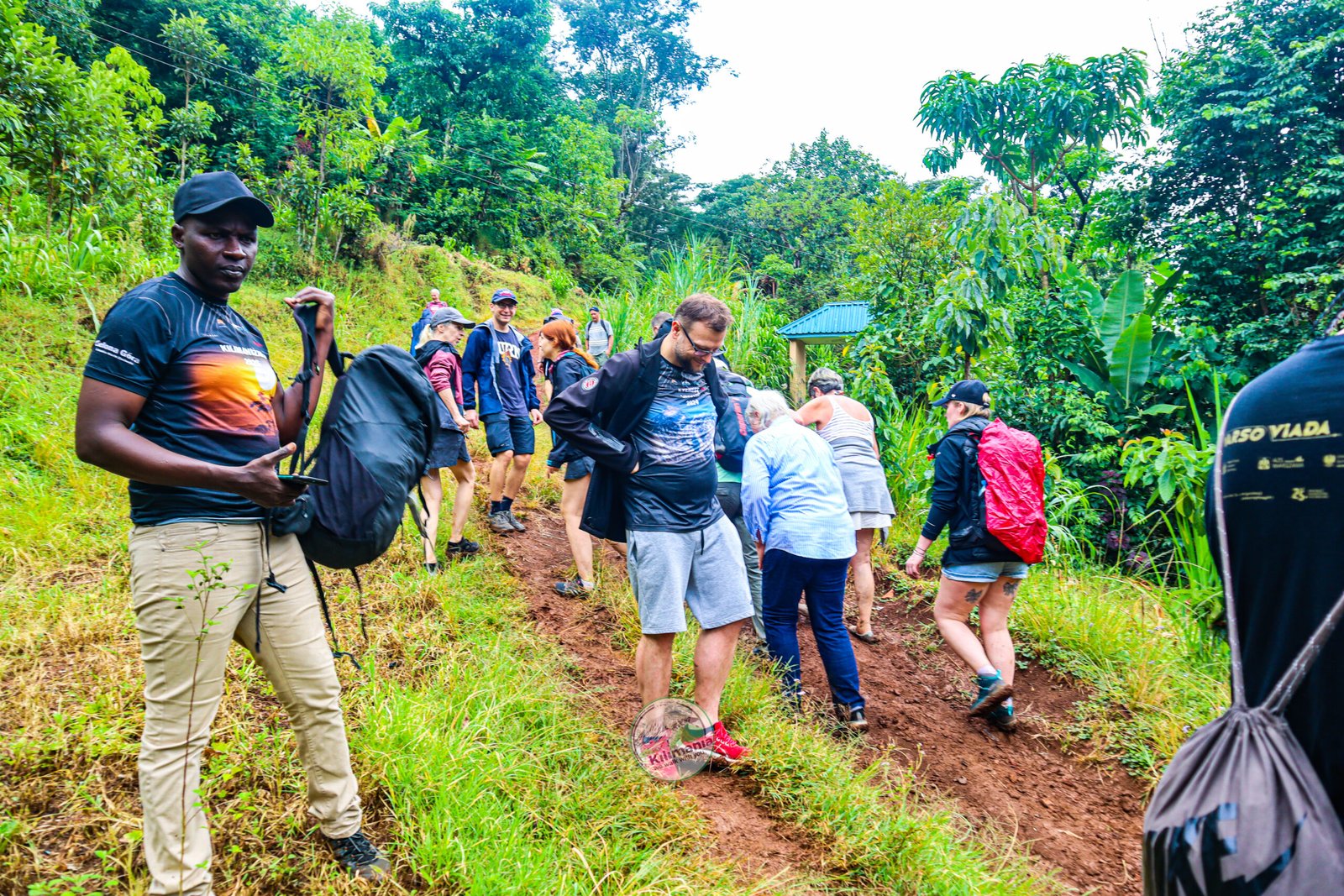
- Walking is part of why you’re going. The trail through coffee and banana plots is half the day, not a corridor to the water.
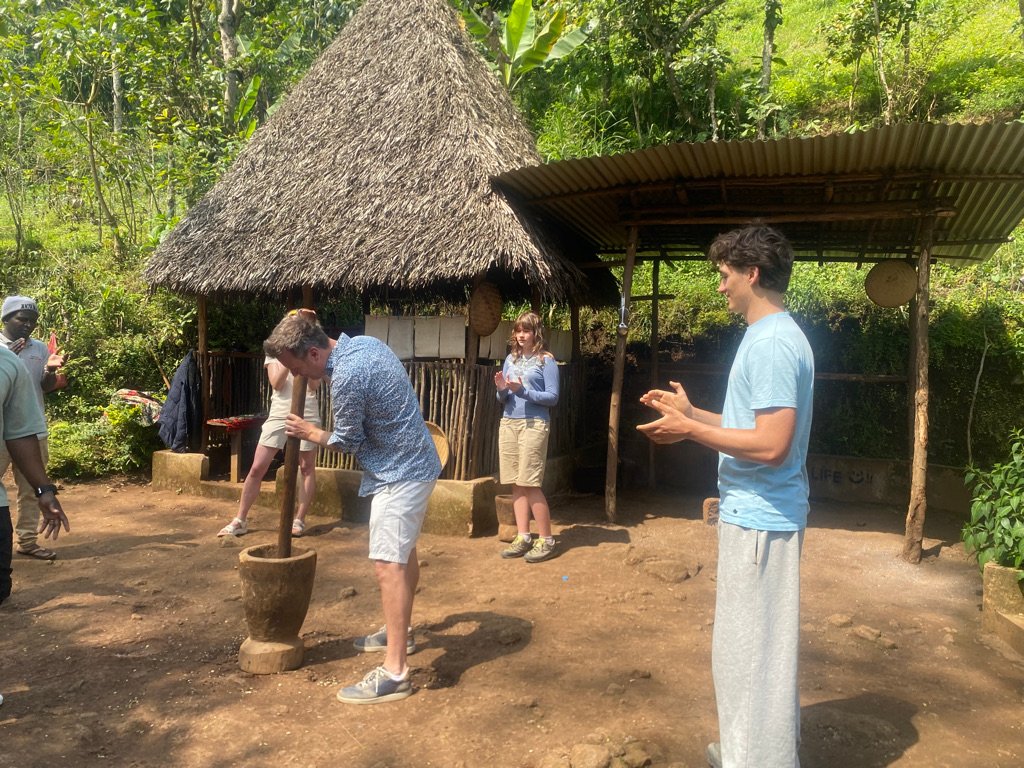
- Coffee and Chagga culture interest you. The coffee programme is hands-on with a local guide: roasting, grinding with a wooden mortar and pestle, then tasting what you made.
- Your group mixes swimmers and non-swimmers. Materuni works fully without anyone getting wet. Chemka doesn’t.
- You are two or more days out from a Kilimanjaro start and want your legs and lungs to meet a real slope, gently.
- You want the shorter drive: 30–45 minutes from Moshi.
- Cold water doesn’t bother you, or you’re happy to skip the swim entirely.
Choose something else if…
- Swimming is the main reason for your day. The Materuni pool is cold, and after heavy rain your guide may advise against getting in.
- Your climb starts tomorrow, or you came down the mountain in the last day or two and your legs are sore.
- Someone in the group struggles on sloping, uneven ground. It is a moderate hike, not a stroll.
Choose Chemka If…
Chemka, which many maps and drivers call Kikuletwa Hot Springs, fits travellers who want the day to be about water and rest, with as little physical output as possible.
- Swimming is the point. Warm (approximately 27°C by Kilimania’s field measurements), clear water you can stay in for a long stretch, available year-round.
- You came down Kilimanjaro recently and want a day with no trail at all.
- You’re travelling with young children. No trail, warm water, though they still need close supervision in the pool.
- You want a slower day: drive, swim, sit in the shade of the fig roots, swim again, drive back.
- You want the lower group-of-five starting price: from $70 pp.
- Predictability matters. A warm spring pool changes less with the weather than a waterfall pool does.
Choose something else if…
- Several people in your group don’t swim. They’ll spend most of the day watching.
- You want cultural content. Chemka has no dedicated cultural programme.
- You want to feel the mountain slopes before a climb. Chemka is flat lowland.
- You’ve been before. With one activity at its centre, a second visit can feel repetitive.
What each trip costs by group size
| Trip | 1 person | 2 people | 3 people | 4 people | 5 people |
|---|---|---|---|---|---|
| Materuni Waterfalls | $130 | $110 | $95 | $90 | $85 |
| Chemka Hot Springs | $110 | $90 | $80 | $75 | $70 |
Worked example: a group of three pays $95 pp for Materuni ($285 in total) or $80 pp for Chemka ($240 in total), a $45 difference for the group. For groups larger than five, ask for a quote. Source: Kilimania 2026 day-trip rate card.
Before or After Kilimanjaro — Which Changes the Decision?
Most people weighing Materuni against Chemka have a free day either side of a Kilimanjaro climb. That timing changes the answer more than scenery does, because the question becomes what your legs need, not what you’d like to see.
| Your situation | Consider | Why |
|---|---|---|
| Climb starts in 2+ days, you want gentle activity | Materuni | A moderate walk gives your legs one test of walking effort before the mountain |
| Climb starts tomorrow | Chemka | No hiking, flat ground, nothing to tire you before day one |
| Jet-lagged or travel-tired, any start date | Chemka | Less walking leaves more of the day for rest |
| Just descended, wants a low-effort day | Chemka | Swimming and sitting in the shade; the drive is the only effort |
| Several days after descent, still wants an active cultural day | Materuni | More walking and the coffee programme once initial stiffness has passed |
| Not climbing, open day in Moshi | Either | Climb timing doesn’t apply; use the “Choose Materuni” and “Choose Chemka” criteria above |
Before the climb
Materuni sits higher on the slopes than Moshi, and the walk is a genuine uphill effort at a gentle pace. For a traveller two or three days out, that’s useful: you find out how your legs handle a sustained uphill walk before anything important depends on it. It is a test of walking effort, not altitude acclimatisation; that happens on the mountain itself. Pole pole, slowly slowly, is the rule on Kilimanjaro, and it applies on this trail too.
If your climb starts tomorrow, the same moderate walk just adds effort to a day you could keep easy, and a farm path in the wet is one more chance to turn an ankle before the gate. If you’re short on time, or still carrying the flight in your legs, Chemka keeps the day easy.
After the climb
Coming down from the summit means a long descent on legs that have already done several days of work. Chemka suits that moment: you get in the water, stay as long as you like and sit out under the fig trees. It is simply a low-effort day: it asks little of your legs, but it isn’t a treatment for anything, so take any real pain or injury to a doctor.
Materuni after a climb works if your group feels well and specifically wants the coffee programme, ideally a few days after descent. The cold pool at the foot of the falls is refreshing but not a place to linger on stiff legs.
If you’re still choosing climb dates, the Kilimanjaro joining calendar shows open group departures, so you can see where a free day falls. The mountain itself is managed as Kilimanjaro National Park by Tanzania National Parks (TANAPA) and is listed by UNESCO as a World Heritage Site; neither Materuni village nor Chemka sits inside the park.
Can You Do Both in One Day?
Technically, yes. Practically, one of the two gets shortchanged. Here’s the arithmetic using only confirmed drive times:
- Moshi to Materuni: 30–45 min
- Materuni walk, waterfall and coffee programme: allow several hours
- Materuni to Chemka: allow roughly 1–1.5 hours; the route includes rough sections, so time varies with road conditions
- Swimming and resting at Chemka: allow 2–3 hours to make the drive worthwhile
- Chemka back to Moshi: 45–75 min
Add the three drives together and you’re looking at roughly 2¼ to 3½ hours in the vehicle before anyone walks or swims. Put a full Materuni programme and a proper Chemka swim to those drives, and the plan no longer fits a normal day. Something has to give, usually the coffee programme (cut to a quick demonstration) or the swim (cut to a short dip). If you do combine them, walking Materuni in the morning and swimming at Chemka in the afternoon is the logical order.
Honest condition: with two free days, do one trip per day. With one day, pick using the sections above rather than trying to fit both. If you still want to try both, mention it when you enquire and we’ll tell you honestly whether your dates, group and daylight make it workable.
For month-by-month conditions, see the best time to visit guide.
Sabinus’s Note From the Trail
- Who
- Sabinus Msimba, senior guide, 22 years guiding from Moshi
- When
- The morning after a group comes down from Kilimanjaro and has a free day in Moshi
- What I observed
- A common mistake is judging your legs by how they feel at breakfast the morning after a descent.
- Why it matters
- How you feel at breakfast after a descent is not how your legs will feel two hours into a walk.
“The question that settles it is simple: what are your legs telling you? If you still feel the travel, or the mountain, go to Chemka. Warm water, flat access, nothing asked of you. If you are rested and want to move, go to Materuni; people remember the trail through the coffee farms as much as the waterfall. I often see climbers who wake up feeling fine the day after descent choose Materuni to ‘do something’, then reach the base pool cold and stiff and wish they’d gone for the warm water.”
Read the Full Guides
This page only covers the decision. For the trail, the coffee programme and what to bring, read the complete Materuni route and coffee guide. For water conditions, facilities and timing at the springs, the full Chemka guide has the detail.
To see where both fit among other options, such as the Marangu Waterfalls cultural day (another waterfall-and-village option on the lower slopes) or a Maasai boma visit, the guide to day trips from Moshi lays them side by side, and the Tanzania day trips collection covers everything from waterfalls to national park safaris.
Frequently Asked Questions
Chemka is the stronger choice for swimming. Kilimania's field measurements put the spring water at approximately 27°C, it stays warm year-round, it is clear, and there is no trail to reach it, so swimming is the whole point of the day. Materuni has a pool at the foot of the waterfall, but the water is cold and swimming depends on the weather and recent rain. If swimming is your main reason for going, choose Chemka.
It depends on how close your start date is. With two or more days to spare, Materuni gives your legs a moderate walk on the lower slopes of Kilimanjaro, a test of walking effort before the climb (not altitude acclimatisation). If your climb starts tomorrow, or you are still tired from travel, Chemka is the lower-effort option: no hiking, flat ground and warm water that keeps the day easy on your legs.
It is possible, but it is not a day we recommend by default. Driving alone takes a large share of it: 30 to 45 minutes out to Materuni, 45 to 75 minutes back from Chemka, plus the transfer between the two sites. One experience usually gets cut short, either the coffee programme or the swim. With two free days, do one trip each day.
Materuni is closer, at roughly 30 to 45 minutes from central Moshi. Chemka takes about 45 to 75 minutes depending on the route and road conditions. The gap matters most if you want an early finish or have an evening flight, but it does not change the basic structure of either trip.
Neither is better value in general, because they deliver different days. Materuni is $85 pp for a private group of five and includes a guided walk plus a Chagga coffee programme with a local guide. Chemka is $70 pp for a private group of five and is built around swimming and resting. The $15 pp gap reflects that difference in what the day contains.
No. The water is warm, not boiling, at approximately 27°C by Kilimania's field measurements, which feels close to a heated swimming pool. Chemka means boiling in Swahili, but the name describes the way the water emerges from the spring floor rather than its temperature. You can stay in the water comfortably for a long stretch.
Both can work for families. Chemka is the easier option for young children because there is no trail and the water is warm, although children need close supervision in the water. Materuni suits children who can manage a moderate hike on sloping farm paths with adult help, and the coffee programme gives them something hands-on to do.
The main difference is the kind of day. Materuni is an active day: a moderate walk through coffee and banana farms to a waterfall, plus a hands-on Chagga coffee programme with a local guide. Chemka is a rest day: a drive to a warm, clear spring pool where most of the time is spent swimming. One asks something of your legs; the other doesn't.
The Decision in One Line
If you want to move, meet people and drink coffee you ground yourself, choose Materuni. If you want to swim in warm water and do very little else, choose Chemka. The $15 pp gap at the group-of-five price buys a different day, not a better one. Around a Kilimanjaro climb, the rule is simple: Materuni with time to spare beforehand, Chemka when your legs need rest. Other options near town are on the day trips hub. We Walk With You.
Sabinus Msimba
22 years guiding from Moshi, 300+ personal Uhuru Peak summits, KINAPA-licensed. Sabinus has guided groups on both the Materuni and Chemka day trips and writes Kilimania’s Moshi and Kilimanjaro guides.
Disclosure
Commercial: Kilimania Adventure operates both trips compared here and earns revenue from bookings. We’ve aimed to state where each trip is the weaker choice as clearly as where it fits.
Prices: per person in USD for private trips from Moshi, 2026 rate card; the “from” figure applies to a private group of five. Confirm current inclusions on each trip page before booking.
Safety: swimming conditions at both sites depend on the day; follow your guide’s call on whether to enter the water. Nothing in this article is medical advice.
Data: drive times and effort ratings are Kilimania operating estimates and vary with traffic and road conditions. Last reviewed September 2026.