
 By Sabinus Msimba · Senior Guide, Moshi · Last Updated September 2026
The waterfalls near Moshi that you can realistically reach in a day are Materuni and the falls around Marangu village, with Rau Forest Reserve on the edge of town offering river and spring water but no waterfall we have verified. Swimming is a separate question: a waterfall is not automatically a swim spot, and around Kilimanjaro the dependable swimming day is Chemka Hot Springs, not a waterfall pool.
Quick answer
Materuni (about 15 km from Moshi) and the Marangu falls are the two waterfall days Kilimania runs, both with a guided village walk. Rau Forest Reserve, about 3 km from town, is a forest walk with no verified waterfall. Waterfall pools are cold and change with rain, so swimming depends on the day. For a planned swim, go to Chemka Hot Springs.
If you searched for hidden waterfalls in Tanzania’s Kilimanjaro Region, here’s the honest version. Materuni and Marangu are established local attractions, not secrets, and Rau Forest is simply less visited. What separates them is walking effort, water conditions, cultural context, and whether getting in the water makes sense on the day you go.
In this guide
Waterfalls Near Moshi at a Glance
Each row below stands on its own. The last column tells you plainly which places we run trips to and which we don’t, because two of these five are included for context only or as the alternative to a waterfall.
| Location | Area | Main activity | Swimming | Kilimania runs it? |
|---|---|---|---|---|
| Materuni Waterfalls | Materuni village, Kilimanjaro’s southern slopes, about 15 km from Moshi | 45–60 min walk to the falls, Chagga coffee programme | Cold pool; a dip depends on flow and rocks on the day | Yes |
| Ndoro Falls, Marangu | Marangu village, east of Moshi (about 45–60 min drive), near Marangu Gate | Village walk, waterfall, Chagga cultural stops | Not a swimming stop; conditions vary | Yes |
| Rau Forest Reserve | About 3 km southeast of Moshi town, 730–765 m | Flat forest walk, monkeys, giant Mvule tree, Rau River | No; no verified waterfall or pool | No |
| Chemka Hot Springs | Spring-fed pools in the lowlands of Kilimanjaro Region | Swimming in clear water, about 27°C | Yes — the swimming day trip from Moshi | Yes |
| Lake Chala | Crater lake on the Kenya border | Rim walk, canoeing | No — crocodiles present | Yes (no swimming) |
Materuni Waterfalls — the Most Visited
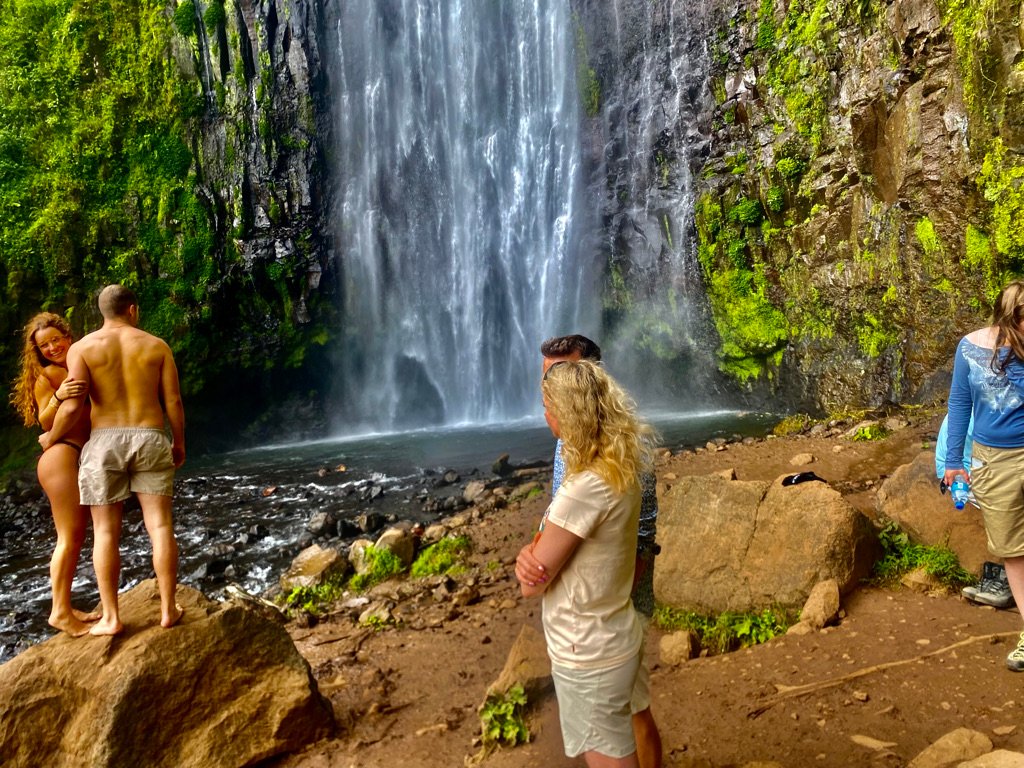
Materuni Waterfalls is one of the well-known waterfall stops near Moshi, and it isn’t hidden at all. It sits above Materuni village on the southern slopes of Mount Kilimanjaro (Materuni → Moshi → Kilimanjaro Region → Tanzania), about 15 km from Moshi town, a 30–45 minute drive.
From the village, the walk takes 45–60 minutes each way on sloping farm paths through coffee and banana plots, then down to the base of a cascade commonly given as about 70–80 m high (a published estimate, not a Kilimania measurement). The path is the part people underestimate. It’s not technical, but it is steep in places, and after rain the red soil turns slick.
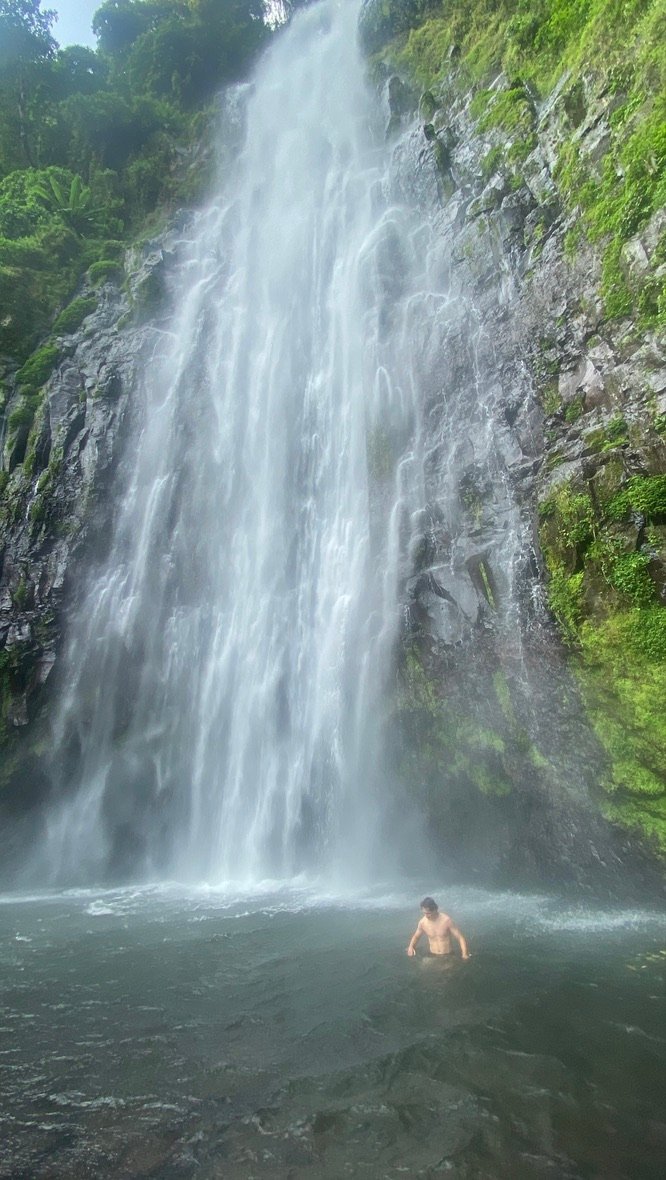
The pool at the bottom is cold. Properly cold. Some visitors get in; many just stand at the edge in the spray. We don’t publish a water temperature for it because we haven’t measured one we’d stand behind. Whether a dip makes sense depends on how much water is coming down and how wet the rocks are, and that’s a call your guide makes on the spot.
The other half of the day is Chagga coffee: roasting beans, grinding them in a wooden mortar and pestle with a local guide, then tasting what you made. The full walk-through, from trail to cup, lives in the Materuni Waterfalls and Chagga coffee guide, and the trip itself (lunch included) is on the Materuni Waterfalls day trip page.
Marangu Falls
One distinction first. This section covers the Marangu waterfalls and cultural day, not the Marangu Kilimanjaro day hike. That hike enters Kilimanjaro National Park (managed by TANAPA) on the Marangu Route and is a separate trip with separate pricing.
Marangu village sits east of Moshi on the same southern flank of Kilimanjaro, close to Marangu Gate, the park’s entry point for the Marangu Route. The park itself is a UNESCO World Heritage Site, but the waterfalls you visit on this day are outside it, in the village farmland below. Drive time from Moshi is about 45–60 minutes, per Kilimania’s operational records; traffic and road conditions can stretch it.
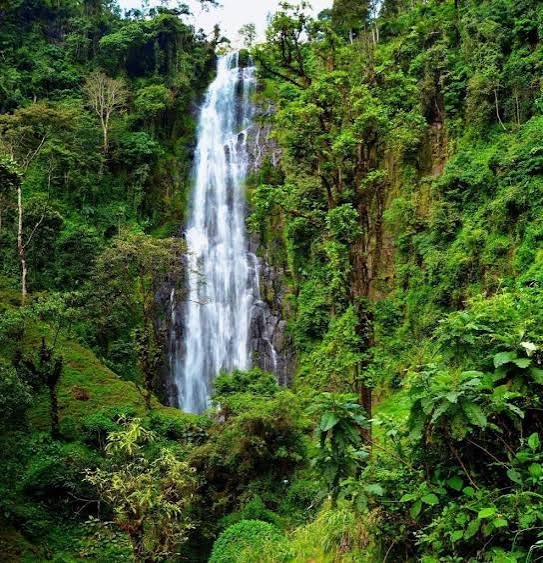
The waterfall we visit on this day is Ndoro Falls. The walk to it runs on village footpaths through banana and coffee plots, and the day leans more on Chagga culture than on the water: homesteads, local history, the way families farm these slopes. That’s the real difference from Materuni. At Materuni the falls are the main event. At Marangu they’re one stop among several.
We don’t describe the Marangu falls as a swimming stop. Treat any water contact as wading at most, and only where your guide says it’s fine. What’s included on the day is listed on the Marangu waterfalls and cultural day trip page, and the Marangu waterfalls visitor guide covers what to expect on the ground. Weighing the two waterfalls against each other? The Materuni vs Marangu comparison does that in detail.
Rau Forest Area
Rau Forest Reserve is included here because people ask about it, and because the honest answer matters: we have not verified a waterfall inside Rau, and we won’t send you looking for one. We don’t run a Rau Forest trip.
What is there is worth knowing. Rau is a groundwater forest about 3 km southeast of Moshi town, at roughly 730–765 m, managed by the Tanzania Forest Services Agency (TFS). The Rau River and a number of natural springs run through it. Black-and-white colobus and blue monkeys live in the canopy, and near its centre stands a very large, old Mvule tree (Milicia excelsa), the tree most visitors come to see.
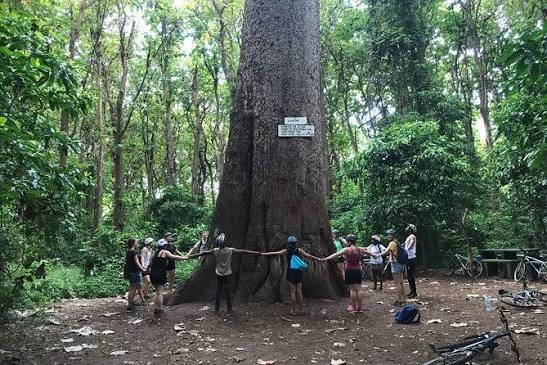
There’s a staffed entry gate and a small fee, so an independent visit is straightforward; confirm the current fee and opening hours at the gate. The walking is flat. It’s a good half-morning if you’re already in town and want green space without a drive, but it’s not a swim spot, and it shouldn’t be planned as a waterfall trip.
Which Waterfalls Near Moshi Are Actually Suitable for Swimming?
A waterfall is not automatically a swimming location. Around Kilimanjaro, the waterfall pools are fed by rain on the mountain, so what you find at the bottom depends on the last few days of weather, not the calendar. Before anyone gets in, these are the things that decide it:
- Flow and current. After rain, more water comes down and the pool edge moves faster than it looks.
- Rocks. Wet, moss-covered stone is the most common way people get hurt around waterfalls. Not the water.
- Depth you can’t see. Spray and cloudy water after rain hide how deep the pool is.
- Temperature. Mountain-fed pools are cold enough to take your breath away for the first minute.
- Local rules. These pools sit on village land; follow what the local guide says about where and whether to enter.
- Children and non-swimmers. Stay out of the water at the falls unless a guide has shown you a safe shallow spot.
If swimming is the point of your day, choose Chemka Hot Springs. The water there is about 27°C: warm, not boiling. “Chemka” means “boiling” in Swahili, and it describes the way the water bubbles up from the ground, not its temperature. Some sections are deep, so non-swimmers keep to the shallow edge.
Not a swim spot: Lake Chala
Lake Chala is a crater lake, not a swimming destination. Nile crocodiles live in the lake, and a young British woman was killed by one while swimming there in 2002, as The Guardian reported at the time. Go for the rim walk and the canoeing; the Lake Chala day trip guide explains the safety rules.
Waterfall Day or Swimming Day: How to Decide
There’s no winner here, just two different shapes of day. Pick the one that matches what you want to come home remembering.
Choose a waterfall day if…
- You want to walk, and the scenery on the way matters.
- Chagga culture, coffee and village life interest you.
- Swimming is optional, a bonus if conditions allow.
- Your group mixes swimmers and people who’d rather stay dry.
Choose a swimming day if…
- Getting in the water is the main reason you’re going.
- You want warm water rather than a cold plunge.
- You’d rather not walk much, such as right after a climb.
- You want a spot where swimming is the normal activity, not an exception.
Where each place sits, and how much walking it asks
| Place | Direction from Moshi | Walking demand | Terrain to expect |
|---|---|---|---|
| Materuni Waterfalls | North, up the mountain’s southern slopes | Moderate | Sloping farm paths, steep near the pool, slick after rain |
| Ndoro Falls, Marangu | East, below Marangu Gate | Moderate | Village footpaths with a descent to the falls |
| Rau Forest Reserve | Southeast edge of town | Light | Flat forest trails |
| Chemka Hot Springs | Lowlands of Hai District | Light | Flat ground to the pool edge |
| Lake Chala | East, on the Kenya border | Light to moderate | Rim viewpoints; the hike and canoe trip adds a steep crater descent |
If you’re torn between the two, the Materuni vs Chemka comparison sets them side by side.
What to Know Before You Go
Footwear decides your day
Closed shoes with real grip: trail runners or light hiking shoes. Sandals on the Materuni descent are a bad idea. Pack sandals or flip-flops separately for the pool edge if you plan to get in.
Pack for wet and cold
Swimwear worn under your clothes, a small towel, a light rain jacket, and a dry bag for your phone. The Tanzania day trip packing list has the full checklist.
What to wear on the path
You walk through villages and family farms, so cover shoulders and knees on the path and change at the water. Light trousers dry faster than jeans after rain or spray, and a cap helps on the open farm sections.
Guides and village land
The Materuni and Marangu paths cross farmland and community land. Local guides are part of how these visits work, and they know which sections to take pole pole (slowly) when the ground is wet. Travelling with children? The guide to day trips with kids covers which trips suit which ages.
Rain changes the trail, not the access
Rainfall affects the path and the pools more than anything else. For month-by-month conditions, see the best time to visit guide.
Pairing a waterfall with a climb
In our experience, Materuni is a common choice a few days before a Kilimanjaro climb: a moderate walk on real slopes, not a hard hike. If you’re still picking climb dates, the Kilimanjaro group climb calendar lists open departures.
What the two waterfall days cost
Prices checked September 2026. For a private group of five, Materuni is $85 pp and Marangu is $80 pp. Private pricing varies by group size; the live figures are always on the Materuni and Marangu trip pages. Per person, private trip from Moshi:
| Trip | 1 person | 2 people | 3 people | 4 people | 5 people |
|---|---|---|---|---|---|
| Materuni Waterfalls & Coffee | $130 | $110 | $95 | $90 | $85 |
| Marangu Waterfalls | $120 | $100 | $90 | $85 | $80 |
Ask About a Waterfall Day
Not sure whether Materuni, Marangu or a swim at Chemka fits your dates and group? Send the details and the Moshi team replies within 12 hours, 7 days a week (EAT, UTC+3).
Enquiry received. Karibu — the Kilimania team will reply within 12 hours.
Prefer to message directly? WhatsApp +255 756 449 990 or info@kilimania.co.tz.
Who These Waterfall Trips Suit
- First-time visitors to Moshi who want one day that mixes a walk, a waterfall and village life: Materuni.
- Climbers with a few days before their start who want their legs on real slopes without a big effort: Materuni or Marangu.
- Travellers more interested in Chagga culture than the water: Marangu.
- Groups with mixed swimmers and non-swimmers: either waterfall day works fully without anyone getting wet.
- Anyone in town with a free morning who wants shade and monkeys, not a waterfall: Rau Forest, independently.
Who Should Choose Something Else
- You want a proper swim. The waterfall pools are cold and depend on conditions. Chemka Hot Springs is the swimming day.
- You have knee trouble or can’t manage steep, slippery descents. The Materuni path goes down to the pool and back up. A flat Rau Forest walk or a Chemka day is gentler.
- You’re coming off a Kilimanjaro climb with sore legs. Chemka asks far less of you than a waterfall walk.
- You want solitude. Materuni is the most visited waterfall near Moshi. It isn’t a secret spot.
- You want wildlife. Neither waterfall is a wildlife trip. For animals, a safari day from Moshi is the right tool; the guide to day trips from Moshi lists them.
- You want to set foot on Kilimanjaro itself. The waterfall visits described here take place in village farmland, outside Kilimanjaro National Park’s visitor routes. The Marangu Route day hike and the Shira Plateau day trip go inside it; both are listed with the rest of the day trip range from Moshi.
- You’re asking about Lake Duluti. It’s a crater lake near Arusha, not near Moshi, and we don’t run a trip there.
Sabinus’s Note From the Trail
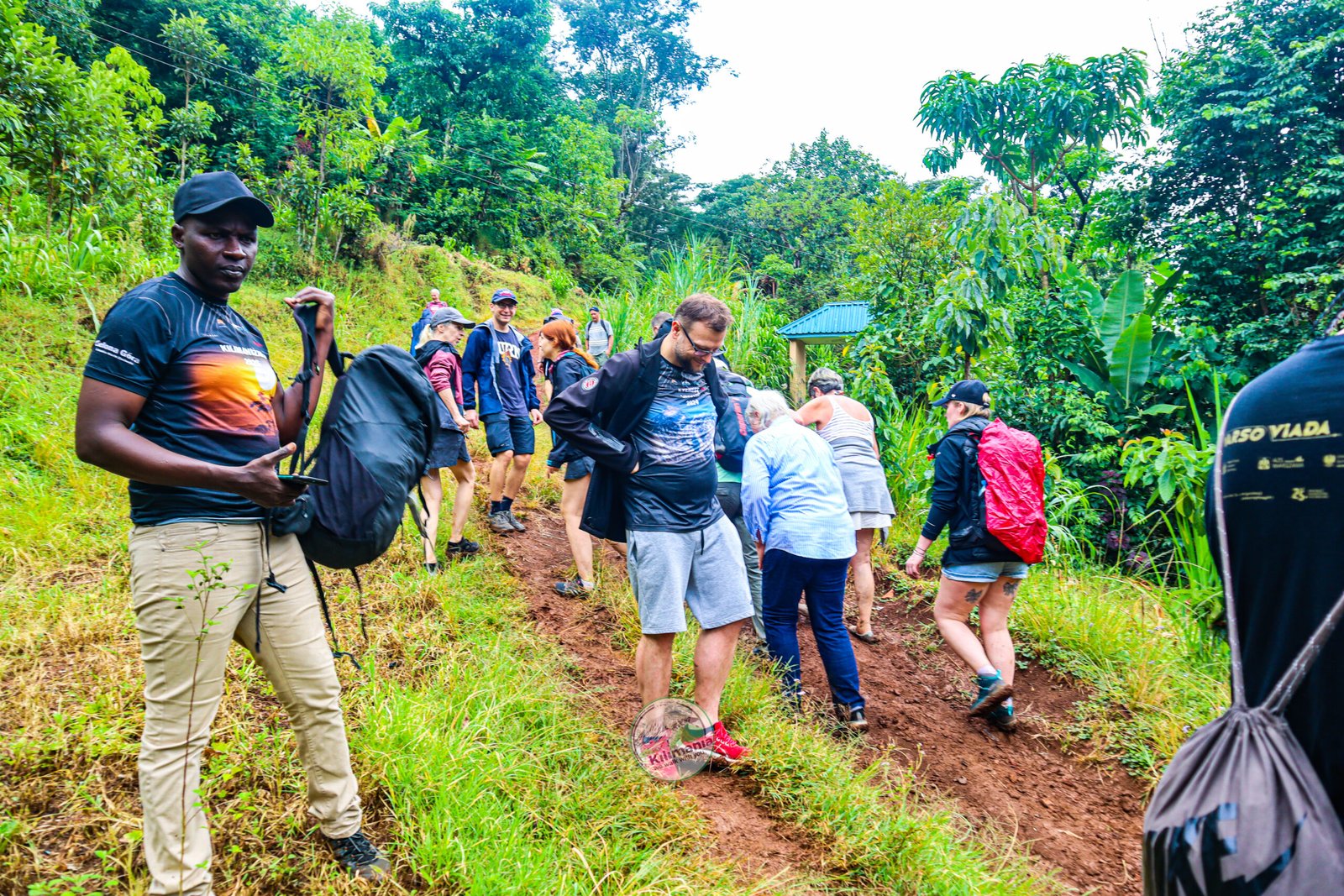
- Who
- Sabinus Msimba, guiding on Kilimanjaro’s slopes for 22+ years
- Where
- The Materuni path and pool, in dry spells and after rain
- What I see
- Visitors decide at the hotel whether they’ll swim. The mountain decides at the pool.
- Why it matters
- Plan the day around the walk and the coffee. Treat the swim as a maybe.
The same Materuni path is two different walks depending on the week. In a dry spell the soil is firm and the pool edge is easy to read. After rain the clay is slick, more water comes down, and the rocks at the pool become the part to take slowly, not the trail itself.
So my advice is simple. Wear shoes with grip, bring your swimwear, and make the swim decision at the water with your guide, not in advance. If you arrive and the flow is strong, you haven’t lost the day. The walk and the coffee are still there. And if you know before you leave Moshi that swimming is the whole point, go to Chemka instead. That’s not a lesser choice; it’s the right tool.
Frequently Asked Questions
Yes. For a straightforward day trip from Moshi, two of the most established options are Materuni Waterfalls, about 15 km from Moshi town on Kilimanjaro’s southern slopes, and the falls around Marangu village to the east. Both are visited on guided day trips that include a village walk. Rau Forest Reserve, about 3 km from town, has a river and natural springs but no waterfall we have verified.
Some visitors get into the pool at the base of the falls, but it is cold, the rocks are slippery, and the flow changes with rainfall. Treat it as a dip that depends on conditions on the day, and follow your guide’s call. If swimming is the main reason for your day, Chemka Hot Springs is the better fit.
Materuni village is about 15 km from Moshi town, a 30 to 45 minute drive, per our operational records. From the village, the walk to the falls takes about 45 to 60 minutes each way on sloping paths through coffee and banana plots.
We have not verified a waterfall inside Rau Forest Reserve. The reserve is a groundwater forest with the Rau River and natural springs, at roughly 730 to 765 m, about 3 km southeast of Moshi town. Visit it for the forest, the monkeys and the giant Mvule tree, not for a waterfall or a swim.
Chemka Hot Springs is the swimming day trip from Moshi. The water is about 27°C: warm, not boiling. The name Chemka means boiling in Swahili and describes how the water bubbles up from the ground, not its temperature. Some sections are deep, so non-swimmers should stay near the shallow edge.
No. Lake Chala is not a swimming destination. Nile crocodiles live in the lake, and a young British woman was killed by one while swimming there in 2002, as reported in the British press at the time. Visit Lake Chala for the crater rim walk and the guided canoeing trip, and choose Chemka if you want to swim.
For the Materuni and Marangu waterfall visits described here, we use local guides because the routes cross village farmland and community land, and a guide knows which sections turn slippery after rain. That is operating practice and practical safety advice, not a national rule. Rau Forest Reserve has a staffed entry gate and can be visited independently, though a guide helps you find the wildlife and the large trees.
Yes. In our experience, a Materuni or Marangu day is a common choice in the days before a climb because it is a moderate walk on real slopes rather than a hard hike, and it gets your legs used to uneven ground. Leave at least one quiet day between the waterfall trip and the start of your climb if you can, and keep the pace gentle rather than treating it as training.
No. The Marangu waterfalls trip is a cultural village day with a walk to Ndoro Falls, in the farmland below the park. The Marangu Kilimanjaro day hike enters Kilimanjaro National Park at Marangu Gate and climbs the Marangu Route toward Mandara Hut. They are separate trips with separate pricing, so check which one you are booking.
See the Two Waterfall Days
Each trip page has the full day plan, inclusions and booking details. For a private group of five, Materuni is $85 pp and Marangu is $80 pp.
Where This Leaves You
Around Moshi, the waterfall choice is really two options and one honest footnote. Materuni, about 15 km out, pairs a 45–60 minute walk with coffee. Marangu puts Chagga culture first and the falls second. Rau Forest is a forest walk, not a waterfall. And if you want to swim, Chemka is the answer, not a waterfall pool. For everything else you can do in a day from town, see the Tanzania day trips hub.
We Walk With You.
Disclosure. Kilimania Adventure operates the Materuni Waterfalls, Marangu Waterfalls, Chemka Hot Springs and Lake Chala day trips linked in this guide. Rau Forest Reserve is covered for general travel information only; Kilimania does not run trips there and receives nothing from it. Materuni and Marangu distances, drive and walking times, and all prices come from Kilimania’s operational records and 2026 price table. Rau Forest location, altitude and management details come from the reserve’s published information and the Tanzania Forest Services Agency. Prices are per person for private trips from Moshi and may change; the trip pages show current figures. Last Updated September 2026.