Kilimanjaro Boots Guide 2026: Best Boots for Summit
Sources used in this guide: Kilimania Adventure gate-check and gear-inspection records 2019–2026, our own 2025 incident log, published park guidance from KINAPA and TANAPA, and porter-welfare guidance from KPAP. Prices quoted were checked in June 2026 and will drift.
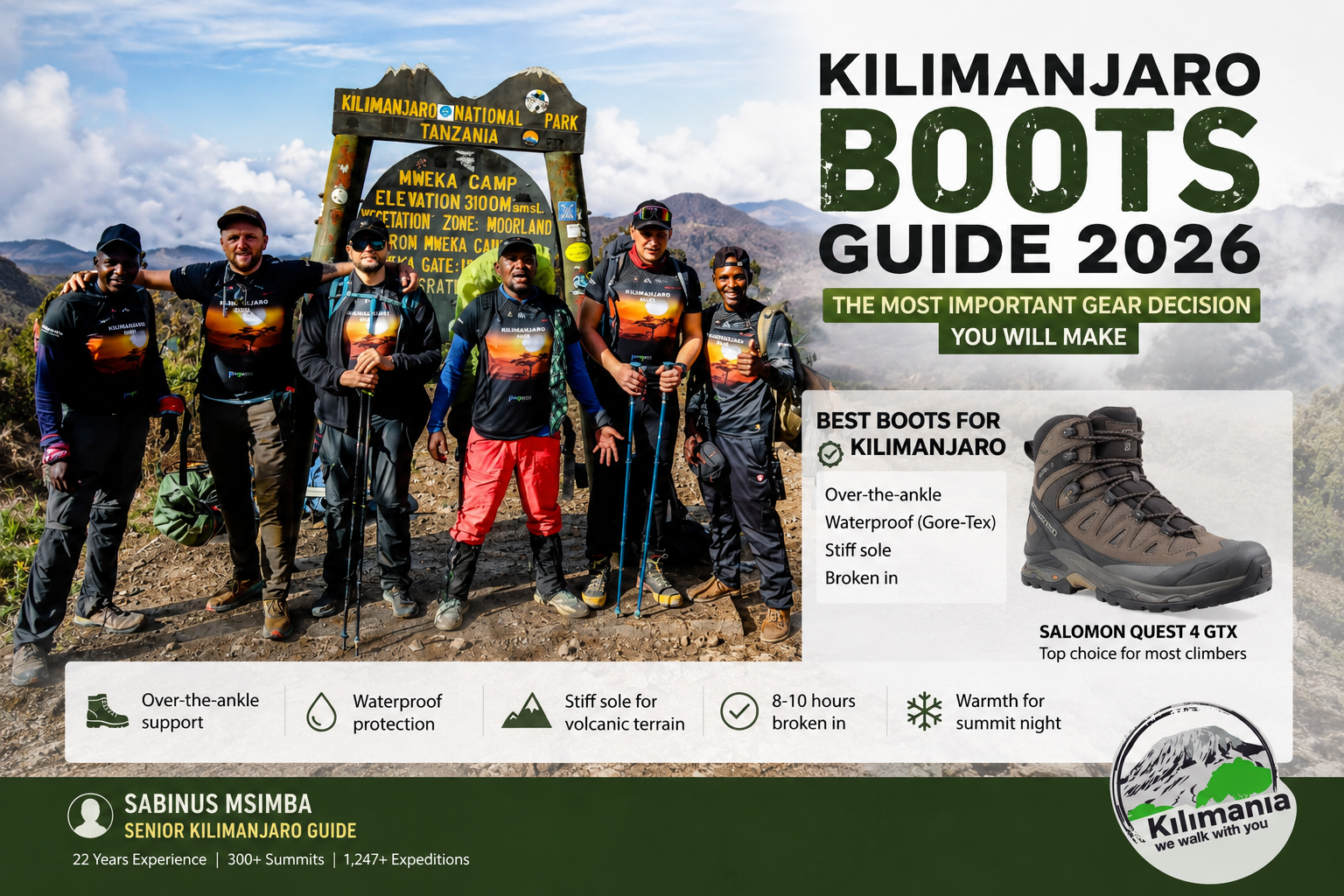
Kilimanjaro boots need four things: over-the-ankle height, a bonded waterproof membrane, a semi-rigid sole, and at least 8–10 hours of walking in them before you fly to Tanzania. Running shoes, trail runners and low-cut hiking shoes do not meet that standard on any section of this mountain. In 22 years of guiding I have watched more summit attempts end from preventable foot problems than from a lack of fitness, and almost all of those problems were decided months earlier, in a shop, at home.
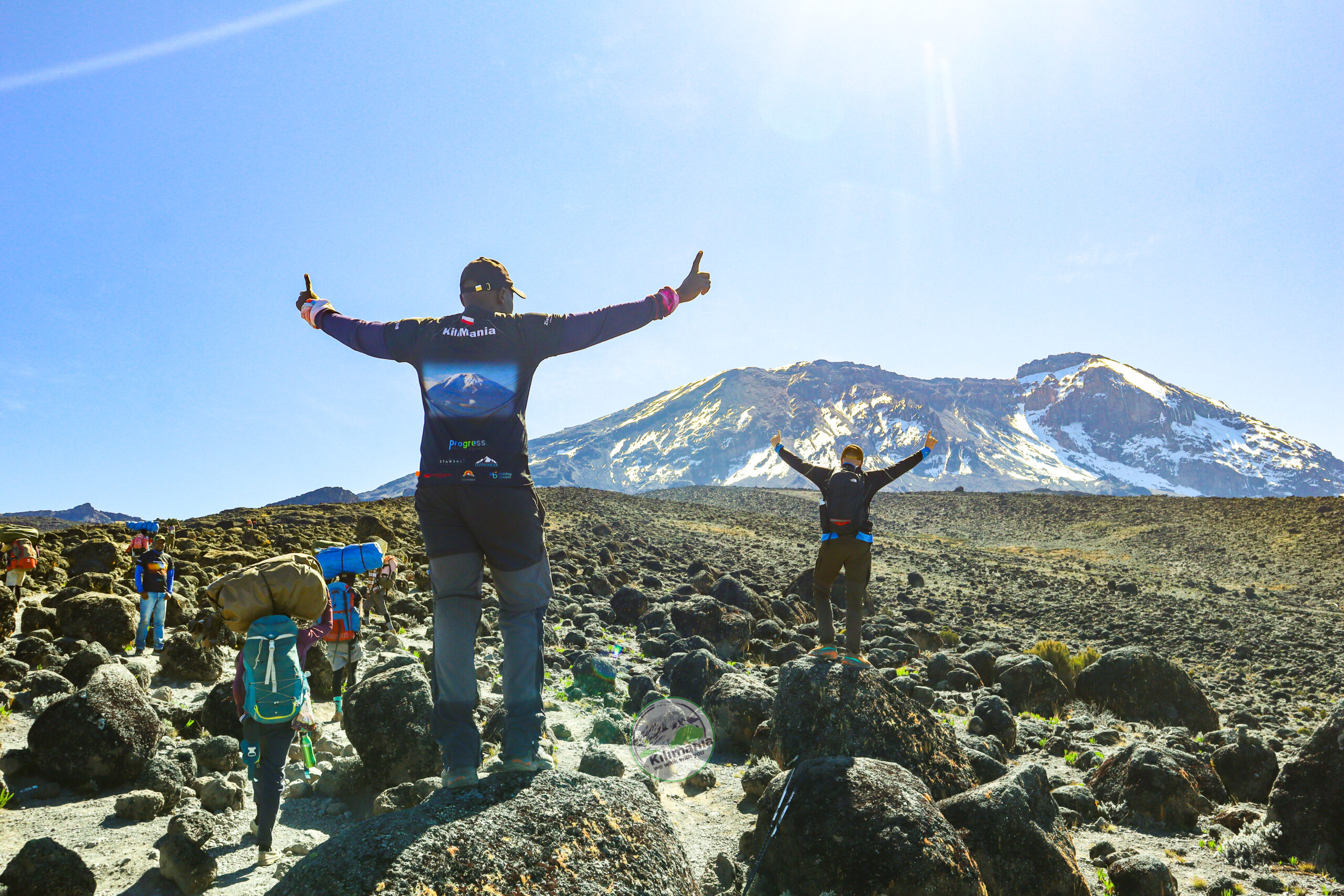
Kilimanjaro boots at a glance
- Boot type: waterproof midweight hiking boot
- Minimum standard: collar above the ankle bone
- Sole: semi-rigid, deep-lug outsole
- Avoid: running shoes, gym shoes, and any boot bought in the final two weeks
- Break-in: 8–10 hours of walking minimum, spread over 4–6 weeks
- Summit-night conditions: commonly around −10°C to −12°C at Barafu Camp (4,673 m) before wind chill, colder above Stella Point
Bottom line
Fit beats brand, every time. A mid-priced boot that matches your foot shape and has been walked in for 10 hours will outperform a premium boot that lifts at the heel. Buy at home, walk in them at home, and change nothing in the last fortnight.
The four non-negotiables in a Kilimanjaro boot
Short answer: A Kilimanjaro boot must clear the ankle bone, use a bonded waterproof membrane, resist folding when you bend it by hand, and have been walked in for 8–10 hours before departure. A boot missing any one of those four is the wrong boot for this mountain, whatever it cost.
1. Ankle height above the bone
The descent from Stella Point (5,756 m) to Barafu Camp (4,673 m) drops more than a kilometre of elevation on loose volcanic ash, usually on legs that have already been moving for nine hours or more. Every step slides. A collar that sits above the ankle bone holds the joint in line at the moment your own stabilising muscles have stopped responding. A low-cut shoe cannot do that, no matter how well the rest of it fits.
2. A bonded waterproof membrane, not a spray
Every route begins in montane rainforest below roughly 2,800 m, and that zone is wet in every season — fog, dripping canopy, standing mud, water running down the trail. Skin that stays wet softens, and soft skin blisters quickly. Gore-Tex is the membrane most climbers arrive with; equivalent bonded membranes from other manufacturers work equally well. A durable water-repellent spray on a mesh upper does not.
3. A semi-rigid sole
Hold the boot at both ends and try to fold it lengthwise. It should push back hard. A sole that folds easily lets the foot splay on every uneven step, which tires the arch over a six- to nine-hour day and bruises the toes on descent. Full mountaineering stiffness is unnecessary: no standard Kilimanjaro route requires crampons, so a crampon-rated B2 or B3 boot only adds weight and break-in time you do not need.
4. Genuine break-in time
A boot that felt right in the shop is not the same boot after six hours of downhill. Break-in is where the upper takes the shape of your foot and where you discover the seam that rubs. Doing that discovery at 4,600 m instead of at home is the single most avoidable mistake in this whole guide.
| Footwear type | Waterproof | Ankle support | Summit-night warmth | Grip on scree descent | Our position |
|---|---|---|---|---|---|
| Running shoes | Rarely | None | Inadequate | Poor | Not recommended on any section |
| Trail running shoes | Sometimes | None | Inadequate | Fair | Experienced mountain runners only |
| Low-cut hiking shoes | Sometimes | Low | Limited | Fair | Camp footwear, not trail footwear |
| Mid-cut waterproof boots | Usually | Moderate | Adequate with correct socks | Good | Acceptable minimum if fully broken in |
| Over-ankle waterproof boots | Yes | High | Adequate with correct socks | Strong | What we recommend for most climbers |
| Crampon-rated mountaineering boots | Yes | Very high | More than required | Strong | Unnecessary on standard routes |
Can I wear running shoes on Kilimanjaro?
Short answer: We advise against it, on every section. Running shoes soak through in the rainforest, flex under you on rocky moorland, conduct cold straight into the foot on summit night, and give no lateral control on the scree descent below Stella Point. This is the question climbers ask us most often before booking, and it is the one we answer without hedging.
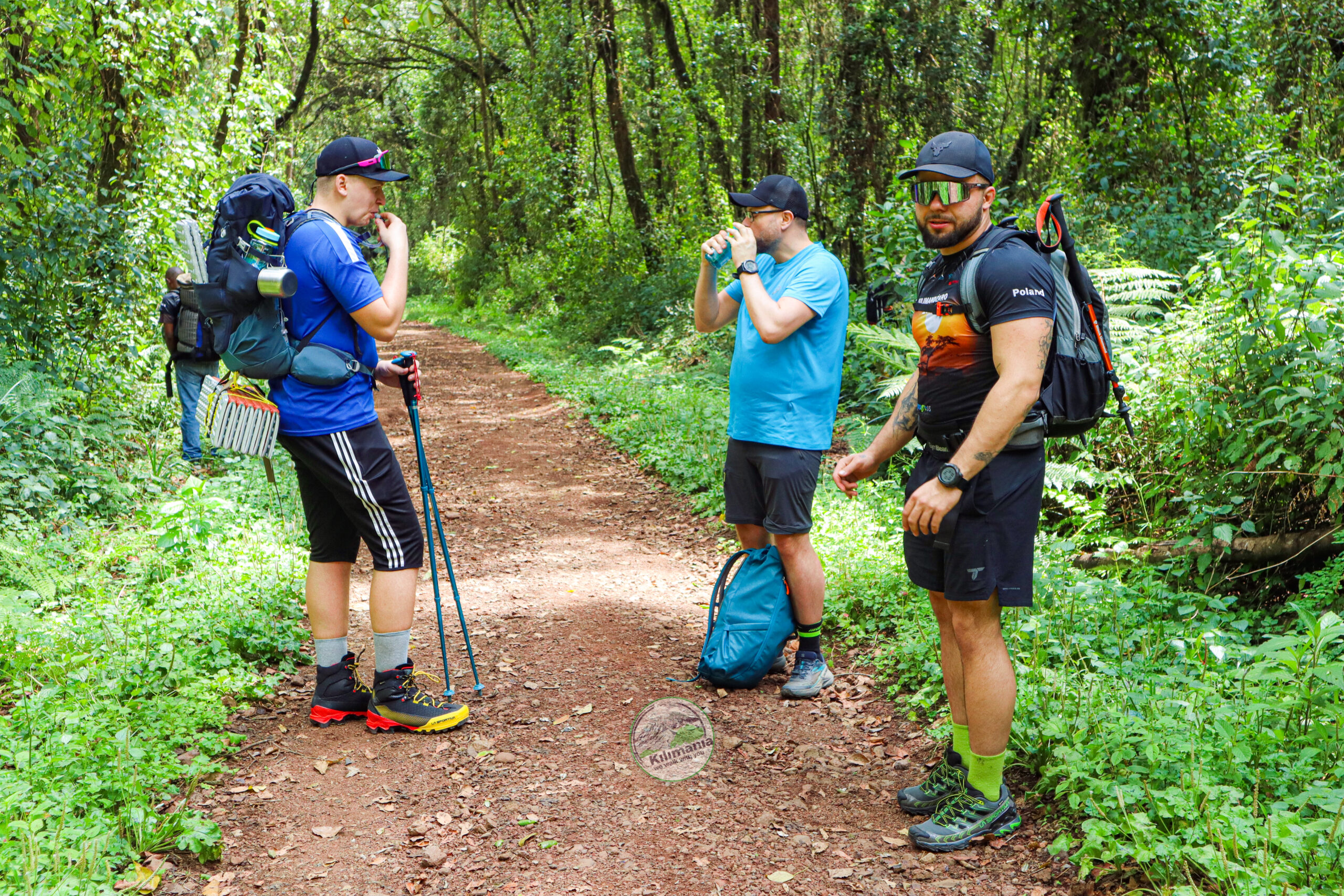
Rainforest, roughly 1,800–2,800 m
Mesh uppers wet out within the first hour or two of a rainforest morning. Once your socks are soaked on day one, they rarely dry fully at camp, and you begin day two with softened skin. That is the state in which blisters form fastest.
Moorland and alpine desert, roughly 2,800–4,600 m
Days here are long and the trail is rock, dust and uneven steps. A soft midsole deforms around every rock, which tires the arch by mid-afternoon and offers nothing at all when a stone rolls under the edge of your foot.
Summit night, Barafu Camp to Stella Point
Most groups leave Barafu around midnight in temperatures commonly around −10°C to −12°C, colder still with wind above 5,000 m. A thin sole is a poor thermal barrier, and cold feet at hour three become the thing you think about instead of your breathing and your pace. Our hour-by-hour breakdown of that night is in the Kilimanjaro summit night guide.
The descent to Barafu
This is where the damage is concentrated. Toes slam the front of a soft shoe on every downhill step, grit pours in over a low collar, and there is no lateral support at the exact point in the climb where your legs have nothing left. Most of the bruised toenails we see start here.
A 2025 climb that ended on Day 4
Short answer: In 2025 I guided four women from France on the 8-day Lemosho Route. One had correct boots in her duffel but chose to hike in running shoes, slipped on the descent from Lava Tower on Day 4, injured her left ankle, and was evacuated by helicopter to Moshi. The other three finished the climb.
At the hotel gear check the evening before, she showed me proper mountain boots that met every requirement in this guide. Once we started walking she preferred her running shoes and carried the boots, planning to change into them for summit night only.
On Day 4, descending from Lava Tower (about 4,600 m) toward Barranco Camp, she slipped on a steep, loose section and twisted her left ankle badly. Our crew supported her down and we reached camp after dark. By morning the pain and swelling were worse, and we arranged a helicopter evacuation to Moshi.
She held travel insurance and was treated, but her climb was over and she flew home early, cancelling the rest of her Tanzania itinerary. It is a reminder worth stating plainly: mountain rescue and medical evacuation is not covered by ordinary travel policies, and every climber should hold cover valid to 6,000 m. World Nomads and Allianz Global Assistance are two of the providers our clients commonly use; we receive nothing from either.
The lesson is narrower than “bring boots”. It is this: the boots only help if you are wearing them on the day the ground moves under you.
Can I climb Kilimanjaro in trail runners?
Short answer: For most climbers, no. A small number of experienced mountain runners use stiff, water-resistant trail shoes on the drier lower sections and switch to boots higher up. They know precisely how their feet behave after five hours of descent. If you are asking the question, that group almost certainly does not include you.
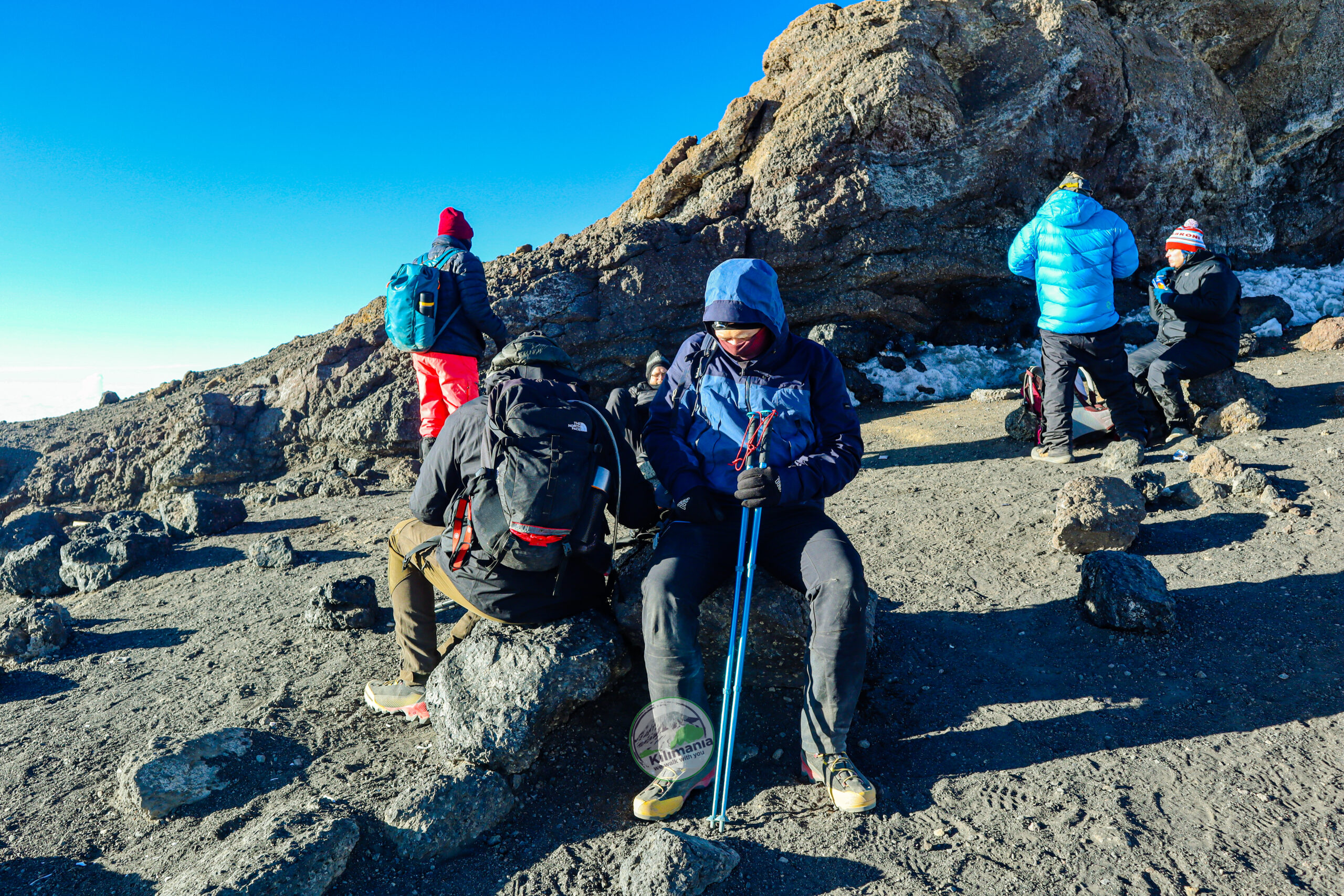
For a first-time climber, the four gaps are consistent: no lateral support on the Barafu scree, insufficient insulation below freezing, limited protection through prolonged rainforest wet, and a midsole too soft for repeated long days on volcanic rock. Where trail shoes do earn a place is around camp in the evening, when getting out of stiff boots is genuinely welcome.
If your hesitation is really about how hard the climb will be rather than about footwear, read our candid list of reasons you should not climb Kilimanjaro before you spend money on gear.
Getting the fit right, including wide, narrow and women’s fits
Short answer: Try boots on in the late afternoon wearing the exact socks you will climb in, leave about a thumb’s width behind the heel when your foot is pushed forward, and accept no more than a few millimetres of heel lift on an incline. Fit is the variable that decides whether the rest of this guide matters.
The five checks to run in the shop
- Wear your climbing socks. A medium merino sock changes the internal volume noticeably compared with a thin cotton one. Fitting in the wrong socks makes every other measurement meaningless.
- Go late in the day. Feet are slightly larger by afternoon, and mild swelling at altitude is commonly reported above 4,000 m. A boot that is merely snug in the morning can be painful at Barafu.
- Toe check. Laced boot, foot pushed fully forward: you want roughly a thumb’s width of space behind the heel. On a downhill step, toes should not reach the front.
- Heel check. Walk up a ramp or step. More than a few millimetres of heel lift will produce a blister somewhere on the Barafu descent.
- Width check. If the ball of your foot feels compressed, buy a wide-fit version. Sizing up to solve a width problem creates heel slip and a longer, sloppier boot.
Wide feet, narrow feet, and women’s lasts
Manufacturers cut boots on different lasts, and this matters more than any review score. Broadly, and from what we see arriving at the gate: climbers with wide forefeet tend to do better in brands cut on a roomier last, while climbers with narrow heels usually need either a narrow-heel model or a heel-lock lacing pattern. Women’s-specific models are not simply smaller: the heel cup is generally narrower and the instep lower, which is why some women with narrow heels get a better lock in a women’s model than in a small men’s size — and why some women with wider feet prefer the men’s cut. Try both. The label is irrelevant; the lock at the heel is not.
If you use custom orthotics or corrective insoles, fit the boot with them in from the start, and count their break-in hours in the total.
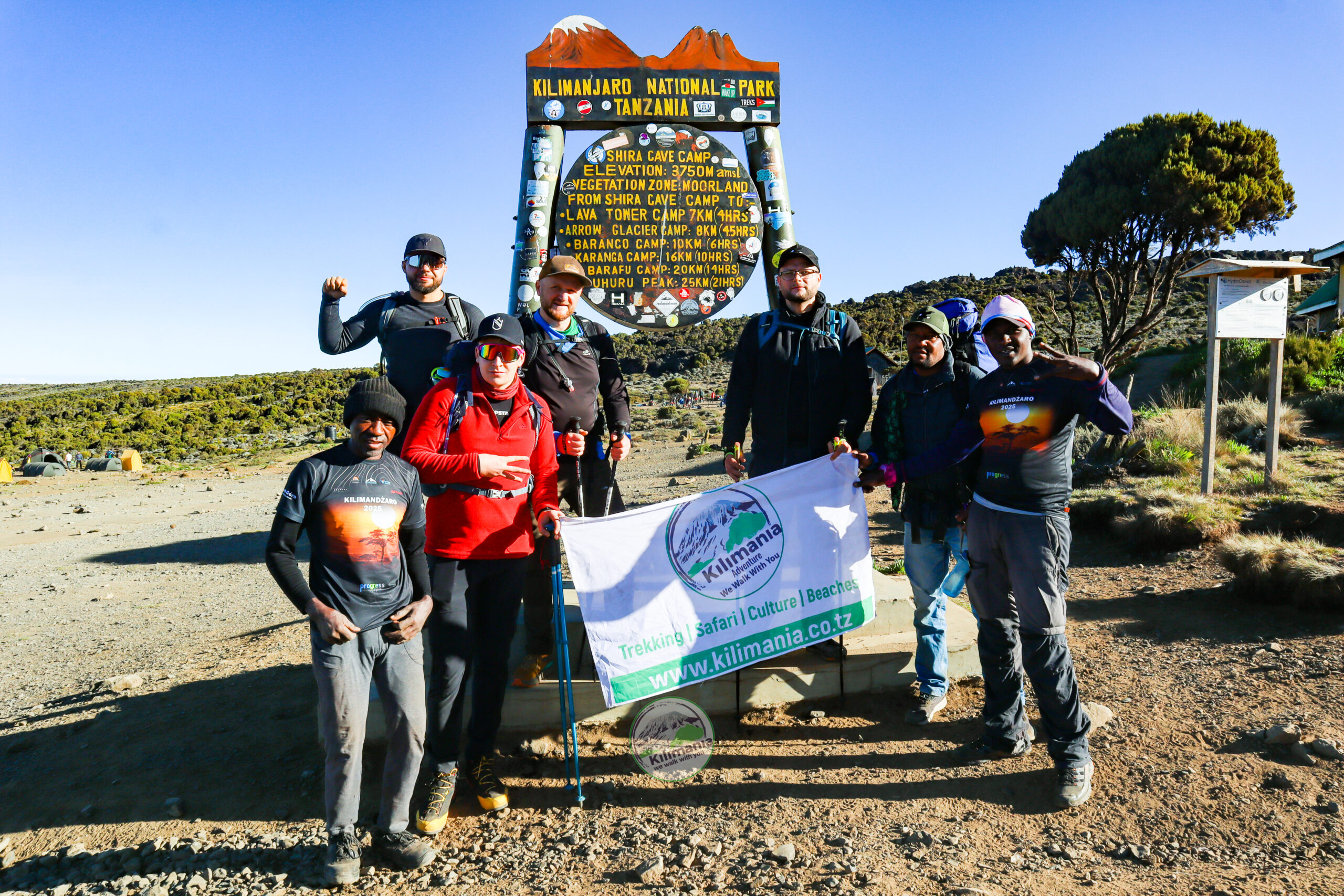
Five boots we see working on the mountain
Short answer: These five over-ankle waterproof models turn up repeatedly among clients who finish the climb without foot problems. We have no affiliate arrangement with any of these manufacturers and receive nothing if you buy them. Treat the list as a starting shortlist to try on, not a ranking.
| Model | Weight class | Membrane | Tends to suit | Field note from our gate checks |
|---|---|---|---|---|
| Salomon Quest 4 GTX | Midweight | Gore-Tex | Most climbers, average width | The model we see most often. Balanced ankle support against weight; needs the full break-in. |
| Lowa Renegade GTX Mid | Light–midweight | Gore-Tex | First-time climbers wanting a softer cuff | Comfortable early, so climbers are tempted to shorten break-in. Do not. |
| Scarpa Terra GTX | Midweight | Gore-Tex | Climbers on a tighter budget | Lower price, leather upper holds up well over repeated trips; slightly warmer in the forest. |
| La Sportiva Nucleo High II GTX | Lightweight | Gore-Tex Surround | Faster walkers, narrower feet | Good support for the weight. Runs narrow — wide feet should look elsewhere. |
| Zamberlan Vioz GTX | Heavyweight | Gore-Tex | Heavier climbers, heavier daypacks | The stiffest of the five and the slowest to break in. Start six weeks out, not four. |
Do not buy a boot because it appears on a list, including this one. The correct boot is the one that locks your heel and leaves your toes room, and only your own foot can decide that.
Buy, rent, or borrow: the real cost comparison
Short answer: Owning and breaking in your own boots is the cheaper option once you price in the risk. Renting in Moshi is a fallback for climbers whose luggage went missing, not a plan you should build a climb around.
Here is the arithmetic as we see it in Moshi in June 2026. Figures are approximate and will move.
| Option | Typical cost | Break-in possible? | Main risk |
|---|---|---|---|
| Bought at home, walked in | USD 150–300 | Yes, fully | Low — problems surface at home where they can be fixed |
| Bought in Moshi on arrival | USD 80–150 | No | Limited sizes, unbroken boot on a 6–9 day trek |
| Rented in Moshi | USD 30–50 per climb | Barely | Shaped to another foot; membrane often degraded by heavy use |
| Climb abandoned from foot injury | Full trip cost plus flights and leave | Not applicable | Evacuation costs on top, if insurance disputes the claim |
A pair of boots is a small line in a Kilimanjaro budget, and it is the wrong line to trim. The costs that genuinely surprise people are set out in our breakdown of the hidden costs of climbing Kilimanjaro, and the trade-offs behind very low quotes are covered in is a cheap Kilimanjaro climb worth it.
One thing said plainly, against our own interest: we sell climbs, so we are not a neutral party. We do not sell, rent or earn commission on boots. Before you book with us or anyone else, compare quotes with at least two other TATO-registered operators, and ask each of them how they treat their porters — our crews are run to KPAP welfare guidance and you are entitled to ask others the same question.
What we check at the gate
Short answer: Before a group signs in at the park gate, our senior guides check four things on every pair of boots: collar height above the ankle bone, a genuine waterproof lining, sole stiffness under hand pressure, and visible wear proving the boot has been used. A boot that fails gets an honest conversation on the spot.
That conversation is not meant to embarrass anyone. It exists because the alternative is having it at 4,600 m, where the options shrink to one. When a climber arrives in a low-cut approach shoe, or in boots still carrying shop creases, we say so directly and, where there is time, send them back into Moshi. We have done it, and every climber it happened to finished the trek.
Park entry and route regulation on the mountain sit with KINAPA under TANAPA. Boot standards are an operator and guide judgement, not a written park rule, so what happens at the gate depends entirely on whether your operator bothers to look. Ask any company you are considering whether they run a gear check, and what they do when someone fails it.
Breaking in your boots: the six-week protocol
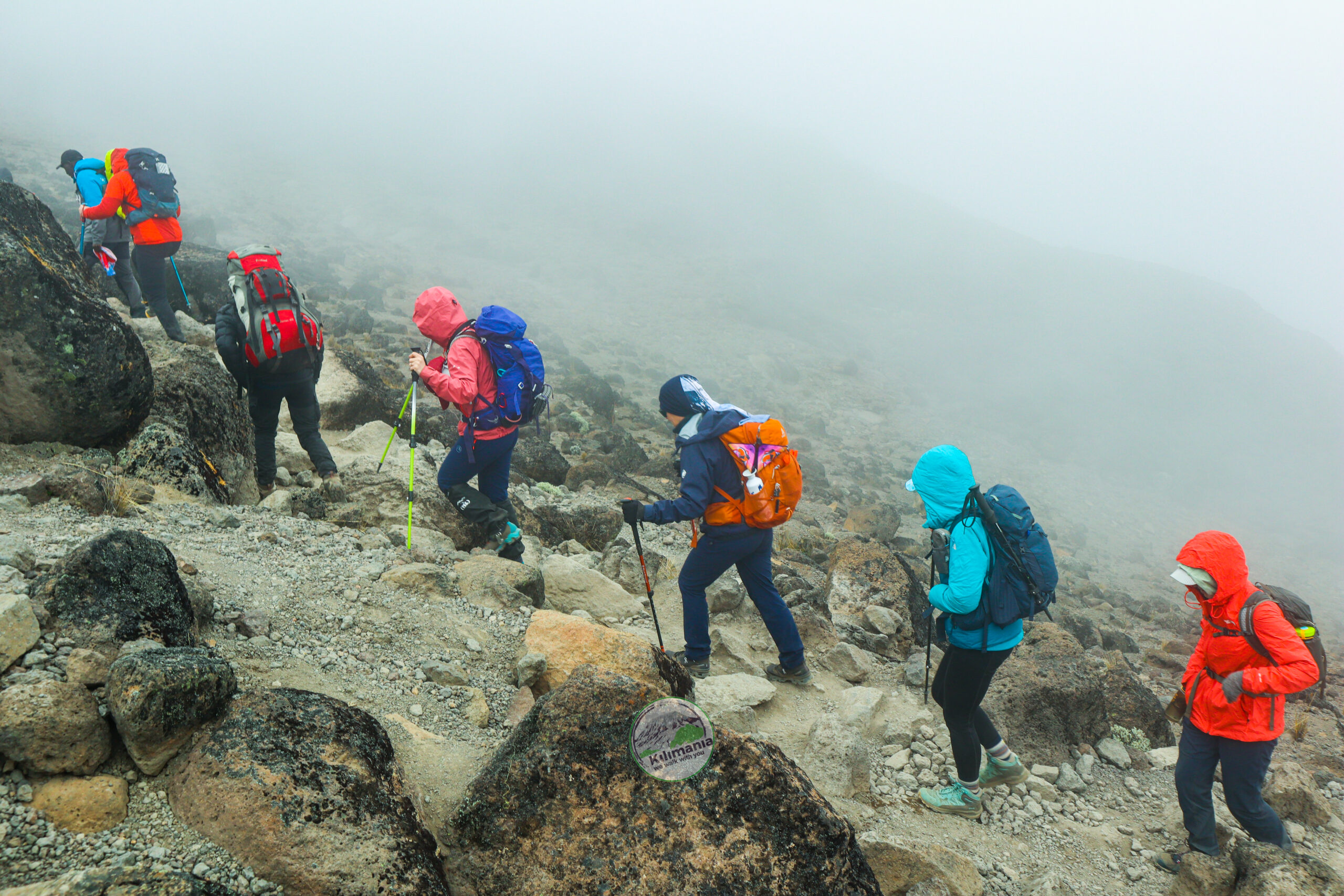
Short answer: Walk 8–10 hours in your boots across four to six weeks, moving from short flat walks to loaded hikes on uneven ground, then one full day with a long descent. Change nothing in the final two weeks. This protocol exists because a blister formed two hours into summit night cannot be properly treated until you are back at Barafu.
| Timeline | What to do | What you are testing |
|---|---|---|
| Weeks 1–2 | Flat walks of 30–60 minutes in your full climbing sock system | Upper softening; early pressure points while they are still easy to solve |
| Weeks 3–4 | Hikes of 2–3 hours on uneven ground carrying 5–8 kg | Sole conditioning and whether the heel stays locked when the ground tilts |
| Weeks 5–6 | One full day of 5–7 hours including sustained descent | Toe-box space and lacing under descent load — the Barafu simulation |
| Final 2 weeks | Keep walking, but introduce no new boots, socks, insoles or lacing | Nothing. Consolidation only. Late changes undo the previous month |
If a hot spot appears during training
A hot spot is a warm, faintly stinging patch of skin, and it is a warning rather than something to walk through. Stop, tape it, and afterwards find the cause: a wrinkled sock, one lace pulled tighter than the rest, a seam sitting on a bony point, or a last that does not match your foot. If the same spot returns across several weeks, that boot is wrong for you. Finding that out in week three costs you a return to the shop; finding it out at Barafu costs you the summit.
The honest limitation
Even a well-fitted, fully broken-in boot can raise a blister on summit night. Nine to twelve hours of continuous walking, in cold, at altitude, is hard on feet regardless of preparation. Carry tape and blister plasters in a jacket pocket rather than in your duffel, and pair your footwear with real leg conditioning. The goal is not zero risk. It is removing every risk that was avoidable.
Socks, gaiters and the rest of the foot system
Short answer: Boots are one part of a system. Medium merino socks for trekking days, a thicker pair kept clean and dry for summit night, gaiters for the scree, and no cotton anywhere near your feet. Get the system wrong and a correct boot will still cause problems.
Socks. Merino wool in a medium thickness suits most trekking days on the mountain. It manages moisture better than synthetics and does not develop odour as quickly over a week without washing. Bring three to four pairs, plus one thicker pair sealed in a bag and reserved exclusively for summit night — putting on dry, warm socks at 11 pm at Barafu makes a measurable difference to how the next six hours feel. Cotton socks hold water against the skin and are the fastest route to a blister we know of.
Liner socks. Some climbers do well with a thin liner under the main sock, which moves friction from skin-against-wool to wool-against-wool. Others find the extra layer tightens the fit too much. Decide during break-in, not in Moshi.
Gaiters. Low or mid gaiters keep volcanic grit out of the boot collar on the Barafu descent and mud out on rainforest days. They are inexpensive, weigh almost nothing, and prevent the specific problem of a stone working under the arch three hours from camp. Bring them.
Insoles. Factory insoles are usually thin. A supportive aftermarket insole can improve arch fatigue over long days, but fit it at the start of break-in, since it changes internal volume as much as a sock does.
Foot and boot care on the mountain, and afterwards
Short answer: Cut toenails short and square before you fly, dry boots slowly and never near a fire, change socks daily, and treat hot spots the moment you feel one. After the climb, clean and dry the boots properly before storage or they will not be waterproof for your next trip.
Toenails. Trim them short and straight across a few days before departure — not the night before, which can leave the nail bed tender. Long nails on a kilometre of descent are the main cause of the black toenails climbers show me at Mweka Gate.
Daily routine at camp. Take boots off as soon as you arrive, change into dry socks, and let your feet air while there is still sun. Check both feet properly, including between the toes. Anything red gets taped that evening, not the following morning.
Drying wet boots. Never dry boots directly over a stove or near a fire; heat separates adhesives and can damage the membrane permanently. Loosen the laces fully, pull the insoles out, stuff the boots with dry material if you have any spare, and leave them inside your tent overnight rather than outside where they can freeze. Frozen boots at 5 am at Barafu are a genuinely miserable way to start summit night.
Blister kit. Zinc oxide tape, blister plasters, and a small pair of scissors, carried in a pocket you can reach without unpacking. On summit night your guide can help, but only if the kit is not buried in a duffel that is already at high camp.
After Kilimanjaro. Brush the dust off, wash the uppers with plain water and a soft brush, remove insoles, and air-dry the boots slowly at room temperature. Reapply a durable water-repellent treatment once they are clean and dry. Boots stored dusty and damp lose their water repellency long before the membrane itself fails.
Conditions vary sharply by season, and how wet your boots get on day one depends largely on when you climb — see Kilimanjaro weather by month before you finalise your kit. Route length matters too: longer itineraries give feet a recovery day, which is one reason we point most first-time climbers toward eight days. That trade-off is set out in how many days to climb Kilimanjaro.
Frequently asked questions
Can I wear running shoes on Kilimanjaro?
We do not recommend it. Running shoes lack the ankle support needed for the scree descent below Stella Point, the waterproofing needed for the rainforest below roughly 2,800 m, the sole stiffness needed for hours on loose volcanic ash, and the insulation needed for sub-zero temperatures on summit night at Barafu Camp.
Can I climb Kilimanjaro in trail runners?
For most climbers, no. Some experienced mountain runners do use stiff, water-resistant trail shoes on the drier lower sections, but they are a small minority who understand how their own feet respond to long descents. First-time climbers should use waterproof over-the-ankle boots.
How long does it take to break in boots for Kilimanjaro?
Plan for at least 8 to 10 hours of real walking spread across four to six weeks before you fly. Start with short flat walks in your climbing socks, progress to loaded hikes on uneven ground, and finish with one full day that includes sustained downhill.
Should I buy Kilimanjaro boots at home or in Moshi?
Buy at home and arrive with the boots already broken in. Moshi shops carry limited sizes and inconsistent stock, and a boot bought two days before the gate has had no break-in time at all.
Is it safe to rent boots for a Kilimanjaro climb?
Rental boots are a fallback, not a plan. They are shaped to other people’s feet, their waterproof lining is often worn down by heavy use, and you cannot break them in. If renting is unavoidable, collect them as early as possible and walk in them before day one.
Do feet swell at altitude on Kilimanjaro?
Mild swelling of the feet and hands is commonly reported at altitude, and we see it regularly at Barafu Camp at 4,673 m. Try boots on late in the day when your feet are naturally larger, and leave roughly a thumb’s width of space behind the heel when your foot is pushed forward.
What boots do Kilimanjaro guides wear?
Our senior guides wear over-the-ankle waterproof boots with a semi-rigid sole and a deep-lug outsole. Brands vary across the team. What does not vary is the category: ankle coverage above the bone, a bonded waterproof membrane, and a sole that resists folding by hand.
What socks should I wear with Kilimanjaro boots?
Merino wool hiking socks of medium thickness work for most days, with a thicker pair reserved for summit night. Wear the same socks during break-in that you plan to climb in, because sock thickness changes fit noticeably. Avoid cotton, which holds moisture against the skin.
Facts at a glance
- Barafu Camp sits at 4,673 m; summit-night temperatures there are commonly around −10°C to −12°C before wind chill (Kilimania guide logs, 2024–2026).
- Stella Point sits at 5,756 m; the descent back to Barafu covers more than a kilometre of elevation loss on loose volcanic scree.
- Every Kilimanjaro route begins in montane rainforest below roughly 2,800 m, wet in all seasons.
- Minimum break-in we require of our climbers: 8–10 hours of walking across four to six weeks (Kilimania gate-check standard, 2019–2026).
- No standard Kilimanjaro route requires crampons, so crampon-rated mountaineering boots add weight without benefit.
- Kilimania has guided 1,247+ expeditions; boots are inspected before every departure.
- Boot standards are an operator judgement, not a written KINAPA regulation — what happens at your gate depends on your operator.
- Prices in this guide were checked in Moshi in June 2026 and will change.
Where this leaves you
Your boots carry you through roughly 60 to 80 hours of walking across a full climb. Over the ankle, waterproof, semi-rigid, and walked in for 8–10 hours before you fly. Get that right and you will barely think about your feet. Get it wrong and, at 3 am above Barafu, it will be the only thing you can think about.
Climbing with an operator who actually checks gear at the gate?
Send us your route and departure date and we will give you an honest read on whether your current boots and break-in plan are on track.
WhatsApp +255 756 449 990 · info@kilimania.co.tz · Contact the team