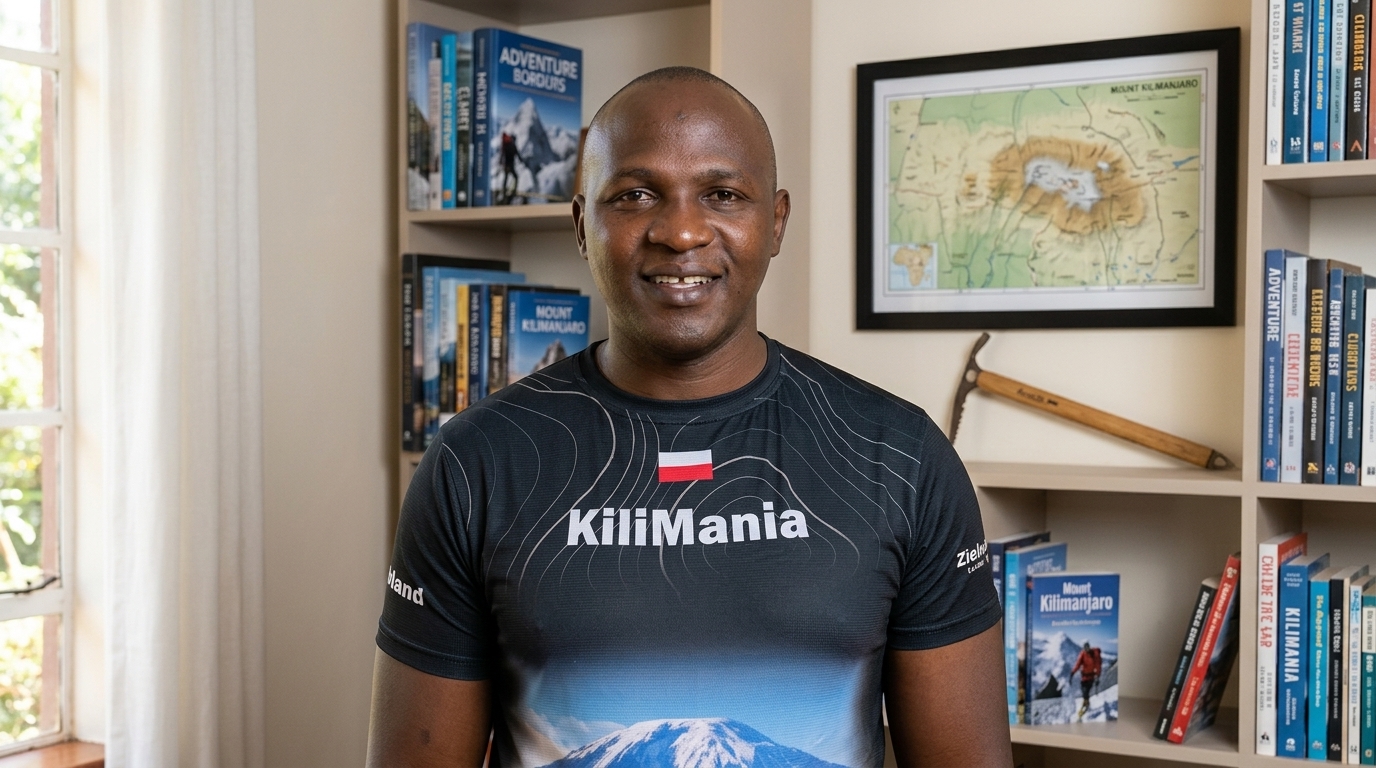
Last updated: · Written by Sabinus Msimba, Senior Kilimanjaro Guide, KINAPA-licensed since 2003
Data sources cited in this article: KINAPA elevation records, Peru Ministry of Culture trail data, Wilderness Medical Society altitude-illness guidelines, and Kilimania guide-team field observations (see Sources & Methodology below).
Kilimanjaro vs Inca Trail: Which Is Harder?
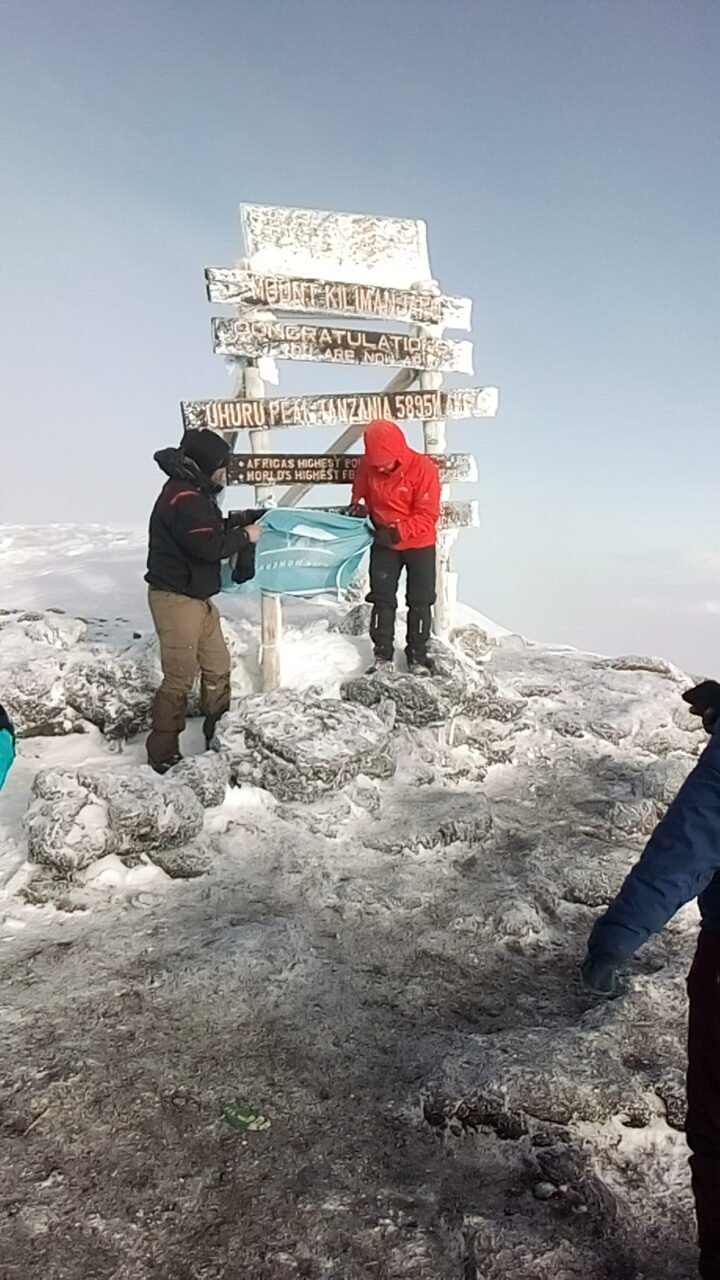
For most hikers, Kilimanjaro is the harder trek. It reaches 5,895m — nearly 1,700m above the Inca Trail’s highest point — and requires a multi-day ascent culminating in an overnight summit push at extreme cold and low oxygen. The Classic Inca Trail reaches 4,215m at Dead Woman’s Pass and is generally completed by the vast majority of trekkers who attempt it. That said, some hikers find the Inca Trail’s steep stone staircases and sustained terrain harder on their knees and legs than Kilimanjaro’s steadier inclines. Altitude is usually the deciding factor, but it is not the only one.
Planning Kilimanjaro? Get an Honest Route Recommendation
Our team is based in Moshi, 45 minutes from the mountain gate. We will tell you which route fits your fitness level and timeline — straight answer, no pressure.
See Routes & Prices → KINAPA-licensed guides · WhatsApp: +255 756 449 990Full Comparison: Kilimanjaro vs Inca Trail
Neither the Classic Inca Trail nor the standard Kilimanjaro trekking routes requires technical mountaineering skills such as ropes or climbing equipment under normal trekking conditions. Both involve steep, uneven terrain and require good hiking ability. The comparison below focuses on the variables that actually shape your experience.
| Variable | Kilimanjaro | Classic Inca Trail |
|---|---|---|
| Maximum altitude | 5,895m (Uhuru Peak) | 4,215m (Dead Woman’s Pass) |
| Typical duration | 6–9 days (route dependent) | 4 days |
| Technical climbing required | No — walk-up routes | No — trail trekking |
| Primary physical challenge | Altitude, cold, summit-night duration | Steep stone stairs, sustained climbing and descending |
| Altitude exposure | Prolonged — sleeping above 4,000m on most routes | Shorter — peak altitude reached on day 2 of 4 |
| Terrain | Multiple climate zones: rainforest, moorland, alpine desert, glacial | Cloud forest, mountain pass, Inca stone paths, archaeological sites |
| Summit push duration | ~6–8 hours overnight, starting midnight | No dedicated summit push — highest point crossed on day 2 trail |
| Approximate temperature at highest point (night) | Around –10°C to –15°C (wind chill may feel colder) | Around –5°C (approximate; conditions vary) |
| Sleeping altitude | Up to ~4,750m (Crater Camp) on some routes; typically 3,700–4,600m | Up to approximately 3,600–3,900m |
| Permit system | Booked through licensed operator (KINAPA) | Daily permit cap — book well in advance through licensed operator |
| Acclimatization built in | Yes — on 7+ day routes; limited on 5–6 day routes | Partial — 4-day format limits acclimatization time |
| Main reason people turn around | Altitude illness, insufficient acclimatization, extreme cold | Injury (knee/ankle), dehydration, gastrointestinal illness |
Why Altitude Shapes This Comparison
The 1,680-metre elevation difference between Dead Woman’s Pass (4,215m) and Uhuru Peak (5,895m) does not represent a proportional increase in difficulty. At higher altitudes, atmospheric pressure decreases and the air becomes progressively thinner, meaning each breath delivers less oxygen to the bloodstream. The physiological effects become substantially more pronounced above 5,000m — a threshold the Inca Trail does not approach.
Altitude Comparison — Where Each Trek Goes
The Inca Trail’s highest point (4,215m) is 458m below the camp from which Kilimanjaro climbers begin their summit push. Kilimanjaro’s real physiological challenge starts where the Inca Trail ends.
From our experience guiding Kilimanjaro, the biggest challenge for most trekkers is not the steepness of the trail — it is how the body responds as altitude increases. We regularly see very fit people struggling above 5,000m and people who are less athletic doing well, simply because acclimatization is individual and cannot be fully trained for in advance.
The most important decision you will make on a Kilimanjaro trip is not fitness training. It is choosing the right number of days. A shorter itinerary compresses the acclimatization window, which is the single most controllable risk factor. Read the full route comparison →
Success Rates: What the Numbers Actually Tell You
Success rate figures for Kilimanjaro are frequently cited but rarely explained. There is no single universally accepted summit success rate for Kilimanjaro. Published estimates vary depending on the dataset, the routes included, the operator, and how “success” is defined.
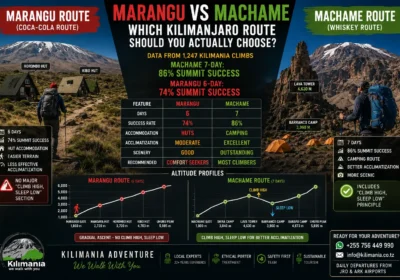
What is consistently observed across operators and routes is that itinerary length is the strongest predictor of summit success. Shorter itineraries (5–6 days) allow less acclimatization time. Longer itineraries (8–9 days) give the body more opportunity to adjust.
How Route Length Changes the Picture
| Route | Typical Days | Observed Success Range |
|---|---|---|
| Marangu | 5–6 days | Lower end — less acclimatization time |
| Machame | 6–7 days | Mid-range — better than Marangu at same day count |
| Lemosho | 7–9 days | Higher — good acclimatization profile |
| Northern Circuit | 9–10 days | Highest — longest acclimatization window |
The Classic Inca Trail has a high completion rate because it does not require the same kind of altitude acclimatization. The challenging sections — particularly the climb to Dead Woman’s Pass — are physically demanding but at an altitude most acclimatized trekkers can manage over 4 days. The majority of people who begin the Classic Inca Trail finish it, though exact figures depend on the source and methodology.
Comparing “Kilimanjaro” as a monolith against the Inca Trail is misleading. A 5-day Marangu itinerary and a 9-day Northern Circuit are both classified as Kilimanjaro climbs, but they represent substantially different physiological challenges. See the full route success rate breakdown →
Difficulty Category by Category
Breaking this down by specific dimension makes it easier to identify where each trek challenges different types of hikers.
What Each Trek Actually Feels Like
These are not competing adventures. They are different journeys that share only the category of “multi-day high-altitude trek.” Someone considering both should understand what each delivers, not just rank them by difficulty.
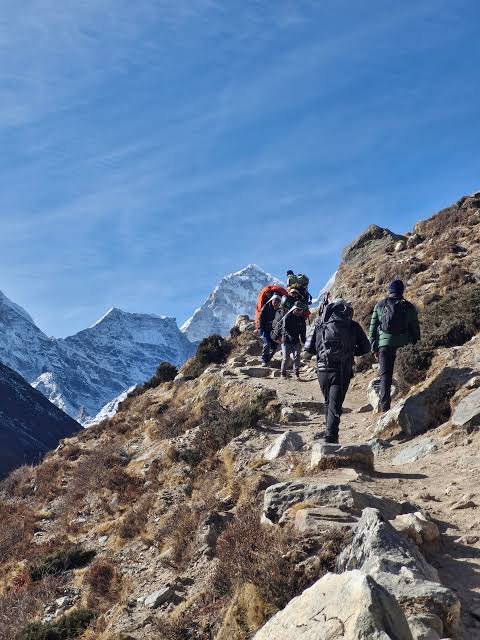
🔵 Classic Inca Trail (4 Days)
- Inca archaeological sites en route, including Wiñay Wayna and Runkurakay
- Arrival at Machu Picchu through the Sun Gate at dawn
- Cloud forest — humid, green, rich with birdlife
- Cultural and historical context throughout from licensed guides
- Established campsites with porter and cook support
- UNESCO World Heritage route with daily permit cap
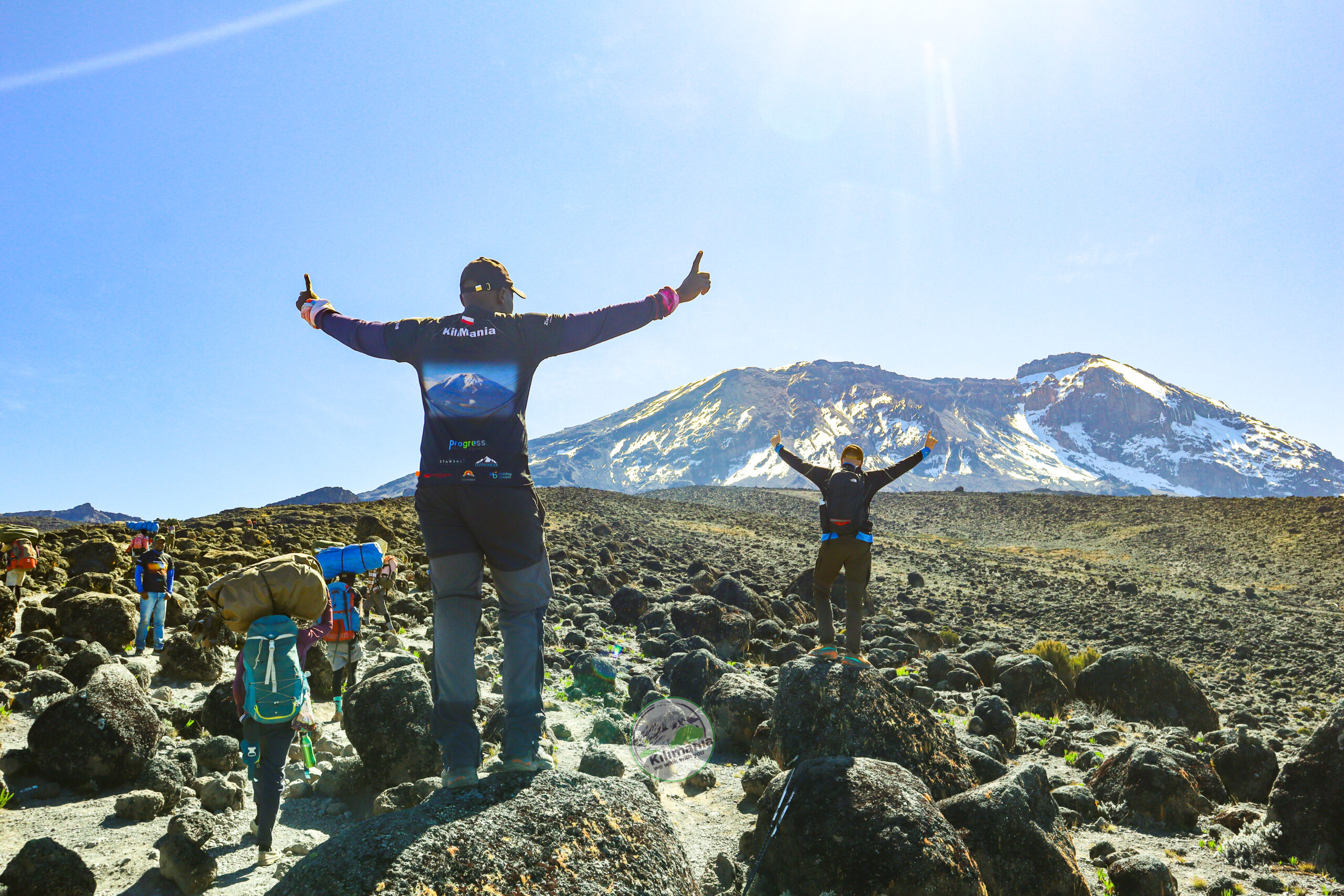
🔴 Kilimanjaro (6–9 Days)
- Five distinct climate zones: rainforest, heath and moorland, alpine desert, glacial
- Views across East African savannah from altitude
- Summit night: 6–8 hours in darkness, cold, thin air, starting around midnight
- Complete ecological isolation above 5,000m — no trees, no wildlife
- Mountain tents in increasingly cold conditions each night
- Psychological arc over a week: building anticipation, then the summit push
Altitude Illness: Honest Context
Altitude-related illness can occur on both treks but is significantly more likely to affect Kilimanjaro climbers given the summit elevation. Acute Mountain Sickness (AMS) — symptoms including headache, nausea, dizziness, and disturbed sleep — is common above 3,000m and becomes more likely as altitude increases and ascent rate accelerates.
More serious conditions — High-Altitude Cerebral Edema (HACE) and High-Altitude Pulmonary Edema (HAPE) — are rare but can be life-threatening and require immediate descent. These conditions can develop rapidly and are the reason why guides monitoring climbers’ health throughout the ascent, not just at camp, matters.
Altitude illness can be serious regardless of fitness level or prior experience. If you experience worsening symptoms — severe headache, loss of coordination, confusion, or difficulty breathing — descend immediately. Follow your guide’s instructions and consult a qualified physician before any high-altitude travel, particularly if you have pre-existing cardiovascular or respiratory conditions. This article provides general information only and is not medical advice.
On the Inca Trail, most reported problems are physical rather than altitude-related: knee and ankle injuries on the stone steps, blisters, dehydration, and gastrointestinal illness. Altitude illness does occur, particularly on the night before Dead Woman’s Pass, but serious cases requiring evacuation are uncommon.
Fitness, Training, and Preparation
Both treks demand genuine fitness. Walking 5–8 hours daily with a daypack over several consecutive days requires cardiovascular endurance, strong legs, and the mental resilience for sustained effort. Neither trek is achievable on minimal preparation.
The important distinction is that fitness does not substitute for acclimatization. Being in excellent aerobic condition helps your body function on the mountain, but it does not change how your circulatory system responds to reduced atmospheric pressure. Highly trained athletes turn around on Kilimanjaro; moderately fit people who acclimatize well reach the summit.
The Inca Trail can help build hiking fitness, endurance, and confidence. Completing it does not acclimatize you to Kilimanjaro’s higher elevations. If you plan to do both, treat Kilimanjaro’s altitude as a separate challenge requiring its own preparation — and choose the longest itinerary your schedule allows.
Which Should You Do First?
This is the practical question most people are actually asking. The honest guidance depends on your specific situation.
Frequently Asked Questions
For most hikers, yes. Kilimanjaro’s summit at 5,895m is nearly 1,700m higher than the Inca Trail’s highest point at Dead Woman’s Pass (4,215m). It requires a prolonged altitude exposure, an overnight summit push in extreme cold, and sustained hiking over 6–9 days. The vast majority of people who attempt the Classic Inca Trail complete it. Kilimanjaro’s summit success rates vary substantially by route and itinerary length, with shorter routes having lower rates.
That said, some hikers find the Inca Trail’s steep stone staircases and uneven terrain harder on their knees and legs than Kilimanjaro’s steadier gradient. Difficulty is not universal — it depends on the individual.
Not in terms of altitude acclimatization. The Inca Trail peaks at 4,215m, well below the elevations where Kilimanjaro’s main altitude challenges occur. The fitness and hiking endurance you develop is genuinely useful, but fitness and acclimatization are not the same thing. Acclimatization gained at one altitude does not transfer to a substantially higher altitude. If you plan to do both, treat Kilimanjaro’s altitude as a separate challenge requiring its own preparation.
If you have no prior experience above 3,000m, the Inca Trail is the lower-risk starting point. It is shorter, lower, and the vast majority of trekkers who begin it finish it. Kilimanjaro is achievable for first-timers who choose a longer itinerary (8 days or more), stay properly hydrated, and climb with an experienced guide who monitors health data throughout.
Kilimanjaro is significantly colder at its highest point. Dead Woman’s Pass on the Inca Trail sees overnight temperatures in the region of –5°C. Kilimanjaro’s summit night temperatures at the crater rim typically fall to around –10°C to –15°C, and wind chill can make conditions feel considerably colder on the exposed ridge. Cold management — layering, insulated gloves, proper boots — is a central challenge on Kilimanjaro in a way it is not on the Inca Trail.
Route length is the single most important factor. Longer itineraries (8–9 days) allow more time for altitude acclimatization, which consistently produces higher summit rates across operators and datasets. Shorter routes (5–6 days) compress the acclimatization window significantly. This is why comparing “Kilimanjaro’s success rate” as a single number against the Inca Trail is misleading — the figure varies considerably depending on which route and itinerary length you are measuring. See the full route breakdown →
The Single Most Important Decision Is Route Length
If Kilimanjaro is next, see how all 7 routes compare → or message Sabinus directly for a no-obligation recommendation based on your fitness level and timeline.
💬 WhatsApp Us Directly info@kilimania.co.tz · Moshi, Tanzania · KINAPA-licensed guidesThe Bottom Line
For most hikers, Kilimanjaro is the harder trek — primarily because of its altitude, prolonged high-altitude exposure, cold summit conditions, and demanding overnight summit push. These are challenges that have no real equivalent on the Classic Inca Trail.
But the comparison is not absolute. Hikers who struggle with steep, uneven stone staircases, who have knee problems, or who find sustained descents on irregular ground harder than steady inclines may find the Inca Trail physically more challenging in those specific respects.
The cleaner framing is this: Kilimanjaro is harder primarily because of altitude and summit conditions. The Inca Trail can be harder for some people because of terrain. These are different kinds of hard, and the distinction matters when deciding which to attempt first and how to prepare for each.
These treks belong in different years of a trekking life. The question is only where to start — and now you have enough information to make that decision honestly.
Sources & Methodology
- Kilimanjaro elevation data: KINAPA (Kilimanjaro National Park Authority) official figures. Uhuru Peak: 5,895m; Barafu Camp: approximately 4,673m.
- Inca Trail elevation data: Dead Woman’s Pass (Warmiwañusqa) — 4,215m. Peru Ministry of Culture / official trail records.
- Kilimanjaro success rate estimates: Indicative industry-observed ranges based on published operator data and guide experience. Not official KINAPA statistics. Figures vary substantially by route, itinerary length, operator, season, and how success is defined. No single authoritative dataset exists for all Kilimanjaro routes combined.
- Temperature ranges: Approximate conditions based on guide observations and published altitude climate data. Actual conditions vary by season, weather, and route.
- Altitude illness information: General guidance consistent with Wilderness Medical Society recommendations on altitude illness. Readers should consult the WMS Practice Guidelines for full clinical context: wms.org.
- Inca Trail permit system: Peru’s Ministry of Culture limits daily permits for the Classic Inca Trail. The cap applies to total daily permit issuance including porters and guides; the number of independent trekkers permitted is lower than the total cap. Check current official permit rules before booking.
- Guide observations: Kilimania Adventure guide team, led by Sabinus Msimba (KINAPA-licensed since 2003), based in Moshi, Tanzania.
Reviewed by climbers on:
KINAPA-Licensed · KPAP Compliant · Moshi, Kilimanjaro, Tanzania
Disclosure: Kilimania Adventure is a KINAPA-licensed, TATO-registered tour operator based in Moshi, Tanzania. This article is written and published by our team and includes links to our own route and pricing pages.
Safety: This article provides general educational information about altitude trekking and is not medical advice. Altitude illness can be serious. Consult a qualified physician before high-altitude travel, and always follow your guide’s instructions on the mountain.
Data: Elevation and permit figures are drawn from KINAPA and Peru Ministry of Culture sources current as of August 2026. Kilimanjaro success-rate figures are industry-observed estimates, not official statistics, and are noted as such throughout this article.